


How to Clean and Care for Your NeoTimber® Cladding
Composite cladding maintenance starts with a routine clean every six months using warm soapy water and a soft-bristled brush or sponge. Deal with spills promptly, keep relevant drainage and ventilation openings clear, and choose any additional treatment to suit your board range. Low maintenance means a simpler care routine, rather than no care at all.
Dust, airborne deposits and residue can settle on any outdoor wall. A little attention helps preserve the appearance of your NeoTimber® composite cladding without turning exterior care into a major project. This guide covers routine washing, stubborn marks, water staining and the differences between capped and uncapped boards.
Composite Cladding Maintenance at a Glance
| Task or concern | Recommended approach |
|---|---|
| Routine dust and dirt | Clean every six months with warm soapy water and a soft brush or sponge. |
| Spills and spot stains | Act promptly and start with gentle cleaning before considering a compatible specialist product. |
| Pressure washing | Check the guidance for your board; use a fan nozzle, controlled pressure and a suitable distance. |
| Marks on capped boards | Do not sand Deluxe or Slatted cladding. |
| Persistent or recurring staining | Identify the cause and seek product-specific advice before stronger treatment. |
| Loose trims or visible damage | Arrange an inspection rather than treating the issue as a cleaning problem. |
How to Clean Composite Cladding
For everyday dirt, start with the least aggressive method. Prepare warm soapy water, a soft-bristled brush or sponge, and clean water for rinsing. Use a cleaning product compatible with the board finish and follow its instructions.
- Check access and the wall condition. Use a safe working arrangement and inspect for loose components before washing. Arrange suitable professional access for areas you cannot comfortably reach.
- Remove loose debris gently. Avoid dragging grit across the surface or pushing debris into joints.
- Wash a manageable section. Apply warm soapy water and work with the brush or sponge along the length of the boards.
- Rinse away the residue. Remove loosened dirt and cleaning solution without directing water into openings or behind the cladding.
- Allow the surface to dry. Assess any remaining marks once the wet finish is no longer affecting their appearance.

Spring and autumn can be convenient points for a twice-yearly routine. Clean sooner where deposits or spills are visible rather than waiting for the next scheduled wash. A sheltered wall beside dense planting may need different attention from an open elevation.
Can You Pressure Wash Composite Cladding?
Pressure washing may be an option where the product guidance permits it, but it should not be the automatic first response to a mark. Start with ordinary washing, then assess whether a deeper clean is needed.
The current NeoTimber® Deluxe Woodgrain care guidance specifies a maximum of 3100 PSI, a fan nozzle and a minimum distance of 300mm from the surface. Treat the pressure figure as an upper limit, not a target setting, and check the instructions for your exact board before use.
- Start gently and test a small, inconspicuous section.
- Use a fan spray rather than a concentrated jet.
- Keep at least 300mm away and follow any greater distance required by the product guidance.
- Work along the boards without holding the spray on one spot.
- Avoid driving water into joints, vents, window seals or behind the wall finish.
If the surface changes appearance or the method is not removing the mark, stop and seek advice. More pressure is not necessarily a better solution.
Removing Stubborn Stains and Spills
Prompt attention is preferable to letting a spill sit on the surface. Remove excess material gently, then use the routine cleaning method. Avoid spreading an oily deposit over a larger area.
For a mark that remains, a water-based cleaner specifically suitable for the composite surface may be appropriate. Check compatibility with the exact board range and follow the cleaner’s dilution, application and rinsing instructions. Test it in an inconspicuous location first.
Do not assume that a cleaner intended for masonry, timber or decking is suitable for your cladding. If you cannot identify the stain or are unsure which treatment to use, send a photograph and your board details to the NeoTimber® team before trying a stronger product.
Classic, Deluxe and Slatted Cladding Need Different Care Decisions
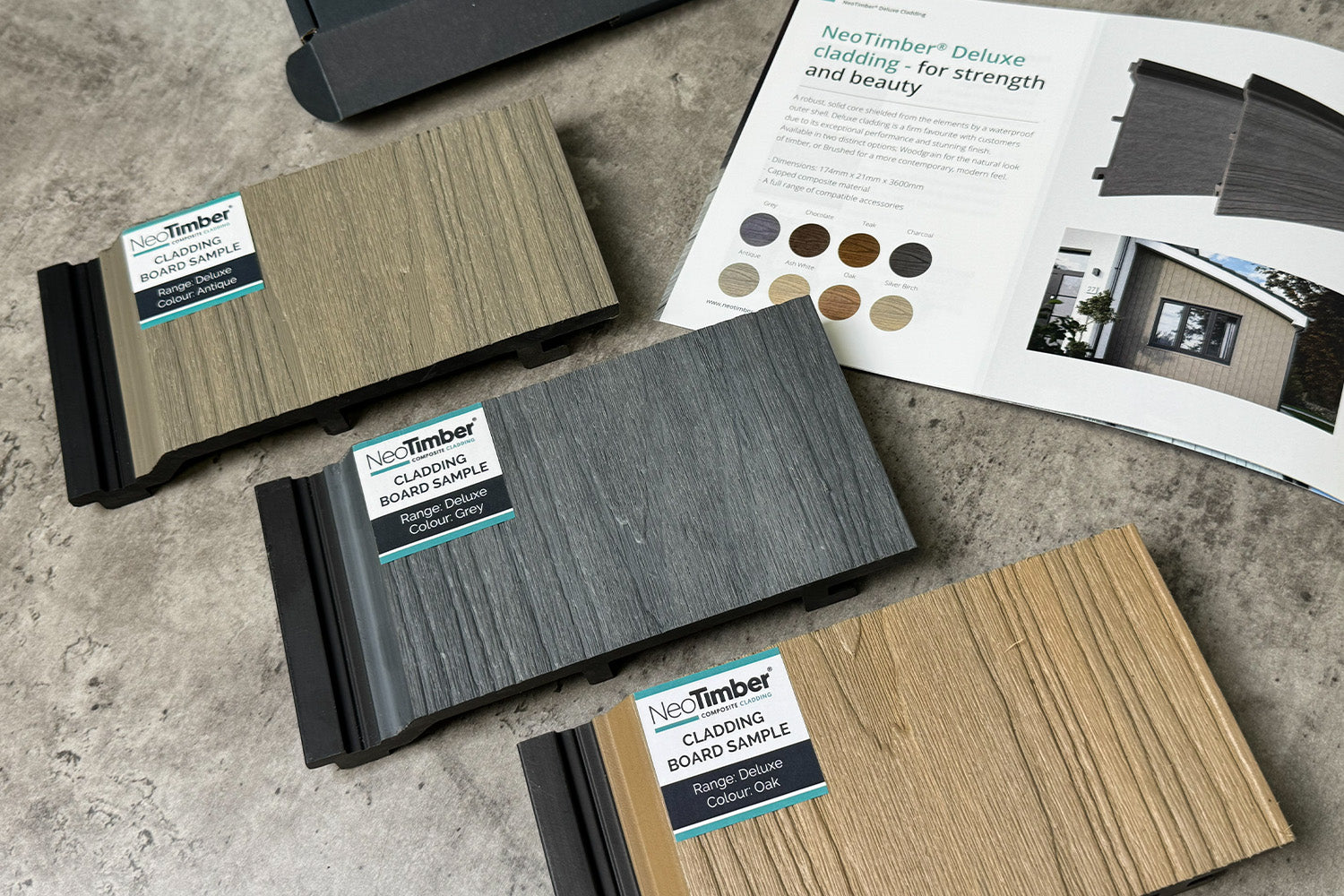
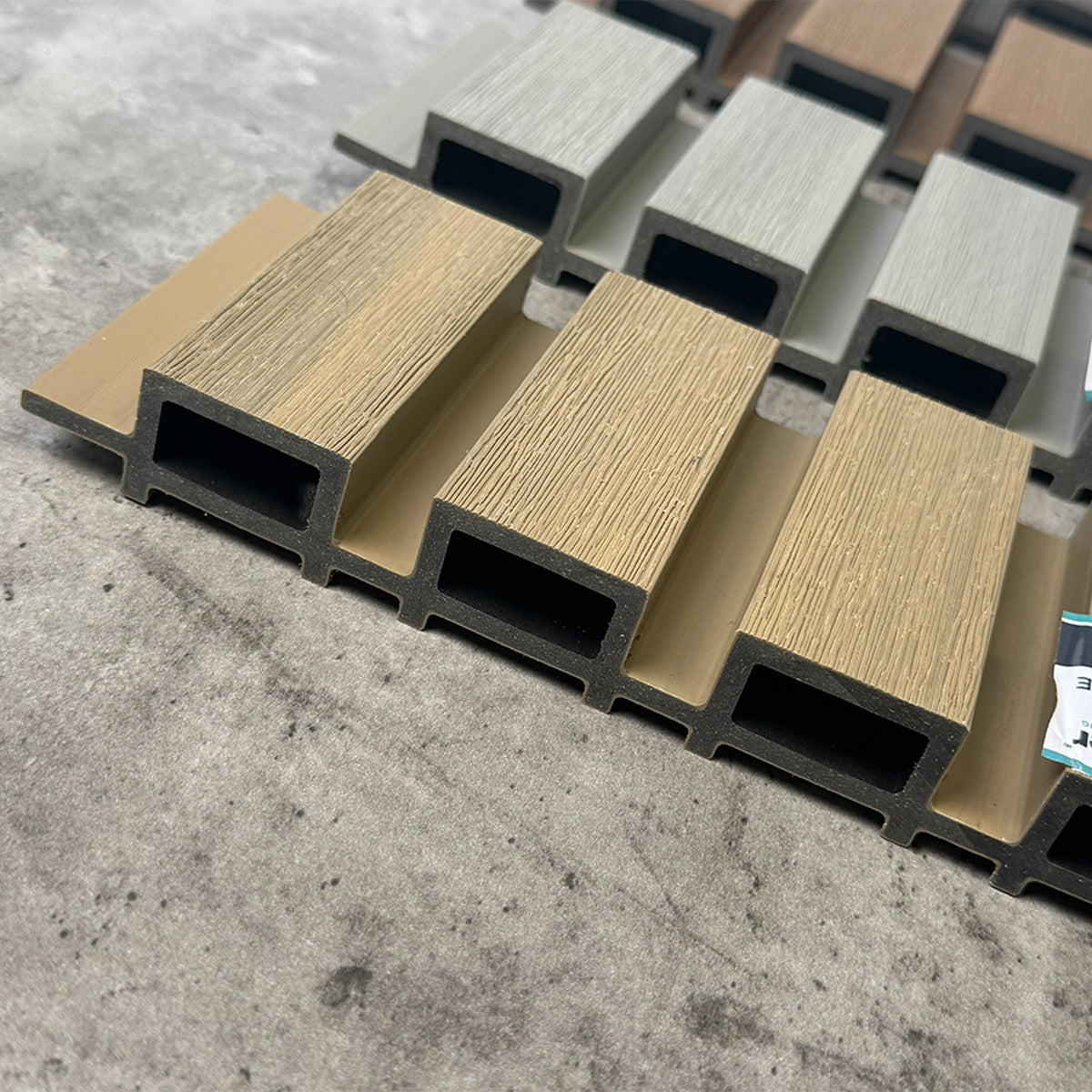
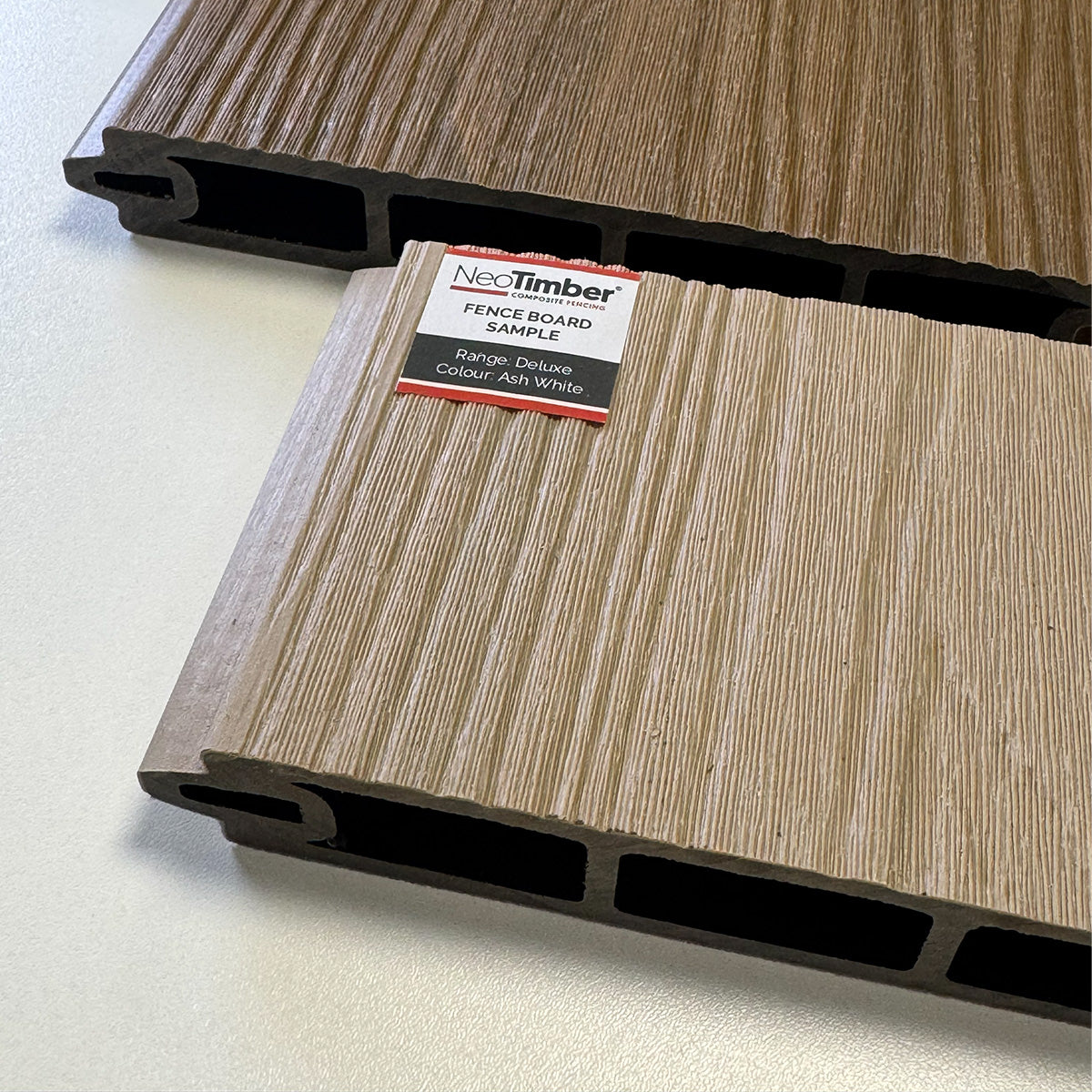
The board construction matters when considering stain treatment. Classic cladding is uncapped, while Deluxe and Slatted boards have a protective capped surface. A treatment suitable for one should not automatically be transferred to another.
Do not sand capped cladding
Deluxe and Slatted cladding must not be sanded. Abrasion can damage their protective outer surface. Use compatible cleaning methods and seek advice for persistent marks or physical damage.
Get advice before sanding Classic boards
The original care guidance allows light sanding for certain stains on Classic boards. However, removing material can change the local colour and texture. It is not a routine cleaning step, and a perfect colour blend afterwards should not be assumed.
Try gentle cleaning first. Before considering sanding, confirm that the board is Classic and ask for advice on the particular stain. Never use sanding as a general treatment across unidentified cladding.
Water Staining and Pale Surface Marks
On Classic boards, residual material from manufacturing can sometimes become visible as pale streaks during early exposure. The supplied care guidance describes these marks as potentially reducing with rain and weathering, but the timing depends on exposure and the cause of the mark.
Start by cleaning the affected area with warm soapy water. If a specialist composite brightener is being considered, confirm that it is suitable for the board and the staining before applying it.
Not every white mark is the same. A deposit below a sill or gutter, for example, may have a different source from early board weathering. If staining persists or returns in the same place, investigate the surrounding detail rather than repeatedly treating the surface.
Capped boards offer additional surface protection, but this does not mean airborne dirt, cleaning residue or other deposits cannot collect on them. Assess the mark before choosing a treatment.
Surface Mould and Mildew
Surface growth can occur on outdoor materials, particularly where dirt and organic debris accumulate. Composite cladding should not be treated as immune to visible mould or mildew simply because it is a low-maintenance product.
Use the routine cleaning method to remove surface deposits, keeping the required openings clear. If growth returns repeatedly, check for persistent dampness, nearby vegetation or debris accumulation. Seek advice on a compatible cleaner where ordinary washing is insufficient.
Avoid reaching straight for household bleach, solvents or abrasive products without confirmation that they are suitable. The aim is to remove the deposit while preserving the board finish.
A Simple Seasonal Inspection
Use each routine clean as an opportunity to look beyond the board surface. Check accessible corners, trims and junctions around openings for visible damage or unexpected movement.
- Keep leaves and debris away from required drainage and ventilation openings.
- Look for recurring runoff marks that may point to an adjoining gutter or sill issue.
- Check that planting is not preventing access for cleaning and inspection.
- Arrange an installer’s assessment of loose trims, damaged boards or changing gaps.
Cleaning cannot correct an installation defect. If a component has become loose, identify the cause instead of adding an improvised fixing. Our installation resources provide background on the intended system, while the installer or supplier can advise on a specific concern.
Composite Cladding Maintenance: Frequently Asked Questions
How often should I clean composite cladding?
Plan a routine clean every six months, with additional attention for spills or visible deposits between washes. Adjust the practical schedule to the conditions around your property.
Does composite cladding need painting or staining?
NeoTimber® boards are designed to provide their chosen finish without routine painting or staining. Do not apply a coating as a response to dirt or a mark without seeking product-specific advice.
Can I use a stiff brush to remove stubborn dirt?
Start with a soft-bristled brush or sponge. Avoid abrasive tools that could alter the surface, especially on capped boards. Ask about a suitable cleaner if gentle washing is not enough.
Will all stains disappear with cleaning?
Results depend on the substance, how long it has been present and the board finish. Prompt cleaning is helpful, but complete removal cannot be guaranteed. Seek advice before escalating treatment.
What information helps when asking for care advice?
Provide the board range, colour, approximate installation date and clear photographs. Explain when the mark appeared and which cleaning products or methods have already been used.
Keep Your Cladding Care Routine Straightforward
Consistent composite cladding maintenance is about gentle cleaning, timely attention to spills and knowing when to ask for advice. Identify the board range first, follow its care instructions and avoid treatments that could damage the finish.
For help with a persistent stain or an unfamiliar surface mark, contact NeoTimber®. If you are still comparing materials for a new project, explore our composite cladding range and consider the care routine alongside the colour and texture.