


How to Choose Decking for Boats and Waterside Spaces
Choosing boat decking means balancing grip, durability, weight, appearance and maintenance. The first step is to define where it will be used: a surface fitted aboard a vessel has different requirements from decking beside a marina, coastal holiday home or swimming pool.
This guide explains what to consider when comparing decking materials and where solid composite decking may fit into a waterside project. For use aboard a boat, obtain confirmation from the manufacturer and a suitably qualified marine professional that the specific product and fixing system are appropriate for the vessel.
Boat Decking and Waterside Decking: What Is the Difference?
Onboard decking needs to work with the boat’s design, supporting surface and operating conditions. Added weight, movement, drainage and the method of attachment all need consideration. A decorative deck covering is also different from a structural deck component, so establish exactly what the project requires before choosing a material.
Waterside decking includes surfaces beside pools, waterfront leisure areas and coastal properties. These settings still demand careful specification, but a product’s suitability for an outdoor terrace does not establish its suitability aboard a vessel. Floating pontoons also need their own assessment.
NeoTimber® outdoor decking should therefore be assessed against the requirements of the individual project. The composite options discussed below should not be taken as confirmation of approval for onboard use.
Comparing Boat Decking Materials
Start with products intended for the application, then compare their technical information, care requirements and installation methods. Materials marketed for boat decks can serve different purposes, from surface coverings to components within a structural system.
- Timber: offers natural grain and character. Suitability and upkeep depend on the species, finish, construction and exposure.
- Synthetic teak and other marine surface coverings: compare the specific product’s intended use, fixing or adhesive system, cleaning guidance and performance data.
- Composite decking boards: can provide a wood-effect finish for outdoor spaces, but conventional terrace boards should not be assumed suitable for a boat simply because they resist moisture.
For any onboard option, ask how the material will interact with the existing deck and how its weight and attachment method will affect the installation. Appearance alone is not enough to determine suitability.

Where Solid Composite Decking May Be Worth Considering
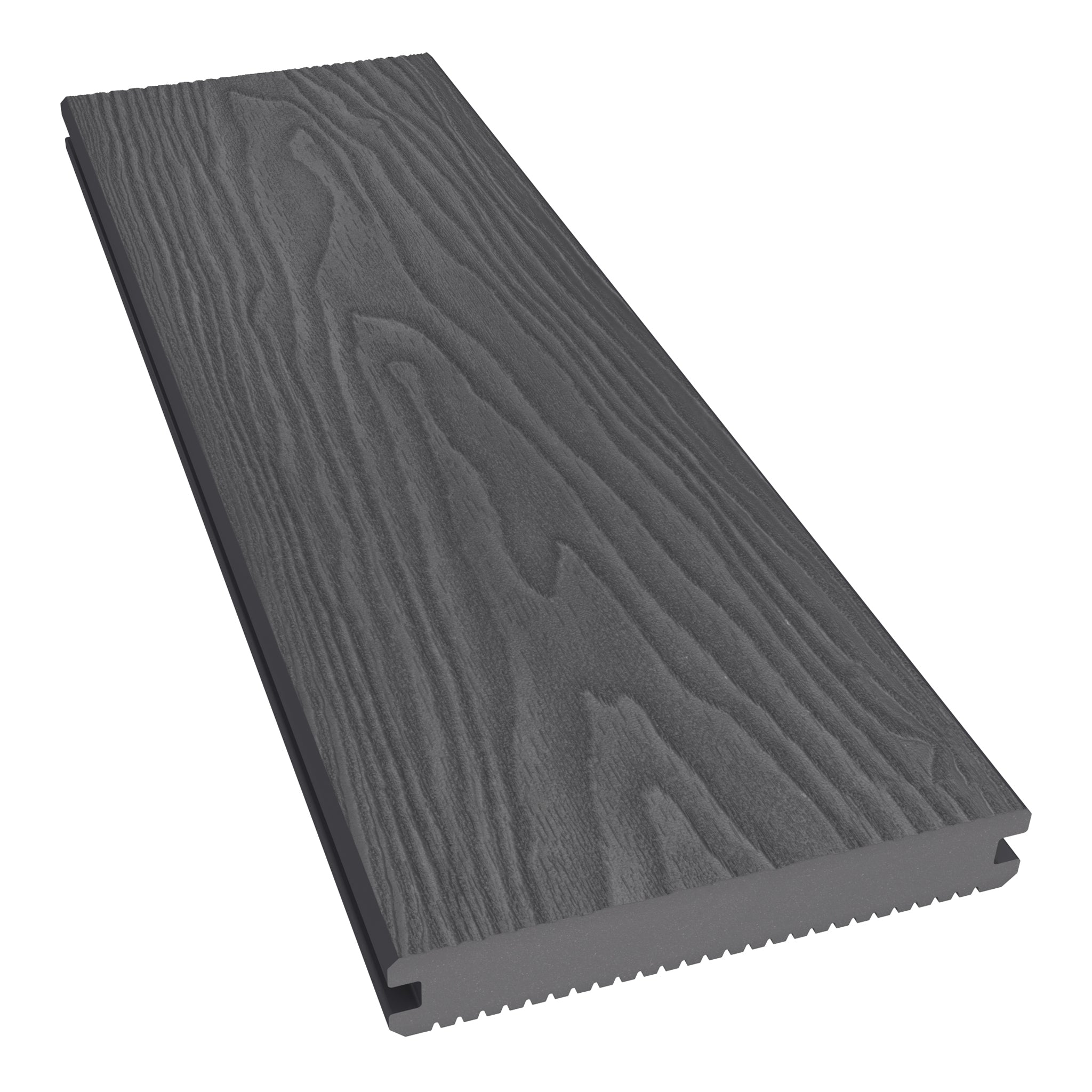
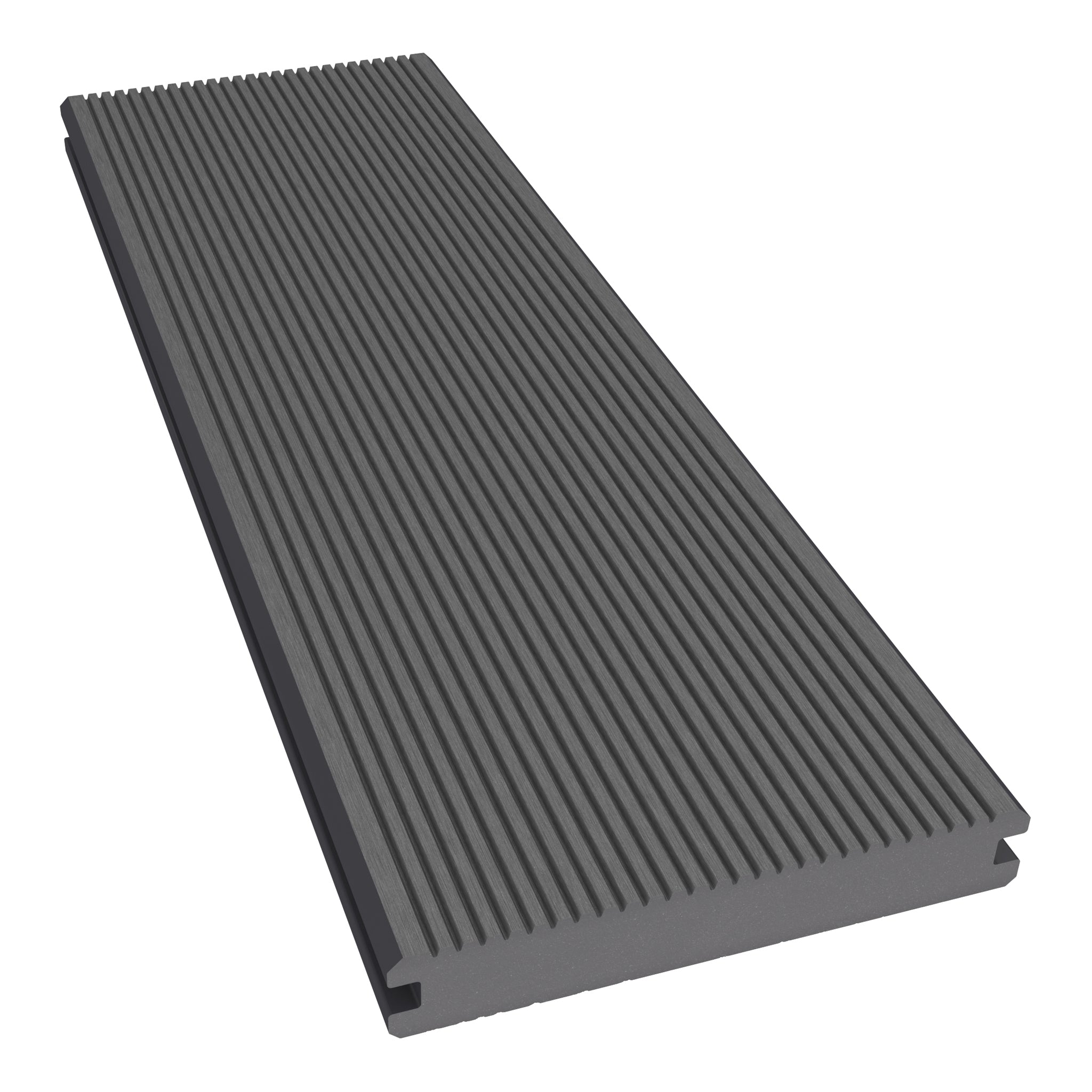
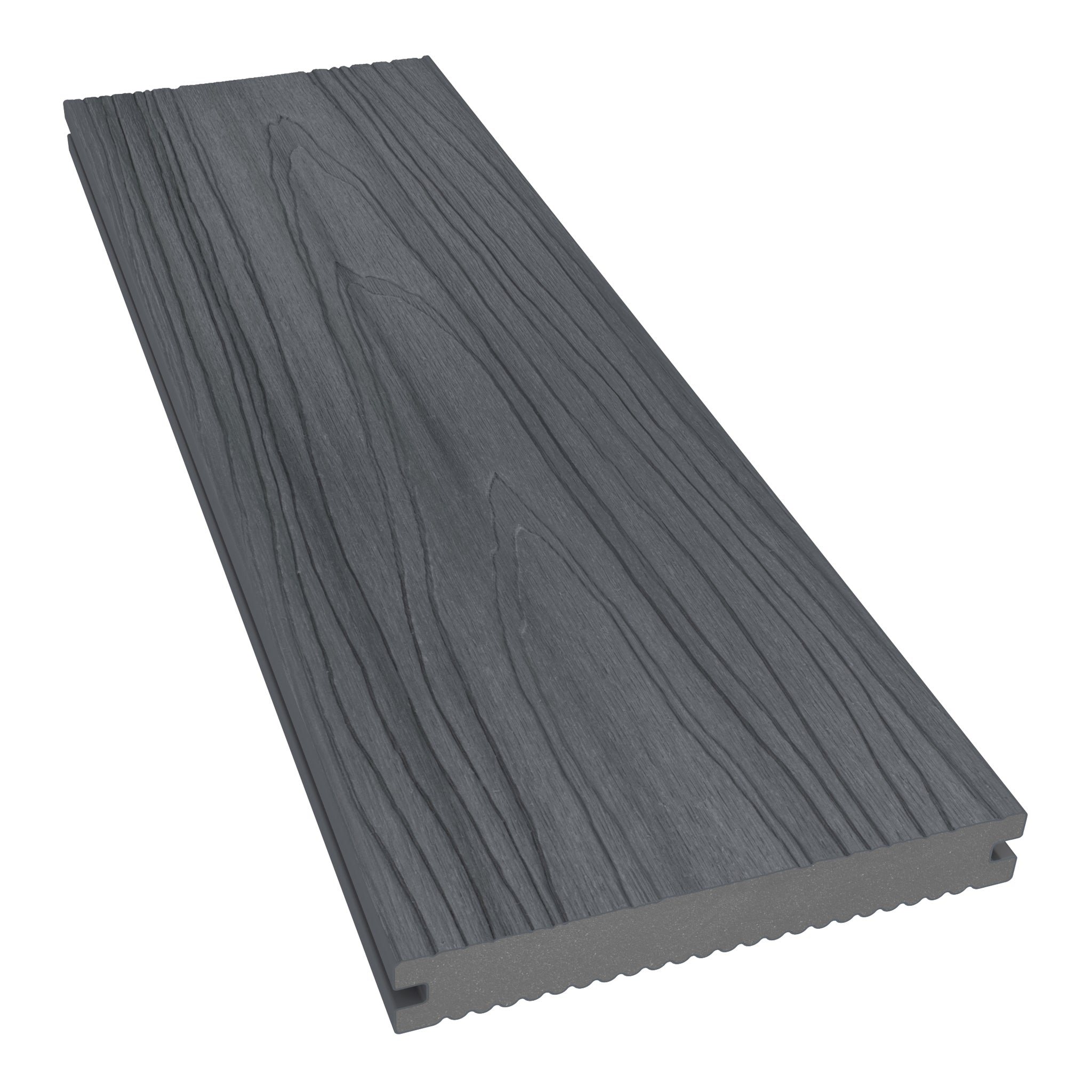
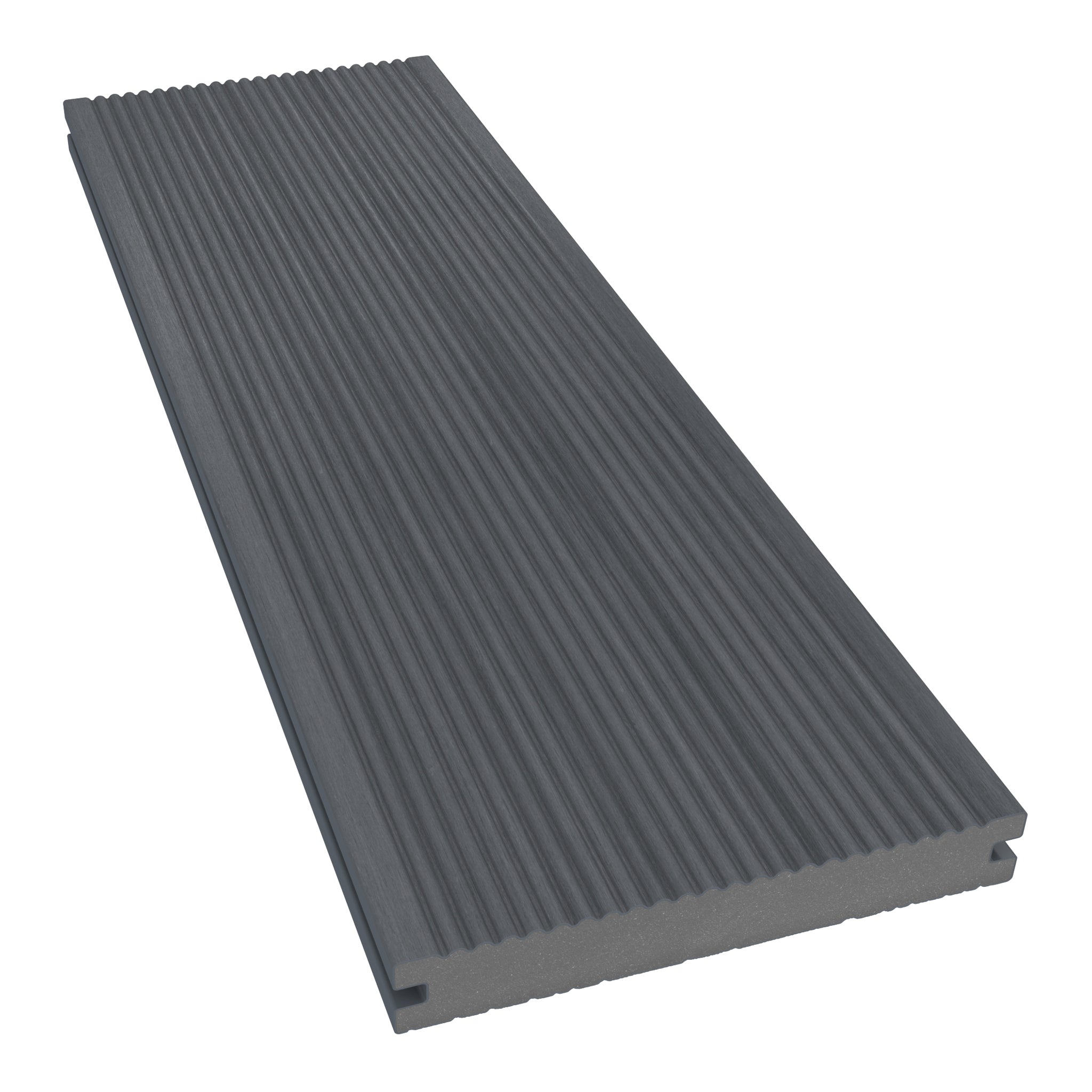
For a suitable outdoor waterside project, solid composite decking offers an alternative to timber with a wood-effect appearance and straightforward routine care. It does not generally need the painting, staining or sealing associated with some timber finishes.
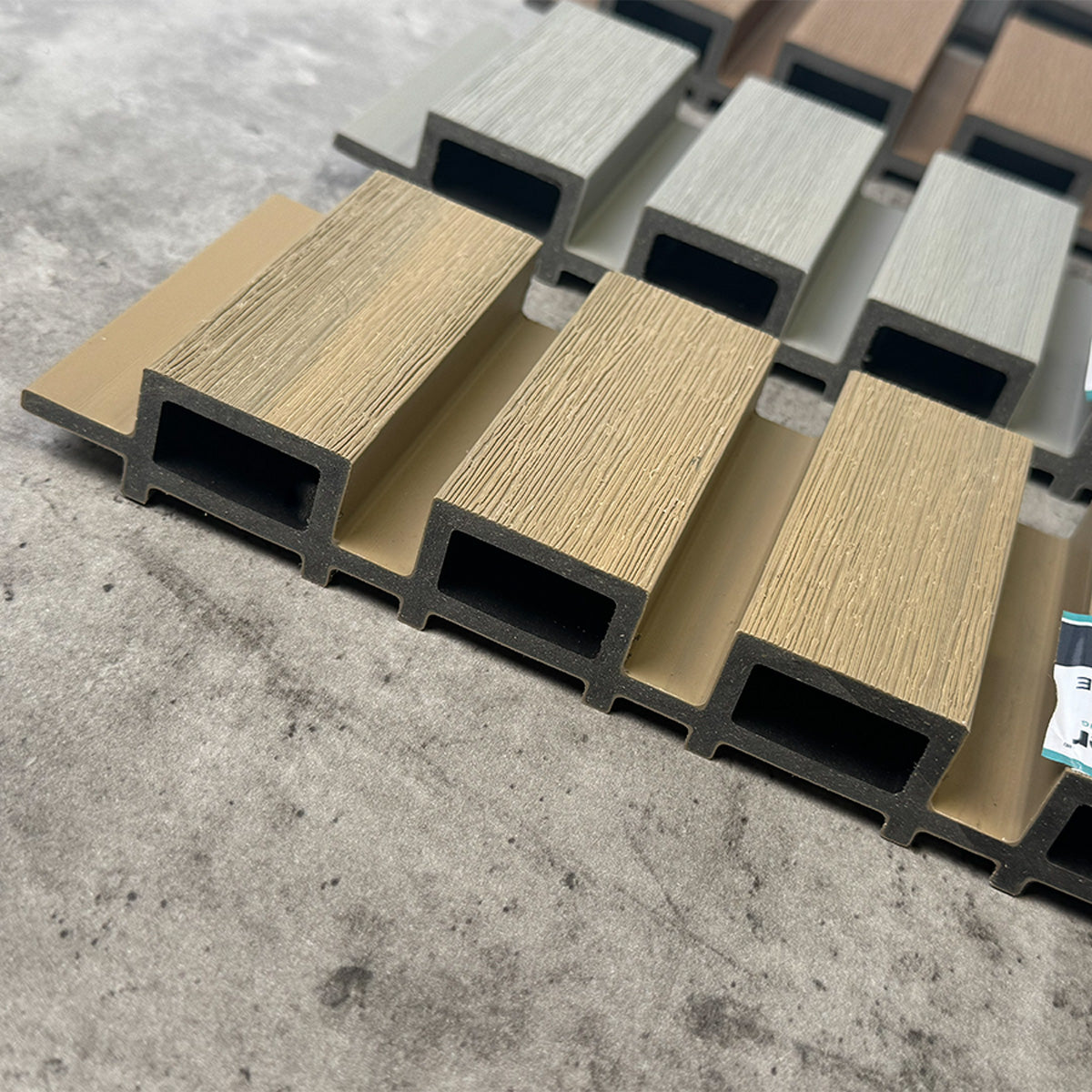
A solid core is a feature to compare, rather than proof of marine suitability. Review the chosen board’s weight, permitted spans, fixing requirements and exposure limitations alongside the requirements of the supporting structure.
Where saltwater spray, repeated wetting or unusual loading is expected, ask the supplier to confirm whether the proposed conditions fall within the product’s intended use and warranty cover.
Weather Resistance and Colour Retention
Exposed decking can experience sunlight, rain and temperature changes throughout the year. Compare product-specific information on moisture absorption, weathering and dimensional movement rather than relying on broad claims such as “weatherproof”.
Some composite ranges incorporate protective surfaces designed to improve colour retention. Our guide to fade-resistant composite decking explains the topic, but fade resistance does not mean that an outdoor finish will never change colour.
Composite boards expand and contract as temperatures change. Follow the installation instructions for expansion gaps, ventilation and drainage so the finished deck can accommodate that movement.

Assessing Grip in Wet Conditions
Slip resistance is an important part of choosing a deck surface where water is likely to be present. Texture alone does not establish performance: review the test results for the specific board, surface finish and wet conditions relevant to the project.
Our guide to slip-resistant composite decking introduces the factors to consider. No deck surface should be treated as slip-proof, and cleaning, drainage and the condition of the surface remain important.
For onboard installations, assess grip as part of the vessel’s overall deck design with the relevant marine professional. General outdoor decking data should not be treated as approval for every marine use.
Cleaning and Maintenance
Compare the care routine as well as the purchase price. Timber maintenance varies with the species and finish, while composite boards usually avoid the need for routine sanding, staining or sealing. Our guide to low-maintenance decking explains what ongoing care involves.
Low maintenance still includes cleaning. Follow the supplier’s instructions for removing dirt, organic matter and other deposits, and use only recommended cleaning products and methods. Check drainage routes and inspect the surface and fixings as part of your routine.
Surface damage is another useful comparison point. Scratch-resistant composite decking is designed to reduce visible wear, but the term does not mean scratch-proof. Consider how furniture, equipment and everyday use may affect the finish.
Durability and Warranty Cover
Long-term performance depends on the complete installation, including the boards, supports, fixings and maintenance. A product designed to resist common outdoor wear still needs to be used within its specified limits.
A warranty sets out defined cover and conditions; it does not establish suitability for an application that falls outside the product guidance. Read the current NeoTimber® composite decking warranty terms and confirm how they apply to your proposed location and use before ordering.
Colours, Finishes and Layout
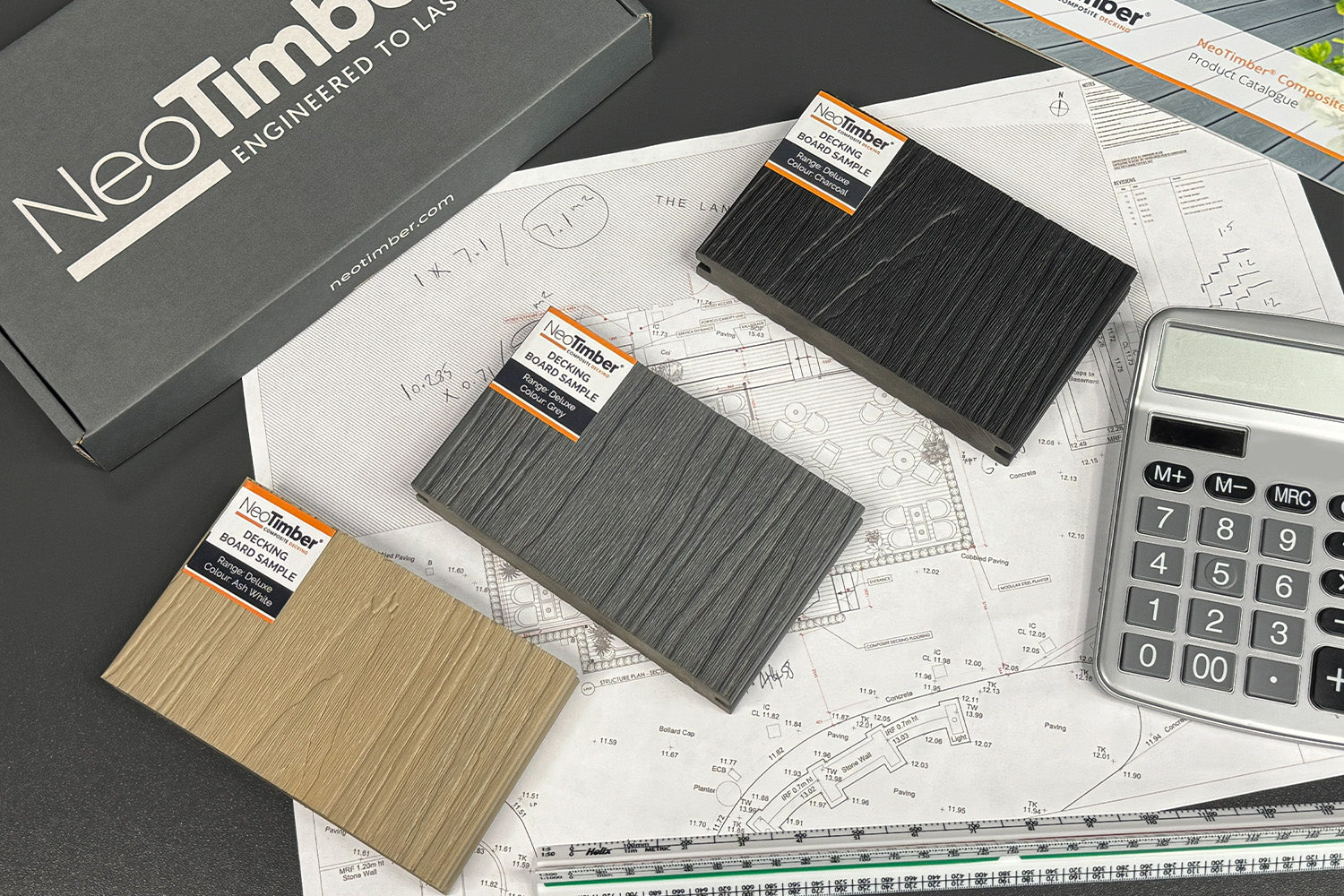
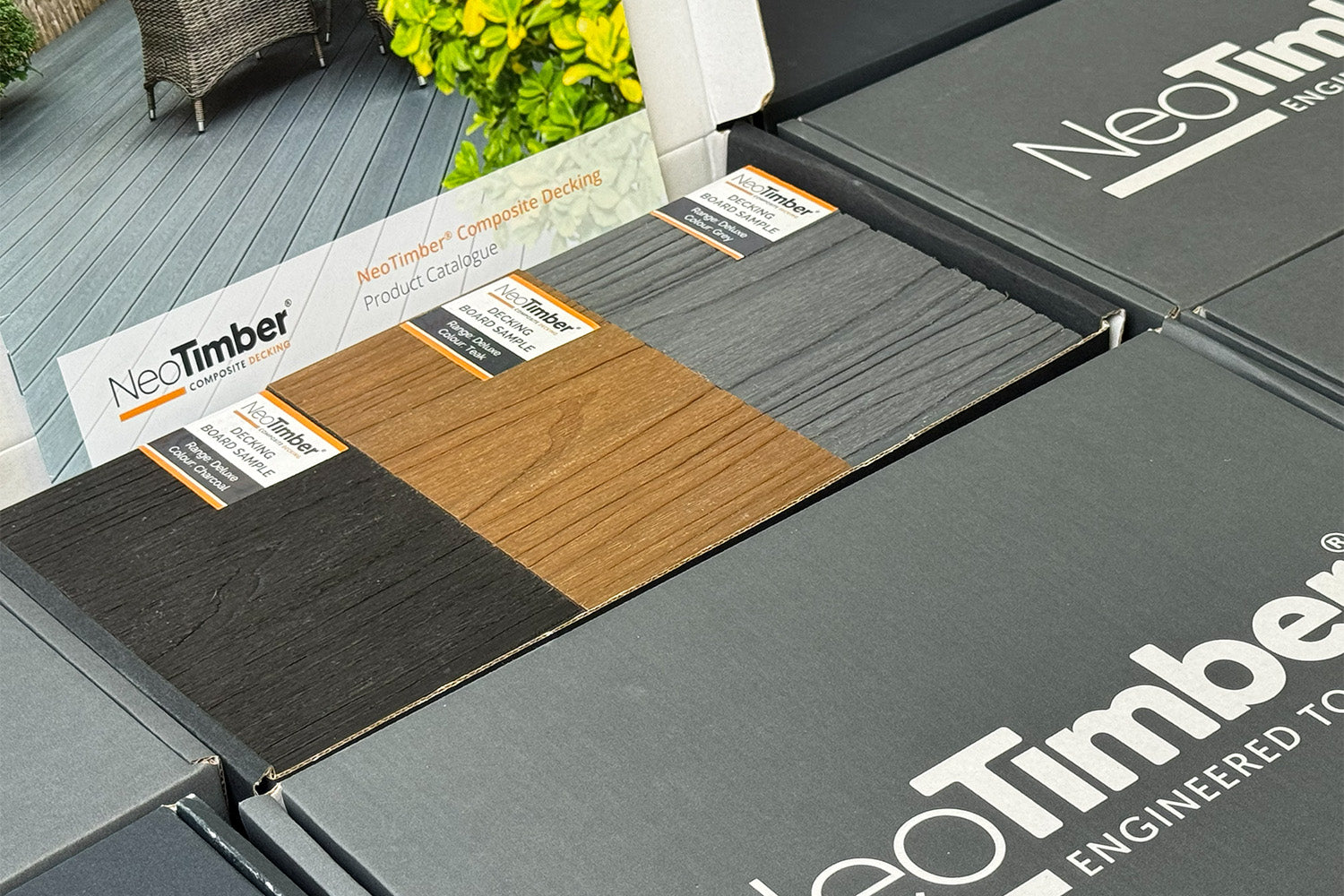
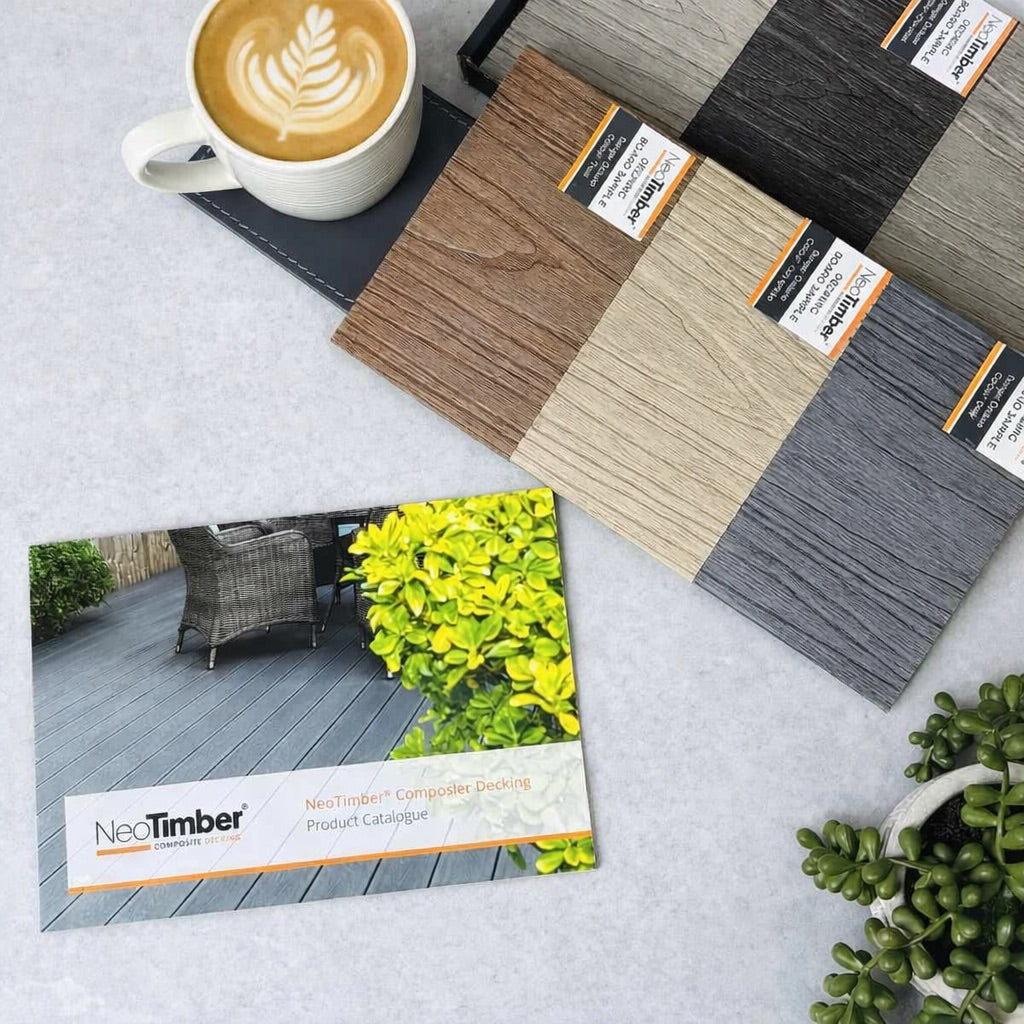
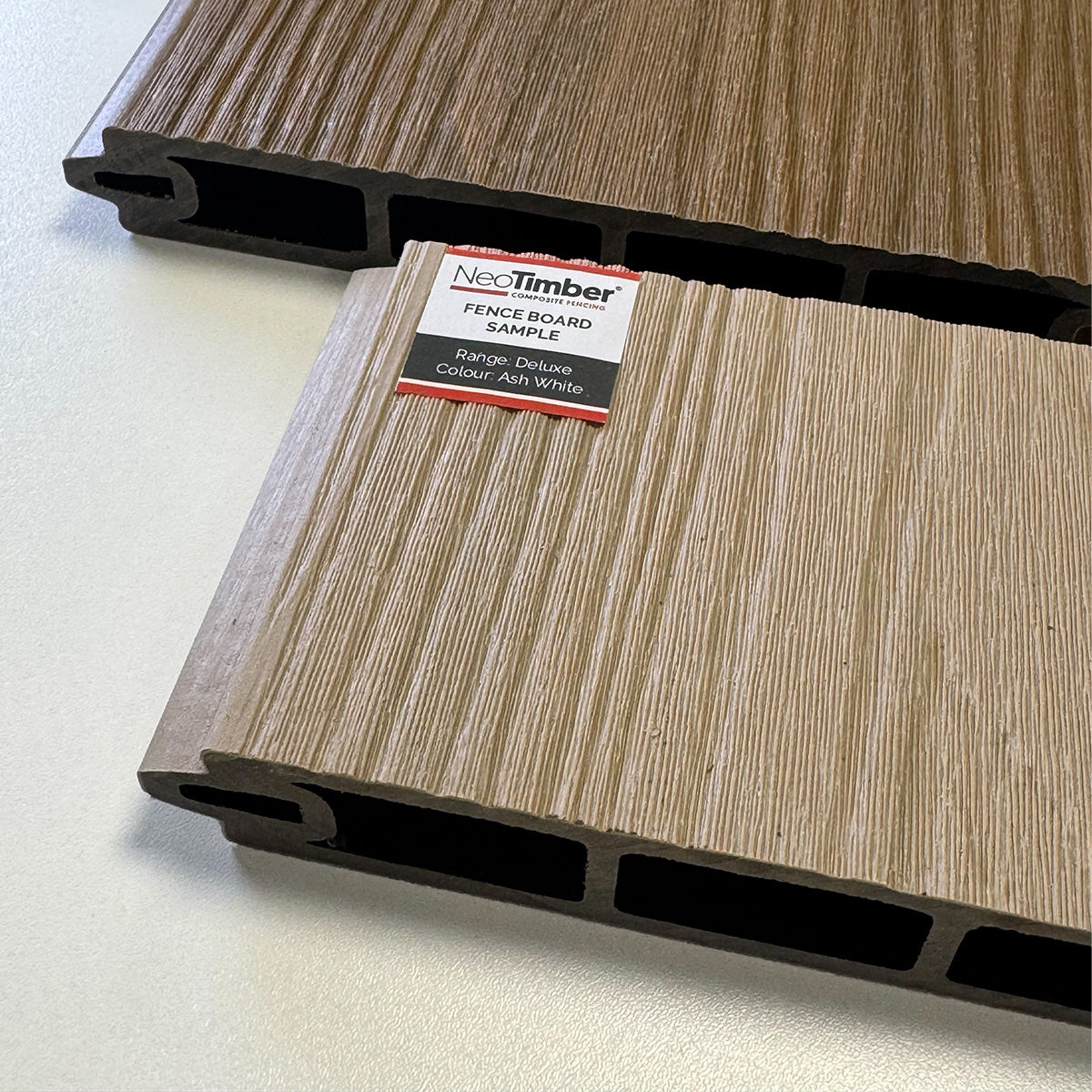
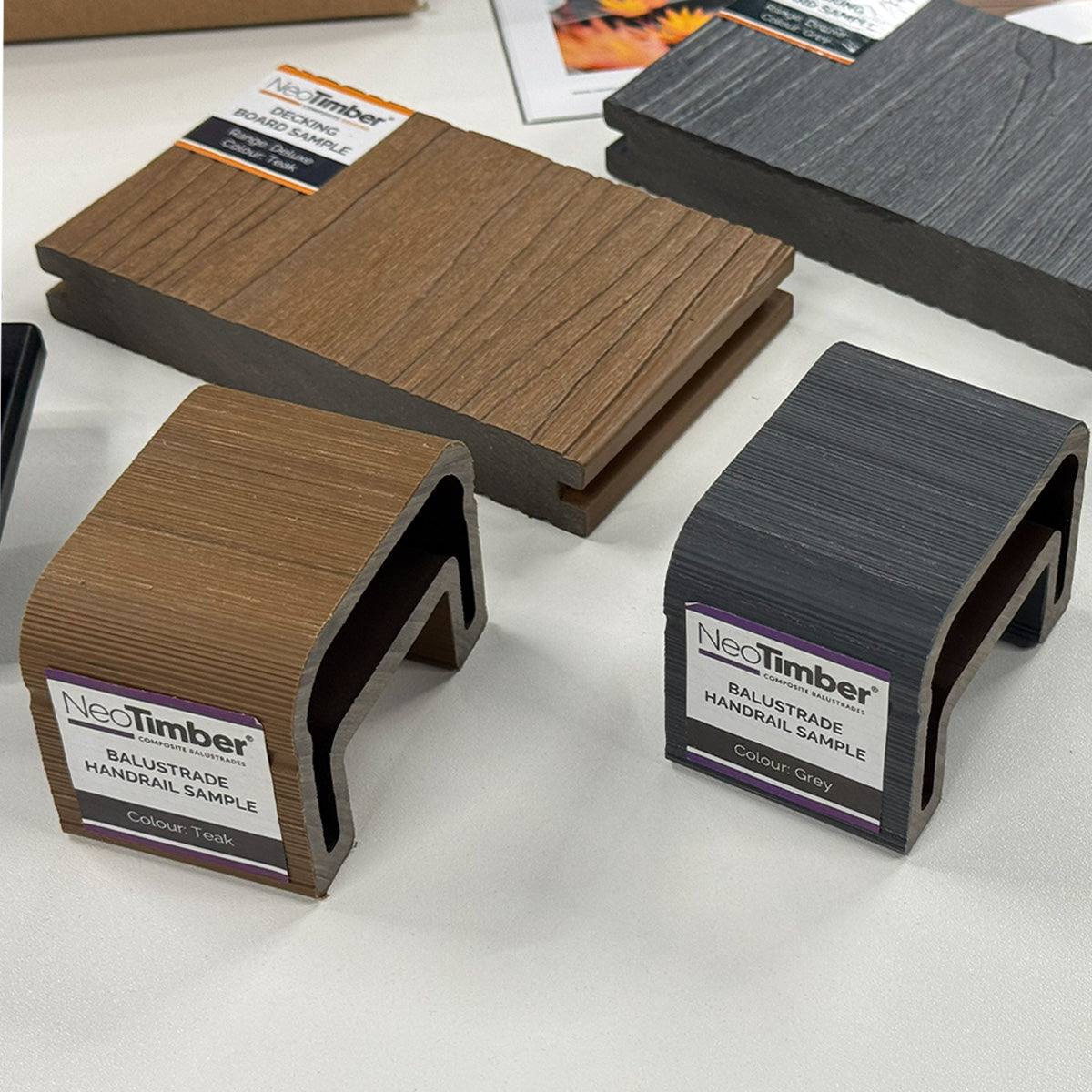
Once suitability has been established, compare colours and textures in the setting where the deck will be installed. Samples can help you assess the finish alongside neighbouring materials and in different light conditions.
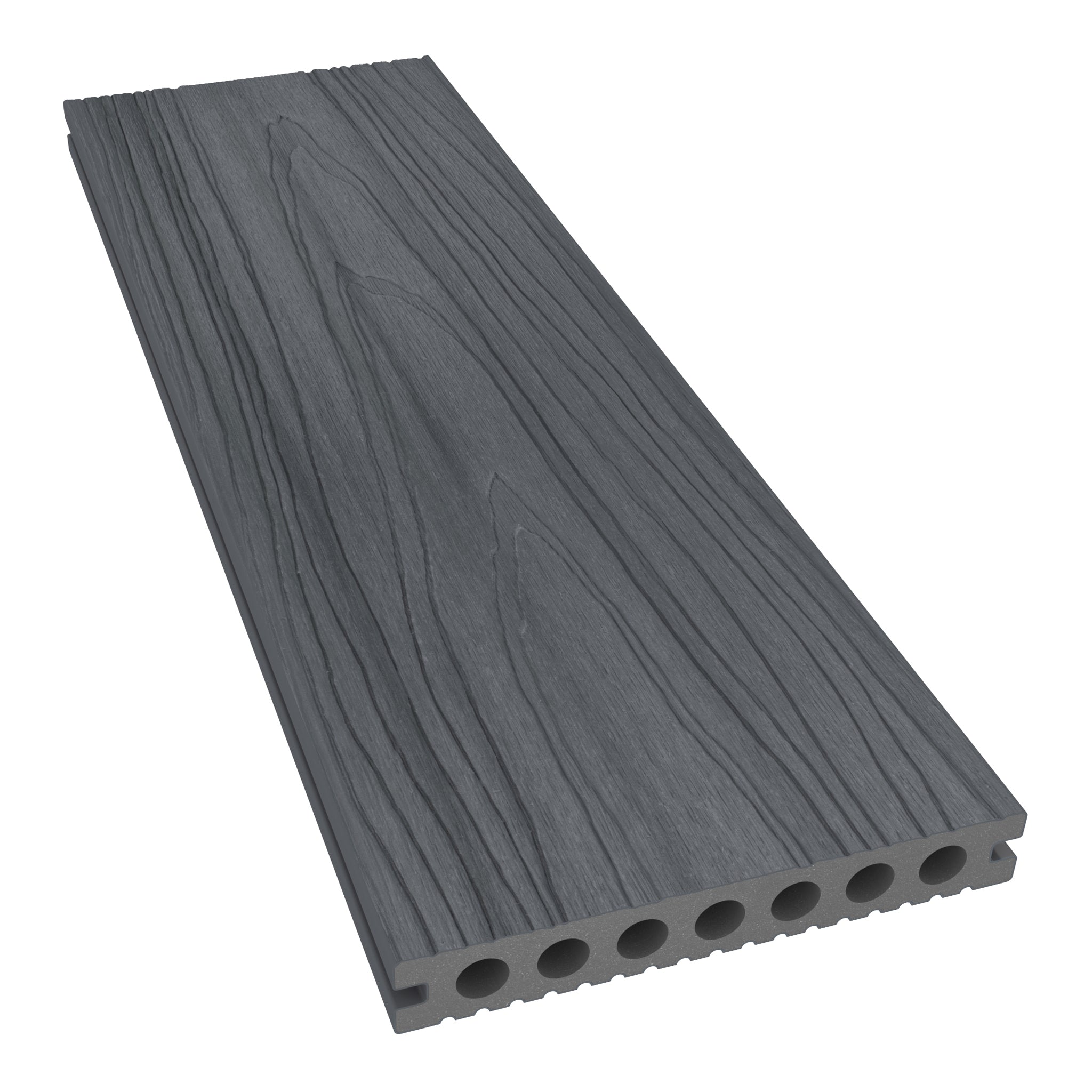
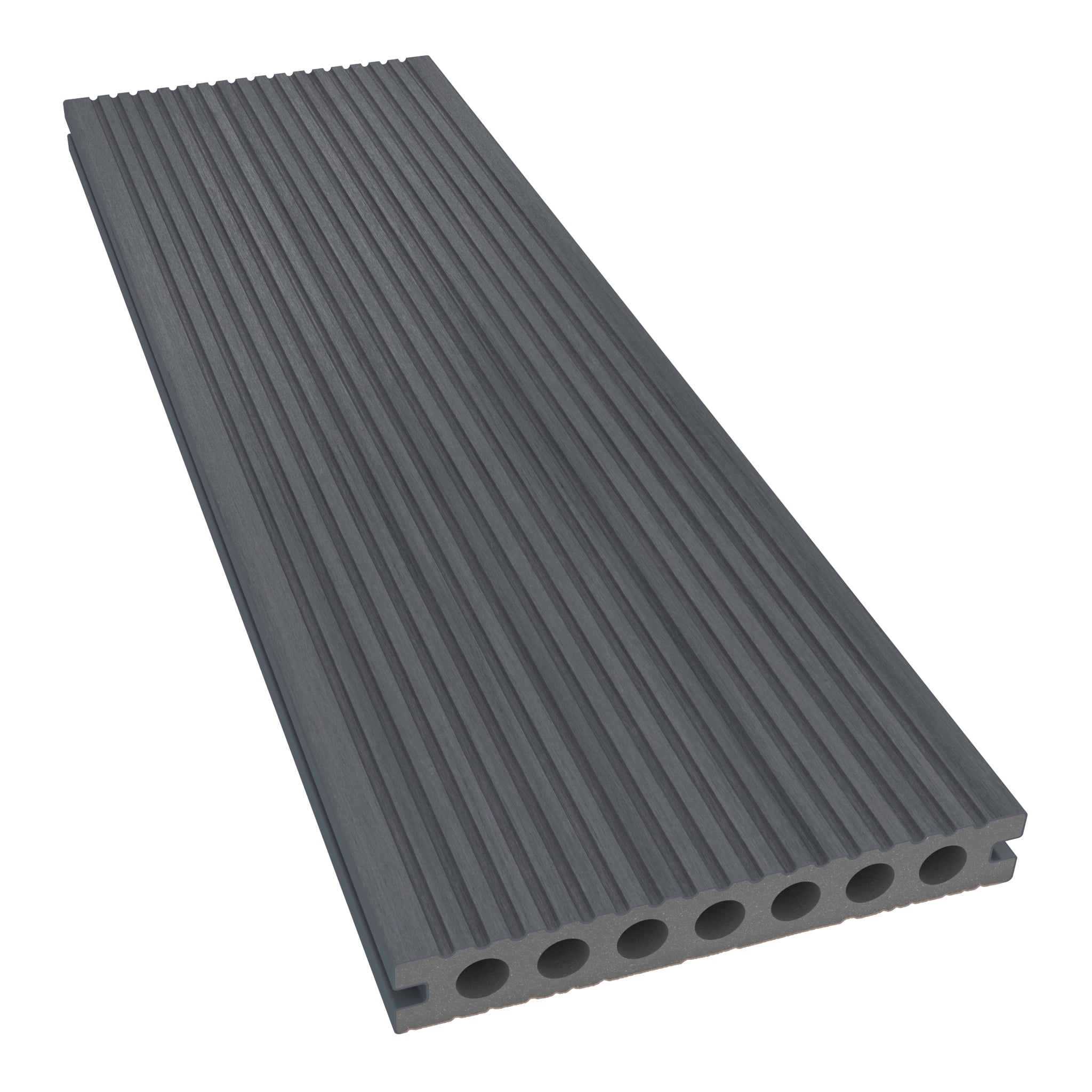
For outdoor composite decking projects, options include grey composite decking, charcoal and antique decking finishes and teak-effect composite decking. A teak-effect appearance should not be confused with a product being specified for use on a boat.
For compatible terrace installations, explore decking layout patterns, picture-frame deck borders and decking edging trims. Plan these details alongside the supporting structure and drainage requirements.
Planning the Supporting Structure and Fixings
For an outdoor composite deck, follow the chosen system’s instructions for joist centres, board spans, ventilation, clearances and expansion gaps. Use compatible composite decking fixings and check their suitability for the exposure conditions.
An onboard installation requires a vessel-specific approach. The weight of the complete system, the existing deck construction and the proposed attachment method should be assessed before work begins. Standard terrace installation instructions are not a substitute for that assessment.
Composite Decking Ideas for Waterside Leisure Areas
If your project is beside the water rather than aboard a boat, these guides provide ideas for outdoor layouts and finishes:
- Poolside composite decking case study
- Decking advice for static caravans
- Mobile home and caravan decking ideas
- Composite decking for commercial outdoor spaces
Use these examples for inspiration, then check the specification against your own site. A poolside terrace, coastal holiday deck and marina walkway can present different exposure and loading requirements.

Choose Decking That Fits the Application
The right boat decking starts with a clear specification for the vessel and its intended use. Compare approved options on grip, weight, durability, maintenance and installation, then confirm the complete system before purchasing.
For an outdoor waterside project, explore NeoTimber® options alongside the relevant technical specifications and installation resources. Once you have established which range suits the application, request free NeoTimber® decking samples to compare colours and finishes.