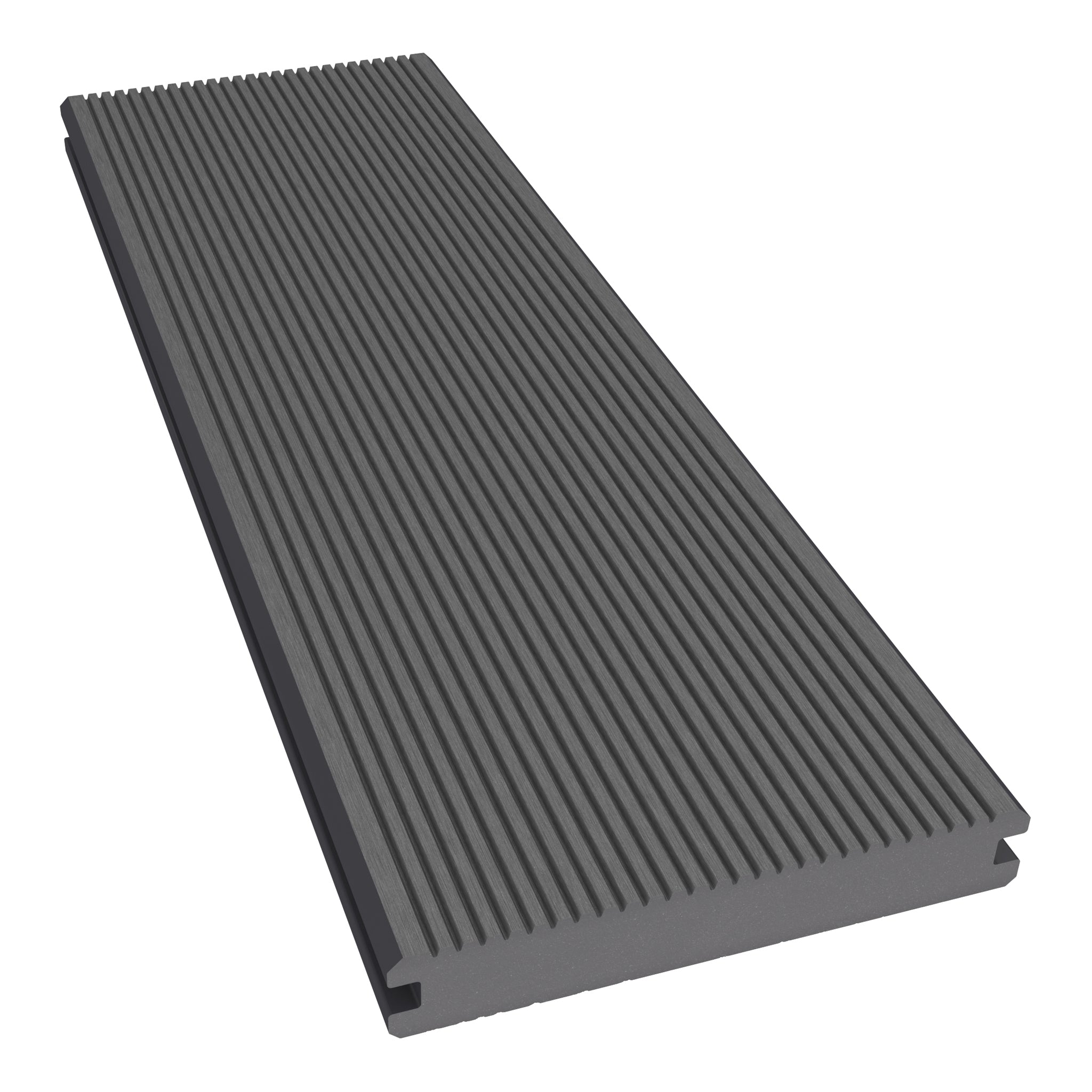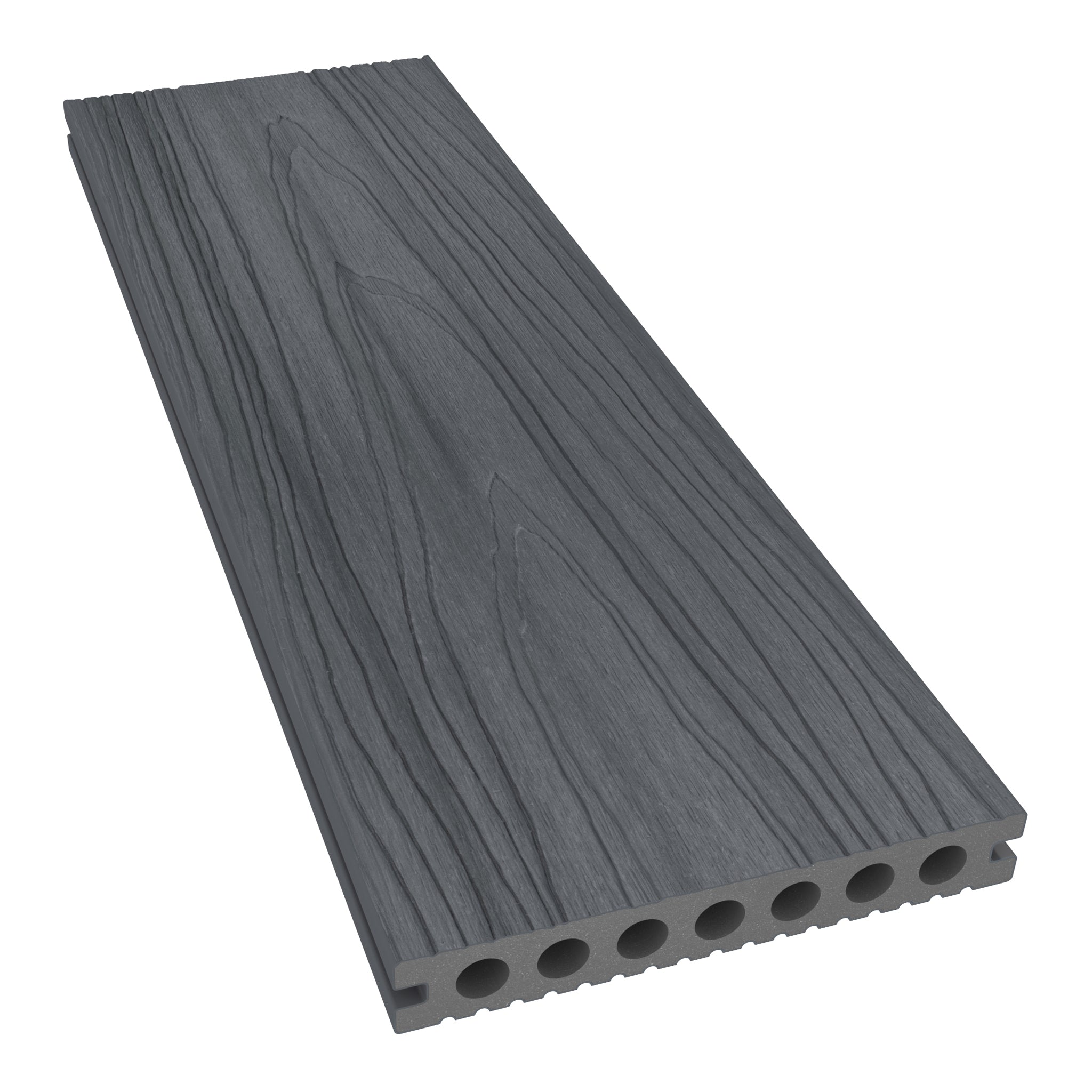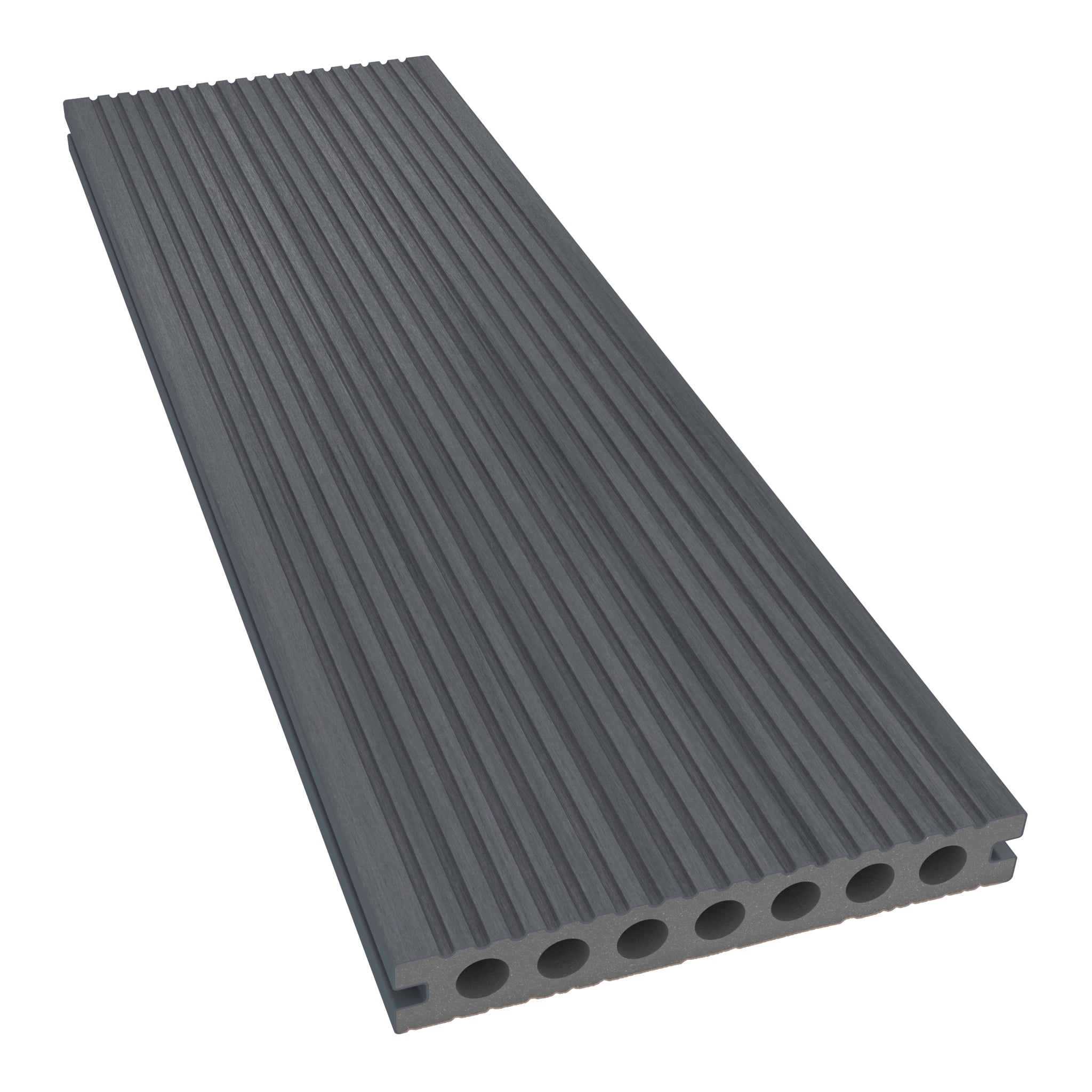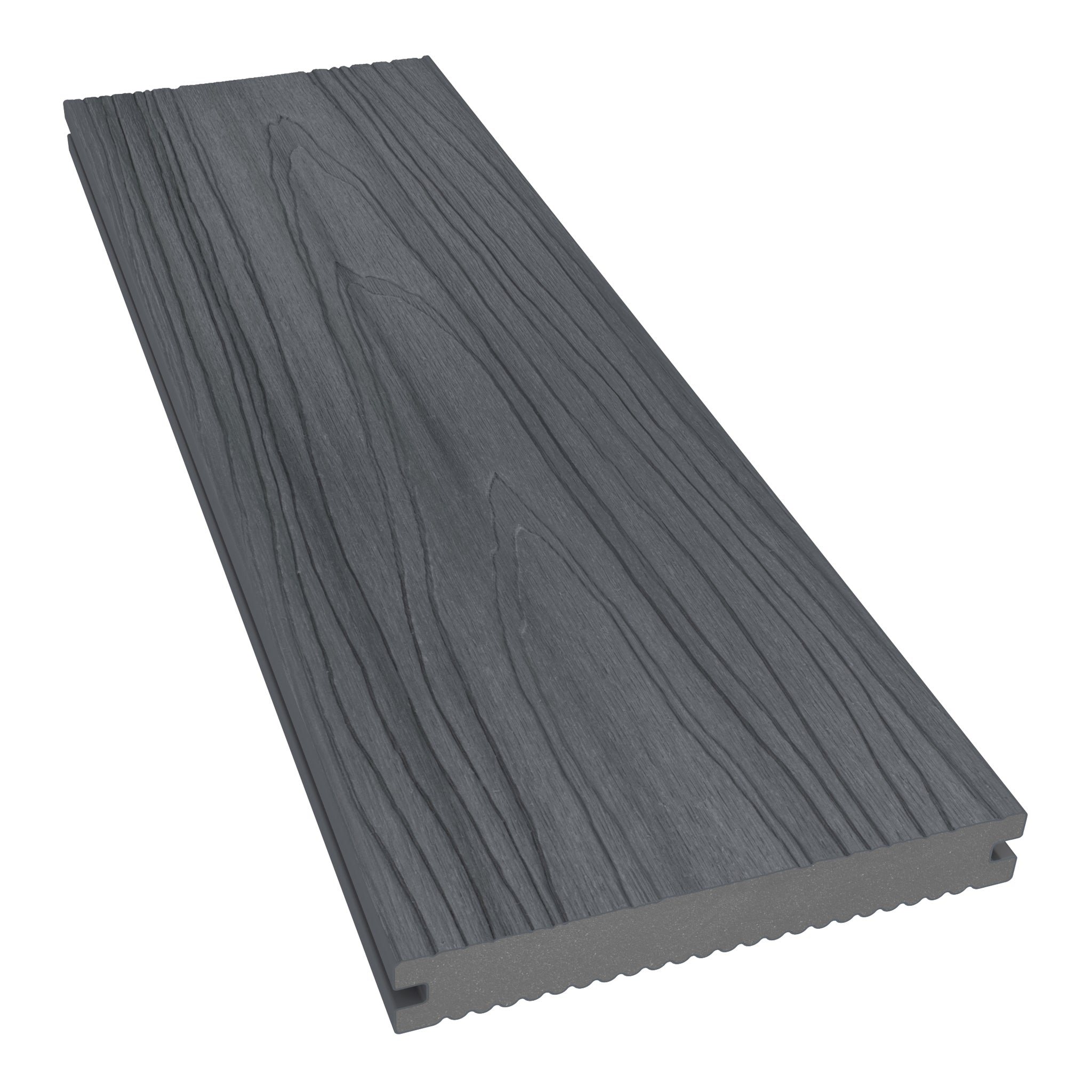



How to Choose and Buy Decking for Your Outdoor Project
Before you buy decking, choose a material that suits the site, measure the proposed deck and budget for the complete installation. The boards are the visible finish, but joists, supports, fixings, edging and delivery all affect what you need to order and what the project will cost.
This guide explains how to buy decking boards with confidence, whether you are replacing a small garden deck or planning a larger outdoor living area. You will find advice on comparing suppliers, understanding plastic and composite products, choosing kits, buying joists and checking an online order before payment.
Already know your preferred material? Browse NeoTimber® composite decking. If you are still exploring the possibilities, start with free decking samples and use this guide to build your shortlist.

Where to Buy Decking: How to Compare Your Options
You can buy decking from specialist suppliers, builders’ merchants, DIY retailers and online stores. Each route can work, but the right choice depends on the product you want and the support your project needs. A local supplier may let you inspect stock in person, while a specialist online retailer may provide detailed range comparisons, samples and system-specific documentation.
When deciding where to buy decking boards, look beyond the photograph and headline price. Check who manufactures the boards, who handles product queries and whether compatible accessories will be easy to identify. You should be able to understand what you are buying before it arrives.
What makes the best place to buy decking?
The best place to buy decking for your project is a supplier that combines suitable products with clear specifications, transparent pricing and dependable ordering support. A cheap board is less useful if you cannot find its installation instructions or establish which clips it needs.
- Clear product information: material, dimensions, usable coverage, finish and intended applications.
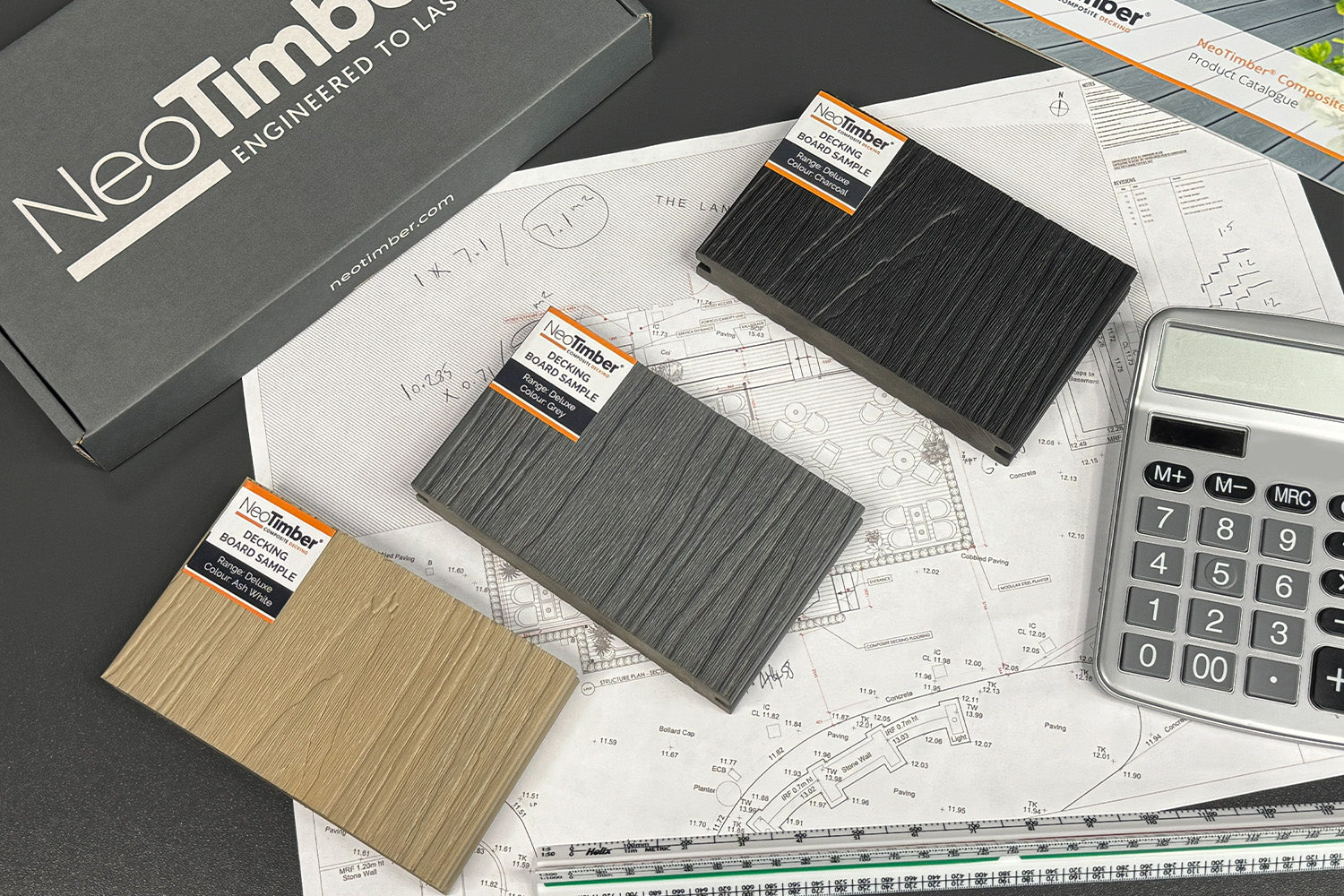
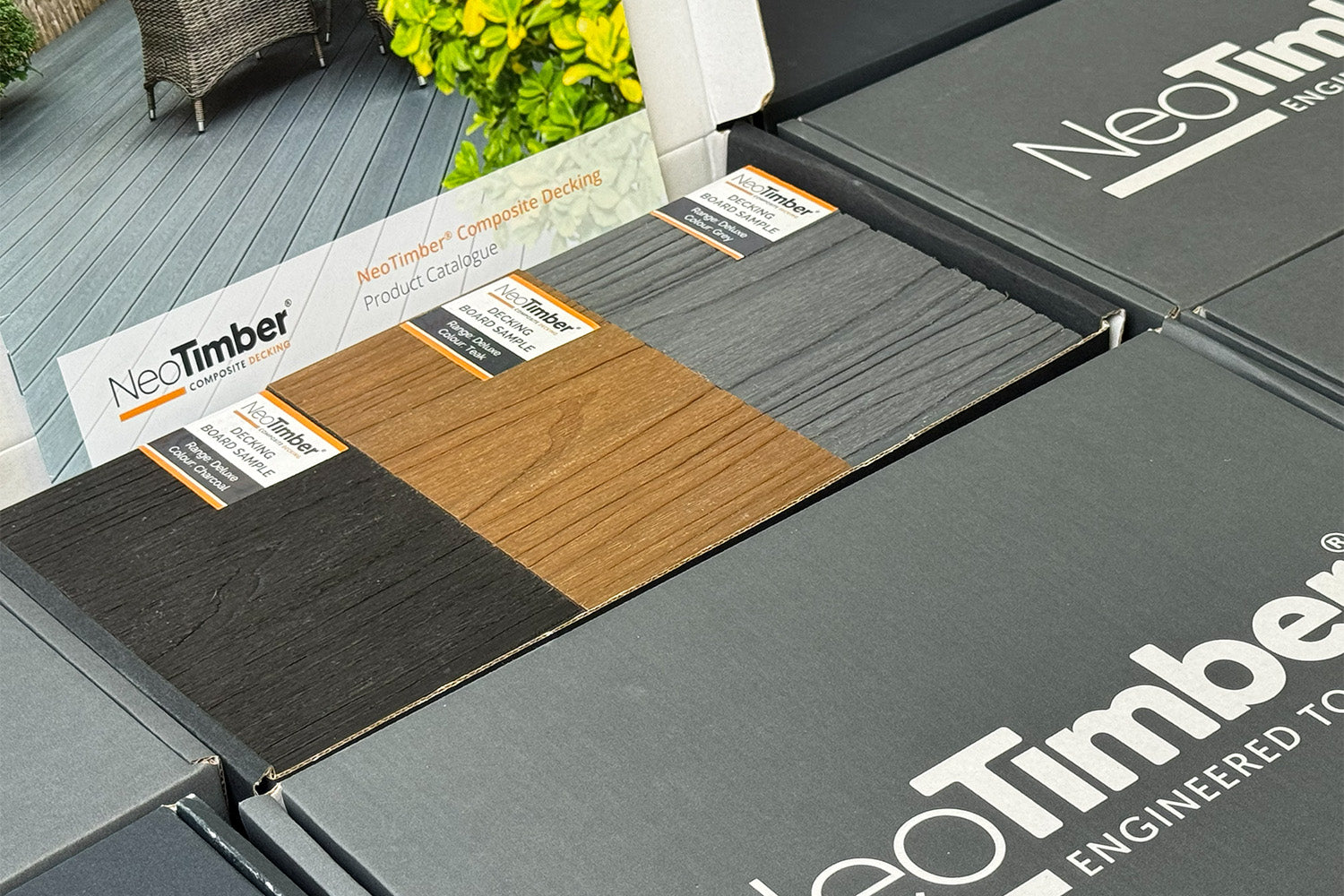
- Samples: a way to assess colour and texture before making a full purchase.
- Compatible components: joists, fixings and trims that can be checked against the chosen system.
- Useful documentation: installation instructions, care guidance and written warranty terms.
- Transparent ordering: delivery charges, availability and returns information before payment.
- Accessible support: a contact route for questions about the order or product specification.
NeoTimber® brings together decking ranges, samples, calculators and technical resources. Use these to compare your options, and ask the team to clarify any missing detail before placing an order. The strongest buying decision is based on your actual project rather than an unsupported claim that one supplier is best for everyone.
Start with a Practical Plan for Your Deck
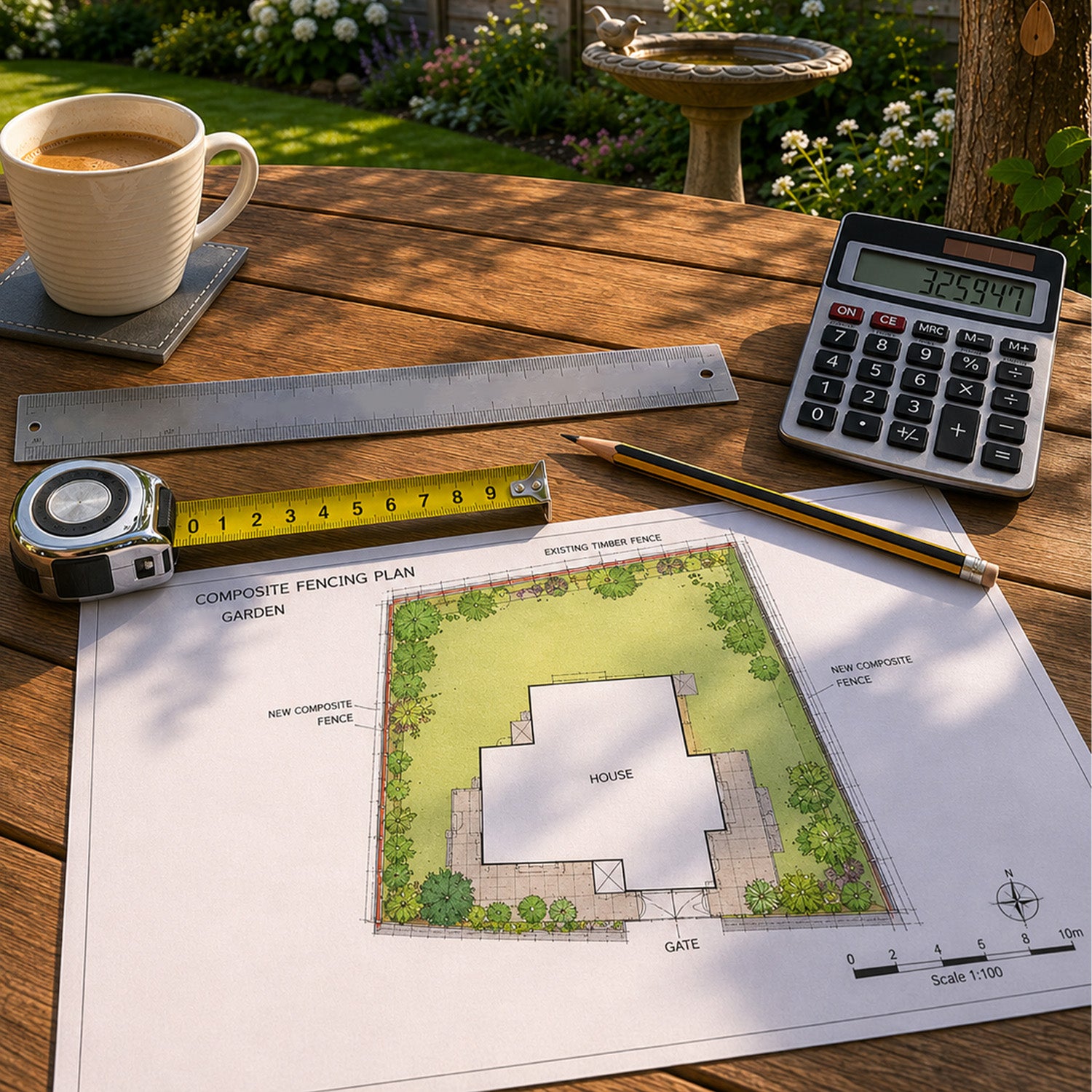
Decide how the space will be used before selecting board lengths or colours. A dining deck needs room for chairs to move, while a narrow route beside a garden room may need a simpler layout. Mark the outline on the ground and check how people will move between doors, steps, seating and the rest of the garden.
Record the existing surface, available construction depth and any changes in level. A deck above a concrete base raises different questions from one built over garden ground. Your installer needs to know how the frame will be supported, how water will drain and how the finished height relates to nearby doors and walls.
Separate everyday design choices from applications that need a specific technical assessment. Balconies, roof terraces, raised platforms and busy commercial spaces should not be treated as interchangeable with a simple garden deck. Confirm the appropriate system, loading and fire requirements with the responsible designer before ordering materials.
Make a short project brief containing the dimensions, intended use, preferred finish, site photographs and target completion date. This gives suppliers and installers enough context to provide a more relevant estimate and reduces the chance of comparing quotes built around different assumptions.
Which Decking Material Should You Buy?
Material choice influences appearance, care, installation and cost. Start with the site requirements, then compare the maintenance routine you are willing to take on. There is no reason to select a product solely because it is described as premium, modern or low maintenance.
| Material | What to compare | Care and specification checks |
|---|---|---|
| Timber | Species, grading, treatment, grain and board dimensions | Expected weathering, any treatment schedule and suitability for the intended exposure |
| Wood-plastic composite | Capped or uncapped finish, solid or hollow profile, colours and fixing system | Cleaning guidance, movement allowances, support requirements and product warranty |
| All-plastic or PVC products | Exact material composition, board construction and intended use | Support spacing, expansion guidance, surface performance and compatible fixings |
| Aluminium | Profile, coating, drainage arrangement and system components | Documented performance for the project, finish care and fixing requirements |
Timber decking
Timber offers natural variation in grain and colour. If that is central to your design, compare species and treatments rather than treating all wooden boards as the same product. Establish whether you want the surface to weather naturally or maintain a particular appearance, and ask what care that choice involves.
Composite decking
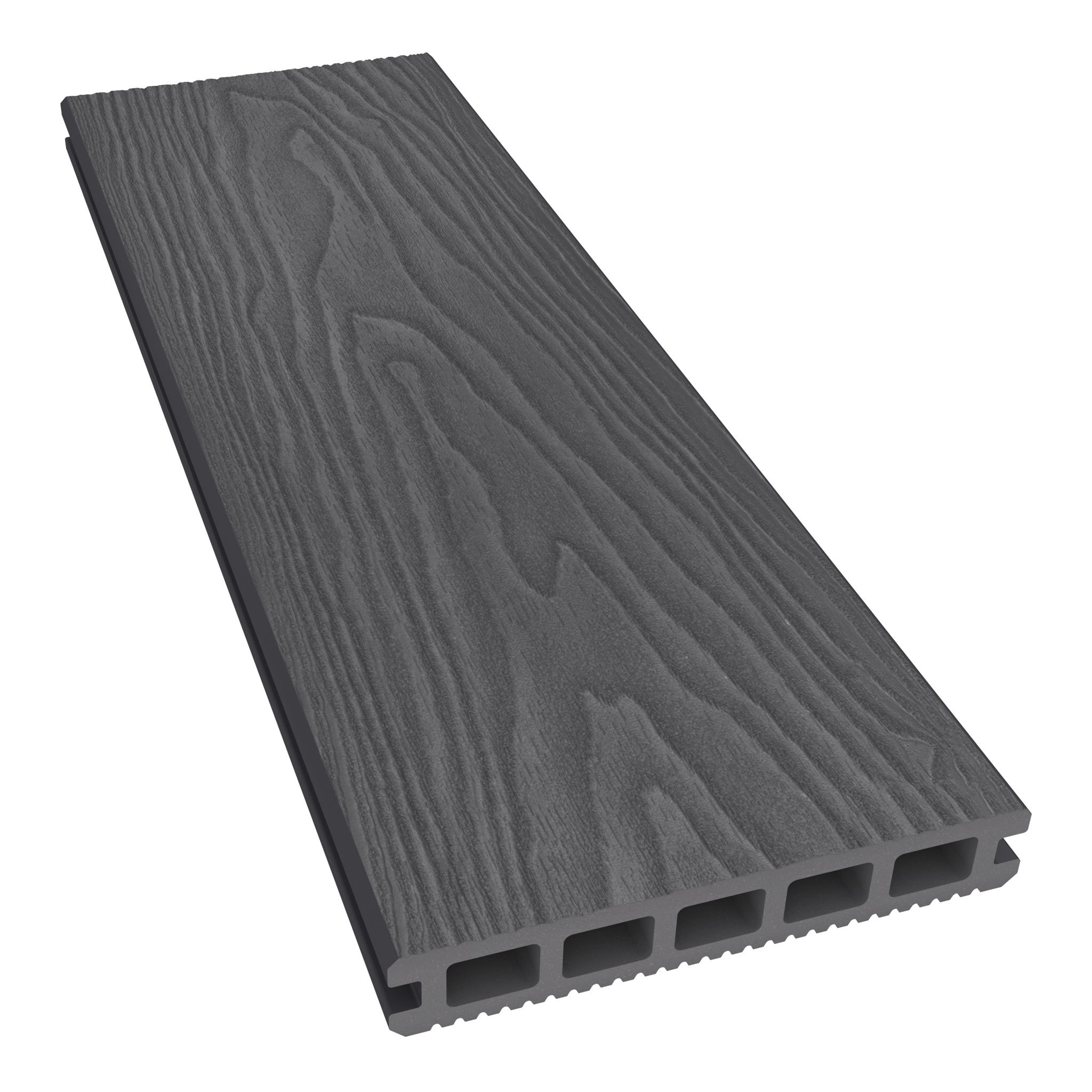
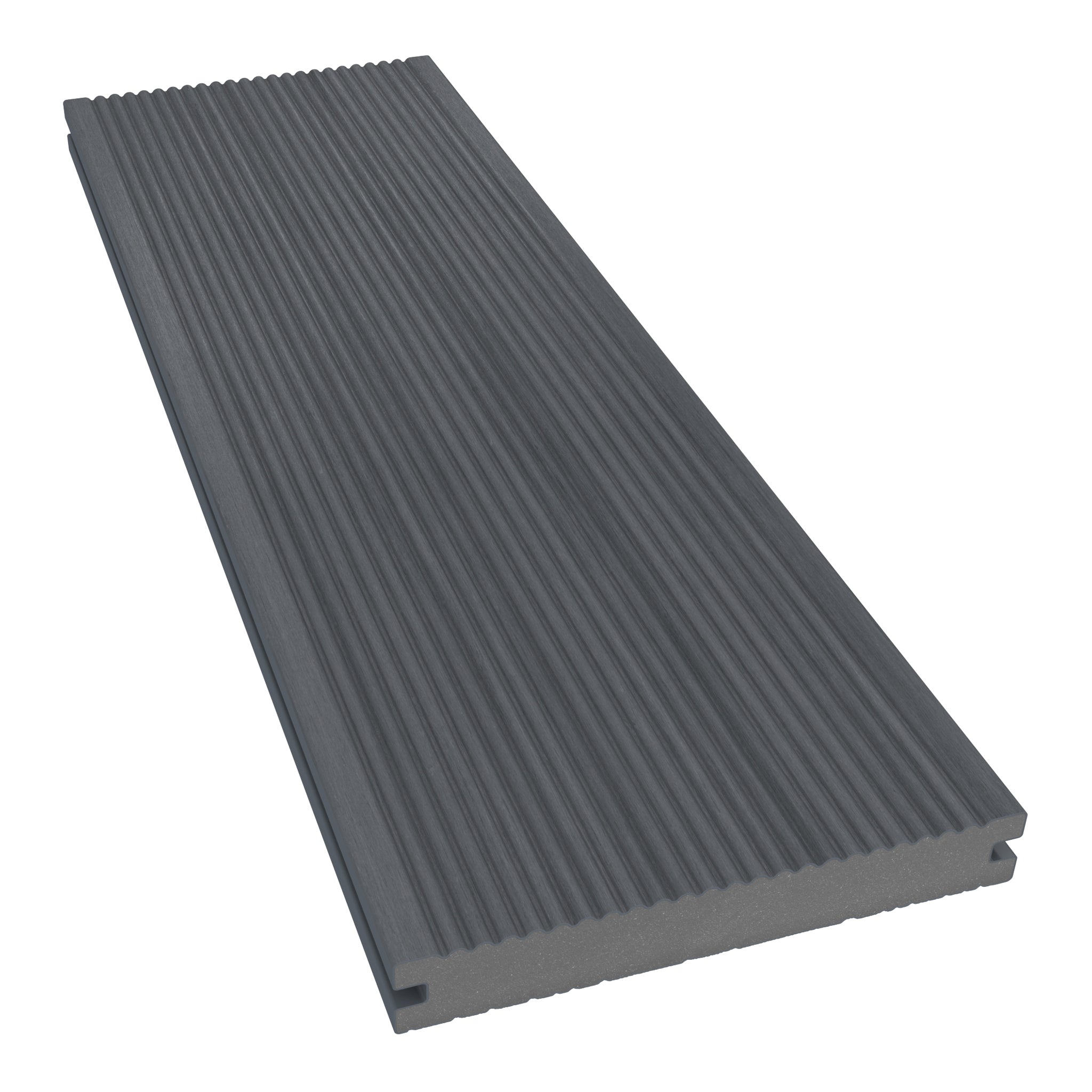
Composite decking combines wood fibres and plastic in a manufactured board. NeoTimber® offers options with different profiles and surface finishes, allowing you to compare the look and construction as well as the price. Its composite boards do not require the regular painting, staining or sealing associated with maintaining some timber finishes.
Low maintenance still includes cleaning. Look at the relevant range information to understand weathering, stain resistance and care requirements. A protective cap and a solid core describe different aspects of a board; neither term tells you everything about its suitability.
Aluminium decking
Aluminium provides another material option, with finishes that can include woodgrain effects as well as solid colours. If it is on your shortlist, compare the complete system and its technical documents. Do not infer a finished system’s fire performance, drainage behaviour or application suitability from the word “aluminium” alone.
Planning to Buy Plastic Decking? Check What the Product Contains
People searching to buy plastic decking may mean several different products. Some are looking for wood-plastic composite boards, while others want a product made without wood fibres, such as a particular PVC or recycled-plastic option. These descriptions are not interchangeable.
Read the material composition on the product page. NeoTimber® composite decking contains wood fibres and plastic, so it should not be described as entirely plastic or wood-free. If avoiding wood content is an essential part of your specification, confirm that requirement explicitly with the supplier.
The word “plastic” also does not establish the correct structural use. A recycled-plastic joist is a supporting component, while a deck board is a walking surface. Products made from a similar material can have very different dimensions, support requirements and intended functions.
Before buying, ask which product you are comparing, what it is designed to do and which installation guide applies. Then compare the complete cost and appearance. This is more useful than assuming that every product returned by a search for plastic decking offers the same performance.
How to Buy Decking Boards That Suit Your Design
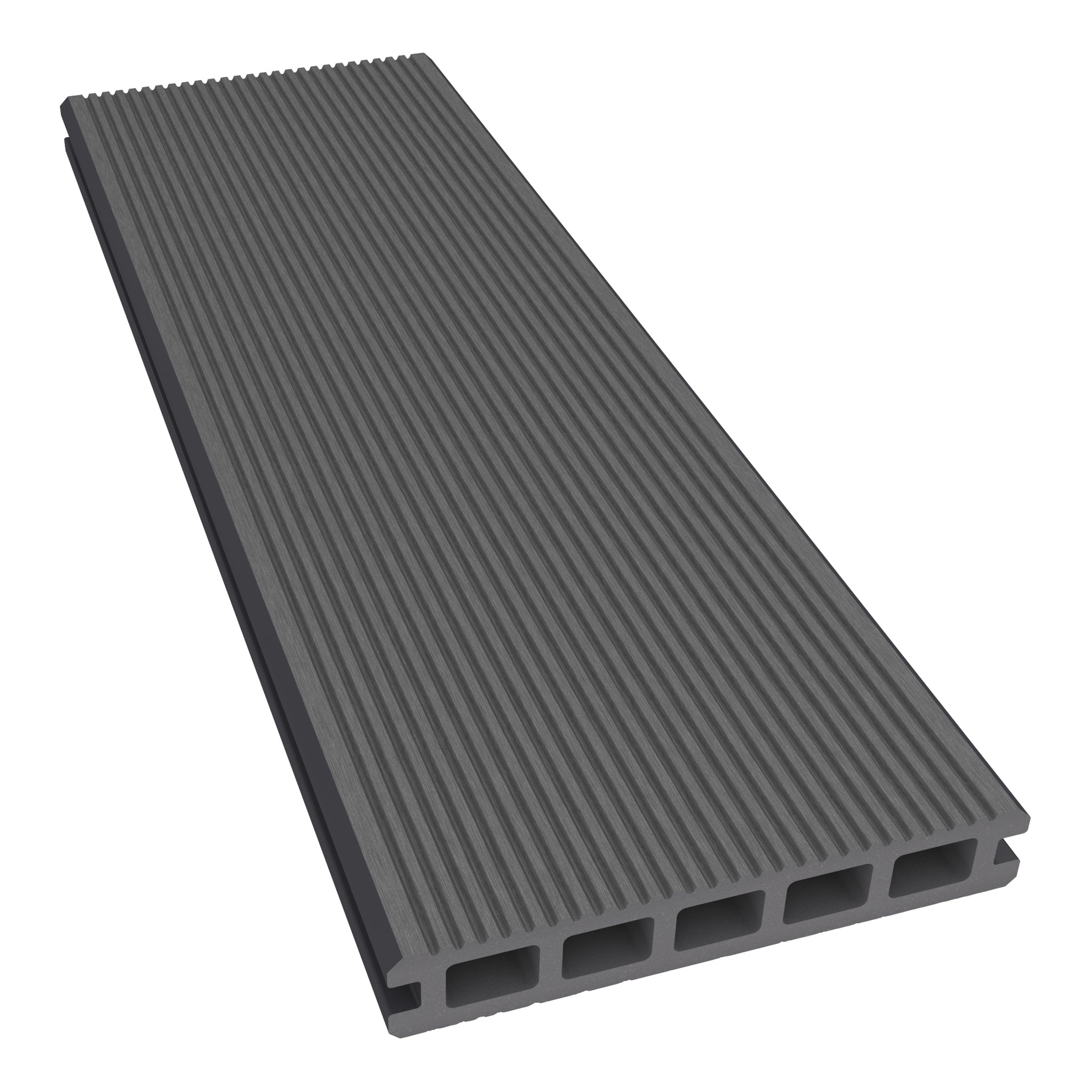
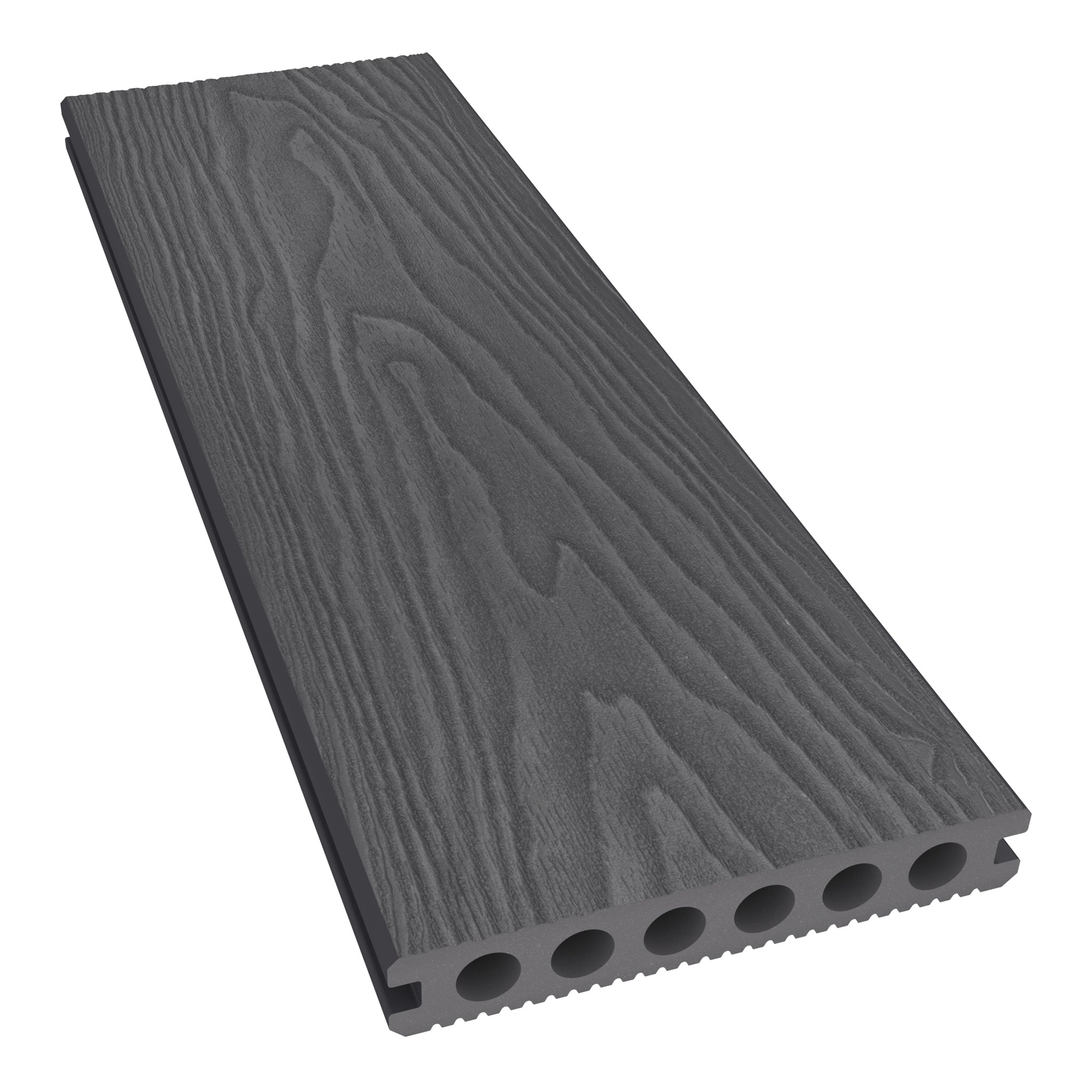
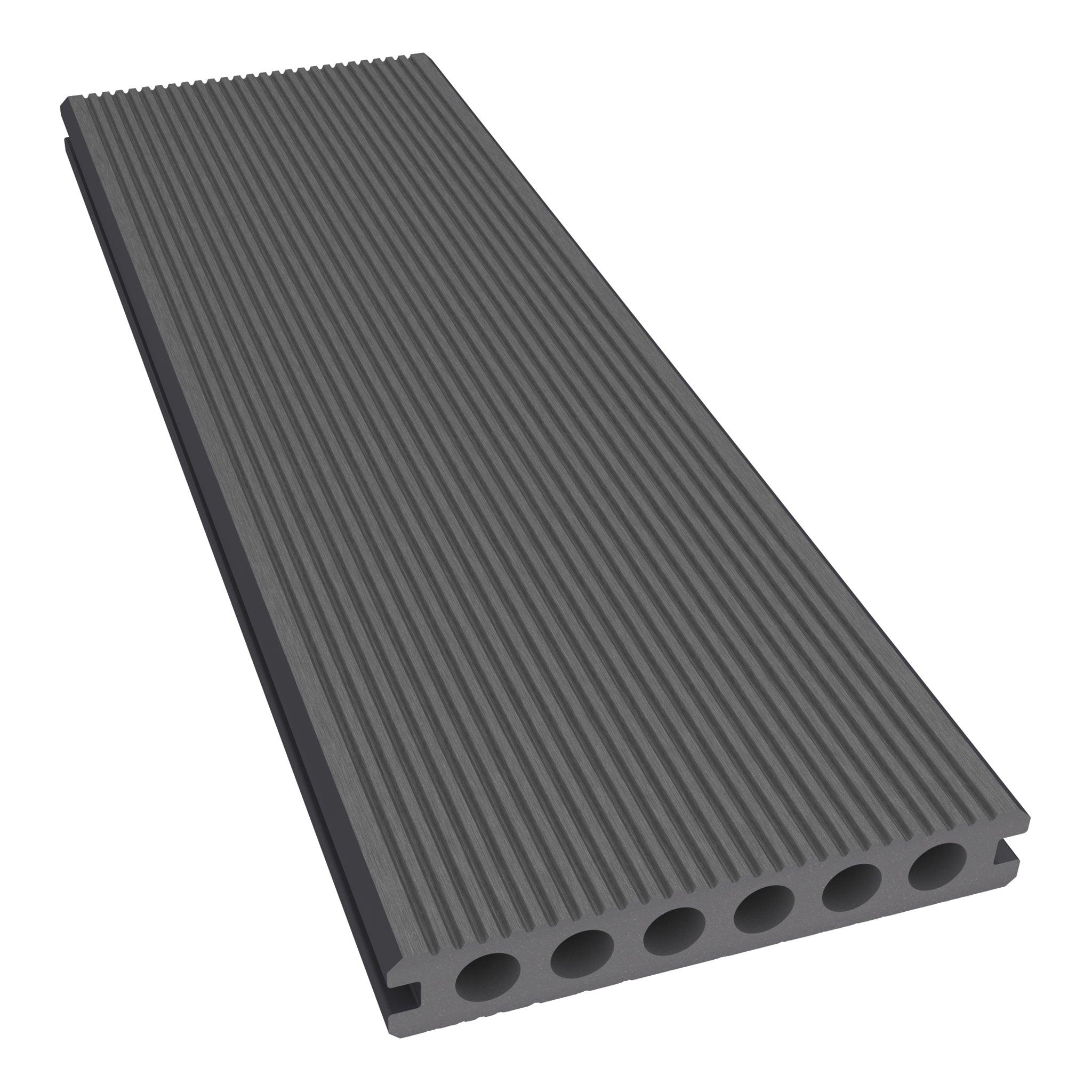
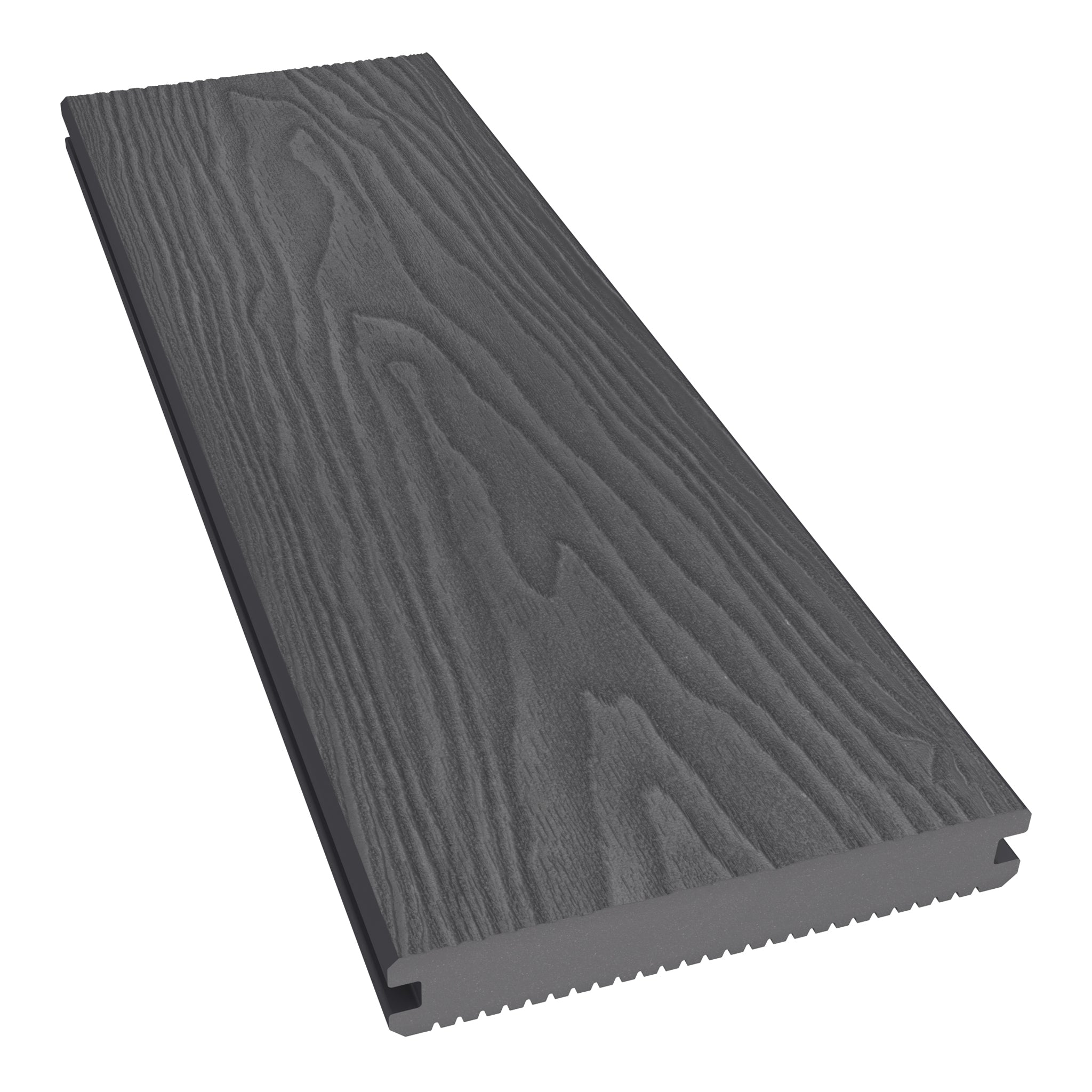
Compare capped and uncapped boards
A capped board has an additional protective outer layer. An uncapped board exposes the composite surface itself. Check the manufacturer’s explanation of initial weathering, cleaning and stain resistance for each range, then decide which balance of appearance and care suits you.
If you plan to eat outdoors regularly, ask about cleaning food and drink marks. If the deck will sit beneath trees, think about access for removing leaves and dirt. Practical questions about everyday use will tell you more than a broad promise of a trouble-free surface.
Understand solid and hollow profiles
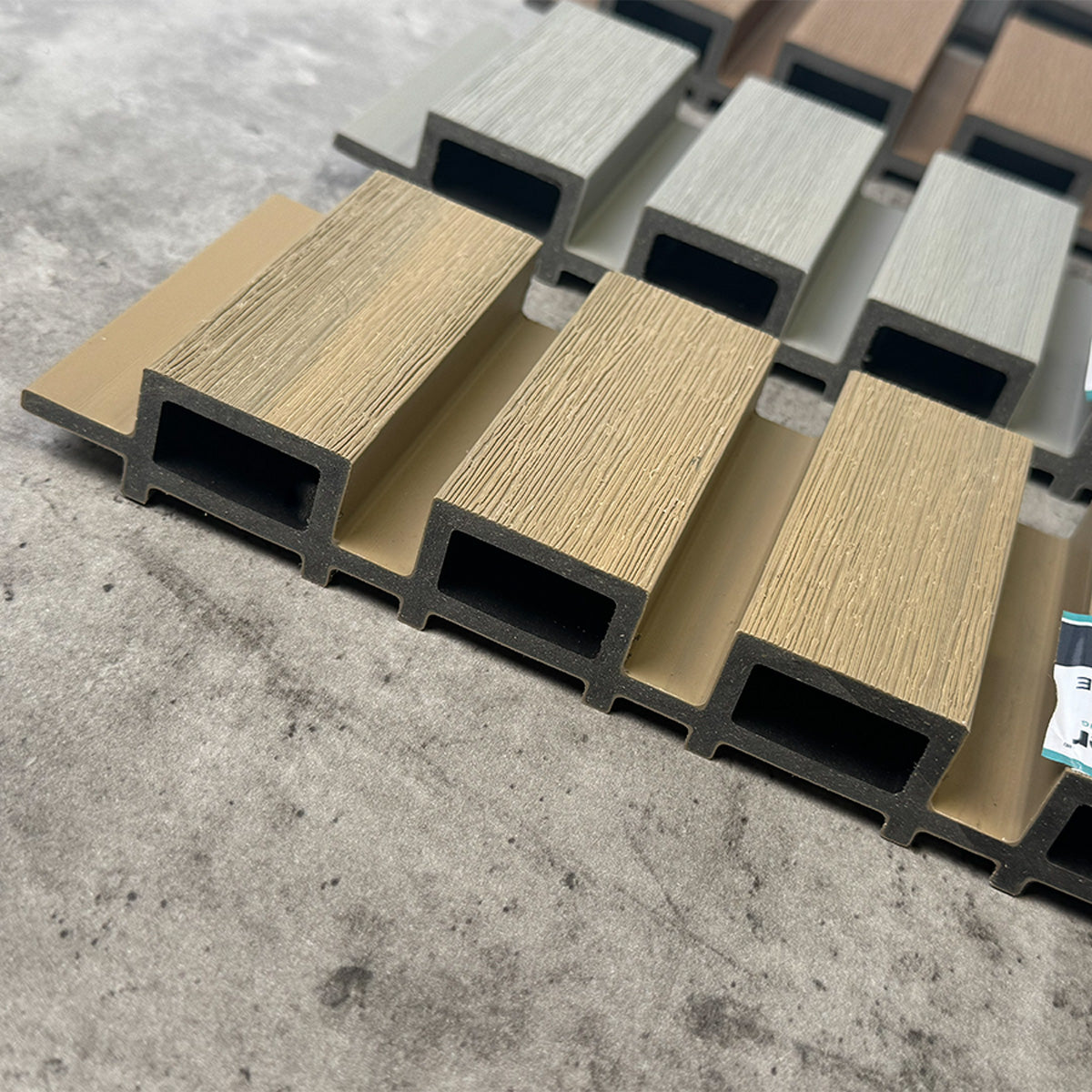
Solid and hollow describe board construction. They do not, by themselves, establish which product is appropriate for every site. Compare the technical guidance for the intended use, including the required support arrangement and details at board ends.
Do not assume that one board can replace another without changes to the frame or fixings. A different thickness, groove or support requirement can alter the installation. Check compatibility before switching ranges during the quotation process.
Look at lengths, widths and surface options
Available lengths affect the number of joints and offcuts. Width changes the visual rhythm of the deck and the number of boards needed. Some products offer a choice of usable faces, but always confirm the intended installation orientation for your selected board.
Plan picture-frame borders, steps and diagonal patterns before ordering. These details can change cutting requirements and supporting-frame positions. A simple straight layout is often easier to quantify; a complex pattern needs a more detailed drawing and cutting schedule.
Choose colour using a physical sample
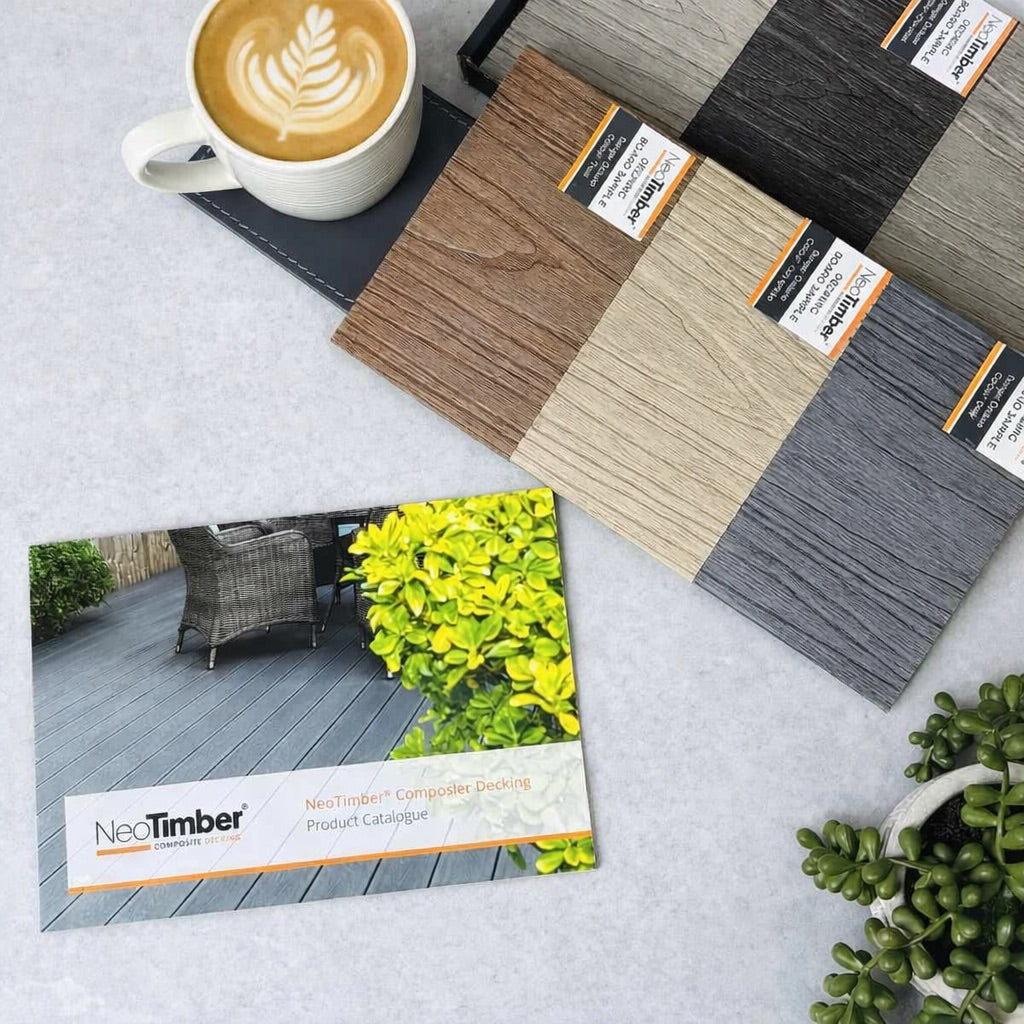
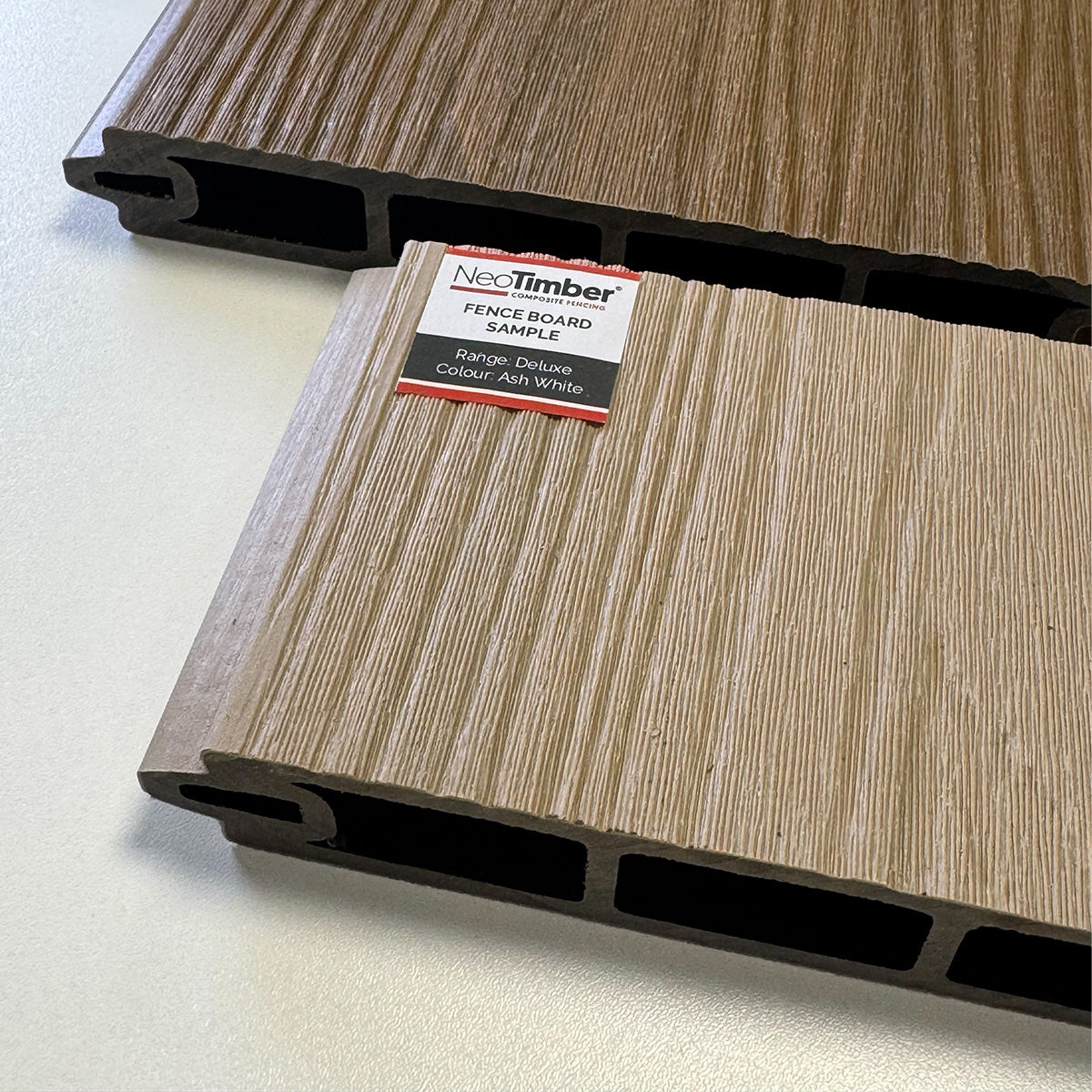
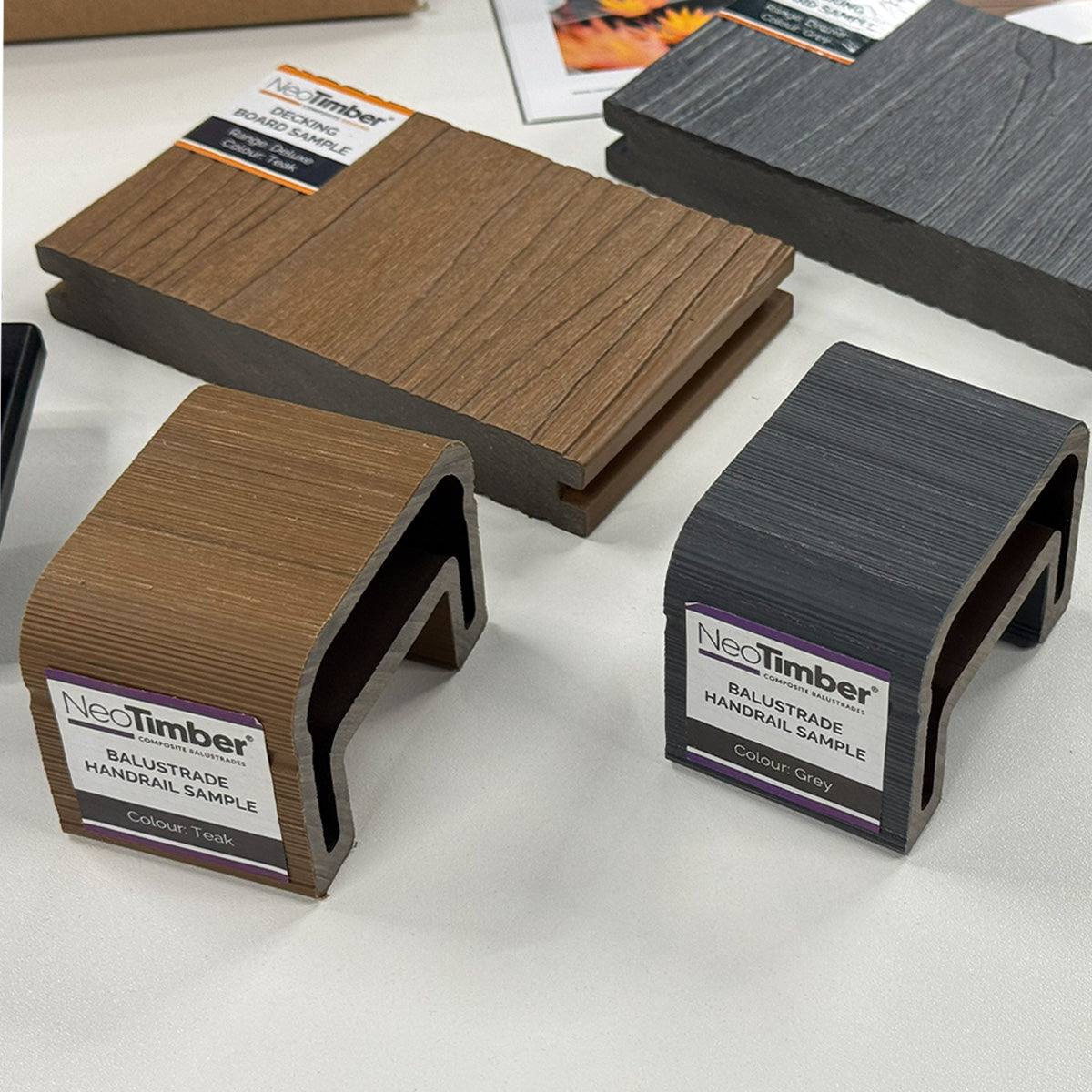
Compare samples against the actual brickwork, paving, doors and furniture around the deck. View them outside in sun and shade. Screen settings and photography can change the apparent colour, so a digital image should be the beginning of the decision rather than the final check.
Think about the wider design too. A contrasting border can define the edge of a deck, while a single colour can create a more continuous surface. Use the project gallery for inspiration, then confirm your preferred combination with samples.

Work Out How Much Decking You Need
Begin with a dimensioned sketch. For a rectangular deck, multiply length by width to find the area. A proposed deck measuring 4 metres by 3 metres covers 12 m². For an L-shaped space, divide the plan into rectangles, calculate each area and add them together.
Area is the starting point, not the finished shopping list. The number of boards depends on the chosen product, installed spacing, direction and cutting layout. Two decks with the same area can require different quantities if their shapes or border details differ.
- Record all dimensions in a consistent unit and check the measurements on site.
- Choose the board range and confirm the available lengths and usable coverage.
- Draw the direction of the boards, borders and any planned joints.
- Calculate whole-board quantities and review how offcuts can be used.
- Include waste appropriate to the layout and cutting plan.
- List trims, fixings and frame components separately.
A blanket waste allowance is less useful than a layout that shows where cuts will fall. Curves, diagonal patterns and multiple steps may need more allowance than a straightforward rectangle. Ask your installer to confirm the cutting plan before making the final purchase.
Use the NeoTimber® decking calculator to prepare an initial estimate. Check the result against your site measurements and selected installation system, particularly where the design includes features beyond a simple deck surface.
What Does It Really Cost to Buy Decking?
The most useful comparison is the cost of a complete, suitable deck. A low price per board may look attractive but tell you little about coverage, frame requirements or finishing costs. Compare quotes for the same area, design and specification.
For the surface materials, use the supplier’s stated coverage to compare a cost per square metre. Keep VAT treatment consistent. Then add the components and services required to complete your project rather than assuming they are included in the board price.
| Cost item | What to include |
|---|---|
| Deck boards | Main surface, borders, step details and planned cutting allowance |
| Subframe | Suitable joists, supports, connectors and any specified protection |
| Fixings and finishing | Compatible clips, screws, fascia, trims and end details |
| Site work | Preparation, removal of old materials and any required ground or drainage work |
| Installation | Labour, tools or equipment hire, and specialist work where required |
| Delivery and extras | Transport charges, lighting, steps and any specified guarding |
If you need to reduce the budget, review the layout before removing essential components. A simpler shape, fewer changes of direction or a board length that suits the dimensions may reduce cutting and labour. Ask for revised quantities rather than guessing what can be left out.
Consider future care as part of value, but avoid assuming a guaranteed financial saving without calculating it. Compare the maintenance each product actually needs, the work you would do yourself and any services you would pay for.
Should You Buy Decking Kits or Separate Components?
Choosing to buy decking kits can make ordering easier when the package matches your project. However, “kit” can mean a board-and-fixing bundle, a subframe package or a broader collection of materials. The name alone does not tell you what is included.
Read the contents line by line. Check the exact range, colour, lengths, quantities and stated coverage. Establish whether the kit includes a frame, compatible fixings, edging, supports and any waste allowance. Delivery and installation may be separate.
When a kit may be useful
A clearly specified package can help with a simple layout when the supplier has explained the coverage and compatible components. It can also make it easier to compare the cost of a known material list. You still need to confirm that the frame design suits the site.
When a tailored order may work better
An irregular deck, multiple levels or a design with extensive borders may need a project-specific material list. Buying separately can make it easier to select the exact lengths and quantities required, provided compatibility is checked throughout.
If a kit includes timber joists but your project requires a different subframe, ask for a revised package. Do not assume that unused kit components can be returned individually. Confirm package terms before deciding that a headline bundle price represents better value.
For a NeoTimber® project, use the calculator and contact the team to confirm the current ordering options and a complete material list. Do not rely on an older kit listing without checking the products and availability it includes.
How to Buy Joists for Your Decking Subframe
The frame supports the deck and establishes the fixing positions for the boards. When you buy joists, choose them as part of a designed support system, not simply by matching their length to the deck.
Two different measurements matter: the spacing between joists supporting the boards, and the distance between supports beneath each joist. They are not interchangeable. Both must follow the relevant product guidance and the requirements of the structure.
Compare the intended use of each joist
Timber, composite, recycled-plastic and aluminium products may be considered for different frame arrangements. Check the exact product’s permitted application, section size, support requirements and compatible connections. A low-profile bearer intended for frequent support should not be assumed to span an open gap.
NeoTimber® offers a range of decking subframe components. Use the product documents to establish which combination is suitable. Material names alone do not provide a structural specification.
Plan supports, joints and edges
Mark board ends, changes of direction, picture-frame borders and steps on the drawing before finalising joist quantities. These locations may need additional support or different detailing. The installation guide should explain the requirements for your selected board system.
Joist tape may be part of protecting an appropriate timber frame, but it does not repair decay or make an undersized member suitable. Similarly, adjustable pedestals are components of particular support arrangements, not a universal solution for every ground condition.
Check an existing frame before reusing it
If you are replacing only the boards, have the old frame assessed before buying replacements. Check its condition, support arrangement and compatibility with the new decking. Reusing a frame is only sensible when it is suitable for the new system and intended use.
Read the current installation and technical documents with your installer. This is the right stage to resolve support details, rather than discovering after delivery that the selected boards require a different layout.

How to Buy Decking Online Without Missing Essential Details
It is convenient to buy decking online when the specification is already clear. You can compare products, save a material list and check the full order before payment. The important part is turning a set of measurements into an unambiguous basket.
- Choose a range and sample: confirm the colour and finish in person before ordering the full quantity.
- Read the technical information: check dimensions, application limits and installation requirements.
- Confirm the design: agree the board direction, joints, borders and supporting frame.
- Prepare quantities: list boards and accessories with exact names, lengths and pack sizes.
- Review the basket: check that the chosen colour and variant are correct on every line.
- Check delivery and returns: confirm charges, access requirements and the terms applying to your order.
- Save the confirmation: keep the final material list, order details and relevant documents together.
Pay particular attention to packs. A quantity of one may mean one board, one box of clips or one pack of trims. If the listing is unclear, ask before paying. The same applies to product photographs that show several items even though the price is for a single component.
Do not schedule paid installation solely around an estimated dispatch date. Confirm the delivery arrangement and leave time to check the goods against the order. If you need several deliveries, agree how the work will be staged with your installer.
Buy Decking UK: Delivery, Access and Installation Planning
For UK projects, compare the delivered cost to your postcode. A supplier’s national delivery headline may include regional exceptions, service limits or minimum order conditions. Long boards also require more planning than a small parcel.
NeoTimber® currently advertises free UK Mainland Economy Delivery on orders over £1,000 including VAT, subject to its delivery terms and coverage. Separate charges apply to some areas, including the Scottish Highlands and islands. Check the current delivery policy for the service and cost relevant to your address.
Prepare the site for arrival
Tell the supplier about restricted access, narrow roads or other delivery constraints before dispatch. Agree the delivery arrangements rather than assuming the driver can carry materials through the property or place them in a particular part of the garden.
Prepare a storage area in accordance with the product instructions. On arrival, check the range, colour, quantities and visible condition against the order, and raise any discrepancies promptly through the supplier’s stated process. Keep labels and order references available until the installation is complete.
Decide who will install the deck
If you plan to undertake the work yourself, read the full guide before buying materials and assess whether you have the skills and equipment required. Do not treat a concealed-fixing system as proof that every part of the build is straightforward.
For professional fitting, ask for a quote that states what is included: site preparation, frame, boards, finishing, waste removal and any additional features. NeoTimber® provides a Find an Installer service to help you explore installation support.
Check Performance Claims, Care and Warranty Cover
Low maintenance does not mean no maintenance
All outdoor surfaces need appropriate care. Remove debris and follow the cleaning instructions for the chosen product. Avoid assuming that a cleaner, coating or pressure-washing method suitable for one surface is suitable for another.
NeoTimber® composite decking avoids regular painting, staining and sealing, but it still needs cleaning. This distinction gives you a realistic maintenance expectation and helps protect the appearance of the finished deck.
Ask specific questions about surface performance
UV resistance does not establish that a board will remain cool underfoot. Scratch resistance does not mean that furniture cannot mark it. Likewise, a water-resistant board does not make an entire deck a waterproof roof or remove the need for drainage.
For slip performance, ask for the product’s test information and the conditions it covers. Keep cleaning and the intended use in the discussion. Avoid interpreting “anti-slip” as a guarantee that a surface cannot become slippery.
Read the warranty for the exact range
NeoTimber® lists a standard composite decking warranty of 25 years for residential applications and 10 years for commercial or high-use environments, with Classic Lite carrying a 10-year residential warranty. Coverage is subject to the relevant terms, installation and care requirements.
Read the current product warranty before buying. Check the covered defects, exclusions, claim process and any requirements relating to the application. A warranty period is not a promise that every aspect of appearance is covered or that the product needs no care.
Your Final Checklist Before You Buy Decking
Use this list to review the order with your installer or supplier. It is easier to resolve a missing trim or unclear quantity before dispatch than once the frame is built.
- The product is suitable for the location and intended use.
- You have checked samples and confirmed the range, colour and finish.
- The drawing records measurements, board direction, joints and borders.
- Board quantities reflect available lengths and planned cutting allowances.
- The joists, supports and fixings suit the chosen system.
- Trims, steps and other finishing details are included where required.
- The price includes the relevant VAT, delivery and installation costs.
- Delivery access and storage arrangements have been agreed.
- You understand the care instructions, warranty and returns terms.
Ready to move forward? Shop composite decking boards, compare joists and subframe components, or order free samples to make your final colour decision.
Frequently Asked Questions About Buying Decking
Where should I buy decking boards?
Choose a supplier with suitable products, clear specifications, samples and accessible support. Compare the complete delivered order, including compatible components, rather than the board price alone. NeoTimber® sells decking online and provides resources to help you plan the purchase.
Is it better to buy decking online or in person?
Both can work. Buying in person can help you inspect a product, while online ordering makes it convenient to review specifications and quantities. Ordering samples combines an online comparison with a physical check of colour and texture.
What should I check before I buy plastic decking?
Confirm the exact material composition. Wood-plastic composite contains wood fibres and plastic, while other products may use different materials. Check the intended application, support requirements and fixing system rather than assuming all plastic-based boards install in the same way.
Do decking kits include joists?
Some do and some do not. Read the itemised contents and establish whether the kit includes boards only, boards and fixings, a subframe or a broader package. Confirm quantities, coverage and suitability for your site before ordering.
Can I buy joists separately from the boards?
Yes, but the joists and supporting arrangement must be compatible with the chosen board system. Check the technical guidance and have the frame design confirmed before purchasing components from separate ranges or suppliers.
How many extra decking boards should I buy?
Base the allowance on your cutting plan. Board lengths, deck shape, borders and steps influence waste, so there is no single percentage that suits every project. Ask your installer to review the layout and identify useful spare lengths before finalising the order.
What is the cheapest way to buy decking?
Compare complete quotes for the same area and specification. A straightforward layout and well-chosen lengths may reduce cutting and labour costs. Keep essential frame and fixing components in the budget; a cheaper incomplete order is not a like-for-like saving.
Can I put new boards on my old frame?
Only if the existing frame is in suitable condition and meets the new product’s support and fixing requirements. Have it checked before ordering replacement boards, especially if there are signs of movement, decay or damage.
Does decking need to be waterproof?
The product must suit its outdoor use, but moisture resistance and waterproofing are different things. Gaps and drainage form part of many deck designs. If the deck sits above an occupied space, waterproofing needs to be addressed as part of the specified roof or terrace system.
What should I do first if I am unsure where to buy decking?
Write down your dimensions, budget, preferred appearance and intended use. Then compare suppliers against the same brief. Request samples and a complete material estimate so you can assess the product, support and total cost together.