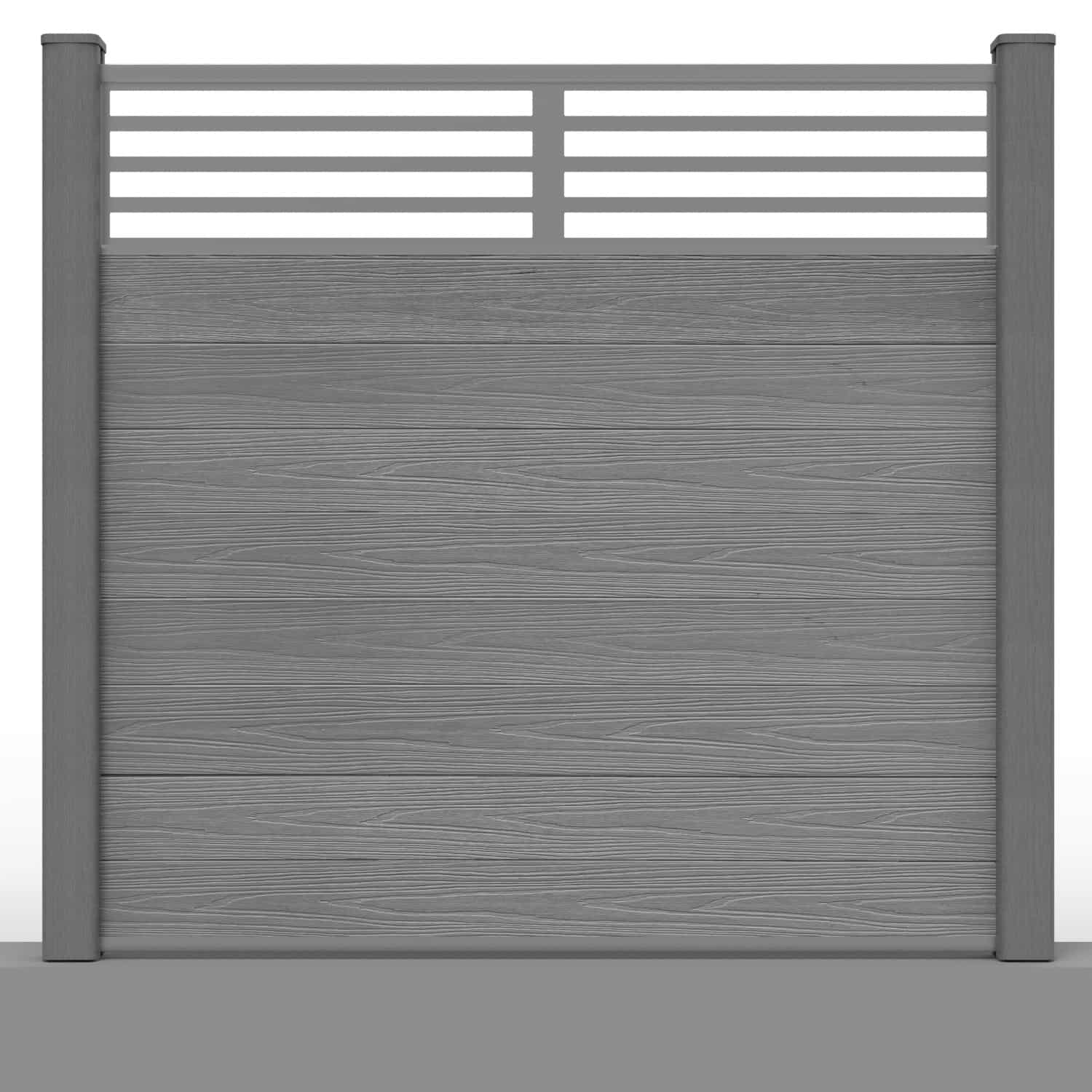
Create Garden Privacy and Purpose With Carefully Placed Screening
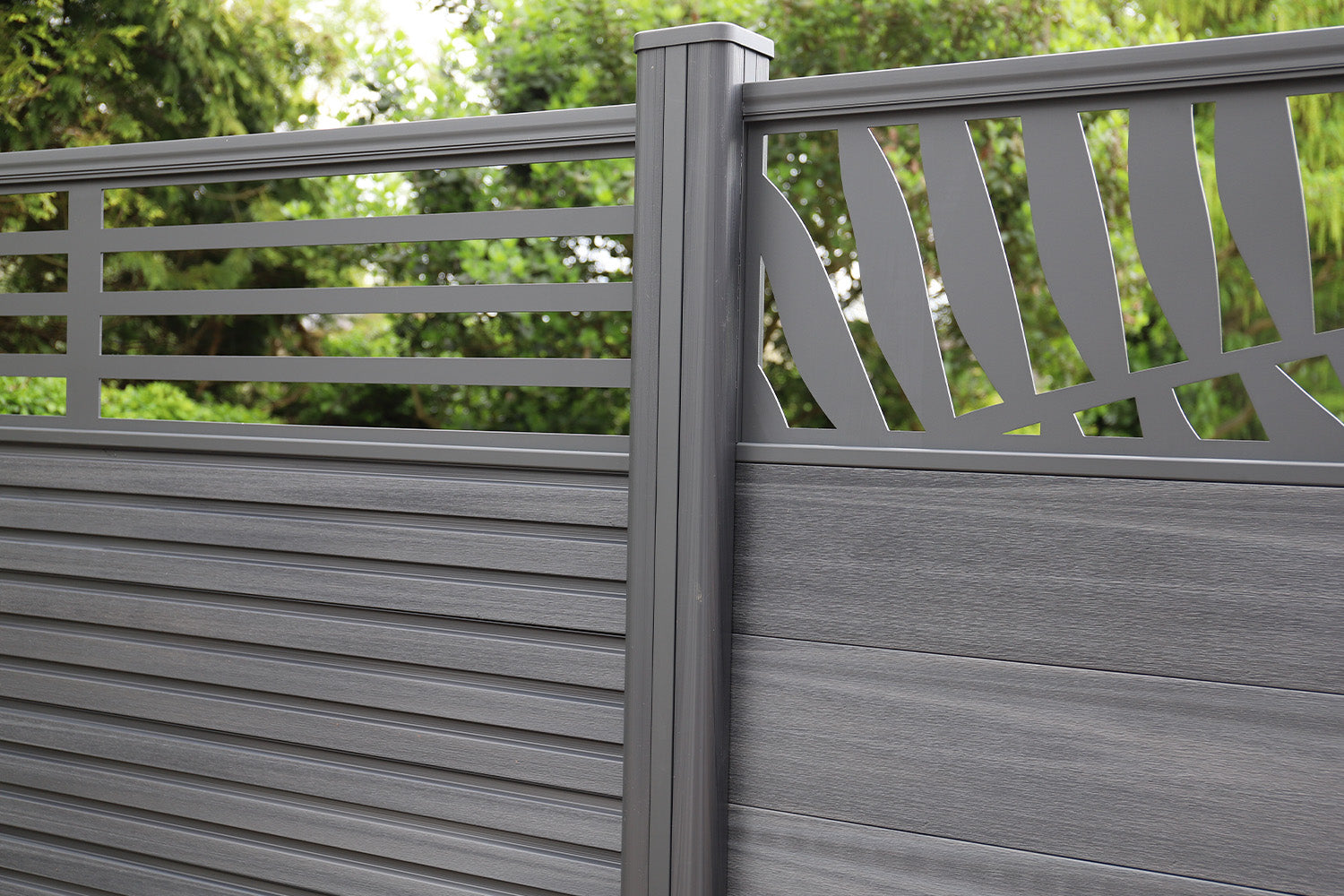
A batten screen can give a seating area a more defined edge, separate a working corner from the garden or make bin storage less prominent. The repeated lines introduce texture, while gaps between the profiles keep the design visually lighter than a continuous panel.
The most useful starting point is the view you want to change. Decide whether you need to filter a neighbouring sightline, frame an outdoor lounge or conceal a practical feature. Then choose the position, height and spacing around that purpose, rather than screening every side of the space.
1. Define a Seating Area Without Dividing the Whole Garden
A short screen behind a sofa or dining table can make the area feel more intentional. It provides a backdrop for furniture while leaving the rest of the garden connected.
Keep the approach clear and allow space for chairs to move. In a compact garden, a single well-positioned panel may work better than enclosing a seating group on three sides. Check how the arrangement looks from the house as well as from the seat itself.
Upright profiles emphasise height, while horizontal lines draw attention across the space. Compare both against the building, paving and planting before choosing an orientation.
2. Make Bin Storage Part of the Landscape
Wheelie bins and recycling containers need convenient access, but they do not have to dominate the view from a driveway or entrance. A panel across the main sightline can be enough; a three-sided enclosure provides coverage from more directions.

Measure the containers with lids open and allow enough room to wheel them out. Include handles, door swings and access for cleaning in the plan. Keep ventilation appropriate to the enclosure, and avoid making collection day more difficult in pursuit of a neat frontage.
3. Filter Views Around a Patio or Hot Tub
For a patio, assess sightlines at seated height as well as standing height. Near a hot tub, a targeted panel can filter the most exposed view without surrounding the entire area.
Privacy depends on face width, clear gaps, profile depth and viewing angle. A pattern that looks dense from one side may be more open from directly in front. Narrower gaps generally reveal less background in a comparable layout, but open profiles should not be described as providing complete privacy.
Keep equipment access and ventilation clear, and confirm the material and fixing arrangement suit the exposure. A decorative screen does not replace a required safety barrier or provide support for the hot tub itself.
4. Bring Order to Utility Areas and Pathways
Screening can distinguish a potting area, garden storage or side passage from landscaped spaces. A repeated finish connects these practical corners to the rest of the design.
Use the layout to guide movement, leaving a comfortable route through gates and around corners. Near a driveway or entrance, consider visibility for people and vehicles before fixing the screen position.
For more ways to coordinate boundaries and garden features, explore our fencing design ideas.
5. Connect Screening to the Architecture
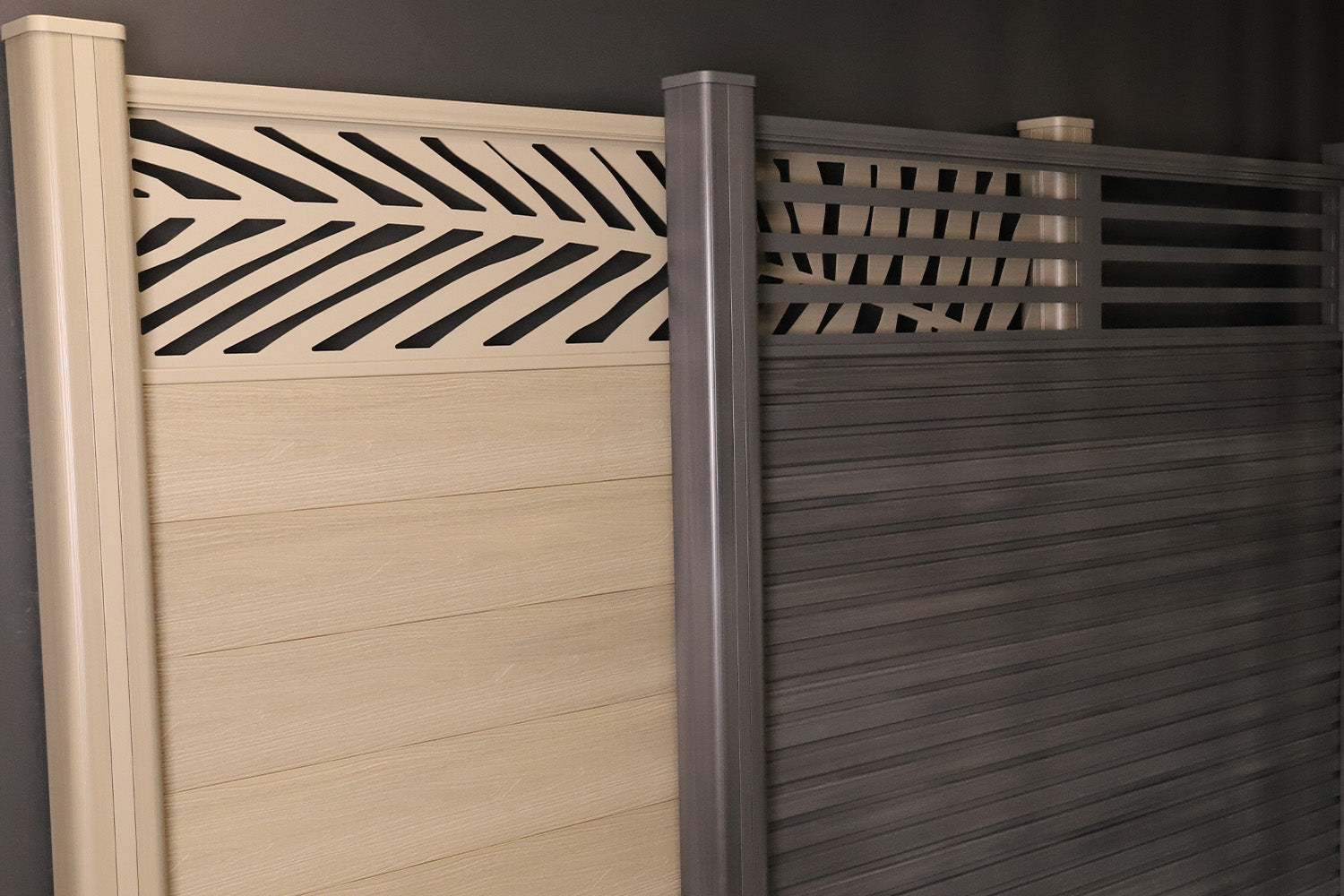
Repeating a colour or linear pattern from the house can help a garden feature feel connected to its surroundings. You can echo an entrance detail, window-frame colour or exterior cladding finish without using an identical product in every location.

This wall-cladding example illustrates the visual effect of upright profiles. A freestanding installation needs its own suitable framework and foundations, so the wall detail should not be copied directly into a garden screen.
Composite Screening Battens or an Aluminium Batten Screen?
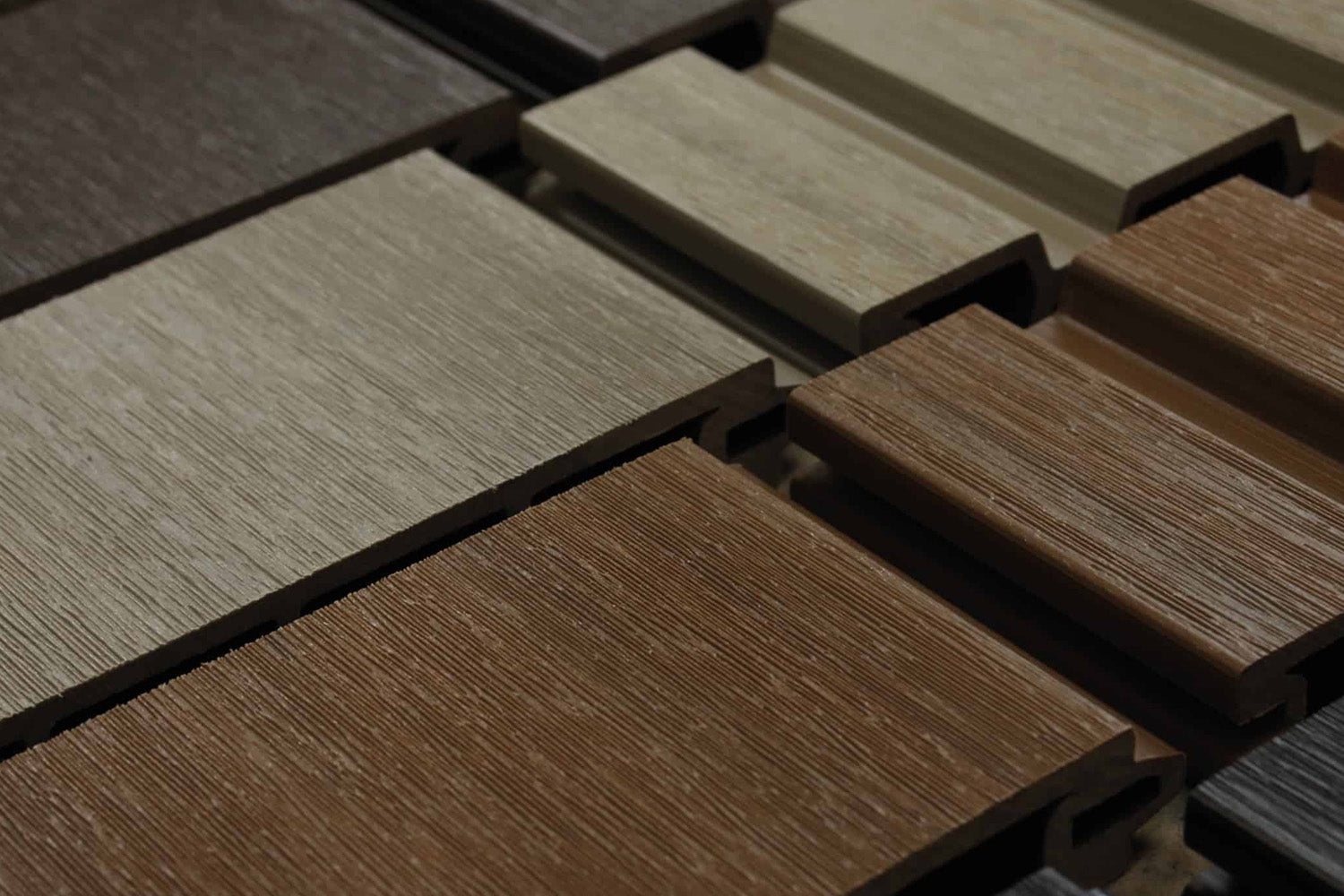
Composite screening battens offer a route to timber-inspired texture, while aluminium systems provide their own profile shapes and coated finishes. Compare the exact products and complete assemblies rather than choosing on the material name alone.
What to compare when choosing screening materials:
| Consideration | What to review |
|---|---|
| Appearance | Profile width, projection, surface texture and colour |
| Privacy | Clear gaps and views from relevant angles |
| Installation | Compatible supports, fixings, movement allowances and foundations |
| Exposure | Wind, moisture and any coastal conditions |
| Care | Cleaning guidance and inspection requirements |
When specifying an aluminium batten screen, confirm the finish and fixings are suitable for the location. Apply the same project-specific checks to a composite alternative. Neither material category establishes a permitted height, unsupported span or wind resistance.
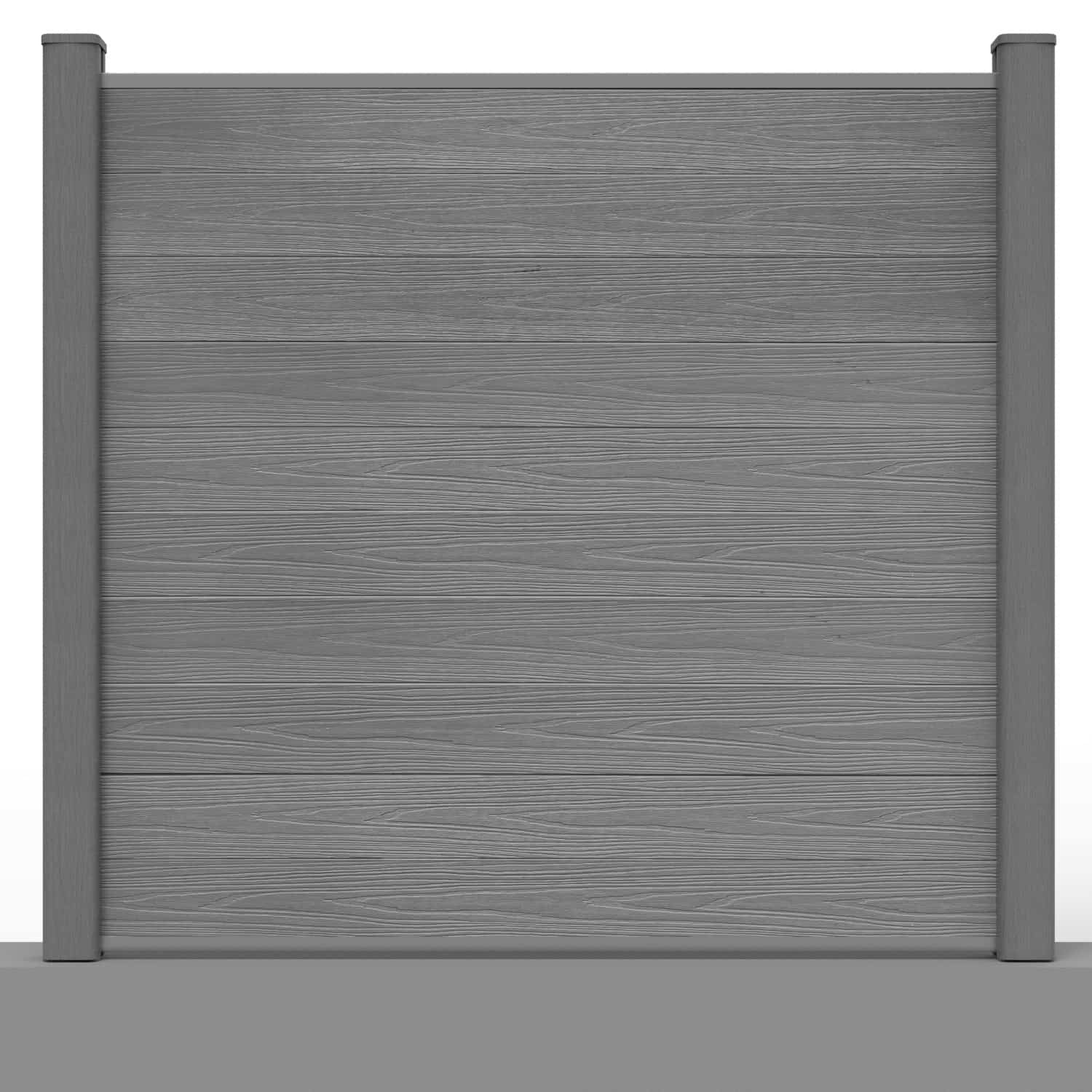
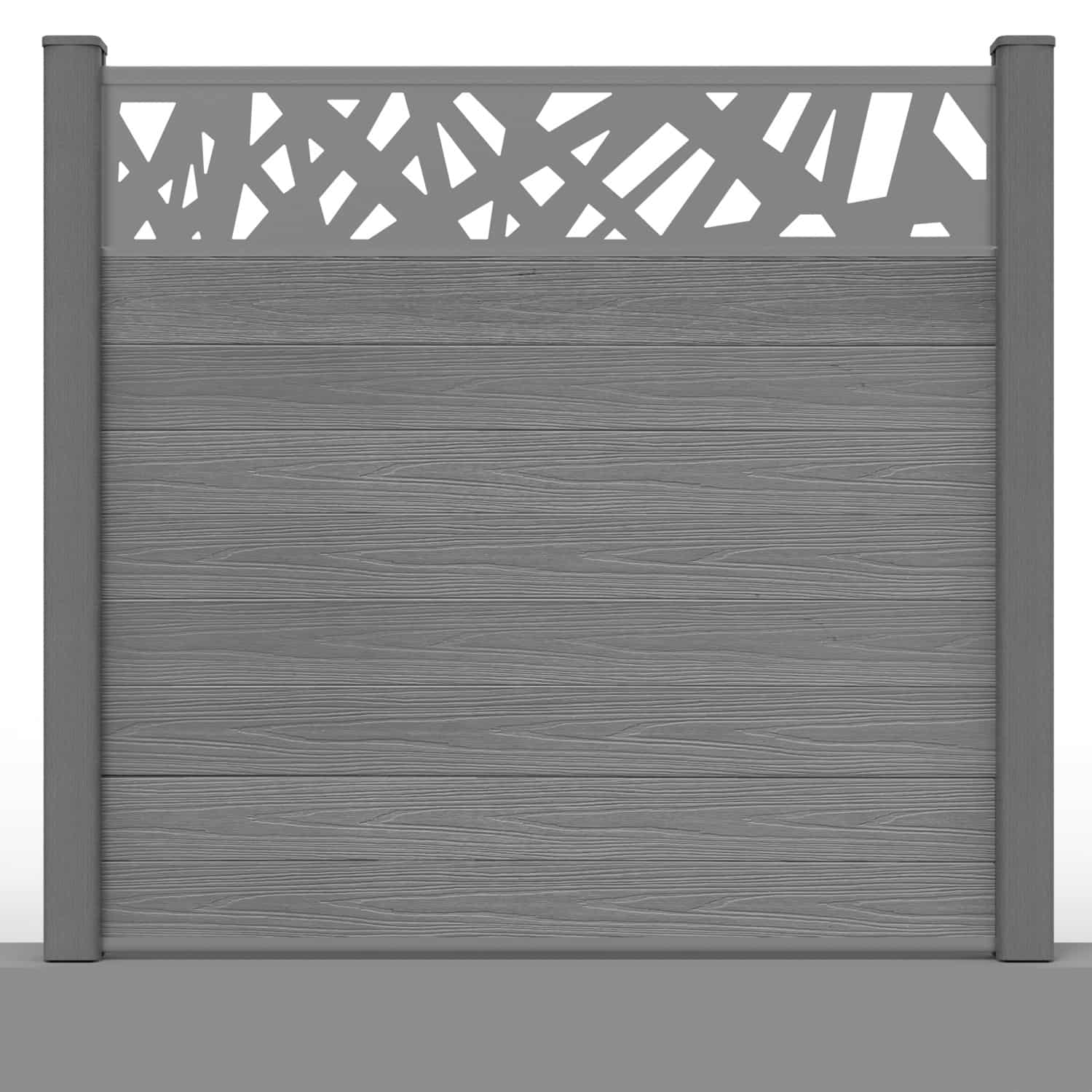
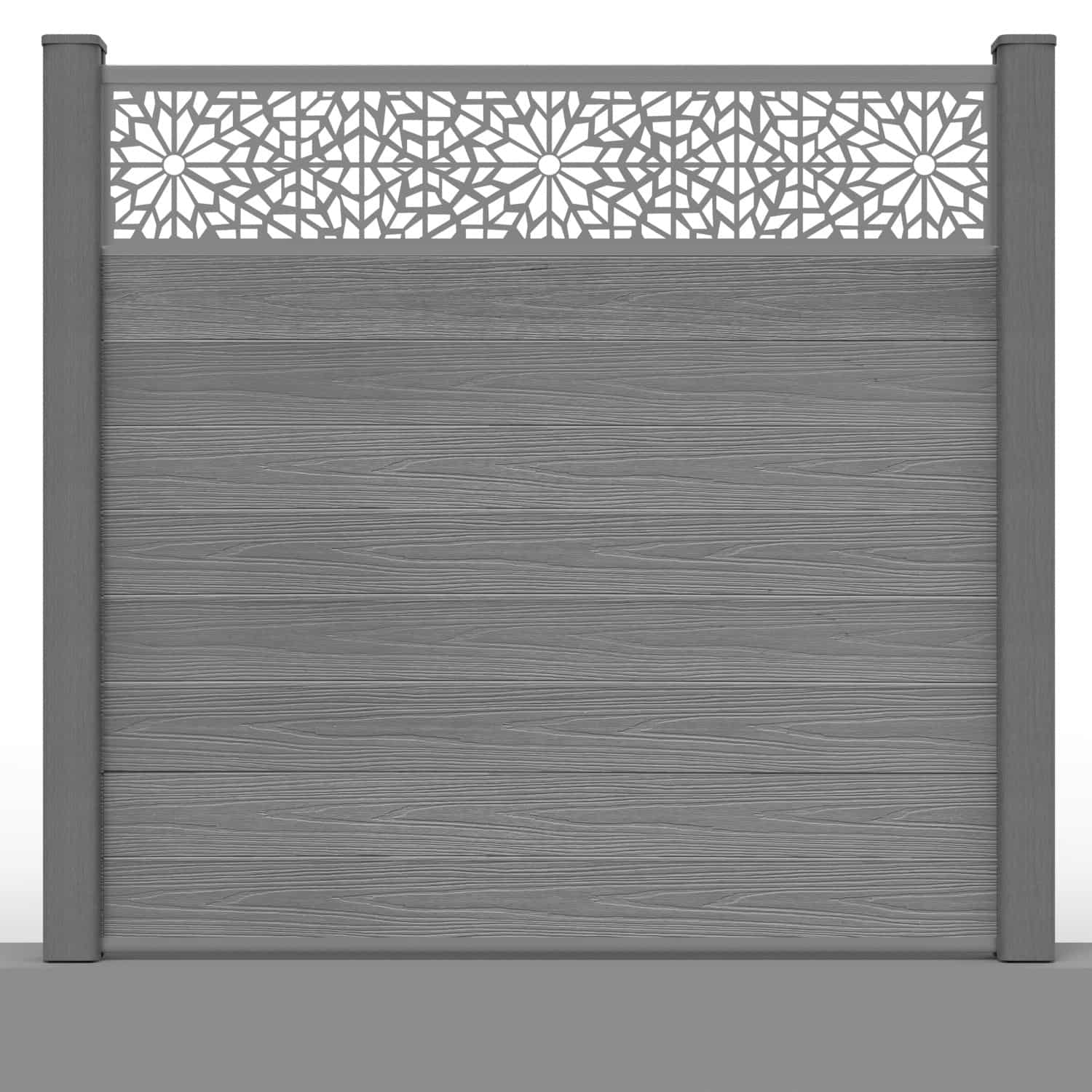
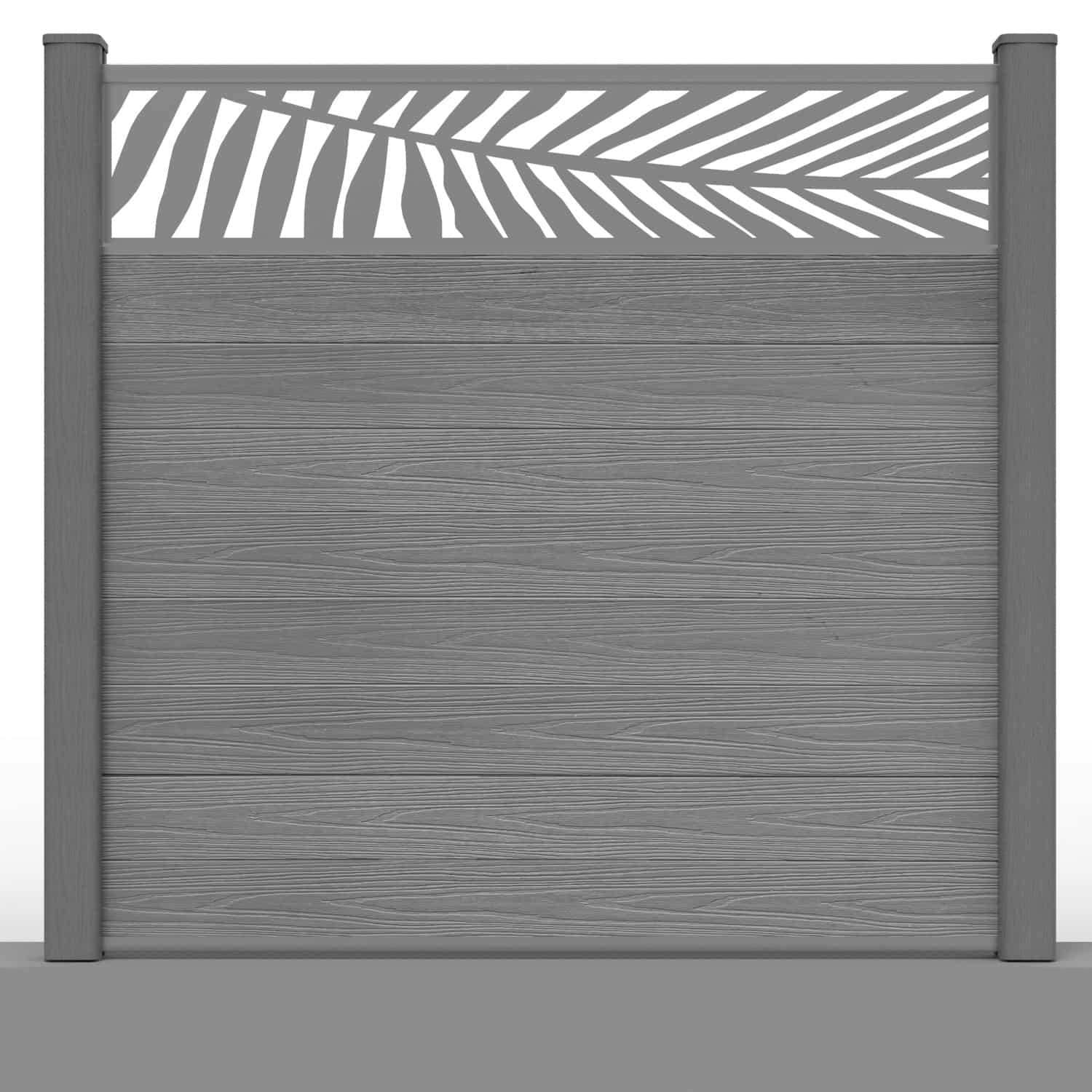
Explore the NeoTimber® composite Louvre Batten fencing collection for relevant garden options, and confirm the selected product is suitable for your intended arrangement.
Use Planting and Lighting to Soften the Lines
Layered planting balances the regular pattern of screening. Taller plants can form a backdrop, while grasses and lower foliage introduce texture beside seating. Keep soil away from components where required and leave room for cleaning and inspection.
Lighting can reveal the profile and shadow pattern after dark. Use outdoor fittings suitable for the position, consider glare towards neighbours and plan access to cables or replaceable parts. Solar output varies with charging conditions, so assess route lighting separately from decorative effects.

Where the screen sits beside a deck, coordinate the palette with the decking finish. Compare samples outdoors: similar colour names can still have different textures and undertones.
Plan the Supporting Structure Before Installation
A freestanding panel must be designed for its dimensions, exposure and ground conditions. Open gaps do not remove wind loads. Posts, rails, foundations and fixings all need to suit the proposed arrangement.
On sloping ground, consider stepped sections or another permitted layout, and plan how cut ends and changes of height will be finished. Decorative profiles should not be assumed to act as structural posts, retaining elements or guarding around a raised edge.
Review the product-specific installation guidance and confirm any relevant local restrictions before finalising the height and position. If the screen will be close to cooking appliances, establish the required clearances and construction rather than relying on the decorative finish as heat protection.
Start with a measured drawing and a clear purpose for each panel. Visit our fencing resources or contact NeoTimber® to discuss the selected system.
Garden Screening FAQs
How high should a batten screen be?
Choose the height around the sightline you need to filter, then check the system limits, supporting structure and relevant local requirements. Greater height is not always necessary for seated privacy.
Do screening battens provide complete privacy?
Not where gaps leave views through the arrangement. Assess the pattern from different angles and heights before deciding whether it gives enough coverage.
Can I use the same design around bins and seating?
Yes, a repeated colour or profile can connect the areas. Adapt each layout to its practical needs, including bin access, ventilation and furniture clearance.
Can an aluminium batten screen be installed near the coast?
Check the exact system’s coating, fixings, exposure suitability and maintenance requirements. Aluminium alone is not a guarantee of suitability for every coastal location.
Are composite screening battens maintenance free?
No. Follow the product’s cleaning guidance and inspect the supports and fixings periodically. Low upkeep does not mean leaving the installation unchecked.
Can I install a garden screen myself?
That depends on the design and your experience. Larger or exposed freestanding structures may need specialist design and installation. You can submit your project details through the installer enquiry service to check availability in your area.