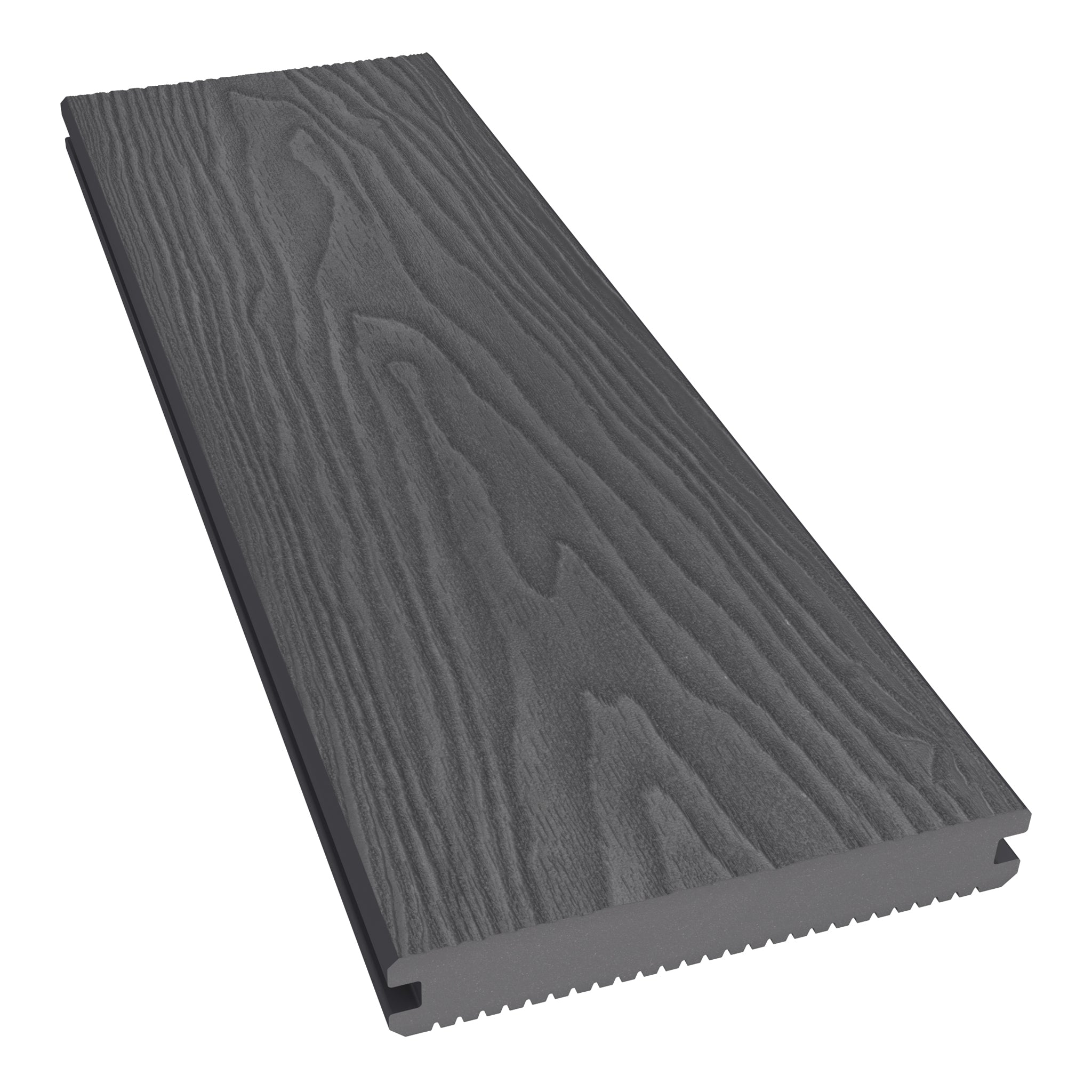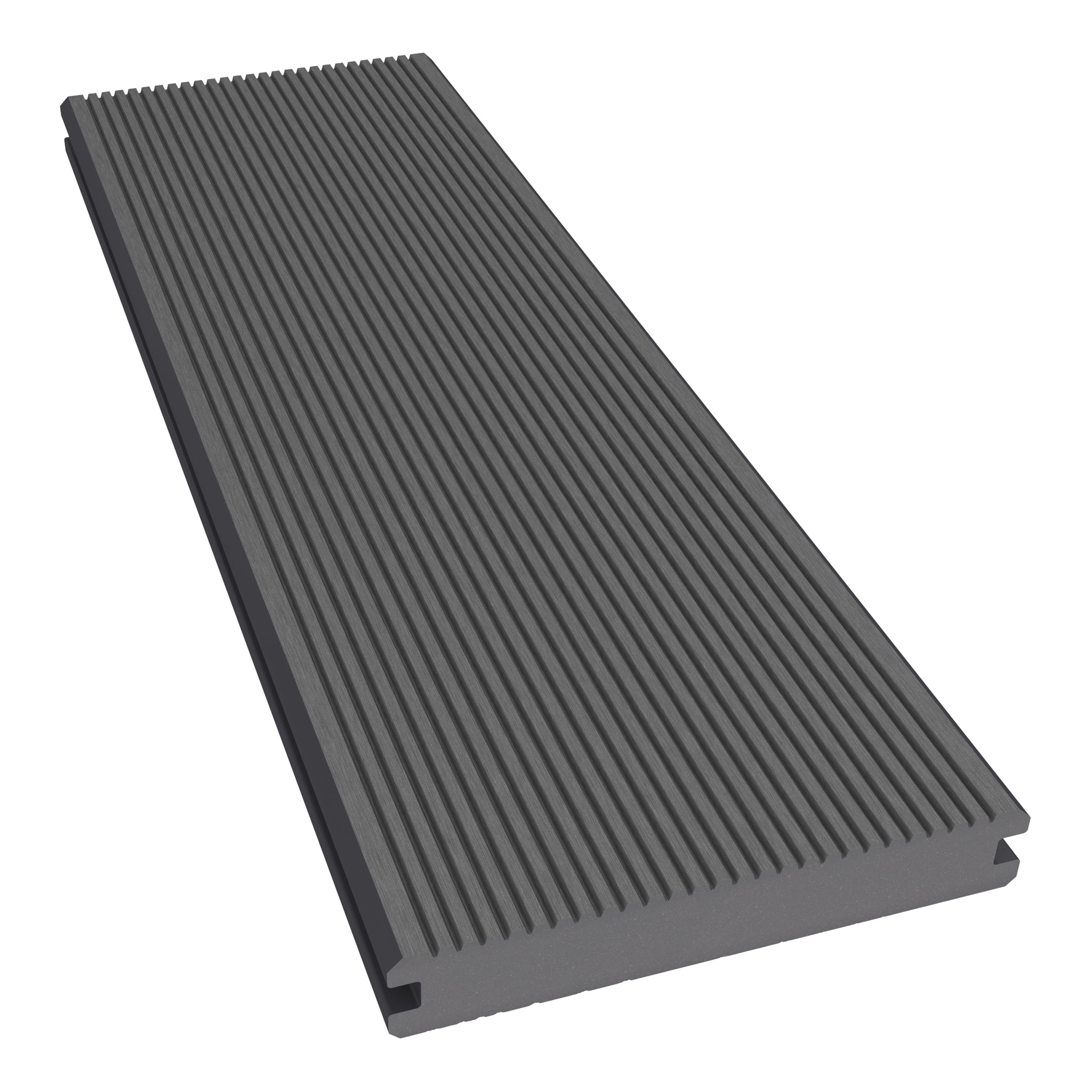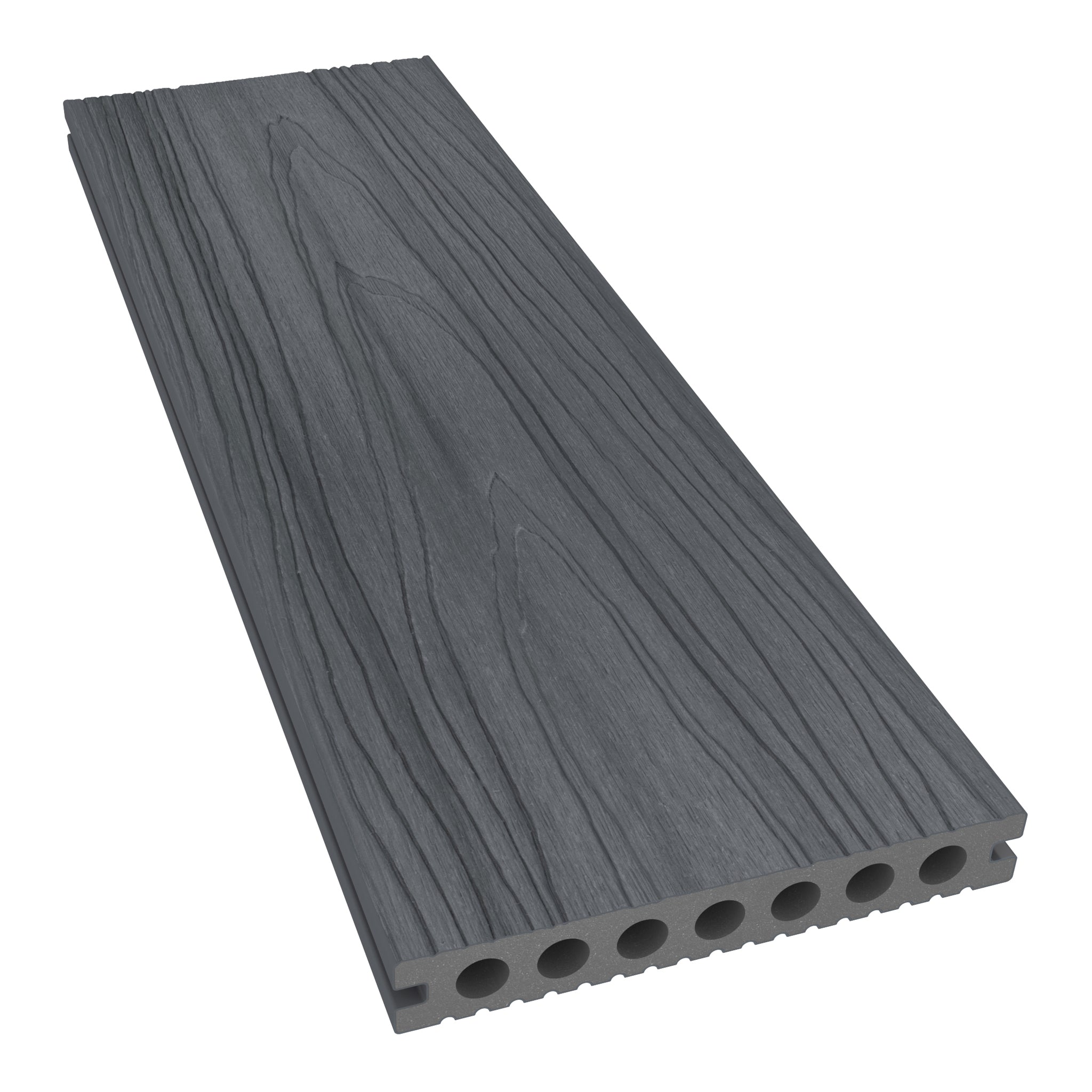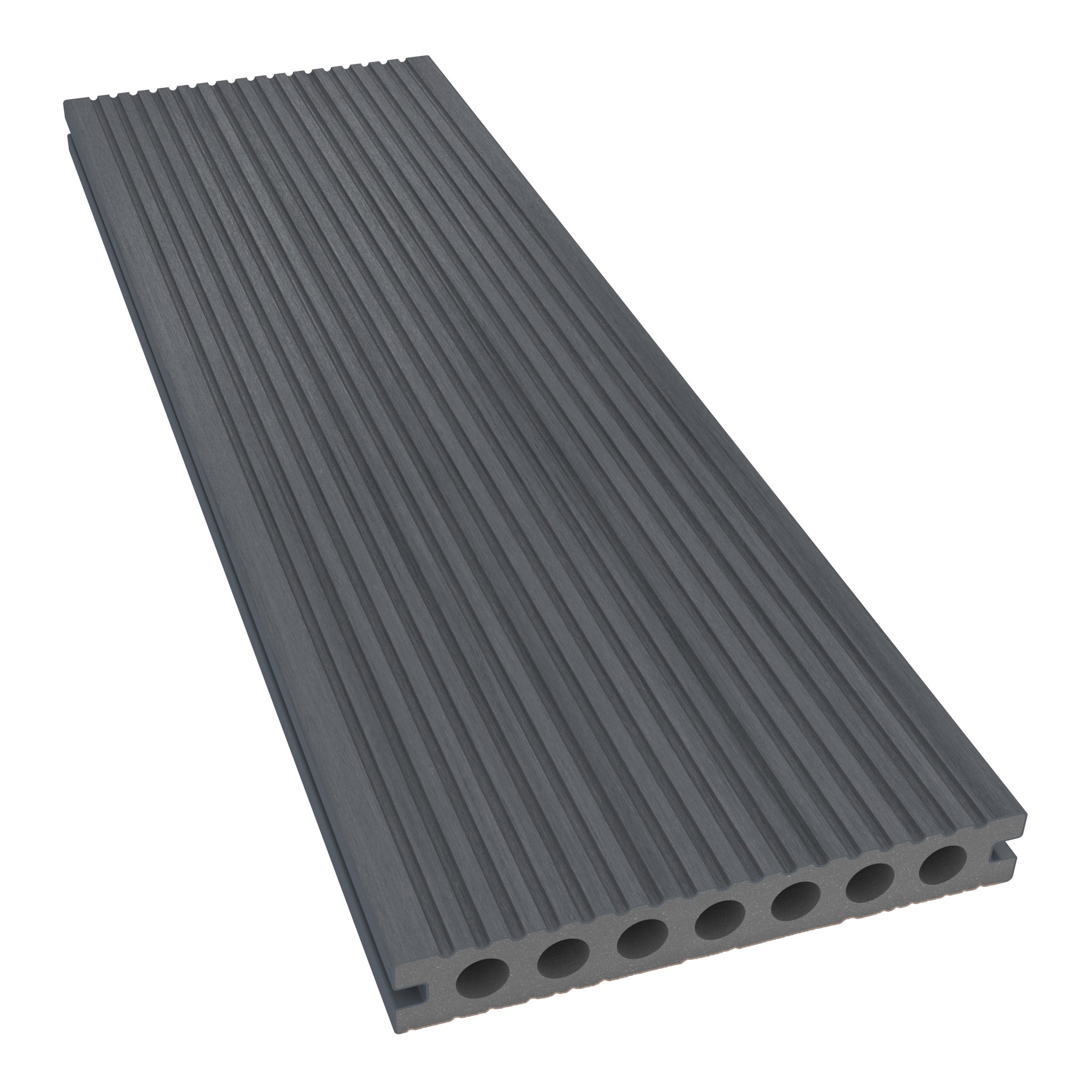
Compare Board Costs on a Consistent Basis Before You Buy
Composite decking material prices make more sense when you compare the same unit and the same scope. A price per board tells you little without its dimensions, while a square-metre figure may cover only the surface boards rather than everything needed to build the deck.
This guide explains how to compare the prices of composite decking, calculate board-only rates and convert between square metres and square feet. It also shows which additional materials and services belong in your project budget.
Explore NeoTimber® decking for an overview, or browse composite decking to check the current product prices and specifications.
What Does an Advertised Composite Decking Price Include?
Start by identifying the unit: one board, a pack, a square metre or a complete supply package. Check whether VAT is included and whether the figure is a standard price, a promotion or a “from” price applying to selected options.
Then compare the scope. Boards only, complete materials and installed decking are different purchases. A lower headline figure may simply represent a shorter length or fewer included components.
When researching composite decking prices UK suppliers advertise, record the product name, dimensions, unit price and inclusions together. That creates a more useful shortlist than comparing prices detached from their specifications.

How to Calculate Composite Decking Prices per m2
For a basic board-area comparison, convert the length and width to metres, multiply them and divide the board price by that area.
Nominal board area = length in metres × width in metres
Board-only price per m2 = board price ÷ nominal board area
This method excludes installation gaps, cutting waste, trims and the frame. It is a transparent comparison of nominal board material, not a prediction of the exact number of boards needed for a finished deck.
Two Worked NeoTimber® Examples
Board-only examples using displayed VAT-inclusive prices checked on 20 October 2026:
| Product | Length × width | Board price | Nominal area | Approx. price per m2 |
|---|---|---|---|---|
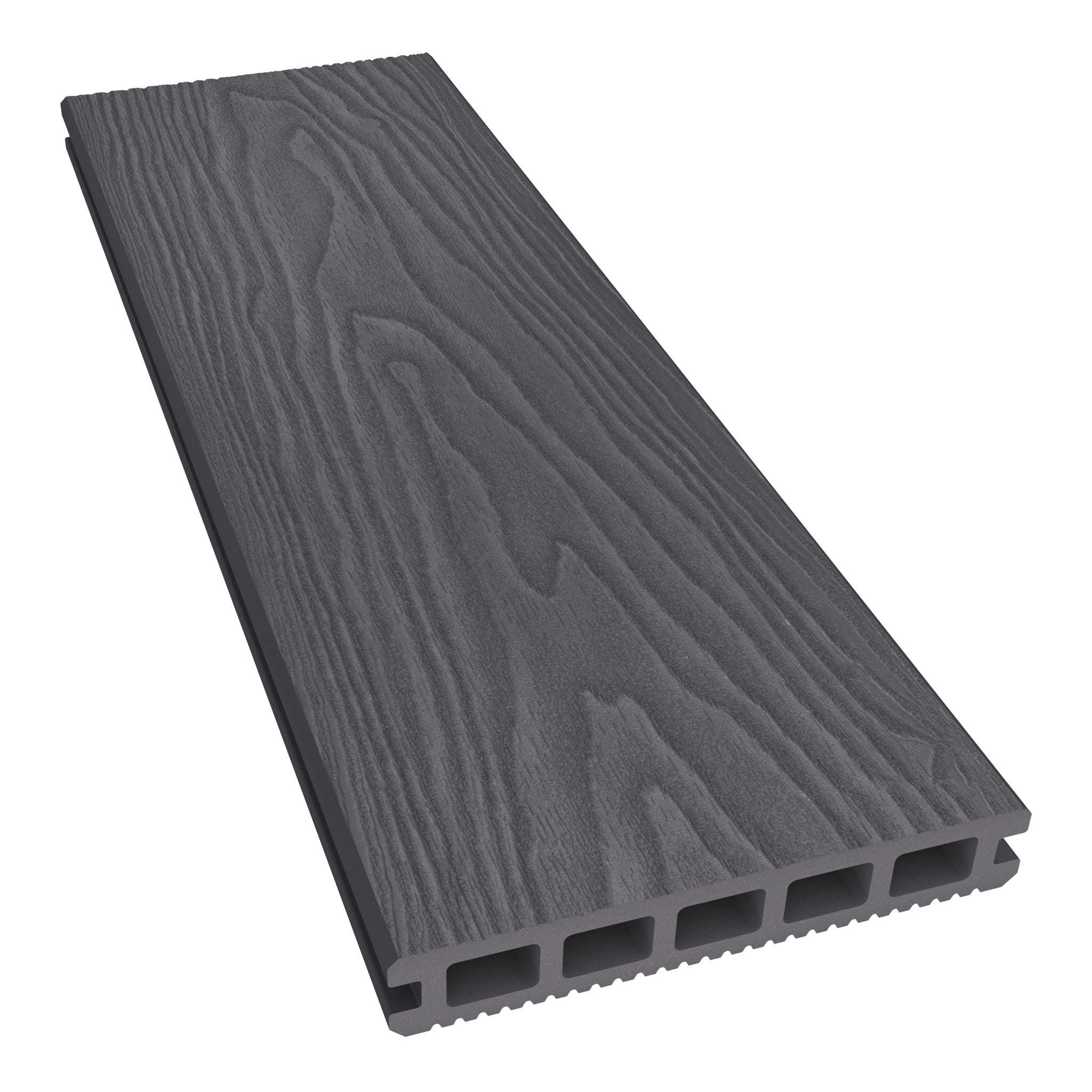
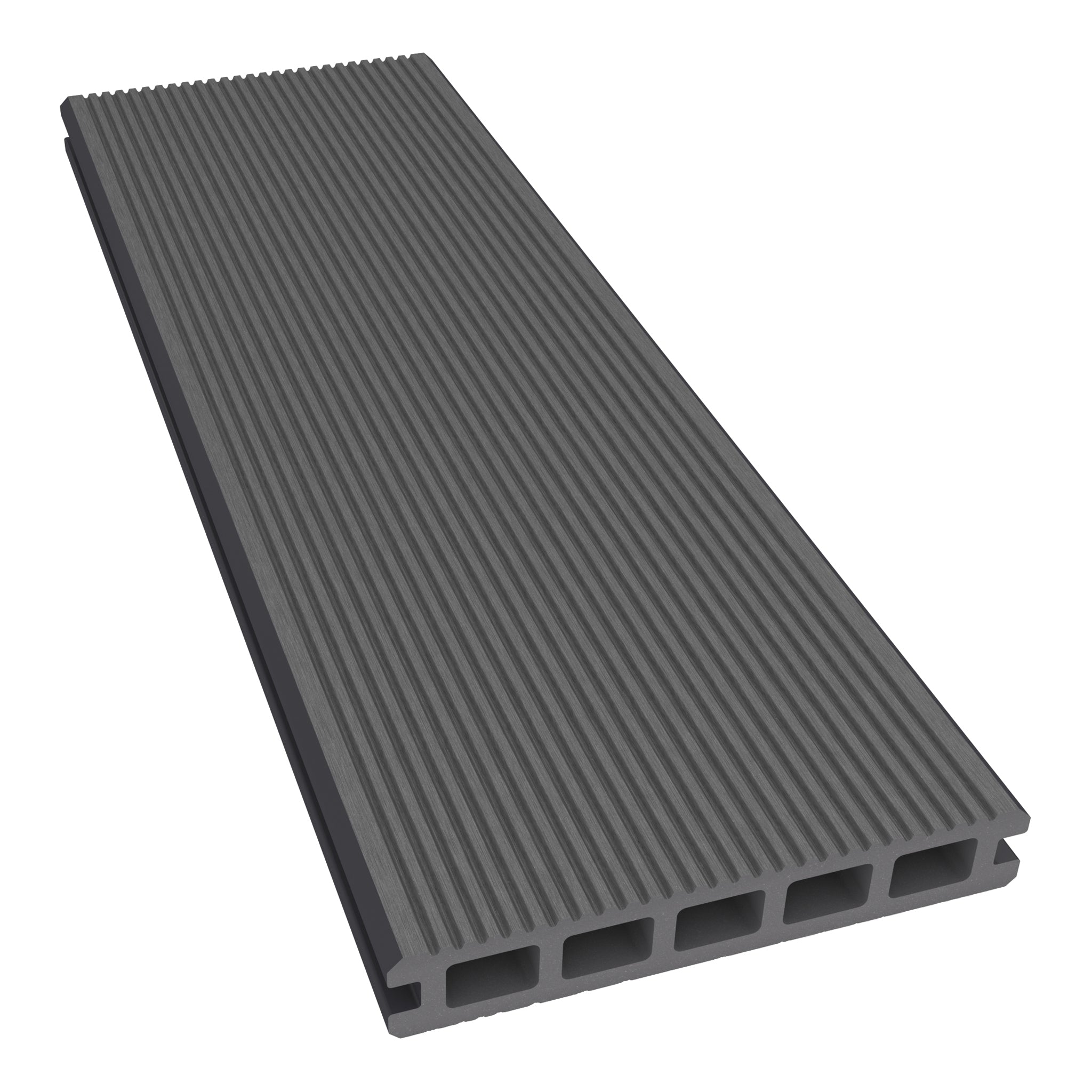
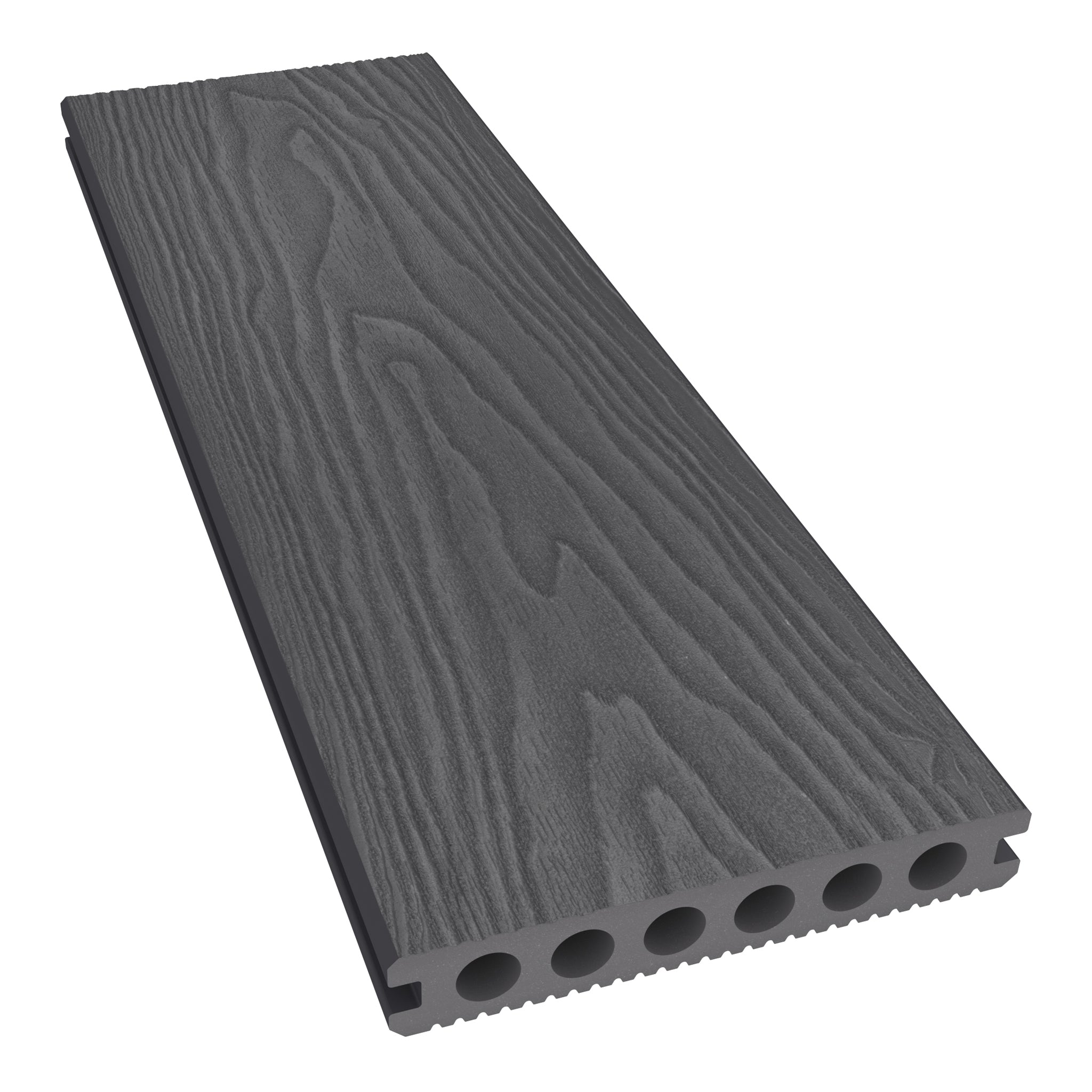
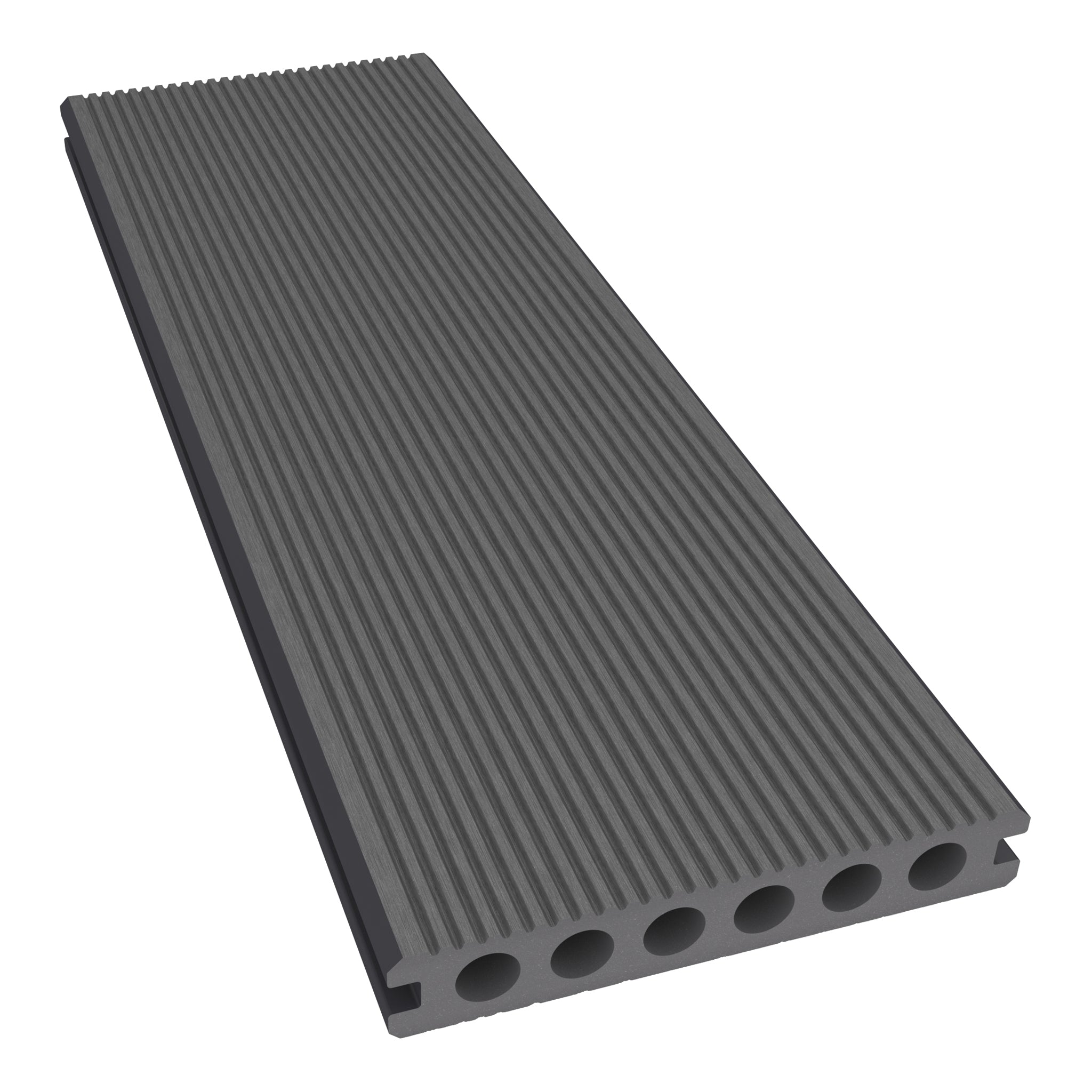
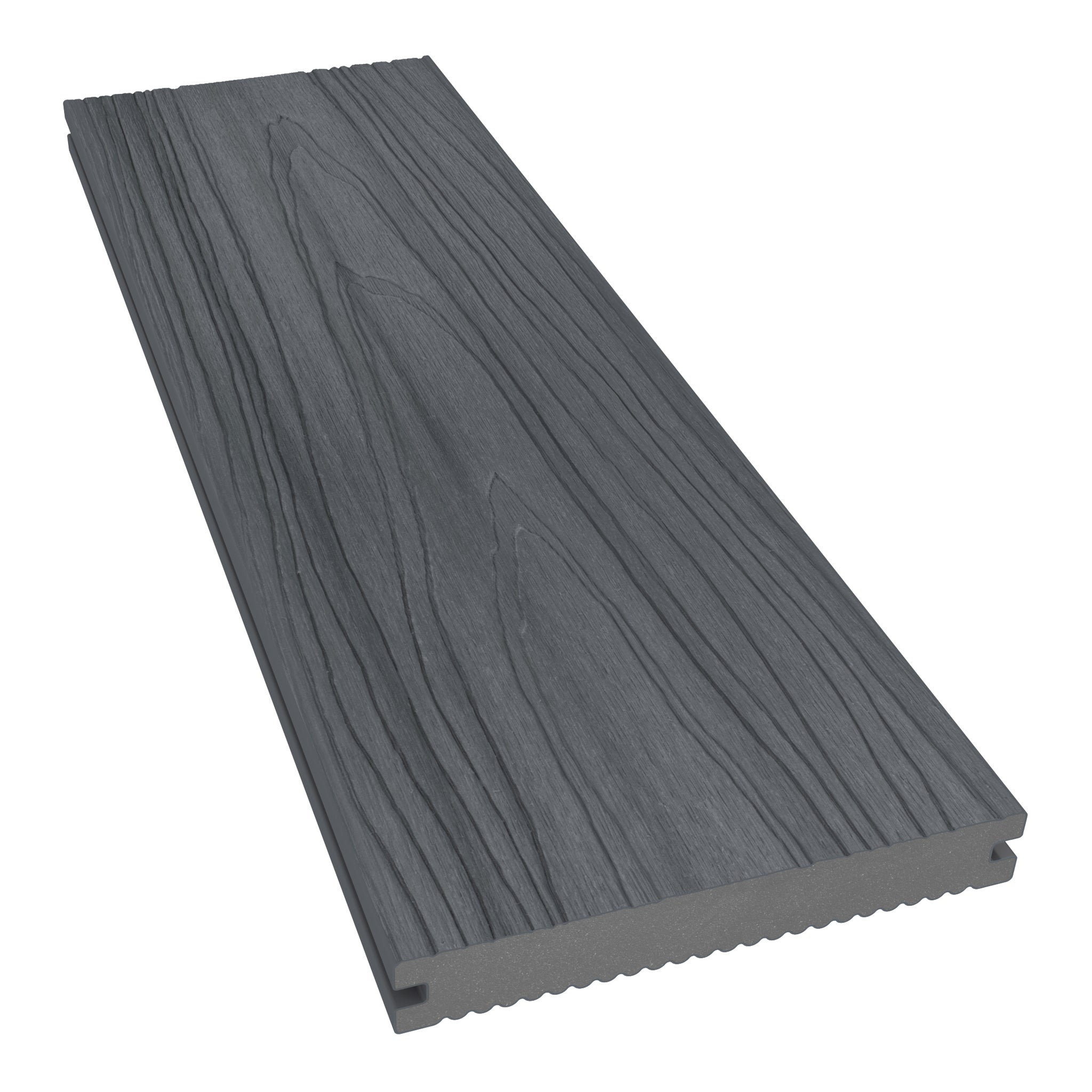
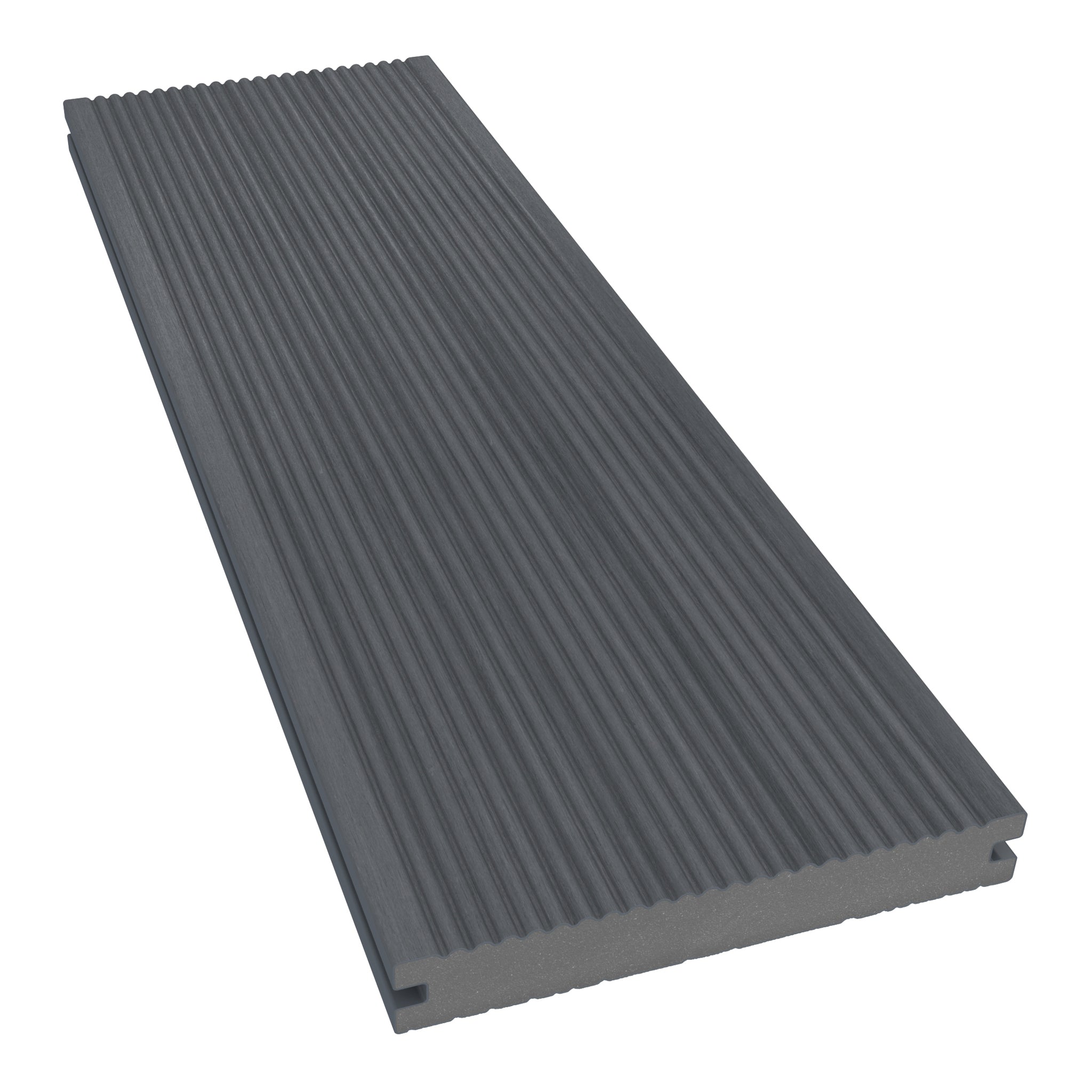
| Classic Hollow | 3.6m × 0.145m | £24.00 | 0.522m2 | £45.98 |
| Deluxe Hollow | 3.6m × 0.143m | £31.50 | 0.5148m2 | £61.19 |
These are dated examples, not a live quotation. Prices, selected variants and promotions can change. Check the product pages before ordering and use the same coverage method when comparing suppliers.
Composite Decking Price per Square Metre: Material Rate or Project Rate?
“Composite decking prices per square metre” and “composite decking prices per m2” describe the same unit, but their calculation can differ. One supplier may use board face area, while another may use installed coverage including the specified side gaps.
Ask which method is being used. Gaps form part of the layout, but they are not extra board material. Border arrangements, cuts and unusable offcuts can increase the quantity purchased for a particular deck.
Your actual board-only project rate is the total board cost divided by the planned deck area. Your complete supply rate adds all required materials before dividing by that area. Label those figures clearly rather than presenting them as equivalent.
Composite Decking Price per Sqft: Converting UK Rates
If you are comparing a composite decking price per sqft, use the conversion that 1m2 is approximately 10.764 square feet. The scope and VAT basis must stay the same through the conversion.
- Price per square foot = price per m2 ÷ 10.764
- Price per m2 = price per square foot × 10.764
For example, an illustrative board-only rate of £50 per m2 is approximately £4.65 per square foot. A rate of £5 per square foot is approximately £53.82 per m2. These examples demonstrate the conversion rather than quote a product.
When checking the price of composite decking per square foot, avoid mixing supply-only figures with installed rates or comparing pounds with another currency. Converting the area unit does not correct a difference in what the quote includes.
Why Composite Decking Material Prices Differ
Core Profile and Surface Construction
Hollow and solid boards have different core profiles. Capped and uncapped products have different surface constructions. Protective capping is designed for enhanced stain and fade resistance, but these features should be compared alongside the exact specification rather than used as a universal quality ranking.
Dimensions and Finish
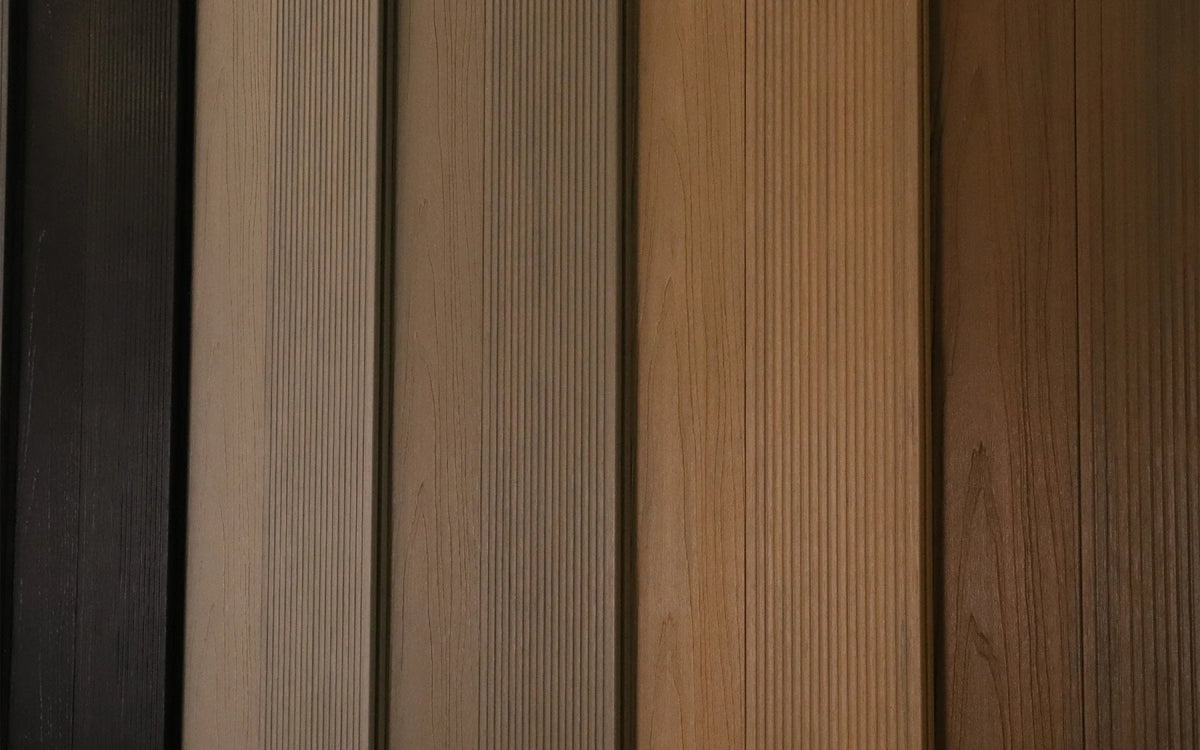
Different widths, lengths and textures affect the amount of material and the appearance of the finished deck. A short board may be useful for one layout and inefficient for another. Compare dimensions without assuming that short lengths are inherently poor value.
Product Suitability and Support
Check permitted applications, compatible fixings, installation information and warranty terms. A composite decking price should be assessed against the product you actually need, rather than a cheaper specification that is unsuitable for the project.
Include the Frame, Fixings and Finishing Materials
The surface boards are only part of the order. Most full-length board installations need joists, suitable supports, fixings and components to finish exposed sides. The frame design depends on the base, height, loading and board requirements.
Explore our subframe guidance and fixings guide. Where appropriate, pedestal installation guidance can help you understand that support option.

Build up your estimate in clear stages:
| Budget stage | Include |
|---|---|
| Board materials | Surface boards, borders and cutting requirements |
| Complete supply | Frame, supports, fixings, fascia, trims and specified accessories |
| Delivered supply | Applicable delivery and unloading arrangements |
| Installed project | Preparation, fitting, waste disposal and other agreed services |
Steps, lighting and balustrades may require further materials and support. Mark them on the plan before requesting quotations so each supplier or installer is pricing the same scope.
Estimate Your Project With a Calculator and Cutting Plan
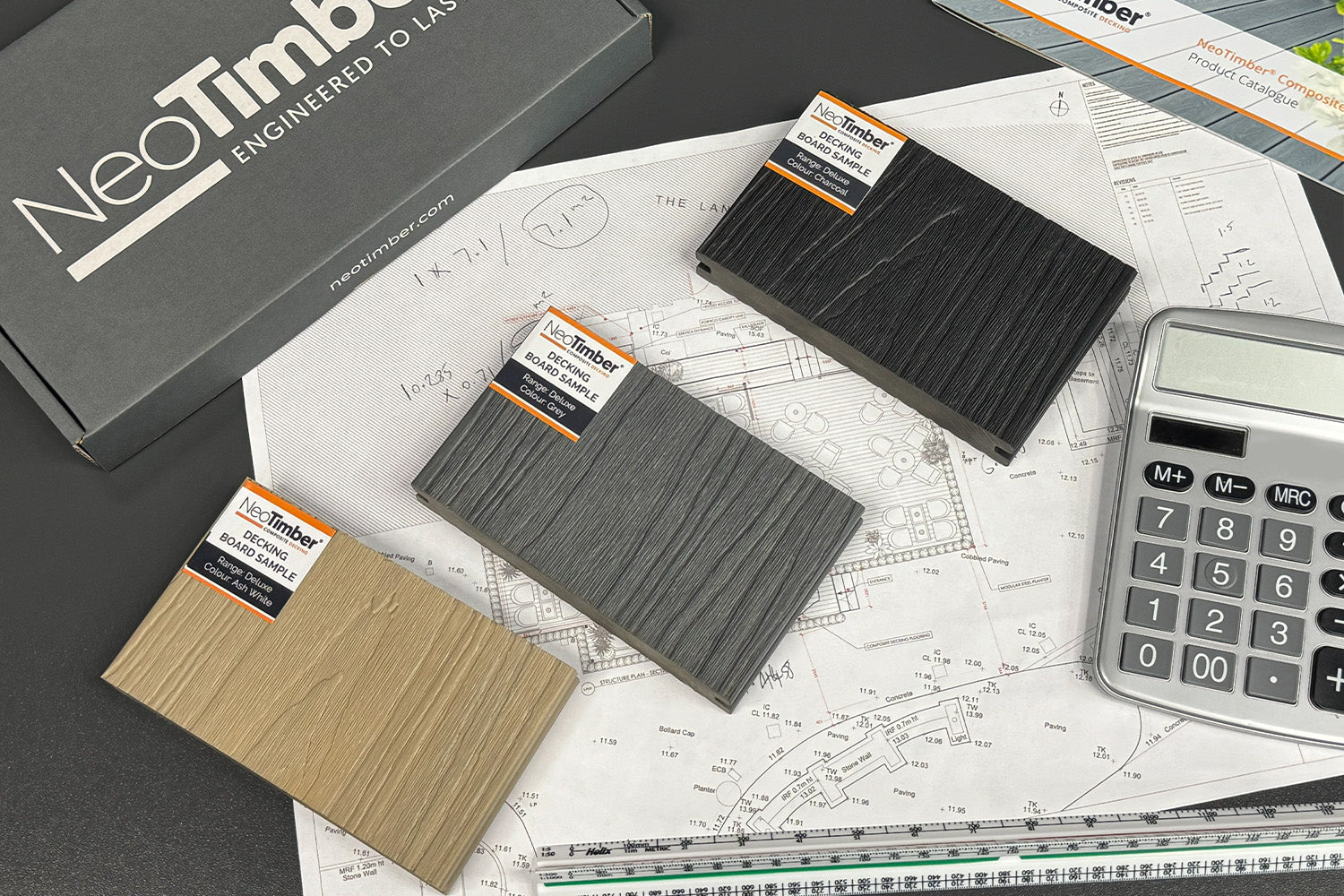
Measure the proposed deck and choose the board direction. Use the composite decking calculator for an initial materials estimate, then review it against joints, steps, perimeter details and the actual frame arrangement.
A 20m2 deck multiplied by a nominal composite decking price per m2 gives only an initial board comparison. It does not automatically account for the quantity you must buy or all the components needed to complete the installation.
Check any allowance already included before adding more for waste. A cutting plan can identify appropriate reuse of offcuts while preserving the required support and movement gaps.
Control Costs Without Compromising the Installation
A straightforward footprint and board layout can reduce cutting and labour. Compare orientations before ordering, and decide whether decorative borders or changes of level add enough value to justify their additional components.
An existing frame may be reusable only if its condition, spacing and construction suit the new boards. Have it assessed before treating reuse as a saving. A new surface does not repair an unsuitable supporting structure.
DIY fitting may reduce paid labour where the project matches your skills and tools. Read the installation instructions first and obtain appropriate help for structural or specialist details.
Promotions may reduce the purchase cost, but check the exact colour, quantity and terms available. Confirm all compatible components before coordinating the order with your installation date.
Consider Maintenance Alongside the Initial Price
Composite generally avoids routine sanding, staining and sealing, which can reduce refinishing work compared with maintaining a particular timber finish. It still needs cleaning and inspection, and it is not automatically cheaper than every timber option over every ownership period.
Compare upfront cost, likely care, access and your intended years of use. Review the product-specific warranty rather than applying one headline term to the whole collection.

Commercial and Specialist Project Pricing
Commercial terraces, balconies and other specialist settings can have different loading, fire and material requirements. Establish the specification before using residential board prices as a budget.
For professional support, contact our team with the intended application, dimensions and programme. Where fitting is needed, use the installer enquiry service and agree the scope directly with the installer.
Composite Decking Material Prices FAQs
Which unit is best for comparing prices?
A consistent square-metre rate is useful, provided the coverage method, VAT basis and included items are the same. Keep the board dimensions alongside the figure.
How do I convert a composite decking price per square metre to square feet?
Divide the square-metre rate by approximately 10.764. Keep the currency, tax treatment and scope unchanged.
Does a board-only rate include the subframe?
No. Unless stated otherwise, board-only means the surface boards. Add the frame, supports, fixings and finishing components separately.
Can a lower price per board cost more overall?
Yes. Coverage, cutting waste and the components required can change the project total. Compare a complete material list rather than one unit price.
Compare Clearly, Then Confirm the Complete Order
Composite decking material prices are easiest to assess when the unit and inclusions are explicit. Compare board coverage first, then build up the frame, finishes and services needed for your actual design.
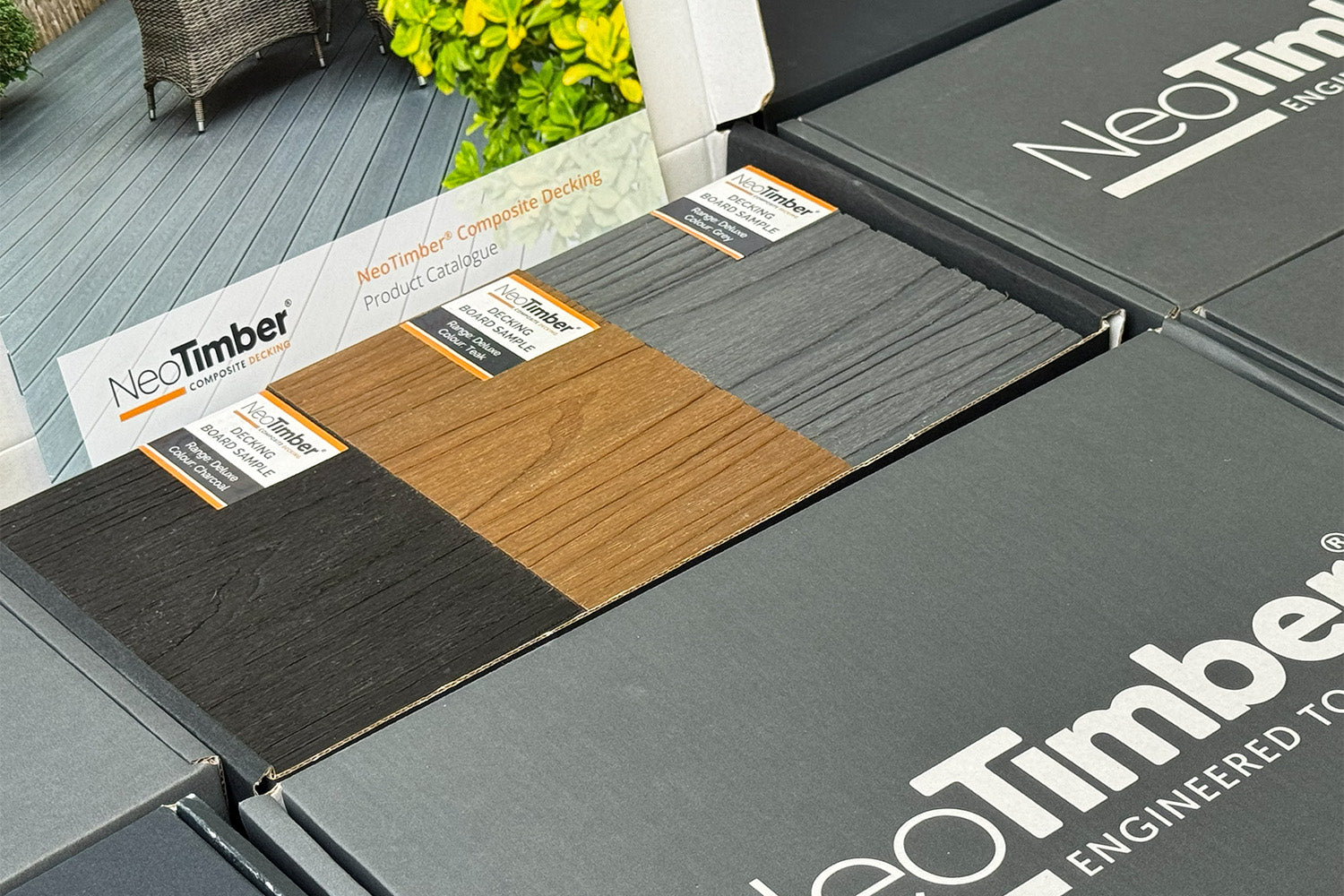
Explore NeoTimber® decking, check current composite decking prices and request free decking samples. For help reviewing your specification, contact our team.