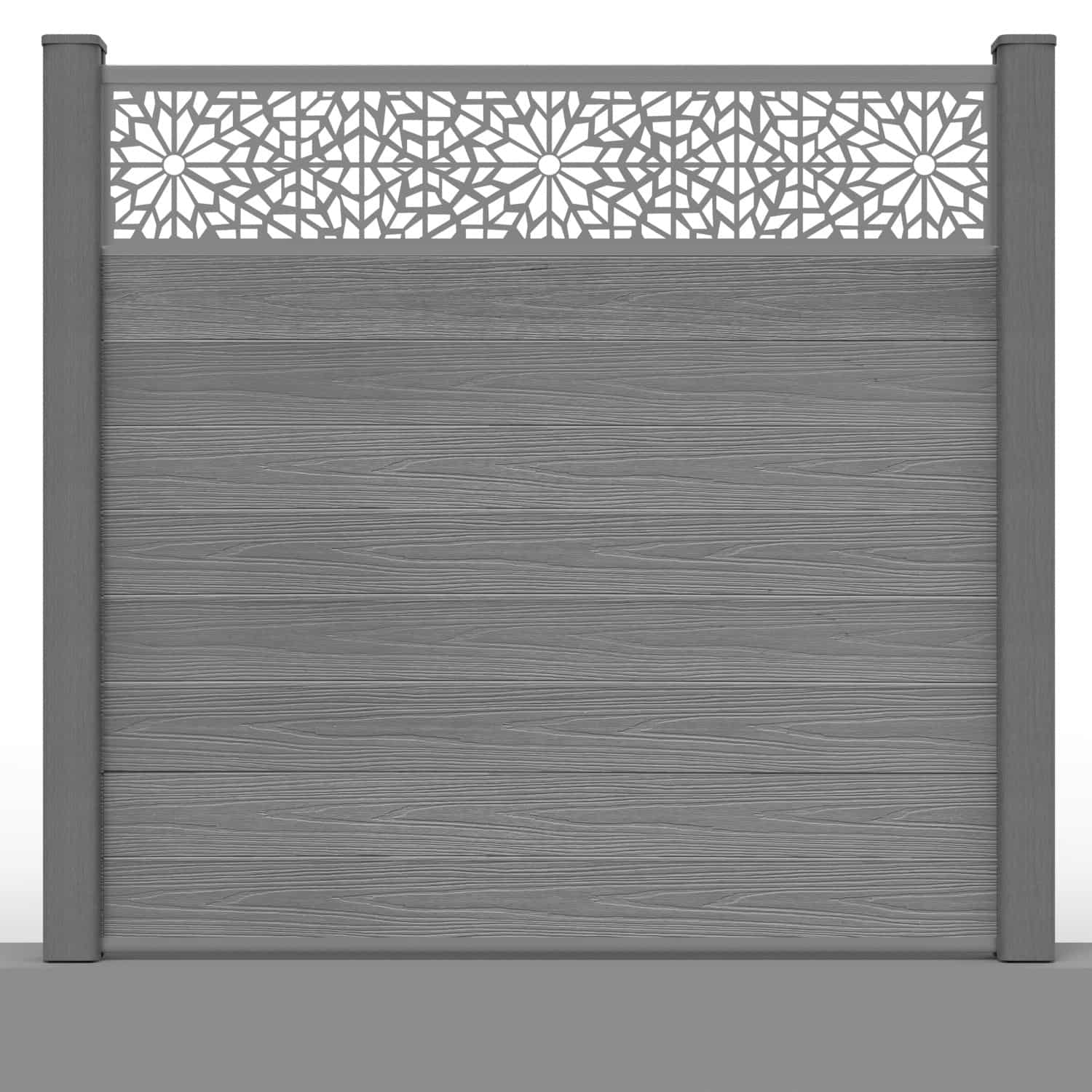
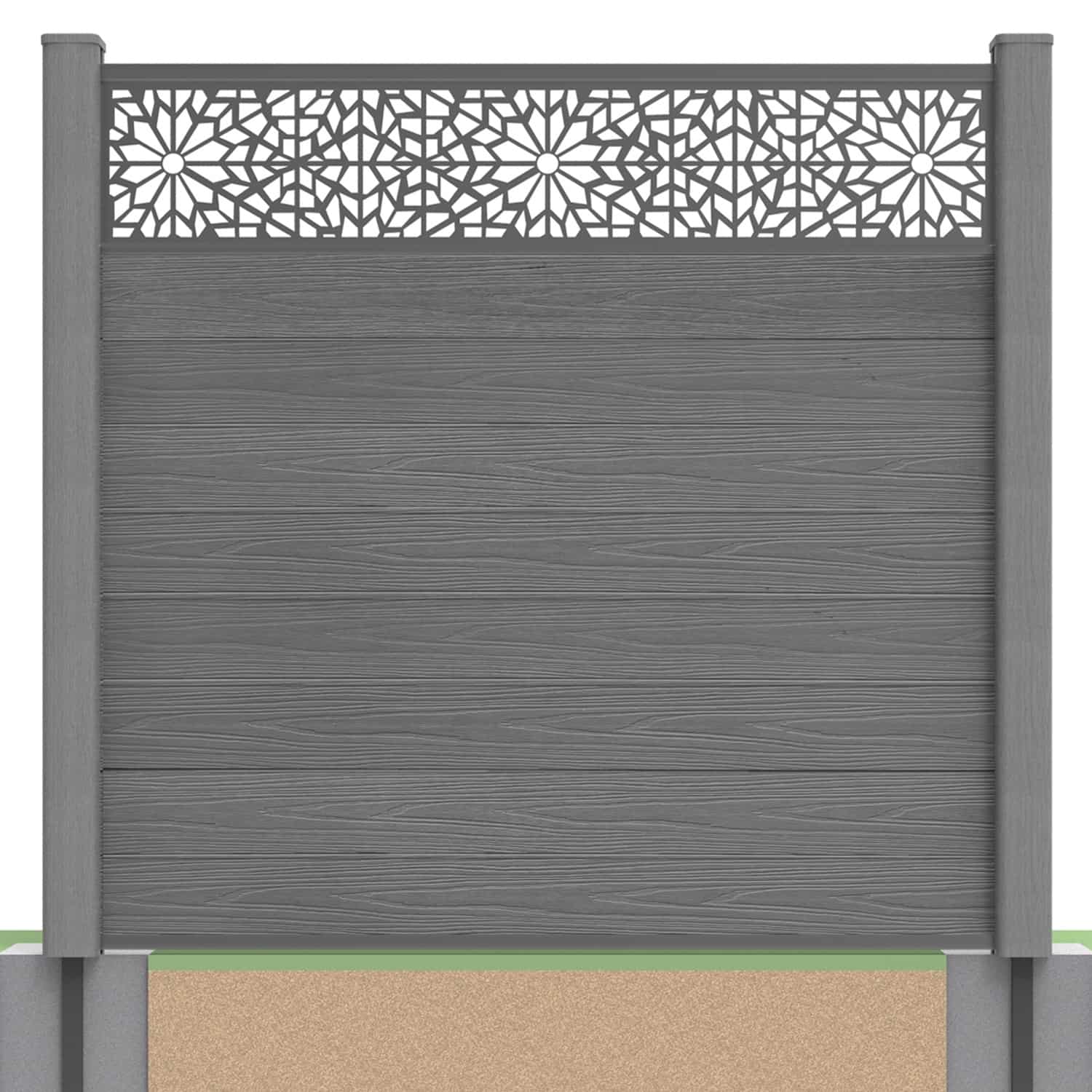
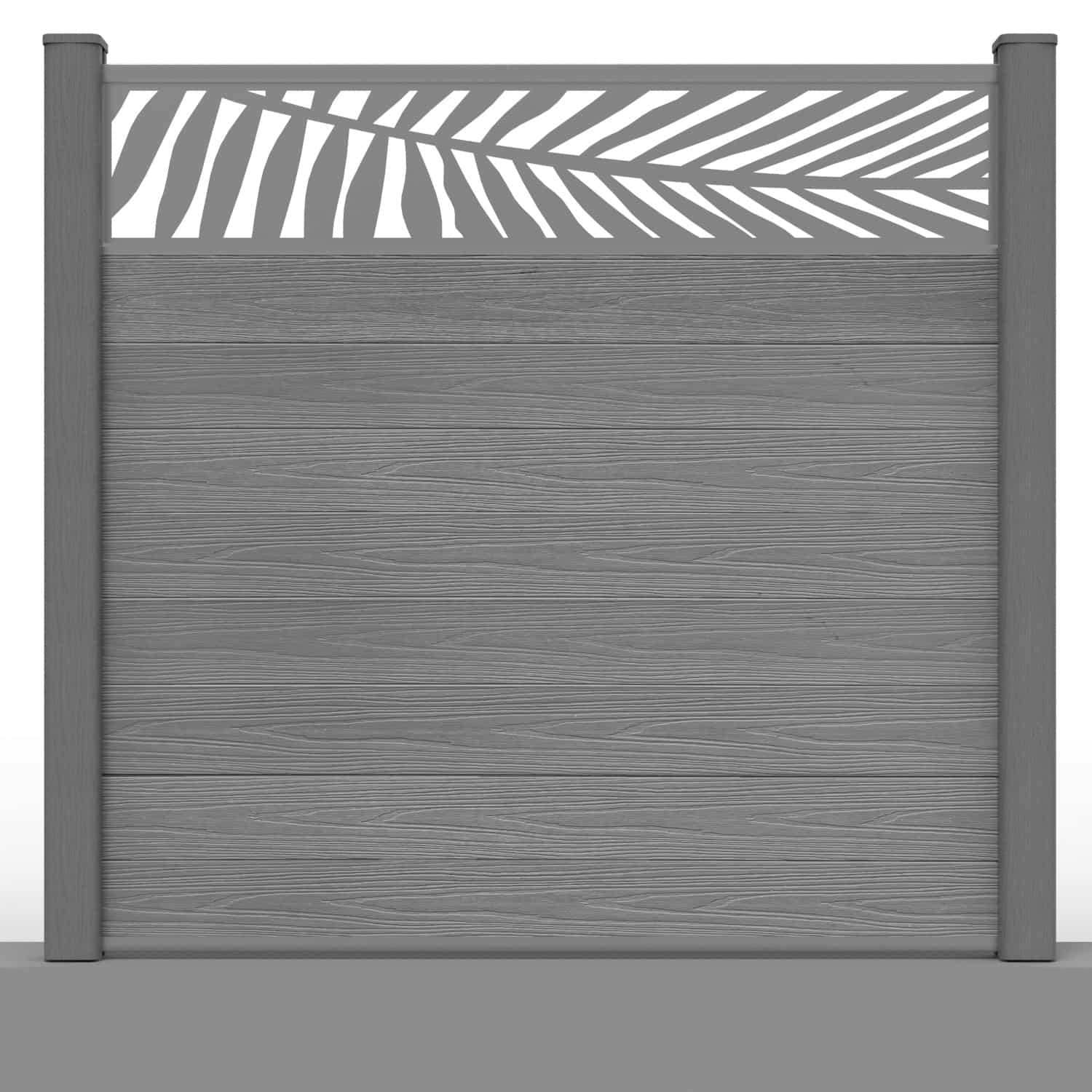
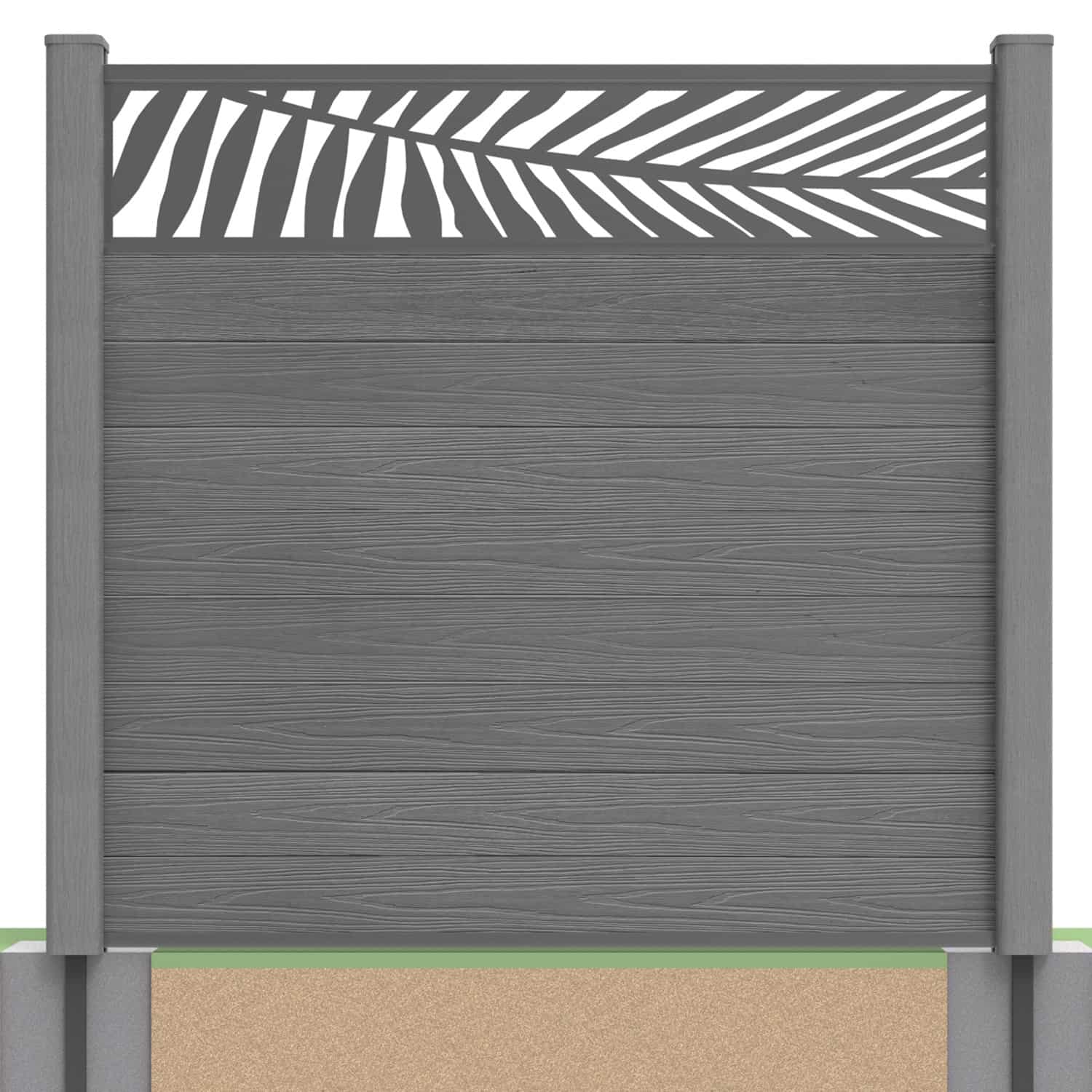
Specify a Composite Boundary That Works for Your Business
Commercial composite fencing can provide a coordinated, low-maintenance boundary for business premises and landscaped outdoor areas. It combines a choice of finishes with reduced routine refinishing, making it worth considering where appearance and ongoing care both influence the specification.
The right choice starts with the purpose of the boundary. Screening a hospitality terrace, dividing an office garden and protecting a restricted perimeter are different requirements. Define the job first, then assess the complete fencing system against the site rather than assuming that one material suits every application.
Explore NeoTimber’s fencing guide for an introduction, or browse the composite fencing collection to compare panels, posts, gates and accessories.
In this guide: Applications · Benefits · Site specification · Design choices · Project costs · Maintenance and warranty · FAQs
Where Could Commercial Composite Fencing Be Used?
Composite panels can help define spaces, provide visual screening and create a consistent finish around landscaped areas. Suitability depends on the selected system and the demands of the particular location.
| Setting | Potential role | Key planning question |
|---|---|---|
| Offices and business parks | Define staff seating areas or landscaped boundaries | How does the fence relate to pedestrian routes and maintenance access? |
| Hospitality venues | Screen dining terraces or separate outdoor zones | Will the layout preserve useful circulation and required access? |
| Managed residential developments | Create coordinated private and communal boundaries | Who will maintain the fence and manage future repairs? |
| Retail and leisure sites | Improve the appearance of selected outdoor areas | Is decorative screening sufficient for the intended function? |
Where a boundary needs verified security, acoustic performance or protection against falls, establish those requirements separately. Composite infill alone does not demonstrate compliance with a specialist performance specification. The fence should not be treated as a retaining wall or vehicle barrier without an appropriately designed system.
Why Consider a Composite System?
A Finished Surface Without Routine Painting
NeoTimber’s capped composite fencing has an additional protective polymer surface designed to improve fade and stain resistance. The supplied finish avoids routine painting and staining, which can simplify maintenance planning.
It still needs cleaning and inspection. For a facilities team, the benefit is a more straightforward care routine rather than the removal of all future maintenance work.
A Coordinated Appearance
Boards, posts and finishing components can be considered together, helping create a consistent boundary around the premises. Choose the texture and colour with the surrounding brickwork, paving and planting in mind.
Modular Component Planning
A modular system can help organise quantities, layout and finishing details. Compatible boards and channels simplify component selection, although foundations, corners and site levels still require careful planning.

Assess the Site Before Finalising the Specification
Height, Exposure and Ground Conditions
Record the proposed height, boundary length, changes in level, corners and gate openings. Establish the ground conditions and exposure before selecting posts and foundations. A large panel presents a different demand from a short sheltered screen, even if the board material is identical.
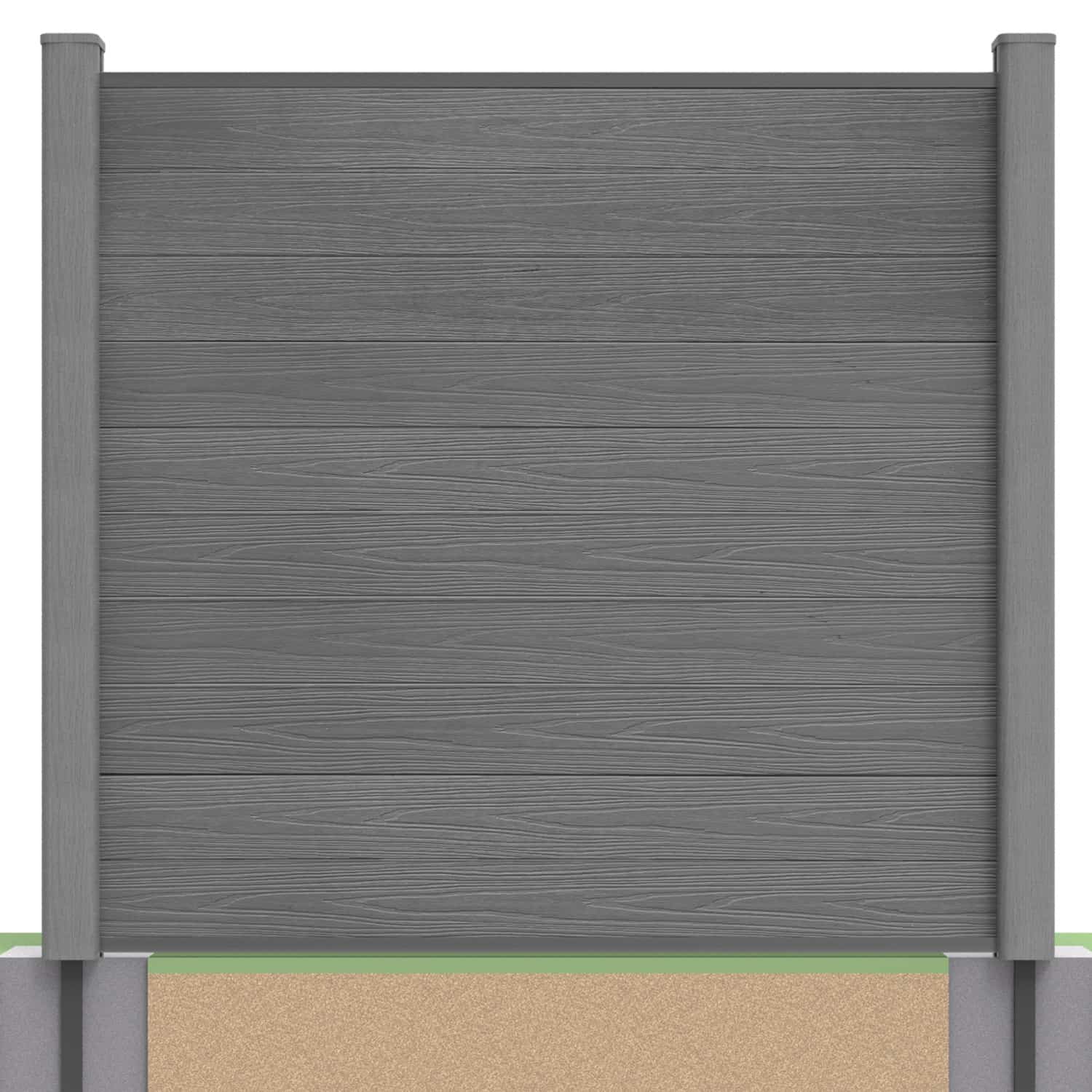
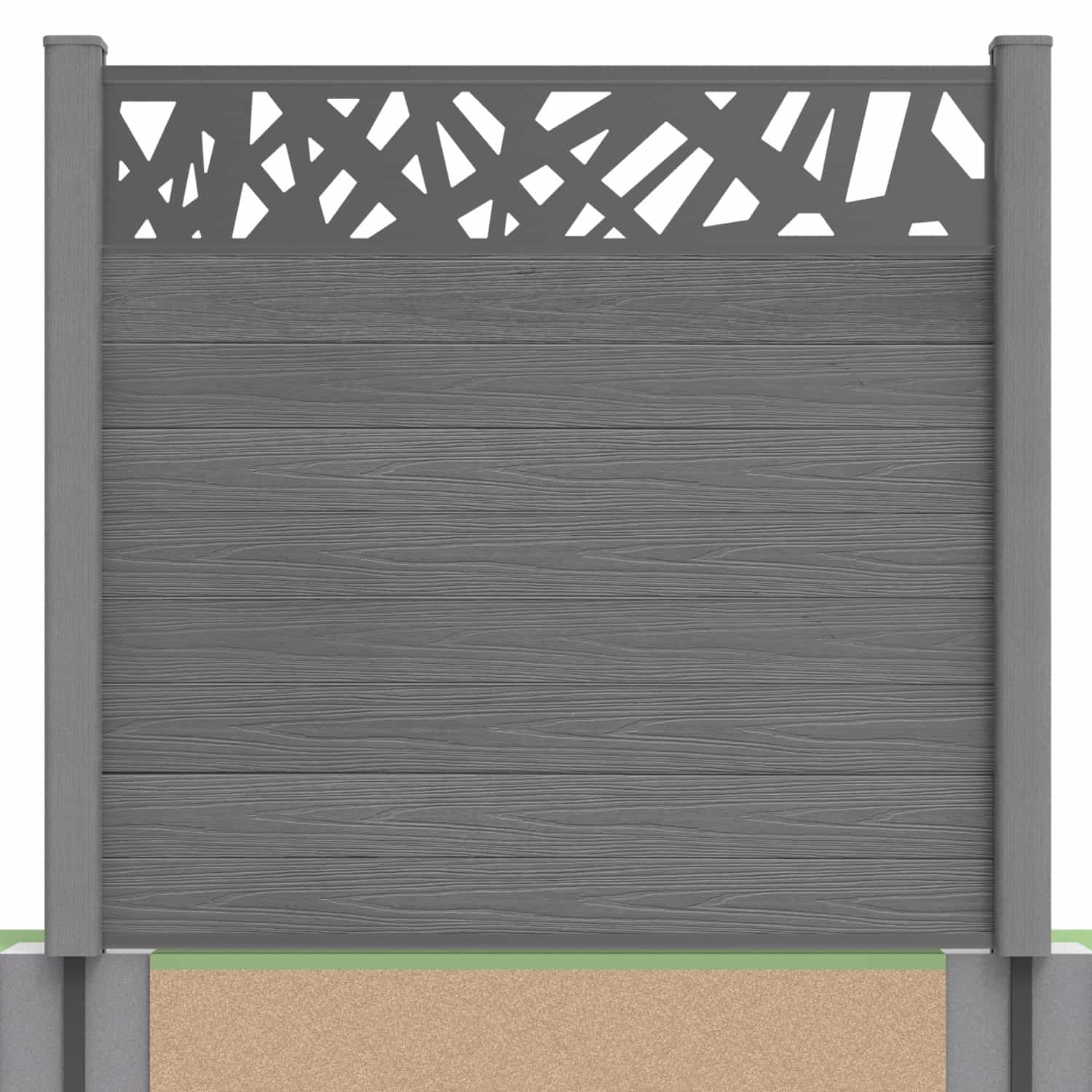
Follow the composite fencing installation guidance and obtain project-specific advice where conditions fall outside the standard details. A hard-looking surface or existing paving does not prove that a base is suitable for structural fixings.
Existing Posts and Retrofit Options
Retaining suitable posts may reduce replacement work. Check their condition, foundations, alignment and spacing first. NeoTimber’s concrete fence post inserts and wooden fence post inserts can adapt compatible supports, but do not repair damage or inadequate foundations.
Access and Daily Operations
Plan how materials, tools and removed fencing will move through the premises. Agree working areas and sequencing with the installer so deliveries and installation can be managed around customers, staff and neighbouring occupiers.
Position gates around the access actually needed. Confirm clear passage widths, swing space, specified gate supports and hardware before committing to the fence layout. Requirements for escape routes or controlled access need to be addressed within the project design.

Choose a Finish That Suits the Premises
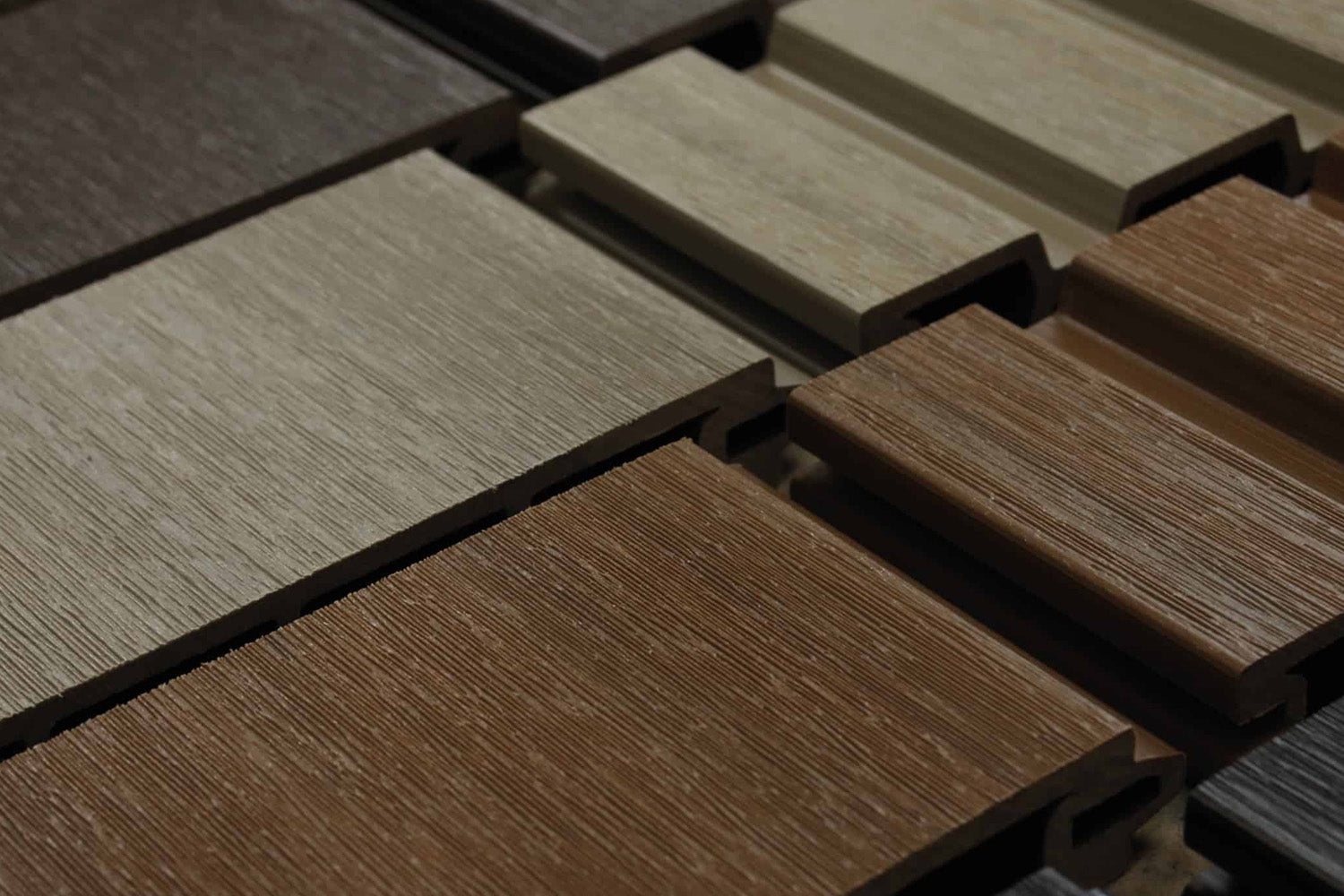
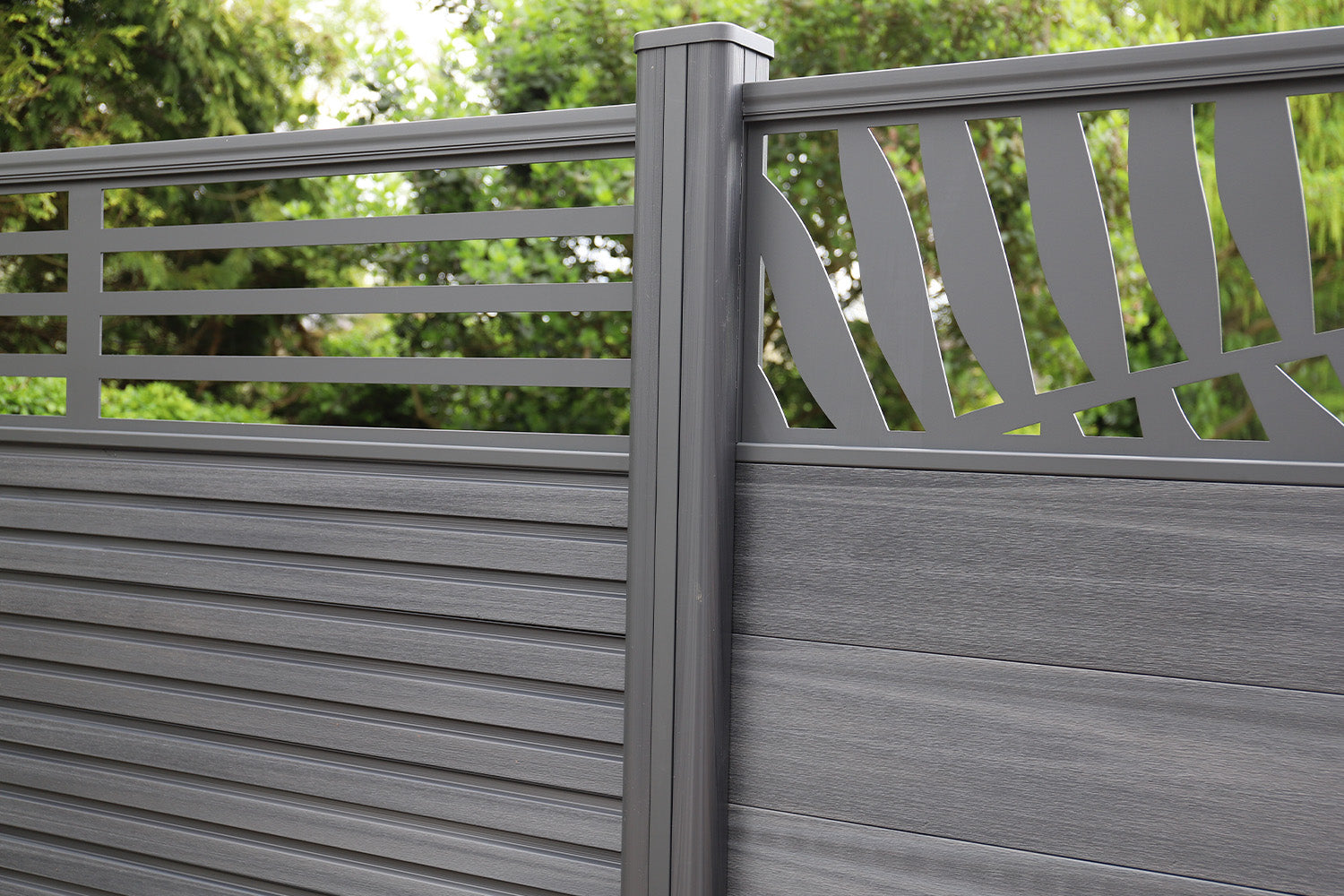
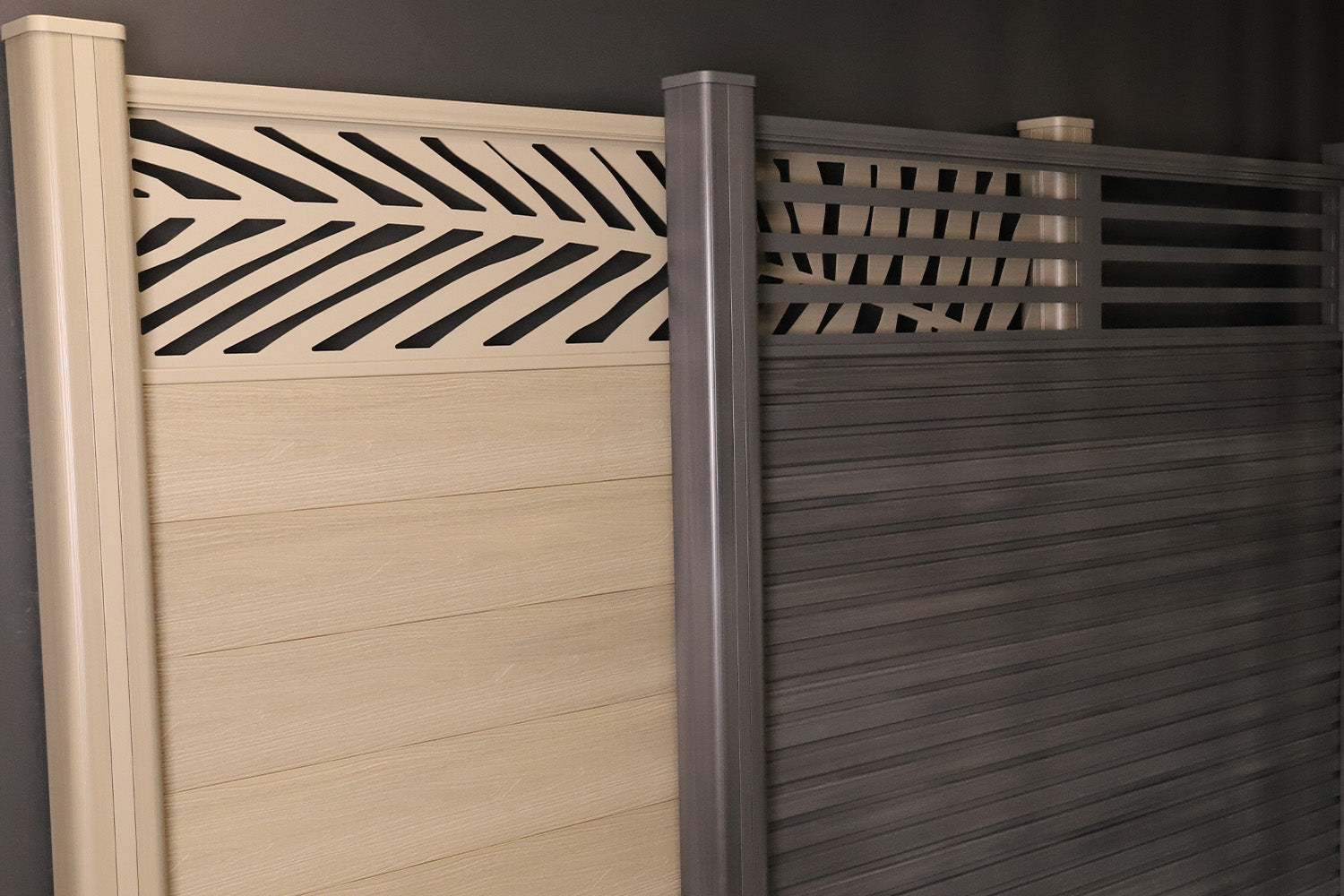
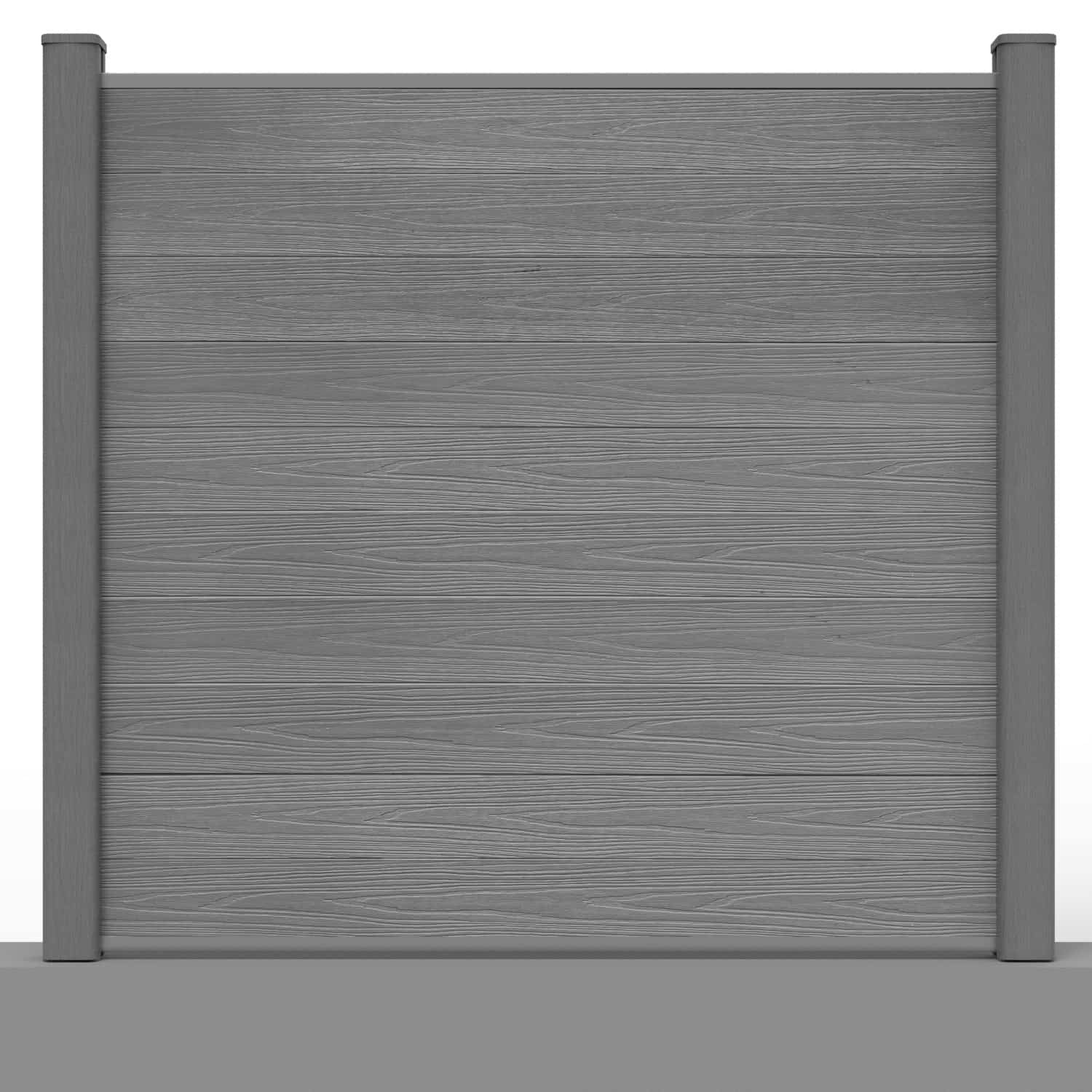
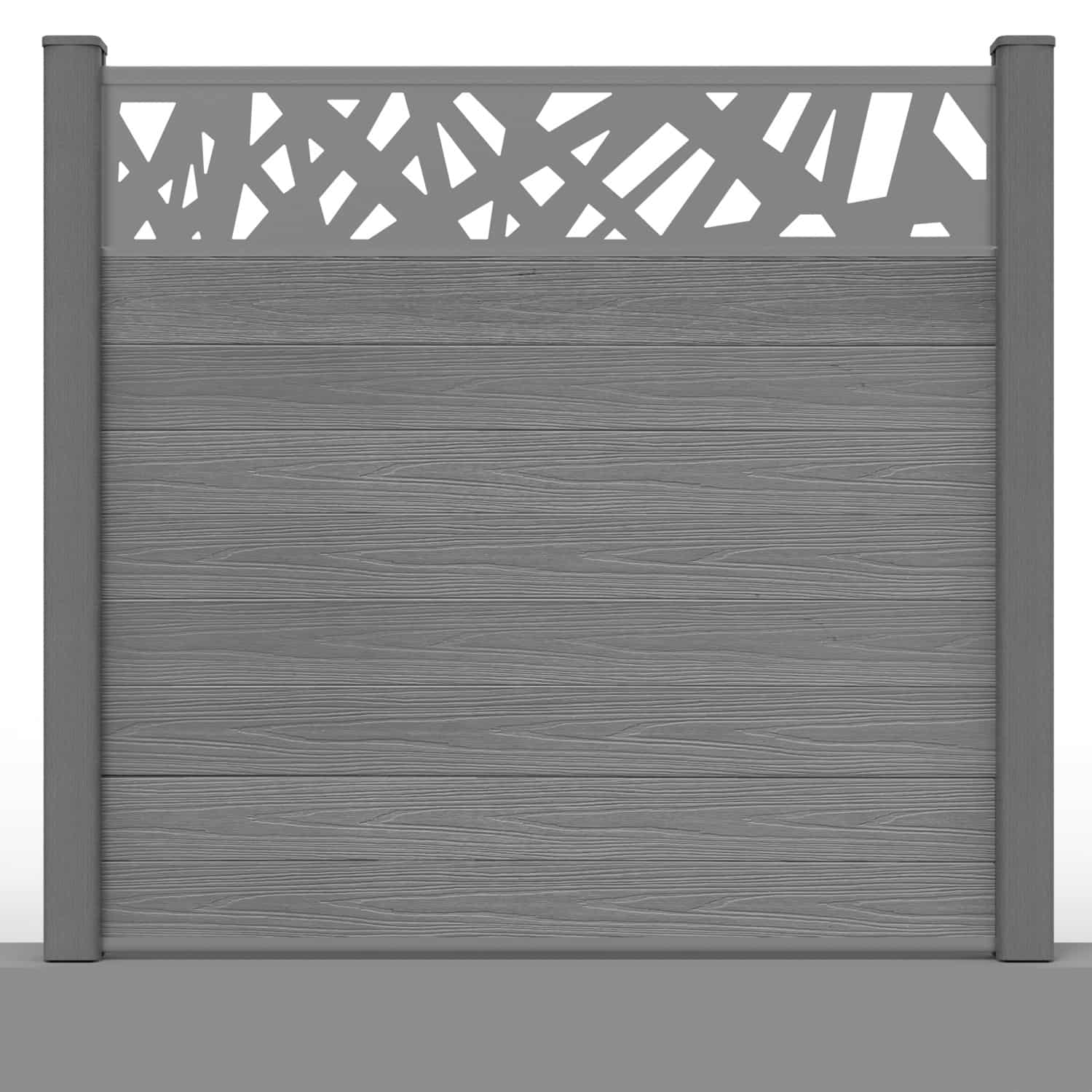
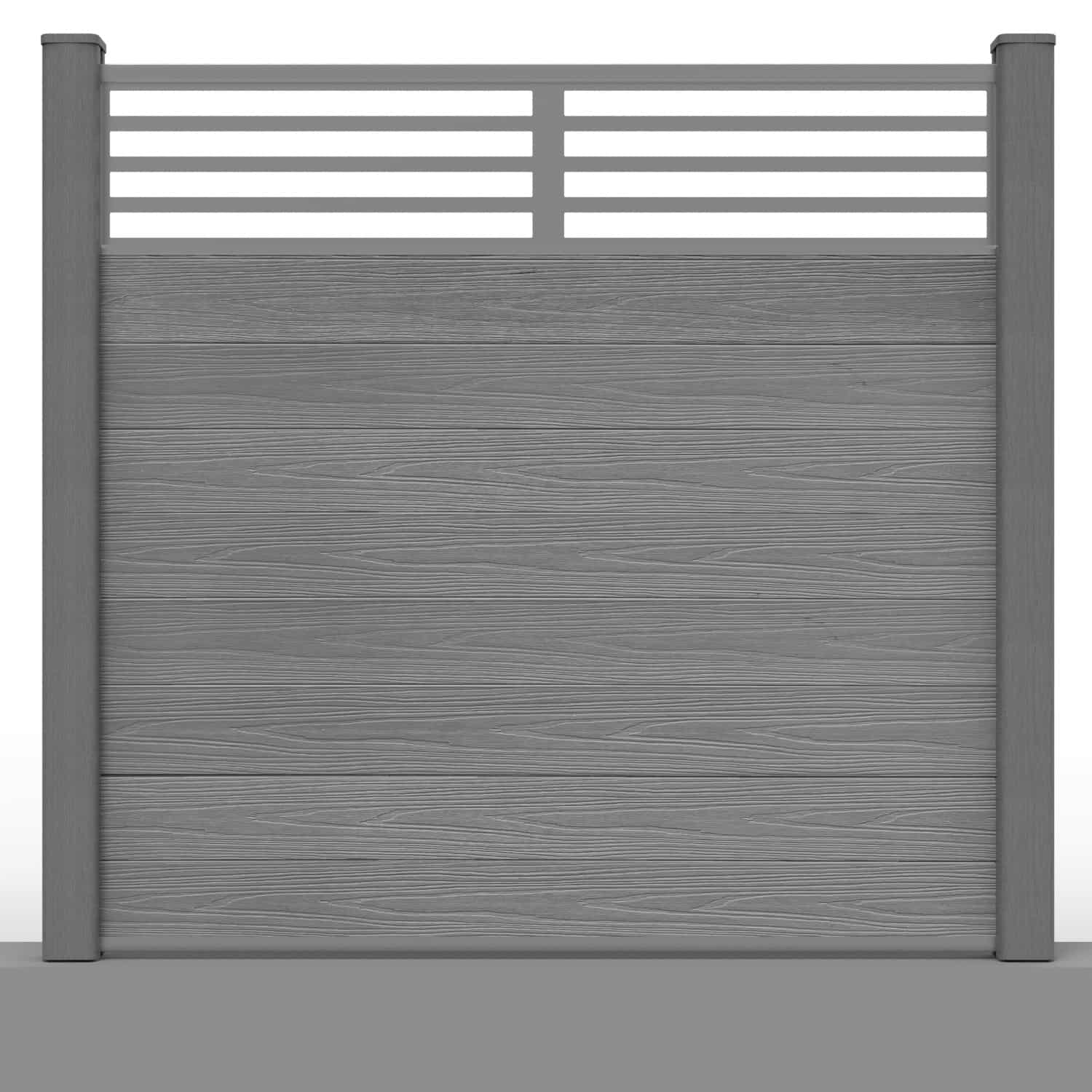
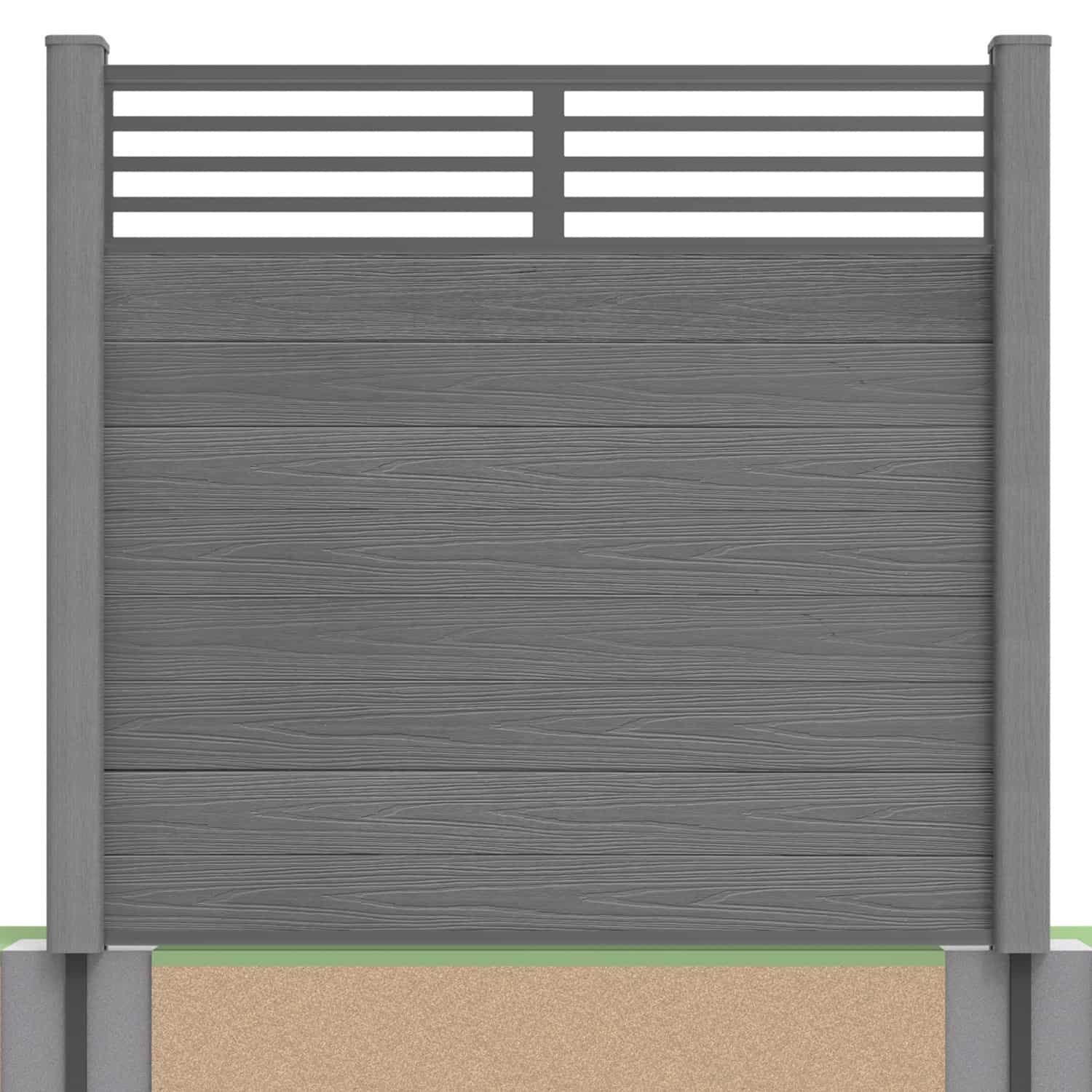
The Deluxe composite fencing range offers woodgrain and brushed face options, while the Slatted range creates a defined linear profile. Compare the assembled appearance from the viewpoints that matter most, including entrances, terraces and neighbouring properties.
A slatted-style profile does not automatically mean an open screen. Check the actual panel construction where visibility, airflow or privacy affects the design.
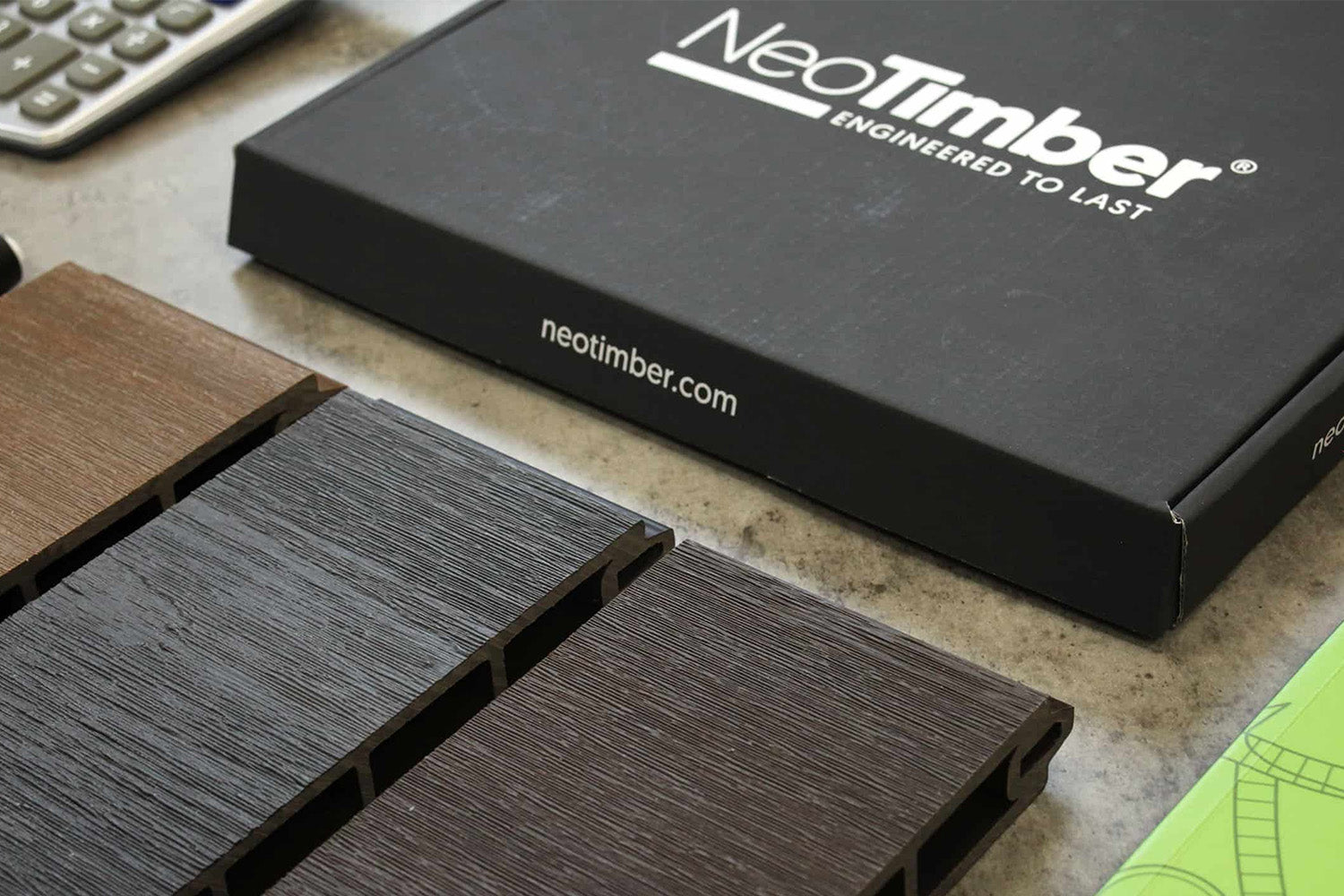
Use the fencing colours guide to shortlist options. Warm shades can complement brick and planting; neutral shades offer another approach to coordinating with contemporary buildings. Request fencing samples and assess them at the site in different light.

For a larger scheme, agree the selected range, colour, face orientation and finishing details before ordering. Keep a record for future maintenance and replacement enquiries. Similar colour names across different materials do not guarantee an identical appearance in every light.
Compare the Complete Project Cost
A panel price alone is not a commercial project budget. Ask for a quotation covering the same height, length and scope of work when comparing systems or installers.
- Boards or panel sets, including planned cutting allowances.
- Posts, supports, foundations, rails, caps, inserts and fixings.
- Gates, screens and any other specified accessories.
- Delivery, unloading arrangements and storage.
- Removal and disposal of the existing boundary.
- Ground preparation, installation labour and any reinstatement work.
Evaluate future care using realistic assumptions about cleaning, inspections and repairs. Avoid treating a warranty period as proof that no replacement or maintenance expenditure will arise. If reduced refinishing is a procurement priority, document that benefit alongside the other requirements rather than assuming guaranteed lifetime savings.
Plan Maintenance and Handover From the Start
Provide the facilities or property management team with the composite fencing care instructions, product details and installation records. Allocate responsibility for routine cleaning and checks of posts, rails, fixings and gates.
Warm soapy water and a soft brush provide a starting point for routine cleaning. Confirm suitable products and methods before using stronger treatments, pressure washing or abrasive tools. Inspect damage or movement promptly and seek advice before modifying components.

Understand the Commercial Warranty
NeoTimber’s fencing warranty information specifies 10 years of cover for commercial, public or high-traffic applications. The limited cover concerns manufacturing and material defects and depends on correct installation, use and maintenance.
Read the full terms for covered components, exclusions and claims procedures. Colour variation, weathering and general wear are excluded; the warranty should not be read as a promise of unchanged appearance. Keep the applicable documents with the handover records and distinguish product cover from the installer’s workmanship agreement.
Commercial Composite Fencing FAQs
Is composite fencing suitable for every commercial site?
No single system suits every setting. Assess the intended function, height, exposure, supports and operational requirements. Specialist security, acoustic or guarding duties need their own verified specification.
Does commercial composite fencing need painting?
Routine painting or staining is not part of normal care for NeoTimber’s capped boards. Follow the cleaning instructions and seek advice before applying coatings or treatments.
Can existing concrete posts be reused?
Potentially, where their condition, foundations, spacing and channels are suitable for the selected system. Check compatibility before ordering inserts or panels.
What warranty applies to a commercial installation?
NeoTimber’s fencing warranty information lists 10 years for commercial, public or high-traffic use, subject to the full terms. Confirm the applicable cover and retain the documentation for the project.
Is Slatted fencing an open screening system?
Do not infer open gaps or airflow from the name alone. Slatted refers to the visual profile; assess the assembled panel details against your privacy and screening requirements.
What information should I provide when requesting a quotation?
Supply the boundary length, proposed height, site location, ground conditions, exposure, corners, levels and gate openings. Include photographs, access constraints and any specialist performance requirements.
Build a Clear Commercial Fencing Specification
A well-planned boundary combines the right appearance with suitable support, a defined installation scope and manageable care. Explore NeoTimber’s commercial composite fencing options or contact our team with your site details to discuss the components your project needs.