Turn Your Garden Boundary Into a Considered Design Feature
Decorative fence panels can bring colour, texture and pattern to a garden while defining its boundaries. A continuous timber-inspired surface, a slatted-effect finish and a patterned screen each create a different backdrop for paving, planting and outdoor furniture.
Choose the design around its purpose. A private rear boundary needs a different level of coverage from a panel framing a seating area or a low front-garden feature. This guide compares the main options and explains how to coordinate the appearance with the practical installation.

Decide What You Want the Panel to Do
Choose decorative garden panels around the view from the house and the places where you sit. A boundary occupies a large visual area, so a simple profile can make as much impact as an intricate cut-out pattern.
Consider whether you need direct-view privacy, a decorative backdrop, support for planting or separation between garden zones. These functions are not interchangeable. An open trellis can filter a view without providing the coverage of continuous infill, and a decorative panel should not be assumed to provide security or guarding around a drop.
Compare the Main Decorative Styles
Panel styles and the details to consider:
| Style | Design effect | Practical check |
|---|---|---|
| Continuous boards | A defined backdrop with no intentional open pattern | Joints, perimeter gaps and finished height |
| Slatted-effect boards | Repeated shadow lines across the surface | Whether the product is closed or genuinely open |
| Open trellis | A lighter pattern that can complement planting | Visibility and suitability for any plant load |
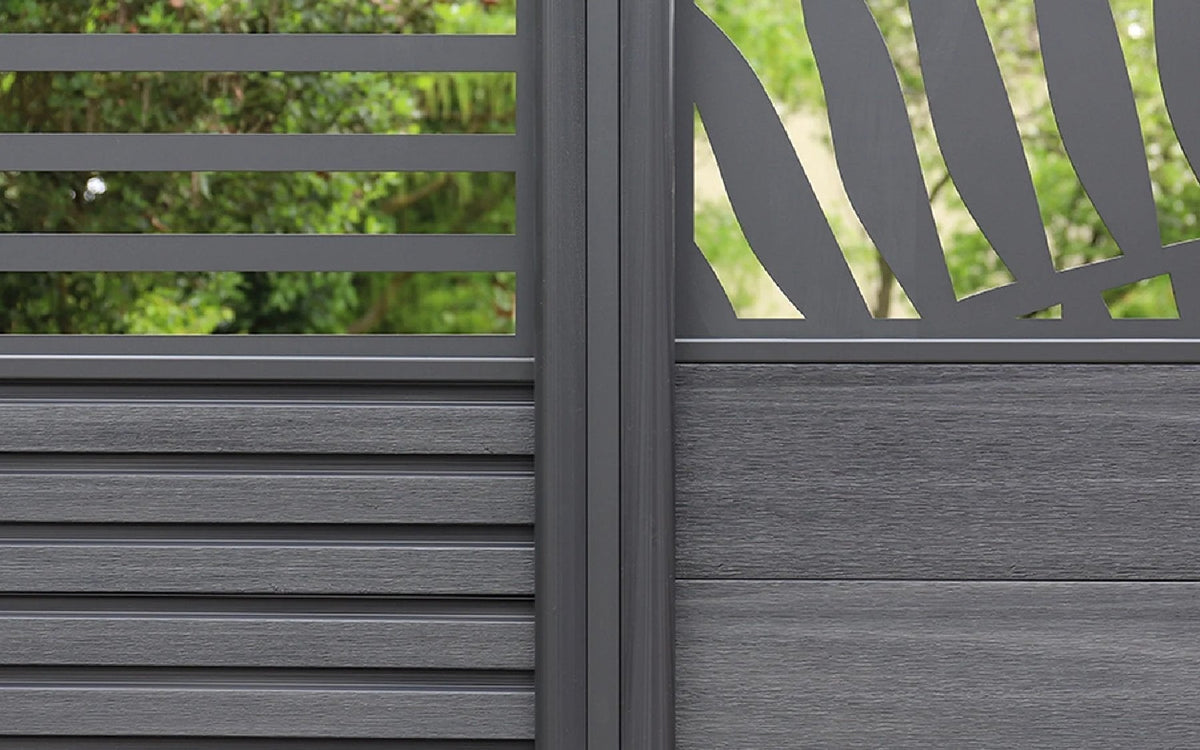
| Patterned metal screen | Cut-out detail and a focal point | Openings, compatible frame and exposure |
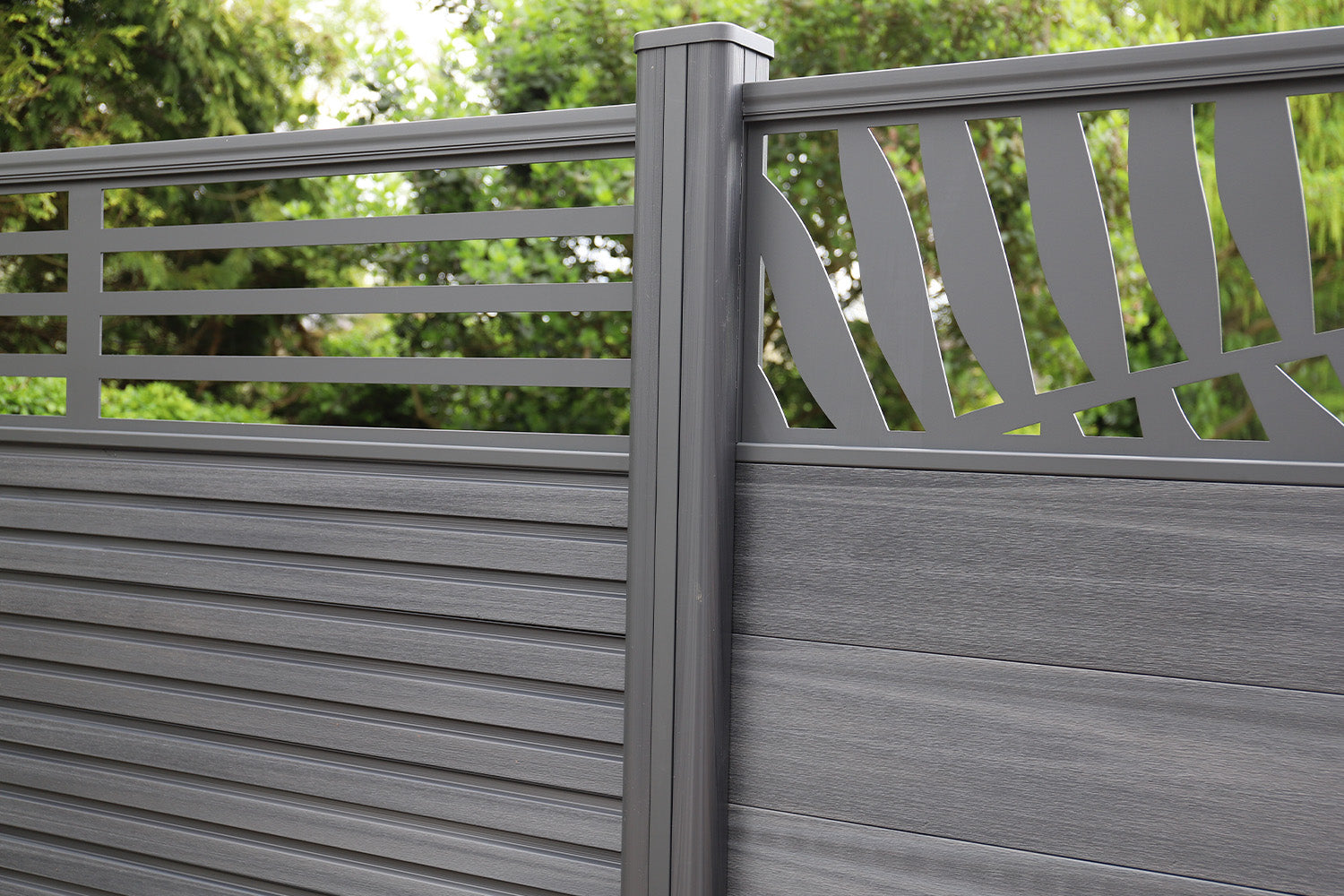
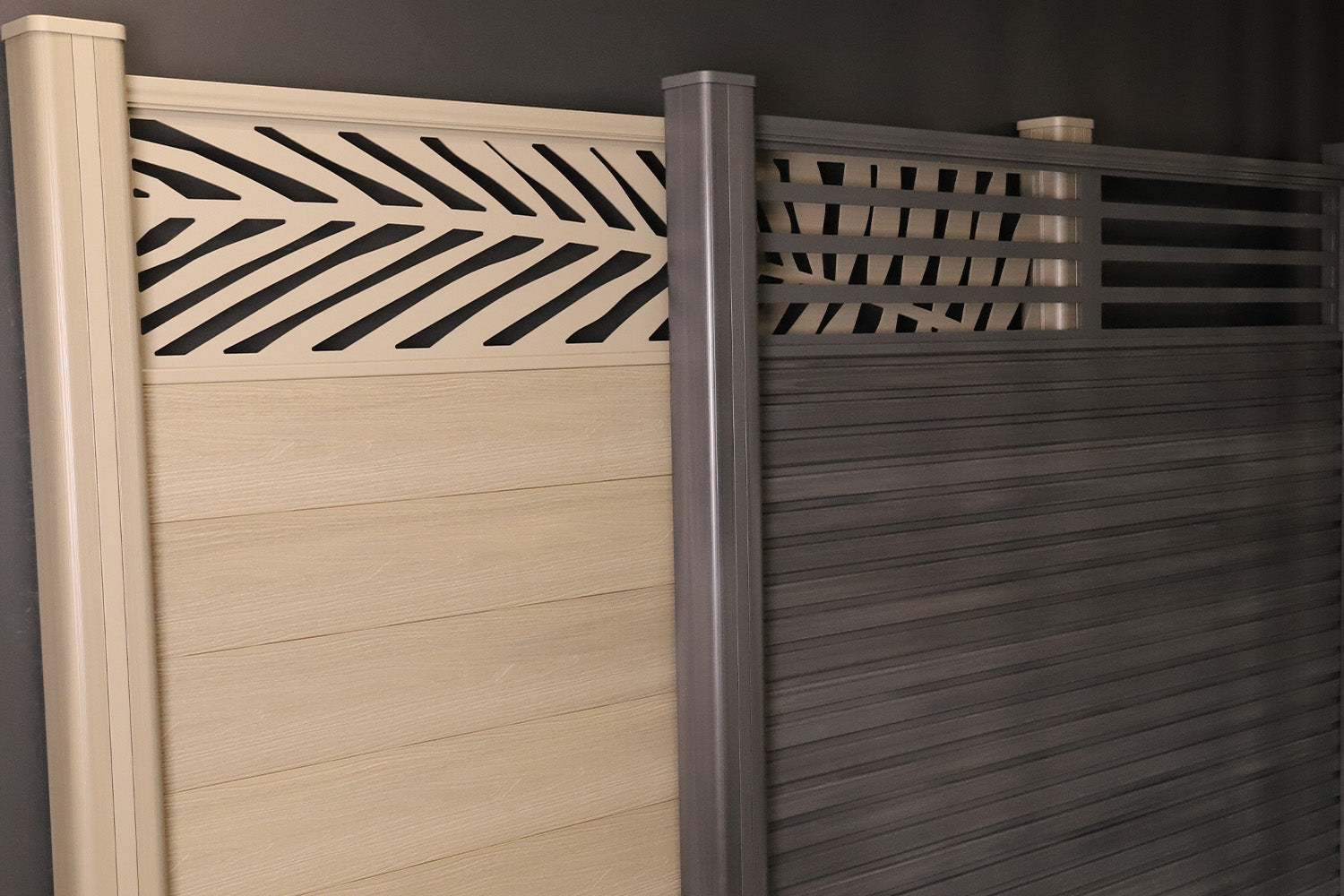
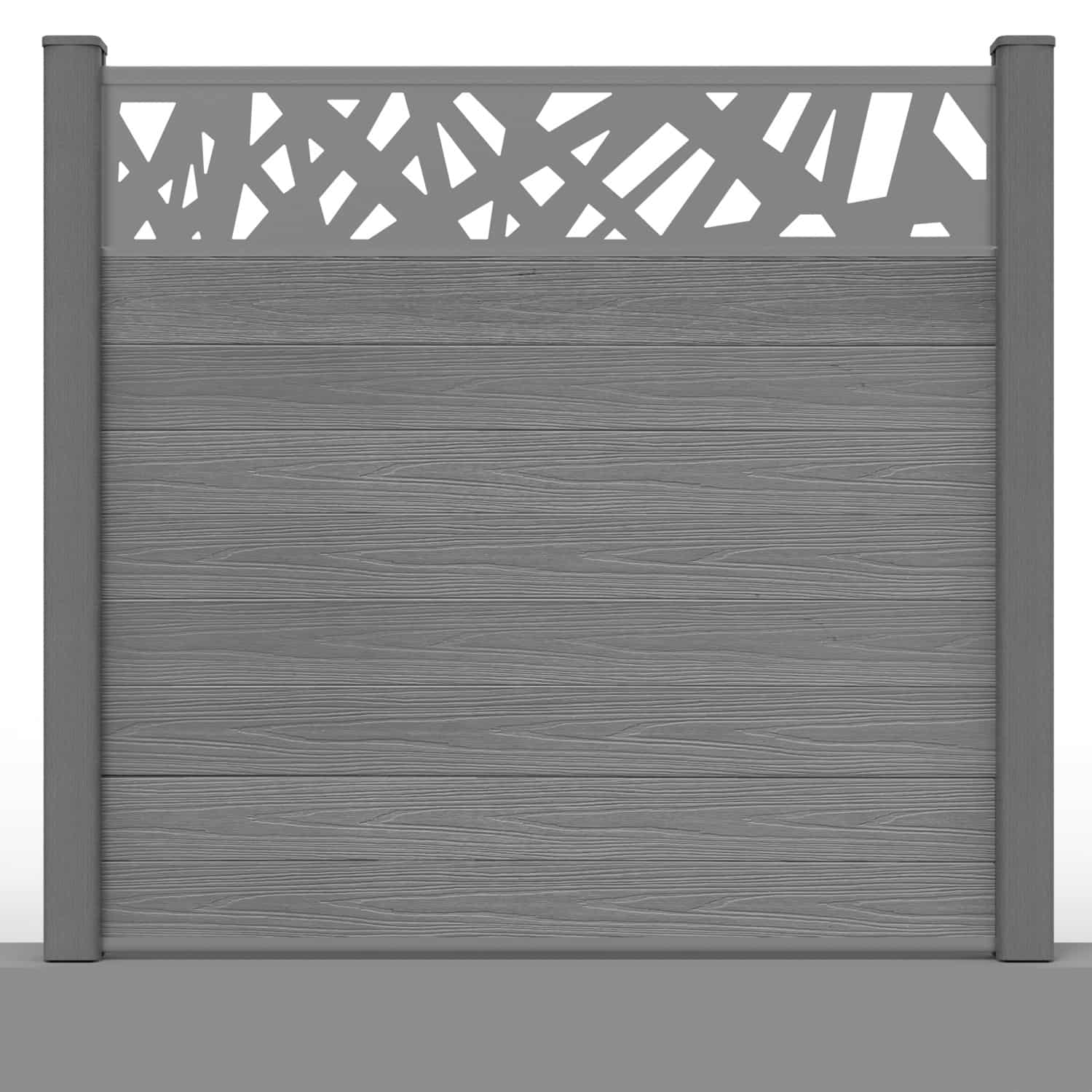
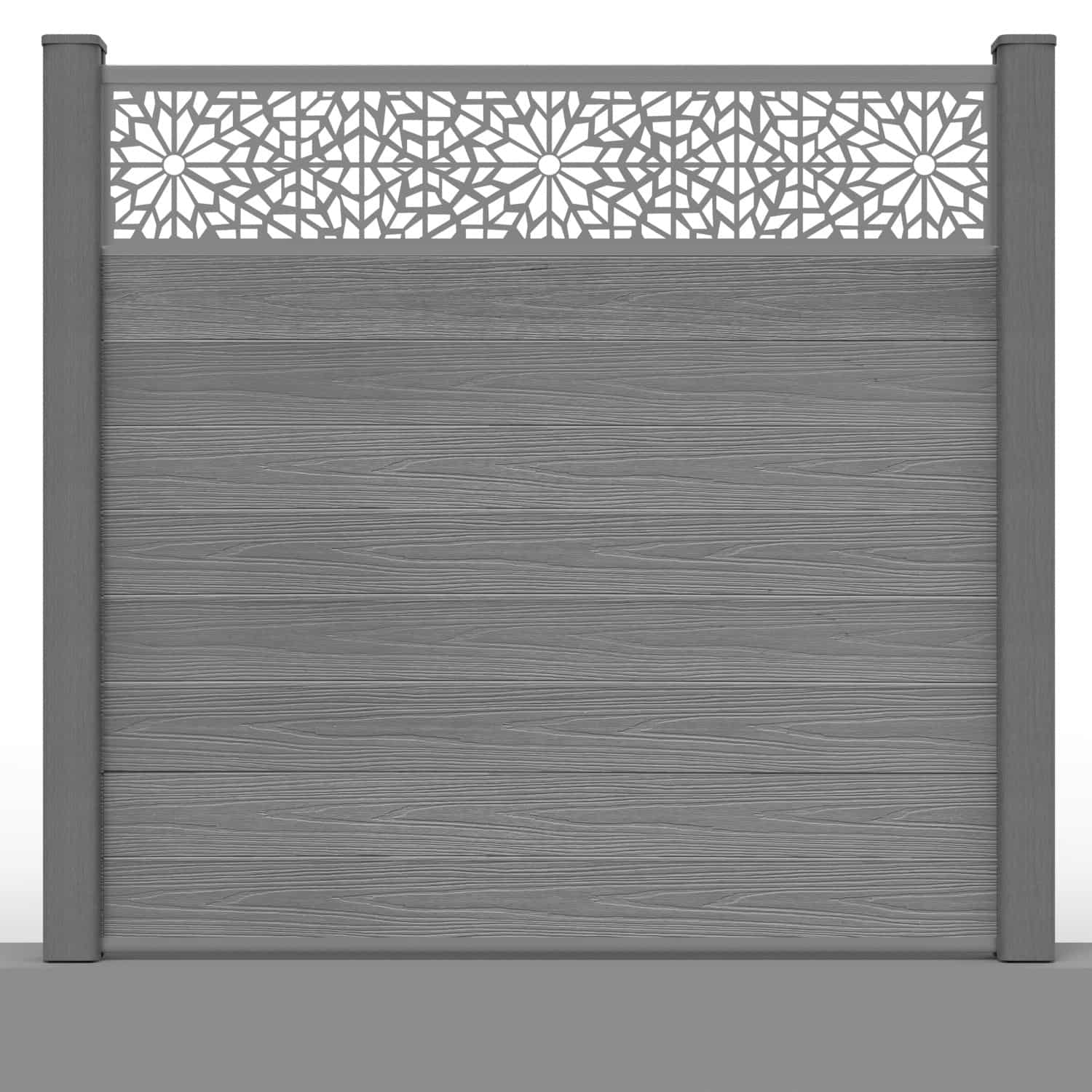
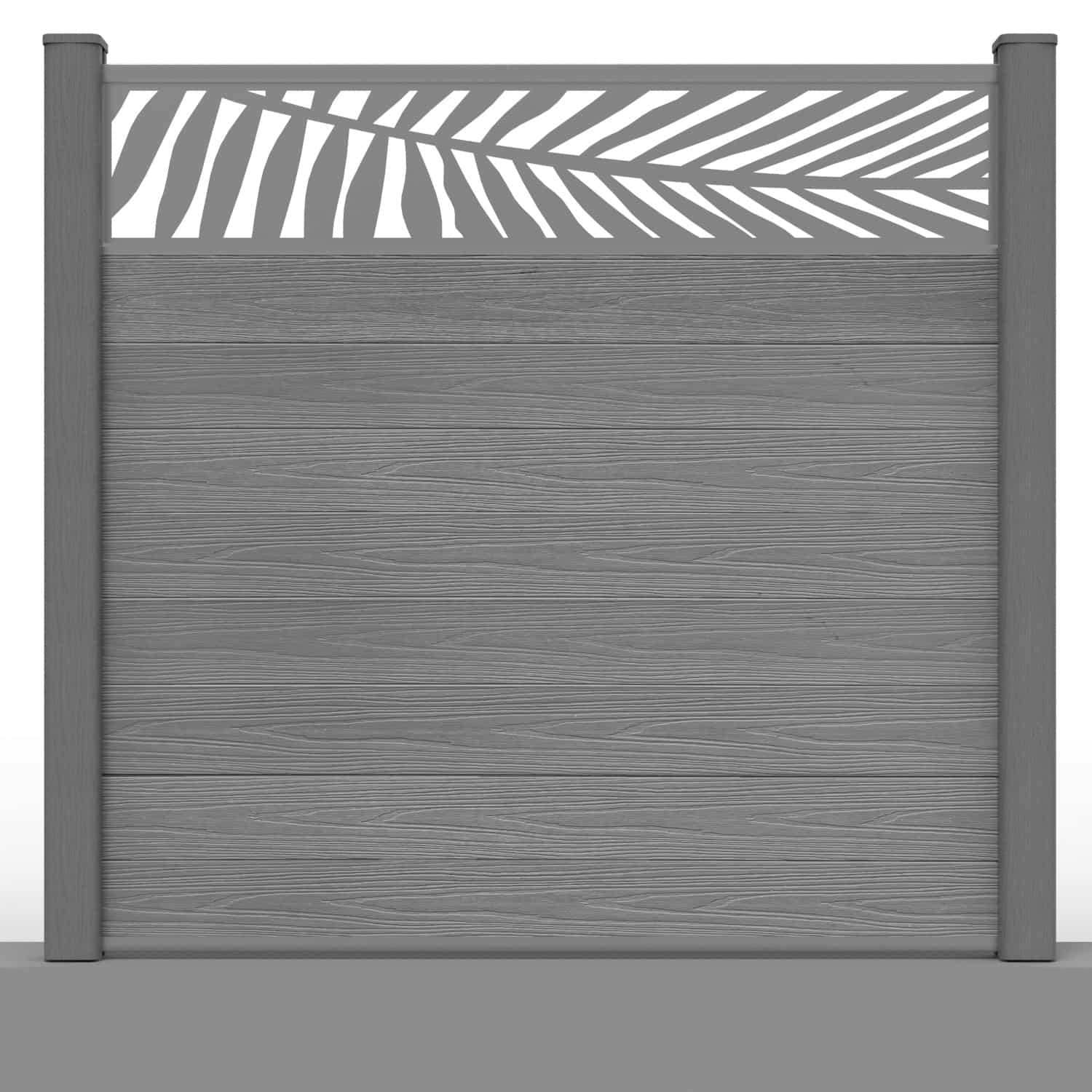
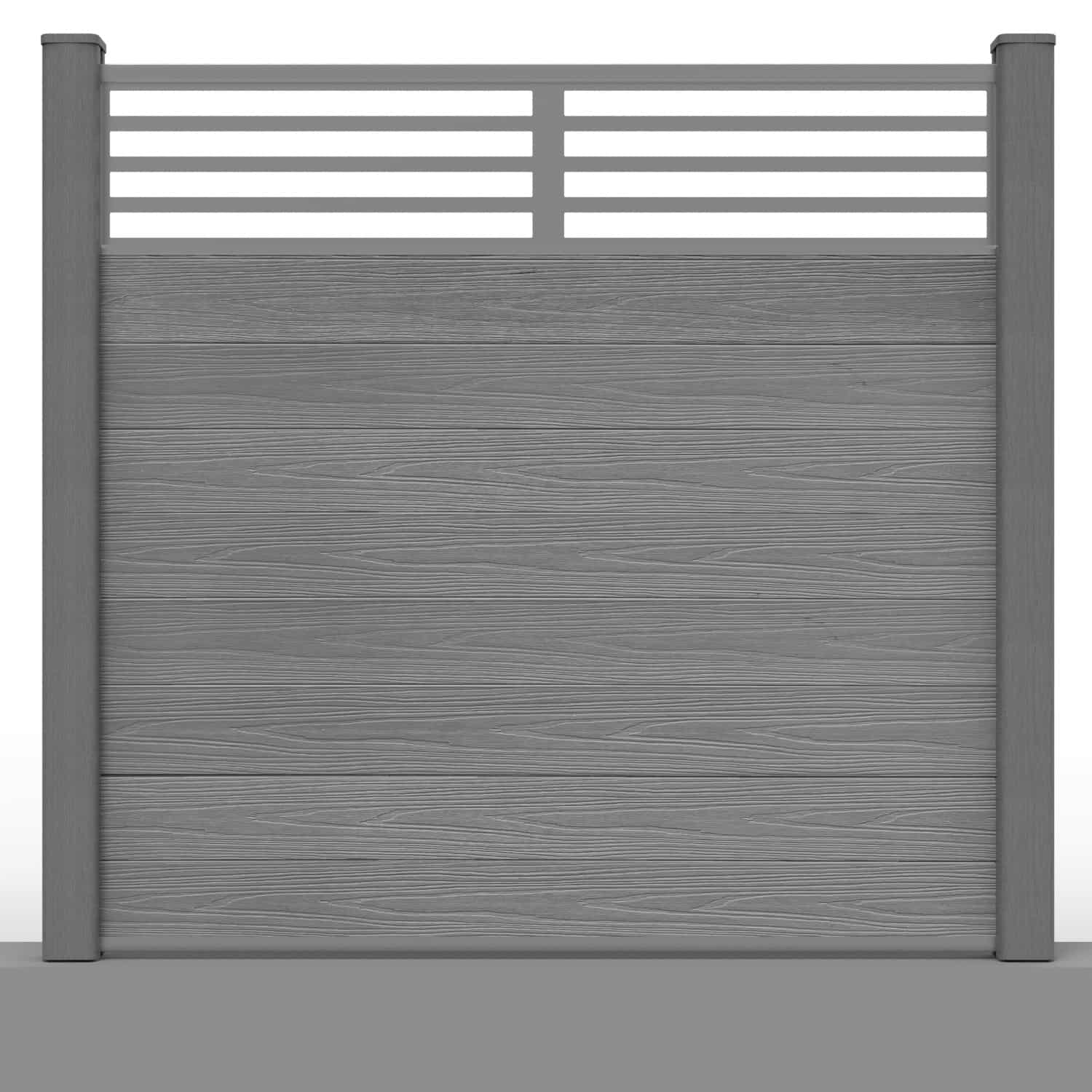
| Composite with screen insert | A more continuous lower section with pattern above | Approved component combination and support detail |
Decorative Garden Trellis Panels: An Open Design Approach
Decorative garden trellis panels introduce a repeated pattern without the visual weight of a solid boundary. They can frame planting or distinguish one area from another, particularly where complete privacy is unnecessary.
Check the actual opening size from the relevant viewpoint. Growing plants may change the coverage over time, but seasonal foliage should not be treated as dependable year-round screening.
If you want climbers, confirm that the trellis and supporting structure can carry the intended growth. Do not attach heavy planting to a decorative insert without approval. Keep access for pruning and cleaning in the layout.
Decorative Metal Fence Panels and Screen Inserts
Decorative metal fence panels can introduce geometric, linear or nature-inspired patterns. You can use a full feature panel or concentrate the detail in selected bays to avoid making a long boundary feel overly busy.
Alternatively, decorative metal panels can form the upper part of a compatible modular fence, with more continuous infill below. This gives pattern a defined place in the scheme rather than adding it as an unrelated accessory.
Check the metal, finish, cut edges and fixing requirements for the location. A screen pictured in a sheltered garden is not automatic evidence of suitability for every exposed or coastal site. Review the actual openings if privacy is important.
Explore NeoTimber® decorative screen options and confirm the permitted board, rail and post combination for the selected design.
Composite Decorative Fence Panels: Texture and a Coordinated Finish
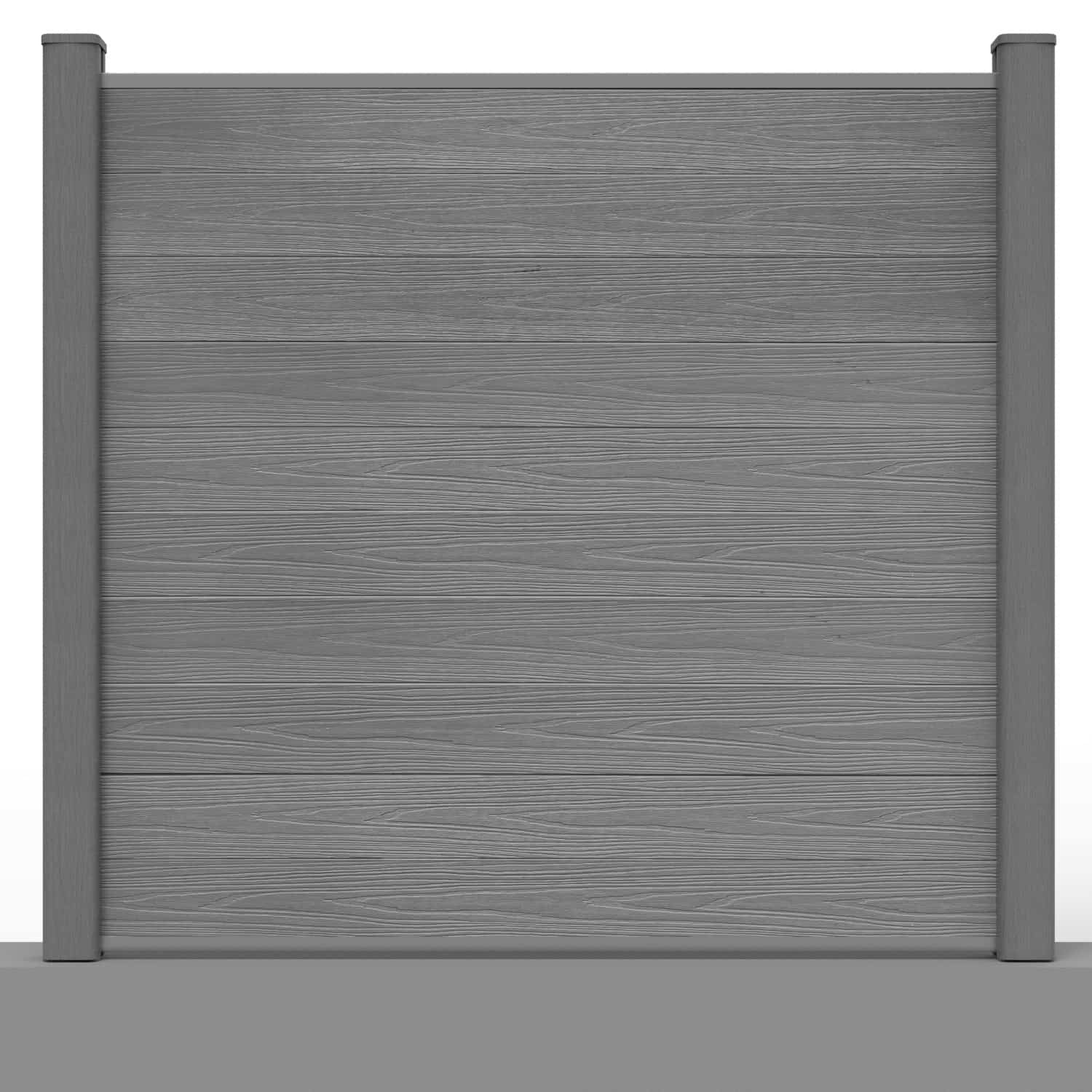
Composite decorative fence panels can provide timber-inspired surfaces without routine painting or staining. Their appearance still depends on the profile, colour and any screen inserts, so compare the actual products rather than assuming every composite boundary looks the same.
NeoTimber® Deluxe boards create a tongue-and-groove arrangement, while the Slatted range introduces horizontal shadow-line detailing. A slatted-effect face is not the same as an open trellis: check the complete panel construction before expecting light or airflow through it.
Compare both approaches in the composite fencing collection. Low upkeep still includes cleaning and inspection, and fade or stain resistance should not be read as a promise of an unchanged surface indefinitely.

Decorative Plastic Fence Panels: Check the Material Description
Decorative plastic fence panels can refer to different constructions, including PVC and recycled-plastic products. Composite contains a combination of materials and should not automatically be treated as equivalent to an all-plastic panel.
When comparing decorative plastic fence panels UK listings, review the intended application, reinforcement, finished dimensions and required supports. A lightweight decorative border is a different purchase from a full-height boundary system.
Ask what the price includes and how the product accommodates movement. Follow the relevant care instructions rather than using timber paint, solvents or cleaning methods without checking compatibility.
Use Colour to Connect the Whole Garden
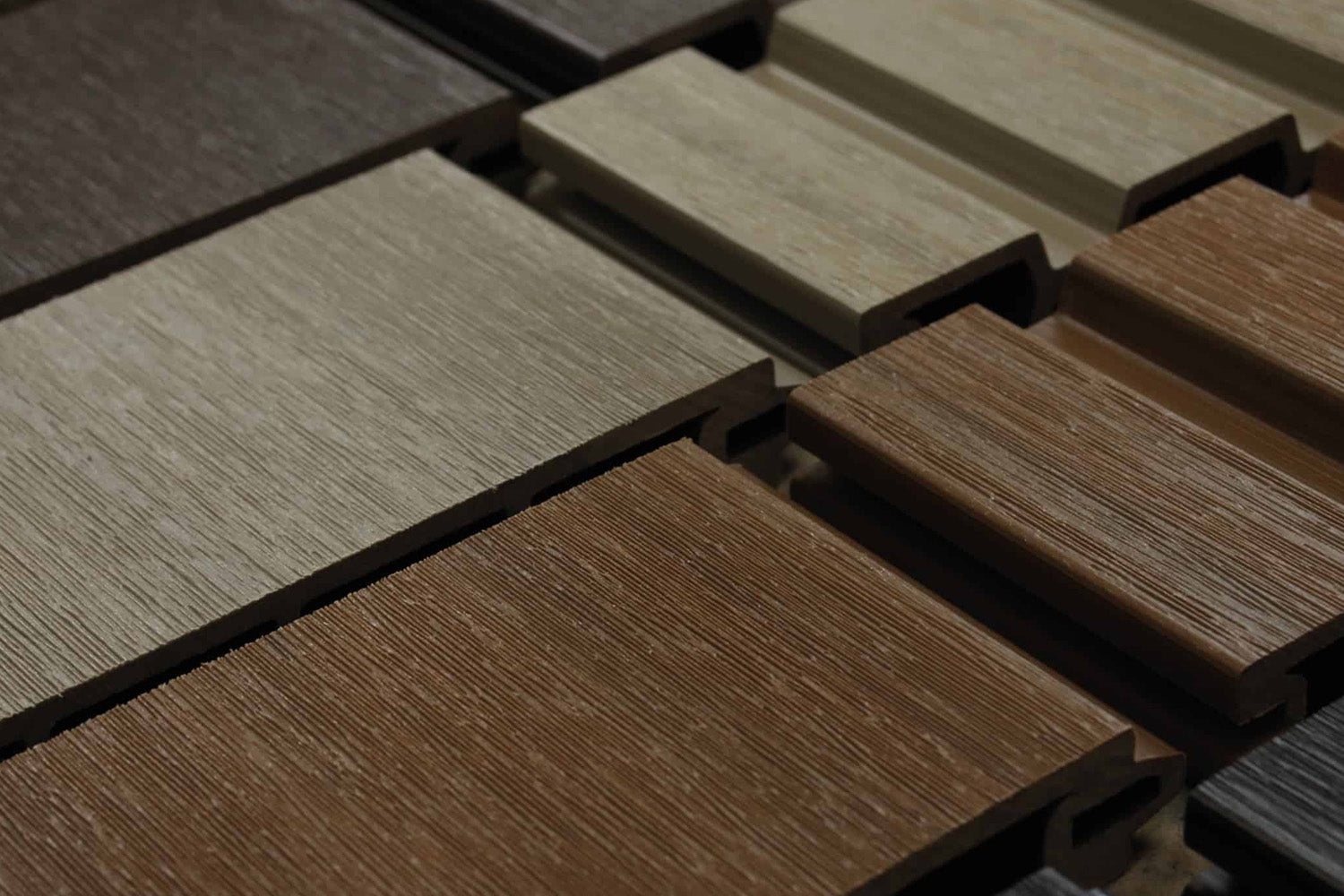
Darker finishes can define the perimeter and contrast with foliage. Warm wood-effect tones can soften paving or render, while lighter neutrals create another route to a restrained palette.
Coordinate the panel with permanent materials first: house brick, window frames, paving and roof details. Then use furniture and planting to introduce accents. Similar colour names across fencing, decking and cladding do not guarantee identical undertones or textures.

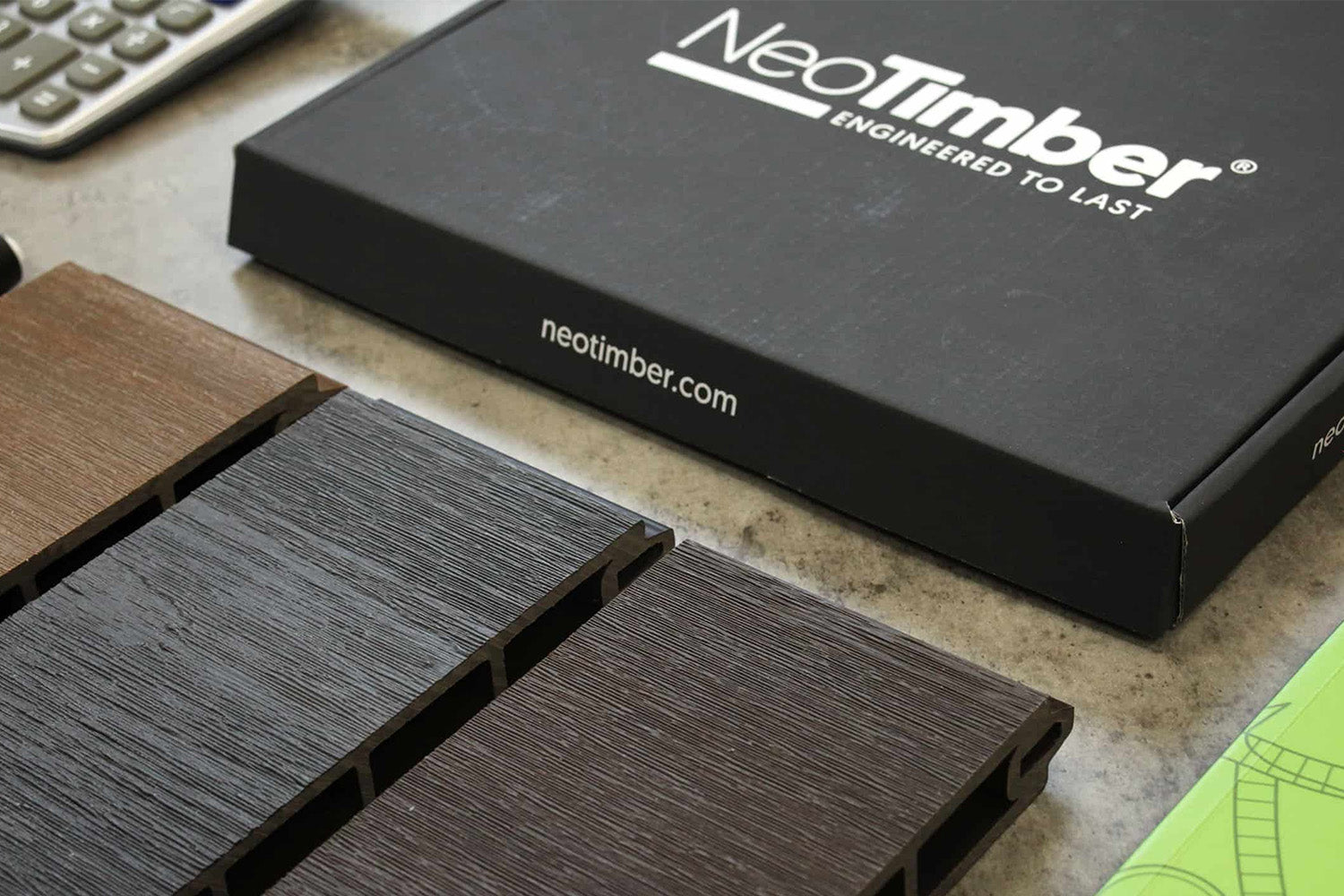
The decking samples pictured illustrate palette planning; compare fencing samples as well before choosing an exact combination. Use the fencing sample service to assess relevant surfaces outdoors.
Make a Modular Design Work for Your Layout
A decorative fencing panel should fit the measured boundary rather than simply an attractive product photograph. Mark corners, slopes, entrances and the final bay, and check the permitted cutting or sizing arrangements.
Modular products can combine compatible boards, posts, rails and selected inserts. That flexibility does not make every component interchangeable. Confirm the parts list and installation detail for the configuration you want.
Where existing concrete or timber posts may be retained, have their condition, spacing and compatibility assessed first. Suitable inserts can form part of an approved retrofit, but they cannot repair an unsound supporting structure. Our retrofit guide explains the approach.
Plan Privacy, Supports and Installation Together
For decorative fence panels UK projects, consider exposure, ground conditions and any relevant local restrictions before finalising the height and position. Open patterns do not remove wind loads, and adding solid backing later can change the forces on the structure.
Assess views from seated positions and any overlooking windows. A continuous section at fence level does not necessarily prevent views from above. Targeted screening near a patio may meet the brief better than replacing every boundary.
Review the installation guidance for the selected system, including posts, supports and foundations. Raised edges that require guarding need a system suitable for that separate role.
Complete the Scheme With a Suitable Gate
A coordinated gate can repeat the colour and profile of the fence, but it needs its own hardware and structural support. Check the opening dimensions, swing clearance and compatible posts before ordering.
Confirm exactly what is included: hinges, latch, lock, posts and fixings may be supplied or priced separately. A standard fence post is not automatically suitable for repeated gate loads.
Explore composite gate options, browse the project gallery or contact NeoTimber® to discuss the intended configuration.
Decorative Garden Panel FAQs
Do decorative panels provide complete privacy?
Not necessarily. Open trellis and cut-out screens permit views through their patterns. Check coverage from the positions where privacy matters.
Is slatted-effect composite fencing the same as trellis?
No. A moulded or profiled surface can create shadow lines without open gaps through the panel. Review the construction rather than relying on the style name.
Can I add a screen insert to any fence?
Only where the supporting system and component combination are suitable. Confirm the permitted arrangement rather than modifying an unrelated panel.
Can I retain existing posts?
Possibly, if they are sound and compatible with the replacement system. Check spacing, loading and approved inserts before ordering new infill.
Are composite panels maintenance free?
No. They reduce routine refinishing but still require appropriate cleaning and inspection. Review the care guidance and applicable warranty terms.
How should I compare prices?
Compare the same height, width and scope, including posts, rails, inserts, gate hardware, delivery and installation. A board-only price is not a complete panel quotation.