

Bring Warm, Timber-Inspired Colour to Your Garden Boundary
Oak composite fencing combines a warm, wood-inspired finish with the convenience of factory-finished composite boards. It can soften a contemporary courtyard, complement a planted garden or provide a natural-looking backdrop to a seating area.
NeoTimber® offers Oak in Deluxe and Slatted fencing styles, giving you different surface effects within a similar colour scheme. This guide explores the two options, practical garden pairings and the checks to make before ordering.
Explore our fencing resources for wider planning advice, or browse the composite fencing range to compare products.
In this guide: Oak fencing gallery · Deluxe style · Slatted style · Garden pairings · Planning and care · FAQs
What Does the Oak Finish Look Like?
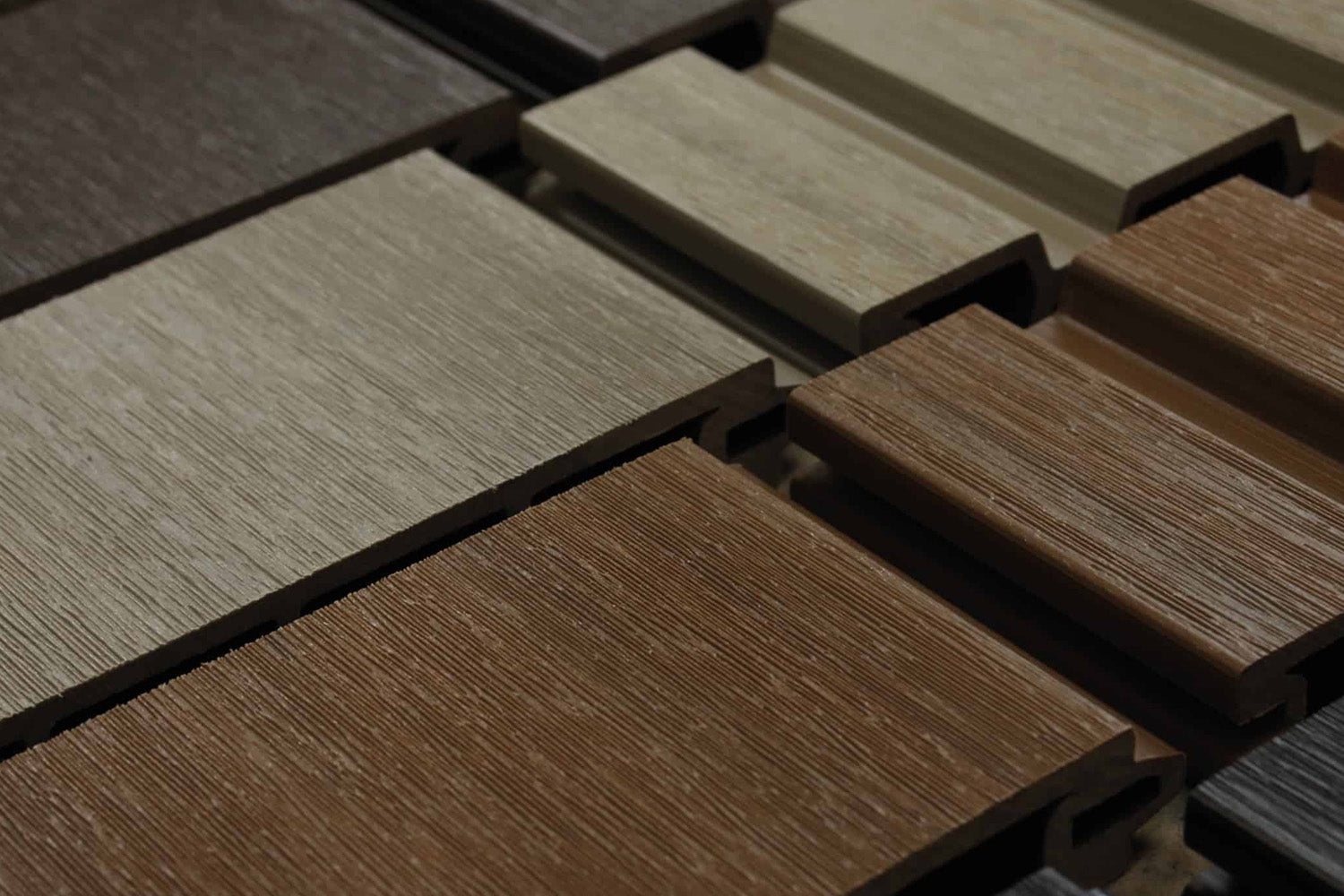
Oak brings a warmer alternative to grey or charcoal boundaries. Its timber-inspired colour can work with earthy materials and green planting, while the selected board texture changes how detailed or architectural the fence appears.
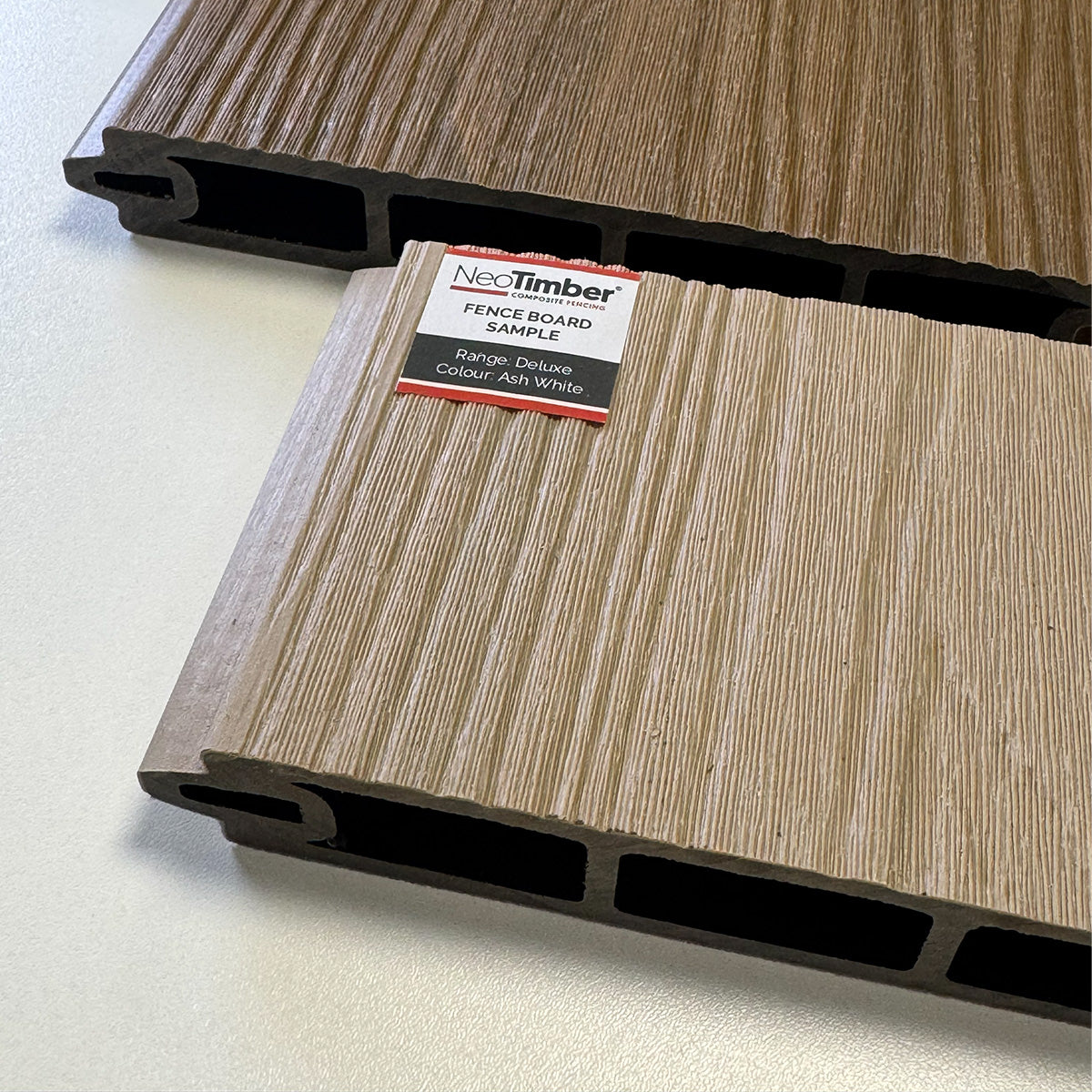
Oak describes the colour finish, rather than a fence made from solid oak timber. The boards are wood–plastic composite. Compare physical samples in your garden, because daylight, shade and adjacent materials can change how the colour looks.
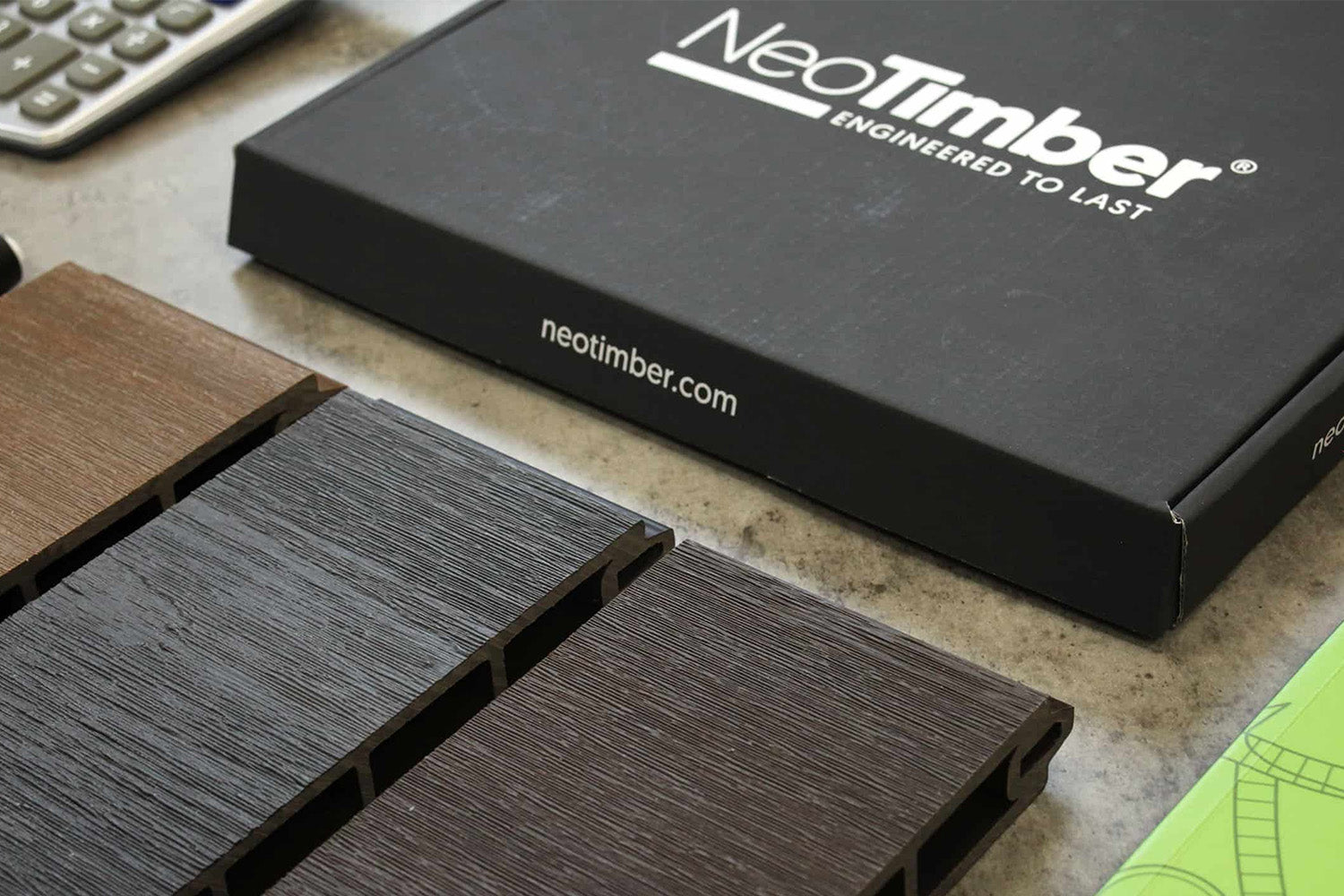
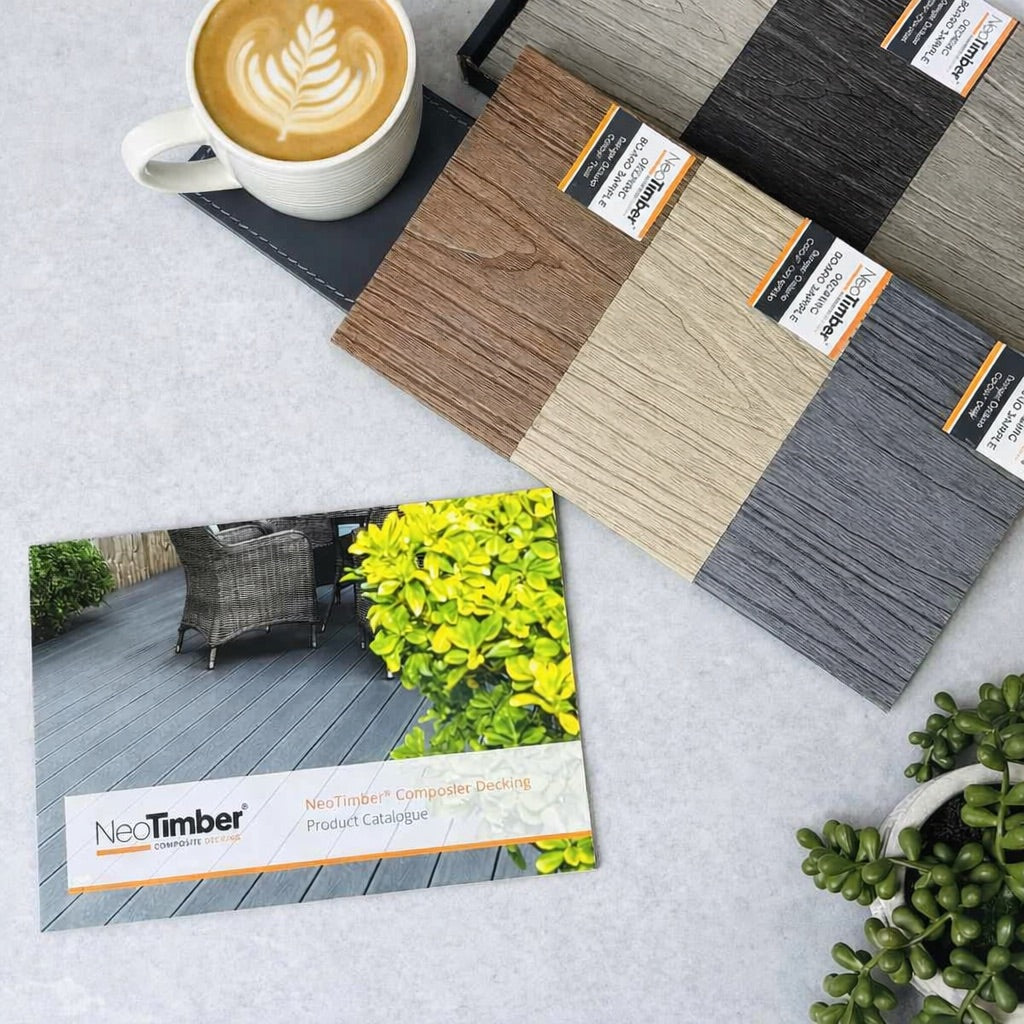
Review the current fencing colour guide if you are deciding between Oak and other warm tones. A sample is particularly useful where the fence needs to sit beside an existing deck or timber feature.
See Oak Composite Fencing in the Gallery
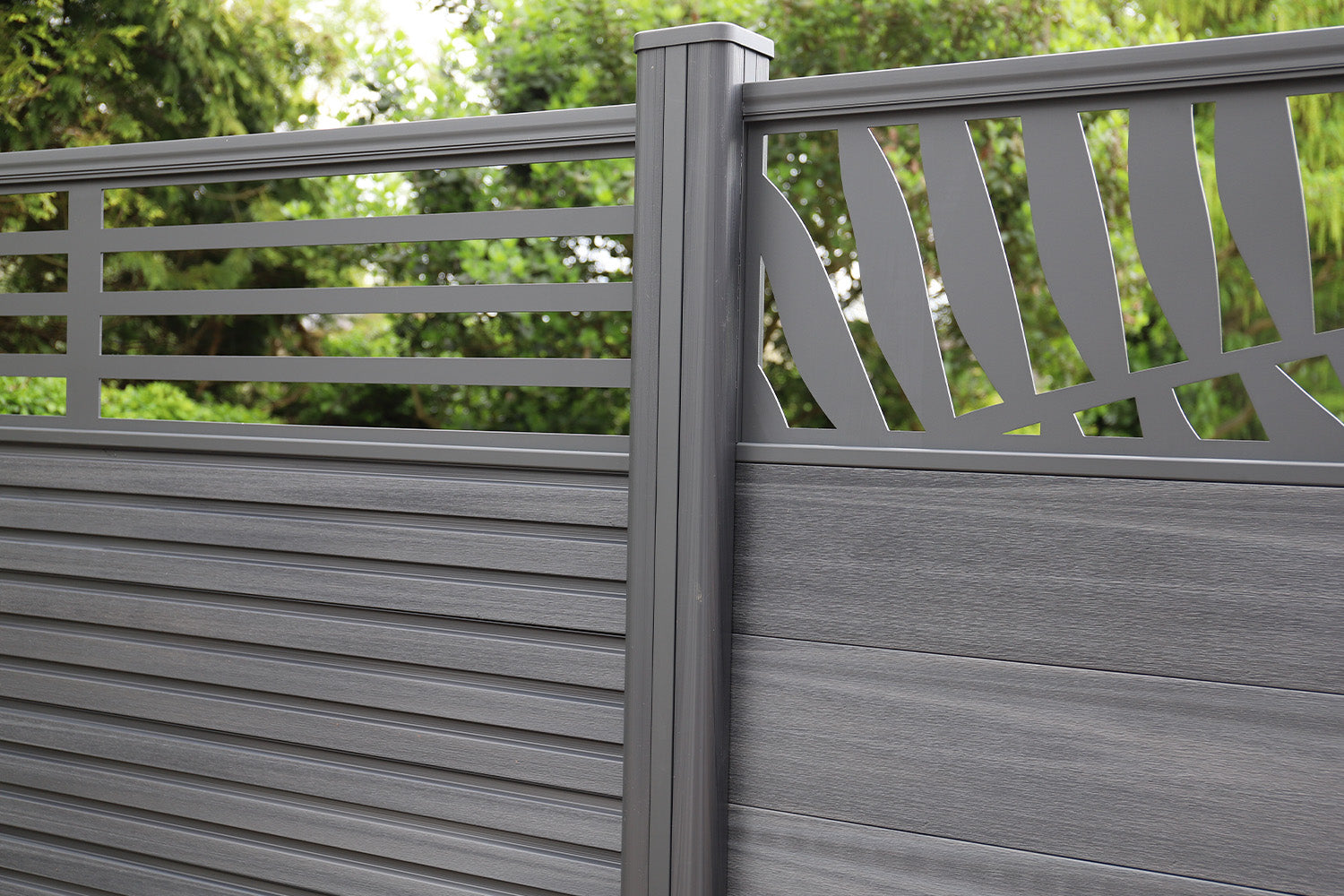
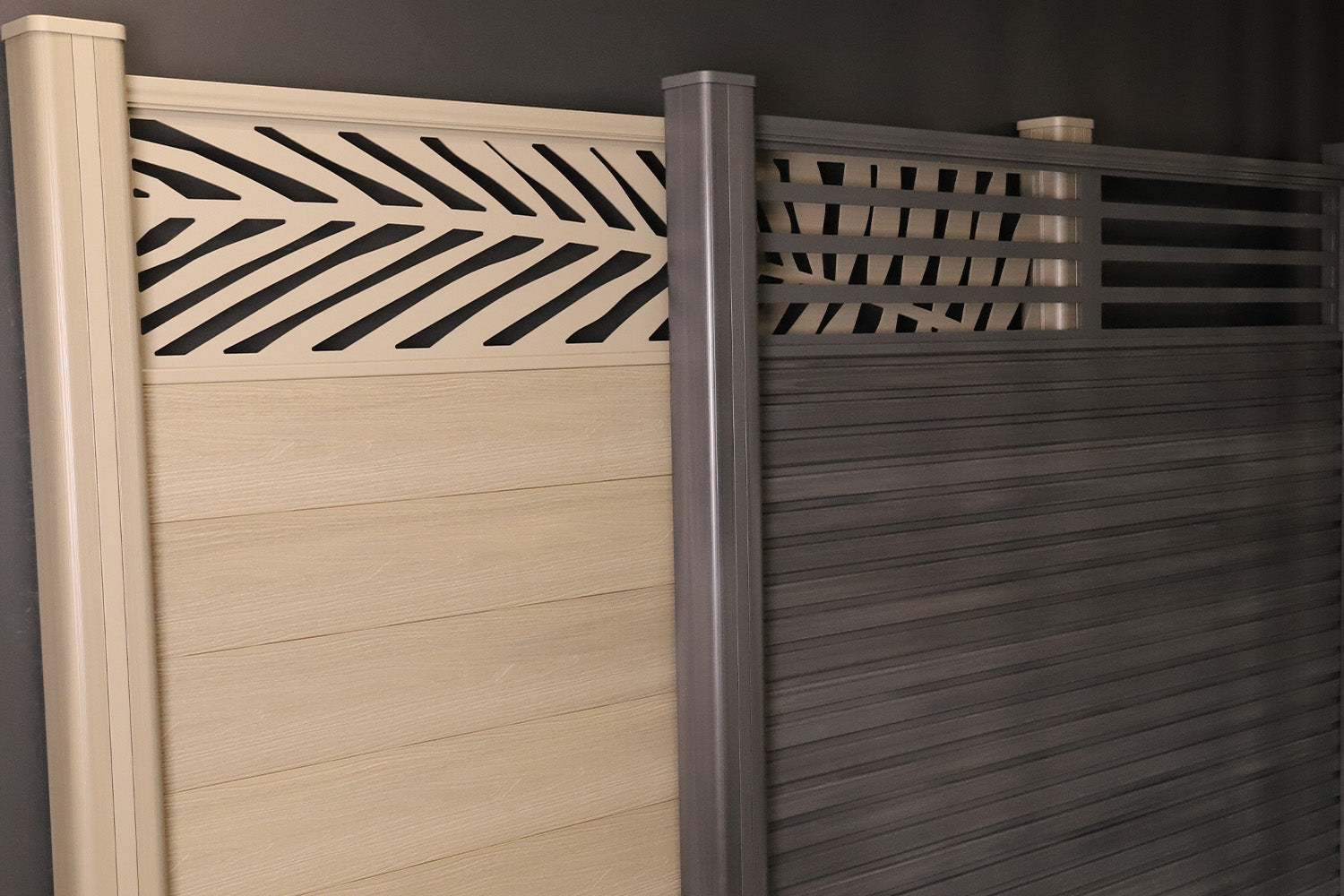
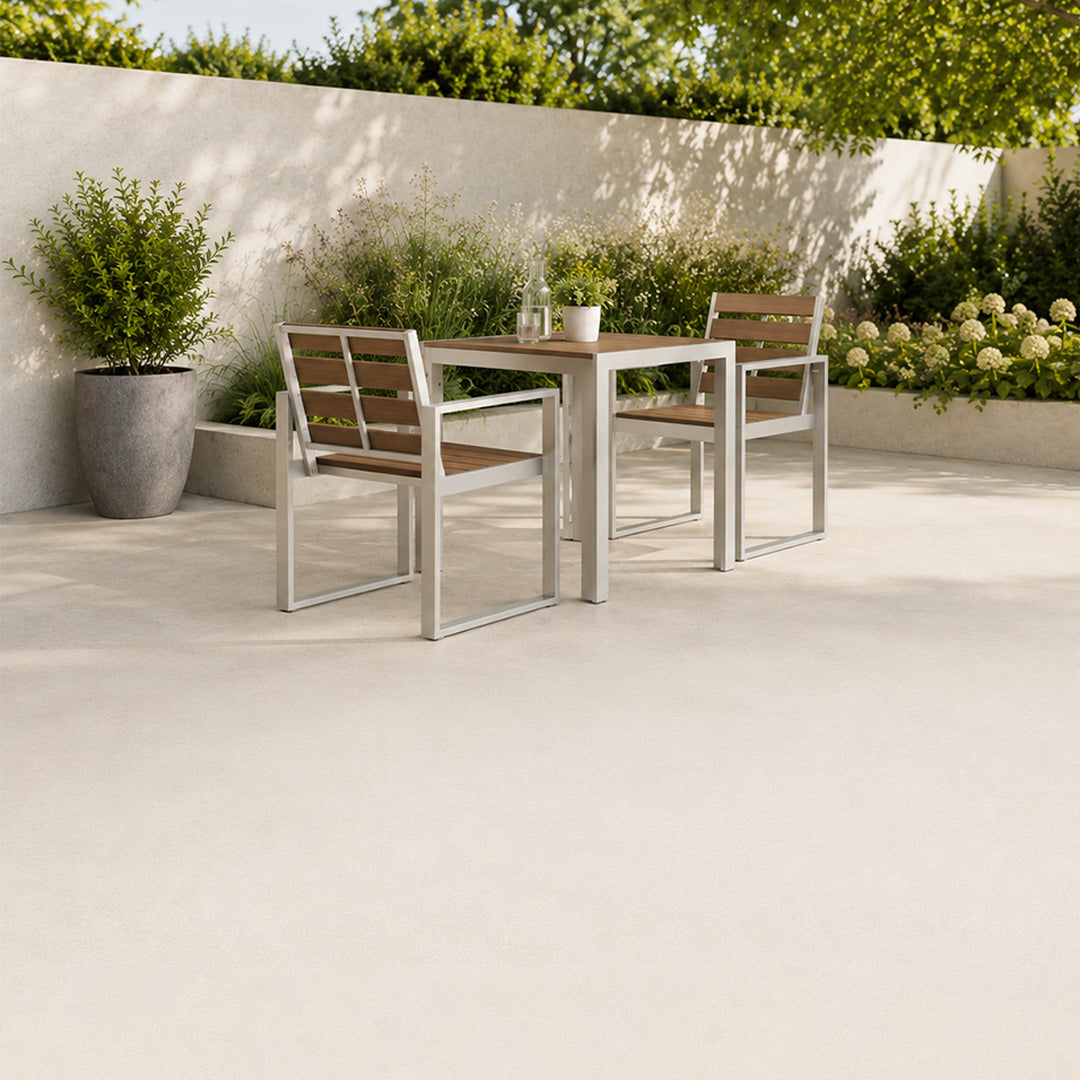
Use the gallery to explore how the finish works across a completed boundary. Look at the relationship between the fence, paving and planting, as well as the difference between close-up texture and the appearance of a full run.
For more layouts and colour schemes, browse the composite fencing image gallery and our garden fencing ideas.
Deluxe Oak: Choose Woodgrain or Brushed Faces
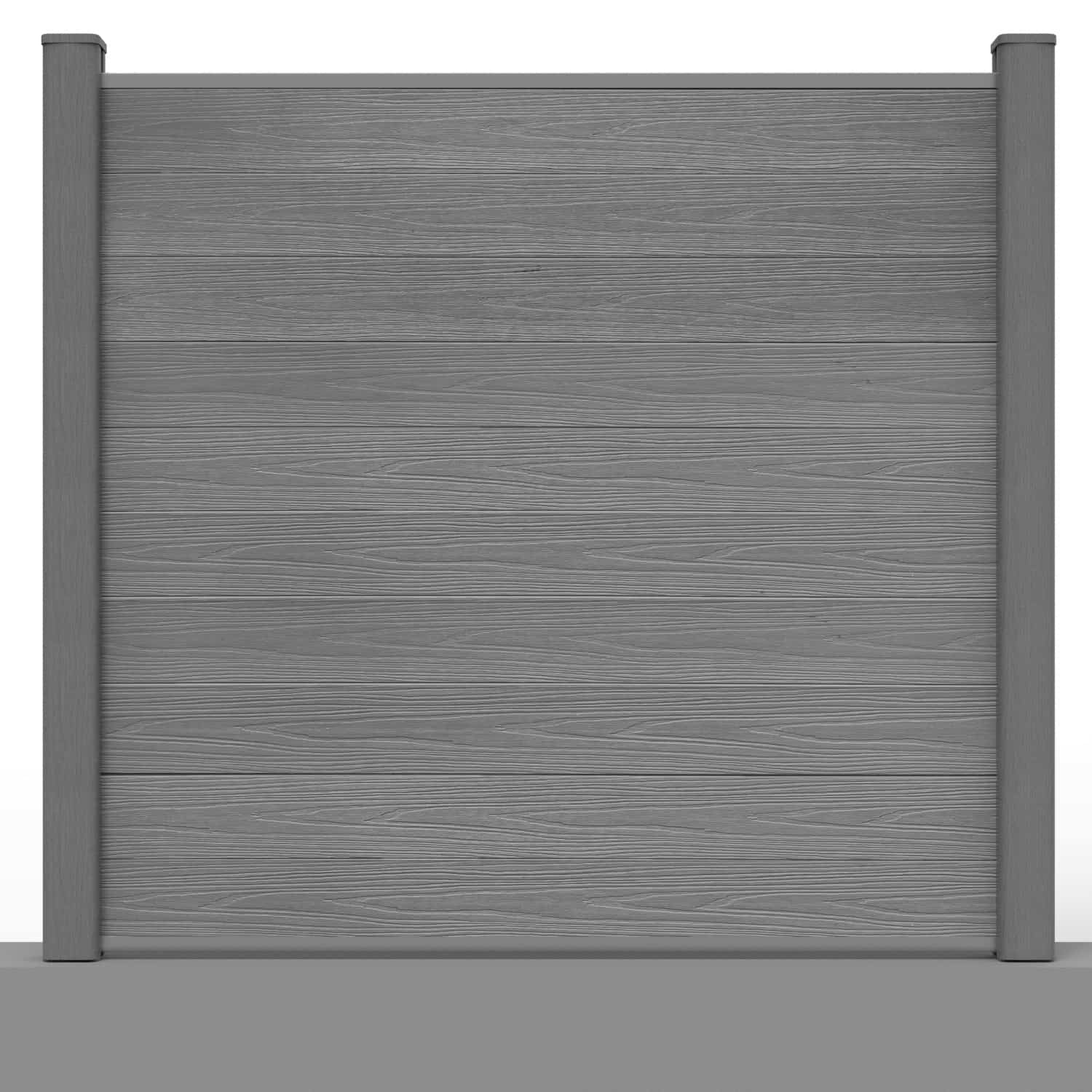
The Deluxe composite fence panel set offers reversible woodgrain and brushed board faces. The woodgrain side adds a more pronounced timber-inspired texture, while the brushed side provides a quieter backdrop.
Choose the visible face before assembly and keep its orientation consistent across each run. In a garden with patterned paving or detailed planting, a restrained face can help balance the scene. A woodgrain finish can add interest where the surrounding materials are simpler.
The boards use a protective capped surface designed to help resist staining and fading. That protection does not make the finish stain-proof, scratch-proof or immune to weathering.

Slatted Oak: A Contemporary Horizontal Pattern
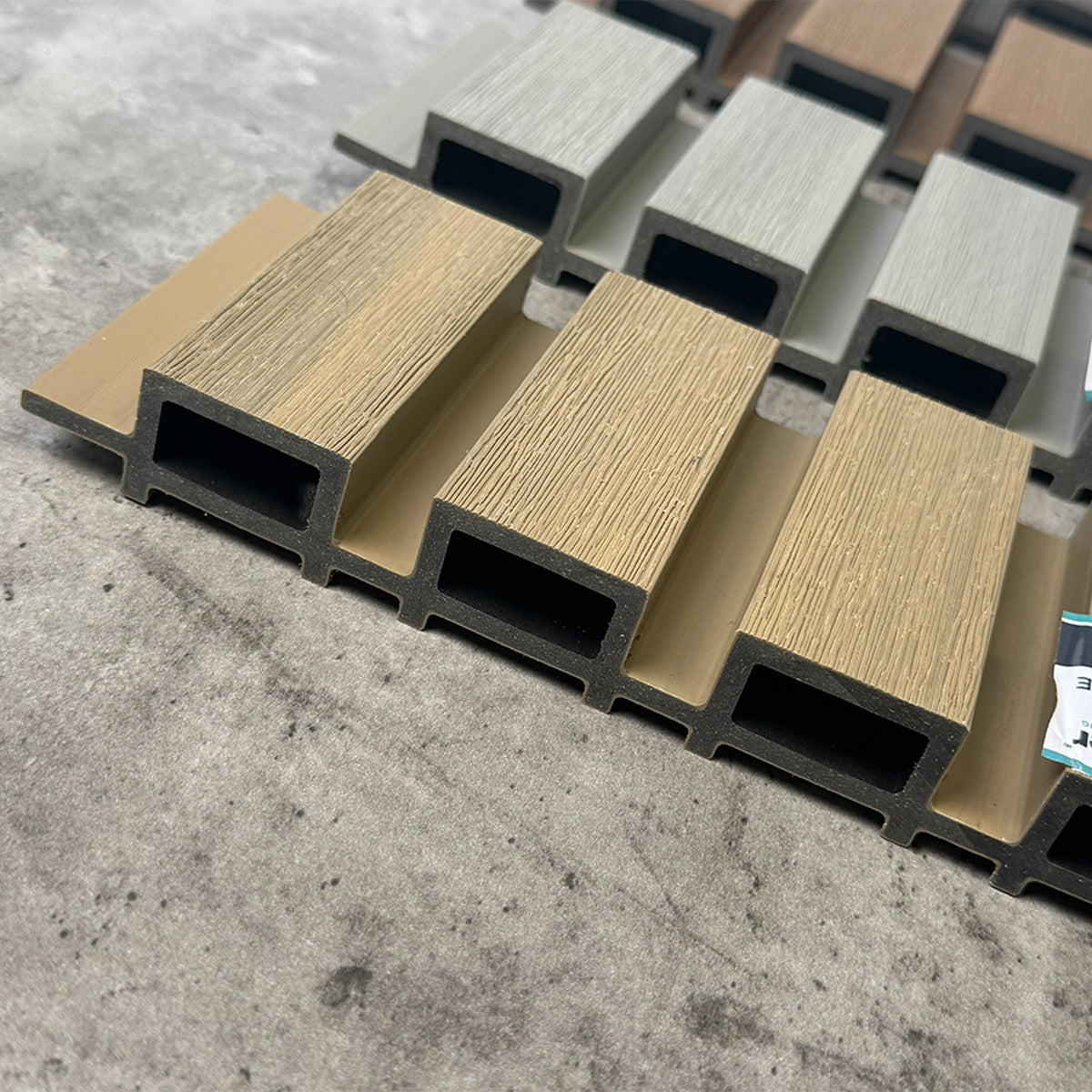
The Slatted composite fence panel set creates a batten-inspired appearance through its board profile. Its repeated horizontal pattern can work well beside simple paving, modern furniture and structured planting.
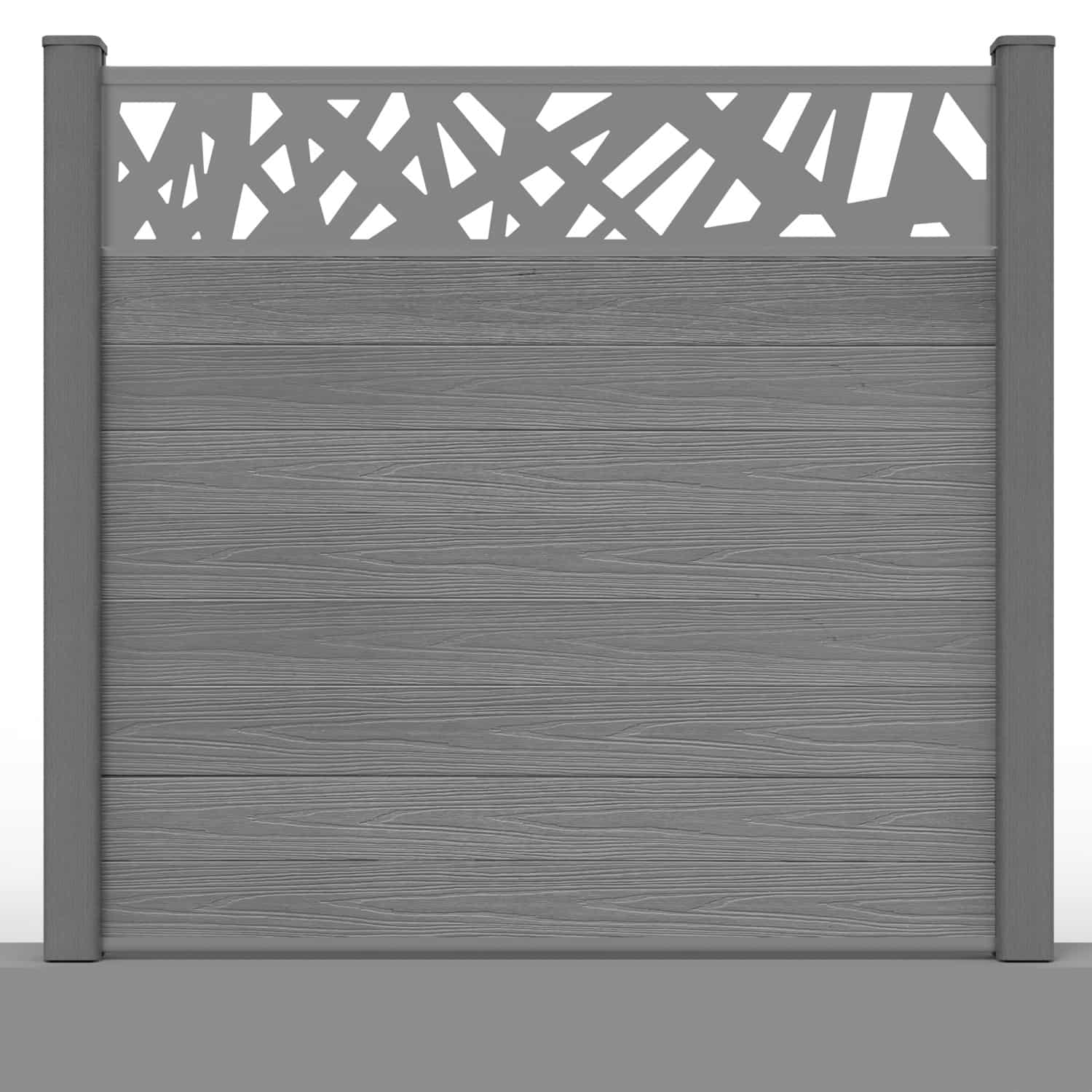
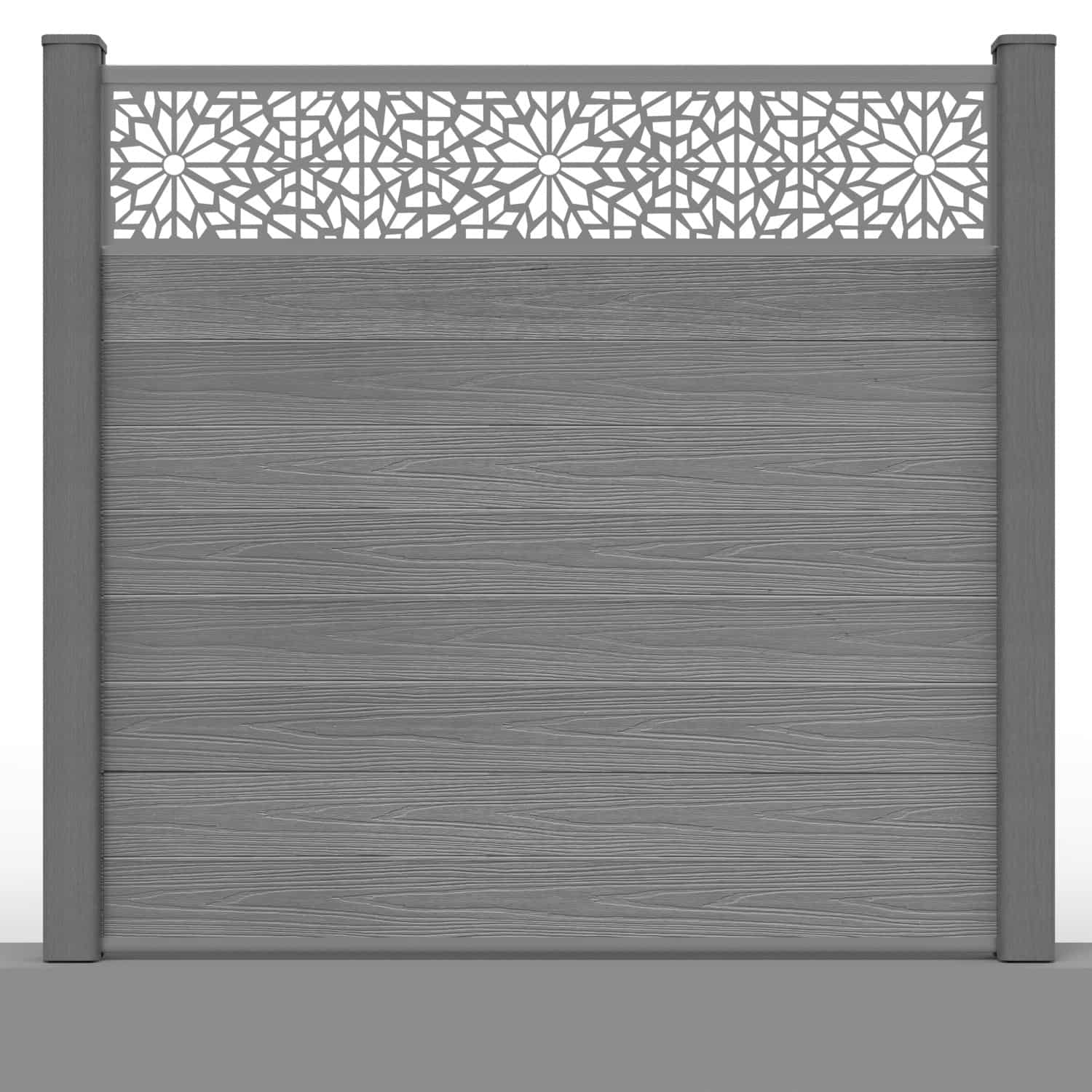
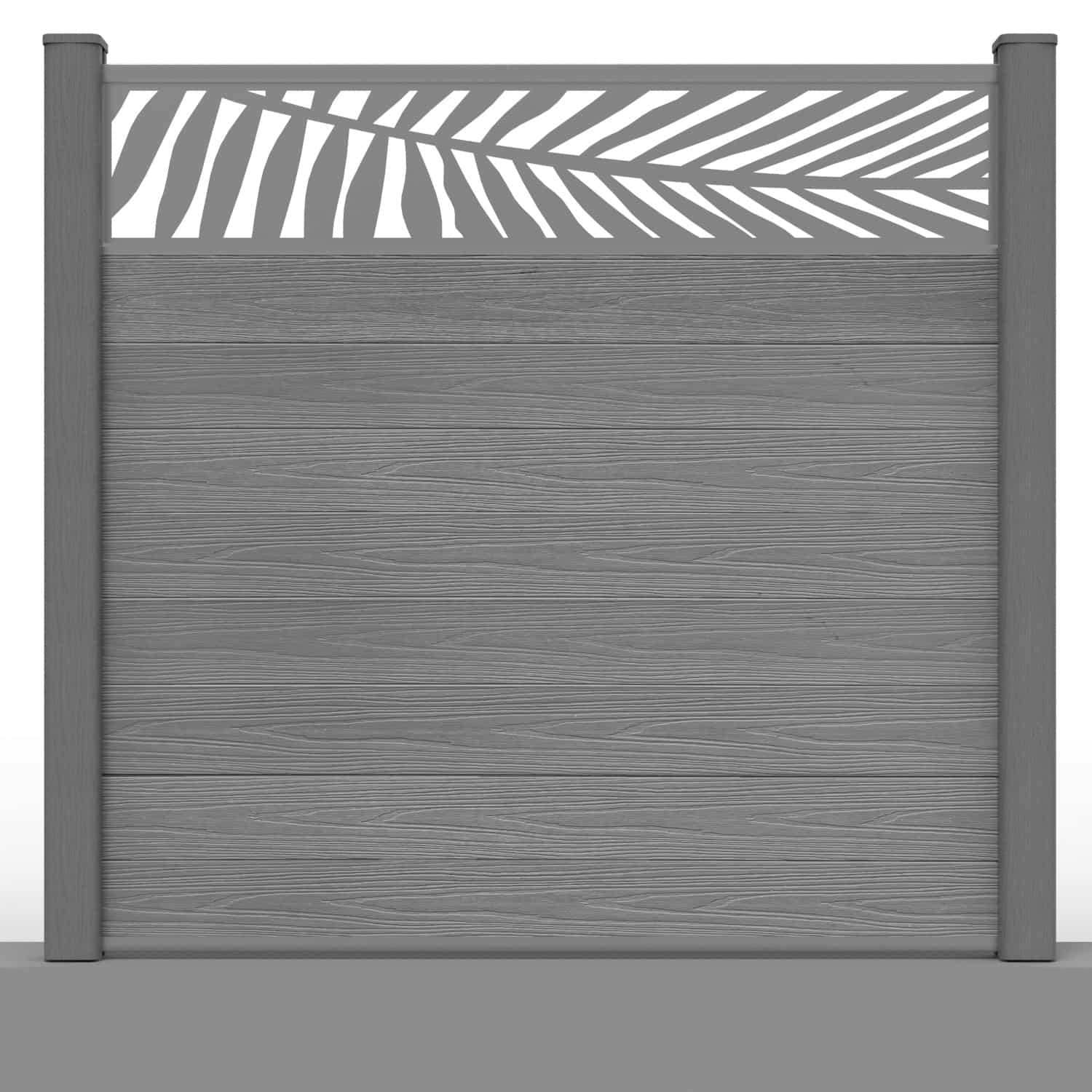
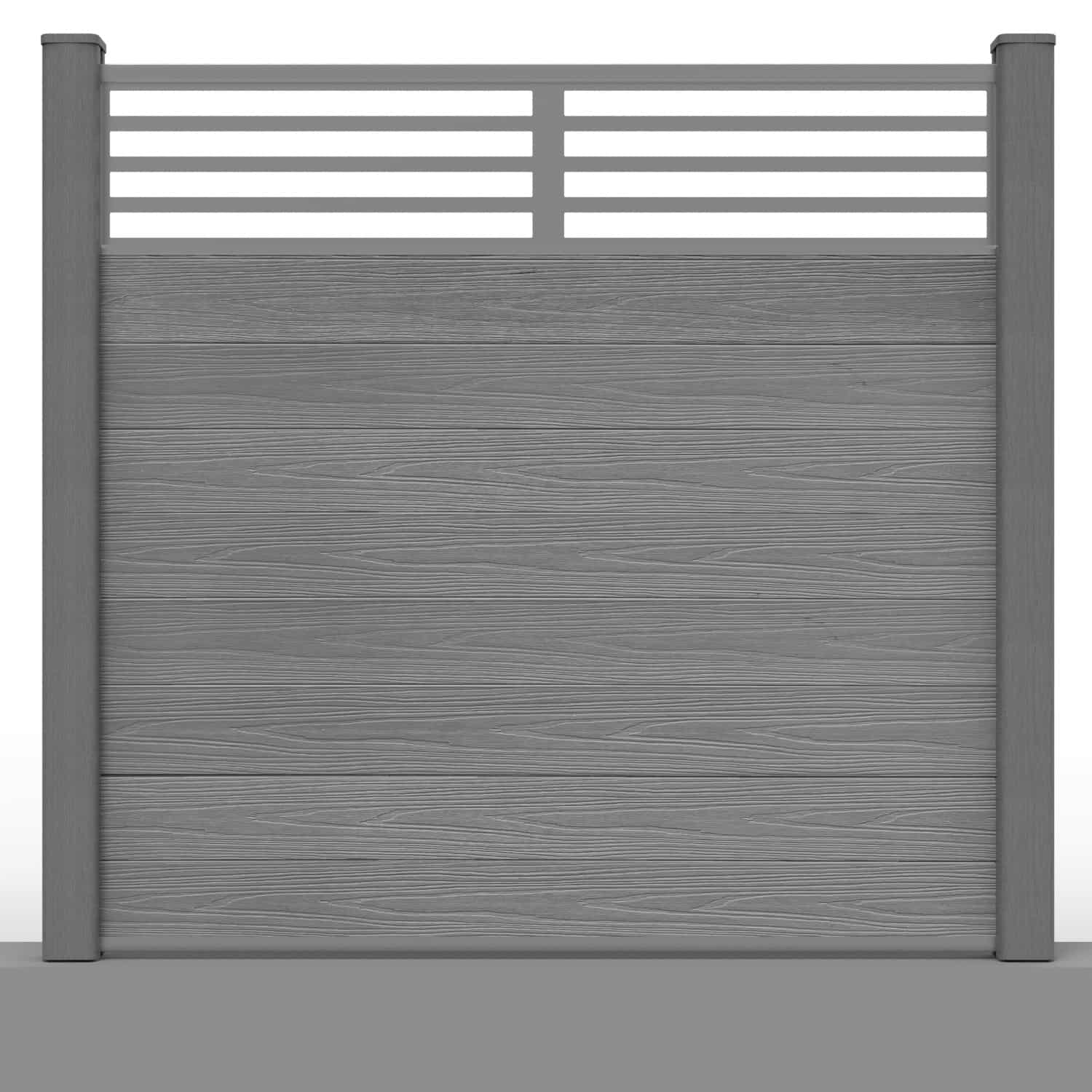
The visual slats are part of the board design. They should not be confused with open gaps that allow light or airflow through the panel. If you want an open decorative section, compare compatible screen options separately and consider their reduced visual coverage.
Like Deluxe, the Slatted range uses capped boards. Confirm the complete panel specification and compatible components before ordering rather than assuming the two board profiles can be mixed within one bay.

Which Oak Panel Style Should You Choose?
Compare the appearance of Deluxe and Slatted Oak fencing:
| Consideration | Deluxe Oak | Slatted Oak |
|---|---|---|
| Surface effect | Woodgrain or brushed board faces. | Repeated horizontal, batten-inspired profile. |
| Design direction | Timber-inspired detail or a more restrained textured finish. | A stronger linear pattern for contemporary schemes. |
| Before ordering | Choose the visible face and check panel components. | Check the actual profile and panel specification. |
| Care | Suitable cleaning and periodic checks. | Suitable cleaning and periodic checks. |
What Goes With Oak Composite Fencing?
Stone and Earthy Paving
Compare the Oak sample beside paving with warm beige, sand or earthy undertones. Check the combination when the paving is dry and wet, as its appearance may change. Where the paving is cool grey, a warm fence can provide contrast rather than an exact match.
Green Planting and Soft Borders
Use foliage to soften the boundary without hiding all of its texture. A few well-positioned planting groups can be more effective than attaching numerous pots to the boards. Do not fix heavy planters or climbing structures to the fence unless the system has been approved for those loads.
Modern Furniture and Metal Details
Simple dark furniture or aluminium features can give a warm boundary a contemporary setting. Repeat a small number of materials across the space rather than introducing a different finish at every panel.
Decking and Outdoor Seating Areas
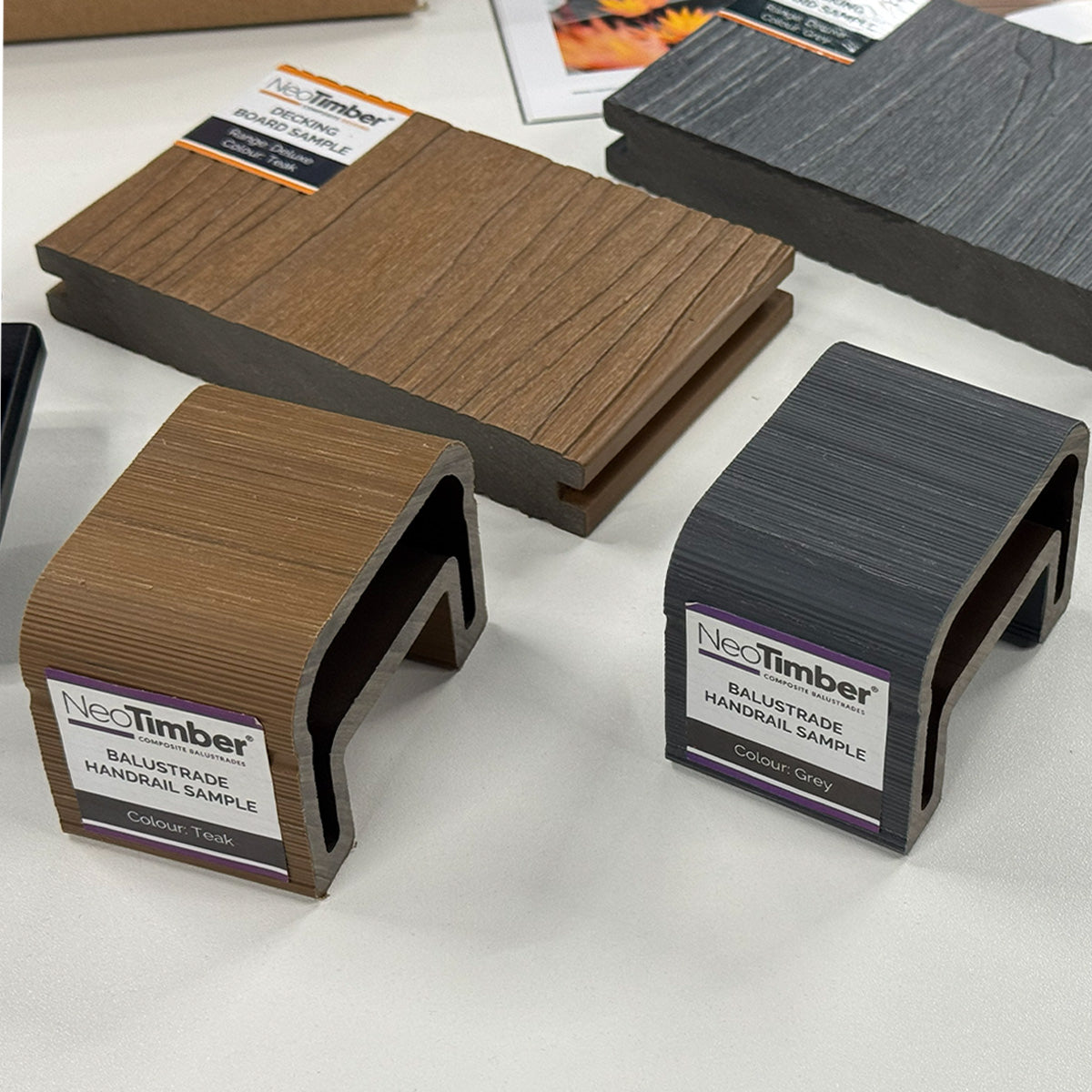
Compare Oak with the composite decking range if you are planning a coordinated garden. A warm decking colour such as Teak may be worth sampling alongside it, but do not assume the finishes will match exactly.
Plan the Complete Fence Before Ordering
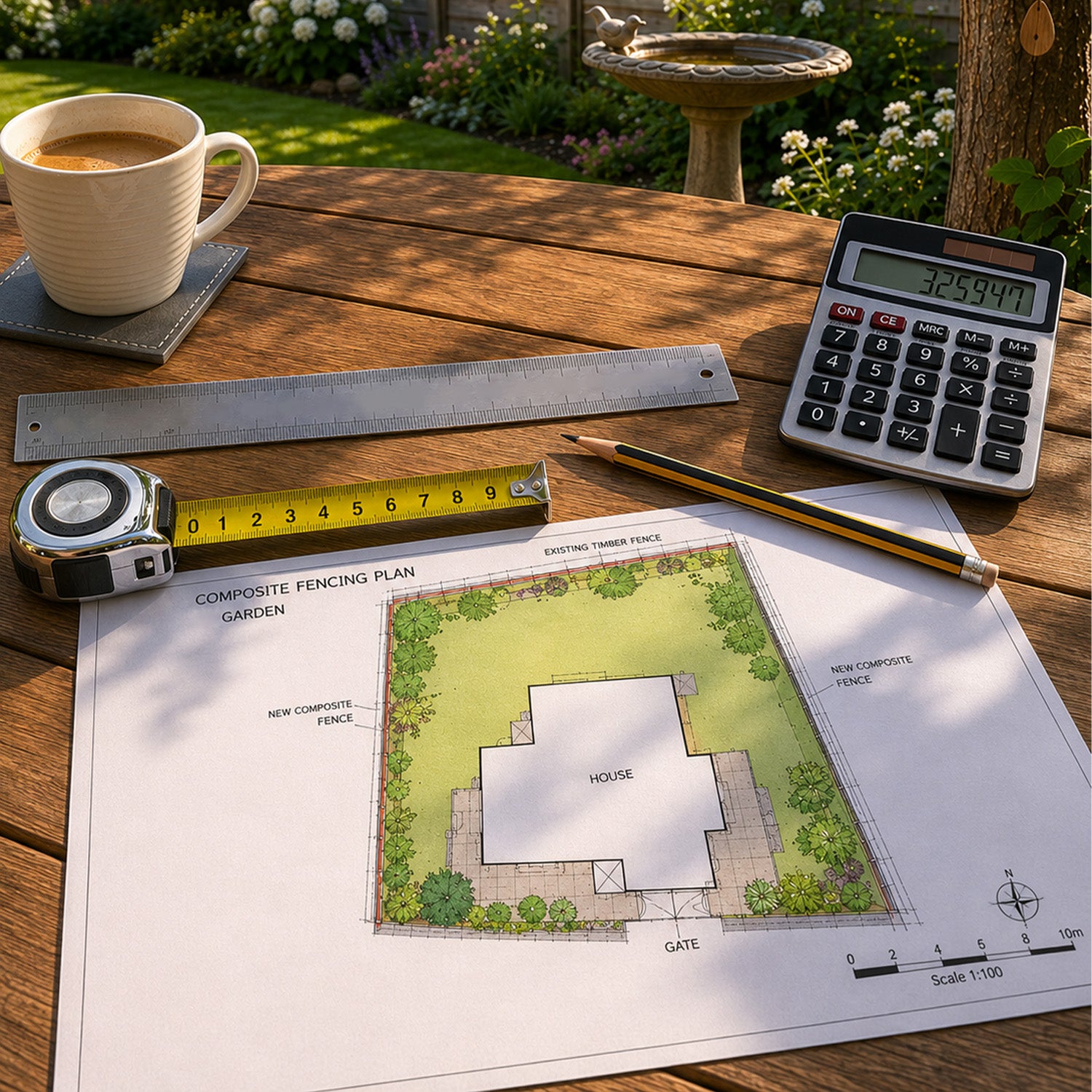
Measure the run and identify corners, shorter bays, changes in level and any gate opening. Include posts, supports, inserts, rails and fixings in the materials list, alongside foundations and installation work.
Existing timber or concrete posts may be reusable where their condition, spacing and foundations suit the new assembly. Compatible inserts provide the connection; they do not repair a weak post or unsuitable foundation. Follow the fencing installation guidance for the selected arrangement.
Factory-finished boards reduce routine painting and staining, but still need appropriate cleaning and checks. Use the composite fencing maintenance guide and read the current warranty terms before buying.
Frequently Asked Questions
Is oak composite fencing made from solid oak?
No. Oak is the colour finish of the composite boards, rather than a claim that they are solid oak timber.
What is the difference between Deluxe and Slatted Oak?
Deluxe offers woodgrain and brushed faces, while Slatted provides a repeated batten-inspired profile. Compare samples to choose the effect that suits your garden.
Does Slatted Oak fencing have open gaps?
The slatted appearance is formed by the board profile. It should not be treated as an open-gap screen or assumed to provide airflow through the panel.
Does the fence need painting or staining?
The boards are supplied with their intended finish and do not need routine painting or staining. Appropriate cleaning and inspections remain necessary.
Will Oak match my existing decking?
It may complement it, but compare actual samples outside. Colour names and online photographs do not establish an exact match across different products.
Can I see the colour before placing a full order?
Use the gallery for design context and request fencing samples to assess the colour and texture in your own garden’s light.
Compare Oak Samples in Your Own Garden
Choose the panel style and surrounding materials together for a coordinated boundary. Explore the NeoTimber® composite fencing collection, request fencing samples or contact the team for help checking your proposed components.