Find the Right Recycled Plastic Picnic Tables for Your Outdoor Space
Recycled plastic picnic tables bring seating and a dining surface together in one practical arrangement. Whether you are planning family lunches in the garden, a pub terrace or a communal rest area, the right table needs to suit its users, fit the available space and be straightforward to look after.
The choice extends beyond the familiar A-frame design. Round tables, junior picnic tables, accessible layouts and separate table-and-chair sets each answer different needs. This guide compares those options, explains what to check when buying and helps you plan an outdoor area that works in everyday use.
Explore NeoTimber's recycled plastic furniture collection alongside the advice below. Product dimensions, configurations and installation guidance should always inform your final choice.
What Is a Recycled Plastic Picnic Table?
A recycled plastic picnic table uses recovered plastic to form structural components such as the tabletop, frame and seating boards. Rather than describing one particular shape, the term covers a range of designs with different seating arrangements and access points.
A conventional picnic table connects benches to the table structure. Other outdoor furniture sets use separate benches or individual chairs. That distinction affects how people sit down, how easily the layout can change and the amount of space needed around the furniture.
When comparing a recycled picnic table with another product, check exactly what the material claim covers. Fixings and other components may be made from different materials. Do not assume that “plastic”, “composite” and “recycled plastic” describe the same construction: read the individual specification before ordering.
Why Choose a Recycled Plastic Table?
NeoTimber's recycled plastic furniture resists rot and does not require routine painting, staining or sealing. This can make a recycled plastic table appealing where you want outdoor furniture without a regular refinishing schedule. Simple cleaning remains part of its care.
The material also avoids the timber splinters that can develop on weathered wooden furniture. For a family garden or shared eating area, that is a useful characteristic, although the complete product still needs to be assembled correctly, inspected and used as intended.
These benefits should be considered alongside practical limitations. A substantial table can be difficult to relocate, fixed benches offer less flexibility than separate chairs, and every material has its own behaviour outdoors. Avoid treating weather resistance as a guarantee against all damage, colour change or movement.
Choose around the way you will use the space. If you frequently clear a patio for other activities, product weight and handling may matter as much as upkeep. If the table will remain in one position, access, comfort and the supporting surface may take priority.
Compare Recycled Plastic Picnic Table Designs
NeoTimber® lists five picnic table formats. Use the comparison below to build a shortlist, then check the current product details for the configuration you intend to buy.
| Design | Why consider it? | What to check |
|---|---|---|
| A-Frame Picnic Table | A familiar arrangement for shared meals and informal seating. | Bench access, usable seating length and the full footprint. |
| Junior A-Frame Picnic Table | A smaller format intended for younger users. | Suitability for the children's age and size, plus supervision and positioning. |
| Wheelchair Accessible Picnic Table | A dedicated position for a wheelchair user. | Under-table clearance, approach route and manoeuvring space. |
| Walkthrough Picnic Table | An alternative layout to compare when access to seating is a priority. | The actual entry openings and whether they suit intended users. |
| Round Picnic Table | Seating arranged around a central circular tabletop. | Total width, seat access and backrest preference. |
A useful way to narrow the choice is to sketch people using each option. Include bags, pushchairs or mobility aids where relevant. A table that fits on paper may still feel cramped once seats are occupied and people need to pass behind them.

Is a Recycled Plastic Round Picnic Table Right for You?
A recycled plastic round picnic table places users around a central surface, making it worth considering for conversation and group meals. It can also act as a focal point in a larger seating area, especially where you want a different arrangement from rows of rectangular tables.
NeoTimber's Round Picnic Table is listed with backless and backrest options. Compare the two according to how long people will sit and the support they prefer. Backrests can be useful for more supported seating, while a backless version creates a more open appearance.
Measure the complete structure, including its seats, rather than the tabletop alone. Allow circulation around the outside and check how people enter each seating position. A circular shape does not, by itself, establish wheelchair access or suitability for every user.
Choosing Heavy Duty Recycled Plastic Picnic Tables
Buyers looking for heavy duty plastic picnic tables usually want furniture that can cope with frequent use in places such as pub gardens, campsites or communal grounds. The phrase is useful as a starting point, but it is not a substitute for a product specification.
When comparing heavy duty recycled plastic picnic tables, ask the supplier about intended use, construction, assembly and any stated loading information. Do not infer a seating capacity from the weight of the table or the thickness of a photograph's visible boards.
- Construction: review the frame, supports and connections, not just the tabletop.
- Intended setting: confirm whether the selected configuration suits the planned use.
- Installation: check whether anchoring is required and how the chosen base will support it.
- Inspection: plan regular checks of fixings, seats and surfaces.
- Support: ask about assembly instructions and options if a component needs attention.
Heavy-Duty Tables and Benches: What Is Included?
If you are searching for “heavy duty recycled plastic picnic tables benches”, establish whether you need integrated seating or a table with separate benches. An integrated design keeps the main seating arrangement together. Separate benches offer different layout possibilities, but their position and clearance need to be planned individually.
For a commercial project, give the supplier a clear brief: expected users, opening hours, ground surface, exposure and cleaning routine. A heavy table should not automatically be described as vandal-proof, impossible to tip or secure against theft. Those are separate considerations for the site and installation.
Recycled Plastic Dining Tables and Garden Table-and-Chair Sets
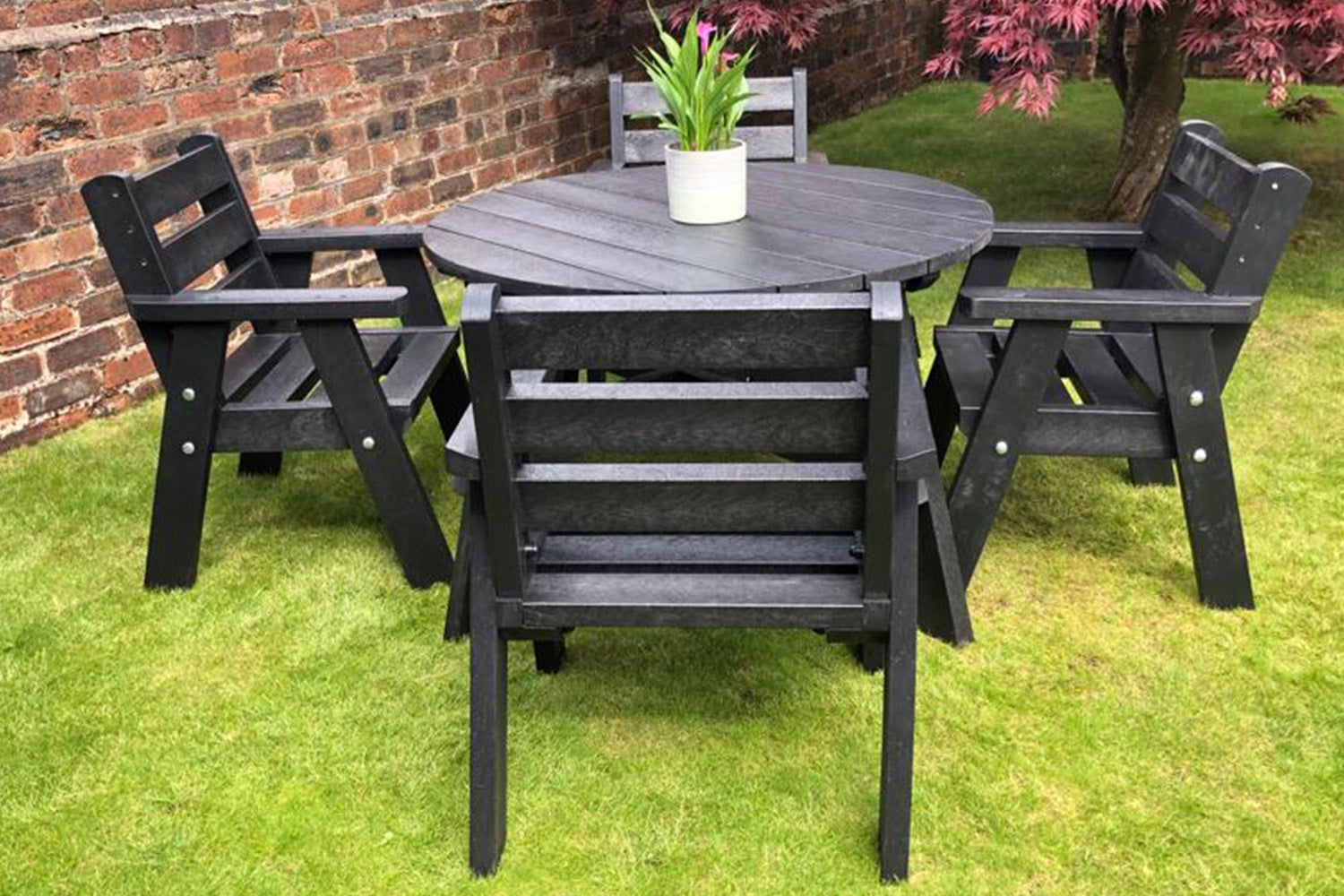
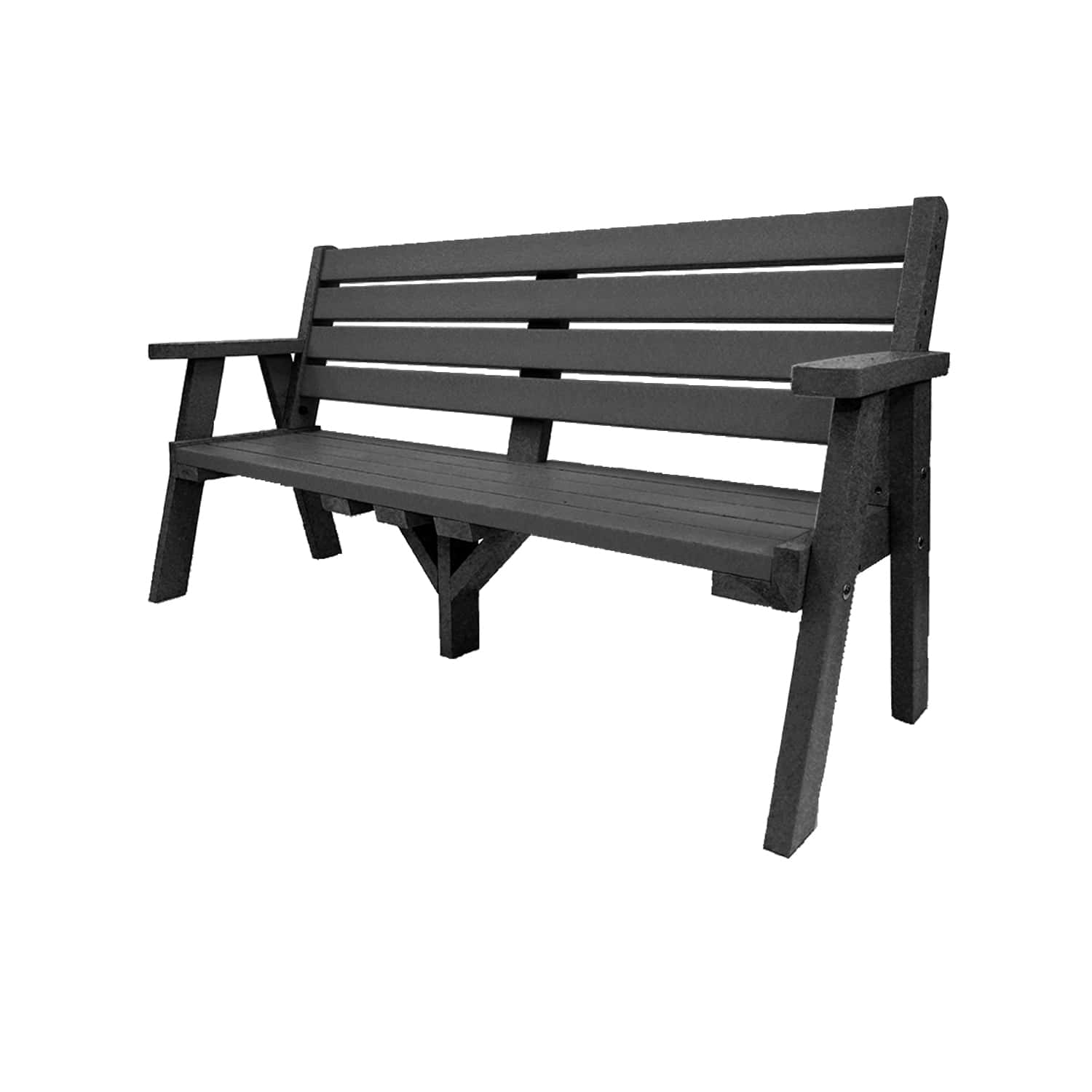
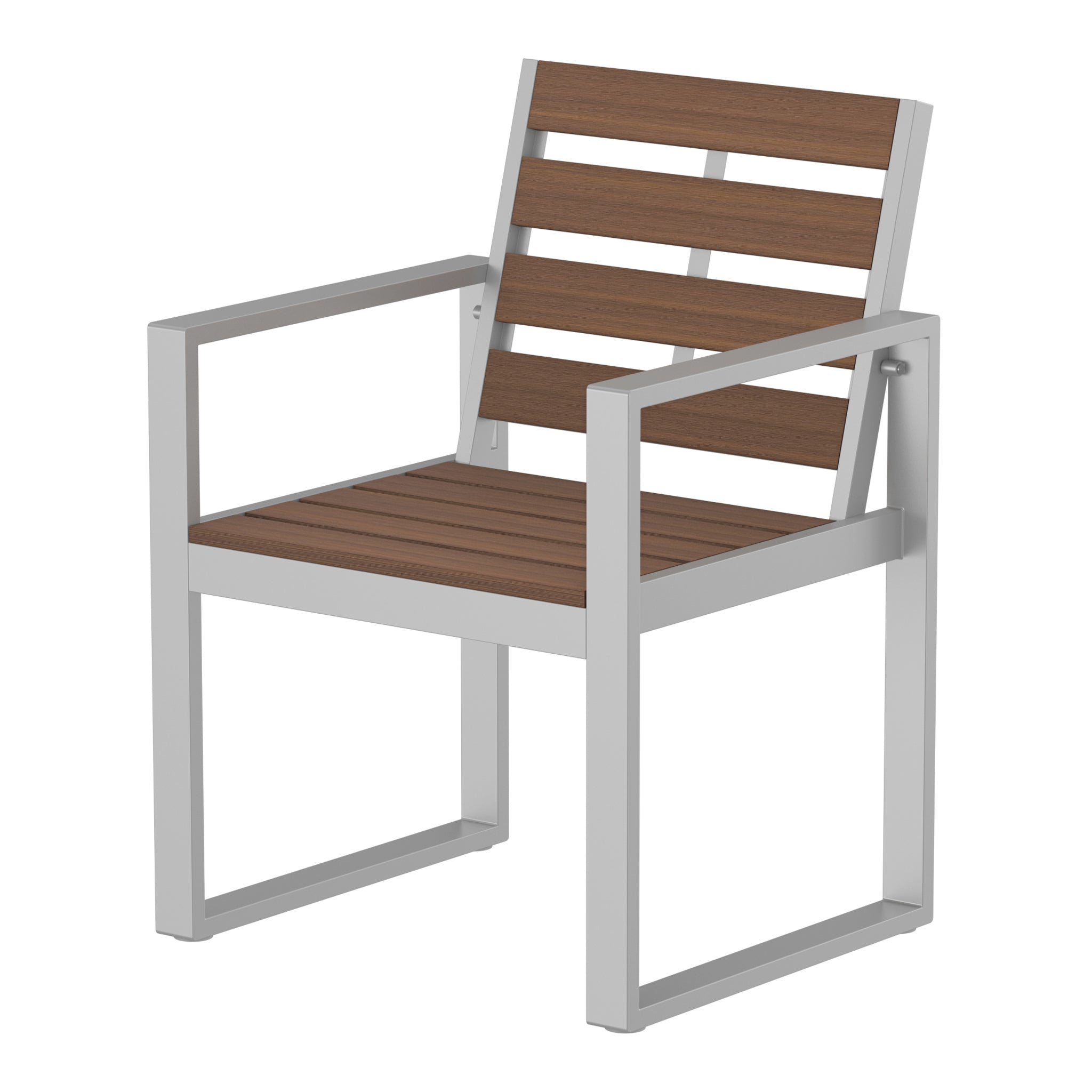
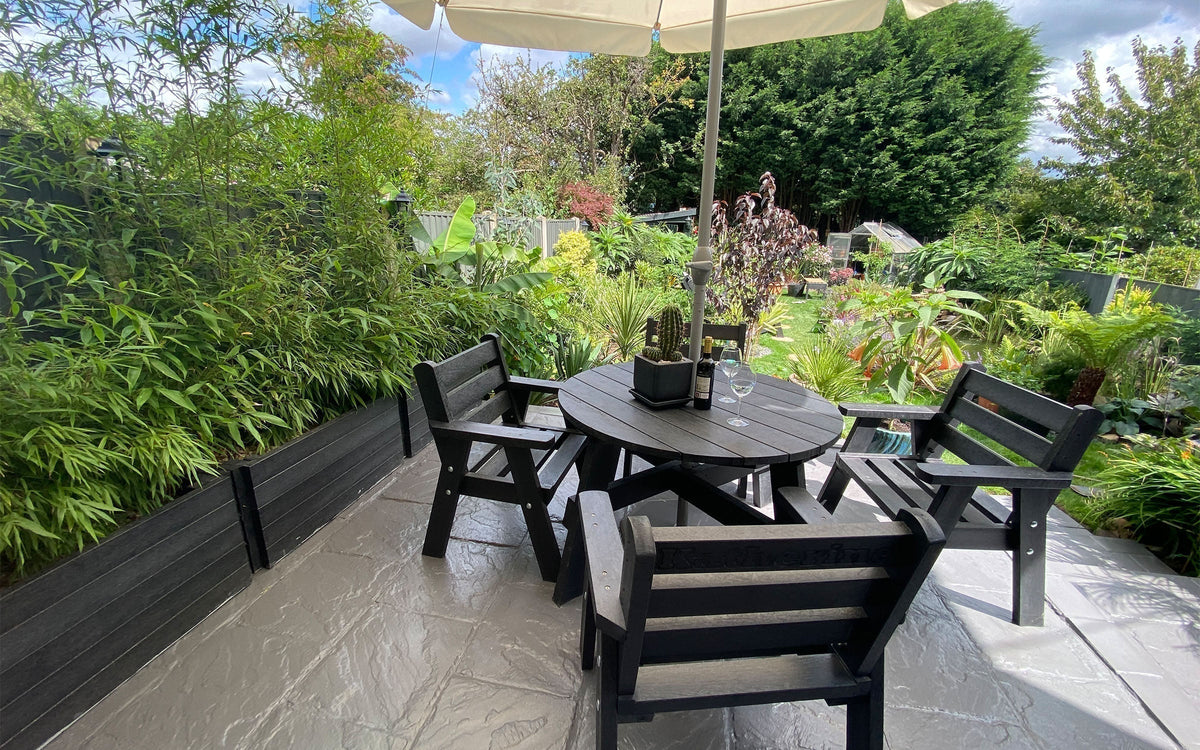
A recycled plastic dining table with individual chairs may suit a patio where meals are the main activity and users want more choice over where they sit. Compared with fixed picnic benches, separate chairs can be repositioned and selected for preferred back and arm support.
If you are comparing a recycled plastic garden table and chairs, look at the set as a whole. Check whether chair arms fit beneath the tabletop, how much space remains when chairs are pulled out and whether everyone can reach the table comfortably.
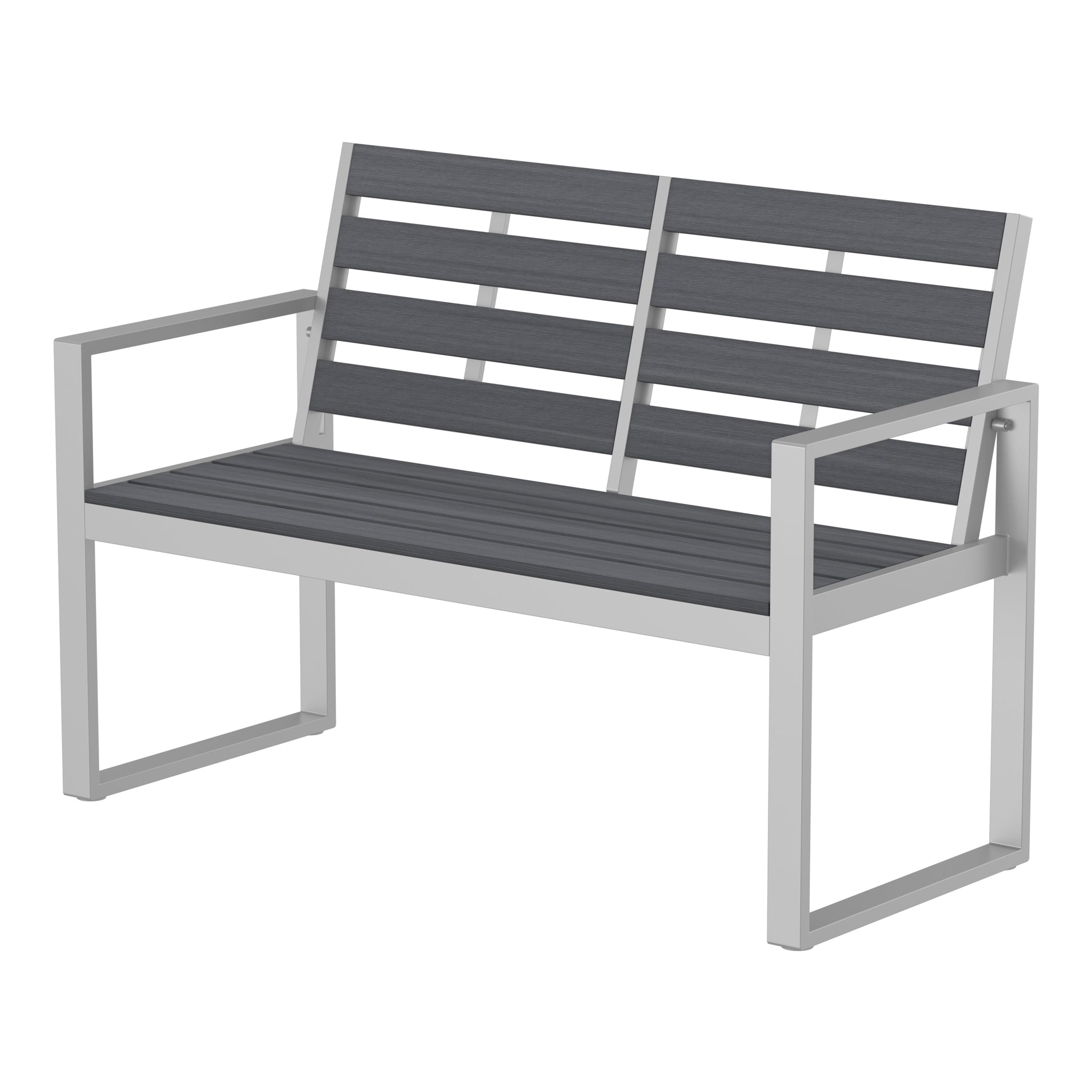
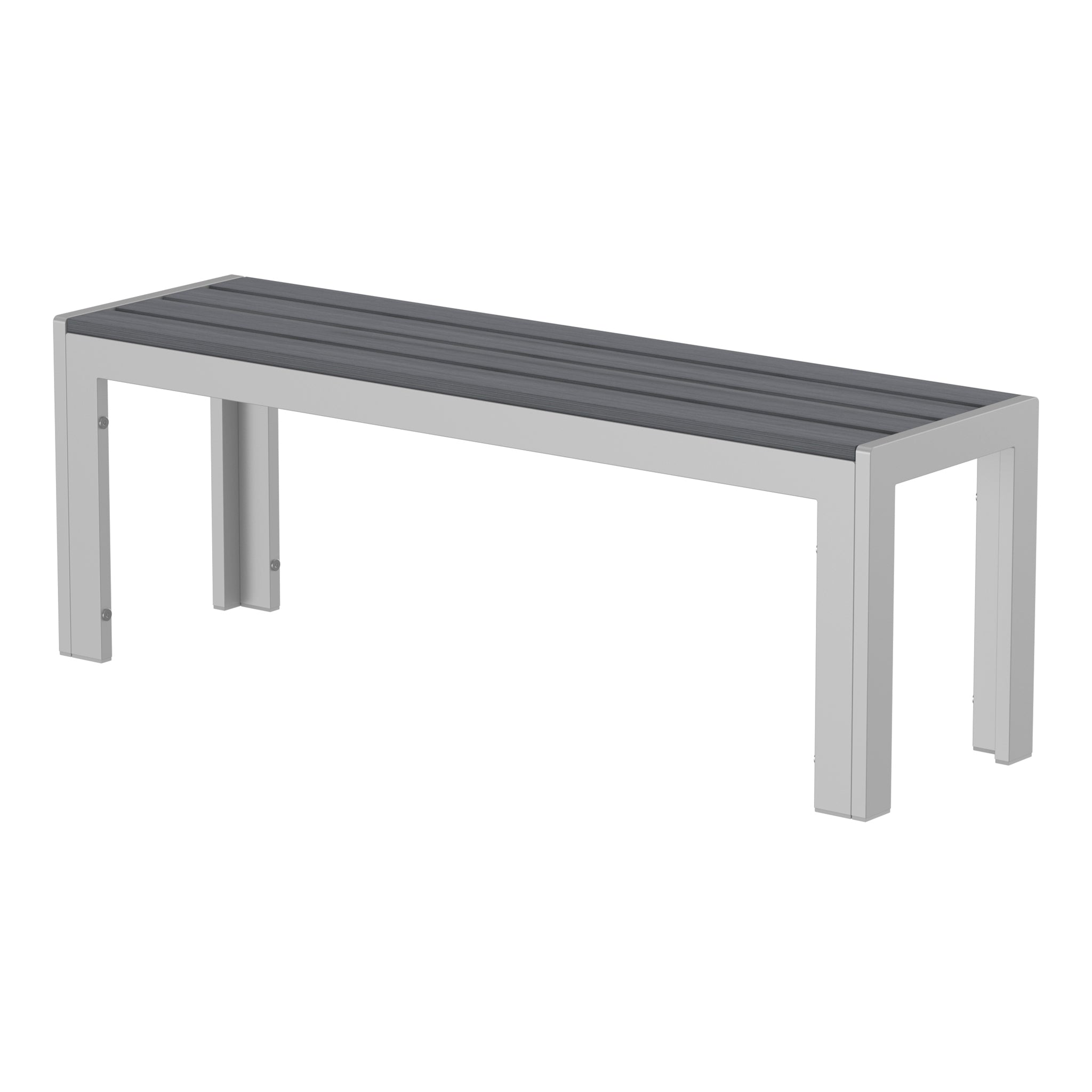
NeoTimber's Terrace Table & Chair Set is an option to explore for a recycled plastic table and chairs arrangement. For a bench-based dining layout, also compare the Space Saver Table & Bench Set. Review the current dimensions and configuration details before deciding which is the better fit.
A recycled plastic garden table should serve your normal routine as well as occasional gatherings. If two people use it daily, consider how the layout will feel between larger events. If you host regularly, prioritise usable dining space and circulation over the maximum number of seats you can fit into a corner.
Recycled Plastic Coffee Tables and Side Tables
A dining table is not always the right height or scale for a relaxed seating area. A recycled plastic coffee table typically serves the space in front of lounge seating, while a recycled plastic side table provides a smaller surface beside a chair or bench.
For either format, compare the height with the seats you already own. Think about reaching a drink without leaning awkwardly, leaving space for feet and keeping the route through the seating area clear. Also check the usable surface: decorative features and wide board gaps may affect where small items can be placed.
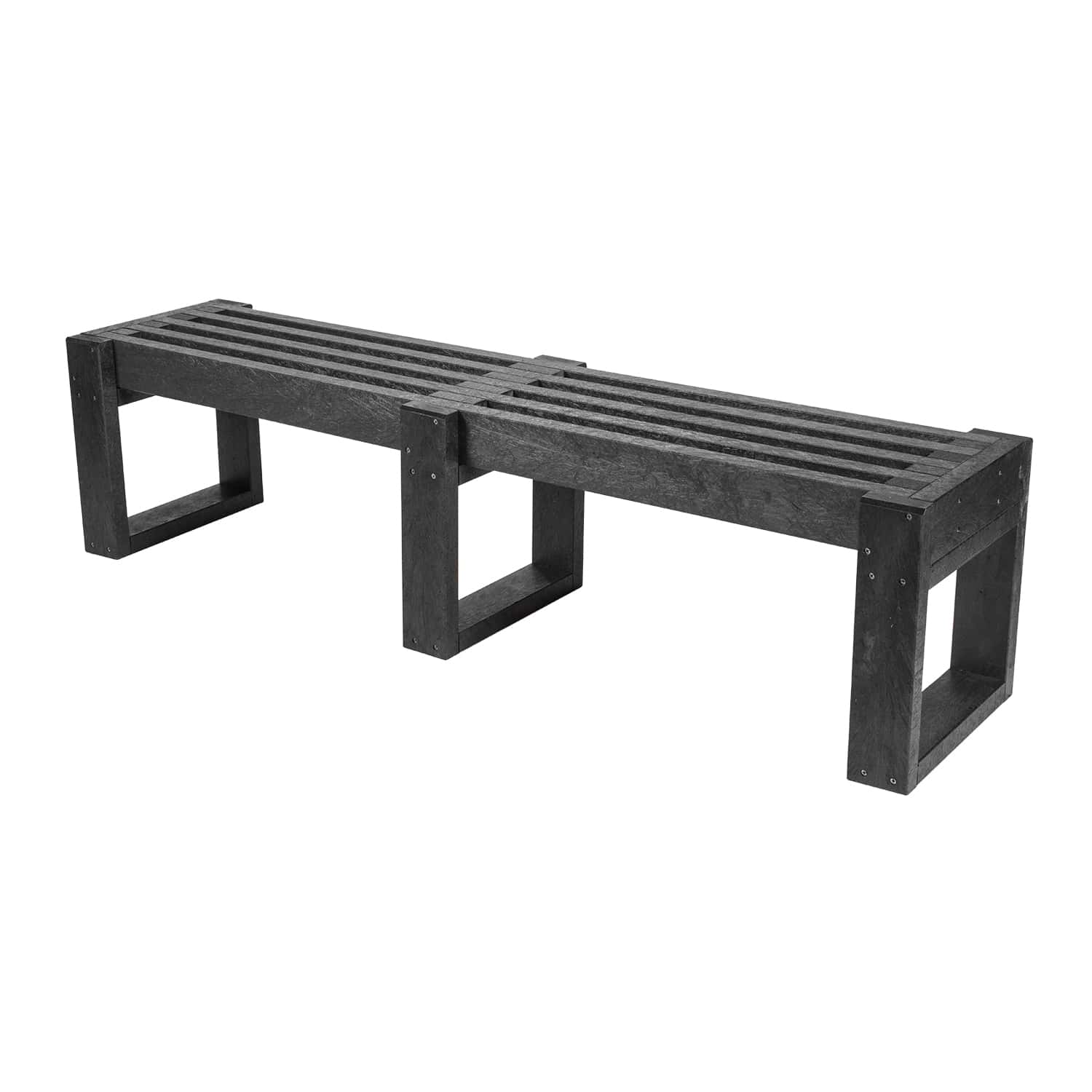
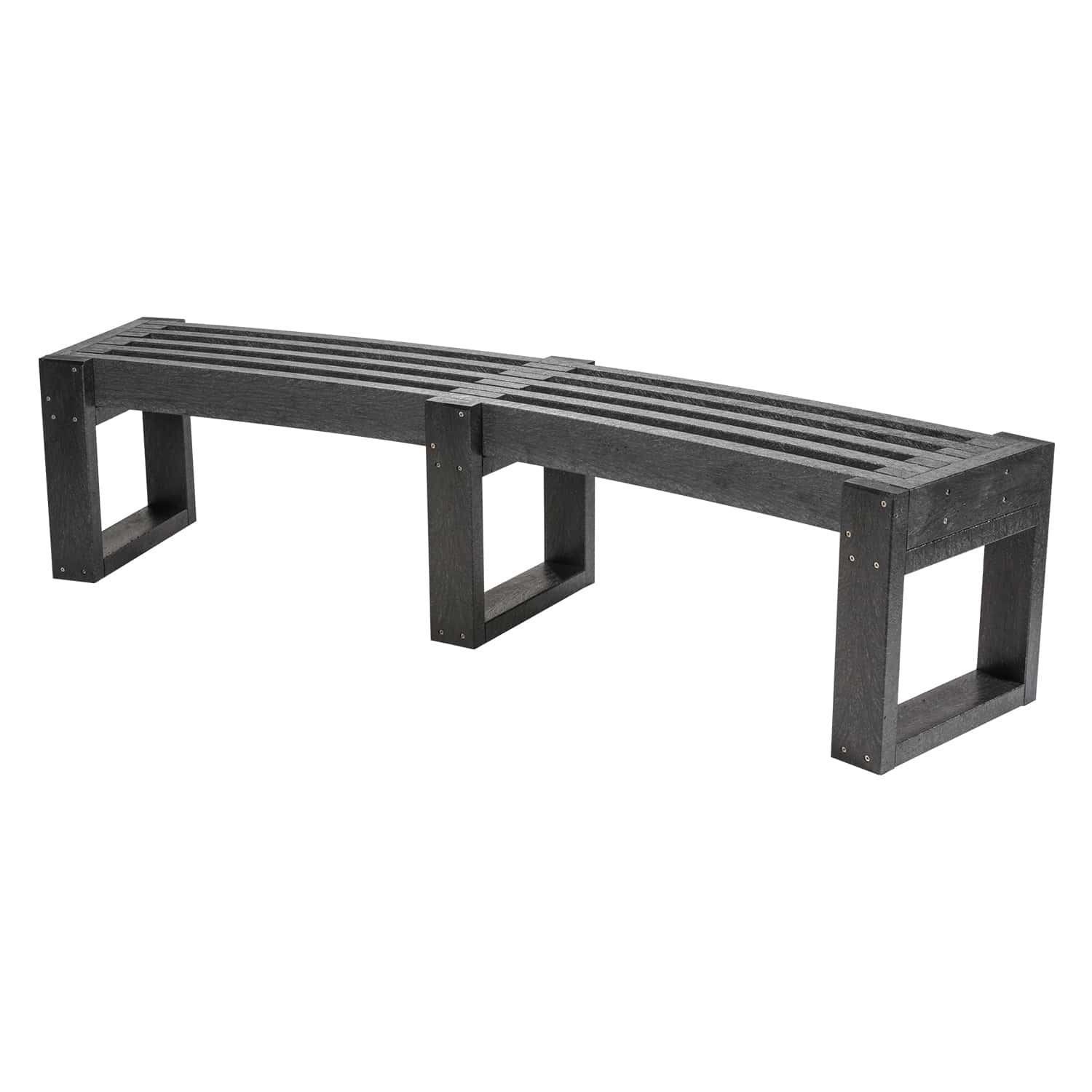
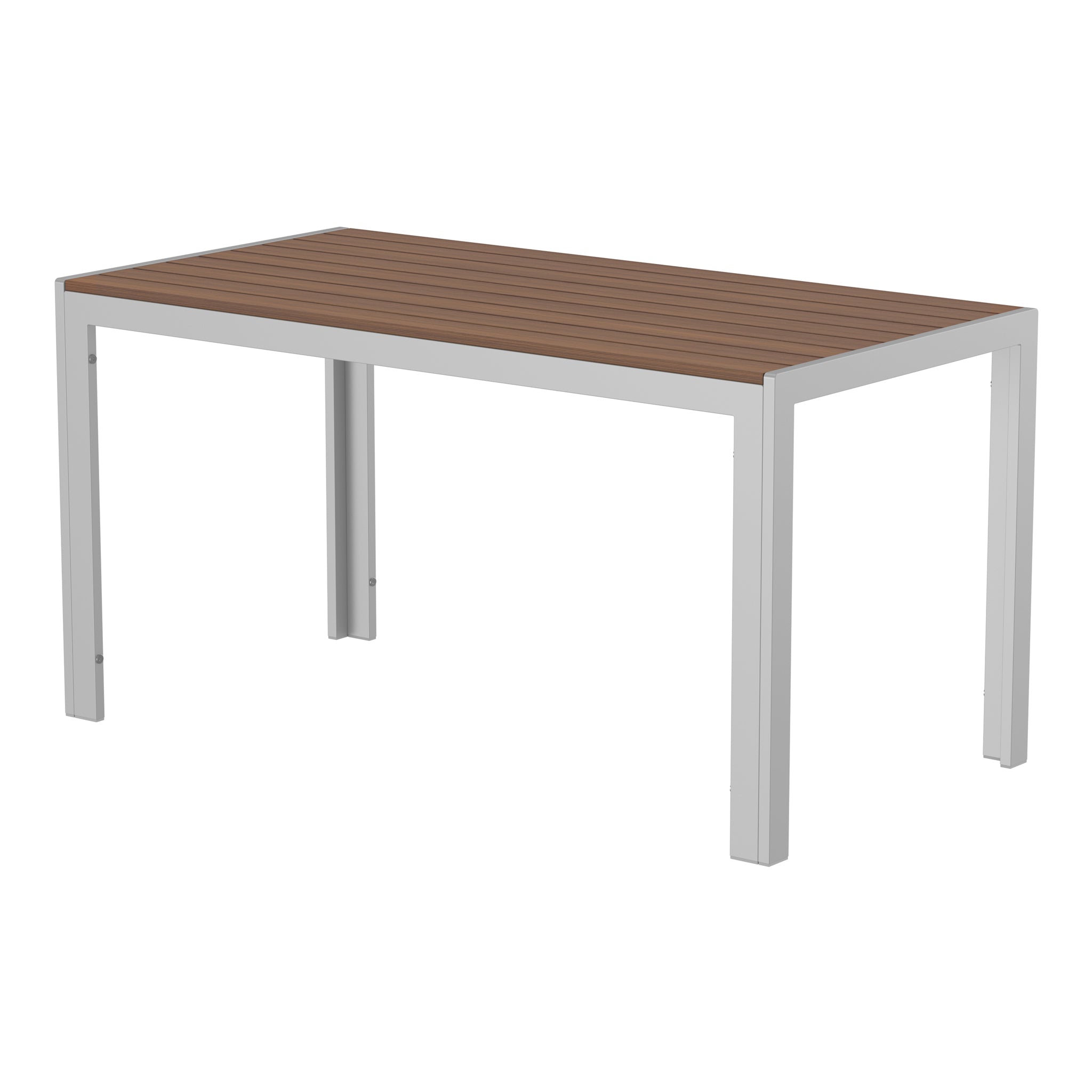
NeoTimber's current recycled plastic collection focuses on picnic tables and dining sets rather than standalone coffee or side tables. The image below offers inspiration for a smaller table within a lounge arrangement; it should not be taken as confirmation of current availability. Contact the team if you need a particular size or furniture format.

Match Your Recycled Garden Table to Its Setting
Home Gardens and Patios
A recycled garden table can anchor an outdoor dining area or create a place for weekend activities. Consider its relationship to the kitchen, shade and nearby planting. Leave enough room for doors to open and for people to carry food past occupied seats.
Pubs, Cafés and Hospitality Terraces
Plan customer circulation and staff access together. Tables need room for people to sit down, while staff need practical routes for serving and clearing. Include a mix of seating where possible and choose arrangements that fit the way the venue operates.
Schools and Outdoor Learning Areas
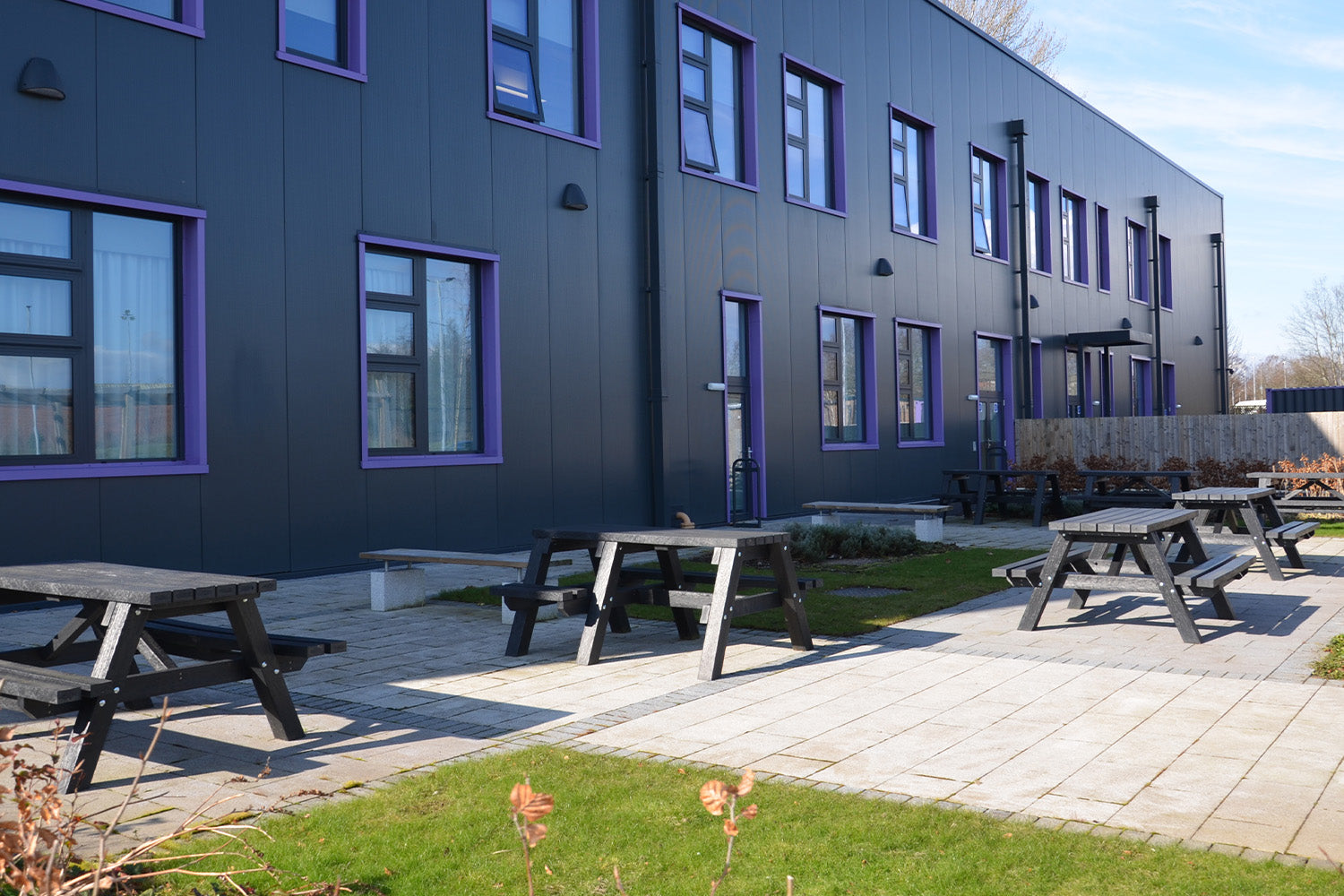
Match table and seat dimensions to the intended users. Junior furniture may suit younger children, while older pupils and staff may need different proportions. Consider the activities taking place at the table, visibility for supervision and a clear cleaning responsibility.
Parks, Campsites and Community Spaces
Think about how visitors reach the table, where they leave belongings and how the site team will inspect and maintain it. Position furniture where it supports the space without blocking paths, mowing routes or access to other facilities.
Size, Comfort and Accessibility: Plan Beyond the Tabletop
Start with a measured plan of the area. Mark permanent obstacles, doors, planting beds and routes that must stay clear. Then add the table's full footprint, including attached seating or separate chairs in use.
There is no single clearance figure that suits every garden or public project. The space required depends on the users, furniture and route. For projects with accessibility requirements, seek appropriate project guidance and check the actual product dimensions rather than relying on a general description.
Comfort also involves more than width. Compare seat height, seat depth, legroom and the distance between the seat and tabletop. If the furniture will be used for long meals, consider whether users need backrests or armrests and whether a picnic bench is the right format.
Accessible seating should be part of the main social layout. Check the surface leading to it, the approach angle and room to turn or pull alongside. Leave useful space for companions so an accessible position feels connected to the rest of the group.
Recycled Plastic, Timber or Metal: What Should You Compare?
Material choice is best assessed through individual products rather than blanket claims. Timber species, treatments, metal finishes and plastic formulations all vary. Two tables made from the same broad material category may have different construction and care requirements.
- Maintenance: compare the manufacturer's cleaning and refinishing guidance, including likely time and consumables.
- Handling: review the finished product weight if tables need moving for cleaning, storage or events.
- Appearance: consider how the colour, texture and design relate to the surrounding space.
- Repair and support: ask what happens if a fitting or component needs replacement.
- Outdoor exposure: check product guidance for the conditions at your site.
Recycled plastic's resistance to rot and lack of routine protective painting can be useful advantages. However, they do not prove that every recycled plastic table will cost less, last longer or have a lower environmental impact than every timber or metal alternative.
Searching for Recycled Plastic Picnic Tables Near Me?
If you are searching for “recycled plastic picnic tables near me”, you may want to see a table before buying, find a local supplier or arrange delivery to your area. Separate those needs so you can ask the right questions.
Before travelling, confirm whether the exact design and configuration are available to view. A showroom may not display every product or colour. Ask whether a visit needs arranging and bring your measurements so any discussion can focus on suitable options.
For delivery, provide your postcode and details of restricted access. Ask for the current charge, expected lead time, unloading arrangements and what happens after the furniture reaches the delivery point. Local proximity alone does not tell you whether the service includes positioning or assembly.
Use NeoTimber's contact page to discuss viewing and delivery arrangements. Confirm project-specific details before making travel plans or scheduling an installation team.
Delivery, Assembly and Installation
Plan the route from the delivery point to the final position. Measure gates, narrow paths and corners, and check whether steps or changes in level affect handling. Ask whether the furniture arrives assembled or in sections and review the instructions before arranging help.
The supporting surface should be suitable for both the furniture and its users. On a lawn, consider ground firmness and how the position will be maintained. On paving, check that the table can sit level. For decking or raised structures, confirm suitability for the combined load.
Follow the manufacturer's assembly and fixing guidance. Do not assume that product weight removes the need to consider anchoring in an exposed or public setting. Once installed, check the table is correctly assembled and stable before putting it into use.
How to Clean and Maintain Recycled Plastic Picnic Tables
Routine care should be simple and consistent. Remove loose debris, wash surfaces using mild soapy water and a soft cloth or brush, then rinse. Follow the product instructions for specific marks and avoid abrasive pads or unsuitable chemicals.
After rain, wipe standing water from the tabletop and seats before use. Nearby trees, birds and food service can all affect how often cleaning is needed. A table in a busy eating area will need a different schedule from one used occasionally in a private garden.
Check fixings and look for damage as part of regular inspection. Keep any maintenance records required by your organisation and deal with problems promptly. Low maintenance means less routine work; it does not remove the need for responsible care. See our recycled plastic furniture maintenance guide for further advice.
Comparing Value, Warranty and Recycled Materials
For a useful budget comparison, calculate more than the purchase price. Include delivery, assembly, ground preparation, fixing and expected care over the period you intend to use the furniture. Record the same categories for each shortlisted product so the comparison is consistent.
Recycled tables can appeal to projects seeking products that use recovered materials. NeoTimber's recycled plastic range is made in Britain. Ask for the relevant material information if your project has a specific recycled-content requirement; broad sustainability wording should not replace supporting evidence.
Think about future use as well. A layout that continues to suit the site is more likely to remain useful. At the end of its service life, ask the supplier or a suitable recycler about available processing routes rather than assuming bulky furniture can enter household recycling.
NeoTimber's recycled plastic furniture carries a 25-year limited warranty, subject to its terms and exclusions. Review the furniture-specific coverage, installation conditions and claim process. Warranty length should not be treated as an unconditional lifespan guarantee or cover for every type of wear and damage.
Your Recycled Plastic Table Buying Checklist
- Decide whether you need a picnic table, separate dining set or smaller occasional table.
- Check the number and needs of regular users, including seating support and access.
- Measure the full furniture footprint and surrounding circulation space.
- Confirm product dimensions, configuration, weight and intended use.
- Review delivery access, assembly and any base or fixing requirements.
- Compare complete project costs rather than headline prices alone.
- Read the care instructions and furniture warranty.
- Confirm current availability before finalising the layout or schedule.
Frequently Asked Questions About Recycled Plastic Tables
Can recycled plastic picnic tables stay outside all year?
NeoTimber's recycled plastic furniture is designed for year-round outdoor use. Follow its installation and care guidance, including any securing requirements for exposed locations. Outdoor suitability does not mean the furniture needs no inspection or cleaning.
Are heavy duty plastic picnic tables suitable for commercial use?
Check the specific model's intended use and supporting information. The phrase “heavy duty” alone does not establish a load rating, suitability for every site or resistance to misuse.
Should I choose a picnic table or a recycled plastic table and chairs?
Choose integrated picnic seating if that arrangement suits your users and available space. Separate chairs allow a different layout and can offer individual back and arm support. Compare both with people seated, not just when the furniture is unused.
Is a round picnic table better for a small garden?
Not necessarily. Compare the total dimensions, seat access and circulation space with rectangular alternatives. The best fit depends on the shape of the garden and the routes around the furniture.
Does NeoTimber® sell a recycled plastic coffee table or side table?
The current collection focuses on picnic tables and dining sets. Contact the team about current options if you need a smaller table; do not assume every design shown in an inspiration image is available to order.
How do I find the right table for wheelchair access?
Review a model designed to provide a wheelchair position, then check its dimensions against user needs and the site's access arrangements. The route, surface and manoeuvring space are as important as the table itself.
Do recycled plastic tables need painting or sealing?
NeoTimber's recycled plastic tables do not need routine painting, staining or sealing. Clean them according to the care instructions and inspect fixings and surfaces regularly.
Choose a Table That Works for Your Space
The right table brings together a suitable design, comfortable access and manageable upkeep. Browse NeoTimber's recycled plastic picnic tables and furniture sets to compare the range, or contact the NeoTimber® team with your measurements and project requirements.