Find the Right Board Profile and Length for Your Outdoor Space
Choosing composite decking boards becomes easier when you separate the main decisions: core profile, surface construction, dimensions and finish. Together, these determine how the boards look, how they need to be installed and how they fit your budget.
This guide compares NeoTimber's Classic and Deluxe options, explains how to plan around 3.6m boards and shows why composite decking lengths matter when arranging joints and estimating quantities. Whether you call them boards or composite decking planks, start with the exact product specification rather than the name alone.
Explore our decking options for an overview, or browse the composite decking collection while building your shortlist. Our online buying guide provides further advice on ordering.
What Should You Compare in a Composite Decking Board?
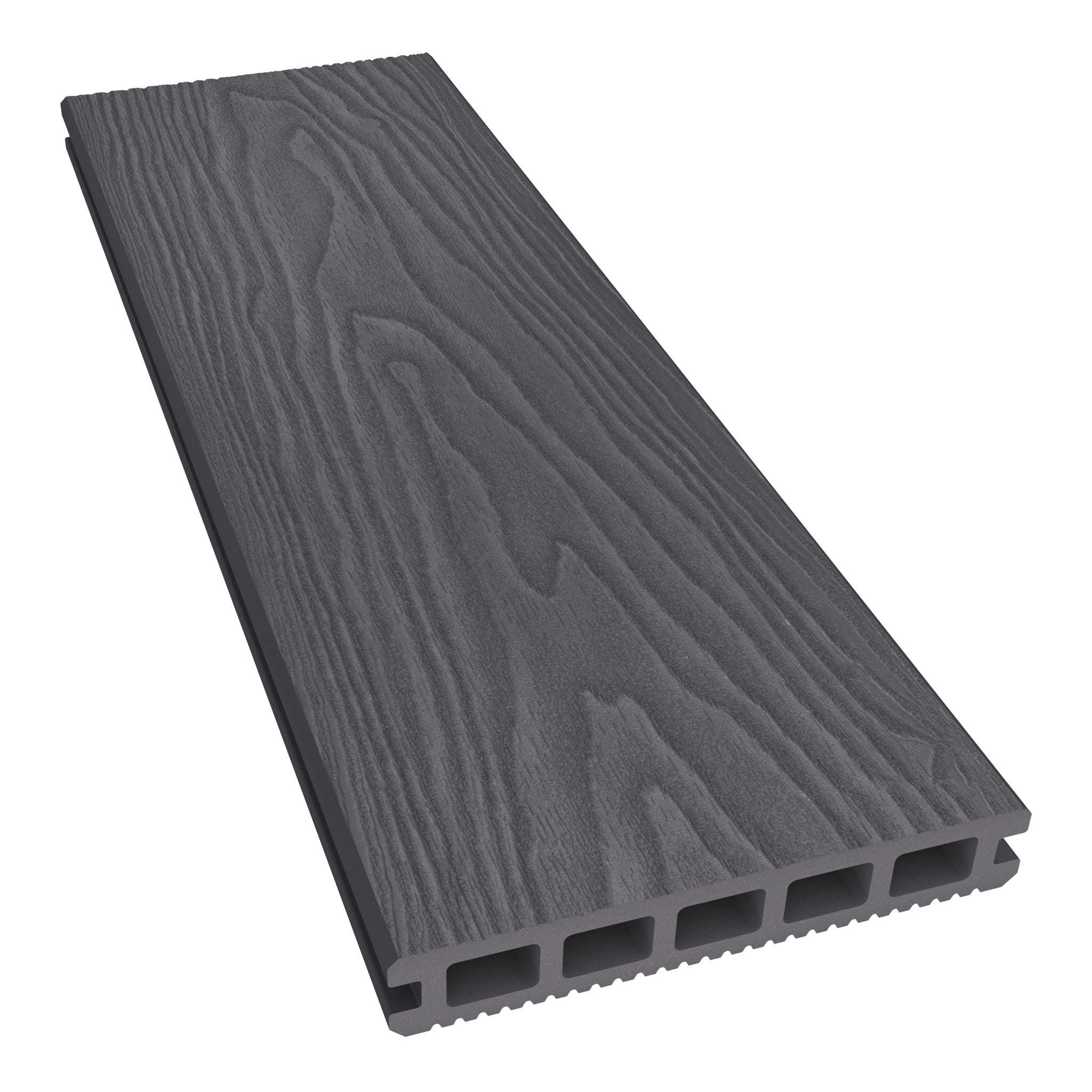
A wood-plastic composite decking board combines wood fibres, plastic and additives in a manufactured profile. Products can differ in their formulation, internal shape and surface protection, so similar-looking boards may have different requirements.
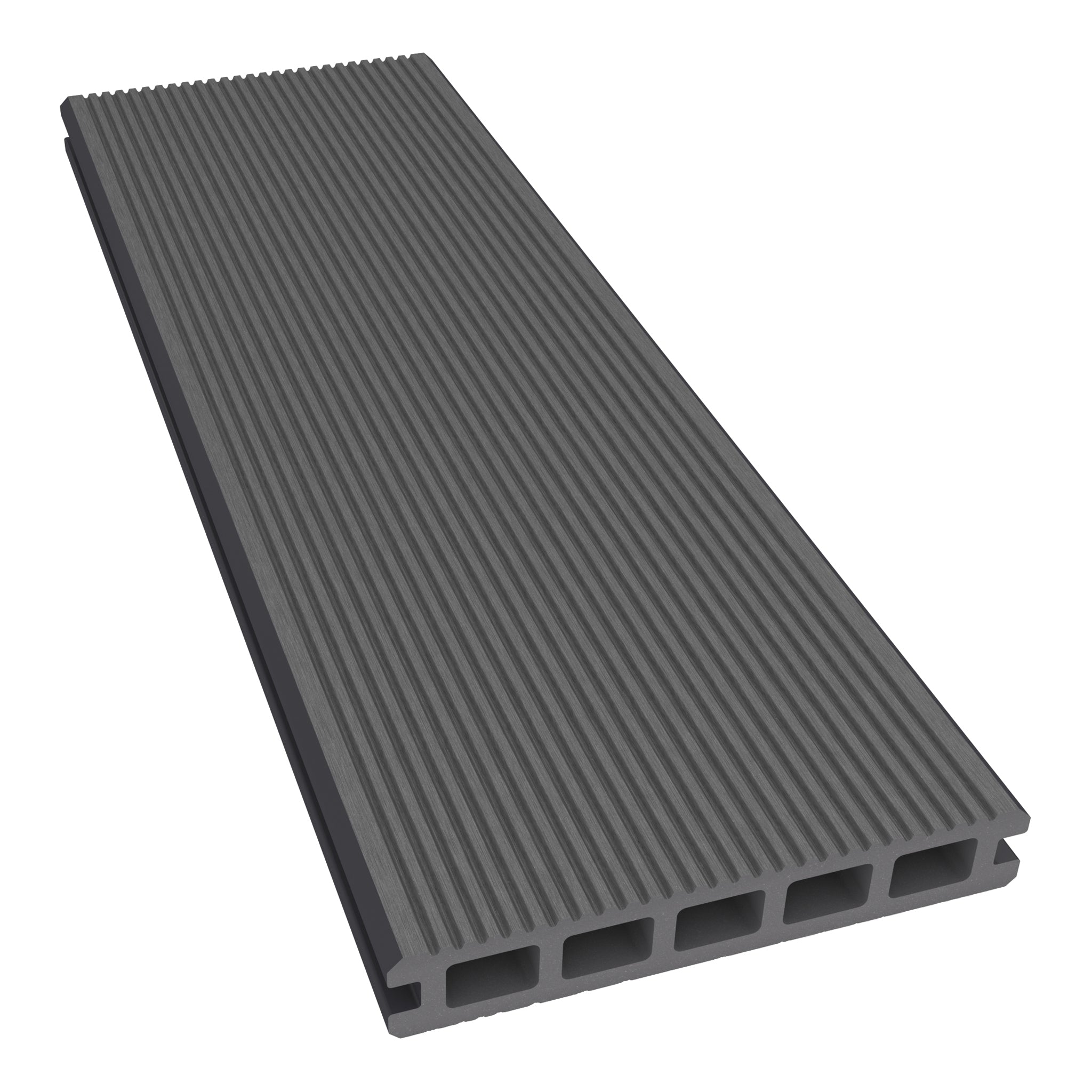
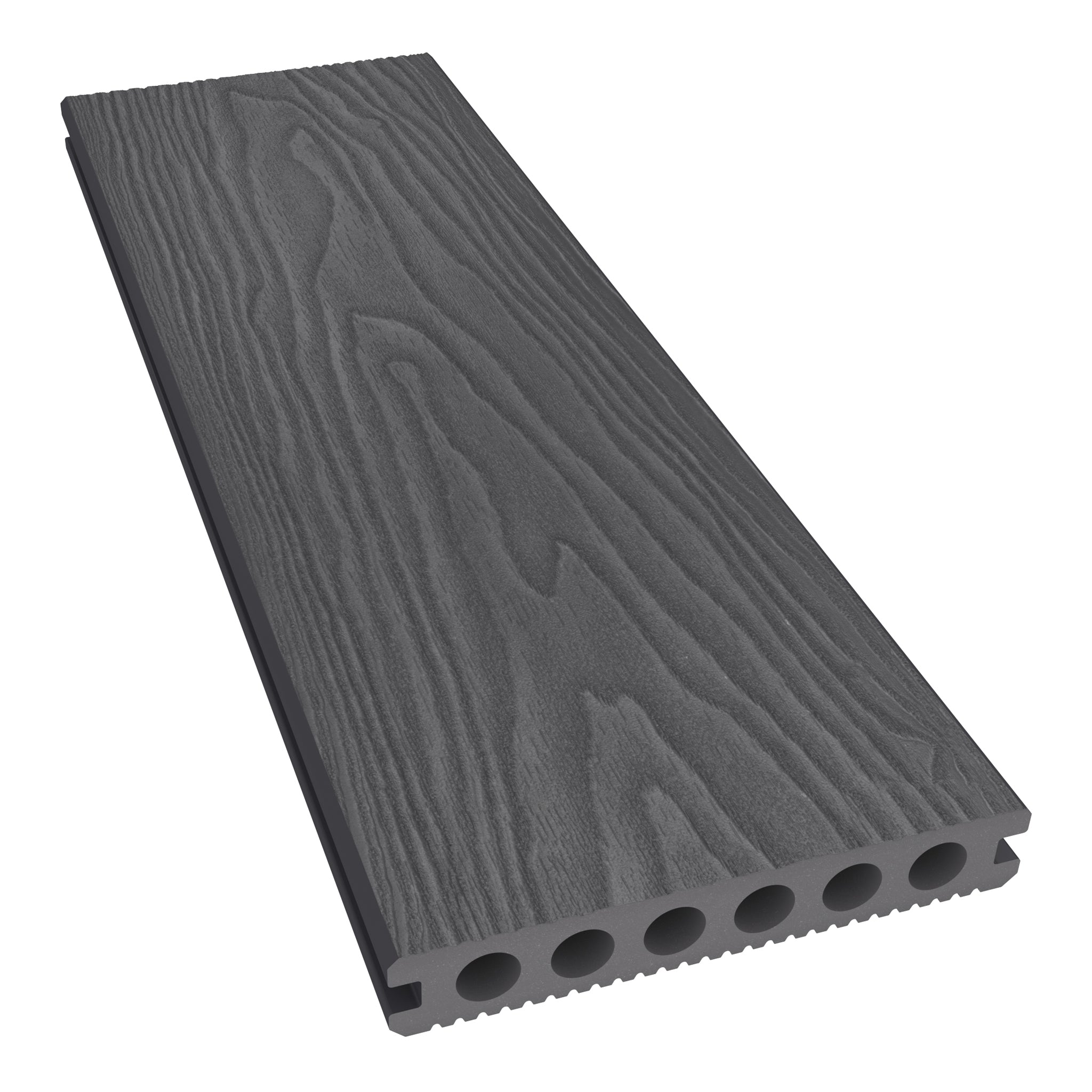
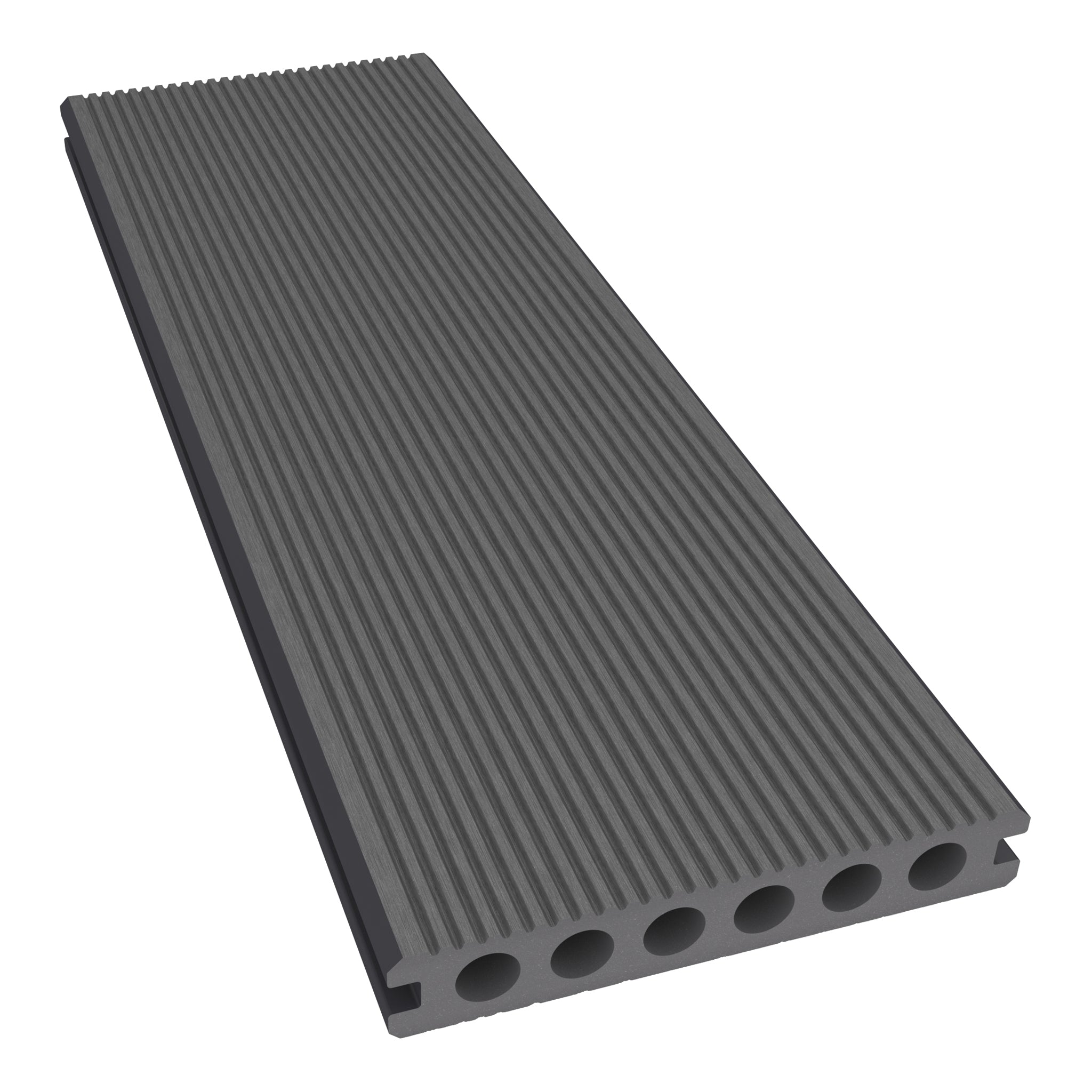
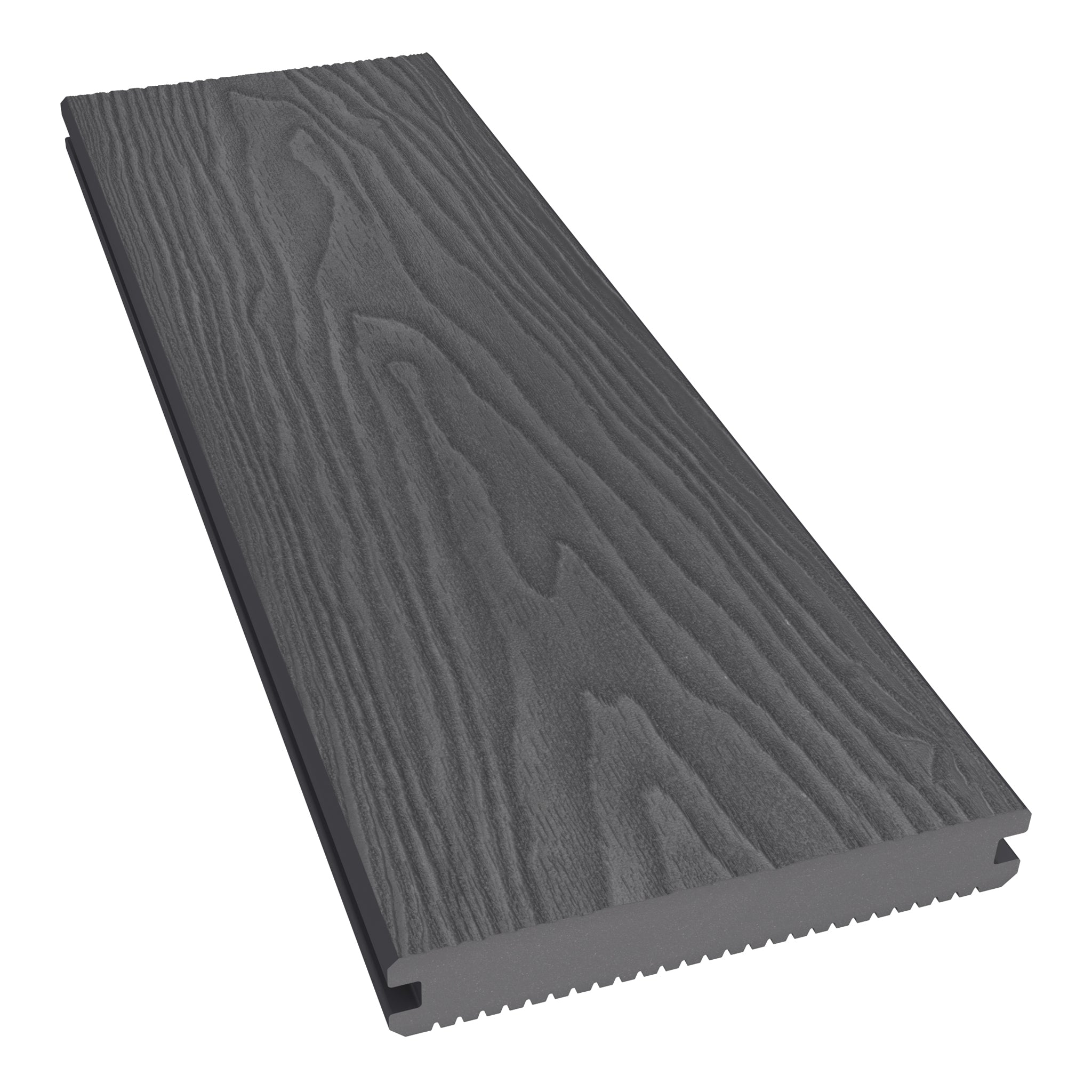
- Core: hollow or solid construction.
- Surface: uncapped composite or a protective capped finish.
- Dimensions: length, width and thickness.
- Appearance: colour, texture and permitted walking face.
- Specification: intended uses, support spacing and compatible fixings.
Core and surface are separate features. A hollow board can be capped, while a solid board can be uncapped. Compare those choices independently before deciding which product suits your project.
Classic Composite Decking Boards
NeoTimber's Classic collection includes uncapped boards with different core profiles. These provide options for customers comparing appearance, handling and budget without choosing a capped surface.
- Classic Lite: an entry-level residential option with a hollow profile and its own warranty terms.
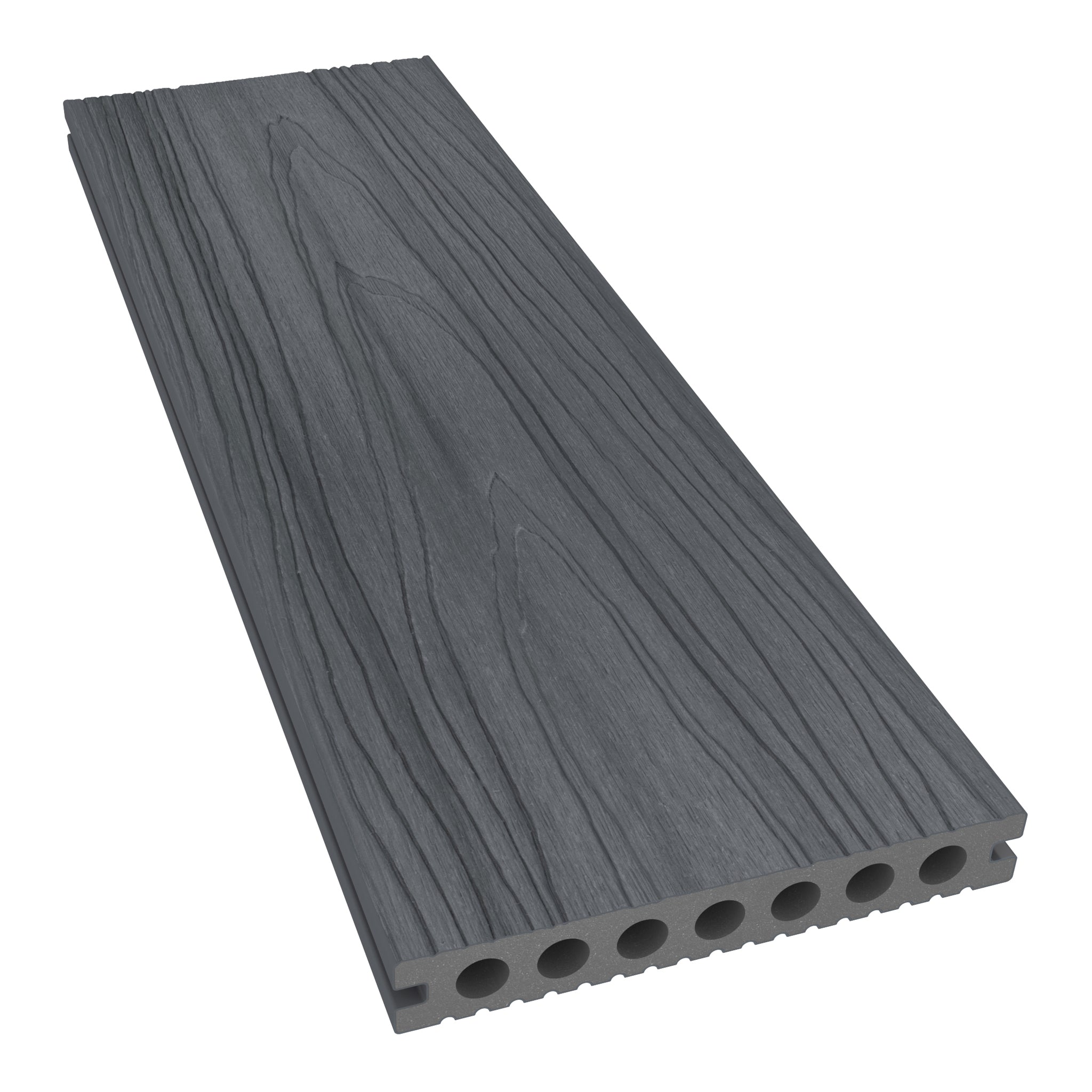
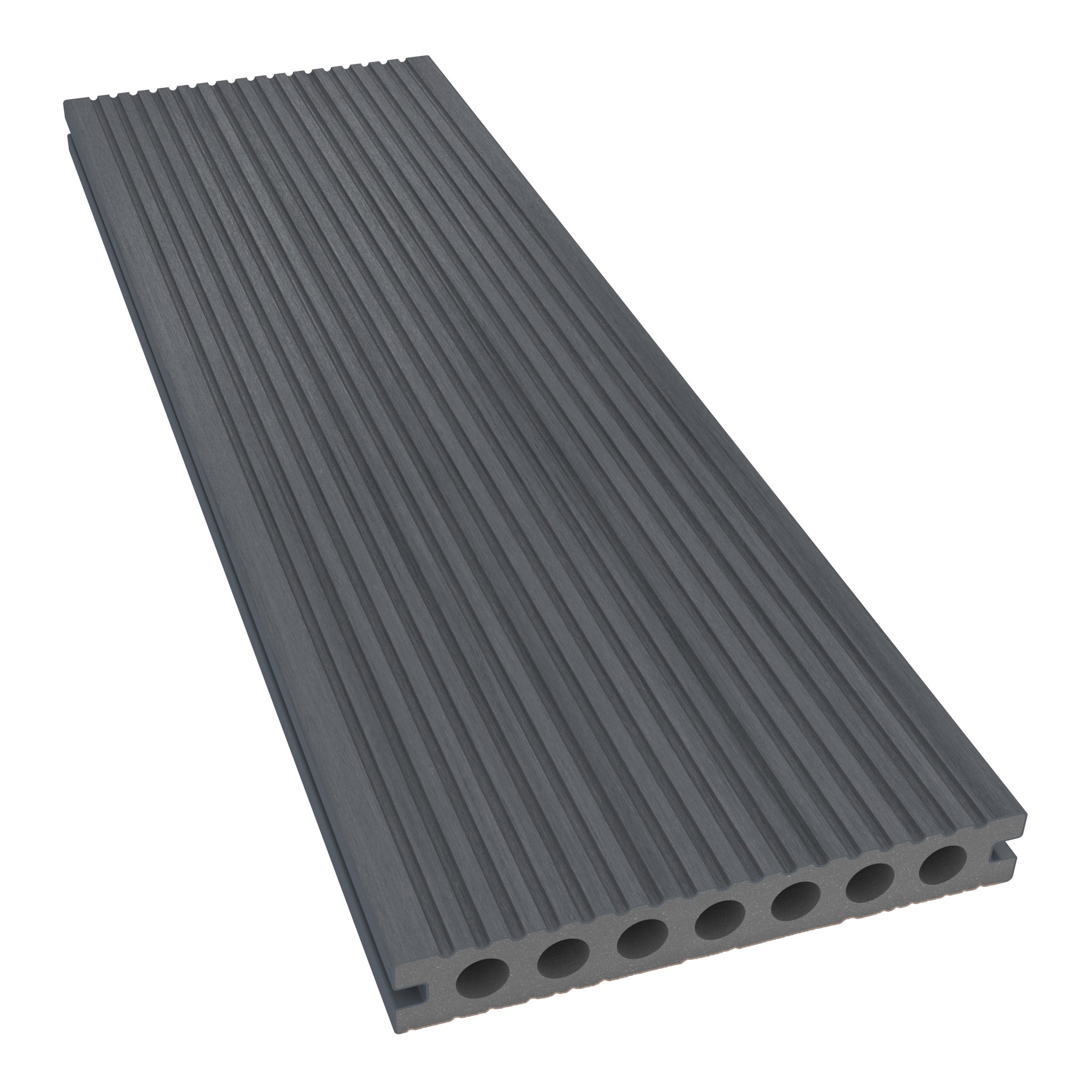
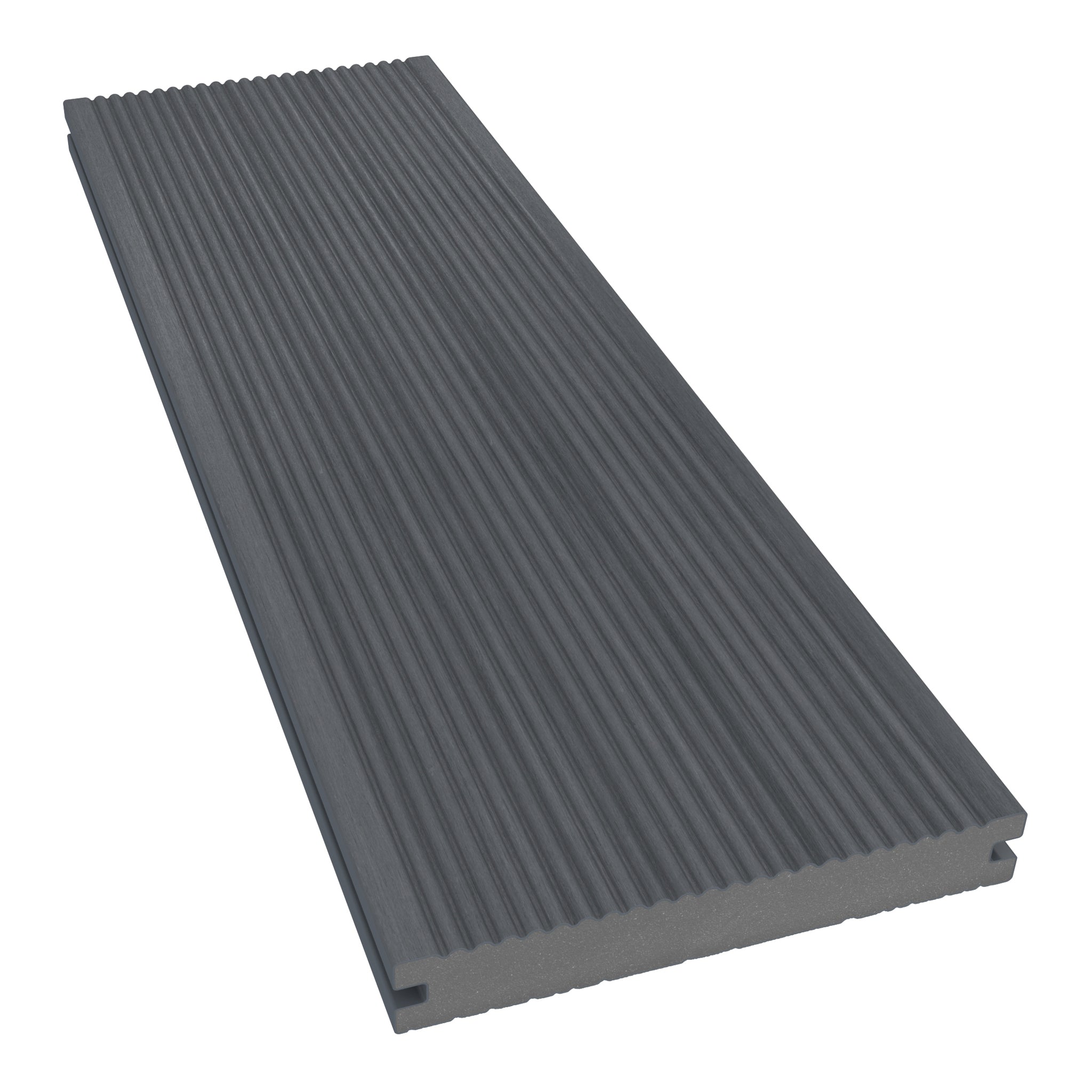
- Classic Hollow: an uncapped board with a round hollow core and reversible woodgrain and grooved finishes.
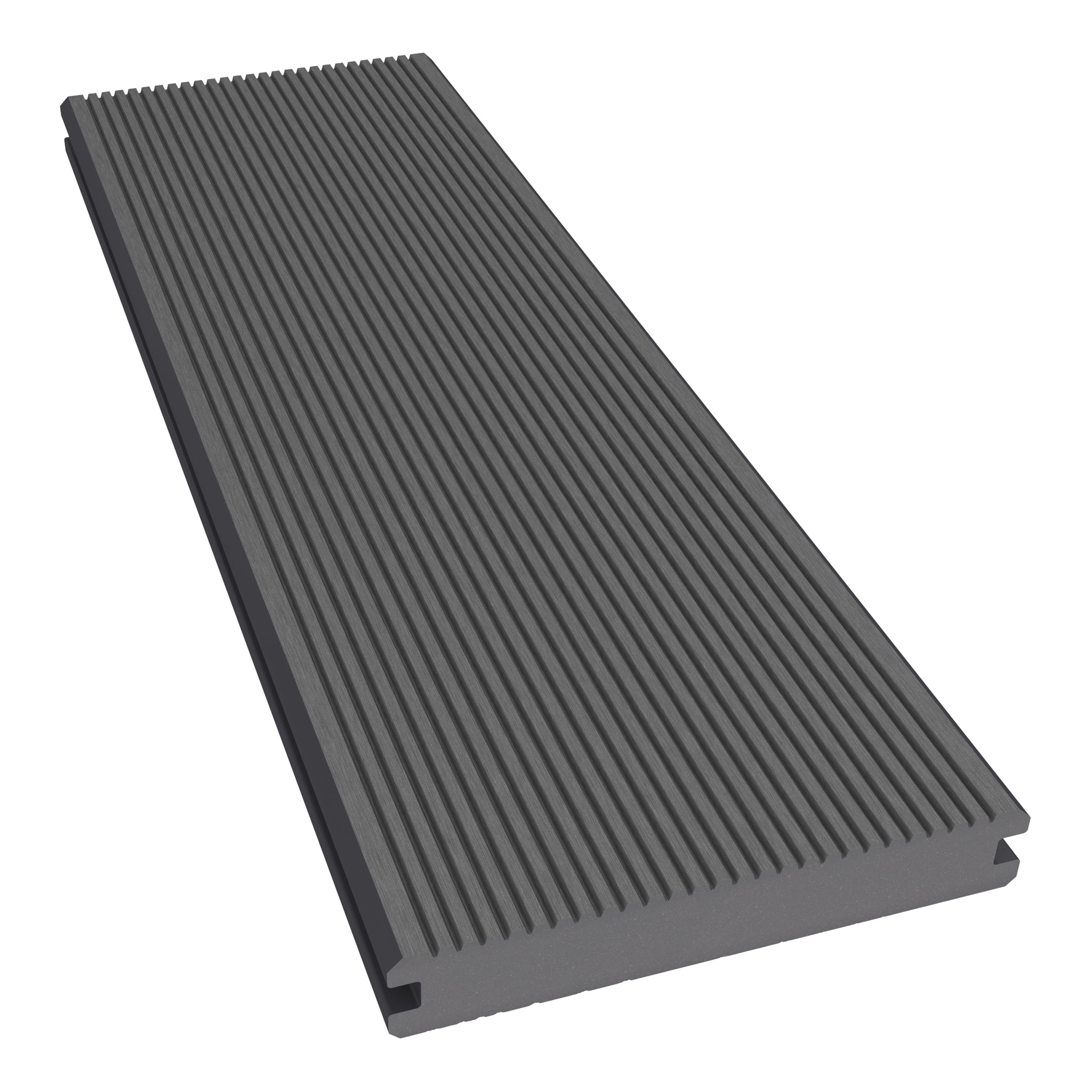
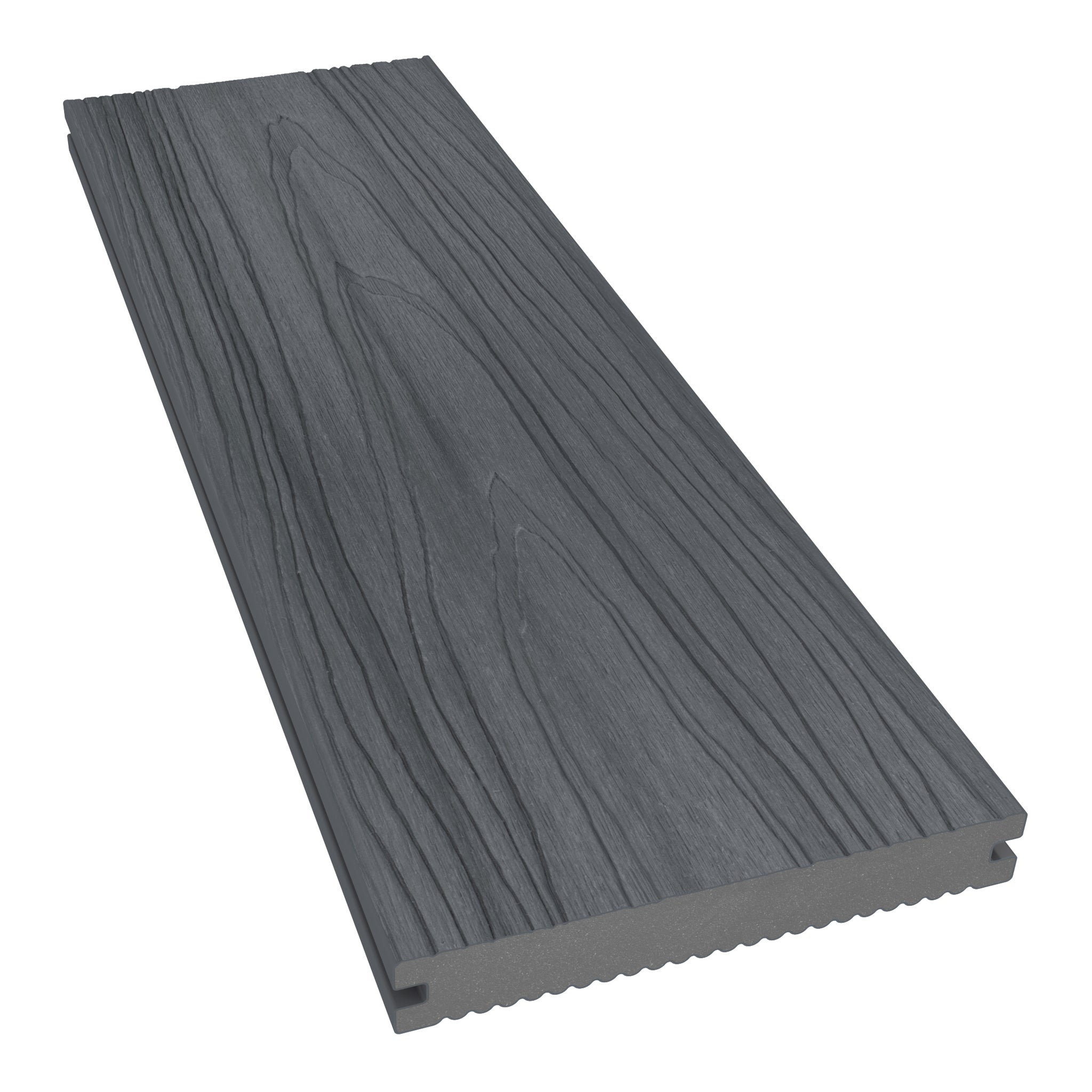
- Classic Solid: an uncapped option with a continuous core.
Check each product's intended application rather than assuming all Classic boards are interchangeable. Weight alone does not determine strength, and a solid core does not remove the need for a suitable frame.

Deluxe Composite Decking Boards
The Deluxe collection incorporates protective capping designed to improve resistance to staining and fading. It is worth comparing where surface protection and a particular finish are priorities.
Deluxe Hollow and Deluxe Solid provide capped choices with different core profiles. The collection also includes alternative widths, such as Deluxe Wide, for a different visual proportion.
A cap is not a guarantee against every mark or colour change. Avoid dragging heavy objects, clean spills promptly and follow the care information for the selected product. Choose the board against its full specification rather than treating “premium” as proof of suitability for every application.

Composite Decking 3.6m: Planning Around the Board Length
If you are searching for composite decking 3.6m, check that the selected product lists a 3,600mm length and compare its width and thickness too. A shared length does not mean two boards provide the same coverage or use the same fixing detail.
For example, the current Classic Hollow board is listed at 145mm wide by 24mm thick by 3,600mm long. Deluxe Hollow is listed at 143mm wide by 21.5mm thick by 3,600mm long. Those differences matter when calculating rows, combining products or selecting accessories.
Board length is a purchasing dimension, not the permitted unsupported span. A 3.6m composite decking board still requires joists at the intervals specified by the manufacturer.
How Composite Decking Lengths Affect the Layout
A board long enough for a particular run may reduce the need for intermediate joints, but it will not automatically minimise waste. The shape of the deck, board direction, border and required movement gaps all affect the cutting plan.
Sketch at least two possible orientations. Compare where joints would fall, how board ends will be supported and whether offcuts can be reused appropriately. Never omit movement gaps or create unsupported joints simply to make a nominal length fit.
A Simple Planning Example
For a rectangular deck measuring 3m by 4m, 3.6m boards running across the 3m dimension may avoid intermediate joints in the main runs, subject to the final details and required gaps. Running them along the 4m dimension introduces a different joint arrangement. Neither option should be chosen without considering the frame and cut quantities.
Use the decking calculator as a starting point, then check the actual cutting plan, borders, steps and accessories before ordering.
Compare Composite Decking Planks on Coverage and Complete Cost
An individual plank price does not tell you the cost of the finished surface. Boards with different widths cover different areas, and the fixing system's gaps affect the layout.
Measurements and details to check before ordering:
| Detail | Why it matters |
|---|---|
| Length | Cutting plan, joint positions, transport and storage |
| Width | Row count, visual rhythm and coverage |
| Thickness and profile | Finished levels and compatibility with other components |
| Fixings and support | Board spacing, structural layout and installation quantities |
| Finishing components | Complete cost of borders, edges and steps |
Include the frame, fixings, trims, preparation, delivery and labour in your budget. A well-planned layout can help control costs without compromising the supporting structure.
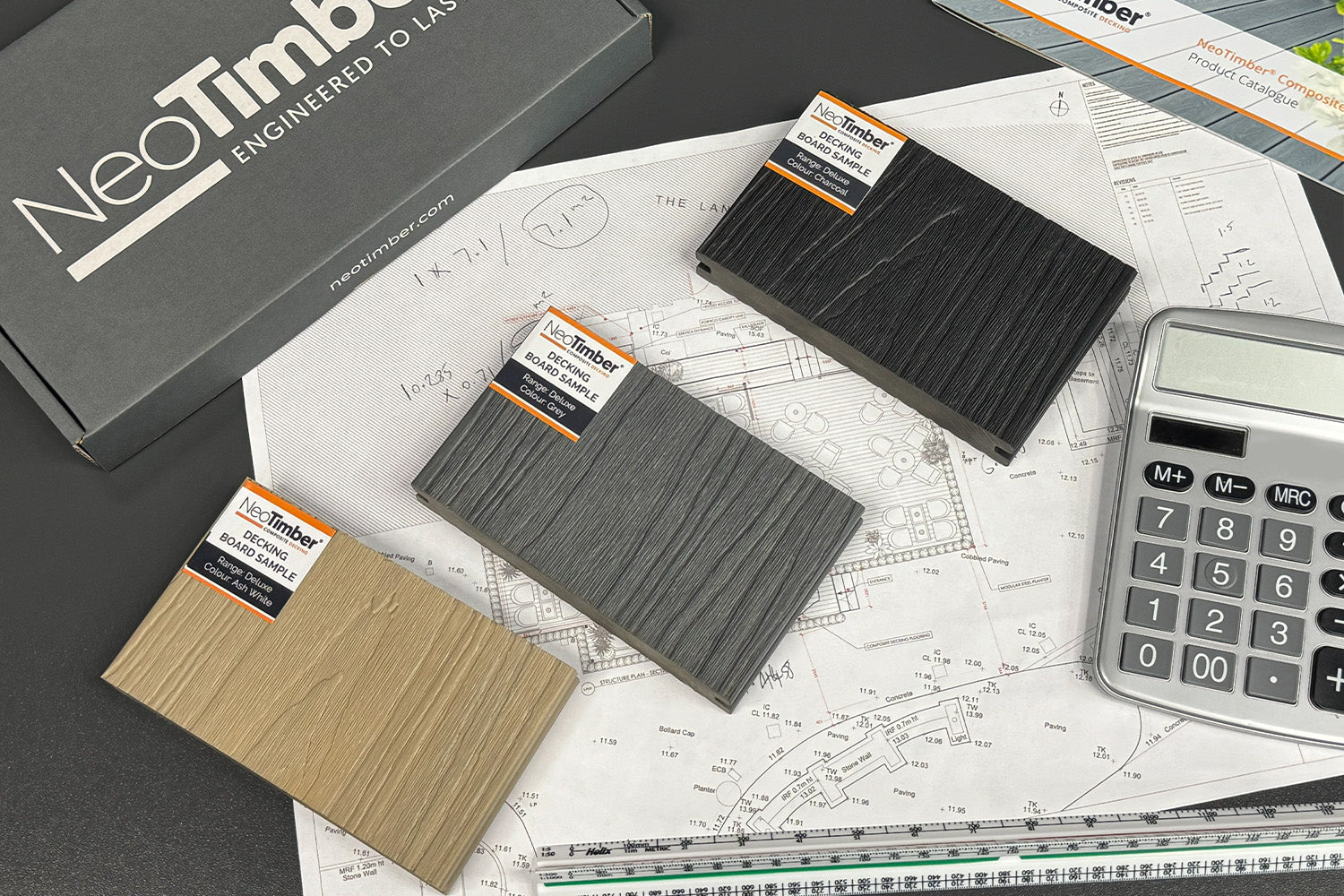
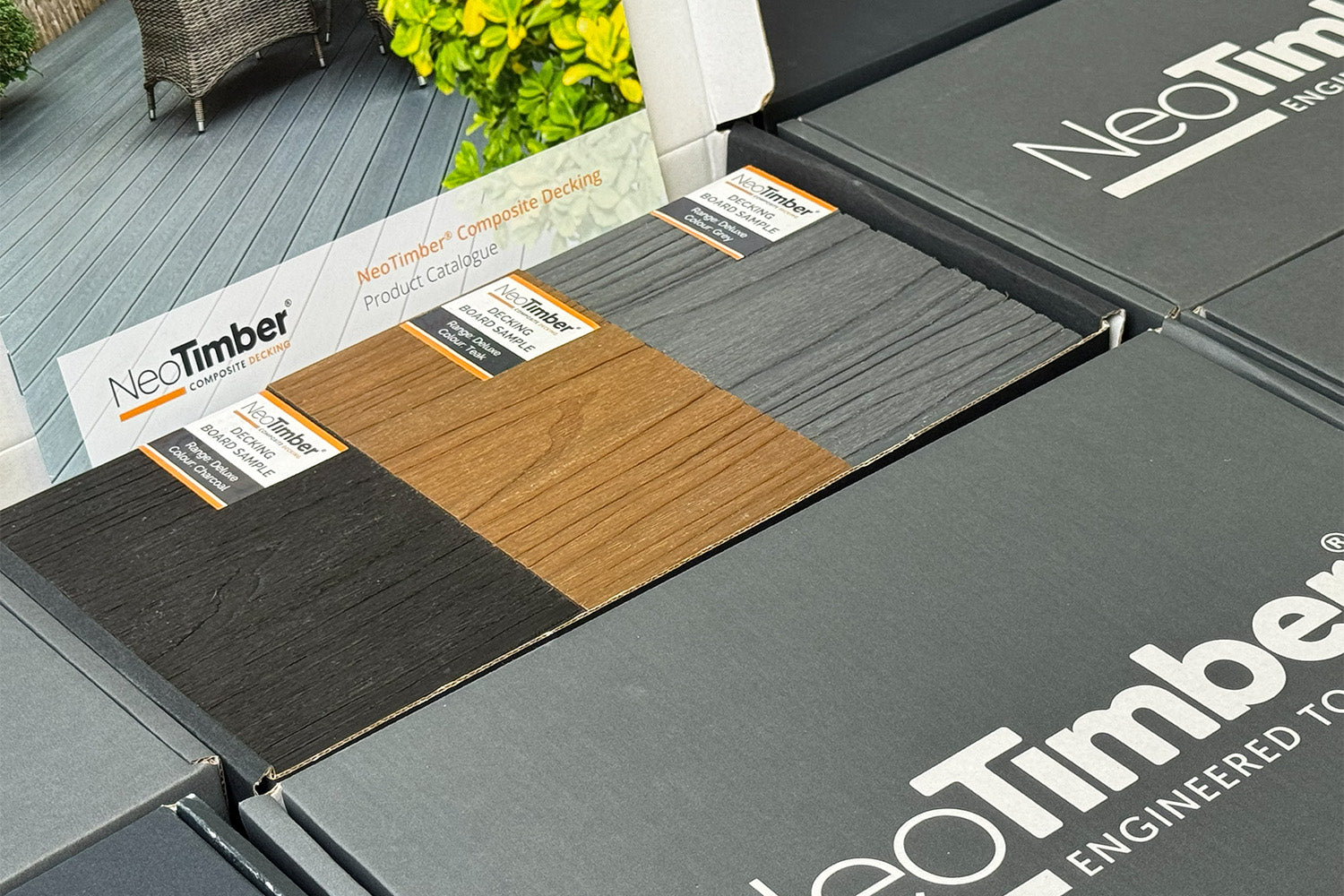
Choose Colours and Textures With Physical Samples
View samples alongside paving, brickwork and furniture. A finish that looks right on a screen may feel different in your garden's light. Compare both permitted faces where a board is reversible.
Explore our decking colour guides and request free decking samples. If you would prefer to see products in person, book a showroom appointment.
Check Installation, Application and Care Before Buying
Read the pre-installation information and installation instructions for the chosen board. Plan joist spacing, support at joints, drainage, ventilation and temperature movement allowances.
Specialist projects need application-specific checks. A hot tub requires a properly designed load-bearing arrangement; changing board core alone does not establish capacity. Balconies and roof terraces require confirmation of structural, fire and waterproofing requirements before selecting composite.
Composite generally avoids routine sanding, staining and sealing, but it still needs cleaning. No board is slip-proof or scratch-proof. Use the maintenance guide and review the product-specific warranty, including permitted use and exclusions.
Composite Deck Boards FAQs
Are composite decking planks different from deck boards?
The terms are commonly used for the same type of product. Compare the actual dimensions, profile and installation requirements rather than relying on the wording.
Can 3.6m boards be cut to fit?
Yes, using the methods and tools specified in the installation guidance. Plan cuts, board-end support and movement gaps before starting.
Can I combine boards from different ranges?
Only where the profiles, dimensions, support and fixing details are compatible. Similar colours or lengths do not establish that products can be mixed in one detail.
Which composite decking board is right for me?
Start with the intended use and budget, then compare core, capping, dimensions and finish. Confirm the complete installation requirements before ordering.
Turn Your Shortlist Into a Complete Decking Plan
The right composite deck boards balance the appearance you want with the specification your project needs. Confirm dimensions, plan the cuts and joints, and include the frame and finishing components in the order.
Explore NeoTimber® decking, compare composite decking and contact our team for product information and help with your shortlist.