

How to Choose WPC Fencing for a Lasting Garden Boundary
WPC fence panels combine the character of a wood-effect finish with the practical benefits of composite materials. They can create a private garden boundary, frame a patio or give an existing fence line a more consistent appearance, without routine painting or staining.
Choosing a WPC fence involves more than picking a colour. Board profiles, posts, rails, ground conditions and installation details all contribute to the finished result. Understanding how those parts work together makes it easier to compare products and plan a fence that suits your space.
This guide explains what wood plastic composite fencing is, how NeoTimber's Deluxe and Slatted ranges differ, and what to consider when specifying a new system or upgrading suitable existing posts.
1. What Is WPC Fencing?
WPC stands for wood plastic composite, also described as wood-polymer composite. It combines wood fibres with plastic and additives to produce boards for outdoor applications. The formulation and surface construction vary between manufacturers, so the initials alone do not tell you everything about a product's performance.
A wood plastic composite fence uses these boards as part of a boundary system. The wood content contributes to the material's texture and appearance, while the plastic contributes to its resistance to moisture. A manufactured woodgrain or brushed finish can give the boards a timber-inspired appearance.
WPC is different from both solid timber and all-plastic fencing. Compare the actual specification, including any protective cap, board dimensions and required framework. NeoTimber's composite fencing range combines composite boards with purpose-designed supporting components.
2. Fence Boards, Panels and Complete Systems
When comparing WPC fencing panels, check exactly what the supplier is selling. A photograph of a completed fence does not necessarily mean every component shown is included in the price.
- WPC fence board: An individual length of composite material. In NeoTimber's system, boards connect and stack to form the infill between posts.
- Fence panel or panel set: A section of fencing or a package of components for building one. Check the listed contents, finished dimensions and whether posts are supplied separately.
- Complete fence system: The boards, posts, supports, rails, inserts and other parts needed for the chosen layout. Gates, corners and decorative screens may require additional components.
A wood plastic composite fence board is therefore one part of the installation, rather than a complete boundary on its own. This distinction matters when you compare prices: a low board price and a complete panel-set price cover different quantities and components.
3. How Capped Composite Construction Works
NeoTimber's Deluxe and Slatted boards use capped composite construction. An outer protective layer surrounds the composite core to improve resistance to everyday staining, fading and weather exposure. It also provides a surface that is straightforward to clean.
Uncapped boards do not have the same separate protective outer layer. That is a useful distinction when comparing products, but it does not mean every uncapped board has the same performance. Review the manufacturer's care requirements, installation guidance and warranty for each range.
Capping does not make fencing immune to damage or eliminate the need for cleaning. Surface dirt can still accumulate, and unsuitable tools or treatments can mark the finish. Think of it as a useful protective feature within a properly installed and maintained system.

4. Benefits and Practical Considerations
Less Routine Surface Treatment
One reason to choose wood plastic composite fence panels is the reduced need for routine finishing work. NeoTimber's capped boards do not require regular painting, staining or sealing. For a long boundary, avoiding repeated treatment can be a meaningful convenience.
Timber remains a valid choice for many gardens, with care requirements that depend on its species, treatment and finish. Compare your preferred timber option with the specific composite system rather than assuming every fence made from either material is identical.
A Consistent Design Across the Boundary
Manufactured profiles make it possible to repeat a chosen finish along a fence line and coordinate it with posts, screens and gates. Woodgrain and slatted effects offer different visual styles without requiring each board to be painted individually.
A System That Still Needs Careful Planning
Composite boards are not a remedy for unstable posts or inadequate foundations. A successful installation depends on the supporting structure, correct spacing and allowance for material movement. Budget for the complete system and suitable installation, not just the visible boards.
5. Deluxe vs Slatted WPC Fence Boards
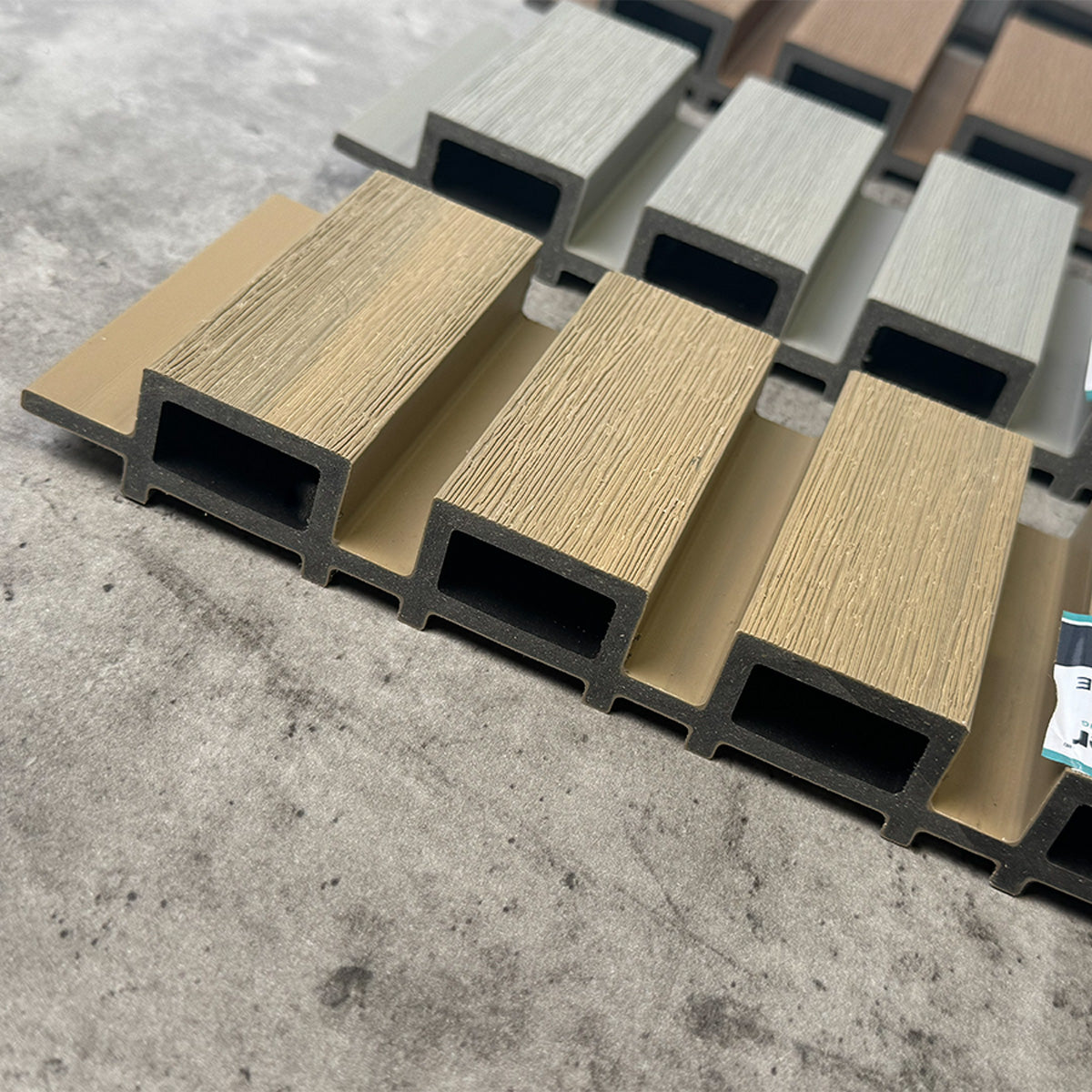
The main design choice within NeoTimber's WPC garden fencing range is between Deluxe and Slatted boards. Both are capped composite products, but they create different surface patterns.
| Feature | Deluxe | Slatted |
|---|---|---|
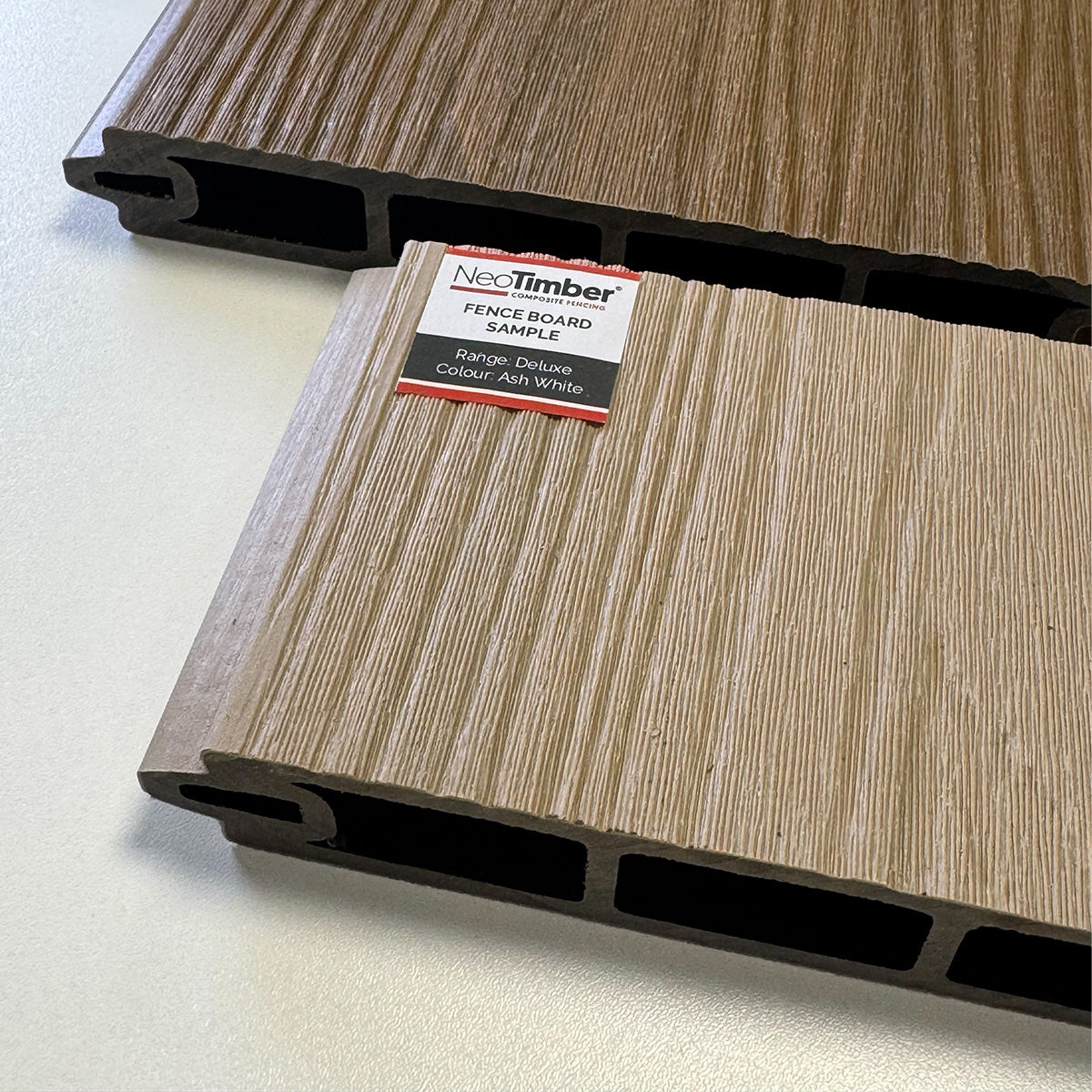
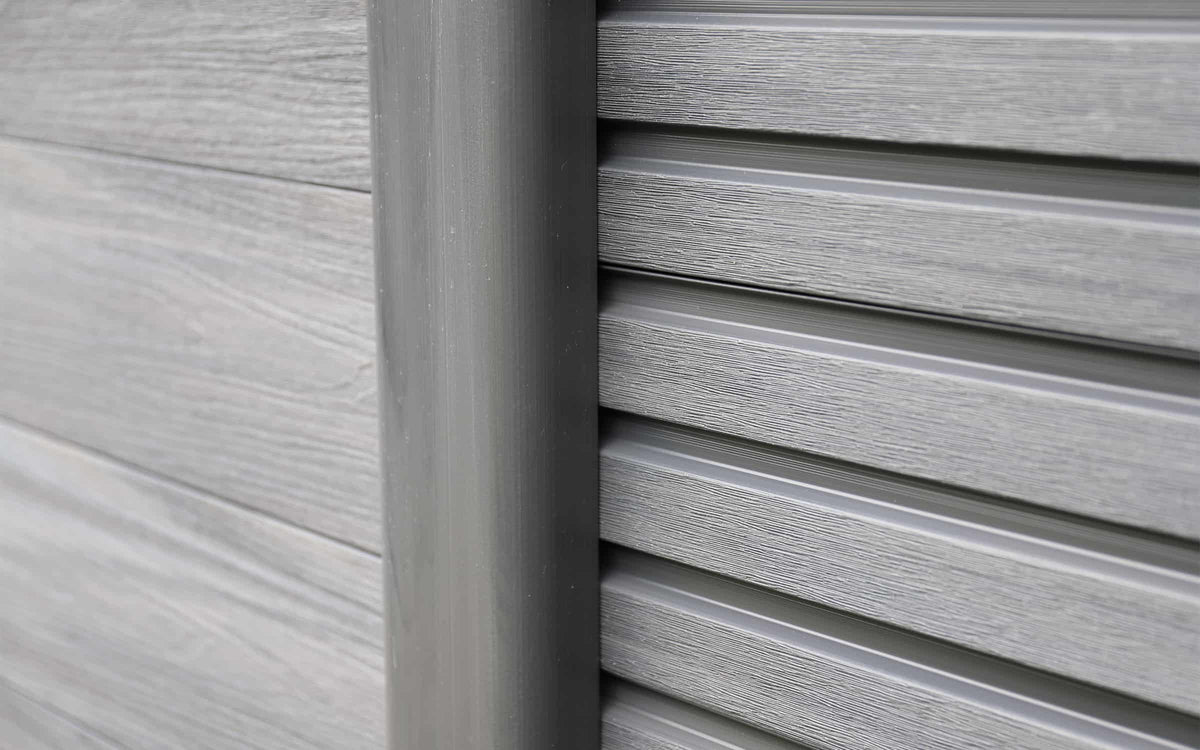
| Surface style | Reversible woodgrain and brushed finishes. | Three-slat design with a brushed finish. |
| Listed board dimensions | 180 × 24 × 1800mm. | 176 × 24 × 1800mm. |
| Construction | Capped wood plastic composite. | Capped wood plastic composite. |
| Design consideration | Compare the two faces to choose the texture you prefer. | Consider how repeated horizontal lines work with nearby paving and planting. |
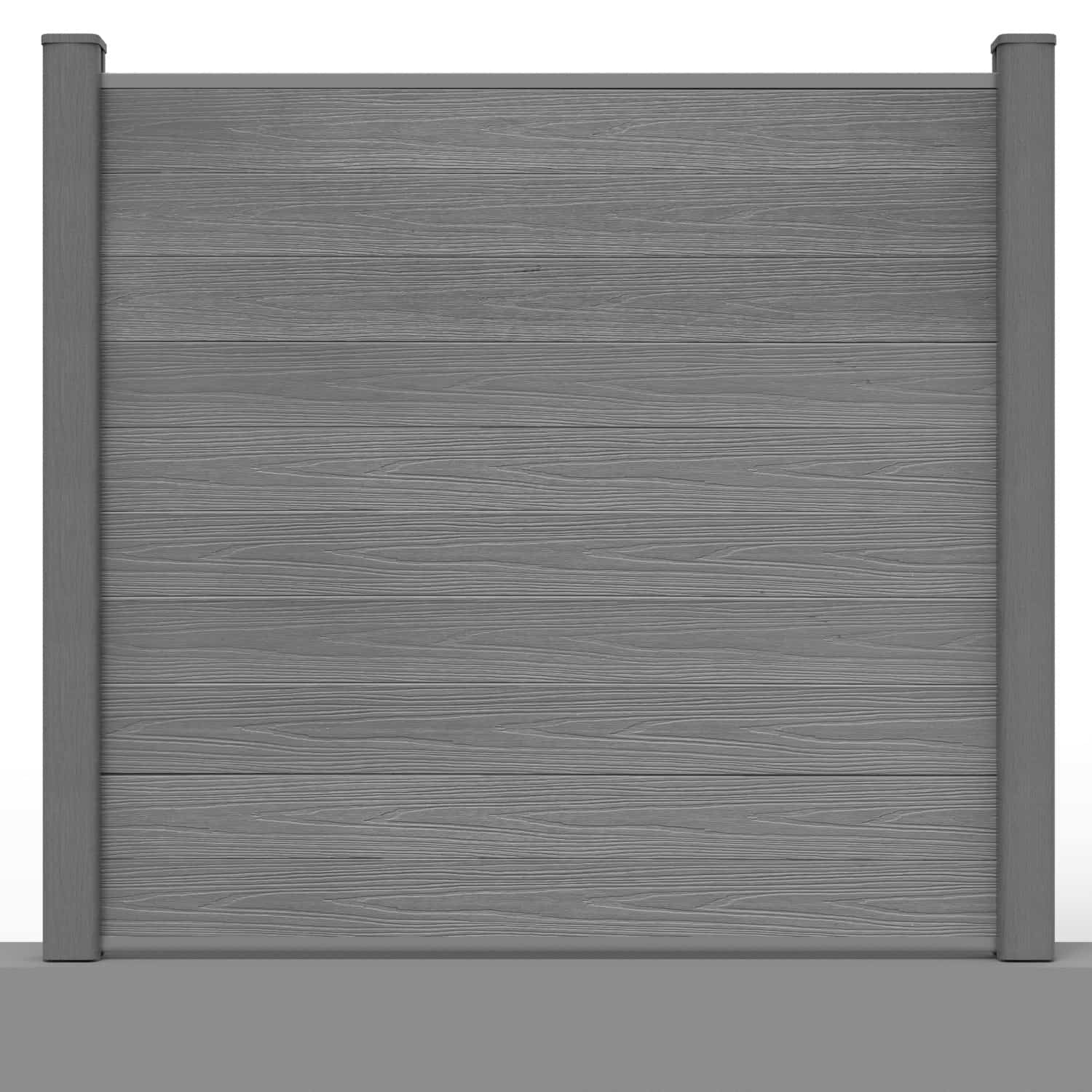
The Deluxe Composite Fence Board suits projects where a woodgrain or simpler brushed appearance is preferred. The Slatted Composite Fence Board creates the appearance of closely spaced battens within a composite board profile.
Do not use the listed overall board height alone to calculate finished fence height. Interlocking profiles, rails and other components affect the assembled dimensions. Use the specification for the chosen panel configuration when calculating quantities.
6. Choosing Colours and Finishes
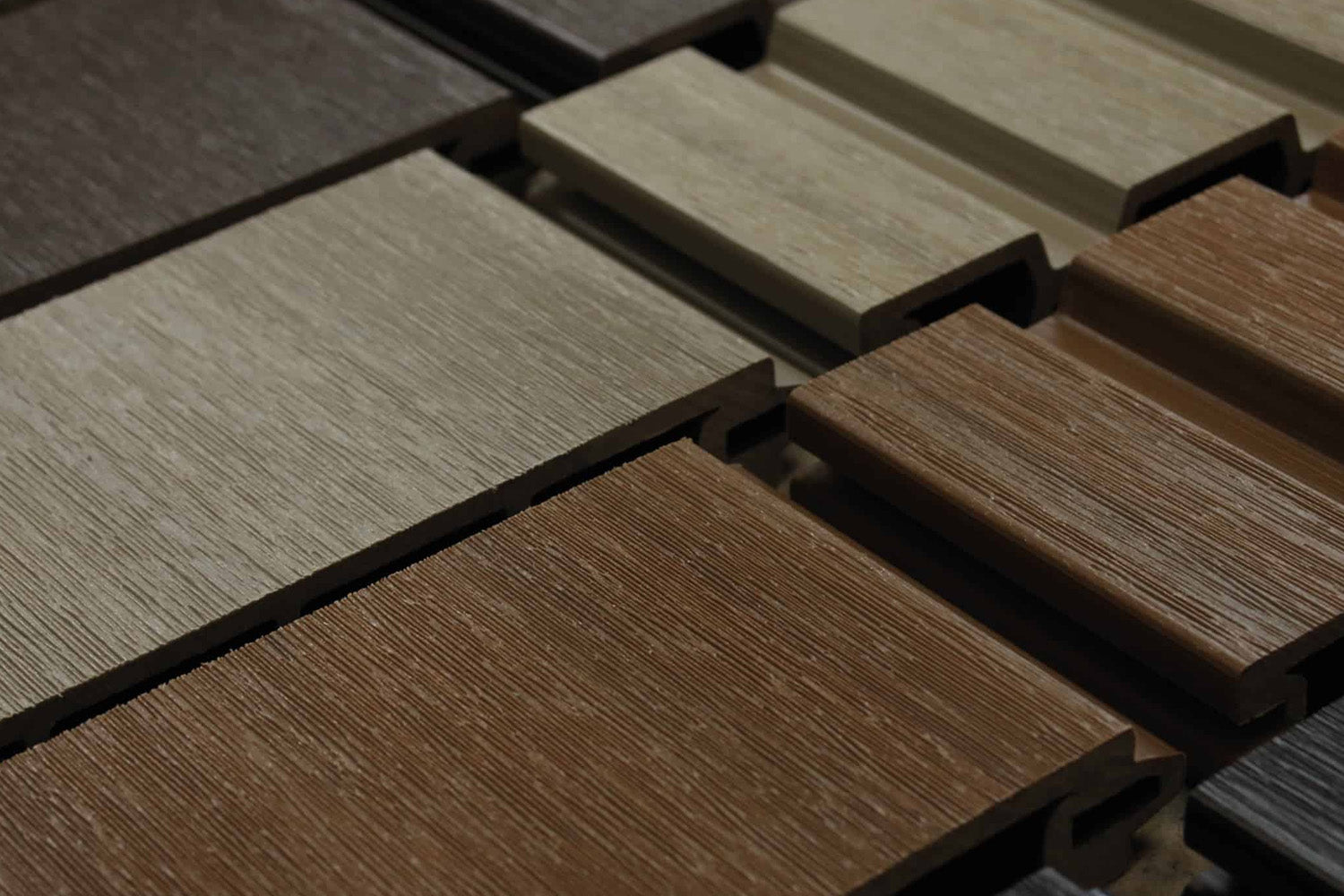
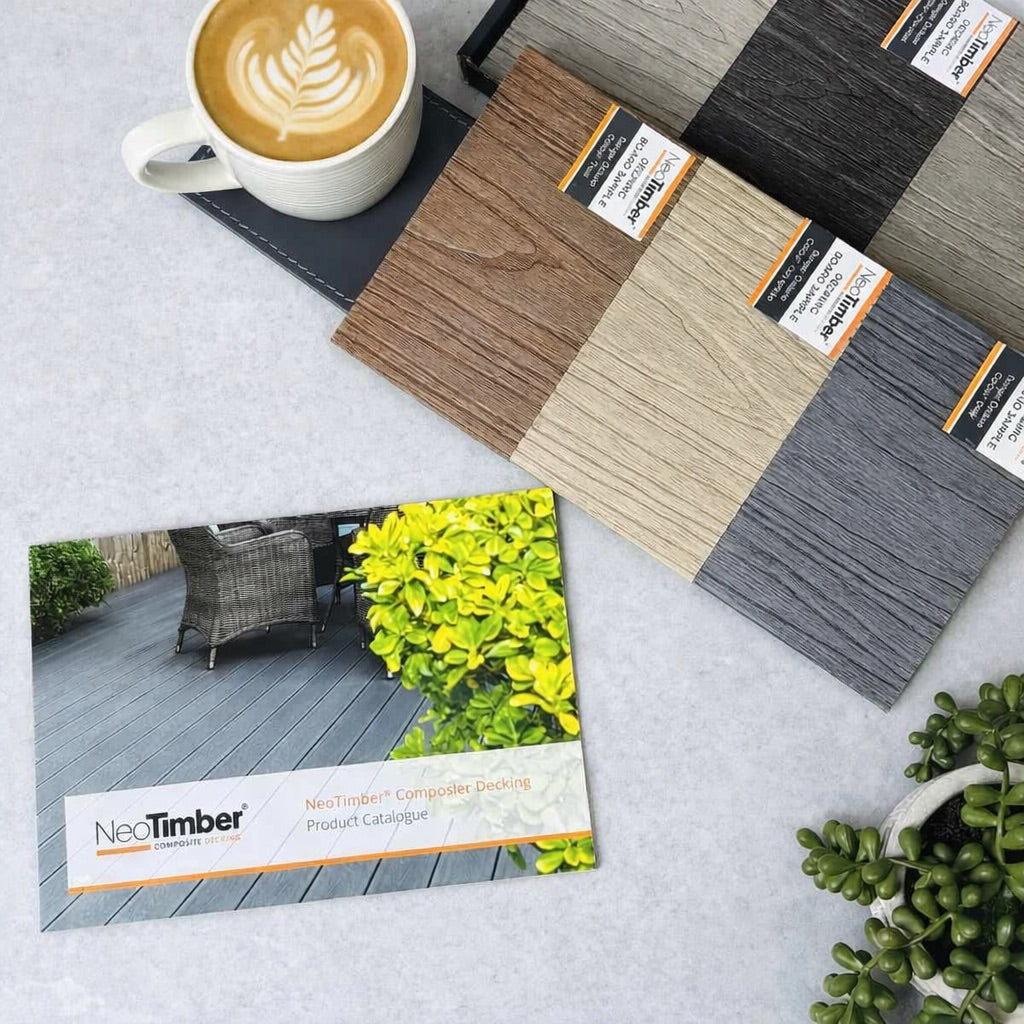
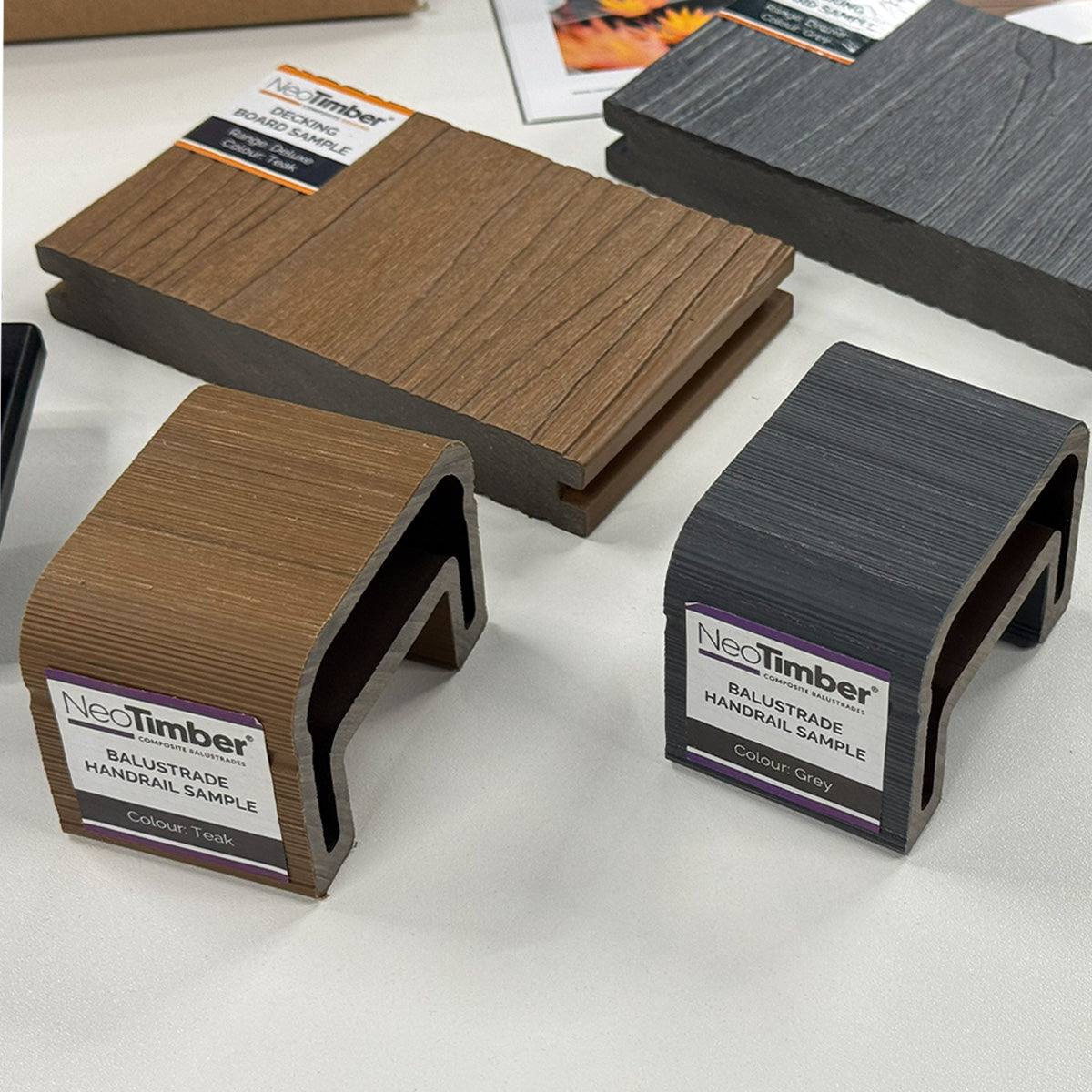
Current Deluxe and Slatted board listings offer Grey, Teak, Chocolate, Charcoal, Antique, Ash White, Oak and Silver Birch. Check availability for the individual boards and coordinating accessories you intend to buy.
For a WPC garden fence, colour works best when considered alongside the house, paving, decking and planting. A darker boundary can provide a strong backdrop to foliage, while lighter shades can create a softer contrast with pale paving or rendered walls. Timber-inspired tones may suit a garden with warm brickwork or natural-looking landscaping.
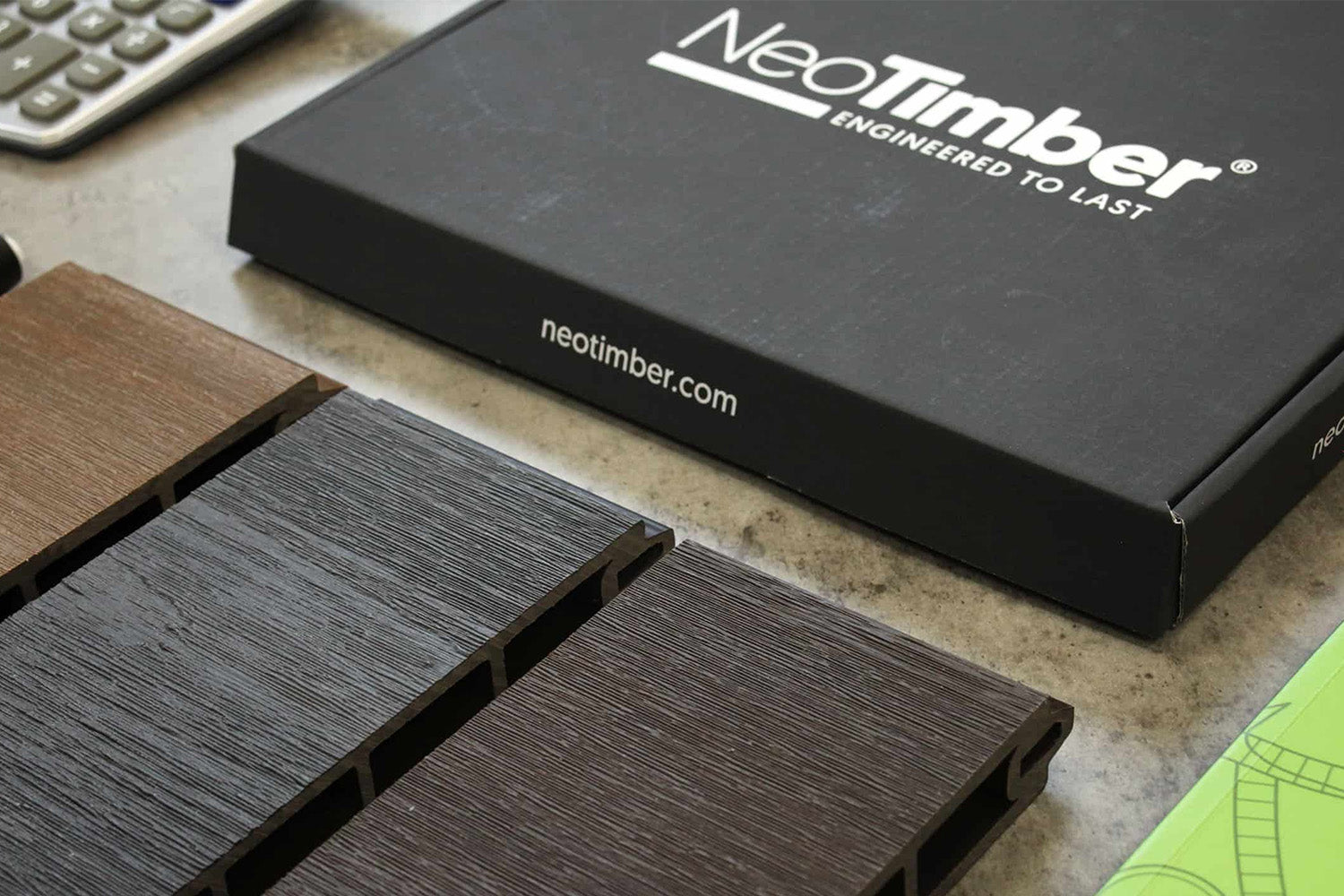
View samples in the actual setting, both in sunlight and shade. A colour on a screen can look different outdoors, and a small sample helps you assess texture as well as tone. You can request NeoTimber® fencing samples before deciding.

7. Planning Your Garden Boundary
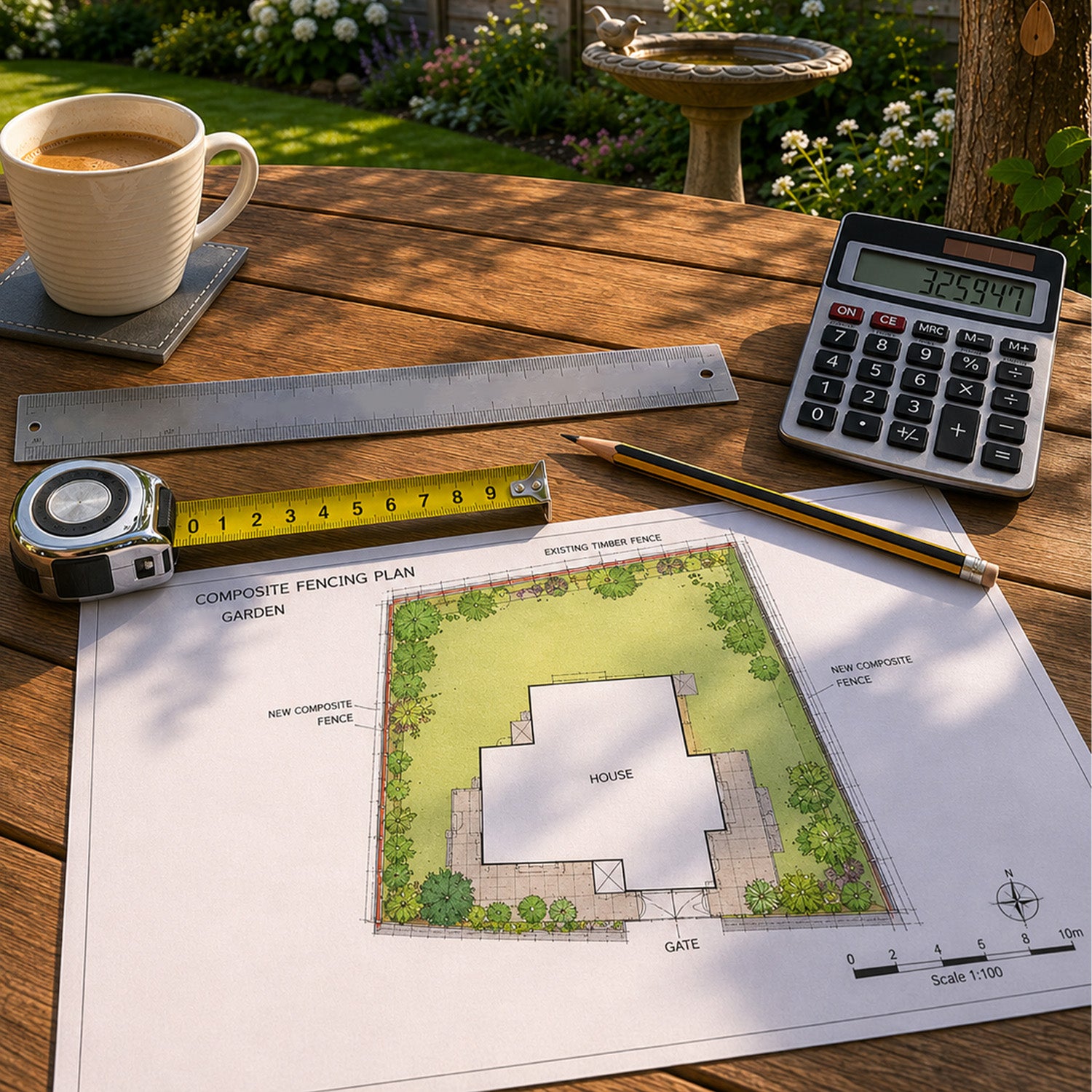
Start by deciding what you need the fence to do. Screening an overlooked seating area, replacing a deteriorating boundary and enclosing a shared outdoor space may each call for a different layout.
Balance Privacy and Openness
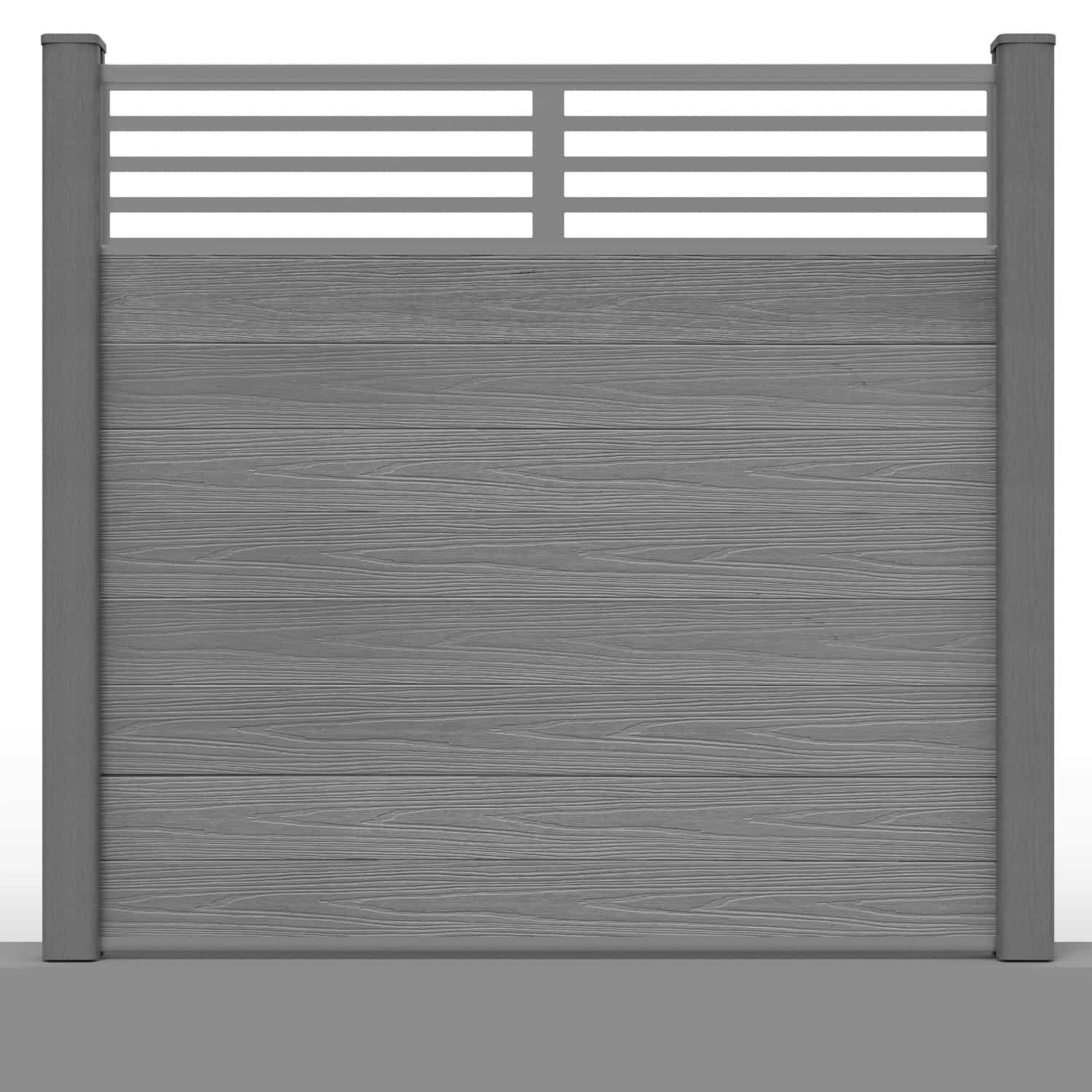
Consider sightlines from the places you actually use: a dining chair, the kitchen window or a garden path. A solid section can provide screening, while an open decorative element changes the view through the upper part of the fence. Check the proposed design from both sides where possible.
Map Changes in Level
Measure each run and note slopes, corners, gate openings and changes in ground level. A photograph can hide a significant fall across a garden. Discuss how the selected system will accommodate it rather than assuming every bay can use the same arrangement.
Account for Exposure and Access
An exposed site places different demands on a fence from a sheltered courtyard. Ask the supplier or installer to assess the proposed height, post arrangement and ground conditions together. Also check delivery access and where the boards and components can be stored before installation.
8. Posts, Rails and Supporting Components
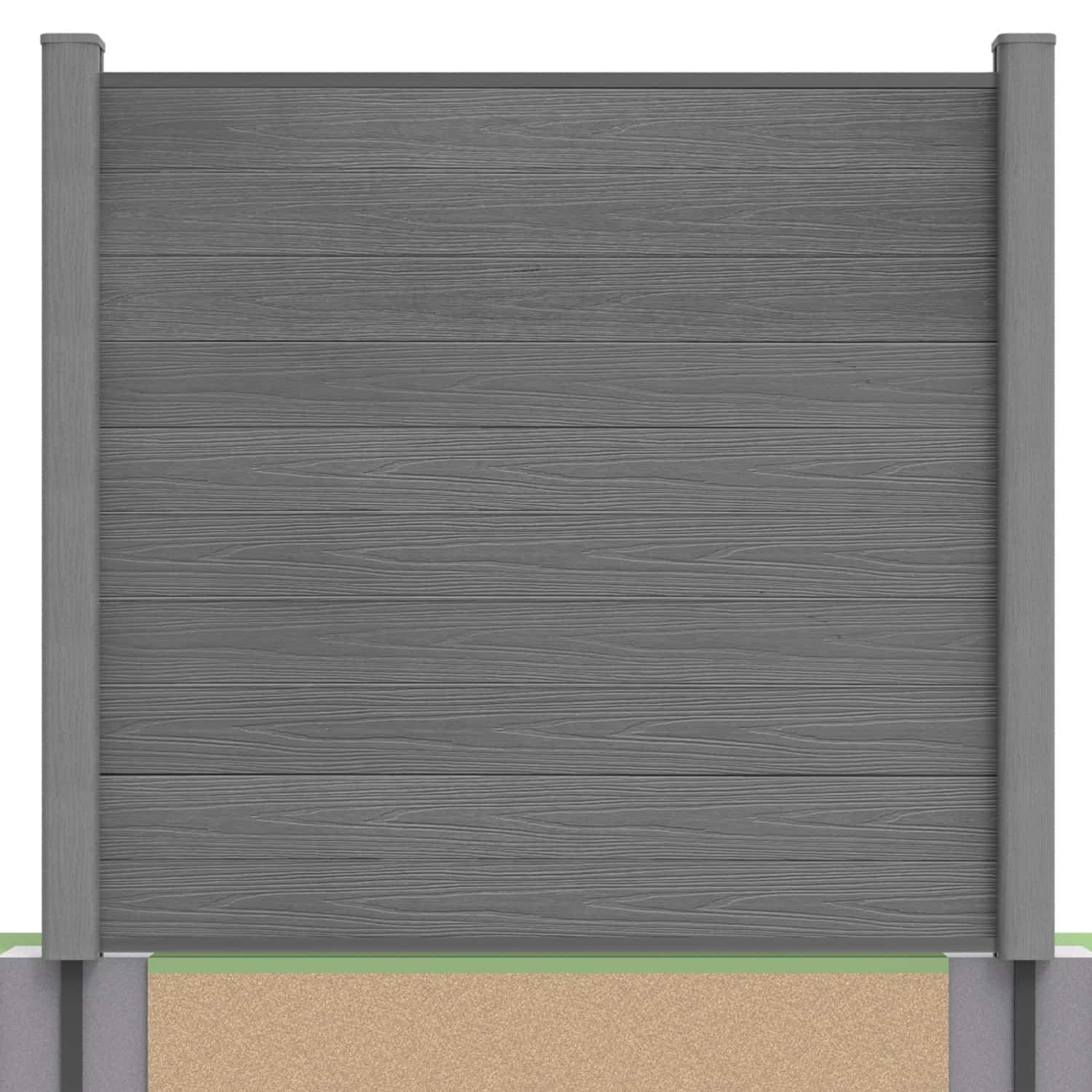
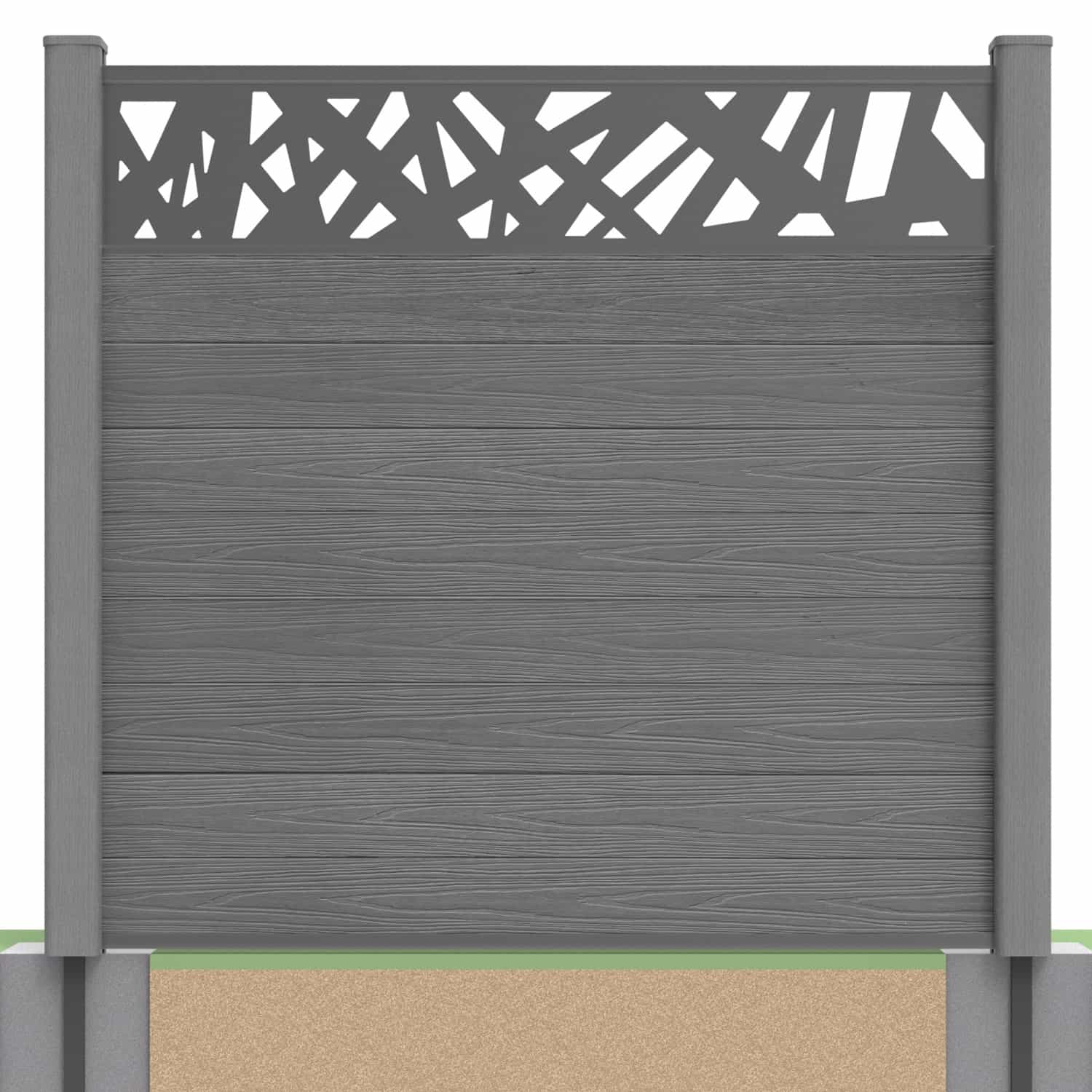
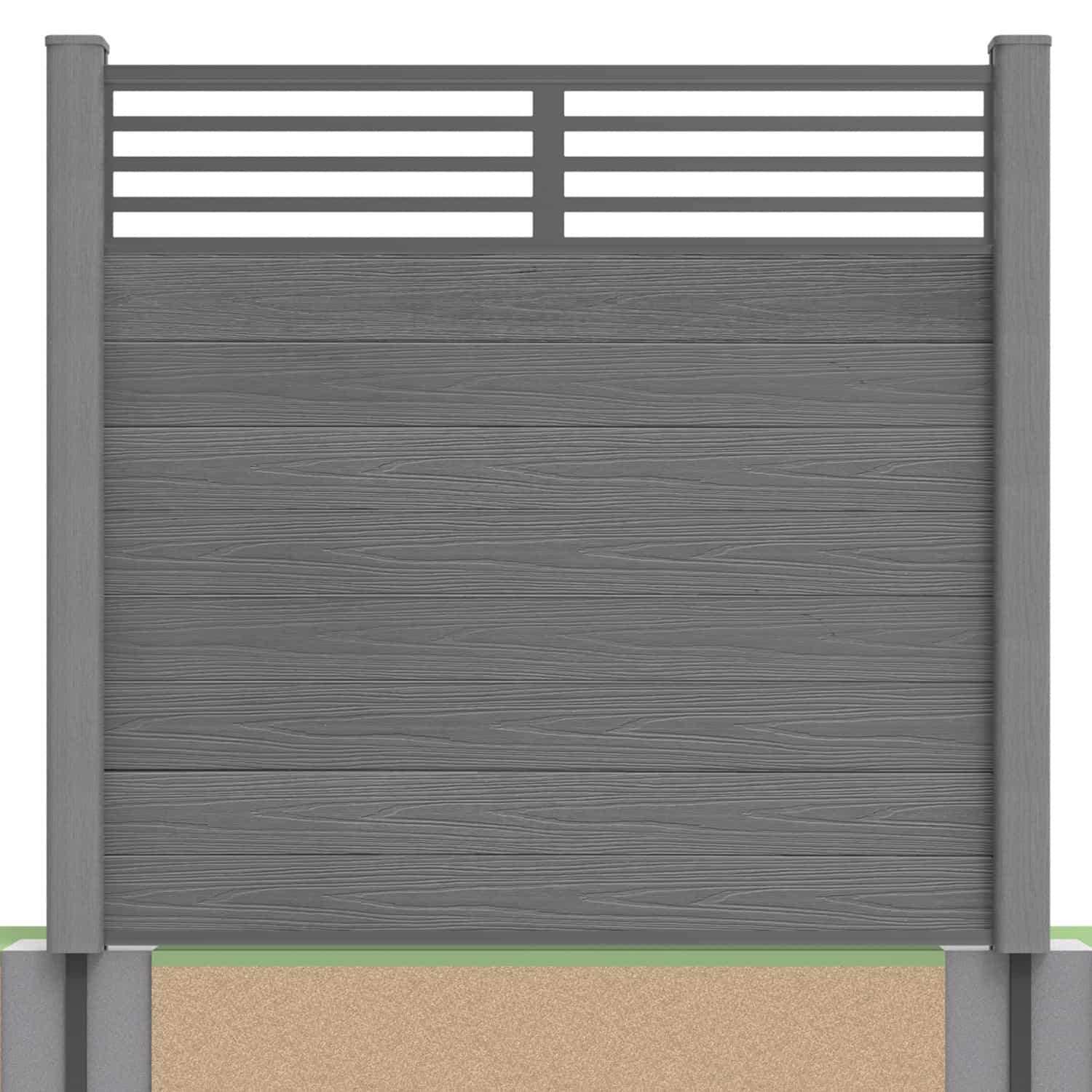
The visible boards form only part of a wood plastic composite fence. NeoTimber's system includes composite post components, metal supports, inserts and finishing rails, with different options for different installation conditions.
The appropriate post support depends on the site and the specified installation method. A product described for hard ground still needs a suitable structural base; a thin paving finish alone should not be assumed to provide the required fixing support. Likewise, soft-ground installation depends on the ground and foundation arrangement.
Use compatible components from the specified system and confirm how ends, corners and gates are handled. Mixing parts based only on their appearance can create problems with fit, support or movement. The correct framework should be settled before finalising board quantities.
9. Can WPC Fence Panels Fit Existing Posts?
Retrofitting can be an option where existing concrete or timber posts are structurally sound and compatible with the chosen system. NeoTimber® offers concrete fence post inserts and wooden fence post inserts for appropriate installations.
However, wood plastic composite fence panels will not automatically fit every existing opening. Check the distance between posts at more than one height, the condition of the posts and foundations, and the available channel or fixing arrangement. Leaning, cracked or deteriorating posts need assessment before they are reused.
The boards can be cut for suitable shorter spans, following the installation instructions. A shorter opening does not remove the need for correct end clearances and support. Do not assume a board can span a wider opening simply because its nominal length looks close to the measurement.
10. Decorative Screens and Matching Gates
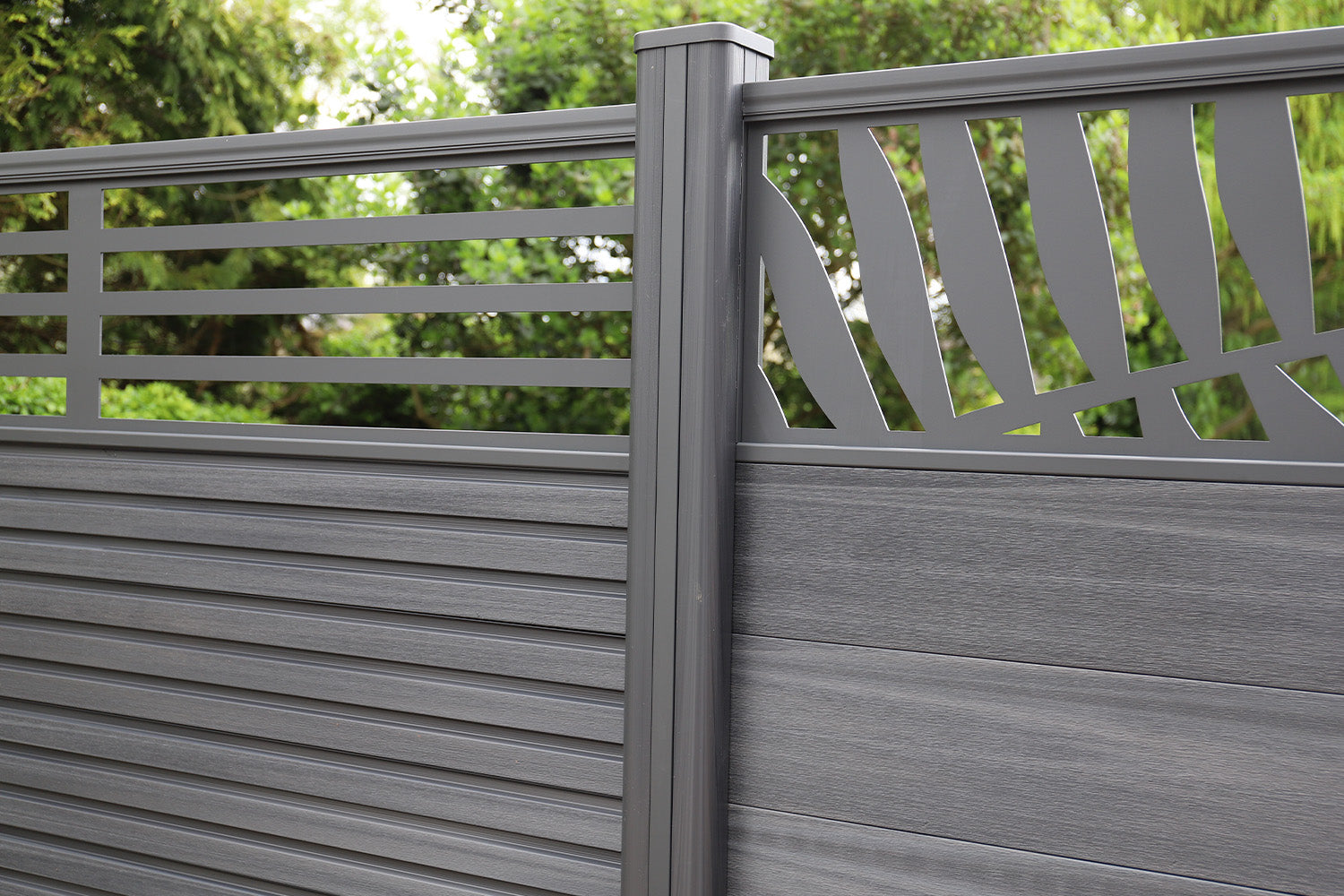
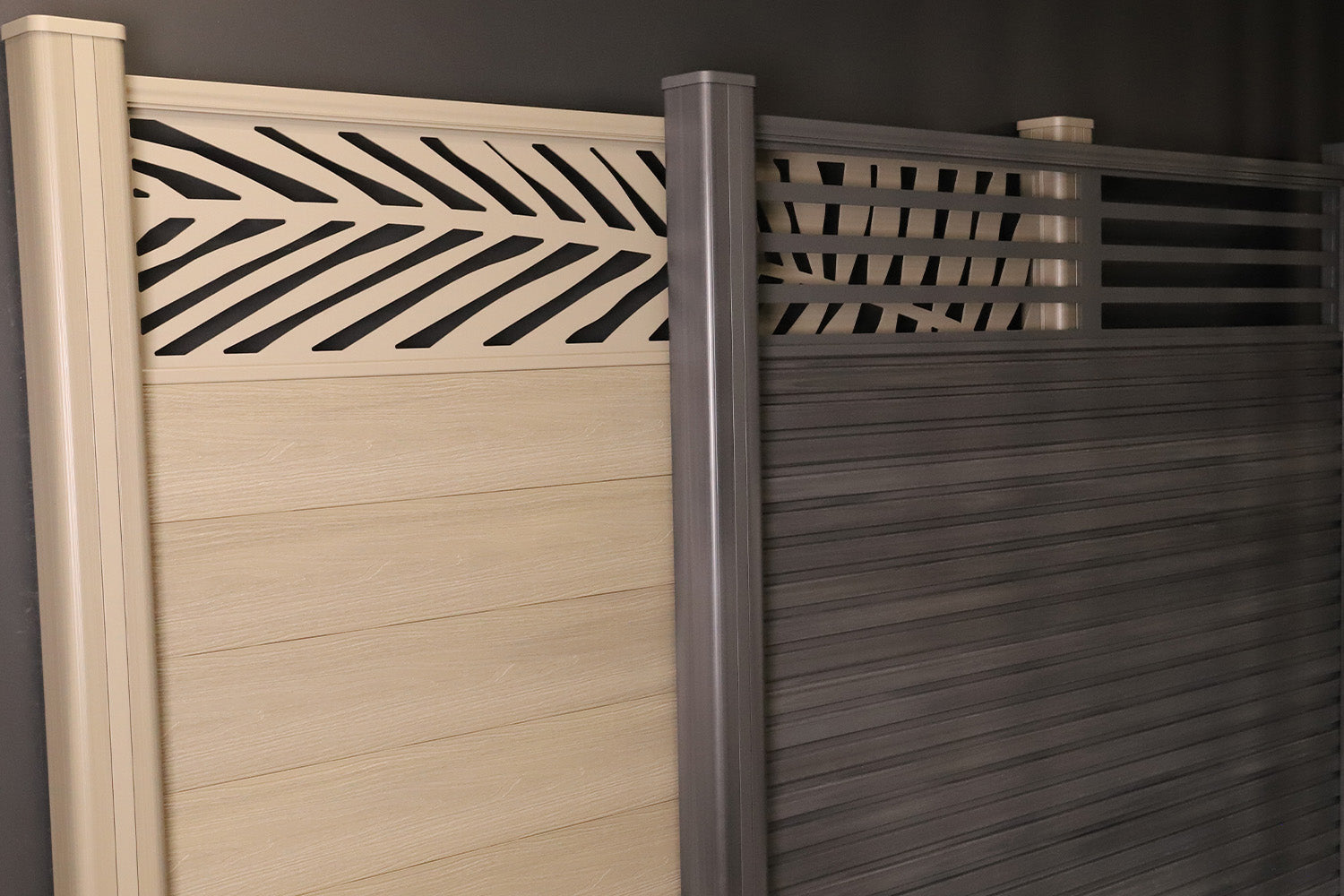
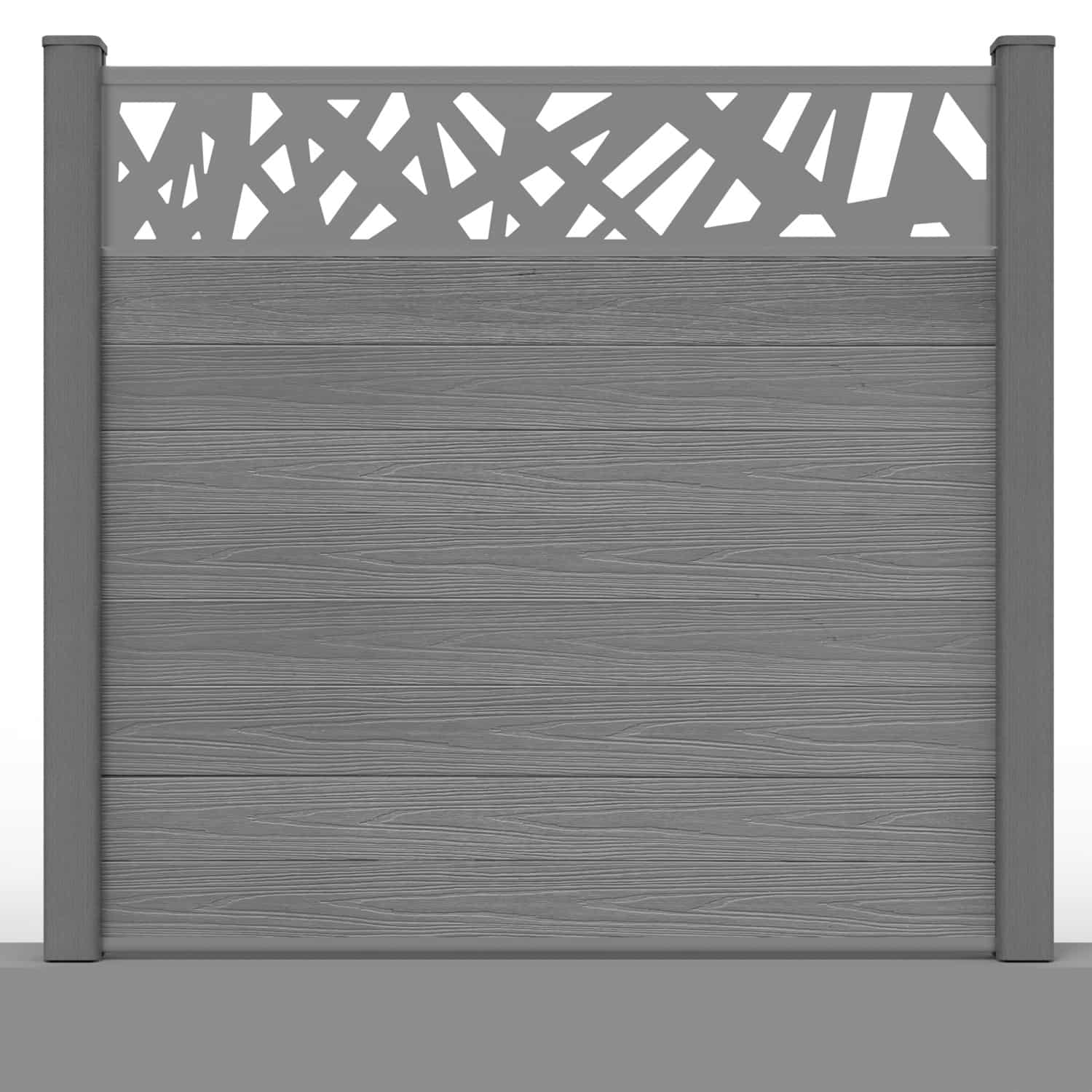
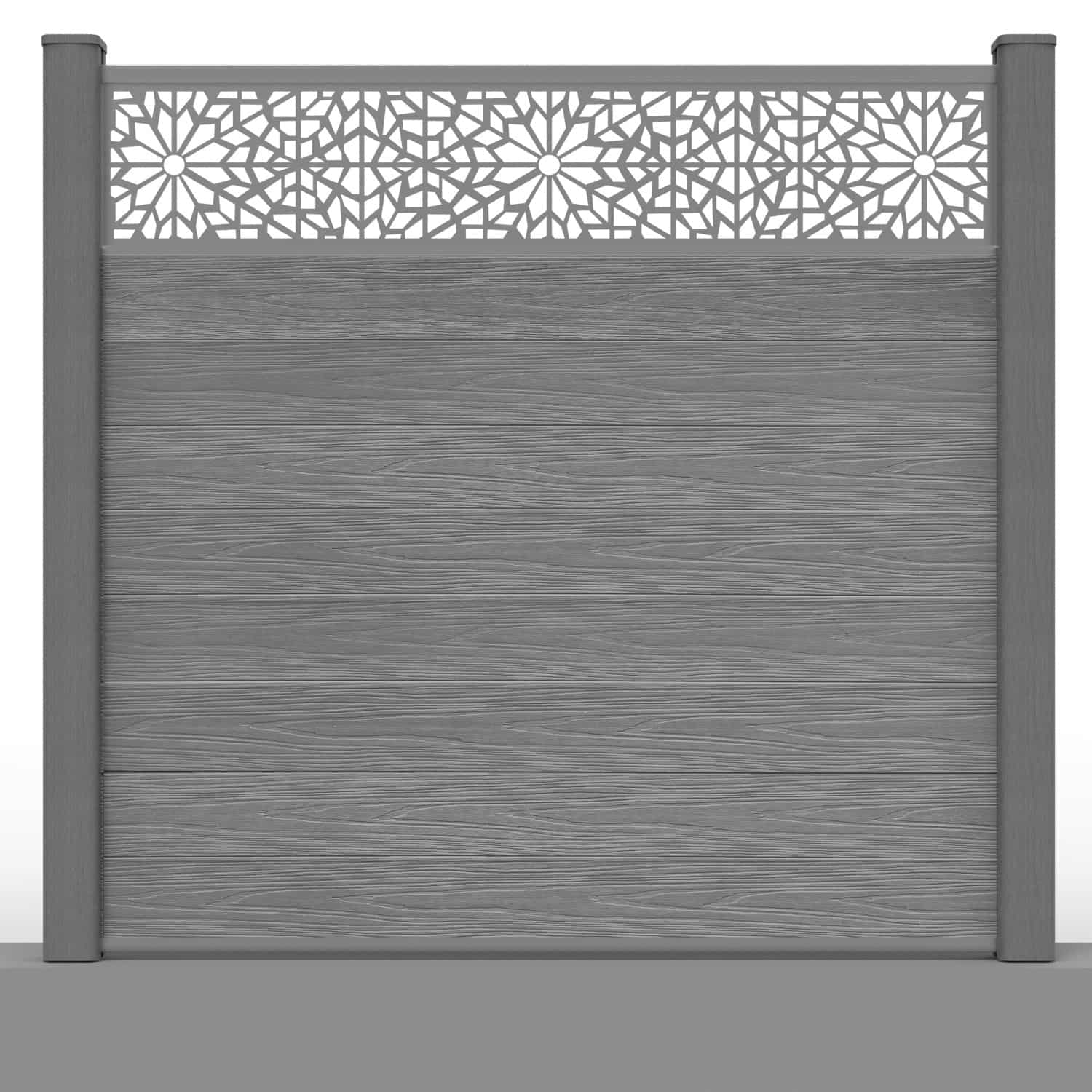
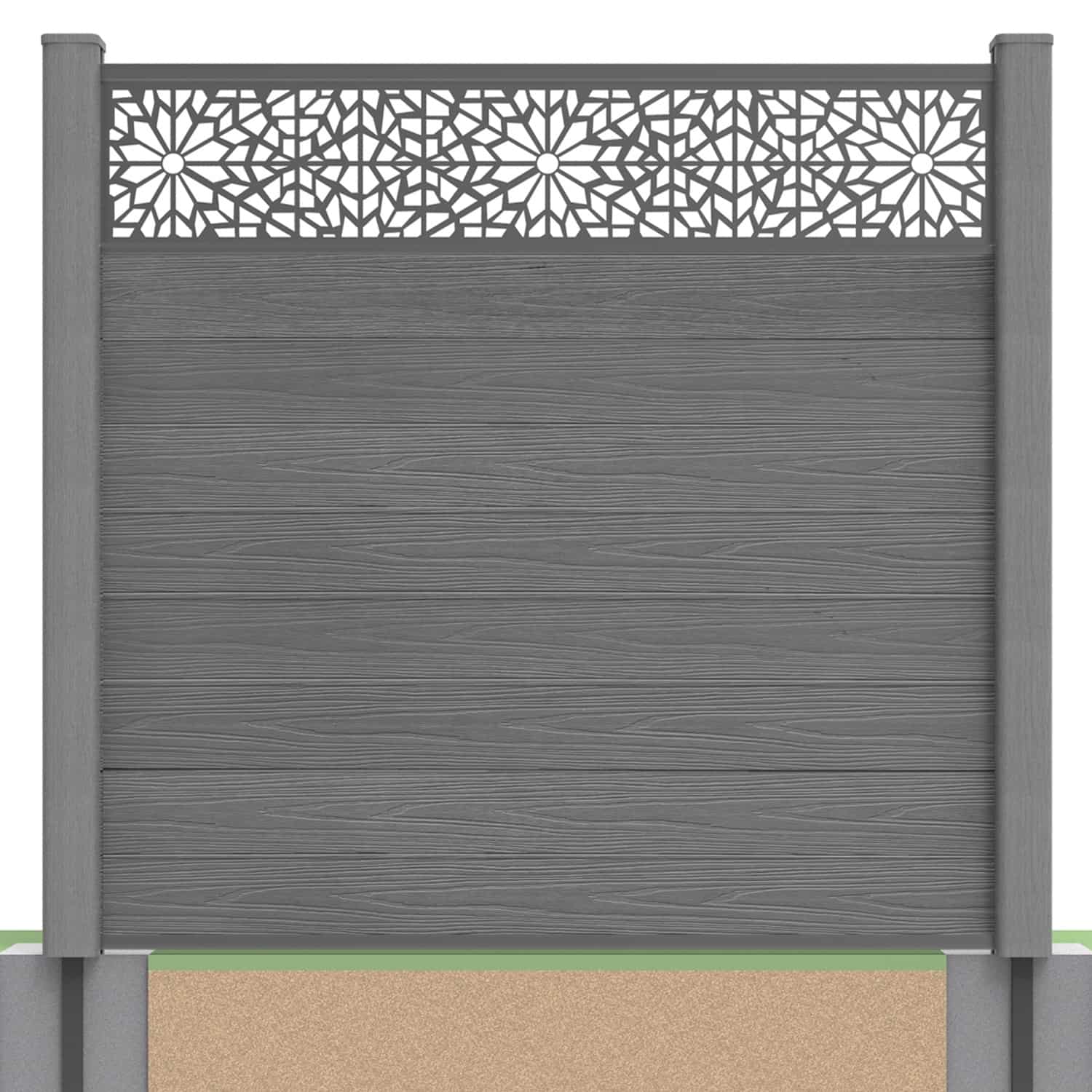
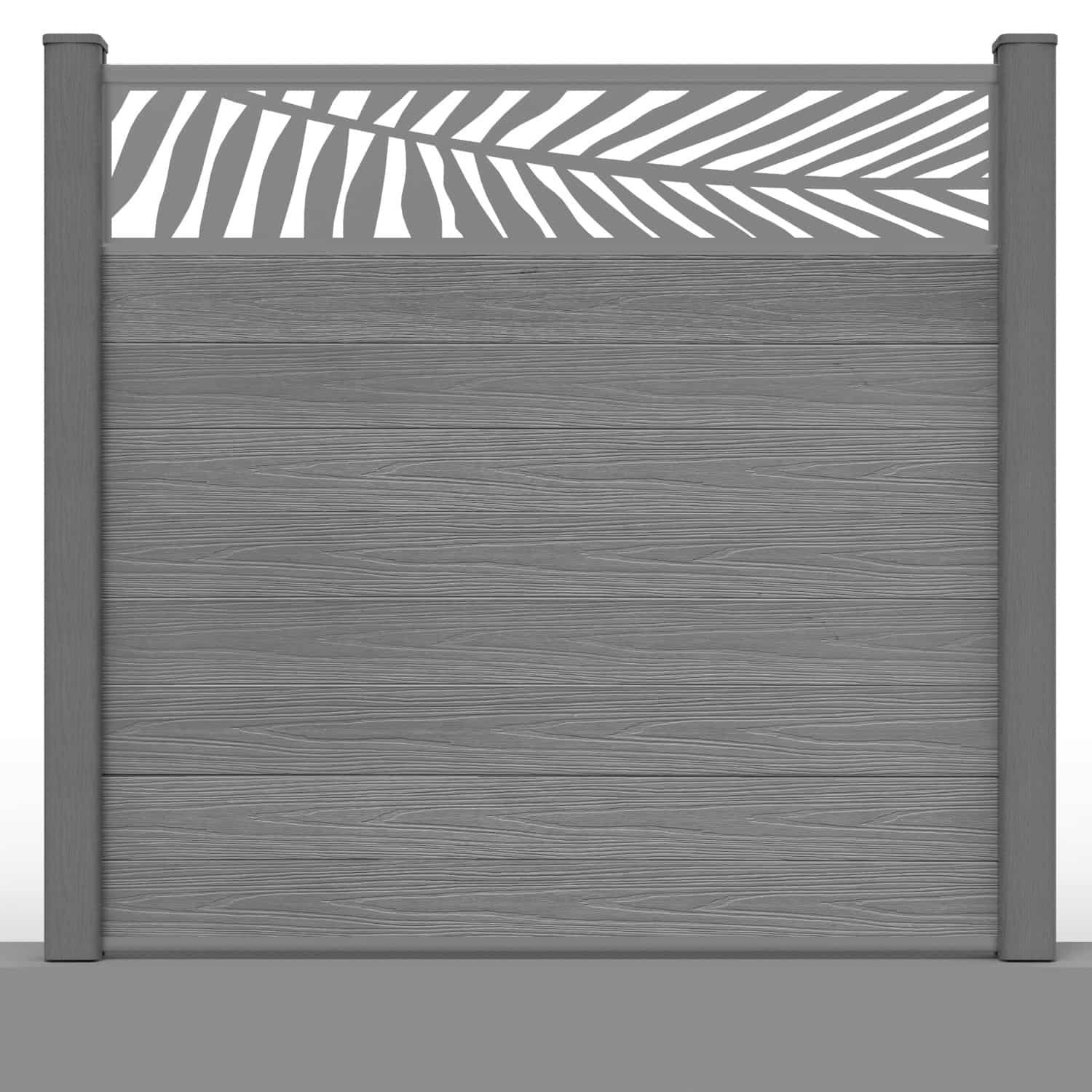
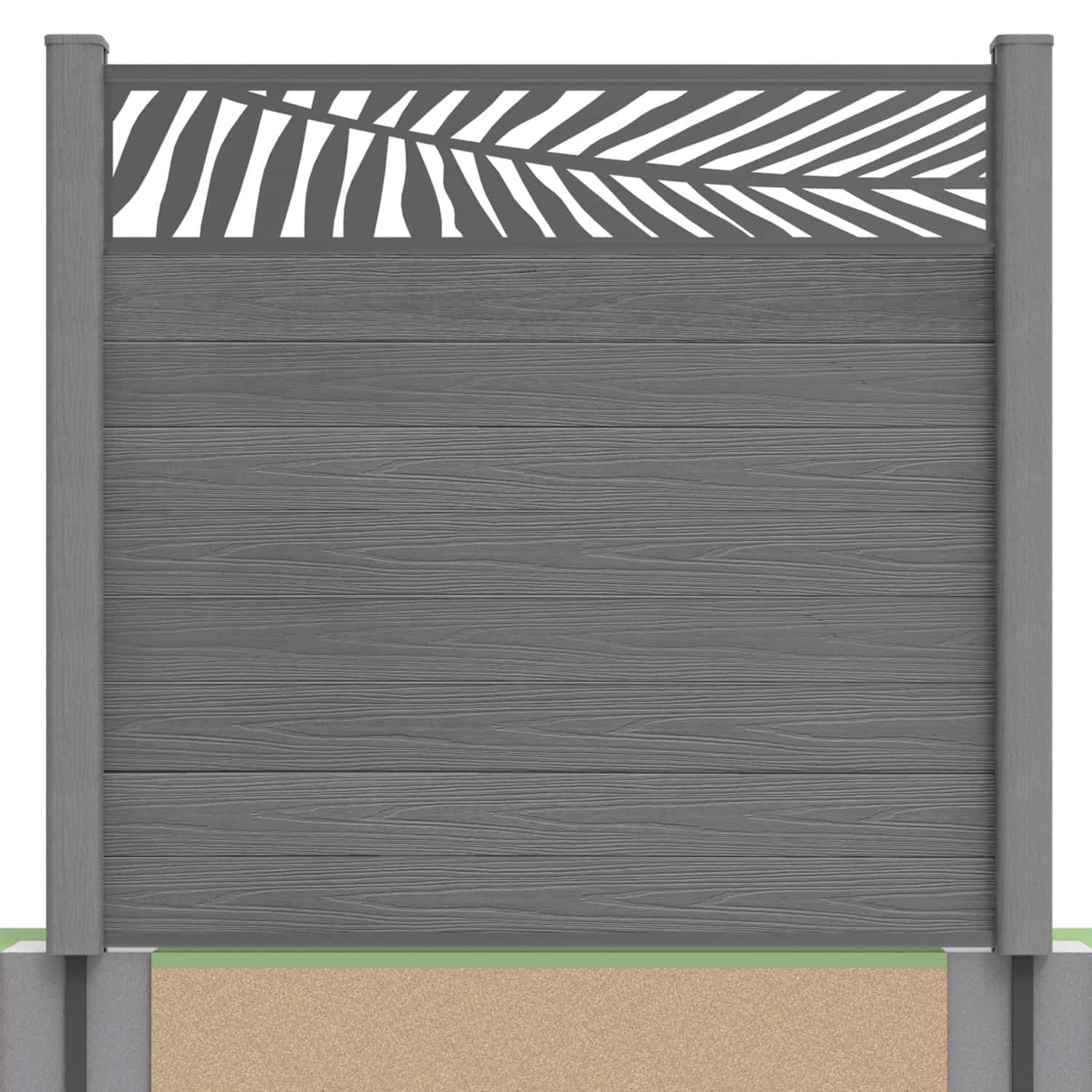
Decorative metal screens can add an open pattern to part of a fence and change the balance between privacy, light and views. NeoTimber's screen designs include Leaf, Linear, Contemporary and Geometric. Choose the pattern and finish as part of the complete panel specification.
A Linear Fence Screen creates a different effect from a Geometric Fence Screen, so consider how the pattern will repeat along the boundary. You may prefer a feature section beside a seating area rather than the same detail in every bay.
Confirm the board count, rails and fittings for a screen configuration instead of assuming a universal number of boards should be removed. Plan gates at the same time: opening width, swing direction, post support and hardware affect both the appearance and everyday use of the entrance.

11. Installation and Cutting Considerations
NeoTimber's boards use an interlocking, stack-and-build approach, but the full installation is more than sliding boards into place. Accurate post positioning and a suitable supporting structure are essential to a straight, secure finish.
Use the current fencing installation resources for the selected post and panel arrangement. The following sequence is a planning overview, not a substitute for the product instructions:
- Survey the run: record openings, levels, corners and the intended finished layout.
- Specify supports: confirm the posts, foundations or fixing bases needed for the site.
- Set out the bays: use the required post spacing and check alignment before building the infill.
- Prepare boards: measure any required cuts and follow the recommended tools and cutting method.
- Build the panel: fit the specified rails, boards and accessories in the correct order.
- Check the completed fence: verify clearances, fixings and finishing details against the guide.
Composite materials can expand and contract with temperature changes. Preserve the manufacturer's specified clearances and do not force a WPC fence board tightly into a space that requires movement allowance. Avoid substituting generic gap measurements taken from a different product.
For an uneven site, uncertain foundations or a complex gate arrangement, discuss the project with an experienced installer before purchasing. Resolving those details early is easier than adapting a partially built fence.
12. Comparing Costs and Quotations
The cost of WPC fencing depends on the total length, finished height, board profile, posts, decorative details and installation conditions. A price per board alone does not represent the cost of a finished boundary.
Ask for an itemised quotation that covers boards or panel sets, posts and supports, rails, inserts, caps, fixings and any gates or screens. Check whether delivery, groundwork, removal of the old fence, disposal, labour and VAT are included.
For example, a straightforward run on suitable ground is a different project from a boundary with several corners, a gate and changes in level. Comparing those quotations only by their length would hide important differences in the work required.
Use NeoTimber's project calculators as a starting point, then confirm the specification and installation costs. When comparing with timber, consider the initial price alongside likely care tasks, repair arrangements and warranty terms. Lower maintenance does not mean every project will produce the same saving.
13. Cleaning and Maintenance
Low-maintenance WPC fencing still benefits from occasional cleaning. Remove loose debris, wash with warm soapy water and a soft sponge or cloth, then rinse. Pay attention to areas where planting or fallen leaves allow dirt to collect.
For persistent marks, follow the composite fencing maintenance guide before using a specialist cleaner. Avoid abrasive tools, unapproved solvents or surface treatments that could damage the cap. Check product guidance before pressure washing rather than assuming all settings are suitable.
Inspect the fence periodically for loose fittings or changes in the surrounding ground, particularly after severe weather. Keep the care instructions and purchase information somewhere accessible so future maintenance is based on the correct product guidance.
14. Materials, Longevity and Warranty
When assessing environmental claims, look for specific information about material content and sourcing. NeoTimber's composite fencing uses recycled plastic and certified wood content. That gives you more useful information than a broad description such as “eco-friendly”, but it does not make every composite fence environmentally equivalent.
Good planning also matters: calculate quantities carefully, avoid unnecessary offcuts and choose a design you expect to keep. If disposal or recycling is a priority, ask about appropriate routes for the composite boards and metal components rather than assuming they can enter a household recycling collection.
NeoTimber's composite fencing has a 25-year residential and 10-year commercial limited warranty, subject to the relevant conditions. Correct installation, use and maintenance are important, and the warranty includes exclusions for matters such as natural weathering and general wear. Read the current terms for your application before ordering.
A warranty period is not a guarantee that the fence will look unchanged throughout that time. Consider the quality of the complete installation, ongoing care and the practical availability of replacement components as well as the headline length of cover.
15. WPC Fencing FAQs
Is WPC the Same as Composite Fencing?
WPC describes wood plastic composite, a material used for composite fencing. The wider term “composite” does not specify the exact ingredients or construction, so check whether the chosen board is capped and review its technical information.
Are WPC Fence Panels Waterproof?
NeoTimber's capped boards are designed to resist moisture and outdoor weather exposure. A fence is not a waterproof barrier, however, and joints, cut ends and supporting components still need to be installed as specified. Do not use it as a substitute for a designed drainage or retaining system.
Does WPC Garden Fencing Fade?
The capped surface is designed to resist fading, but that should not be read as a promise of no colour change. Compare samples, follow the care guidance and review the warranty's treatment of weathering and colour variation.
Can I Cut a Wood Plastic Composite Fence Board?
NeoTimber's Deluxe and Slatted boards can be cut to suit appropriate layouts. Follow the specified tools, support and clearance requirements, and confirm the final measurement before cutting. Altering the length does not make the board compatible with every post system.
Does Slatted Composite Fencing Have Open Gaps?
The Slatted board creates a batten-style effect within its profile. Do not confuse that appearance with a separate open decorative screen. Check the assembled panel specification if airflow or a view through the fence is important to your design.
Can I Install WPC Fencing Myself?
That depends on your experience and the site. Review the full instructions, tools and groundwork before deciding. Existing-post conversions, changes in level and uncertain fixing bases may benefit from an experienced installer.
Can WPC Fence Panels Be Used on Sloping Ground?
A sloping boundary needs a layout suited to the system and the change in level. Record the slope and ask for installation guidance before choosing bay heights or cutting boards. Do not assume the panels can simply be tilted to follow the ground.
16. Your Pre-Order Checklist
Before buying WPC fence panels, bring the design and installation decisions together:
- Measure each run, gate opening and change in level.
- Choose Deluxe or Slatted boards and view colour samples outdoors.
- Confirm panel contents, assembled dimensions and board quantities.
- Check whether existing posts are suitable or new supports are required.
- Specify corners, screens, gates and finishing components.
- Agree the installation approach, clearances and fixing requirements.
- Compare complete quotations and read the care and warranty information.
A well-planned wood plastic composite fence can provide privacy, a coordinated finish and manageable upkeep. Start with the needs of your garden, then select the boards and supporting system that meet them.
Explore NeoTimber's WPC fencing range or contact NeoTimber® to discuss your layout and component requirements.