


Find the Right Plastic Garden Bench for Your Outdoor Space
A plastic garden bench can turn an unused corner into somewhere to read, provide a resting point beside a footpath or give a school courtyard a place for conversation. The best choice depends on more than appearance: comfort, access, installation and ongoing care all affect how useful the seating will be.
Recycled plastic benches offer a practical alternative to timber where regular painting and protective treatments would be difficult to manage. NeoTimber® has seating for different settings, from simple backless benches to models with backrests and arms, alongside picnic tables for outdoor dining. This guide explains the options and helps you build a shortlist for your project.
Start here: choose a standalone bench for resting, a backrest or armrest design for supported seating, and a picnic table when eating or group activities are the priority. Then check the dimensions, access around the furniture and installation requirements.

What Are Recycled Plastic Benches?
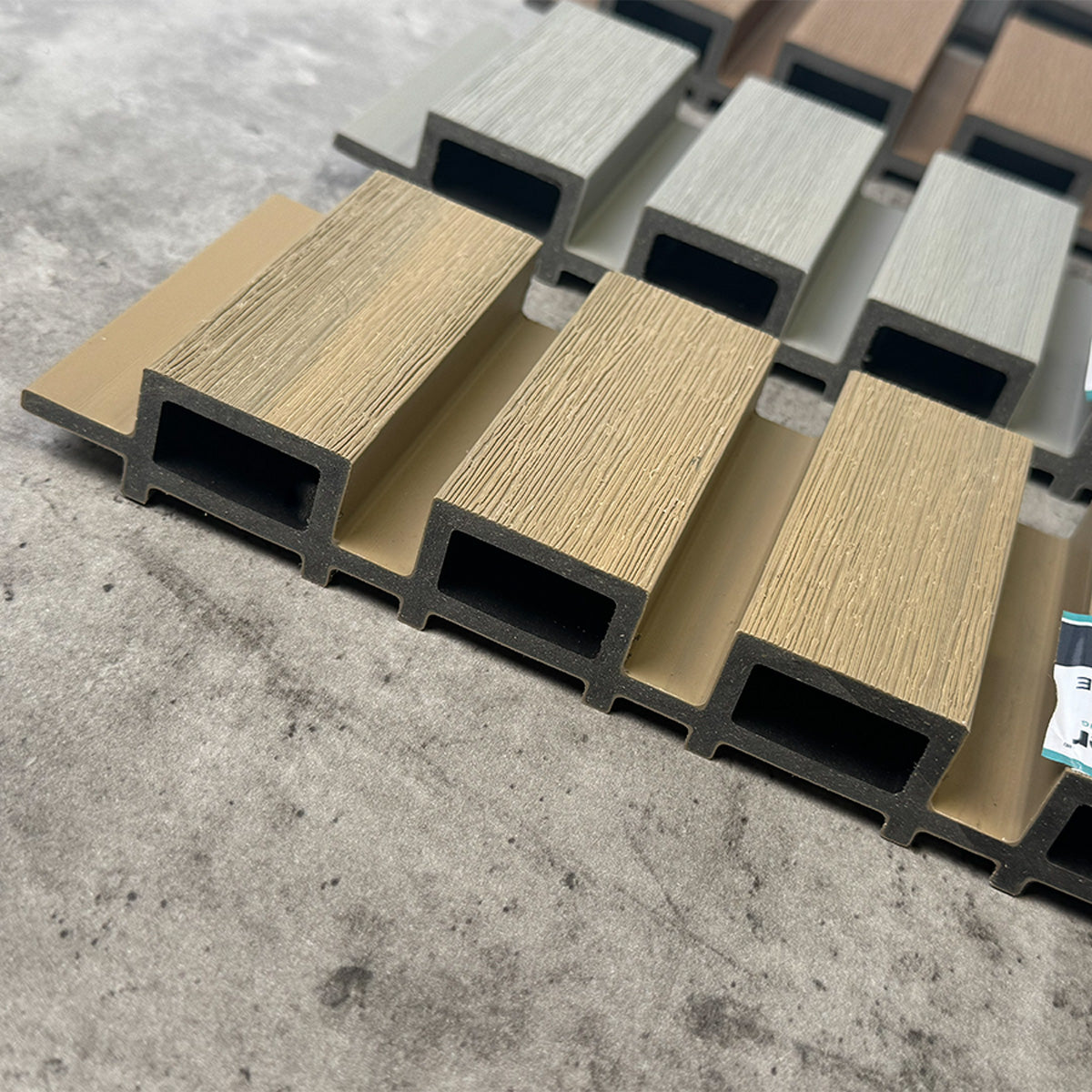
Benches made from recycled plastic use recovered plastic material to form seating components such as slats and supports. NeoTimber® describes its recycled plastic furniture range as made in Britain from recycled plastic. The product specification explains the construction of each model, including its fixings and assembly requirements.
The term “plastic benches” covers many different products. A substantial bench built from solid profiles is a different proposition from lightweight moulded seating, so compare the actual design, dimensions and intended application. Material names alone do not tell you how many people a bench accommodates or where it should be installed.
Are Plastic Wood Benches the Same as Recycled Plastic?
People sometimes use “plastic wood benches” to describe seating that replaces timber with plastic profiles. The phrase does not establish what the product contains. Some outdoor furniture uses wood-plastic composite, which combines plastic and wood fibres; other furniture uses recycled plastic without that timber-fibre blend.
NeoTimber® has separate composite and recycled plastic furniture collections. Check the relevant product details when comparing them, especially if your project specifies a particular material. For more background on profiles and their uses, read our plastic lumber furniture guide.
Why Choose a Recycled Plastic Garden Bench?
Resistance to Rot and Splintering
A recycled plastic garden bench is useful where seating remains outdoors through changing seasons. The plastic resists moisture and will not rot or splinter under normal use. These qualities reduce the need for timber-style protective treatments and make the material worth considering for exposed gardens and shared spaces.
Weather resistance does not remove the need for good installation. Supports, fixings, loading and the condition of the surrounding surface still matter. Choose a product intended for the setting and follow the manufacturer's guidance throughout its use.
Less Routine Surface Treatment
Recycled plastic seating does not need routine painting, staining or sealing. That can be useful for households with limited gardening time and organisations responsible for several seating areas. Cleaning is generally straightforward, with warm soapy water and a soft cloth or brush suitable for routine dirt.
“Low maintenance” is the useful description. A bench still needs cleaning, checks for damage and attention to fixings. The time saved depends on the location, frequency of use and the furniture it replaces, so assess those factors before estimating savings.
A Practical Use for Recovered Material
Choosing recycled benches gives recovered plastic another useful role. A considered purchase combines material reuse with a design that remains useful: the right seating height, sufficient capacity and a position people can reach easily all help.
For organisations, request supporting material information where it forms part of procurement requirements. Also ask about end-of-life arrangements. NeoTimber® has described a take-back scheme for eligible products; confirm current terms and logistics with the team before including a return route in your plans.
Understand Weight and Material Movement
A recycled plastic outdoor bench can be substantial. That may suit a permanent layout, but makes it important to plan delivery and handling. Do not assume that furniture described as plastic is light enough for one person to move, or that its weight removes any need for anchoring.
Plastic also has natural material behaviour, including expansion, contraction and flexing. Use the specified assembly method and supports rather than adapting the bench by eye. Its care and warranty information should explain the distinction between normal behaviour and a potential defect.
Which Plastic Seating Bench Fits Your Project?
A plastic seating bench should match the activity as well as the available footprint. Someone stopping briefly on a walk may need a different format from a visitor spending an hour in a garden. Use this comparison to narrow the options, then check the full specifications.
| Format | Useful for | What to check |
|---|---|---|
| Backless bench | Brief stops, flexible approach and simple layouts | Seat height, depth and clear approach space |
| Bench with backrest | Reading, waiting and longer periods of sitting | Backrest angle, seat dimensions and user comfort |
| Bench with arms | Defined seating with arm support | Armrest position and room for transfer or assistance |
| Curved bench | Shaped seating areas and group arrangements | Actual footprint and gaps between units |
| Planter bench | Combining seating and planting | Space for plants, maintenance and the complete unit |
| Picnic bench or table | Meals and shared activities | Table access, seating capacity and surrounding routes |
Backless and Moulded Benches
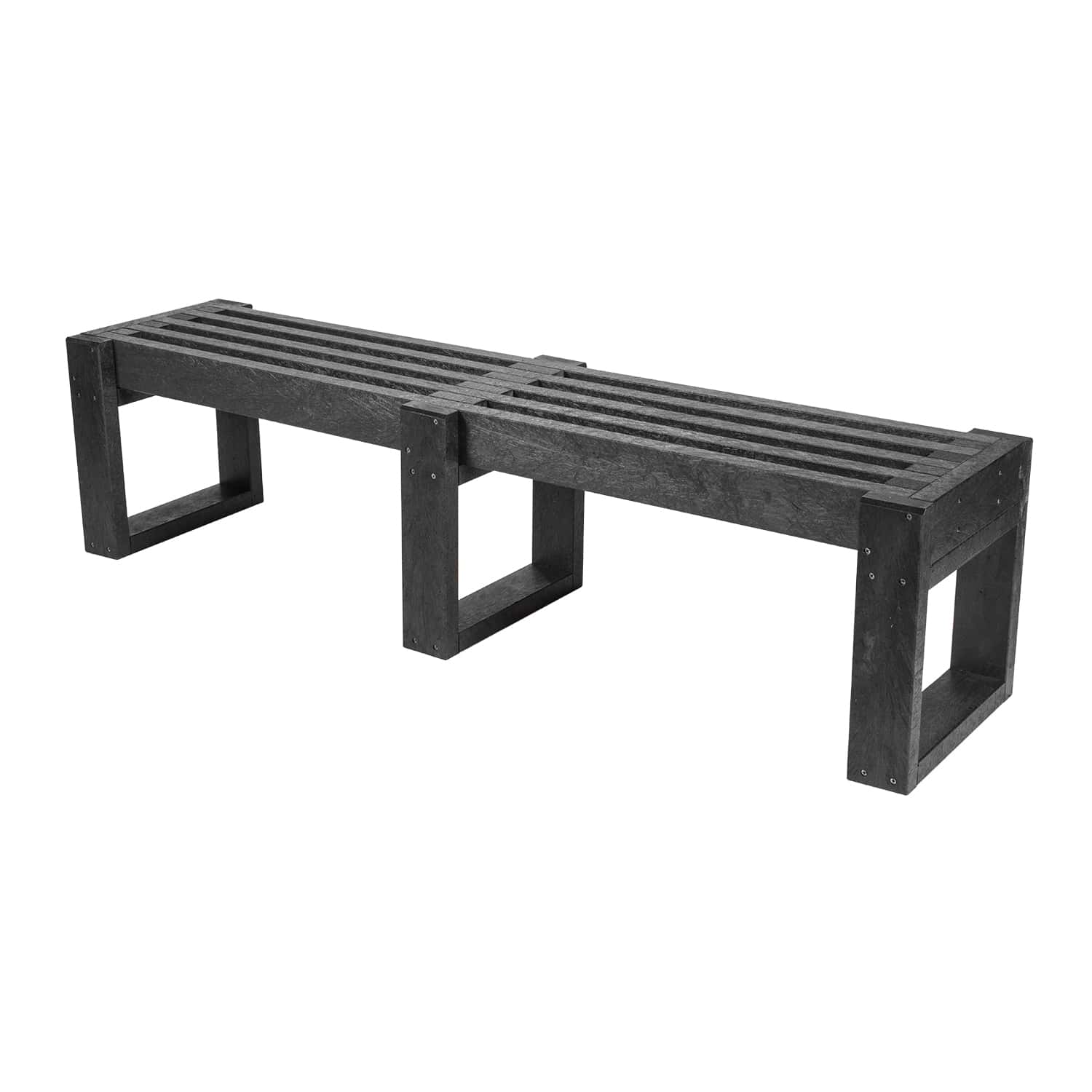
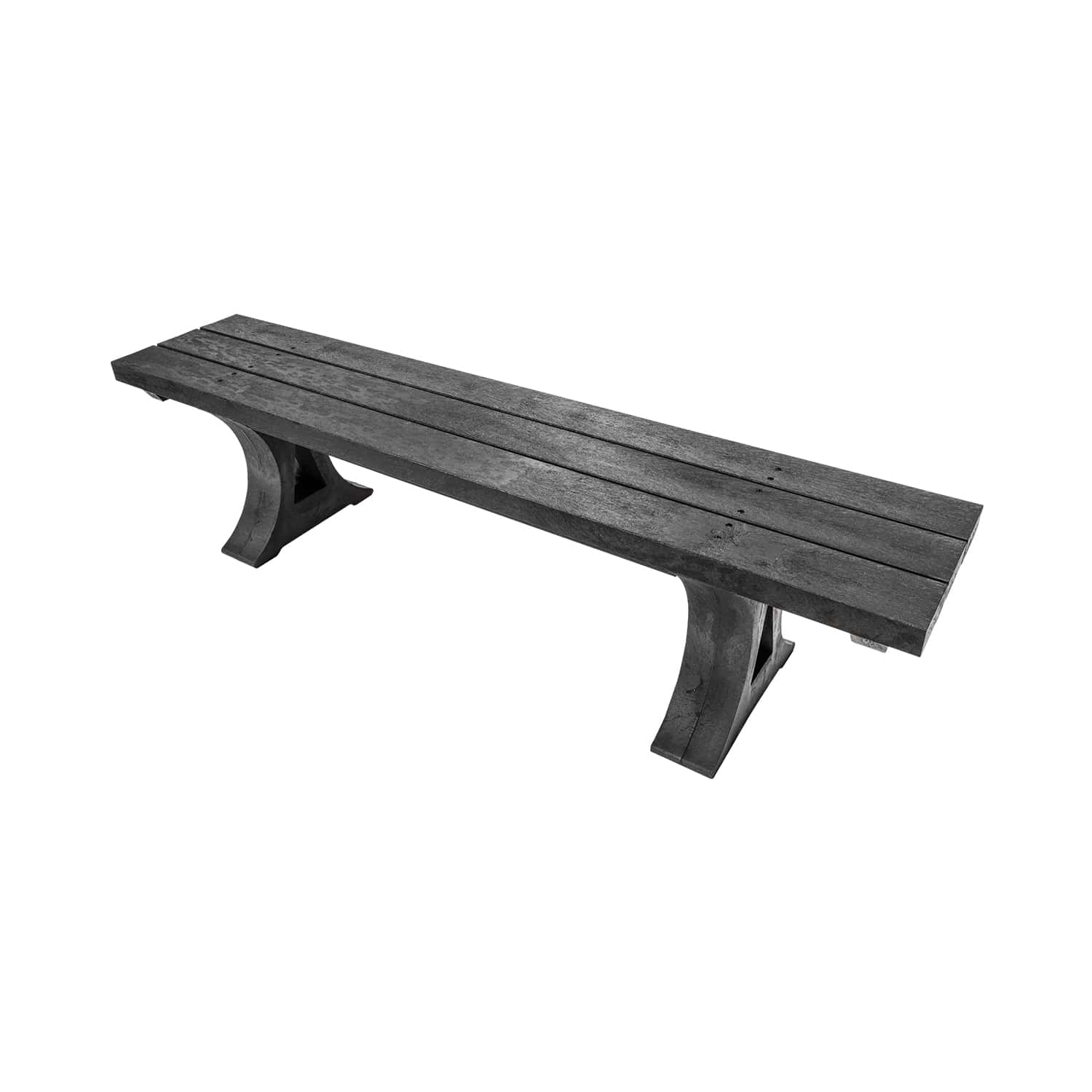
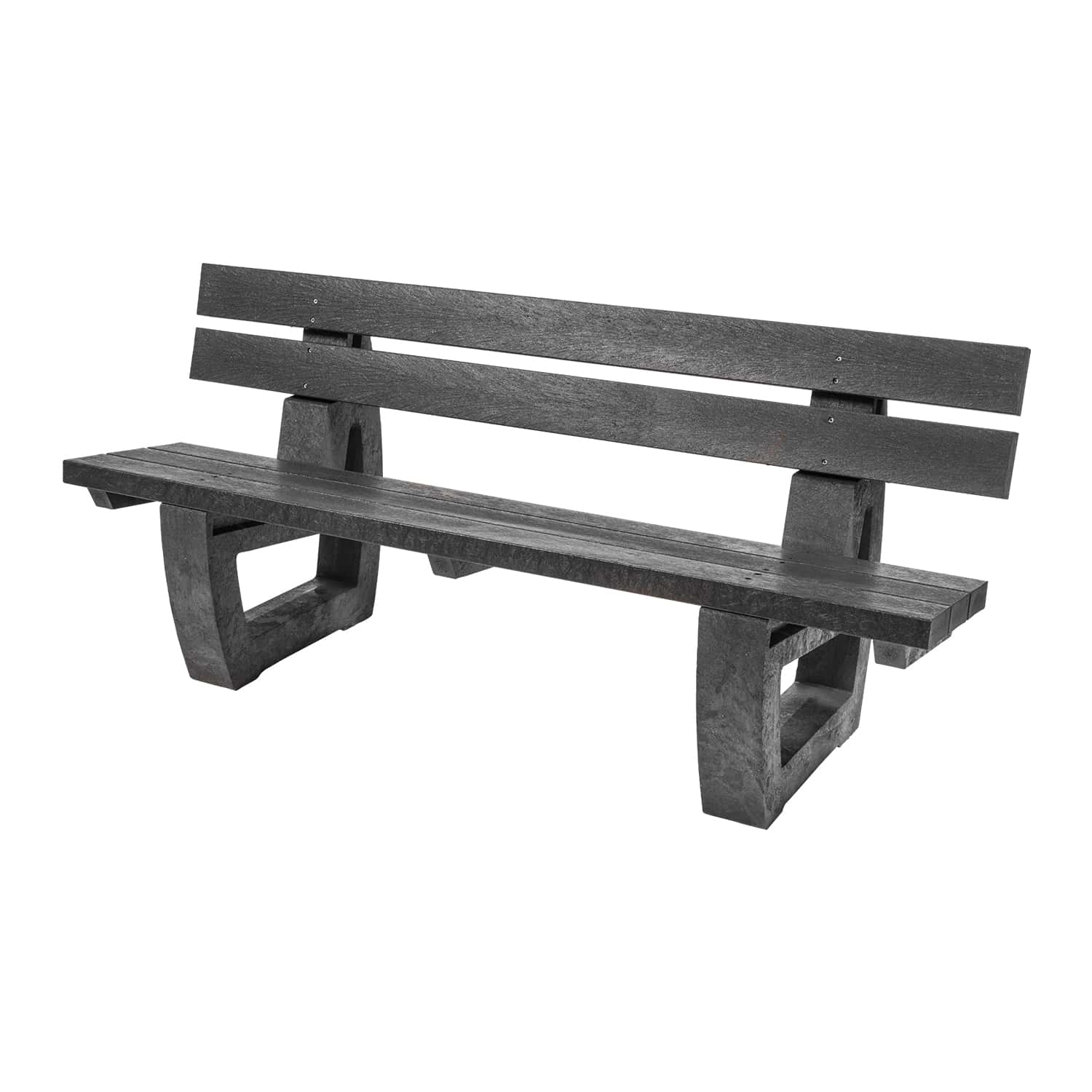
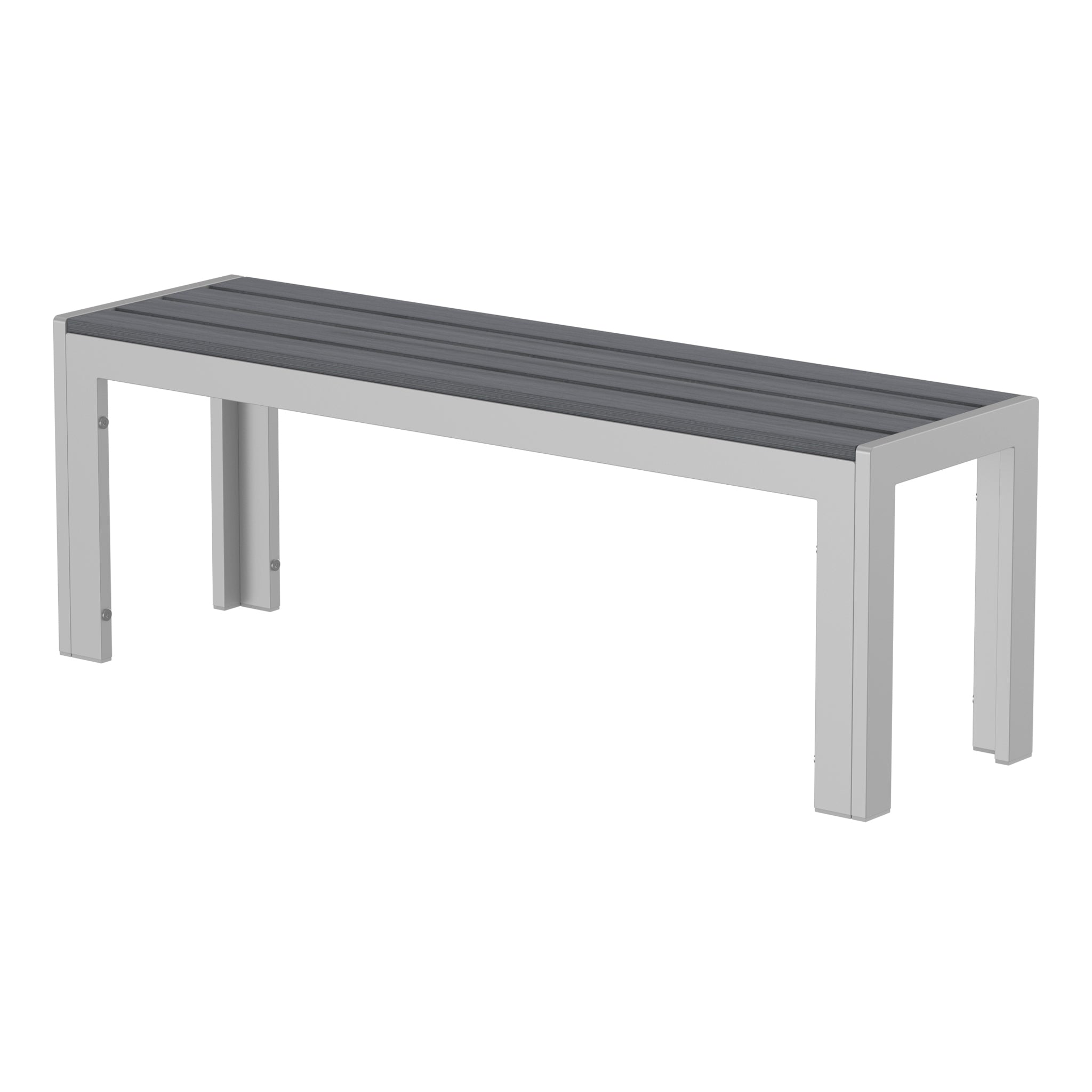
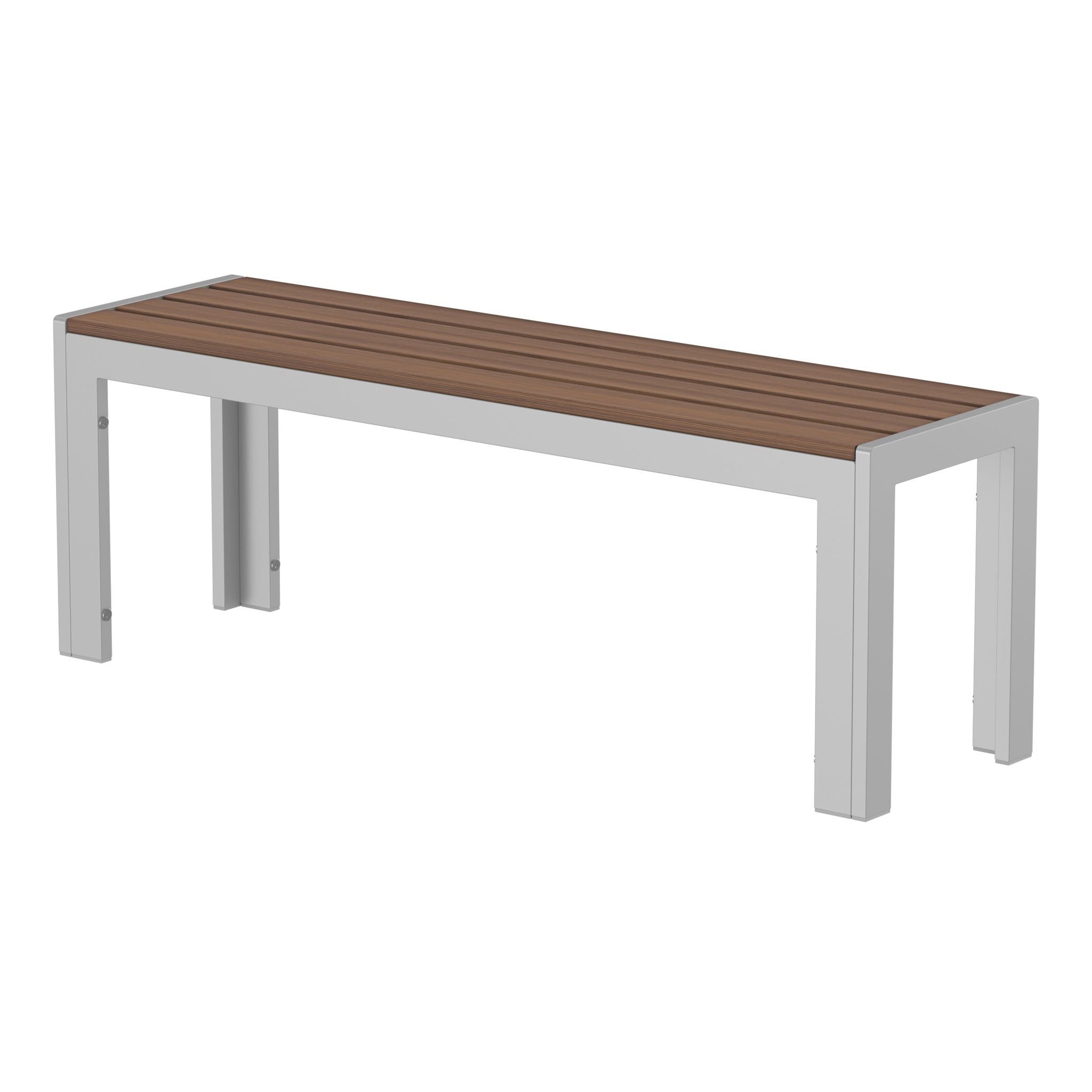
The Straight-Edge Bench offers a simple seating form. The Moulded Bench is available in backless and backrest configurations, allowing you to compare two seating arrangements within one product range.
A backless design can keep a small space visually open and allow approach from different directions. It may be less suitable where users want to lean back for longer periods. Think about the expected use rather than assuming the simplest shape suits everyone.
A Recycled Plastic Bench with Arms
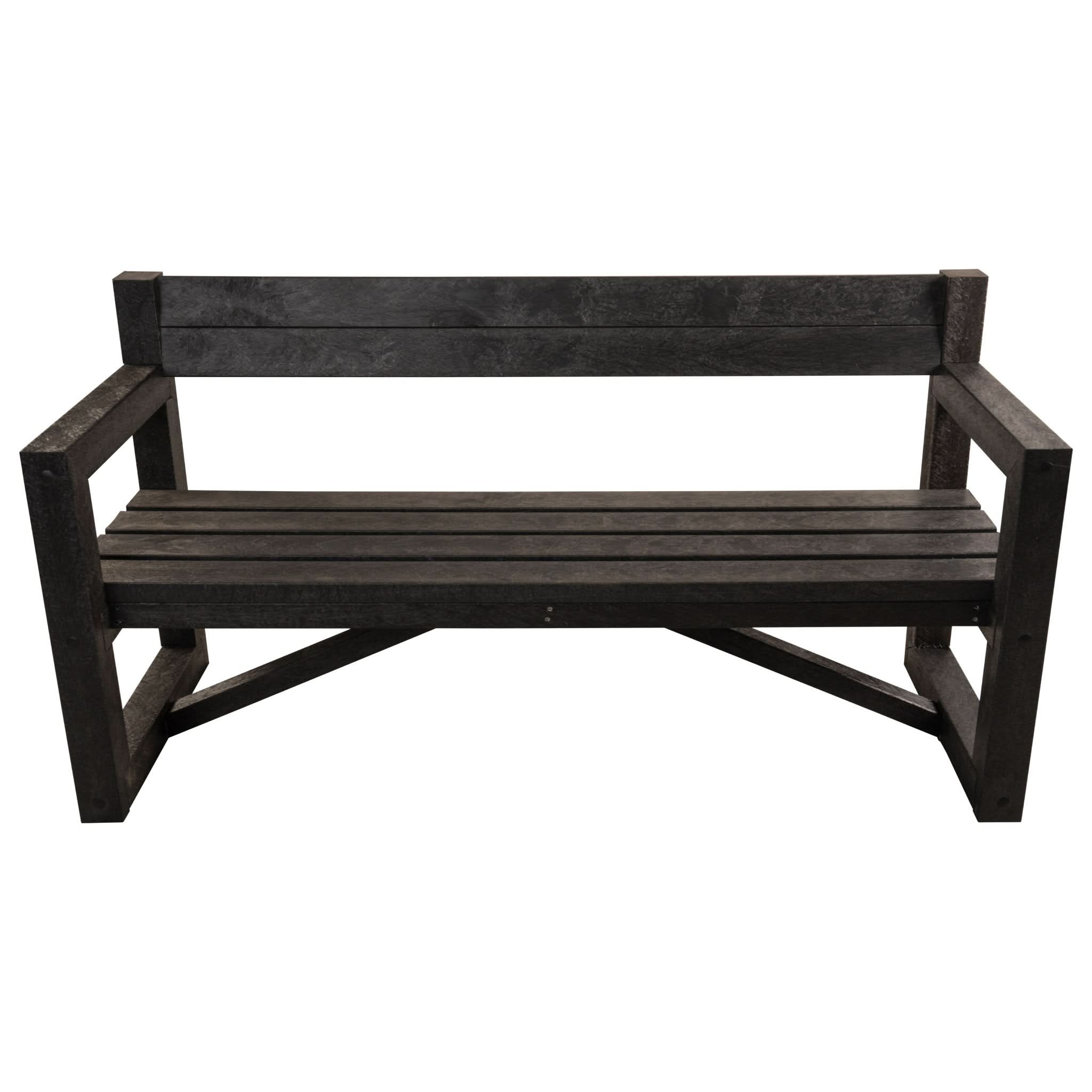
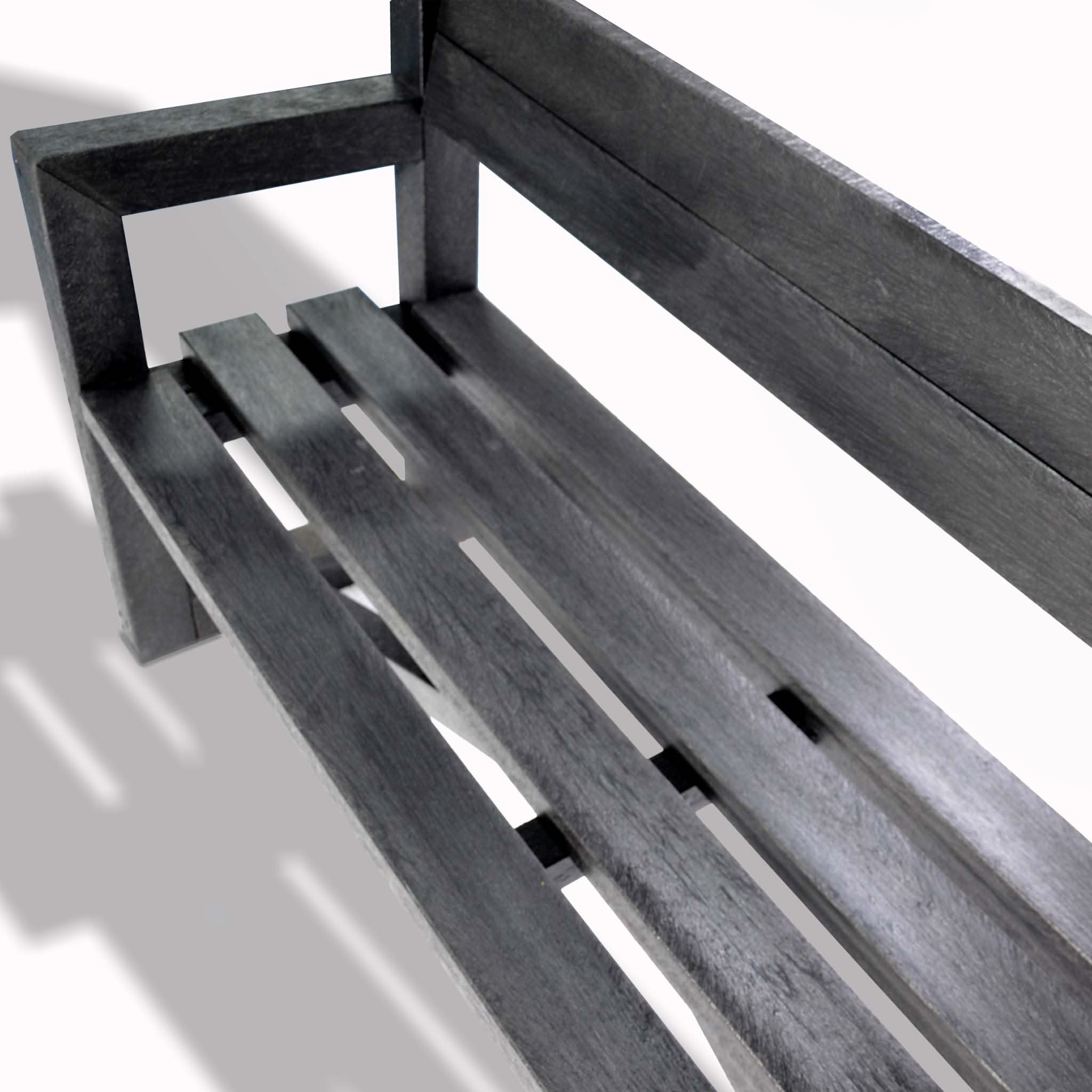
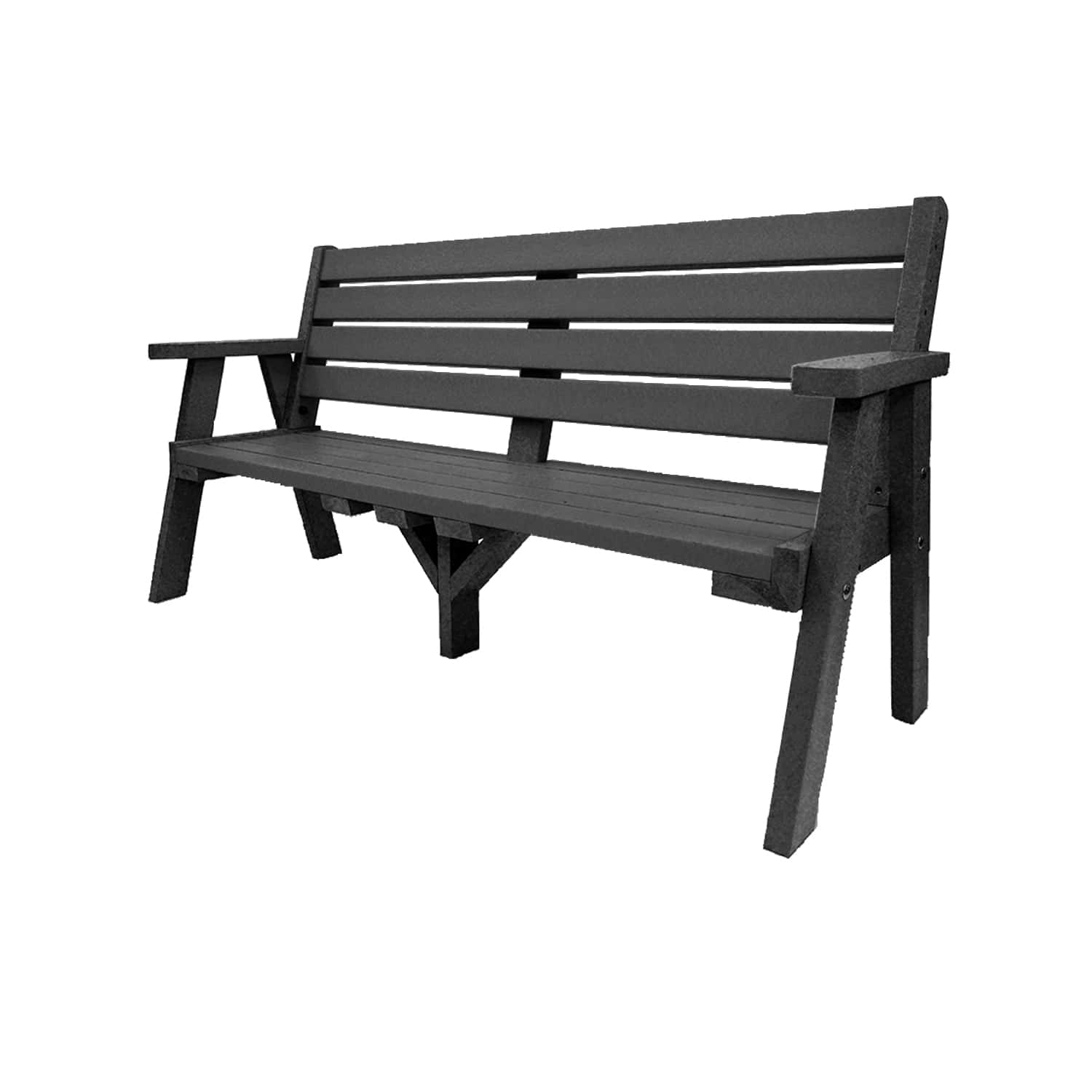
If you want a recycled plastic bench with arms, explore the Sloper Bench. Its product description identifies an angled backrest and integrated armrests, and the model is supplied fully assembled.
Armrests can provide a place to rest the arms and may help some users when sitting or standing. Their suitability depends on the individual and the arrangement. Check seat height, depth and clear access beside the bench, rather than treating arms alone as proof of accessibility.
Curved and Planter Bench Options
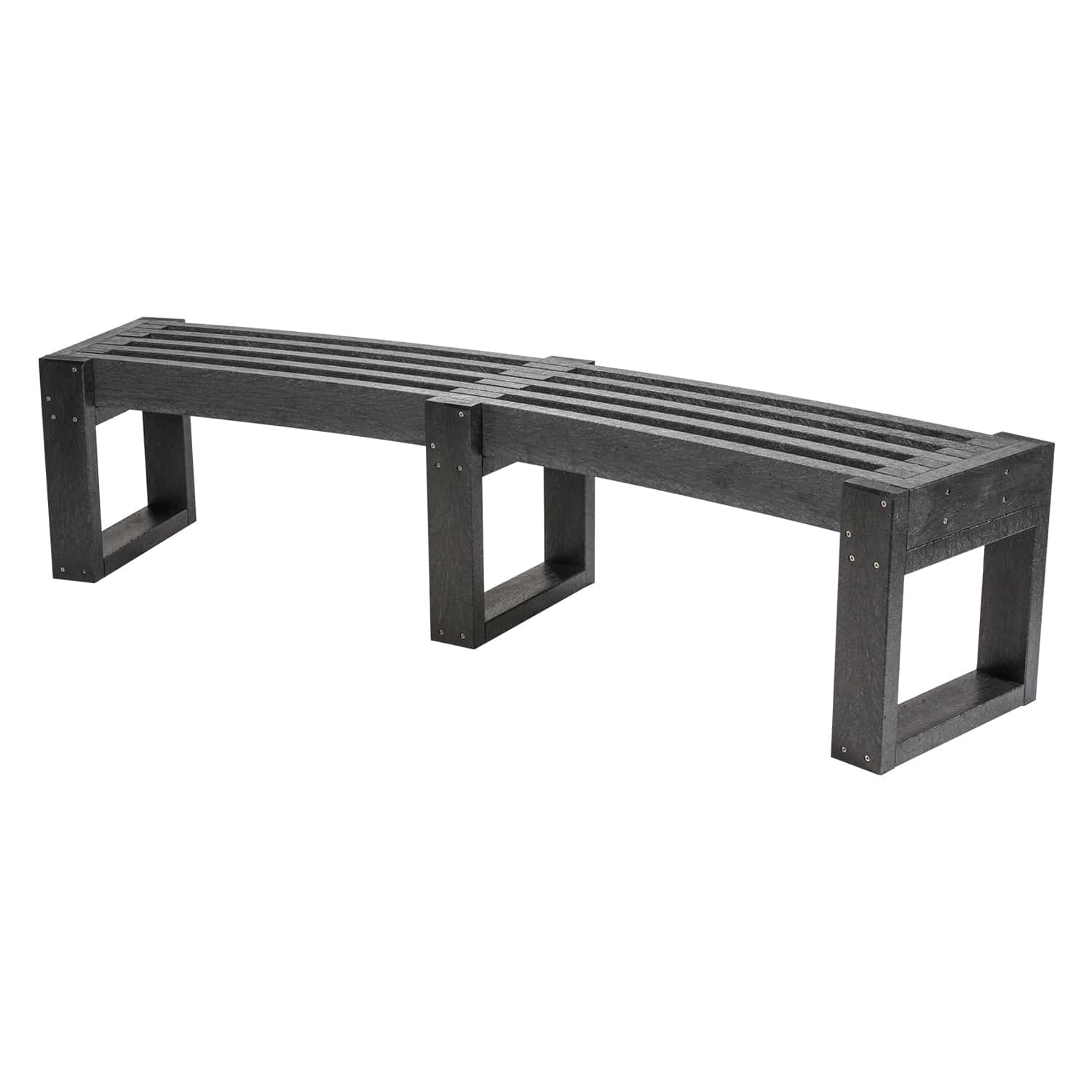
The Curved-Edge Bench can help form an arc or a shaped seating arrangement. Mark its footprint on your plan before combining several units, allowing entry points into the group.
A Planter Bench combines seating with planting. Allow for the mature size of the plants and access for watering and pruning. Avoid foliage that will quickly overhang the usable seating area or obstruct a path.
Choosing a Plastic Garden Bench for Home
Start with where you naturally want to spend time. A recycled garden bench might face a flowerbed, sit near a pond or provide a quiet destination at the end of a path. Visit the intended spot at different times of day to see how sun, shade and surrounding activity change.
In a small garden, measure more than the bench itself. Leave room for feet, passing people and nearby doors. If the bench sits beside a border, allow access for gardening without needing to move heavy furniture every time you weed or prune.
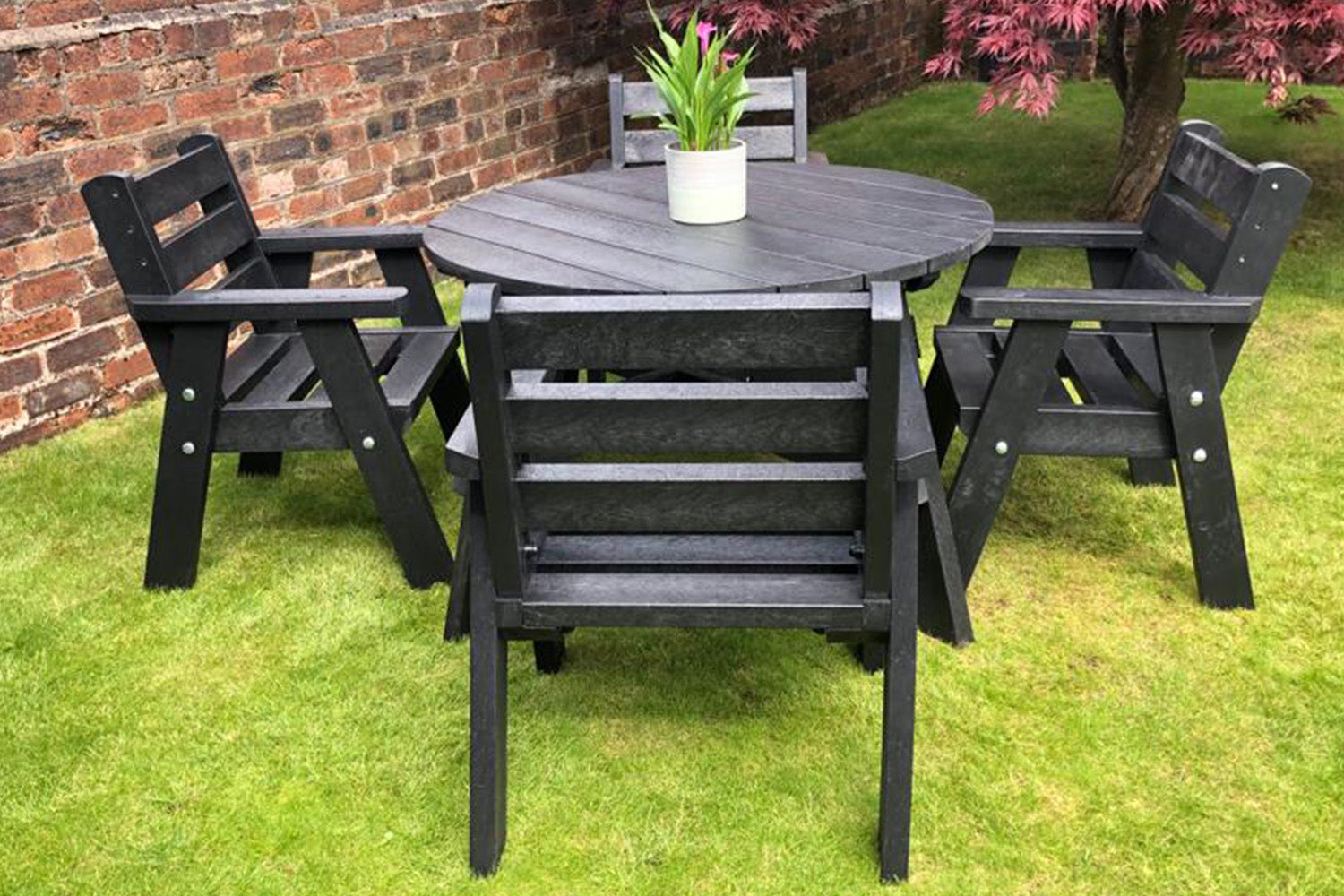
Think about the experience you want. A backrest may suit reading, while a simple backless seat can provide an occasional perch. If lunch outdoors is the main aim, a plastic garden picnic bench may be more useful than buying a separate seat and then finding a table to match.
Choose the surface and position with installation guidance in mind. A lawn can look attractive in a photograph, but the product still needs suitable support in its actual location. Check ground conditions and maintenance access before committing to a permanent layout.
Plastic Picnic Benches for Gardens, Pubs and Shared Spaces
The phrase “plastic picnic benches” commonly refers to tables with integrated bench seating. A standalone garden bench provides a place to sit; a picnic unit adds a surface for meals, games or group activities. Establish which function you need before comparing prices and footprints.
Recycled plastic picnic benches are worth considering where furniture will stay outside and receive frequent use. They still need a layout that allows people to enter and leave the seats comfortably. Include this access space when measuring, rather than using only the tabletop dimensions.

Choosing a Recycled Picnic Bench
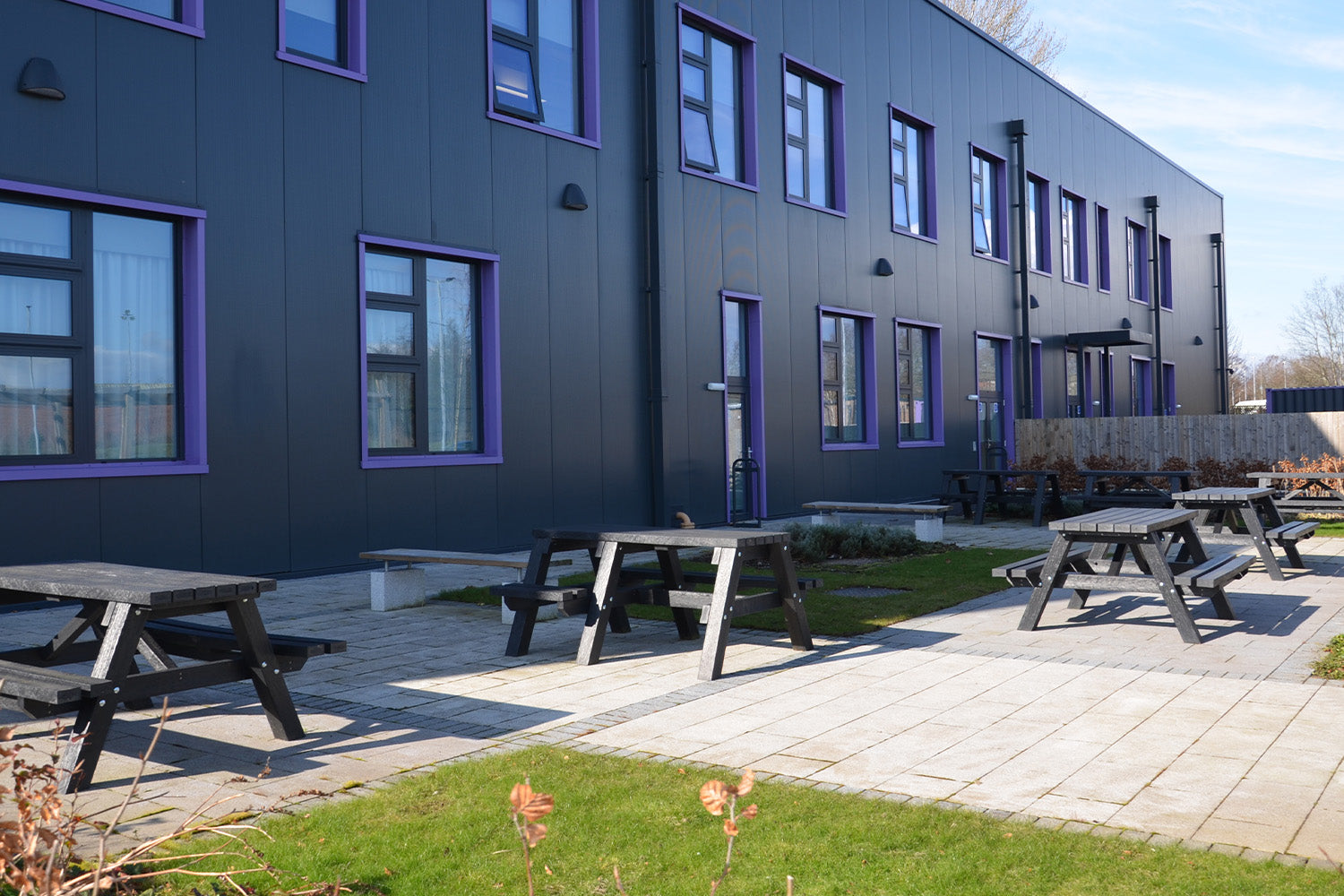
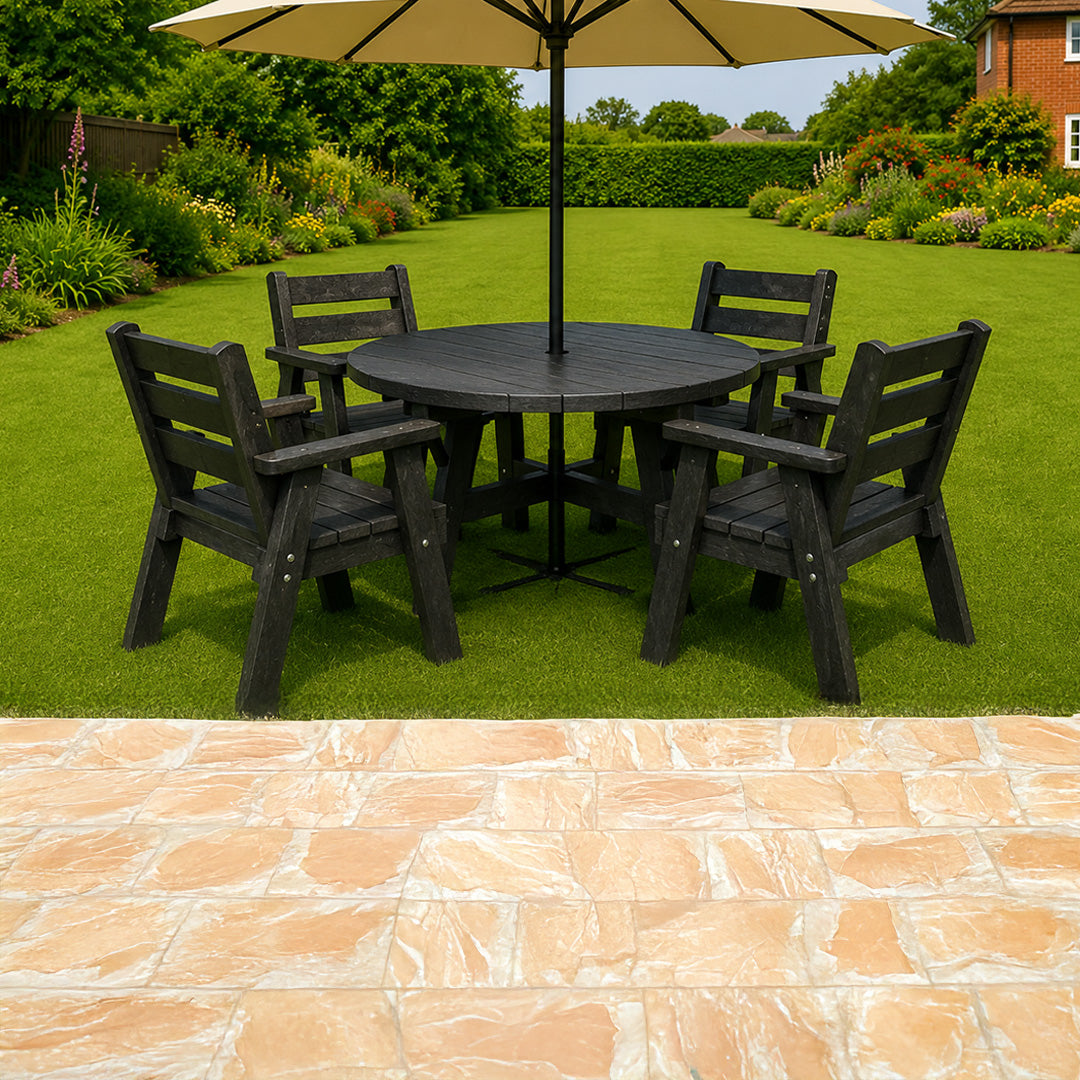
An A-frame picnic table offers a familiar combined seating format. A round picnic table arranges people around a central surface, while other designs change the way users approach the seats. Compare seating capacity, the table's shape and the available space around it.
For wheelchair access, review the Wheelchair-Accessible Picnic Table. Assess the table together with the route to it, the surface and manoeuvring space. Its position within the group matters as much as the presence of an accessible place.
What to Check When Comparing Plastic Picnic Benches for Sale
Compare complete installed costs rather than headline prices alone. Confirm what is included, whether assembly is required, how delivery works and whether the base or fixings need additional preparation. Use current product pages for prices and availability, which may change.
For a larger scheme, choose one representative position and check it carefully before repeating the layout. A small access problem becomes more difficult to resolve when the same table has been installed throughout a site. Our picnic table guide provides further information on the available formats.
Choosing a Plastic Pub Bench
A plastic pub bench needs to suit customers and the team looking after the space. Consider how diners carry food and drinks, where staff collect items and how routes work when every seat is occupied. Avoid a layout that looks spacious only when the tables are empty.
Allow access for routine cleaning and check whether regular rearrangement is realistic for the furniture's weight. If flexibility is essential, compare integrated picnic units with separate tables and seating. Keep circulation routes clear and review the layout against your site's operating requirements.
Recycled Plastic Park Benches and Public Seating
Recycled plastic park benches can provide rest points along paths, seating beside play areas and places to enjoy a view. Begin by identifying where visitors naturally pause, rather than placing benches only where there is an empty patch of ground.
When specifying recycled benches for parks, consider a mix of seating needs. Some visitors will appreciate a backrest and arms; others need clear space alongside the seat for a wheelchair, mobility aid or pushchair. Keep that adjacent space connected to a usable route, rather than leaving it on an isolated strip of soft ground.

Plan for the Site Team as Well as Visitors
Recycled park benches should fit the site's maintenance arrangements. Leave access for cleaning, vegetation management and inspection of fixings. Discuss anchoring with the supplier and installer, especially where unauthorised movement or exposure to strong winds is a concern.
Do not assume any material is vandal-proof. Select the product for its intended use and agree how damage will be reported and addressed. For several locations, keep a record of the model, installation date and relevant documentation so future maintenance decisions are based on the correct information.
Recycled Plastic Benches for Schools
Recycled plastic benches for schools can serve several purposes: a quiet reading spot, a social area, a waiting place or seating beside outdoor learning activities. Decide which role each area should fulfil before choosing the same bench for the whole school.
When comparing plastic benches for schools, match seating dimensions to the intended pupils and activity. Adult seating is not automatically appropriate for younger children. Review the product information with the staff responsible for the area, including access, supervision and how the space is used during busy periods.
Separate Resting, Learning and Lunch Areas
Recycled benches for schools may work well along the edge of a playground or in a reading garden, while picnic tables can provide a surface for meals and activities. For younger users, ask about the Junior A-frame option in the collection and confirm its dimensions and suitability before specifying it.
Position seating so it does not create an obstacle in a busy route. Allow access for cleaning and inspect furniture within the school's existing site-care arrangements. Splinter resistance is a useful material property, but it does not replace appropriate selection, installation or supervision.
Measurements, Access and Installation
Measure the Usable Space
Record the bench's overall length, depth and height, then consider the space around it. Check seat height and depth separately where those details are provided. Two benches with similar overall dimensions may offer different sitting positions.
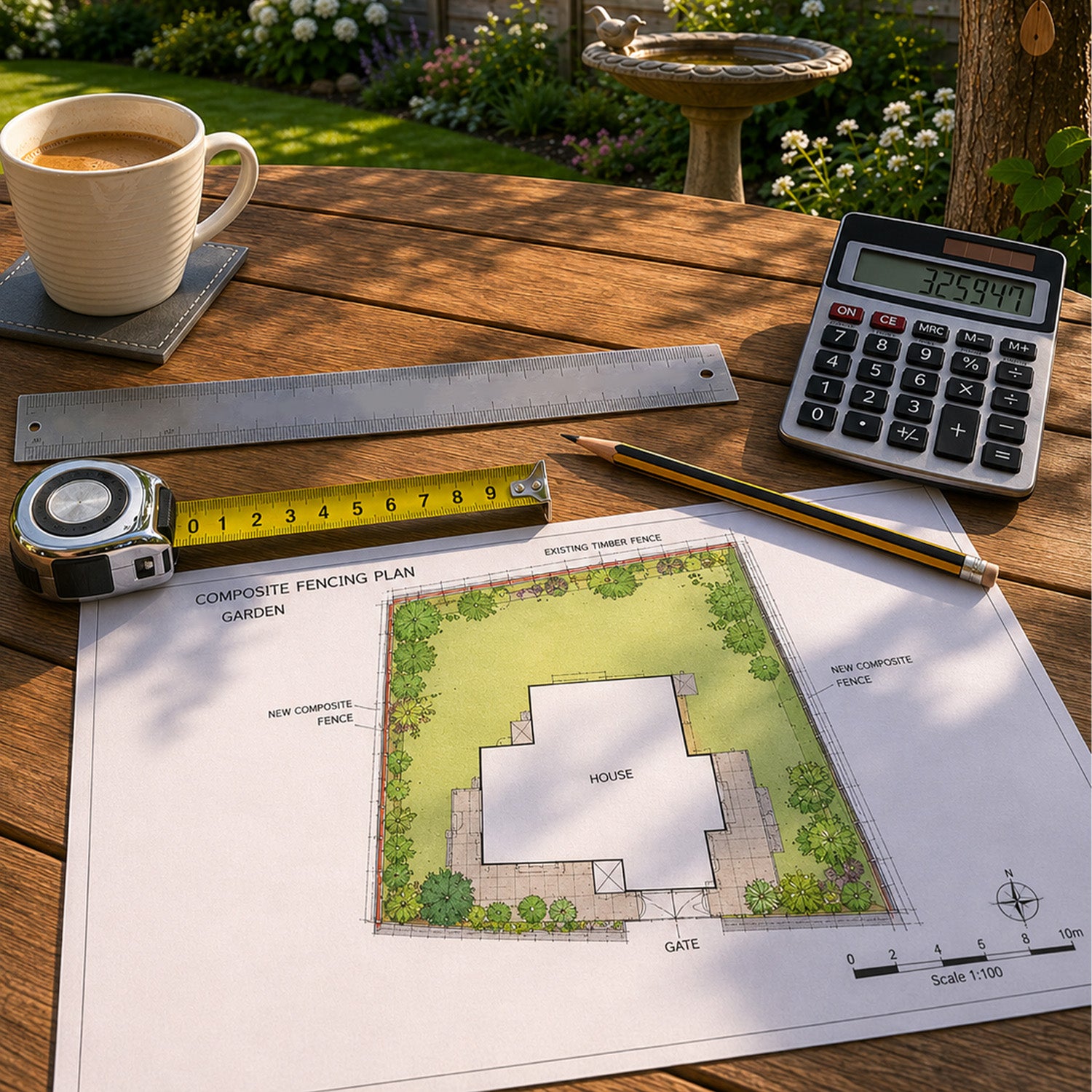
Mark the proposed footprint before ordering. Include space for legs, people passing and anyone approaching with a mobility aid. For dining furniture, check access with the seats occupied. This simple exercise often reveals whether a smaller unit or a different orientation would work better.
Check Delivery and Handling
Read the delivery information alongside product weight and assembly details. Measure gates, narrow passages and turns on the route to the installation area. Confirm where the delivery will be placed and arrange suitable handling rather than assuming the driver will carry furniture to its final position.
Some benches arrive assembled; others need assembly. Check the exact model's requirements, including tools, fixings and the people needed for handling. Keep the assembly guides and technical specifications available to the installer.
Use the Specified Base and Fixings
Follow the instructions for supporting and securing the furniture. Ground conditions, the model and the location affect the installation approach, so there is no single fixing method for every bench. Heavy furniture still needs the appropriate assessment of positioning and anchoring.
Avoid altering supports or replacing components with different profiles without checking suitability. If you need a bespoke arrangement, discuss it before purchase so material behaviour, loads and any warranty implications can be considered.
Cleaning, Warranty and Long-Term Value
A Simple Care Routine
- Remove leaves, grit and other loose debris from the seat and surrounding area.
- Wash routine dirt with warm soapy water and a soft cloth or brush.
- Rinse away residue and let the surface dry.
- Check for damage, movement or loose fixings, following the product's maintenance guidance.
Clean spills promptly and avoid abrasive pads. For persistent marks or unfamiliar cleaning products, ask for product-specific advice before treating a visible area. A regular routine is more useful than assuming a material needs no attention because it resists rot.
Look Beyond the Purchase Price
Compare the bench, delivery, base preparation, assembly, anchoring and expected care costs together. For multiple benches, include the staff time needed to inspect and clean them. A lower purchase price is only one part of the decision, and exact savings depend on your site.
NeoTimber® recycled plastic furniture has a 25-year limited warranty, subject to its terms. Read the recycled plastic furniture warranty information for coverage, exclusions and conditions. The warranty is not a promise that every aspect of the bench will remain unchanged or that routine inspection can be skipped.
Finding Recycled Plastic Benches Near Me
If you are searching for “recycled plastic benches near me”, decide whether you need somewhere to see a product, a supplier that delivers to your address or support with selection. Those are different requirements, and the nearest listing may not answer all three.
NeoTimber® has a showroom in Coalville, Leicestershire, at Innovation House, Telford Way, Stephenson Industrial Estate, LE67 3HE. Before travelling, ask whether the bench you want to assess is on display and check current visiting arrangements. The existence of a showroom does not mean every model is available to view.
The same approach helps when comparing “recycled benches near me” results: confirm the material, exact model, delivery area and aftercare. For an online order, check delivery availability and charges for your postcode, alongside access to the site. Contact the NeoTimber® team with your requirements if you need help narrowing the options.
Plastic and Recycled Bench FAQs
Can I Leave Recycled Benches Outdoors All Year?
NeoTimber® recycled plastic furniture is designed for year-round outdoor use. Follow the guidance for the chosen model and inspect it as part of normal care. A suitable cover may reduce surface dirt, but positioning and securing the furniture remain important in exposed locations.
Is a Recycled Plastic Bench Better Than a Wooden Bench?
It depends on your priorities. Recycled plastic offers rot resistance and avoids routine timber-style surface treatments. Timber has its own appearance and material qualities. Compare the actual products, intended use and care requirements rather than assuming one material is best for every setting.
Can I Buy a Green Plastic Bench?
If you mean green as a colour, check current options for the specific model before ordering. Green is not confirmed as a standard NeoTimber® bench finish in the product information reviewed for this guide. Ask the team whether a suitable option is available. If you mean environmental credentials, examine recycled content and end-of-life arrangements separately from colour.
Are Recycled Plastic Benches Lightweight?
Not necessarily. Models can have substantial weight, so check the specification and plan handling accordingly. A permanent seating area may suit heavy furniture, while a layout that changes frequently requires a different assessment. Do not rely on the word “plastic” as an indication of portability.
Will the Bench Fade or Change Over Time?
Some weathering or colour variation may occur, and appearance can change with use. Avoid assuming that outdoor furniture will look exactly the same indefinitely. Read the care information and warranty exclusions, and compare current finish options when colour consistency matters across a larger installation.
Do All Recycled Plastic Benches Have Arms?
No. Designs vary, with backless benches, benches with backrests and models with armrests. The Sloper Bench is one option with integrated arms. Confirm the configuration shown on the product page and assess it against the people who will use the seating.
Can a Picnic Bench Replace a Garden Bench?
It can if dining and shared activities are the priority and you have enough space. A picnic unit occupies more of the surrounding area and changes how people approach the seats. For a quiet resting point beside a path, a standalone bench may be more practical.
Choose Recycled Benches Around the Way People Use Your Space
A successful seating area starts with a clear purpose. Decide who will use it, how long they will sit and whether they need a table, backrest or arms. Then check access, installation and ongoing care before making your choice.
Explore NeoTimber® recycled plastic benches and picnic tables to compare the current range. With the right dimensions and layout, a bench can give your garden, school or public space a useful place for people to pause and spend time together.