Choosing Capped Decking for a Beautiful, Practical Outdoor Space
Capped composite decking combines a wood-plastic composite core with a protective polymer outer layer. That cap helps the board resist everyday staining and weathering while providing a timber-inspired surface. It is a useful option for homeowners who want a carefully finished deck without regular painting, staining or sealing.
If you are comparing premium composite decking, appearance is only part of the decision. The board construction, cap coverage, installation system, maintenance requirements and warranty all deserve attention. A premium finish works best when it belongs to a suitable, well-planned deck.
This guide explains what capped decking is, how it differs from uncapped products and what to look for before buying. It also covers colours, layouts, solid and hollow boards, budgeting and aftercare, so you can move from a promising sample to a complete specification.
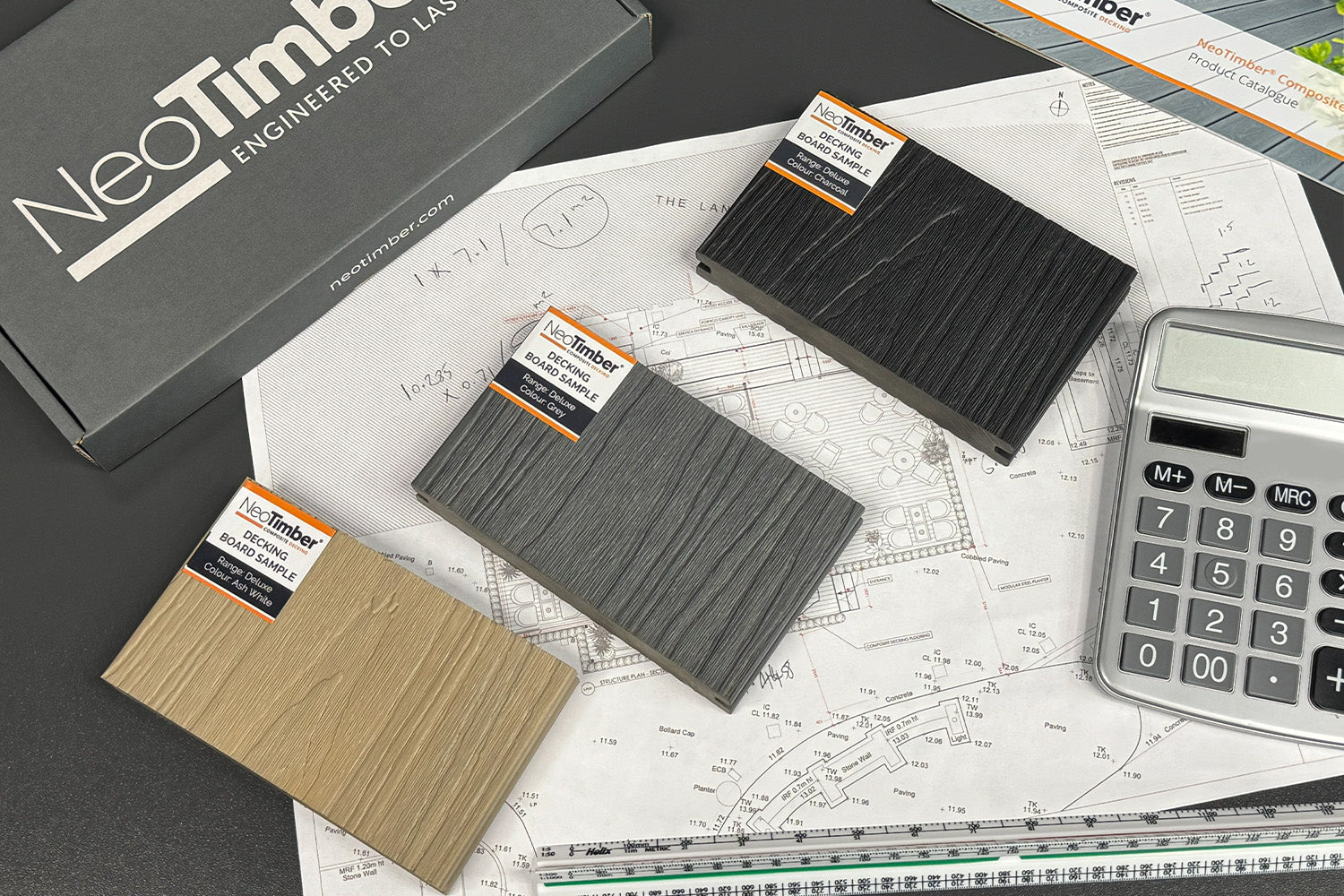
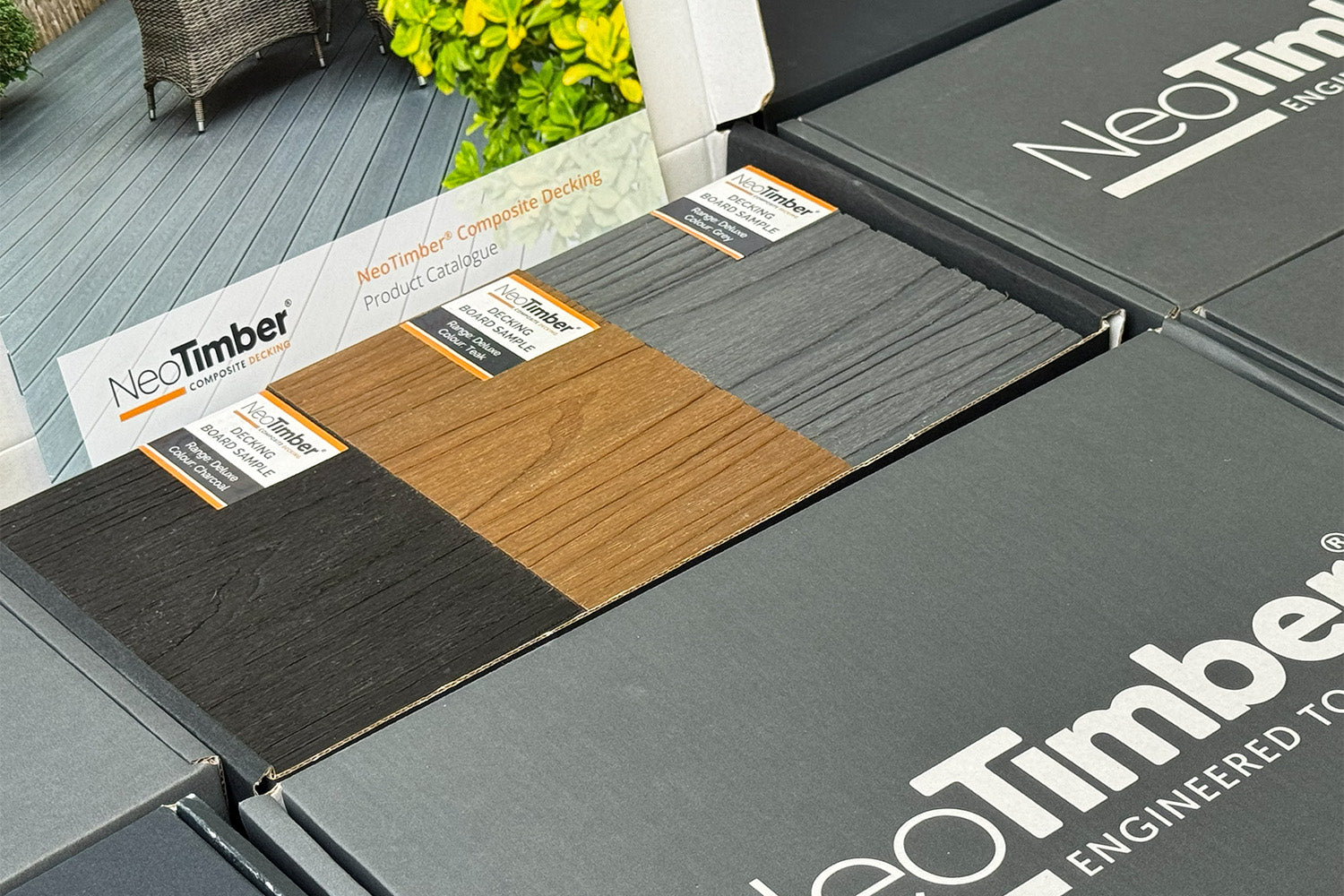
Start with the NeoTimber® composite decking range, or order free samples to compare finishes in your own garden.

What Is Capped Composite Decking?
Composite deck boards use a manufactured material rather than a single piece of natural timber. In wood-plastic composite products, wood fibres and plastic form the core. Capped versions add a polymer layer around specified surfaces of the board.
The cap is part of the manufactured product. It is different from a paint or stain applied to a completed deck. It gives the surface additional protection and can carry the colour variation and texture that create the finished appearance.
The core and cap do different jobs
The core contributes to the board’s physical construction, while the cap provides the outer surface. Neither should be considered in isolation. A decorative finish does not remove the need to check the board’s support requirements, application limits and compatible fixing system.
When comparing products, ask what the core contains and which surfaces are capped. Do not assume that all boards described as capped use identical materials, thicknesses or coverage. The product specification should explain the construction you are buying.
Capped does not mean solid
“Capped” describes the exterior layer. “Solid” and “hollow” describe the core profile. A hollow board can have a protective cap, and a solid board can be either capped or uncapped.
Keeping those terms separate makes product comparisons clearer. Start with the application and installation requirements, then compare the available constructions and finishes. One label alone cannot establish the best board for every project.
Capped Decking vs Uncapped Composite Decking
Both options can provide a timber-inspired alternative to natural wood. The main distinction is that uncapped composite exposes the composite surface, while capped decking adds an outer protective layer. That difference can influence cleaning, weathering and the appearance of the board.
| Consideration | Capped composite | Uncapped composite |
|---|---|---|
| Outer surface | A protective polymer cap covers the specified faces. | The composite material forms the exposed surface. |
| Stain resistance | The cap adds protection against everyday marks; prompt cleaning still matters. | Check the range-specific guidance for spills and stain treatment. |
| Weathering | Designed for enhanced colour stability; not a promise of zero change. | Some products undergo more noticeable initial weathering. |
| Appearance | May include multi-tonal colours and embossed textures. | Texture and colour options vary by product. |
| Care | Use approved cleaning methods and protect the cap from abrasion. | Follow the care instructions for the exposed composite surface. |
| Installation | Requires a compatible subframe, fixings and movement gaps. | Also requires the specified supporting and fixing system. |
For a product-focused comparison, read the NeoTimber® guide to traditional and capped composite decking. Then compare samples and technical documents from the particular ranges on your shortlist.
The choice is not simply whether a board has a cap. Consider what you value most: a particular texture, easier stain removal, a certain construction or the complete installed price. An informed comparison weighs those priorities together.
What Should You Expect from Premium Composite Decking?
Premium composite decking should be assessed through specific features rather than the label alone. Look for a finish you want to live with, clear technical information and a complete installation system. Product support and care guidance also contribute to the experience after the deck is built.
How to assess high end composite decking
If you are searching for high end composite decking, turn the phrase into a practical checklist. What makes the surface appealing? How does it perform in the intended setting? Are matching edge details available? What maintenance does it need?
- Visual quality: compare texture, colour variation and the appearance of several boards together.
- Documented performance: review relevant test information and application guidance.
- Complete detailing: consider borders, fascia, steps and compatible fixings.
- Support: look for clear installation instructions and accessible product advice.
- Aftercare: understand cleaning methods and the scope of the warranty.
A higher board price does not automatically mean a better fit for your project. The strongest specification is the one that suits your site, design and maintenance expectations. Ask suppliers to explain the benefits in concrete terms rather than relying on broad claims of superiority.
The finished deck matters as much as the sample
A carefully designed border, consistent joints and well-resolved steps can make a substantial difference to the final appearance. Equally, an attractive board can look disappointing if the layout is poorly planned or the frame is unsuitable.
Treat the deck as a complete project. Reserve time and budget for the supporting construction and finishing details instead of spending the entire allowance on the visible surface.
Benefits of Capped Composite Decking, and Their Limits
Enhanced resistance to everyday stains
The polymer cap provides a barrier that helps protect the composite surface from everyday dirt and spills. This is particularly relevant for outdoor dining areas, where food, drinks and grease can reach the boards.
Stain resistance is not the same as stain immunity. Clear spills promptly and follow the cleaning instructions for the selected range. Leaving contamination in place or using an unsuitable treatment can create problems even on a protected surface.
If you expect frequent entertaining, ask how the manufacturer recommends treating the kinds of marks you are likely to encounter. Specific care instructions are more useful than an assurance that nothing can penetrate or affect the finish.

Improved colour stability
UV-resistant surface technology helps protect the appearance of capped boards exposed to sunlight. That can be a useful benefit when consistent colour is important to the design.
However, “fade-resistant” is more accurate than “fade-proof”. Outdoor materials experience changing exposure, cleaning and use. Read the relevant product information to understand expected weathering instead of assuming that the colour cannot change at all.
Reduced treatment requirements
NeoTimber® capped composite decking does not need regular painting, staining or sealing. This simplifies its care compared with a timber finish that you intend to keep treated.
Cleaning remains part of the routine. Leaves, dirt and airborne deposits collect on exterior surfaces, including capped boards. Think of the benefit as fewer treatment tasks rather than a deck that can be ignored indefinitely.
Moisture resistance without a waterproofing claim
Capping adds surface protection, but it does not turn a deck into a waterproof roof. The supporting construction, gaps and drainage still need to work correctly. Do not use a moisture-resistance claim to justify a frame that traps water.
If the proposed deck sits over an occupied space or a waterproofed structure, its specification needs to address that setting. An ordinary garden-deck detail should not automatically be reused on a roof terrace.
Everyday durability, not an indestructible surface
Furniture, sharp objects and abrasive cleaning can affect a deck’s appearance. Lift heavy items rather than dragging them and use suitable protective feet where appropriate. Ask for product-specific advice if scratches or other damage occur.
Do not assume sanding is a suitable repair. NeoTimber’s care guidance says that its capped ranges must not be sanded. Removing the protective surface would defeat the feature you chose the board for.
Four-Sided Capping and Reversible Board Faces
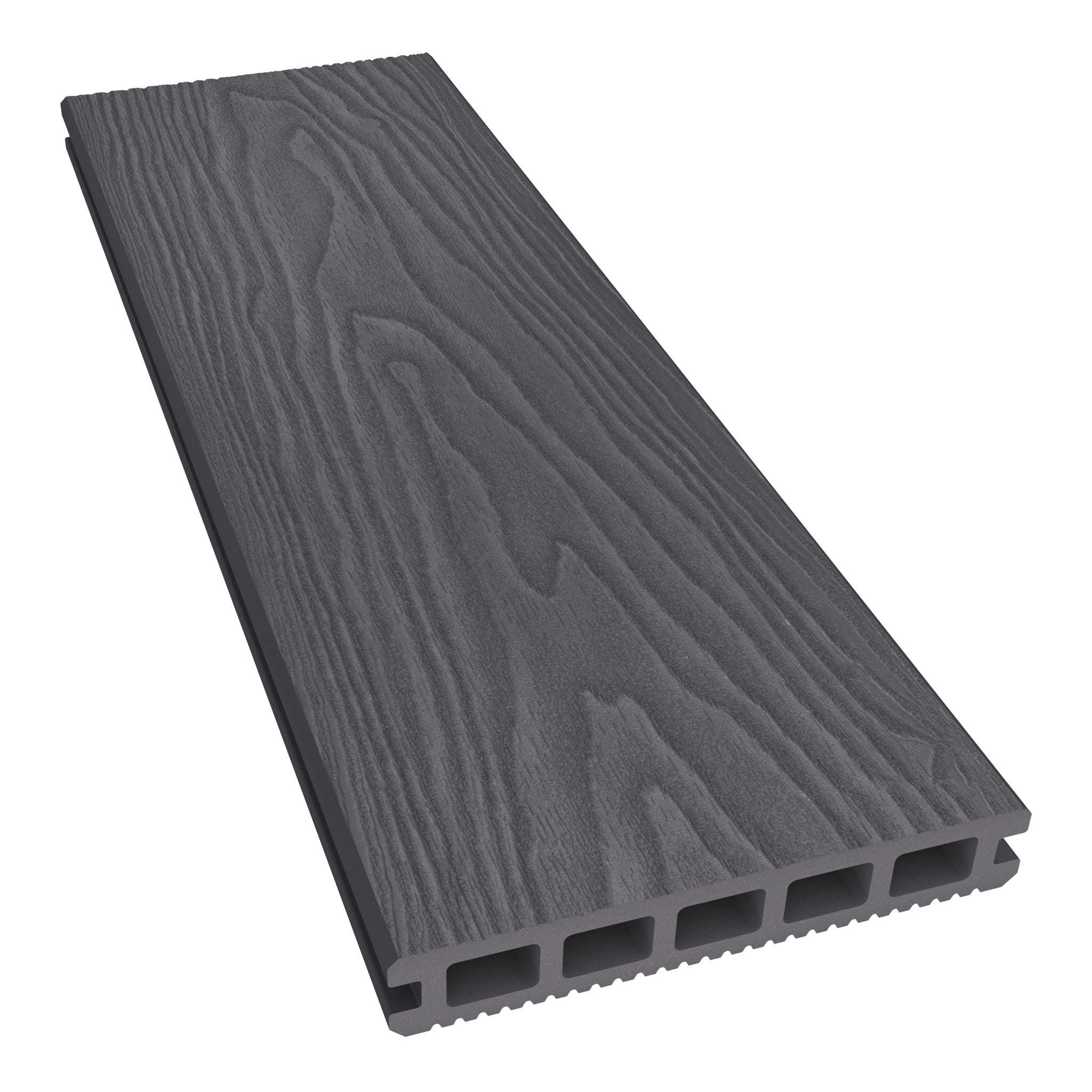
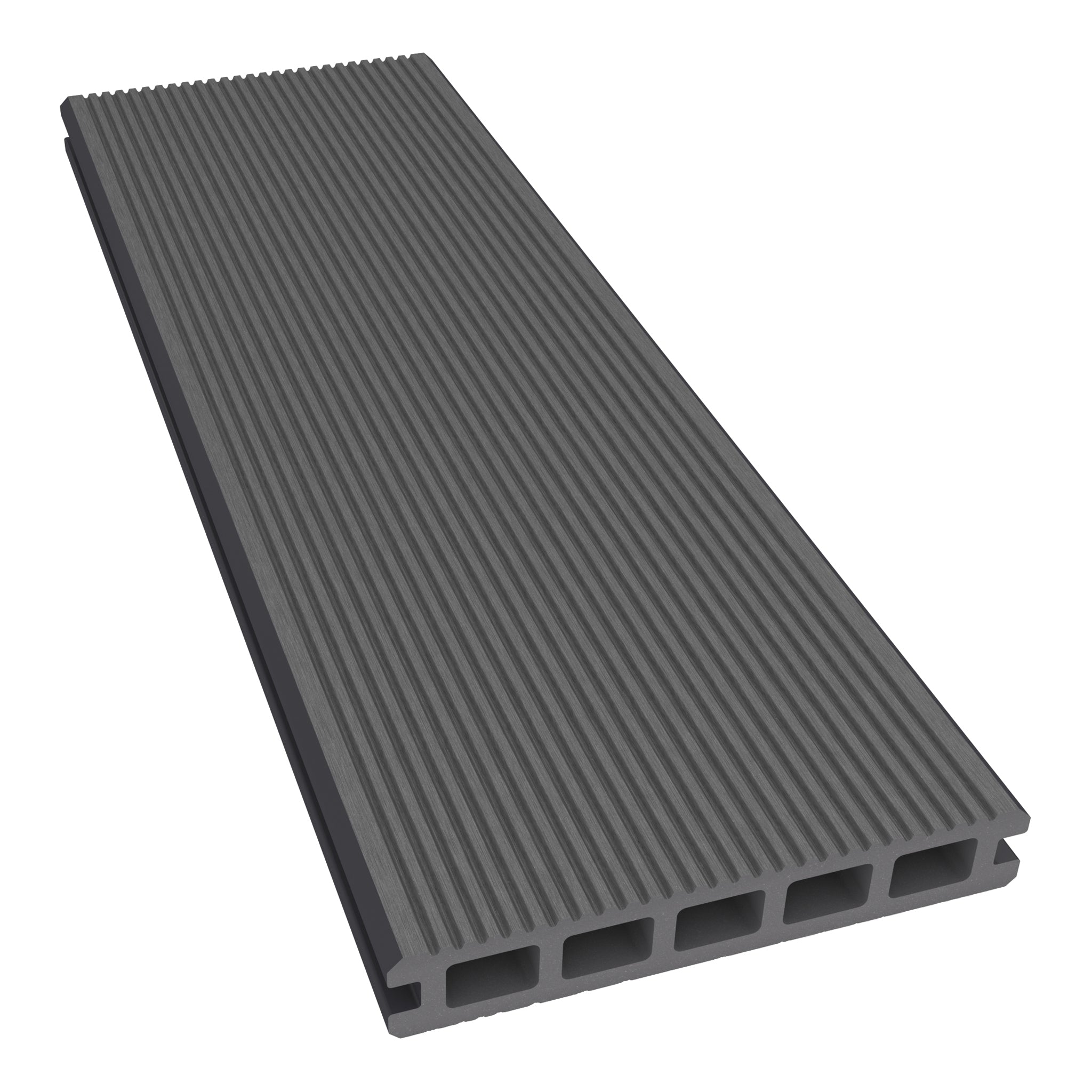
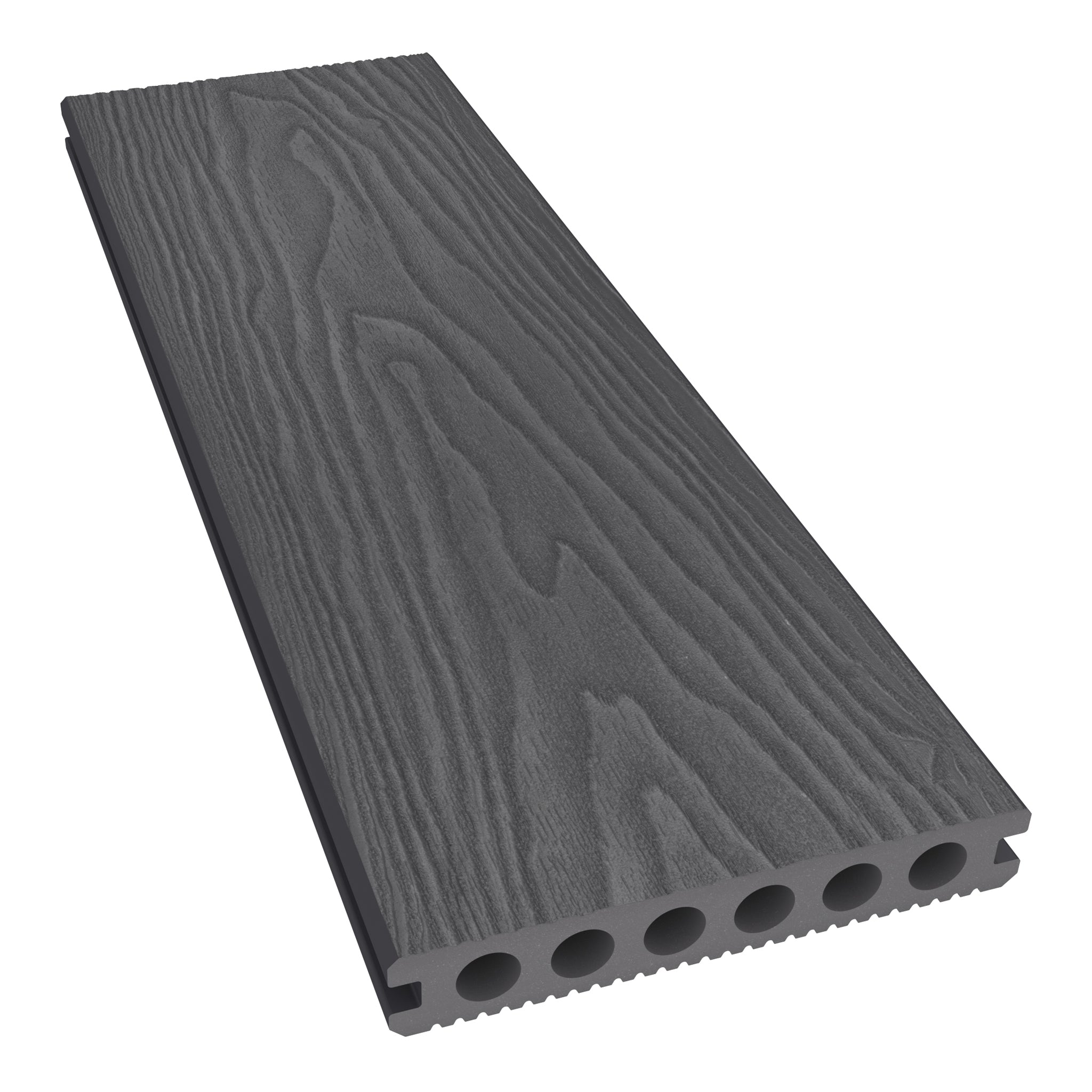
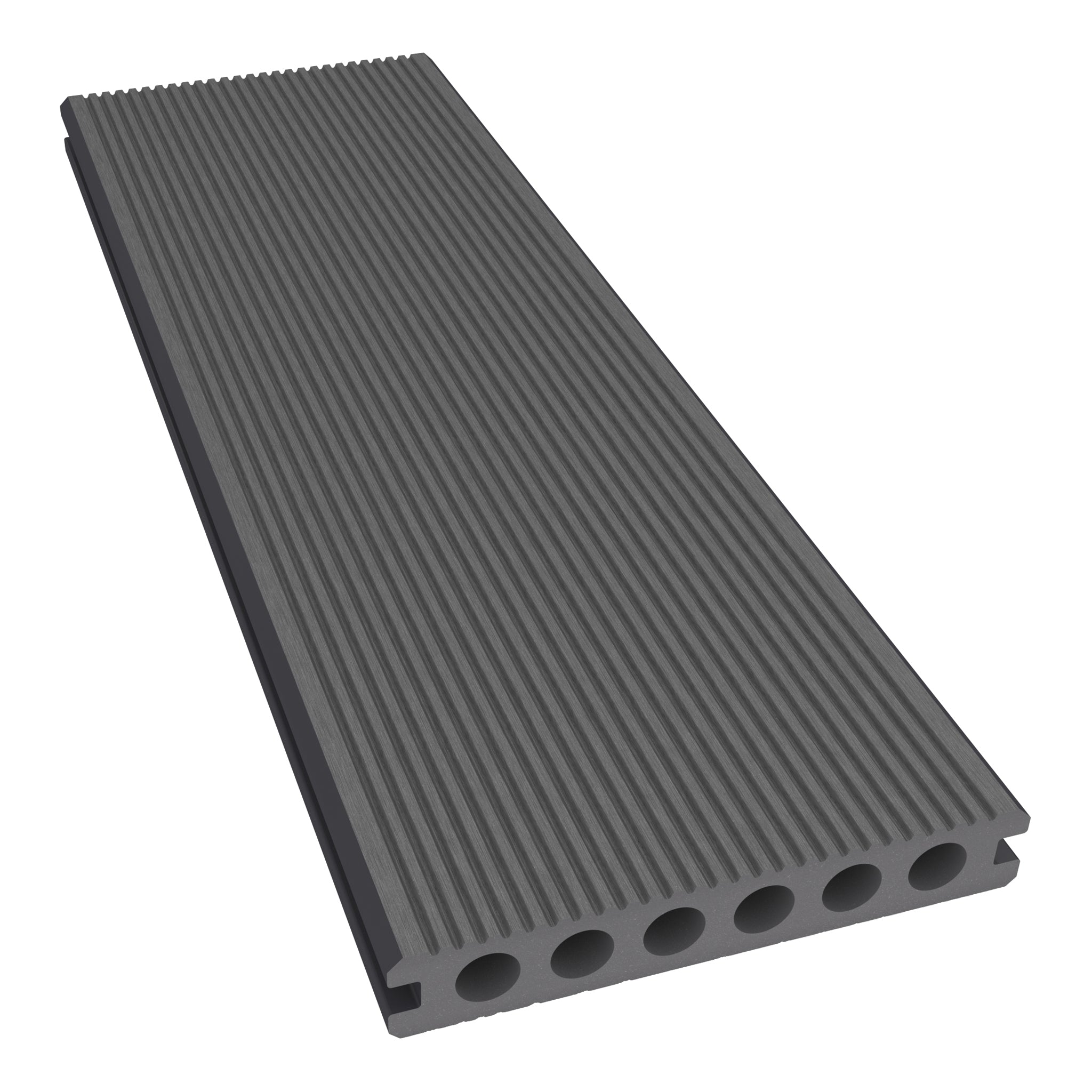
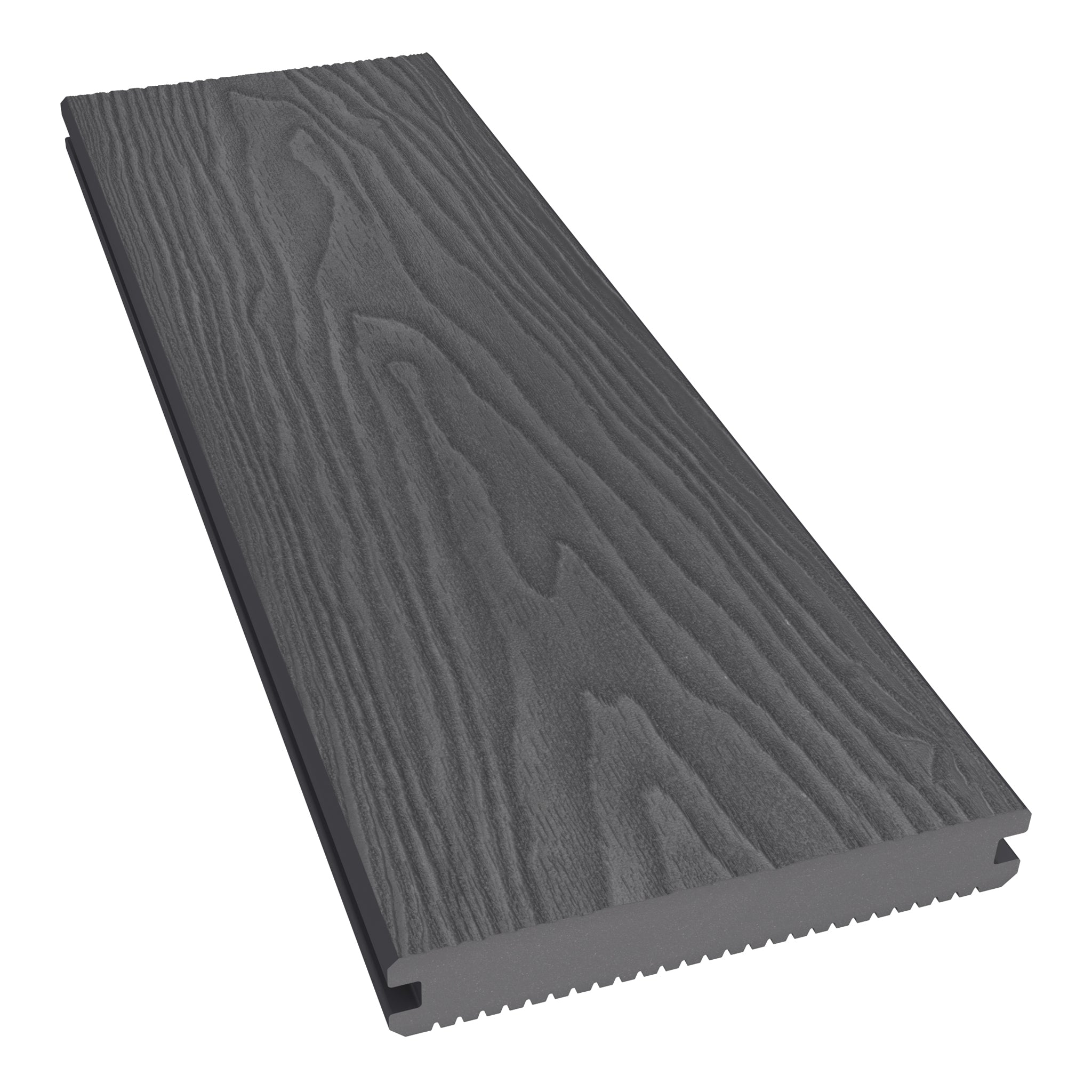
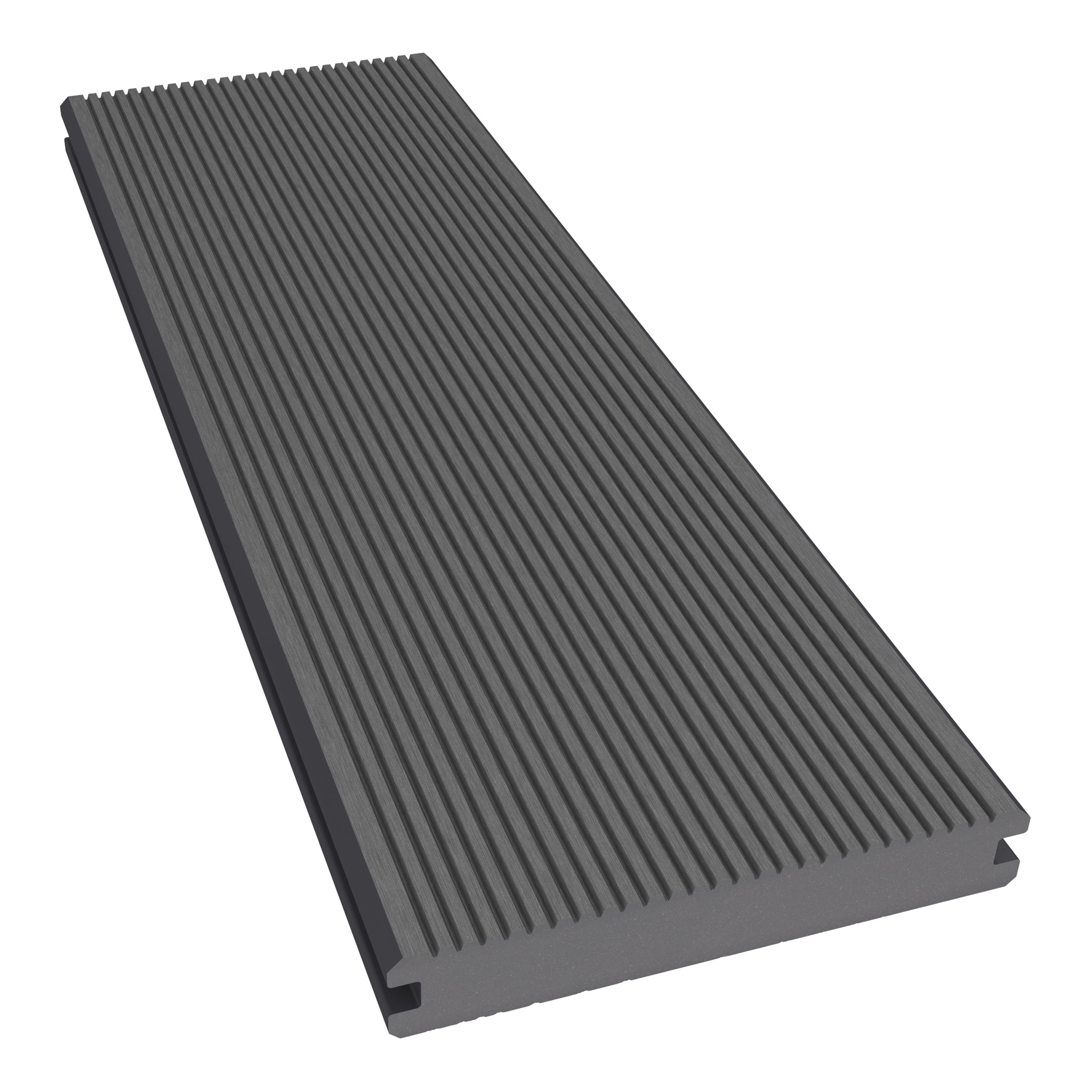
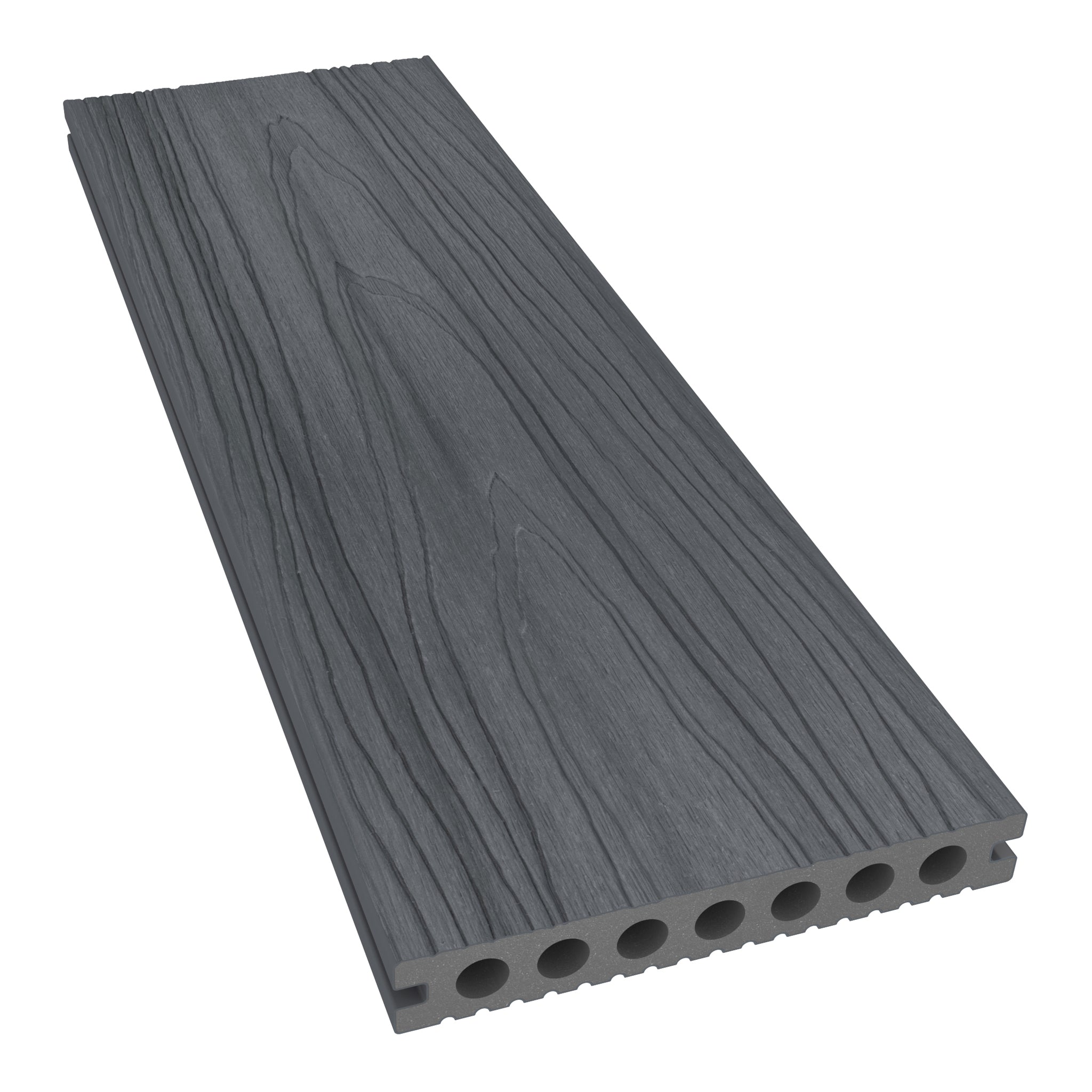
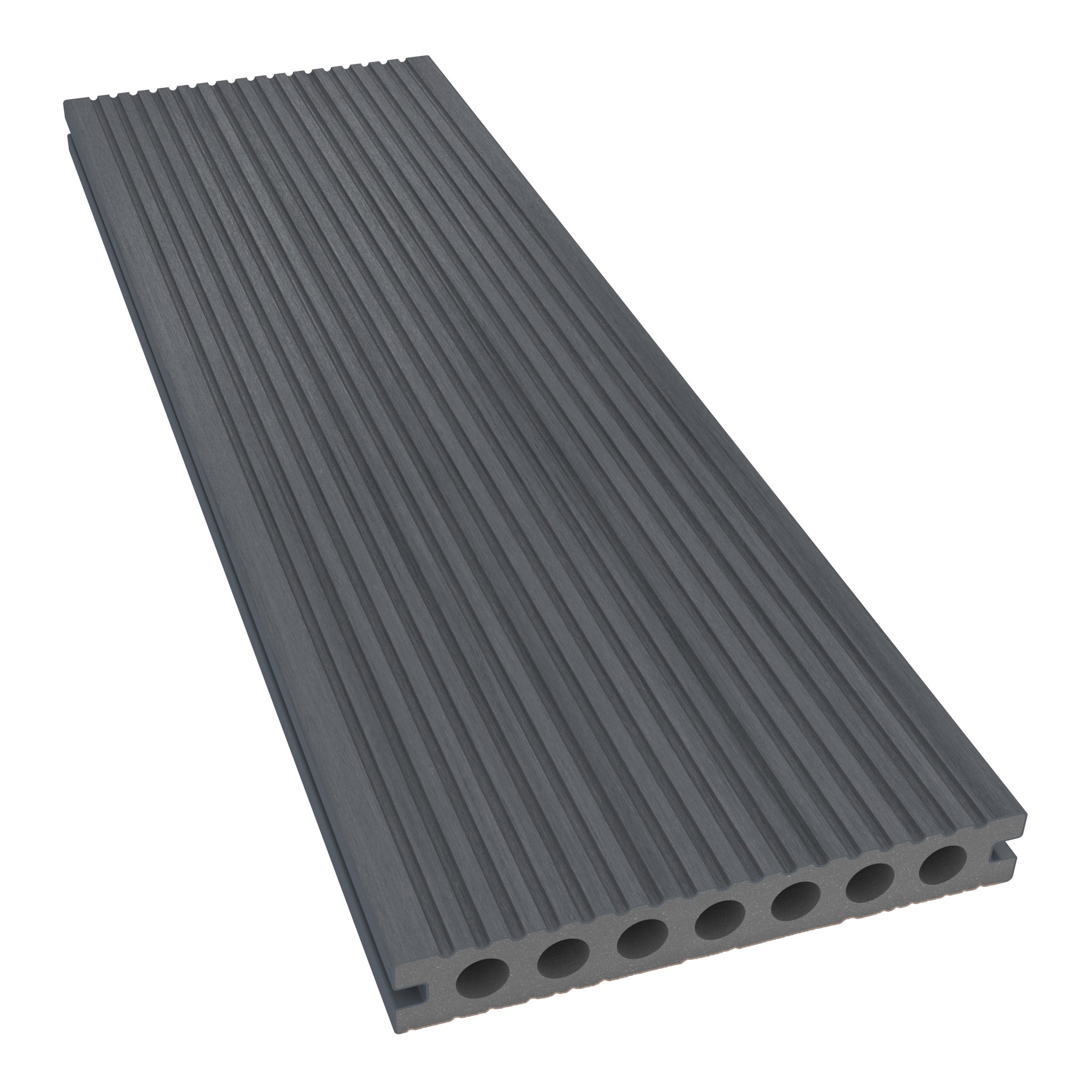
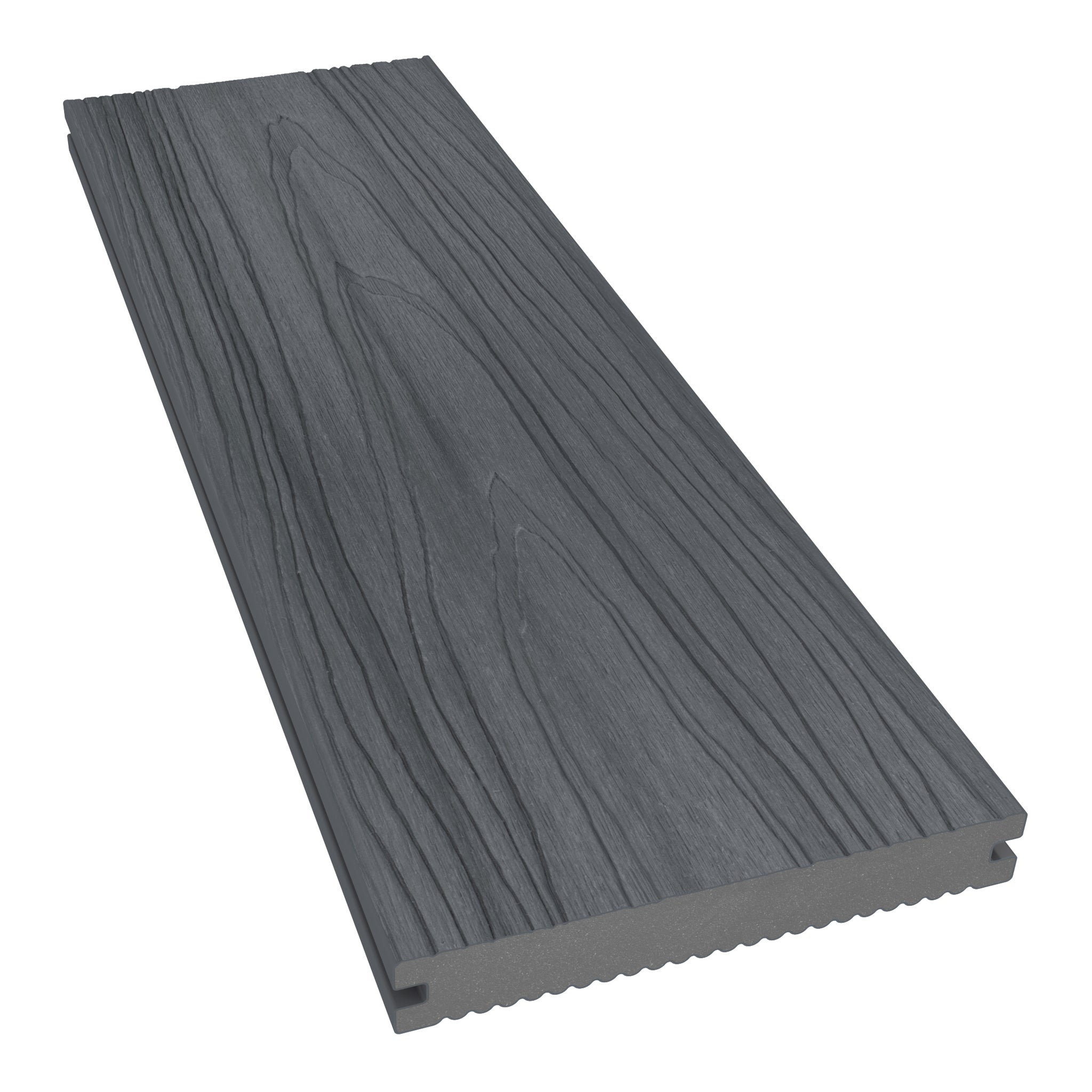
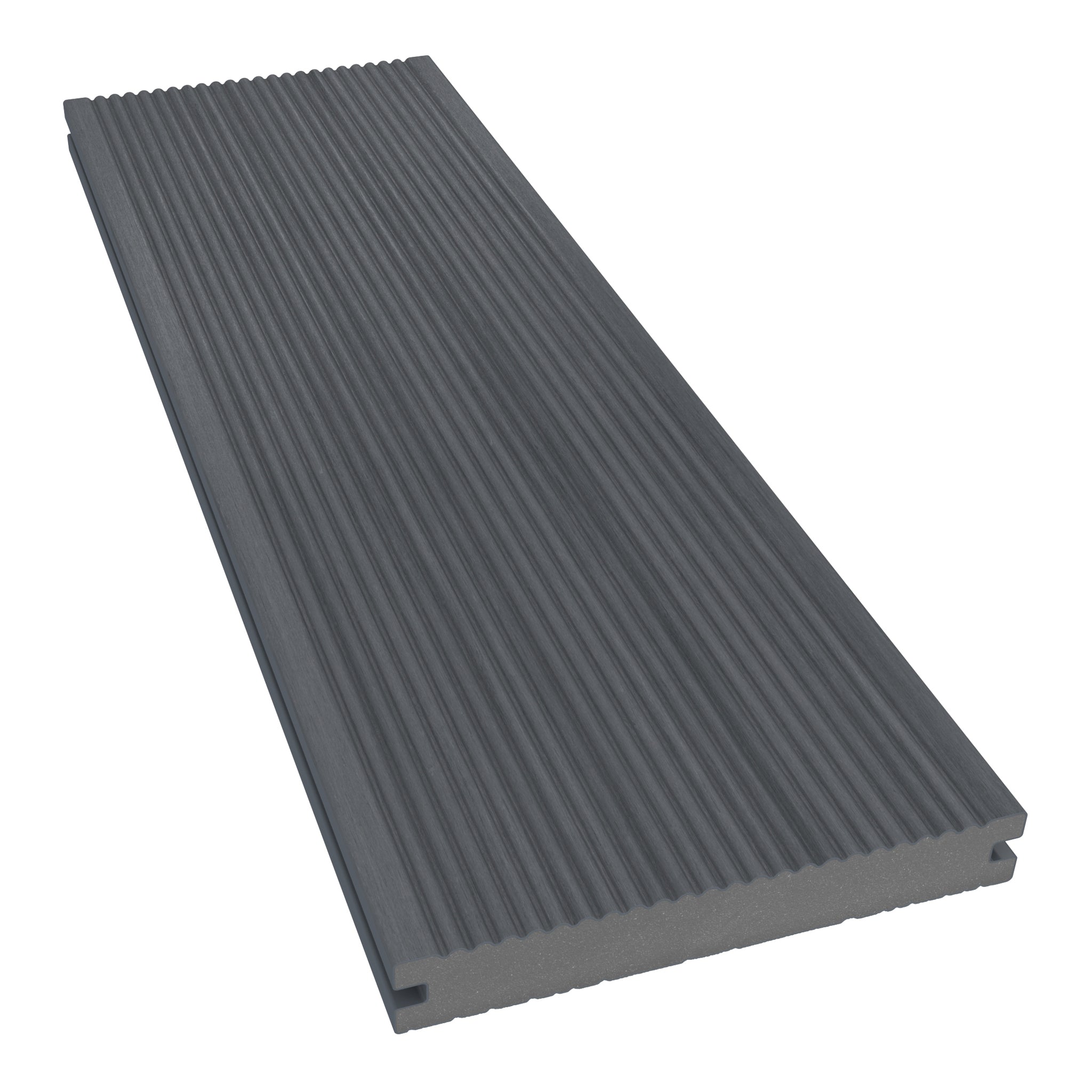
NeoTimber® describes its current Deluxe Hollow and Deluxe Solid boards as having four-sided polymer capping. That means the specified protection extends around the board profile rather than only across the upper walking face.
When comparing cap coverage, distinguish the manufactured faces from cut ends and fixing details. Four-sided capping is not a claim that every field-cut surface remains enclosed. Follow the manufacturer’s end-detail instructions rather than assuming all exposed sections need the same treatment.
Choosing between woodgrain and grooves
Reversible boards can offer a different appearance on each usable face. An embossed woodgrain surface gives a timber-inspired texture, while grooves create a more regular linear pattern. Confirm the available faces for the product you select.
Compare them in the context of the design. A textured surface may complement natural planting and brickwork, while a more linear appearance may sit well with simple architectural details. Neither choice removes the need for appropriate cleaning.
A reversible design gives you a choice at installation. It should not be interpreted as a promise that an installed deck can later be flipped over easily without changes to fixings, trims or board condition.

Compare NeoTimber® Deluxe Hollow and Deluxe Solid
The current NeoTimber® collection includes Deluxe Hollow and Deluxe Solid capped boards. Compare their construction and intended applications alongside the finish you prefer. Use the current product pages when ordering rather than relying on an older range name in a photograph or article.
| Option | Construction | What to consider |
|---|---|---|
| Deluxe Hollow | Capped composite with a hollow core | A lighter board option described for residential and selected low-footfall commercial applications. |
| Deluxe Solid | Capped composite with a solid core | A solid-board option to assess where a more demanding application is proposed. |
Both the deck boards and supporting system must be suitable for the project. A solid core does not replace a correctly designed frame, and a hollow core is not a reason to disregard the product’s documented capabilities.
Check board dimensions, available lengths, fixing requirements and current colour availability before making the final selection. If the use or loading is unusual, discuss it with the supplier and responsible designer rather than choosing solely by price or board weight.
Colour and Design Ideas for a Premium Deck
Use tonal variation to add depth
Multi-tonal finishes can introduce variation across the surface, giving a manufactured board a less uniform appearance. Look at photographs of complete decks as well as close-ups, because a small sample cannot show every pattern variation across a large area.
Before fixing boards, review their appearance together and follow the manufacturer’s layout advice. Deliberate arrangement can help distribute tonal variation across the deck. Do not assume every piece must look identical for the installation to be consistent with the design.
Compare warm and neutral palettes
The Deluxe palette includes Antique, Ash White, Charcoal, Chocolate, Grey, Oak, Silver Birch and Teak. Warmer shades can work with brick and planting, while grey and lighter neutral tones may complement contemporary frames and paving.
These are starting points rather than rules. Place samples against the actual materials on your property and view them in different daylight conditions. A shade that looks subtle beside one brick colour may appear more pronounced beside another.

Plan borders and transitions
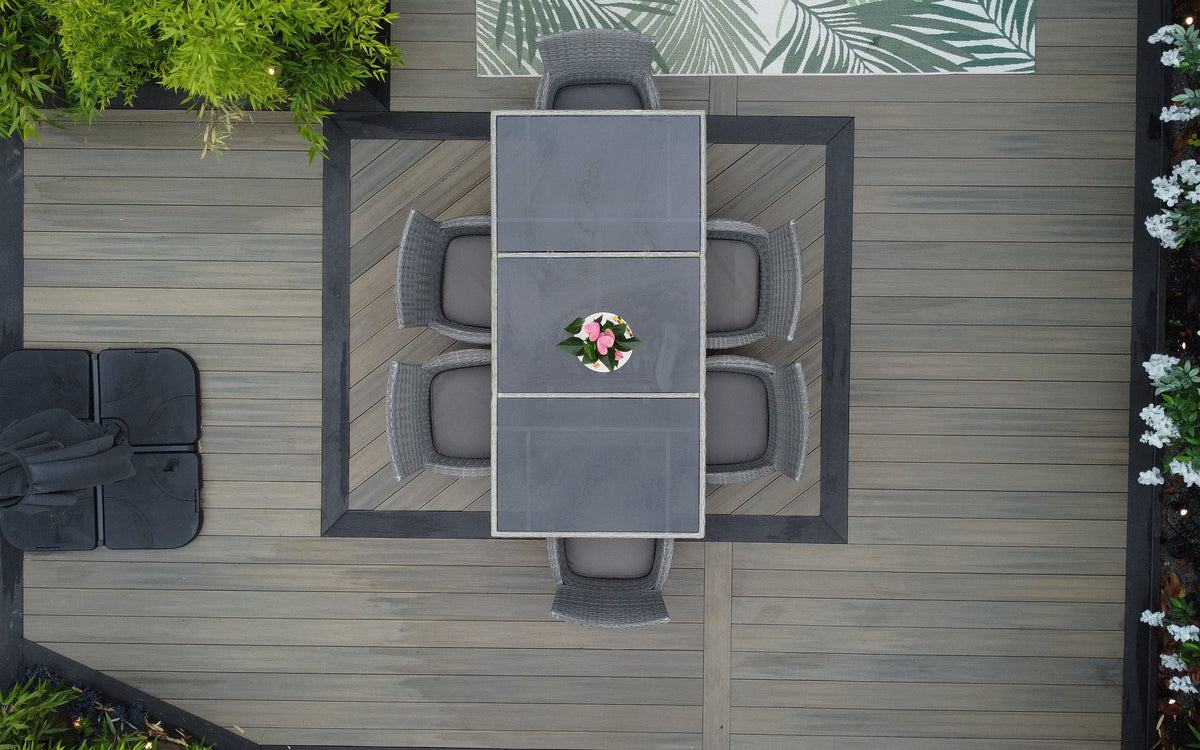
A contrasting picture-frame border can define the edge of a deck or distinguish a seating area. A single-colour arrangement can make the surface feel more continuous. Decide which effect supports the space before adding decorative details.
Draw the border and joint positions before specifying the frame. These elements can require additional support and change the cutting list. A tidy design on paper helps avoid awkward pieces or unresolved edges during installation.
Coordinate the wider garden
Think about how the deck meets paths, planting beds, fencing and any garden building. Repeating a small number of colours or textures can bring those elements together without making every surface identical.
Compare samples across different product categories if you intend to coordinate decking and cladding. A shared colour name does not guarantee an exact match between materials, textures or ranges.
Consider sun and shade
Outdoor surfaces can become hot in direct sun. UV resistance describes protection against sunlight-related degradation; it does not establish a cool-to-touch surface. Review the likely exposure and ask about the selected product’s heat behaviour if barefoot comfort is important.
Furniture placement, shade and the way the space is used also influence comfort. Include these in the design instead of expecting the board colour alone to resolve every summer-use consideration.
Where Can Capped Decking Be Used?
Garden seating and dining areas
A dining deck is a natural place to consider an easier-clean surface. Allow enough room to move chairs, pass around the table and reach nearby doors. Good proportions will affect how much you enjoy the deck as much as the board finish.
If cooking equipment is nearby, follow its requirements for location, heat protection and clearance. Capped decking should not be assumed to be heatproof because it resists ordinary weathering.
Garden rooms and connected outdoor spaces
A deck can form a transition between a garden room and the wider landscape. Plan the threshold, finished level and drainage together. A visually seamless junction still needs the appropriate construction details.
Commercial, balcony and terrace projects
Commercial use can introduce different loading, access, fire and maintenance requirements. Balconies and roof terraces also need an appropriate project specification. A cap alone does not establish suitability for these settings.
Use the technical documents and get the relevant design checks before selecting boards. Avoid treating an application photograph as proof that the same arrangement is appropriate for every building.

How to Compare the Cost of Premium Composite Decking
Compare the complete installed deck, not just the price of one board. Different widths and lengths affect coverage and cutting waste, while the layout influences frame quantities and labour.
Ask for quotes against the same drawing and specification. Confirm whether VAT, delivery, removal of old materials and finishing work are included. A low board price and a complete fitted price cannot be compared directly.
- Surface materials: boards, border details and a realistic cutting allowance.
- Subframe: suitable joists, supports and compatible connections.
- Fixings and trims: clips, screws, fascia and edge details.
- Preparation: any work required to the existing base or ground.
- Labour and logistics: installation, delivery, access and waste removal.
When might the extra surface protection be worthwhile?
Capped decking may appeal where you particularly value stain resistance, tonal finishes and a reduced treatment routine. The benefit depends on how you use the deck and what you are comparing it with.
Do not assume a fixed payback period. If long-term cost matters, compare the actual maintenance tasks, materials and paid services you expect for each option. Include installation quality in the decision, because a more expensive board cannot compensate for an unsuitable frame.
Measure before ordering
For a simple rectangle, multiply length by width to find the area. A deck measuring 4 metres by 3 metres covers 12 m². Final board quantities still depend on length choices, spacing, borders and the cutting layout.
Use the NeoTimber® decking calculator for an initial estimate, then check the complete list with your installer. A detailed plan can help reduce avoidable waste without removing essential components.
Installation Details That Protect the Finished Result
Capped composite decking needs the correct installation just as much as any other board. Establish the frame, board direction, joint positions and edges before fitting begins. The cap does not remove thermal movement or change the need for suitable support.
Specify a compatible frame
Select the subframe components for the site and intended use. Distinguish the spacing between joists from the support span beneath each joist. Both need to follow the selected system’s requirements.
If reusing an existing frame, assess its condition and compatibility before ordering replacement boards. An old structure may need a different arrangement to support the new product properly.
Plan movement, ventilation and drainage
Use the specified gaps at board joints and fixed features. Keep the intended water routes and ventilation paths clear, including after fascia and trims are fitted. A close-fitting finish is not an improvement if it prevents required movement or airflow.
Use the correct clips and edge details
Hidden fixings can help create a clean appearance, but they need to match the board profile. Follow the current instructions for starter, intermediate and final-board details. Do not assume that a fixing used successfully with another range is automatically compatible.
Read the installation guides and videos before work begins. If you would prefer professional support, use the Find an Installer service to discuss your project.
Care, Warranty and Environmental Considerations
Keep the cleaning routine straightforward
Remove loose debris and deal with spills promptly using the approved method. NeoTimber® recommends warm soapy water and a soft-bristled brush for regular cleaning. Check the specific range’s instructions before using a pressure washer or specialist cleaner.
Do not sand capped boards or apply a coating without confirmation from the manufacturer. A repair method suitable for one type of decking may damage another. The maintenance guide explains relevant differences.
Understand what the warranty covers
NeoTimber® Deluxe products are listed with a 25-year residential and 10-year commercial limited warranty, subject to the applicable terms. Read the current warranty information for the exact range and application.
A warranty length is not a guarantee that every aspect of appearance will remain unchanged or that all damage is covered. Check the exclusions and installation conditions, and keep the order details and product documents for future reference.
Ask for specific environmental evidence
NeoTimber® describes its Deluxe boards as using FSC® certified wood fibres and recycled plastic. These are useful composition and sourcing details, but they should not be expanded into a claim that the product has the lowest environmental impact in every situation.
Consider the wider project: material quantities, waste, maintenance and the available end-of-life routes. If recycling is important to your decision, ask what service is actually available rather than relying on a general statement that a material is recyclable.
Your Capped Decking Buying Checklist
- Confirm the application. Establish whether the product suits the site and intended use.
- Compare construction. Check the core type, cap coverage and relevant technical information.
- Review samples. Compare colour, texture and both usable faces where applicable.
- Plan the layout. Include borders, joints, steps and adjacent surfaces.
- Price the whole system. Include supports, fixings, trims, delivery and installation.
- Read the care and warranty terms. Understand the responsibilities that continue after fitting.
- Confirm the order. Check range names, lengths, quantities and compatible components.
Once those decisions are clear, compare the current Deluxe Hollow and Deluxe Solid options, or request samples to make the final colour choice.
Capped Composite Decking FAQs
What is the main benefit of capped composite decking?
The protective outer layer adds resistance to everyday staining and weathering while providing the finished colour and texture. The value of those features depends on the product and how you intend to use the deck.
Is capped decking better than uncapped decking?
It can offer advantages in surface protection and colour stability, but the best choice also depends on budget, appearance and application. Compare the specific ranges rather than assuming the cap is the only feature that matters.
Is premium composite decking worth the extra cost?
It may be if the finish, protection and care routine match your priorities. Compare the complete installed cost and the maintenance you expect, rather than relying on the word “premium” or assuming guaranteed future savings.
What should I look for in high end composite decking?
Look for an appealing finish, clear performance information, suitable cap coverage, compatible accessories and detailed support documents. Installation quality and thoughtful edging are also important to a refined final result.
Can capped composite decking still stain?
Yes. Stain resistance does not mean every substance can be left on the surface indefinitely. Clean spills promptly and use the recommended treatment for the chosen board.
Does capped decking fade?
Capping can improve fade resistance, but it should not be described as a guarantee of zero colour change. Review the manufacturer’s expectations for weathering and compare the applicable warranty terms.
Is capped composite decking scratch-proof?
No surface should be treated as immune to damage. Take care when moving furniture and avoid abrasive cleaning or unapproved repairs. Seek range-specific advice if the protective surface is damaged.
Can I sand or paint capped boards?
NeoTimber’s care guidance says not to sand its capped ranges. They are designed to retain their supplied finish without routine painting or staining. Ask the manufacturer before applying any repair treatment or coating.
Does four-sided capping mean the deck is waterproof?
No. Cap coverage and waterproofing are different matters. The deck still needs the correct gaps, supporting construction and drainage, and any roof waterproofing must be addressed separately.
Are capped boards always solid?
No. Capping describes the outer protection; solid and hollow describe the core. NeoTimber® offers both Deluxe Hollow and Deluxe Solid capped options.
Can mould or algae appear on capped decking?
Surface growth can occur where dirt and organic debris collect, including on protected outdoor surfaces. Keep the deck clean and follow the care guidance rather than assuming the cap eliminates all maintenance.
Where can I compare capped decking finishes?
Request free NeoTimber® samples and explore the project gallery. Use the images for design ideas and the samples to assess colour and texture beside your own exterior materials.
Choose a Finish That Works for the Whole Project
Capped composite decking brings together a protective surface, timber-inspired design and a reduced treatment routine. Its benefits are strongest when the product suits the application and the frame, detailing and care have been planned properly.
Explore the decking collection, compare samples and speak to NeoTimber® about the right system for your outdoor space.