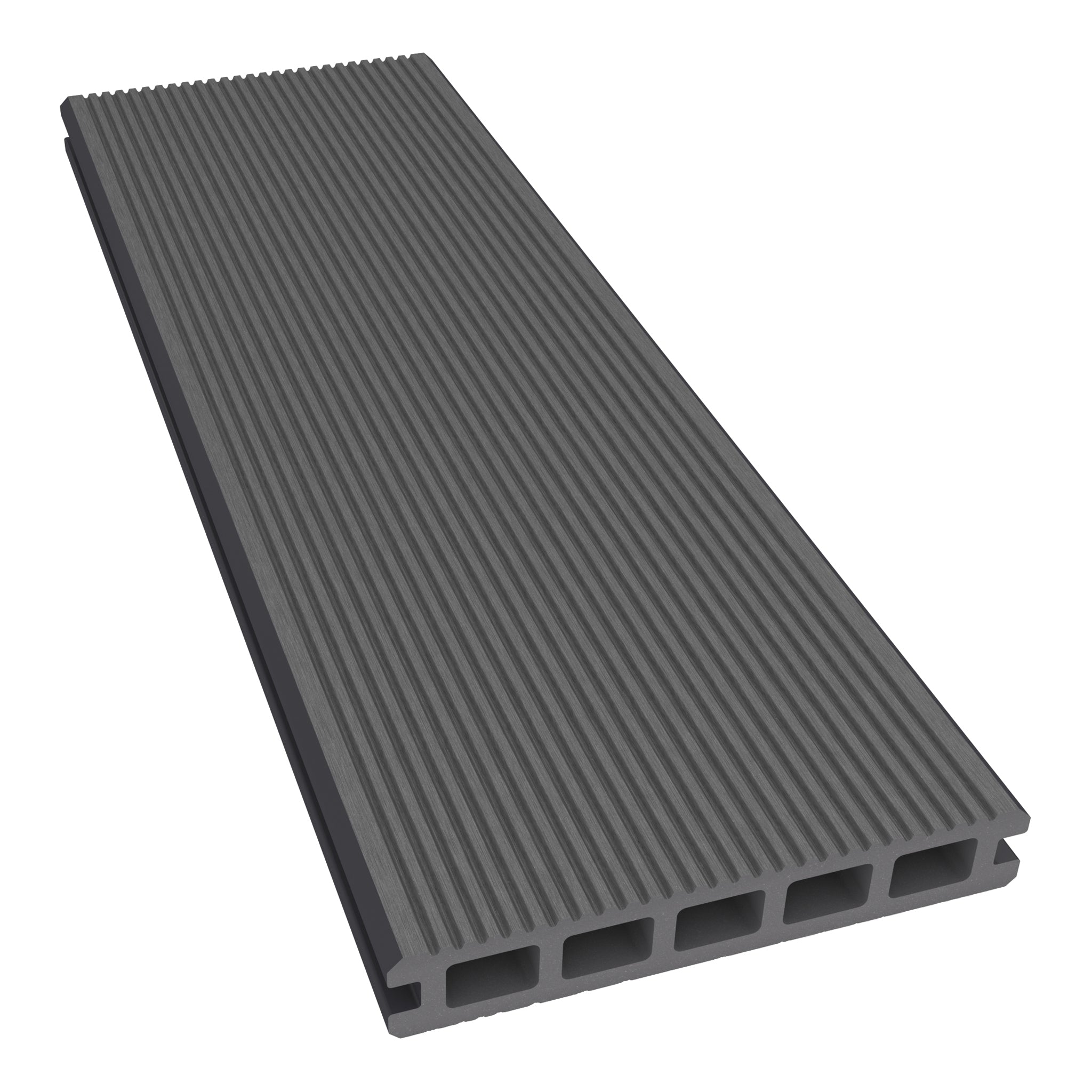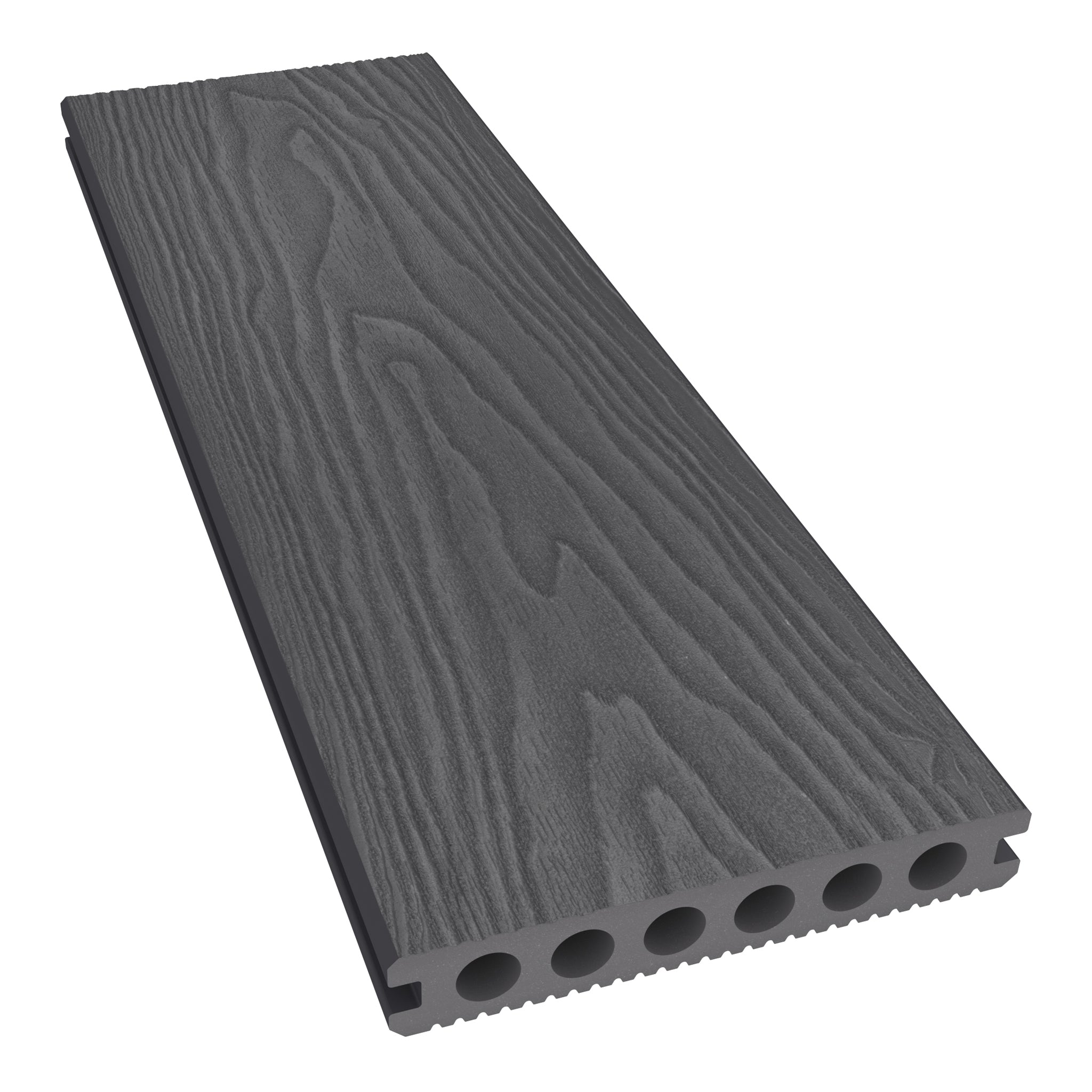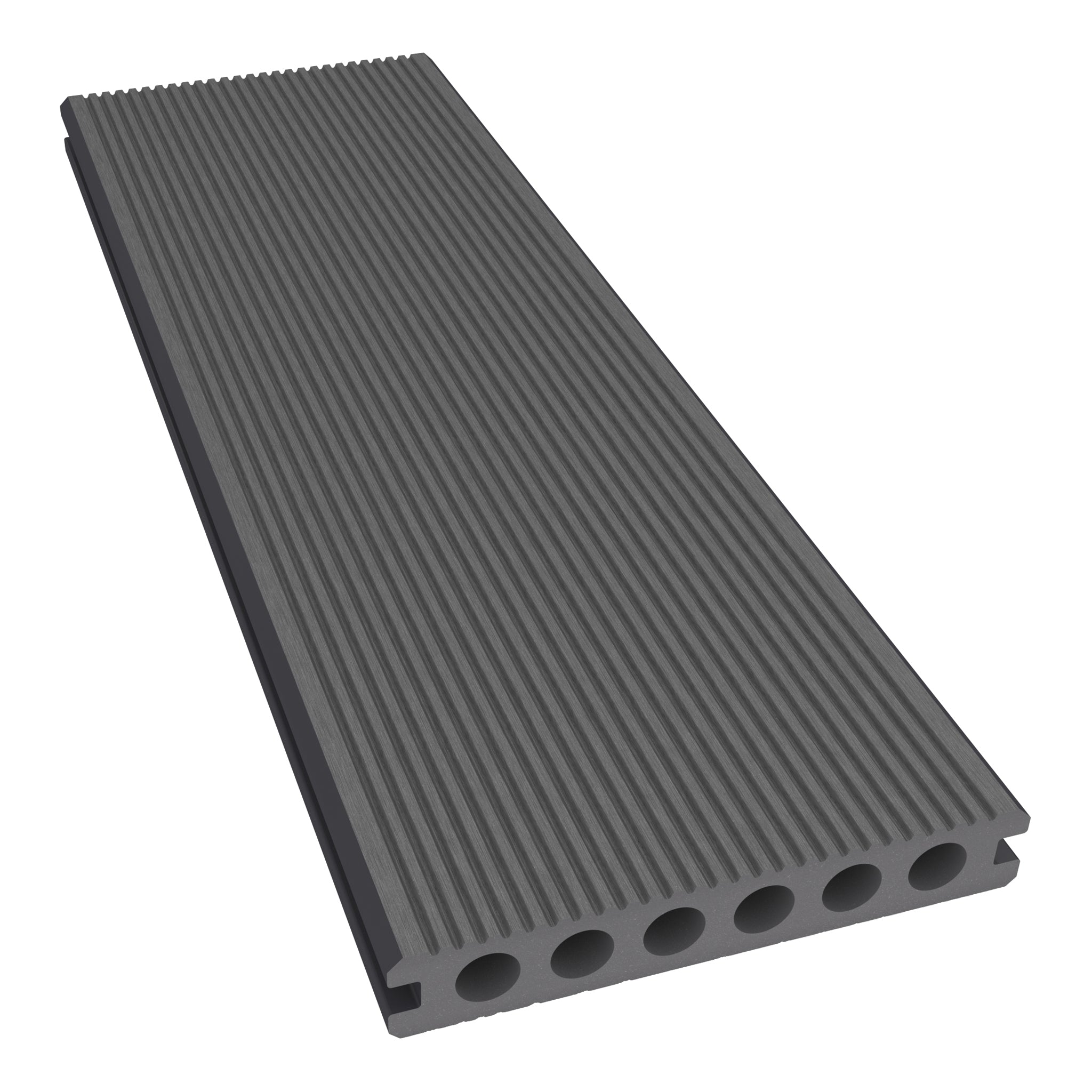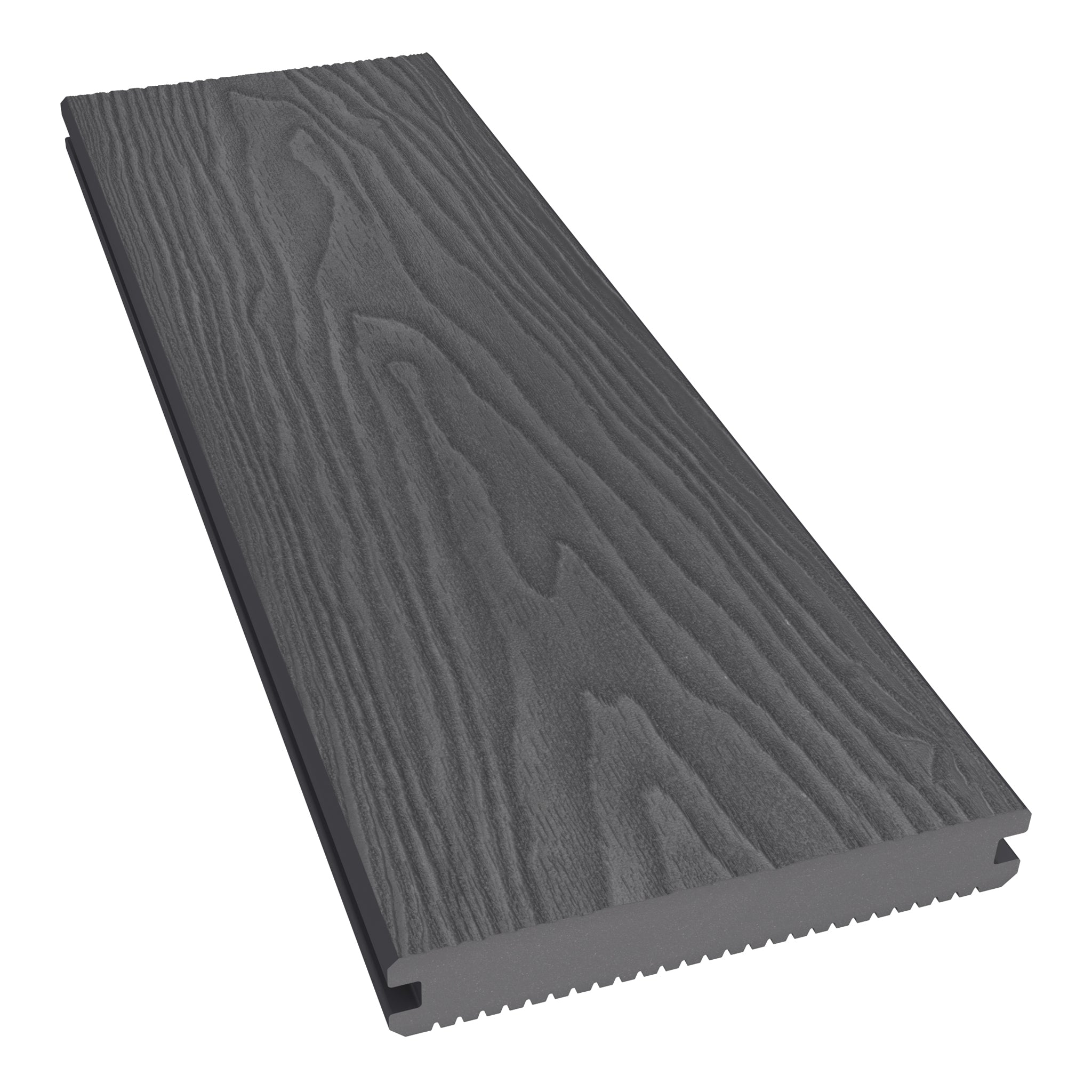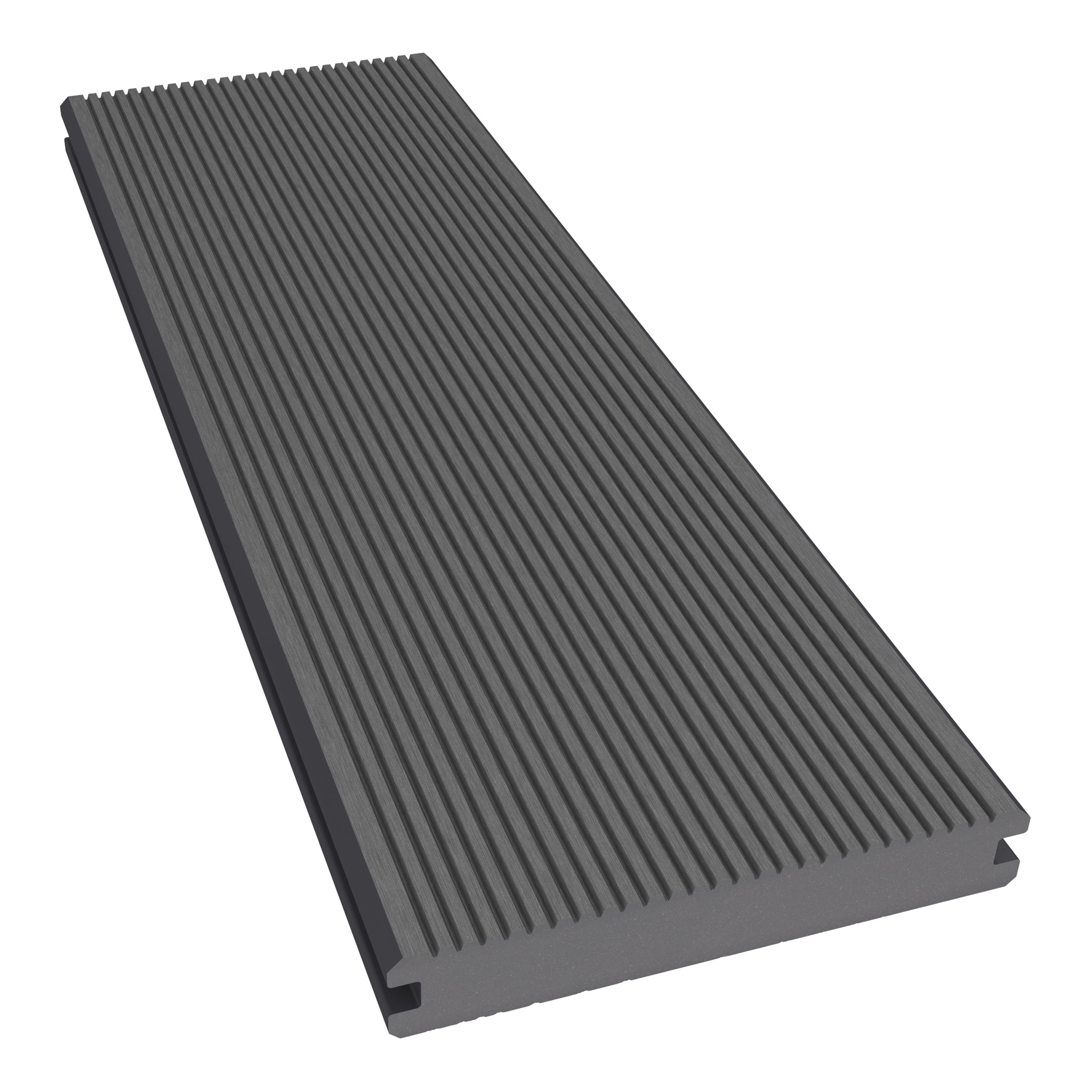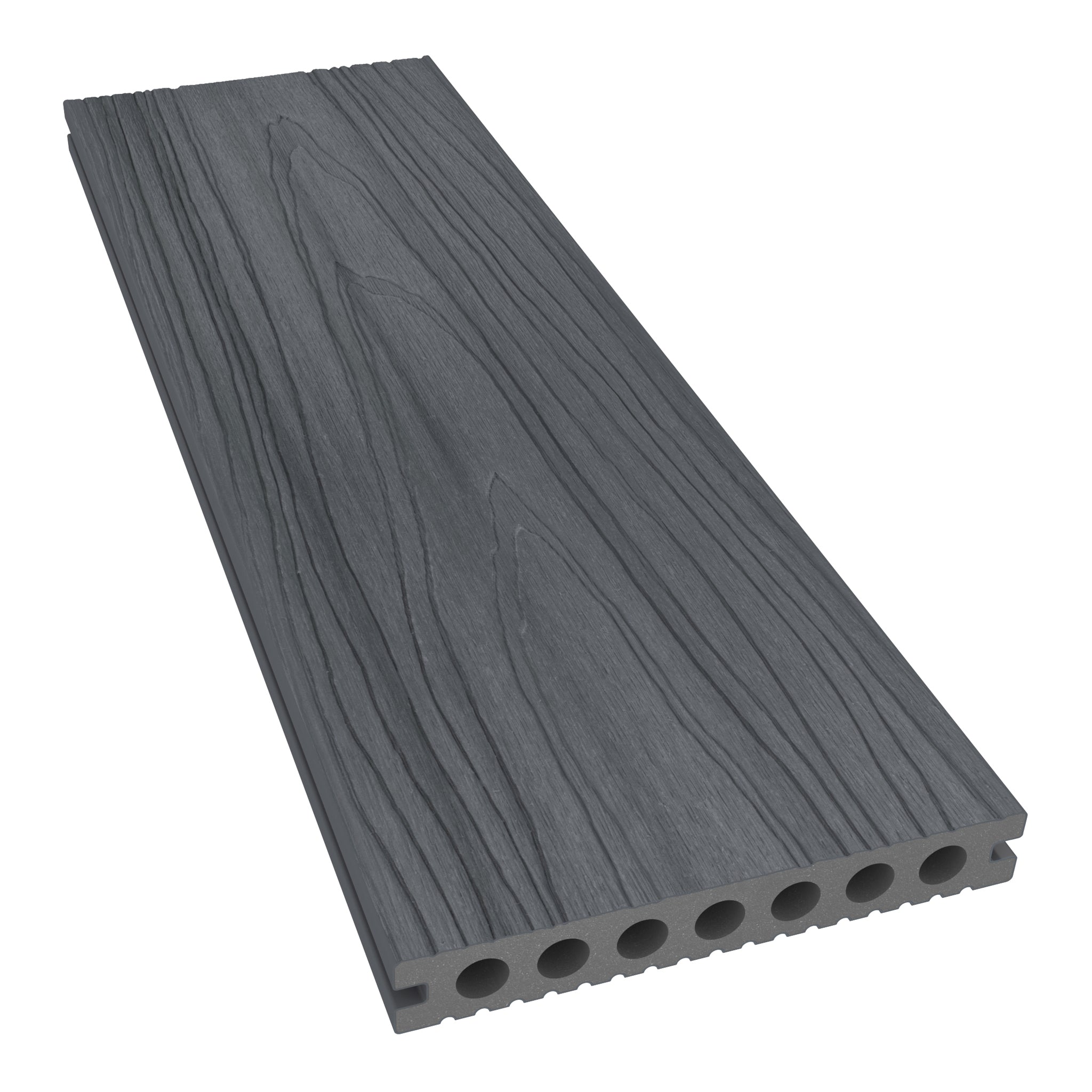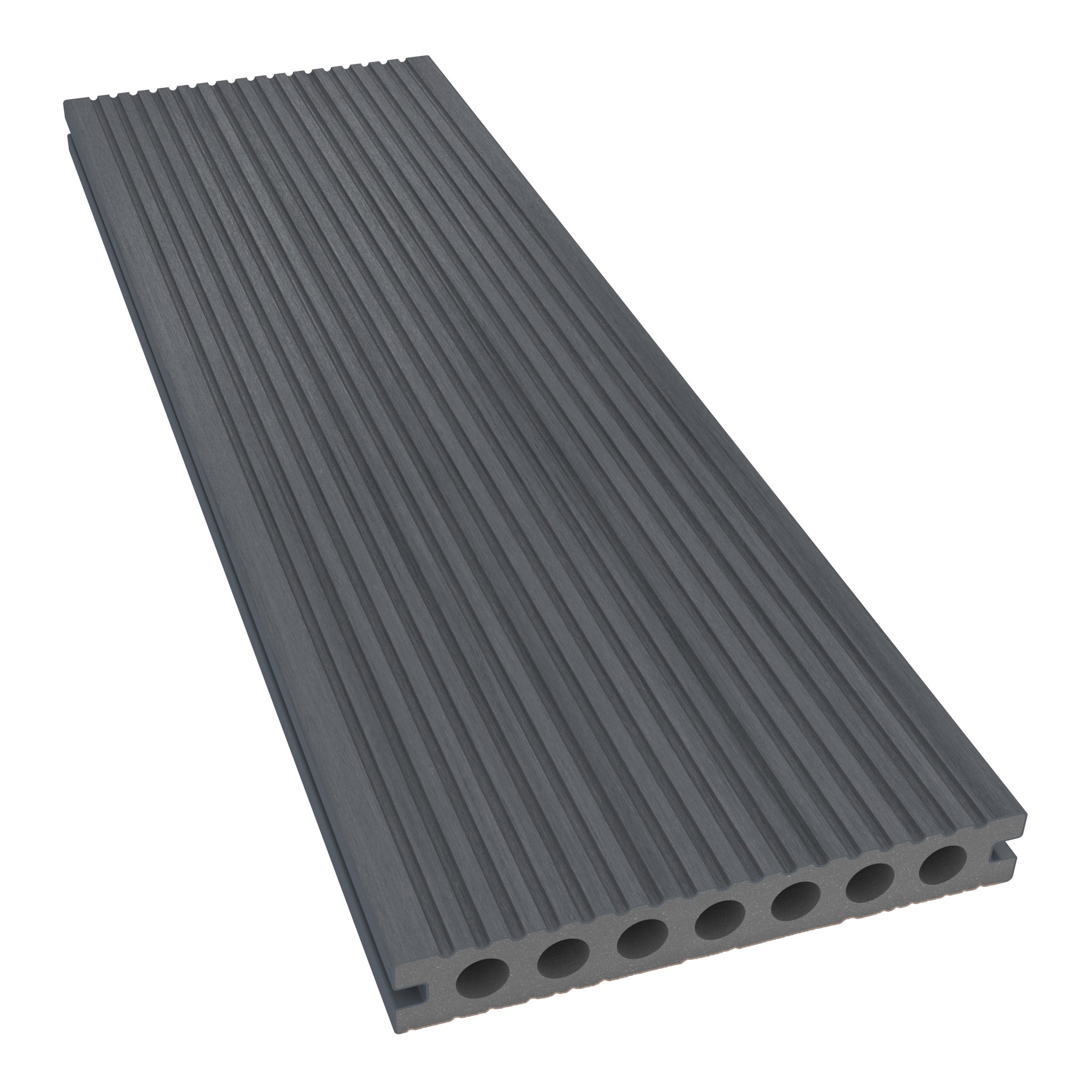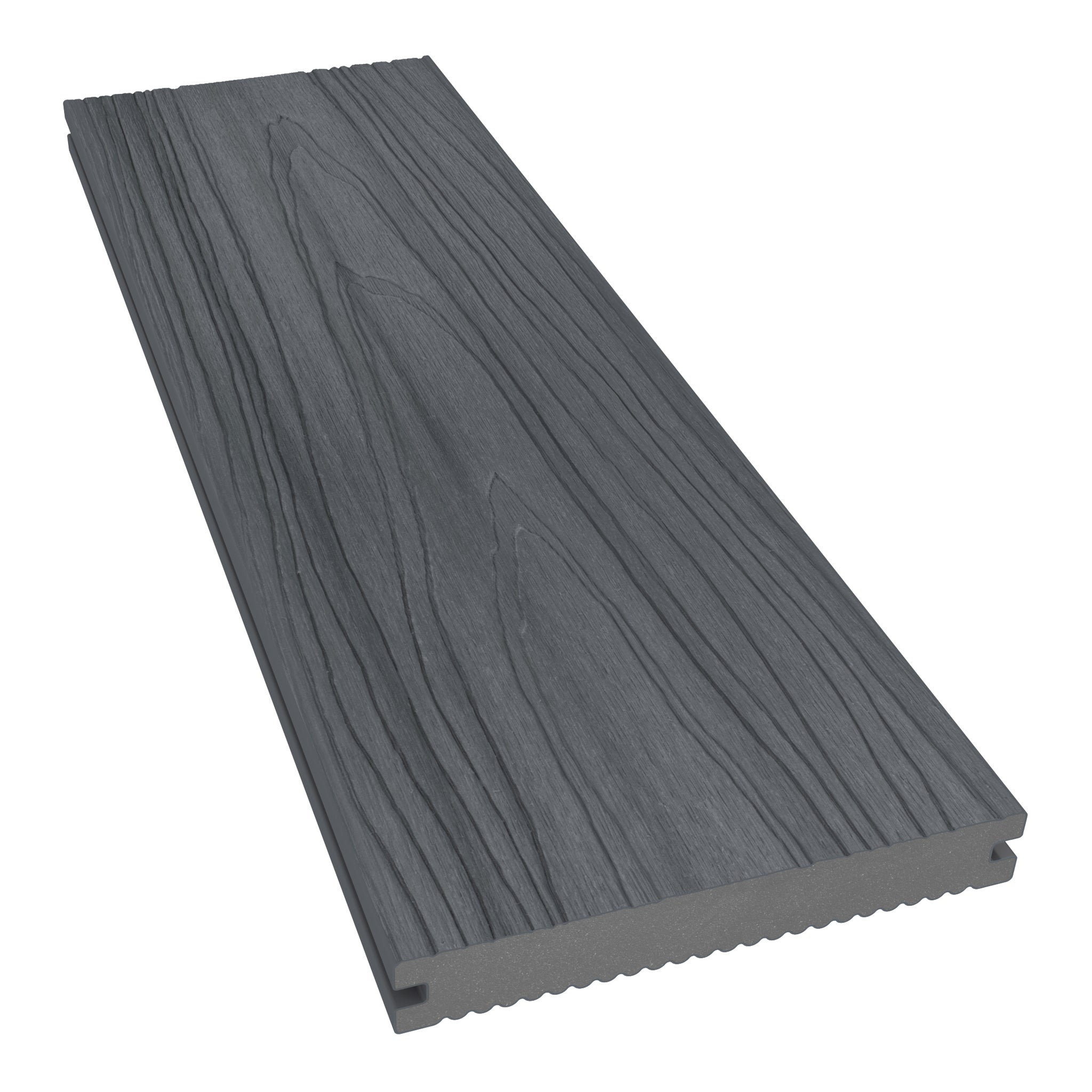




Keep Your Deck Clean With the Right Method for Your Boards
For routine cleaning composite decking, start with warm soapy water, a soft-bristled brush and a thorough rinse. Identify your board range first and follow its care instructions before using a specialist cleaner or pressure washer.
If you are asking “how do you clean composite decking?”, the most useful answer is a simple sequence: clear debris, wash gently, rinse and assess the dry surface. Persistent marks need a treatment suited to their cause and the particular finish.
This guide explains cleaner selection, pressure washing and cleaning composite decking with vinegar. It also covers how to clean plastic decking without assuming every manufactured board has identical care requirements. Visit our general decking page for an overview of the products.
Why Routine Deck Cleaning Matters
Leaves, dirt, food residue and other deposits can collect on any outdoor surface. Clearing them helps keep the deck’s appearance and required drainage routes in good order.
Low maintenance means reduced decorative treatment, rather than no care. NeoTimber® boards provide their finish without routine painting or staining, but cleaning and checks remain important.
Use the maintenance guide for the selected range. Do not assume that cleaning guarantees an unchanged colour or a slip-proof surface in every condition.

How to Clean Composite Decking: Step by Step
1. Identify the Material and Check Its Condition
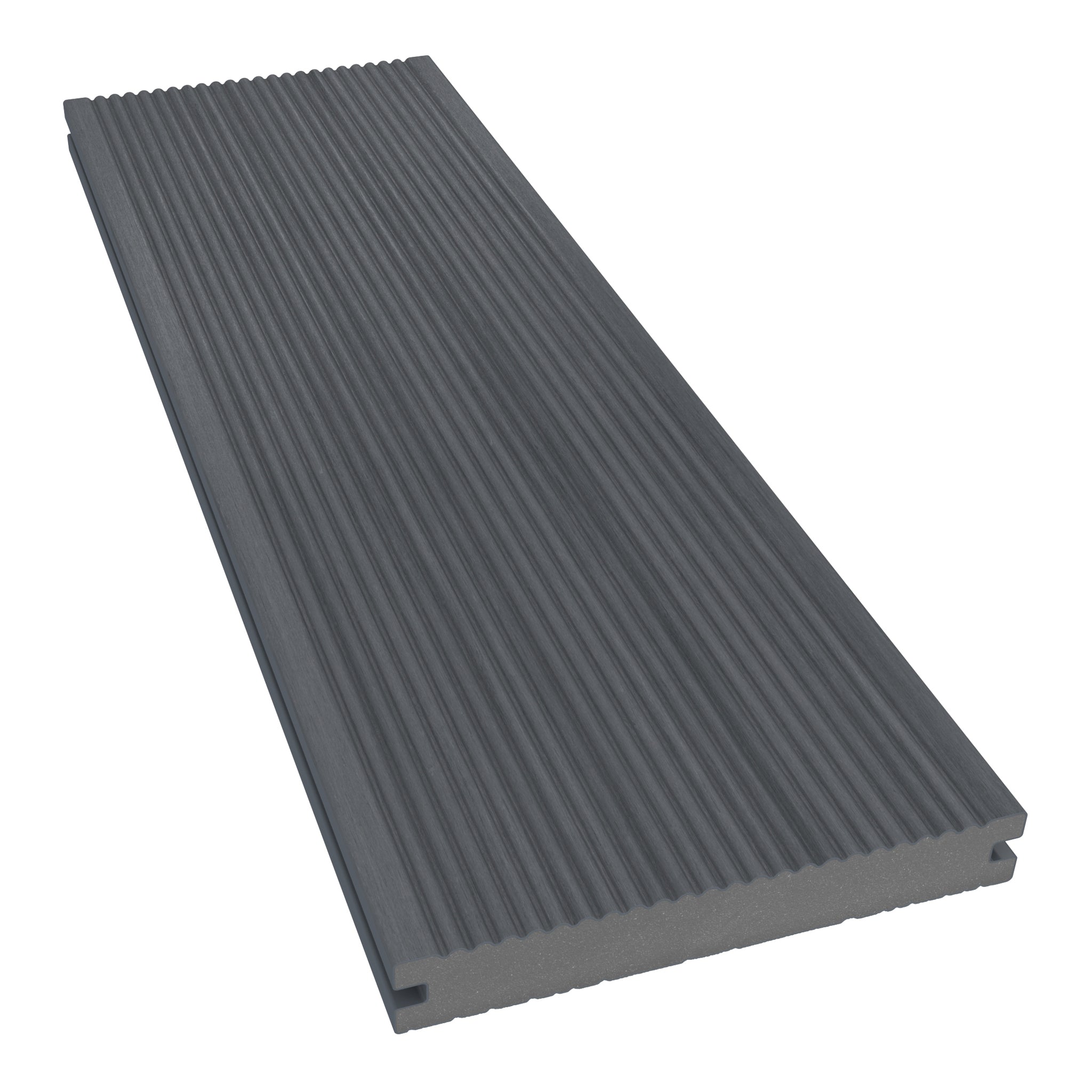
Confirm the board range and whether it is capped or uncapped. Check for loose components or damage before washing. Cleaning cannot repair an installation issue.
Move furniture carefully and lift rather than drag it across the boards. Set aside items that could obstruct access or collect cleaning residue.
2. Sweep Away Loose Debris
Remove leaves and grit with a suitable soft broom. Clear accessible gaps without scratching the boards or pushing debris underneath. Check edges and areas around planters where material collects.
3. Apply a Suitable Deck Cleaning Solution
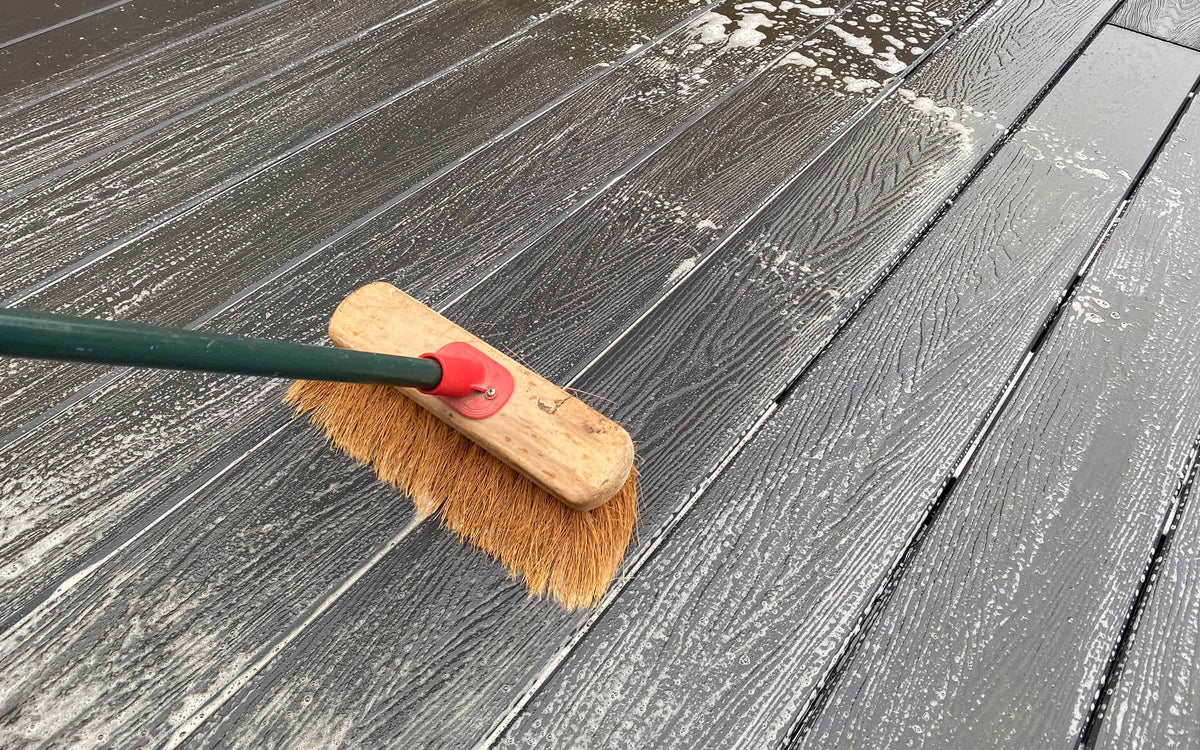
For ordinary dirt, use warm soapy water with a compatible mild detergent. Follow the detergent’s instructions and start with a small area if you are unsure about the finish.
A stronger concentration is not automatically more effective. Avoid improvised mixtures or products intended for a different material.
4. Brush Gently Along the Boards
Work in manageable sections using a soft-bristled brush. Follow the board length and surface pattern, paying attention to dirt in textured areas without scrubbing abrasively.
5. Rinse and Allow to Dry
Rinse away loosened dirt and soap with clean water. Keep the runoff route clear and avoid leaving cleaner to dry on the surface. Assess remaining marks once the boards are dry, since a wet surface can affect their appearance.
The Best Way to Clean Composite Decking
The best way to clean composite decking is the least aggressive approved method that removes the deposit. Routine washing is a sensible starting point, while a specific stain may need a different compatible treatment.
If you are searching for the best way to clean decking or the best thing to clean decking, identify the material first. Instructions for timber, capped composite and all-plastic boards should not be transferred automatically between products.
For a general NeoTimber® composite clean, warm soapy water and a soft brush are the starting point. Refer to the range guidance before escalating the treatment.
What to Clean Composite Decking With
A basic cleaning kit includes a soft broom, bucket, compatible mild detergent, soft brush or sponge and a hose for rinsing. Specialist products may be useful for particular deposits, but are not necessary for every routine wash.
The best cleaner for composite decking depends on the board and the substance being removed. Check that its instructions cover your exact surface, follow the dilution and contact time, and test an inconspicuous area before wider use.
Do not assume a cleaner described as natural, biodegradable or suitable for timber is also compatible with every composite cap. Product-specific approval is more useful than a general marketing label.
Food, Grease and Spill Marks
Deal with spills promptly. Remove excess material gently without spreading it over a larger area, then use the approved washing method.
For grease or a mark that remains after washing, seek advice about a compatible cleaner for the board range. Not every stain will disappear, particularly where the substance has remained on the surface for some time.
The stain-resistance guide provides further context. Stain resistance does not mean immunity to every substance.

Cleaning Composite Decking With Vinegar
Cleaning composite decking with vinegar is a common search, but a homemade vinegar solution should not be treated as universally approved. Vinegar is acidic, and suitability depends on the formulation, concentration and board surface.
Start with the manufacturer’s recommended routine wash. If you want to use vinegar for a particular mark, obtain confirmation for the exact board and method before applying it. Do not copy a recipe intended for another brand or material.
Never mix vinegar with bleach or other cleaning chemicals. Use one approved product as directed, then rinse appropriately. If the cause of a mark is unclear, ask for advice rather than experimenting with stronger mixtures.
Mould, Algae and Recurring Deposits
Shaded or damp areas can develop surface growth where dirt and organic material accumulate. Composite should not be assumed immune to visible mould or algae.
Follow the mould guidance for the selected range. Clear debris and use suitable cleaning methods rather than reaching automatically for bleach or abrasive tools.
If deposits return in the same location, check drainage, planting and objects that hold moisture against the surface. The standing-water guide offers further background. Repeated cleaning may not resolve the underlying cause.
Can You Pressure Wash Composite Decking?
Pressure washing may be permitted where the board guidance allows it. Check the current limits and method for your exact product rather than using a generic setting.
Start gently, use the specified fan attachment and maintain the required nozzle distance. Work along the boards without concentrating the jet on one point. Avoid forcing water into sensitive junctions or damaging the finish.
The NeoTimber® pressure-washing guide provides product context. A maximum stated pressure is an upper limit, not a recommended target for every clean.

How to Clean Plastic Decking
Cleaning plastic decking begins with identifying whether the boards are all-plastic or wood-polymer composite. Similar appearances do not establish identical cleaning requirements.
Use the relevant manufacturer’s care guide, remove loose debris and select a compatible cleaner. Check before using acids, solvents, bleach, abrasives or pressure washing.
For NeoTimber® composite boards, follow the range-specific instructions described above. Do not assume that a method suitable for uPVC, recycled plastic furniture or another deck brand is transferable.
The Best Way to Clean Decking Boards Throughout the Year
The best way to clean decking boards is to combine routine checks with timely attention to spills and visible deposits. Spring and autumn can be useful points for a fuller clean, with additional care where conditions demand it.
- After winter, check debris, drainage and the surface condition.
- During summer use, deal with food and drink spills promptly.
- In autumn, remove leaves before they accumulate in gaps and corners.
- Before colder weather, clear objects and deposits that trap moisture.
Adjust the schedule to the site rather than assuming two washes will suit every deck. A sheltered, shaded area can need different attention from an open terrace.
Cleaning Mistakes to Avoid
- Using wire brushes or abrasive pads that alter the finish.
- Sanding capped boards to remove a mark.
- Mixing cleaning products or improvising chemical recipes.
- Using high-pressure equipment without checking the board instructions.
- Letting cleaning residue dry on the surface.
- Treating loose components or recurring water marks as cleaning-only problems.
If a method changes the appearance or fails to remove a mark, stop and seek product-specific advice. Provide the range, colour, photographs and details of treatments already tried.
Frequently Asked Questions
How do you clean composite decking without a pressure washer?
Sweep, wash with compatible warm soapy water and a soft brush, then rinse and assess the dry surface.
What is the best cleaner for composite decking?
For ordinary dirt, start with the approved mild washing method. Specialist cleaner selection depends on the stain and board range.
Will deck cleaning restore every board to a like-new finish?
No. Cleaning removes deposits where the method is effective, but cannot guarantee reversal of ageing, damage or permanent staining.
Keep the Care Routine Straightforward
Cleaning composite decking works best when you identify the material, start gently and use the right method for the issue. Consistent care is more useful than aggressive treatment after a long build-up.
Review NeoTimber’s maintenance guide, read the warranty terms and contact the team for advice on persistent marks. If you are planning a new deck, explore the composite collection alongside its care requirements.