Choose a Board Layout That Gives Your Deck Direction and Character
Composite decking laying patterns influence the appearance of an outdoor space before furniture, planting or lighting are added. Straight boards create an ordered backdrop, diagonal runs change the visual direction and decorative patterns can give a seating area a distinct identity.
The choice also affects construction. Joints, cuts, support positions and material quantities need to be planned together, so select the layout before building the frame.
This guide compares six approaches and the questions behind them. Explore NeoTimber’s decking guide for an overview, or browse our composite decking range alongside the design options.
Composite Decking Laying Patterns at a Glance
| Pattern | Design effect | Planning consideration |
|---|---|---|
| Straight runs | A simple, consistent direction | Board lengths and end-joint positions |
| Diagonal runs | A more dynamic surface | Angled cuts and suitable support spacing |
| Picture frame | A defined perimeter | Support and fixings for border boards |
| Herringbone | A repeated staggered arrangement | Numerous supported junctions |
| Chevron | Angled ends meeting in repeated points | Accurate cutting and movement details |
| Patchwork | Sections with changing board directions | Separate support arrangements at transitions |
1. Straight and Staggered Board Runs
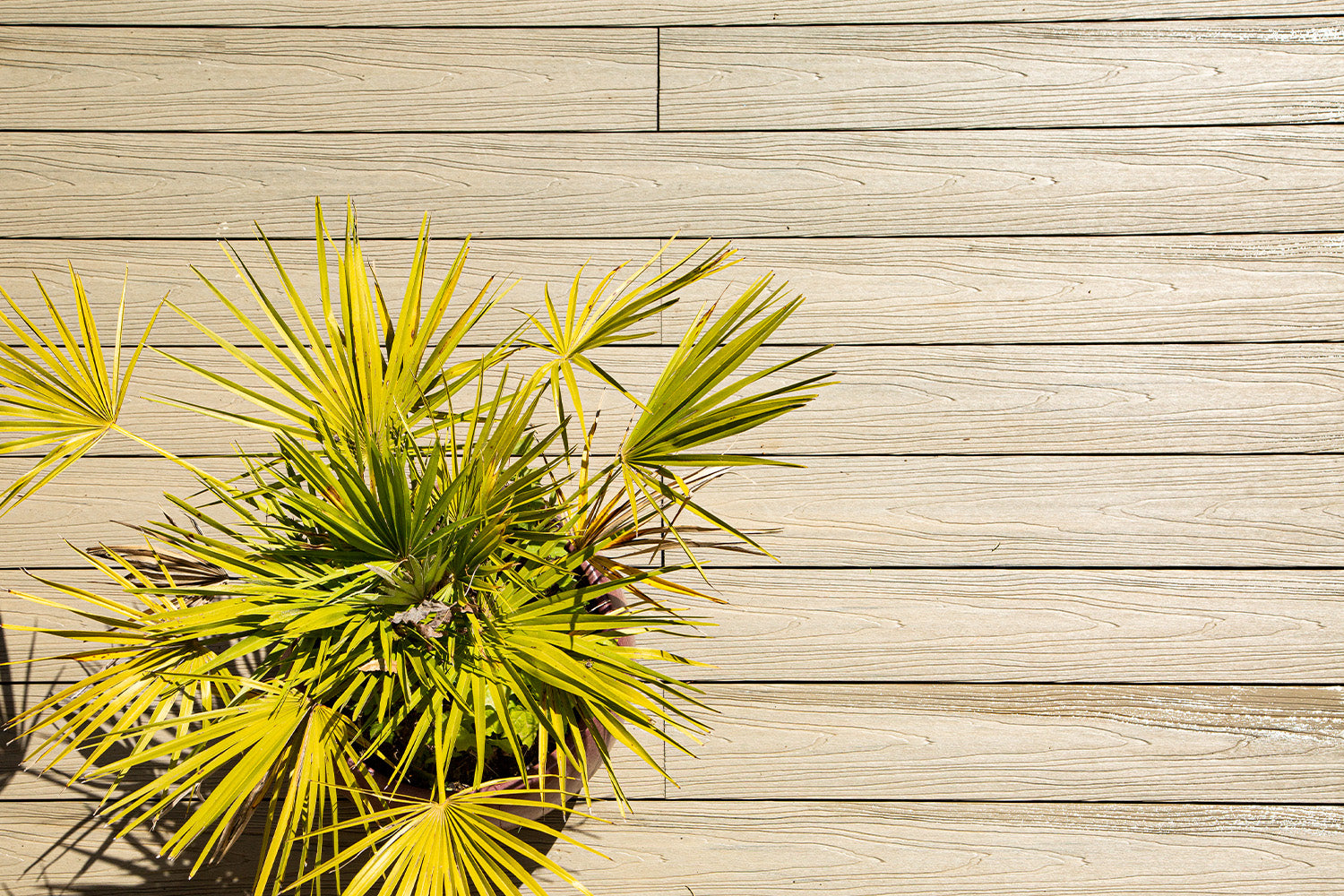
A straight layout places boards in parallel rows. It can give the garden a calm, coherent appearance and let the furniture or planting provide the main detail.
Choose the direction in relation to the house, access routes and view. Compare different orientations on a measured drawing rather than assuming one direction will automatically make every garden look wider or longer.
Where rows need more than one board length, plan end joins deliberately. A staggered arrangement can distribute the visible joints, but each end still needs the support, fixing and gap detail specified for the system.

Consider available deck board lengths and profiles before finalising the pattern. A breaker board may help organise long runs, provided its supporting detail is resolved.
2. Diagonal Composite Decking
Diagonal boards introduce a different visual rhythm and can distinguish the deck from adjoining paving or the building’s straight lines. A 45-degree arrangement is one design option, rather than a universal installation instruction.
The relationship between board direction and joists changes the effective distance a board spans. Confirm the product’s requirements for diagonal layouts; do not assume the support spacing for perpendicular runs can be reused.
Angled perimeter cuts can also increase waste. Work out the cutting list and border detail before calculating quantities.

3. Picture-Frame Borders
Picture framing surrounds the main board area with one or more border rows. It can provide a clear stopping point for straight or diagonal boards and help organise exposed edges.
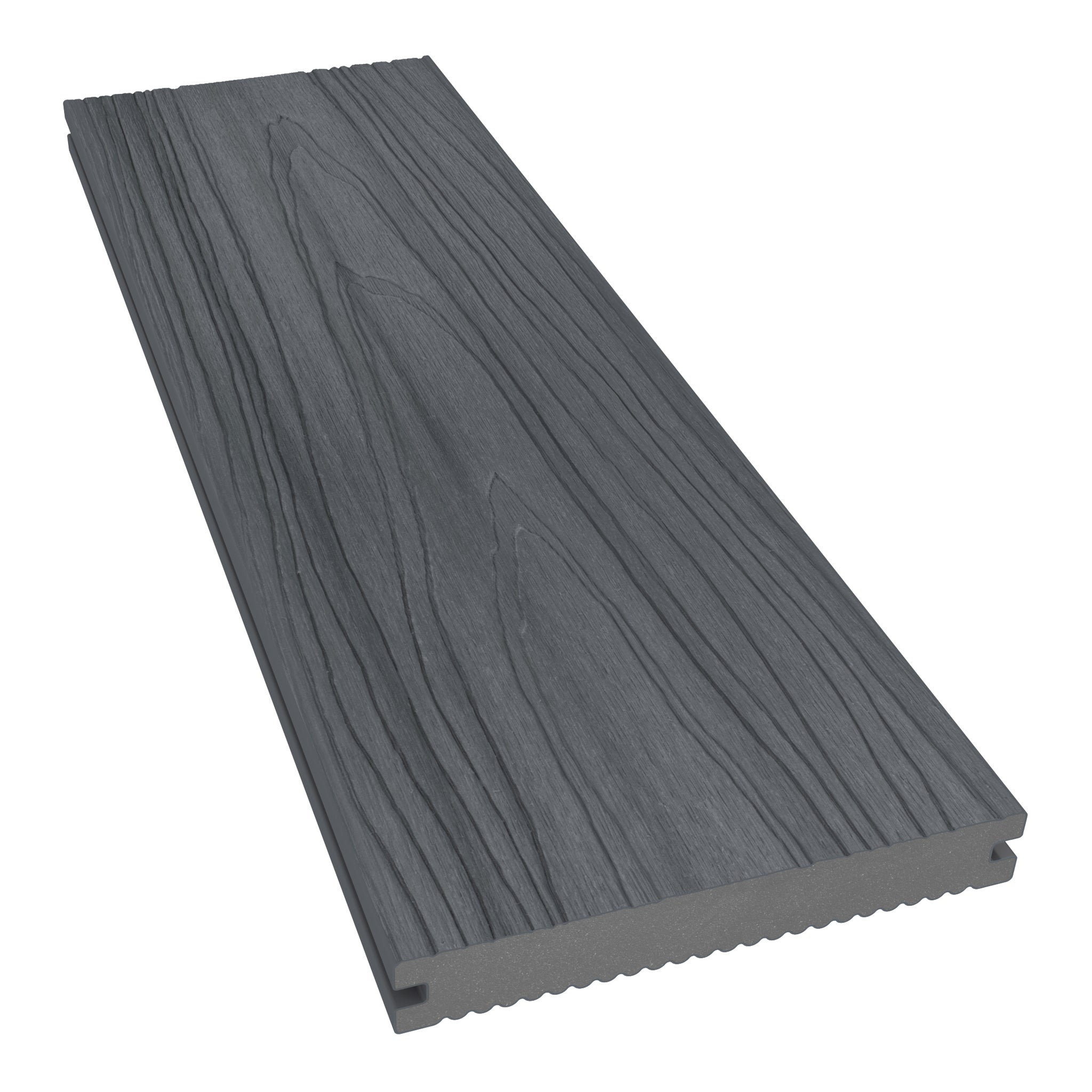
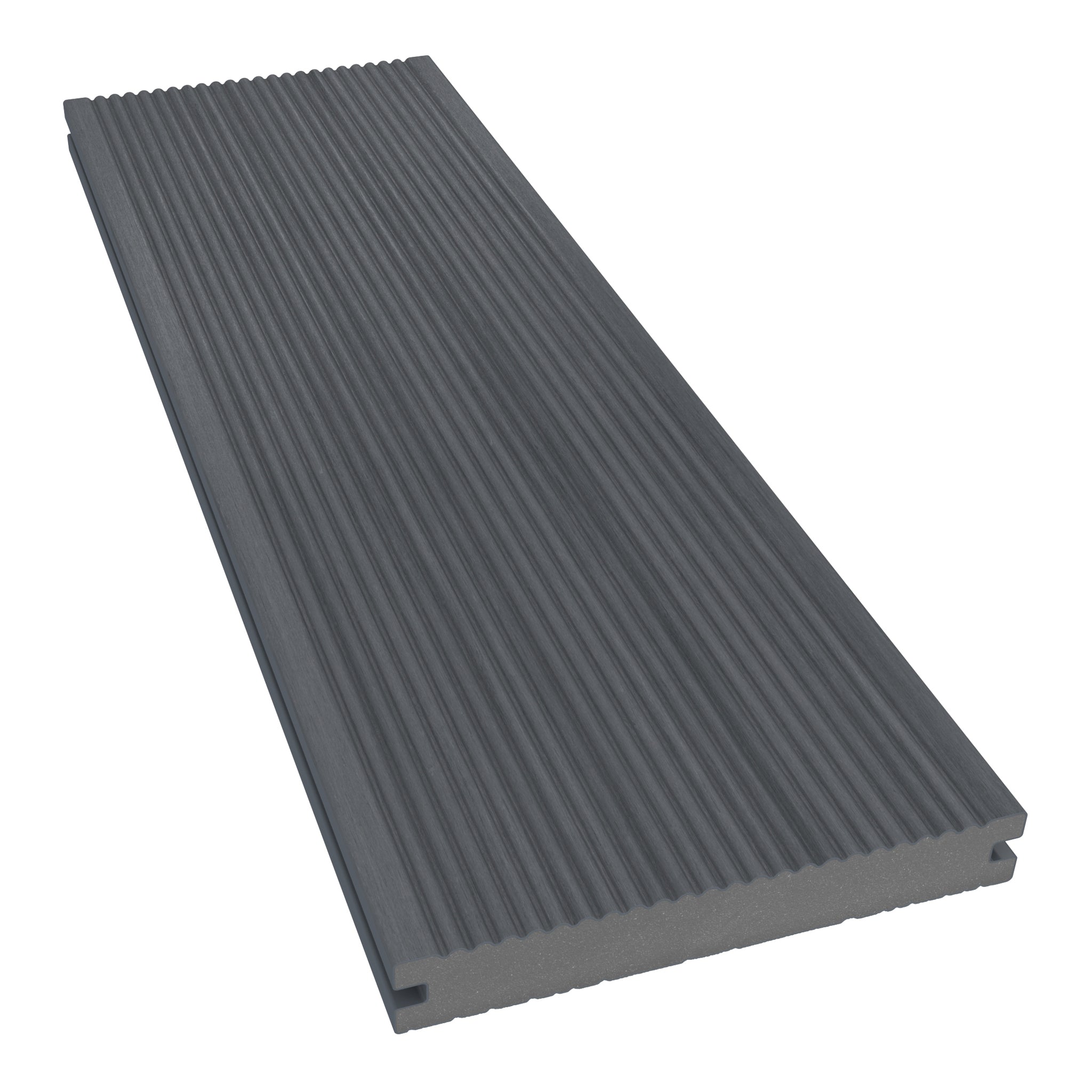
Use a matching colour for a restrained outline or a contrasting shade for stronger definition. Selected reversible products may also offer different approved textures, but check the walking faces and compatibility of the exact boards.
A frame is a design choice, not a requirement for every deck. Its width should remain proportionate to the main seating or circulation area.

Explore our picture-framing guide, reversible board options and decking colours. Plan support under border boards and corners before the frame is built.
4. Herringbone Composite Decking
Herringbone arranges boards in a repeated staggered pattern, with the end of one meeting the side of another. The boards remain in the same walking plane: they do not physically overlap in layers.
The pattern introduces many visible junctions and can work as a feature within a border or across a larger area. Test its scale against furniture and the view from the house so the surface does not feel unnecessarily busy.
Shorter board sections and frequent changes in direction need an appropriately designed subframe. Every junction must retain the specified support and movement allowance.

5. Chevron Decking
Chevron uses angled board ends meeting to form repeated points. This distinguishes it from herringbone’s staggered end-to-side arrangement.
Accurate cutting is important, but the aim is not a gapless joint. Composite moves with temperature, so the pattern must accommodate the product’s required clearances.
Confirm the angle, supporting layout and fixing method before cutting several boards. Prepare a sample arrangement or detailed drawing to check the repeat and perimeter treatment.

Our cutting composite decking guide explains tool-selection considerations. Unusual patterns may require supplier clarification beyond a standard straight-run detail.
6. Patchwork Layouts
A patchwork design divides the surface into sections with different board directions. The sections can be equal or arranged around the main activities, such as dining and seating.
The effect depends on proportion. Large sections can create a measured rhythm, while too many small changes can compete with furniture and planting. Sketch the whole deck before deciding how many divisions to include.
Each transition affects the frame underneath. A single joist arrangement may not support every direction, particularly where several sections meet.

Use Colour and Texture to Refine the Pattern
A second colour can emphasise an inlay or perimeter, but it is not necessary for a pattern to be visible. Board direction and texture may provide enough contrast.
Compare wood-effect finishes with the approved alternatives and view physical samples together. Confirm board thickness, profile and fitting compatibility before combining products.
For broader inspiration, explore our composite decking ideas and designs. Choose one principal feature rather than adding every available detail.
How to Plan a Patterned Composite Deck
- Measure the site: record doors, fixed obstacles and changes in level.
- Map the furniture: leave space for chairs in use and clear routes.
- Draw the repeat: include actual board dimensions, joints and borders.
- Design the support: resolve board spans and end support for each direction.
- Check movement: distinguish side gaps, end joins and perimeter clearances.
- Prepare the cutting list: allow for angles, blade cuts and realistic waste.
- Confirm the method: follow the current product instructions before fitting.
Use the installation resources and subframe guide together. A decorative layout changes the surface arrangement; it does not remove structural requirements.
What Does the Pattern Mean for Cost and Upkeep?
Compare the complete installation rather than the board price alone. Intricate patterns can add cutting time, waste, supporting members and fixings. A straightforward layout may leave more budget for planting, furniture or better-resolved edge details.
Also consider cleaning and future access. More joints and borders create more details to inspect, and lifting a damaged section may be less straightforward than removing a long board in a simple run.
The best pattern balances the appearance you want with the work and care you are willing to commit to.
Composite Decking Laying Patterns FAQs
Which layout is the simplest starting point?
Straight parallel runs generally create fewer directional changes than decorative patterns. The actual installation still depends on the site, frame and board specification.
Can I fit diagonal boards onto an existing frame?
Only after checking its condition and support arrangement against the chosen diagonal layout. Existing joist spacing may not be suitable.
Are herringbone and chevron the same?
No. Herringbone uses staggered end-to-side junctions; chevron uses angled ends meeting in repeated points.
Can I install patterned decking without gaps?
No. Follow the movement allowances for the exact product and junction. A decorative joint must still accommodate the specified movement.
Choose a Layout That Works Beyond the Photograph
Composite decking laying patterns can give a garden a distinctive identity. Start with the desired activity and the setting, then develop the board arrangement and supporting details together.
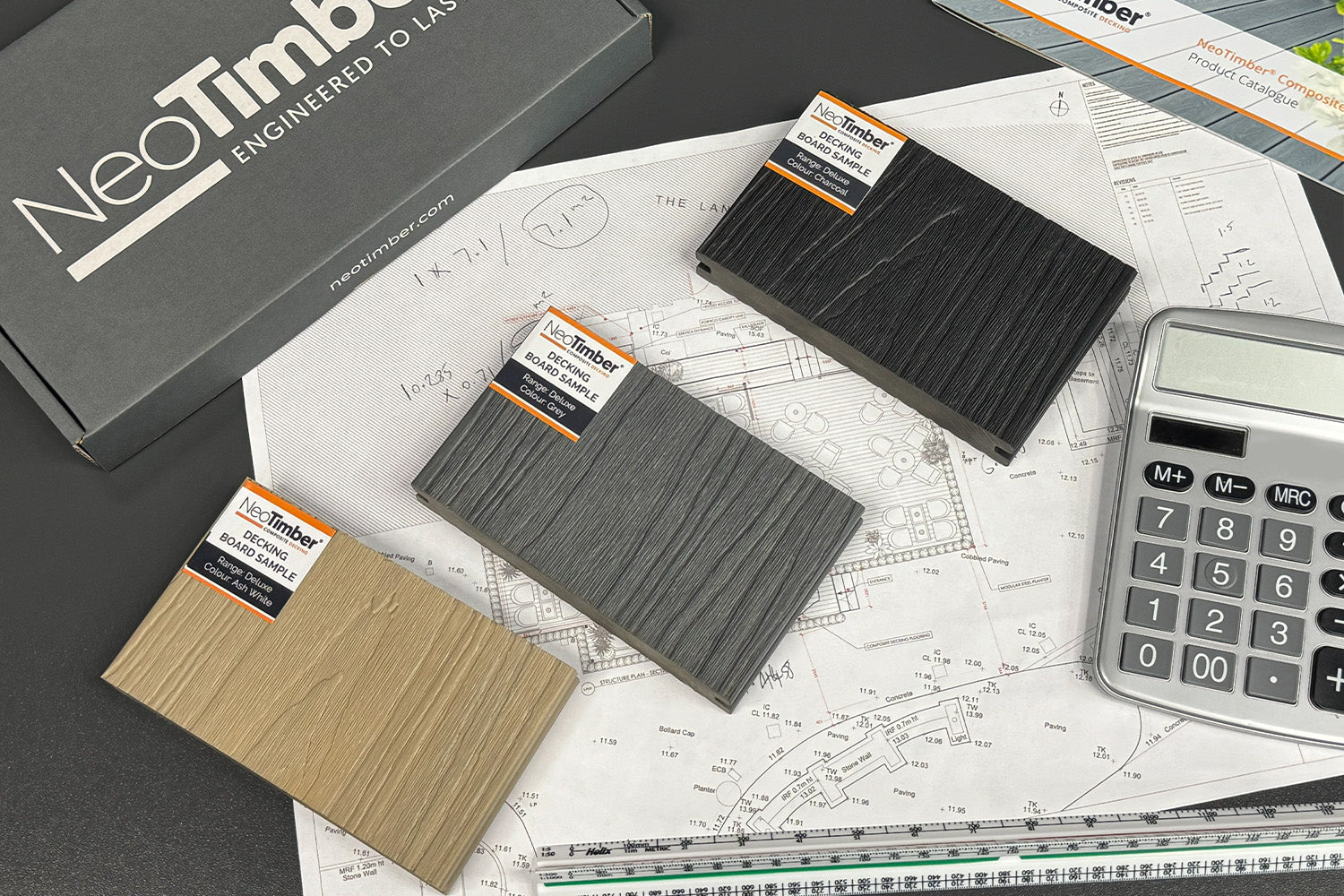
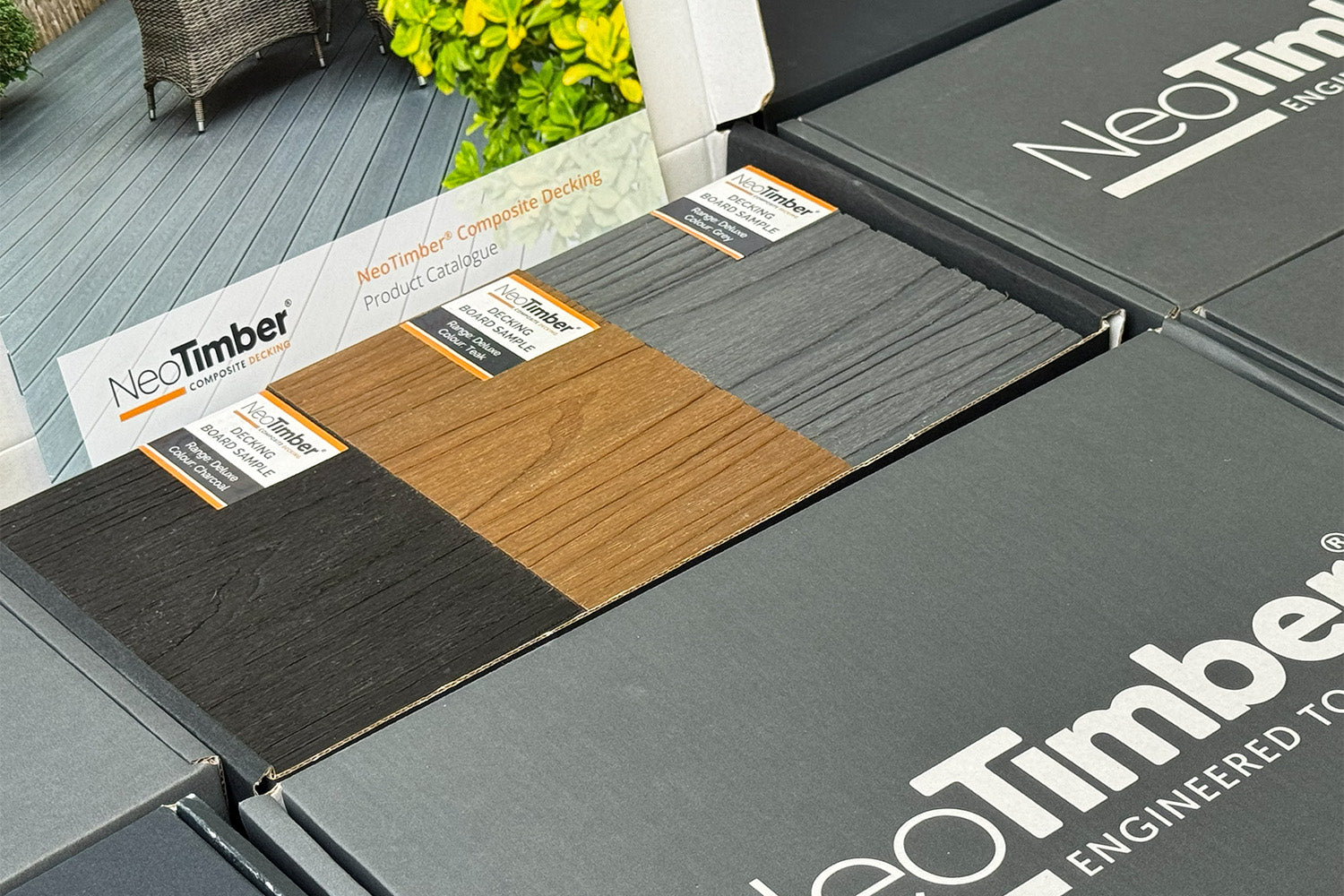
Request free decking samples to compare finishes, browse our composite decking or contact NeoTimber® to clarify product details for your proposed layout.