

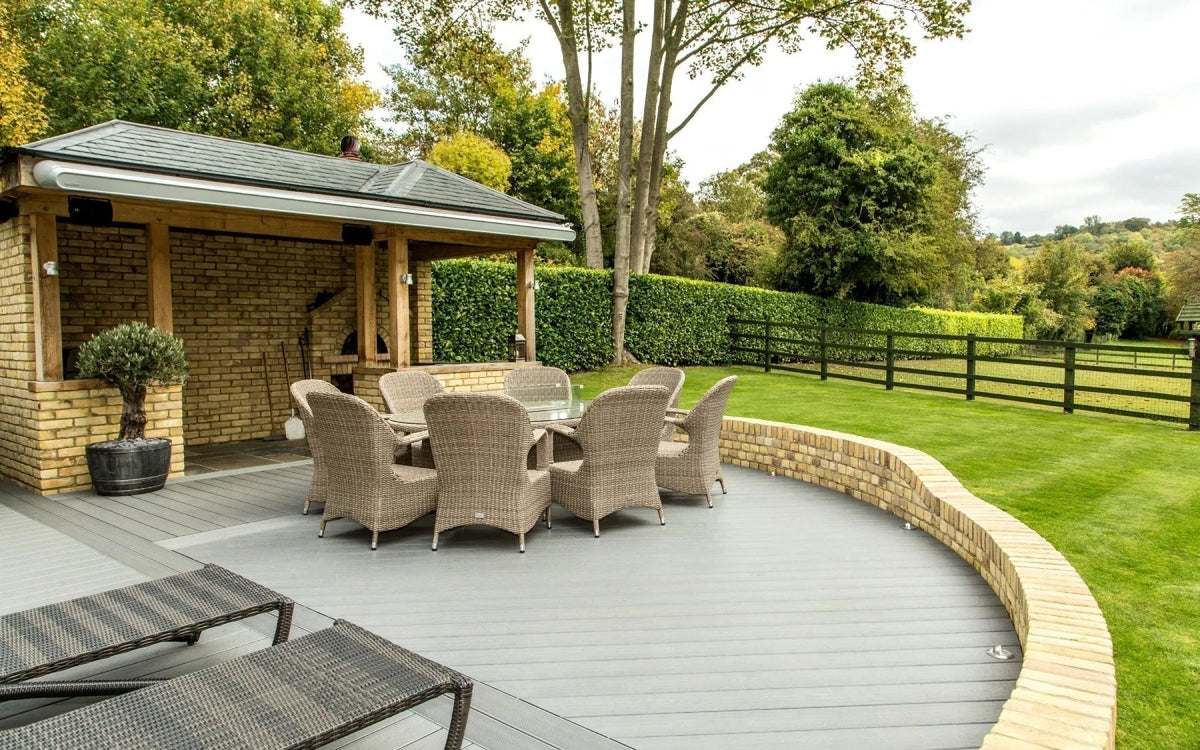
Choose Composite Decking With Confidence, From First Sample to Finished Garden
Composite decking can change how you use your outdoor space. It can turn an overlooked corner into a breakfast spot, connect your house to the garden or give a busy family somewhere comfortable to gather. But a successful deck starts with more than choosing an attractive board. Its lasting quality depends on the frame beneath it, the fixings holding it together, the layout, the installation and the care it receives.
This guide brings those decisions together. Whether you are comparing composite decking UK options for a small patio, researching a premium garden transformation or specifying a larger project, you will find practical advice on materials, benefits, prices, suppliers and complete composite decking systems. Explore the NeoTimber® decking guide alongside this article to start building a specification that suits your space.
The best buying decision balances appearance, project requirements and lifetime effort. A low board price is useful, but it tells only part of the story. Equally, a premium finish deserves a well-designed installation if it is to deliver the result you expect.
Explore the Guide
What Is Composite Decking?
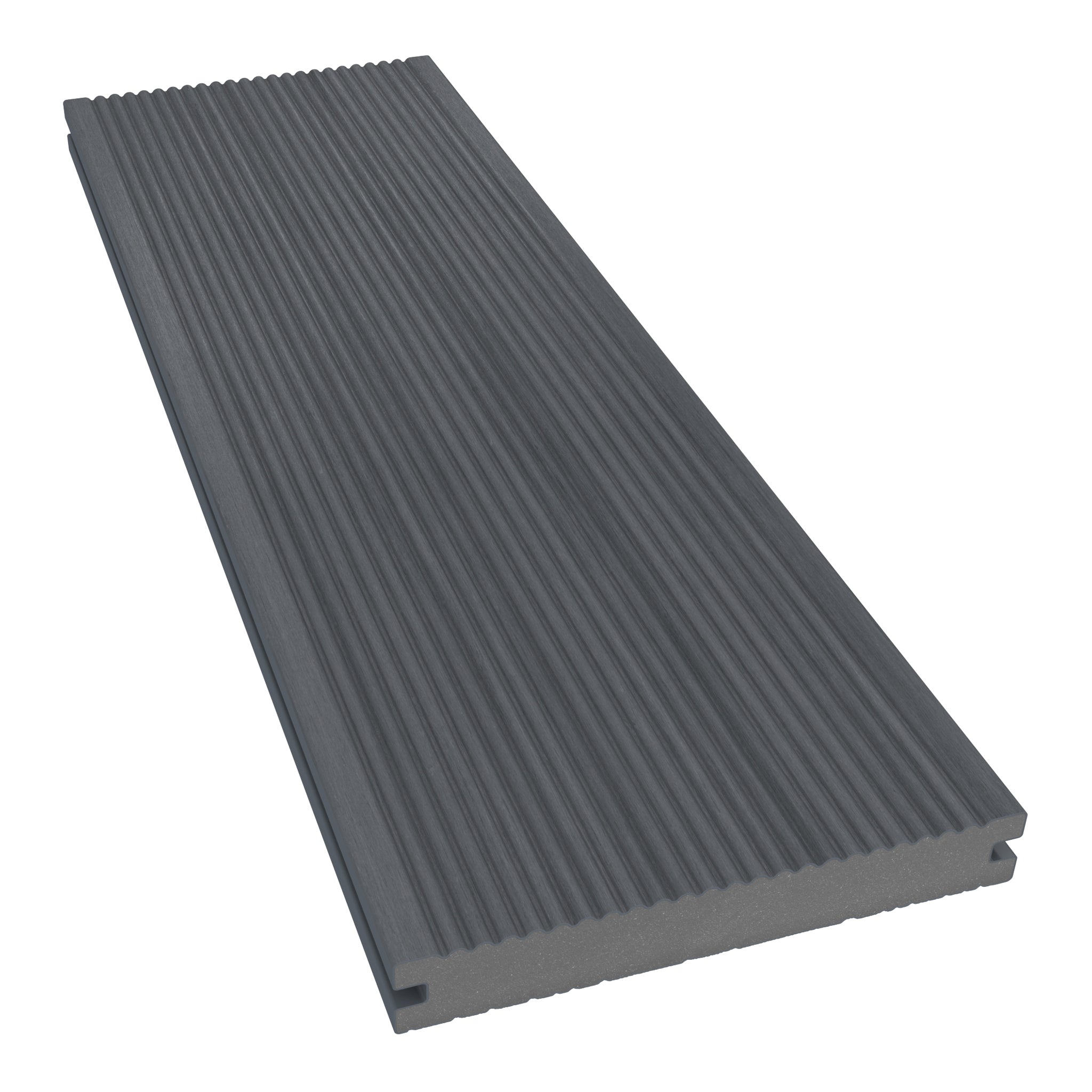
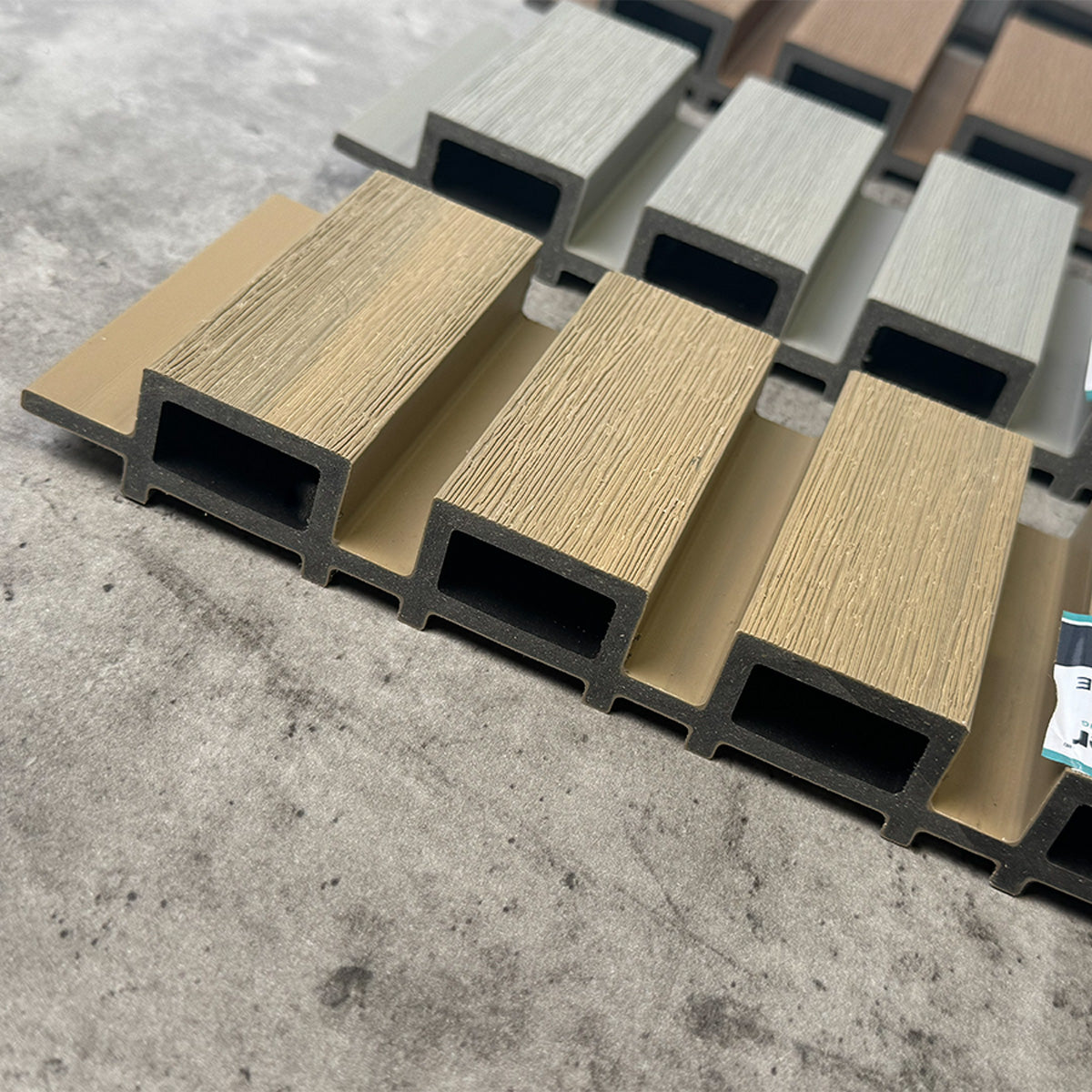
Composite decking is a manufactured alternative to traditional timber deck boards. Wood plastic composite, often shortened to WPC, combines wood fibres with plastic and additives to create an outdoor board with a wood-inspired appearance. The formulation, board profile and surface treatment vary between products, so two boards described as “composite” may perform differently.
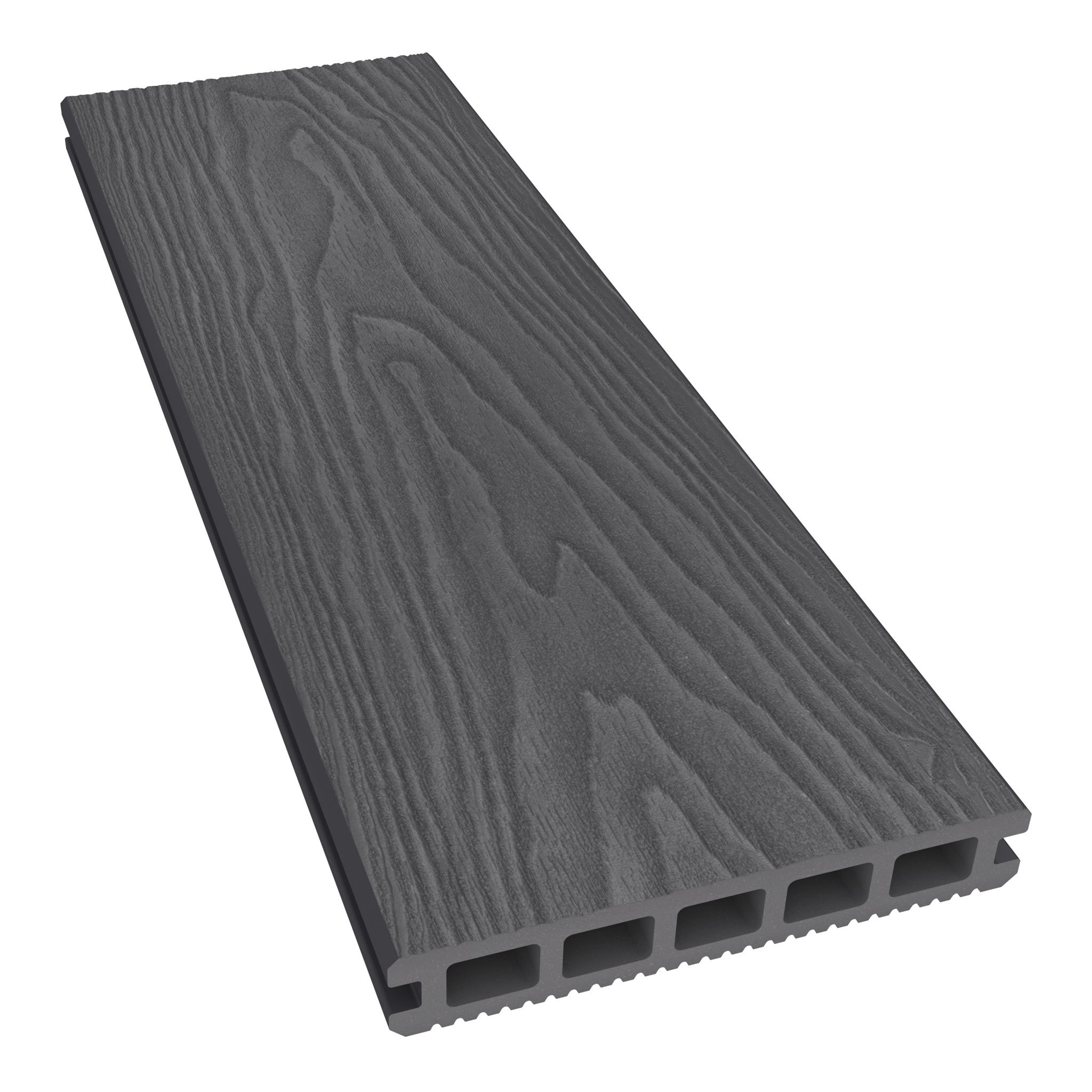
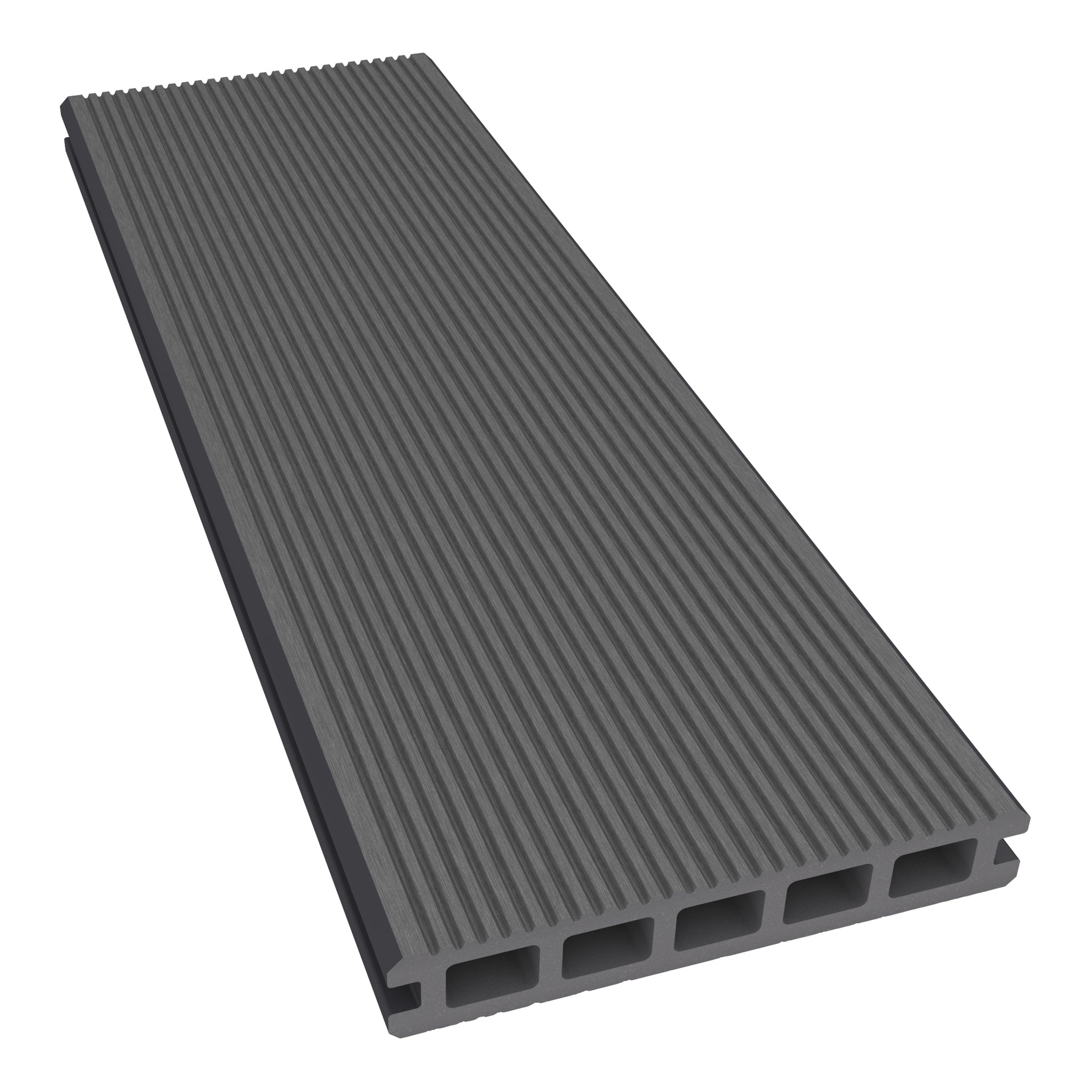
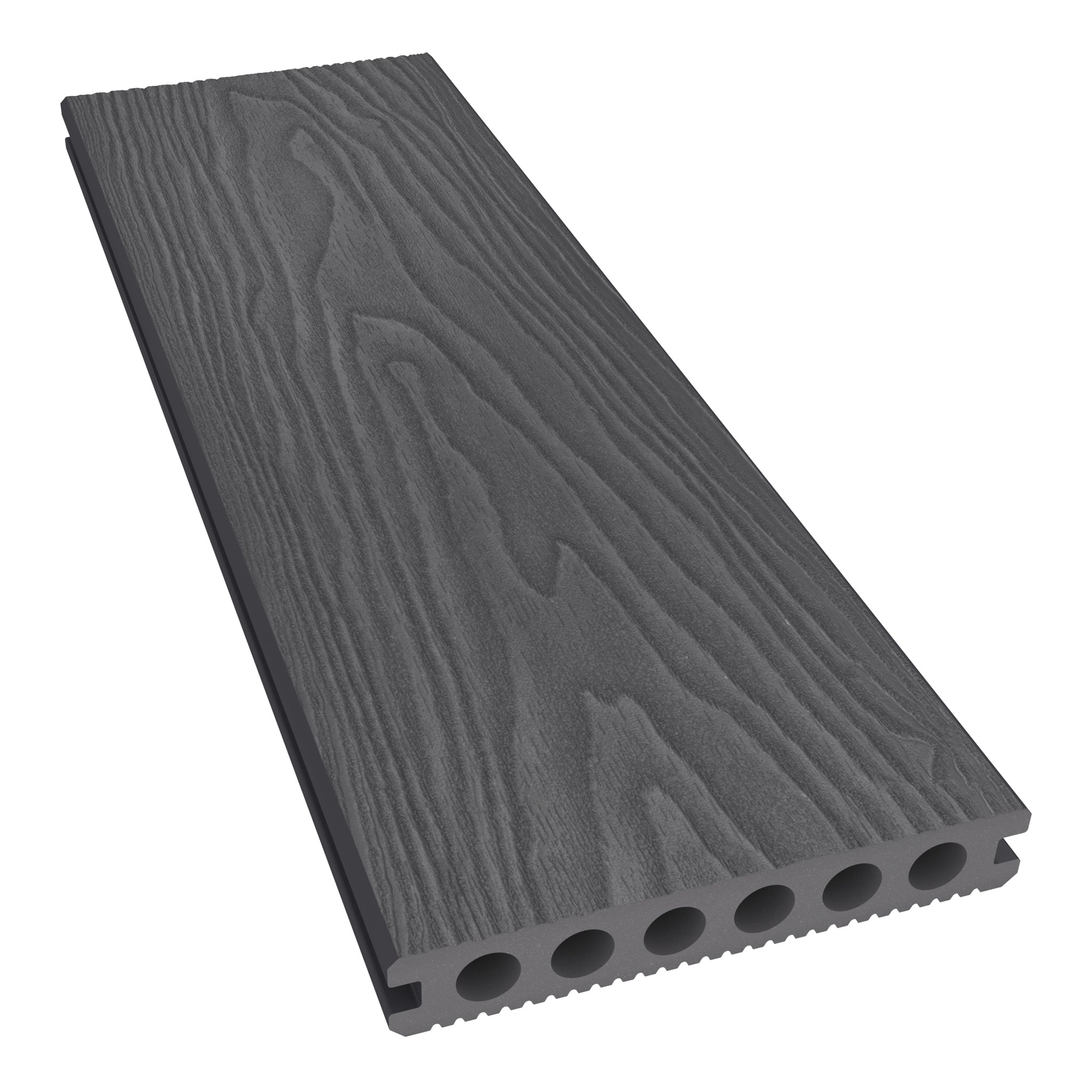
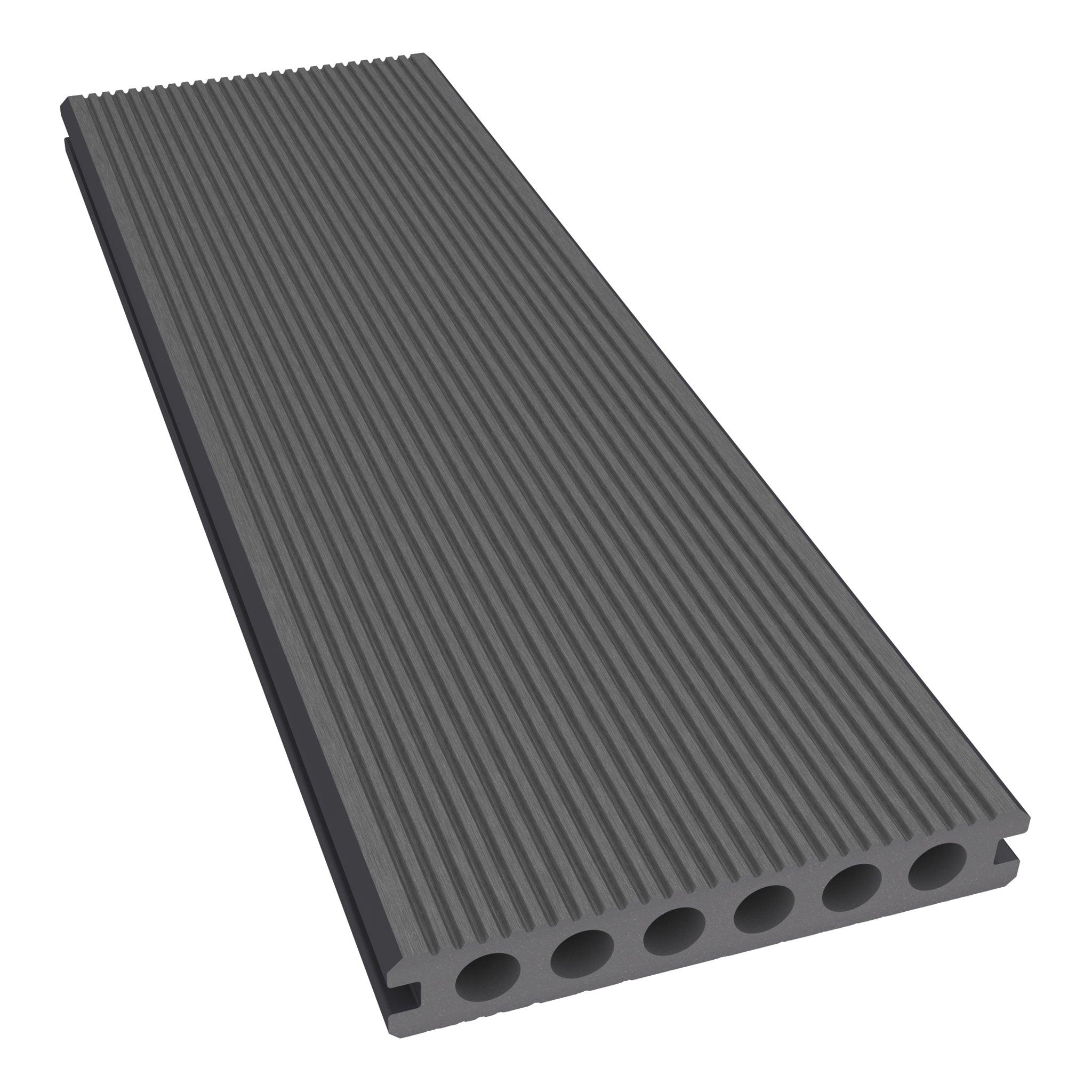
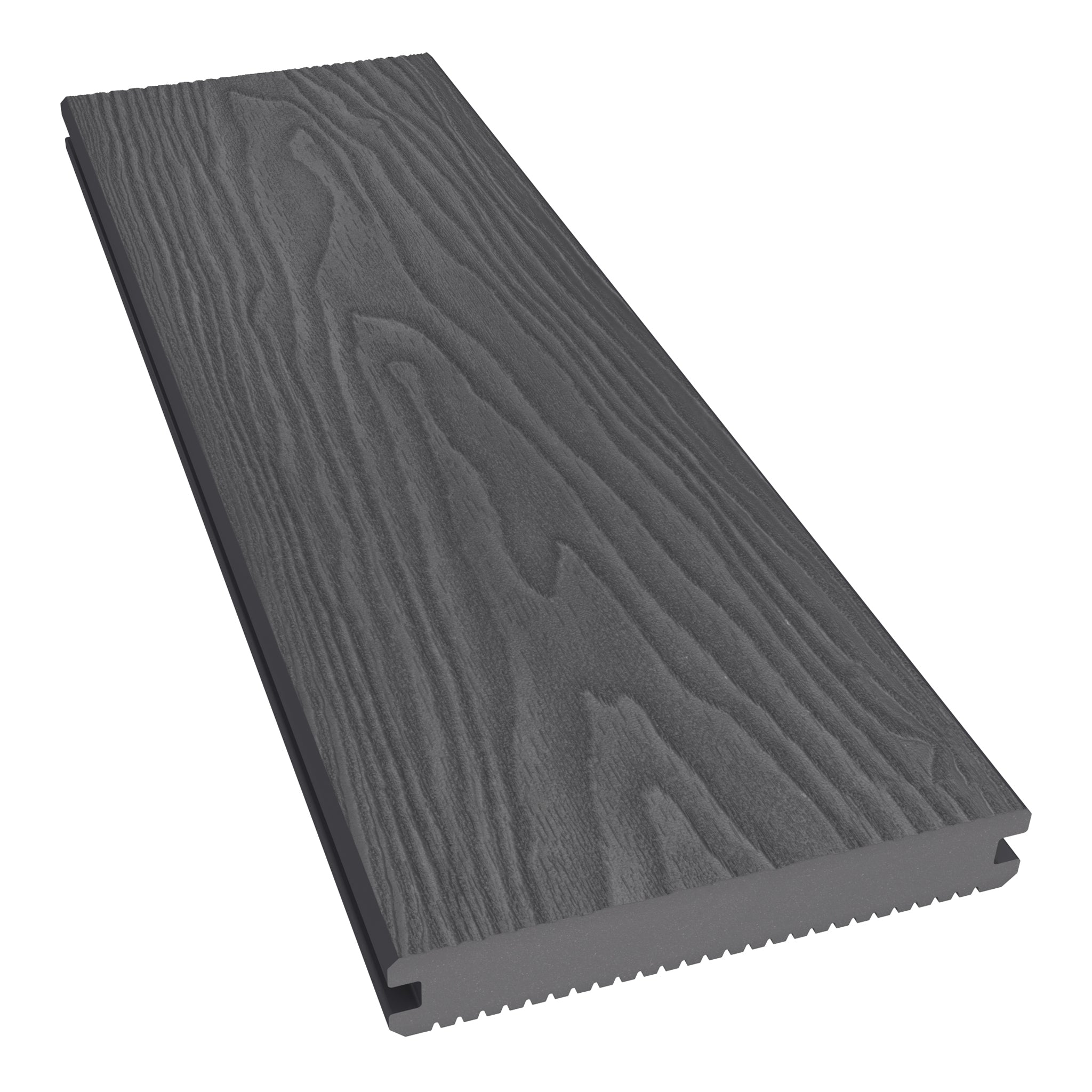
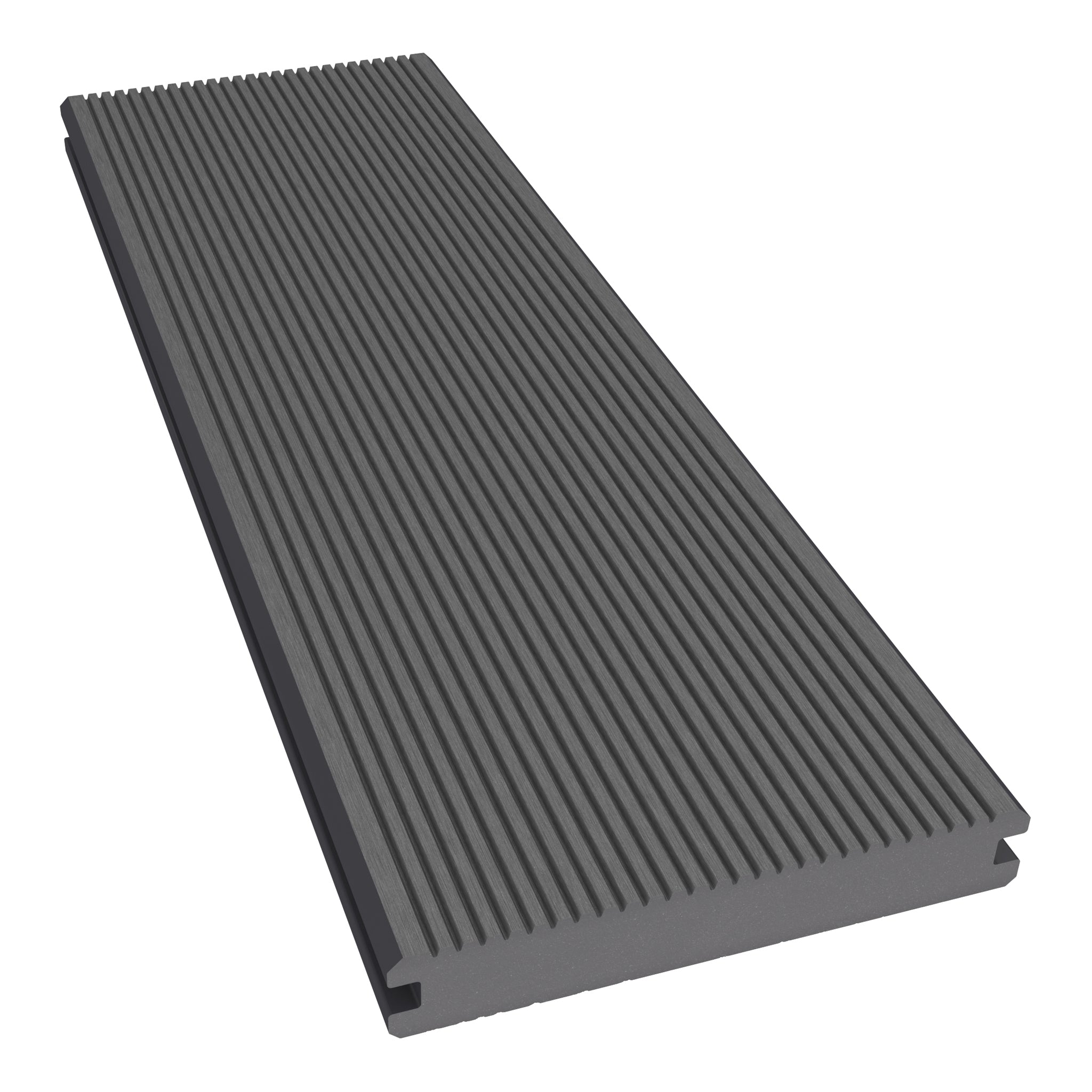
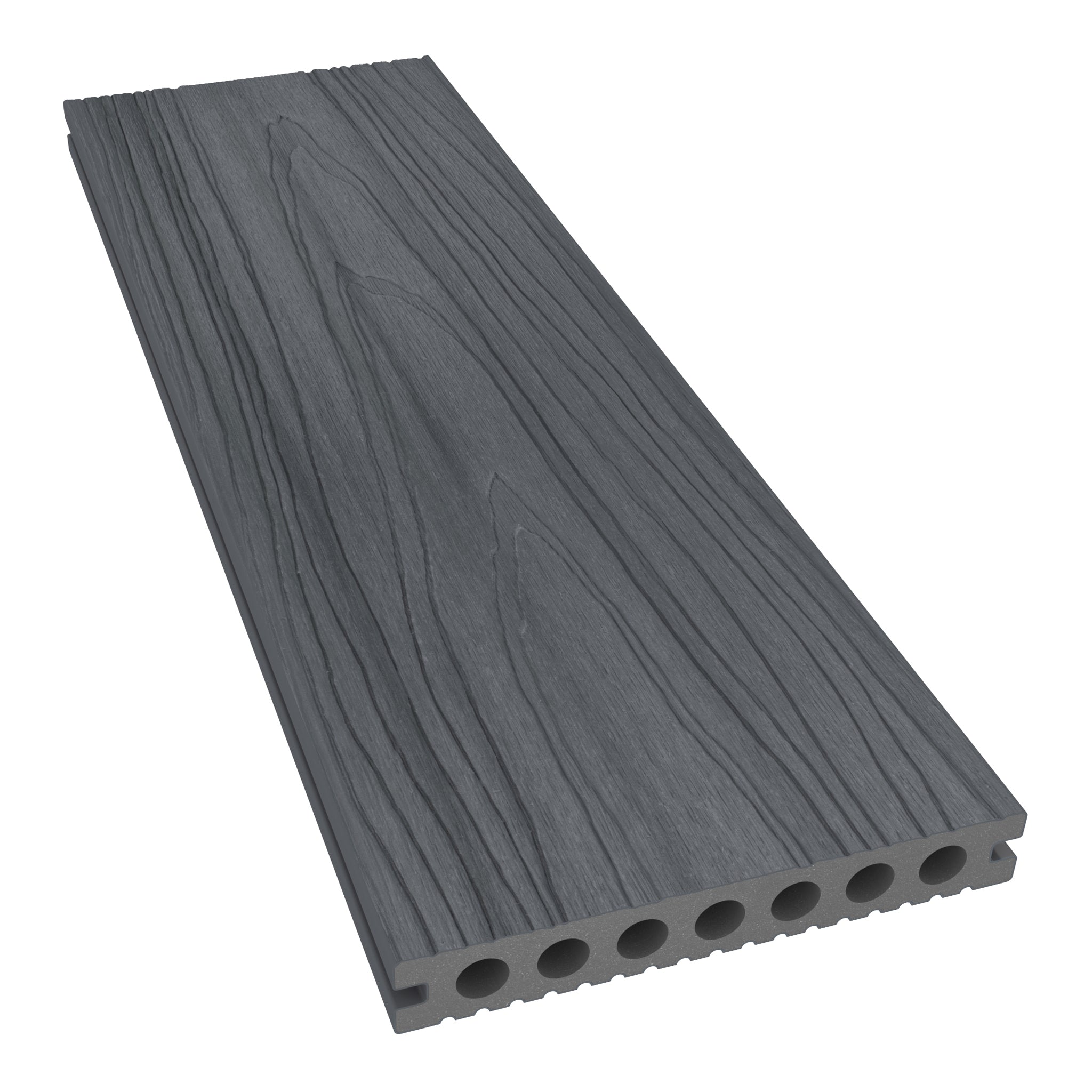
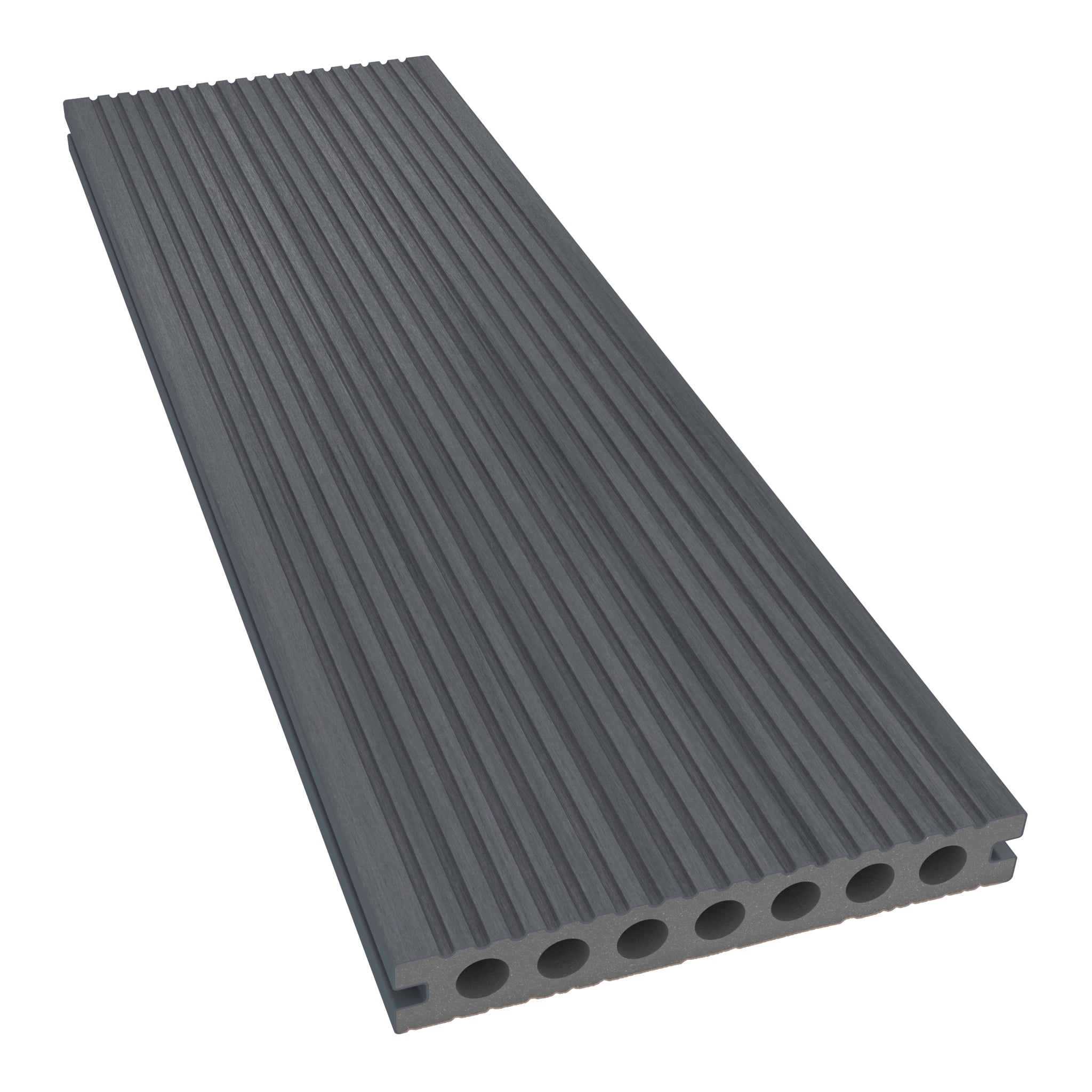
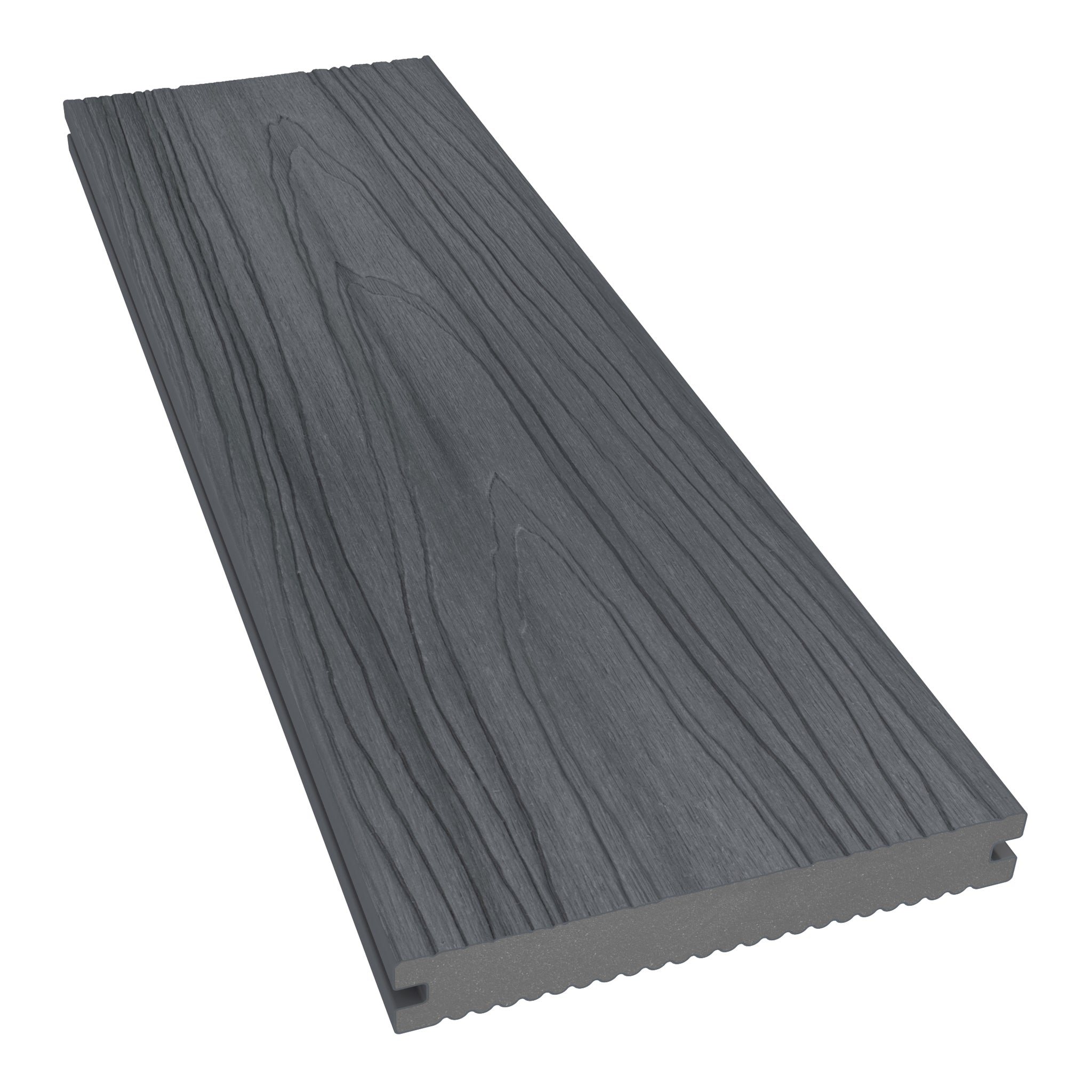
Some boards have a hollow core, while others are solid. Some are uncapped, with the composite material forming the exposed surface; others have a protective outer cap. These are separate choices. A hollow board can be capped, and a solid board can be uncapped. Understanding that distinction helps you compare products on their actual features.
Composite deck boards are also different from interlocking deck tiles. Full-length boards generally need a properly designed joist subframe. Composite deck tiles provide a modular surface for suitable firm, level and drained bases. They should not be treated as a substitute for boards spanning between joists.
Composite Decking Versus Timber
Timber offers natural variation, familiar construction methods and the possibility of refinishing its surface. Its maintenance needs depend on the species, treatment, exposure and appearance you want to preserve. Composite decking offers a manufactured finish that usually avoids routine sanding, staining and sealing, making it attractive to homeowners who want to reduce those tasks.
Neither material removes the need for good design. Both need support, drainage and suitable fixings. Composite boards also expand and contract as temperatures change. Their installation instructions govern movement gaps and fastening details, so they should not simply be fitted using assumptions carried over from timber construction.
The Benefits of Composite Decking: What Changes in Everyday Use?
The main benefits of composite decking become clear over seasons of use. Instead of planning repeated refinishing work, you can focus on cleaning the surface, keeping drainage routes open and checking the structure. For a garden used throughout the year, that can make ownership more manageable.
Less Routine Refinishing
Composite decking generally does not require the regular sanding, staining or sealing associated with maintaining a particular timber finish. This is especially useful where outdoor time is limited or where furniture and planting make frequent refinishing inconvenient. It remains a low-maintenance material: leaves, dirt and organic growth still need attention.
A Coordinated Appearance
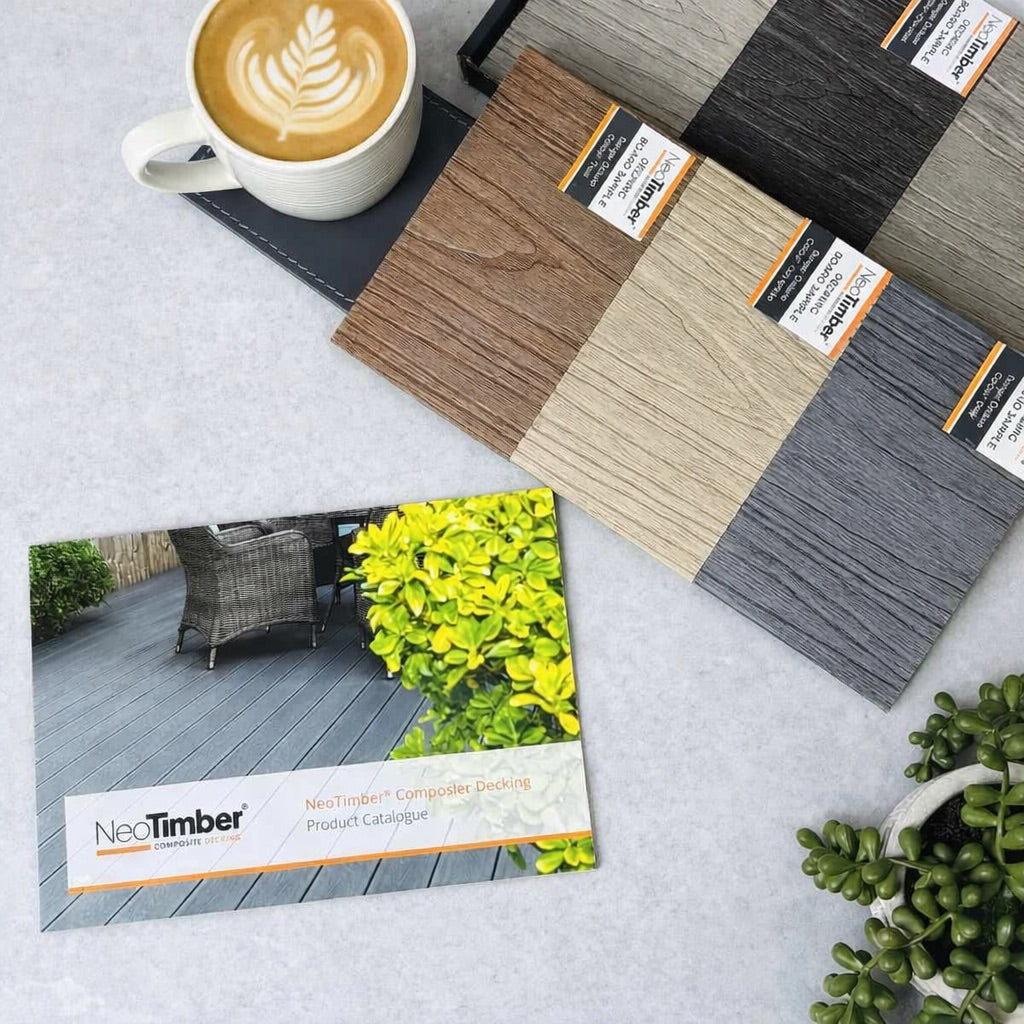
Manufactured colours and textures help you plan a consistent scheme across a deck, steps and borders. Woodgrain finishes can bring warmth to contemporary landscaping, while grey and charcoal tones can complement stone paving and dark window frames. Samples help you judge the balance before committing to a whole delivery.
Options for Different Budgets and Priorities
Choice is another of the advantages of composite decking. Different core types, capped finishes and board widths allow you to decide where your budget will have the greatest effect. You might prioritise a protective cap, a particular colour, a simpler layout or a more substantial supporting frame.
Practical Limits to Understand
Composite decking is not scratch-proof, stain-proof or slip-proof. Moving heavy furniture, dragging planters or leaving spills untreated can affect the surface. Boards can become warm in direct sunlight, and algae or wet debris can make walking conditions slippery. Consider shade, cleaning access and how the space will be used when making your choice.
Durability also depends on installation. A quality board fitted to an unsuitable frame can disappoint. The practical question is whether the complete specification suits the setting, rather than whether one material promises to solve every outdoor problem.
Choosing Composite Deck Boards: Core, Cap and Application
Start with the intended use. A private garden seating area, a busy hospitality terrace and a roof terrace may need different specifications. Establish the requirements for loading, access, drainage and any relevant fire performance before choosing a board from its appearance alone.
The NeoTimber® composite decking collection includes Classic and Deluxe options. Classic boards provide uncapped composite choices, while Deluxe boards incorporate protective capping. The range also includes different profiles and widths, giving you several routes to the final appearance.
Questions to ask when comparing composite decking options:
| Choice | What to consider | What to check |
|---|---|---|
| Hollow or solid core | Weight, handling, board profile and intended use | Product suitability, joist spacing and end details |
| Uncapped or capped | Budget, surface finish and resistance to staining and fading | Care instructions and product-specific performance information |
| Standard, wide or narrow boards | Visual rhythm, layout and cutting plan | Available dimensions, coverage and compatible accessories |
| Residential or commercial use | Foot traffic, loading and project requirements | Application approval and relevant warranty terms |
Classic Lite, Classic Hollow and Classic Solid
Classic Lite offers an entry-level hollow board for residential projects, with reversible woodgrain and grooved surfaces. It has its own warranty terms and is not recommended for commercial use. Treat it as a distinct product, rather than assuming the claims for other ranges apply to it.
Classic Hollow and Classic Solid provide further uncapped choices. Compare their profiles, finishes and intended applications against your project. Solid construction does not remove the need to follow the specified support spacing.
Deluxe Capped Composite Decking
Deluxe Hollow and Deluxe Solid combine composite cores with protective outer capping. The cap is designed to improve resistance to fading and staining, while the range offers a broader choice of colours. Protection is a useful feature, but prompt cleaning and suitable handling still matter.
Explore the current collection for Deluxe Wide and Deluxe Narrow options where a different board proportion supports your design. Confirm stock, dimensions and the installation requirements before finalising a mixed-width layout.
Colours and Layouts: Making Composite Decking Part of the Landscape
A deck works best when it relates to the house and garden around it. Rather than choosing a colour in isolation, consider the brickwork, paving, window frames, fencing and planting. Warm timber-inspired shades can soften a sharp architectural scheme. Grey can connect with stone, while darker borders can define steps and transitions.
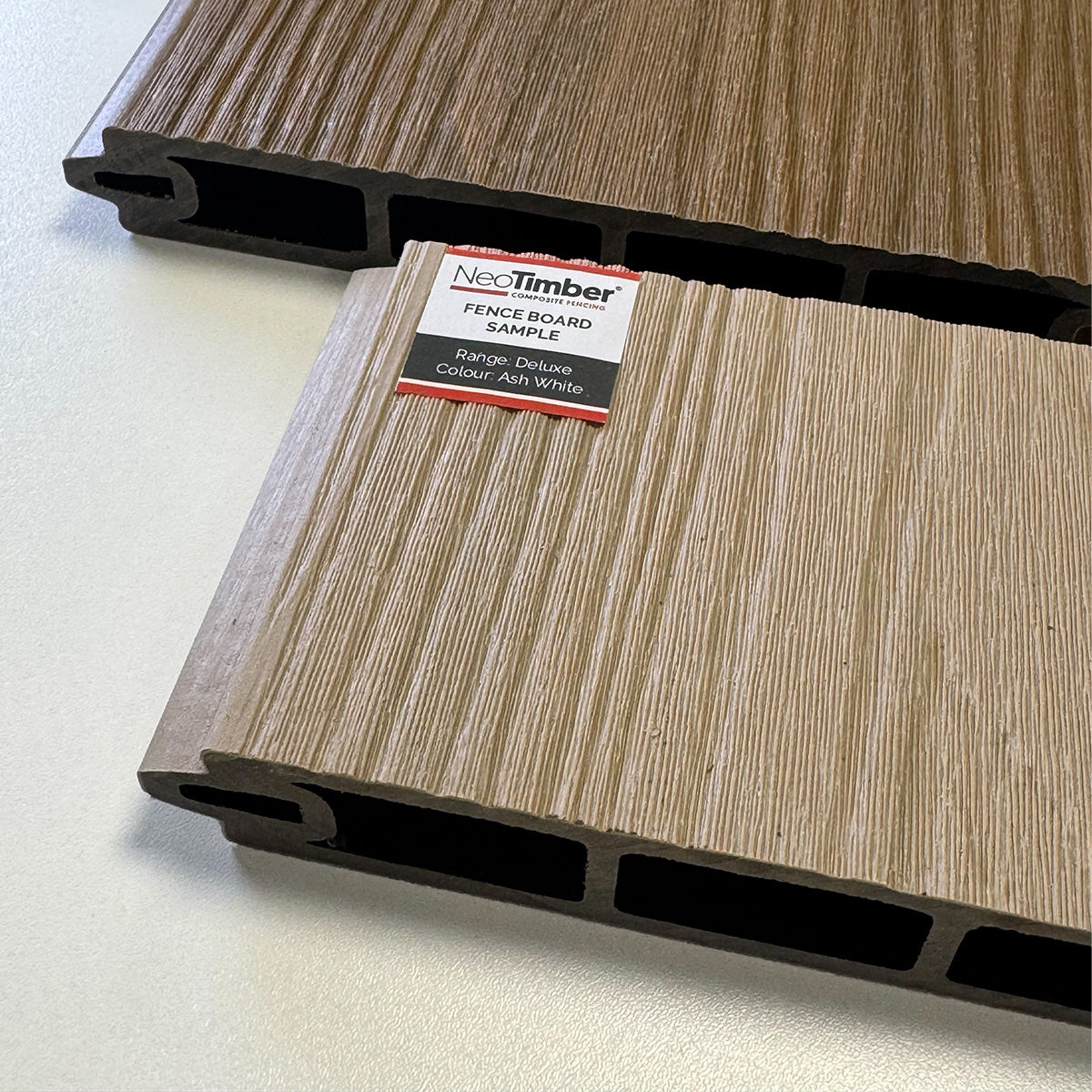
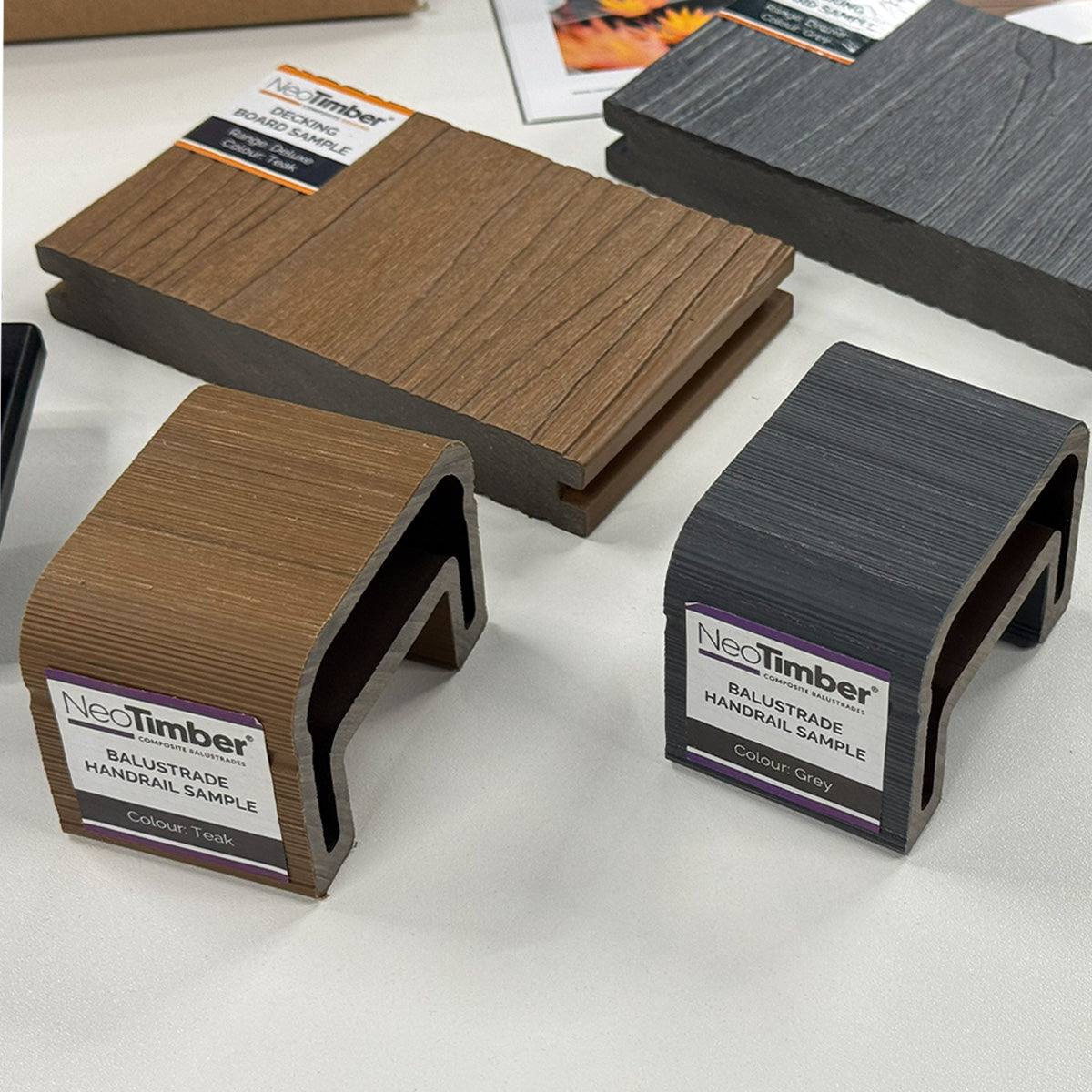
NeoTimber's Classic colour choices include Grey, Teak, Chocolate and Charcoal. Deluxe offers those shades alongside Antique, Ash White, Oak and Silver Birch. Compare grey composite decking, teak tones and oak-inspired finishes in the context of your own garden.
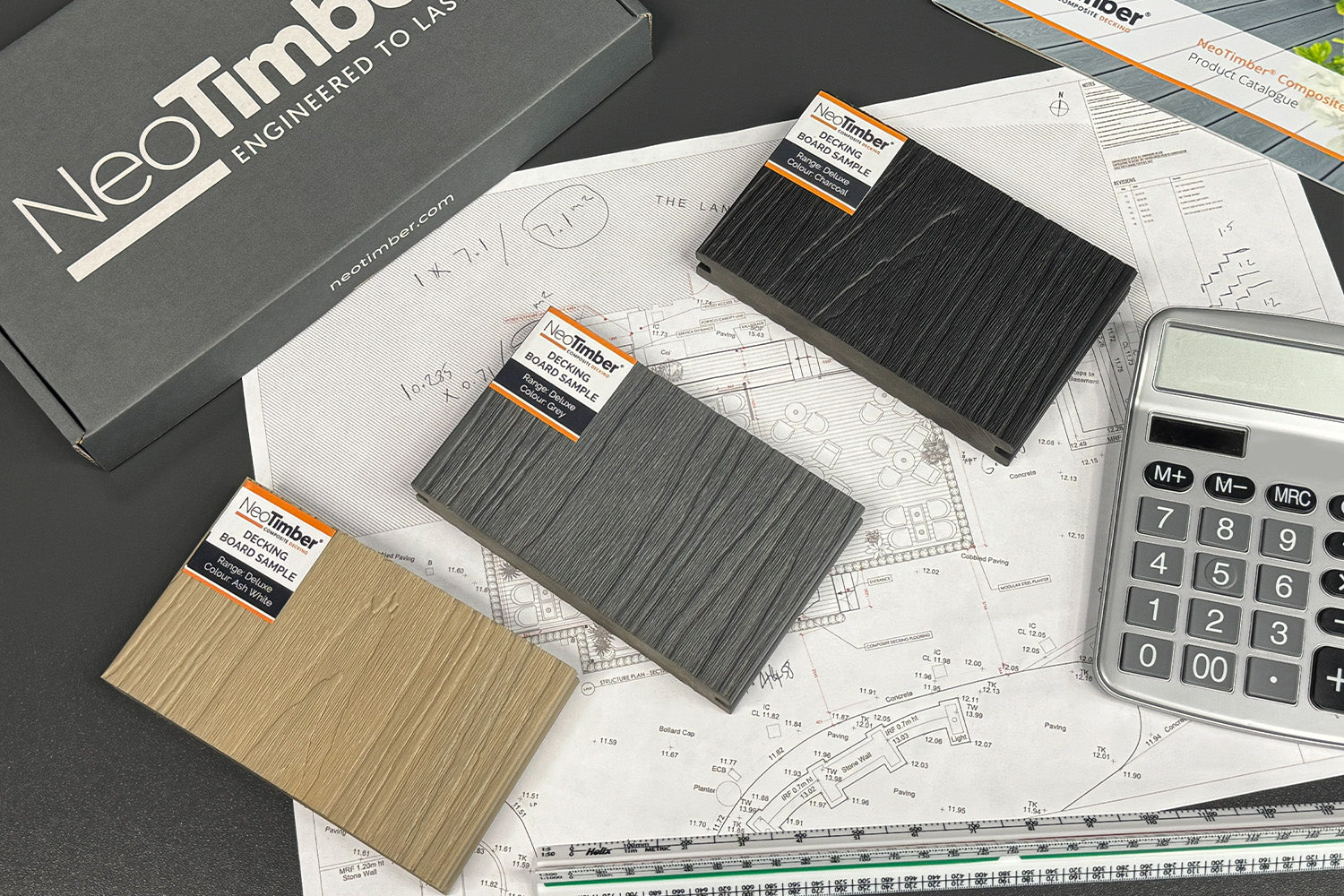
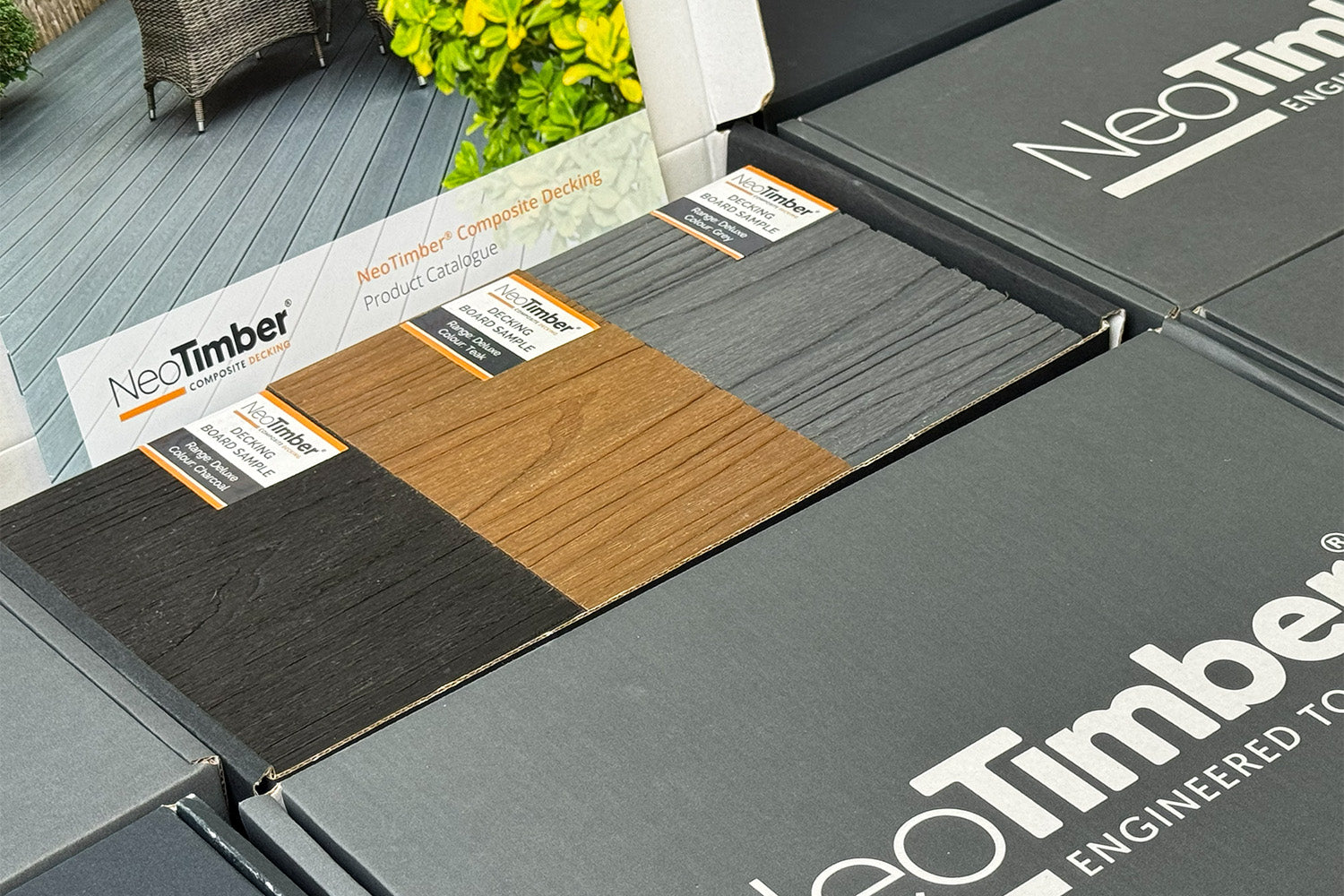
View samples outside at different times of day and, where appropriate, compare them when wet and dry. Photographs and screens are useful for inspiration, but light and surrounding materials affect how a colour appears. A sample lets you assess the texture as well as the shade.

What Makes High End Composite Decking Feel Premium?
High end composite decking is about the finished space as much as the individual board. Consistent joint lines, considered proportions, neatly resolved edges and well-integrated lighting give a deck its quality. A premium board cannot compensate for an awkward step, poorly supported border or unnecessary exposed cut.
Picture framing can create a deliberate perimeter, while wide boards can produce a different visual rhythm from narrow boards. Explore deck picture framing and laying patterns, then include the extra support and cutting work in the plan. Diagonal and herringbone designs generally need more detailed planning than straight runs.
Think about furniture before fixing the footprint. Leave room to pull chairs out, walk around a dining table and reach doors comfortably. A clear route through the garden often creates more value than an elaborate board pattern that makes the space harder to use.
Composite Decking per m2: Comparing Prices Properly
When comparing composite decking per m2, establish what the advertised figure covers. It may describe boards only, rather than a complete installed deck. A realistic budget also includes the subframe, fixings, trims, ground preparation, delivery and labour where required.
Similarly, a search for composite decking per sqm should lead to a coverage calculation rather than a comparison of individual board prices. Boards with different widths and lengths provide different coverage. The required gaps, layout and cut plan also affect the order quantity.
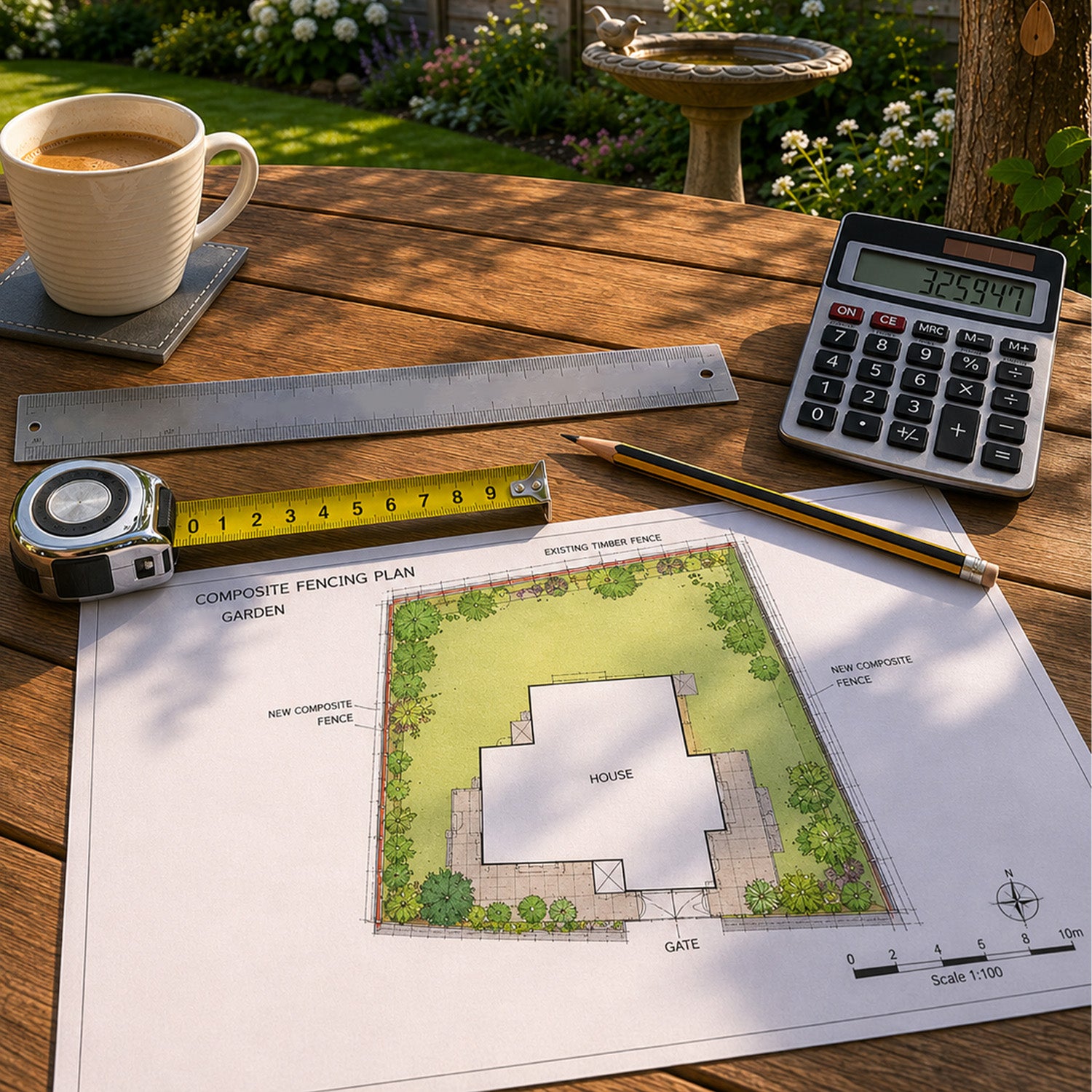
How to Estimate Board Costs
- Measure the planned deck and divide irregular shapes into simple rectangles.
- Choose the board orientation and identify borders, steps and any changes of direction.
- Use the supplier's coverage method for the selected board and fixing system.
- Create a cutting plan and allow for project-specific waste.
- Calculate the board total, then add every other component and installation cost.
For example, a rectangular deck measuring 4 metres by 5 metres has a surface area of 20m2. That does not mean an order of exactly 20m2 of nominal board material will complete it. Cutting, borders and the available board lengths must be considered. A well-planned layout can reduce waste without compromising support or movement gaps.
Building a Complete Budget
Ask for an itemised quotation showing quantities and VAT treatment. Include joists, supports, clips, screws, fascia boards, edging and any step or balustrade work. Check whether delivery, removal of the old deck and preparation of the base are included. Two quotes become meaningful comparisons only when their scope is clear.
Current prices and offers change, so use the live composite decking for sale listings to build your estimate. Avoid relying on an old headline price or assuming the lowest price per board gives the lowest complete project cost.
Upfront Cost and Long-Term Value
Composite decking can reduce recurring refinishing tasks, but it is not automatically cheaper than every timber option over every ownership period. Compare initial costs, cleaning, likely maintenance, access and your intended years of use. Put a value on your own time if you would otherwise carry out the work yourself.
The strongest value proposition is a deck that suits your needs and continues to be used. Spend carefully on the supporting structure and essential details before adding decorative features. Those less visible decisions underpin the finished result.
Composite Decking Systems: Why the Parts Must Work Together
Composite decking systems combine boards with compatible support, fixings and finishing components. The board surface is only one part of that system. A frame determines support and stability; clips control fastening and side spacing; trims resolve edges; drainage and ventilation help manage the environment beneath the deck.
Start with the site. A deck over concrete, a raised structure over a garden and a roof terrace present different challenges. Explore the decking subframe range and subframe planning guidance, then select materials and supports suitable for the actual loading and exposure.
Joists, Supports and Drainage
Follow the selected board's permitted joist spacing, including any changes needed for diagonal layouts or specific applications. Provide the required support at board ends and around borders. Do not assume a surface that looks flat is structurally suitable, or that pedestals can be placed on any ground without preparation.
Water needs a route away from the installation. Keep drainage paths open, allow the ventilation specified by the manufacturer and avoid details that trap debris beneath the boards. On roof terraces, the design must also protect the waterproofing and account for structural loads.
Clips, Screws and Movement Gaps
Use compatible decking clips and fixings. Starter clips and intermediate clips have different roles. A fixing system's side gap is not the same as the movement clearance required at board ends, walls or other fixed structures.
Composite boards respond to temperature, so those clearances matter. Check the current composite decking installation instructions for the chosen product. Keep the installation guide available during fitting rather than relying on a general description or a remembered measurement.
Steps, Edges and Accessories
Plan steps as part of the structure, with suitable support, consistent dimensions and a clear transition between levels. Fascia and edging should finish the deck without obstructing drainage or the movement required by the system. Integrated lighting is easier to coordinate before the boards are fitted.
Decking accessories can improve both appearance and usability. Balustrades, pergolas and substantial planters need their own support arrangements; do not assume deck boards can carry or anchor them independently of the supporting structure.

Choosing Composite Decking for Different Settings
For garden decking, think about everyday foot traffic, furniture, planting and access for cleaning. A family dining area has different priorities from a quiet reading corner. Keep the design proportionate to how you will actually use it.
Poolside decking requires attention to wet walking conditions, drainage and the care implications of pool water and cleaning products. Confirm the selected board's suitability and instructions before specifying it around a pool. Texture alone does not guarantee safe footing.

For balconies and roof terraces, loading, fire requirements, waterproofing and building-specific details may govern the material choice. Composite decking is not automatically suitable for every elevated application. Establish the requirements with the relevant designer or project professional.
Busy restaurant, pub and café terraces need boards and structures appropriate to commercial use, alongside a realistic cleaning plan. Holiday accommodation projects also benefit from clear maintenance responsibilities, particularly where different guests use the space throughout the season.
Composite Decking Near Me: How to Find the Right Buying Route
Searching for composite decking near me is often about reassurance as much as distance. You may want to see a board, collect materials, find an installer or speak to someone who understands your project. Identify which service matters before choosing a supplier simply because its address is closer.
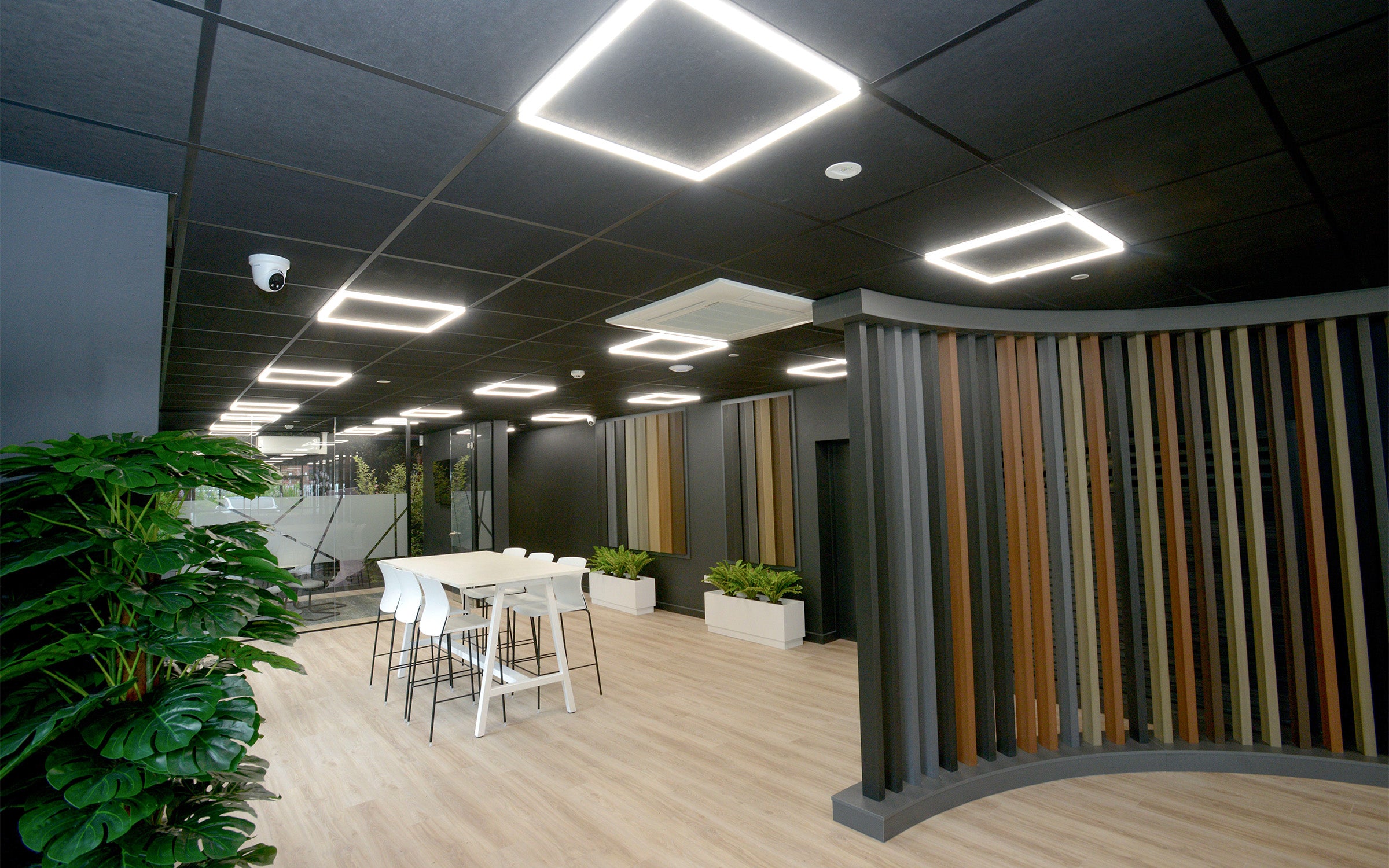
If you are looking for composite decking nearby to inspect in person, NeoTimber's Coalville showroom provides a route to comparing products. Check the showroom page before travelling. If visiting is impractical, request composite decking samples and review them at home.
Buying Composite Decking Online
Online buying gives you time to compare specifications, colours and supporting documents. Save the exact product details, confirm the compatible fixings and check that all components can be supplied for your intended installation date. A board order without its essential accessories can delay the project.
Before ordering, review the delivery policy and confirm the arrangements for your postcode and access. Consider where long boards will be unloaded and stored, and who will be available to receive them. Local purchasing and nationwide delivery each have advantages; the right choice depends on your logistics.
Finding an Installer
The find an installer service can help you explore fitting support. Confirm availability in your area and agree the quote, timetable and scope directly with the installer. Ask what preparation, structural work, waste removal and finishing are included.
When comparing UK composite decking suppliers, useful support includes clear technical information, accessible product advice and transparent delivery arrangements. Those services can matter more than geographical proximity when a question arises during planning or installation.
Composite Decking Retailers, Distributors and Resellers: Understanding Supply
Composite decking retailers sell products to end customers, while composite decking distributors may supply stock through a broader trade network. Composite decking resellers sell products sourced from another supplier or brand. These roles can overlap, and the label alone does not establish the quality of advice, stock or service.
For a homeowner, the key questions are straightforward: who is supplying the exact product, who can answer technical queries, what documentation is available and who handles an issue after purchase? Keep your order records and verify warranty eligibility through the relevant terms.
For installers and businesses, supply planning also involves order volumes, replenishment, site deliveries and the consistency of the specified range. Discuss project requirements rather than assuming a retail product page includes wholesale terms or authorisation to represent the brand.
NeoTimber's professional support and trade and reseller enquiry route provide starting points for those conversations. Ask about the arrangement relevant to your business. Trade discounts, reseller terms and distribution agreements should be confirmed directly rather than inferred from a general enquiry.
Recycled Composite Decking: Making a More Informed Material Choice
Recycled composite decking can incorporate recovered materials into a useful outdoor product. However, “recycled” does not necessarily describe every ingredient in a board. Ask what is recycled, what proportion it represents and whether the claim applies to the core, cap or complete product.
NeoTimber® describes recycled plastic and FSC® 100% wood in its decking information. Those claims address different things: recycled content concerns material reuse, while FSC certification relates to responsible wood sourcing. Responsibly sourced wood should not automatically be described as recycled wood.
A thoughtful sustainability decision also considers manufacturing, transport, installation waste, expected service life, maintenance and end-of-life options. A composite board is not automatically suitable for household recycling because it contains recycled plastic. Ask about available recovery routes and local acceptance before making disposal plans.
Good design supports responsible use. Accurate measurement, an efficient cutting plan, durable foundations and a repairable layout can help avoid unnecessary waste. Buying the right product once is a stronger approach than choosing from an environmental slogan without examining the evidence.
Looking After Your Deck and Understanding Its Warranty
Routine care starts with sweeping away leaves and dirt, then cleaning as directed for the selected board. Keep gaps and drainage routes clear. Address spills promptly and avoid dragging heavy objects across the surface. Use the maintenance guidance to establish a simple schedule.
Do not assume every household cleaner or pressure-washer setting is suitable. Check permitted methods, test where instructed and follow the product's care information. A protective cap improves resistance but does not make cleaning unnecessary or every stain removable.
Read the Product-Specific Warranty
A warranty is useful when you understand what it covers. Read the current warranty terms for the selected range and intended application, including installation requirements, exclusions and the claims process. Keep purchase records and photographs of the installation details.
Classic Lite has a 10-year limited residential warranty. Other ranges and commercial applications have their own terms, so a headline warranty should not be applied across the entire collection. Warranty duration is also different from a promise that every part of the finished deck will last that long without attention.
A Practical Composite Decking Buying Checklist
- Define the intended use, dimensions and any application-specific requirements.
- Compare physical samples against the house, paving and planting.
- Select the board profile, surface, colour and compatible fixing system.
- Plan the base, frame, drainage, movement gaps and support at joints.
- Prepare a cutting plan including borders, steps and finishes.
- Compare complete quotations with clear quantities and VAT treatment.
- Confirm stock, delivery, storage and installer availability.
- Read the installation, care and warranty documents before ordering.
These decisions create a useful brief whether you are fitting the deck yourself or working with a professional. Clear preparation helps prevent substitutions and misunderstandings later.
Composite Decking FAQs
What is the best composite decking for my garden?
The best choice depends on your budget, appearance preferences, site and intended use. Compare capping, core type, dimensions and installation requirements. Samples and a complete project quotation provide a better basis for choosing than a single price or feature.
How much does composite decking cost per m2?
The figure varies by board, layout and what the quote includes. Use current board prices to calculate material coverage, then add the frame, fixings, trims, delivery, preparation and labour. A board-only price should not be presented as an installed deck price.
Can I install composite decking myself?
A straightforward project may be suitable for someone with relevant skills and tools. Read the full installation guide first. Raised decks, challenging foundations and projects involving structural or building requirements may need professional design or installation input.
Does composite decking fade?
Colour behaviour depends on the product and exposure. Capped boards are designed for improved fade resistance, but resistance does not mean that colour can never change. Review the range information and warranty wording before choosing.
Is composite decking maintenance-free?
It reduces many traditional refinishing tasks, but it still needs cleaning and inspection. Dirt, leaves, spills and organic growth can affect appearance and walking conditions. Regular light care is more practical than leaving a deck unattended for years.
Where can I see composite decking before buying?
Explore the showroom, order samples and browse the composite decking gallery. Installed photographs show possible layouts; samples help you judge the colour and texture in your own surroundings.
Start With a Sample, Finish With a Complete Plan
A successful composite deck brings together the right boards, a suitable supporting structure and a design that makes outdoor life easier. Think about the whole space, compare the full cost and choose specifications that match the actual project.
Explore NeoTimber® decking, browse the composite decking range and request your samples. For help turning your measurements and ideas into a clear buying plan, contact the team with your project details.