


Build Your Decking Subframe With Recycled Plastic Joists and Posts
Plastic lumber offers an alternative to timber for suitably designed decking subframes. NeoTimber’s recycled plastic joists and posts resist rot and do not require routine preservative treatment. Their suitability still depends on the profile, support arrangement, connections and expected loads.
The frame beneath your composite decking deserves as much attention as the visible boards. Choosing components together helps you plan a compatible installation with appropriate drainage and access for inspection.
This guide introduces recycled plastic profiles, compares NeoTimber’s three joist and post profiles, and explains what to check before specifying them. For the broader options, explore our decking page.
In this guide: Material overview · Benefits · Joists and posts · Specification checks · Recycled content · Planning checklist · FAQs
What Is Plastic Lumber?
Plastic lumber is a manufactured plastic profile shaped for uses that may otherwise involve timber. It is available in different sizes and formulations; the name alone does not establish structural capacity.
NeoTimber® supplies recycled plastic lumber as decking joists and posts. These products are distinct from wood plastic composite decking, which contains wood fibres as well as polymers. They are also different from a low-profile composite joist intended for support on a solid base.
Check the material and intended use of each component rather than treating every product described as plastic, composite or recycled as interchangeable.
Why Consider Plastic Lumber for a Decking Frame?
Rot resistance in an outdoor environment
Recycled plastic profiles offer resistance to rot and moisture-related deterioration. This can be useful beneath decking, where access for future work may be limited. However, moisture resistance does not remove the need for drainage or make a waterlogged site automatically suitable for construction.
No routine timber-preservative treatment
NeoTimber’s plastic joists and posts do not need regular staining, oiling or preservative treatment. The completed structure still needs inspection: fixings, foundations and adjoining materials can require attention even where the plastic itself resists rot.
A coordinated subframe option
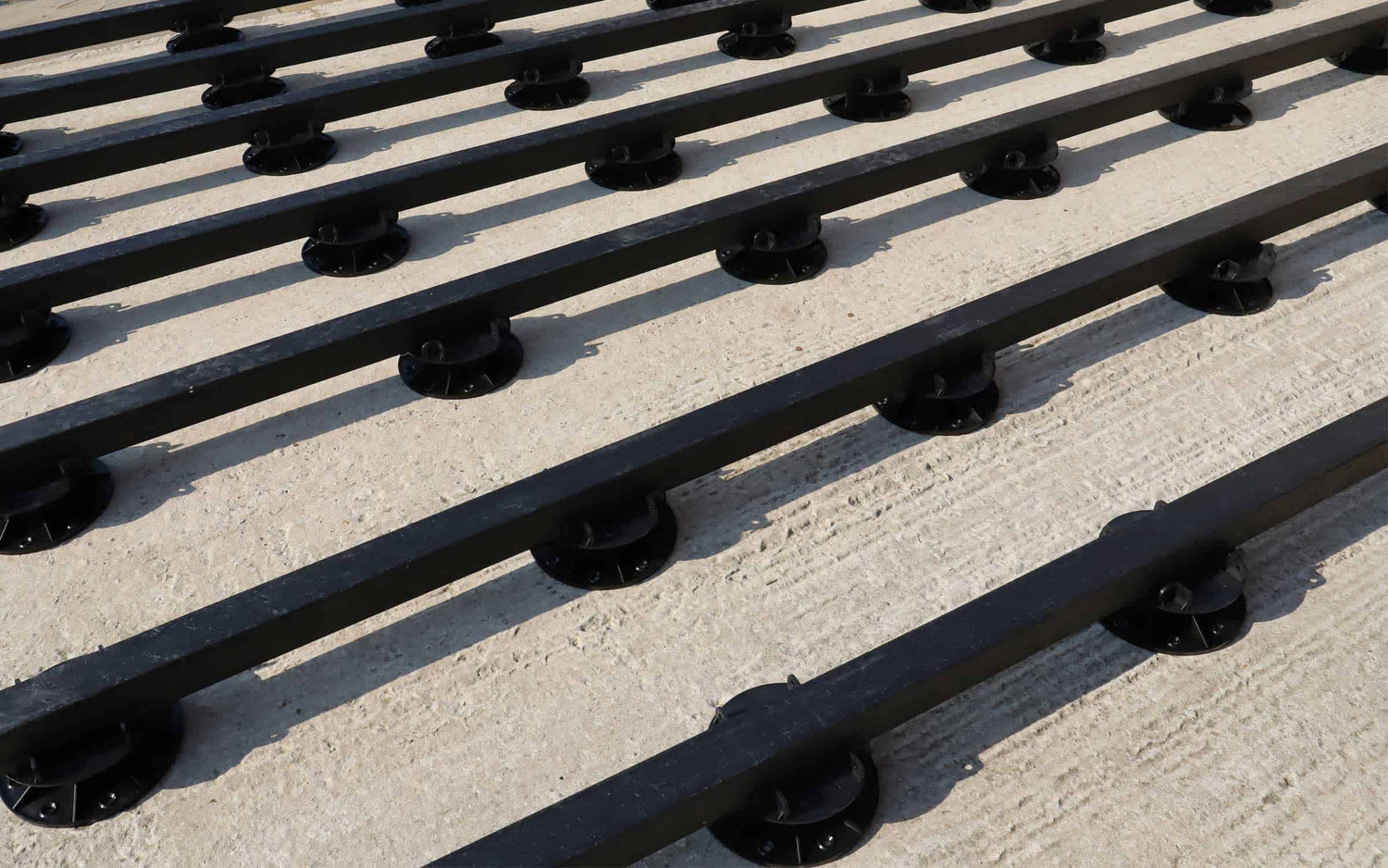
Joists and posts can form part of a compatible system beneath the boards. Appropriate adjustable pedestals may be an option on suitable solid surfaces, subject to support spacing, cradle compatibility and the complete restraint design.
Timber can also form a suitable frame when correctly specified and installed. Compare complete systems rather than assuming a plastic profile is a direct replacement for a timber member of similar size.
NeoTimber® Plastic Lumber Joists and Posts
The current range includes the following profiles. Check product details and installation requirements before ordering.
Compare the plastic lumber profiles:
| Product | Profile and supplied length | Planning focus |
|---|---|---|
| Small plastic joist | 50mm × 50mm × 3,100mm | Support frequency and available build-up height. |
| Large plastic joist | 120mm × 50mm × 3,100mm | Joist or bearer role, orientation, span and connections. |
| Plastic deck post | 100mm × 100mm × 3,100mm | Foundation design, post height and bearer connection. |
Small recycled plastic joist
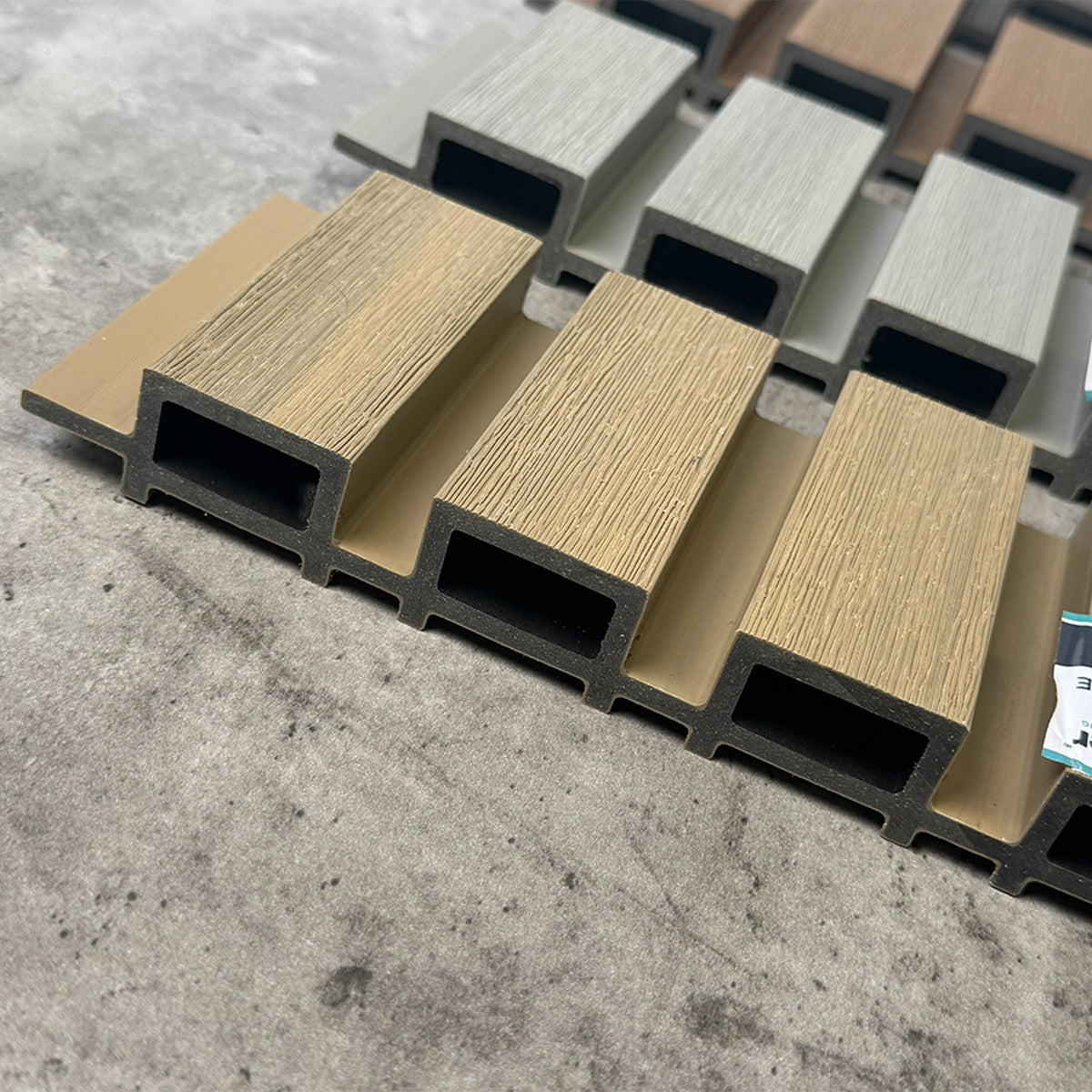
The Small Recycled Plastic Decking Joist provides a compact section for a suitably supported frame. It can be considered for arrangements on solid bases or compatible pedestal systems, with the specified support spacing.
Its 50mm depth is useful when checking the total build-up, but the profile must not be assumed capable of spanning the same distance as a larger joist.

Large recycled plastic joist
The Large Recycled Plastic Decking Joist can be incorporated into designed joist and bearer arrangements. Its 120mm × 50mm section offers a different option from the smaller profile.
Confirm which face is vertical, the permitted support span and the required connections. A nominal resemblance to a timber section is not evidence of equivalent structural behaviour.

Recycled plastic deck post
The Recycled Plastic Deck Post supports appropriately designed raised-frame arrangements. The foundation and connections need to suit the ground, deck height and loads.
Do not choose an embedment depth or footing size from the post dimensions alone. Uneven or soft ground requires assessment, and the system needs suitable resistance to sideways movement as well as vertical loading.

What to Check Before Installing Plastic Lumber
Support spans and board spacing
The distance a joist spans between supports is different from the spacing between joists beneath the deck boards. Check both. Also consider concentrated loads and long-term deflection rather than relying on a single strength claim.
Movement, joints and fixings
Plastic profiles respond to temperature changes. Follow the specified clearances and joint details, and use fixings compatible with the components and environment. Do not transfer timber drilling or fixing assumptions without checking.
Cutting and handling
NeoTimber® permits trimming these profiles to length but advises against cutting them lengthways, which can reduce structural integrity. Follow tool guidance, support the workpiece and use suitable protective equipment. Allow for minor colour and length variations described on the product pages.
Drainage and specialist applications
Keep the frame clear of obstructed drains and retain inspection access. A rot-resistant material does not resolve flooding, unstable ground or inadequate foundations.
For balconies and roof terraces, confirm structural loading, fire requirements, waterproofing protection and restraint before selecting the system. Plastic lumber should not be assumed non-combustible or suitable for every building.
Use the current installation guidance and obtain project-specific design input where needed.
Understand the Recycled Material Claim
NeoTimber’s small joist, large joist and post product information states that they are made from 100% recycled plastic and are recyclable. That claim applies to those products, not automatically to every component in the finished deck.
Confirm a suitable collection or specialist recycling route at end of life; do not assume construction profiles belong in household recycling. Environmental decisions also involve service life, waste, transport and the overall design, rather than recycled content alone.
Your Plastic Lumber Planning Checklist
- Identify the exact profile and its intended structural role.
- Confirm spans, support centres, loading and movement allowances.
- Design foundations, connections and frame restraint.
- Provide drainage, ventilation and inspection access.
- Check compatibility with the boards and accessories.
- Review the applicable care and warranty information.
Browse our decking subframe components or contact NeoTimber® with your layout and site details. You can also call 01530 382 180 for product guidance.
Frequently Asked Questions
Is plastic lumber the same as composite decking?
No. NeoTimber’s joist and post profiles are recycled plastic, while wood plastic composite decking contains wood fibres and polymers.
Does plastic recycled lumber need preservative treatment?
These recycled plastic profiles do not need routine timber-preservative treatment. Inspect the complete frame and connections as part of ongoing deck care.
Can plastic lumber replace timber joists directly?
Not without checking the design. Span, deflection, orientation and fixing requirements can differ even where the dimensions look similar.
Can I cut plastic lumber to size?
NeoTimber’s profiles can be trimmed to length as instructed. Avoid cutting them lengthways, and follow the product and tool guidance.
Can plastic joists sit on adjustable pedestals?
Compatible arrangements are possible. Confirm the cradle, support spacing, bearing and overall restraint for the selected components.
Is it maintenance-free?
It reduces treatment requirements, but the completed structure still needs inspection. Drainage, foundations, fixings and adjoining components remain important.