




Plan Your Boundary and Seating Area as One Outdoor Space
Fencing for decks and patios can provide a backdrop for planting, help screen a seating area and connect the garden’s different surfaces. The best layout brings appearance, access and support requirements together from the start.
A fence and deck may look like one scheme, but each structure needs appropriate support. A privacy screen is also different from guarding against a fall. This guide explains the design choices, clearances and budget checks before you build.
Explore our fencing guide and decking guide for an introduction, or browse the composite fencing and composite decking collections.
Explore: Layout and privacy · Decking beside a fence · Fence supports · Decking boards as fencing · Design choices · Prices · FAQs
Decide What the Fence Needs to Do
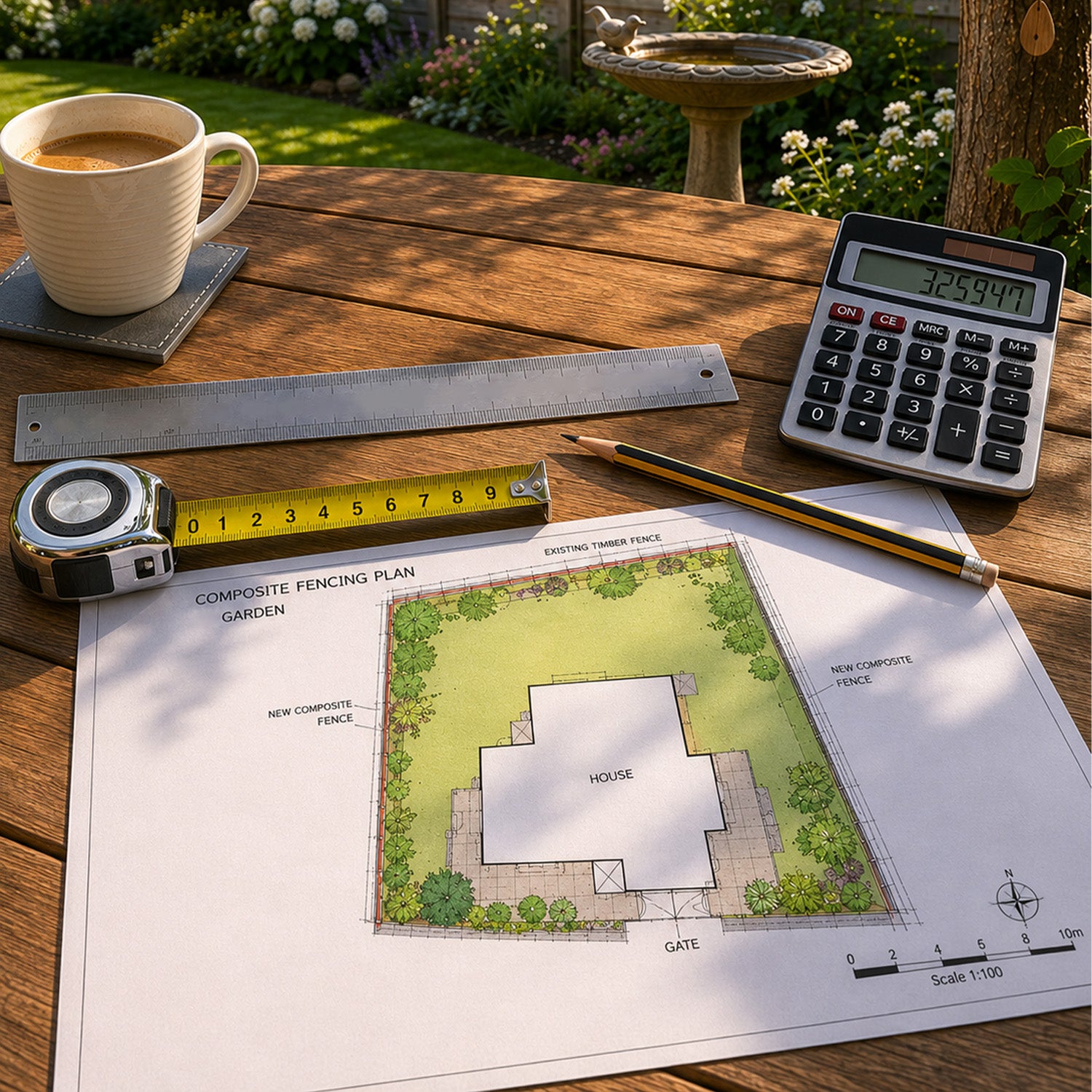
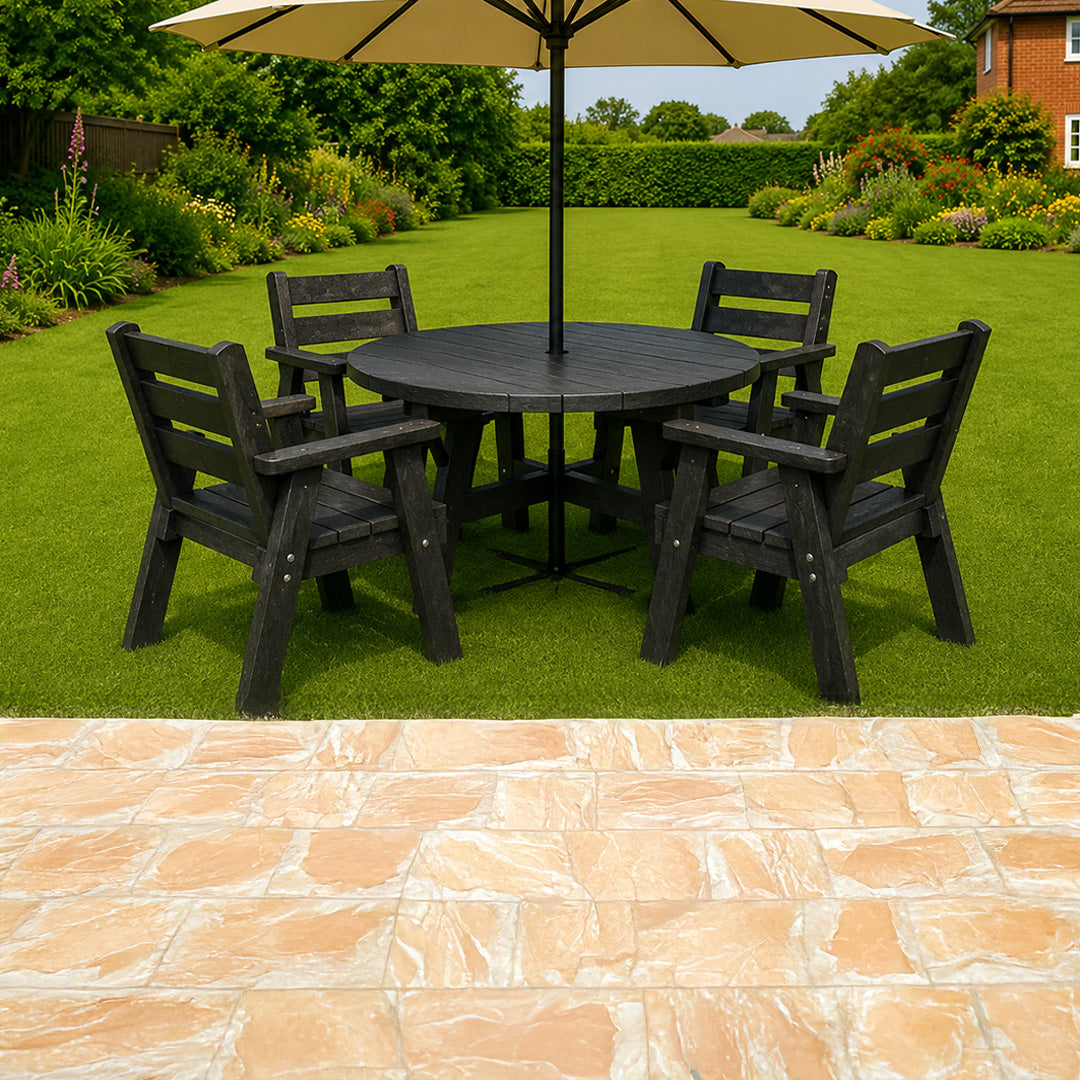
Start with the seating or dining area. Identify views from paths, neighbouring gardens and higher windows, then decide where screening would make a useful difference. A short run beside the patio may meet your needs without enclosing every side.
If you are searching for a “fence around deck” arrangement, distinguish the perimeter boundary from any required fall protection. Guarding needs an appropriate specification and verified performance for its purpose; ordinary privacy fencing should not automatically be used in its place.
Keep room for furniture movement, gate operation and maintenance access. Mark the proposed layout temporarily so you can test the feeling of enclosure before choosing the final height and position.
Decking Against Fence: Leave the Right Clearances
Decking against fence is often used to describe a close visual junction, but the deck should not simply be forced tightly against the boundary. Follow the decking instructions for movement gaps, ventilation and drainage beside fixed objects.
Measure from the actual surfaces, including projecting posts or rails. The required clearances depend on the selected board system and detail, so do not apply one generic gap to every installation.
- Maintain the specified expansion allowances.
- Keep drainage routes clear and avoid trapping debris.
- Allow access to inspect and clean the boundary.
- Do not use the fence to support the deck without a designed arrangement.
- Confirm details where posts pass through or sit beside the deck surface.
Review the decking installation guidance alongside the fencing instructions before fixing either system.
Can You Install a Fence on a Deck?
A fence on deck design requires a support assessment. Fence panels can place substantial demands on posts and connections, particularly in wind. Deck boards alone should not be treated as a structural foundation for fence post base plates.
Do not assume a standard deck subframe can accept those loads either. The connection and load path need to be designed and confirmed for the proposed height, exposure and supporting structure. Independent foundations beside the deck may be an option where suitable.

NeoTimber’s hard-ground post set should not be interpreted as universal approval to fix onto any surface with alternative screws. A patio slab is also not automatically a suitable structural base.
Follow the fencing installation guidance and obtain advice for any non-standard support detail. For guarding options, explore our balustrades guide and composite balustrades collection, confirming suitability for the project.
Is a Fence Made From Decking a Good Idea?
A fence made from decking may appear to reuse spare material neatly, but decking and fence boards are specified for different assemblies. Similar colour or thickness does not establish that a deck board is suitable as fence infill.
Check the manufacturer’s approval, support spacing, fixing method, movement allowances and wind requirements before using a product outside its intended application. Purpose-made fencing components offer a clearer starting point for a compatible system.
Do not attach heavy spare boards to existing posts or create improvised panels on the assumption that a material suitable underfoot will automatically work vertically.
Coordinate Colour, Texture and Screening
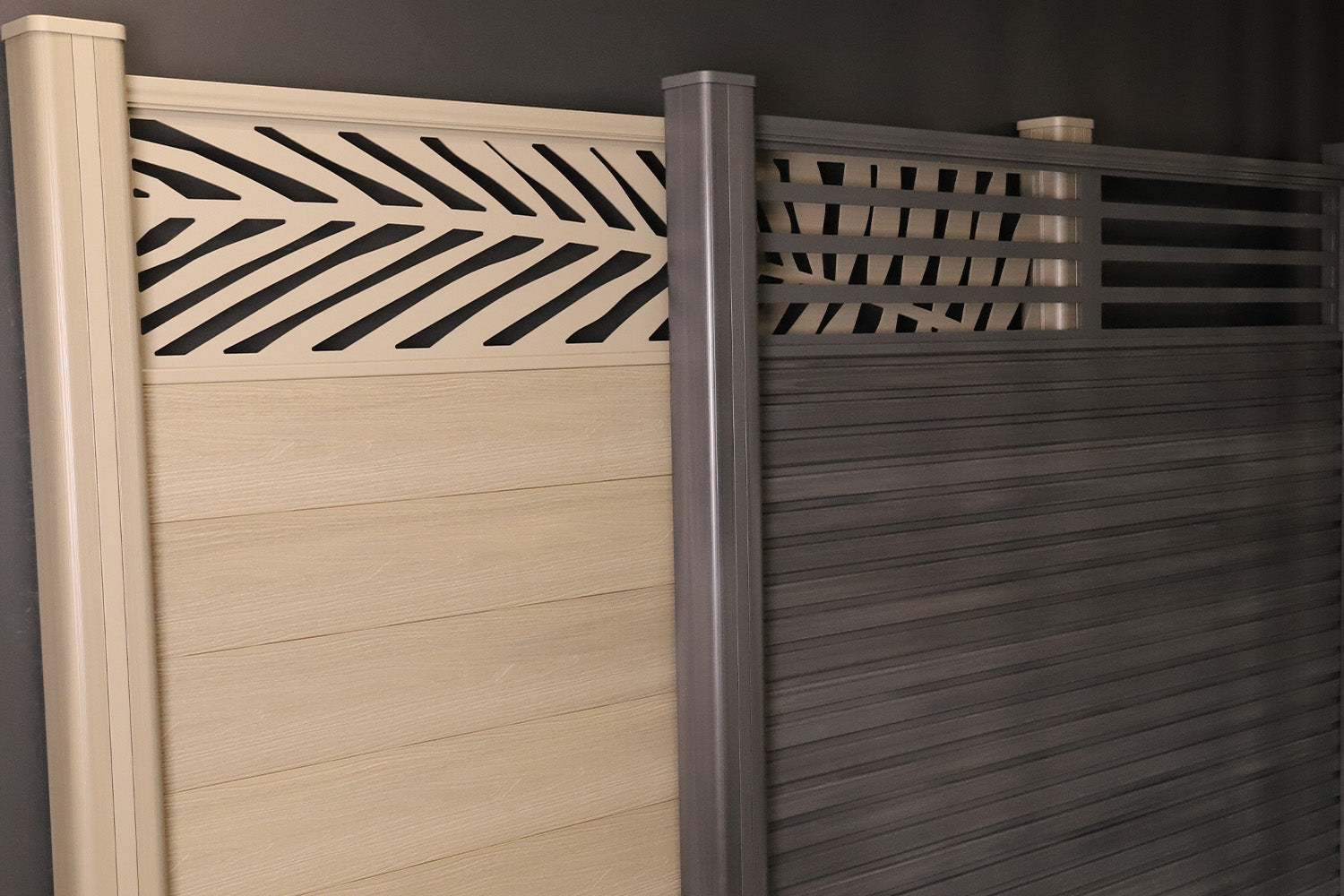
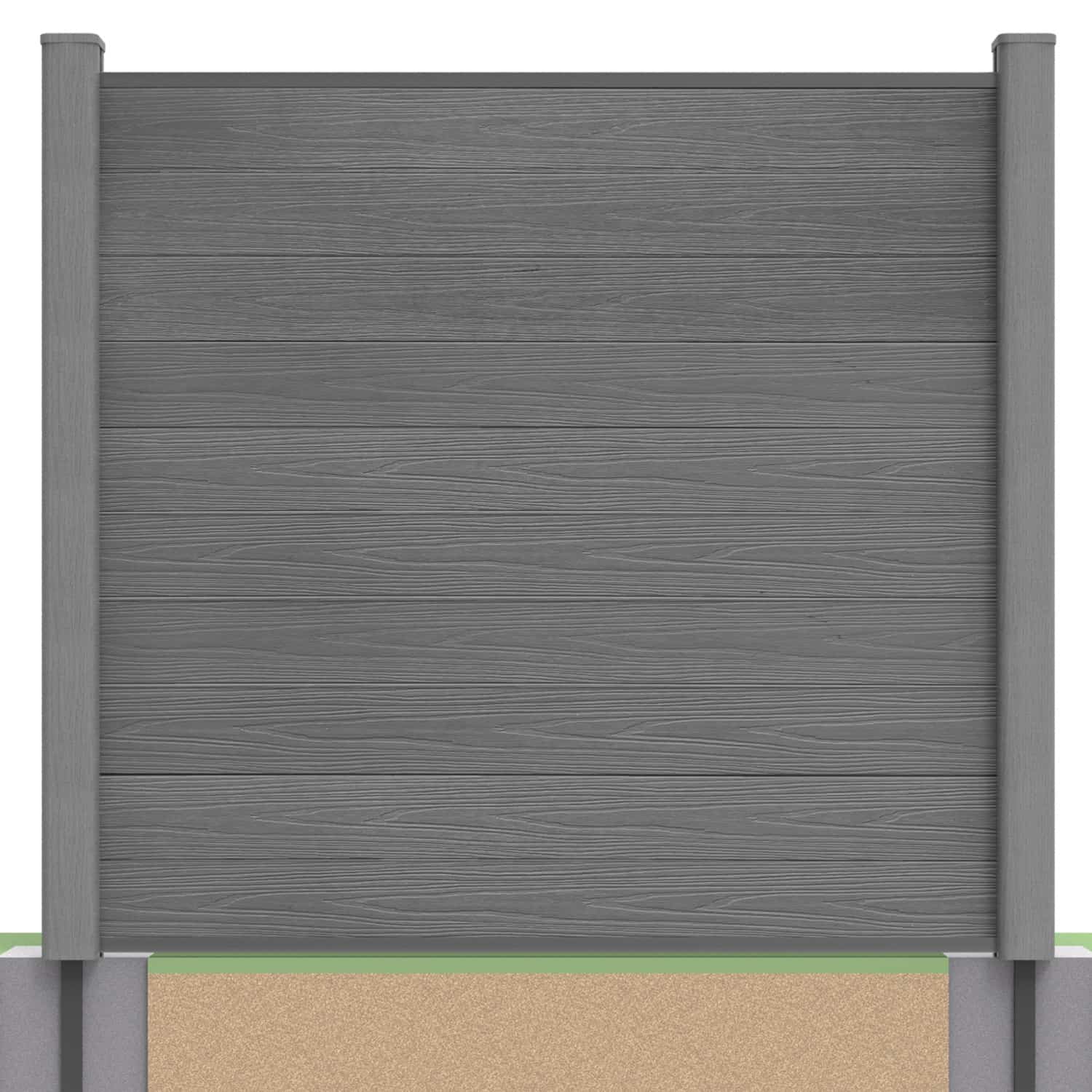
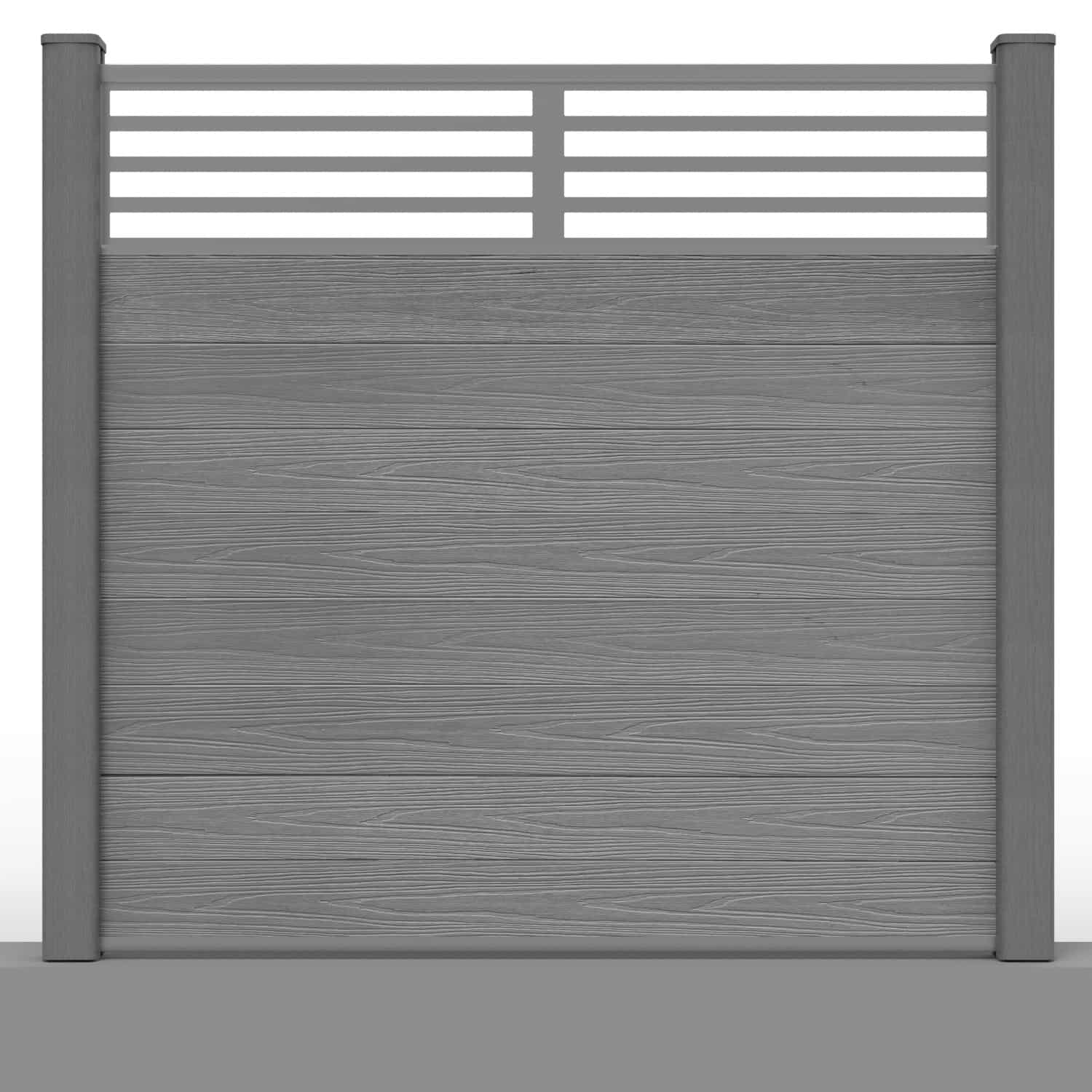
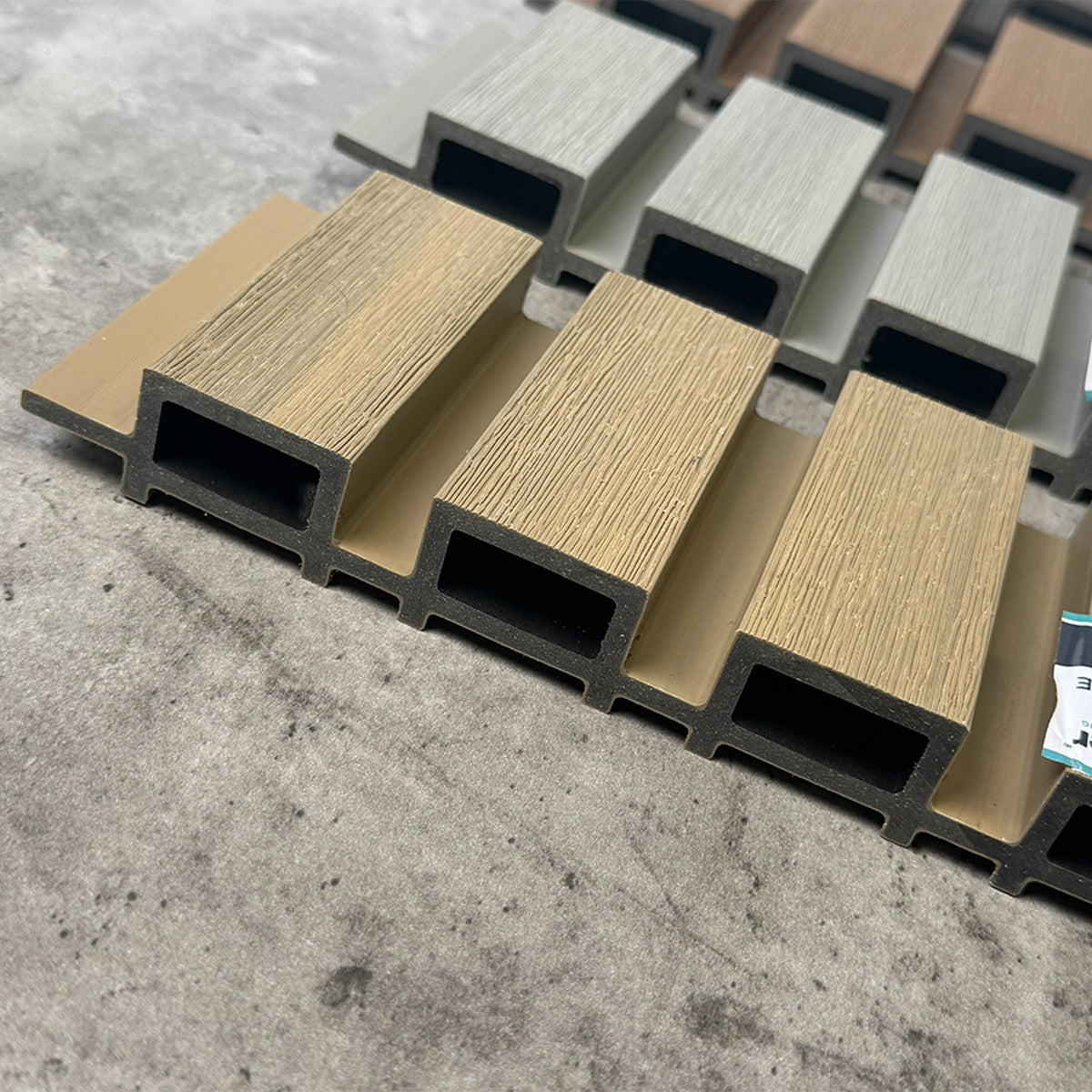
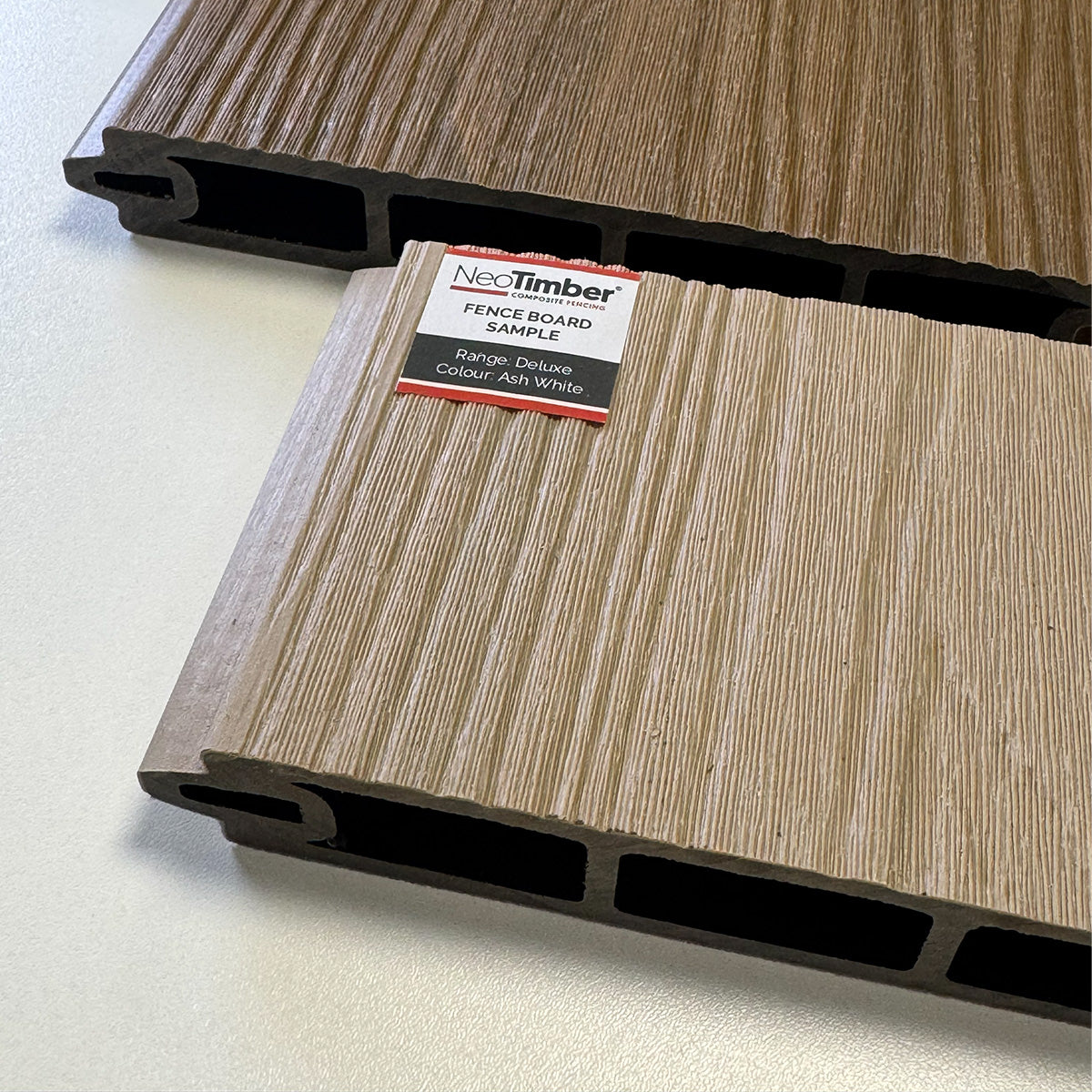
The Deluxe fencing range offers woodgrain and brushed faces, while Slatted panels introduce a pronounced linear profile. Compare them beside the deck or patio rather than choosing the boundary in isolation.

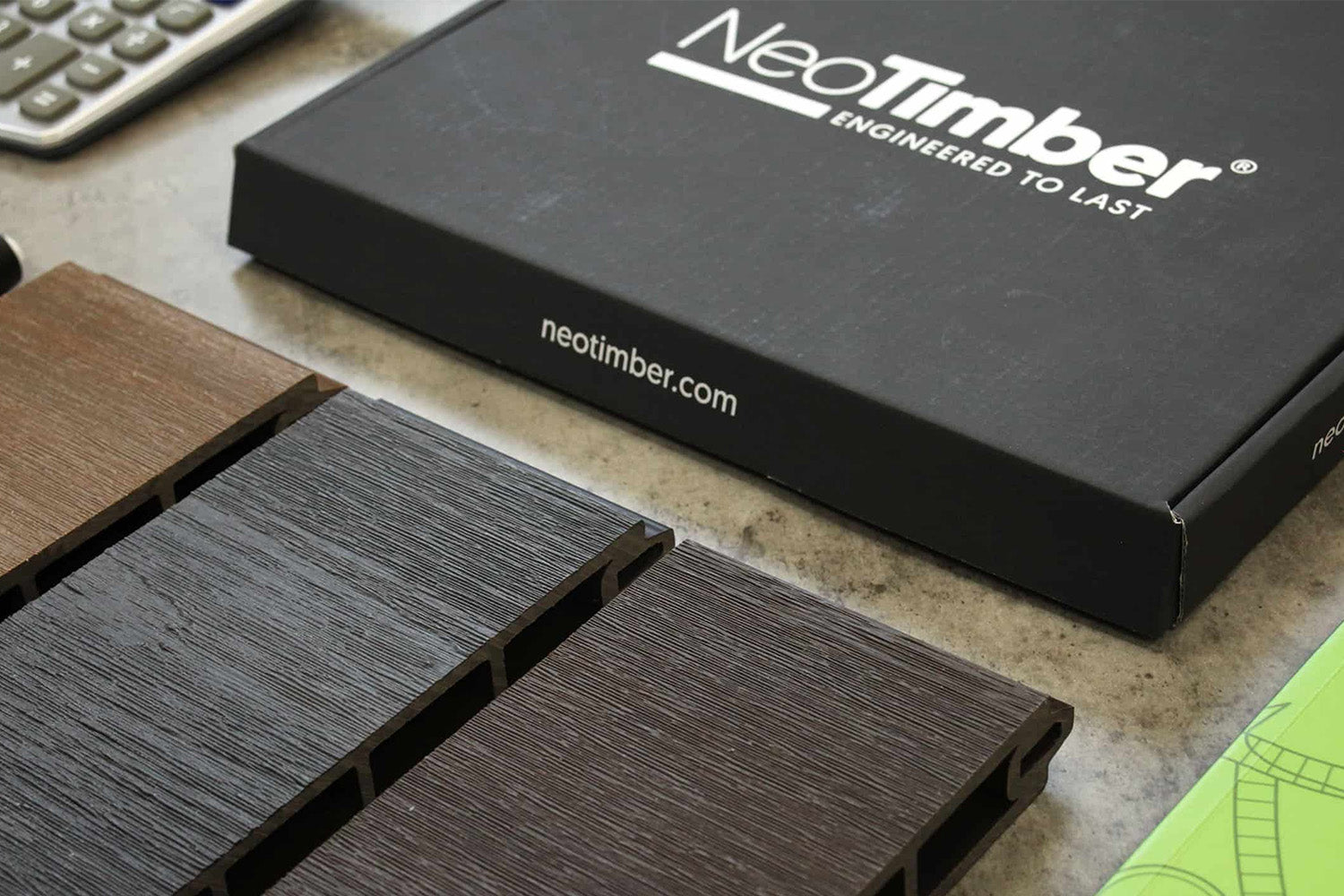
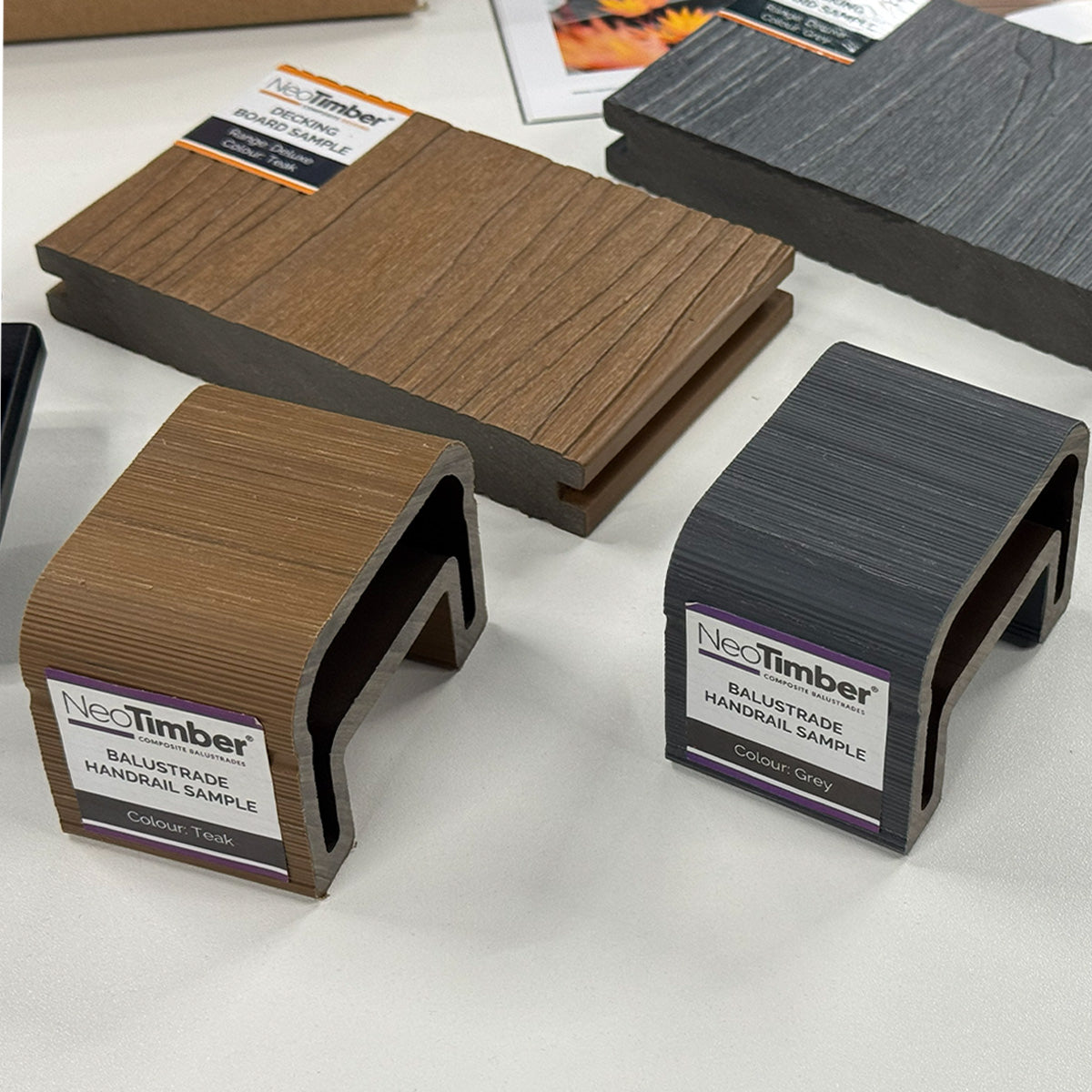
Use the colour guide and fencing samples to shortlist finishes. Matching names across different profiles do not guarantee identical appearance in every light; complementary colours can work together without being exact matches.
Add Decorative Screens Selectively
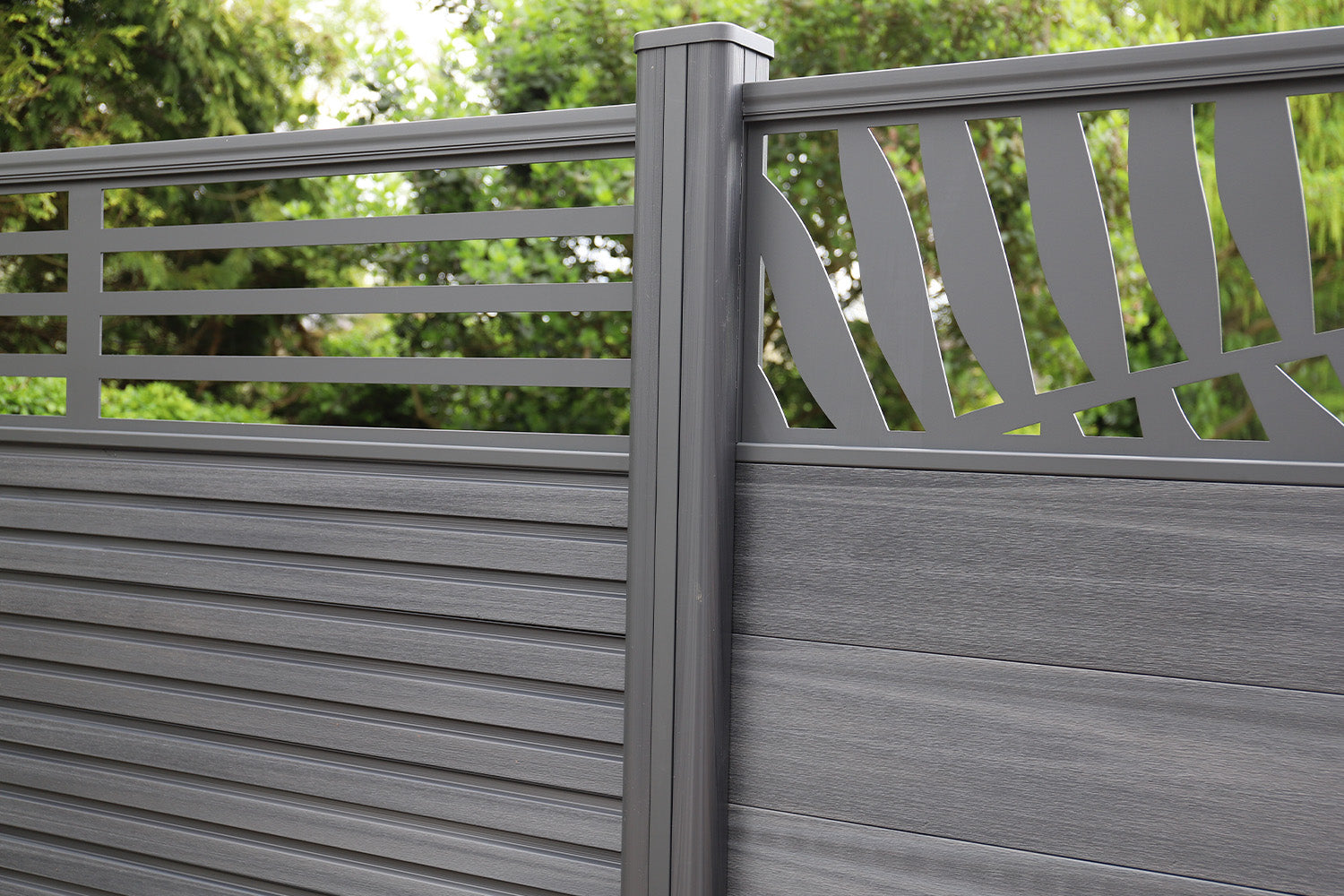
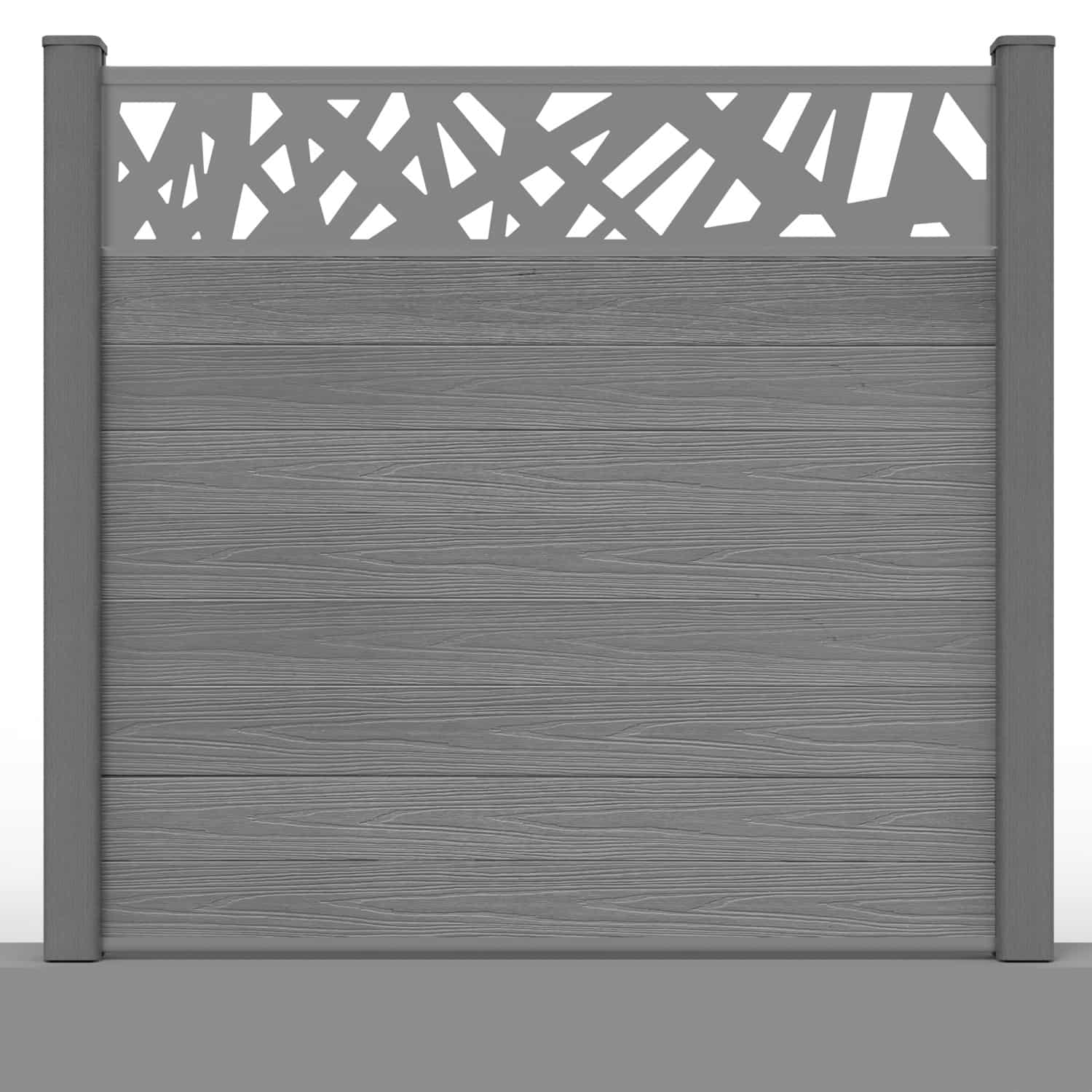
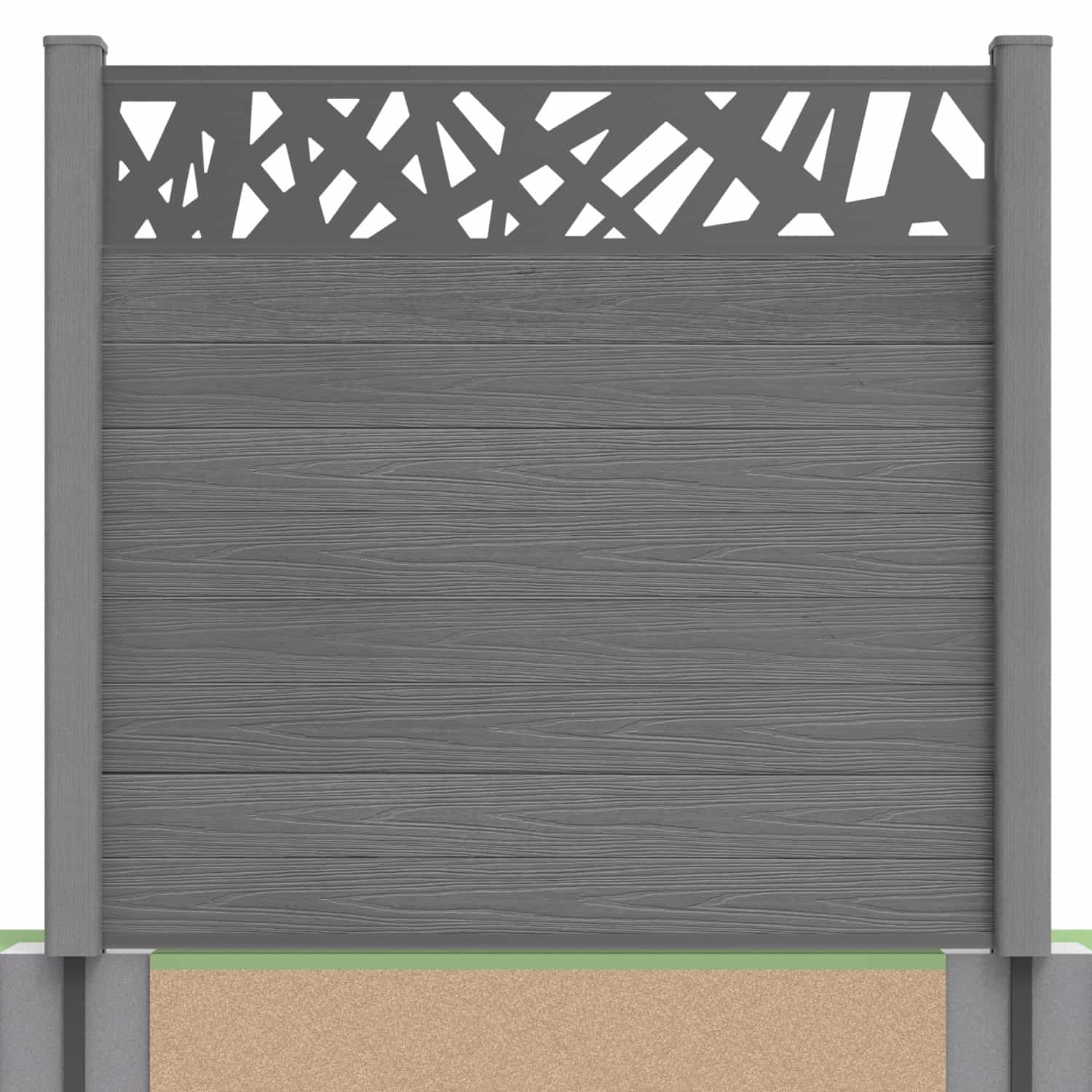
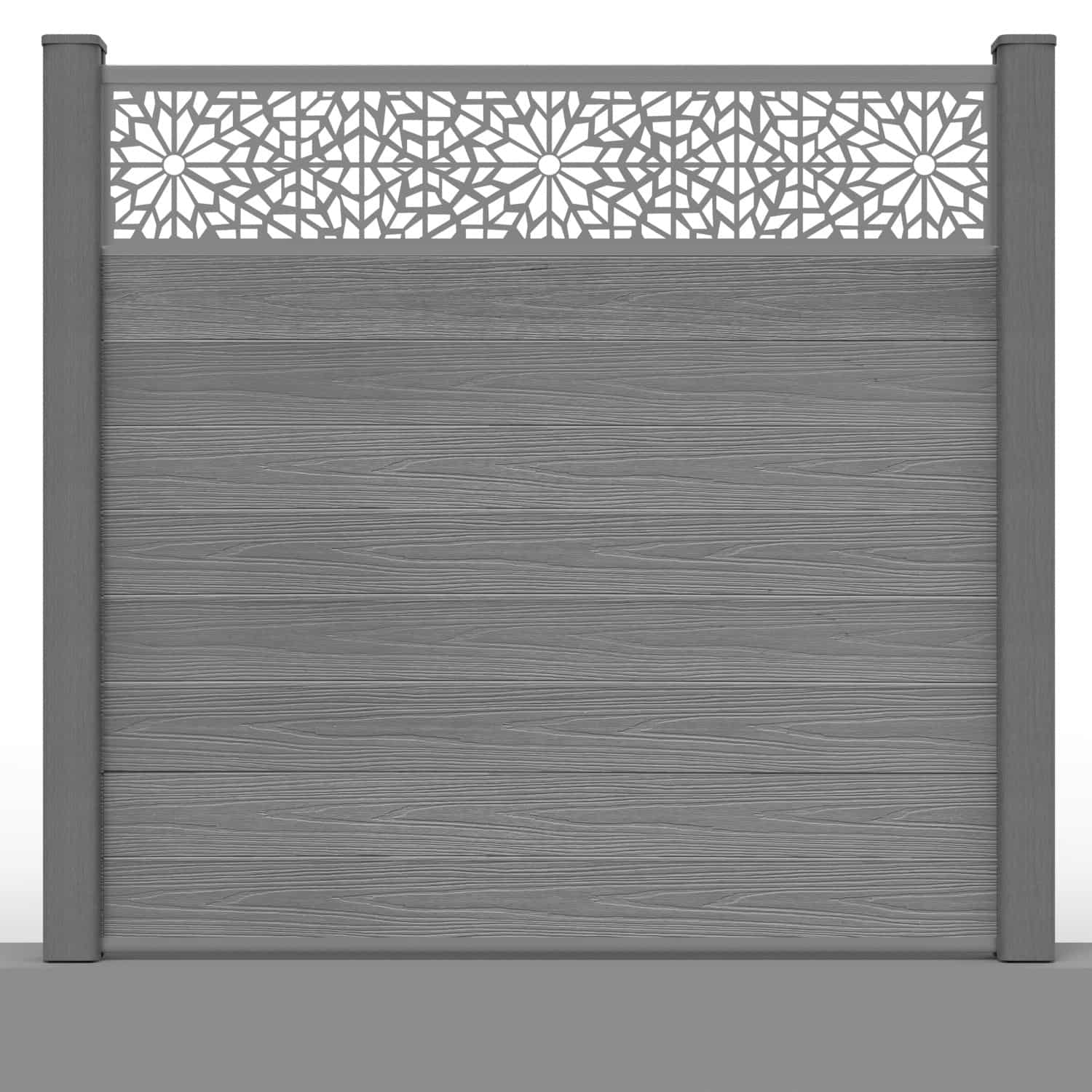
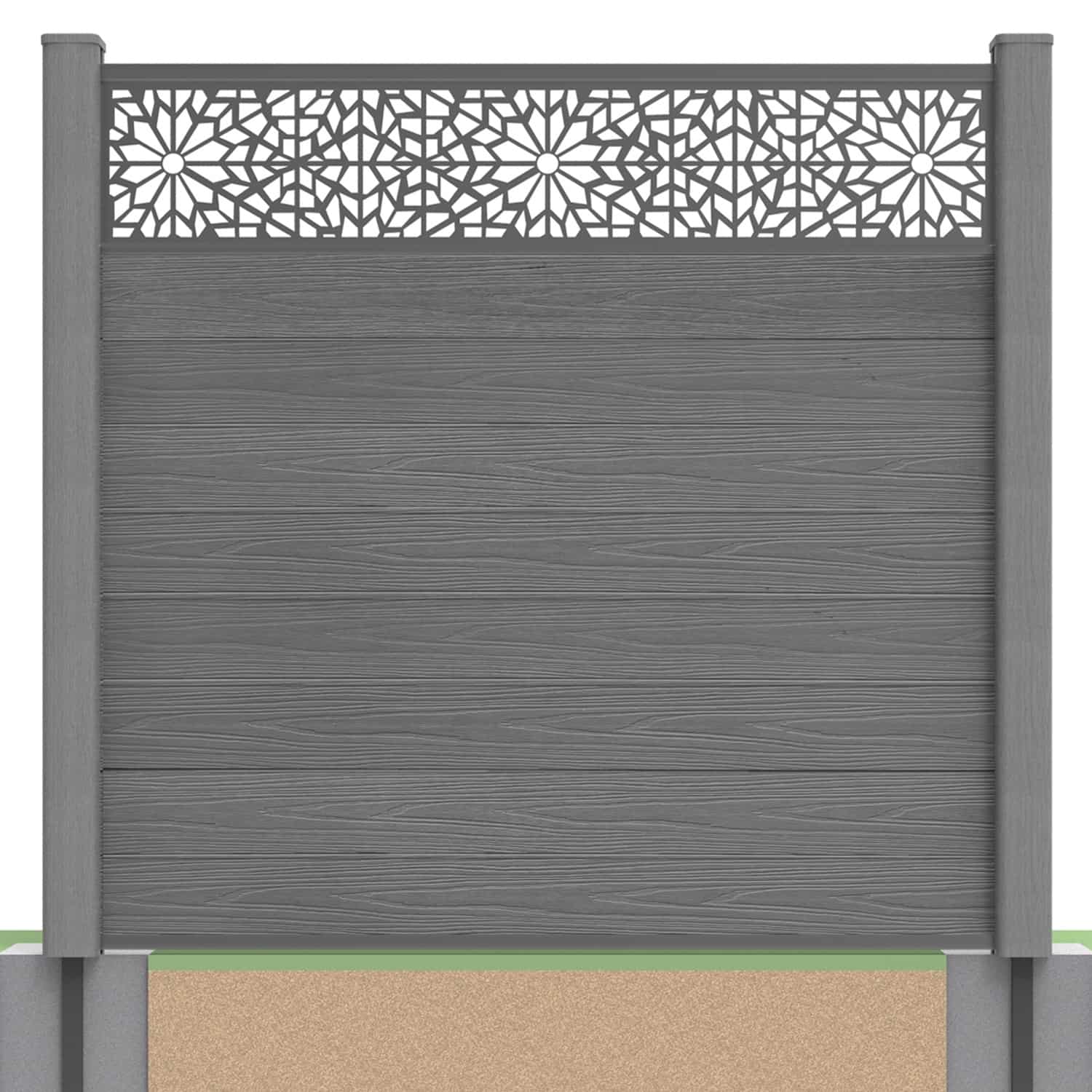
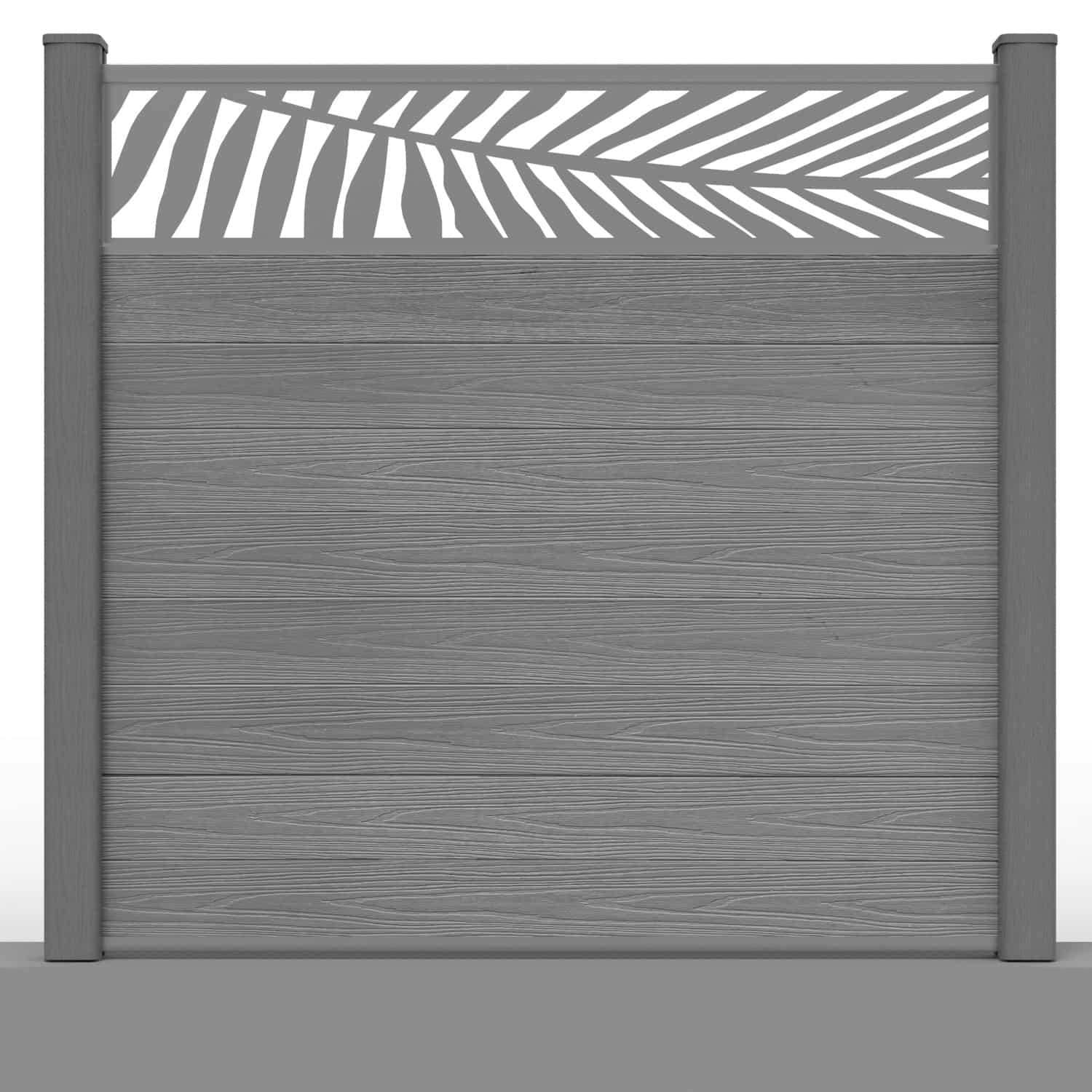
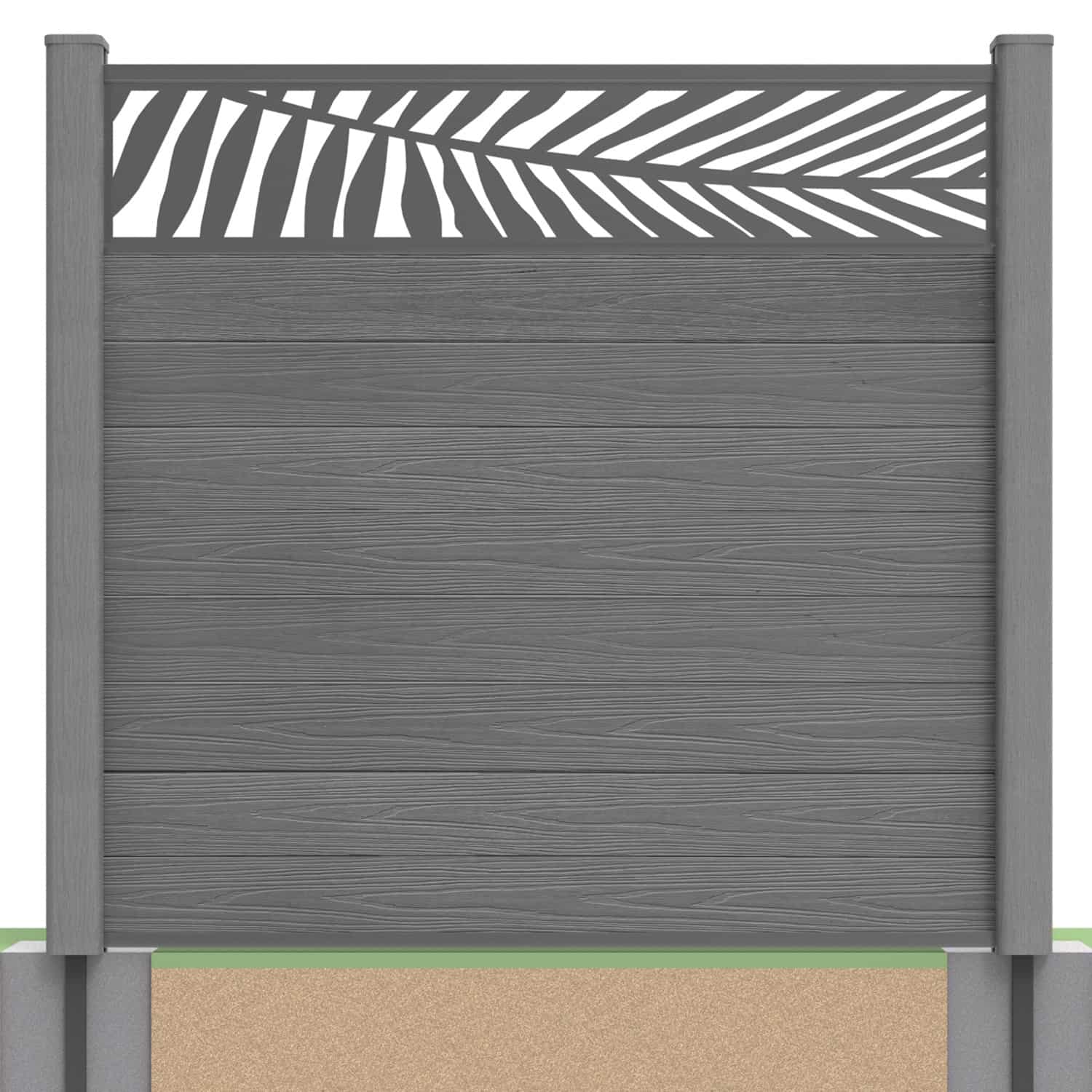
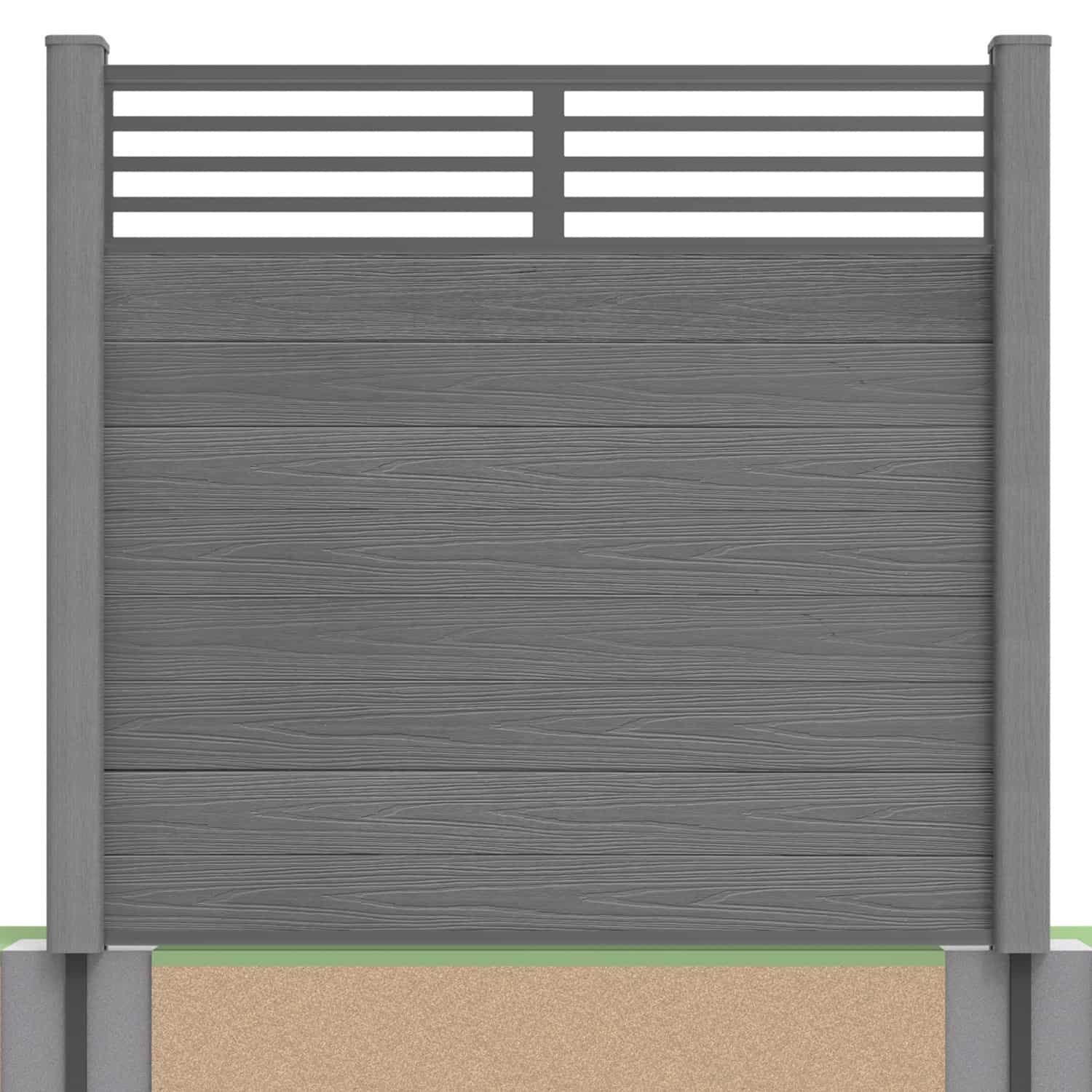
Decorative aluminium screens can add detail to selected bays. Cut-outs permit views through the upper section, so assess their effect on privacy rather than assuming the same coverage as solid boards.

Confirm the approved configuration, board quantity and final height. Slatted-style boards themselves should not automatically be treated as open screens with airflow through the panel.
Assess Existing Supports Before Reuse
Compatible timber post inserts or concrete post inserts may allow a retrofit. Check post condition, foundations, alignment and spacing first. Inserts do not repair damage or compensate for inadequate supports.
Compare Fence and Deck Prices as a Complete Scope
Fence and deck prices depend on the selected products, dimensions, supports, ground conditions and installation work. Separate the two material lists, then include shared work where appropriate without counting it twice.
| Budget area | What to include |
|---|---|
| Fence | Boards, posts, supports, rails, fixings, gates and screens |
| Deck | Boards, subframe, foundations, clips, edging and steps |
| Connections | Any required design and non-standard structural details |
| Site work | Removal, groundwork, disposal and reinstatement |
| Logistics | Delivery, unloading, access and labour |
For fence and deck installation, agree which contractor is responsible for the interface, clearances and sequence of work. Compare quotations for the same layout and included tasks. A calculator can help with materials, but does not replace a site assessment.
Plan Care Around Both Surfaces
The capped fence finish is designed to improve fade and stain resistance without routine painting. Cleaning and inspection remain necessary, and normal weathering can affect appearance.

Follow the fencing care guidance and the instructions for the selected deck. Leave access for inspections and keep debris from building up between structures.
Fence and Deck FAQs
What fencing works beside a patio?
Choose according to privacy, appearance, support requirements and exposure. Compare samples beside the paving and confirm suitable foundations.
Can I bolt fence posts straight to deck boards?
No structural suitability should be assumed. Deck boards alone are not a foundation for fence posts; the support and connections need an appropriate design.
Can decking touch the fence?
Follow the board manufacturer’s clearances for fixed objects, movement, drainage and ventilation. Do not force the deck tightly against the boundary.
Is a privacy fence suitable as deck guarding?
Not automatically. Guarding against falls requires an appropriate specification and verified performance for that purpose.
Can leftover decking become a fence?
Only where the product and complete assembly have been confirmed suitable. Do not assume decking boards can replace purpose-made fence components.
What does “fence deck” mean when comparing designs?
The phrase can describe several arrangements. Clarify whether you mean a fence beside a deck, a screen mounted on a structure or a guarding system, because the support requirements differ.
Bring the Design and Structure Together
Start with the layout and privacy needs, then confirm supports, clearances and the complete budget. Explore NeoTimber® composite fencing and composite decking, or contact our team with your project details for help checking compatible products.