Choose the Right Boundary for Each Part of Your Garden
Garden fencing shapes the view from the house, defines outdoor spaces and influences how private a seating area feels. The right choice depends on where it will sit and what it needs to do, rather than colour or material alone.
A welcoming front boundary, a more enclosed rear garden and a low planting border call for different solutions. This guide compares those roles, explains common material choices and sets out the checks to make before ordering or finding an installer.

Start With the Purpose of the Fence
Decide whether the main priority is privacy, a clear boundary, visual separation or a decorative backdrop. If pets or children will use the space, consider their specific needs rather than assuming a decorative panel will provide suitable containment.
Assess views from seated and standing positions, as well as any overlooking windows. A continuous panel can block direct views at fence level without preventing views from above.
For noise concerns, seek evidence for an acoustic system rather than expecting ordinary boards to provide a particular sound reduction. Likewise, a decorative fence is not automatically suitable guarding around a raised deck.
Choosing a Front Garden Fence
A front garden fence should work with the entrance, driveway and architecture. An open style can define the frontage while retaining views of planting; a more continuous finish creates a different sense of enclosure.
Look at visibility around gates, paths and vehicle access before choosing height or position. Consider how the fence will look from the street and through the windows, not just from the garden.
Check relevant local requirements and any property-specific restrictions before changing the frontage. Avoid choosing a standard height on the assumption that it is permitted in every position.
Where Garden Picket Fencing Works Well
Garden picket fencing introduces a repeated upright pattern with gaps between the individual faces. It can suit a traditional frontage, a cottage-style planting scheme or a decorative division within the garden.
Its open appearance is different from a privacy panel. Compare the actual spacing, height and gate detail against the intended purpose. A low picket boundary should not be assumed to keep every pet inside or provide security.
Timber and manufactured alternatives have different construction and care requirements. Check the complete specification, including posts and fixings, rather than choosing solely on the shape of the top edge.
Use a Garden Edging Fence to Define Planting
A garden edging fence can mark the transition between a path, lawn and flower bed without creating a full boundary. It is useful where you want a visible outline rather than privacy.
Choose proportions that suit the planting and leave room for mowing, trimming and access. Keep sharp projections and awkward trip points out of circulation routes.
Decorative edging is not a retaining wall. If the soil level needs structural restraint, specify a suitable retaining arrangement rather than relying on a lightweight border product. Check whether the chosen material is intended for contact with soil.
Compare Materials Without Relying on Stereotypes
Material choices and the questions to ask:
| Option | What it can offer | What to check |
|---|---|---|
| Timber | Natural grain and a range of traditional designs | Species, treatment, construction and desired maintenance regime |
| Metal | Open rail, mesh or decorative patterns | Coating, connections, exposure suitability and privacy |
| Plastic or PVC | Manufactured finishes and product-specific panel styles | Reinforcement, movement and installation requirements |
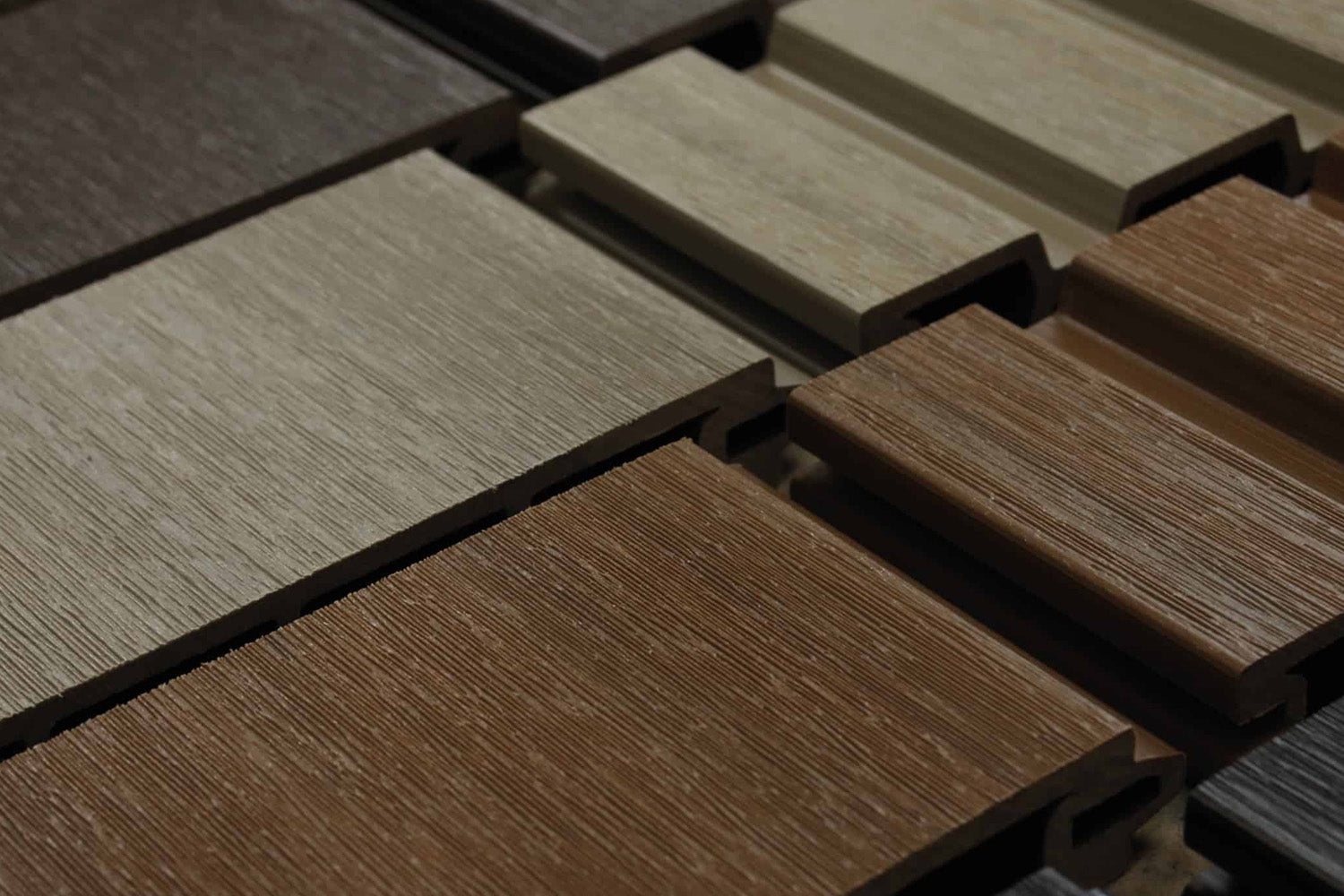
| Composite | Timber-inspired surfaces without routine painting or staining | Profile, complete system contents and care guidance |
Price, durability and appearance vary within each category. Material names alone do not establish wind resistance, security or environmental performance.
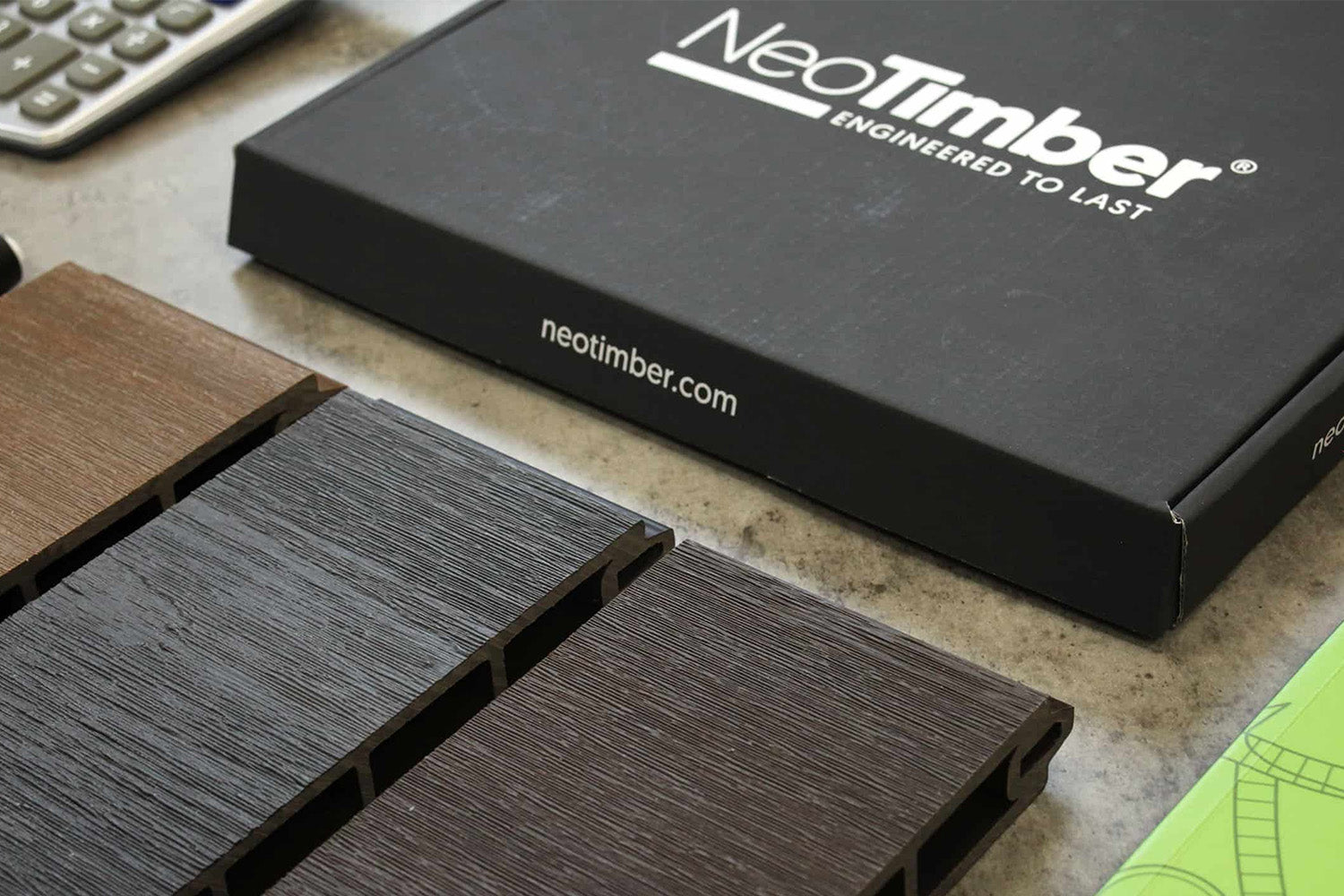
Explore the NeoTimber® composite fencing collection to compare the relevant products and compatible components.
Choose Between Continuous, Slatted-Effect and Open Designs
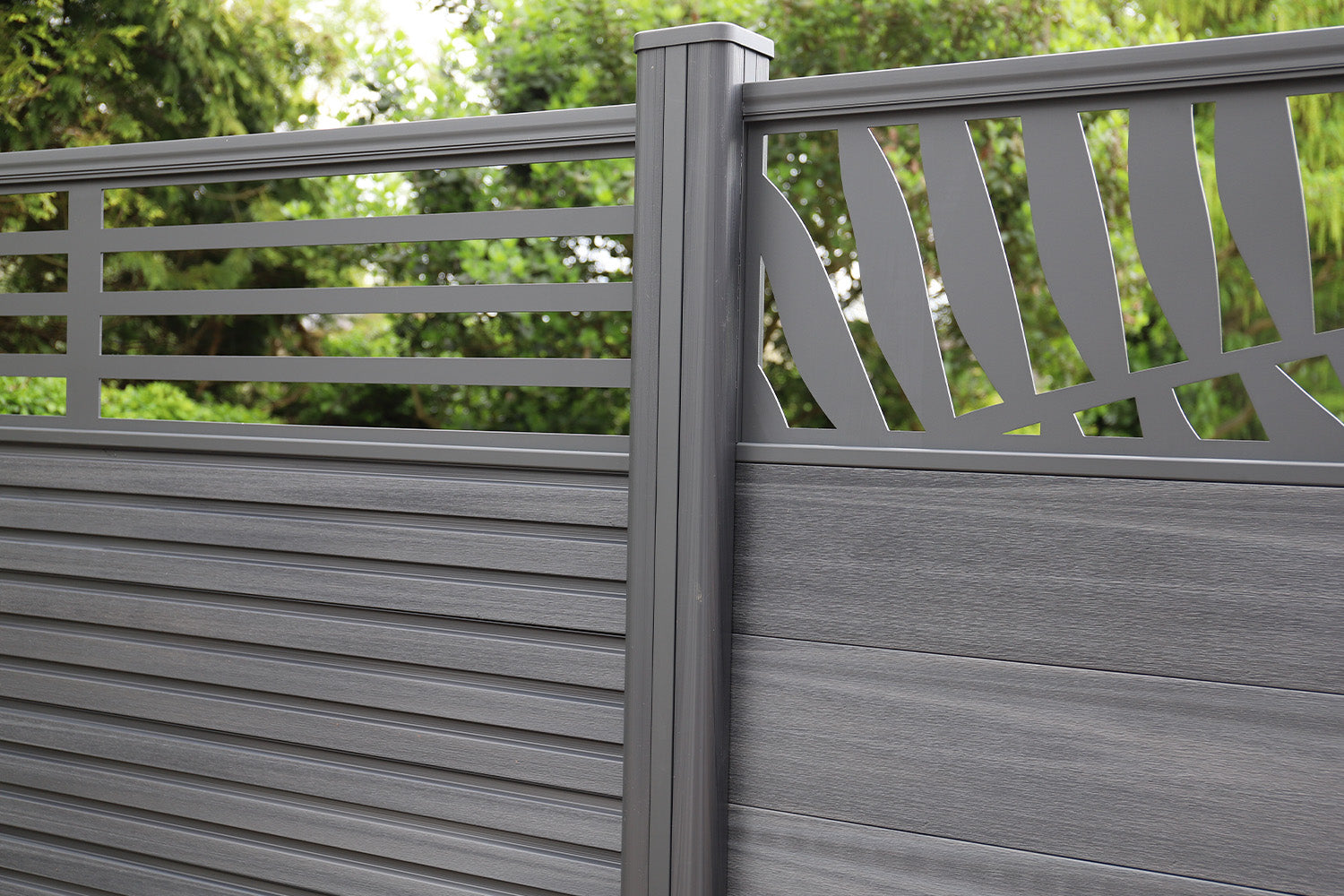
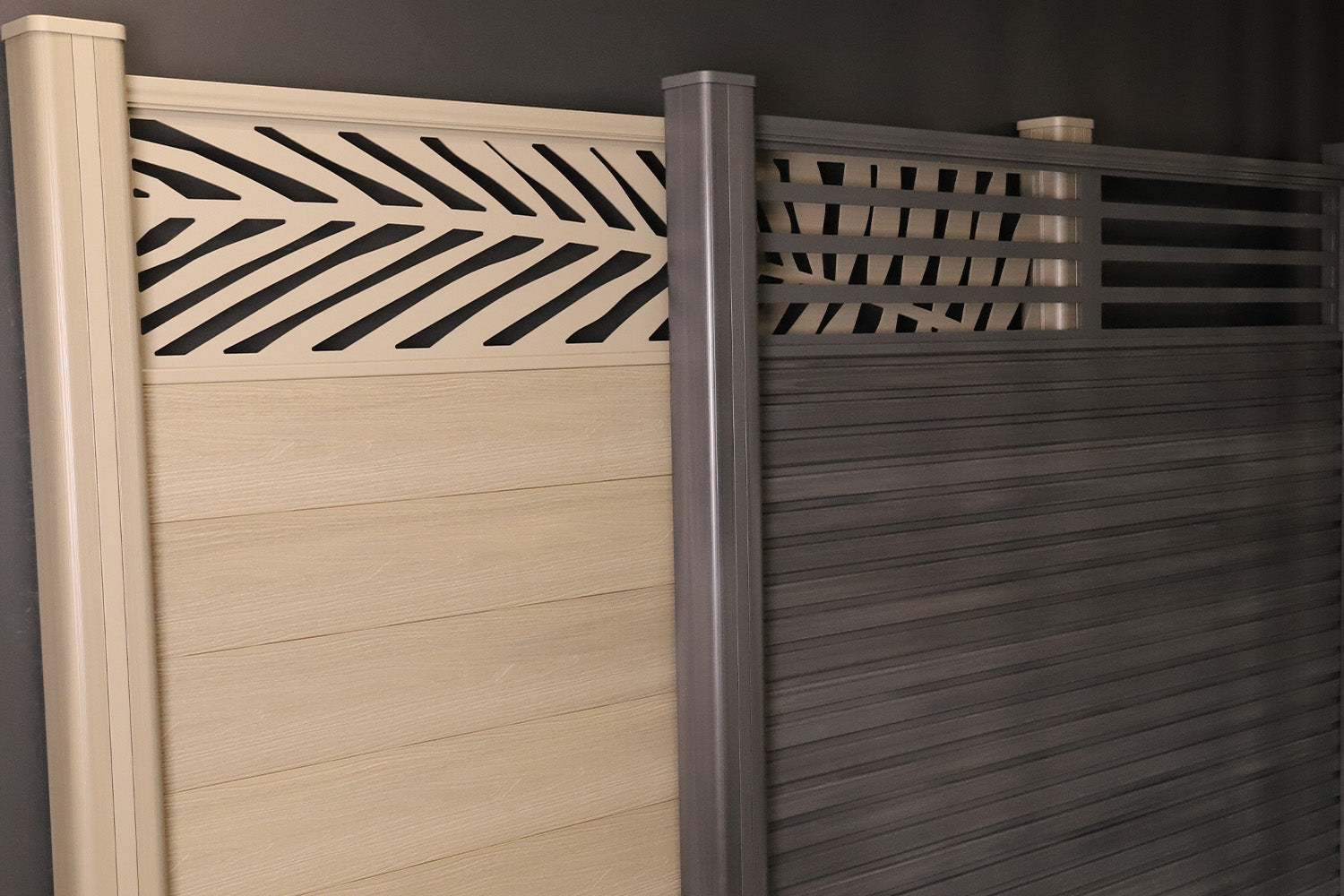
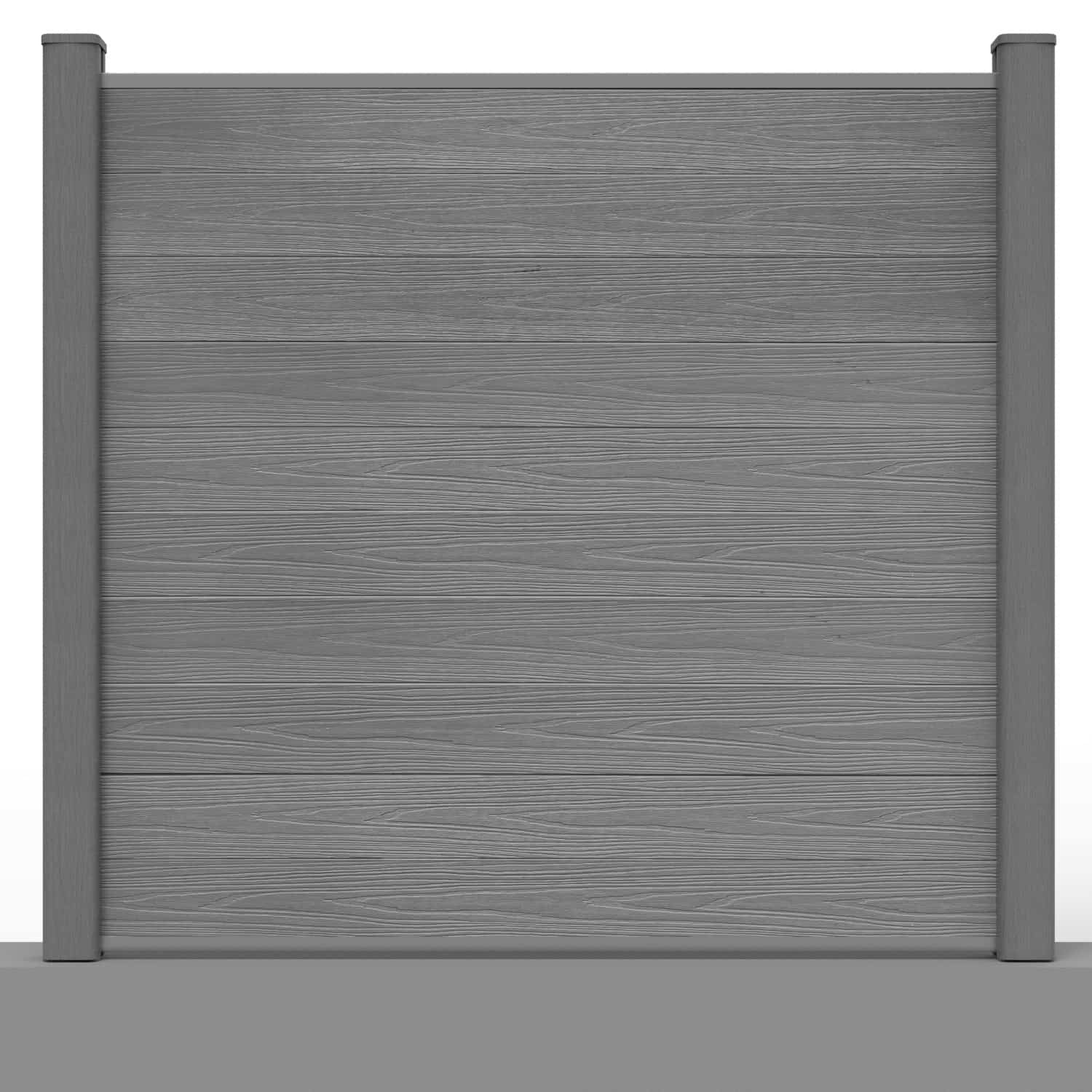
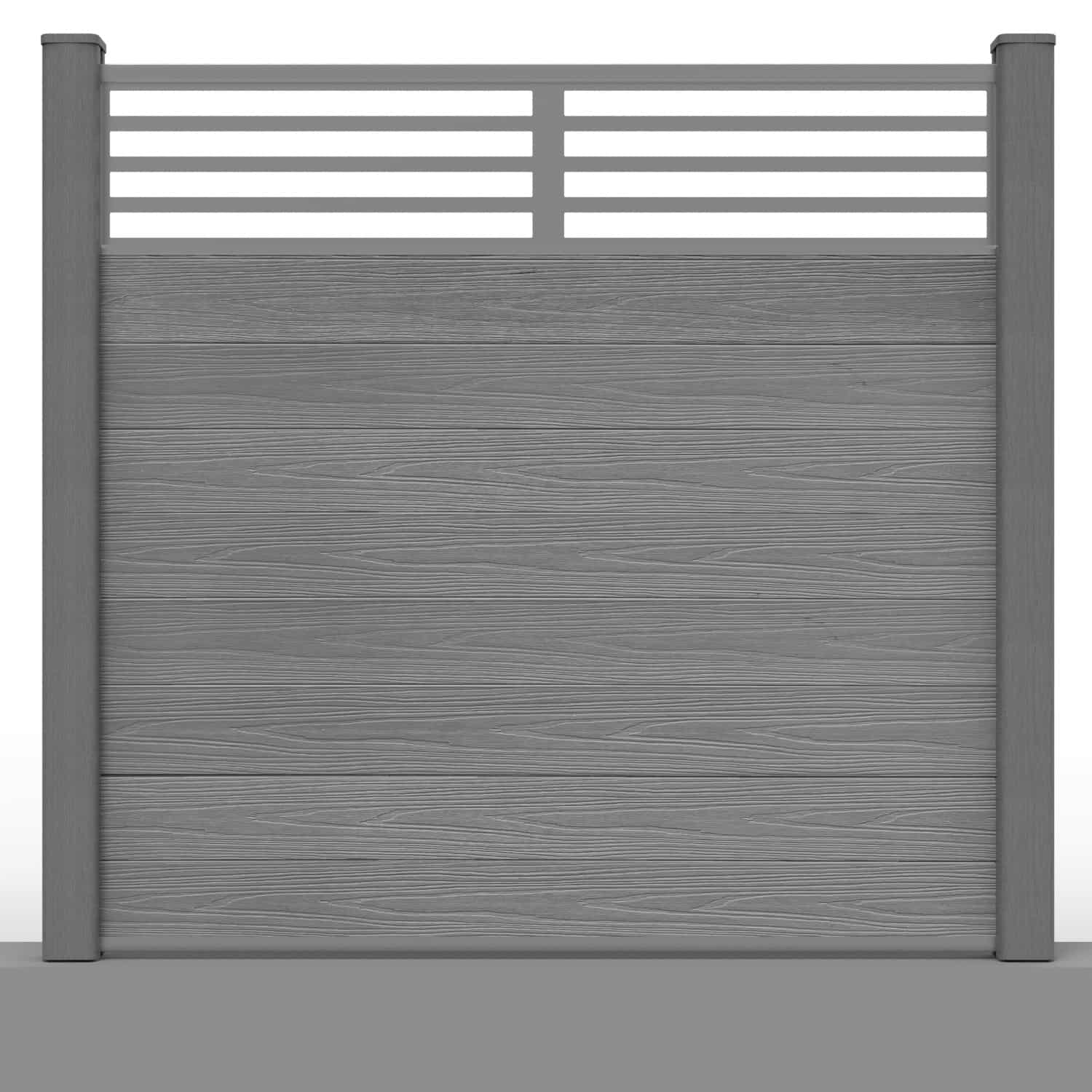
A continuous board arrangement gives a different level of visual coverage from open trellis or individual battens. Slatted-effect composite boards can create horizontal shadow lines without leaving gaps through the panel.
Do not assume that a product described as “slatted” allows airflow. Review its construction and the complete installed panel, including any decorative insert.
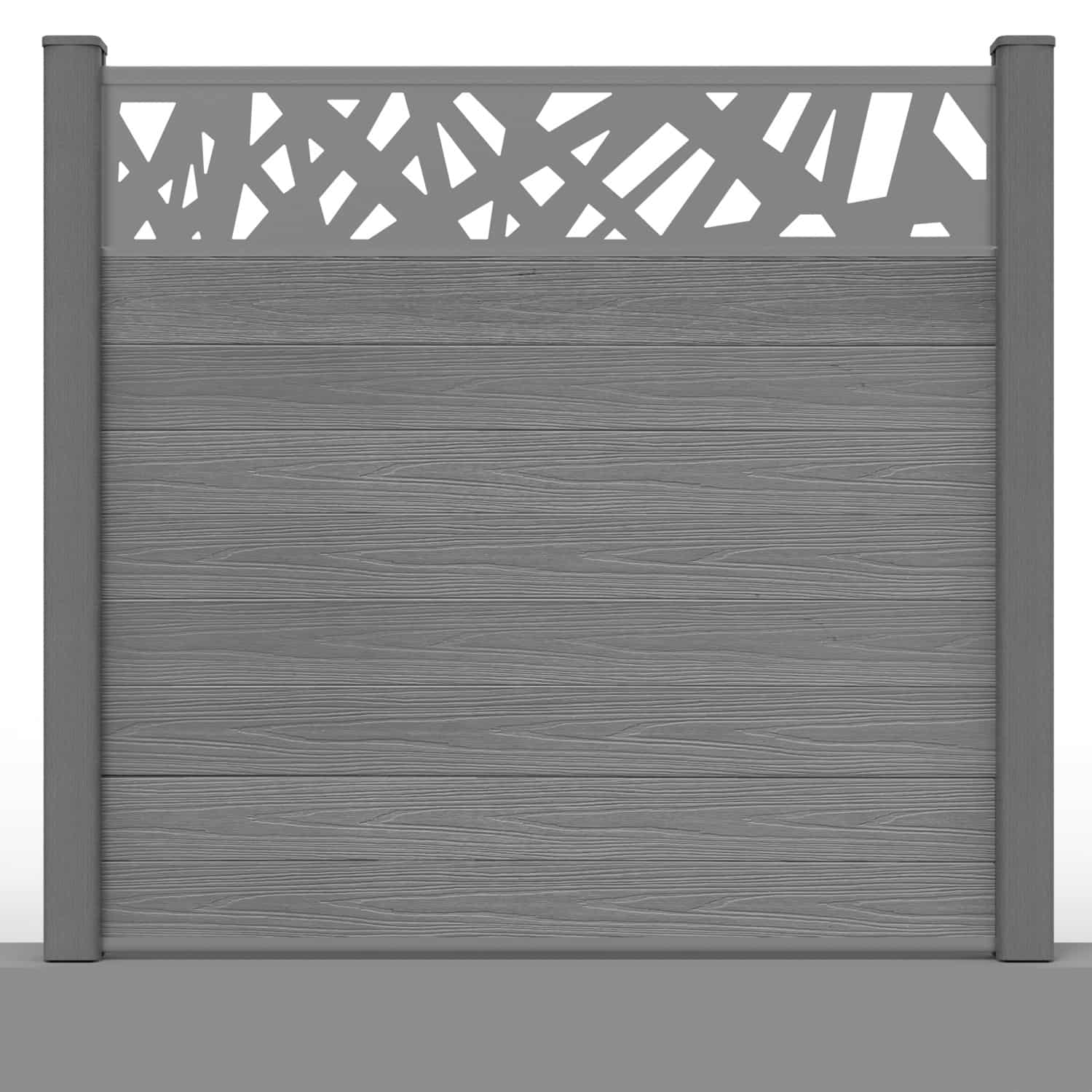
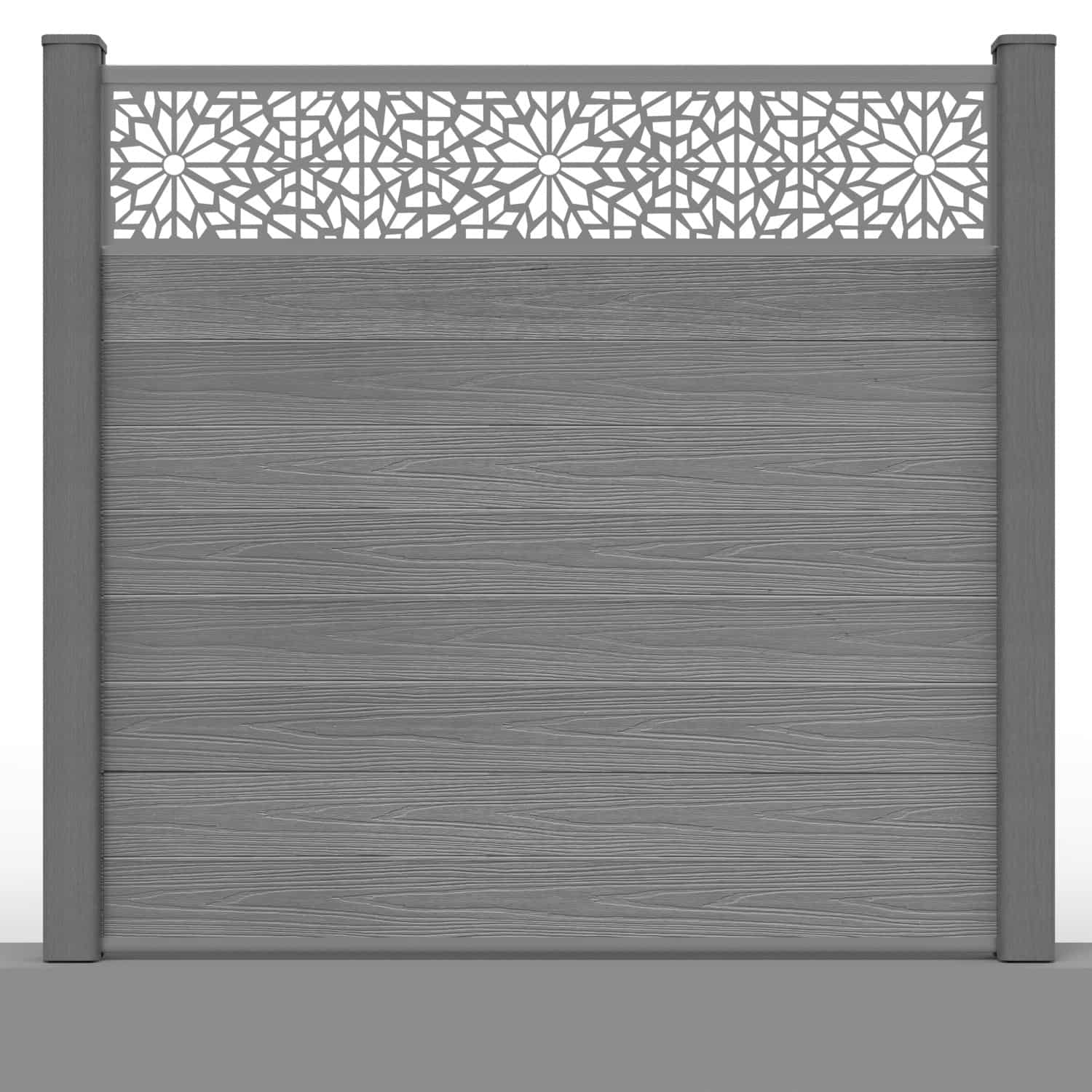
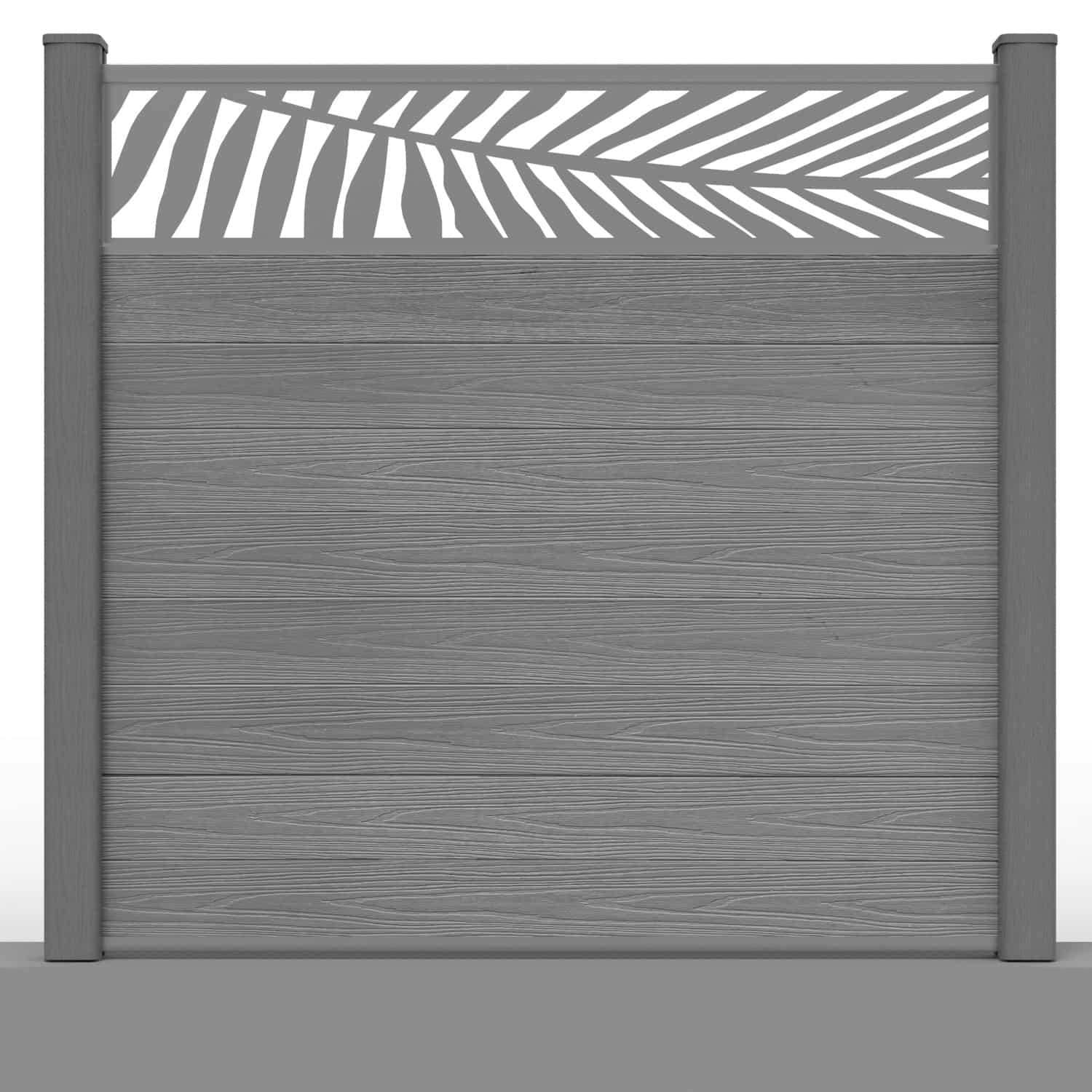
For more pattern, a compatible screen insert can provide a focal point above a more continuous lower section. Use the decorative panel guide to compare the design approaches.

Coordinate Colour With the House and Planting
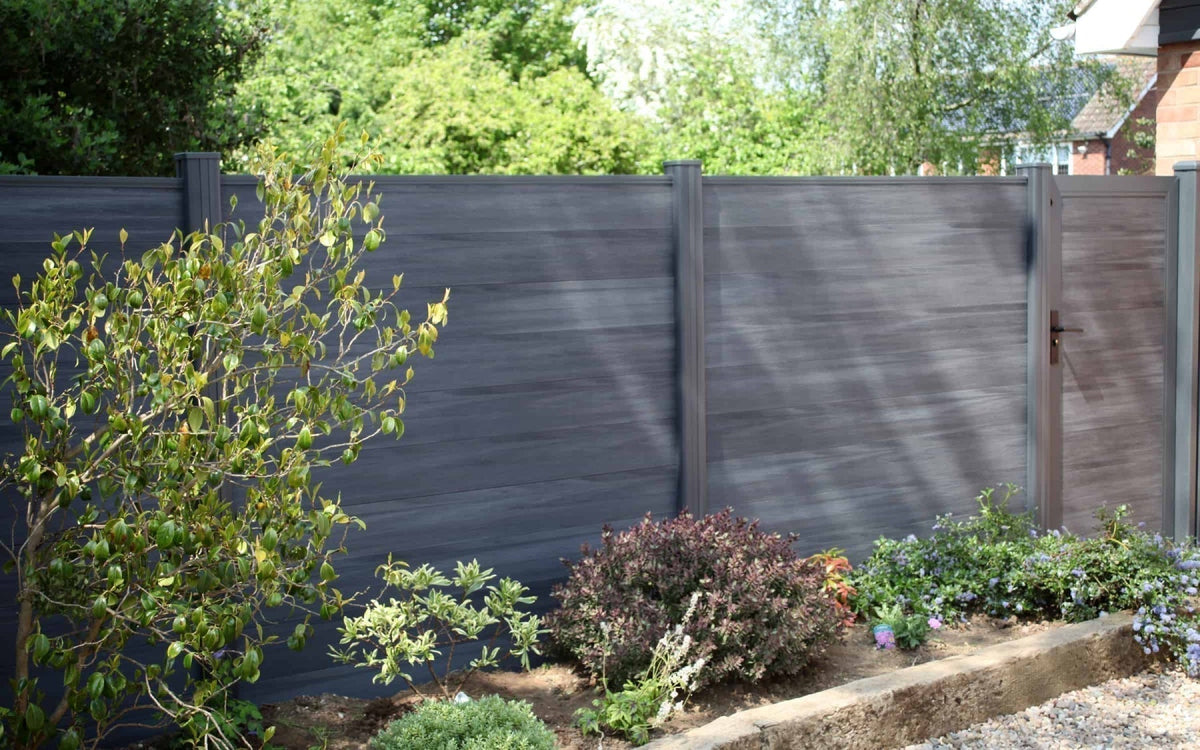
Darker tones can make a strong backdrop for foliage, while warmer wood-effect finishes can connect stone, paving and garden furniture. A neutral palette may help a small space feel less visually busy.
View fencing samples outdoors beside the materials they will meet. Matching colour names across decking and cladding ranges may still have different undertones or textures.
Repeat a colour selectively in gates or other features rather than making every surface identical. For additional inspiration, browse the project gallery.
Plan Posts, Ground Conditions and Installation
Measure the boundary and mark corners, slopes, gates and changes of height. Posts, foundations, rails and fixings must suit the complete arrangement and exposure.
Existing posts may be reusable if their condition, spacing and compatible fixing detail are suitable. Inserts do not make an unsound post suitable for a new installation. Review retrofit options before deciding what can stay.
For new work, follow the product-specific installation guidance. Open panels still need suitable supports, and adding solid backing later can change wind loads.
Check kit contents carefully. A panel price may exclude posts, ground supports or gate hardware, and a normal fence post is not automatically a suitable gate support.
Searching for Garden Fencing Near Me?
If you are searching for “garden fencing near me”, compare local availability and delivery alongside the specification. Ask whether the supplier can provide matching accessories and technical guidance for the chosen system.
For installation quotations, give each contractor the same measured brief. Include removal and disposal, ground preparation, panels, posts, gates and finishing details so the totals cover the same work.
Ask who assesses the existing structure, what assumptions have been made about the ground and how product warranty cover differs from workmanship cover. You can submit your location and project details through the installer enquiry service to check availability.
Keep the Finished Boundary Easy to Maintain
Low-maintenance materials still need appropriate cleaning and inspection. Clear debris, follow the selected product's care instructions and investigate loose or damaged components.

Fade resistance does not mean colour can never change, and a warranty is not an automatic promise against every cosmetic issue. Review the applicable terms for the exact products and use.
Visit our fencing resources or contact NeoTimber® to discuss a suitable boundary for your garden.
Garden Fencing FAQs
Should front and rear fences be the same?
Not necessarily. The front may prioritise an open entrance, while a rear seating area may need more privacy. A shared colour can connect different styles.
Is picket fencing suitable for privacy?
Its open pattern generally allows views through the gaps. Compare a more continuous system where direct-view screening is the priority.
Can edging fencing retain a raised bed?
Only if it is specifically designed for the retaining role. Lightweight decorative edging should not be assumed to carry soil loads.
Can I keep my existing posts?
Possibly, after checking their condition and compatibility with the new panel dimensions, loads and fixing arrangement.
Does composite fencing need painting?
It is generally supplied with its intended finish and avoids routine painting or staining. Follow the care guidance and do not apply coatings without approval.
What should an installation quote include?
Confirm materials, supports, foundations, gates, delivery, labour, removal, disposal and applicable taxes. Note any exclusions or assumptions before comparing totals.