Plan a Better Cladding Installation From the First Fixing
Composite cladding clips and fasteners connect the boards to their supporting framework, with different components doing different jobs. Composite cladding starter clips establish the first row, board screws secure the cladding at its specified fixing positions, and separate trim fixings complete compatible finishing profiles. Choosing them as part of a coordinated system is essential to a well-planned installation.
A clean façade begins with decisions you will no longer see once the work is finished. The position of the supports, the first board line, the fixing method and the treatment of openings all influence the result. That makes composite cladding fixings more than a small item to add to the basket after choosing a colour.
Our approach is to make the hidden work explicit. Specify what each component does, calculate it from the proposed layout and check it before the next board conceals it. This guide explains how to apply that approach to a home renovation, extension or garden building using the NeoTimber® composite cladding range.
In this guide
Composite Cladding Clips, Fasteners and Fixings: Know the Difference
These terms often appear together, but they are not all names for the same product. “Composite cladding fasteners” and “composite cladding fixings” describe the wider group of components used to secure the installation. A clip is one type of fixing; a screw is another.
When searching for composite cladding fixing clips, begin by identifying the job you need the component to perform. Are you starting a row of boards, securing a board through its fixing channel, attaching a finishing profile or connecting the framework to the building? Each question can lead to a different specification.
| Component | Purpose | Planning consideration |
|---|---|---|
| Starter clips and their screws | Secure the initial row of compatible cladding boards | Starting locations and supporting positions |
| Cladding board screws | Fix boards to the supporting framework at the specified channel | Board layout, support arrangement and fixing method |
| Trim screws | Secure compatible finishing profiles | Trim type, colour and required fixing positions |
| Subframe-to-wall fixings | Connect the supporting framework to the building | The substrate, loads and project specification |
Keeping those categories separate prevents two common errors: assuming a starter-clip pack contains every fixing needed for the wall, and treating a colour-matched trim screw as a universal substitute for a board screw.
Browse the NeoTimber® cladding fixings collection with this distinction in mind. Product names and installation instructions should guide selection, rather than appearance alone.
Why the Fixing Strategy Should Come Before the Final Order
The visible boards are easy to compare in a showroom. The quality of the connections behind them is harder to judge, yet those connections influence how the entire installation works. The board, fixing and support need to be considered together.
A fixing strategy does not need to be complicated. It should identify the selected board, its orientation, the supporting arrangement, the prescribed fixing locations and the details at boundaries and openings. It should also make clear who has checked that the wall and proposed system are suitable for the project.
This early work improves the shopping list. It separates items supplied in a pack from those ordered individually and reveals details that need additional support or a different finishing component. It also gives the installer a reference when the physical wall differs from a simple rectangular sketch.
For homeowners, the benefit is a more complete quotation. For installers, it is fewer unresolved decisions during fitting. For designers, it is a clearer connection between the intended appearance and the construction needed to achieve it.
Composite Cladding Starter Clips: Establishing the First Row
The first row provides an important reference for the installation. If its position is poorly planned, the consequences can appear later around a window, at a corner or where the wall meets the roofline. Taking time to establish that starting line is more useful than trying to correct a growing discrepancy several rows above it.
The NeoTimber® starter clip fixing set is designed to secure the first row of boards to the supporting joists. The listed set contains 100 stainless steel clips with matching screws, and the clips have an electroplated black finish.

Plan every starting location
A project may have more than one start. Separate elevations, changes in level and interruptions in the board layout can create additional starting details. Identify these on the drawing instead of counting only the longest uninterrupted wall.
Check how the initial row relates to the finished ground, the required clearances and the opening details. The clip positions follow the approved layout; the pack size does not determine how the wall should be set out.
Check alignment before repeating the detail
Review the starting line across the whole relevant section, then check the fit of the first board under the prescribed method. Look at its relationship to corners and openings before continuing.
Starter clips support a defined installation method, but they cannot correct a distorted supporting plane or an incorrectly positioned framework. Treat them as one part of the detail rather than a device that automatically produces alignment.
How Composite Cladding Hidden Fasteners Create a Clean Finish
The appeal of composite cladding hidden fasteners is easy to understand: the main surface can present its colour and texture without a repeated line of exposed screw heads. However, “hidden” describes the installed appearance. It does not necessarily mean a separate clip is used between every board.
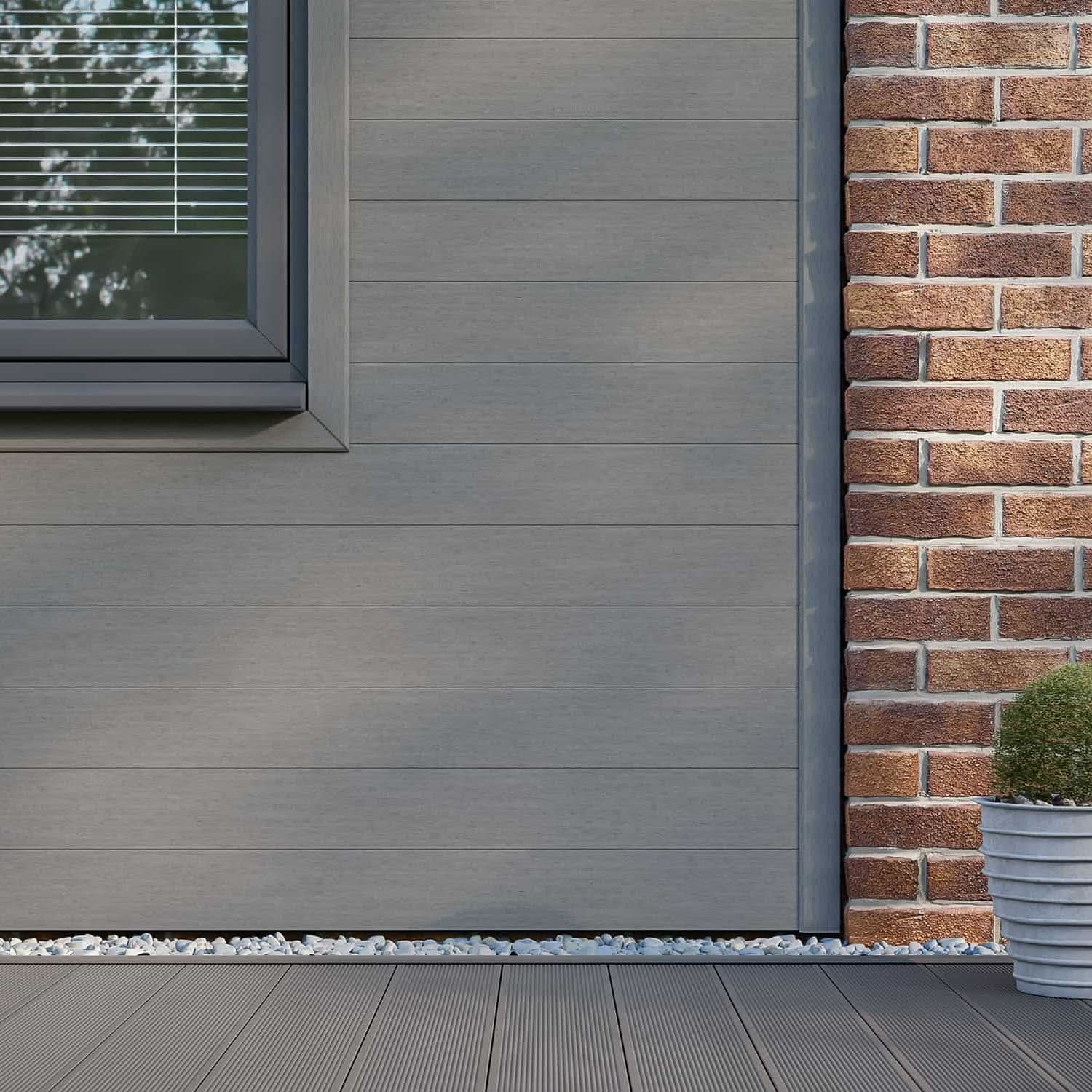
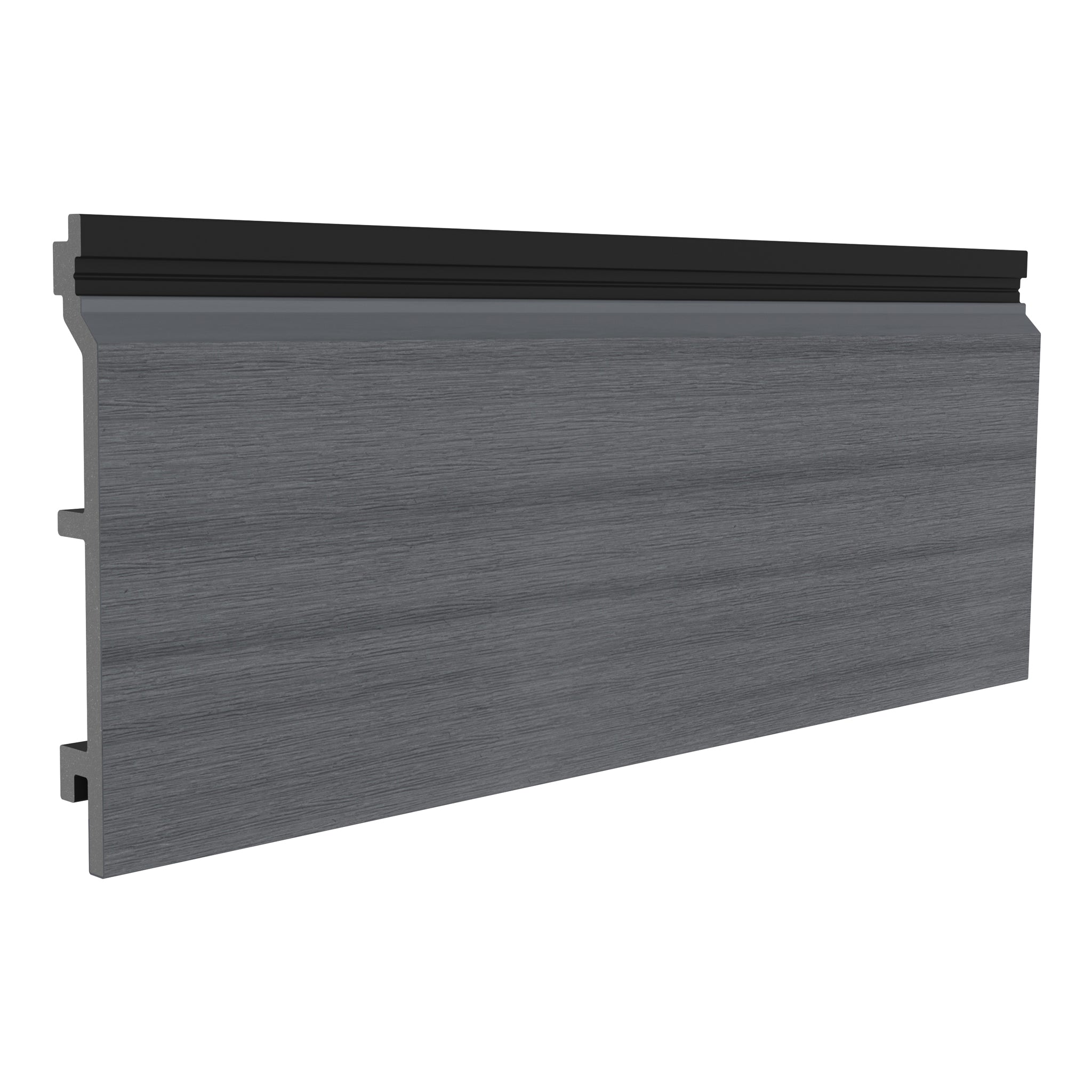
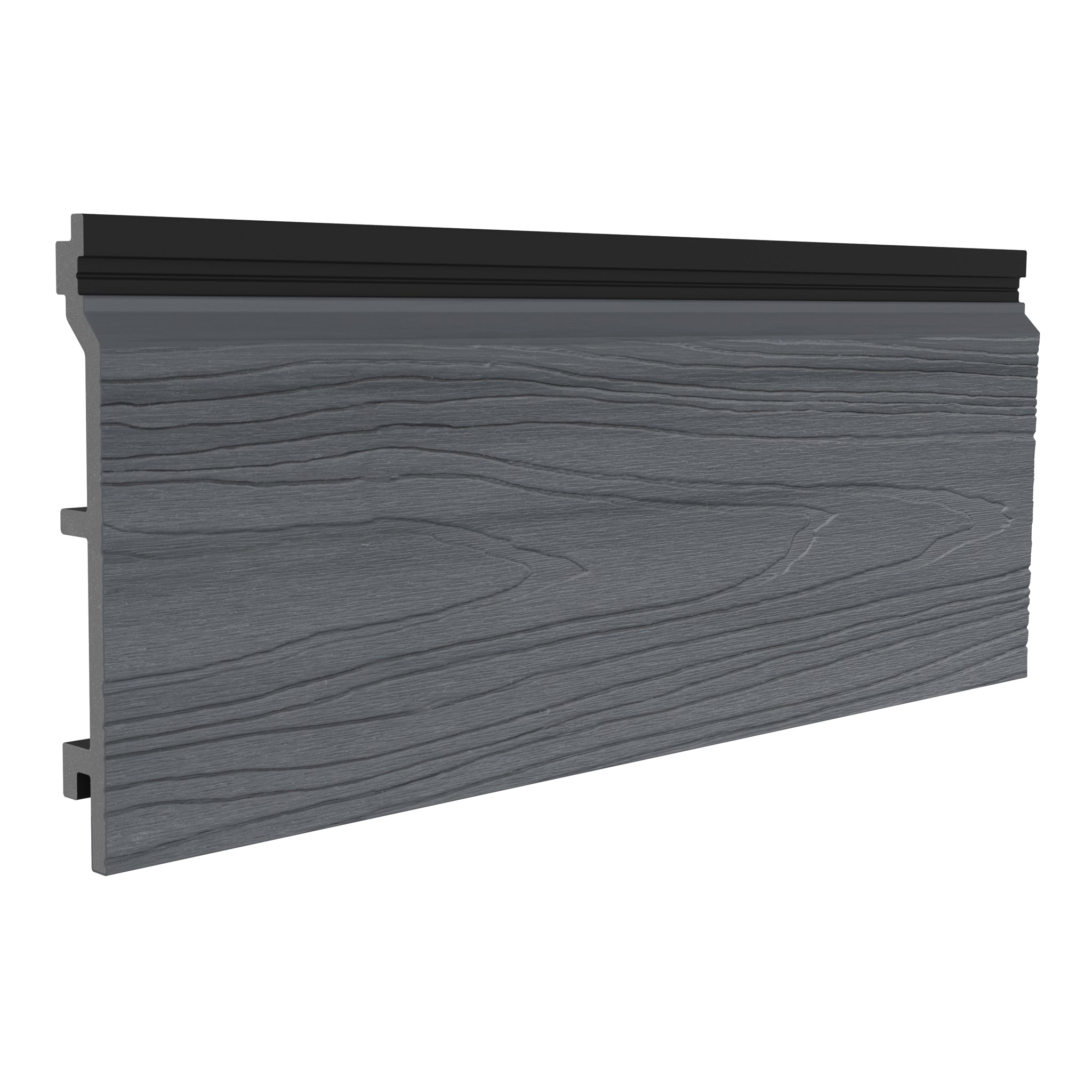
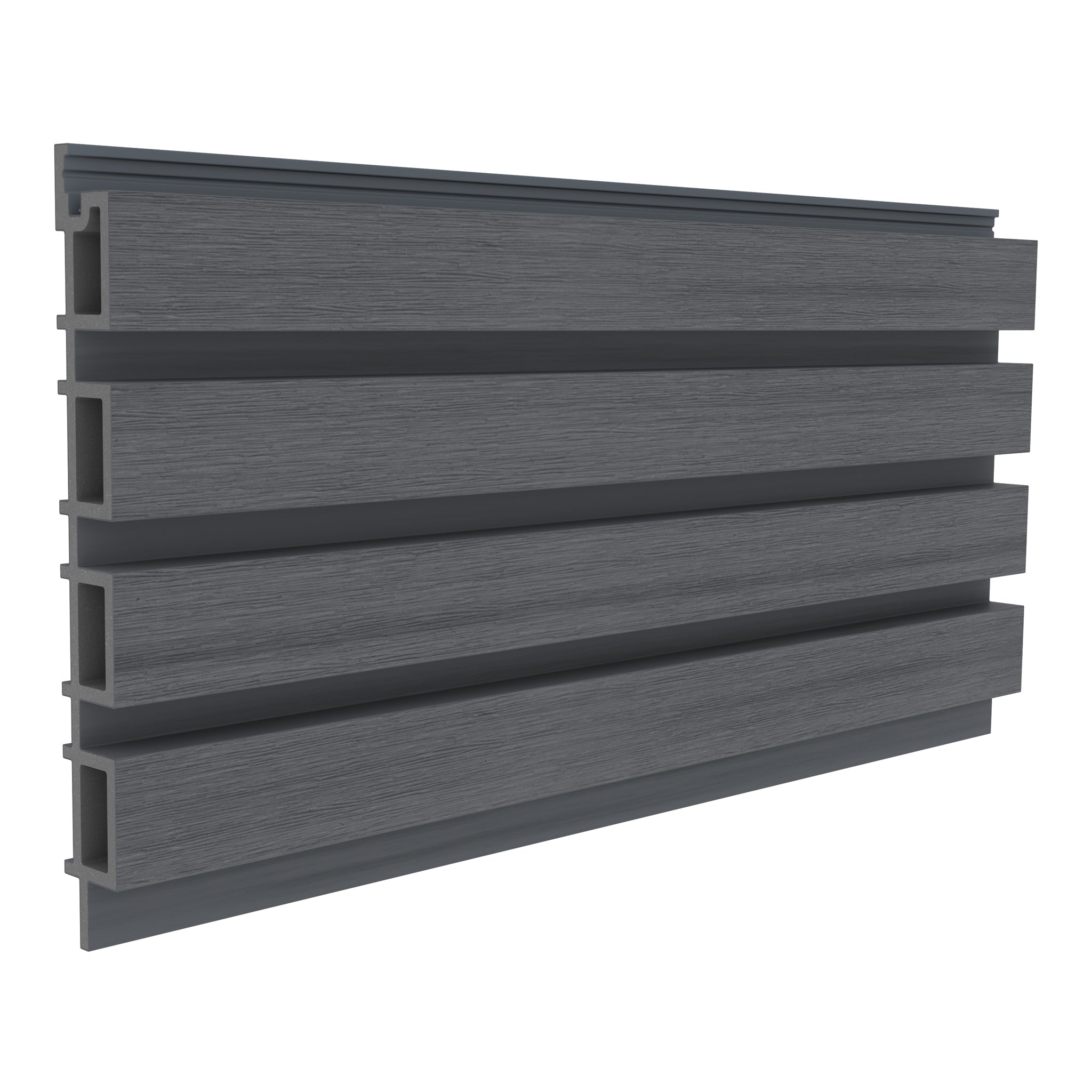
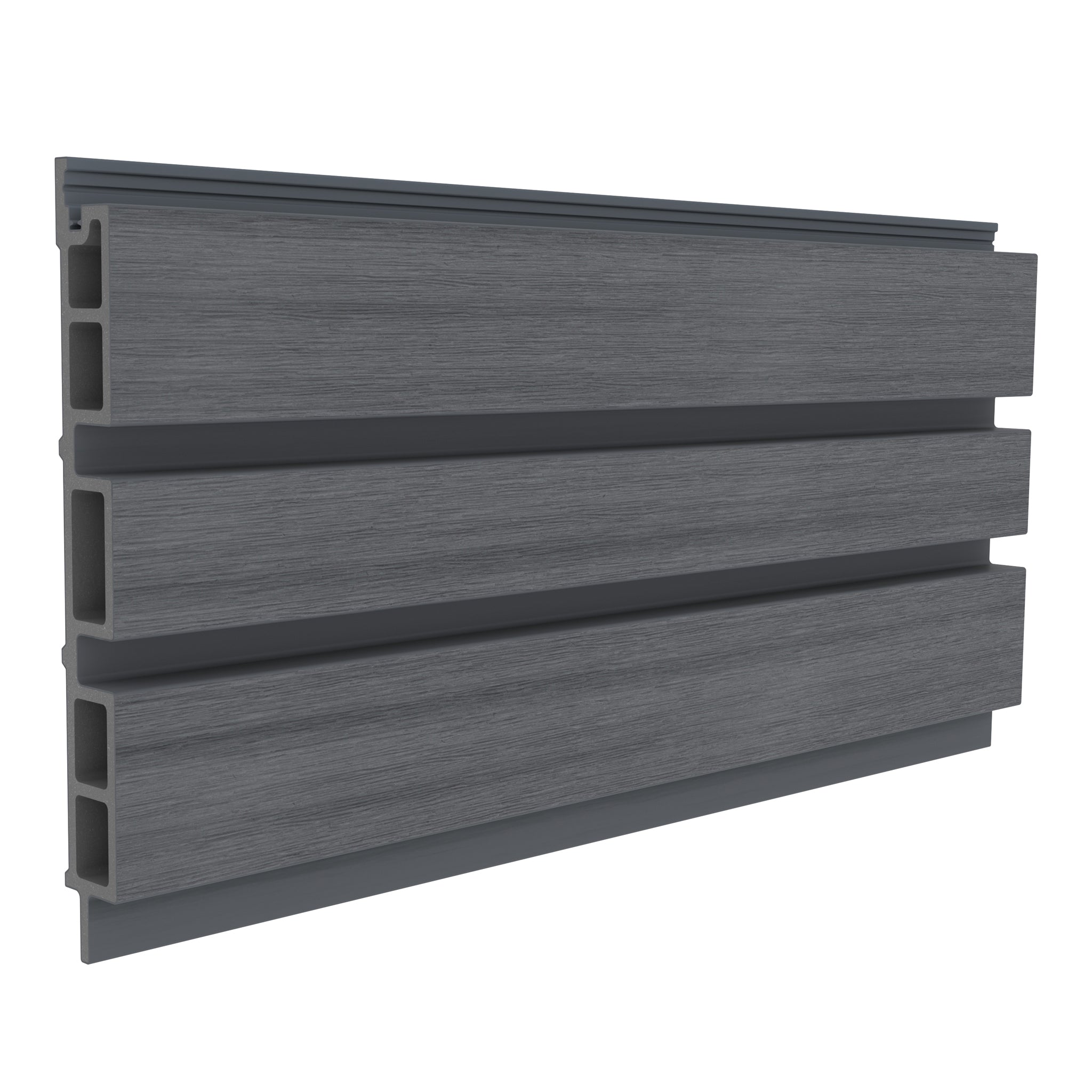
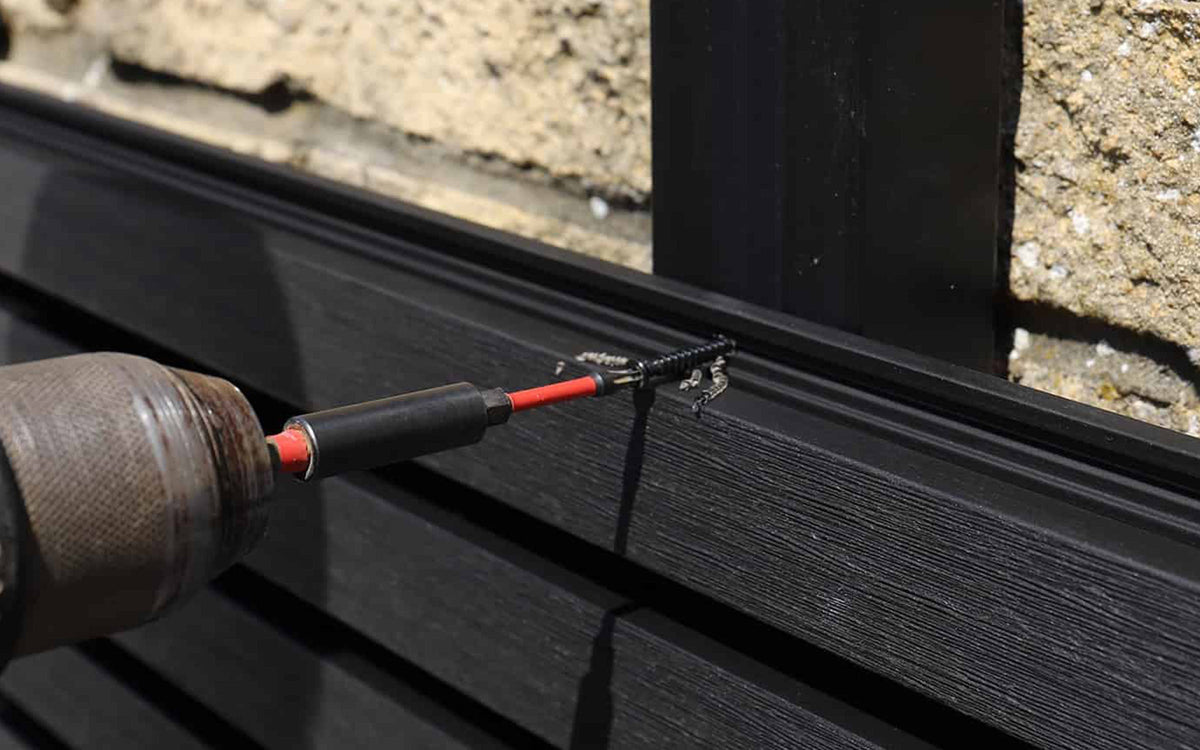
In the NeoTimber® system, composite cladding board screws fix through the grooved channel into the supporting joist. The overlapping board arrangement conceals the principal fixing line as the installation progresses. Follow the detail for the selected board, including the treatment of the final row and boundaries.
The listed board screws are 4mm × 35mm stainless steel Torx screws supplied in packs of 100. The product guidance calls for pre-drilling and a screw at each supporting joist. Read this alongside the installation instructions for the approved support layout and any special details.

Concealed does not mean unchecked
Once a fixing is covered, checking it may require disturbing completed work. That makes the installation sequence an opportunity for quality control. Check the current fixing line before the following board closes access to it.
Confirm the correct component, its location, the quality of the fixing and the intended board fit. If something is wrong, resolve it while the connection is visible. Repetition is valuable only after the first detail has been established correctly.
Some finishing fixings may remain visible
A concealed fixing method across the main wall does not guarantee that every fastening on every trim will disappear. Corner and perimeter details can use different methods, including colour-matched exposed fixings.
Plan these locations as part of the appearance. A small, deliberately positioned fixing can look more considered than a later attempt to hide an unsuitable one.
Board Screws and Trim Screws Have Different Roles
NeoTimber® coloured composite cladding trim screws are described for compatible corner and skirting trims. Their colour-matched heads help coordinate the visible finish. They are a separate product category from the screws used through the board fixing channel.
Although the listed trim screws are also 4mm × 35mm stainless steel fixings supplied in packs of 100, matching dimensions alone do not establish interchangeability. Use the specified product for the relevant component and detail.
Keep the two products separate in the estimate, delivery check and installation area. Clear labelling reduces the chance of selecting a similar-looking screw simply because it is close at hand.
The wider composite cladding edging guide explains why finishing profiles should be planned alongside the boards. Some profiles need to be installed before the adjacent cladding, so trim fixing requirements belong in the early plan.
The Framework Is Part of the Fixing System
Every board fixing relies on the support behind it. A correctly selected screw cannot compensate for unsuitable support, an unstable substrate or a missing fixing position. Review the path from the visible board through the framework to the building as one connected arrangement.
This means distinguishing board-to-support connections from support-to-wall connections. The anchor used in masonry, for example, is a different decision from the screw used in a cladding board. Its selection depends on the actual substrate and the project requirements.
Choose a suitable supporting arrangement
Subframe options should be assessed for the intended application. NeoTimber® offers a composite cladding joist, but selecting a composite component does not remove the need to check its support and attachment requirements.
Similarly, timber should be assessed by its suitability, condition and specification rather than dismissed as a single category. The important question is whether the proposed framework is appropriate and detailed correctly for this wall.
Plan around openings and board ends
Windows, doors and changes in board length interrupt a simple layout. Mark these before deciding the framework arrangement so that the required support is available where the boards and finishing details need it.
A wall with many openings may contain less board area but more complicated fixing work. That is why area alone gives an incomplete picture of the installation.
Preserve the intended cavity details
The framework and surrounding wall construction also need to accommodate the prescribed ventilation and drainage arrangement. Do not describe the subframe as “weatherproof” and assume that the remaining wall details no longer matter.
Consider membranes, openings, junctions and penetrations as part of the complete wall design. Clips and screws secure components; they are not a substitute for the wall’s weather protection.
Horizontal and Vertical Cladding Need Their Own Layout Review
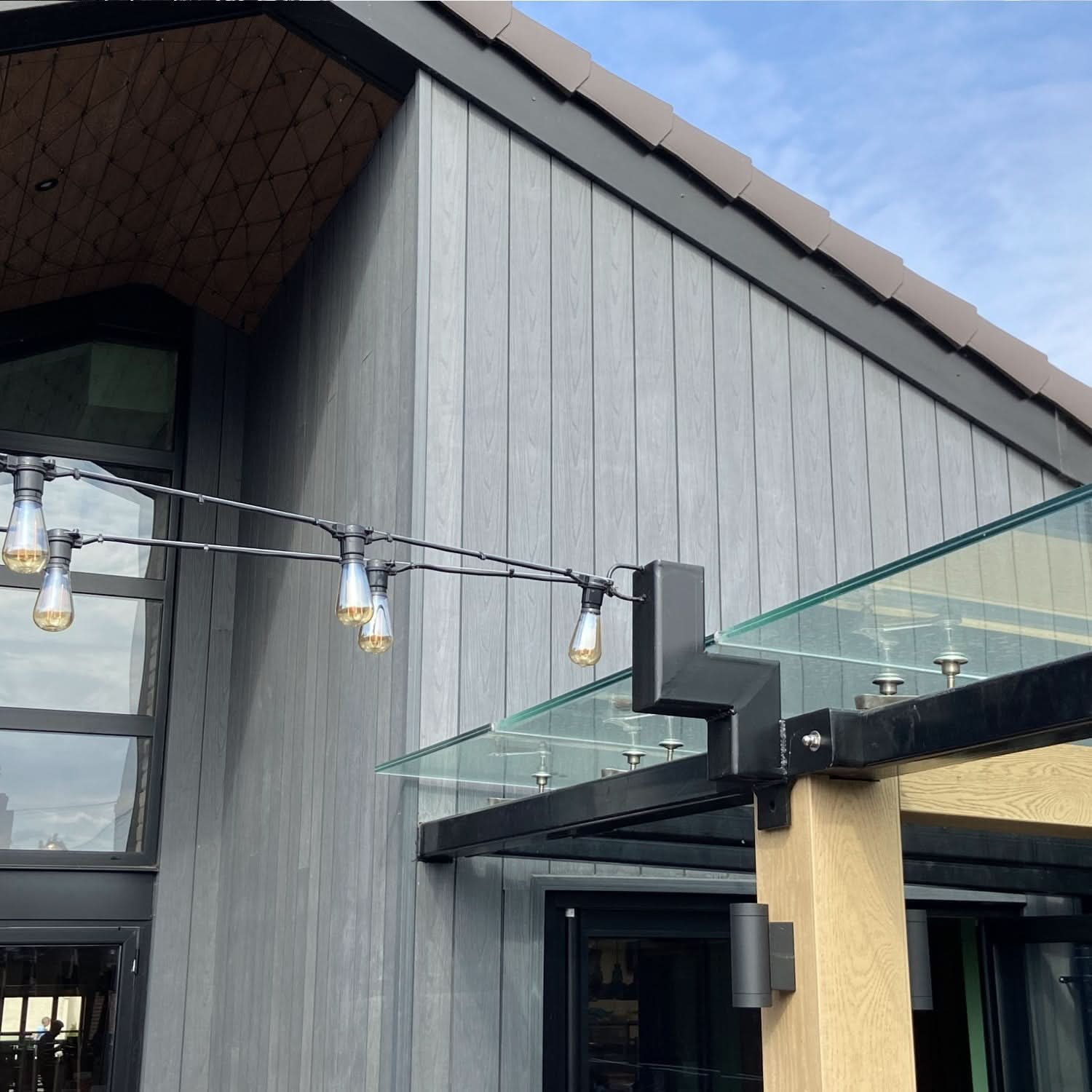
Changing the board direction changes more than the visual rhythm. It affects the relationship between boards and supports, the starting and finishing details and how the required cavity arrangement is maintained.
Do not rotate a horizontal drawing and assume every detail transfers unchanged. Review the approved arrangement for the selected board and orientation, including any counter-battening or additional support required by the instructions.
Where two orientations meet, draw the transition separately. This can be a prominent feature of the elevation and a location where a standard repeated detail no longer applies.
The NeoTimber® installation resources provide the reference point for fitting. Use the current guidance when developing the layout rather than copying an installation photograph as a complete technical instruction.
How to Estimate Composite Cladding Fixings
Start with the installation drawing, not the number of screw packs you expect to buy. Different fixing categories are driven by different parts of the design.
- Confirm the board and orientation. Record the exact range and the installation detail being followed.
- Map the supporting positions. Include the requirements at board ends, openings and changes in direction.
- Identify all starting details. Count starter clips separately from the board screws used across the wall.
- Count the board fixing positions. Apply the specified fixing pattern to each relevant board and support intersection.
- Calculate trim fixings separately. Use the selected profiles and their fitting details.
- Allow for the framework connections. Include the separately specified fixings that attach the supports to the building.
- Round up to pack quantities. Add an appropriate allowance for the project and confirm what is already included in each set.
The NeoTimber® cladding calculator can help begin material planning. Check the estimate against the actual layout, especially where several elevations, openings or different board arrangements are involved.
A worked example of pack arithmetic
Suppose an installer has completed the fixing schedule for an illustrative section and identified 240 board-screw positions. The chosen screws are sold in packs of 100. The base order would therefore be three packs, providing 300 screws.
This arithmetic does not establish the correct support spacing or fixing pattern. Those decisions must already have been made using the relevant design and instructions. It simply converts a verified fixing count into a purchase quantity.
Starter clips, their included screws, trim fixings and wall anchors remain separate calculations. The remaining 60 board screws are not automatically suitable for those other jobs.
Why a single “fixings per square metre” figure can mislead
A broad allowance can be useful for an early budget, but it can hide differences between wall shapes. Two elevations with the same area may have different numbers of individual boards, support intersections and starting points.
Use a layout-based count to finalise the order. This is particularly valuable for small, detailed walls where openings and returns make up a large part of the installation.
Specify Compatibility Before Comparing Prices
A screw can look familiar and still differ in head shape, thread, material or intended substrate. A clip can fit into a groove without being confirmed as suitable for the system. Visual resemblance is not a specification.
Before substituting composite cladding fasteners, confirm the proposed alternative with the responsible supplier or designer. Keep a written record of any agreed change. The same discipline applies if a different framework material or board profile is introduced during the project.
Product information should be specific enough to order and identify the actual component. “Stainless screws” or “hidden clips” leaves too much unresolved. Record the product reference, intended location and any relevant installation requirement.
For unusual exposure conditions, ask whether the standard fixing specification is appropriate. Do not infer a particular stainless steel grade or suitability for every environment from a general corrosion-resistance claim.
A Practical Installation Planning and Checking Sequence
The following sequence is a planning framework rather than a replacement for the manufacturer’s fitting instructions. Its purpose is to help the team make and verify decisions in the right order.
1. Review the wall and the proposed detail
Check the existing surface, the chosen framework and the planned board layout. Resolve defects or uncertainty about support before the cladding conceals them. Confirm the intended details around windows, doors, roof edges and the base.
2. Check the delivery against the fixing schedule
Compare product references and quantities with the order. Keep starter sets, board screws and trim screws identifiable in their original packaging where practical. Raise a mismatch before installation begins.
3. Establish a representative starting section
Set out the first relevant section under the installation guidance. Check alignment, support and the relationship to nearby openings. Use this section to confirm the intended finished appearance as well as the fixing method.
4. Prepare and fix according to the instructions
Use the required drill preparation, correct driver bit and specified fixing positions. Controlled driving matters: forcing a screw further is not automatically an improvement. Follow the prescribed seating and movement requirements rather than trying to make every connection as tight as possible.
5. Check before the next board covers the work
Review the visible fixing line and board fit at each stage. If a fixing misses its intended support, damages the board or does not engage correctly, investigate and rectify the problem under an appropriate repair detail before moving on.
6. Review the finishing details
Confirm the final rows and trims use their intended fixing arrangements. Check that required clearances and openings remain and that the completed work follows the agreed appearance.

Common Fixing Mistakes and How to Avoid Them
- Using “clips” as shorthand for the whole system: list starter clips, board screws, trim fixings and framework connections separately.
- Choosing fixings after the supports are installed: confirm the complete connection arrangement before setting out the framework.
- Assuming one pack suits every wall: calculate from the actual starting locations and fixing positions.
- Substituting similar-looking hardware: confirm the specification rather than relying on appearance or colour.
- Ignoring the pre-drilling requirement: follow the prescribed preparation and hole detail for the selected product.
- Overtightening to correct poor fit: investigate alignment, support and component compatibility instead.
- Covering a questionable fixing: resolve it while it remains accessible.
- Blocking a designed gap with a trim: preserve the required movement, ventilation and drainage detail.
These checks are most useful when they become part of the normal workflow. A short inspection at the right moment is easier than diagnosing an issue after the whole elevation is closed.
Think Beyond the Price of a Box of Screws
The meaningful cost is the completed, correctly specified wall. Hardware is one part of that cost, alongside boards, supports, trims, access and labour. Compare quotations on that basis rather than judging the fixing system by pack price alone.
Clear product selection and accurate quantities can prevent interruptions. A missing trim screw or an unresolved fixing detail can stop work even when every board is already on site. Planning should therefore consider installation continuity as well as material cost.
Good records have value after completion too. Keep the product references, layout and any approved substitutions with the project information. That makes later investigation or repair more straightforward than trying to identify hidden components from memory.
Hidden Fixings and Future Maintenance
A concealed system can give a clean exterior, but it also means many connections are no longer directly visible. Discuss how the chosen system would be accessed if a board or adjacent component needed attention. Do not assume that an individual board can always be removed without disturbing neighbouring work.
Photographs taken during installation can be useful records of support locations and concealed details. Combine them with the drawings and product information rather than treating photographs as a substitute for the specification.
During routine care, look for changes such as an unexpected gap, movement, a loose trim or staining around a visible fixing. A symptom does not identify its cause. Investigate the support, fitting detail and condition of the surrounding components before adding an improvised screw.
Do not drill through the finished board face simply because it offers an accessible place to fasten. Obtain a suitable repair approach that accounts for the product and the underlying issue.
Questions to Resolve With Your Installer Before Work Begins
A productive pre-installation discussion should leave you with a clear answer to the following points:
- Which exact board, starter clip, board screw and trim fixing will be used?
- What supports the boards, and how is that framework attached to the building?
- How are the starting line, corners, openings and final rows detailed?
- Which installation guidance and drawings will be followed?
- How were the fixing quantities calculated, and what is included in the quote?
- What will be checked before the concealed fixing lines are covered?
- What records and care information will be provided at handover?
The aim is not to make a straightforward project feel complicated. It is to resolve the decisions that otherwise have to be made while someone is standing at the wall with a drill in hand.
Composite Cladding Clips and Fixings: Frequently Asked Questions
What are composite cladding fixing clips used for?
Their role depends on the system. NeoTimber® starter clips secure the initial row, while dedicated board screws secure the boards through their fixing channels. Do not assume that a separate clip is required between every course.
Are starter clips and hidden fasteners the same thing?
Starter clips are a specific component. Hidden fasteners is a broader description of fixings concealed in the completed arrangement, which can include screws covered by the next board. Use the product name and fitting detail to identify what you need.
How many composite cladding starter clips do I need?
Count the required positions at every starting location using the approved support layout and fitting instructions. Then convert that count into pack quantities. Avoid assuming one pack covers every project size or configuration.
Can I use decking clips for composite wall cladding?
Only if the manufacturer explicitly confirms the combination. A clip designed for another board profile or application should not be assumed suitable because it appears to fit.
Do I need to pre-drill NeoTimber® cladding boards?
The board-screw product guidance calls for pre-drilling. Follow the current installation instructions for the relevant preparation and fixing detail rather than choosing a hole size or method by guesswork.
Can coloured trim screws secure the main cladding boards?
Use the dedicated fixing specified for each job. Coloured trim screws are described for compatible corner and skirting trims; the main board fixing channel uses the prescribed cladding board screws.
Will hidden fasteners remove every visible screw?
They conceal the principal board fixing line, but some finishing details can retain visible fixings. Review the perimeter and trim arrangements when planning the finished appearance.
Can I install composite cladding myself?
A capable DIYer may be able to undertake a suitable project using the full installation guidance. Assess the wall, access, required tools and complexity of the details first. Seek experienced installation support where those requirements exceed your skills.
Do composite cladding clips make the wall waterproof?
No. They are fixing components. Weather protection depends on the complete wall construction, including the specified junctions, drainage and ventilation details.
Choose the Fixings as Carefully as the Finish
The strongest reason to plan composite cladding clips and screws early is that they connect the design to the building. Their role becomes less visible as the work progresses, but the decisions behind them remain part of the installation.
Separate the fixing categories, establish the support layout, calculate quantities from the actual details and check concealed work before covering it. That approach creates a clearer order, a more consistent workflow and a better record of the finished project.
Explore NeoTimber® composite cladding fixings, review the installation resources, or contact the NeoTimber® team with your chosen board range and project layout for help identifying suitable components.