


How to choose, plan and buy cladding for your exterior
Ready to buy composite cladding? Start by choosing a suitable board profile, comparing samples and planning the complete installation. Your order should account for boards, trims, fixings and the supporting framework, with quantities checked against your wall layout. This makes it easier to compare costs and avoid discovering missing components once work begins.
Composite cladding offers a timber-style exterior with less routine upkeep than a painted or stained timber finish. But the right choice depends on more than colour. The profile, surface construction, board coverage and finishing details all influence how the wall looks and how you should budget for it.
This guide takes you through the decisions in order, from comparing the NeoTimber® composite cladding range to checking your final shopping list. Whether you are updating a garden room, planning an extension or specifying an exterior renovation, use it to buy cladding with a clear plan.
In this guide
What is composite cladding?
Composite cladding is an exterior wall covering made from a blend of wood fibres, plastic and additives. Often called wood-plastic composite or WPC cladding, it provides a wood-effect finish in manufactured boards. The finished appearance varies between ranges, from a relatively flat timber-style face to a pronounced slatted profile.
It is used on projects such as homes, garden offices, extensions, garages and commercial exteriors, where the selected product is suitable for the building. The boards form part of an installed wall system, so the supporting surface and construction details deserve as much attention as the visible finish.

Why buy composite cladding instead of timber?
The main attraction is the balance between appearance and upkeep. If you want a timber-style wall without scheduling regular repainting or staining, composite is worth comparing. Timber remains an option for people who prefer natural grain variation or want a finish they can change with suitable coatings.
- Reduced routine upkeep: choose a finish that does not depend on regular painting or staining.
- A coordinated appearance: compare boards and compatible accessories together.
- Different design options: choose a flatter board, visible woodgrain or a more textured slatted effect.
- Clearer project planning: use published product information and installation guidance to build your specification.
Low maintenance still involves cleaning and care. Compare the needs of the exact products on your shortlist instead of assuming every composite board performs in the same way.
Which composite cladding should you buy?
Shortlist the look first, then check the construction and installation requirements. A small garden office and a large house elevation may call for different visual treatments, even when both use composite boards.
| Range or profile | Appearance | Consider it for | What to compare |
|---|---|---|---|
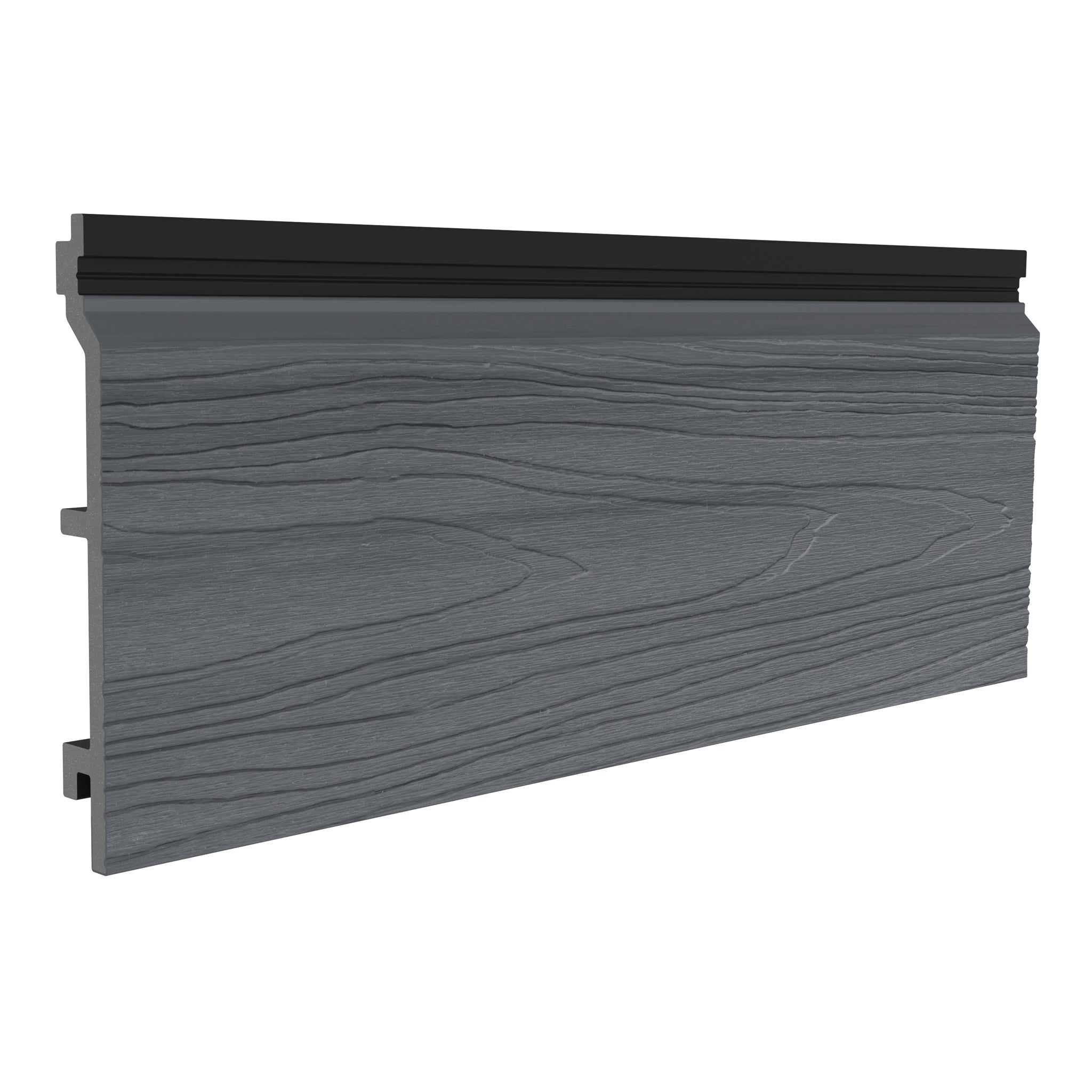
| Classic | Understated, sanded timber-style surface | A simple exterior with less visual texture | Uncapped construction and natural colour weathering |
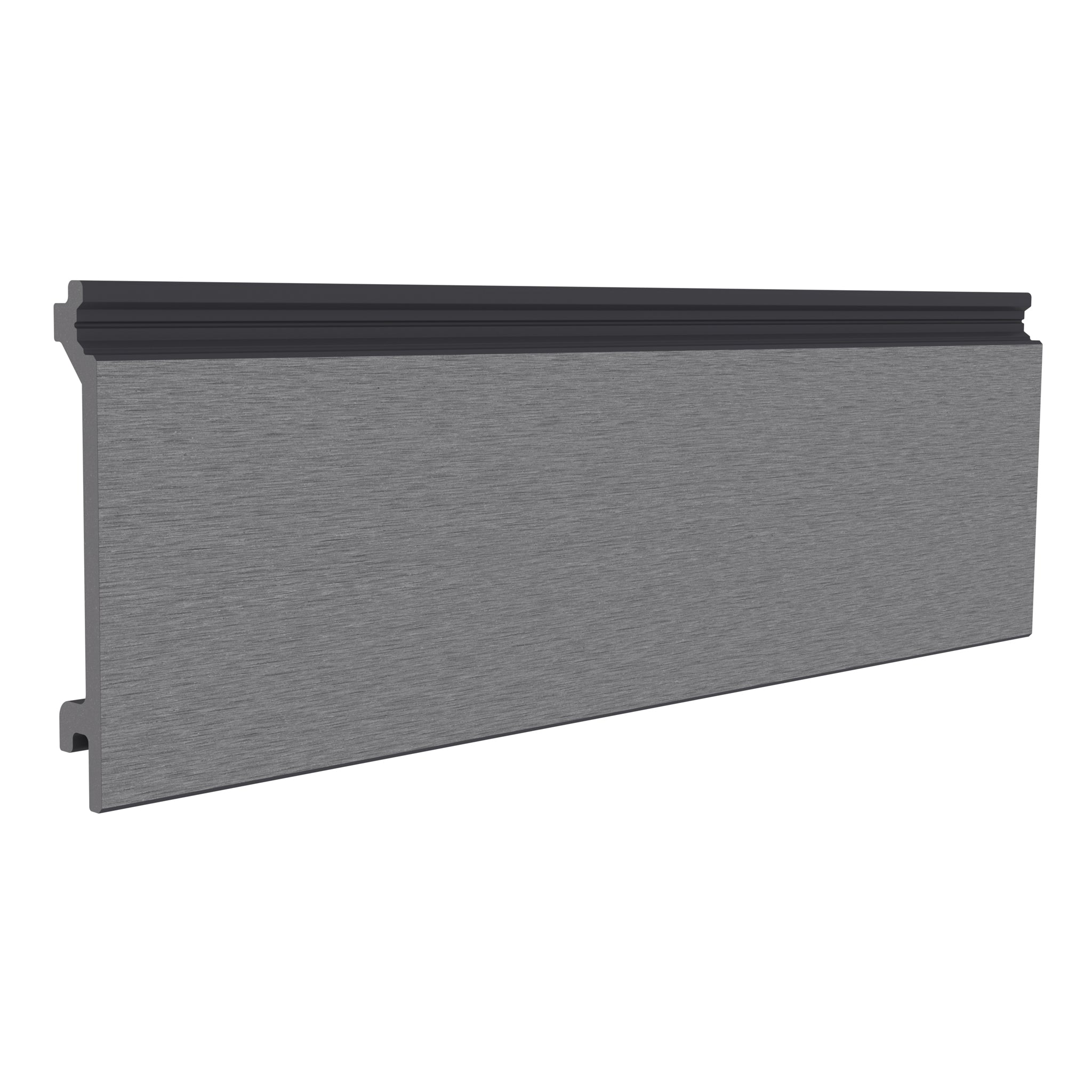
| Deluxe Brushed | Brushed, two-tone finish | A subtle textured feature or full elevation | Capped surface and how the tone works beside existing materials |
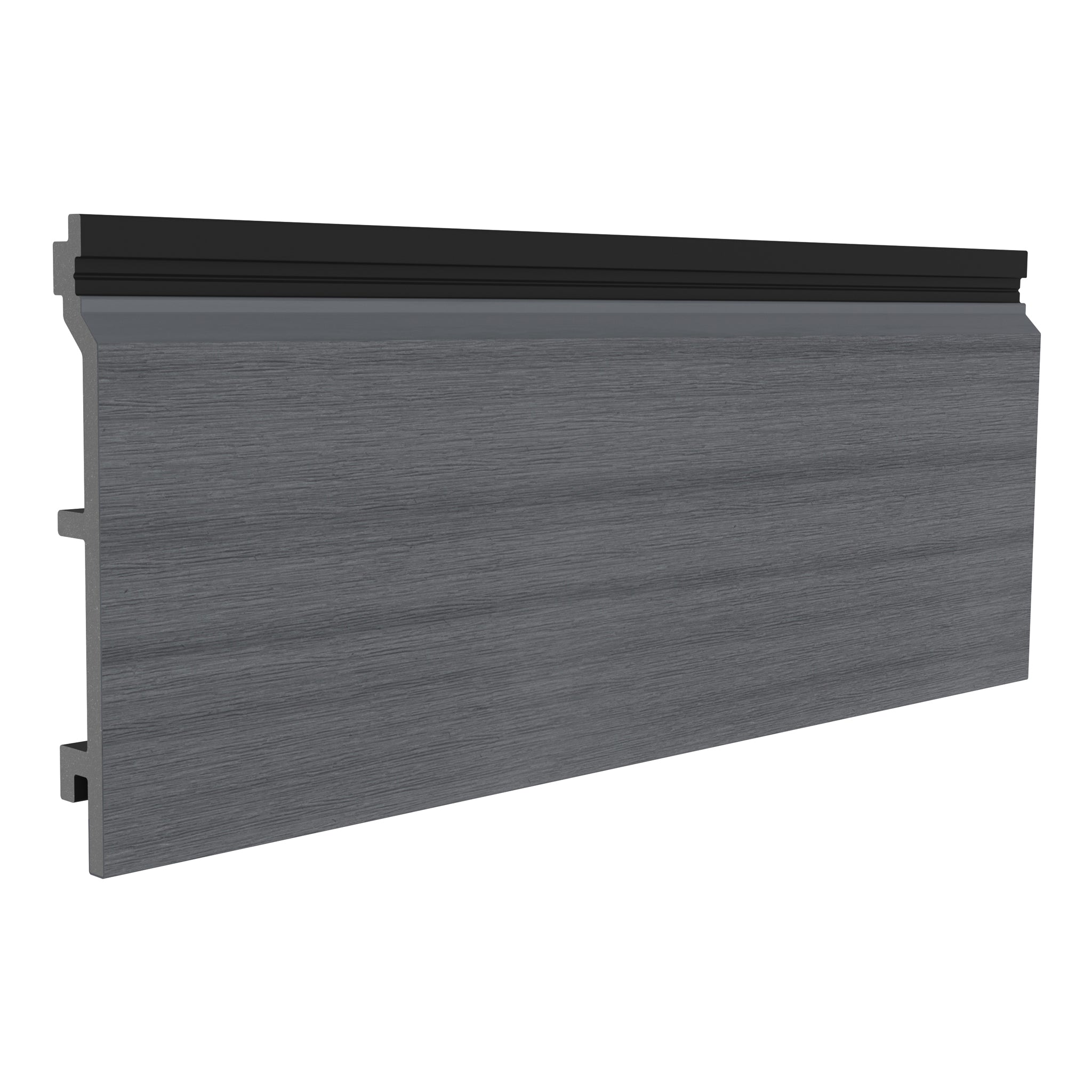
| Deluxe Woodgrain | A more pronounced woodgrain appearance | A design where visible grain is part of the look | Grain detail on a sample and across a larger wall |
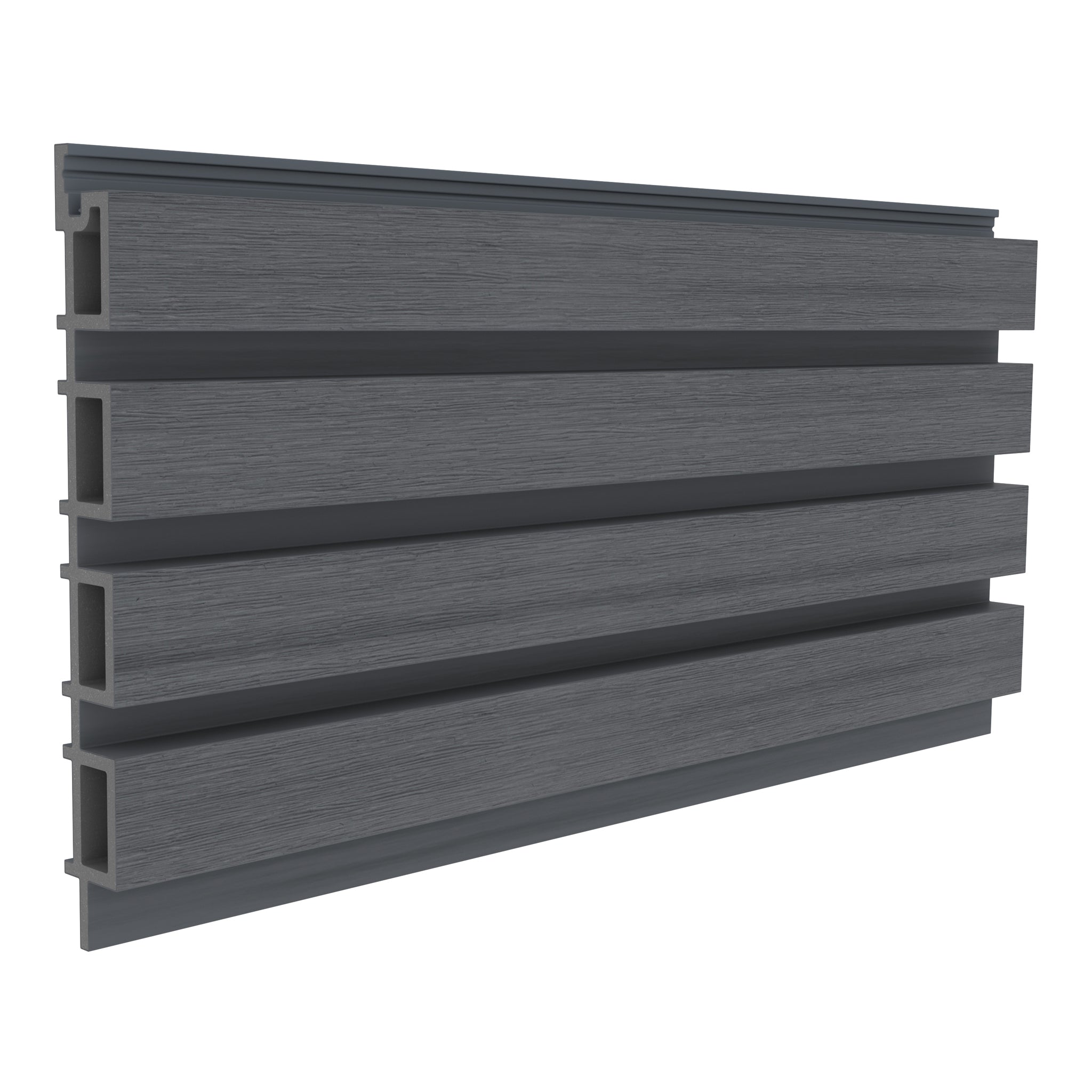
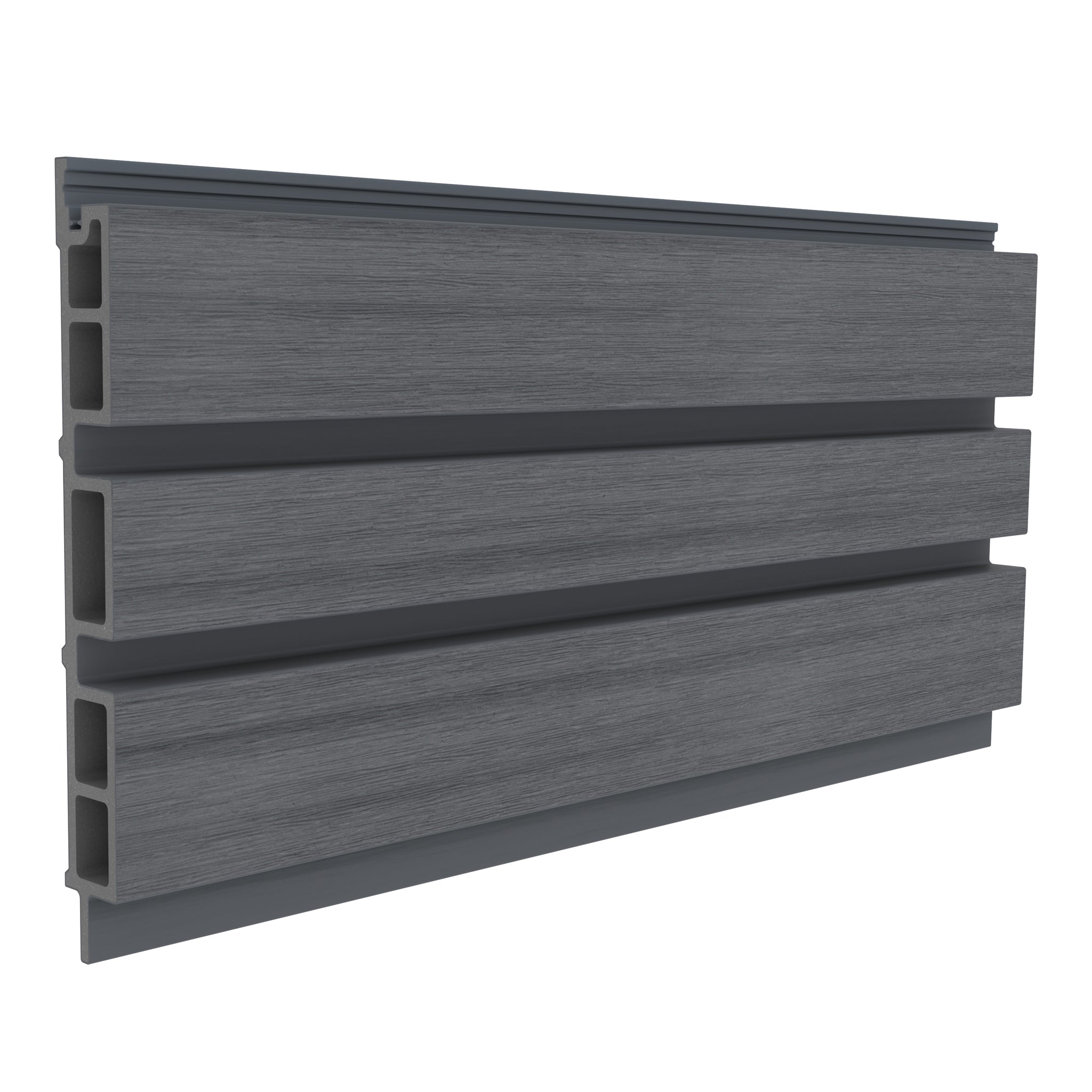
| Slatted | Repeating raised lines and shadow | Garden studios, entrances and contemporary features | Pattern, orientation and matching edge details |
| Board & Batten Slatted | A contrasting wide-and-narrow pattern | A feature with a more varied visual rhythm | How the pattern fits around windows and corners |
Classic composite cladding: a simple timber-style finish
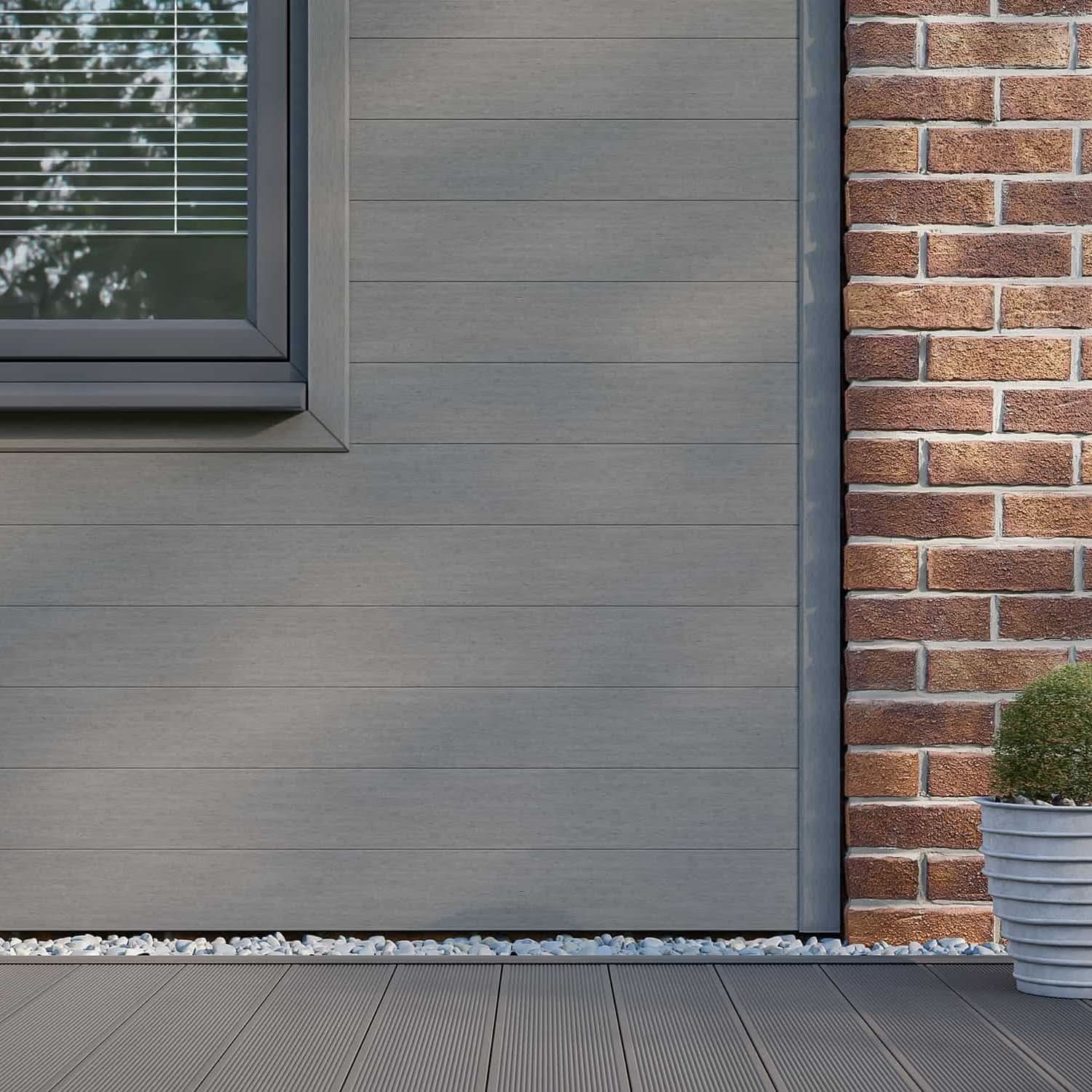
Classic is a useful starting point if you want the wall to complement other features rather than dominate them. Its sanded surface works as an alternative to a more strongly patterned finish. Imagine it alongside your roofline, brickwork or garden boundary before deciding how much of the building to cover.
NeoTimber® Classic is uncapped and naturally lightens as it weathers. Include that expected colour change in your decision rather than judging only the appearance of a new sample.

Explore Classic composite cladding boards and compare the available colours.
Deluxe composite cladding: compare brushed and woodgrain finishes
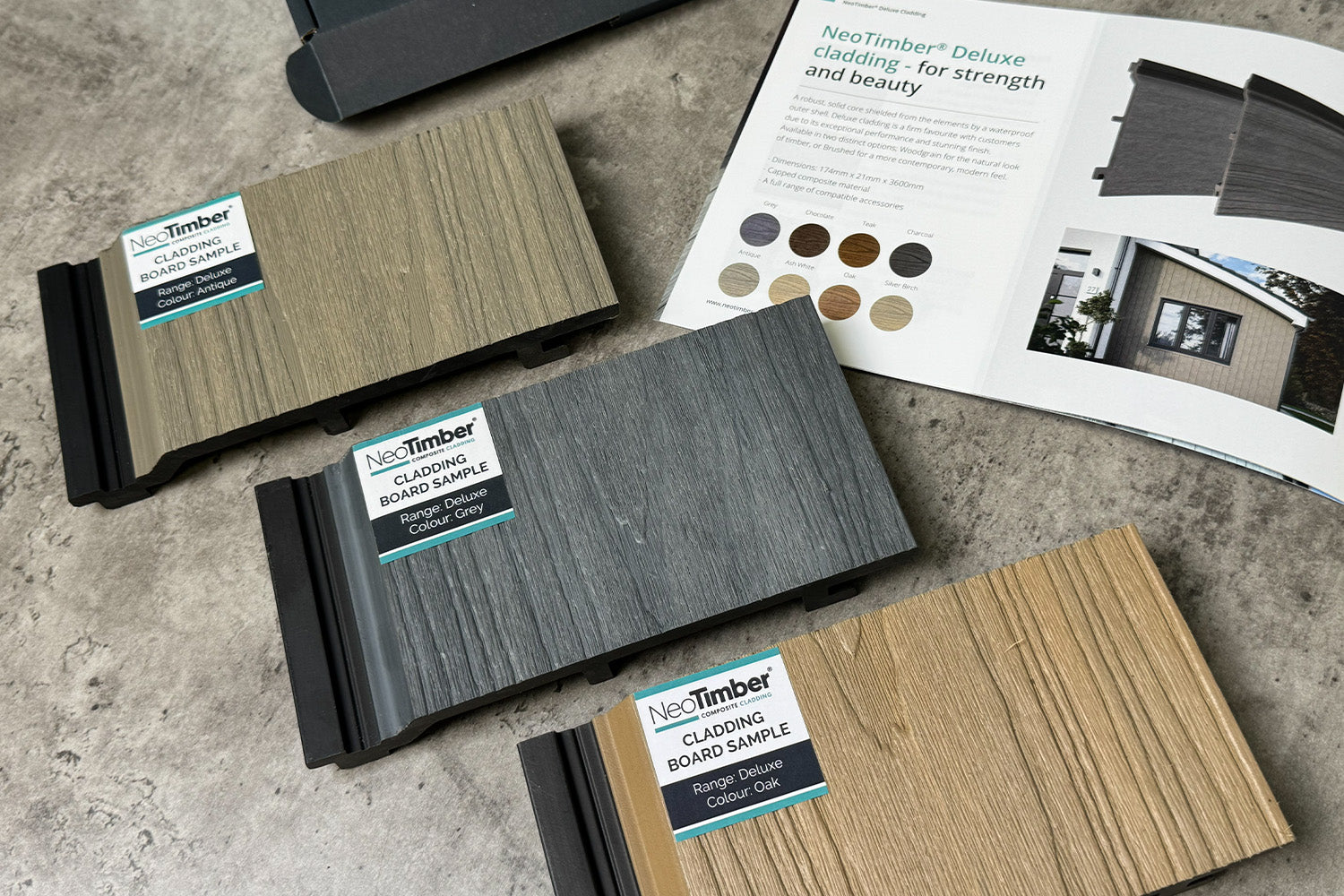
Deluxe gives you a choice between a brushed appearance and a more visible woodgrain texture. Look at both from close up and from the distance you would normally view the building. A detail that stands out in your hand can read more subtly across a full wall.
The Deluxe range has a capped surface for enhanced resistance to fading and staining. That is a useful distinction when comparing it with an uncapped board, although it does not remove the need for routine care.

Compare Deluxe Brushed composite cladding with Deluxe Woodgrain composite cladding before selecting your preferred surface.
Slatted composite cladding: repeating lines and deeper texture
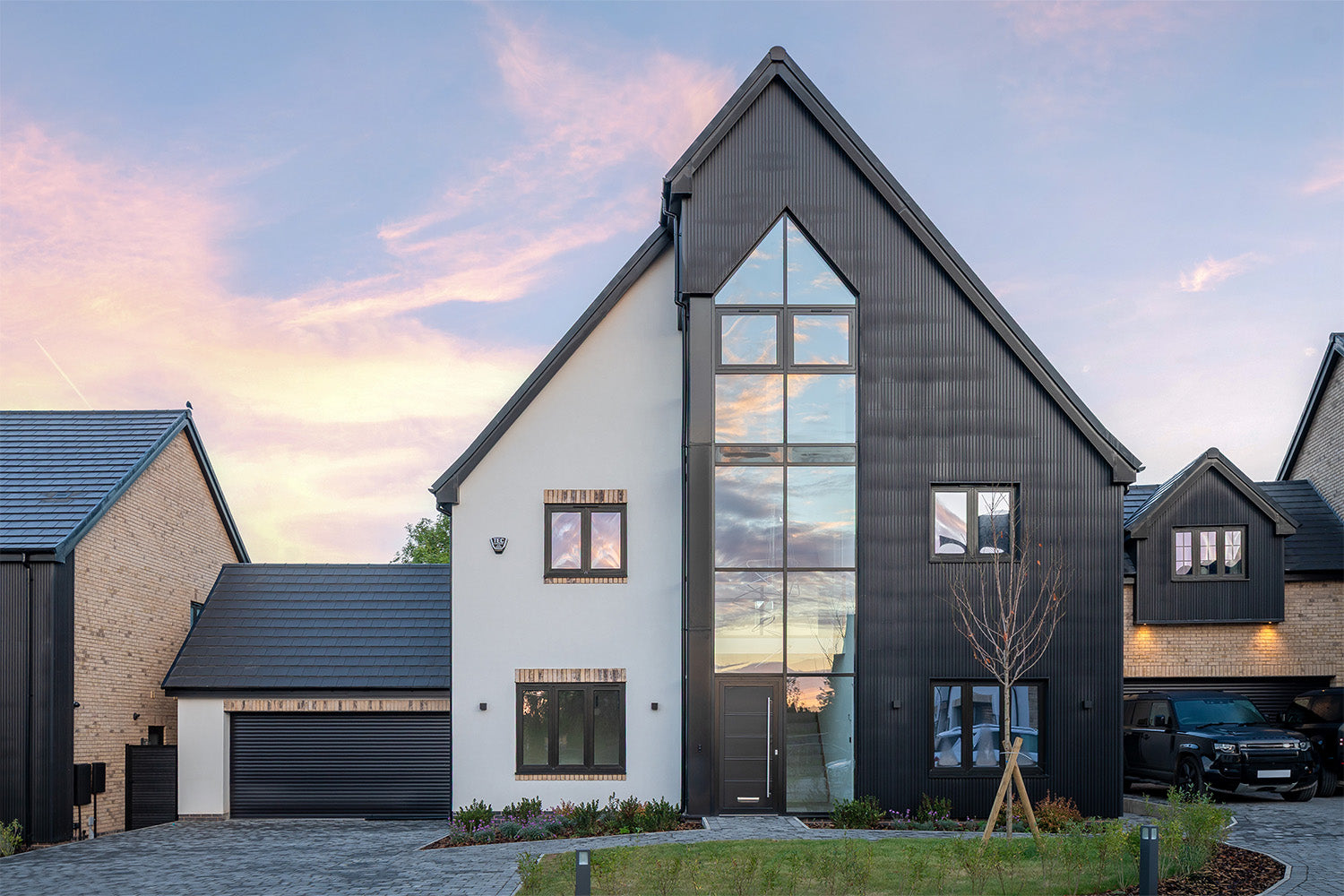
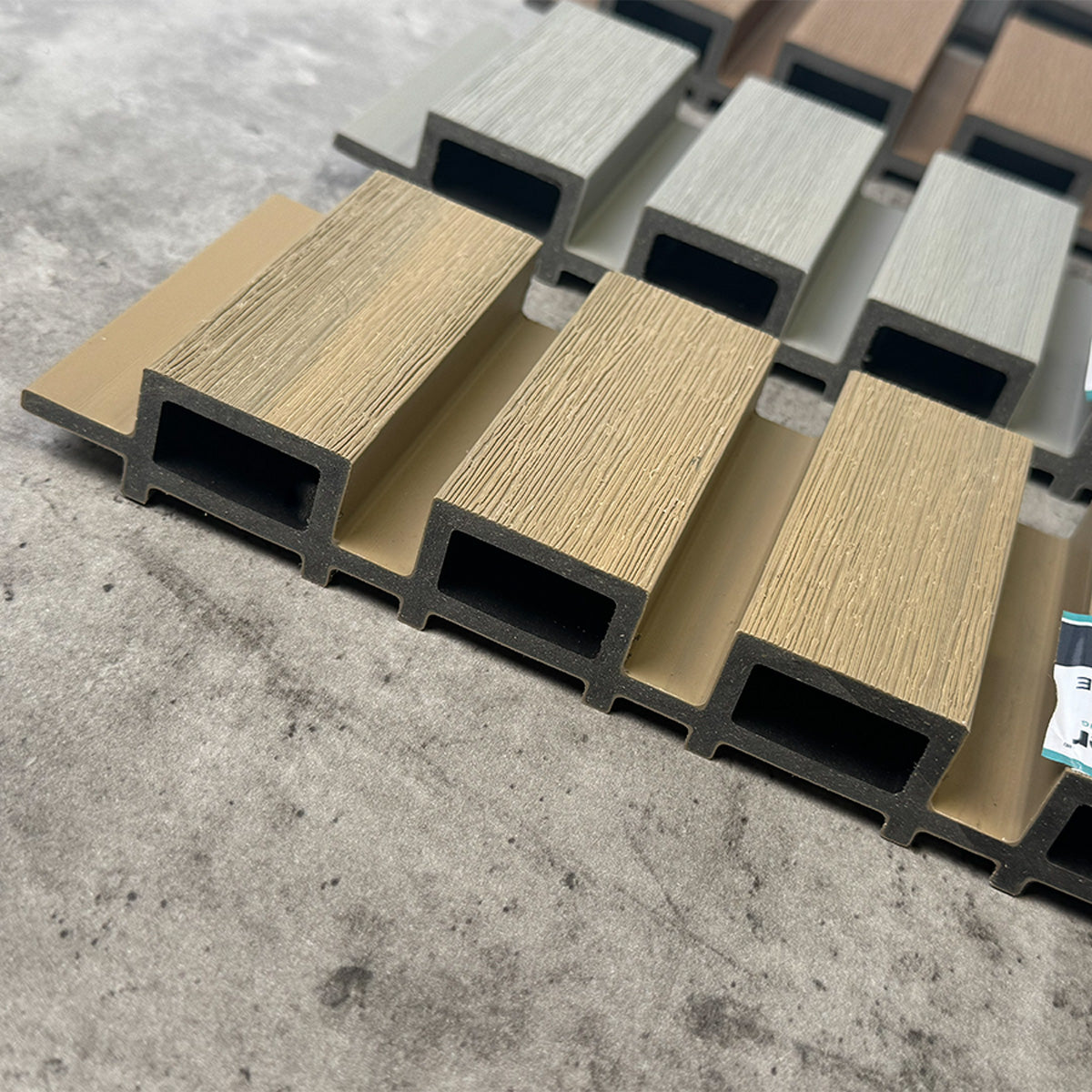
Slatted cladding creates a stronger pattern through raised sections and shadow. It can define an entrance, give a garden studio character or create a feature beside simpler brick or render. Consider whether the repeating lines should lead the design across the whole wall or appear in a smaller accent area.

Compare the regular pattern of Slatted composite cladding boards with the contrasting widths of Board & Batten Slatted composite cladding. Sketch how each would meet the corners and openings on your project.
Get samples before you buy cladding
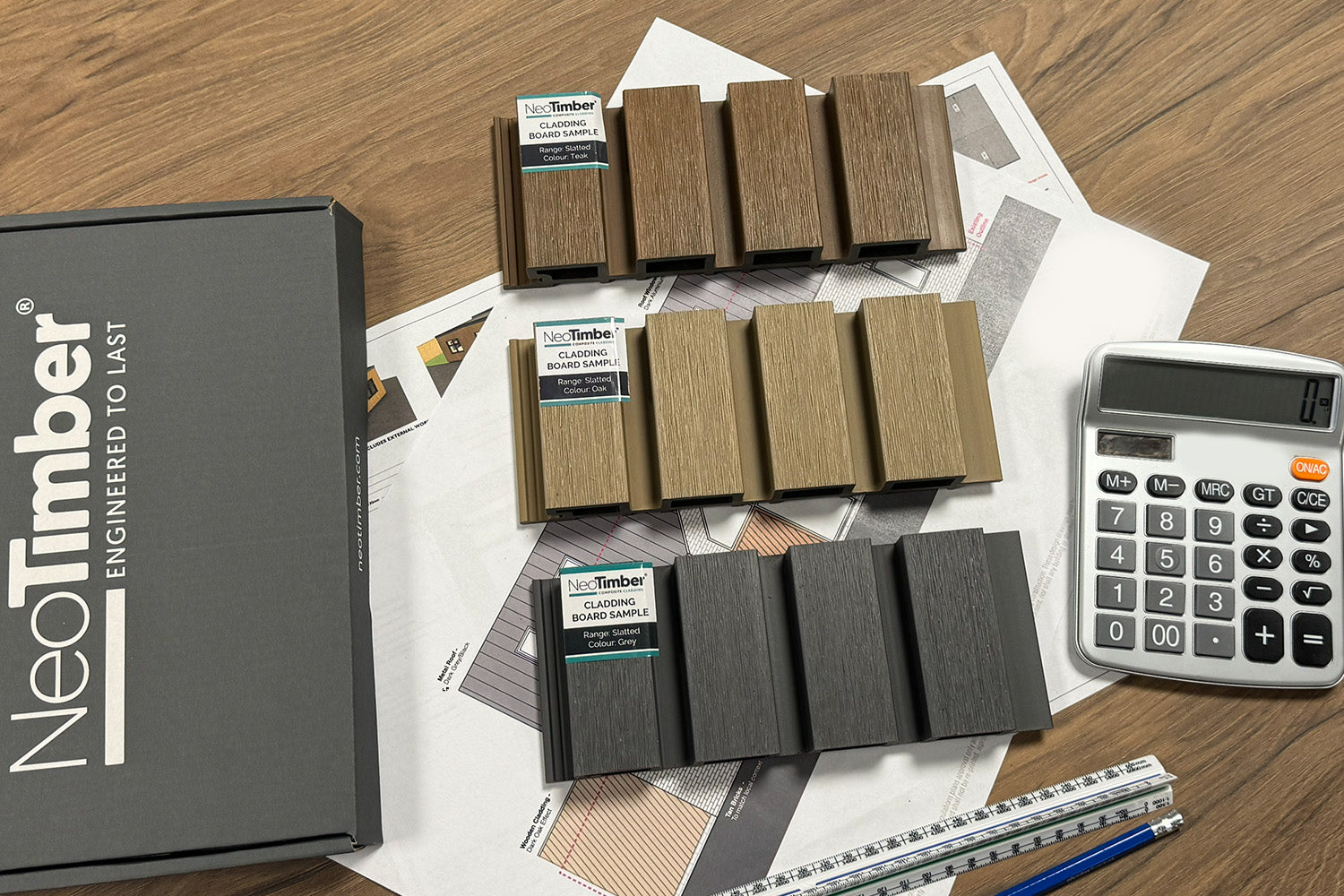
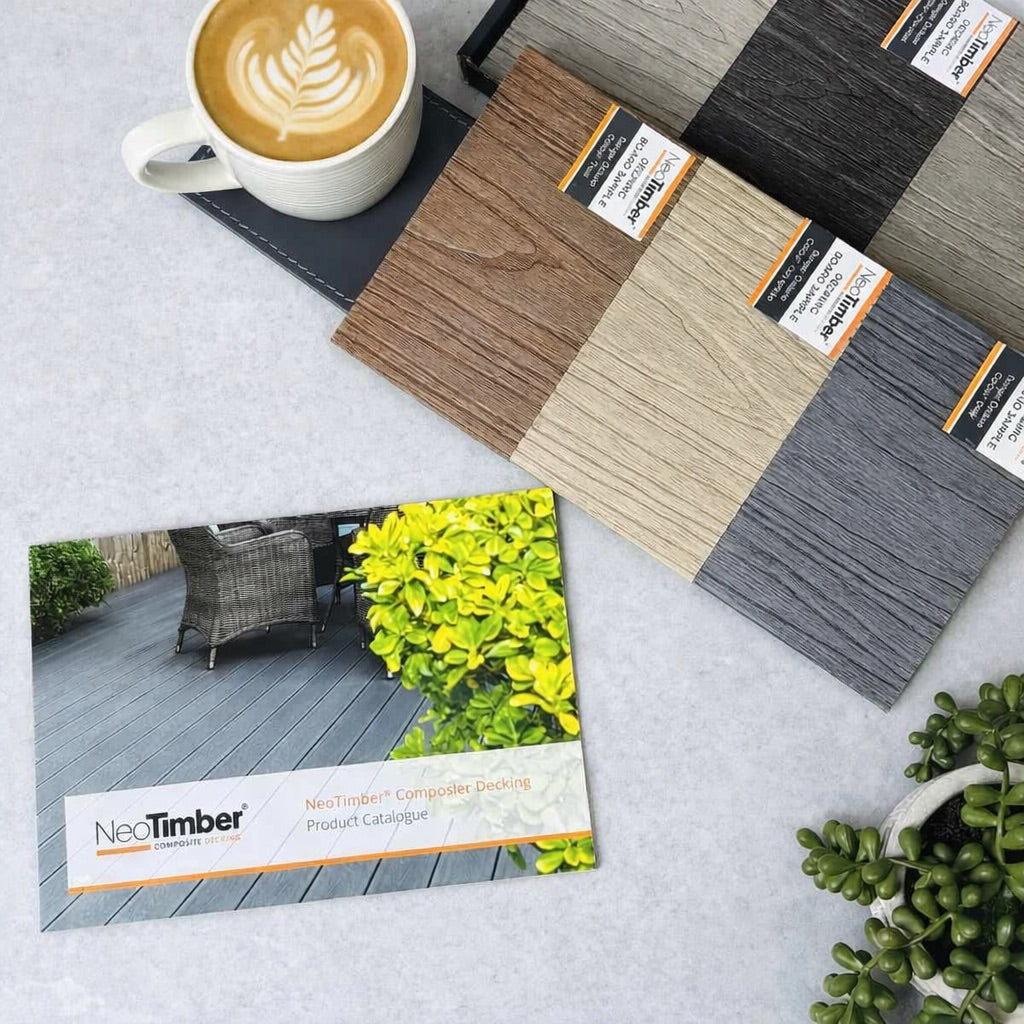
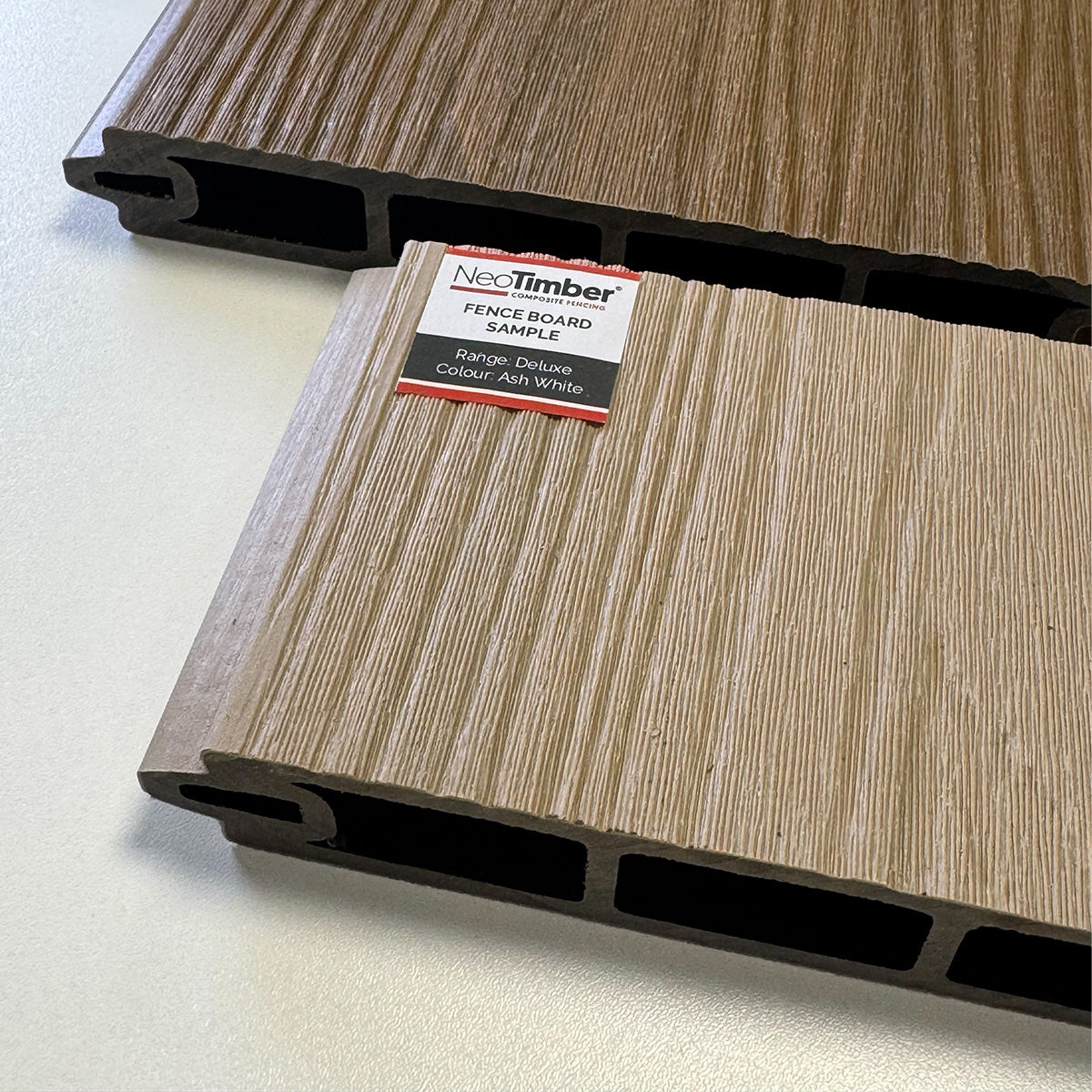
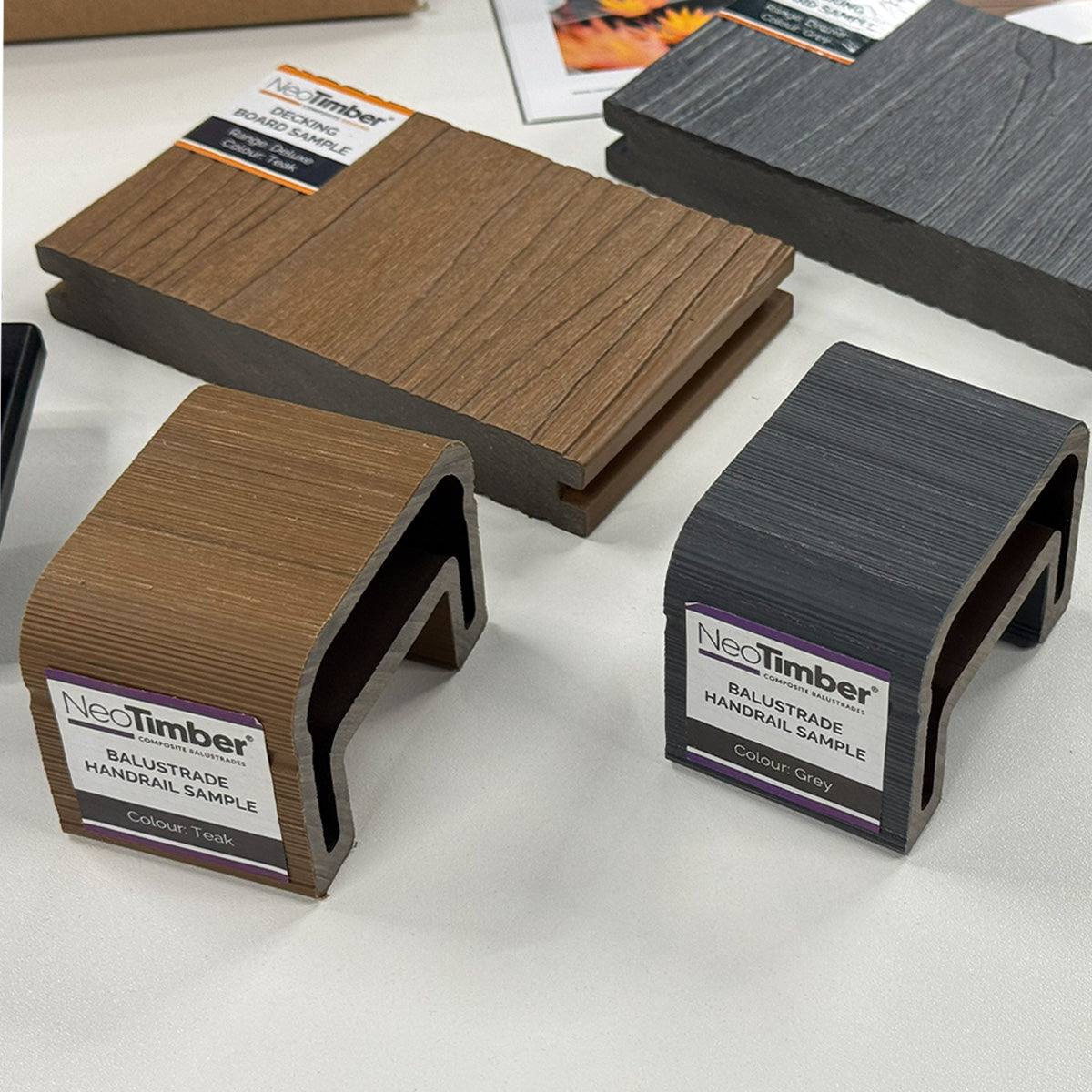
Online photographs help you build a shortlist, but a physical sample makes colour and texture comparisons easier. Request NeoTimber® composite cladding samples before placing the main order, especially if you are choosing between similar tones.
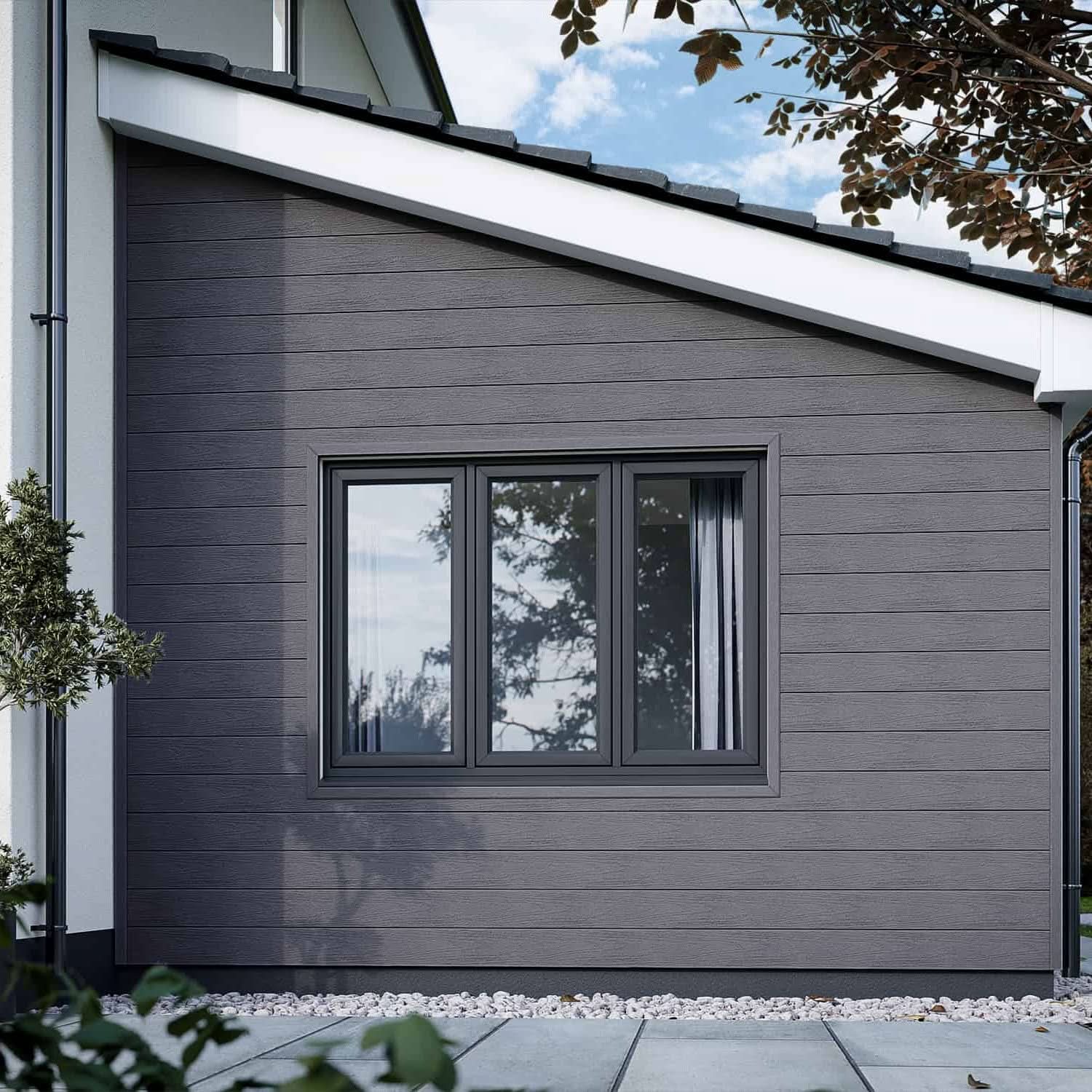
Take the samples outside and compare them beside the surfaces that will remain: brickwork, render, windows, doors, gutters and paving. Check them in direct light and shade, and return to them at different times of day. Place the sample in your proposed board direction to help visualise the finished wall.
- Warm tones: compare them with brick, planting and other wood-effect materials.
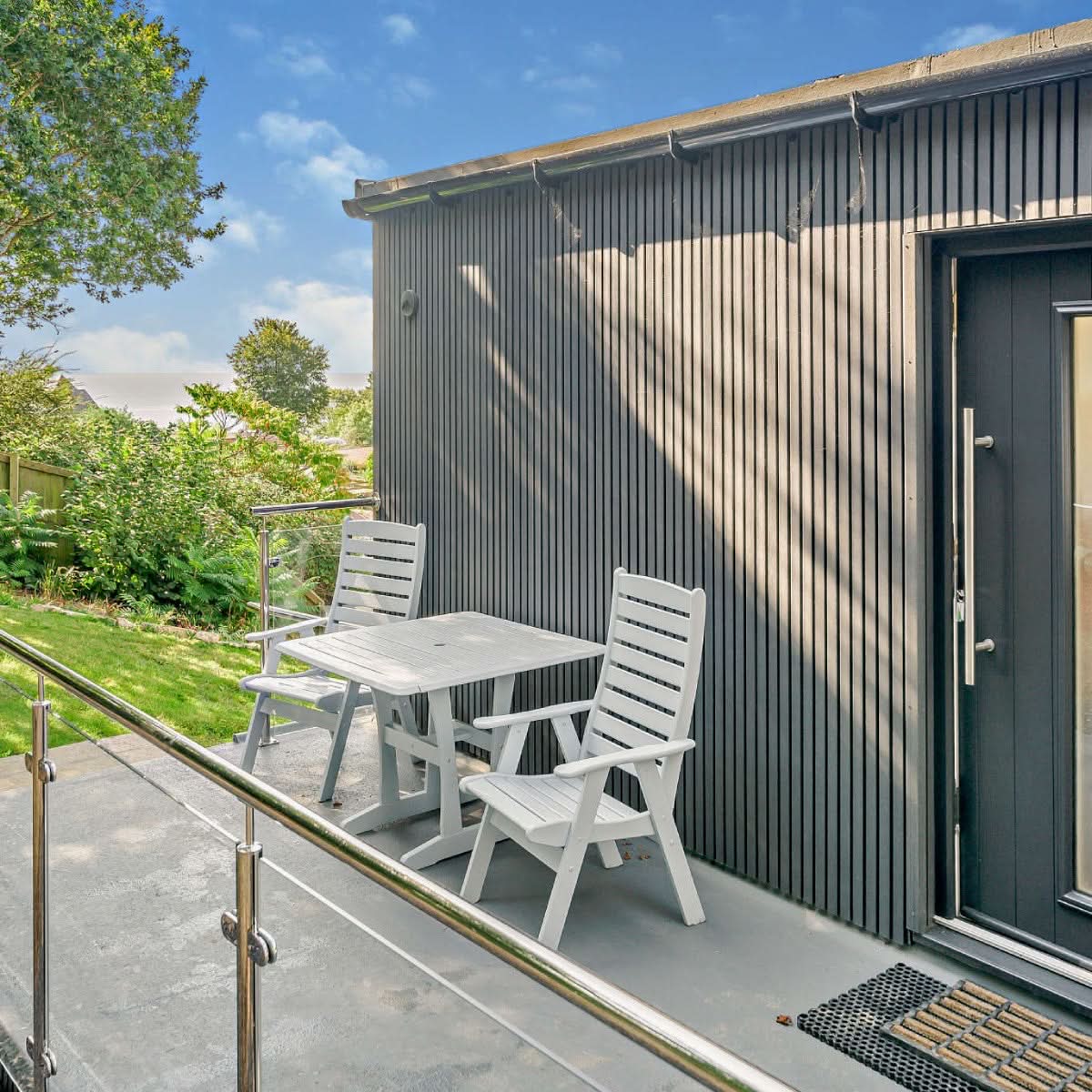
- Darker tones: look at how they connect with door frames and contrast with lighter walls.
- Lighter tones: check how they sit beside existing render and roofline details.
Ask which matching accessories are available in your chosen range. A board colour is only part of the palette; corners, window surrounds and exposed edges affect the finished result too.
Measure and plan before you buy composite cladding
Accurate wall measurements are the starting point, but area alone does not determine the order. Board length, fitted coverage, orientation and the cutting layout all matter. Two walls with the same area can require different quantities if their shapes and openings differ.
Step 1: measure each elevation separately
Record the width and height of each rectangular section, then measure doors and windows. Treat gables and other shaped areas separately. Note corners, recesses and any surfaces around openings that you also intend to clad.
Step 2: calculate an initial net area
For a rectangular wall, multiply width by height. Subtract the area of openings to get an initial net figure, while remembering that cutting around those openings can still consume full board lengths.
Worked example: a wall measuring 6 metres wide by 2.5 metres high has a gross area of 15m². If its openings total 3m², the initial net cladding area is 12m². An illustrative 10% allowance would take that to 13.2m². This is a planning example, not a final order quantity or a universal waste allowance.
Step 3: confirm the layout and fitted coverage
Choose horizontal or vertical installation where supported by the selected product and guidance. Mark board runs, joints and cuts on a simple drawing. Use the manufacturer’s fitted coverage figure when converting area into board quantities; the overall board width can include overlapping or interlocking sections.
Step 4: review offcuts and ordering quantities
Check whether offcuts can be reused within the approved fixing layout. Complicated corners, short sections and shaped walls may need a larger allowance than a simple rectangle. Have your supplier or installer review the cutting plan before you round up to whole boards.
Use the NeoTimber® composite cladding calculator as a starting point, then confirm the result against the installation details and your project drawing.
How much does composite cladding cost?
The useful figure is the cost of your complete project. A headline board price does not tell you how much finished wall it covers or what else you need. Compare current prices using the same wall area, specification and VAT basis.
For a board-only comparison, divide the board price by its stated fitted coverage in square metres. Then add the remaining materials and labour. Use current product listings or a written quote rather than relying on an old price copied into a project plan.
- Boards: selected profile, colour, quantity and cutting allowance.
- Subframe: suitable battens or joists and the required wall fixings.
- Board fixings: compatible starter components and screws.
- Finishing pieces: corners, ends, fascia and details around openings.
- Wall preparation: any work identified by your installer before fitting begins.
- Labour and access: installation time, equipment and any necessary access arrangements.
- Delivery and handling: transport charges and arrangements for moving materials to the work area.
If you are comparing quotes, ask each supplier or installer to show what is included. A lower total may reflect fewer finishing pieces or excluded preparation rather than a cheaper version of the same job. Agree how unforeseen work will be discussed before it is carried out.
Plan the supporting frame before ordering boards
A straight, suitable subframe supports the board layout and helps the finished wall align correctly. Check the existing surface and decide how the framework will be attached before committing to quantities. An uneven wall or an unplanned change in orientation can affect both materials and labour.
Use the composite cladding frame and subframe guide to understand the planning considerations. If you are considering NeoTimber® composite cladding joists, confirm their suitability for the proposed arrangement instead of assuming one support option fits every wall.
Framework spacing, ventilation and movement allowances must follow the relevant installation instructions. Resolve these details with your installer before ordering the visible finish.
Choose the correct starter components and fixings
The first board establishes the line for the boards that follow. Include the specified starter components and board fixings in your order, and check which items are supplied separately. Similar-looking screws or clips should not be assumed to be interchangeable between systems.
Review the composite cladding starter clip fixing set alongside the cladding clips and fixings guide. Confirm quantities against the board layout and framework, not simply the number of packs that seem likely to be enough.
Measure trims and corners as part of the same order
Trims finish exposed edges and make transitions around the building look deliberate. Measure the lengths required at corners, board ends and openings. Note which pieces must be fitted during installation so that they are on site at the right stage.
Check compatibility with the exact profile, as well as colour. The composite cladding edging guide explains finishing options, while the cladding accessories guide helps you review the wider component list.

Read the installation guidance before you buy
Review the NeoTimber® composite cladding installation guides while you are still planning. They cover preparation, framework, board fitting and finishing details. Reading them early helps you identify equipment, access and components that might otherwise be missed from the budget.
If you plan to install the cladding yourself, assess the work against your skills and the site conditions. For a professional installation, share your drawings and chosen product with the installer before ordering. Agree who is responsible for checking quantities and sourcing each component.
Confirm that the chosen product and complete wall design suit the building’s requirements, including the relevant fire-performance requirements. Product selection should be settled before installation begins; a preferred colour or profile is not enough to establish suitability.
Plan delivery, access and storage
Check current stock and delivery arrangements when you are ready to buy composite cladding. Coordinate the delivery date with your installer and allow time to inspect the order. Avoid scheduling work on the assumption that every component will arrive at the last possible moment.
Think through the route from the delivery point to the storage area, especially where access is narrow or the work is at the rear of a property. Follow the manufacturer’s storage and handling instructions, and check the delivered profiles, colours and quantities before cutting or fitting anything.
Understand maintenance and warranty cover
How to maintain composite cladding
Plan for periodic cleaning to remove dirt and build-up. Use the care instructions for your selected range, including the recommended cleaning products and equipment. Deal with spills promptly and check guidance before trying a stronger cleaner on a visible area.
The cladding care and cleaning articles provide further reading. Keep a copy of the relevant instructions with your order details so the information is easy to find after installation.
What does the warranty cover?
NeoTimber® composite cladding has a limited warranty providing 25 years of structural cover for residential installations and 10 years for commercial, public or high-traffic applications. Cover is conditional on correct installation, use and maintenance.
The warranty distinguishes structural defects from cosmetic changes: weathering, colour variation and surface staining are among the exclusions. Read the full NeoTimber® cladding warranty information before buying, and retain the documentation required by its claim procedure.
Your checklist before you buy cladding
Run through this list with your supplier or installer before placing the final order:
- Confirm suitability: the chosen product and installation design have been checked for the building.
- Approve the look: you have compared the profile, colour and finish using samples.
- Check measurements: every wall, opening, corner and return is included in the plan.
- Confirm quantities: calculations use fitted coverage and a reviewed cutting layout.
- Specify the support: the framework and wall fixings are included or separately arranged.
- Match accessories: starter components, board fixings and trims suit the selected range.
- Agree the budget: the quote states VAT, delivery, labour and any excluded work.
- Coordinate the schedule: stock, delivery, storage and installation dates work together.
- Read the documents: installation, care and warranty terms are understood.
Common buying mistakes to avoid
The most avoidable problems come from making connected decisions separately. Buying boards before planning trims can leave awkward edges. Choosing colour from a screen alone can lead to disappointment. Ordering from net wall area without reviewing cuts can leave the installer short.
Give the subframe and accessories the same attention as the board itself. A complete, checked order is more useful than a low board price followed by several additional purchases.
Where to buy composite cladding and compare your options
You can buy composite cladding from the NeoTimber® collection, comparing profiles and building an order around your selected range. Keep your project measurements and sample choices to hand when reviewing the product details.
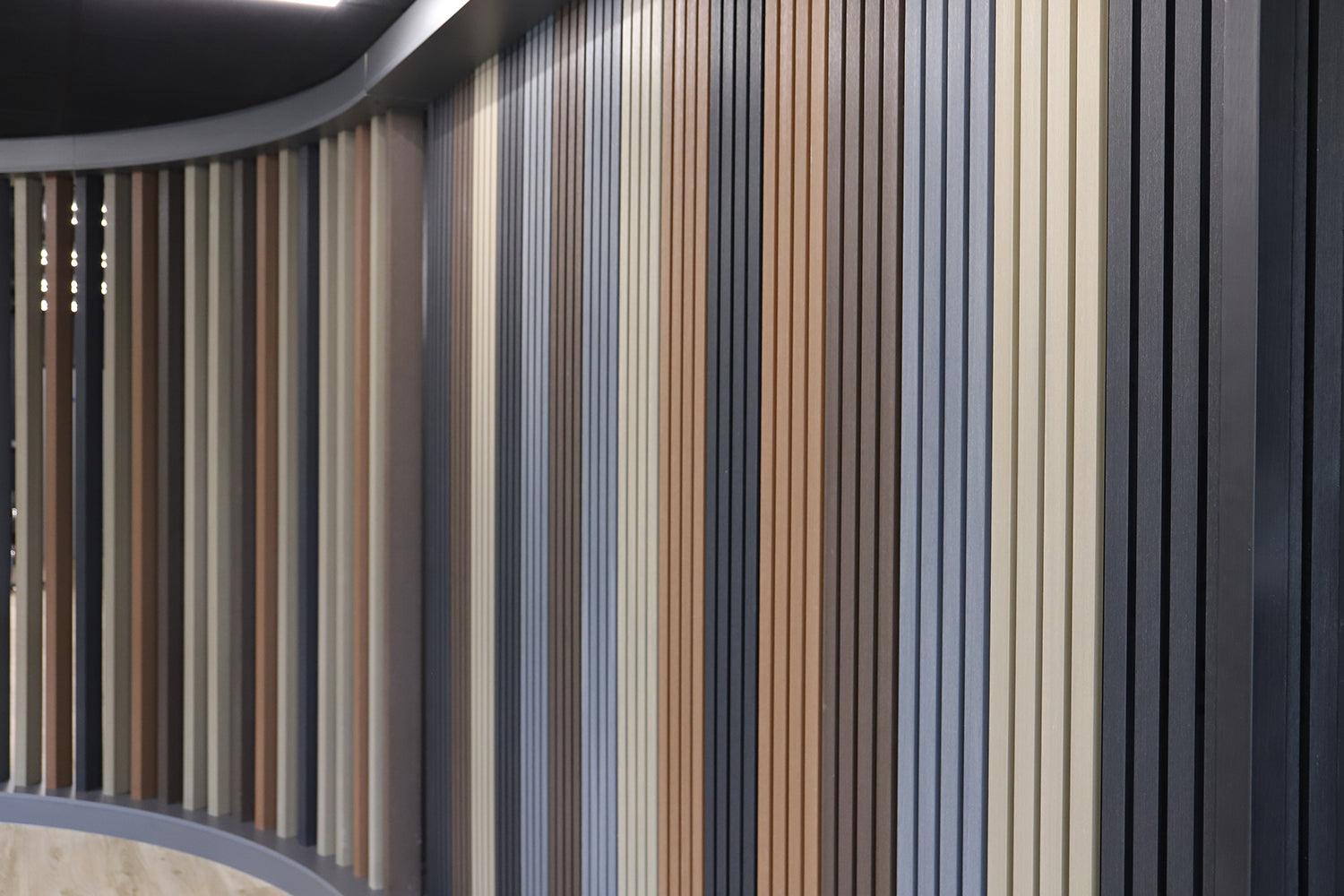
If you want more confidence before ordering, explore composite cladding reviews and the cladding showroom guide. Look for examples that resemble your project in scale and style, and check visiting arrangements before travelling.
Why choose NeoTimber® for your cladding project?
NeoTimber® brings board profiles, compatible trims, fixings and planning resources together, helping you work through the decisions in one place. You can start with samples, compare the ranges and consult the installation information while developing your order.
The value of that approach is practical: it helps you ask specific questions about the components your wall needs. Use the cladding advice hub for further planning ideas, then confirm the details of your chosen product before purchasing.
FAQs: buying composite cladding
What do I need to buy alongside composite cladding boards?
Plan for a suitable supporting framework, specified wall and board fixings, starter components and compatible finishing trims. The exact list depends on the range, wall layout and installation design. Check what is included with each product before adding separate packs.
How do I work out how many cladding boards to order?
Measure each elevation, establish the board direction and use the selected product’s fitted coverage. Then review whole board lengths, cuts and openings. A calculator gives a useful estimate, but a checked cutting layout is needed to turn that estimate into an order.
Should I buy extra cladding for wastage?
Allow for cutting waste, but choose the allowance to suit the actual layout. A simple wall and a shaped elevation with several openings may produce very different offcuts. Ask your installer or supplier to review the requirement rather than applying one percentage to every project.
Can I buy cladding samples before placing a full order?
Yes. Use the NeoTimber® sample service to compare finishes before ordering. Review samples outdoors beside the materials on your property, and check the available sample options for your shortlisted range.
How should I compare cladding prices?
Compare prices per square metre of fitted coverage, then compare the complete project totals. Include accessories, framework, waste, delivery and installation. Keep VAT treatment consistent and check whether each quote covers the same preparation and finishing work.
Can composite cladding be fitted horizontally or vertically?
Check the permitted orientations and supporting framework requirements for your selected profile. Confirm the direction before calculating materials, because it changes the board runs, cutting plan and potentially the framework arrangement.
Is composite cladding completely maintenance-free?
No. It reduces the routine upkeep associated with a painted or stained timber finish, but still needs cleaning and appropriate care. Follow the selected range’s instructions and understand how its finish is expected to weather.
What should I check when buying cladding online?
Check the profile, colour, fitted coverage, compatibility of accessories, stock status and delivery arrangements. Read the installation and warranty documents, and save the final specification with your order confirmation.
Take the next step towards your finished exterior
To buy cladding with confidence, make the key choices in sequence: check suitability, compare profiles and samples, measure the walls, plan the installation and price the complete order. Each decision makes the next one easier to confirm.
Shop NeoTimber® composite cladding to compare the ranges, or request samples to start with the colour and finish. Once your shortlist is ready, use your wall plan to confirm the boards and accessories needed for a coordinated result.