Know What Goes Into a Complete Composite Fence
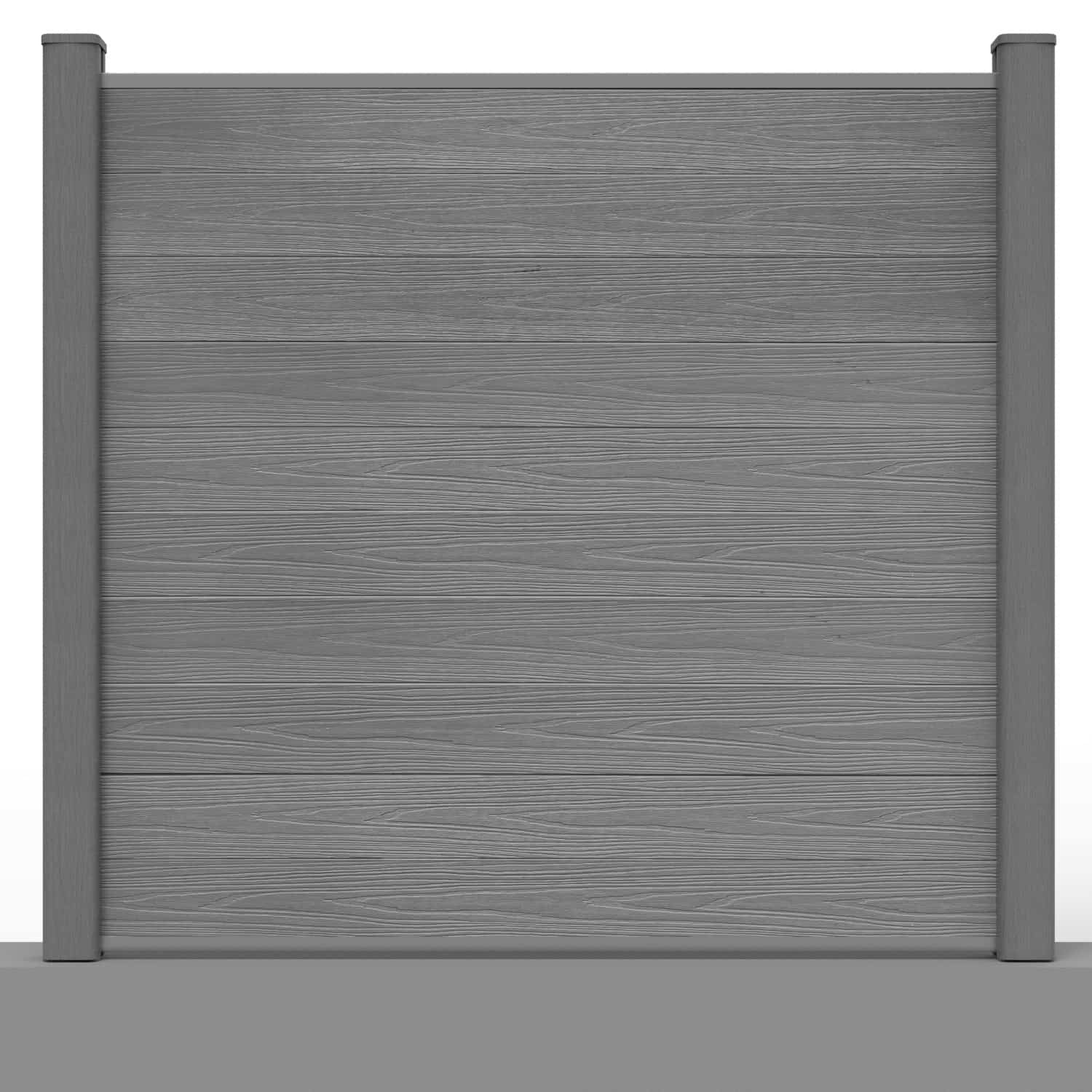
Composite fencing components work together to create the finished boundary. Boards provide the main surface, while posts, supports, channels, rails and fixings form the assembly around them. Optional gates and screens add access and design detail.
NeoTimber’s modular system can be ordered through panel sets or individual parts. Understanding the difference helps you build a complete shopping list, avoid duplicate purchases and identify anything missing before installation begins.
Visit our fencing guide for an introduction, or explore the composite fencing collection to compare products.
Explore the parts: Overview · Panel sets · Posts and supports · Boards · Rails and caps · Screens · Gates · Ordering checklist · FAQs
How the Main Parts Work Together
| Component | Main role | What to check |
|---|---|---|
| Fence boards | Form the panel surface | Range, profile, finish and required quantity |
| Posts and steel supports | Form the specified support assembly | Ground conditions, height and foundation requirements |
| Channel inserts | Provide compatible board connections | Correct type for the chosen post arrangement |
| Capping rails | Secure and finish the panel edges | Top and bottom rail requirements and fixings |
| Post caps | Finish the post tops | Compatible size, colour and fitting method |
| Screens and gates | Add design detail or access | Approved assembly and any separate supports |
Panel Sets: A Convenient Starting Point
A panel set brings selected components together for a particular configuration. It should not be confused with a single preassembled panel or assumed to include everything for an entire fence run.
Check the exact product variant. New-post and retrofit options have different contents, and an end support or additional corner arrangement may be needed for the overall layout. Height and screen options can also affect the component list.

Choose between the Deluxe panel set and Slatted panel set, then review the listed contents before adding separate parts to your basket.
Posts, Supports and Channel Inserts
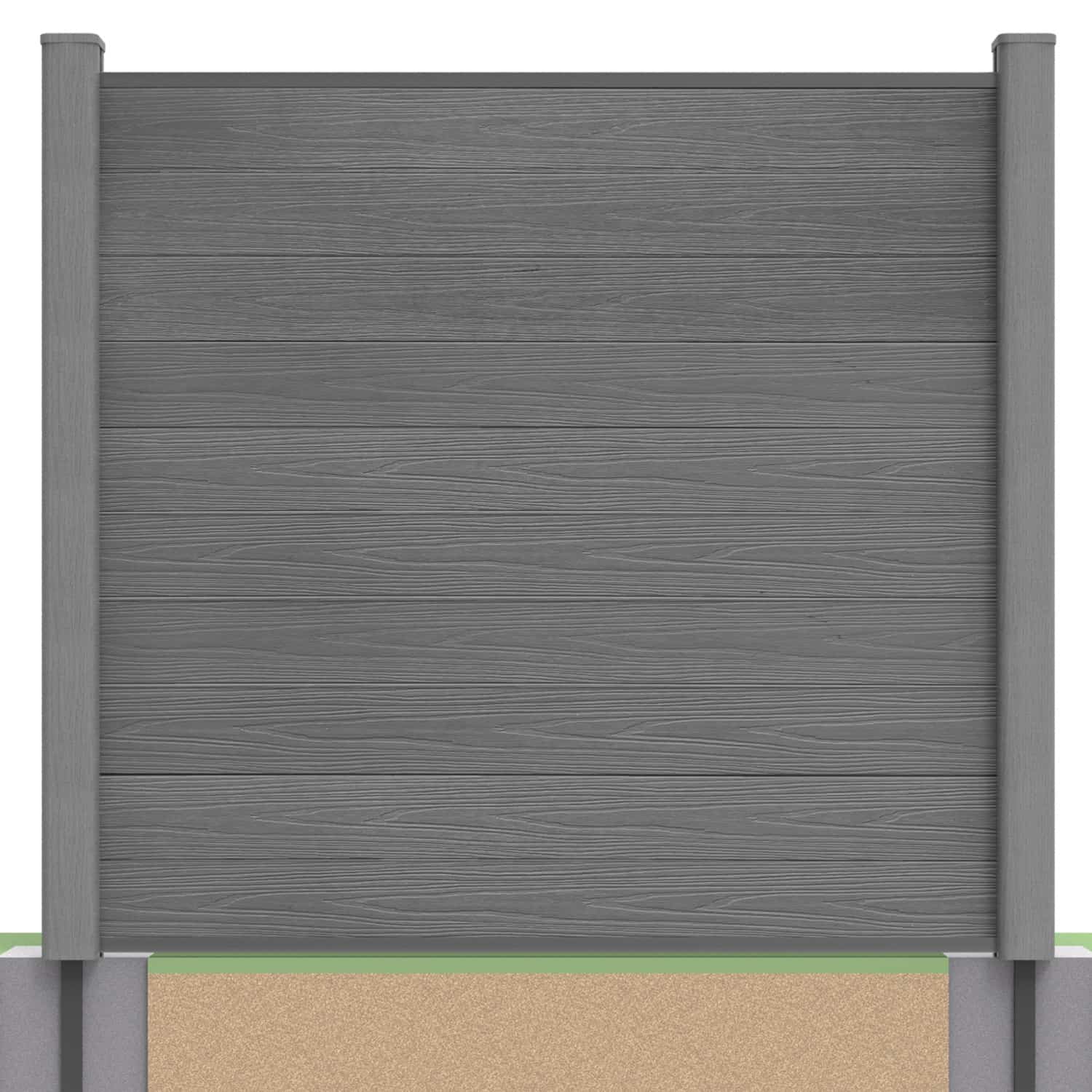
The composite post profile is designed to fit over its specified steel support. The outer profile is not a substitute for the complete support and foundation arrangement.
NeoTimber® offers hard-ground post sets and soft-ground post sets. Select the arrangement according to the actual structural base or ground conditions, height and exposure.

A paved surface is not automatically a suitable base for anchoring. Similarly, a soft-ground support needs the specified foundation rather than simply being pushed into soil. Follow the fencing installation guidance for the chosen system.
Inserts for New and Existing Posts
The composite post channel insert is different from the steel structural support. Check which part is required rather than treating all products called inserts as interchangeable.
For compatible existing supports, wooden post inserts and concrete post inserts provide the appropriate board channels. Assess post condition, foundations, spacing and dimensions before reuse. Inserts do not repair rot, cracks or inadequate foundations.
Individual Fence Boards and Slats
Fence slats are the individual horizontal boards stacked between compatible channels. Their tongue-and-groove edges connect as the panel is assembled, with the specified rails completing the arrangement.
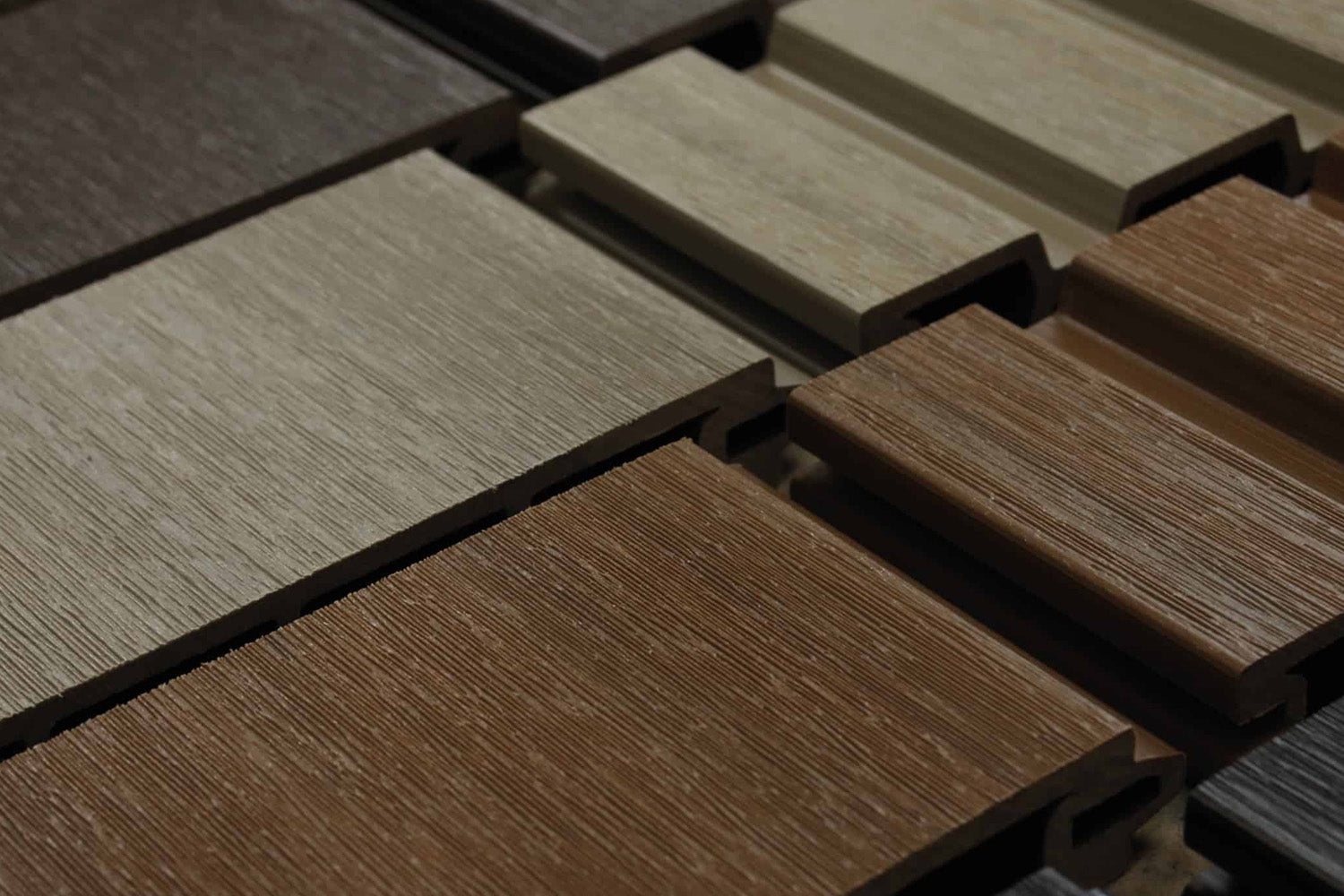
The Deluxe board offers woodgrain and brushed faces. The Slatted board has a pronounced linear profile. Compare the actual product dimensions and effective installed coverage before calculating quantities.

Modular construction provides flexibility within the approved system; it does not permit unlimited height, span or orientation changes. Follow the required clearances and cutting instructions, and confirm any non-standard layout before ordering.
Capping Rails, Post Caps and Fixings
Fence board capping rails are powder-coated aluminium parts supplied as a top and bottom rail set. They help secure and finish the board assembly when installed with the specified connections.

A capping rail is separate from the protective cap on a composite board. The rail is a physical assembly component; the board’s cap is its outer material layer. Neither should be confused with the post cap that finishes the top of a post.
Check all required brackets, sleeves and fixings against the product contents and instructions. Capping rails do not independently establish a fence’s wind performance: posts, foundations, height and exposure also matter.
Decorative Screens
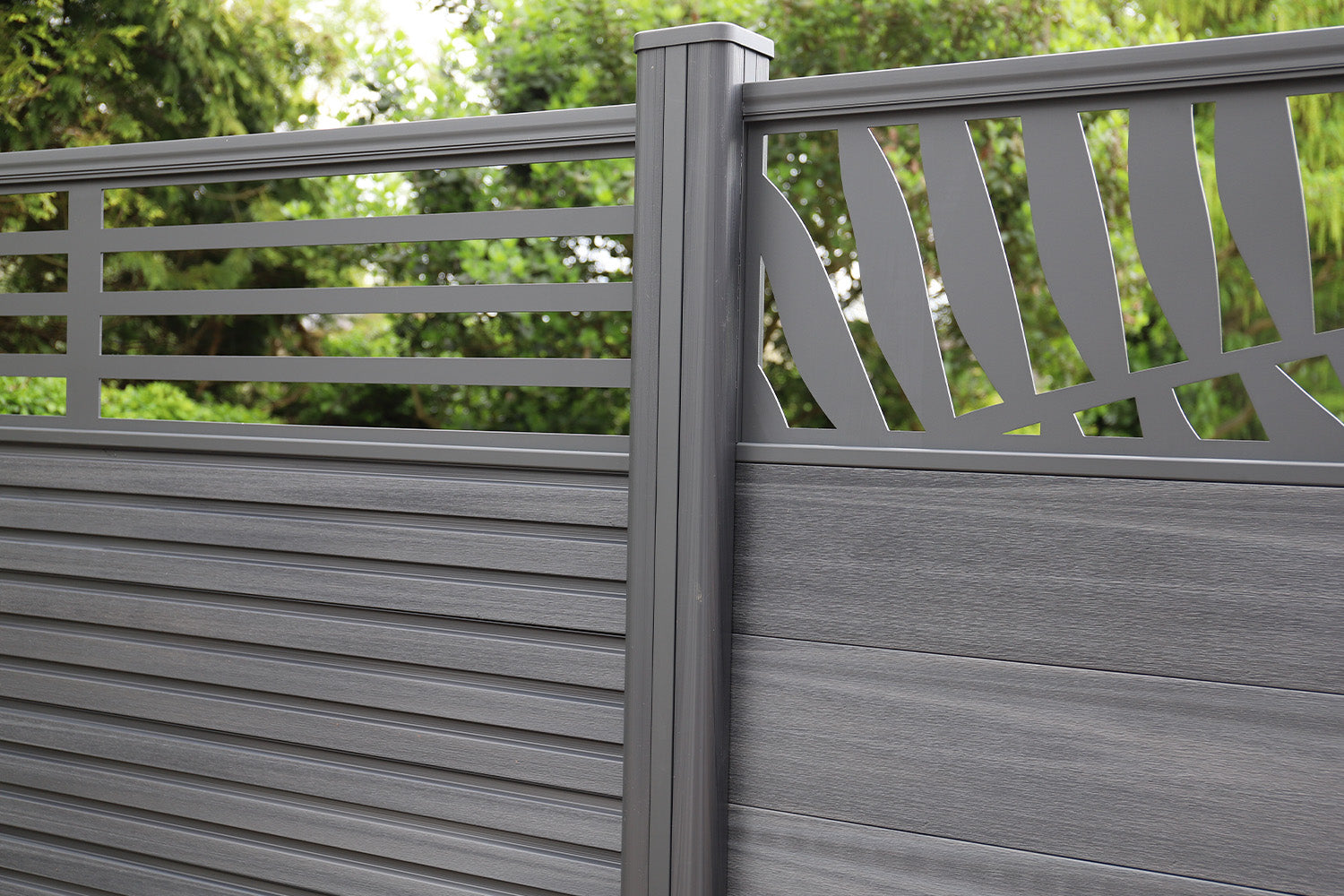
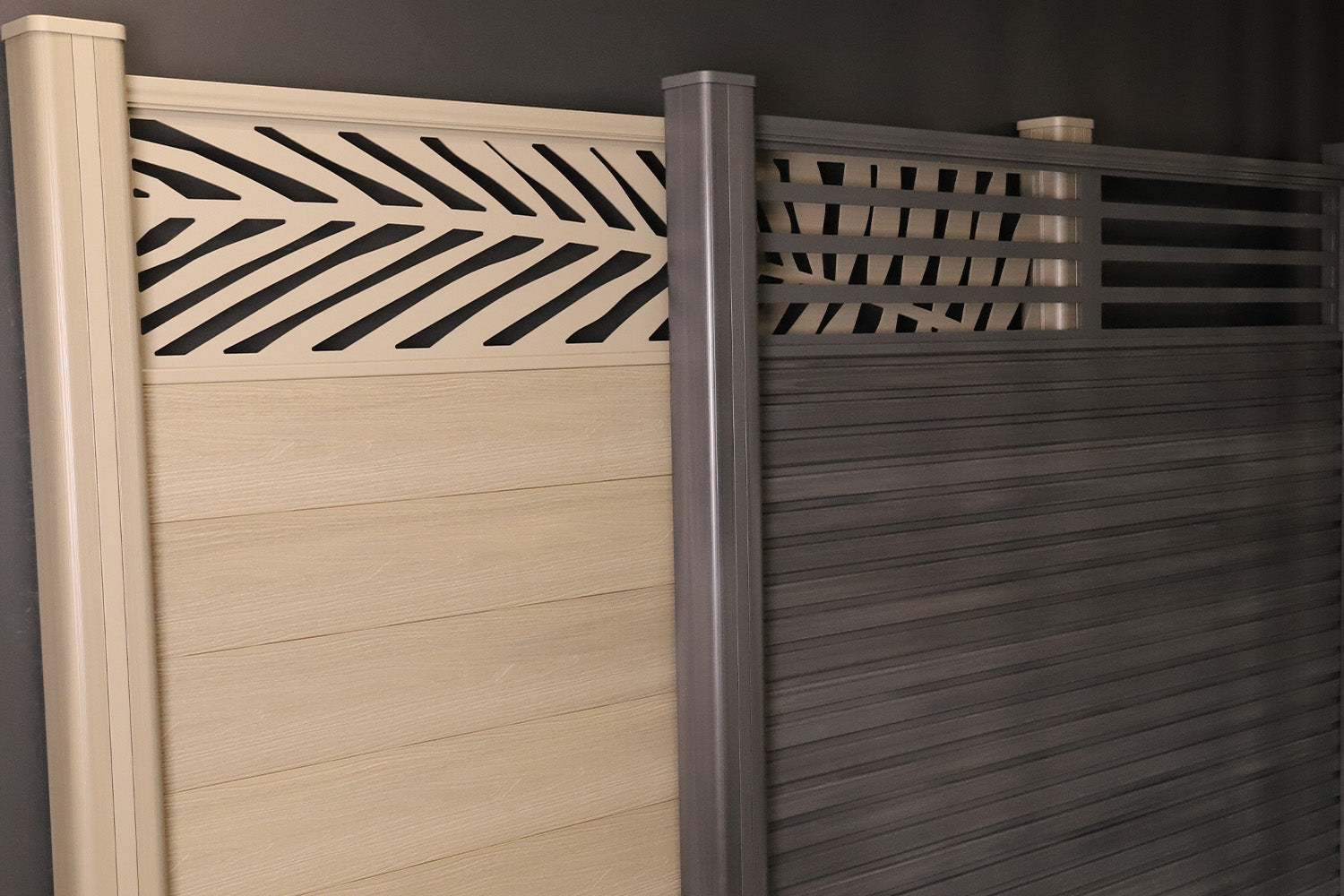
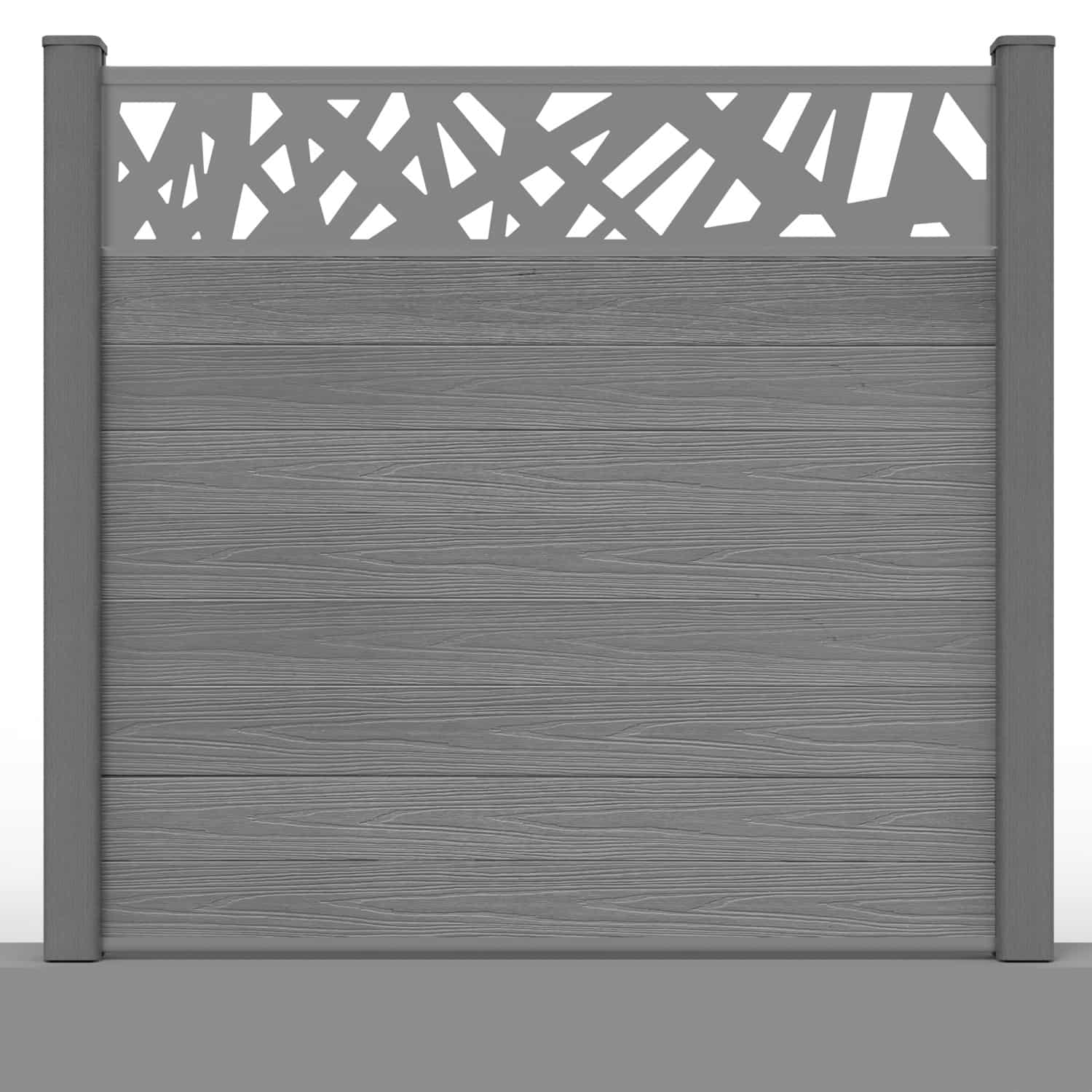
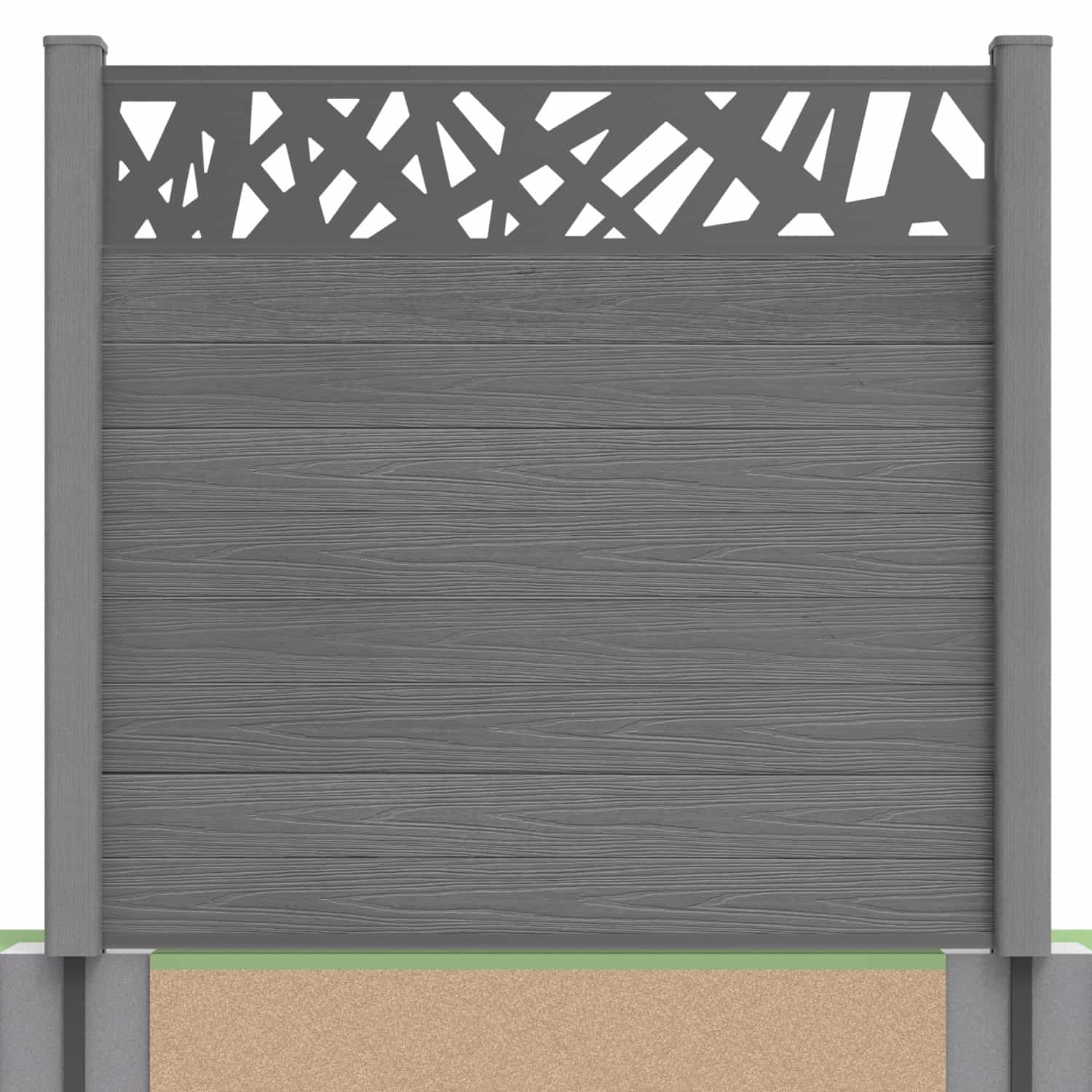
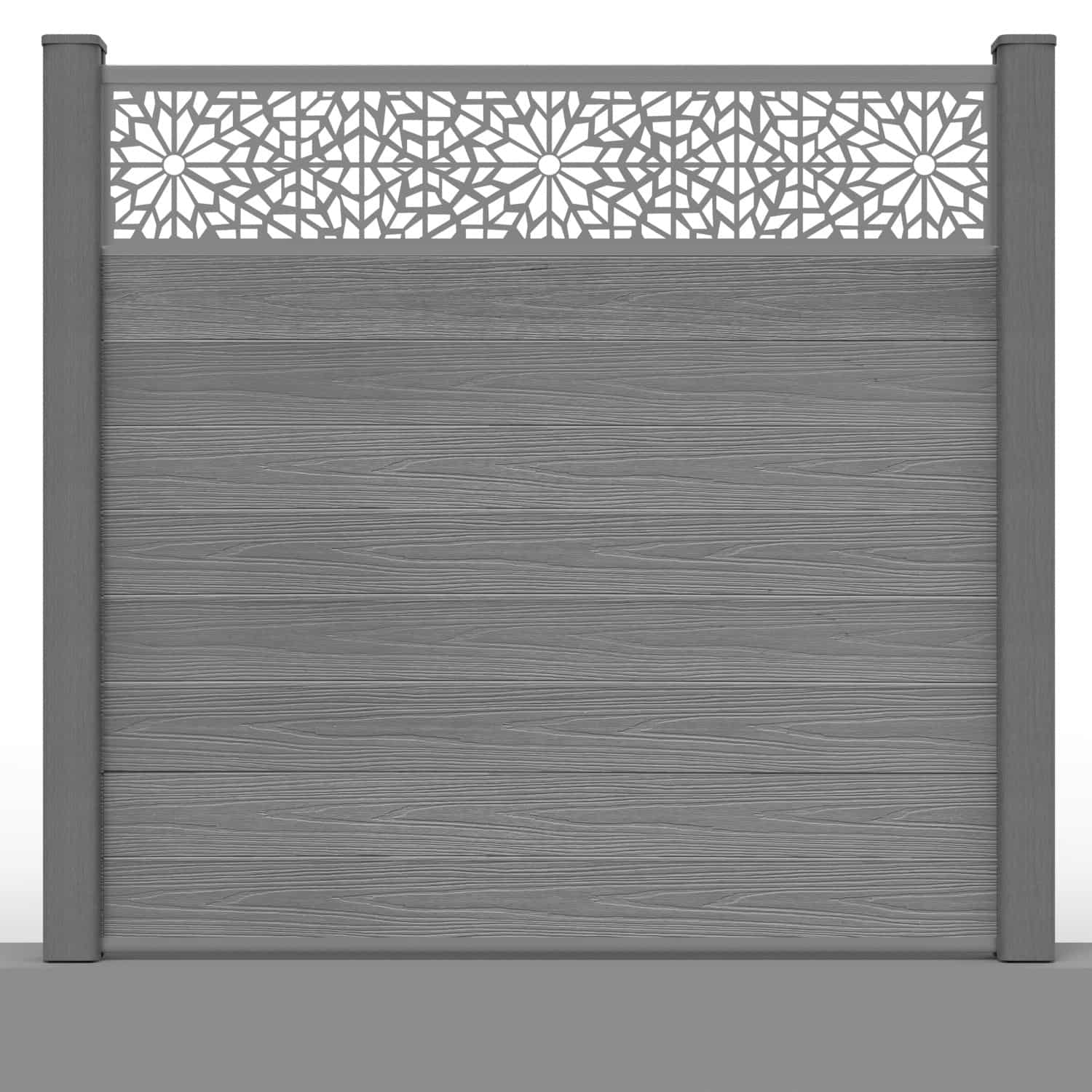
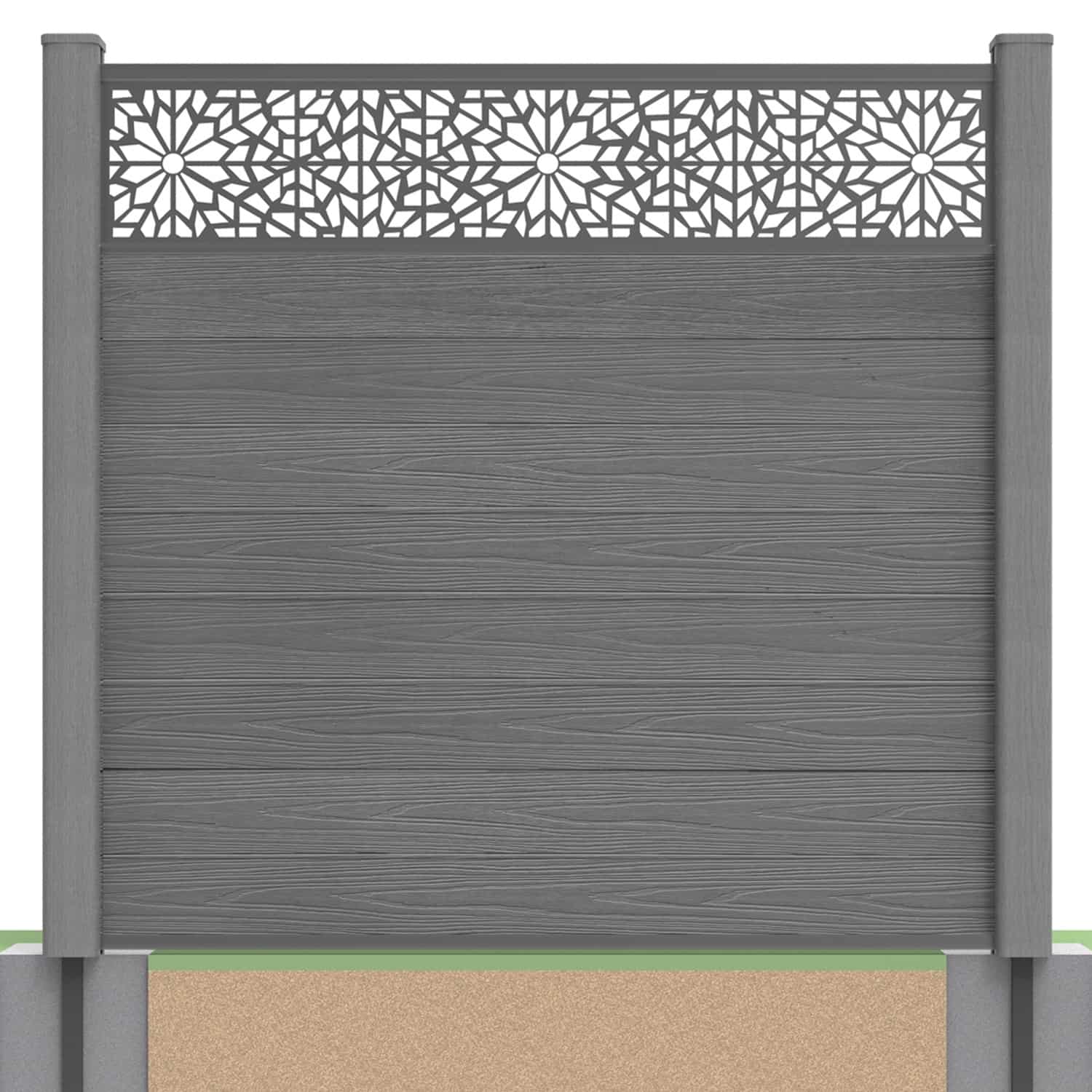
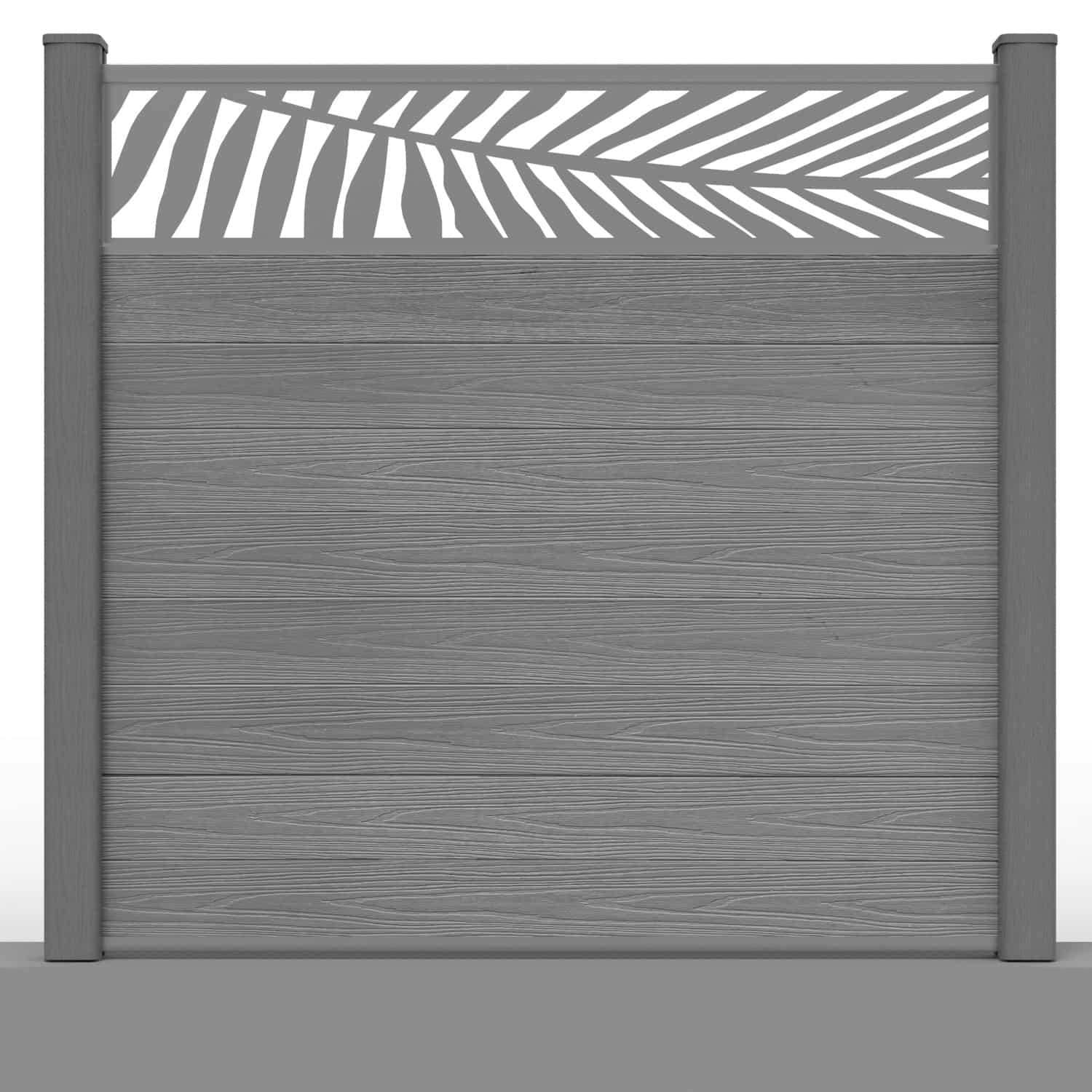
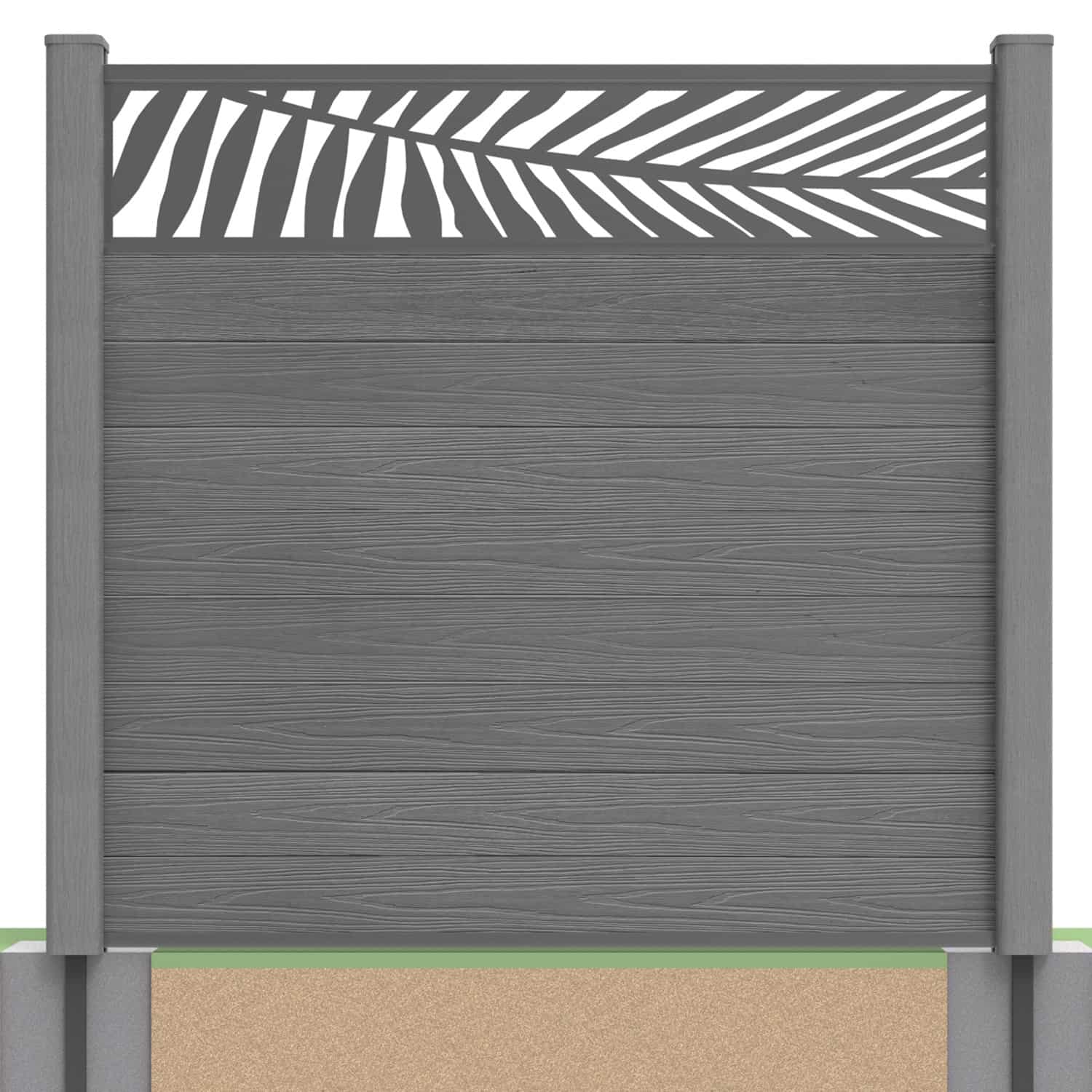
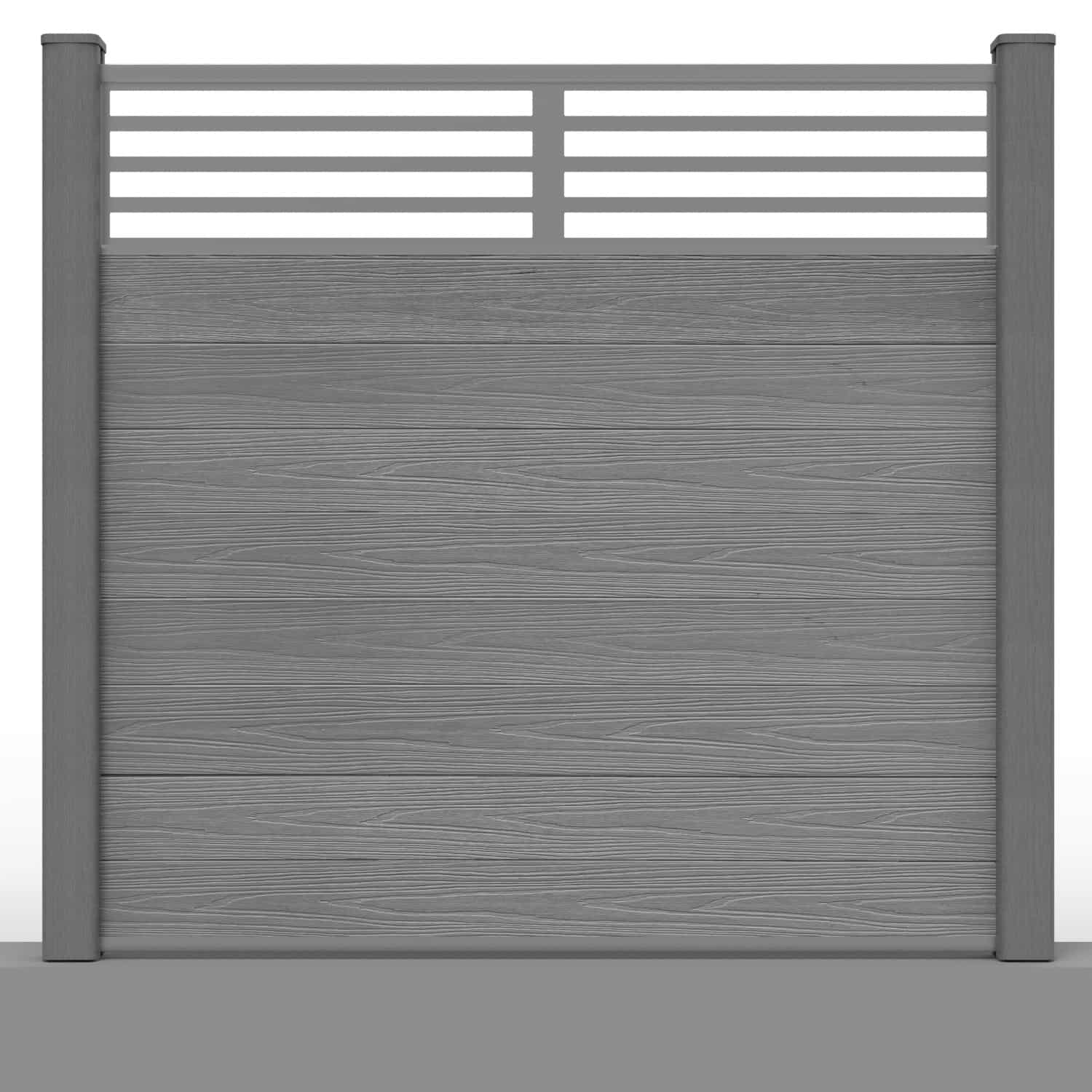
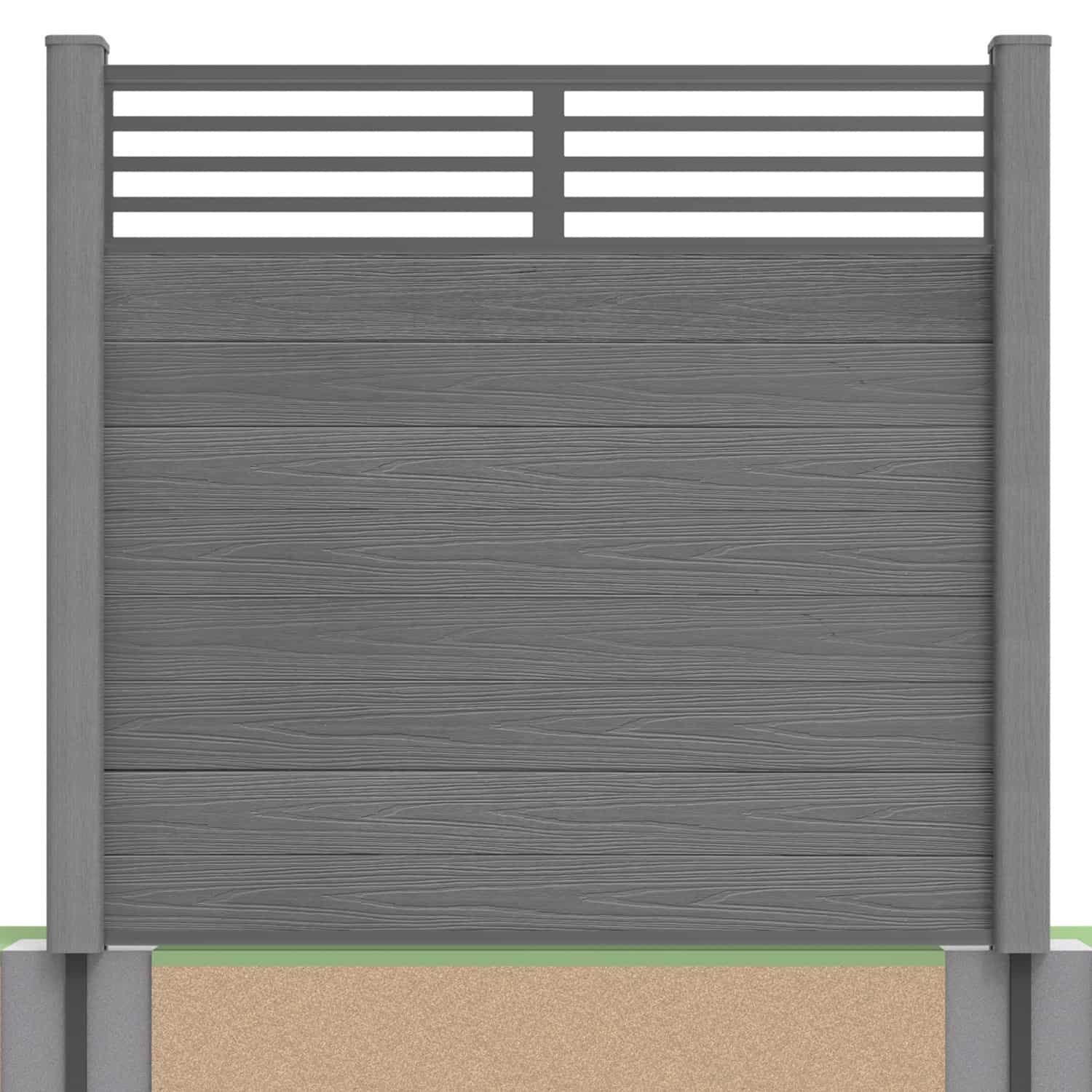
Decorative fence screens can add pattern and visual interest to selected bays. Options such as linear, geometric and leaf designs offer different ways to break up a long boundary.

Confirm the approved screen configuration, required board quantity and overall height for the selected panel. Open cut-outs can change visibility through the fence, so assess the privacy effect rather than assuming a screen preserves the same coverage as solid boards.
Gates and Access Components
Composite garden gates combine composite infill with an aluminium frame and can coordinate with the surrounding fence style. Plan them early because the opening and supporting posts affect the adjacent panel layout.

Confirm the selected gate package contents, including posts, supports, hinges, handle, lock and fixings. Gate leaf width is not automatically the clear passage width or required structural opening. Follow the current gate installation dimensions.
Do not assume an ordinary fence post is suitable for a moving gate. Use the specified gate support arrangement and check the swing space and ground levels before installation.
Build a Complete Component List
- Measure the layout: record each run, height, corner, level change and opening.
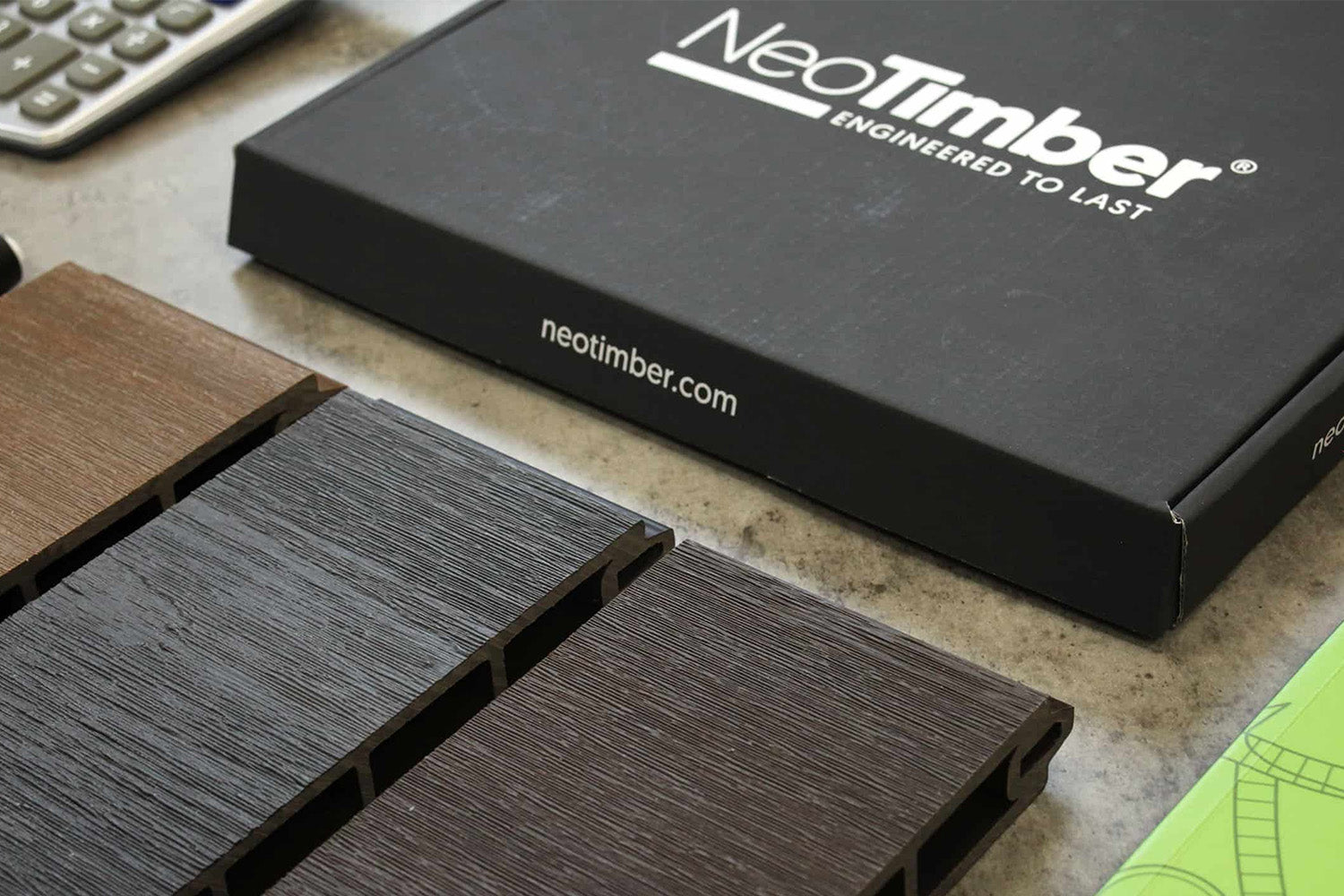
- Select the board style and finish: compare physical samples beside existing materials.
- Choose the support route: new posts or assessed existing supports with compatible inserts.
- Review panel set contents: account for end supports and avoid ordering included parts twice.
- Add gates and screens: check their specific configuration and fitting requirements.
- Check the full budget: include delivery, foundations, labour and removal of the old boundary.
Keep the product list with the installation and care instructions. Review the applicable warranty terms separately, and ask for advice before substituting parts from a different system.
Composite Fencing Components FAQs
What parts do I need for a complete fence?
A typical assembly uses boards, posts or suitable existing supports, compatible channels, rails, caps and fixings. The exact list depends on the layout and selected configuration.
Does a panel set contain every required component?
It contains the parts listed for its variant. The whole run may still need end supports, corner details or gate components. Review the layout and package contents together.
Are steel supports and aluminium inserts the same thing?
No. They serve different roles. Use the specified structural support and the correct channel insert for the chosen post system.
Can I add a decorative screen to any panel?
Check compatibility and the approved configuration first. Board quantities, overall height and connection details can change when a screen is included.
Can components from different brands be mixed?
Do not assume compatibility. Profiles, dimensions and fixing requirements may differ. Confirm the arrangement with the supplier before substituting parts.
Can individual boards be replaced later?
A modular assembly may allow individual replacement, but access and dismantling depend on the installation. Confirm the compatible product and expect possible appearance differences between new and weathered material.
Bring the Right Parts Together
Start with the layout, then confirm how every component connects. Explore NeoTimber® composite fencing or contact our team with your measurements for help reviewing the complete order.