Choose a Timber-Inspired Boundary With the Right Components
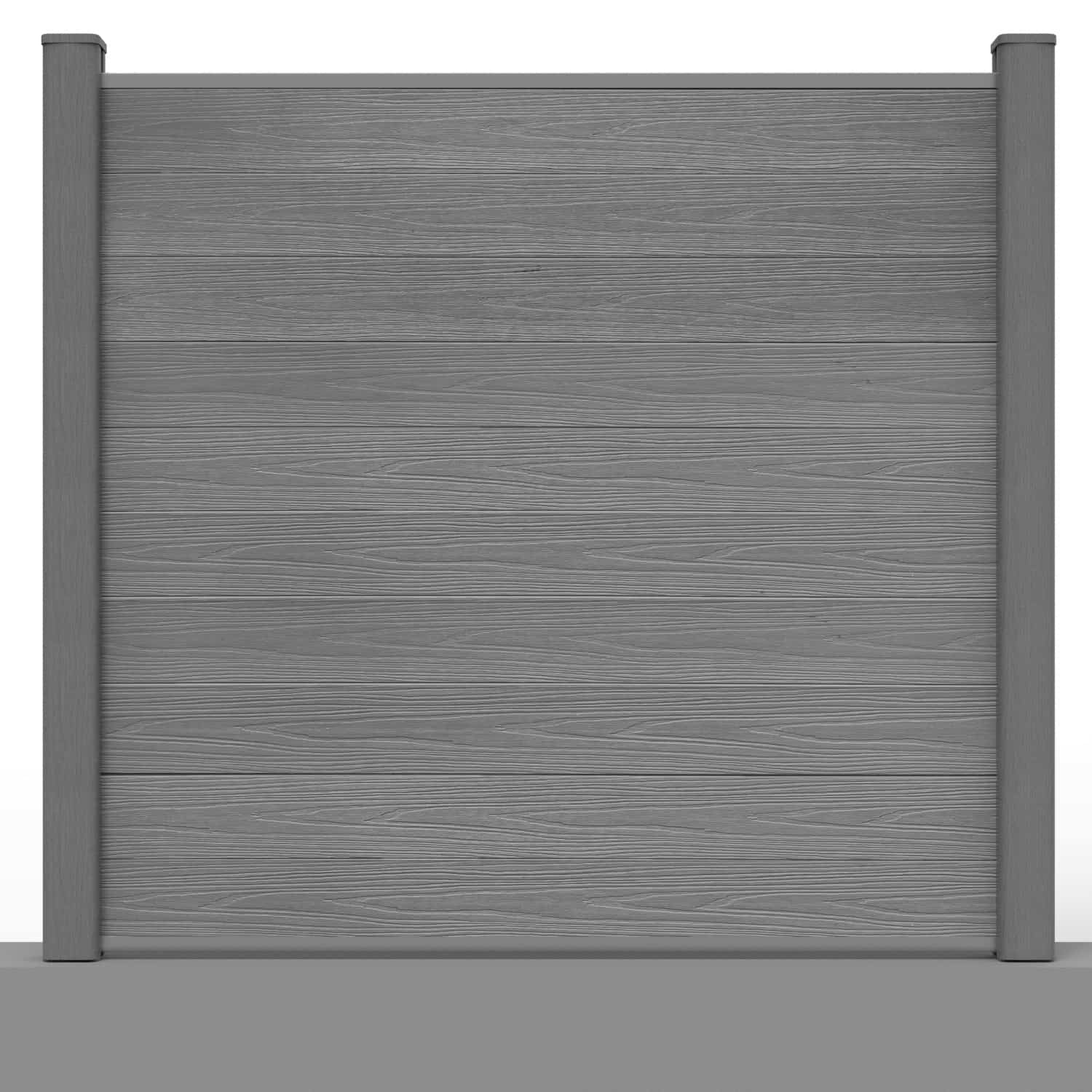
Composite wood fencing combines wood fibres with polymers and additives to create a timber-inspired garden boundary. NeoTimber’s capped boards offer a supplied colour and texture without routine painting or staining, alongside a modular system of compatible parts.
Planning a composite wood fence means comparing more than appearance. Board profiles, support arrangements, screening needs and the complete project cost all influence the choice. This guide explains the main decisions before you order.
Visit our fencing guide for an introduction, or browse the composite fencing collection to compare current products.
Explore: Boards and panels · Finishes · Screening · Supports · Costs · Care · FAQs
Understand Boards, Slats and Panel Sets
Composite wood fence boards are the individual components used to form the panel surface. You may also see them described as slats or planks. Check the actual profile and dimensions rather than relying on the name alone.
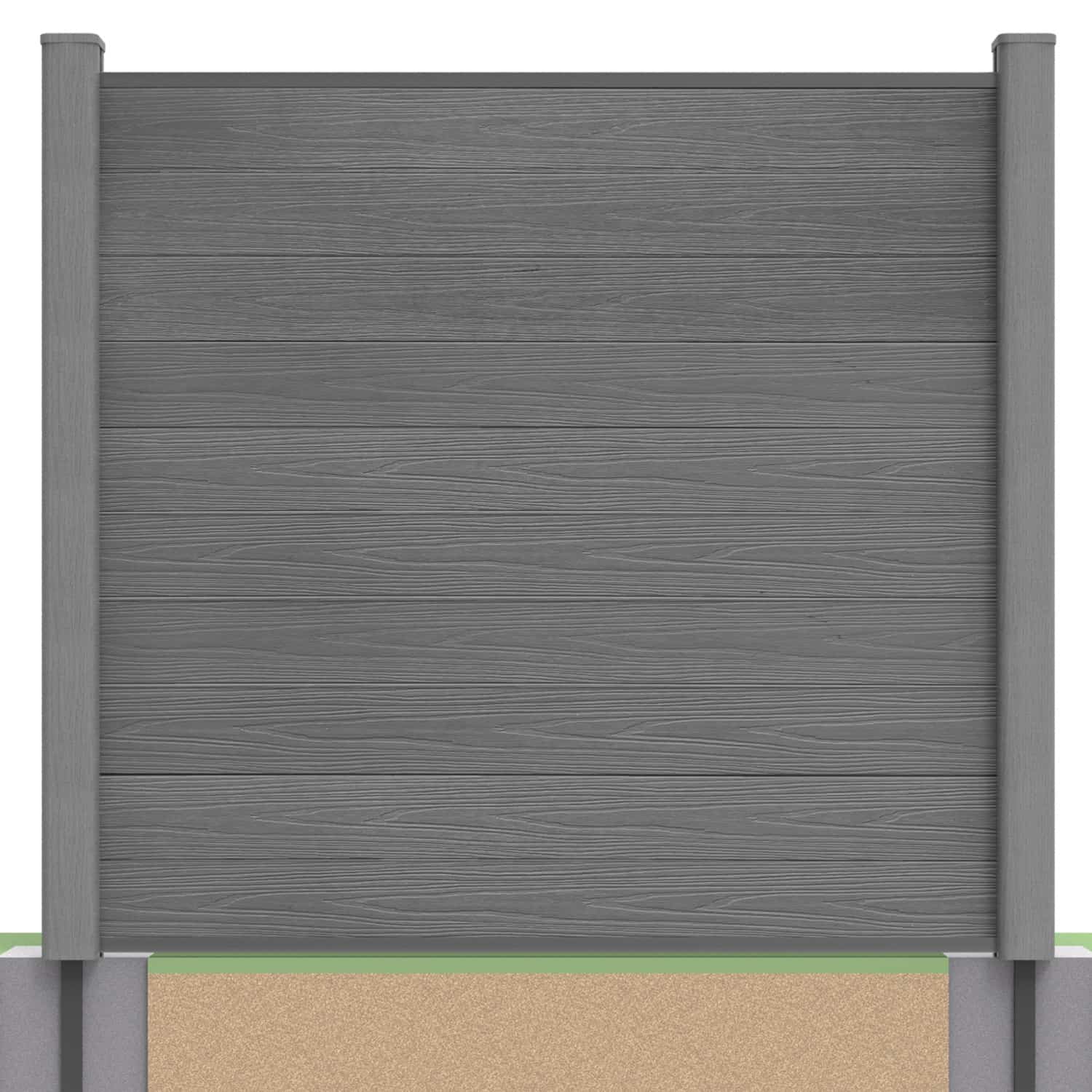
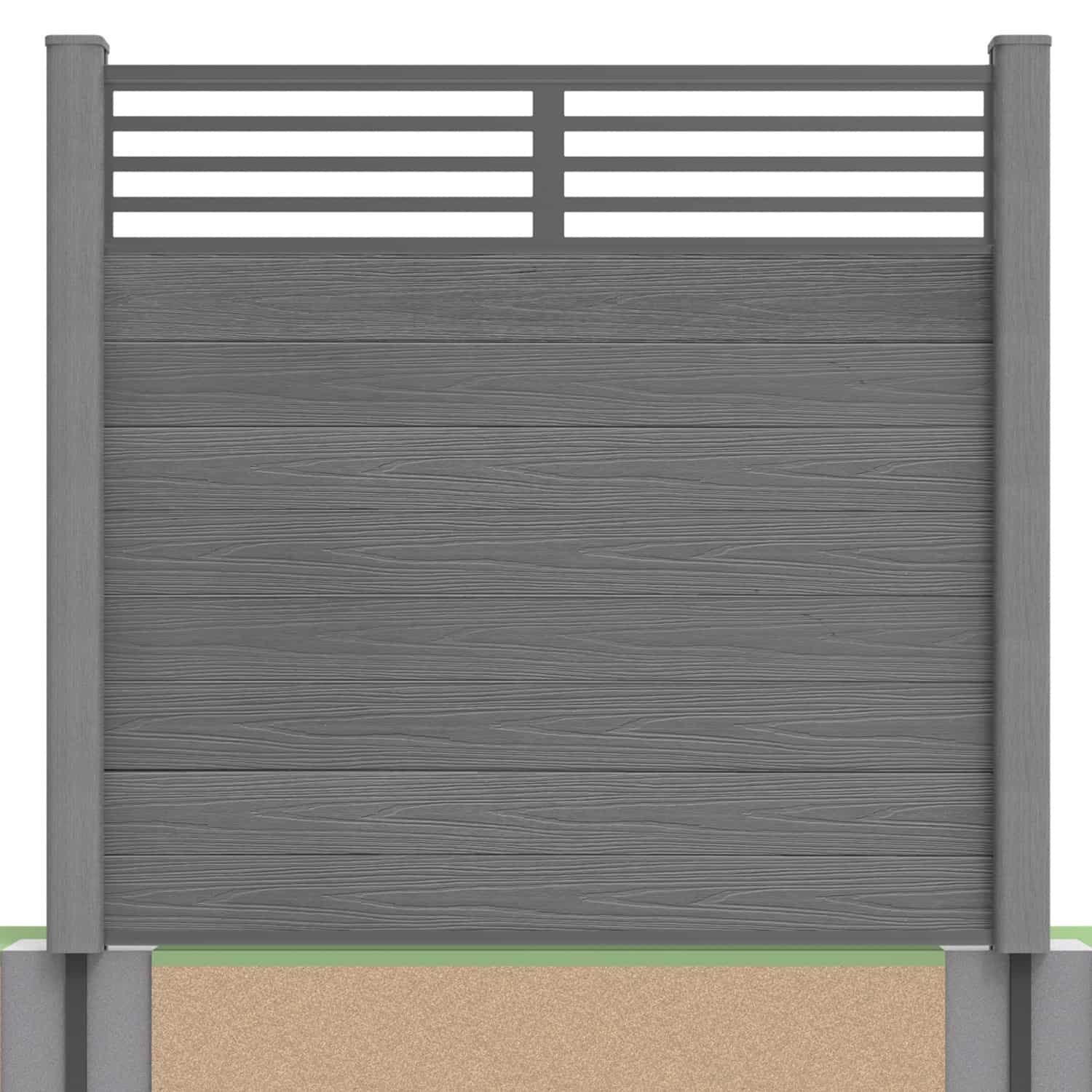
NeoTimber’s horizontal boards use tongue-and-groove edges and stack between compatible post channels or inserts. The specified rails complete the assembly. The whole layout still needs suitable supports and foundations.
Composite wood fence panels can be bought as sets that group selected components together. Check the exact configuration and contents, because a new-post set and a retrofit option are different purchases. End supports, corners and gates also need to be included in the overall plan.
| Product description | What to compare |
|---|---|
| Individual board or slat | Profile, dimensions, finish and effective installed coverage |
| Panel set | Selected height, support option and included parts |
| Post assembly | Outer profile, structural support and foundation requirements |
| Decorative screen | Material, pattern and approved panel configuration |
Our components guide explains the role of each part. Do not assume that similarly named products from different systems are interchangeable.
Choose the Surface Texture and Colour Together
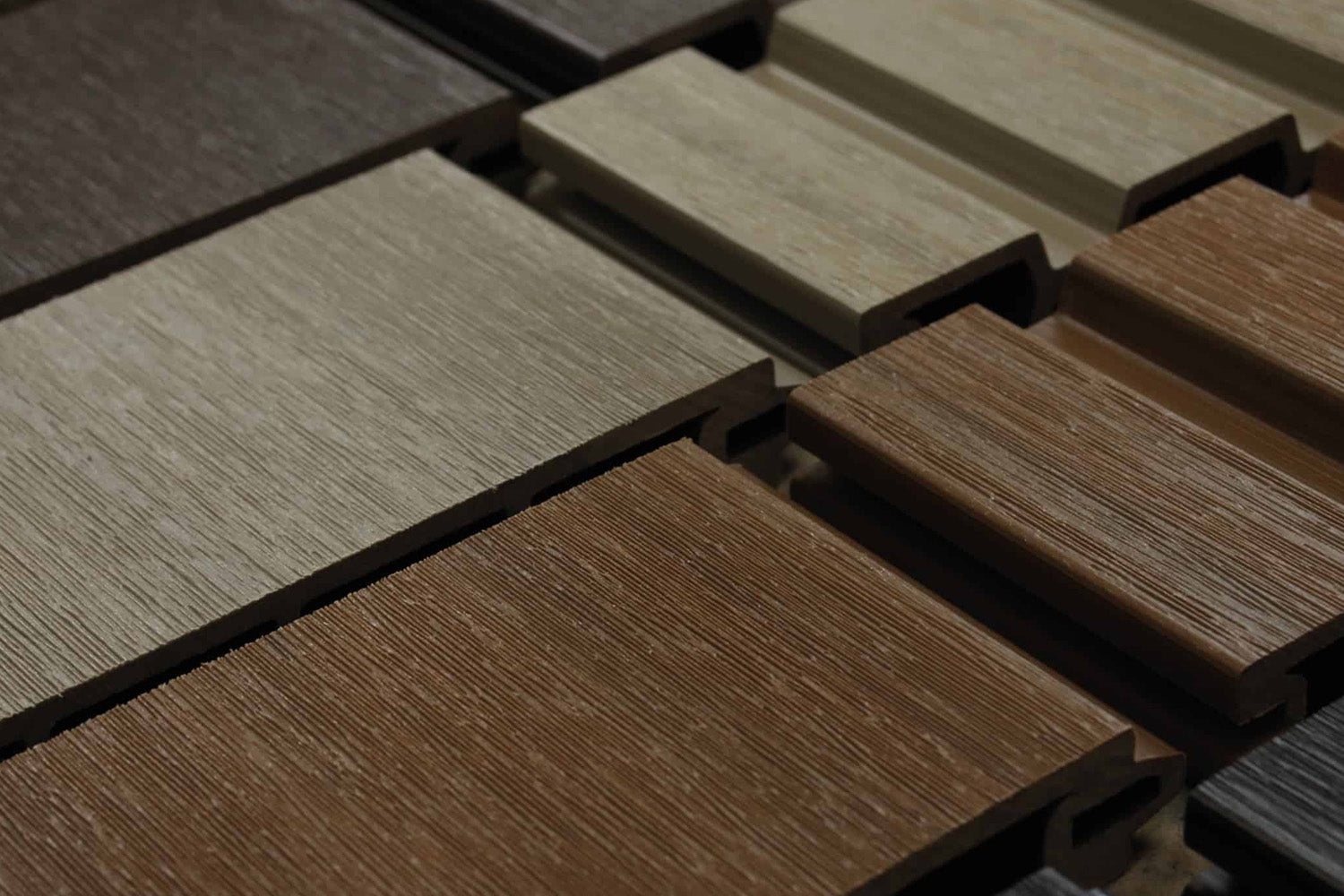
The Deluxe board offers an embossed woodgrain face and a brushed face. The Slatted board introduces a pronounced linear profile. Compare the texture from both sides of the proposed boundary.
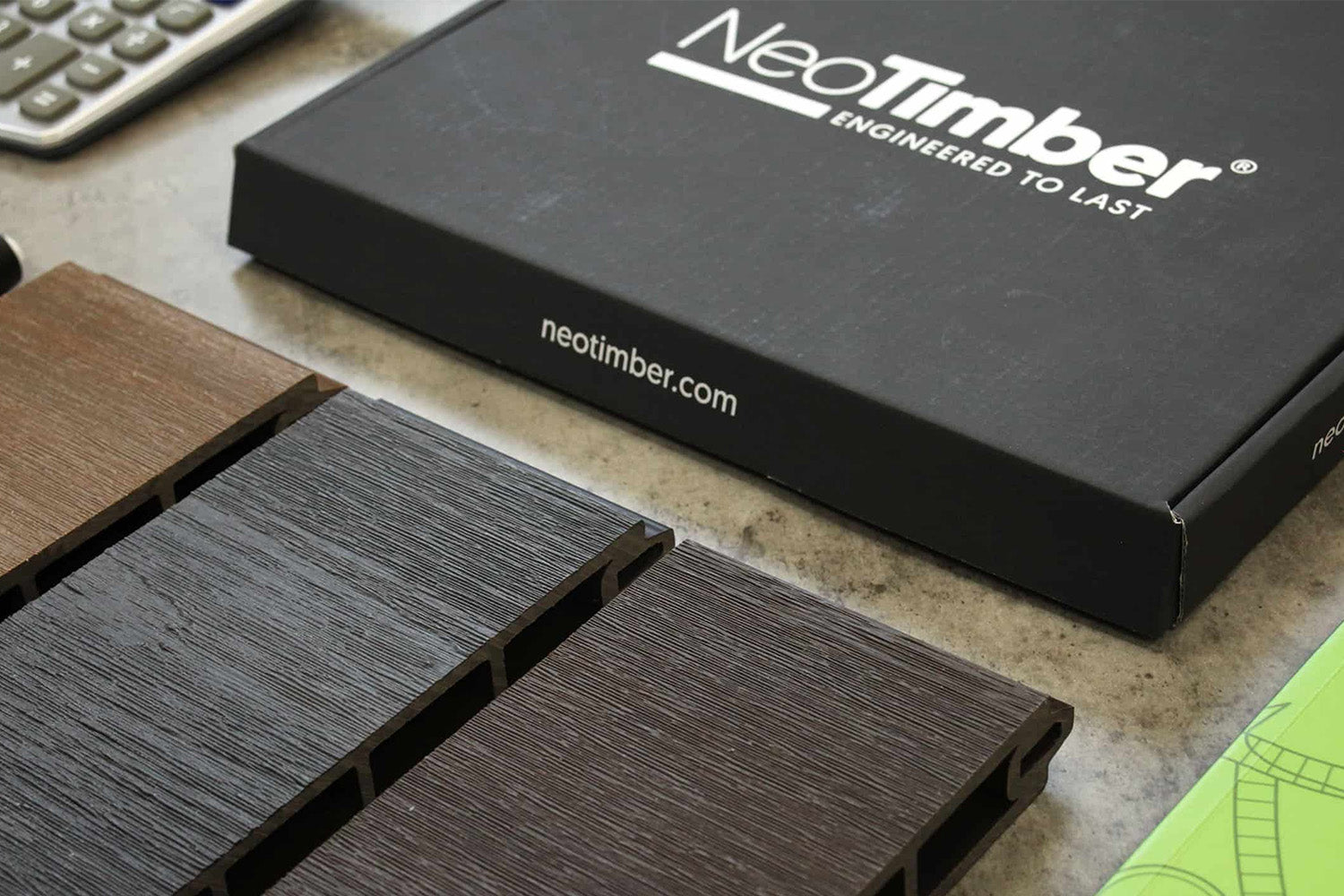
The palette includes Grey, Antique, Chocolate, Charcoal, Teak, Ash White, Oak and Silver Birch. Use the colour guide to shortlist options and check availability for the selected boards and accessories.

Request samples and view them upright outdoors beside your paving, planting and brickwork. Warm shades can provide a timber-inspired direction, while neutral and darker tones create different contrasts. Photographs help with inspiration, but screens and lighting affect colour appearance.
Plan Composite Wood Screening Around the Views That Matter
Composite wood screening can define a seating area or help screen a boundary from selected viewpoints. Consider the height, ground levels and openings, including views from above. A short, well-positioned run may solve the problem without enclosing the whole garden.
A slatted-style profile does not automatically mean an open screen. Check the assembled construction if privacy, airflow or visibility is important.
Decorative Metal Screens
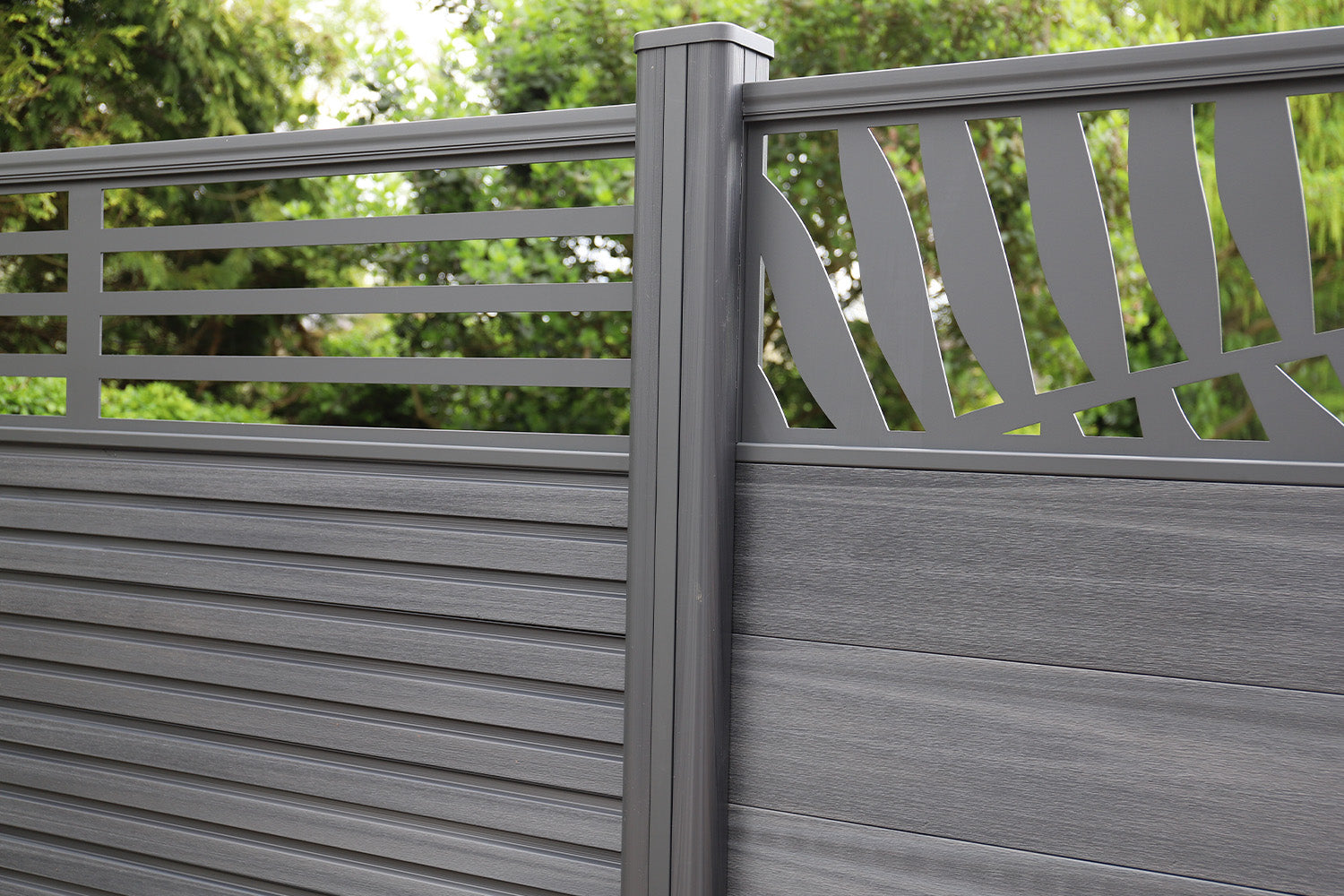
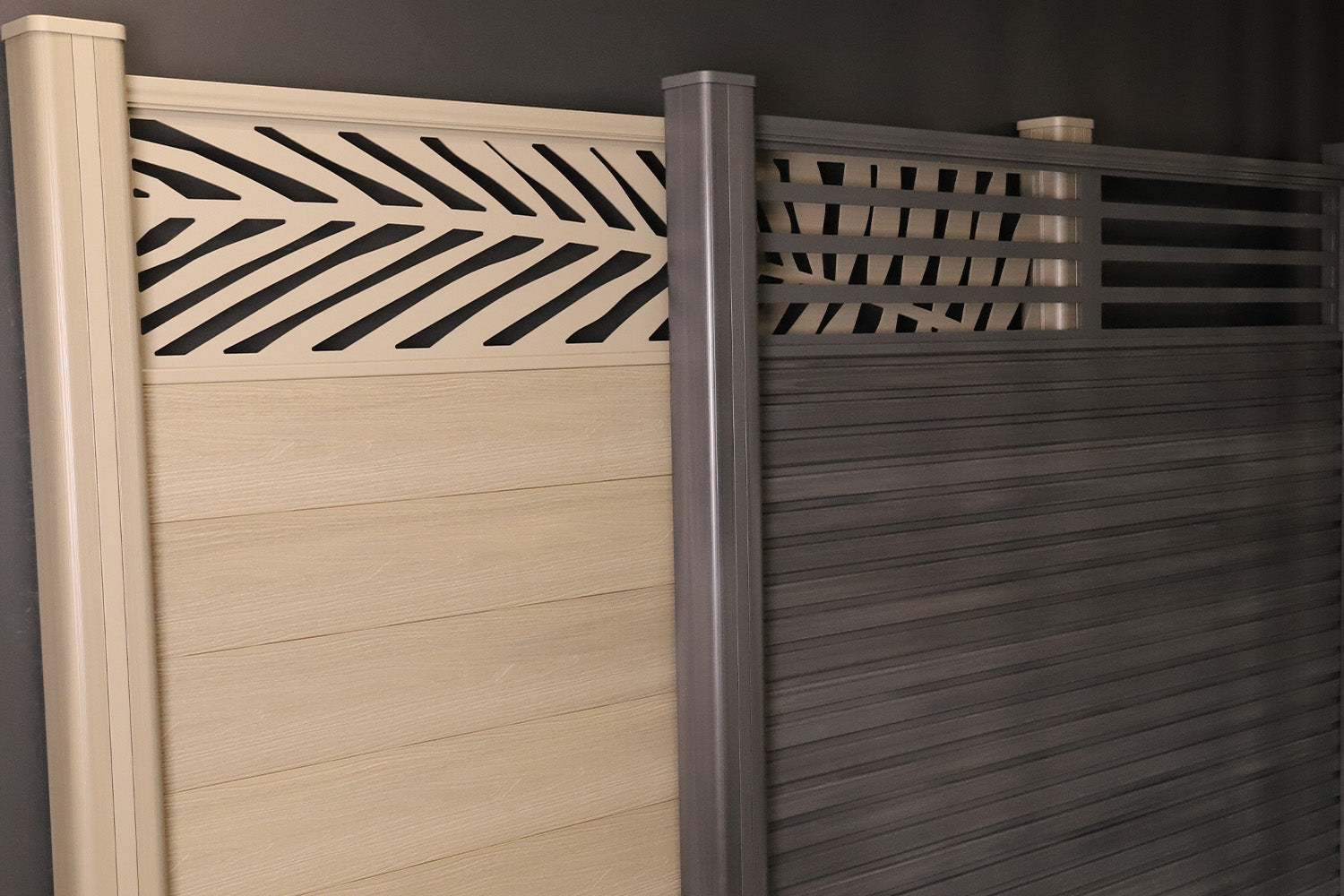
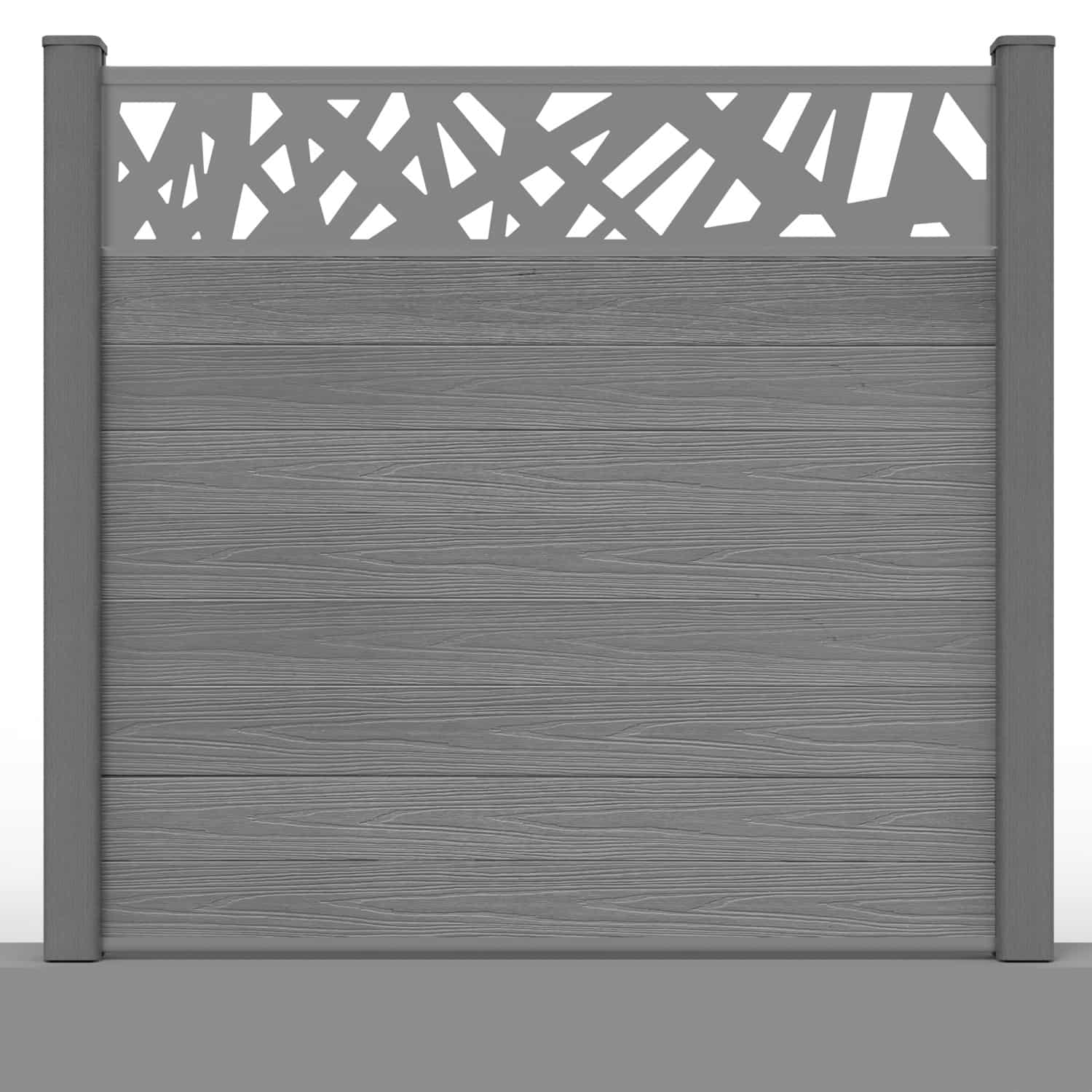
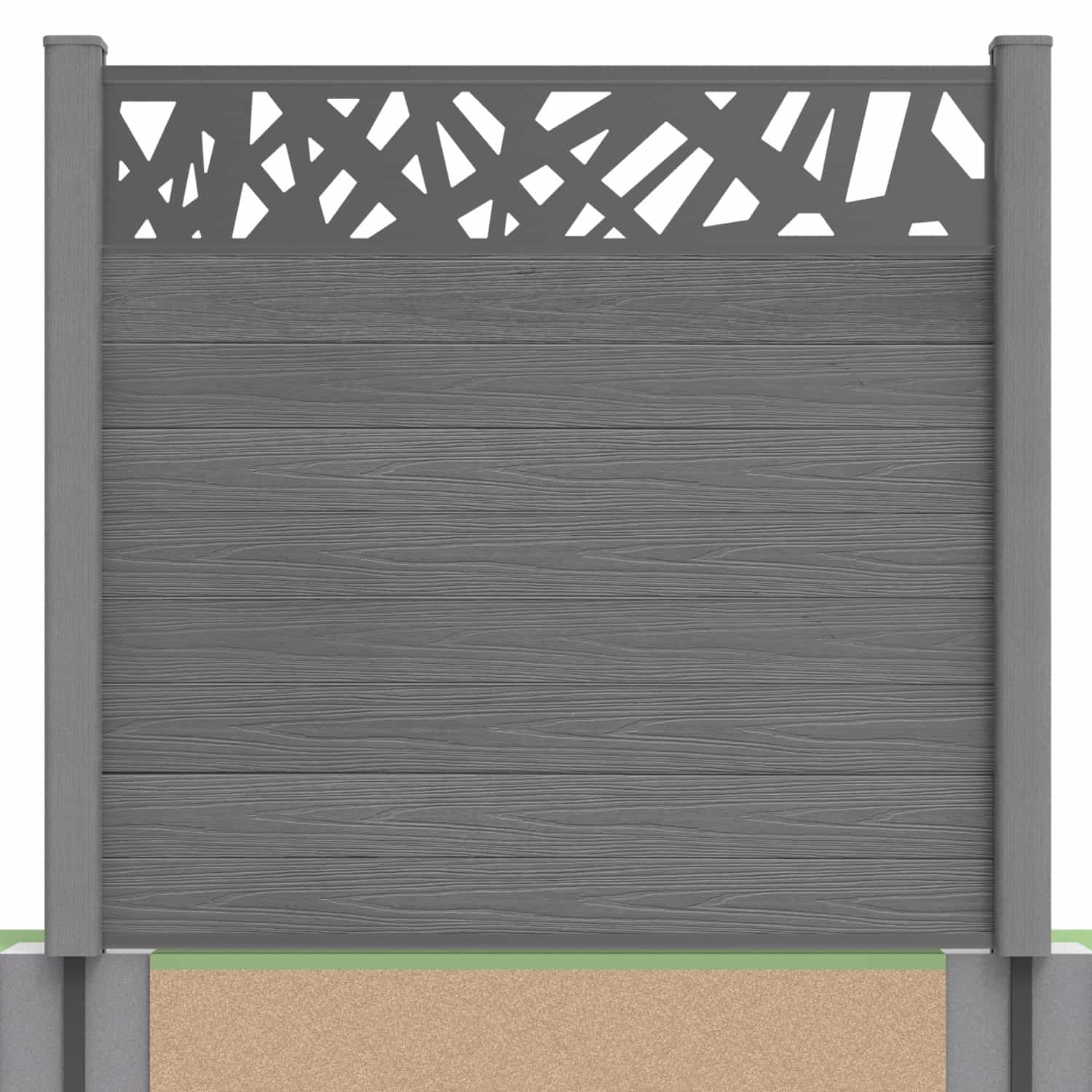
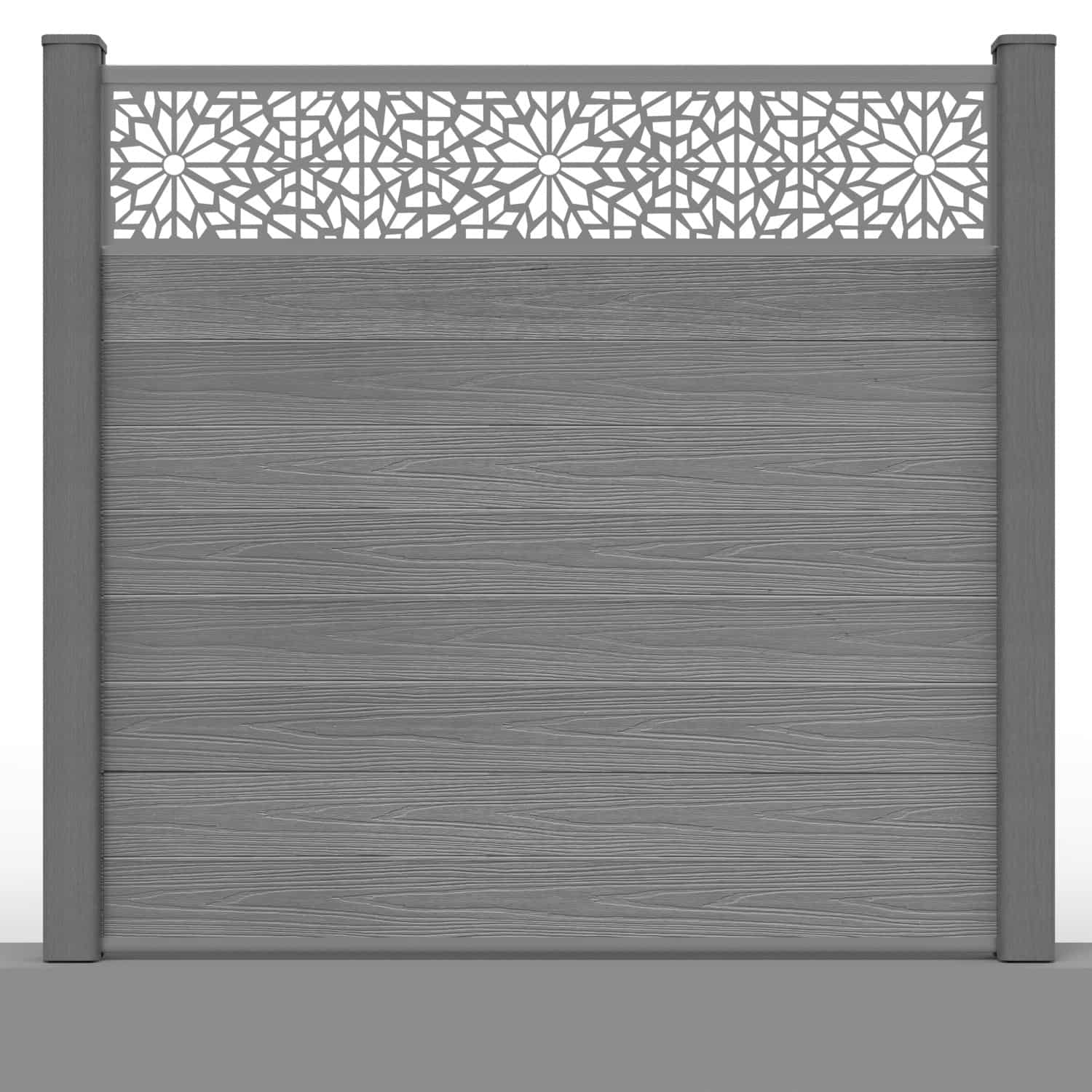
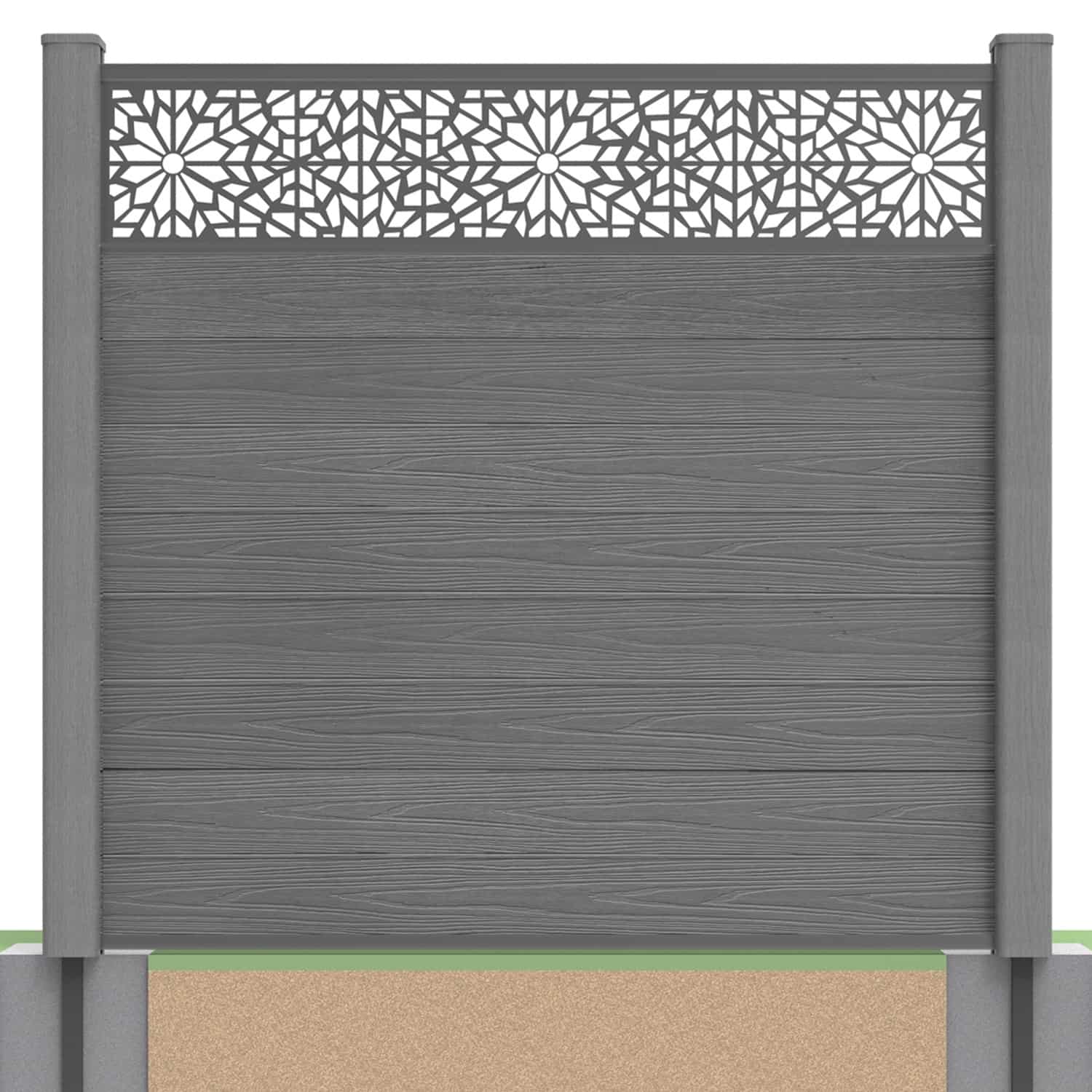
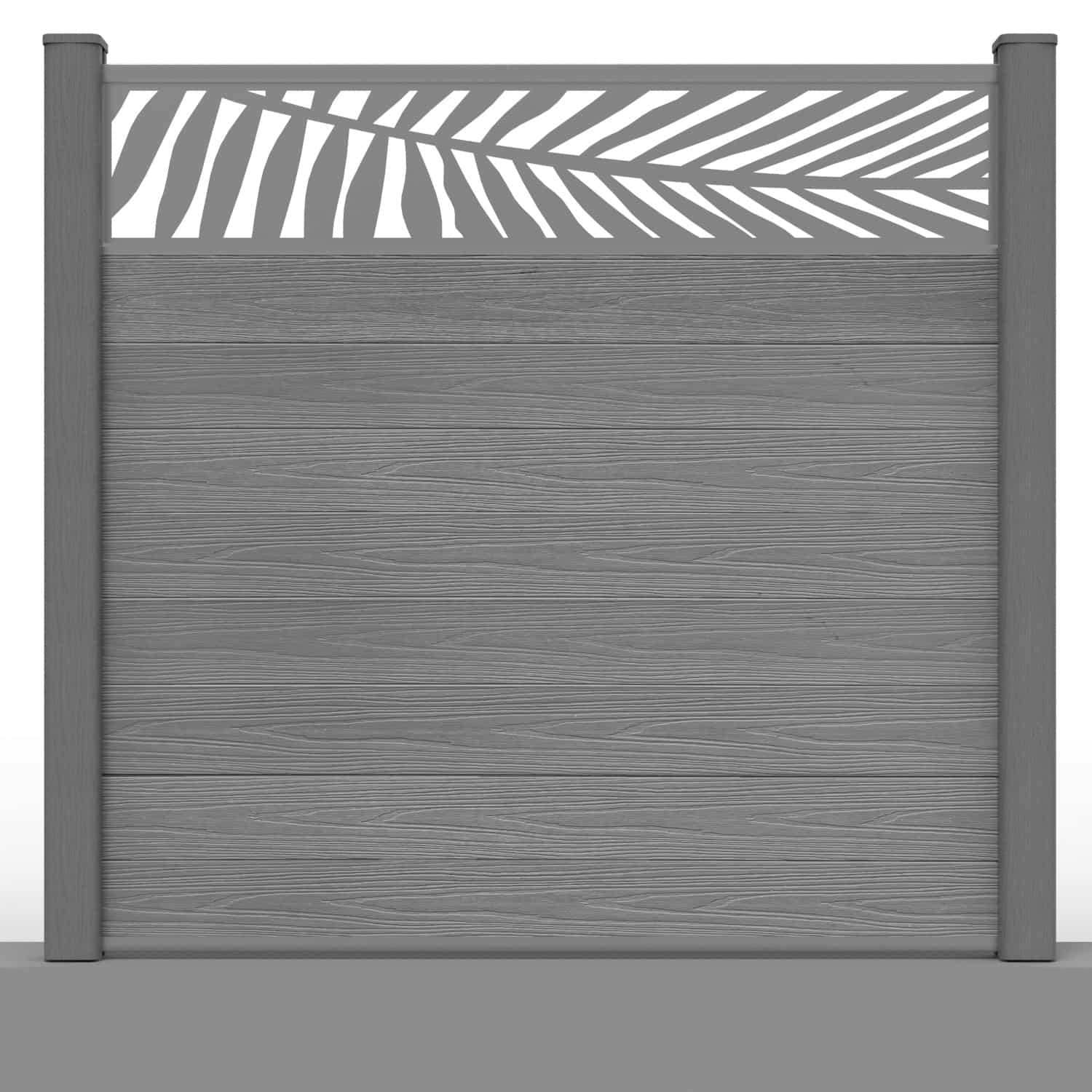
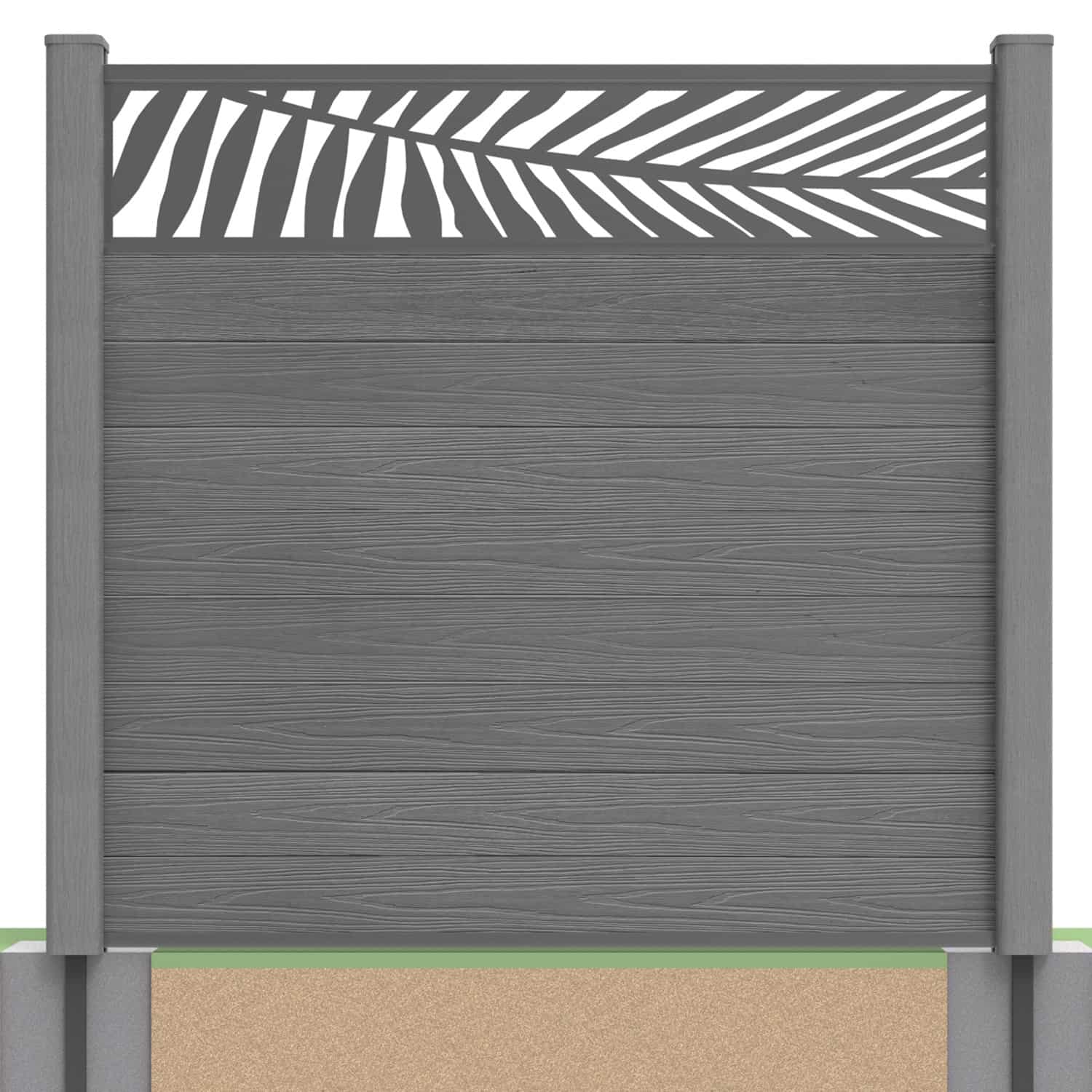
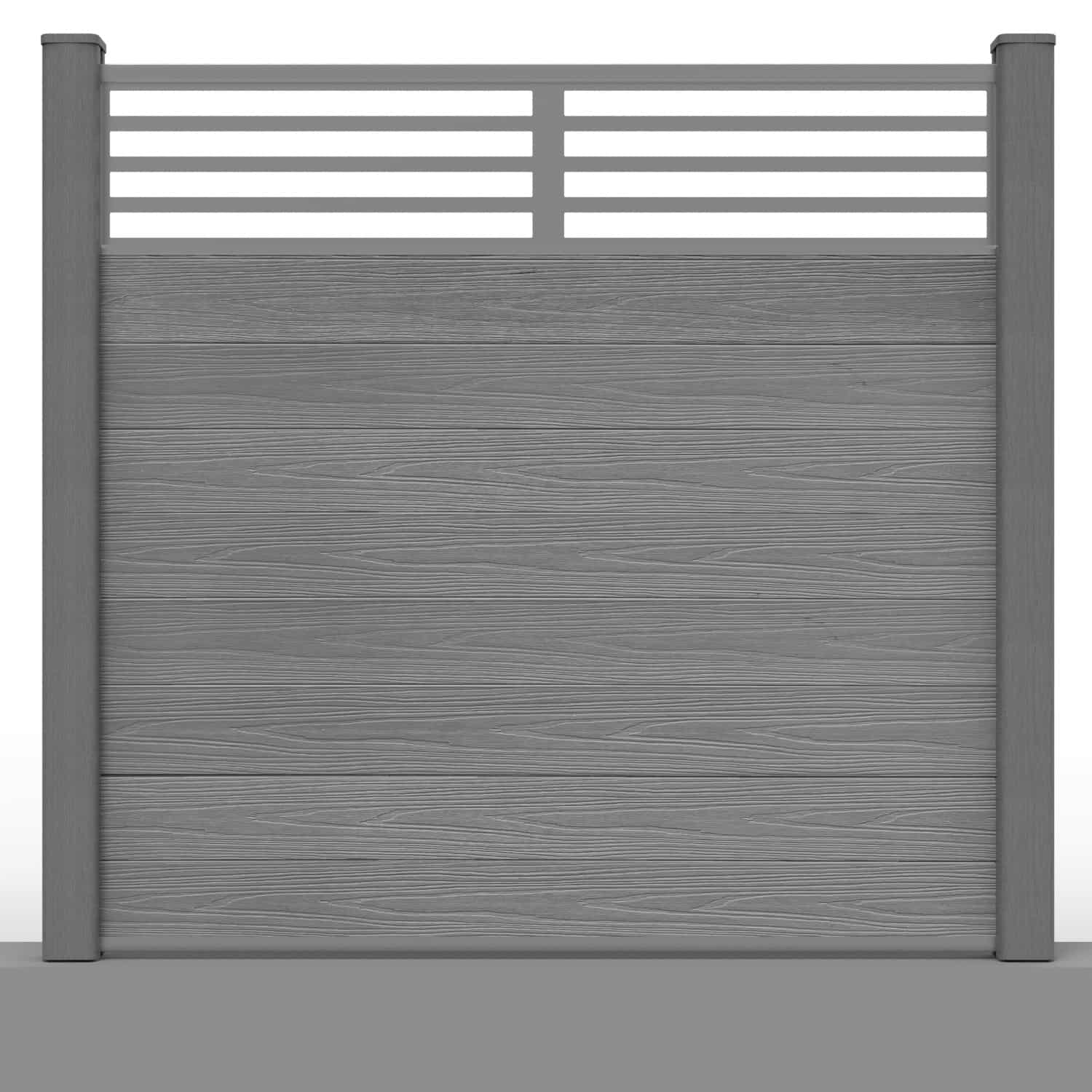
NeoTimber’s optional decorative screens are powder-coated aluminium rather than composite boards. Compare Contemporary, Geometric, Leaf and Linear designs for a feature section.

Cut-outs allow views through part of the boundary, so replacing solid boards can reduce screening. Confirm the approved assembly, board quantity and finished height before ordering. Screens should not be treated as unrestricted extensions or supports for heavy climbers.
Select the Support Arrangement for the Site
NeoTimber’s new-post system combines a composite profile with the specified steel support. Compare the hard-ground and soft-ground sets according to the actual base, ground conditions, height and exposure.
A hard-looking surface is not proof of a suitable structural foundation. Likewise, a soft-ground support needs the specified foundation rather than simply being driven into soil.
Retaining Existing Posts
Wooden post inserts and concrete post inserts may allow a compatible retrofit. Assess post condition, foundations, spacing and dimensions first.
Inserts do not repair damage or strengthen inadequate supports. Follow the installation guidance for channels, rails, cutting and movement allowances. Modular construction does not permit arbitrary changes to height, span or orientation.
What Affects Composite Wood Fence Cost?
The total depends on boundary length, height, selected components, foundations, access and installation work. Compare a complete quotation rather than a single board or starting panel price.
- Boards or panel sets in the selected configuration.
- Posts, supports, inserts, rails, caps and fixings.
- Gates and decorative features where required.
- Delivery and unloading arrangements.
- Groundwork, labour, removal and disposal of the old boundary.
Check the current product price guide and use the fence panel calculator as a planning estimate. Review quantities against the site and installation instructions before ordering.
Reusing suitable posts may reduce work, but is not automatically cheaper once assessment and repairs are included. Lower routine refinishing can be valuable, but does not establish guaranteed lifetime savings over every timber alternative.
Care for the Capped Finish
The capped surface is designed to improve resistance to fading, staining and moisture. It avoids routine painting and staining but still needs cleaning and periodic checks of supports and connections.

Follow the care guidance. Warm soapy water and a soft brush provide a starting point for routine cleaning. Confirm stronger chemicals and pressure-washer settings for the exact product rather than using a generic pressure or distance.
Outdoor deposits and surface growth can still occur. Capping does not guarantee unchanged colour or freedom from every stain. Read the applicable warranty terms separately.
Composite Wood Fencing FAQs
Is composite wood fencing solid timber?
No. It combines wood fibres, polymers and additives. The timber-inspired appearance does not make it the same material as a solid wood fence.
Are composite wood fence slats different from boards?
The terms are often used for individual components. Compare the technical profile and dimensions to establish what the specific product is.
Can I use existing concrete posts?
Potentially, with compatible inserts and suitable supports. Check condition, foundations, channels and spacing before planning the retrofit.
Can the boards be cut to fit?
Where permitted, follow the cutting guidance and required engagement and clearances. Metal rails need appropriate cutting methods too; do not assume all components use the same tools.
Does screening also provide noise or fall protection?
Do not infer those functions from visual coverage. Acoustic performance and guarding require an appropriate specification for the complete system.
How do I compare composite wood fencing products?
Check construction, dimensions, finish, compatible supports, installation requirements, care and the complete cost. Compare samples before choosing a colour.
Choose the Finish, Then Complete the Plan
Start with your layout and screening needs, compare textures and confirm the full component list. Explore NeoTimber® composite fencing options or contact our team with measurements and site details for help reviewing the specification.