

Understand How Composite Fence Boards and Supports Work Together
Plastic composite fencing combines a manufactured board material with a supporting system designed for the site. For buyers comparing it with timber or all-plastic products, the important questions concern the actual ingredients, protective finish, installation details and care requirements.
NeoTimber’s fencing uses wood-plastic composite boards rather than boards made entirely from plastic. This guide explains the difference, explores what affects durability and helps you compare complete panel arrangements before ordering.
Explore our fencing resources for wider planning advice, or browse the composite fencing range to compare products.
In this guide: Material composition · Posts and supports · Protective capping · Panel styles · Retrofit options · Care and warranty · FAQs
What Are Composite Plastic Fence Panels Made From?
The phrase composite plastic fence panels generally refers to panels using a blend of materials that includes plastic. In wood-plastic composite, the board also contains wood fibres and other ingredients. It should not be assumed to be the same as PVC or a wholly plastic board.
Check the specification of the selected product rather than relying on its name. Relevant details include the board profile, protective surface, compatible components and any documented sourcing claims. A composite board is not automatically wood-free, entirely recycled or suitable for ordinary household plastics recycling.
The finished boundary also includes materials beyond the boards. Metal supports, rails, inserts and fixings perform separate functions within the installation.
Durability Starts With the Complete Supporting System
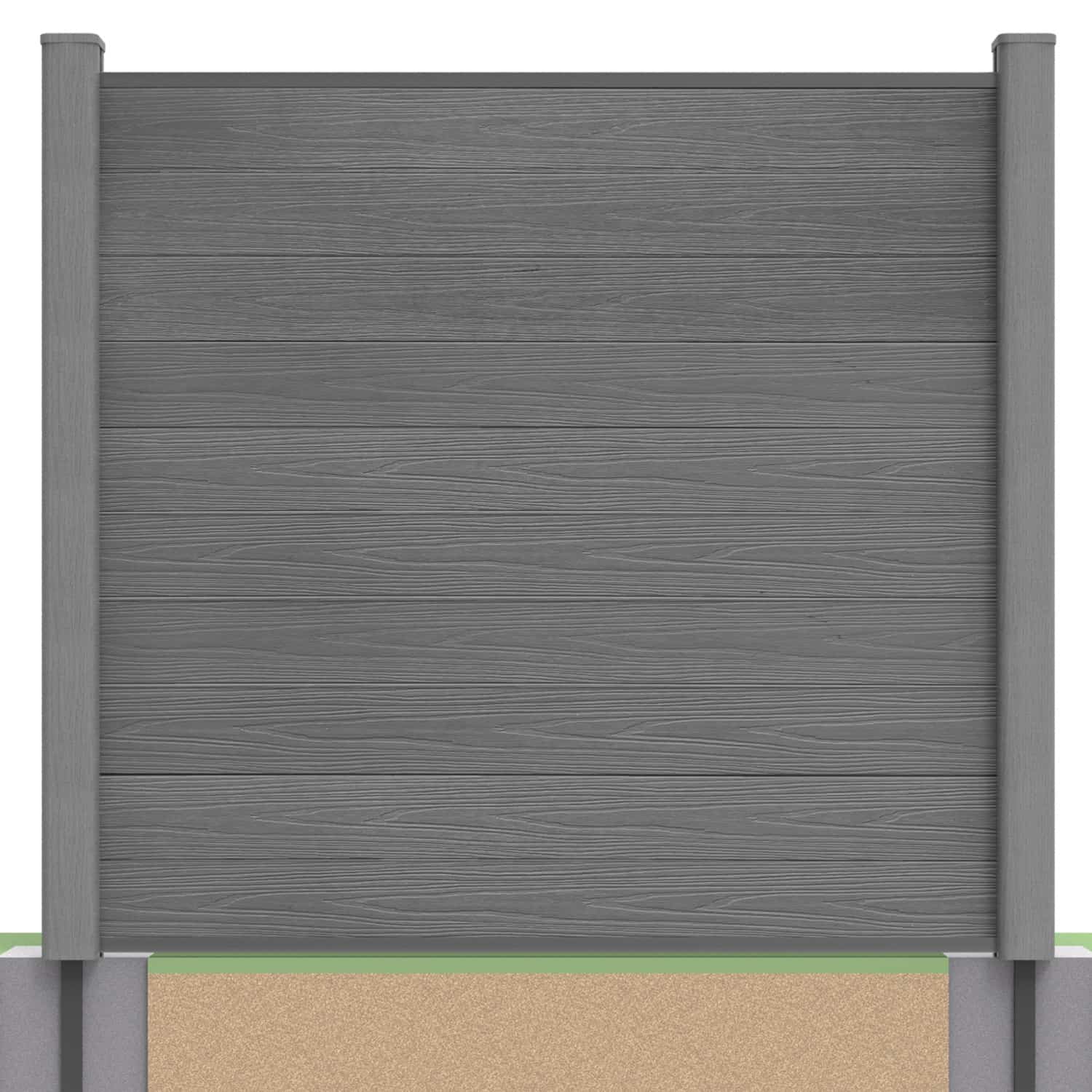
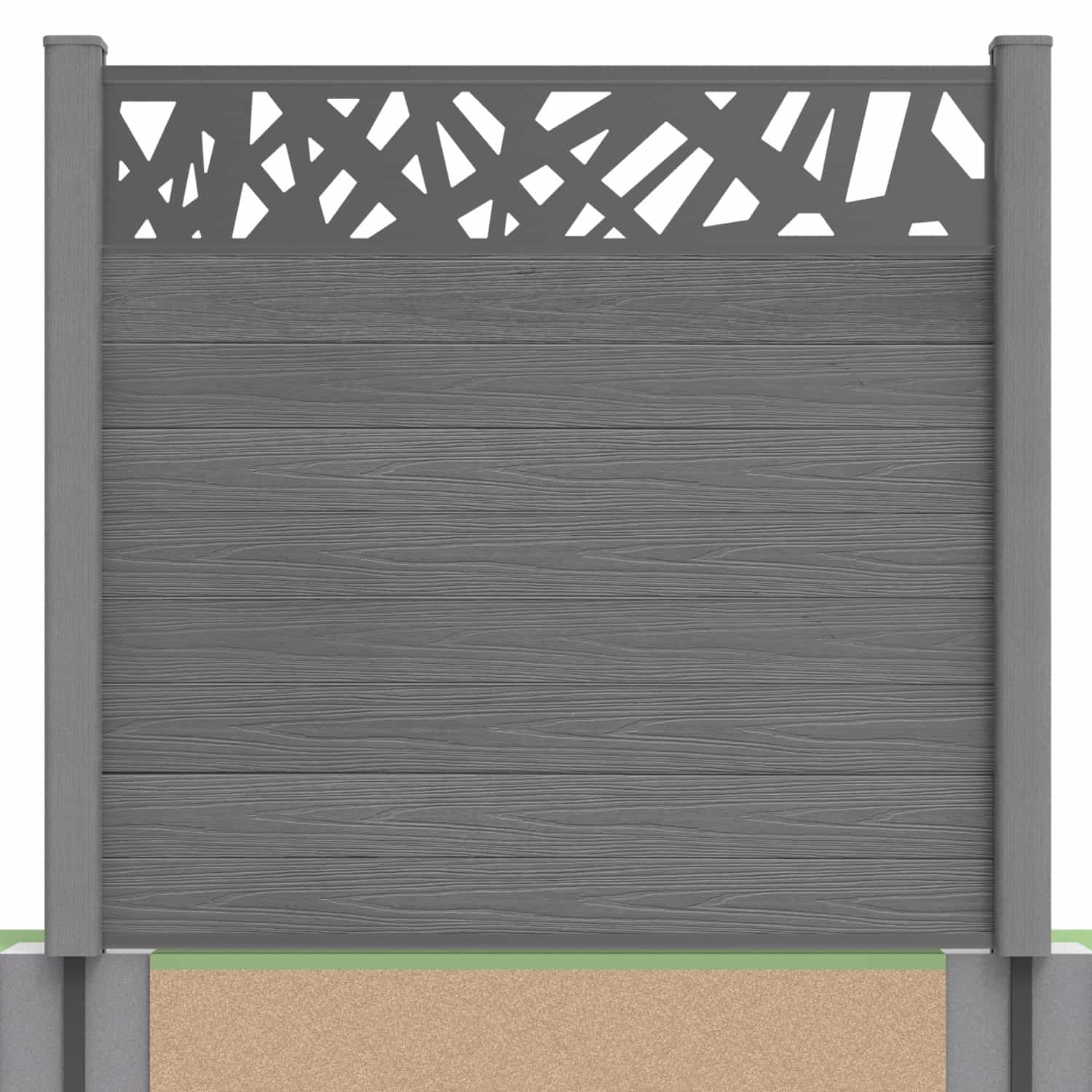
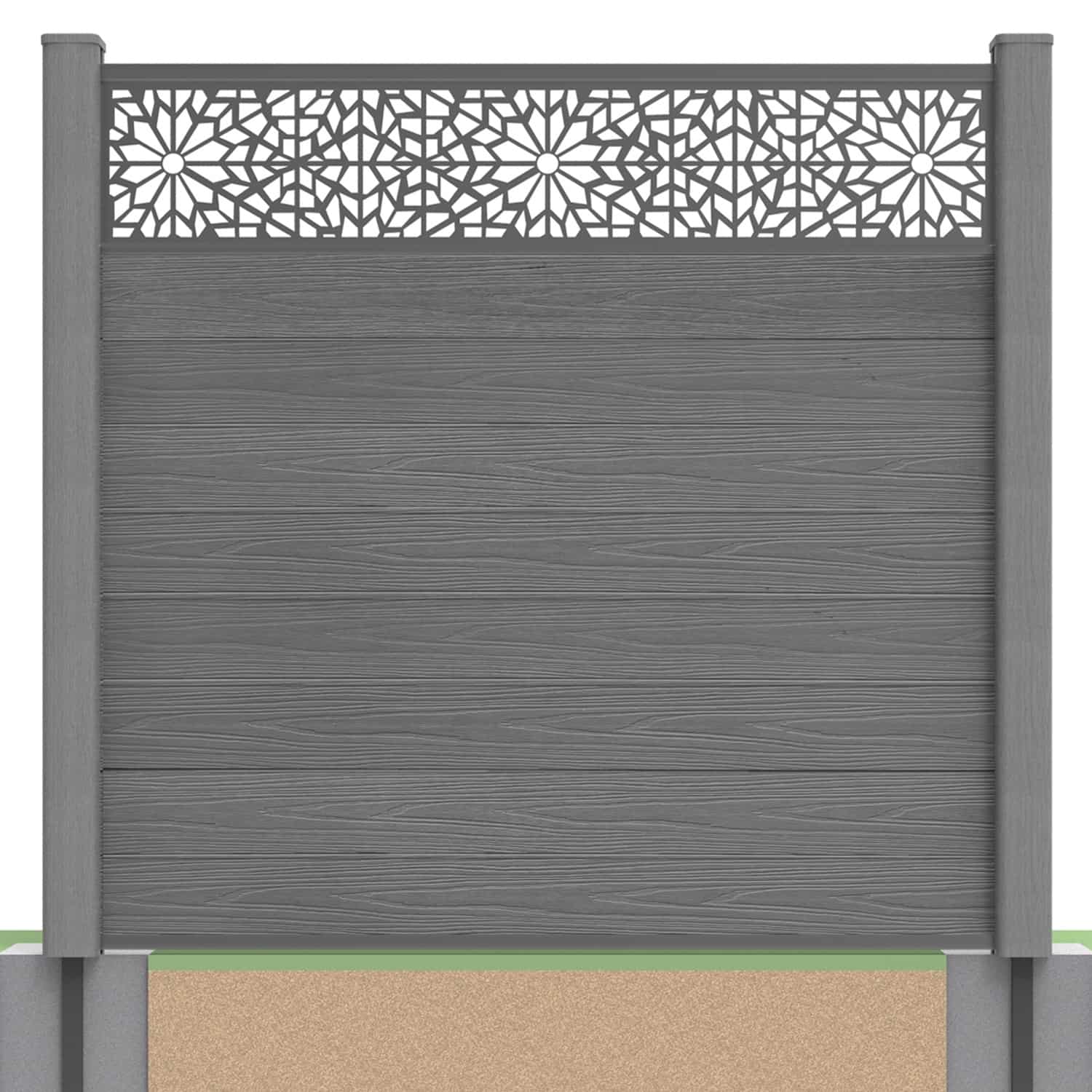
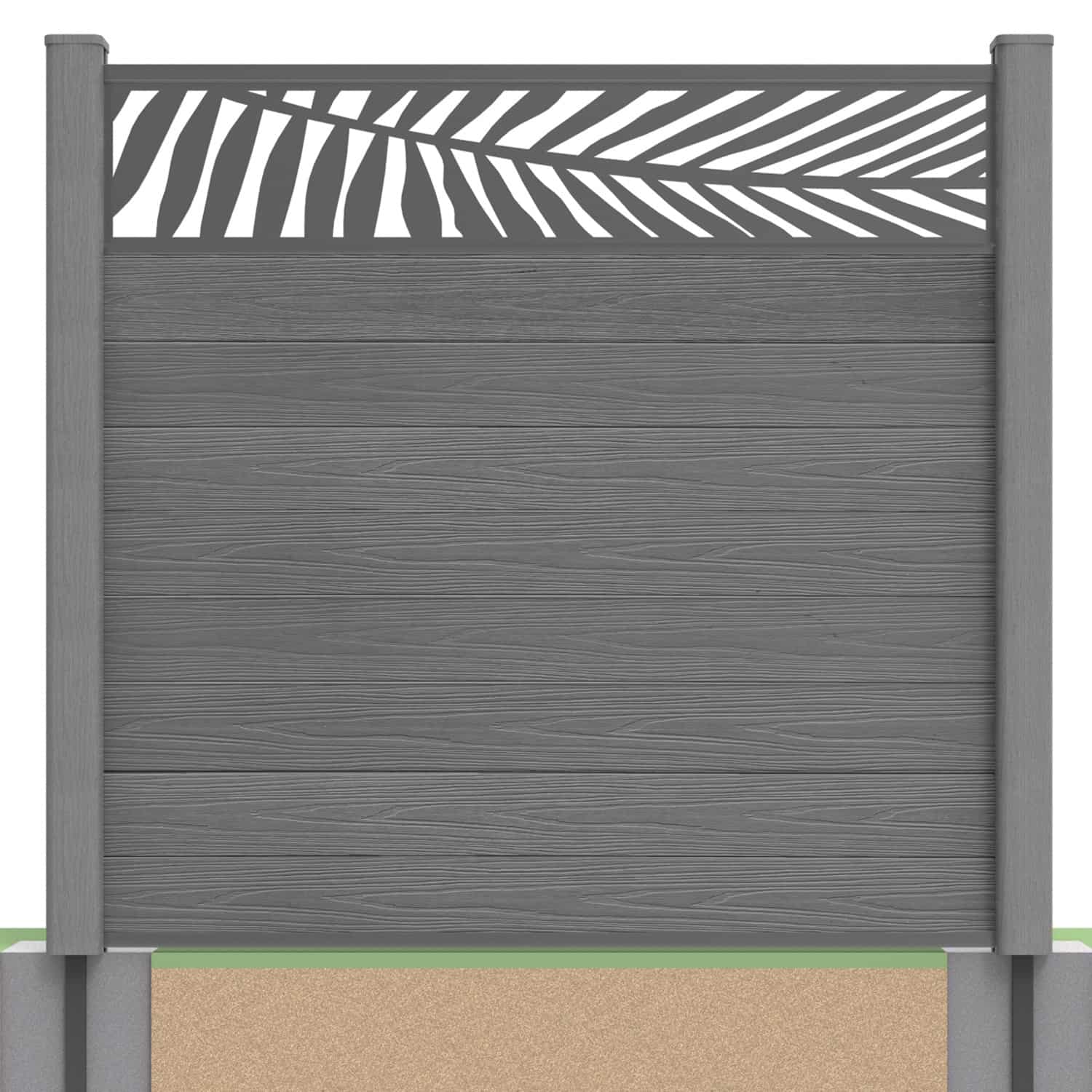
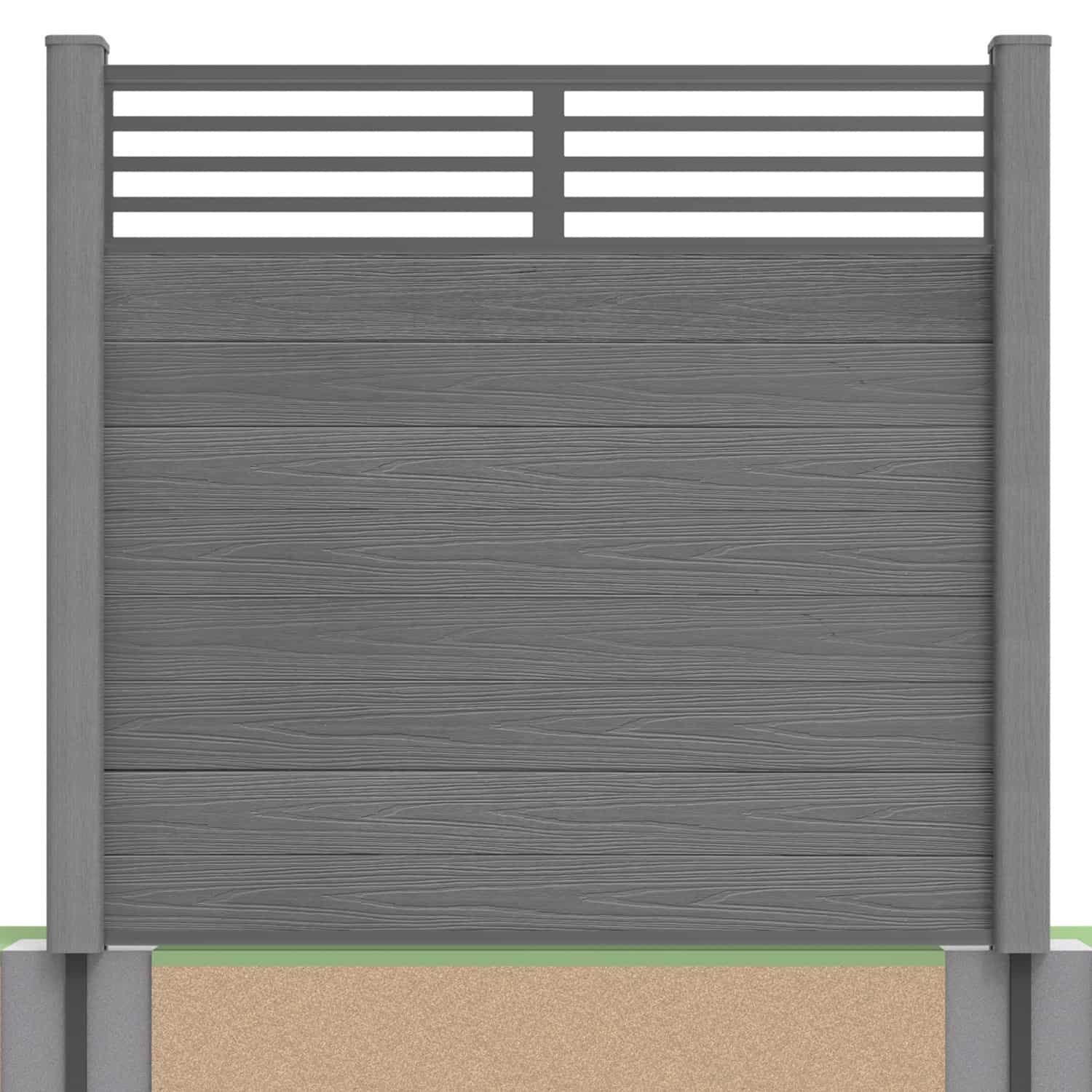
In NeoTimber’s composite-post arrangement, a galvanised steel support provides structural anchorage and the outer composite post provides the visible finish and board channels. Compatible capping rails form part of the panel assembly.
Choose the foundation arrangement around the ground conditions:
- Hard ground: bolt-down supports require a suitable structural base and specified anchors.
- Soft ground: supports are set into concrete foundations in earth.
- Existing posts: compatible inserts may be used where the structure and dimensions are suitable.
These methods are not interchangeable. A paved surface alone does not establish a suitable foundation, and a soft-ground support is not simply bolted into soil. Follow the current installation instructions for the chosen configuration.
No material or support label guarantees that a fence cannot be uprooted in extreme weather. Height, exposure, ground conditions, connections and foundation design all matter. Obtain advice where the proposed arrangement is uncertain.

What Does the Protective Cap Do?
NeoTimber’s Deluxe and Slatted boards use capped construction, with an additional protective surface around the composite core. This helps resist staining and fading while providing the finished appearance.
A cap does not make a plastic composite fence stain-proof, scratch-proof or immune to weathering. Organic deposits can still support surface growth, and colour change remains possible outdoors. Suitable cleaning and correct installation are important parts of looking after the fence.
When comparing products, ask for the actual construction details and relevant performance information. Avoid treating every capped board as identical or assuming that all uncapped products perform in the same way.

Compare Plastic Composite Fence Panels by Finish and Configuration
Choose the panel appearance around your paving, planting and furniture. A restrained finish can balance detailed planting, while a stronger texture can bring interest to a simple courtyard.
NeoTimber® panel design options:
| Option | Appearance | What to check |
|---|---|---|
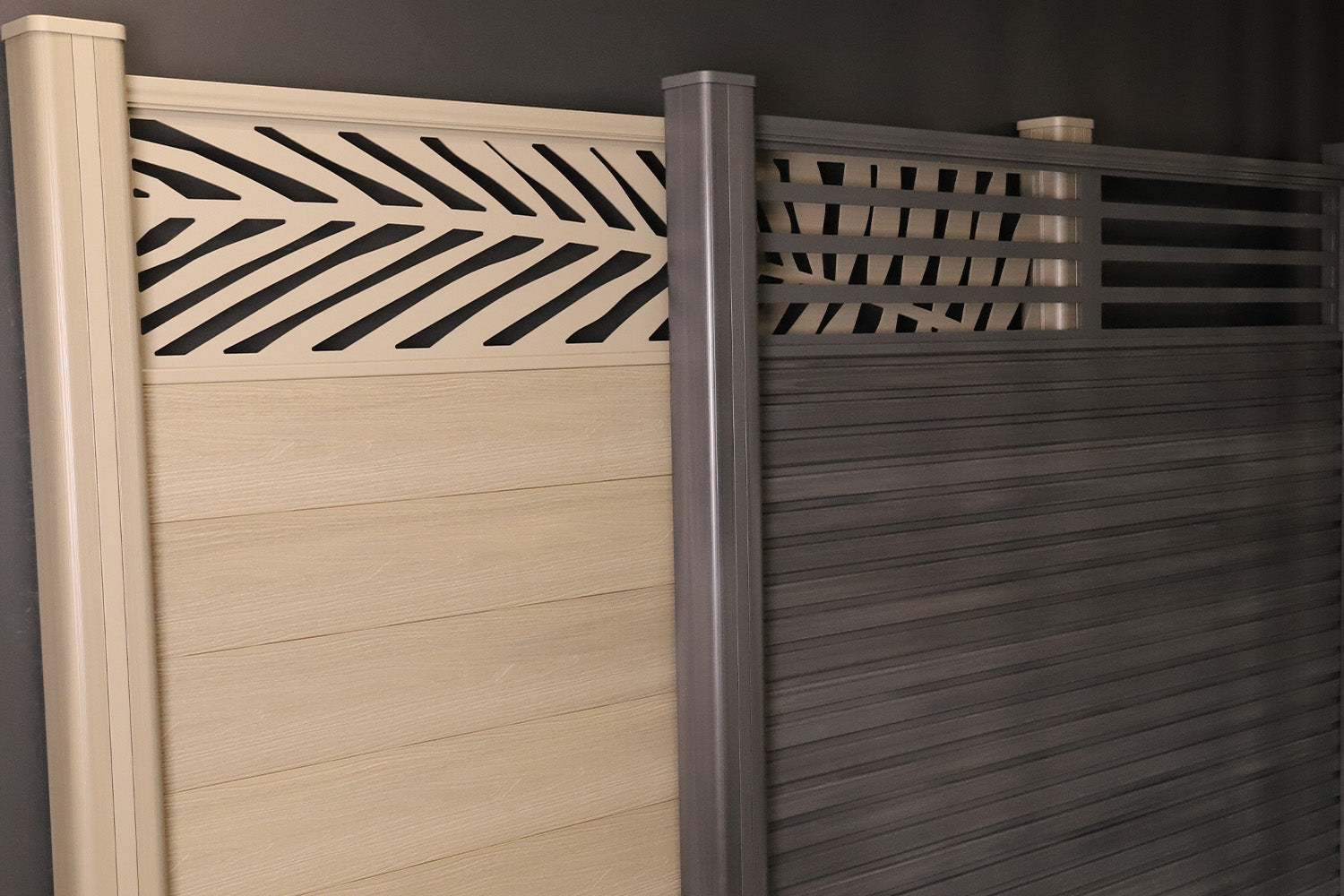
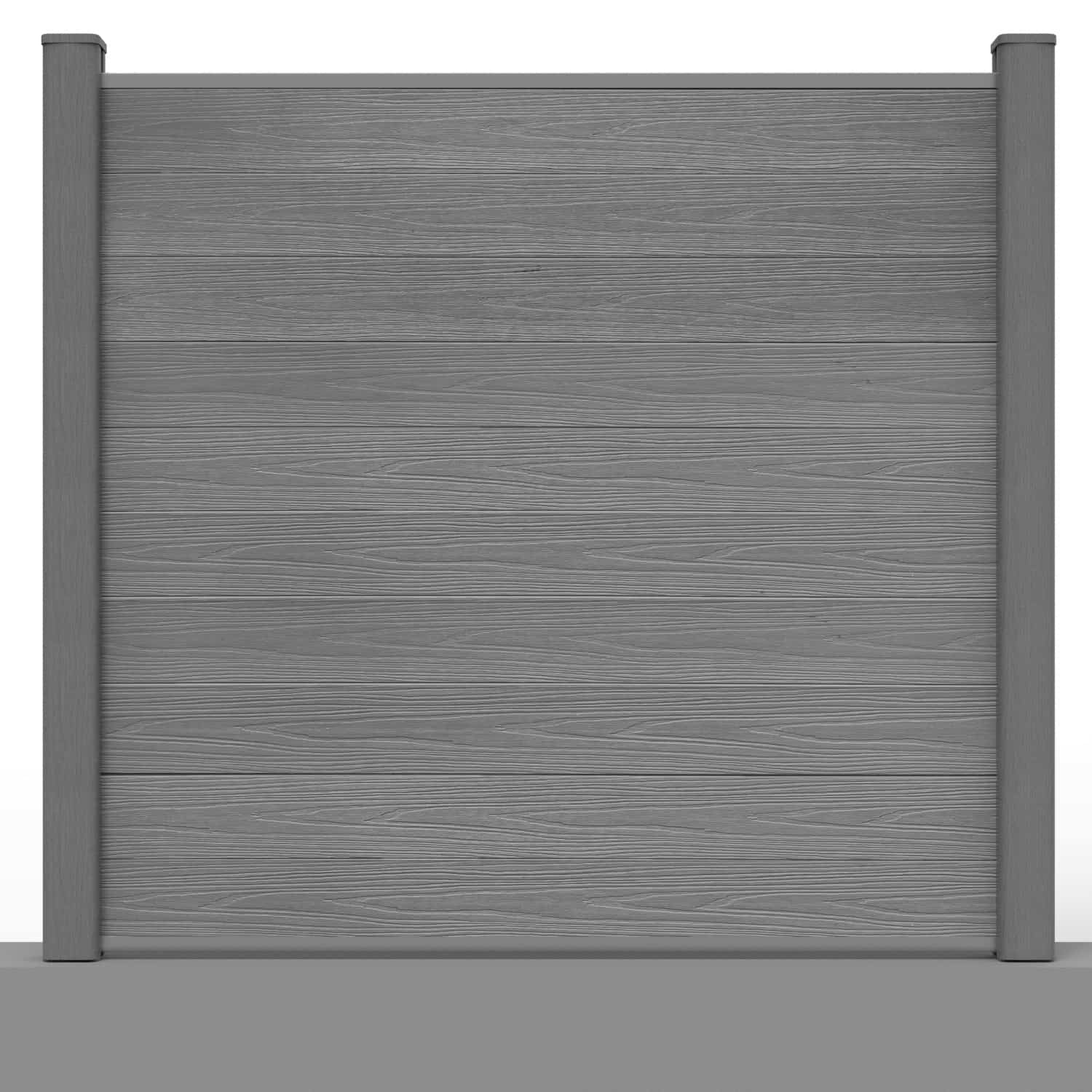
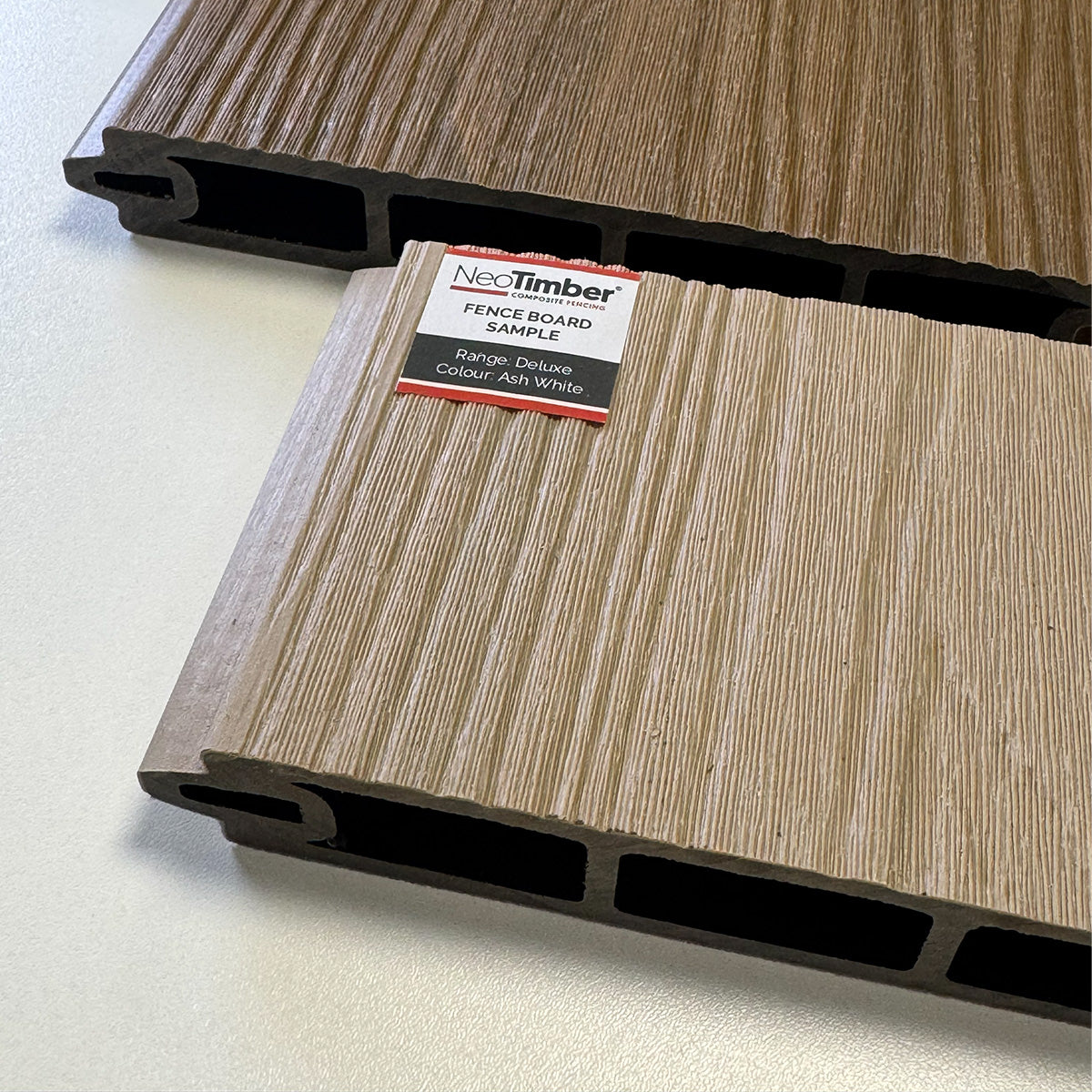
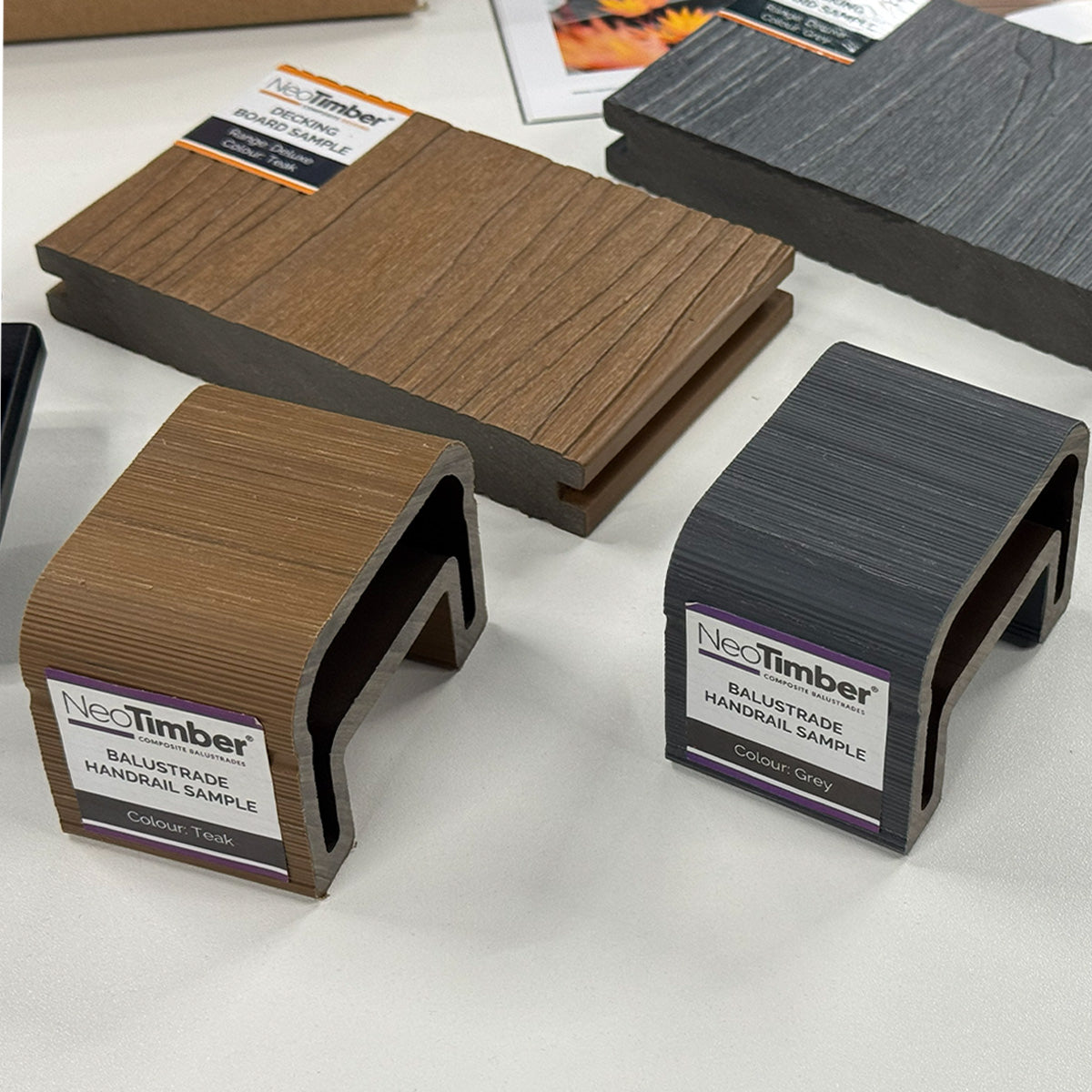
| Deluxe boards | Reversible woodgrain and brushed faces. | Choose the visible face and keep its orientation consistent. |
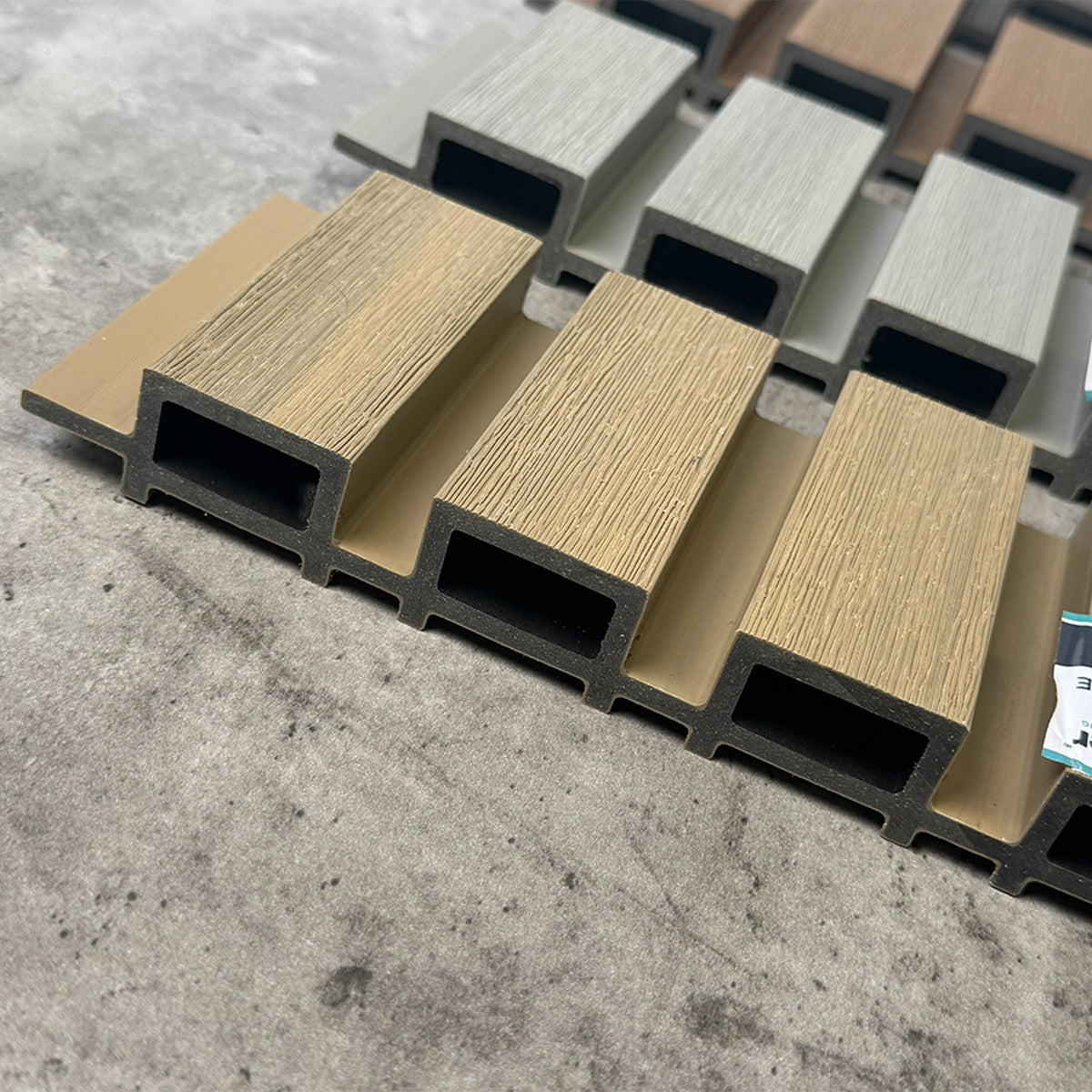
| Slatted boards | A repeated horizontal, batten-inspired profile. | The visual pattern is not an open-gap screen. |
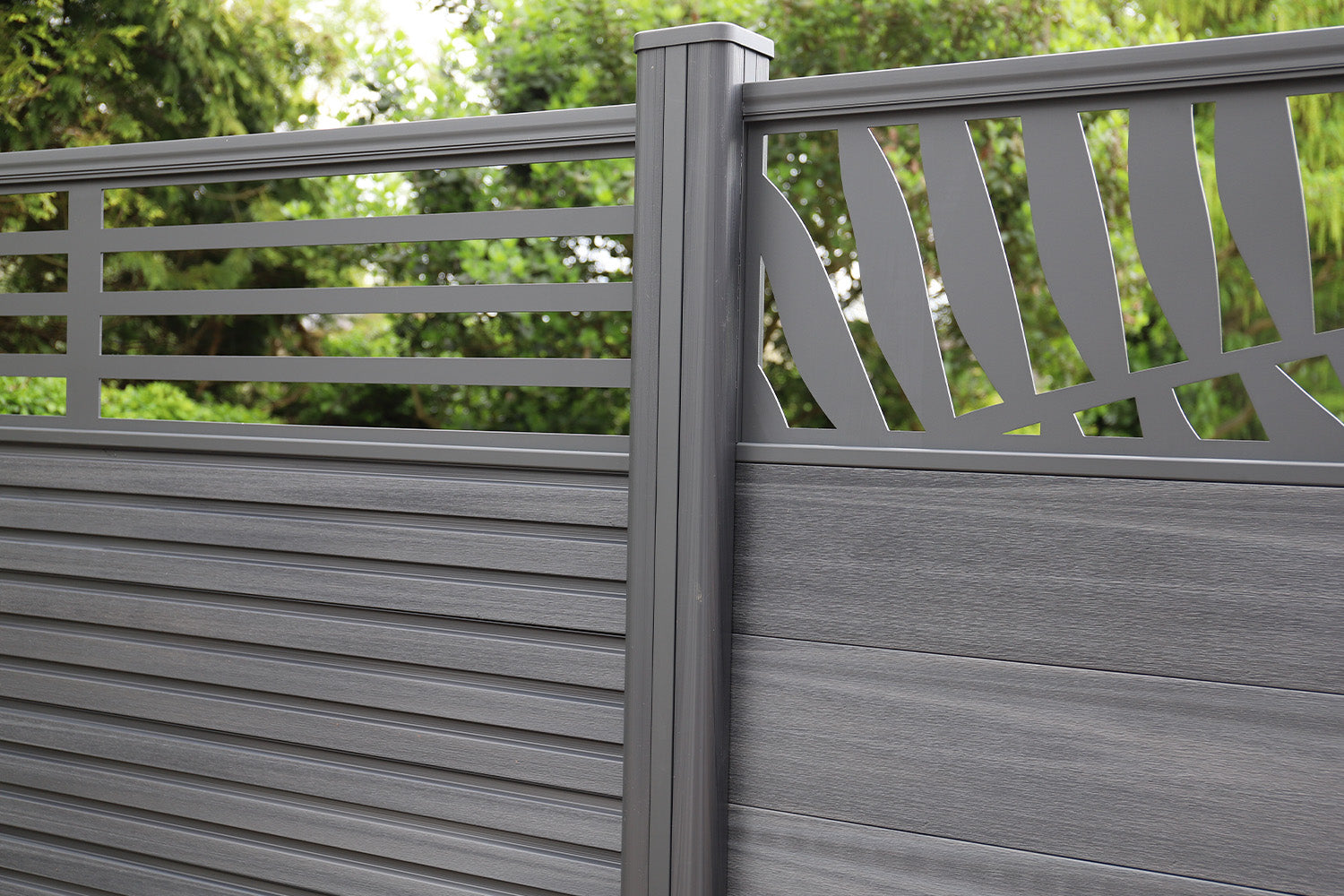
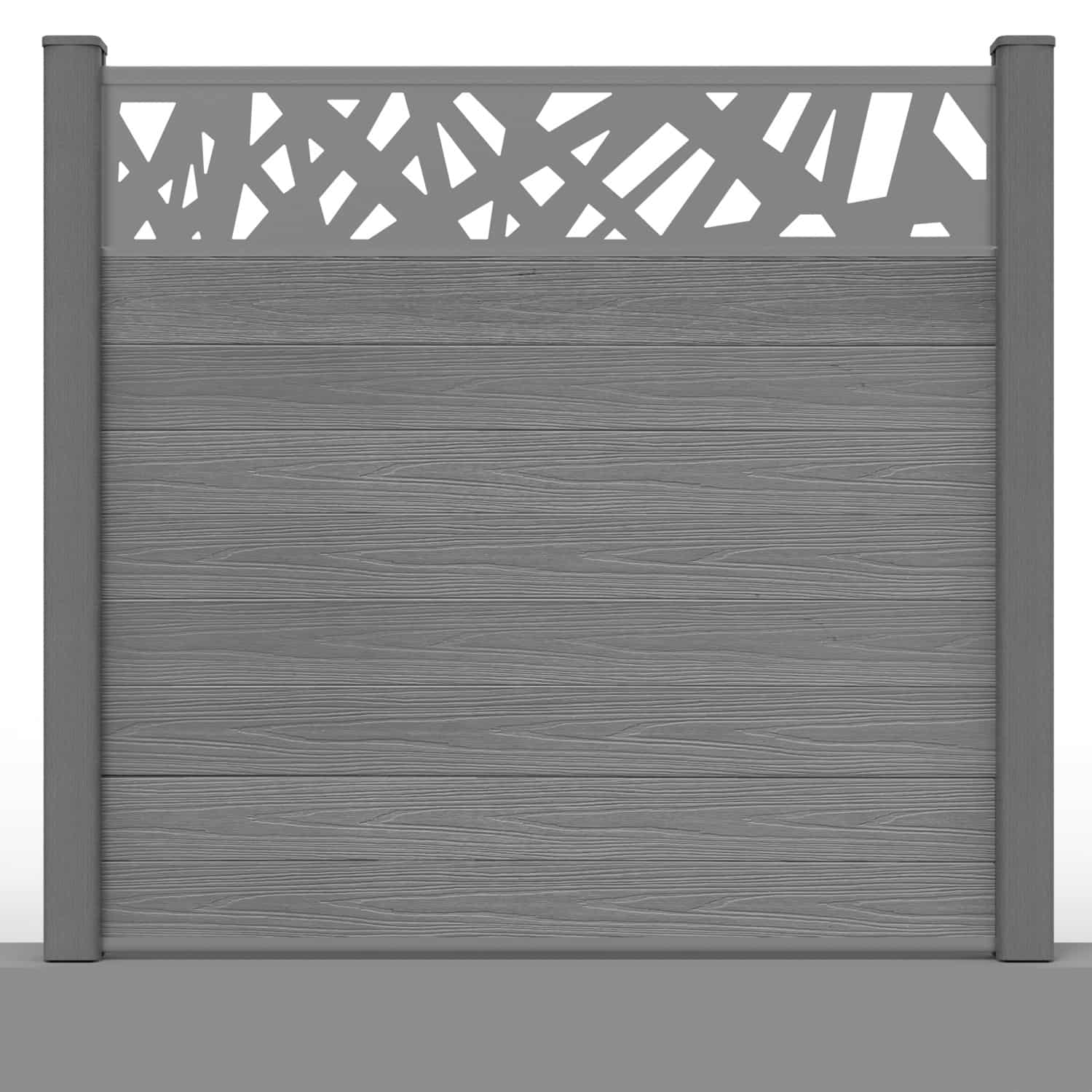
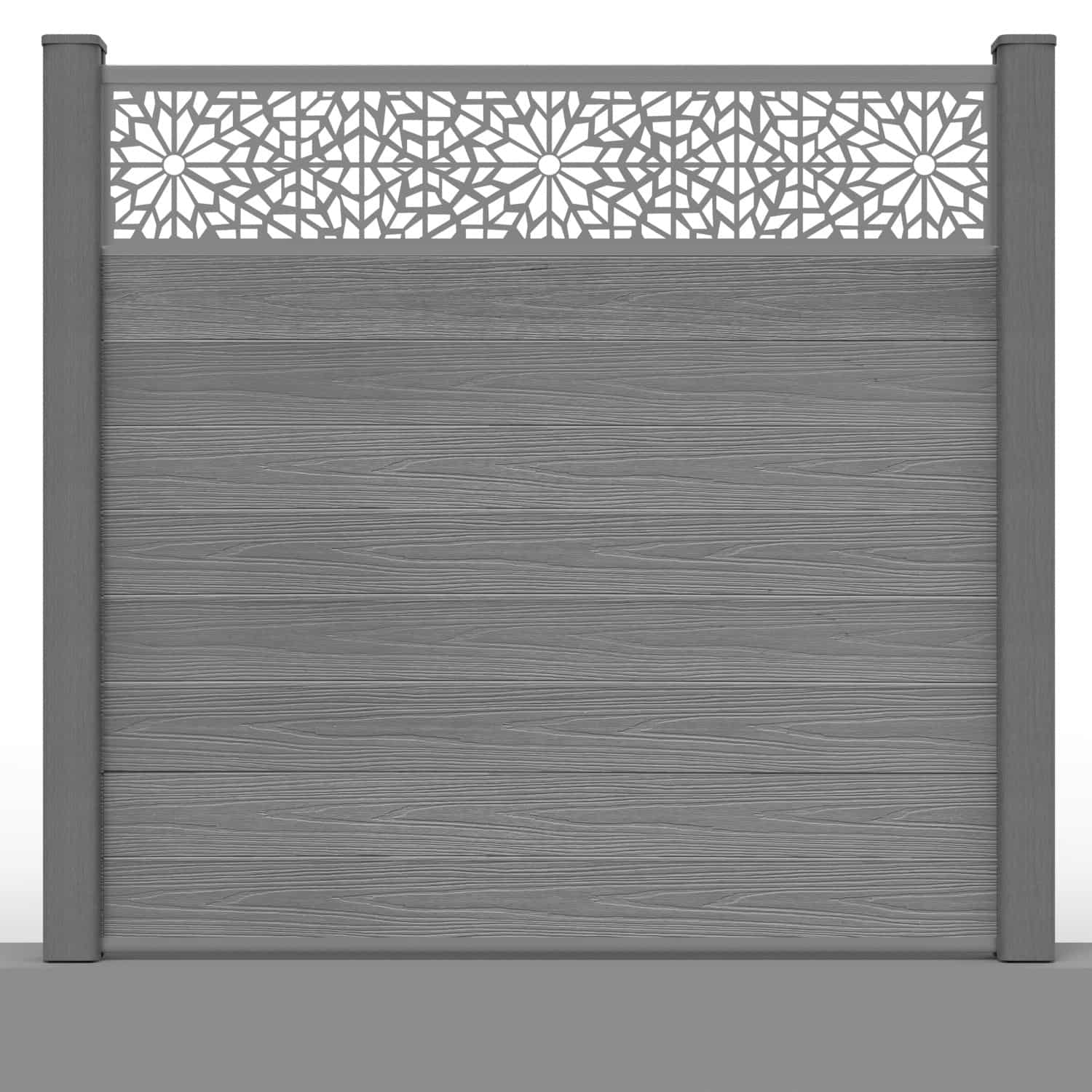
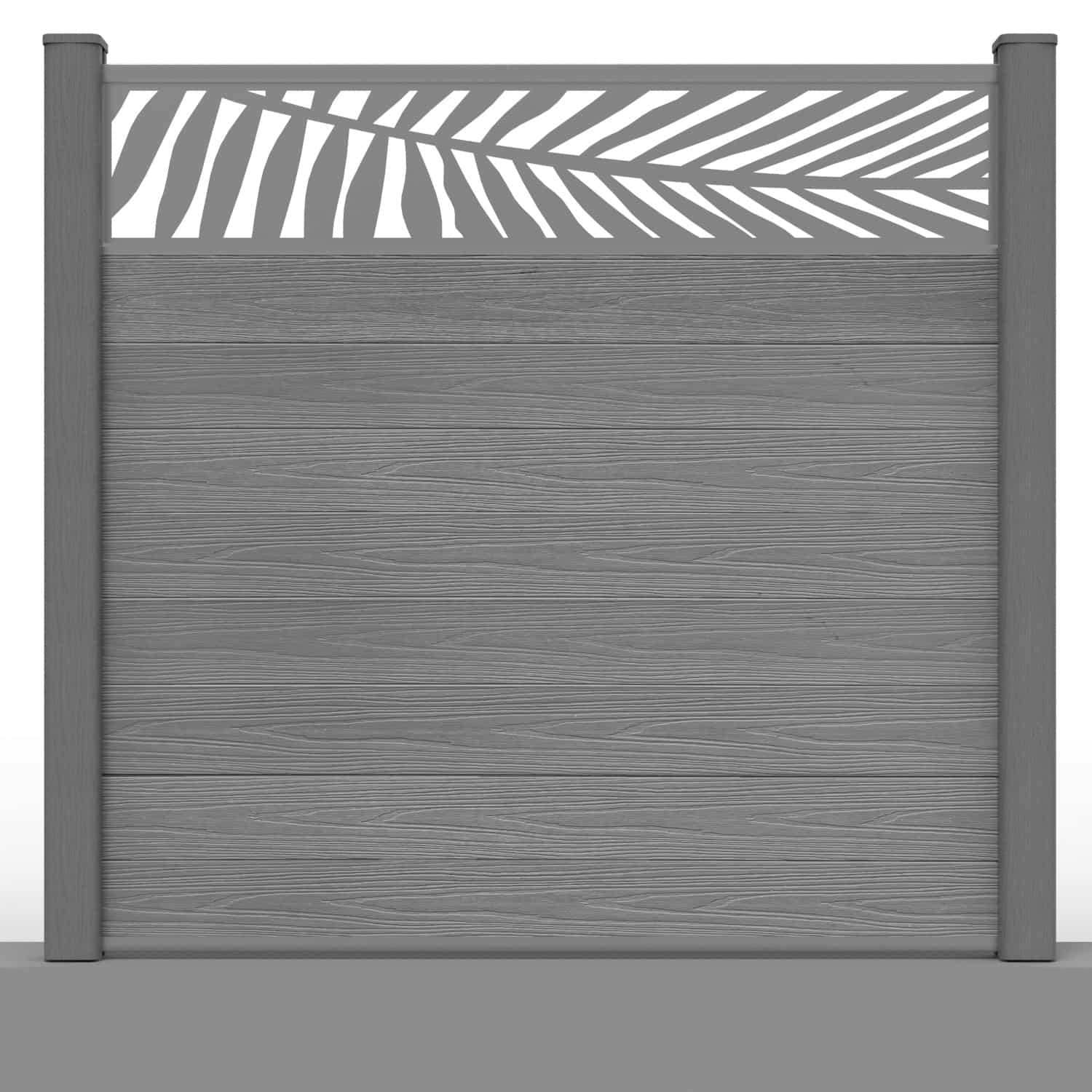
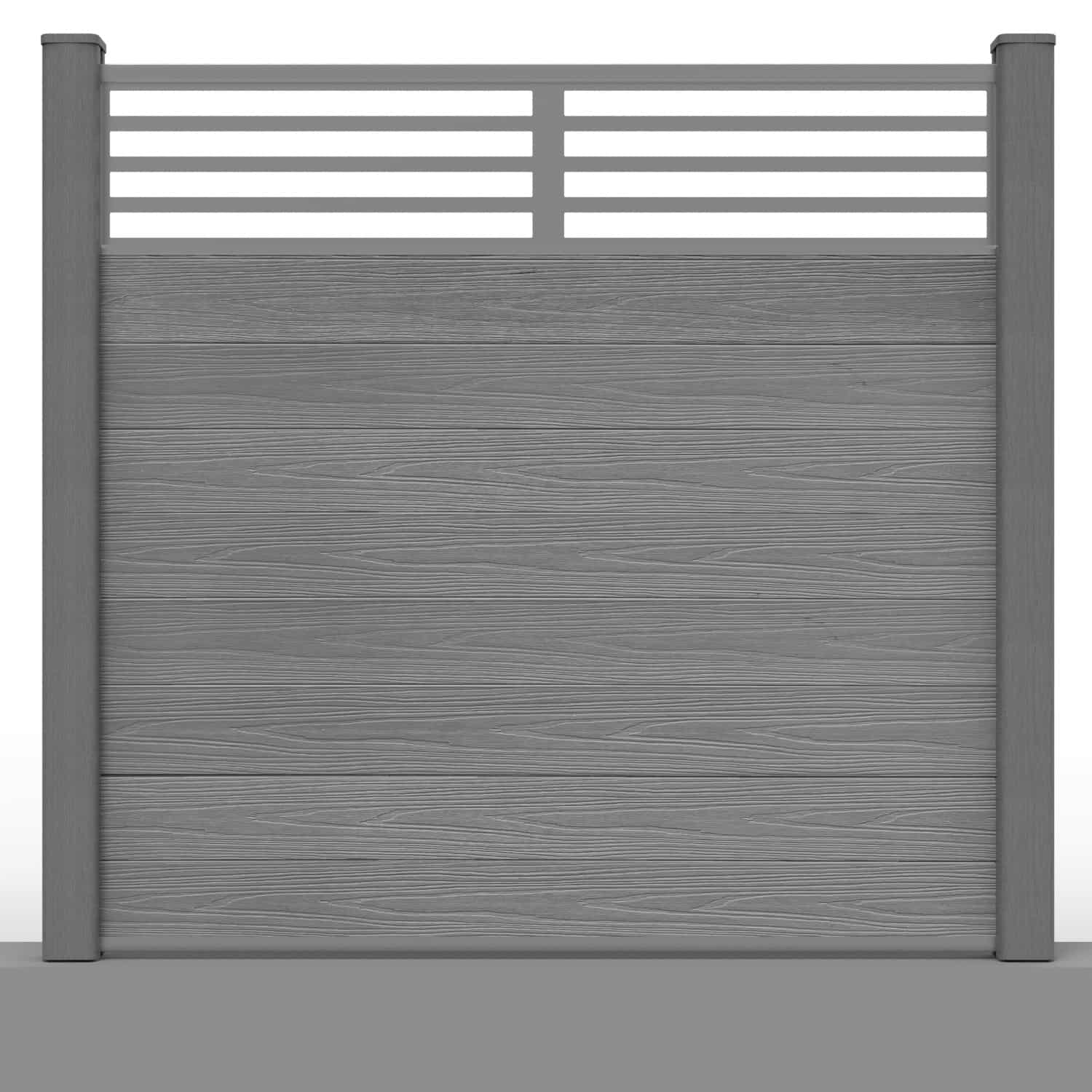
| Decorative screen panel | A compatible aluminium feature above the board section. | Required fittings, board quantities and reduced visual coverage. |
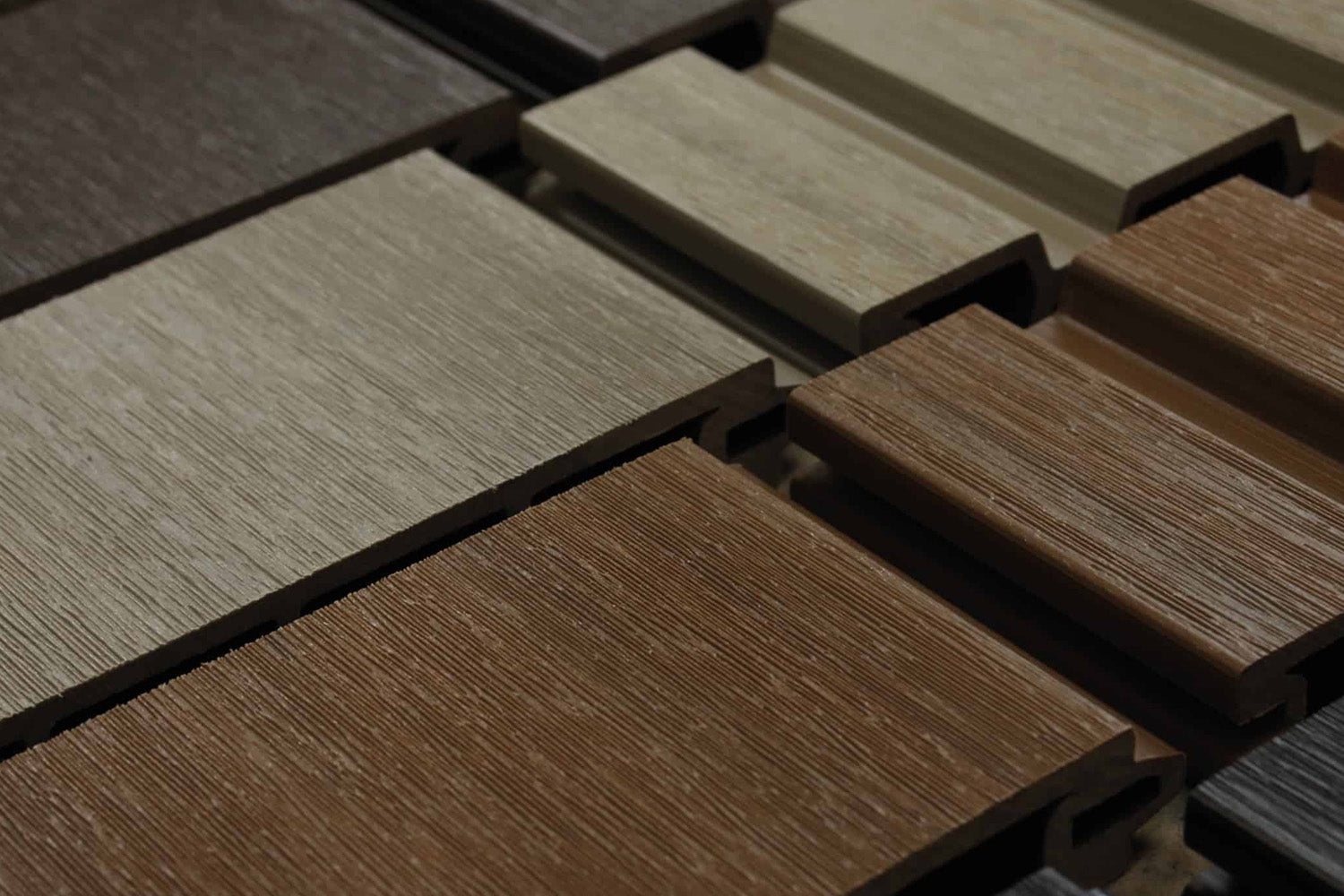
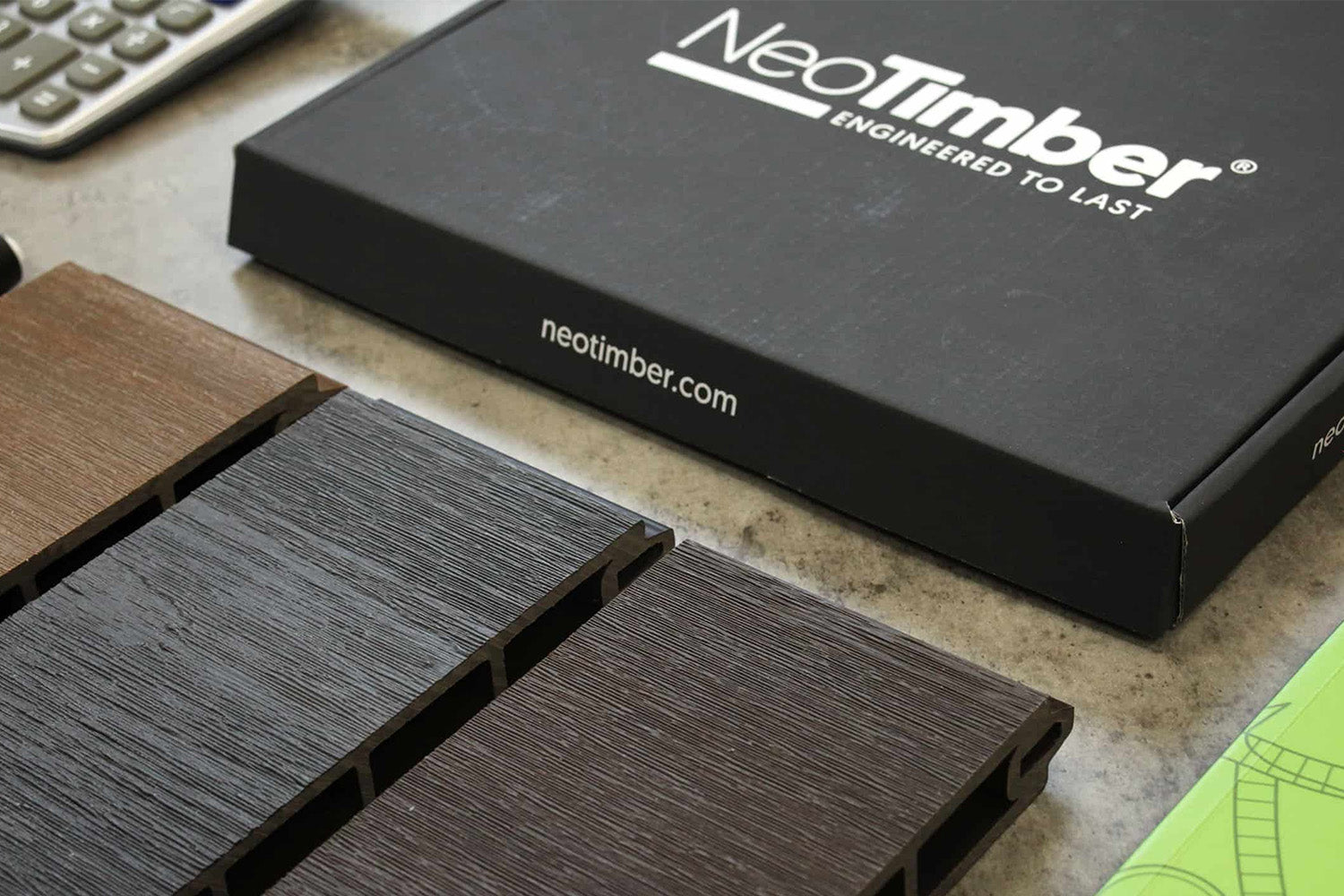
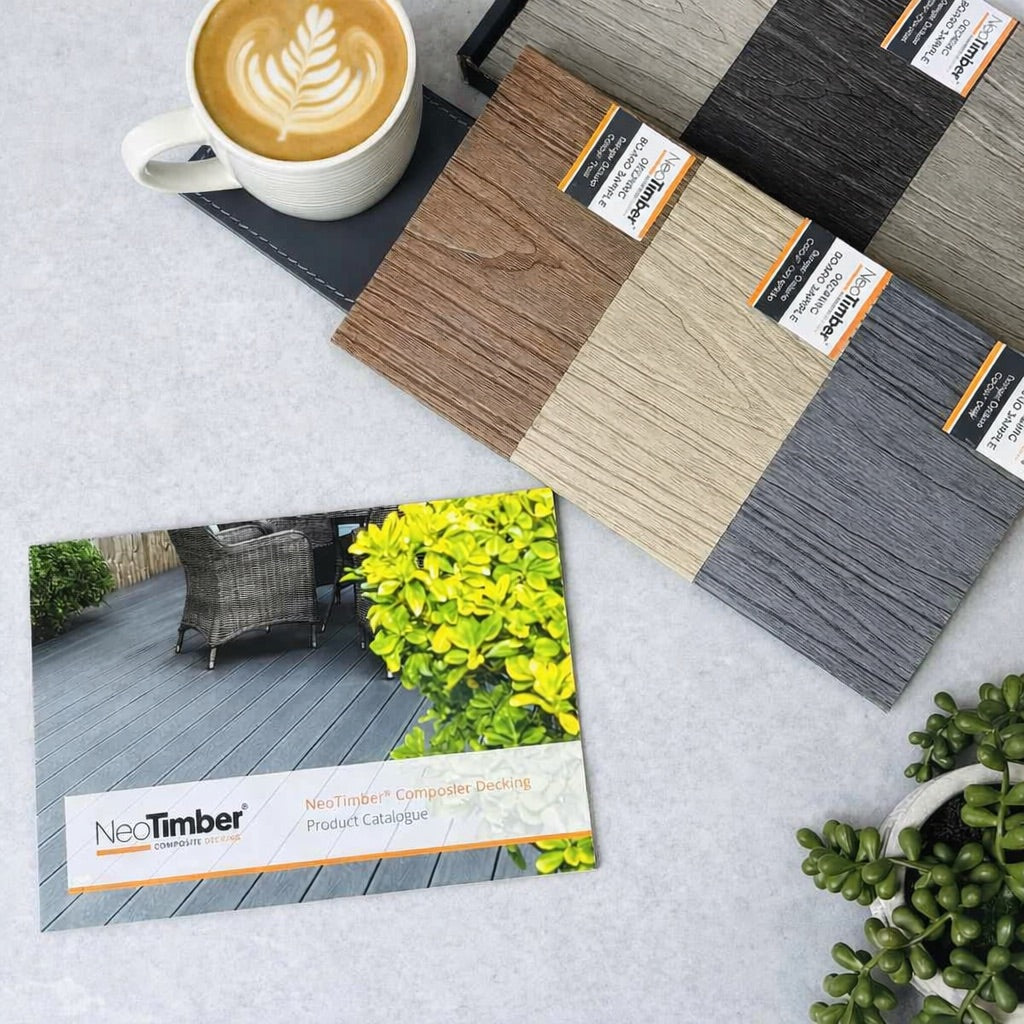
Explore the Deluxe and Slatted panel sets, then compare the current colour options. Use samples outside rather than relying on an online image for an exact match.
If adding a decorative screen, consider sightlines from neighbouring windows and seating. Openings in the screen reduce visual coverage compared with uninterrupted boards.

Can You Reuse Existing Timber or Concrete Posts?
Retrofitting may allow new infill to be fitted between suitable existing posts. Check condition, foundations, spacing and dimensions before choosing compatible timber post inserts or concrete post inserts.
Inserts provide a connection for the new assembly. They do not repair rotten timber, cracked concrete or inadequate foundations. Reusing a weak structure can undermine the replacement work.
For shorter bays, confirm approved cutting methods and the required board engagement and movement clearances. Do not extend a board beyond its permitted arrangement or create an unsupported joint to fill a wider opening. See the retrofit planning guide before ordering.

Maintenance, Warranty and Long-Term Expectations
Factory-finished capped boards reduce routine painting and staining, but cleaning and inspections remain necessary. Remove dirt and organic deposits using the recommended method, and check the posts and connections periodically.
Follow the fencing care guide before applying cleaners or attempting a repair. Avoid abrasive methods, heat treatment or unapproved coatings on capped surfaces.
Read the current warranty terms for the covered components, permitted uses, conditions and exclusions. A headline period does not establish an exact service life or promise that colour, wear and external damage are covered.

Budget for the Whole Boundary
Compare quotes that include boards, posts, supports, rails, inserts and fixings. Add foundations, delivery, removal and installation where relevant. Corners, shorter bays, end posts and gates can change the materials list.
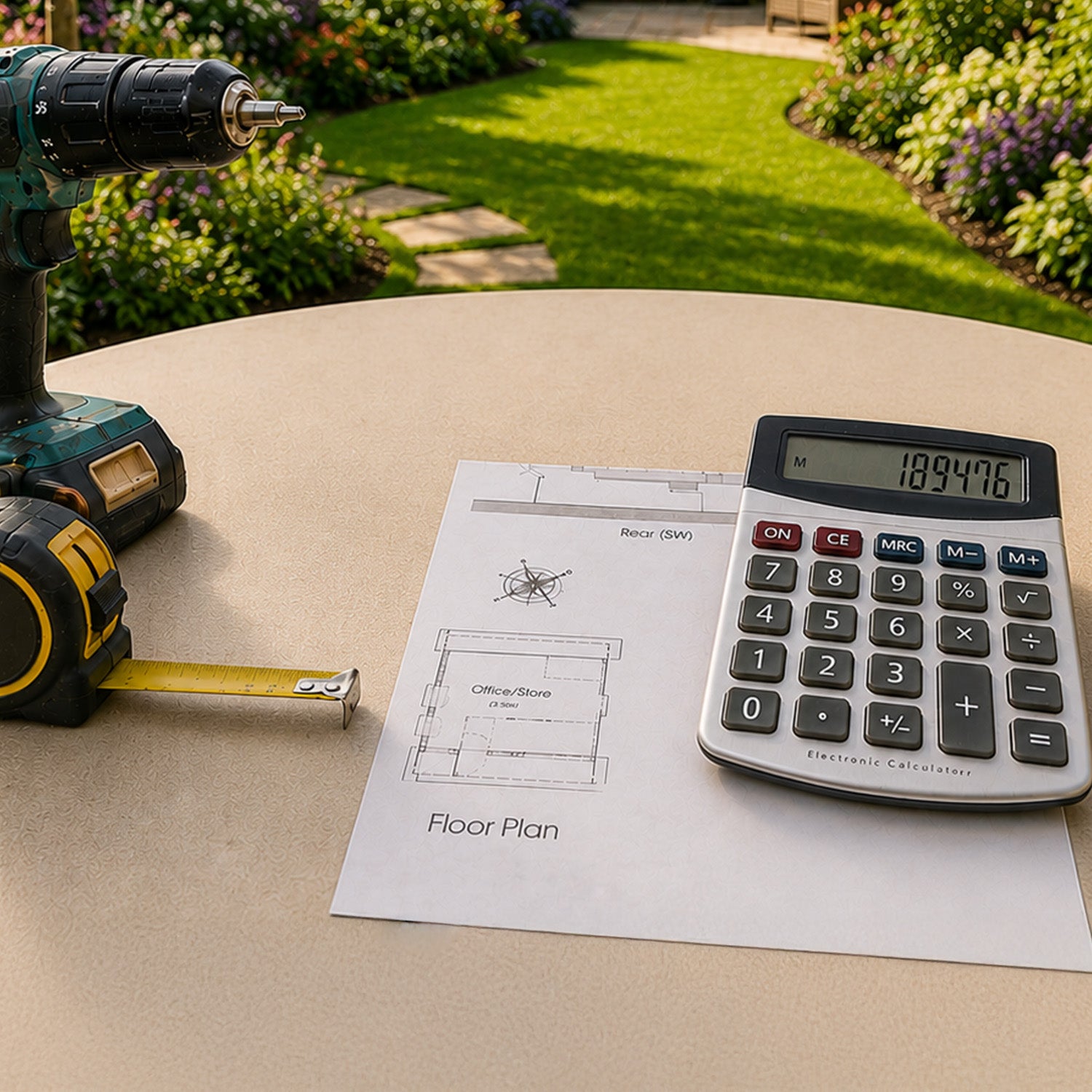
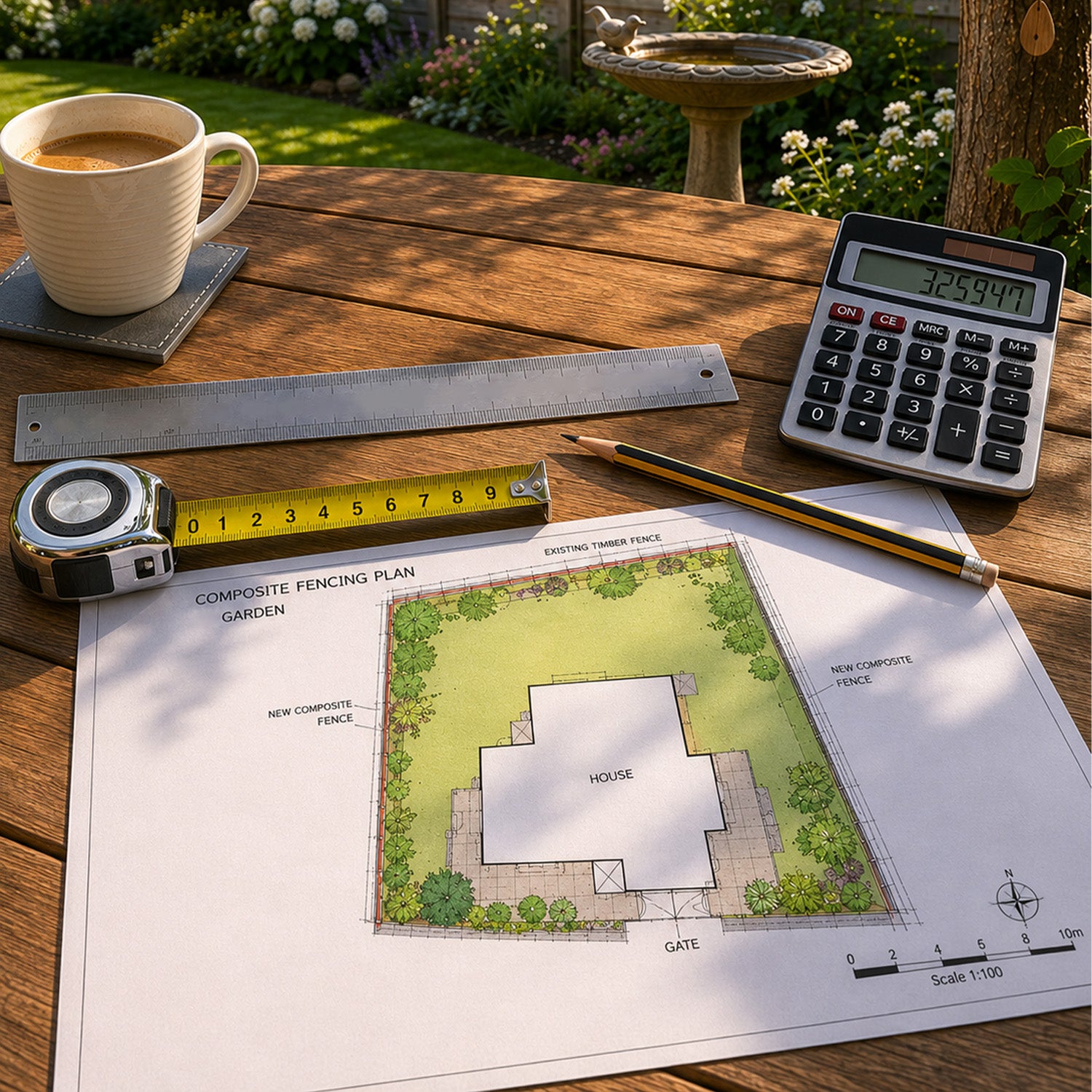
The fence panel calculator can help create an initial estimate. Check the result against a measured layout and the selected kit contents before placing an order.
Frequently Asked Questions
Is plastic composite fencing made entirely from plastic?
No. NeoTimber® wood–plastic composite boards contain wood fibres as well as plastic and other ingredients. Check the selected product specification for its exact composition.
How long will the fence last?
Service life depends on the product, installation, site conditions, care and external damage. A warranty period should not be treated as a guaranteed lifespan.
Can capped composite still fade or develop surface growth?
Yes. The surface is designed to resist fading and staining, but weathering and deposits remain possible. Follow the recommended care instructions.
Is the fence windproof?
No blanket windproof claim should be assumed. The complete system and foundation must suit the height, exposure and ground conditions.
Can panels fit between my existing posts?
Potentially, if the posts, foundations, dimensions and spacing are suitable for a compatible insert arrangement. Assess the structure before buying infill.
Do the boards need painting or staining?
NeoTimber’s capped boards are supplied with their intended finish and do not require routine painting or staining. Appropriate cleaning and inspections are still needed.
Compare the Material, Finish and Installation Together
Choose the panel style alongside the supporting system and care requirements. Explore the NeoTimber® composite fencing range, request samples or contact the team for help checking the components for your project.