

Choose a Grey Exterior That Works Beyond the Colour Sample
Grey composite cladding can bring texture, definition and a considered colour palette to an exterior. It can frame an entrance, connect a garden room with the main house or give an extension a distinct identity. The strongest designs begin with the building and its surroundings, then use colour and profile to support that design.
Searching for anthracite cladding, dark grey cladding or light grey cladding is a useful starting point, but colour names alone cannot deliver a coordinated result. Grain, surface relief, daylight, window frames and the scale of the clad area all influence what you see. A grey weatherboard finish can also look quite different from a slatted profile, even when both belong to a similar palette.
This guide explores the grey spectrum, explains how to compare NeoTimber’s composite products and sets out a practical approach to selecting an exterior finish. The aim is a grey cladding scheme with a clear purpose, suitable detailing and care requirements you can manage.
Why Grey Composite Cladding Deserves a More Considered Approach
It is easy to choose an exterior colour from an appealing photograph. It is harder, and more valuable, to understand why that finish works in its setting. The building’s proportions, the amount of glazing and the balance between materials often explain the result as much as the shade itself.
Grey offers scope for both contrast and continuity. A darker surface can define a feature, while a quieter tonal relationship can help several elements feel connected. Yet grey is not automatically neutral in every combination. It can look warmer, cooler, lighter or darker depending on what surrounds it.
That makes grey composite cladding a design decision rather than a finishing detail. Decide what you want the wall to contribute before selecting the board: a backdrop, a focal point, a connection between spaces or a change in texture. Once that purpose is clear, the product comparison becomes more focused.
What Is Grey Composite Cladding?
Composite cladding is a manufactured exterior covering. NeoTimber’s composite cladding collection includes wood-polymer composite boards, combining wood fibres with polymers and additives. Different ranges offer different surface constructions and profiles.
The boards form the visible covering of a wall system. They do not replace the supporting framework or the drainage, ventilation and weatherproofing details required by the project. A colour choice should therefore sit alongside a suitability check and an installation plan.
Grey composite cladding is also different from solid grey-painted timber. Its supplied finish is intended to be maintained through the relevant care routine rather than regular repainting. If you are comparing materials, review the specific products and the appearance you want to maintain, rather than assuming all grey exteriors have identical upkeep.
Explore our grey composite cladding gallery to see exterior design inspiration before comparing colours and profiles.
Understanding Grey Cladding Colour Names
Terms such as anthracite grey cladding, slate grey cladding and light grey cladding describe a visual direction, but they do not always identify a standardised colour. Different suppliers can use similar names for noticeably different finishes. A familiar name should lead you to a sample comparison, rather than replace one.
NeoTimber® lists colours by product range, including Grey and, in relevant ranges, Charcoal. In this guide, anthracite, slate, light grey and dark grey are colour-selection ideas rather than claims that NeoTimber® sells separate products under every one of those names. Check the current listing for the exact range and colour you intend to order.
| Search term | Design direction | What to confirm |
|---|---|---|
| Anthracite cladding | A deeper grey exterior with a defined appearance | The actual sample and its relationship with frames and trims |
| Dark grey cladding | A stronger contrast or more prominent feature | How much of the elevation the darker finish will cover |
| Light grey cladding | A softer contrast within a lighter palette | How the sample looks beside render, brick and paving |
| Slate grey cladding | A grey palette inspired by slate and stone | Whether its undertone works with the actual stone materials |
| Grey weatherboard cladding | A boarded appearance with a horizontal design association | The board profile and permitted fitting arrangement |
Anthracite Cladding: Make Contrast Intentional
If anthracite cladding is your starting point, decide which feature you want the darker colour to emphasise. An entrance surround, a projecting section or an elevation with generous glazing can each use a deep grey finish differently. The proportion of cladding matters: a narrow feature and a whole facade will have different visual weight.
Anthracite Grey Cladding Beside Window Frames
Anthracite window frames and anthracite grey cladding do not necessarily match. Frame materials, sheen and surface texture can make a similar colour appear different. Compare the intended board directly with the actual frame, particularly where the two will meet.
You may find that a deliberate contrast works better than a near match. A board that sits clearly lighter than the frame can allow both materials to retain their identity. Alternatively, a closer tonal scheme can create a quieter composition if the samples work well together.
A Colour Name Is Not a RAL Match
Do not assume a board colour corresponds to a particular RAL reference unless the supplier explicitly specifies that match. “Anthracite” in a search description does not establish a technical colour equivalence. This is especially relevant when ordering metal trims or coordinating the finish with an existing door.
Agree the actual colour and product designation before purchase. Keep that information with the project records so future enquiries refer to the board supplied rather than a general design description.
Dark Grey Cladding: Control the Visual Weight
Dark grey cladding can make an elevation feel more defined, but a large area of dark material should be considered in the context of the whole building. Look at the roof, window arrangement, neighbouring surfaces and the view from the road or garden.
One approach is to use the darker finish on a selected feature and keep adjacent surfaces quieter. Another is to let the cladding form the dominant surface, with glazing and lighter details providing variation. Both require a clear hierarchy of materials.
Texture becomes important here. Grain and slats introduce relief that changes with the light. A dark board with a pronounced profile will not necessarily read as the same surface as a flatter dark finish. Compare profile as well as colour before deciding.
Light Grey Cladding: Keep the Palette Balanced
Light grey cladding can offer a softer relationship with pale render or stone. It can also create contrast beside dark frames without making the wall itself the strongest element. The effect depends on the sample and its surroundings, rather than the word “light” alone.
When exploring a lighter grey direction, compare it with the retained materials in both daylight and shade. Two pale finishes that appear compatible separately can look less balanced when placed side by side. A slight tonal difference may work, but it should be assessed in the setting where it will be seen.
A lighter-looking product should not be selected on the assumption that it will stay cleaner or be easier to maintain. Dirt visibility depends on the mark, surface and exposure. Choose for the design, then check the care requirements independently.
Slate Grey Cladding: Coordinate With Stone, Not Just Its Name
Slate grey cladding is often part of a scheme involving stone paving, roof tiles or aggregate. Those materials can vary considerably in tone, so a stone-inspired description is not enough to establish a match. Some surroundings may make a board look cooler; others may bring out warmer aspects of the finish.
Place the sample beside the actual stone rather than a catalogue photograph. If the project includes new paving, review the paving and cladding samples together. Decide which surface should lead the palette and which should support it.
You do not need every grey element to be identical. Differences in texture can help the scheme feel layered, provided the colours relate comfortably. A clear contrast can be more convincing than several surfaces that almost match.
Grey Weatherboard and Grey Weatherboard Cladding
A search for grey weatherboard often indicates a preference for a horizontal boarded appearance. Traditional weatherboarding commonly uses overlapping boards, while modern exterior products may use different profiles and joint arrangements. Check the actual cross-section and completed appearance of the chosen product.
Grey weatherboard cladding should therefore be assessed as a combination of colour and profile. A shiplap-style board, an overlapping weatherboard and a slatted product can all create grey exterior surfaces, but their visual lines are different. Do not assume that the same search term describes an identical system across suppliers.
Plan the Horizontal Lines Around Openings
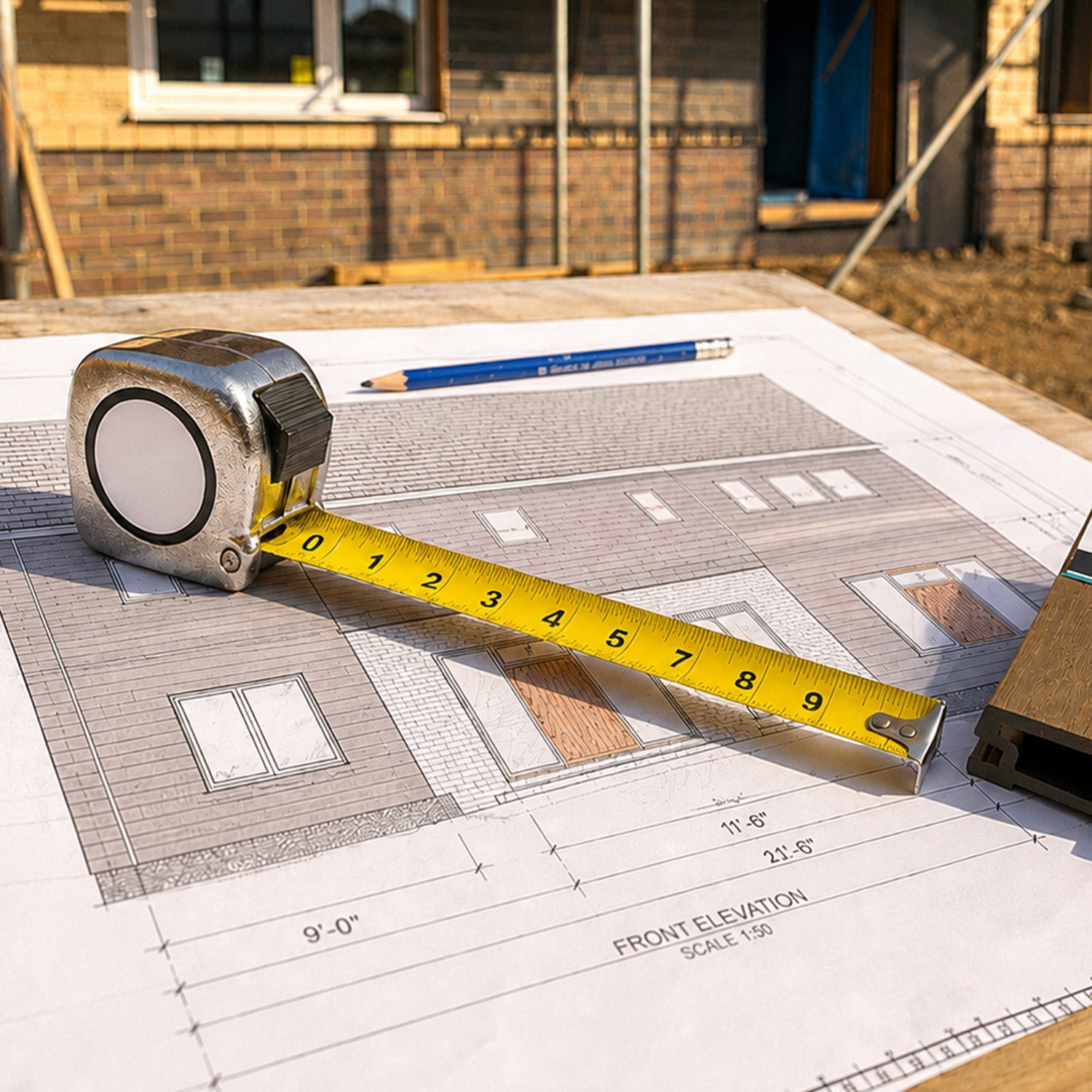
For a boarded design, consider how courses relate to window heads, sills and door openings. Joint positions and cut boards can become especially noticeable around these edges. Sketch the elevation before ordering so the board lengths and finishing components support the intended arrangement.
Explore the horizontal composite cladding guide for layout ideas. Use the selected product’s instructions to confirm the permitted orientation and fitting details.
Choose the Profile Before Calculating Quantities
A board’s overall width is not always the same as its effective installed coverage. Confirm the coverage figure and plan cutting waste for the actual elevation. Openings can reduce the visible area while still creating offcuts and extra finishing work.
This is another reason to choose the profile before requesting a full quotation. A quantity based only on wall area may miss important differences between products.
Explore Our Grey Composite Cladding Gallery
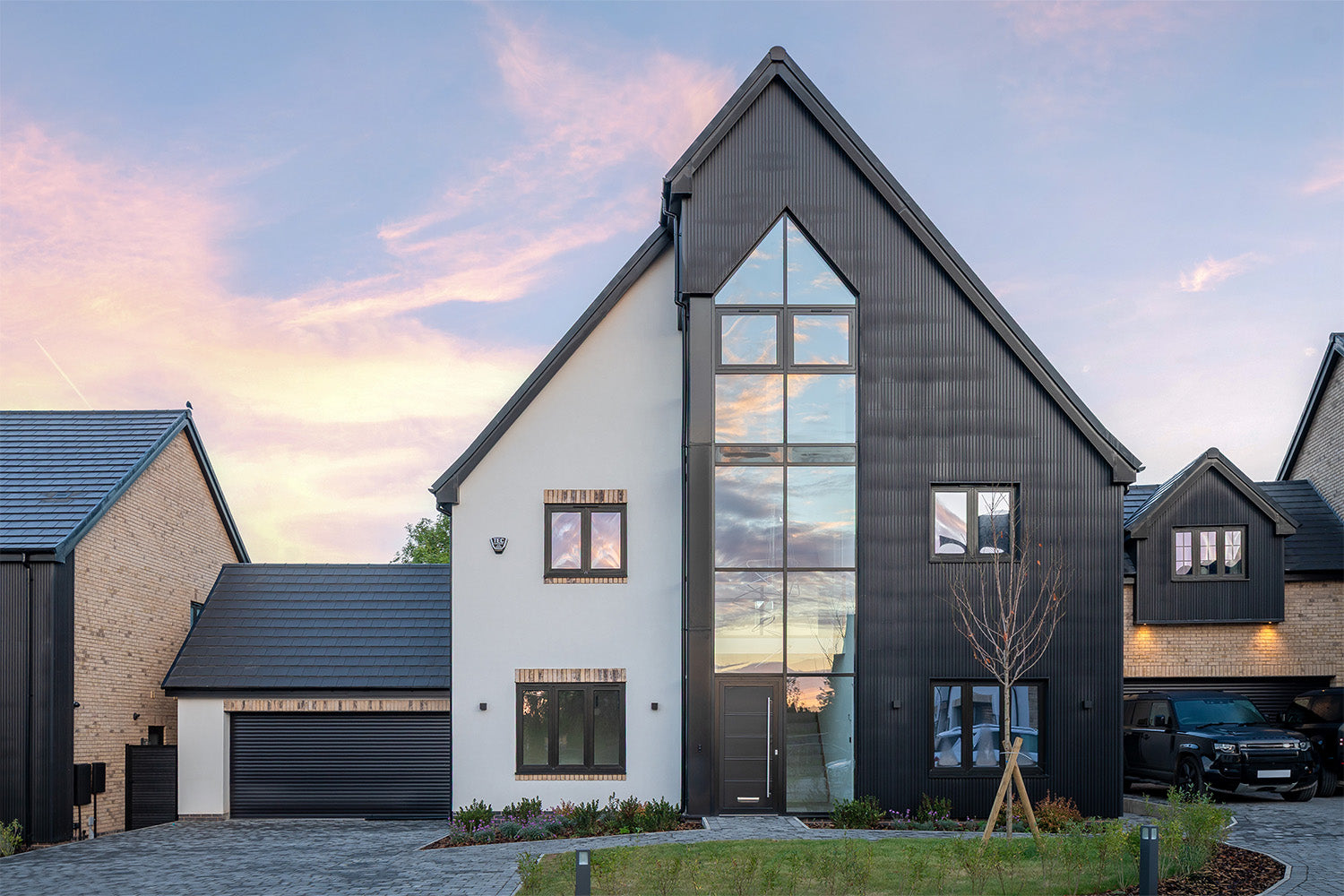
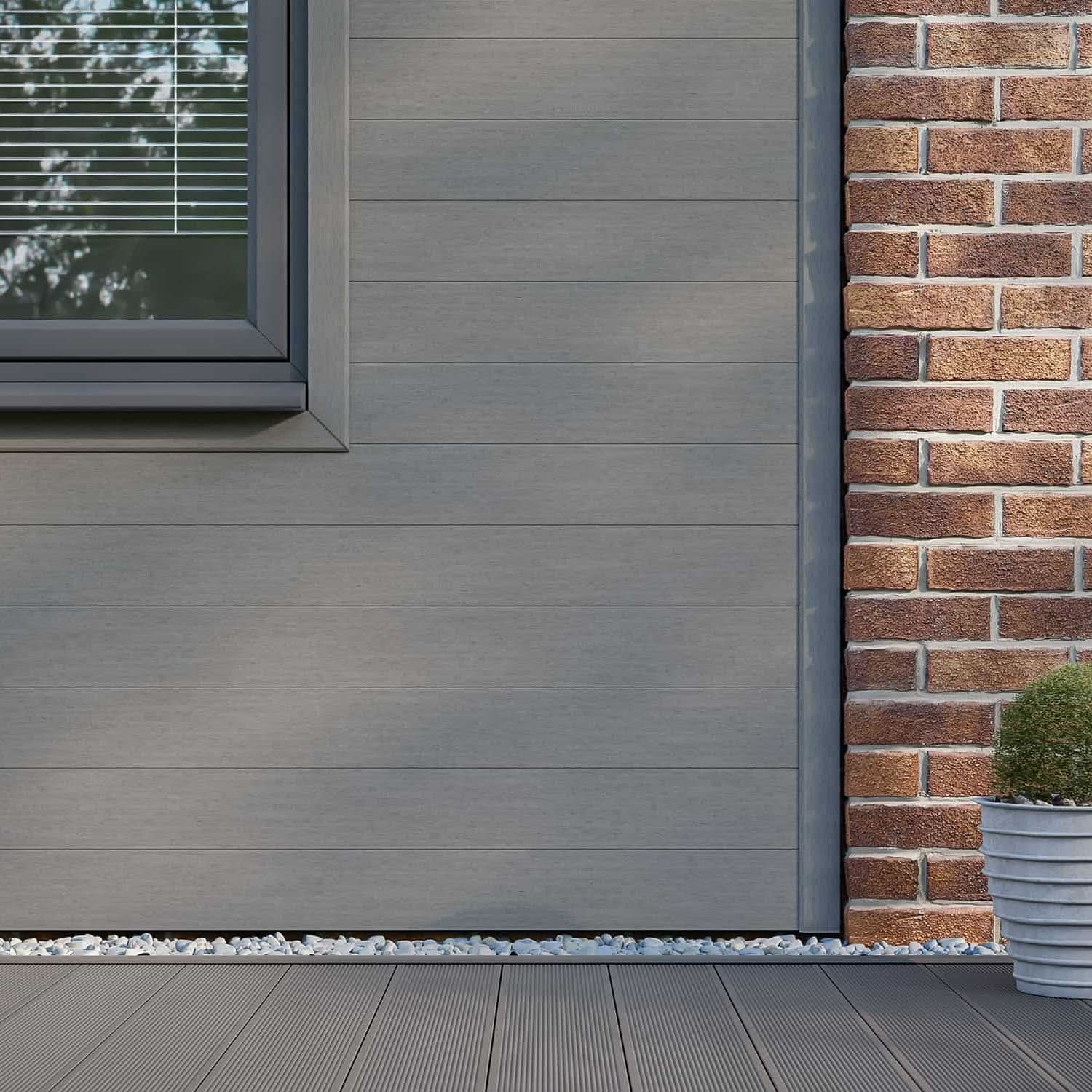
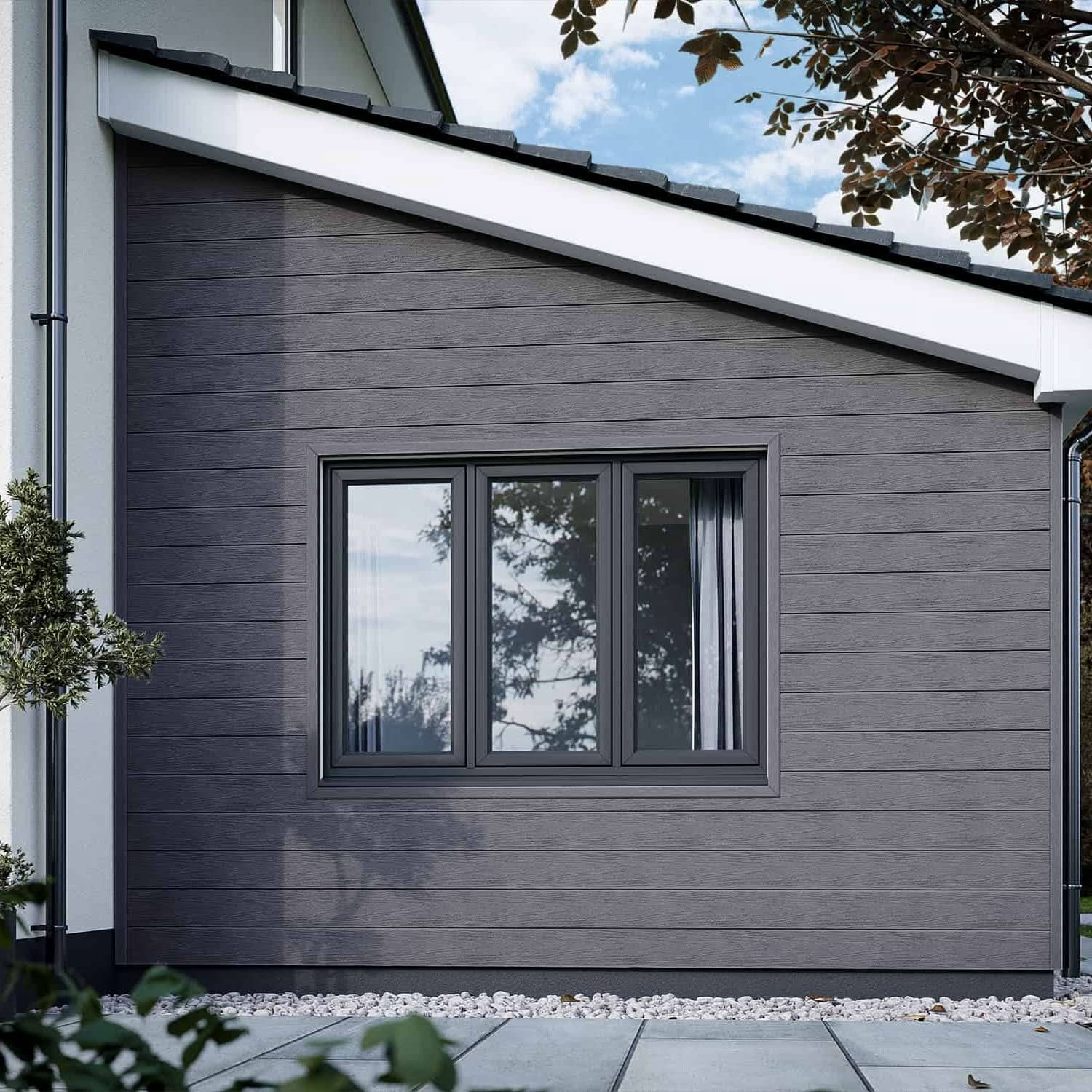
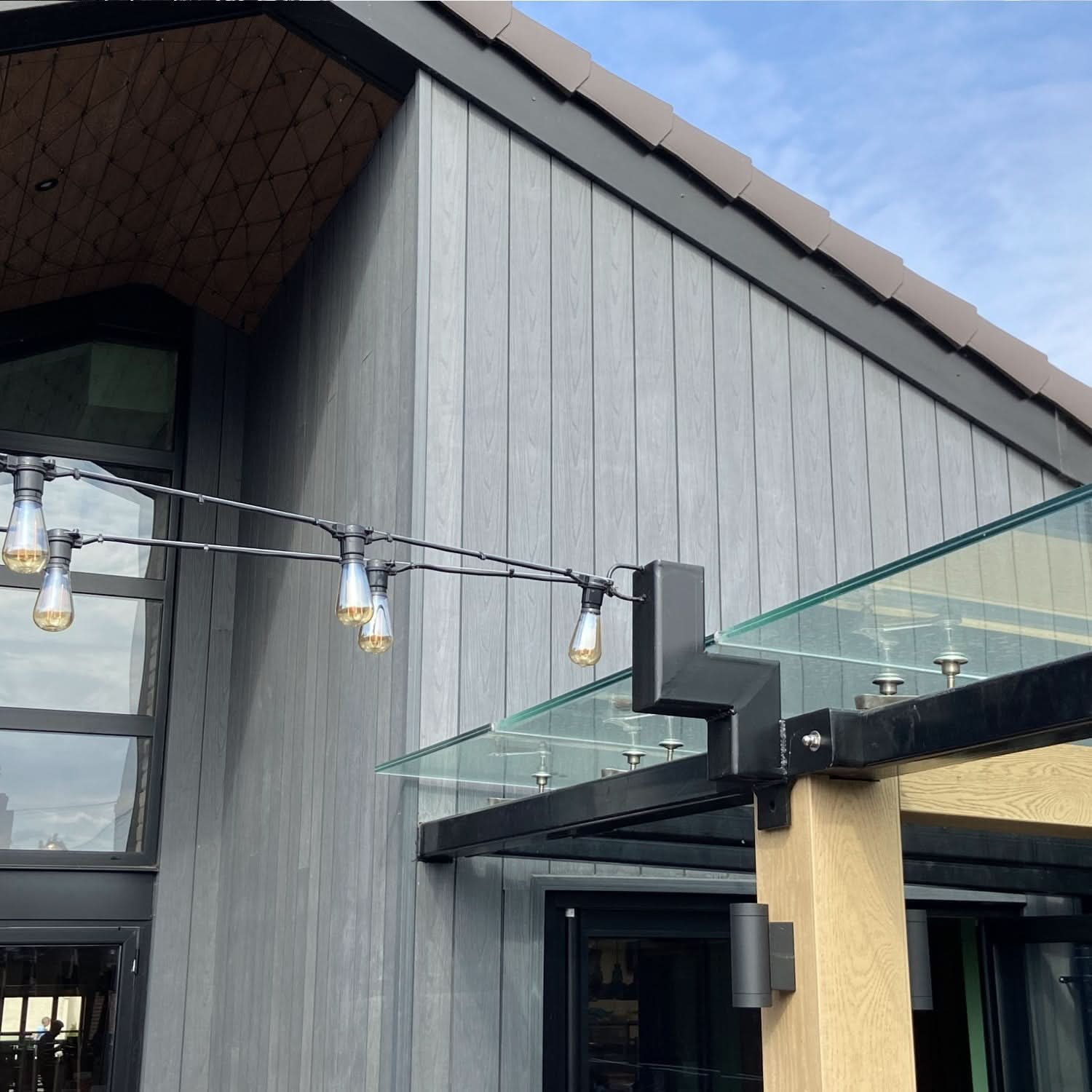
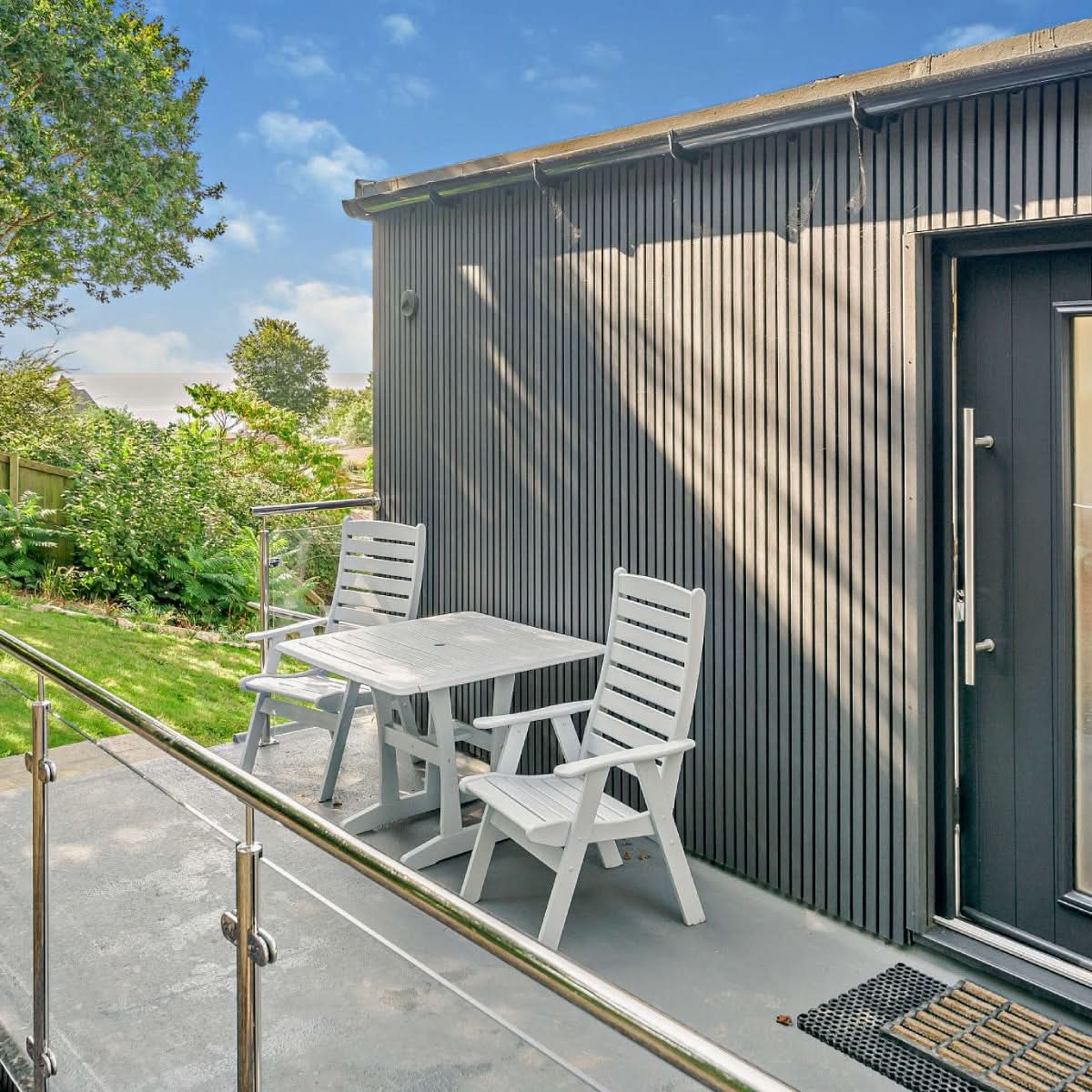
See how grey composite cladding looks across completed projects in our gallery below. Compare the balance between cladding, glazing and surrounding materials, and consider how different board profiles contribute to the finished exterior.
Use the gallery to shortlist design ideas for your own property. Photographs provide useful context, while physical samples help you assess the actual colour and texture in your setting. If you are exploring anthracite, light grey or dark grey inspiration, check the specified product colour before assuming a photograph represents an exact match.
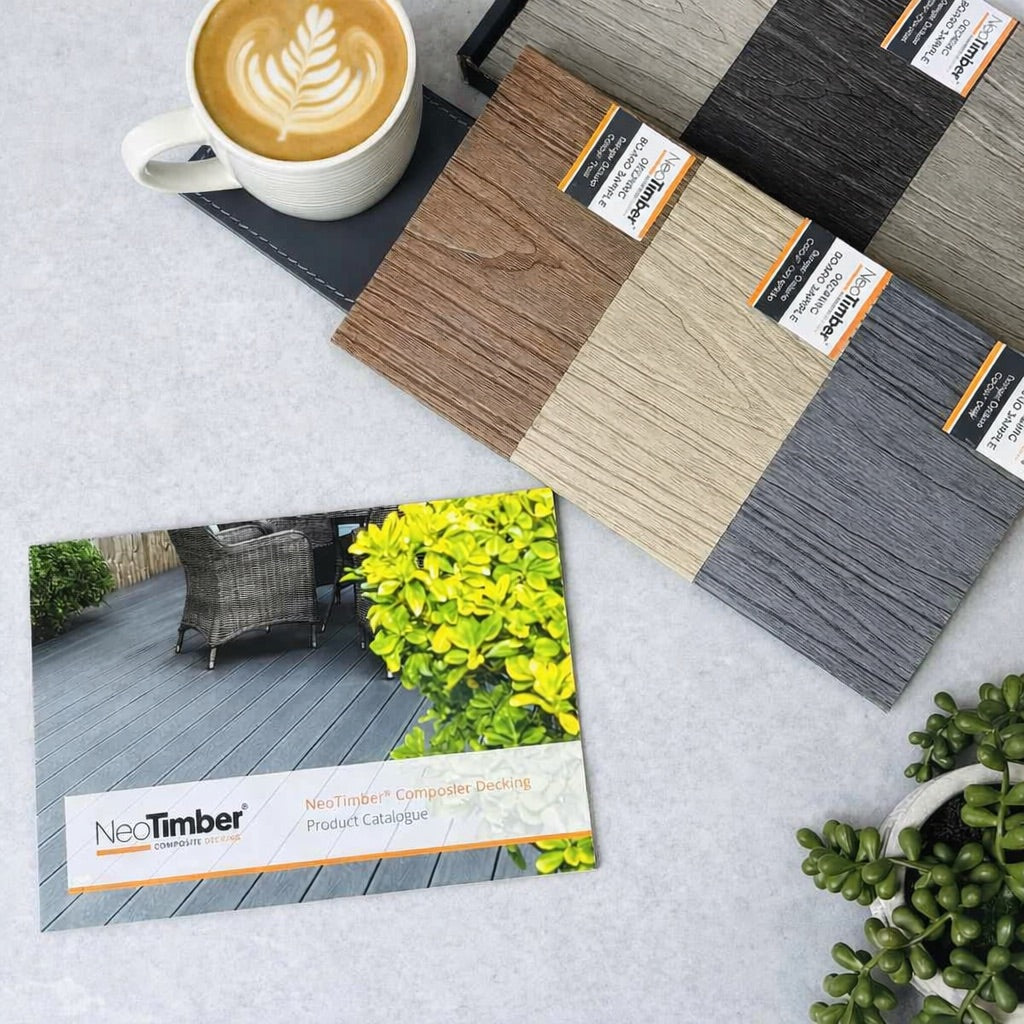
Order free NeoTimber® cladding samples to compare your preferred finishes at home.
Compare NeoTimber’s Grey Composite Cladding Ranges
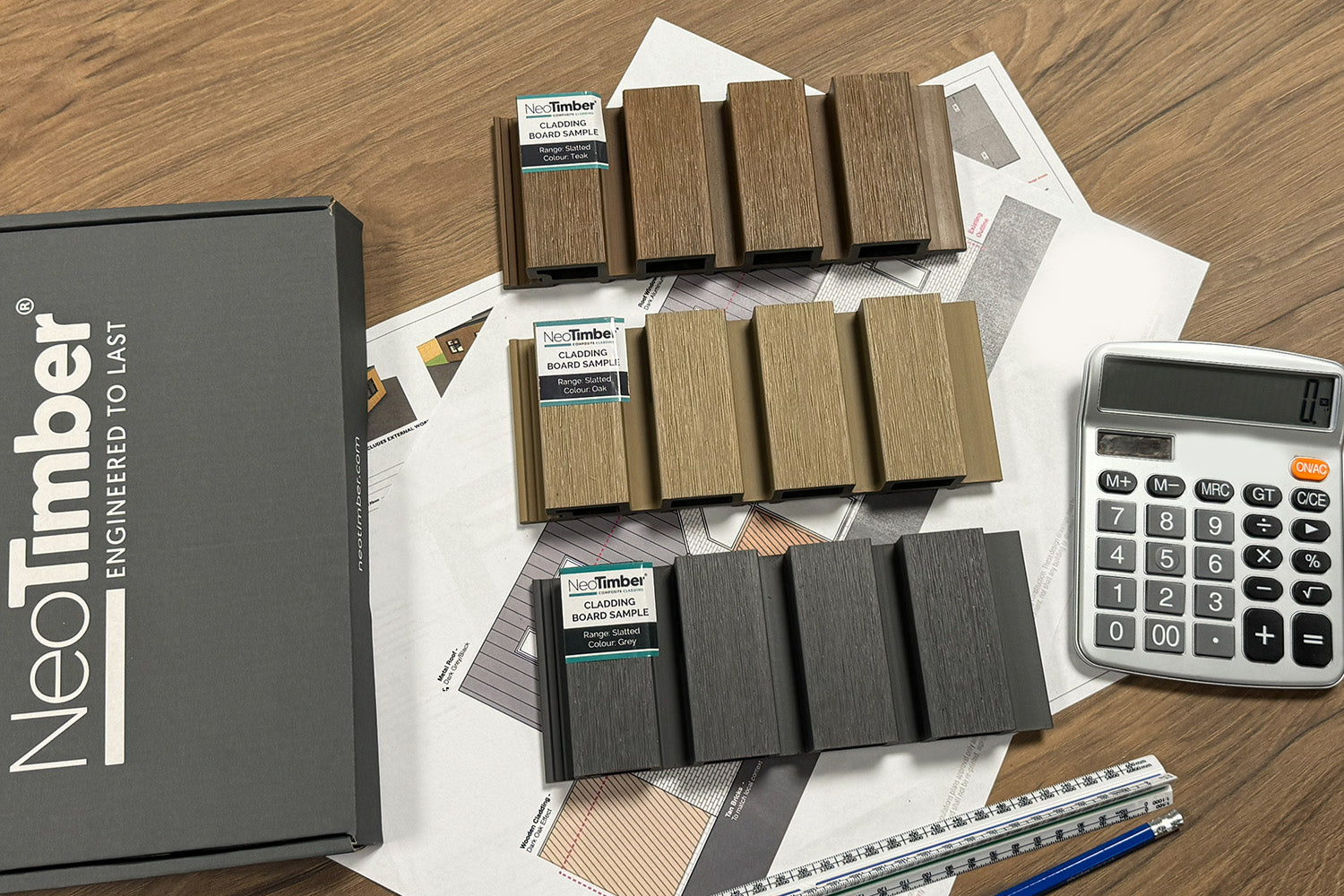
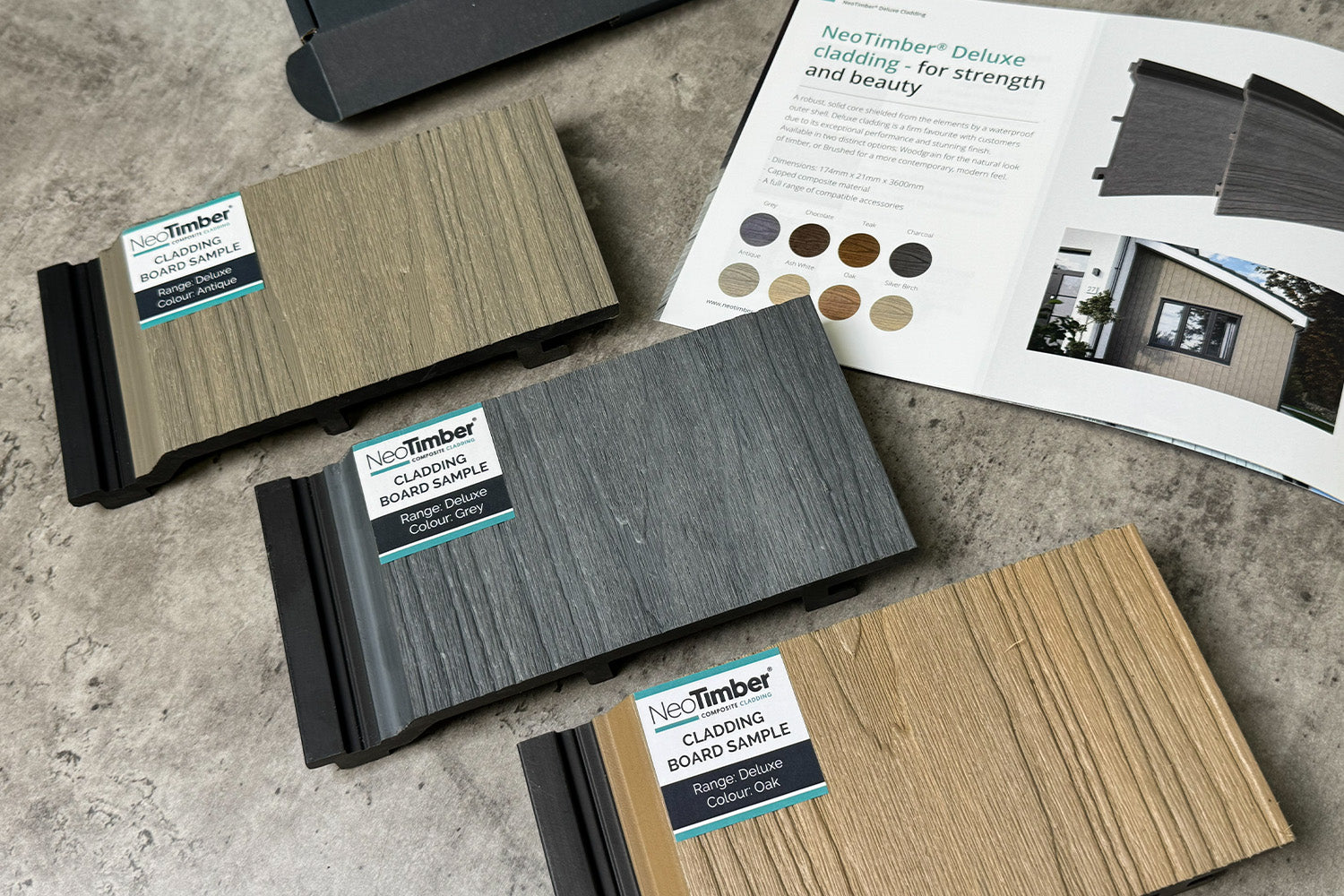
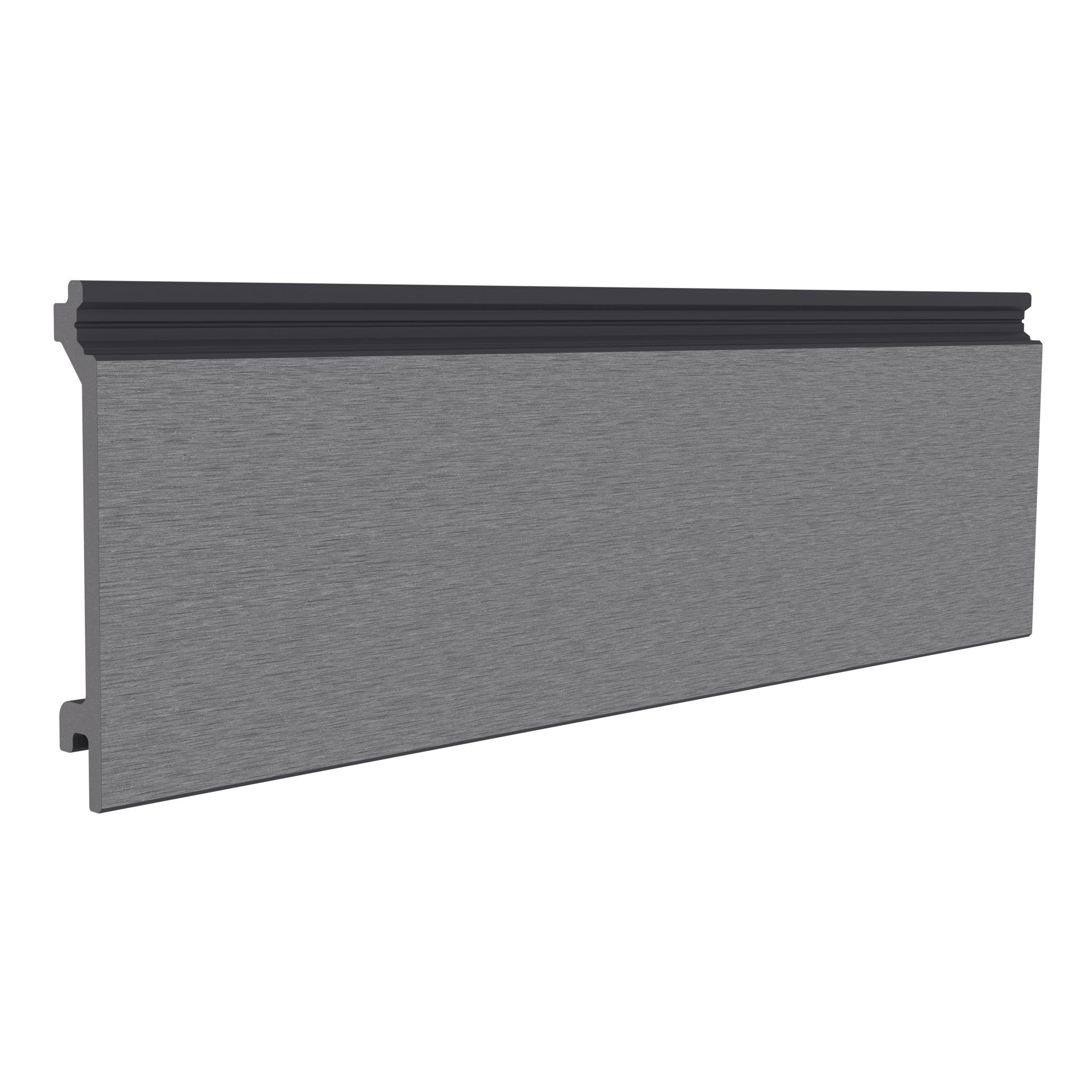
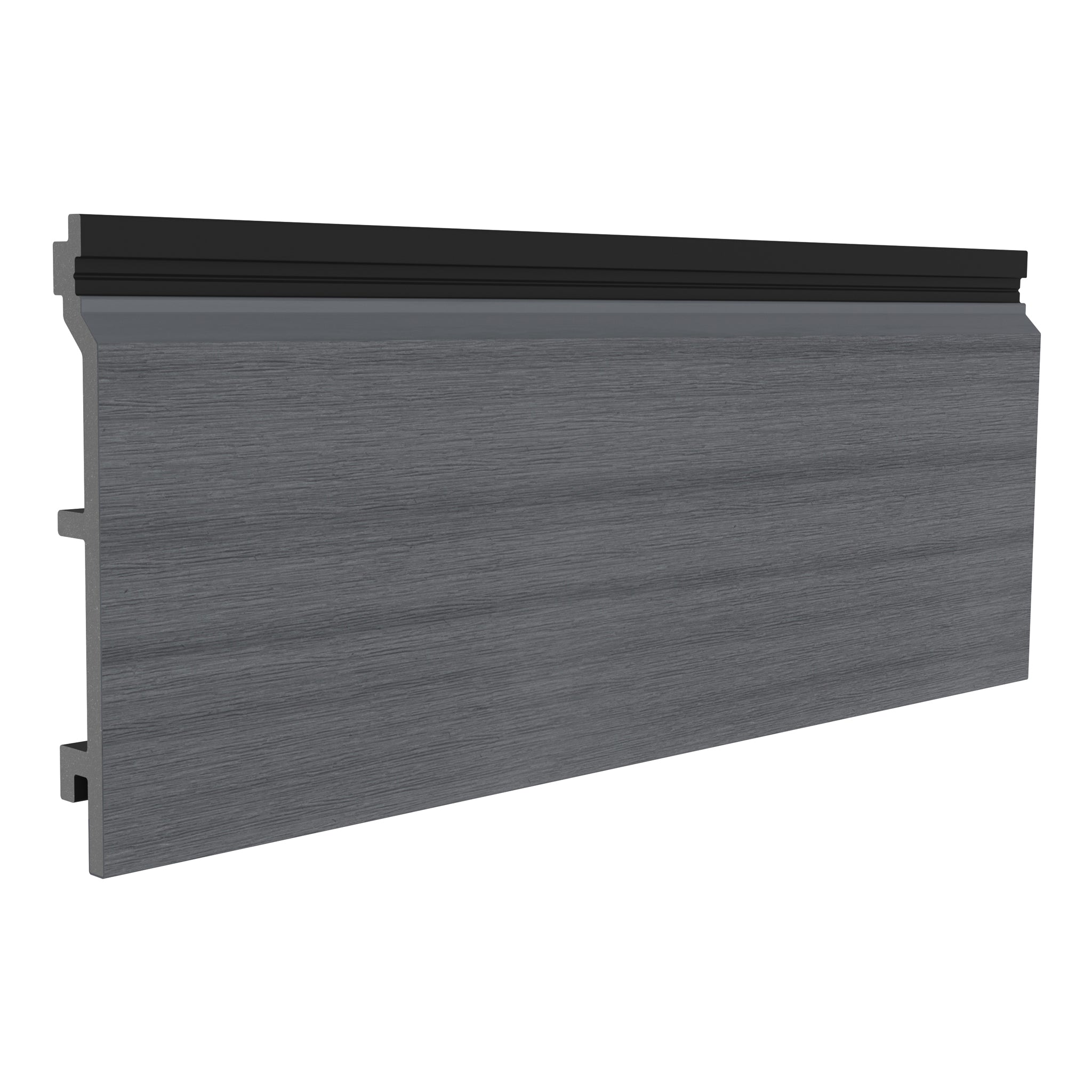
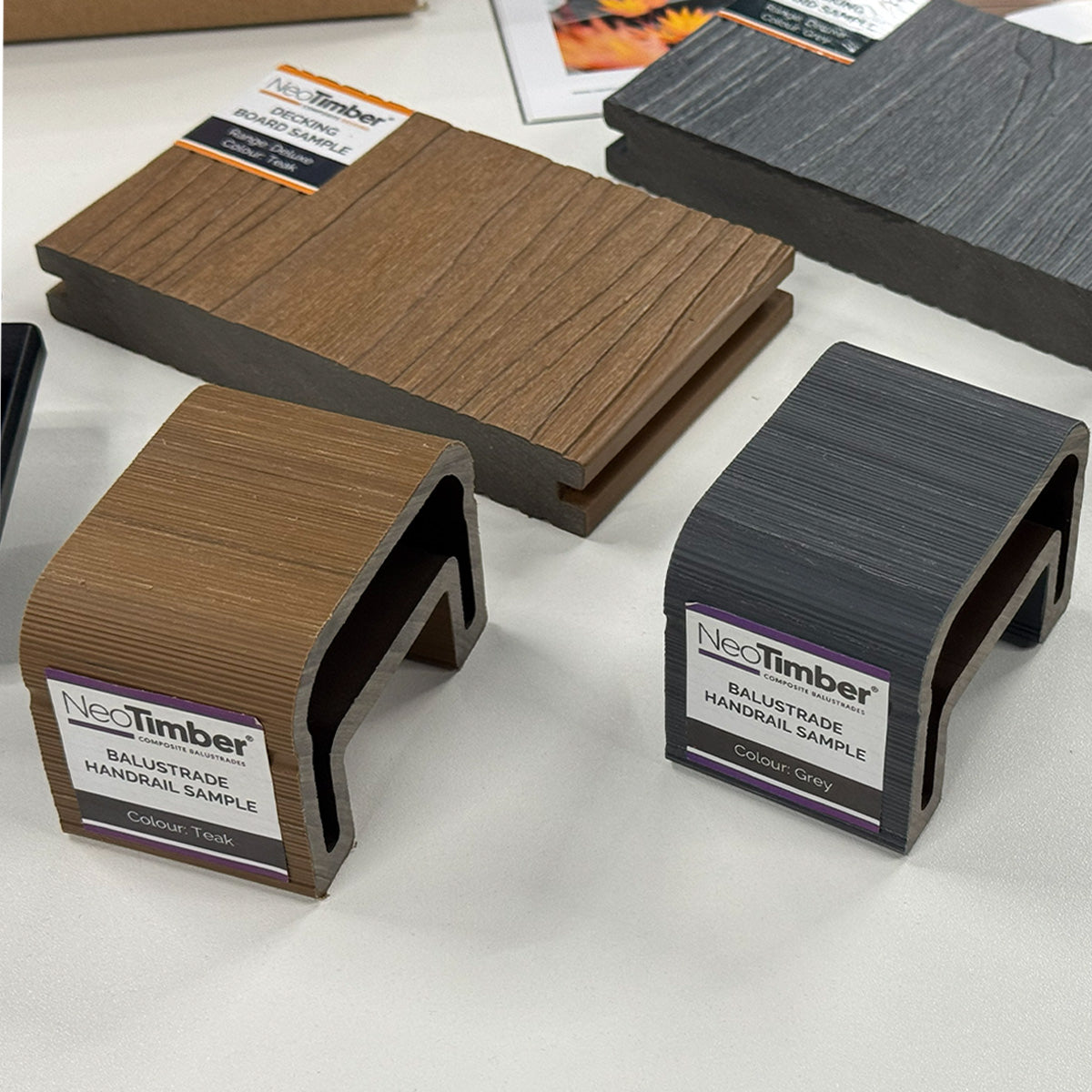
Grey appears in NeoTimber’s Classic, Deluxe Woodgrain and Slatted product listings. These ranges offer different surfaces and profiles, so comparing them is about more than choosing the same colour name. Review samples alongside the current technical and care information.
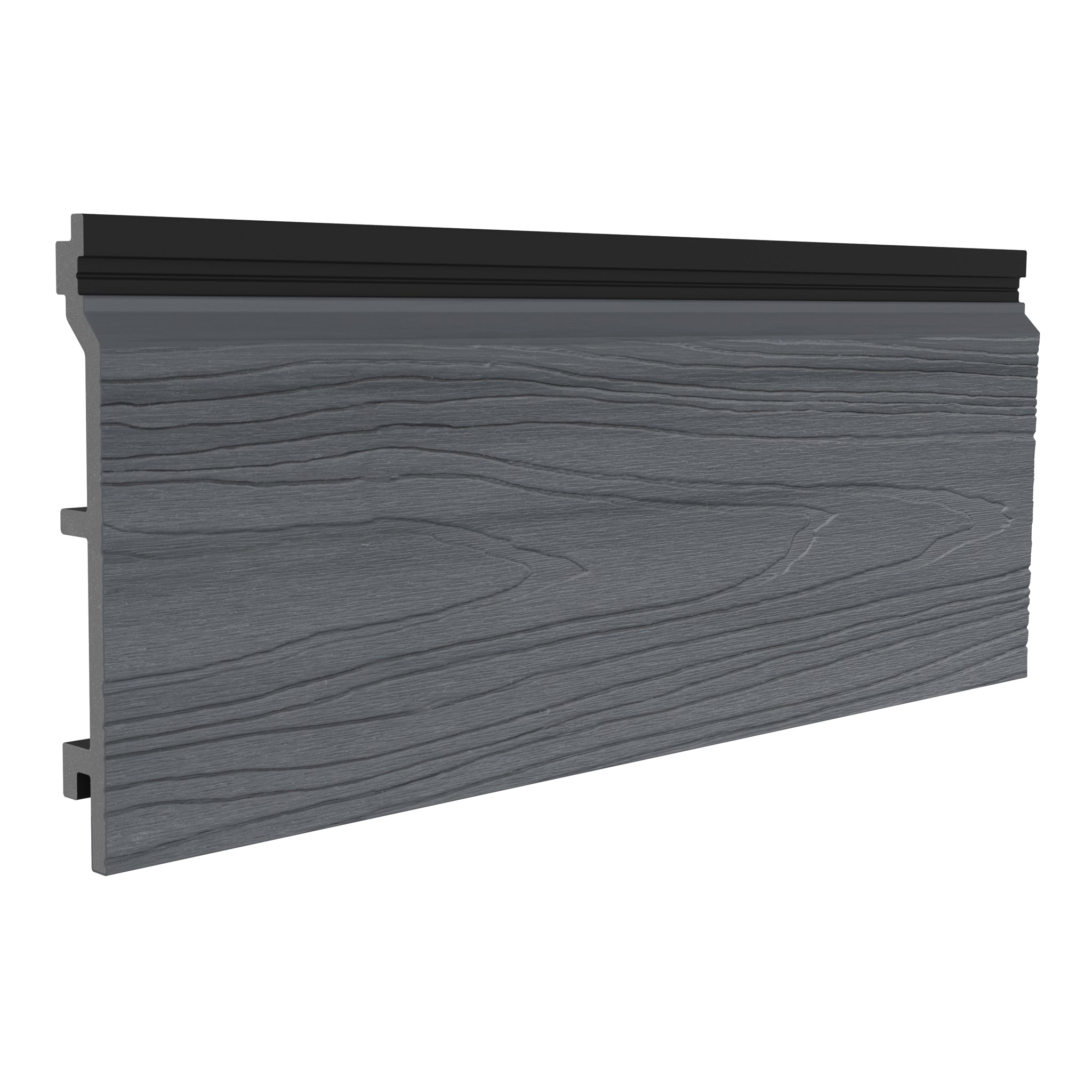
Classic Grey: A Sanded, Uncapped Board
The Classic range uses an uncapped wood-polymer construction with a sanded texture. It is an option to consider where a restrained surface suits the design. Check its weathering information so your decision includes the expected development of the outdoor finish.

Deluxe Grey: An Embossed Woodgrain Surface
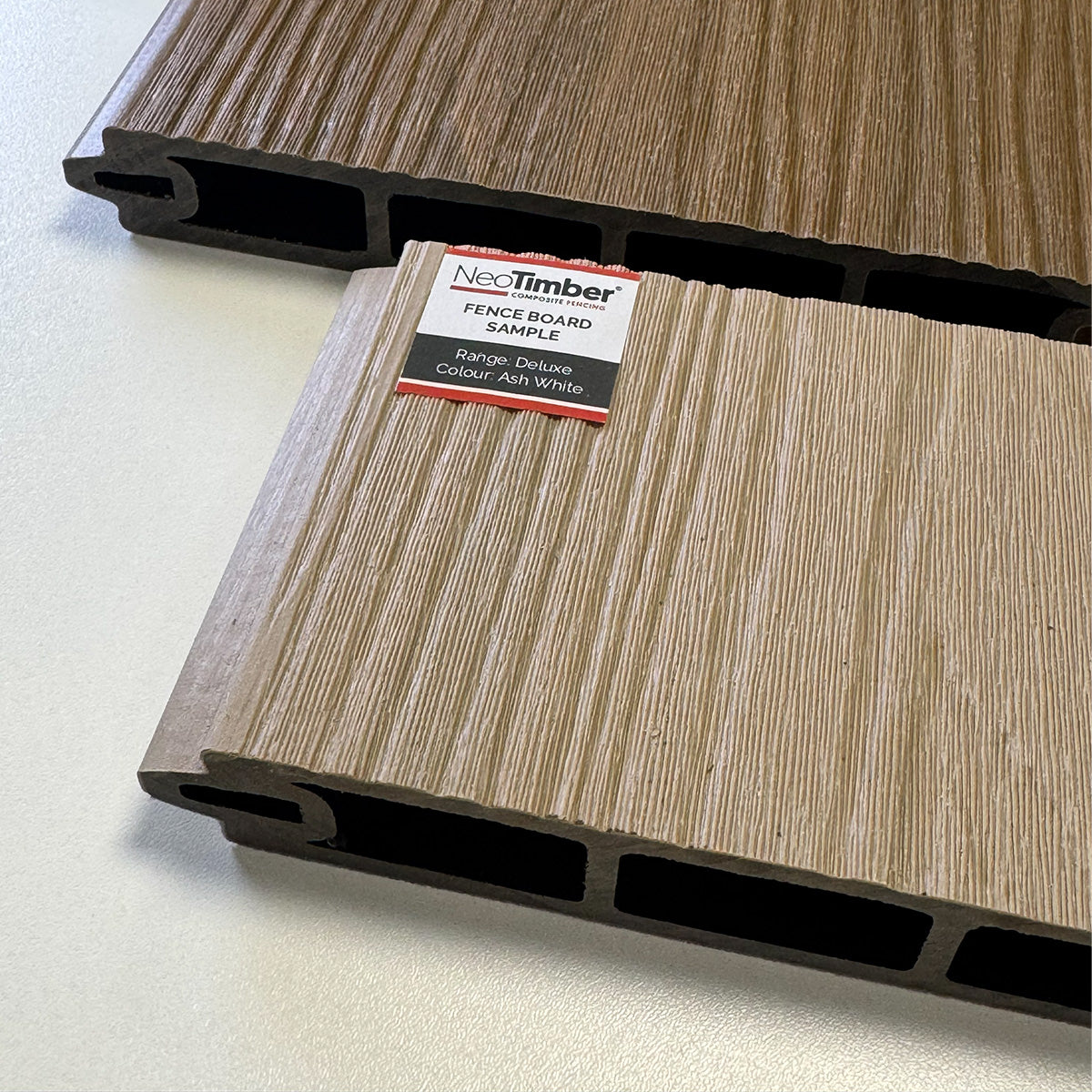
Deluxe Woodgrain cladding uses a deep-embossed grain and capped construction designed to improve fade and stain resistance. Its tonal variation and grain offer a timber-inspired direction for the exterior.
Examine the texture close up, then consider how it repeats across a wall. A sample helps with the first comparison; installation photographs help with the second. Neither should be taken as a guarantee that the finish will look identical under every lighting condition.

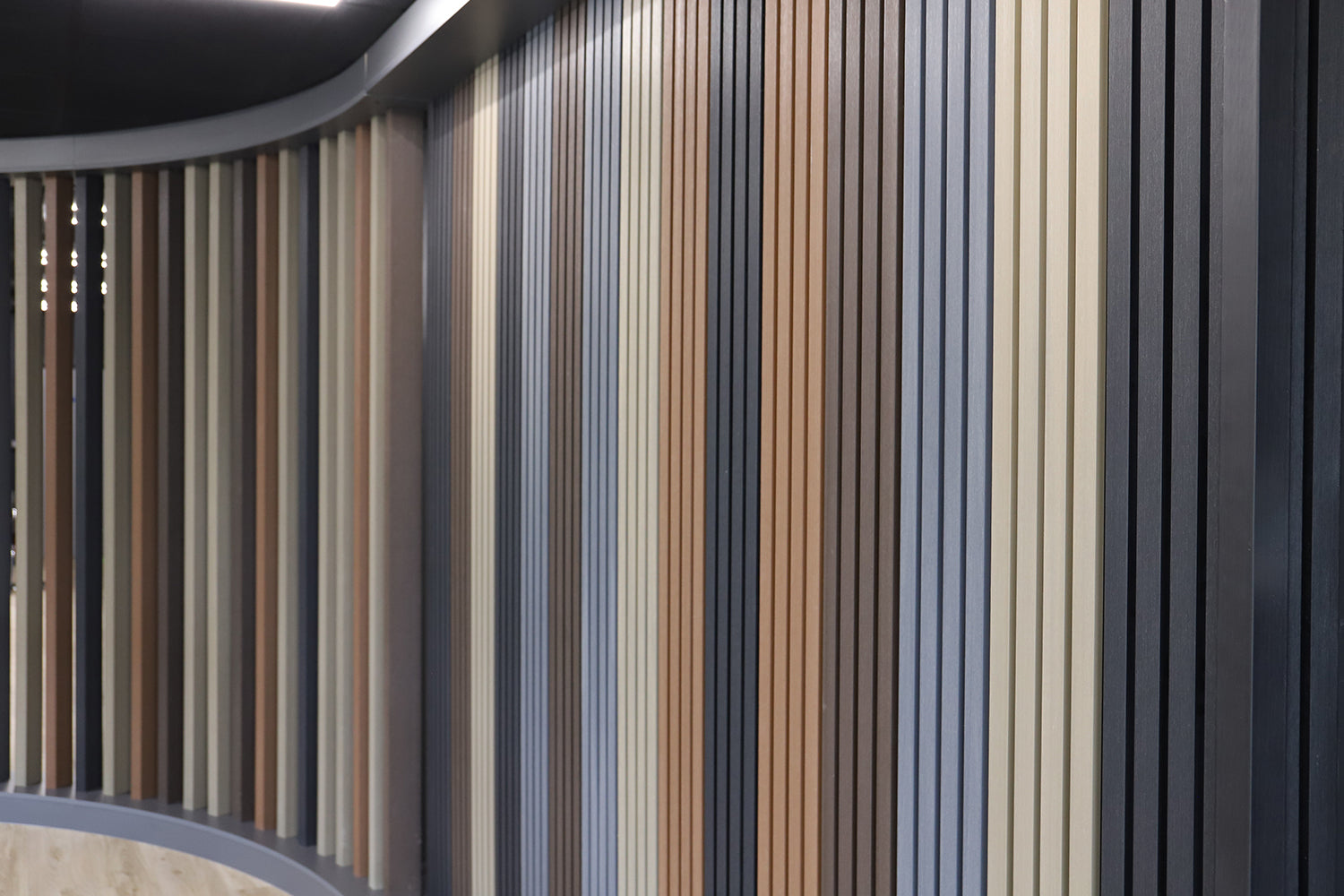
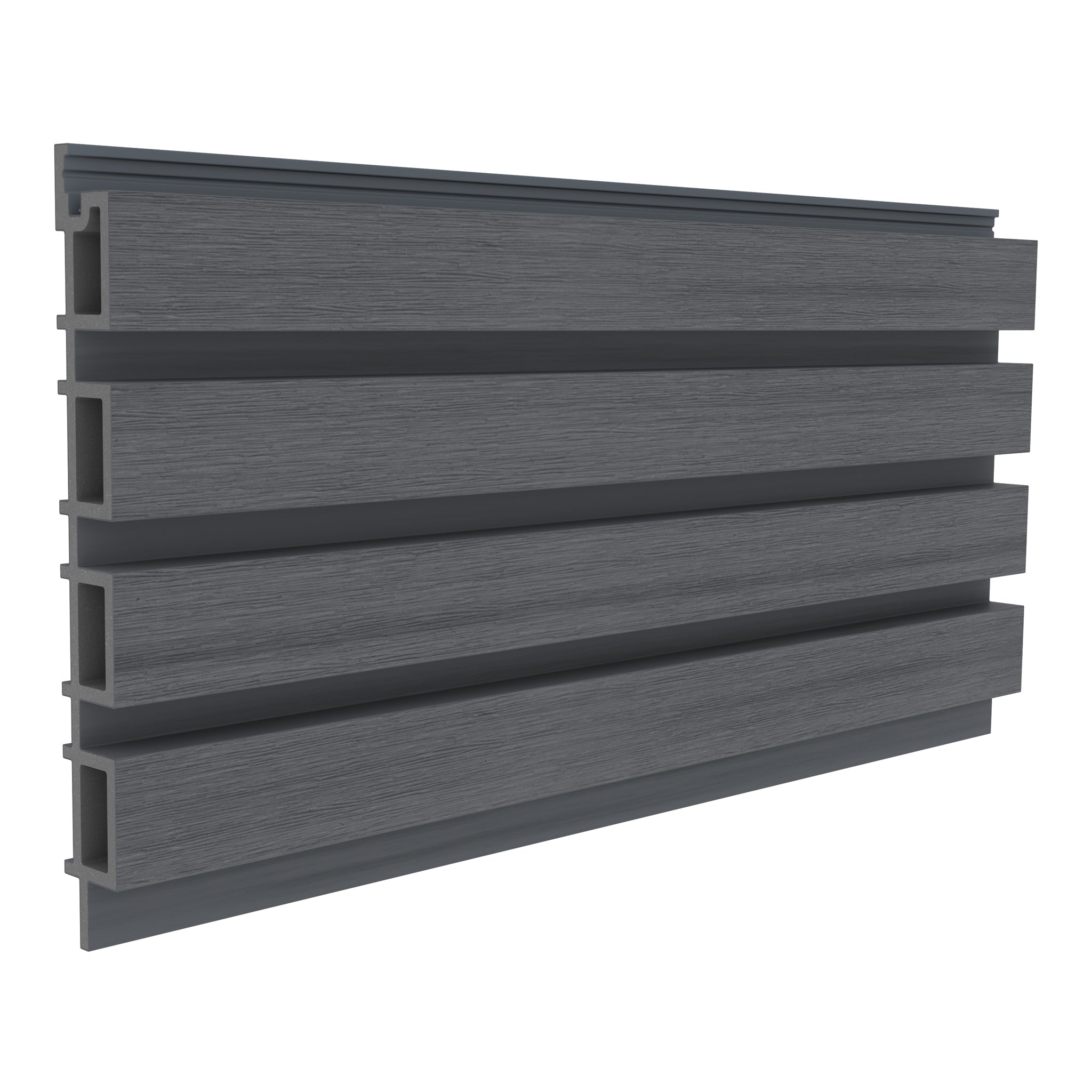
Slatted Grey: A Batten-Inspired Profile
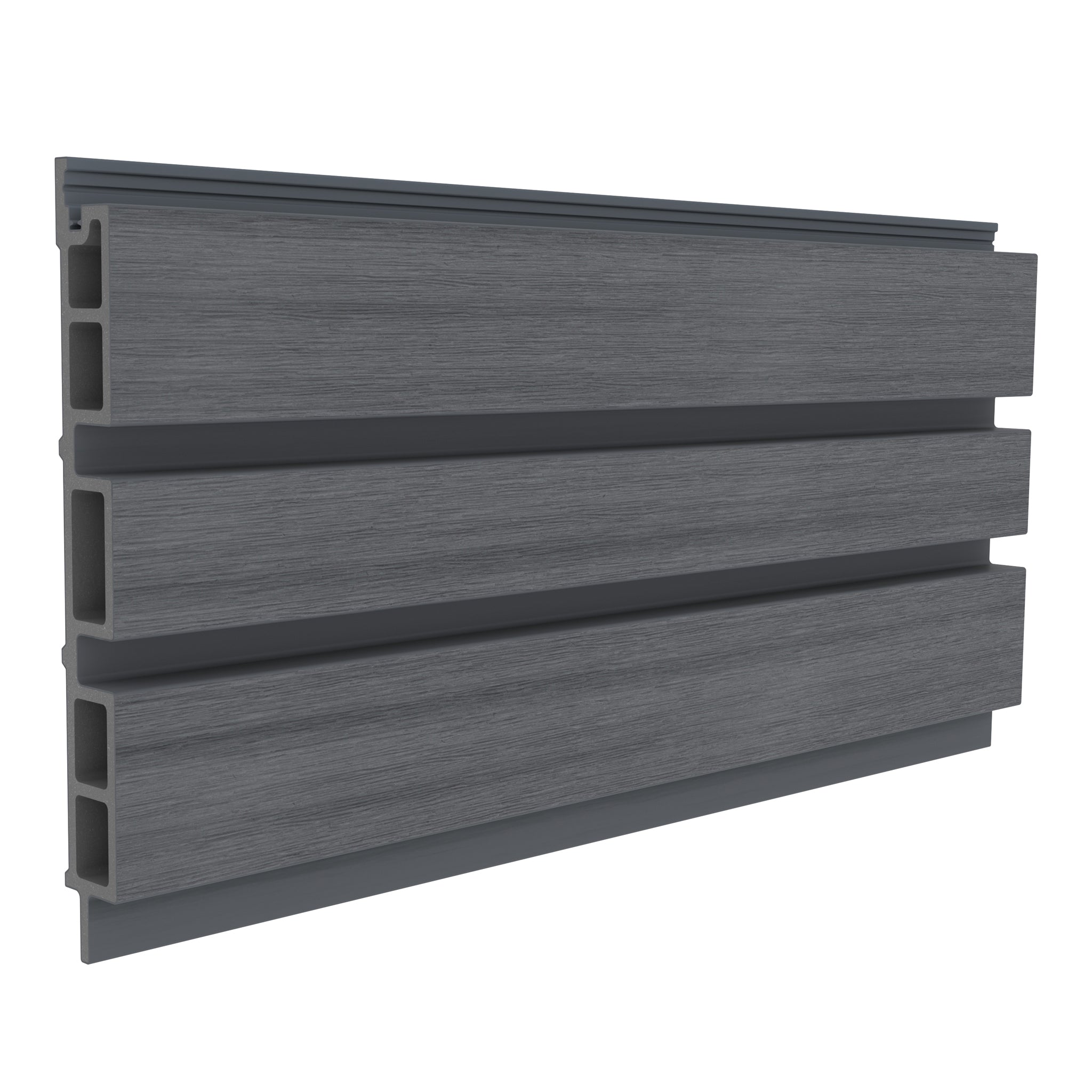
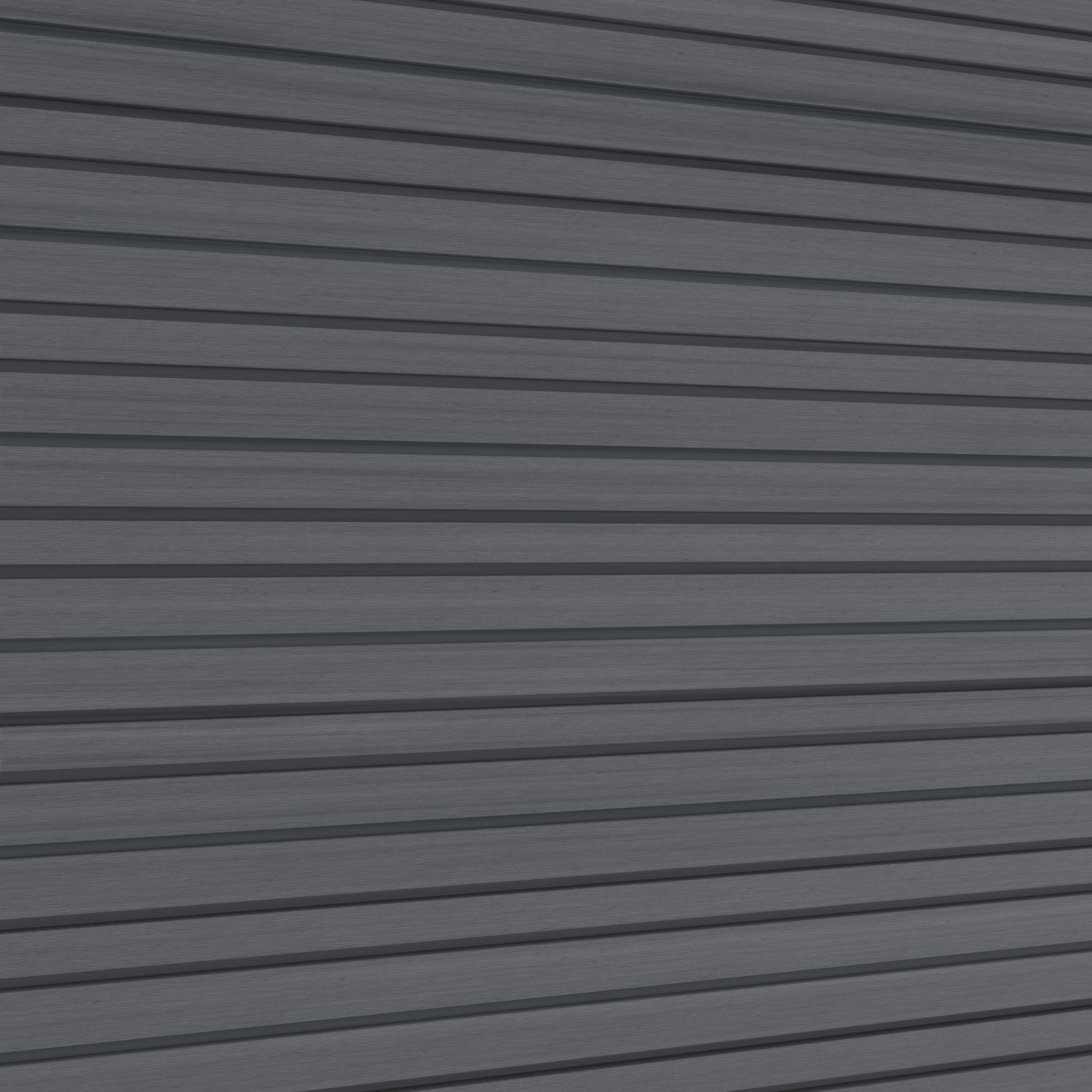
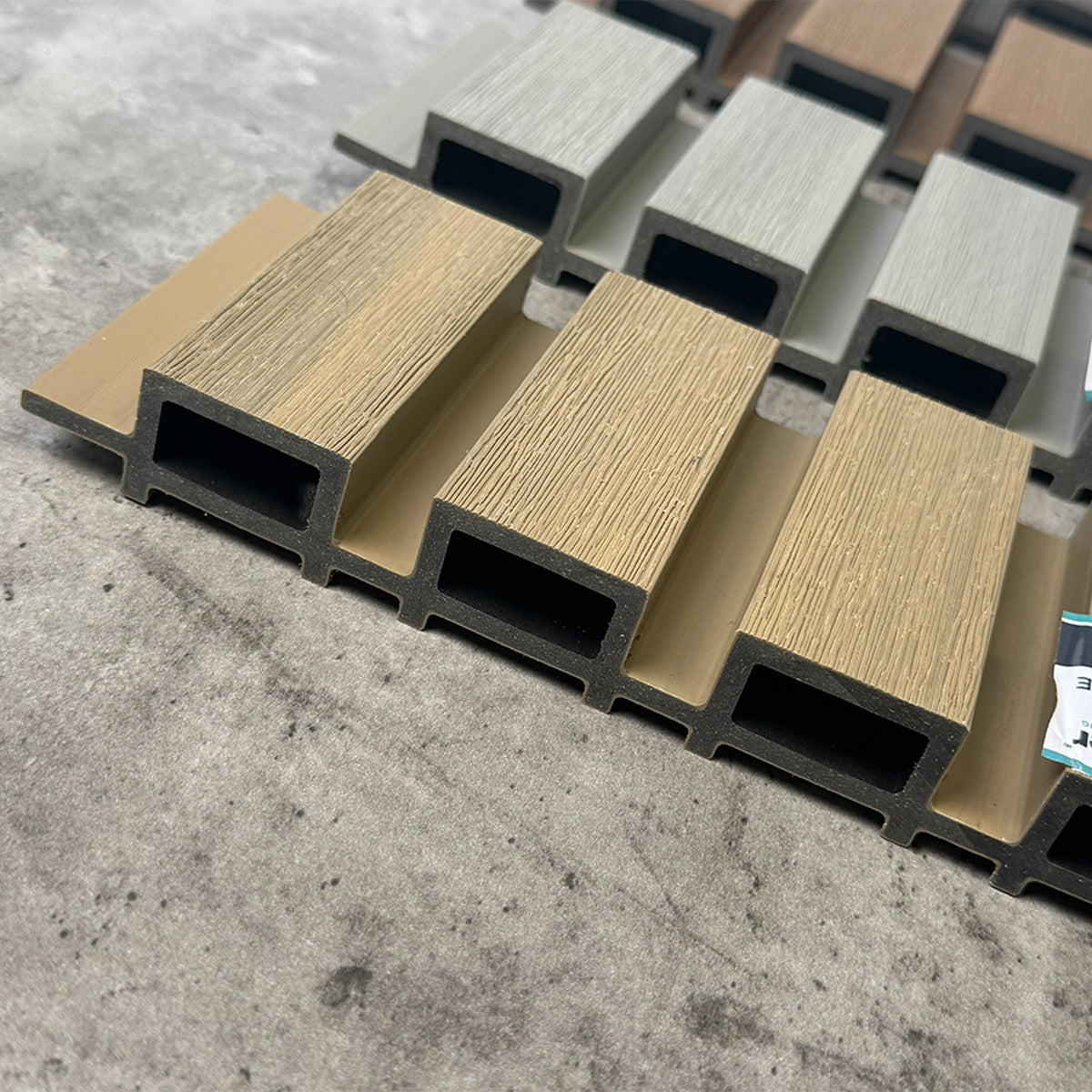
The Slatted range uses a brushed, two-tone design and capped construction. Its profile creates a linear effect that differs from a broad boarded finish. The product is also designed to improve fade and stain resistance.
Consider its relationship with the scale of the project. Repeated relief can become a strong feature across a large area, while a smaller section may work as a more contained accent. Check the intended installation arrangement before committing to the layout.

Colour, Texture and Light Must Be Judged Together
A grey composite cladding sample should be viewed at the project location. The light on a sheltered side wall differs from the light across an open garden elevation. Grain, relief and sheen influence which parts of the board catch that light.
Compare the sample at more than one time of day where practical. View it close up, then step back to the distance from which the finished wall will usually be seen. A subtle texture may become quieter at a distance, while a pronounced profile may remain noticeable.
If exterior lighting is planned, coordinate it with the board layout and the installation details. Lighting placed along a textured surface can emphasise relief. Resolve wiring, fixings and penetrations before finishing the wall rather than adding them as an afterthought.
Use Grey Composite Cladding to Connect Old and New
An extension can repeat the existing house palette or establish its own identity. Grey composite cladding can be considered within either approach. The choice should follow the building’s character and the relationship between the original and new volumes.
For continuity, identify one or two shared elements, such as a relationship with the frames or roof. For distinction, allow the extension’s finish to contrast while keeping junctions and proportions coherent. Trying to repeat every material may be less convincing than a simpler connection.
Cladding should not be used to conceal unresolved defects at the junction between old and new work. Assess the wall and its moisture details first. The visible finish is the final layer of a suitable construction, not a remedy for a problem behind it.
Garden Rooms, Landscaping and Grey Cladding
A garden room is seen through planting and alongside outdoor surfaces. Choose the grey finish as part of that wider scene. Paving, fences and furniture may occupy as much of the view as the building itself.
A grey wall can act as a backdrop for greenery, while warm furniture or timber details can provide contrast. Differences in texture can create variety without introducing many colours. Look at the garden room from the house and the main house from the garden before finalising the palette.
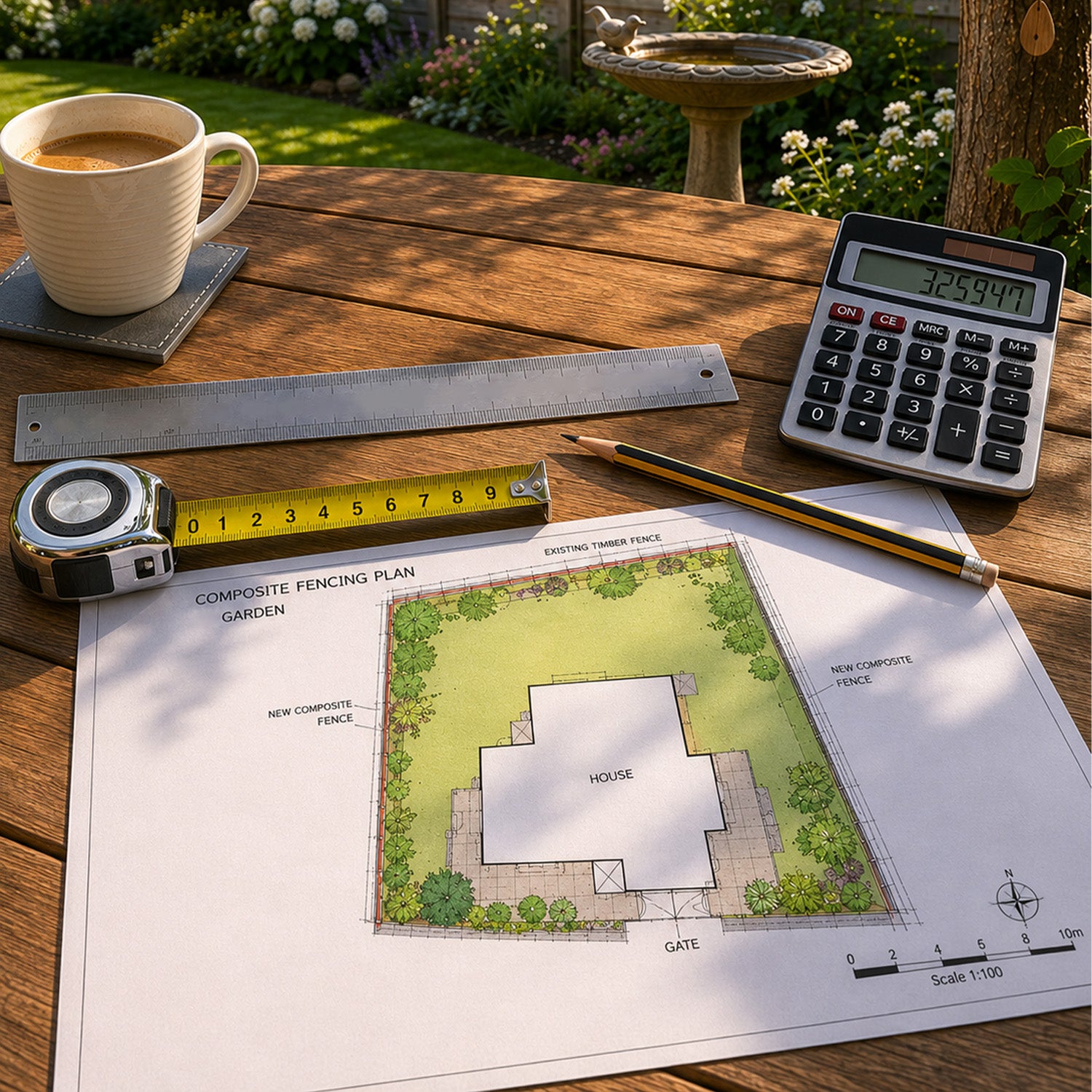
Where coordinating cladding with decking or fencing, compare samples from each range. Similar colour names do not establish exact equivalence between products with different surfaces and formulations. A deliberate tonal relationship is a more realistic aim than an assumed match.
What Makes a Grey Exterior Look Finished?
Small details often determine whether a scheme feels complete. Trims, joints, corners and transitions should be considered alongside the board colour. Their position and scale can become more noticeable when several surfaces sit within a restrained grey palette.
Give Joints a Planned Position
Board-end joints should follow the layout rather than emerge from whichever length remains during fitting. Consider the visible pattern and the required support behind it. A drawing helps the designer and installer resolve both together.
Resolve Openings and Corners Early
Check how the cladding meets windows, doors and adjoining materials. Compatible trims are part of the product selection, while flashings and moisture details belong to the complete wall design. A neat appearance should preserve the necessary drainage and ventilation paths.
Keep the Material Palette Clear
A scheme does not need a large number of finishes to feel rich. Grey composite cladding can contribute colour and texture at the same time. Let each surrounding material have a purpose, rather than adding another finish to fill every available area.
Weathering and Care: Set Realistic Expectations
Outdoor finishes experience sunlight, moisture and changing temperatures. Capped construction is designed to improve resistance, but it does not mean a board is immune to dirt or guaranteed to remain visually unchanged. Read the weathering information for the specific range.
NeoTimber® composite cladding does not require routine painting or staining to maintain its intended finish. Cleaning remains part of its care. Follow the maintenance guide before selecting cleaners or using pressure-washing equipment.
Cleaning frequency depends on exposure. Nearby traffic, vegetation and airborne deposits can affect the wall differently. Grey should not be chosen on the assumption that it hides every mark; a deposit that is subtle in one light may be visible in another.
Keep the product details, instructions and relevant warranty information with the project records. Read the warranty terms for coverage, conditions and exclusions, rather than interpreting a headline duration as a promise of unchanged appearance.
Installation Quality Is Part of the Design
A well-chosen shade cannot compensate for an uneven framework or unresolved joints. The supporting wall, battens and fixings need to be suitable for the project, while the boards need the specified movement allowances. Composite can expand and contract as temperatures change.
Use the installation resources and the instructions for the chosen products. Confirm the arrangement before rotating boards or changing the profile, because a design choice can affect the supporting construction.
Ask the installer or designer to confirm suitability and applicable building requirements, including fire performance. Colour and product appearance do not establish that a cladding system is appropriate for every building.
Budget for the Whole Grey Cladding Project
The board price is only one part of the cost. Include supports, fixings, trims, labour, access and cutting waste when comparing proposals. Changes to the existing wall or junction details may also affect the scope.
Resolve the layout before requesting final quantities. A small feature with several openings can involve more cutting and finishing work than its area suggests. Ask quotations to identify the selected range and colour so the comparison is based on the same products.
When weighing composite against timber or another material, compare the care needed to retain the appearance you want. The composite cladding vs wood guide can help frame that decision without assuming one material is always preferable.
A Practical Sample-to-Specification Process
- Define the purpose. Decide whether the cladding should be a focal point, a backdrop or a connection between building elements.
- Choose a colour direction. Use anthracite, dark grey, light grey or slate inspiration to narrow the palette without treating those names as exact matches.
- Compare profiles. Decide whether a boarded, grain-led or slatted appearance suits the elevation.
- View samples on site. Compare them beside the retained materials and under different light.
- Sketch the layout. Include boundaries, joints, openings and trims.
- Confirm suitability. Review the product documentation and installation design with the project professional.
- Agree the complete specification. Record the boards, exact colour names, accessories and care information before ordering.
Grey Composite Cladding FAQs
Is Anthracite Cladding the Same as Grey Composite Cladding?
Anthracite describes a colour direction, while composite describes a material. An anthracite cladding product may be made from different materials. NeoTimber® lists its colours by range, so check the actual product name and sample rather than assuming “anthracite” is a separate NeoTimber® colour.
Will Anthracite Grey Cladding Match My Windows?
A match should not be assumed. Frame sheen, material and tone can differ from a cladding board. Compare samples against the frames, and consider whether a deliberate contrast would suit the design better.
How Do I Choose Between Light Grey Cladding and Dark Grey Cladding?
Decide which surface should lead the composition. A darker direction can give the wall more visual weight, while a lighter direction may create a softer relationship with pale materials. Compare actual samples on the intended elevation.
Is Slate Grey Cladding a Standard Colour?
The name alone does not establish one universal shade. Check the supplier’s colour specification and compare a sample with the slate or stone you intend to use.
What Is Grey Weatherboard Cladding?
It commonly describes a grey exterior with a boarded, often horizontal appearance. Confirm whether the selected product uses an overlapping, shiplap or other profile and follow its installation instructions.
Does Grey Composite Cladding Need Painting?
NeoTimber® composite cladding does not require routine painting or staining. Maintain the supplied finish using the recommended care method.
Can Grey Cladding Fade?
Colour behaviour varies with the product and exposure. Capped boards improve fade resistance, but should not be described as guaranteeing zero colour change. Check the chosen range’s weathering information.
Can Slatted Cladding Be Used as a Freestanding Fence?
Do not assume a wall-cladding board is a complete fencing system. Confirm any proposed use with the supplier and establish an appropriate supporting design before specifying it.
Choose Grey Composite Cladding With a Clear Design Purpose
A successful grey exterior brings colour, texture and construction together. Begin with the character of the property, compare the actual finishes and resolve the layout before ordering. For broader design inspiration, explore our grey cladding guide and project gallery.
Order free NeoTimber® cladding samples to assess colours and profiles in your own setting, or browse the composite cladding collection to compare specifications and accessories for your project.