Design a Warmer Exterior With Golden Teak Tones
Teak composite cladding brings a warm, golden-brown palette to an exterior without the regular painting or staining needed to maintain some coated timber finishes. It offers a way to introduce wood-inspired character while choosing from different board textures and profiles.
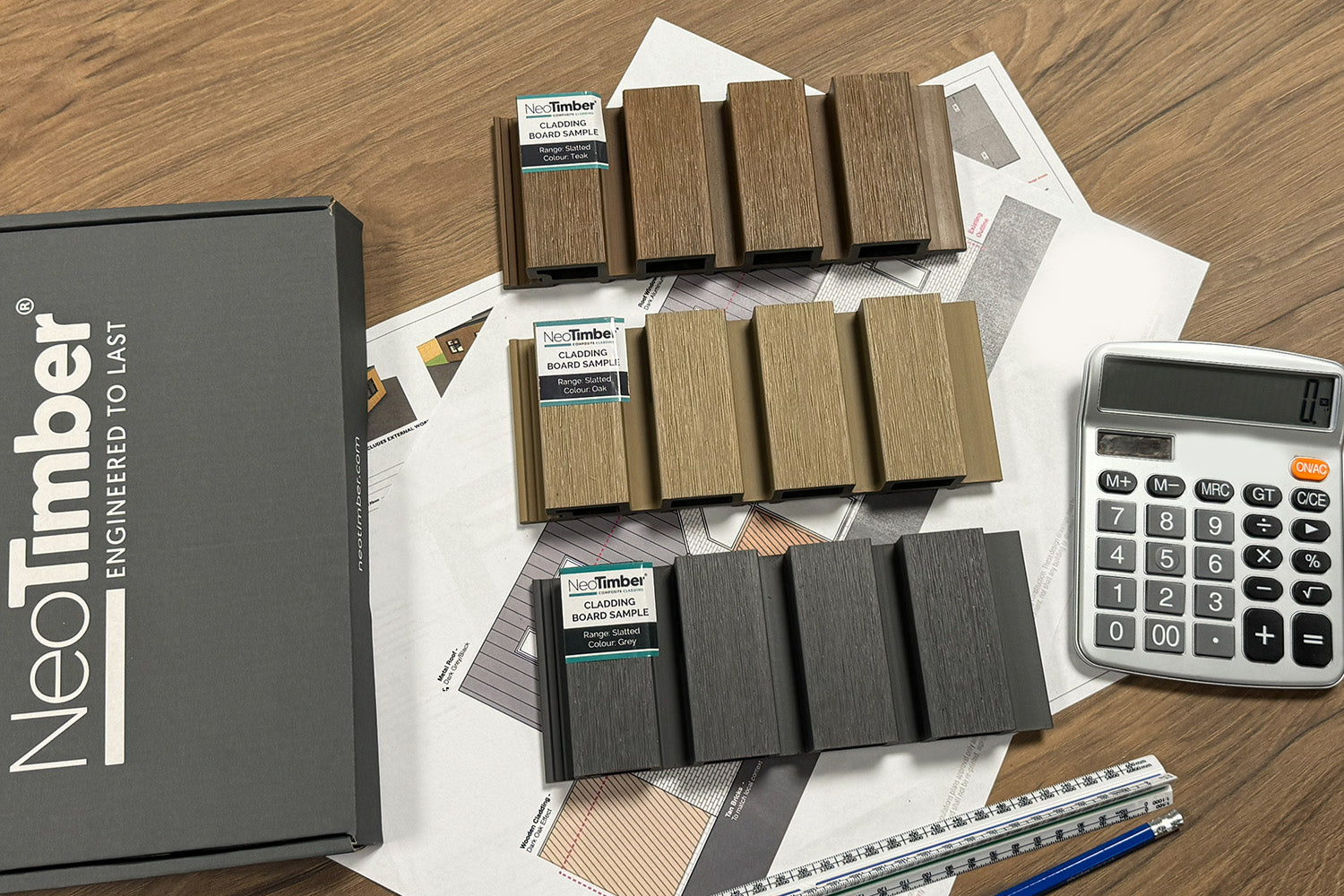
NeoTimber’s Teak finish is available in Classic, Deluxe and Slatted collections. Each creates a different visual effect, so selecting the colour is only the beginning of the design decision.
This guide explores teak cladding as a colour, a material choice and part of a coordinated façade. Browse our dedicated gallery, compare the products and discover how to plan teak wall cladding around the building, its surroundings and its ongoing care.
For an overview of the wider options, explore NeoTimber’s cladding page.
Teak Composite Cladding and Teak Wood Cladding: Understand the Difference
“Teak” can describe either a timber species or a finish inspired by its appearance. These are different products, and understanding that distinction helps you make a fair comparison.
NeoTimber® Teak composite cladding is a wood-polymer composite product in a Teak colour, not solid teak timber. Its golden-brown finish creates a timber-inspired appearance through the board’s colour and surface treatment.
If you are researching teak wood cladding, establish whether you want the natural material itself or its visual character. Solid timber needs its own assessment of sourcing, grade, finish and care. Composite has a different construction, specification and installation method.
Neither should be chosen by a colour name alone. Review physical samples, technical information and the complete installed cost. The better option is the one that meets your project’s needs and the appearance you want to live with.
Why Warm Cladding Deserves a Place in Contemporary Design
Contemporary architecture often uses large areas of glass, pale render and dark frames. These materials can create strong forms, but a warmer surface can help the exterior feel more connected to its setting.
Teak cladding offers that warmer layer. Its golden tones can soften a darker palette, provide contrast beside cooler masonry and introduce texture around a garden-room entrance or feature elevation.
The most successful designs give each finish a clear role. Rather than adding timber-effect boards wherever a wall seems empty, decide what the clad area should do: highlight an entrance, distinguish a volume or connect the home with an outdoor seating space.
That approach makes the colour part of the architecture. A carefully placed feature area may be more effective than covering every available surface, especially where the existing brickwork or roof already has a strong character.
The NeoTimber® Teak Composite Cladding Gallery
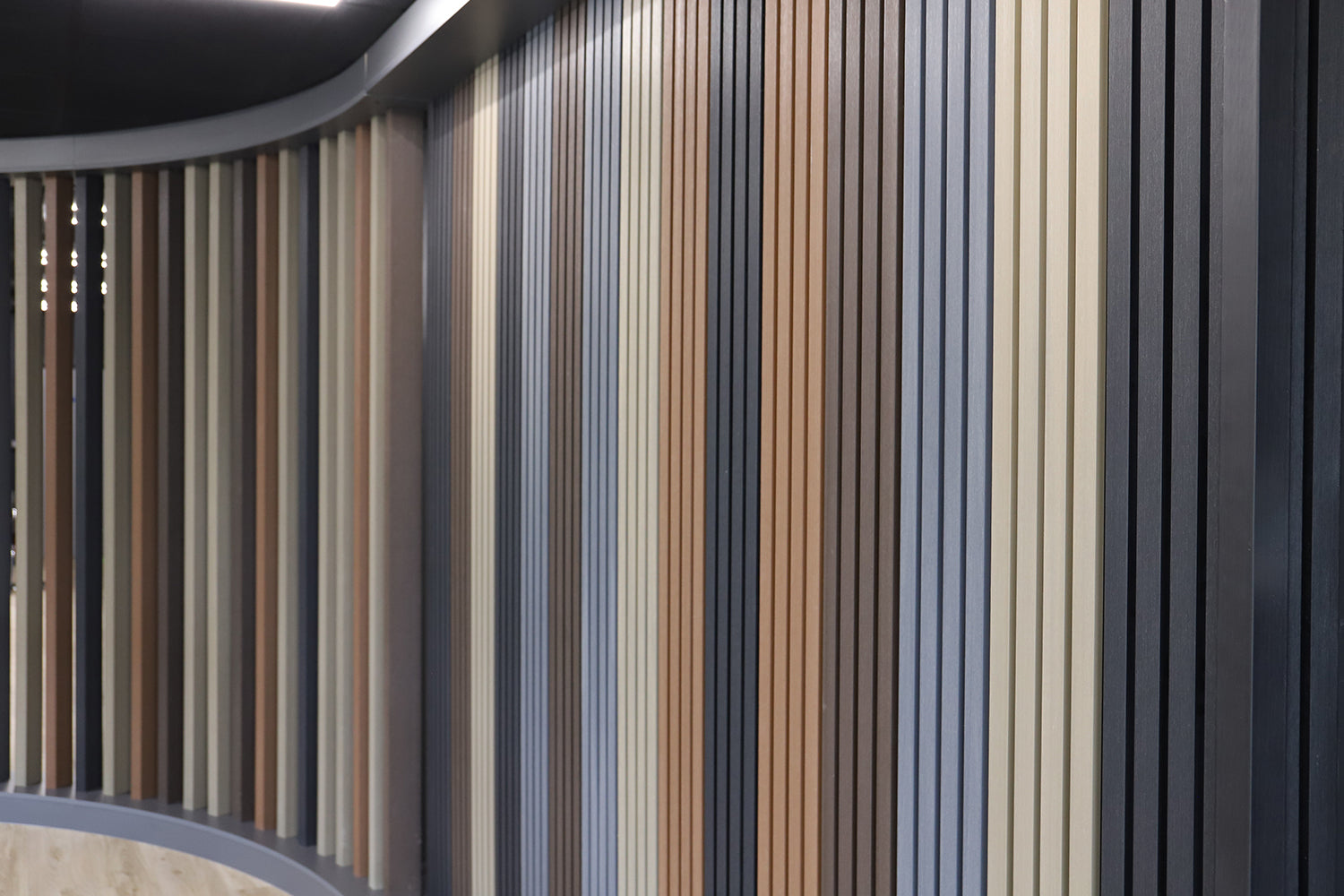
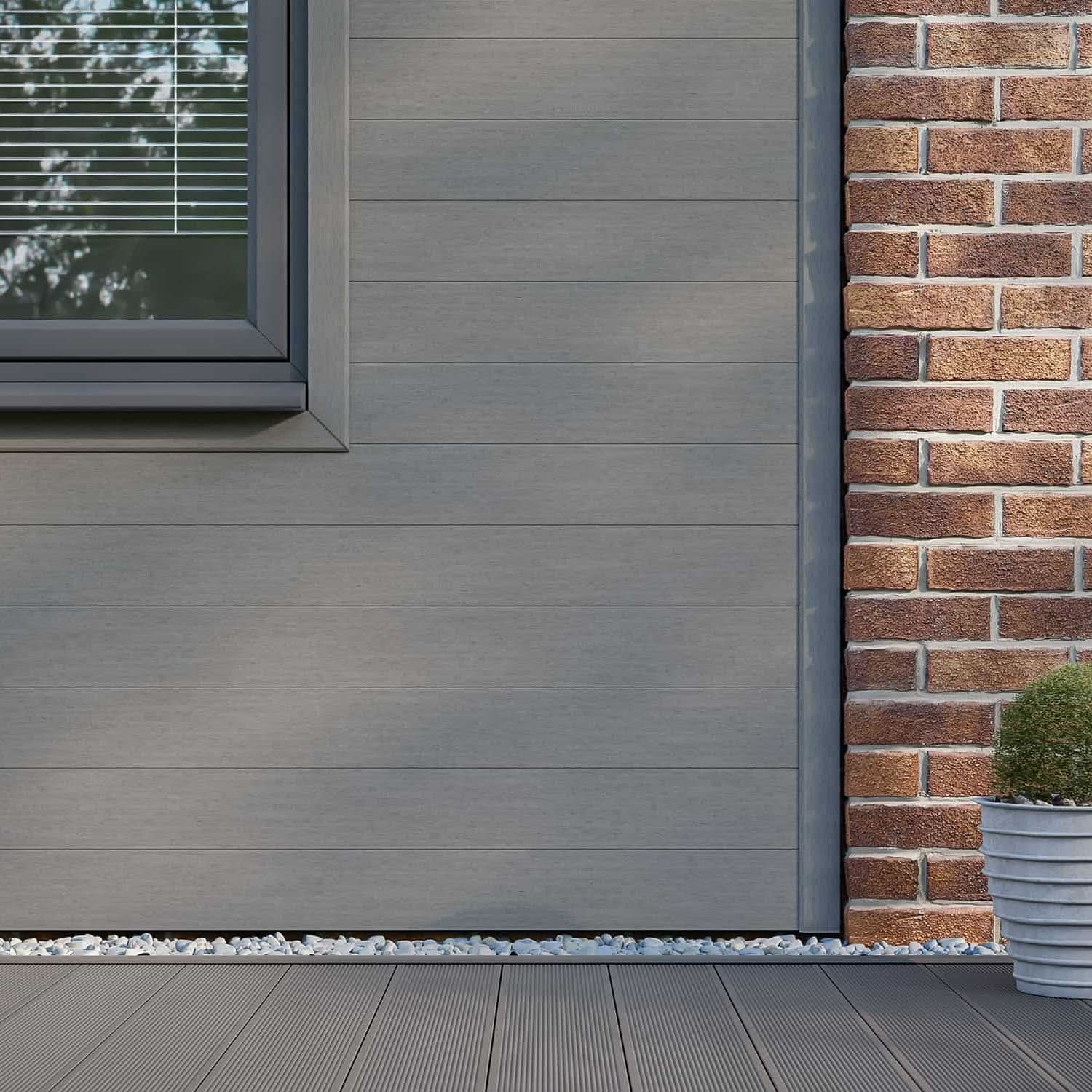
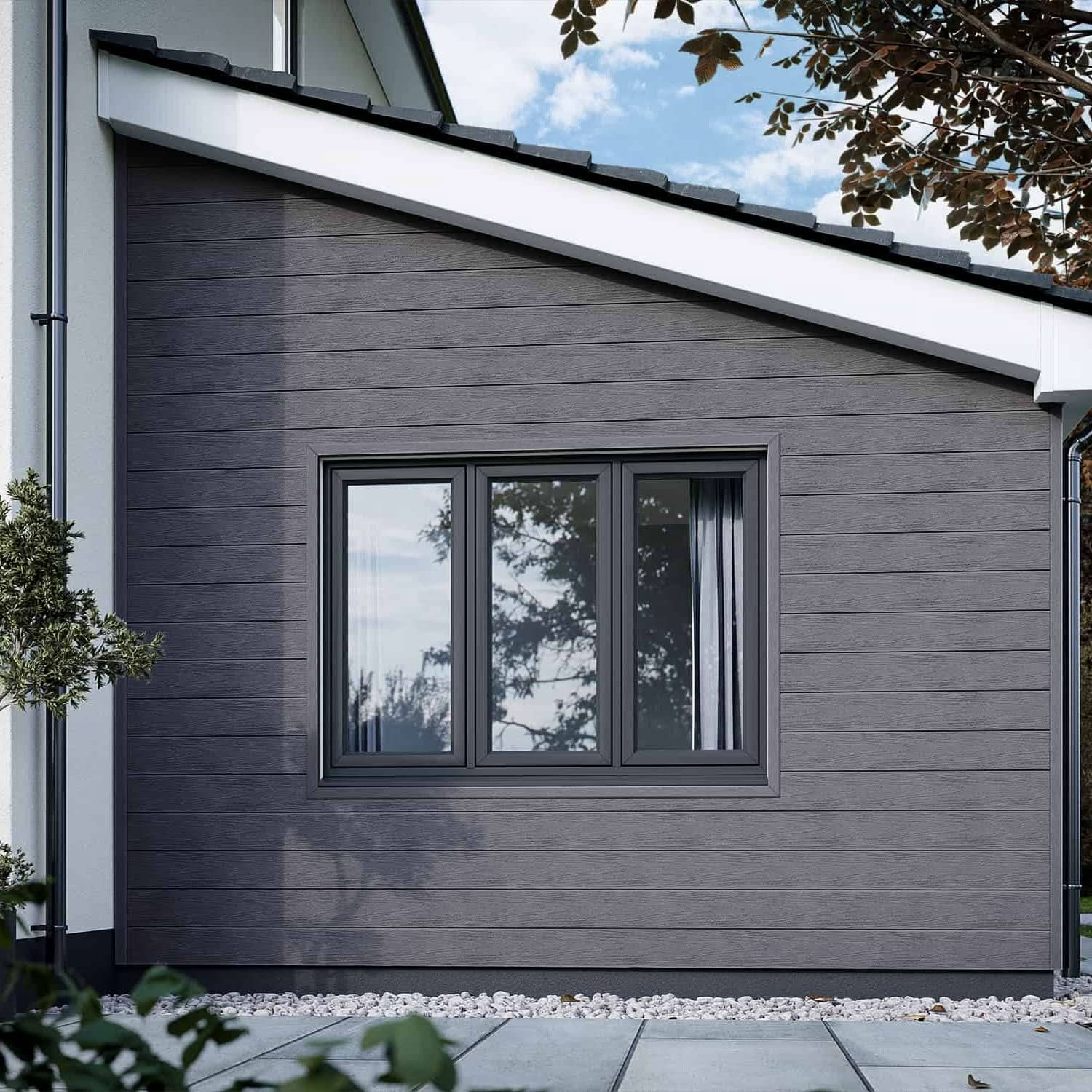
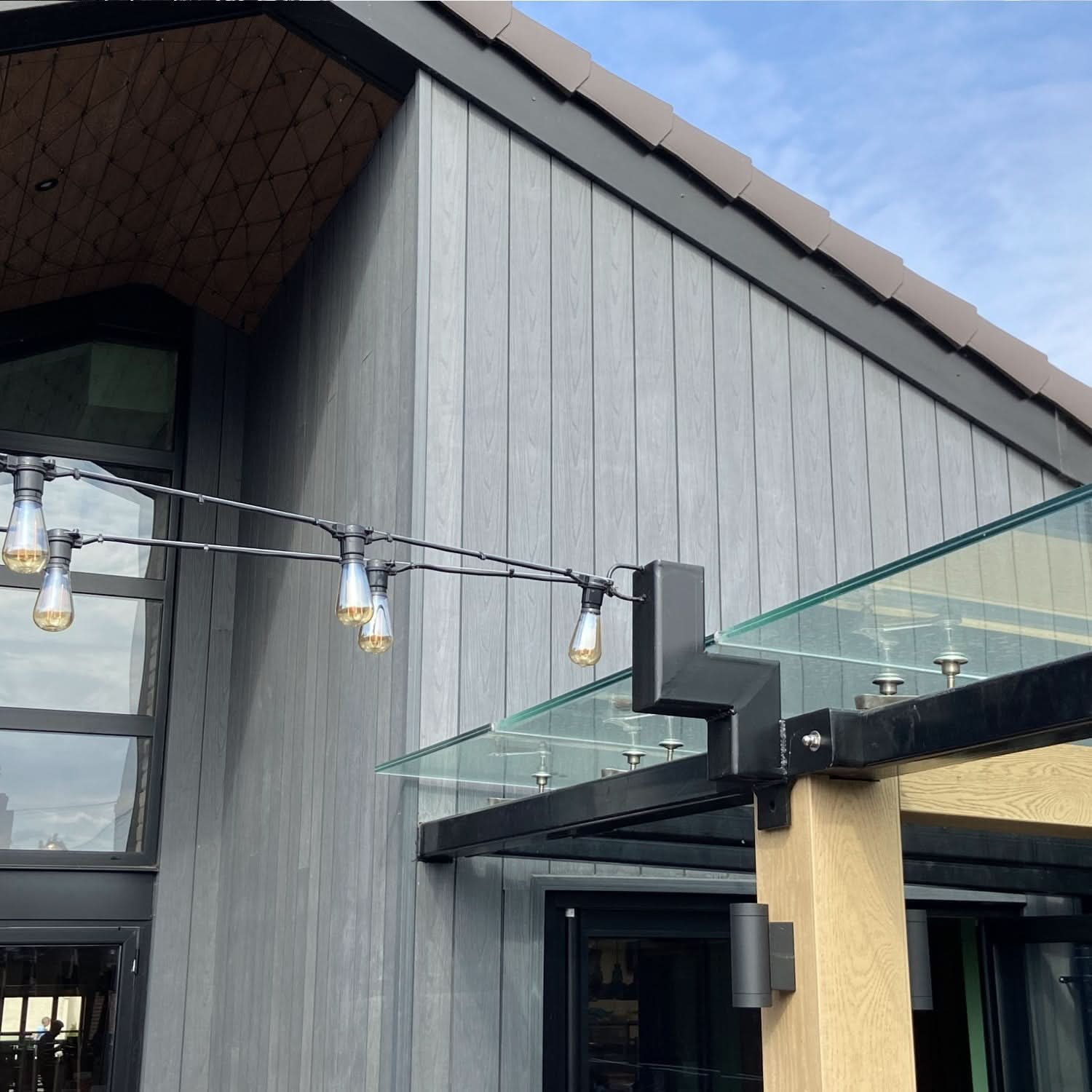
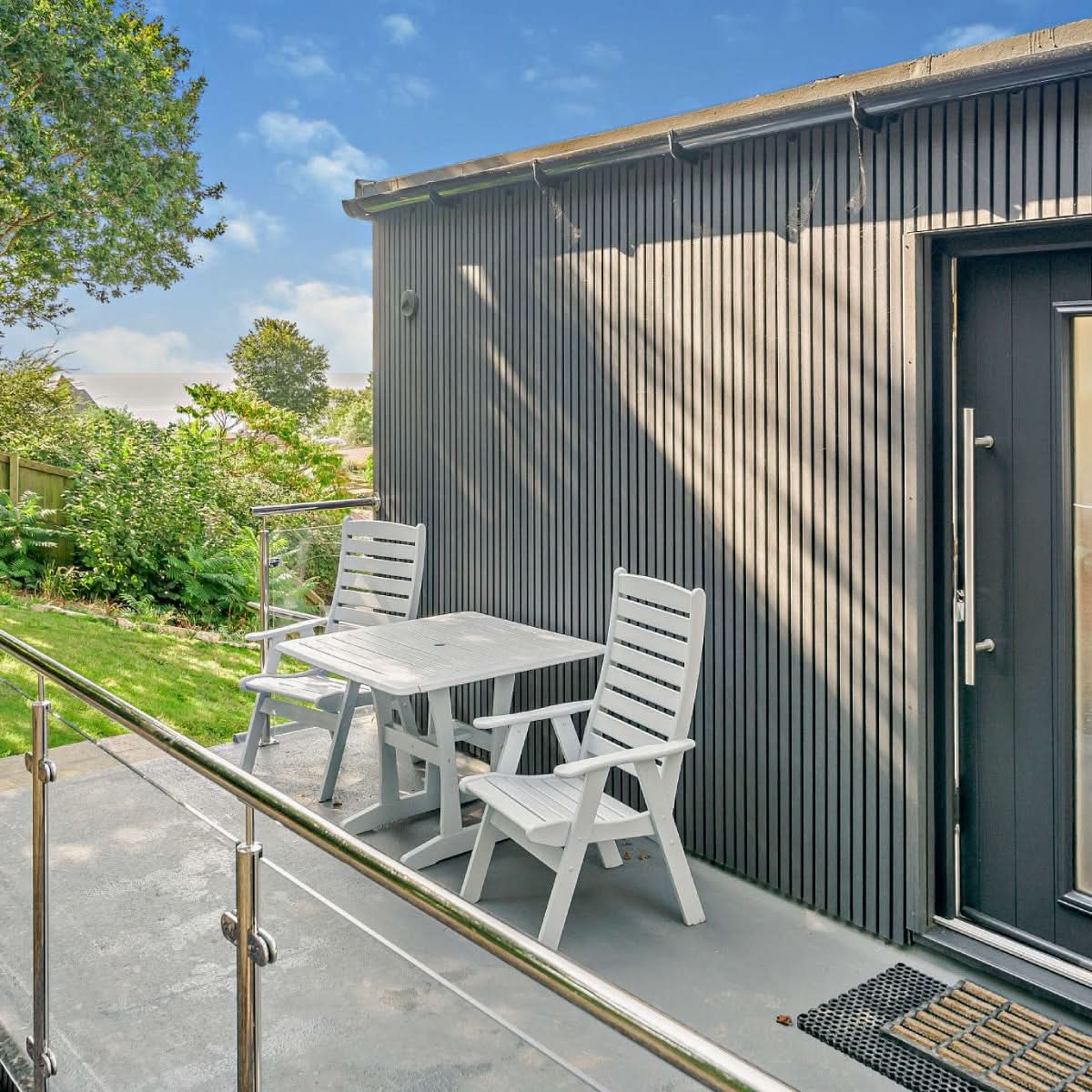
Explore our Teak composite cladding gallery to see how the finish works across different settings. Use the photographs to compare board patterns, proportions and combinations with adjoining materials.
Look at the whole elevation as well as the close-up texture. Notice how window frames, roof edges, paving and planting influence the impression of the Teak colour. Those relationships can help you develop a more coherent design for your own property.
Gallery inspiration is a useful starting point. Follow it with a physical sample viewed in your own lighting, and review the wider cladding gallery if you are comparing several colours.
Classic Teak Composite Cladding
The Classic range is an uncapped composite option with a sanded surface. Teak is one of its available colours, offering a straightforward route to a warm timber-effect exterior.
Classic may appeal where a subtler texture fits the design. Compare it directly with the capped options so that your choice reflects the construction and care requirements as well as the initial appearance.
Uncapped and capped boards can weather differently. Do not assume that a Classic sample and a Deluxe sample will age identically just because both are labelled Teak. Ask for the current product guidance and realistic expectations for the selected range.

Deluxe Teak Cladding
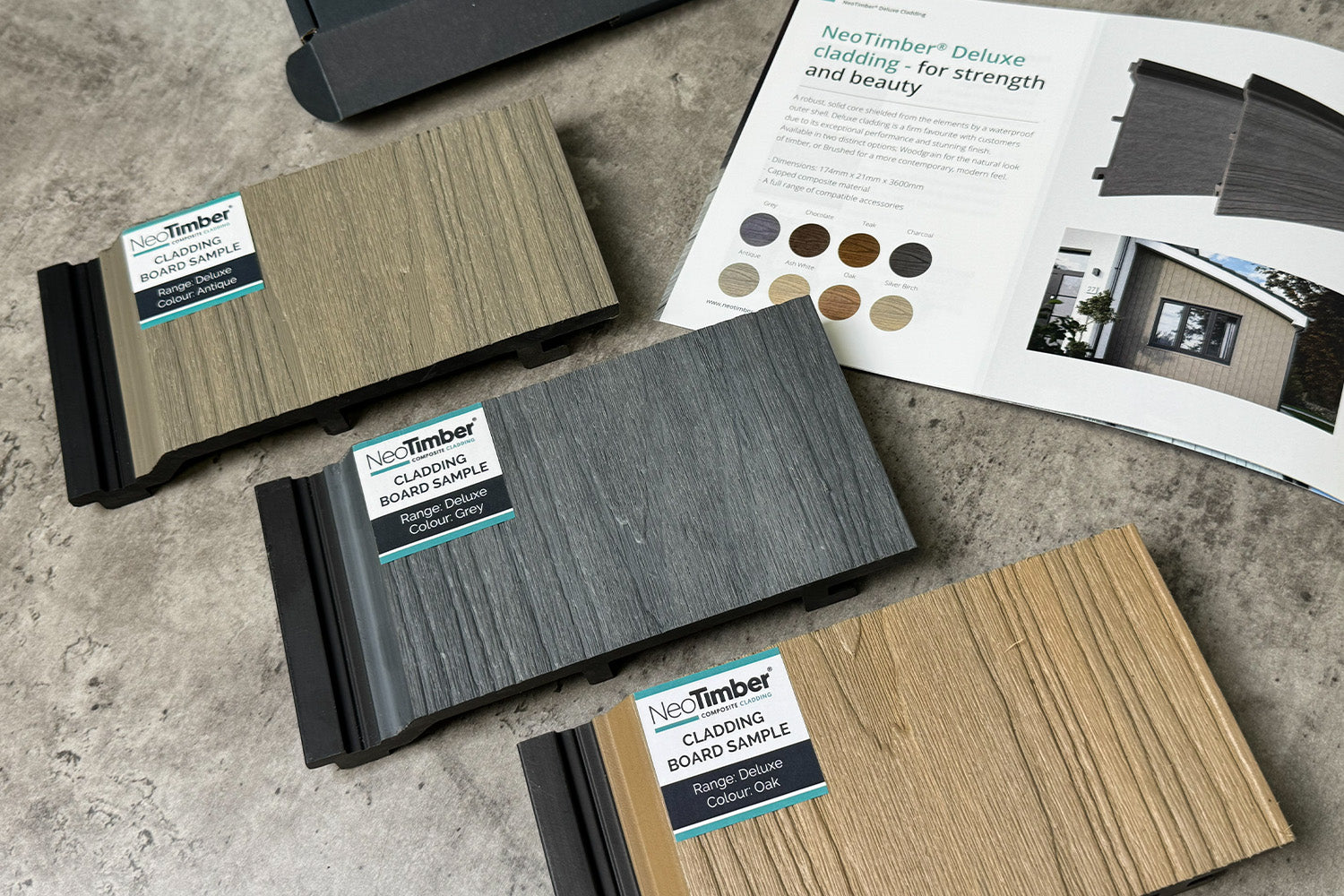
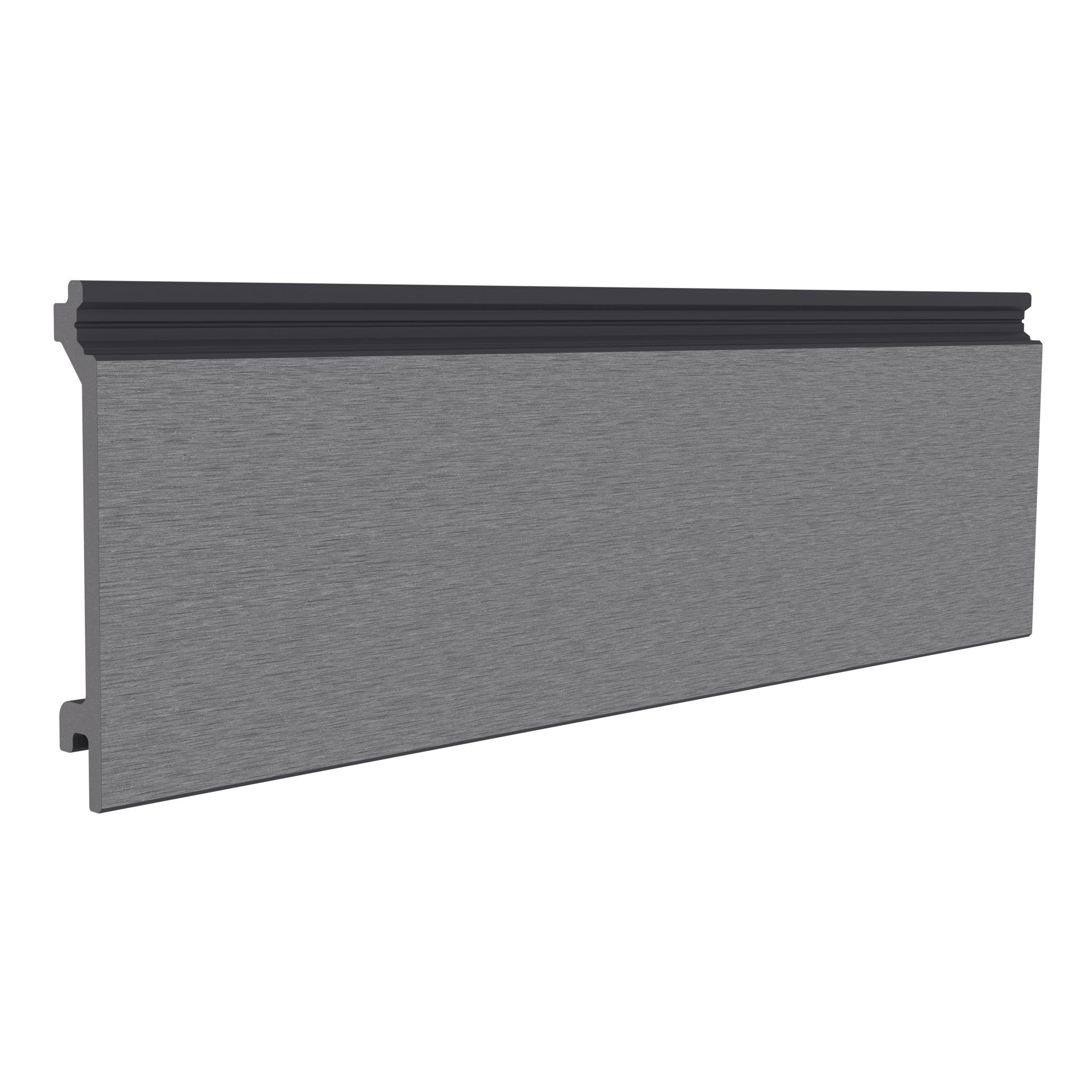
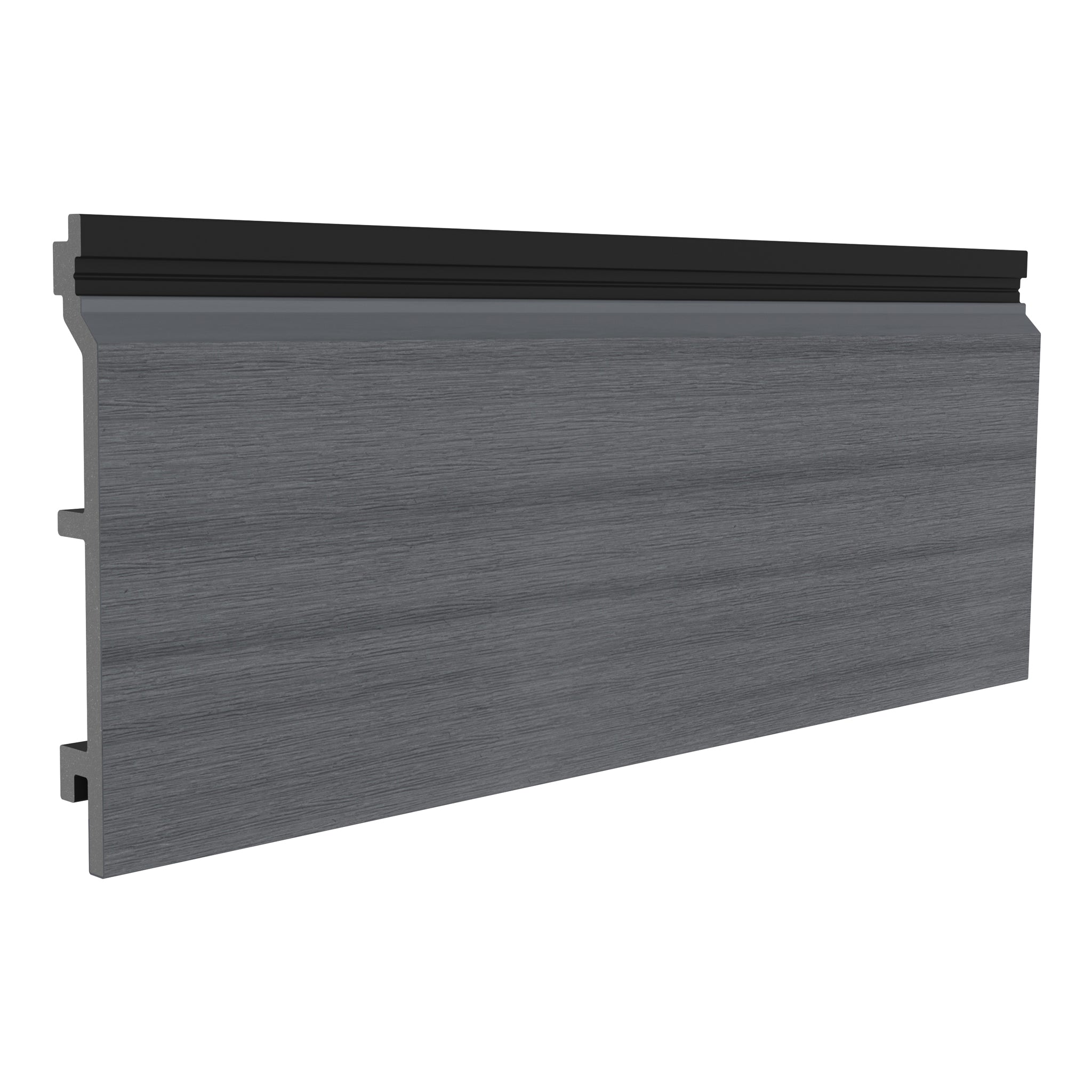
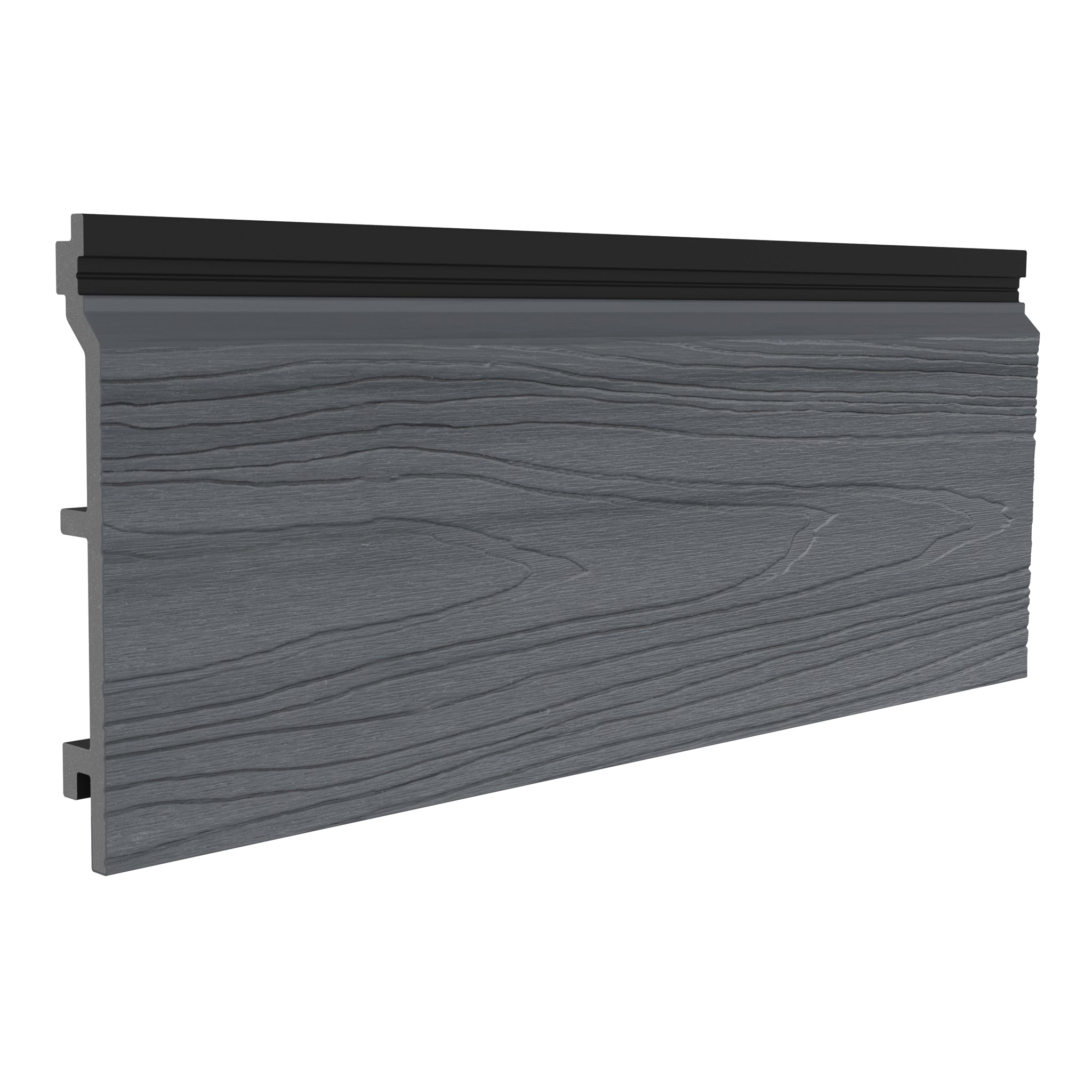
Deluxe Teak cladding has a protective capped surface, with brushed and woodgrain appearances available in the collection. The capping improves resistance to fading and staining, supporting a low-maintenance exterior finish.
A brushed surface gives a more restrained texture, while embossed woodgrain introduces a more pronounced timber-inspired detail. Compare the two at close range, then consider how they will read from the distance at which the wall is usually seen.
Read the capped composite cladding guide and the product pages for Deluxe Brushed and Deluxe Woodgrain. Check the board format and compatible components before finalising your layout.
Fade resistance should be understood as improved protection, rather than a guarantee that the colour will remain completely unchanged throughout ownership.

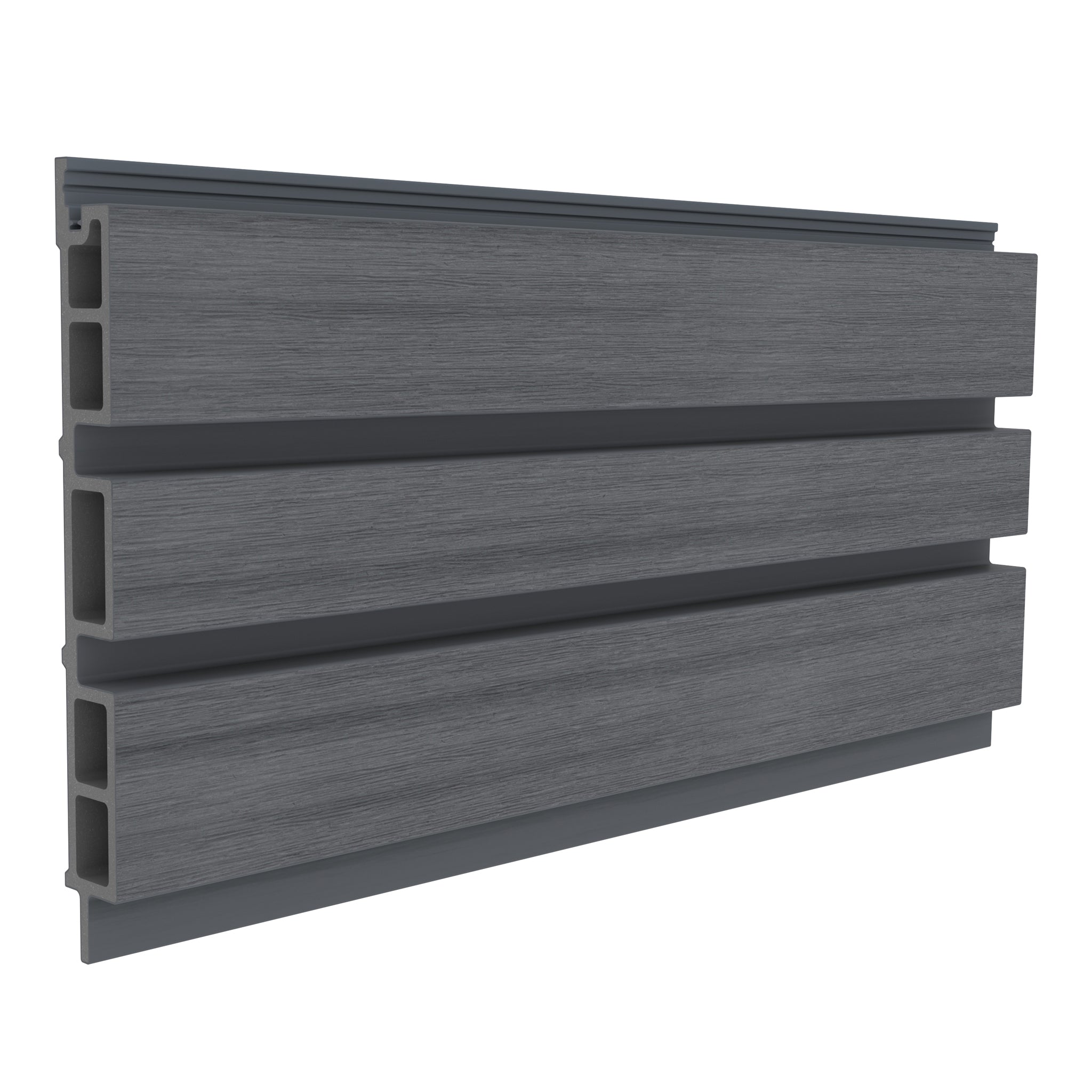
Slatted Teak Wall Cladding
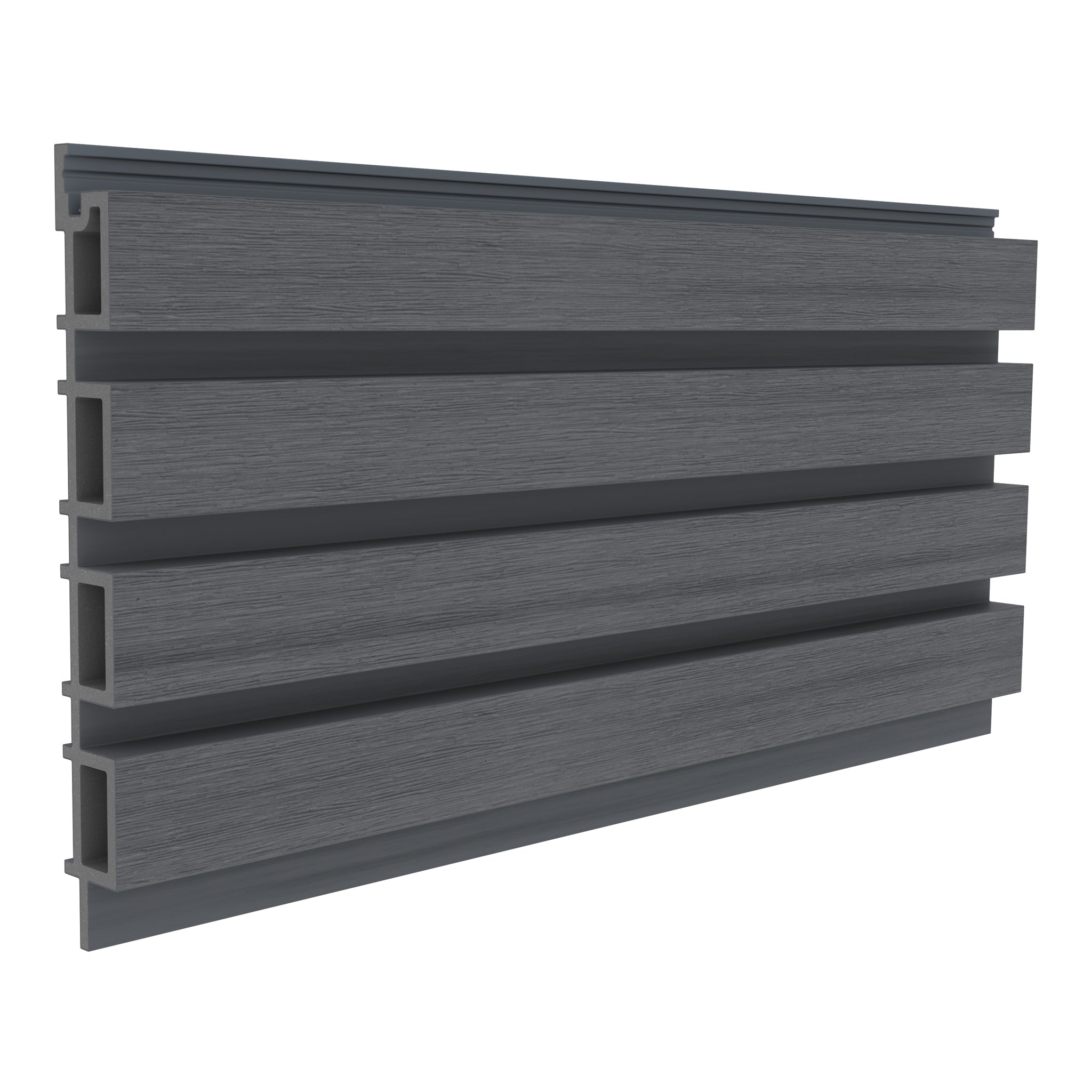
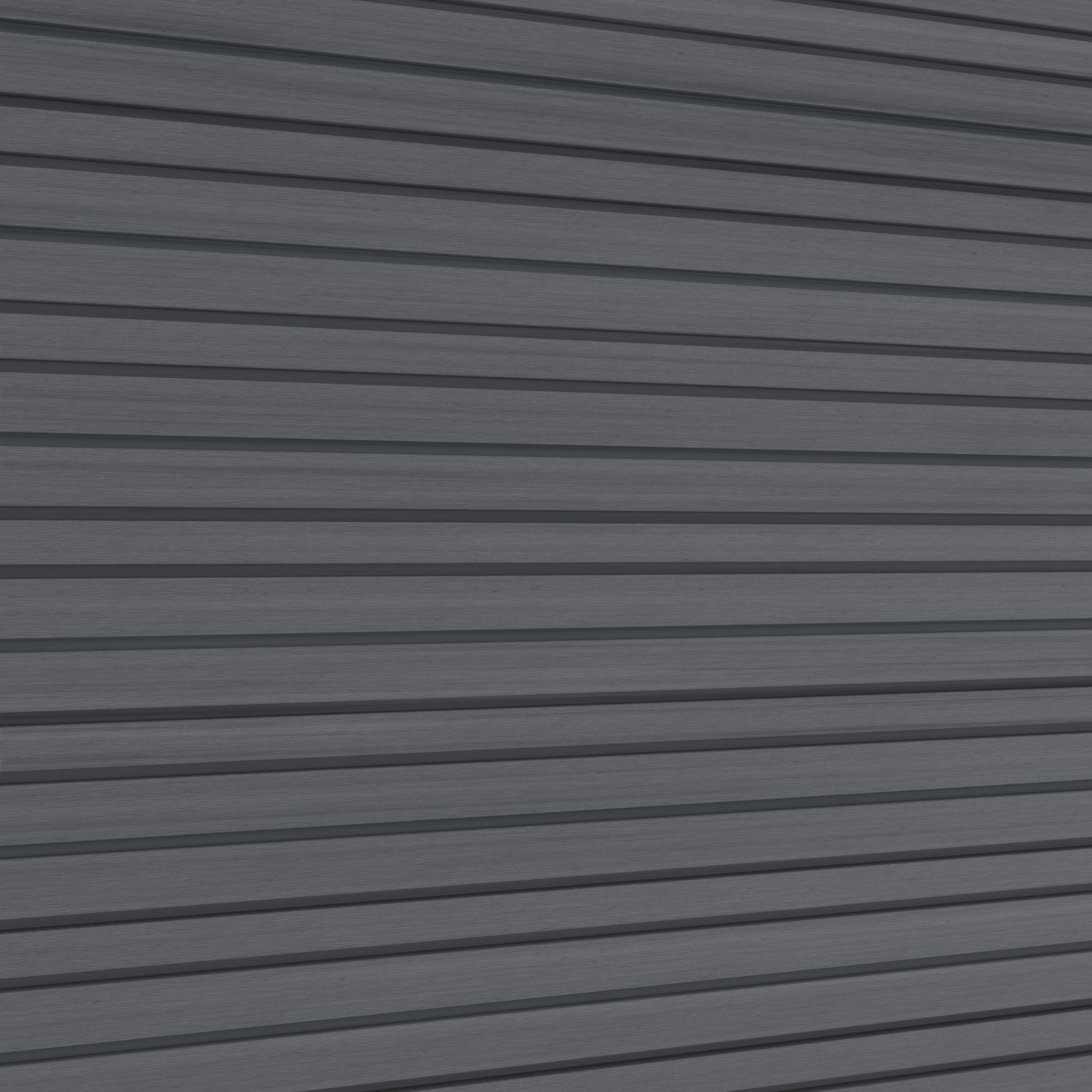
Slatted Teak wall cladding introduces a repeated linear pattern to the façade. Its colour and profile work together: warm tones soften the structured lines, while shadows give the surface definition.
This can be useful where you want a feature area to hold its own beside large windows or a simpler rendered wall. The pattern adds visual interest without needing another material or decorative coating.
The capped Slatted collection includes different profiles. Compare the standard Slatted board with other available options and check the dimensions and installation details for the exact product. A profile that works well on a broad elevation may have a different effect on a narrow return.

Choose the Profile Before Finalising the Design
Colour is often the first choice, but profile determines much of the finished character. A quieter surface, an embossed grain and a slatted pattern can produce very different façades in the same Teak palette.
| Option | Design consideration | What to compare |
|---|---|---|
| Classic Teak | A sanded, understated surface. | Uncapped construction, appearance and weathering guidance. |
| Deluxe Teak | Brushed or woodgrain texture with capping. | Surface detail, board format and compatible trims. |
| Slatted Teak | A repeated pattern with greater visual definition. | Profile scale, layout and the instructions for the selected board. |
Request samples of the options you are genuinely considering. Place them beside the existing materials, then step back to assess the palette. A decision made only from a close-up photograph can overlook how the finish works across the whole building.
Teak Cladding Colour Schemes
Teak With Charcoal or Black
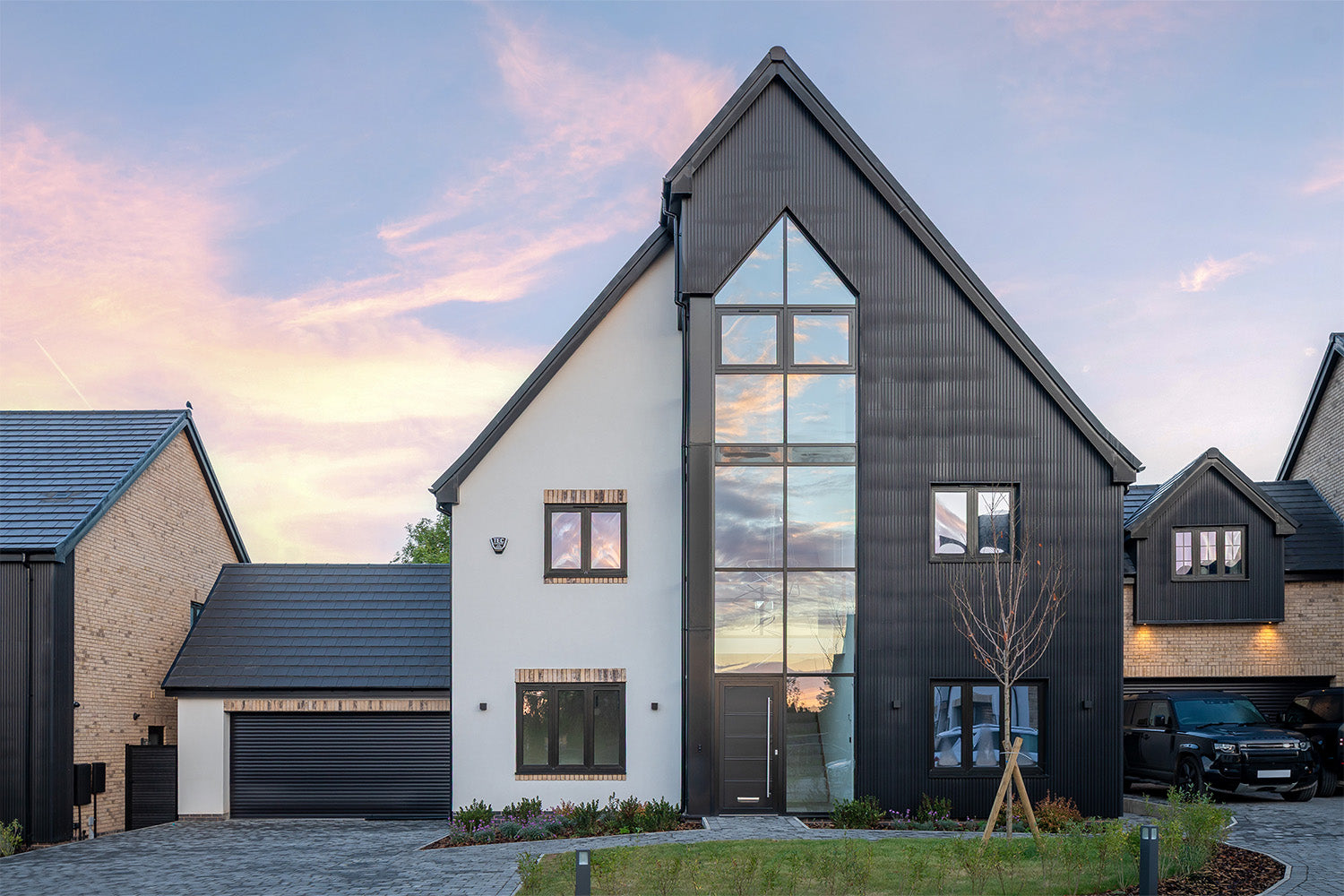
Dark window frames and metal details can give Teak a clear outline. The contrast suits designs where the glazing and entrance need definition, while the cladding supplies warmth.
Keep related details consistent where possible. A considered relationship between frames, gutters and trims can make the façade feel more unified than several competing dark finishes. Compare the Teak sample with the actual frame colour rather than assuming all blacks are identical.
Teak With Brickwork
Brick already brings colour and texture, so compare Teak alongside both the brick and mortar. A warm brick may create a tonal relationship, while a cooler brick can offer more contrast.
Use the cladding to distinguish a deliberate area, such as a garden-room volume or entrance. Consider whether a pronounced grain adds useful interest or whether a subtler finish better balances the existing masonry.
Teak With Pale Render
A pale rendered surface can provide a calm backdrop to warmer boards. This pairing gives you a way to highlight an architectural feature without introducing a very dark cladding colour.
Check the undertone of the render. A cream, warm white and cool grey can each make Teak appear different. Sample comparisons in daylight are more useful than relying on a generic description of a neutral colour.
Teak With Planting and Paving
In a garden setting, timber-inspired tones can help connect a building with greenery. Coordinate the façade with paving and outdoor furniture so that the garden room feels part of a wider space.
Allow for the practical side of that landscape design. Planting should leave access for care and keep required drainage and ventilation openings clear. Think about mature plants, rather than just the size they are on installation day.
Horizontal or Vertical Teak Wall Cladding?
Orientation changes the visual rhythm of the wall. Horizontal courses can emphasise a broader composition, while vertical lines can draw attention to taller forms. The right choice depends on the building and the selected profile.
Consider the relationship with windows and corners. Plan where boards end, where joints fall and how the pattern continues around openings. A consistent layout helps the wall feel designed rather than assembled from leftover lengths.
Check the supporting arrangement for your proposed orientation using the installation resources. A vertical installation should not be treated as simply rotating a horizontal frame; drainage and ventilation must still work as intended.
Teak Wood Cladding or a Composite Alternative?
If teak wood cladding is on your shortlist, compare the complete specification and intended appearance with composite. Natural timber offers individual grain and its own weathering character. Composite gives you a manufactured finish and a different care routine.
Timber maintenance depends on the material, coating and desired result. It is inaccurate to say every timber façade must be varnished or painted. A design that accepts natural weathering has different priorities from one intended to retain a coated appearance.
For composite, reduced decorative upkeep is a central benefit, but cleaning and checks remain necessary. Use the composite cladding versus wood guide to assess both options fairly.
Where sourcing is important, request evidence for the actual products. Material origin, relevant certification, expected life and end-of-life arrangements deserve attention. A wood-effect appearance says nothing by itself about those questions.
Low Maintenance, With Realistic Expectations
Teak composite cladding is designed to provide its finish without regular painting or staining. Its care routine still needs to suit the board range and the conditions around the property.
Follow NeoTimber’s maintenance guide for cleaning methods and treatment of marks. Do not sand capped Deluxe or Slatted boards. If you are unsure about a stain or cleaner, ask for advice before trying a stronger method.
The fade-resistance guide provides further context on appearance over time. Capping improves protection, but does not make the surface immune to all staining or colour change.
Review the warranty terms as part of your purchase. Keep records of the range, colour and installation so future enquiries can be answered accurately.
Plan the Whole Wall, Not Just the Visible Finish
Teak wall cladding is the decorative outer layer of a wider system. The supporting structure, wall connections, moisture detailing and ventilation need to be suitable for the building and location.
Confirm the product’s suitability for the application, including relevant fire and building requirements. Neither a capped surface nor a warm timber-effect colour establishes that a board is appropriate for every site.
Calculate materials using the selected board’s effective coverage. Include cutting allowances, starter components, fixings, trims and the supporting frame. The cladding calculator can help with initial planning, but check the result against the layout.
If the scheme includes a boundary feature, explore separate fencing options. Do not assume exterior cladding can replace a freestanding fence without a confirmed supporting design. For a coordinated terrace, review the decking range as a separate specification.
Five Decisions to Make Before Ordering
- Define the clad area: decide what role it plays in the architecture.
- Compare finishes: review Classic, Deluxe and Slatted samples at the property.
- Resolve the layout: plan orientation, joints, corners and openings.
- Confirm the specification: check the complete wall system and compatible accessories.
- Build the budget: include boards, supporting components, delivery, labour and access.
These decisions help avoid choosing a colour first and discovering later that the preferred profile or installation arrangement does not fit the project.
Frequently Asked Questions
Is NeoTimber® Teak cladding solid teak wood?
No. Teak is the colour name for composite cladding. If you want solid teak wood cladding, assess that as a separate material specification.
Which ranges include Teak composite cladding?
Teak is available in Classic, Deluxe and Slatted collections. Check the current product pages for formats and availability.
Will Teak composite cladding keep exactly the same colour?
Do not assume an unchanged finish. Construction, exposure and care affect appearance, and capped boards provide improved resistance rather than complete immunity to fading.
Can I see Teak wall cladding before buying?
Browse gallery above, then request physical samples to compare finishes in your own lighting.
Turn Teak Inspiration Into a Considered Exterior
The appeal of teak composite cladding lies in its combination of warmth, texture and reduced decorative upkeep. Choose a profile that fits the scale of your wall, coordinate it with adjoining materials and plan the technical details before ordering.
Explore NeoTimber® composite cladding, review the colour guide and request free samples. With the finish and specification considered together, you can create a warm exterior that belongs in its setting.