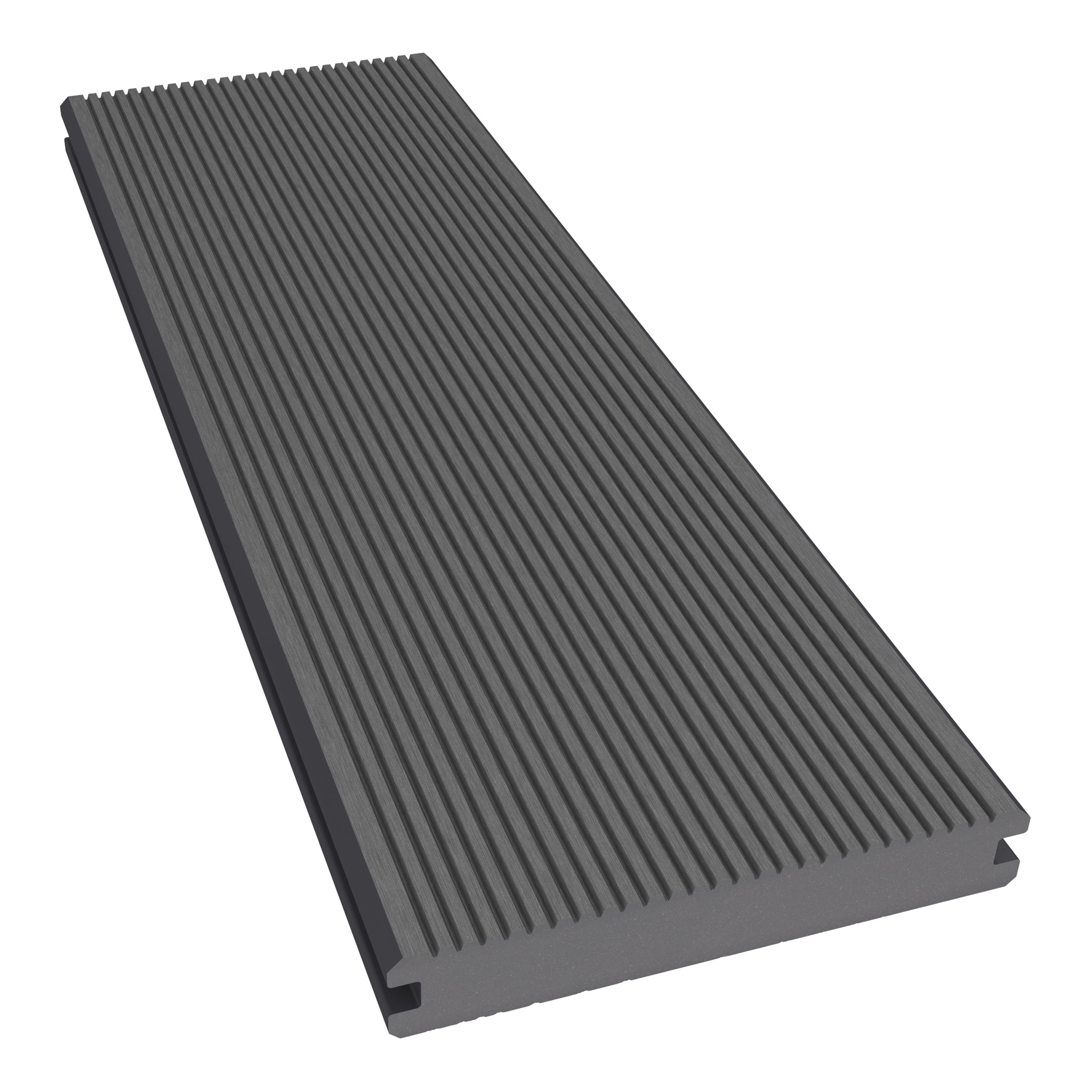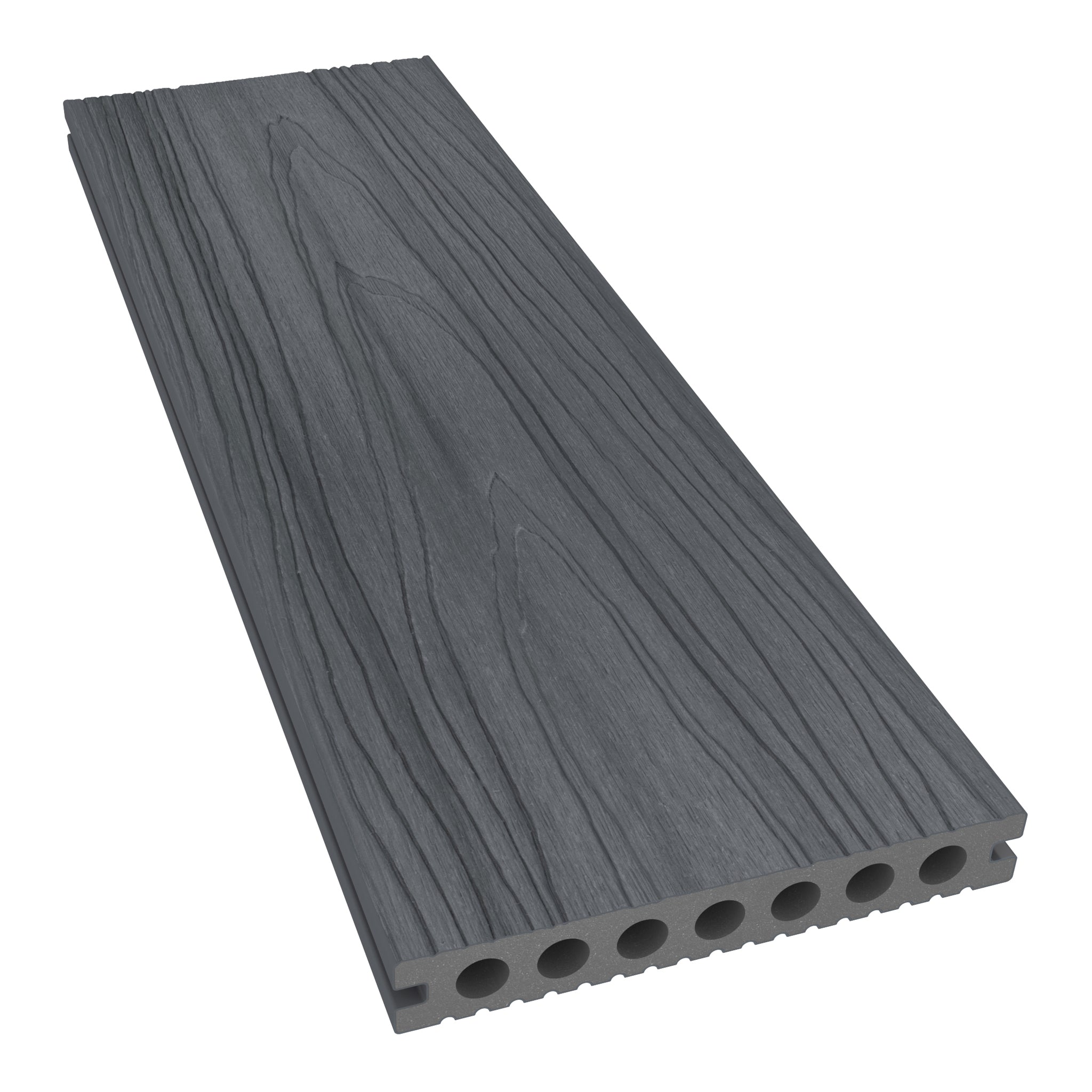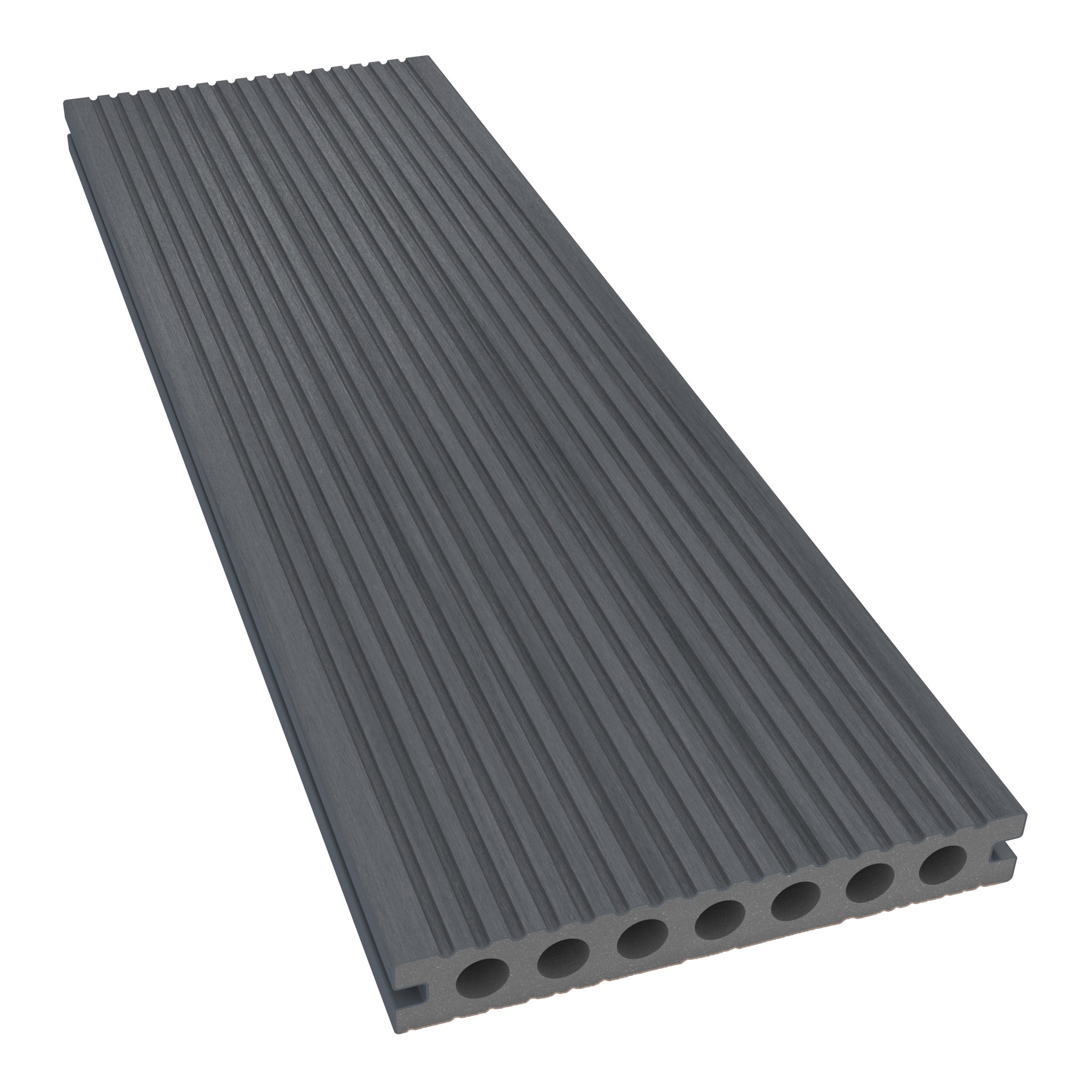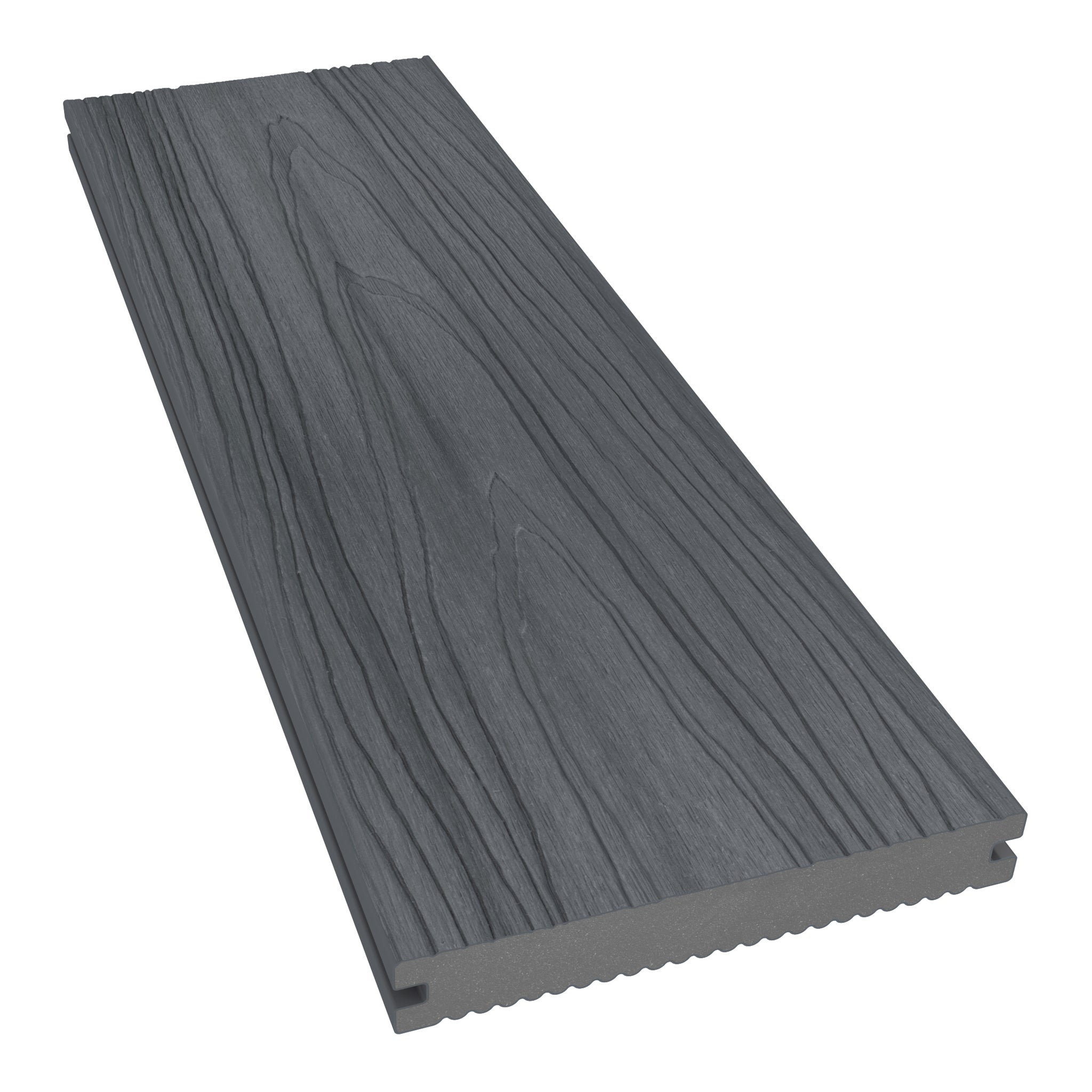
Choosing Between Wood Polymer Composite and Plastic Deck Boards
When comparing composite vs uPVC decking, start with what the boards are made from and how the complete installation will perform. Both can offer an alternative to maintaining a coated timber deck, but neither material name guarantees a particular finish, lifespan or level of grip.
Composite decking combines wood fibres, polymers and additives. uPVC decking uses unplasticised polyvinyl chloride as its principal polymer material, with additives and profile designs varying between products. The practical choice depends on the exact board, supporting frame and intended use.
This guide explains what to compare before ordering. Explore NeoTimber’s decking guide for an overview, or browse our composite decking range to compare available profiles and finishes.

Composite vs uPVC Decking at a Glance
| Consideration | Composite decking | uPVC decking |
|---|---|---|
| Composition | Wood fibres, polymers and additives | PVC-based formulation with product-specific additives |
| Appearance | Wood-inspired textures and colours vary by range | Textures, colours and surface technologies vary by product |
| Maintenance | Cleaning and inspection; normally no routine refinishing | Cleaning and inspection according to manufacturer guidance |
| Movement | Requires specified fixing and movement allowances | Requires its own specified fixing and movement allowances |
| Slip resistance | Check exact board and surface test data | Check exact board and surface test data |
| Cost | Depends on board, frame, accessories and labour | Depends on board, frame, accessories and labour |
What Is the Material Difference?
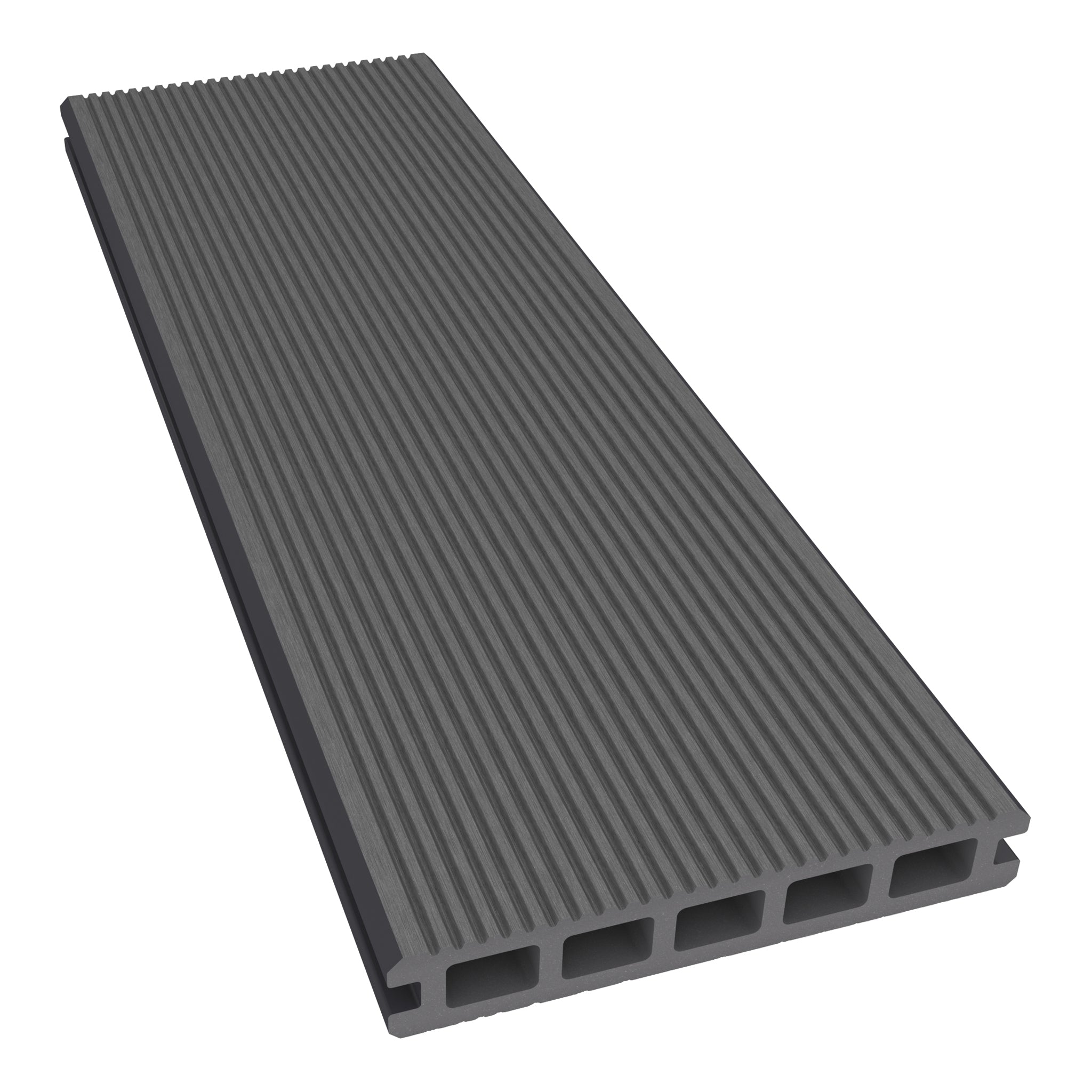
Wood polymer composite, or WPC, incorporates wood fibres within a manufactured board. Capped products add a protective surface layer, while uncapped products have a different exposed surface construction.
The terms “plastic decking”, “PVC decking” and “uPVC decking” are sometimes used loosely in product descriptions. They should not be assumed to identify every detail of the formulation. Confirm whether the proposed board contains wood fibres and ask for the technical specification.
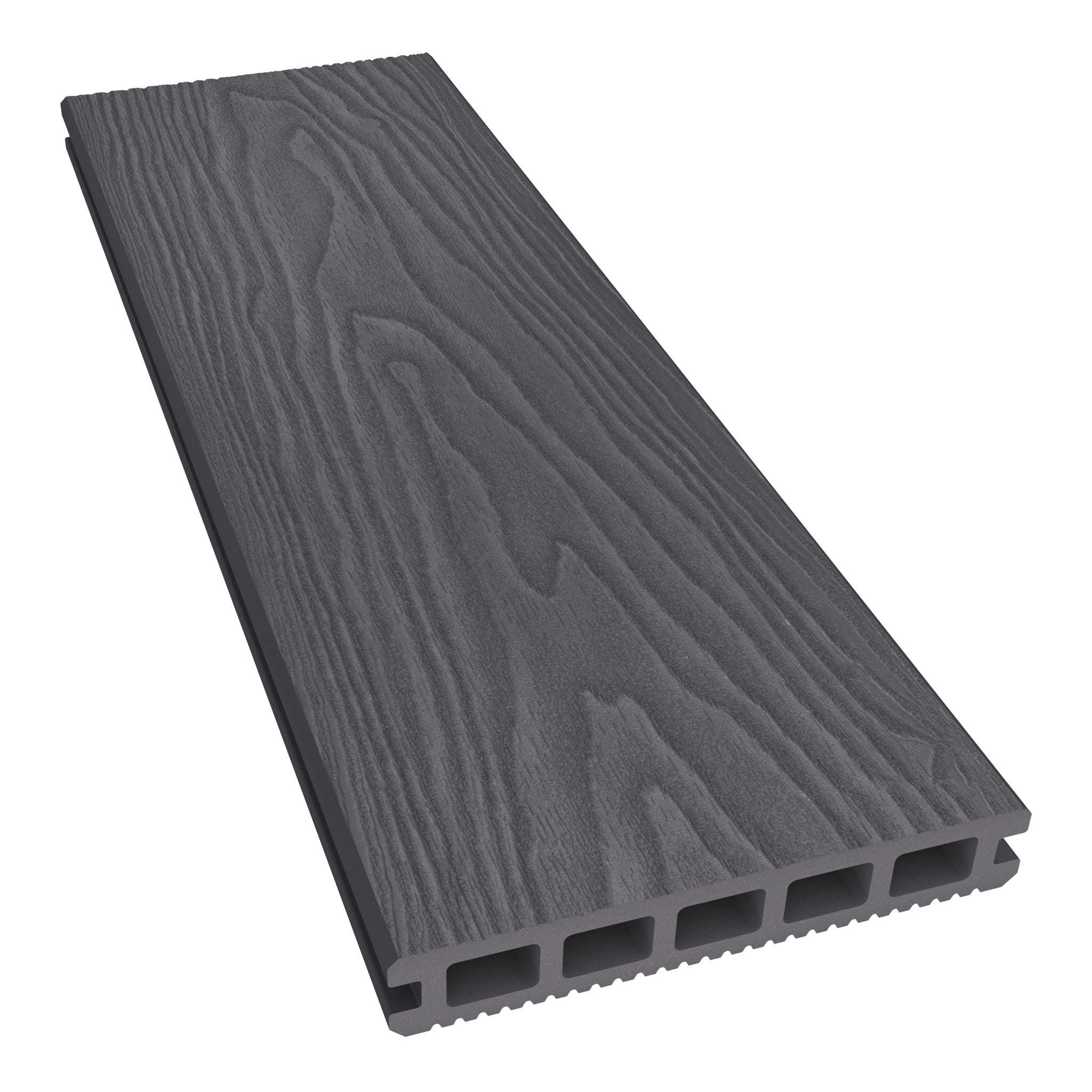
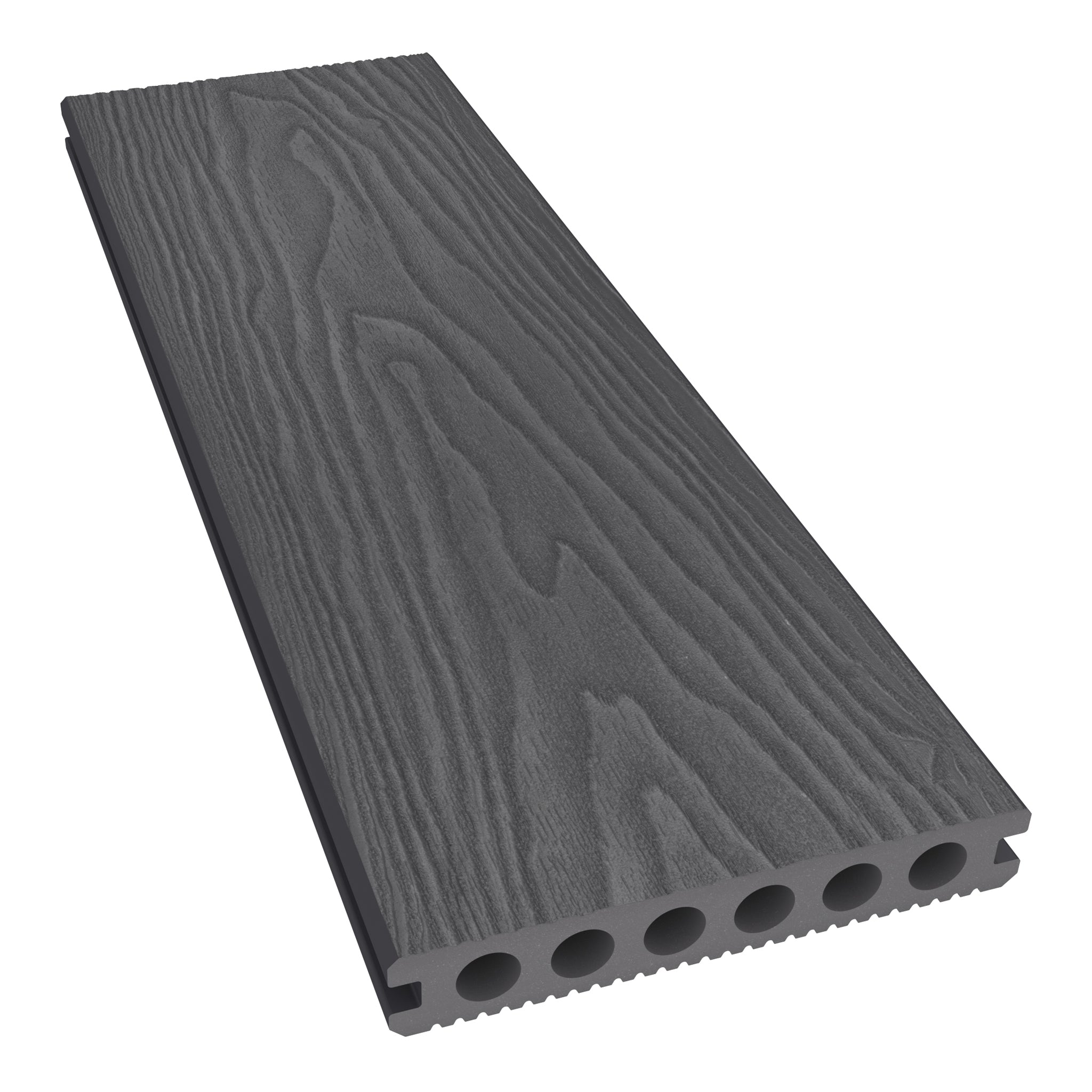
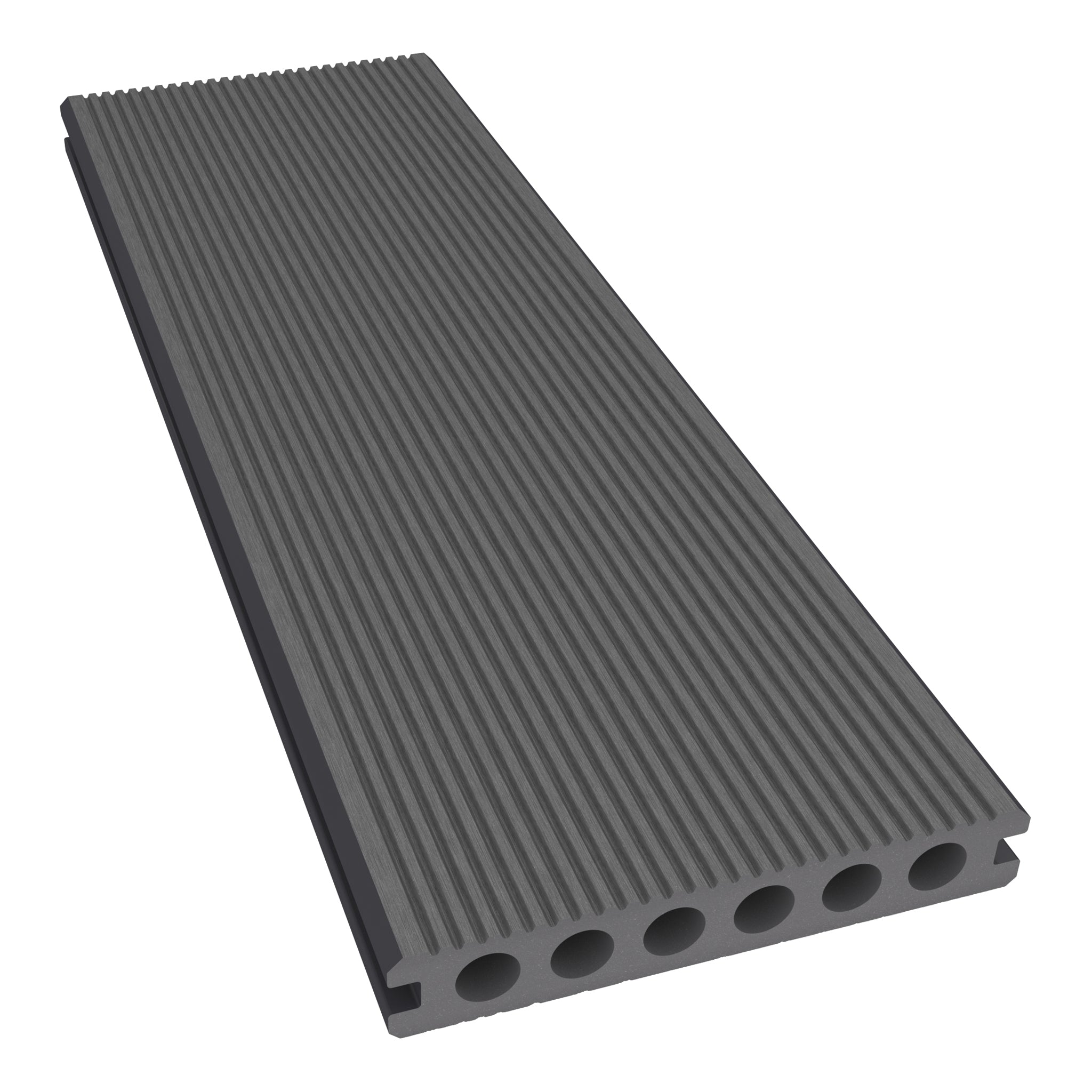
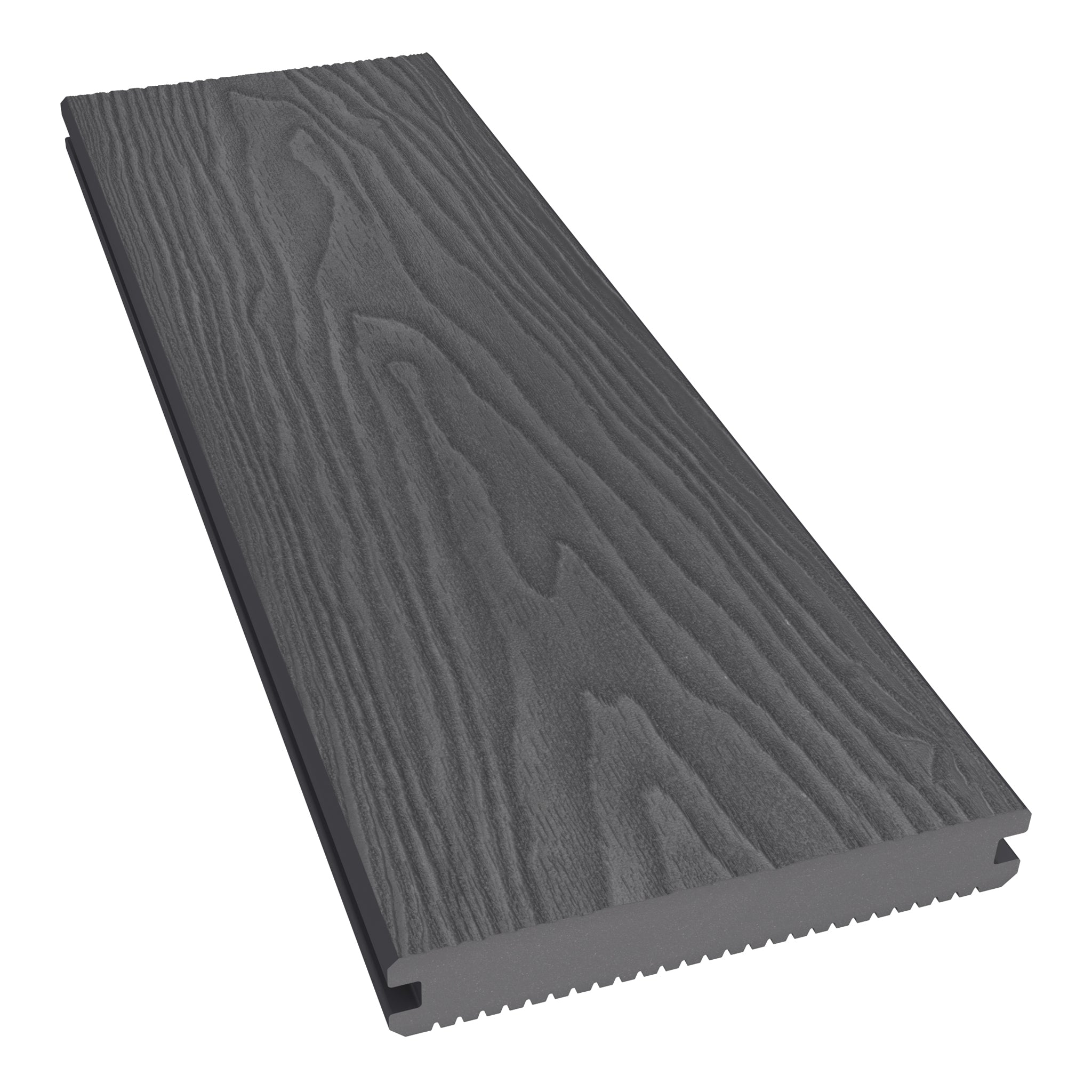
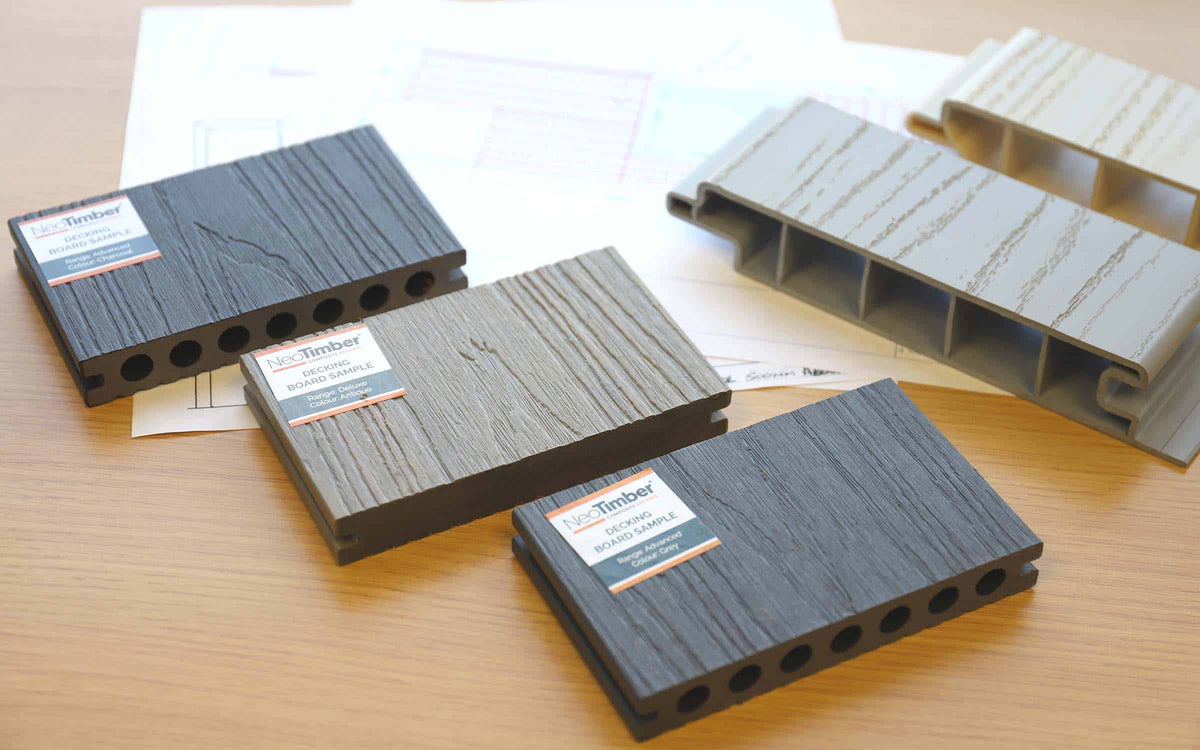
Deck boards can also have different cross-sections. A hollow profile is not automatically weak, and a solid board is not automatically suitable for any span or load. Compare the stated support requirements rather than judging structural performance from appearance.
Appearance: Compare Samples Rather Than Labels
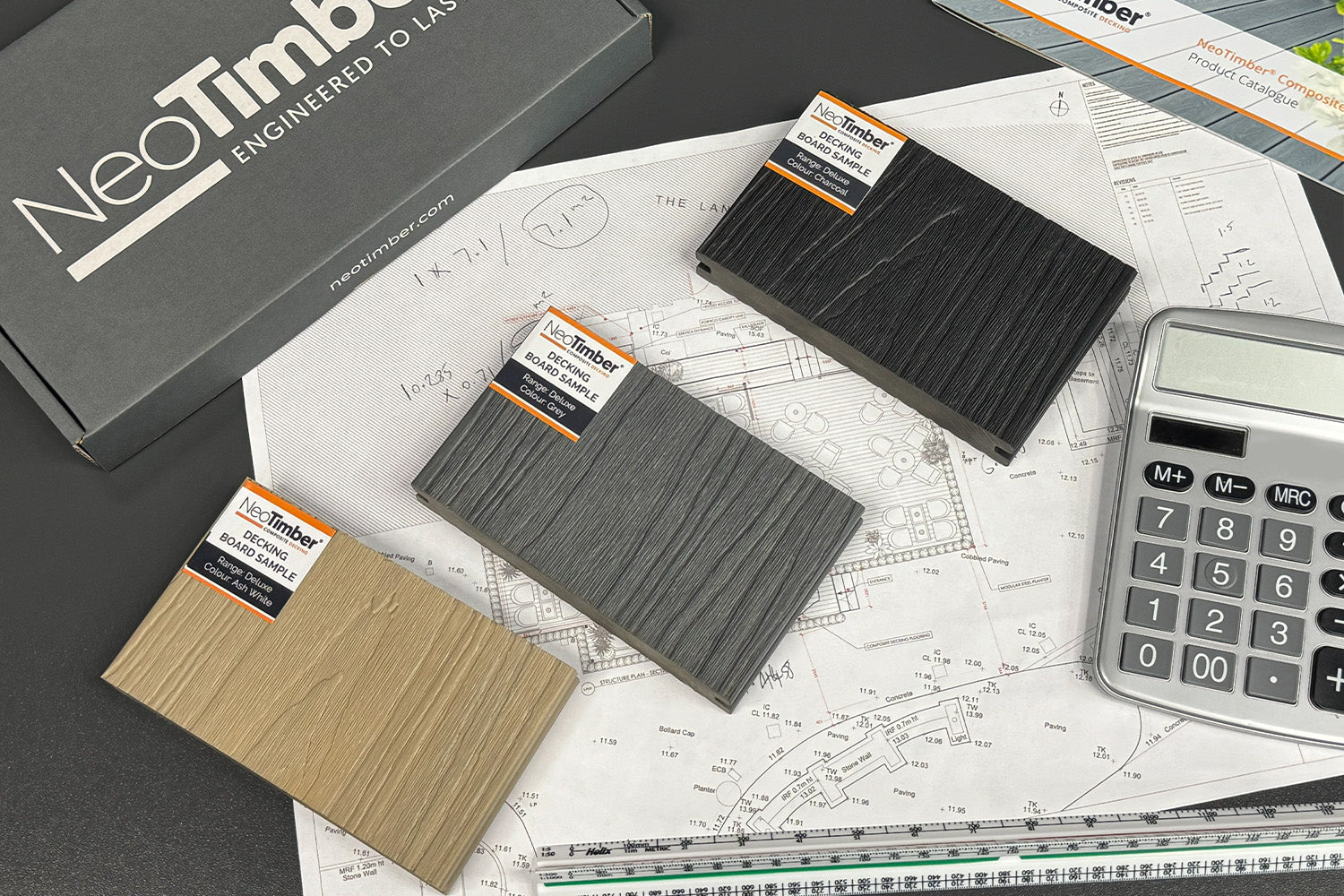
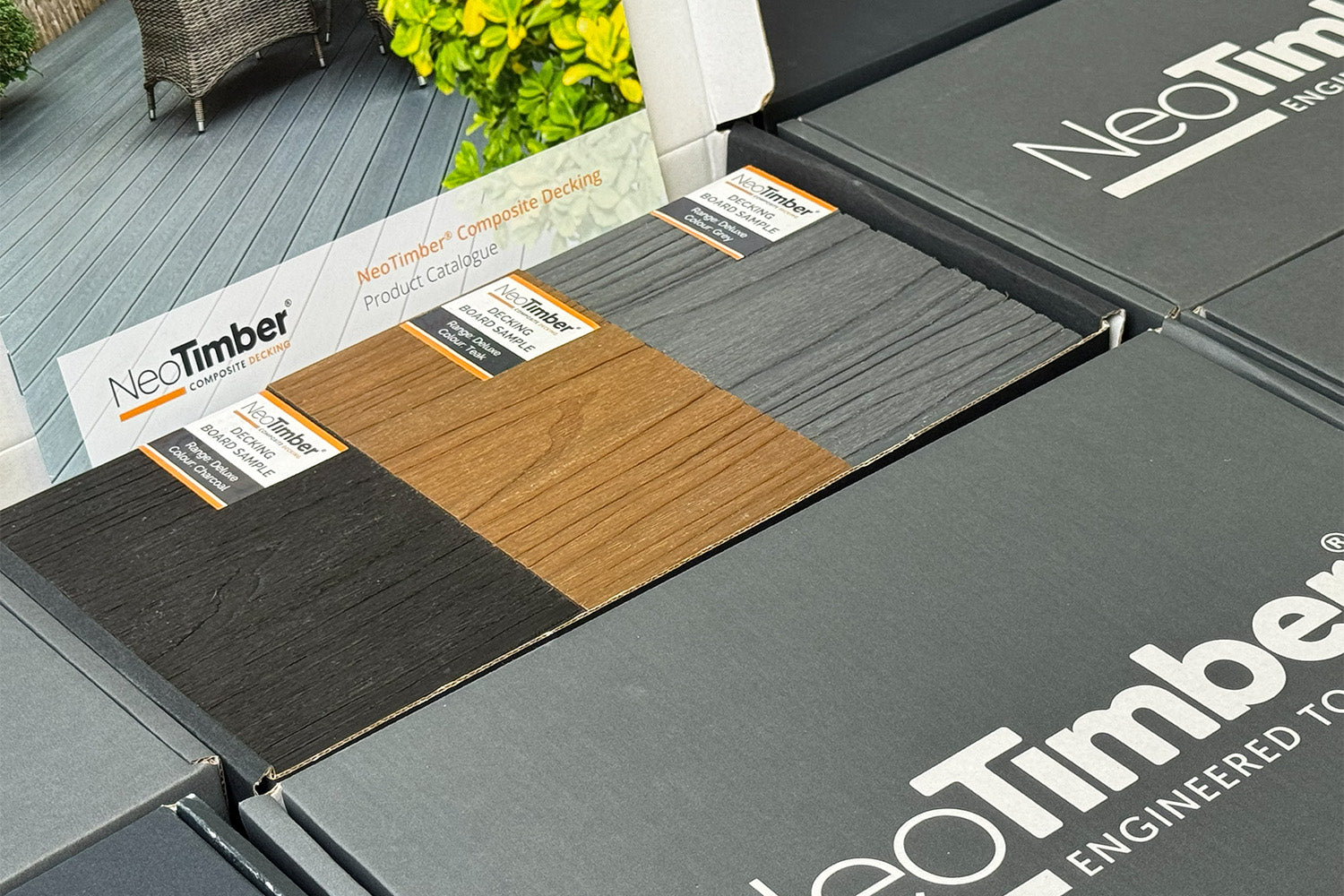
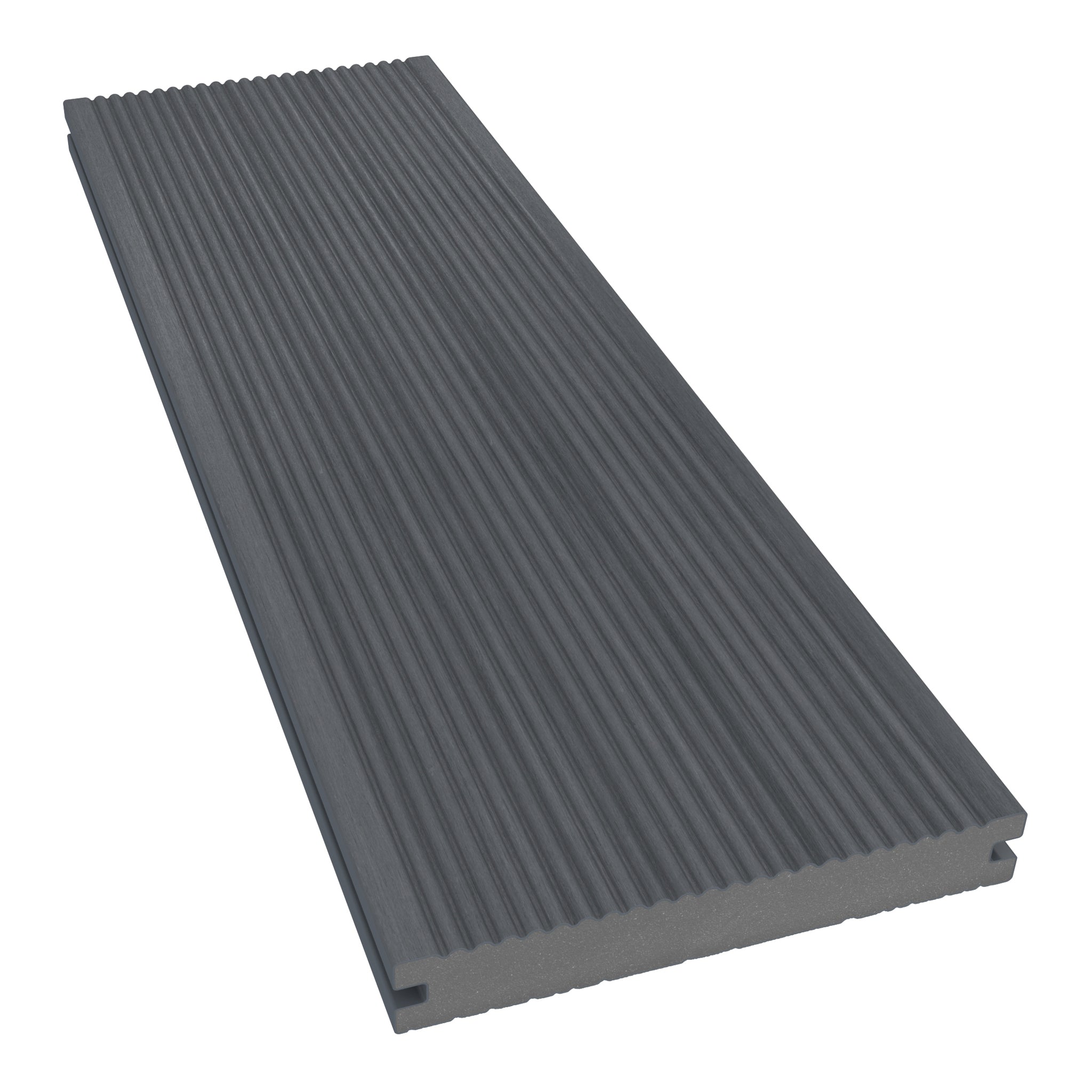
If a timber-inspired finish is your priority, examine the grain detail, colour variation and edge profile of individual products. Both composite and PVC-based decking can be manufactured with textured finishes, so describing all plastic boards as looking cheap is misleading.
NeoTimber’s wood-effect composite decking offers a way to introduce timber-inspired detail into the garden. Compare the colour options beside your paving, brickwork and planting.
Check which walking faces are approved for the selected board. A reversible design can offer a choice of appearance, but not every product has the same finishes or fitting requirements.

Moisture Resistance and Outdoor Durability
Composite contains wood fibres, while a wood-free PVC board does not. That distinction affects the material discussion, but it does not establish how long a complete installation will last.
Look for evidence covering moisture performance, surface weathering and the intended exposure. Capping, formulation and manufacturing quality can affect the result. Avoid assuming a product is unaffected by water simply because it is described as plastic.
For either category, the frame, fixings, drainage and maintenance matter. A durable board cannot compensate for a failing joist or poorly supported foundation. Check the warranty alongside the technical requirements, remembering that a warranty period is not a service-life prediction.
Slip Resistance: The Surface Test Matters
No outdoor deck is slip-proof. Water, frost, debris and biological growth can affect the surface, and the depth of a visible grain pattern alone does not establish its performance.
Ask for test information for the exact board and face you plan to install. Check whether results cover wet conditions and whether the test direction is relevant to the application. Only compare figures obtained under comparable conditions.
Our slip-resistant decking guide provides further context. Cleaning and drainage remain important whatever the board material.

Expansion, Fixings and Installation
Both composite and PVC-based boards need fitting methods suited to their movement characteristics. Do not transfer a gap dimension or fixing method from one brand or material to another.
For example, TimberTech’s Advanced PVC installation guide sets out product-specific requirements for thermal movement and fastening. It illustrates why PVC systems should be assessed using their own instructions, rather than the assumption that all plastic decking clips together in the same way.
For NeoTimber® products, follow our composite decking installation guidance and select compatible decking fixings. Side-to-side clip spacing and end-to-end allowances serve different details.
When comparing quotations, ask whether additional supports, special edge details or changes to the existing frame are included.

Cleaning and Maintenance
Both material categories can reduce the need for routine painting, staining and oiling compared with maintaining a coated timber surface. They still need appropriate cleaning and inspection.
Remove accumulated debris, clear drainage paths and deal with spills using the recommended method. Do not assume every cleaner, solvent or pressure-washer setting is suitable for every board.
Follow our composite decking cleaning guide for NeoTimber® care advice. Pressure washing should only be used where permitted and within the product’s limits; it is not a universal first choice.

Cost: Compare the Installed System
uPVC is not invariably cheaper than composite, and composite is not automatically better value. Product quality, site conditions and installation scope affect both.
Compare boards, subframe materials, foundations, fixings, edging, delivery, labour and removal of existing decking. Include future care and access for repairs in the assessment.
Read the applicable NeoTimber® warranty terms for the chosen product and application. Do not apply a blanket 25-year claim to every board or assume that labour and supporting components share the same cover.
Plastic Lumber Is a Separate Subframe Decision
Plastic lumber used beneath a deck is not the same decision as choosing a uPVC walking surface. Recycled plastic framing products, composite joists, timber and metal systems each have their own support and connection requirements.
Choose the decking subframe around the site and loads. Do not assume that all plastic joists can span freely, that every pedestal suits every joist or that an existing timber frame needs replacing solely because it is timber.

Review condition, suitability and the complete construction detail. If considering recycled materials, ask for product-specific sourcing information and practical end-of-life arrangements rather than assuming household recycling will accept the components.

Composite vs uPVC Decking FAQs
Is composite decking better than uPVC?
Not in every application. Compare specific boards against appearance, maintenance, tested performance, installation requirements and budget.
Which material gets hotter?
Sun exposure, colour and product technology influence surface temperature. Ask for evidence for the shortlisted products rather than assuming the material category alone determines comfort.
Does either material require no maintenance?
No. Both need cleaning and inspection according to the manufacturer’s instructions, even where routine refinishing is unnecessary.
Can I reuse my existing frame?
Only if its condition and specification suit the chosen boards. Check support spacing, connections, foundations and fixing compatibility before proceeding.
Choose the Board That Fits Your Project
A useful composite vs uPVC decking comparison looks beyond broad material claims. Start with the application, compare samples and documentation, then price the complete installation.
Explore our composite decking, request free samples or contact NeoTimber® for product advice. If you are still assessing other surfaces, read our decking alternatives guide.