Find a Fence Colour That Works With Your Garden
Choosing composite fencing colours is easier when you consider the whole garden: paving, brickwork, planting, furniture and the light that reaches the boundary. The same finish can appear different beside warm brick, pale stone or dense foliage.
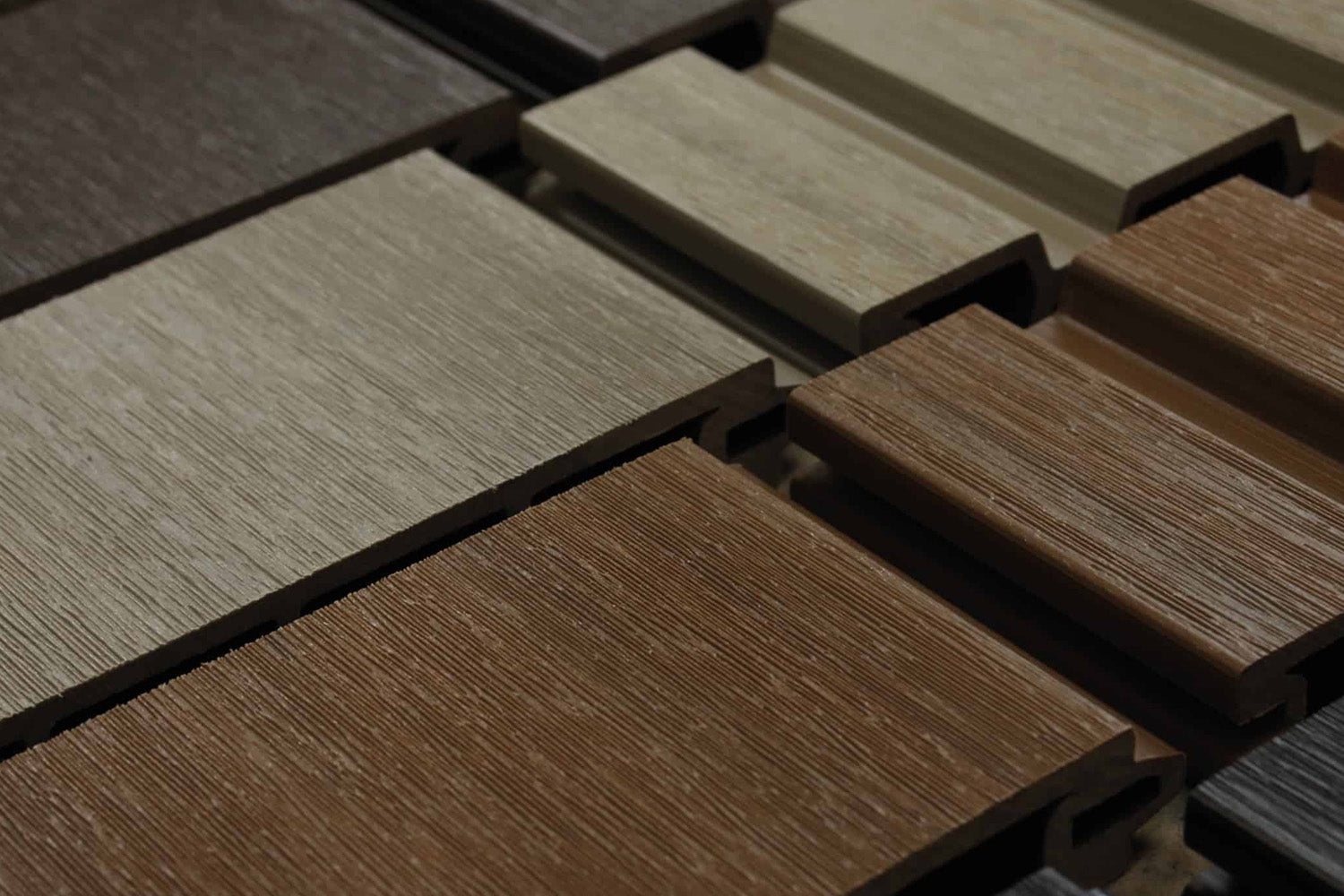
NeoTimber’s palette includes Grey, Antique, Chocolate, Charcoal, Teak, Ash White, Oak and Silver Birch. This guide explores all eight shades, suggests combinations to compare and explains why physical samples are worth viewing before you order.
For an introduction to the complete system, visit our fencing guide. Browse the composite fencing collection to check your preferred range, colour and components.
Explore: Colour overview · Grey · Antique · Chocolate · Charcoal · Teak · Ash White, Oak and Silver Birch · Choosing samples · FAQs
Compare the Palette at a Glance
Use the descriptions below to shortlist colours, rather than as exact representations. Surface texture, lighting and neighbouring materials all affect the final appearance.
| Colour | Direction to explore | Materials to compare alongside it |
|---|---|---|
| Grey | A neutral backdrop | Contemporary paving, foliage and coloured furniture |
| Antique | A softly weathered, neutral effect | Stone, muted paving and green planting |
| Chocolate | A rich, dark brown finish | Warm brick, pale paving and timber-inspired details |
| Charcoal | A dark, defined boundary | Light paving, pale flowers and black exterior details |
| Teak | A warm timber-inspired tone | Brick, greenery and contrasting grey surfaces |
| Ash White | A light finish | Dark furniture, soft planting and pale landscaping |
| Oak | A lighter brown direction | Natural-looking materials and warm garden accessories |
| Silver Birch | A pale, weathered-looking direction | Stone, neutral paving and planted borders |
Grey: A Versatile Neutral
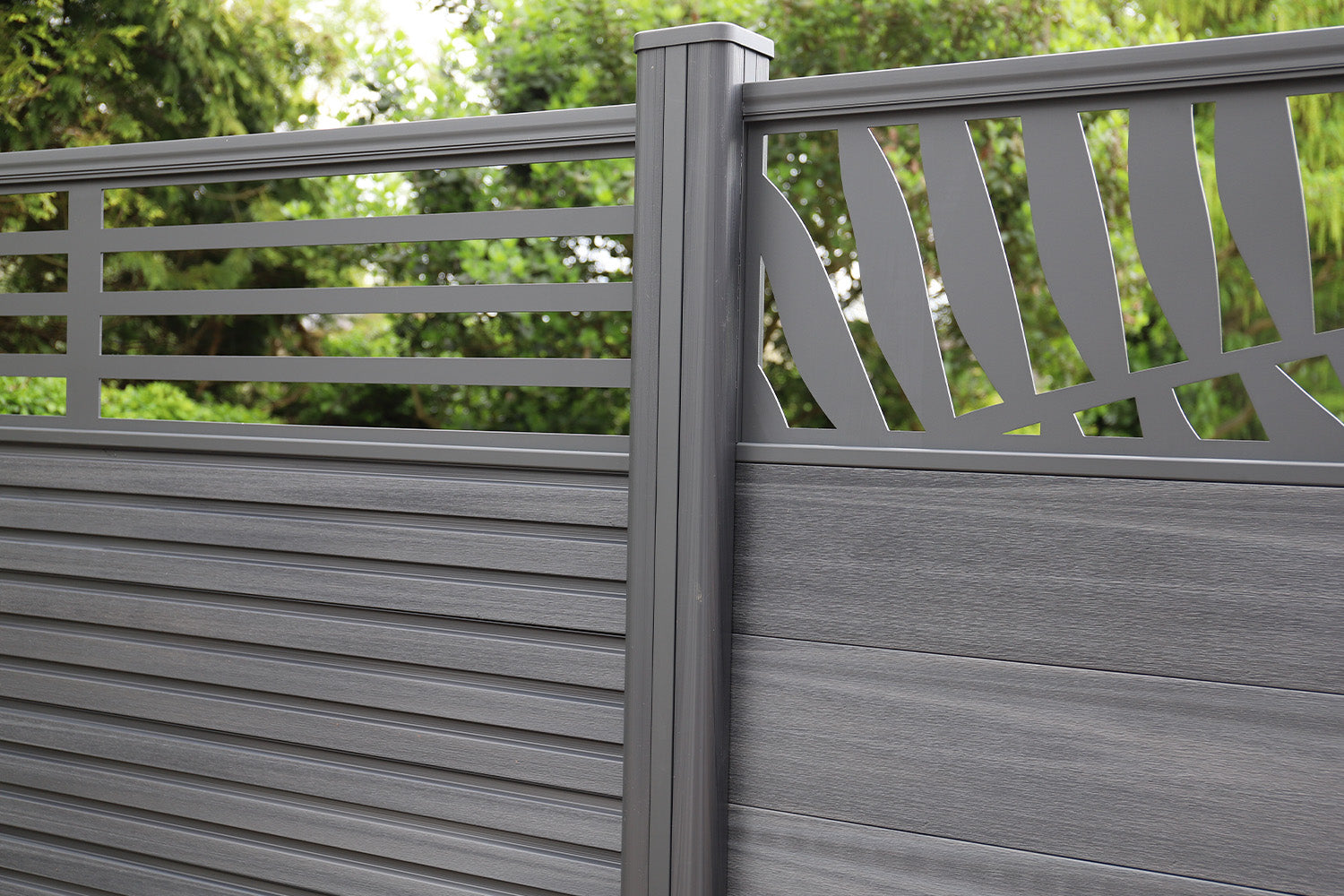
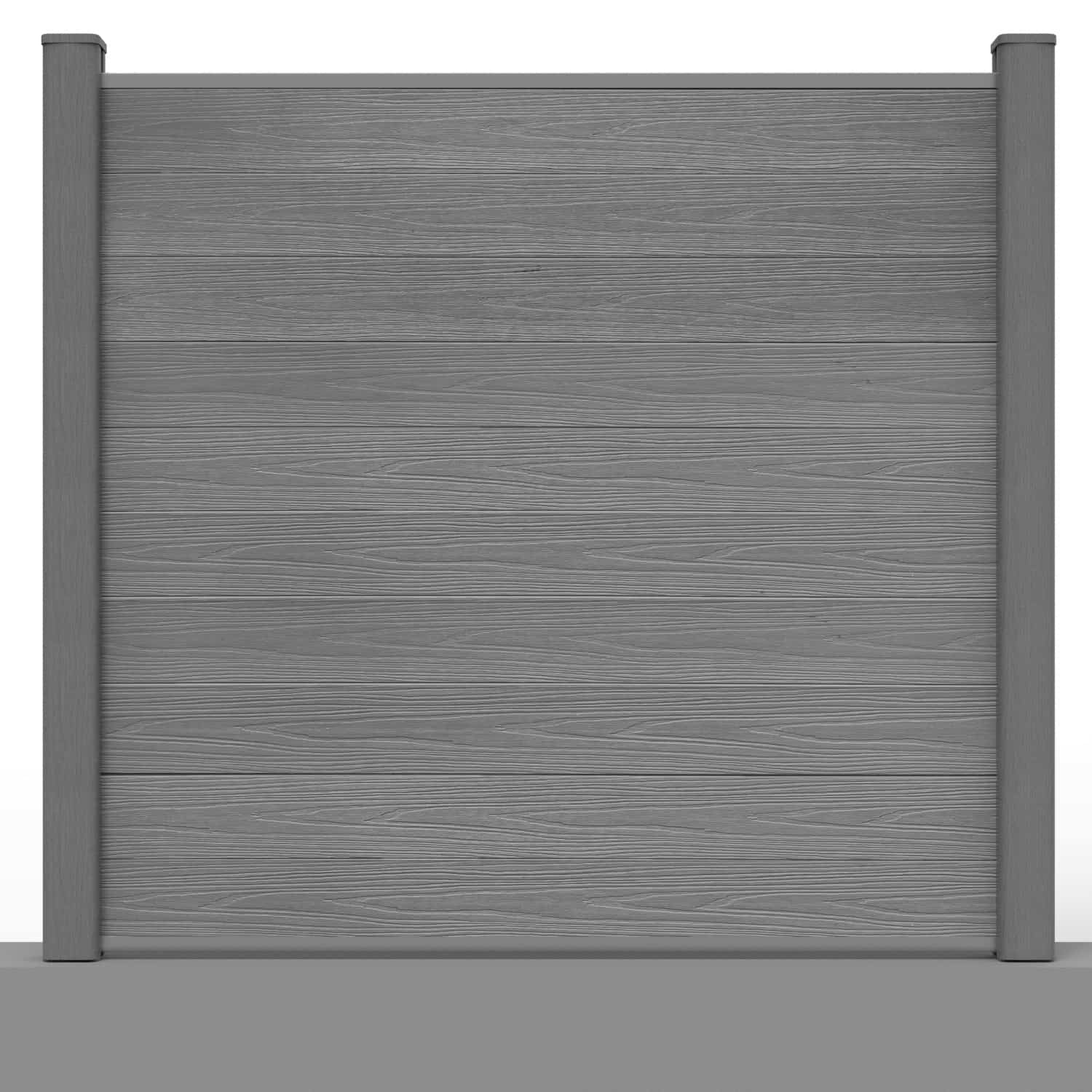
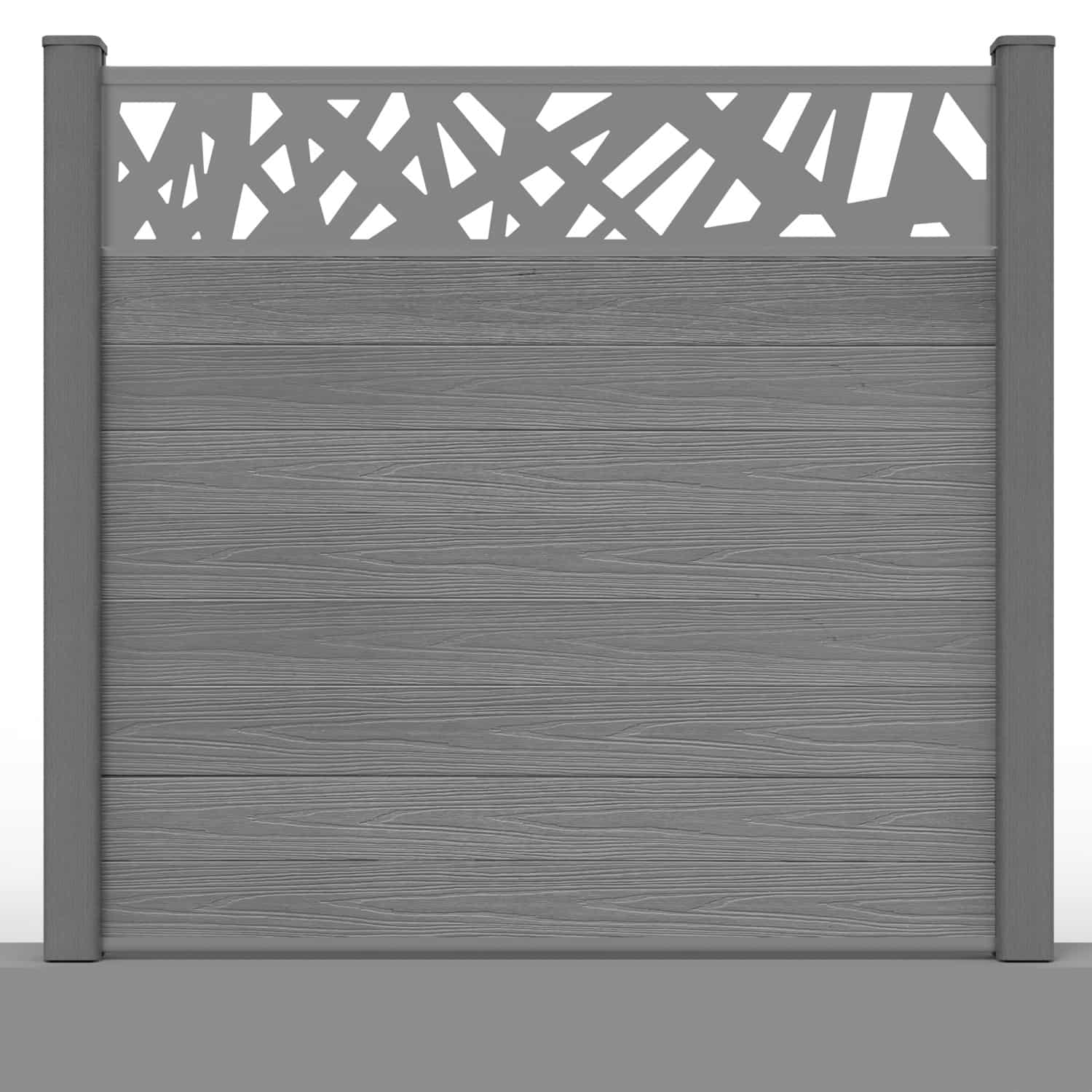
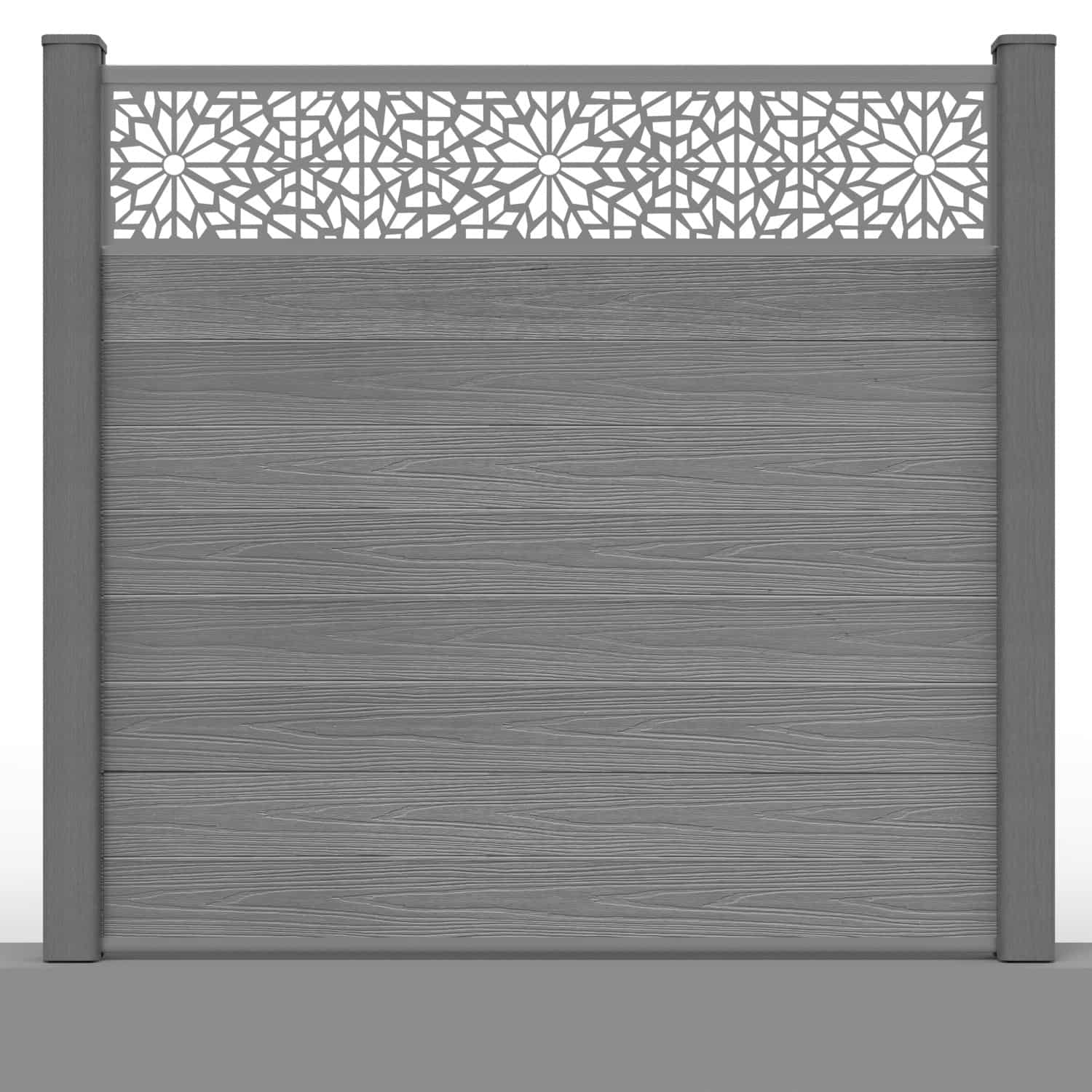
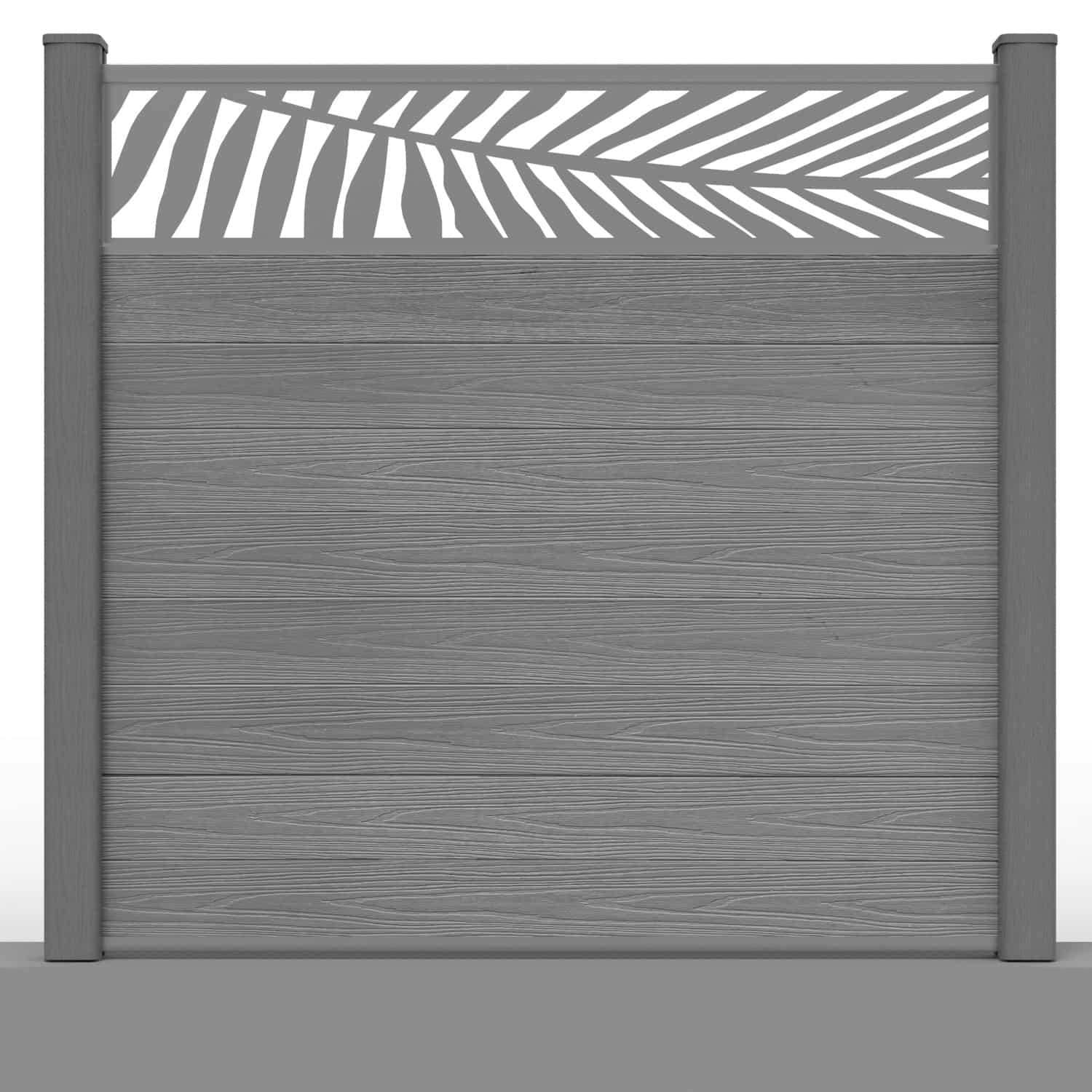
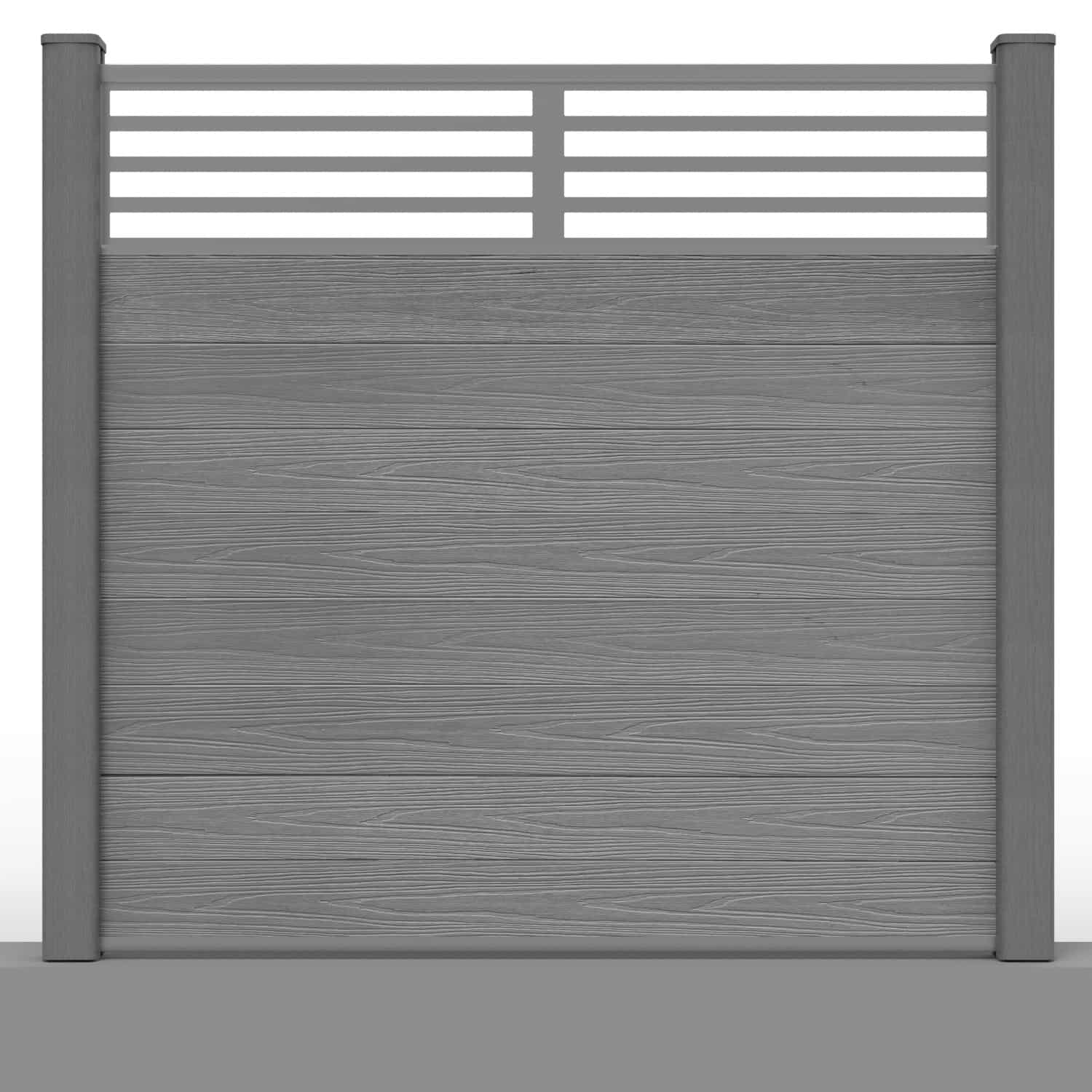
Grey fencing provides a neutral starting point when you want other parts of the garden to carry the colour. Compare it with planting, pale paving or a warmer brick wall to see whether the balance suits your space.
In a contemporary garden, repeat grey in selected details rather than assuming every surface needs to match. Pots or furniture can connect the boundary to the seating area while allowing other textures to stand out.

Antique: A Weathered-Look Backdrop
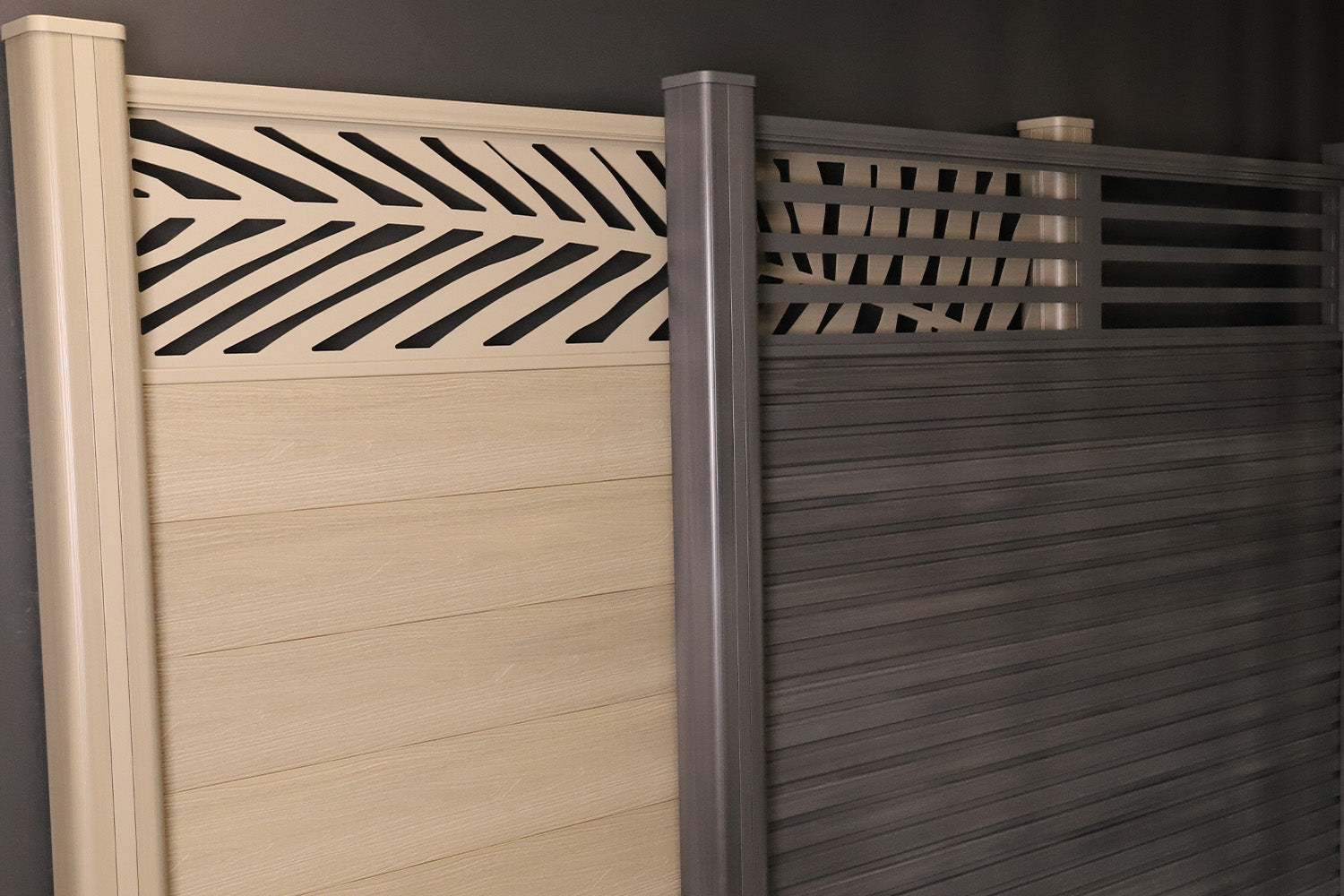
Antique composite fencing offers a neutral, weathered-looking appearance. It is an option to compare where you want the boundary to sit alongside stone, muted paving and established planting.
The finish provides a visual effect rather than being reclaimed or naturally aged timber. Examine the sample beside both warm and cool materials to judge how its tonal detail works in your garden.

Chocolate: Rich Brown With Depth
Chocolate brown fencing brings a deeper timber-inspired tone to the palette. Its darker detail can work as a backdrop for green foliage and pale flowers, or create contrast with lighter paving.
Warm brick and brown accessories are useful combinations to test, but the exact shades matter. Compare samples together instead of assuming that all brown materials will coordinate.

Charcoal: A Dark Garden Boundary
Charcoal fencing suits designs where you want a strong dark backdrop. It can connect visually with black window frames, outdoor furniture or a garden building, while pale surfaces and planting introduce contrast.
Charcoal is the named finish, rather than a guarantee of a flat jet-black appearance. Texture and daylight can reveal tonal detail, so assess it outside before choosing a full boundary.

Teak: Warm, Timber-Inspired Colour
Teak fencing offers a warmer direction. It can be worth comparing beside brickwork, planted borders or grey paving where you want to balance cooler surfaces with a timber-inspired finish.
The colour name describes the appearance; the boards are composite rather than solid teak timber. Compare the selected texture as well as the shade to decide whether it gives your garden the character you want.

Ash White, Oak and Silver Birch
Ash White
Ash White composite fencing provides a light option to compare where a dark boundary feels too dominant. View it beside existing white or cream finishes rather than assuming an exact match. Also consider how visible outdoor deposits may be and how you will access the fence for cleaning.
Oak
Oak composite fencing is worth exploring if you like a lighter brown, timber-inspired palette. Compare it with natural-looking paving, warm furniture and planting. Check the actual sample rather than relying on a general idea of what oak timber looks like.
Silver Birch
Silver Birch composite fencing offers another route towards a lighter, weathered-looking boundary. Try it beside stone and neutral landscaping, and assess how it compares with Grey and Antique in your own light. Similar-looking online images can hide differences that are clearer in person.
How to Choose With Confidence
- Start with the materials staying in place. Identify the paving, brickwork and major garden features that the fence needs to complement.
- Shortlist a few contrasting options. Compare a warm, neutral and dark direction if you are undecided.
- View samples upright outdoors. Look at them in sun and shade rather than only under indoor lighting.
- Compare texture. Woodgrain, brushed and profiled surfaces reflect light differently.
- Check the whole system. Confirm colour availability for the boards, posts, gate and accessories you need.
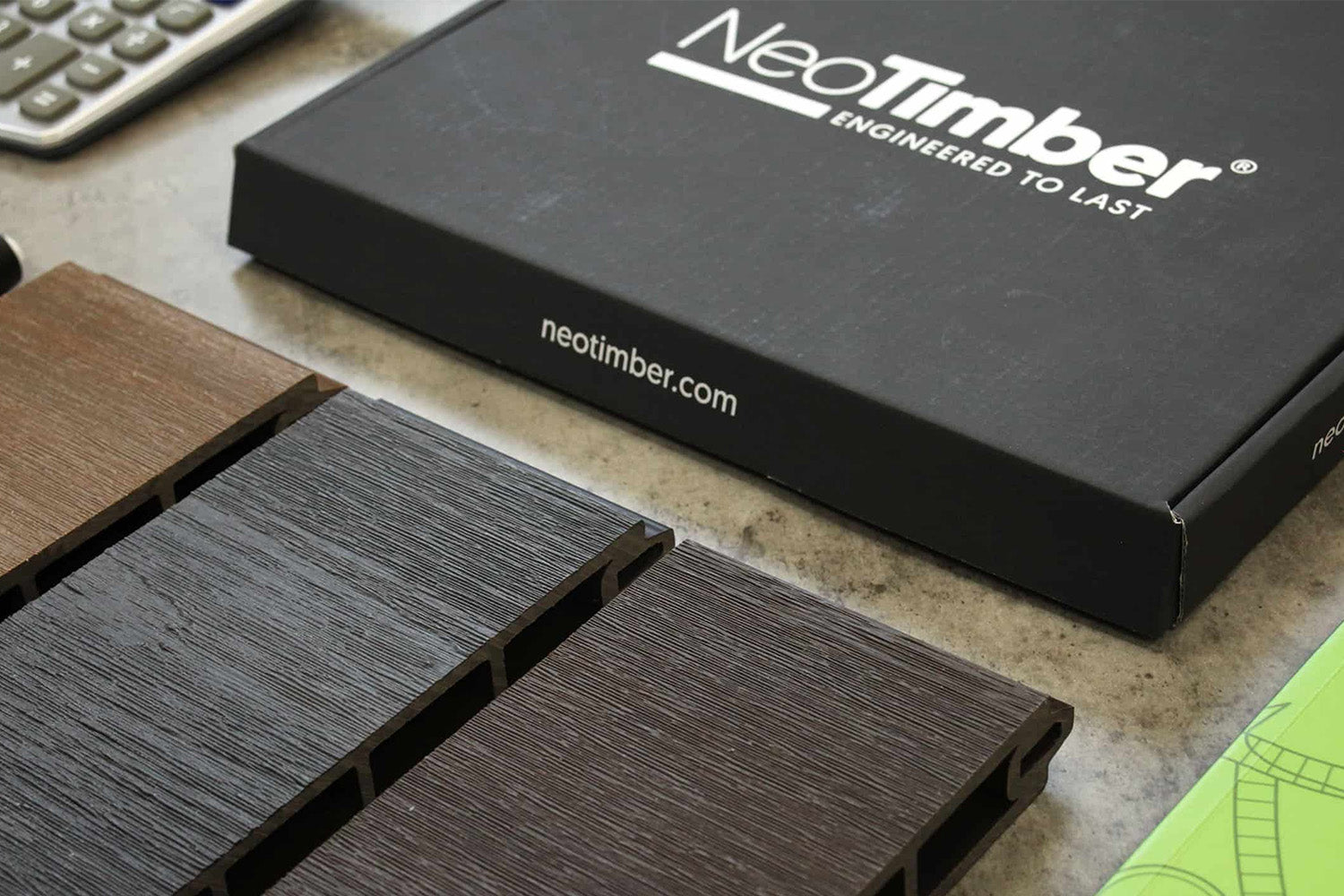
Request free fencing samples before placing the order. Use the project gallery for composition and layout ideas, with samples helping you judge the supplied finish.
Consider the Board Style
The Deluxe range offers woodgrain and brushed faces, while the Slatted range has a pronounced linear profile. Consider the appearance from both sides and record the intended orientation before installation.
Coordinate Across the Garden
For wider landscaping, compare samples from the composite decking, composite cladding and composite balustrades collections. Different materials and profiles can appear different even when their colour names are similar.
You can also explore our general guides to decking, cladding and balustrades. A coordinated scheme does not require every surface to be identical; complementary shades can work together.
Allow for Outdoor Weathering and Care
NeoTimber’s capped finish is designed to resist fading and staining, but not to guarantee an unchanged appearance indefinitely. Lighting, wetness, deposits and normal weathering can affect how a colour looks.
Follow the fencing care guide and read the applicable warranty terms. Routine painting is not needed for the supplied finish, but suitable cleaning and periodic checks remain necessary.
Fencing Colour FAQs
How many composite fencing colours does NeoTimber® offer?
The current palette includes eight shades: Grey, Antique, Chocolate, Charcoal, Teak, Ash White, Oak and Silver Birch. Check availability for your selected range and components before ordering.
Which colour is best for a small garden?
There is no universal best choice. Compare the boundary height, daylight and surrounding materials. A lighter shade can create contrast with dark details, while a darker backdrop can emphasise planting.
Will the fence match my decking exactly?
Coordinating colours can work well together, but different profiles and textures may look different in the same light. Compare physical samples side by side.
Do the colours fade?
The capped surface is designed to resist fading. Outdoor weathering can still affect appearance, so fade resistance should not be read as a guarantee of no colour change.
Can I paint the fence a different colour later?
NeoTimber® does not recommend painting its capped fencing. Choose the supplied finish carefully and seek advice before applying coatings or treatments.
Why does a sample look different from a photograph?
Camera settings, screens, lighting and surrounding colours affect images. A physical sample viewed in your own garden provides a better basis for choosing the finish.
Find Your Preferred Garden Palette
Choose a shortlist, compare samples and confirm the complete component selection. Browse NeoTimber® composite fencing colours and styles or contact our team for help preparing your order.