Look Beyond the Board Price When Choosing Your Cladding Partner
A composite cladding supplier should help you buy a complete, suitable exterior system, not simply enough boards to cover a wall. Product information, compatible accessories, stock availability and installation support all influence how smoothly a project moves from initial design to completion.
That matters whether you are a homeowner buying composite cladding online, an installer sourcing boards for a client, or a business researching wholesale composite cladding. The best purchasing decision starts with a clear specification and a supplier able to explain what is included, what needs checking and how the order will be fulfilled.
At NeoTimber®, our composite cladding collection brings together boards, trims, fixings and subframe components. This guide explores how to assess a composite cladding company, understand different supply routes and build an order around the needs of the whole project.
Why Supplier Selection Is a Design Decision
Cladding procurement is often treated as the final step after choosing a colour. In practice, the supply route can shape the design much earlier. Available profiles, board lengths, finishing components and delivery arrangements influence what can be specified and how it will be installed.
A wall with several windows may need more attention to trims and board joints than an uninterrupted garden-room elevation. An exposed site may need additional technical assessment. A phased development may require an agreed approach to ordering, storage and future availability.
Bring the supplier into the conversation while these decisions remain open. Ask for information that helps the designer and installer make a sound specification. Resolving an accessory mismatch before ordering is easier than discovering it after the first boards have been fitted.
The broader lesson is simple: value comes from a product and service that fit the project. A low board price becomes less attractive if missing components, unclear instructions or delivery assumptions interrupt the work.
Brand, Manufacturer, Distributor or Retailer: What Is the Difference?
Search results use several terms for businesses selling cladding. They describe different roles, although one company may perform more than one. Understanding those roles helps you ask the right questions without assuming that a particular label guarantees quality or price.
| Term | Role to understand | Useful question |
|---|---|---|
| Composite cladding brand | The name under which a range is presented and supported. | Which specifications and warranty apply to this exact product? |
| Composite cladding manufacturers | Businesses responsible for producing boards. | Who provides the technical documents and handles product issues? |
| Composite cladding distributor | A business supplying products through a market or sales network. | How are stock, delivery and technical enquiries managed? |
| Composite cladding retailer | A seller serving individual customers and project orders. | What is included in the order and what support is available? |
| Composite cladding stockist | A seller holding some products in stock. | Is my complete combination of boards and accessories available? |
| Composite cladding wholesalers | Businesses offering supply arrangements for bulk or business purchasing. | What quantities, eligibility and commercial terms apply? |
These descriptions are not certifications. A retailer can provide excellent technical support, while purchasing from a manufacturer does not automatically mean that every item is immediately available. Judge the proposed service and documentation rather than the title alone.
How to Assess a Composite Cladding Brand
A strong composite cladding brand makes its range understandable. You should be able to identify the board construction, finish, dimensions, effective coverage and compatible components. Those details help you compare products that may look similar in photographs but have different specifications.
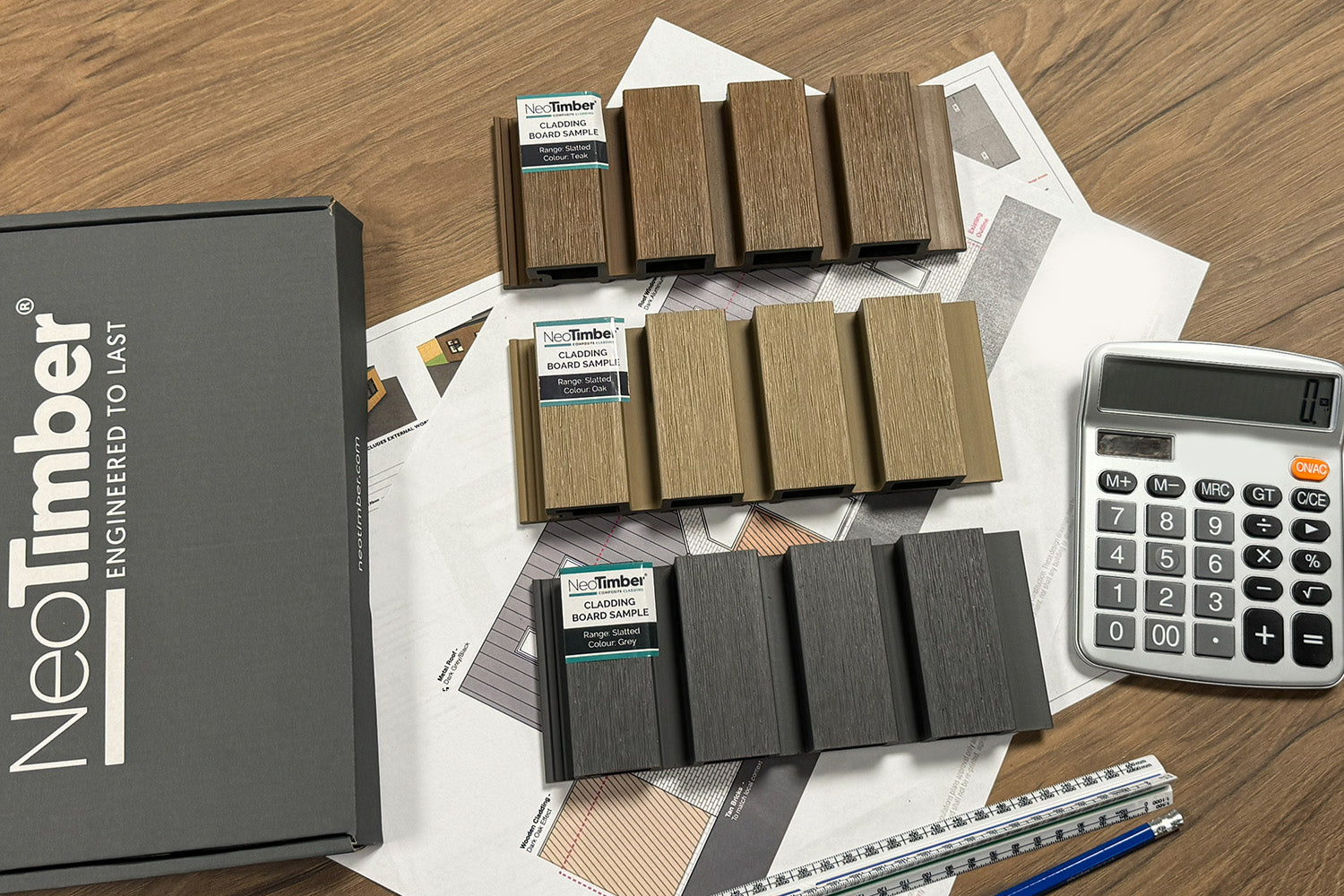
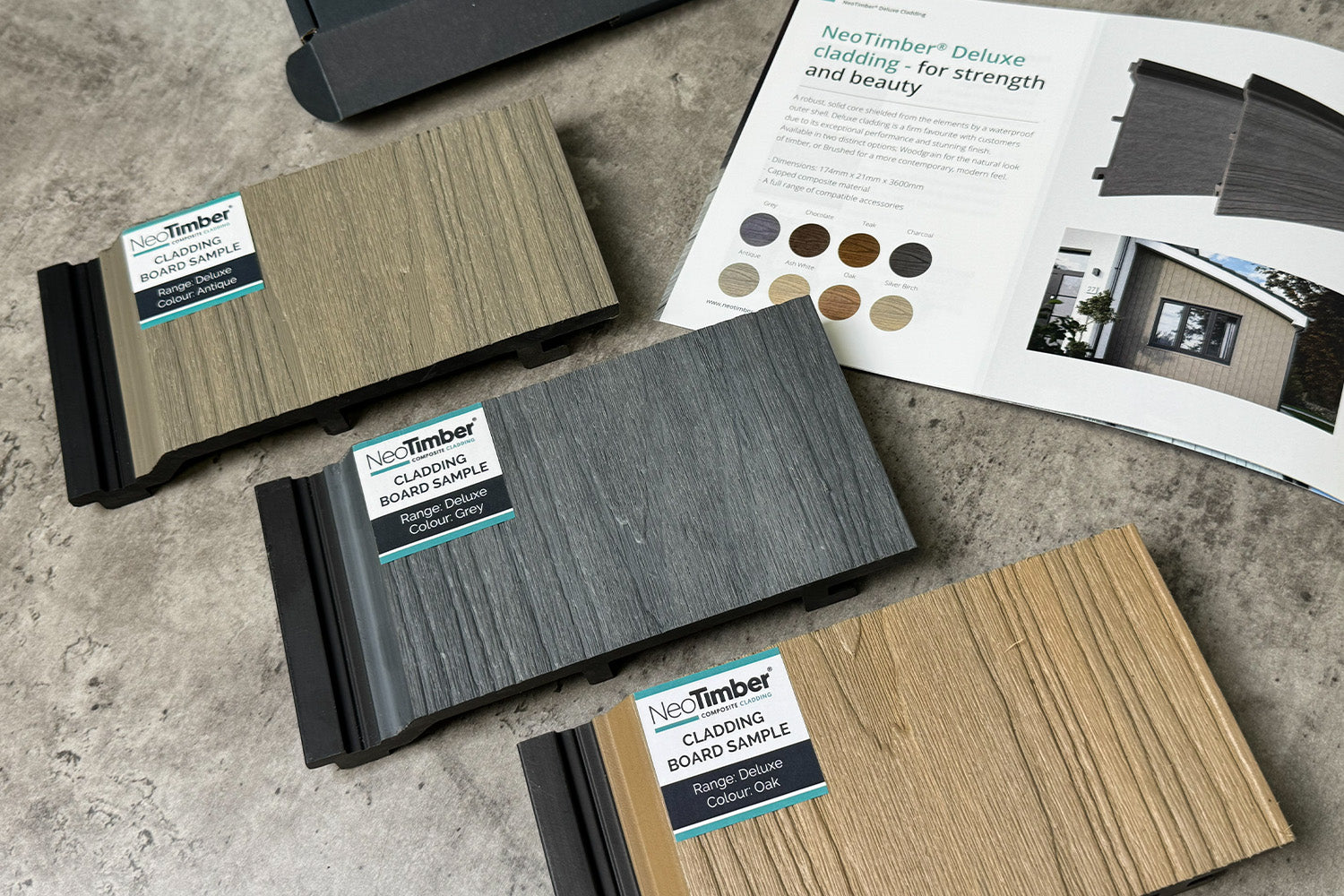
Request a physical sample and review it in the intended setting. A colour viewed under showroom lighting may read differently beside your brickwork or window frames. Use larger project photographs to understand the profile’s effect across an elevation.
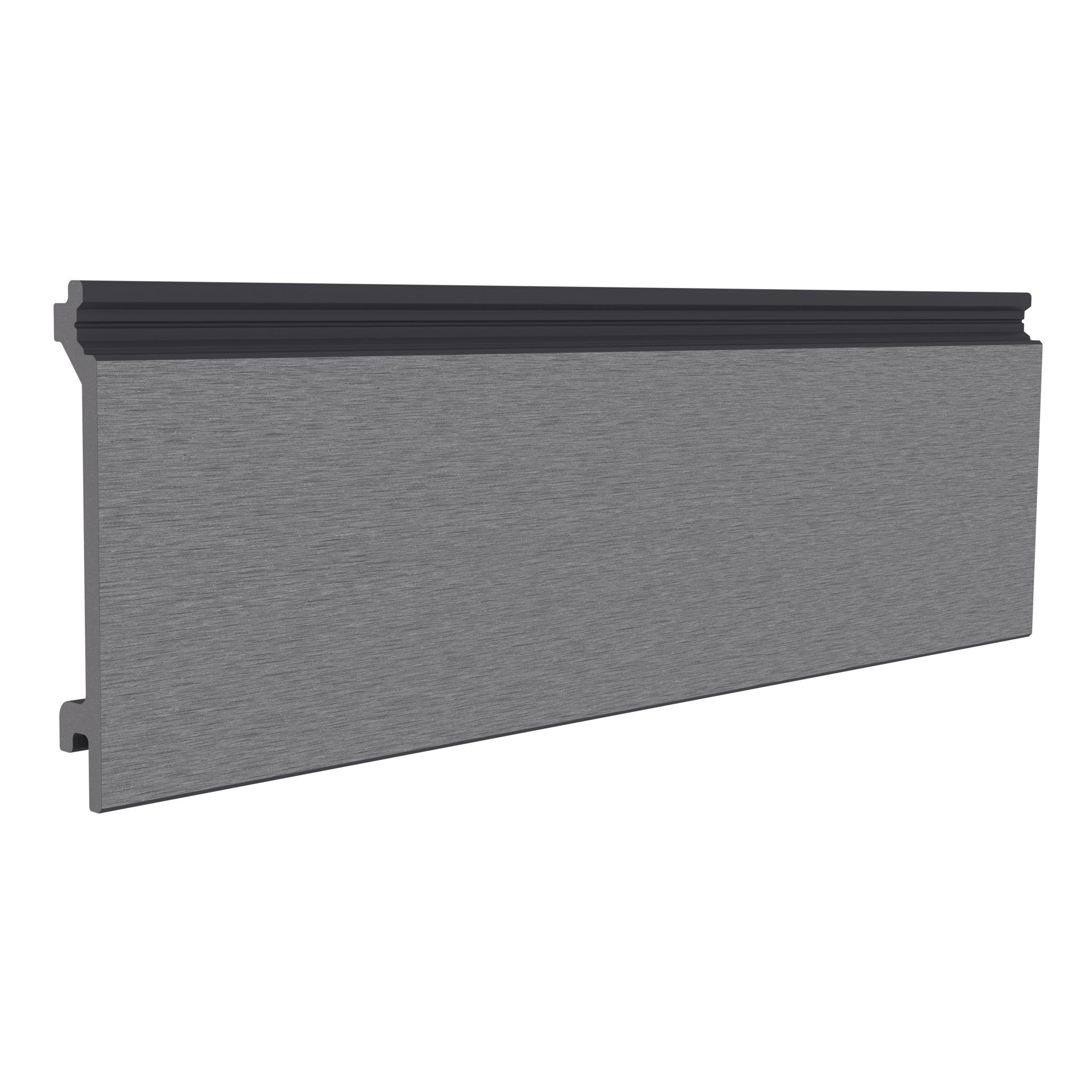
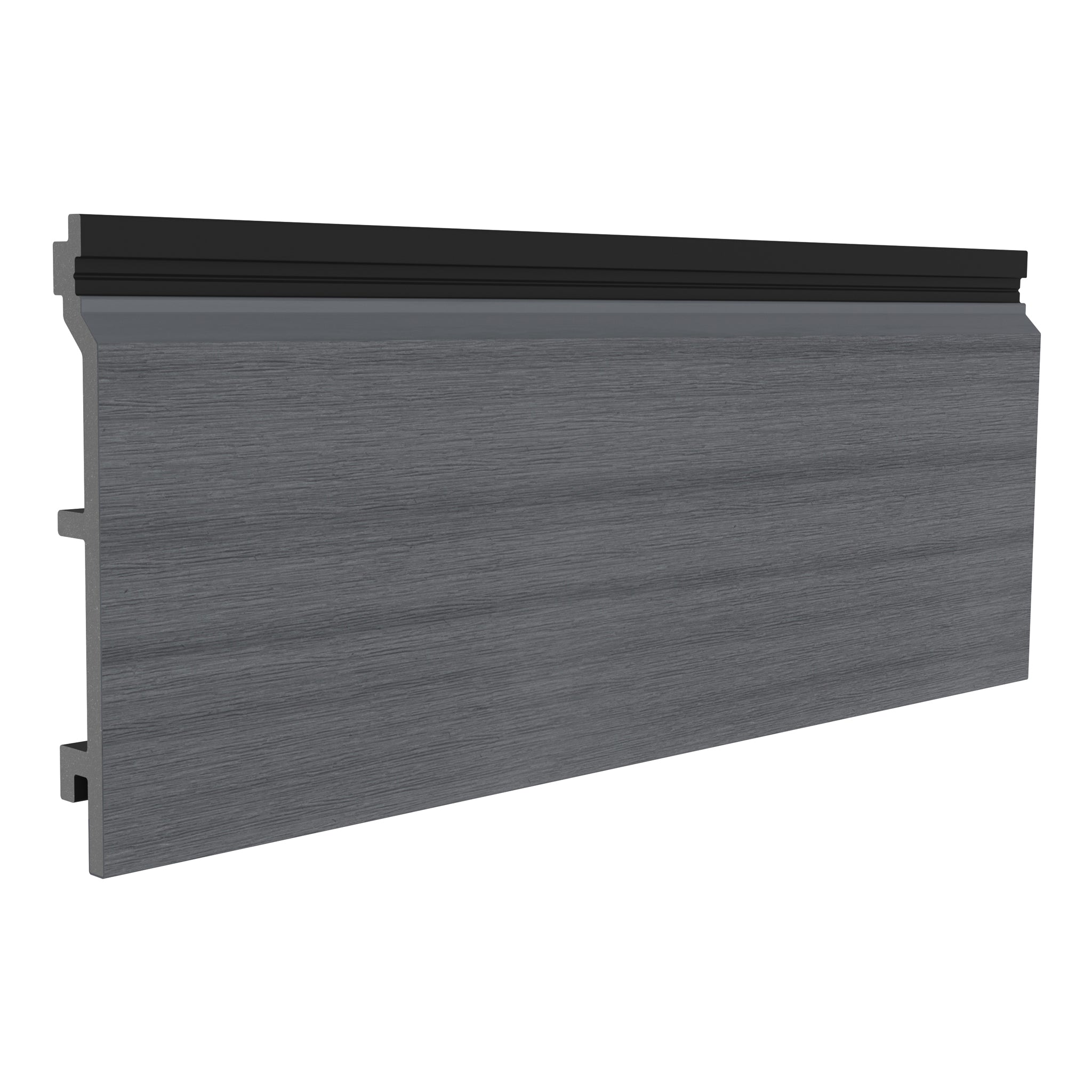
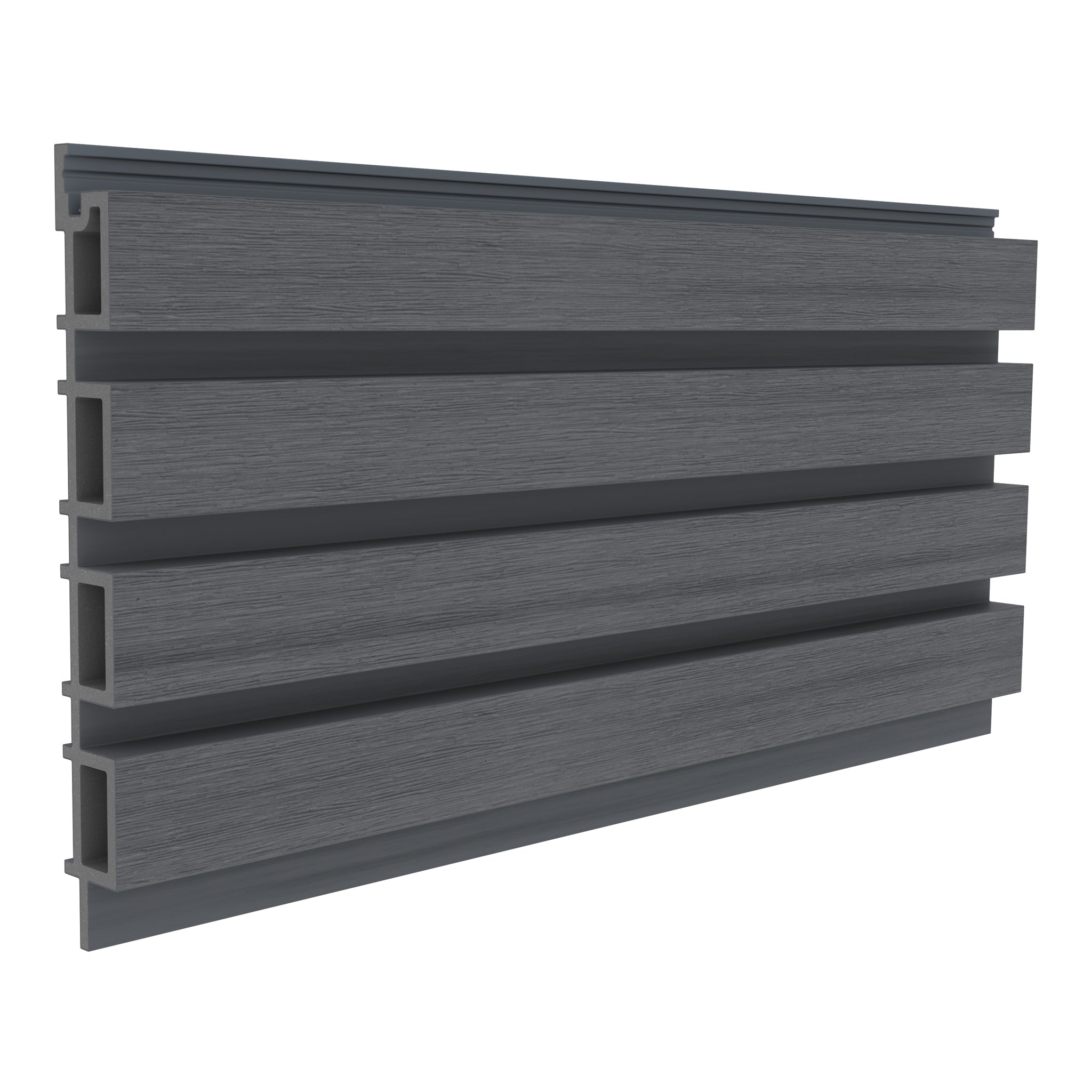
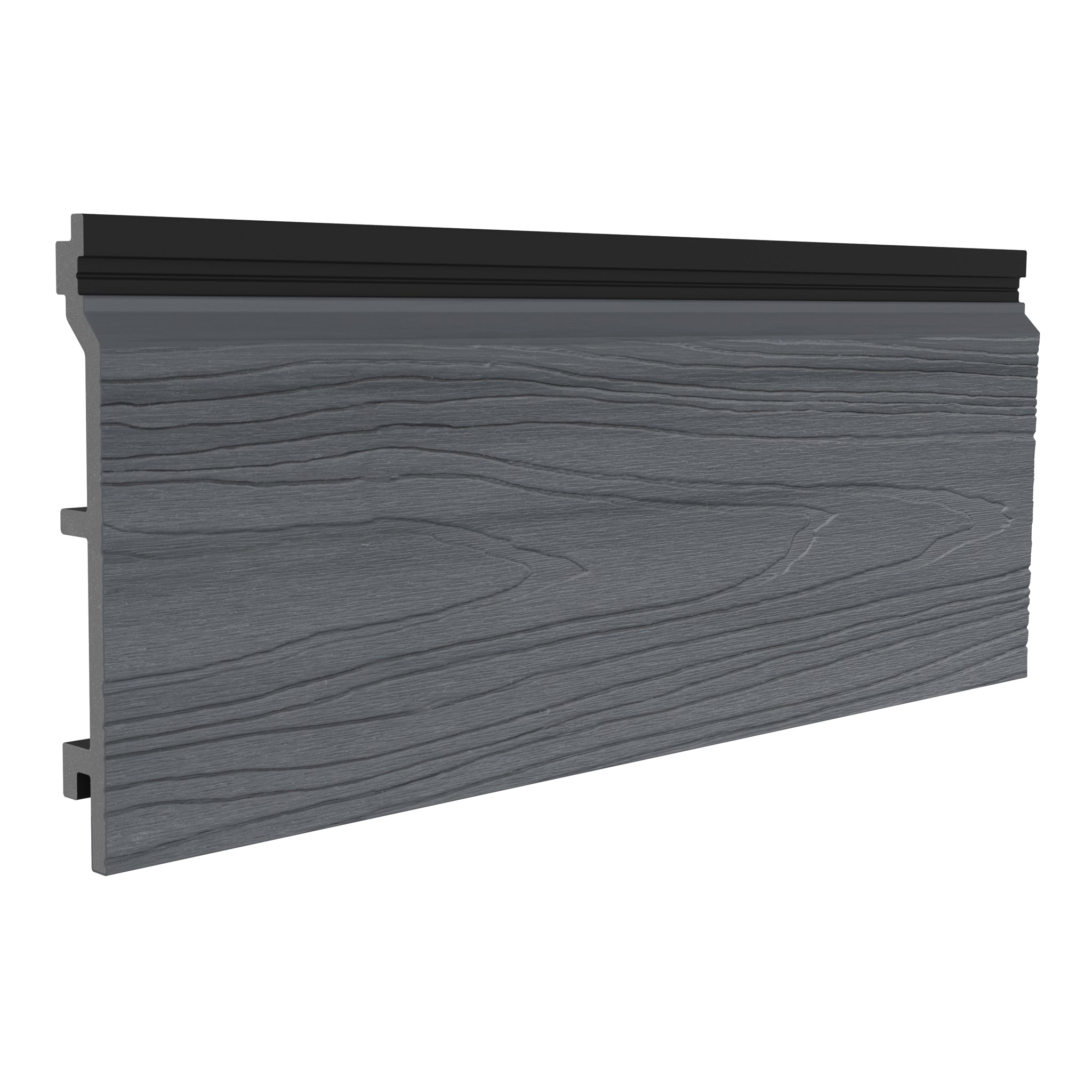
NeoTimber’s collection includes Classic, Deluxe and Slatted options. Compare the particular finish and construction you are considering, rather than treating every board carrying the same brand name as interchangeable.
Our quality guide explains the information to assess alongside appearance. The right choice should satisfy the project specification as well as your visual preferences.

What to Ask Composite Cladding Manufacturers
When researching composite cladding manufacturers, focus on the evidence behind the product. Ask which documents identify its intended use and performance, and whether any test or certification applies to the exact board and configuration being specified.
Manufacturing location and the sales channel are separate questions. Do not infer that a UK-based supplier necessarily produces every component in the UK. Where origin or traceability is important to a contract, obtain a clear answer for the relevant products.
Ask how variations, damaged deliveries and product concerns are handled. A useful response explains the process and the information needed, rather than relying on a general promise that problems never occur.
For technical matters such as fire classification, confirm the scope of the supporting documentation with the project designer. A test result does not establish that every building or complete wall system is suitable. Supplier guidance should inform the specification, with the responsible professional resolving project compliance.
Buying Composite Cladding Direct: What Are the Benefits?
Buying composite cladding direct from the brand’s sales channel can give you a clear point of contact for product enquiries and orders. It can also make it easier to find the associated accessories and resources in one place.
However, “direct” is not a guarantee of the lowest total price, immediate delivery or universal suitability. Compare the complete quotation with alternatives. Check whether the proposed service meets your location, order size and programme requirements.
You can explore buying options and purchase through the NeoTimber® online collection. For a project needing clarification, contact the team before checkout with the proposed range, quantities and intended use.
Direct purchasing is most useful when the information exchanged is precise. Share a component schedule or clearly marked elevations where appropriate, and confirm what the supplier has and has not included in the quotation.
How to Buy Composite Cladding Online Without Missing Essentials
Ordering composite cladding online is convenient once the specification is settled. The main risk is building a basket around the visible boards while overlooking the components that make the system complete.
Start With Effective Coverage
Measure the areas to be clad and calculate coverage using the installed dimensions of the selected board. Overall width and effective cover are not always identical. Allow for the cutting pattern, openings, board lengths and an appropriate waste allowance.
Build an Accessory Schedule
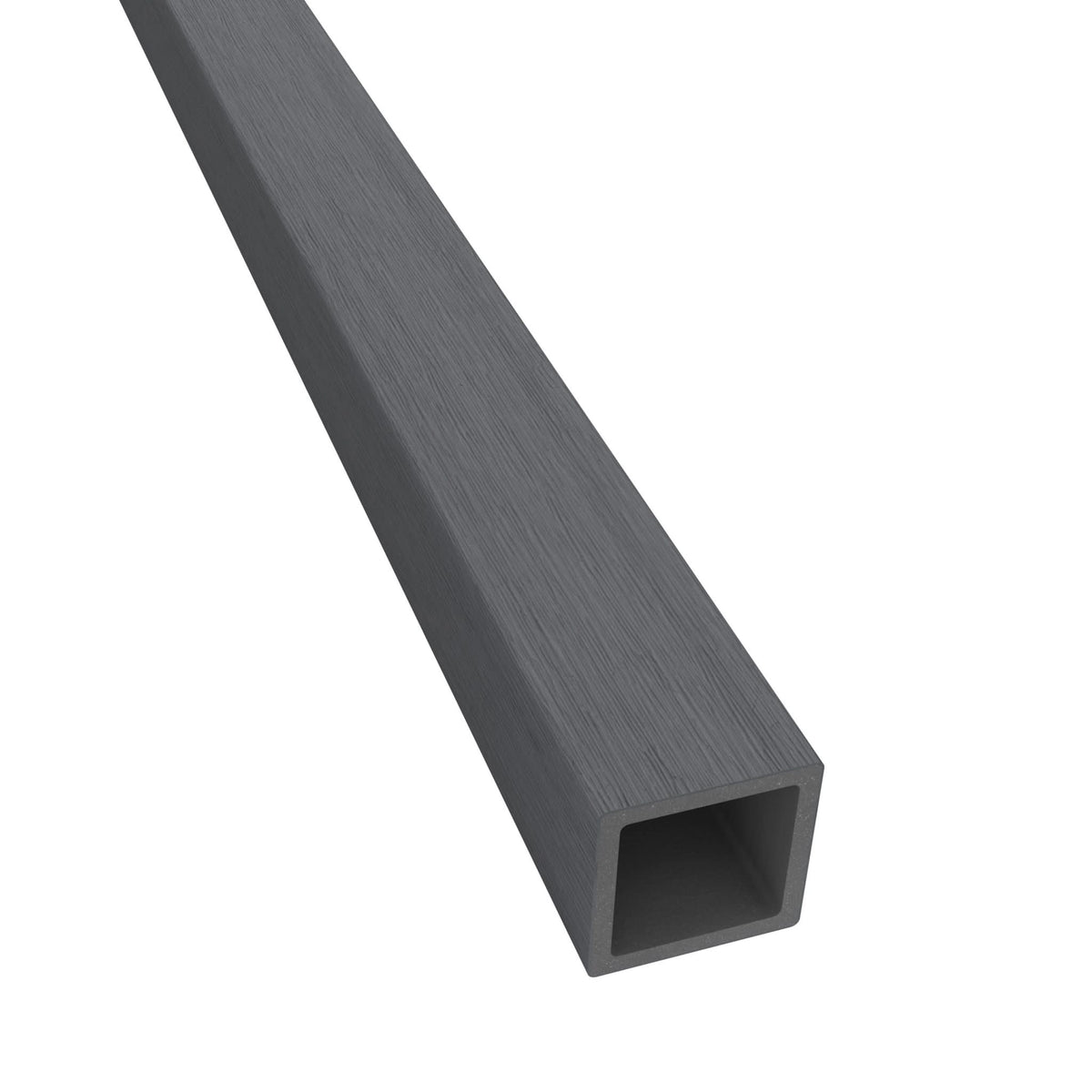
Identify starter components, board screws, trim screws, corners and edge details. Check compatibility with the selected profile and colour. A similar-looking accessory is not necessarily suitable for every range.
Check the Order Details
Review quantities, lengths, pack sizes, VAT, delivery charges and the delivery address. Confirm any access restrictions before placing the order. Keep the product names and quotation together so everyone involved works from the same information.
Our cladding calculator can help with initial material planning. Review the output against the actual layout and installation details before treating it as a final purchasing schedule.
Choose a Composite Cladding Stockist Around the Complete Order
“In stock” can refer to one colour or board length, rather than everything a project needs. A composite cladding stockist should be able to explain availability for your specific order, including the finishing components.
Ask whether any items have different lead times and whether the delivery will arrive together. If a substitution is proposed, have its dimensions, appearance and compatibility checked before accepting it. Avoid changes that conflict with an approved specification or client selection.
For a phased project, discuss quantities and timing early. Do not assume future stock will be reserved unless that arrangement is expressly agreed. Ask how later purchases should be managed where visual consistency matters.
NeoTimber’s shipping policy provides the current delivery terms. Check those terms and the confirmed order arrangements rather than relying on a historic delivery promise in an older article.
What Makes a Useful Composite Cladding Distributor?
A composite cladding distributor adds value through coordination: connecting products, stock information, logistics and support. For a contractor, that coordination can be as important as the board specification.
Ask who will answer technical questions and who will handle order changes. Check whether the seller’s advice comes from the product documentation or needs referral to the brand or manufacturer. Clear responsibilities help prevent an enquiry moving between several businesses without resolution.
Before appointing a supply partner, explain the programme and site constraints. A distributor should know whether the order is for one garden office, several homes or a commercial façade. Those projects need different conversations about quantities, scheduling and technical review.
The useful measure of service is how well the business communicates the agreed arrangements. Specific answers about an actual order are more valuable than broad claims about unbeatable turnaround times.

Wholesale Composite Cladding and Trade Purchasing
Wholesale composite cladding is usually researched by installers, contractors, developers or businesses planning repeat or larger-volume purchases. Commercial terms need to match the buyer’s requirements; the word “wholesale” alone does not establish a discount or minimum quantity.
When comparing composite cladding wholesalers, ask about eligibility, pricing, payment arrangements, delivery charges, returns and quotation validity. Establish whether prices depend on order size, repeat purchasing or an approved account.
NeoTimber® offers an application route for trade pricing. The team reviews applications and confirms the arrangement; approved account pricing can then be applied online. Visit the Professionals Hub for professional purchasing resources.
Trade buying and resale are different arrangements. If you want to act as a composite cladding retailer, stockist or reseller, use the trade and reseller enquiry route to discuss your business. Do not assume that an installer’s trade account automatically includes resale rights, exclusive territory or particular marketing support.
Plan Bulk Orders Around the Installation Programme
Buying more boards than you immediately need may reduce the number of deliveries, but it also creates storage and handling responsibilities. Confirm a suitable storage area and the product’s storage guidance before arranging a bulk delivery.
For repeat work, use a consistent specification schedule. Record the range, colour, profile, lengths and accessories so each order can be checked against the agreed design. This reduces reliance on informal descriptions such as “the same grey boards as last time”.
Compare Total Project Cost, Not Just Board Prices
A good composite cladding supplier helps you understand the scope of the order. The lowest price per board may not produce the lowest finished-wall cost once coverage, waste, accessories and delivery are considered.
Prepare comparable quotations using the same specification. Include supporting battens, anchors, fixings, trims, wall preparation, access and installation labour where relevant. Keep provisional allowances visible so they are not mistaken for fixed prices.
Consider future care as well. Composite can reduce routine painting and staining, but cleaning and inspection remain part of ownership. Timber costs and care vary by species and intended finish, so use a fair comparison rather than assuming every wooden façade follows an annual treatment cycle.
Our composite versus wood guide provides background for that decision. If your design also includes a terrace, review the general decking page and budget for the separate decking specification.
Ask Better Questions About Sustainability
Material sourcing deserves the same scrutiny as price and performance. Ask for information on the wood and plastic content, relevant sourcing certification, expected care and end-of-life options. Check whether a claim applies to the board core, cap or complete product.
Recycled content can be a useful feature, but it does not by itself prove that one product has a lower overall environmental impact than every alternative. Transport, manufacturing, service life and disposal also influence the comparison.
Review NeoTimber’s material sourcing information and request the evidence your project needs. Avoid assuming that composite is entirely recyclable through ordinary household collections or that all timber sourcing is environmentally harmful.
A more credible procurement decision records the evidence and its scope. This is particularly useful when a client or contract asks for specific environmental information rather than a general “eco-friendly” description.
Documentation and Support After Delivery
Supplier selection continues to matter after the order arrives. Keep a record of the product, quantities, delivery and any agreed technical details. Inspect the delivery using the seller’s process and report concerns promptly.
Follow the installation resources for your exact profile. Do not improvise fixing changes or substitute supporting components without checking the effect on the specification.
Read the warranty terms before purchase, including the conditions, exclusions and claim requirements. A long warranty period is useful context, but is not a guarantee that every mark, colour change or installation issue is covered.
At handover, retain the care guidance with the project documents. A clear record helps the owner maintain the finish and obtain relevant advice later.

A Practical Checklist for Choosing a Composite Cladding Company
- Identify the exact board range, colour, profile and effective coverage.
- Review samples and project photographs alongside technical information.
- Confirm suitability for the building and the proposed wall system.
- Check compatible accessories, installation instructions and care requirements.
- Compare complete quotations with VAT, delivery and exclusions shown.
- Confirm stock, lead times and site delivery arrangements for the actual order.
- Agree any trade, volume or reseller terms in writing.
- Read warranty conditions and establish who handles support enquiries.
Use the checklist to compare answers from several businesses. It provides a more reliable basis for buying than treating “manufacturer”, “direct” or “wholesale” as a shortcut to quality.
Frequently Asked Questions
Is buying composite cladding direct always cheaper?
No. Compare the complete order, delivery and service against equivalent alternatives. Direct purchasing can provide a clear contact route, but it does not automatically guarantee the lowest total cost.
Can homeowners buy composite cladding online?
Yes. Homeowners can browse and order through NeoTimber’s online collection. Confirm the product, quantities, accessories and installation requirements before checkout.
How do I find a suitable composite cladding supplier?
Look for clear product information, compatible components, current availability and useful support. Ask specific questions about your proposed installation and complete order.
Does a trade account mean wholesale pricing for every order?
Pricing depends on the approved commercial arrangement. Confirm the terms with the supplier rather than assuming every business receives the same discount.
Can I become a composite cladding stockist or reseller?
Contact the relevant business team to discuss eligibility and terms. NeoTimber’s contact page includes a route for trade and reseller enquiries.
Start With the Project, Then Choose the Supply Route
The right composite cladding company makes it easier to connect design decisions with practical purchasing. Understand the board, plan the supporting system and agree how the complete order will reach the site.
Explore NeoTimber® cladding, browse the collection and request free samples. For professional orders or wholesale composite cladding enquiries, review the Professionals Hub and speak with the team about your requirements.