Outdoor Decking Ideas That Combine Personal Style with Lasting Appeal
The most useful decking trends are ideas you can adapt to the way you live. A considered colour, a well-proportioned border or planting in the right place can make a garden feel more inviting without tying the design to a particular year.
Think of trends as starting points rather than rules. The best combination for your home depends on its architecture, the size of the garden and how you want to use the space. This guide explores colours, patterns and finishing details that offer plenty of scope for a personal design.
Start with NeoTimber’s decking guide for an overview, or browse our composite decking range as you compare materials and finishes.
1. Coordinated Colours That Connect House and Garden
Choosing a deck colour in relation to the house can make the outdoor area feel like part of a wider design. Look at window frames, brickwork, paving and interior flooring before selecting a board in isolation.
A close colour relationship can create continuity; a deliberate contrast can define the deck as a separate destination. Neither approach needs an exact match. Texture, undertone and the surrounding light influence the result.
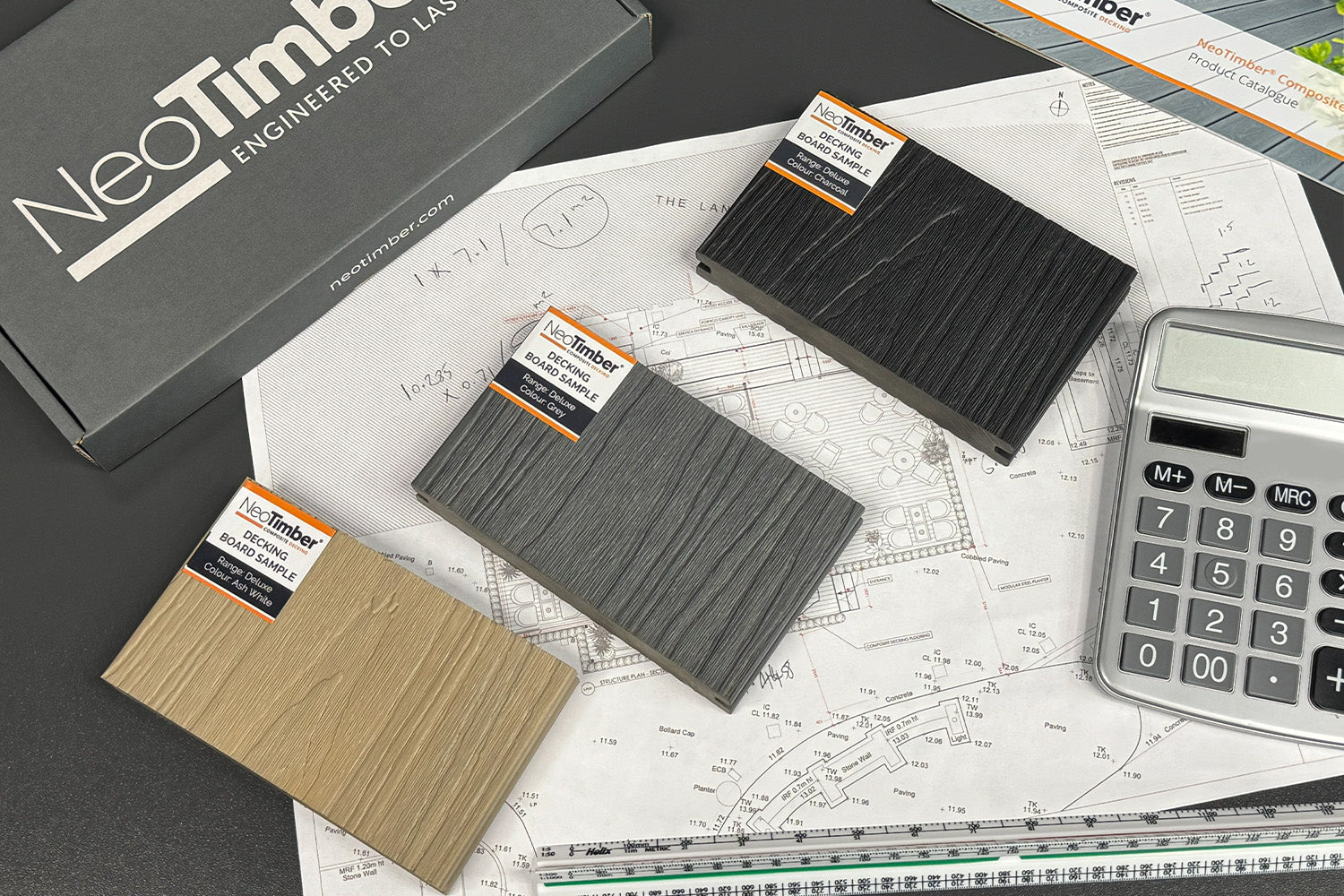
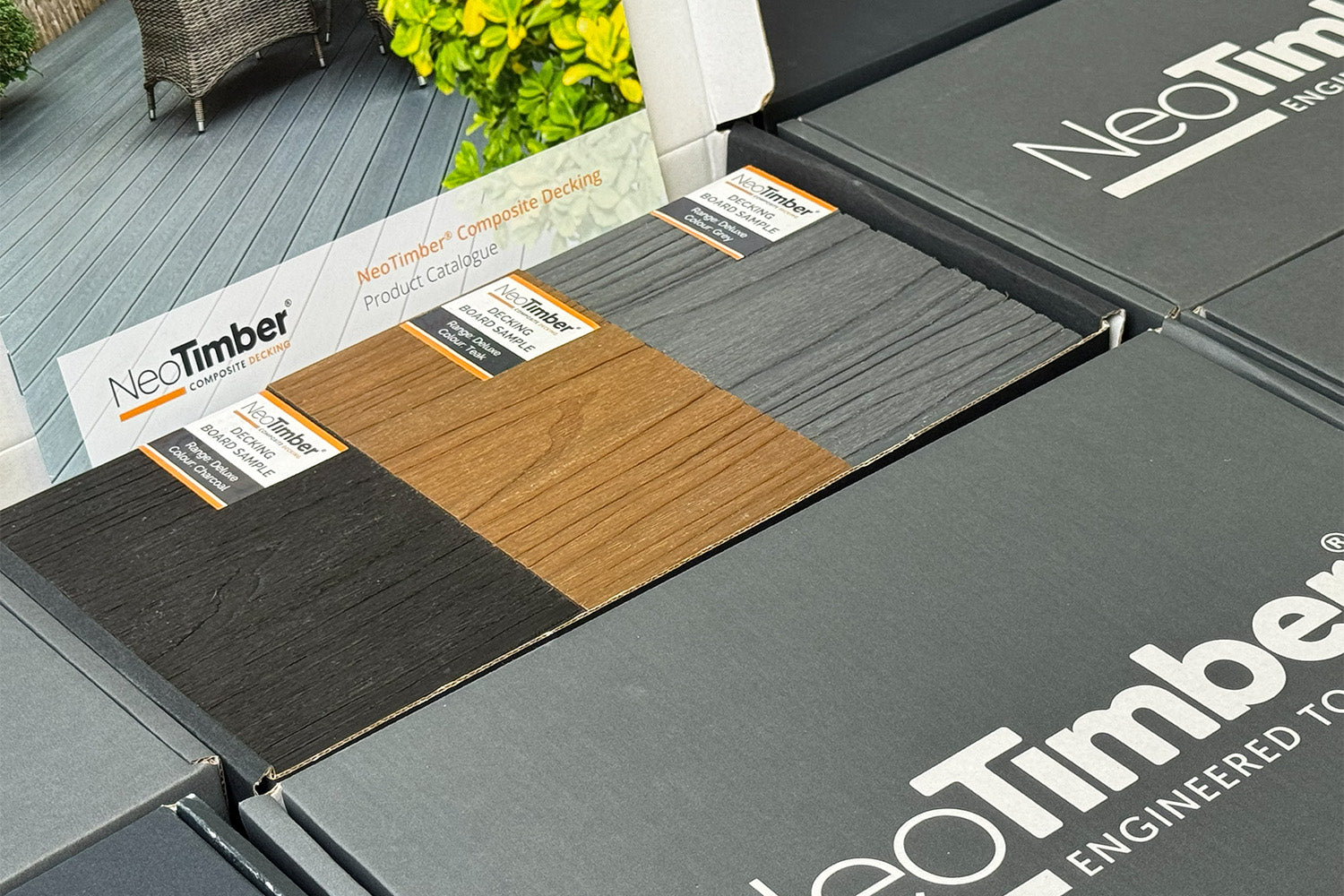
Explore our composite decking colour guide, then compare samples outdoors rather than relying on screen colours alone.

Natural and Light-Toned Finishes
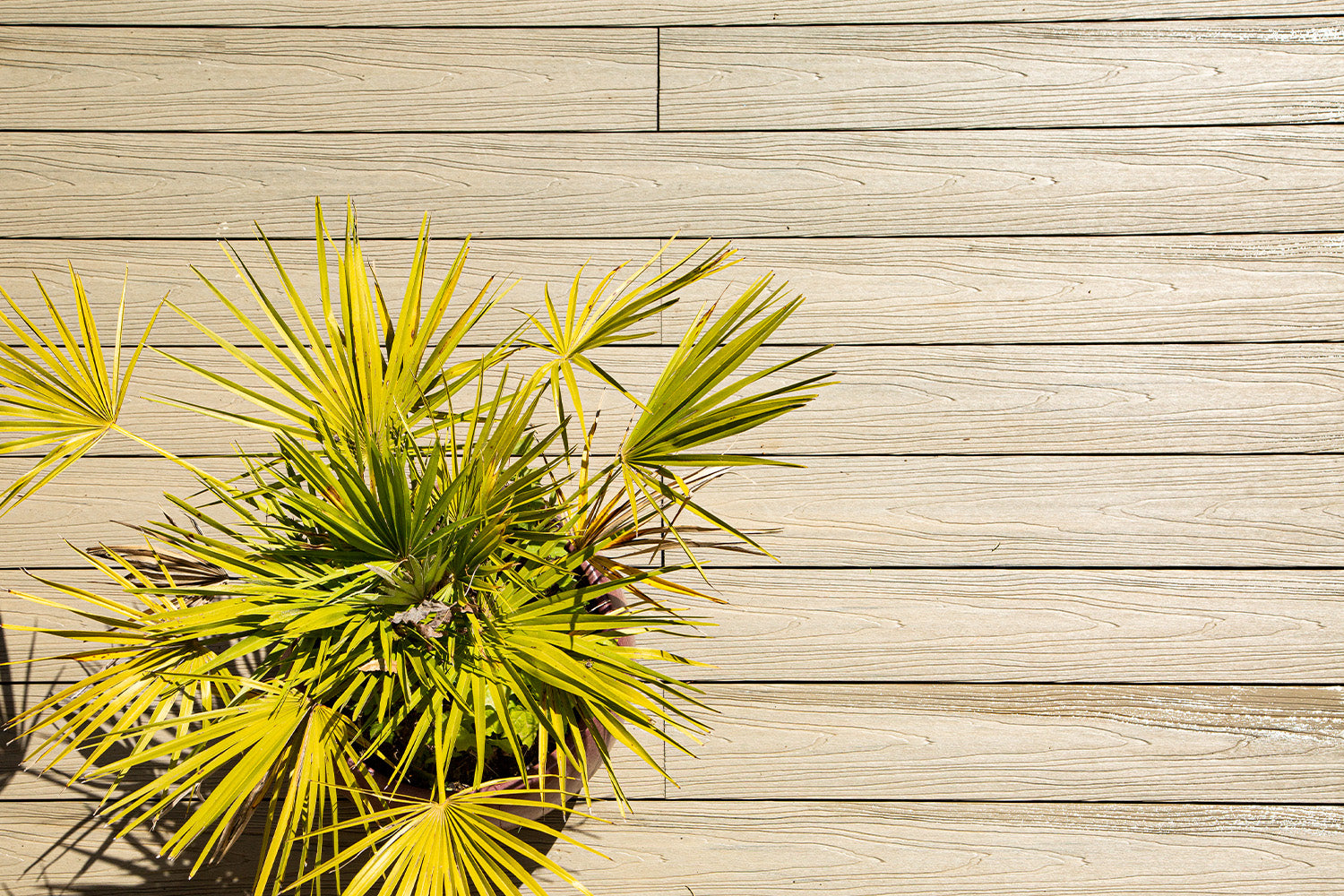
Timber-inspired browns and softer neutrals give you a flexible base for planting and furniture. Consider Oak, Teak or Chocolate for warmth. Antique, Silver Birch and Ash White offer other ways to build a softer palette.
Check availability within the chosen range and consider how the surface is expected to weather. Fade resistance should not be interpreted as a promise of no colour change.

Grey and Charcoal for Definition
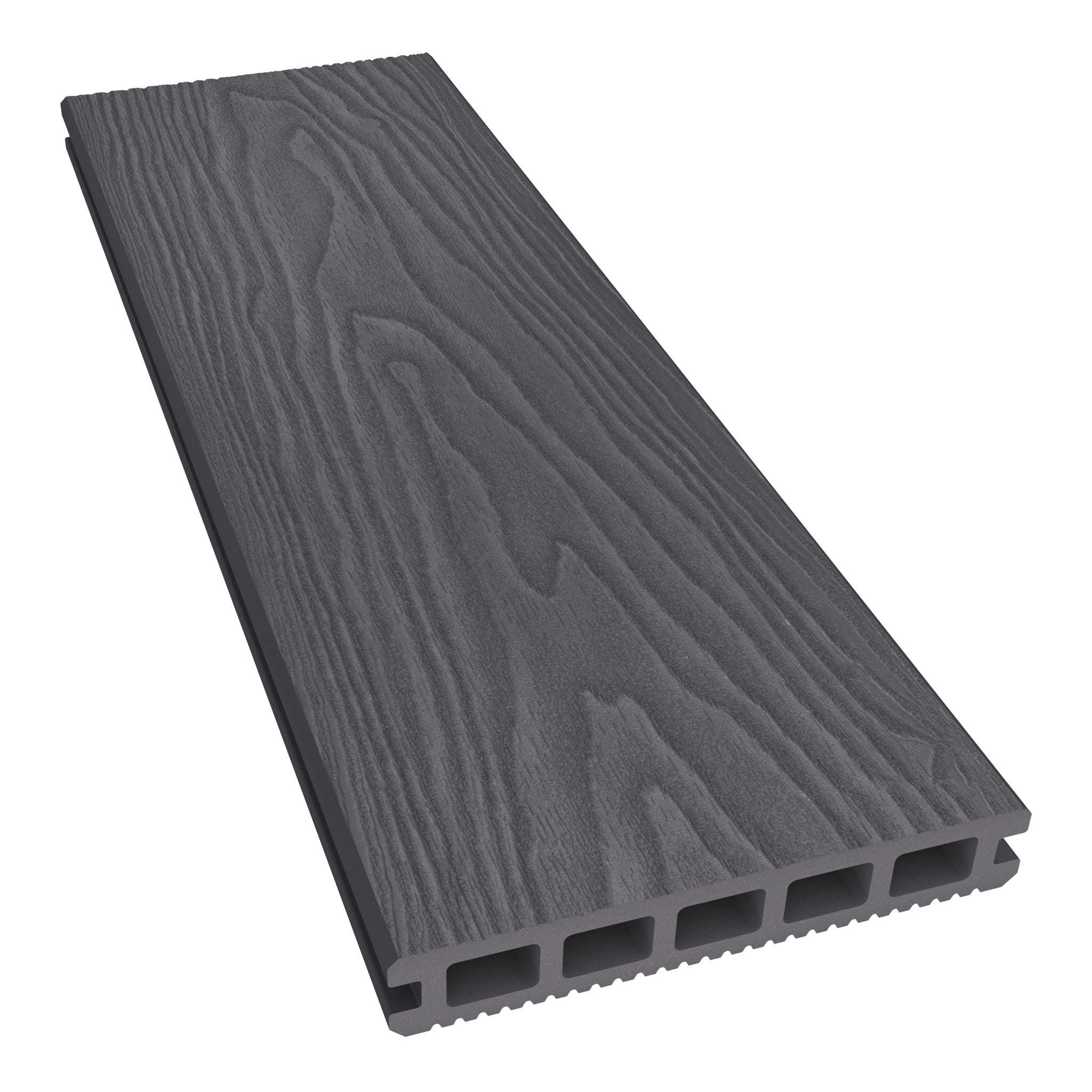
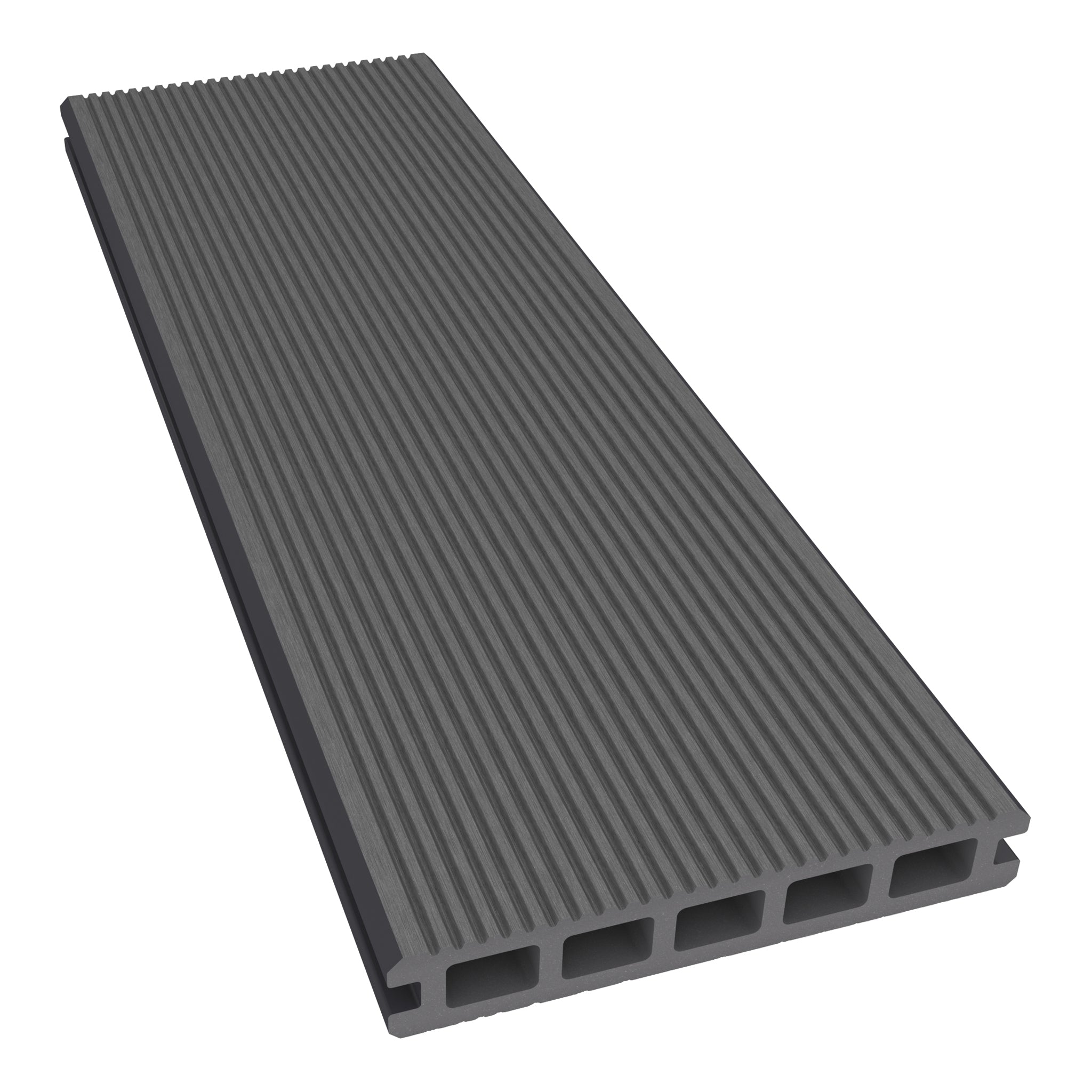
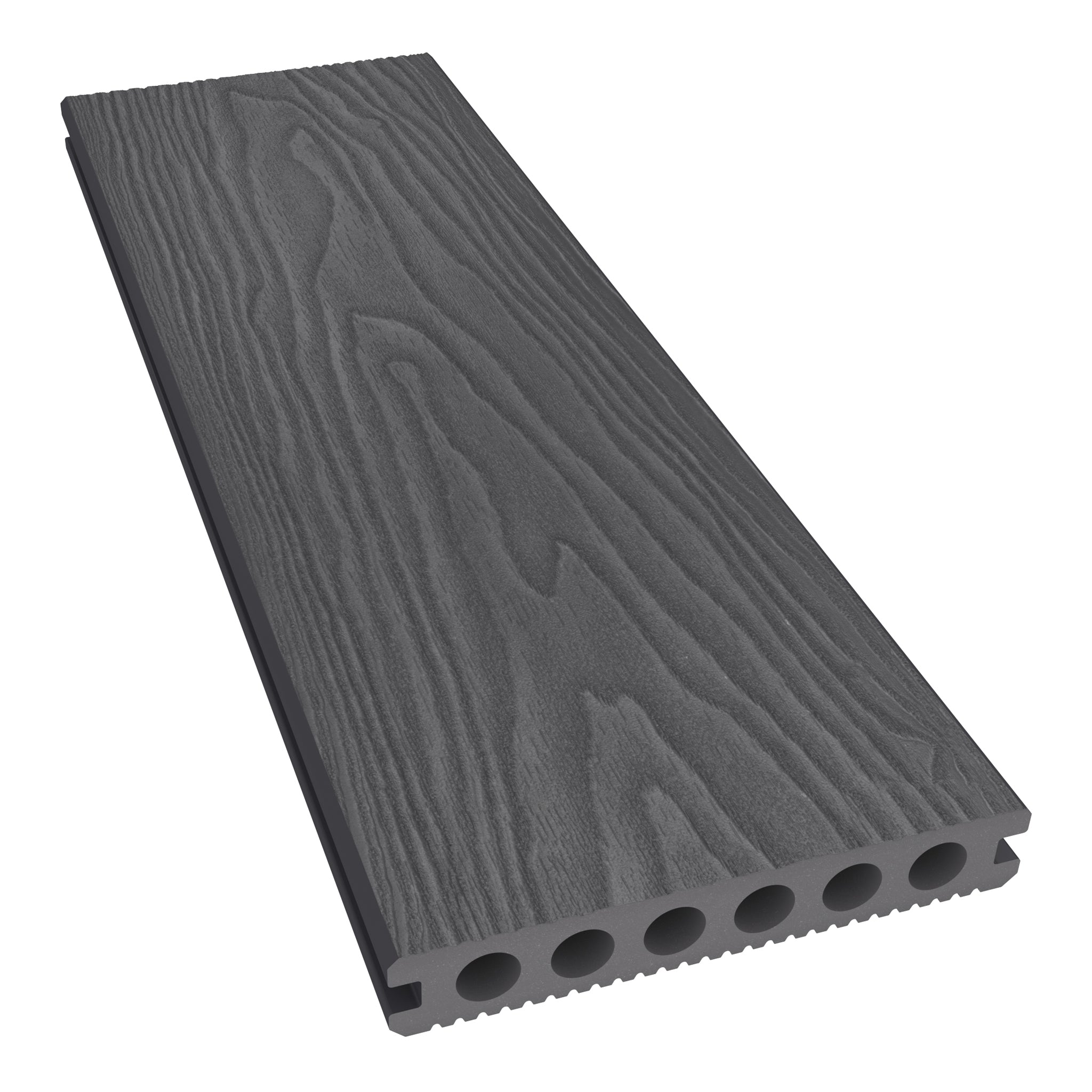
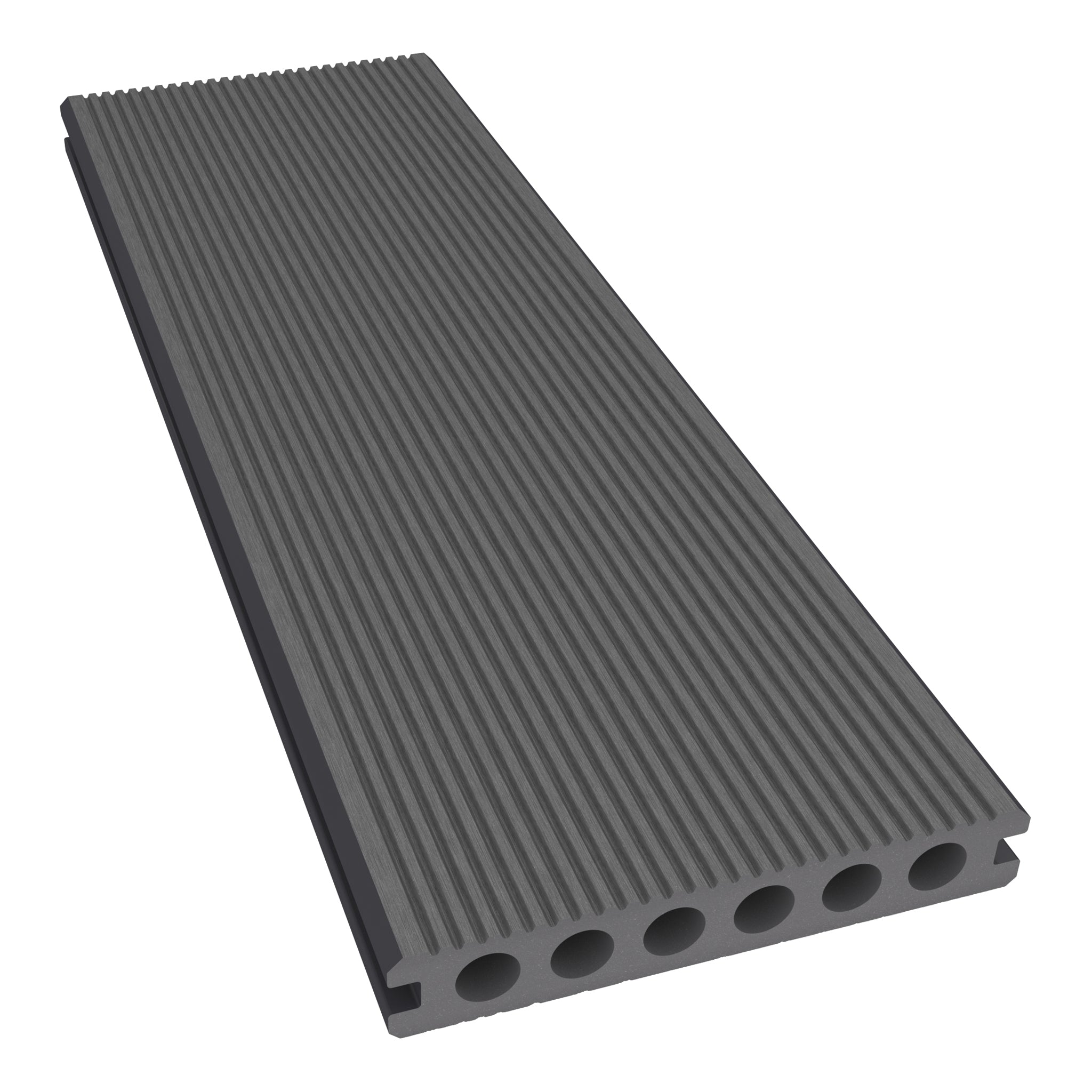
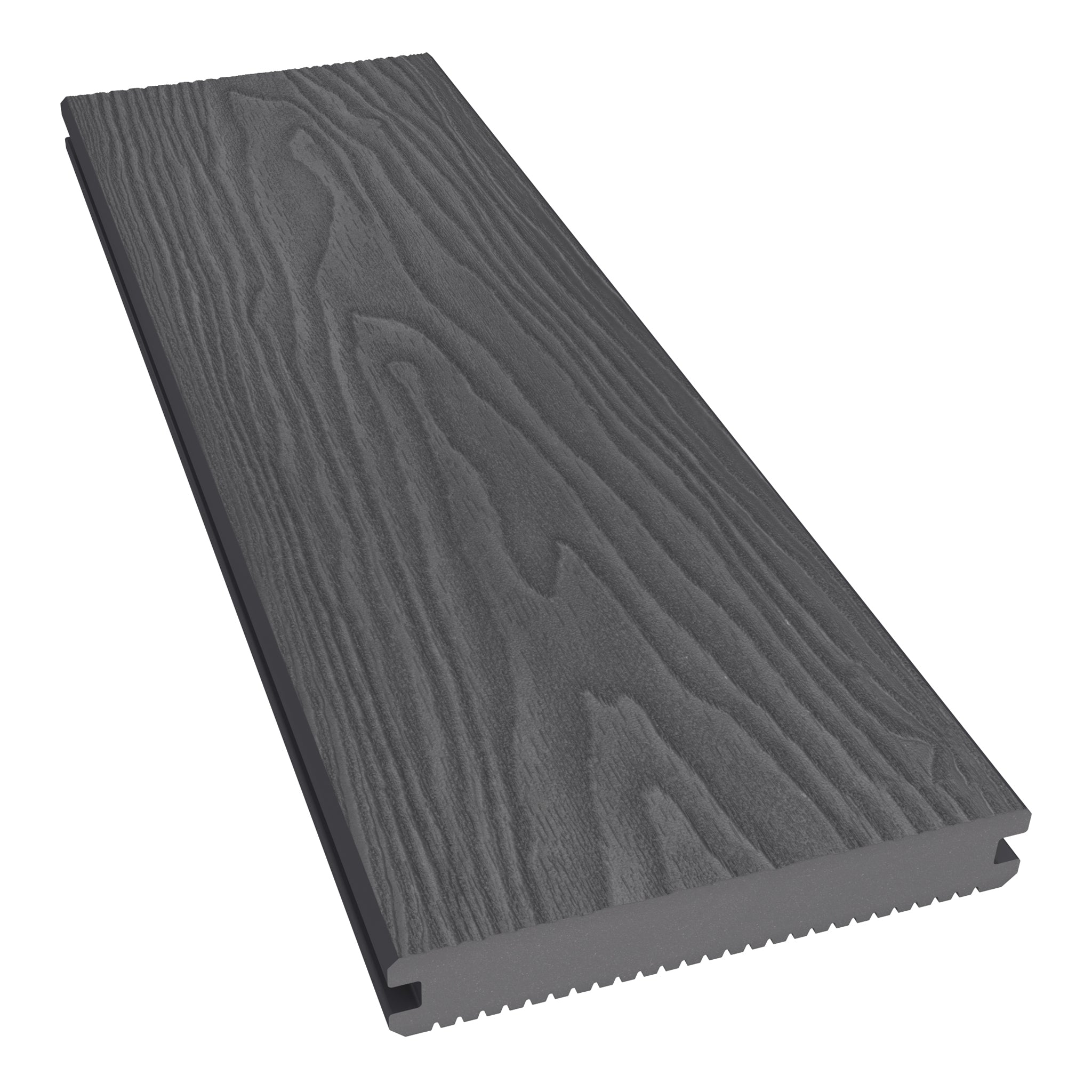
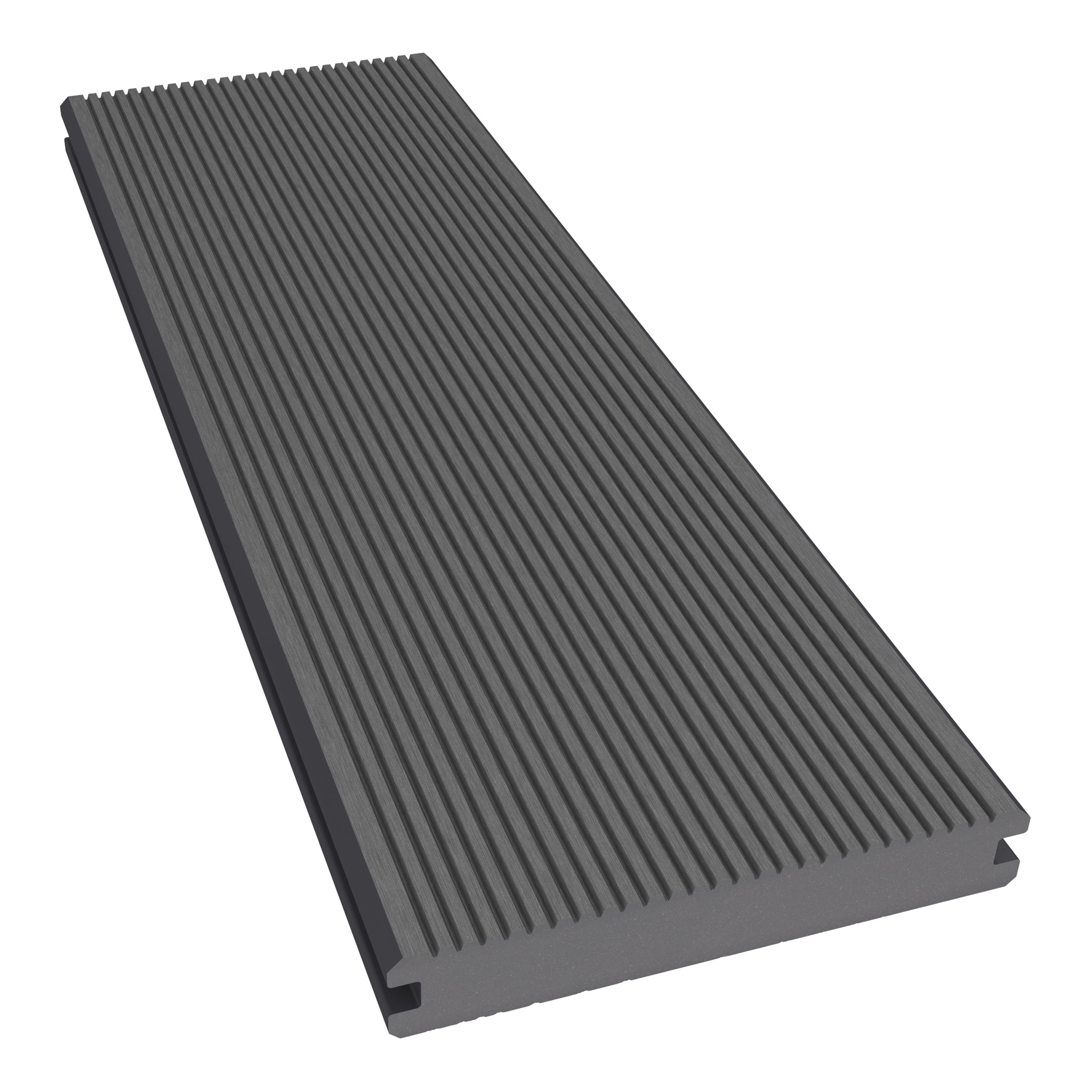
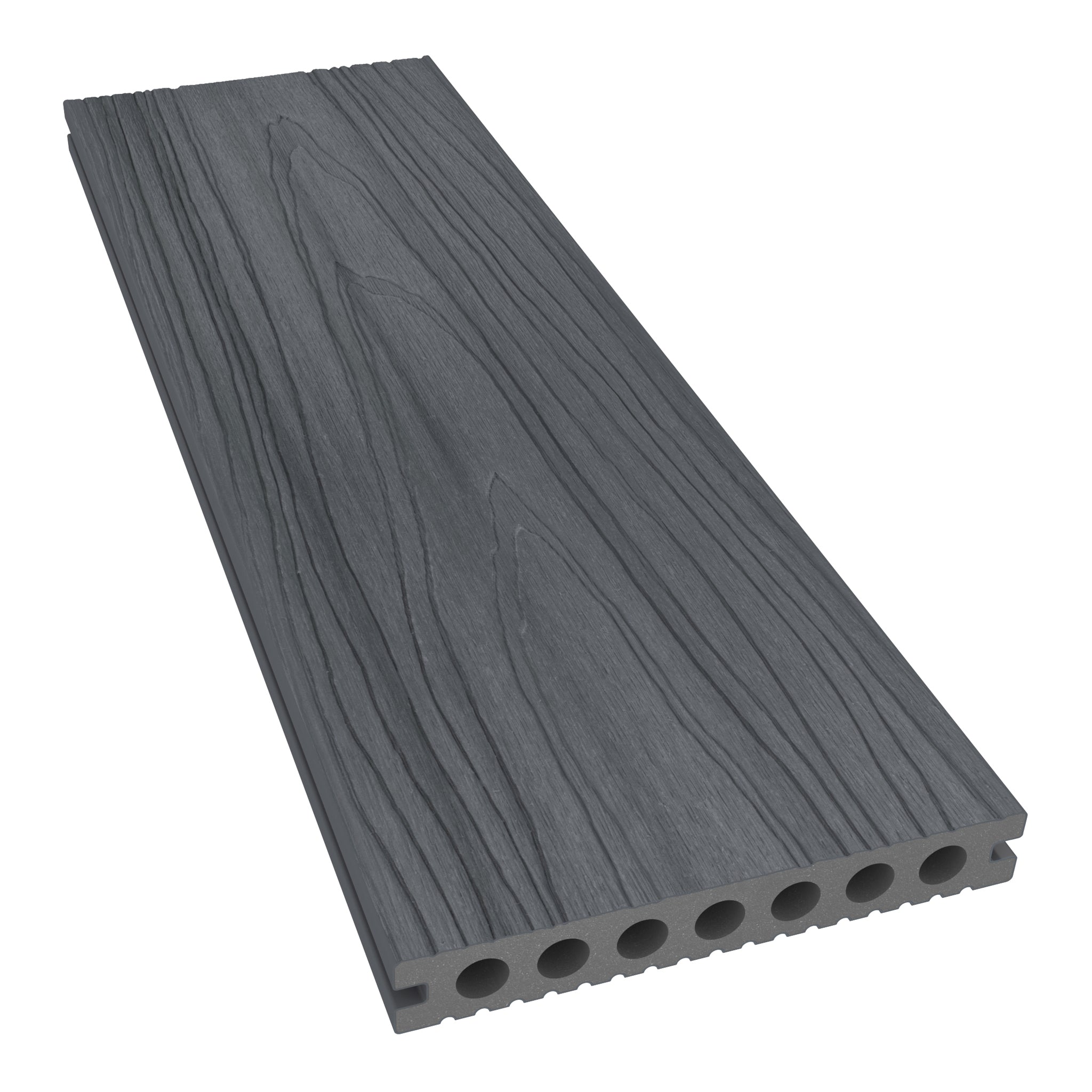
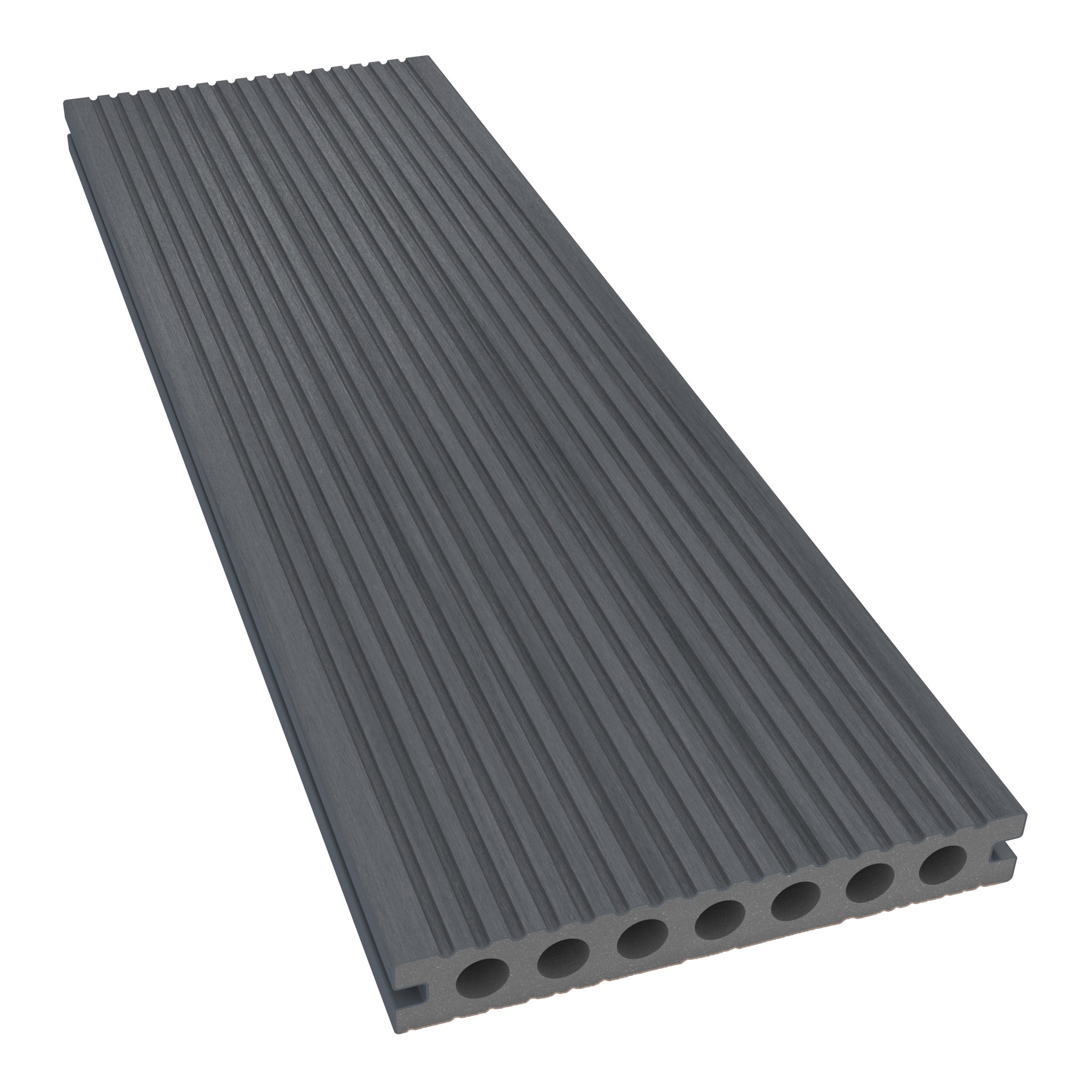
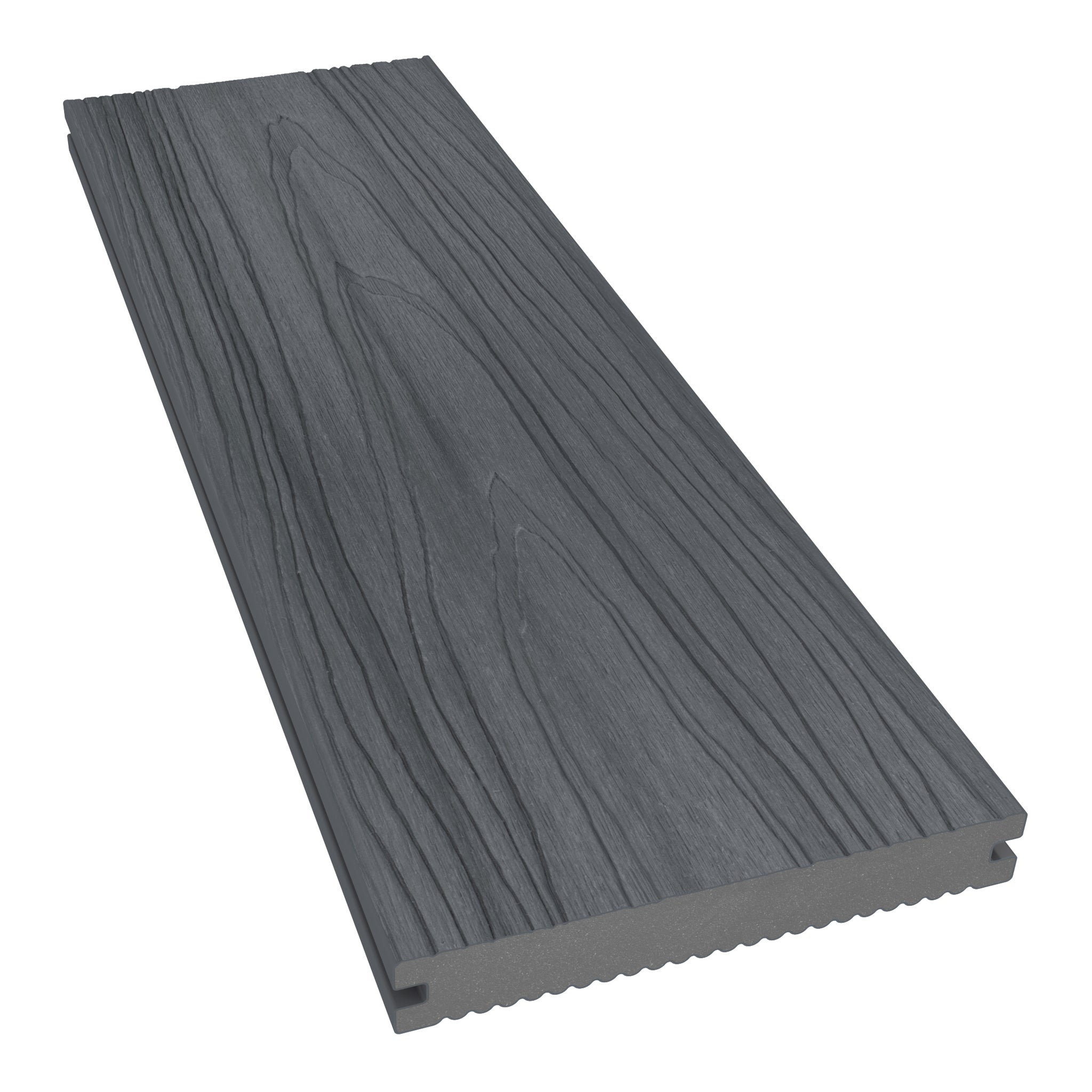
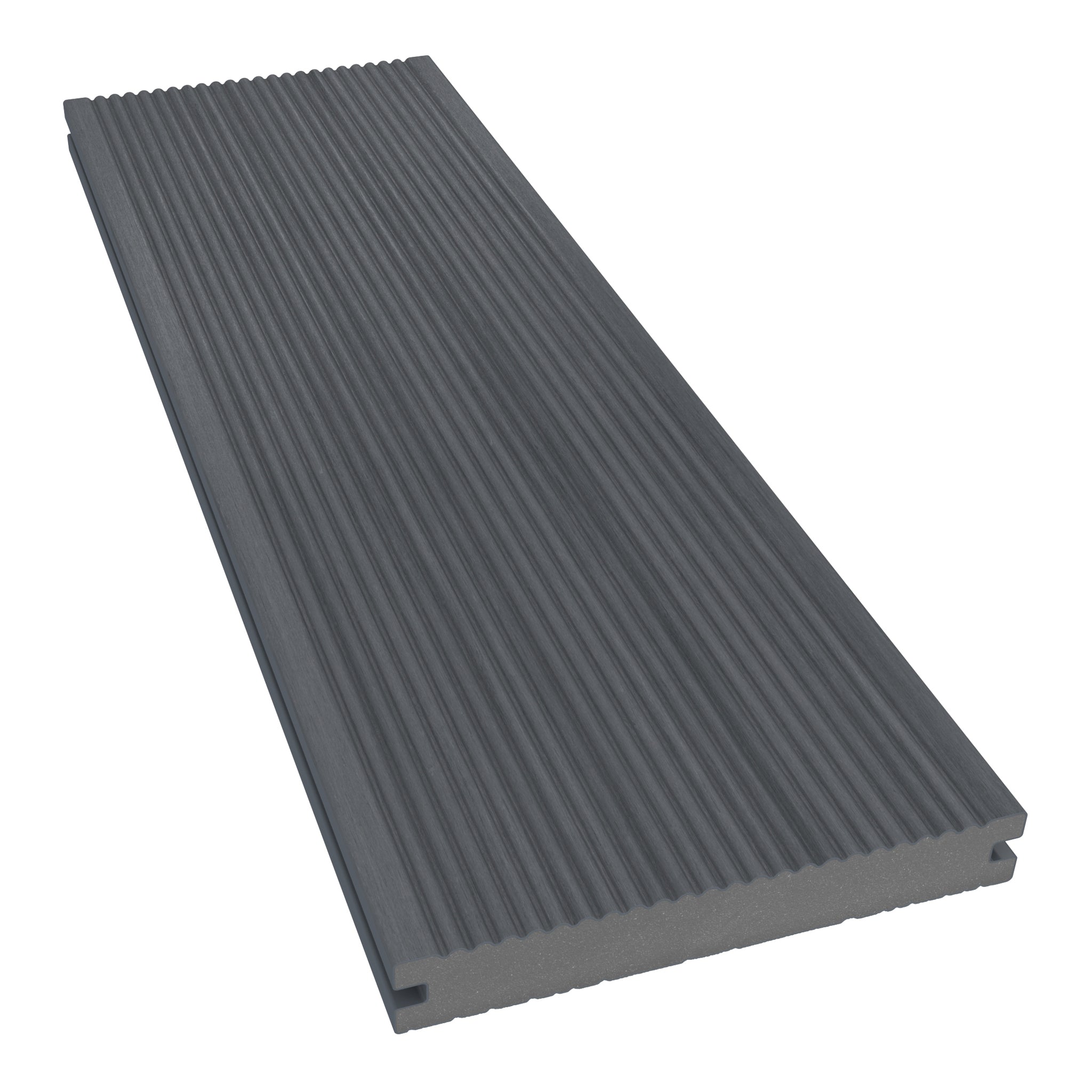
Grey and Charcoal decking can echo darker frames or provide a contrasting backdrop to greenery. Balance darker surfaces with planting, lighter furniture or adjoining paving if you want to avoid a visually heavy finish.
Appearance is only part of the choice. Think about exposure and underfoot comfort in sunny locations, and assess physical samples in the conditions where they will be used.

2. Contrasting Borders and Two-Colour Designs
A second colour can frame a deck, highlight a change in direction or define a seating area. A restrained border often has more impact than several competing patterns.
Try one principal board colour with a complementary perimeter. Alternatively, use a darker inlay to divide a large area into smaller visual sections. Keep the relationship with nearby paving and furniture in mind.

3. Board Layouts That Give the Space Direction
The direction of a board run changes the rhythm of the surface. Straight layouts can emphasise a view or create a calm backdrop, while diagonal arrangements introduce a more decorative effect.
Explore composite decking laying patterns alongside the shape of your garden. Work out joints, cut lengths and frame support before deciding on the final arrangement.

Herringbone, Chevron and Shaped Details
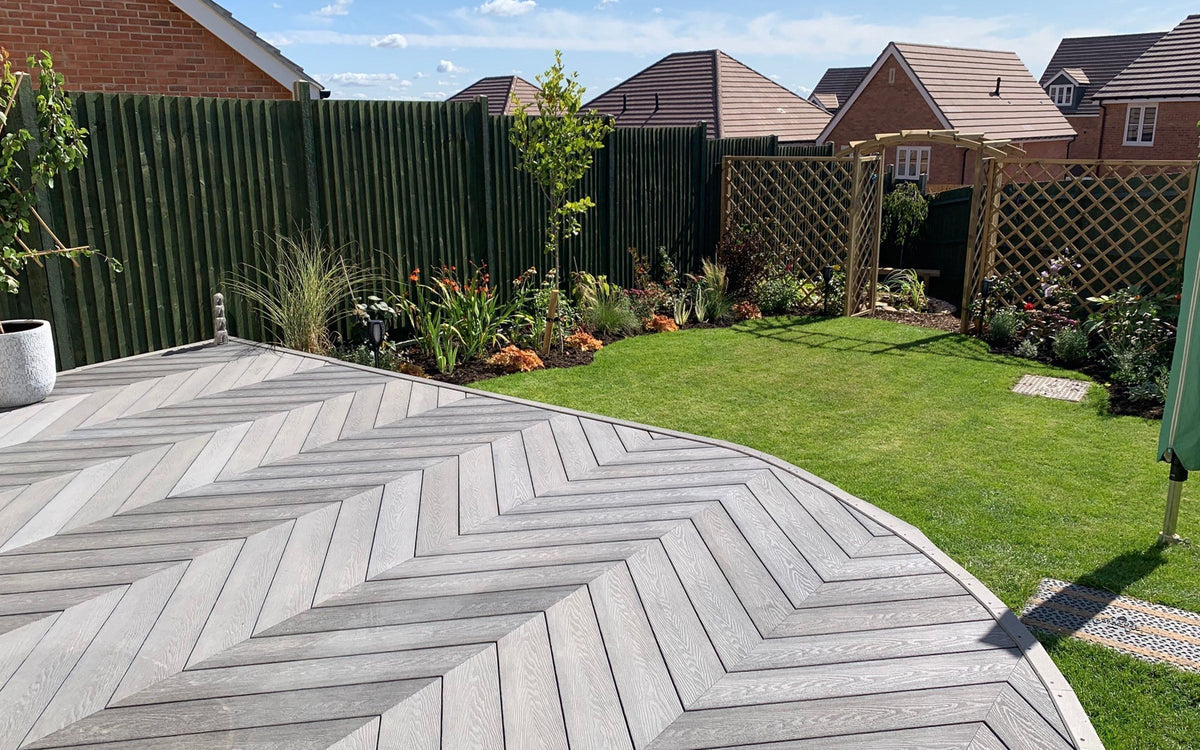
Herringbone uses a staggered arrangement, while chevron brings angled ends together in a repeated point. Both can create a distinctive focal area, but they need detailed planning rather than being treated as interchangeable patterns.
More cuts and junctions can increase labour, waste and supporting-frame requirements. Shaped edges also need a product-approved detail; do not assume that boards can be bent or heated into curves.

4. Mixed-Width Decking for Subtle Texture
Changing board widths offers another way to create interest without relying on a strong colour contrast. A regular wide-and-narrow sequence can give the surface a deliberate rhythm.
Explore NeoTimber’s Deluxe Wide Deck Board and Deluxe Narrow Deck Board, alongside our guide to wide and narrow boards. Confirm profile compatibility, finished levels, fixings and support requirements before mixing products.

5. Picture Framing and Carefully Finished Edges
A picture-frame border gives the deck a defined outline and can make the finished layout feel more complete. It can match the main boards or introduce a controlled contrast.
Plan it before constructing the frame. Perimeter boards, corners and intersecting runs need appropriate support and movement allowances. Compare our decking edging options and Deluxe woodgrain edge board when developing the detail.

6. Planting That Softens the Deck Perimeter
Planting helps connect a defined deck surface with the wider landscape. Use the board colour and texture as a reference when choosing foliage, pots and neighbouring materials.

Border Plants and Grasses
Repeated planting along an edge can soften the transition from deck to garden. Leave access for cleaning and inspection, and avoid allowing soil or vegetation to obstruct required ventilation or drainage.

Pots and Planters
Containers let you adjust the planting as the garden develops. Group a small number of substantial pots or repeat similar containers to keep the composition coherent.
Check the filled weight of large planters against the deck’s design, provide suitable protection beneath them and avoid trapping moisture against the boards. Explore planter options alongside your seating layout.

Vertical Greenery
Trellises and climbing plants can add height where floor space is limited. Give them a suitable independent supporting structure. Decking offcuts should not be assumed suitable for structural pergolas, posts or other load-bearing elements.

7. Outdoor Living Spaces with a Clear Purpose
A deck feels more useful when its layout reflects everyday activities. Position dining furniture near convenient access, create a comfortable seating zone or leave a route through to the garden.
Echoing an interior colour can create visual continuity, but outdoor thresholds still need appropriate weathering, drainage and access details. An apparently flush finish should not be achieved by compromising the building or deck specification.

Mixing Decking with Other Materials
Stone, gravel, planting and wood-effect surfaces can create different textures within one scheme. Use material changes to define areas while keeping the colour palette manageable.
Where guarding is required, choose a suitable system as part of the design. Explore balustrades and composite balustrades rather than treating a decorative railing as sufficient for every location.

8. Lighting That Highlights Useful Details
Lighting can draw attention to a border, identify routes and make a seating area more inviting after dark. Plan cable access and fitting positions before the boards are laid.
Consider LED decking lights within a wider lighting scheme, using components suitable for the location and a qualified installer where required. Accent lights do not replace adequate illumination on steps and access routes.

9. Furniture and Accessories Chosen for Everyday Use
Furniture should fit the available space once chairs are pulled out and people are moving around. Explore outdoor furniture and recycled plastic garden furniture with that practical layout in mind.
Useful accessories belong in the design, too. If considering anti-slip decking strips, confirm their compatibility with the exact board profile and fitting instructions. They are a functional choice, not a guarantee against slipping.

10. A Coordinated Garden with Manageable Upkeep
Composite can suit projects where a timber-inspired finish is wanted without routine staining or painting. It still requires cleaning and inspection. Compare composite decking and timber on the complete specification rather than appearance alone.
Coordinate adjoining fencing, gates or cladding through related tones and textures. Everything need not match exactly to look considered.

How to Choose Decking Trends That Will Work for You
- Start with how you want to use the space.
- Choose one or two main design ideas rather than combining every detail.
- Compare samples against the house and planting.
- Budget for the frame, fixings, finishing components and labour.
- Plan care, access and installation requirements alongside the appearance.
Decking Trends FAQs
Which decking colour will age well?
A colour that works with the permanent features of your home is a useful starting point. Assess samples outdoors and check the product’s expected weathering characteristics.
Can a small deck include decorative features?
Yes. A simple border, a considered board direction or a few coordinated planters can add detail without overcrowding the space.
Do I need a complicated pattern for a contemporary deck?
No. Straight board runs, precise edge detailing and a restrained palette can create a contemporary result. Choose the layout that suits the garden and your budget.
Turn Decking Inspiration into Your Own Design
Decking trends are most useful when they help you make lasting choices about colour, layout and everyday use. Take ideas from different projects, then adapt them to your own setting.
Browse the composite decking gallery and our decking design ideas, or request free samples to begin building your palette. For product guidance, contact NeoTimber®.