


Understand the Components Behind a Timber-Alternative Garden Fence
Synthetic fencing is a broad description for manufactured alternatives to traditional timber fencing. It can include plastic products and composite systems, but those materials are not interchangeable. Their construction, supporting components and care requirements can differ considerably.
If you are considering NeoTimber®, the relevant material is wood–plastic composite: it contains a wood component as well as plastic. This guide explains how the boards, panels and posts work together, where wood-effect finishes fit into garden design and what to check before buying.
Explore our fencing products for wider advice, or browse the composite fencing range to compare specific composite products.
In this guide: Materials and terms · Boards, panels and posts · Installation options · Existing posts · Colour and screens · Care and warranty · FAQs
What Is a Synthetic Fence Made From?
The word “synthetic” does not identify one particular material or performance standard. A PVC panel and a wood-plastic composite board can both appear in the same search results, despite having different ingredients and installation details.
Likewise, a synthetic wood fence generally describes a manufactured product with a timber-inspired appearance. It does not necessarily mean the product is wood-free. Check the actual specification if avoiding wood content is important to your project.
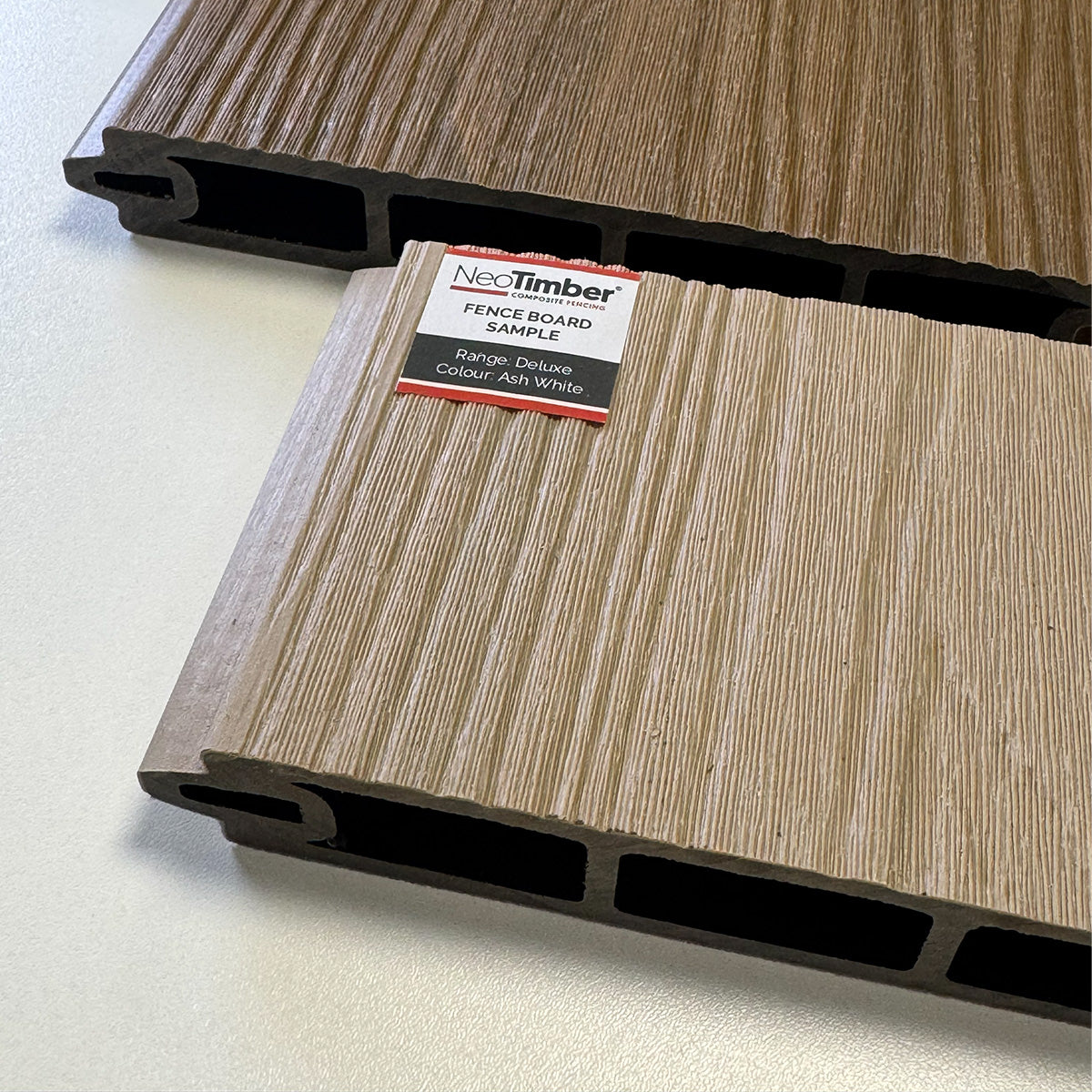
For composite products, compare the board profile, protective surface and compatible supports. A capped board has an additional outer layer; that feature should be assessed alongside the complete system rather than treated as a guarantee against every type of damage.
Synthetic Fence Boards, Panels and Posts: What Is the Difference?
These terms describe different parts of the boundary. Understanding them helps you compare quotations and avoid ordering an incomplete installation.
Understanding the main fencing components:
| Term | What it refers to | What to check |
|---|---|---|
| Synthetic fence boards | Individual infill pieces assembled within a bay. | Profile, dimensions, coverage, finish and compatibility. |
| Synthetic fence panels | The completed infill section, or a kit intended to form it. | Whether supplied assembled or as components, and exactly what is included. |
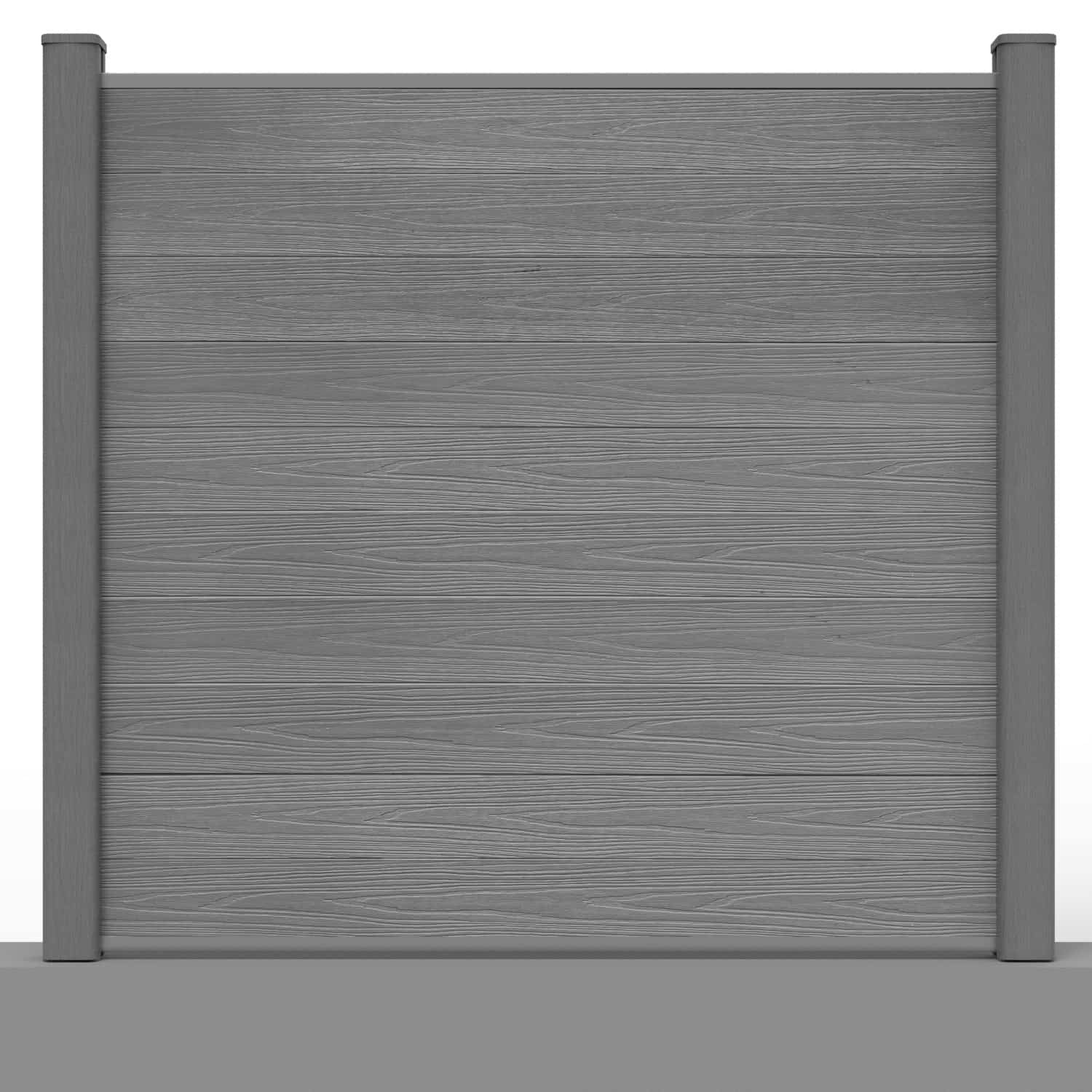
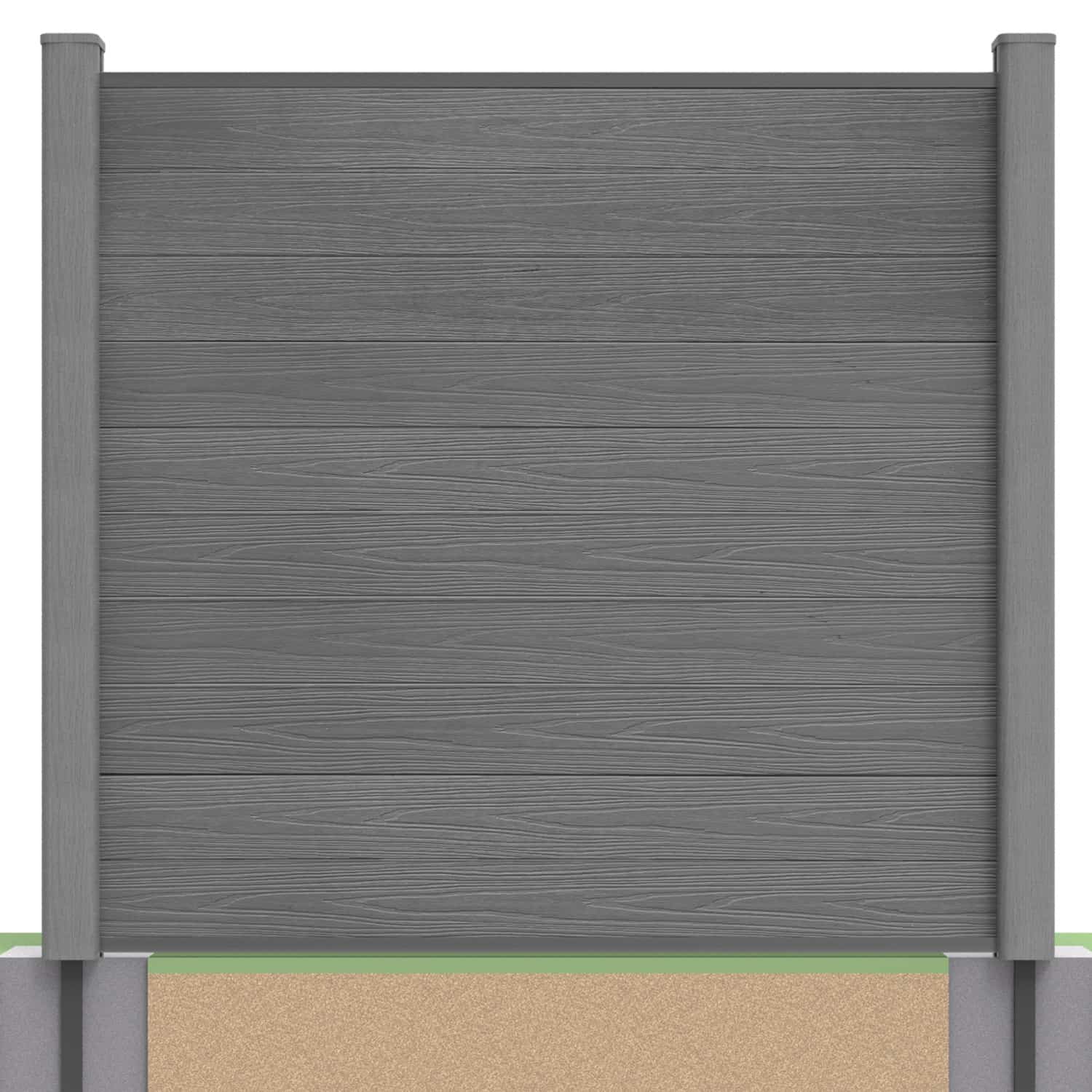
| Synthetic fence posts | The visible post components used with the selected system. | Structural support, foundations, connections and any internal reinforcement. |
| Rails and inserts | Components that finish or connect the board assembly. | Correct type, length, fixings and position in the system. |
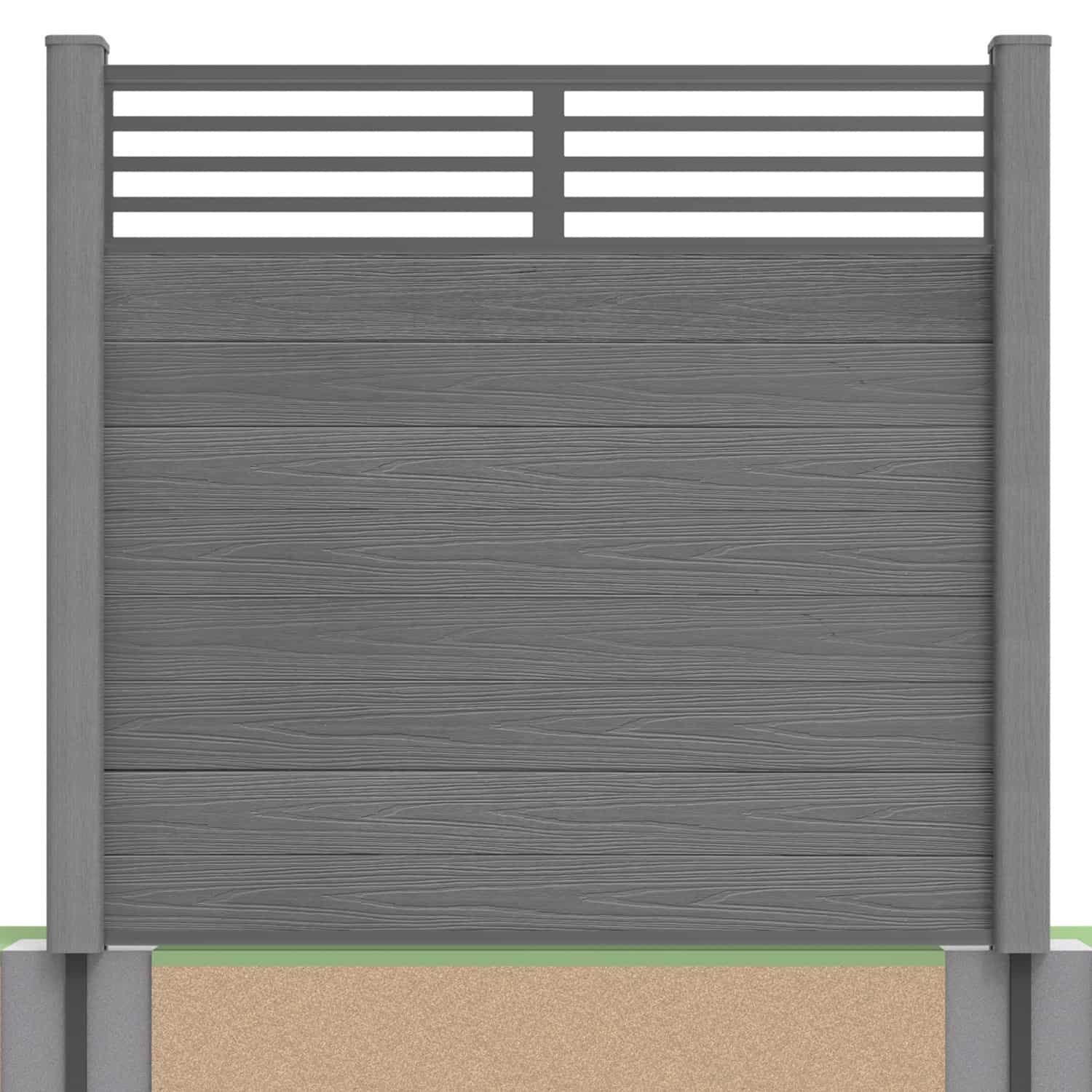
In NeoTimber’s composite-post arrangement, a galvanised steel support provides the structural anchorage and an outer composite post provides the finish and channels. The visible post should not be mistaken for a standalone structural member.
Browse the component guide to plan a complete assembly. Posts, supports, rails and fixings must match the selected configuration.
Choose the Installation Method Around Your Site
NeoTimber® offers different support arrangements for suitable hard and soft ground. These are foundation choices, rather than a way to bypass site preparation.
- Hard ground: a bolt-down support needs a suitable structural base and specified anchors. Decorative paving alone is not automatically adequate.
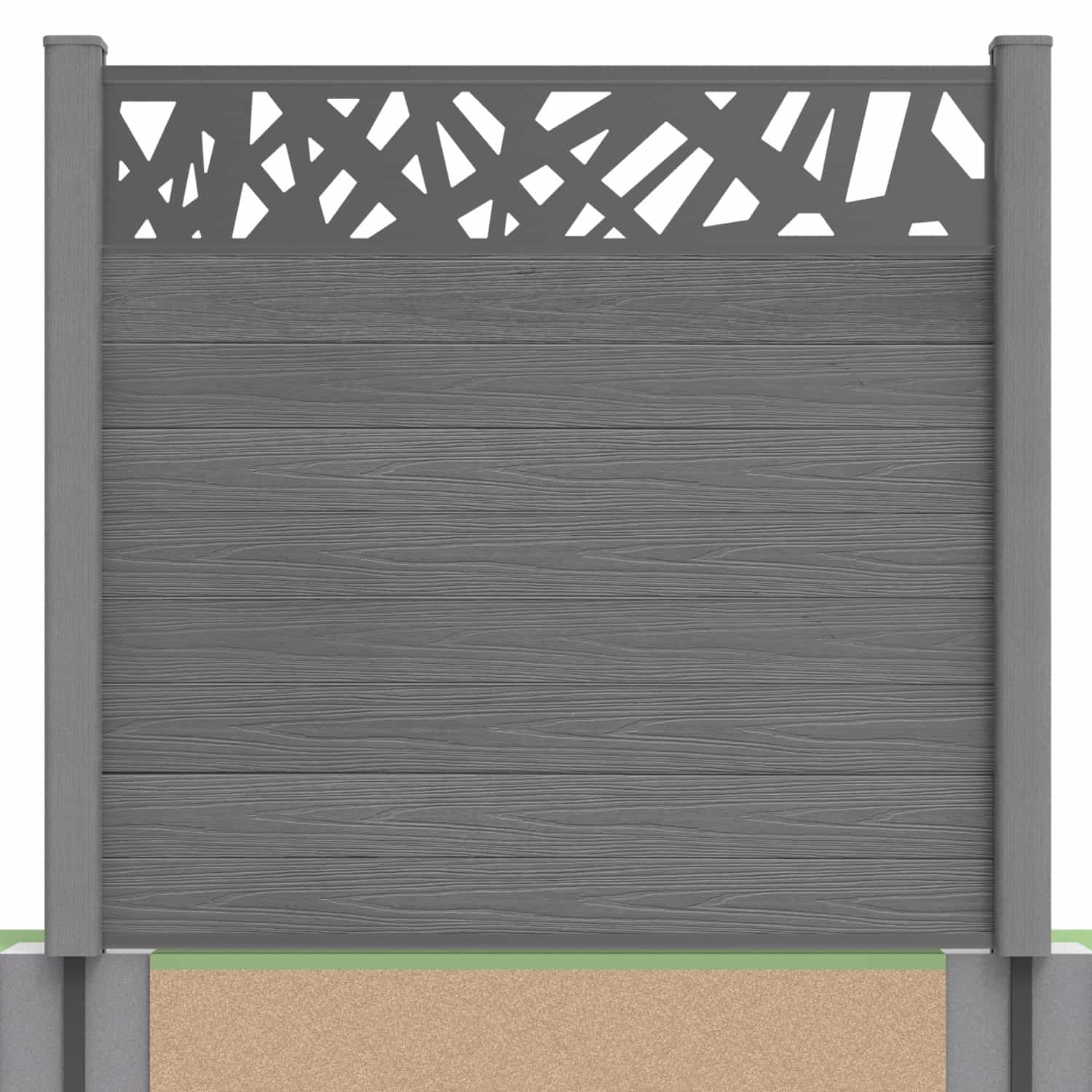
- Soft ground: a steel support is set into a concrete foundation in earth. Foundation requirements depend on the ground, fence height and exposure.
- Changes in level: plan the bays and supports before installation rather than assuming the panel can simply follow a slope.
Follow the current installation guidance and obtain advice where the base or ground conditions are uncertain. A manufactured board material does not make the completed fence windproof.

Can You Fit New Boards Between Existing Posts?
Potentially, where the existing structure is suitable. Compatible inserts can create a connection between composite infill boards and certain timber or concrete post arrangements.
Check the posts, foundations, spacing and dimensions before ordering. An insert does not repair rotten timber, cracked concrete or an unstable footing. Shorter bays may also require approved cutting methods and movement clearances.
When planning synthetic wood fence panels for an existing boundary, assess the whole bay rather than just the board length. Review the guides to timber post connections and concrete post inserts for the relevant arrangement.

Choose the Finish and Privacy Level Together
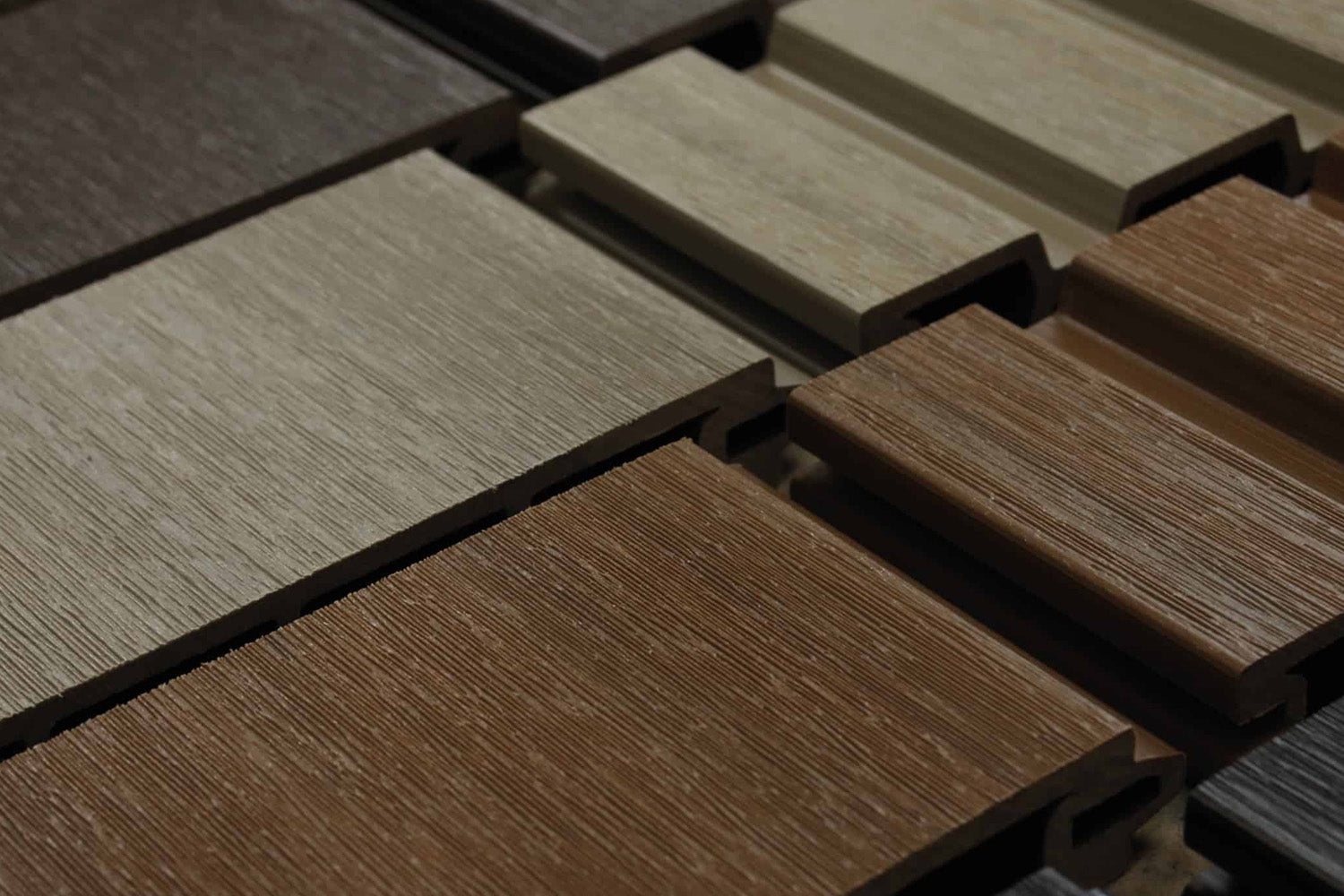
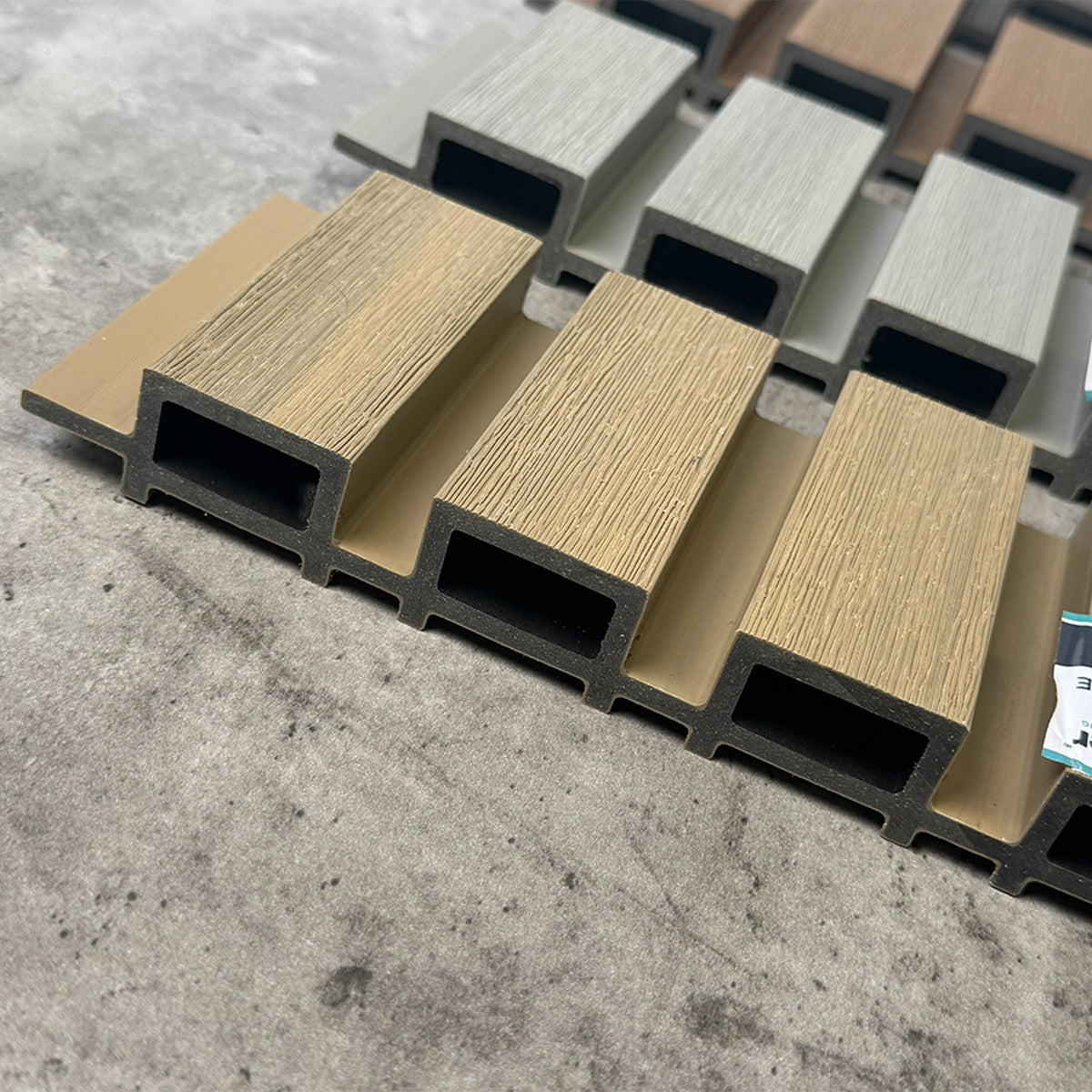
Wood-effect textures can bring detail to a garden boundary without needing a painted timber finish. NeoTimber’s Deluxe boards offer woodgrain and brushed faces, while Slatted boards provide a repeated batten-inspired profile. Compare actual products rather than assuming every finish has the same construction.
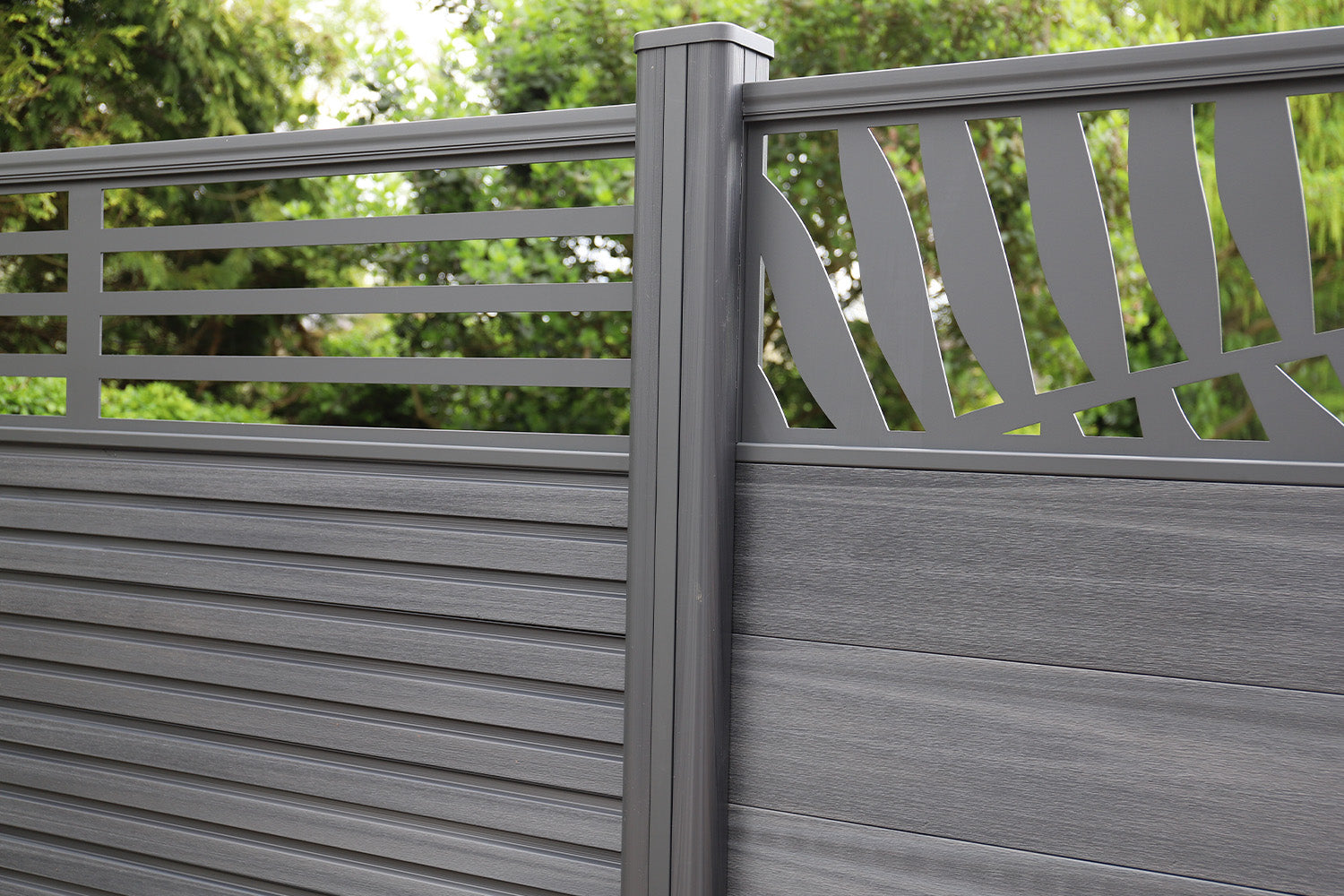
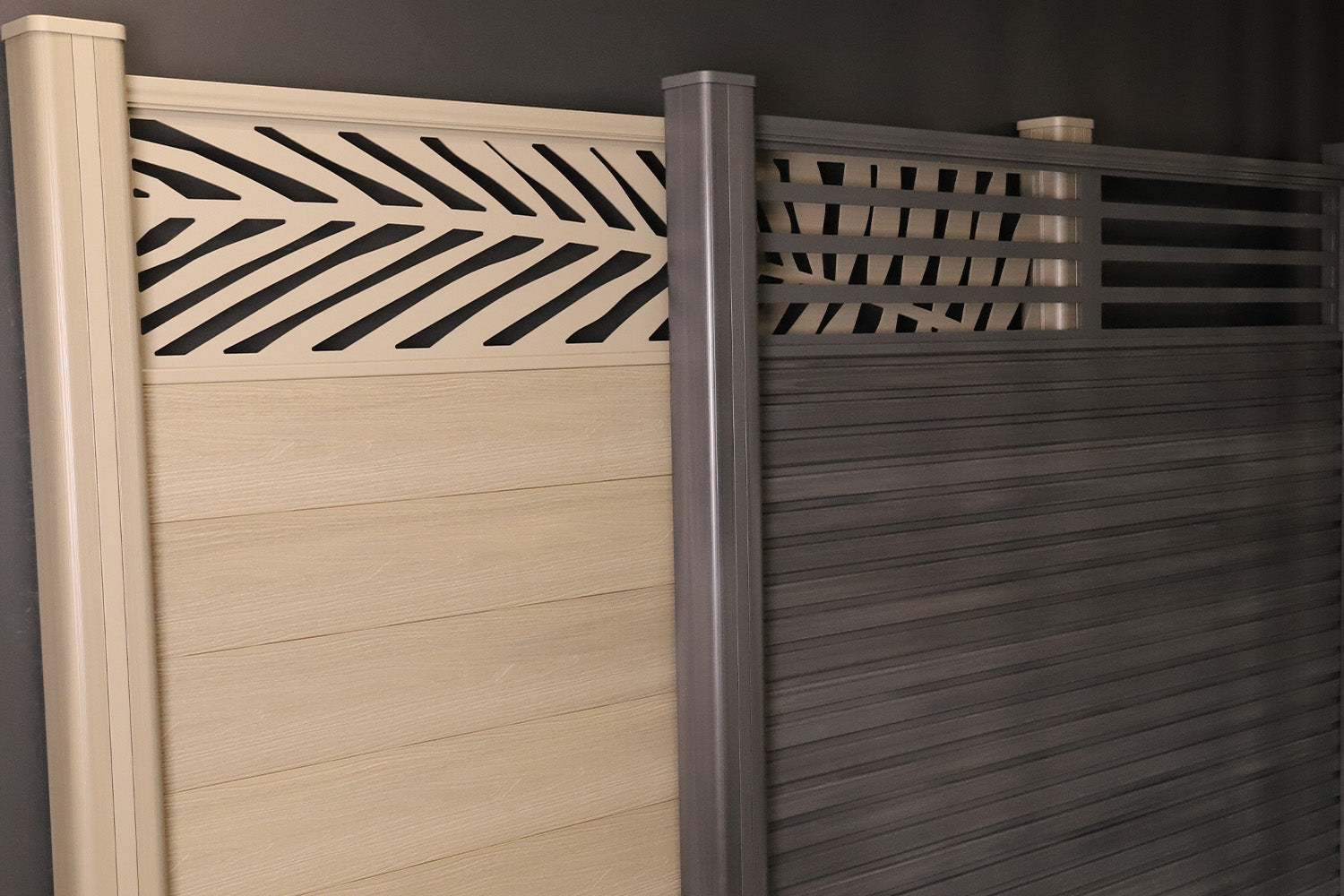
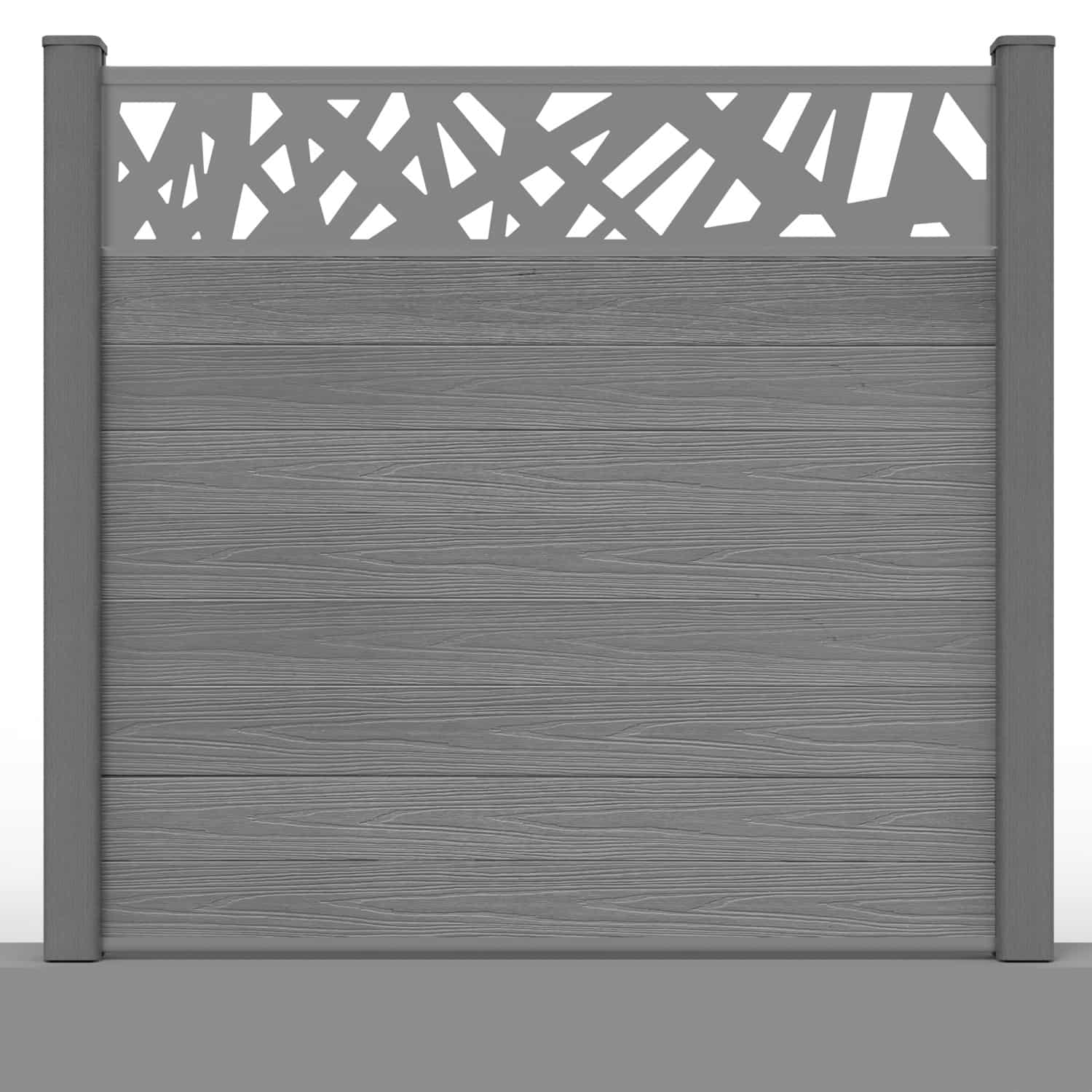
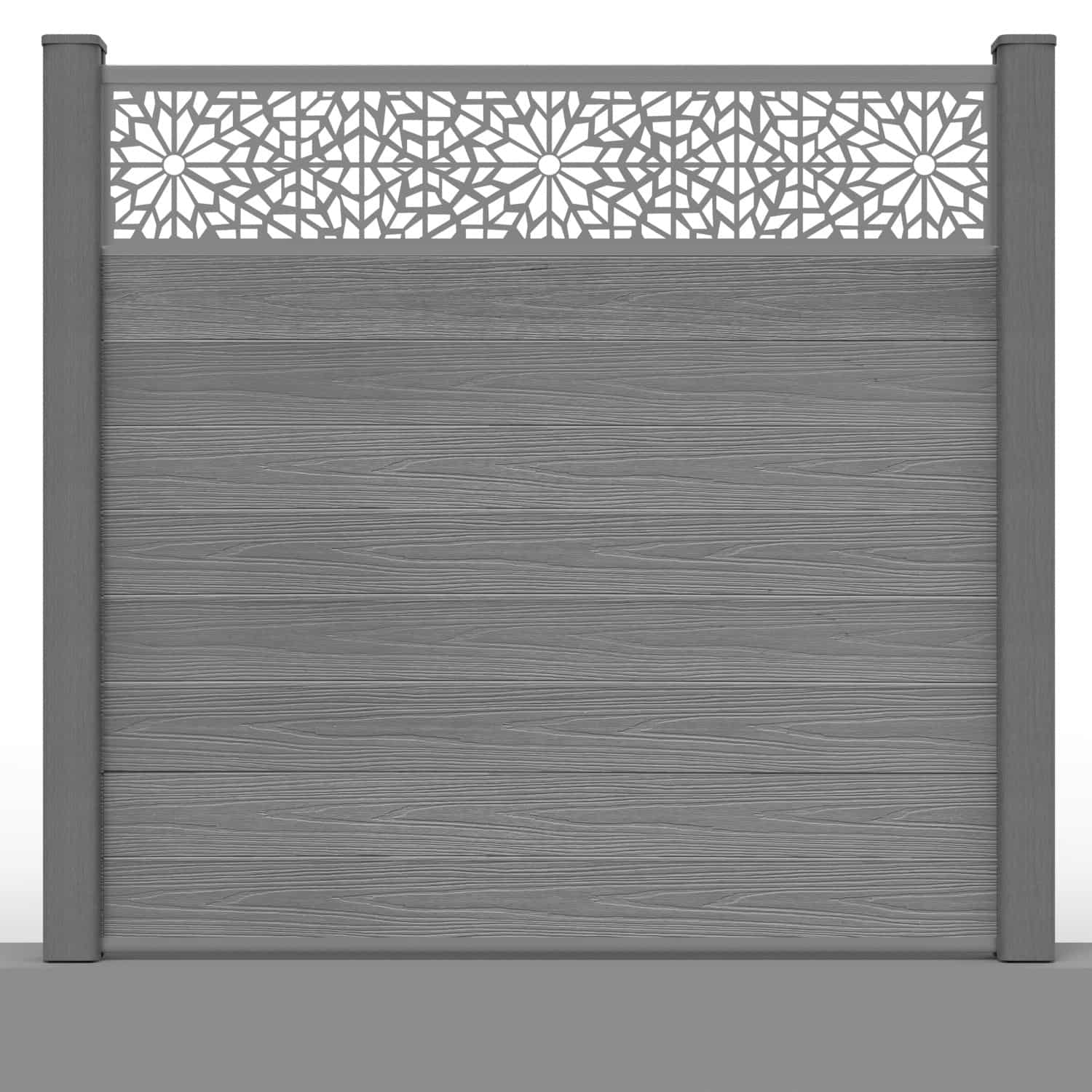
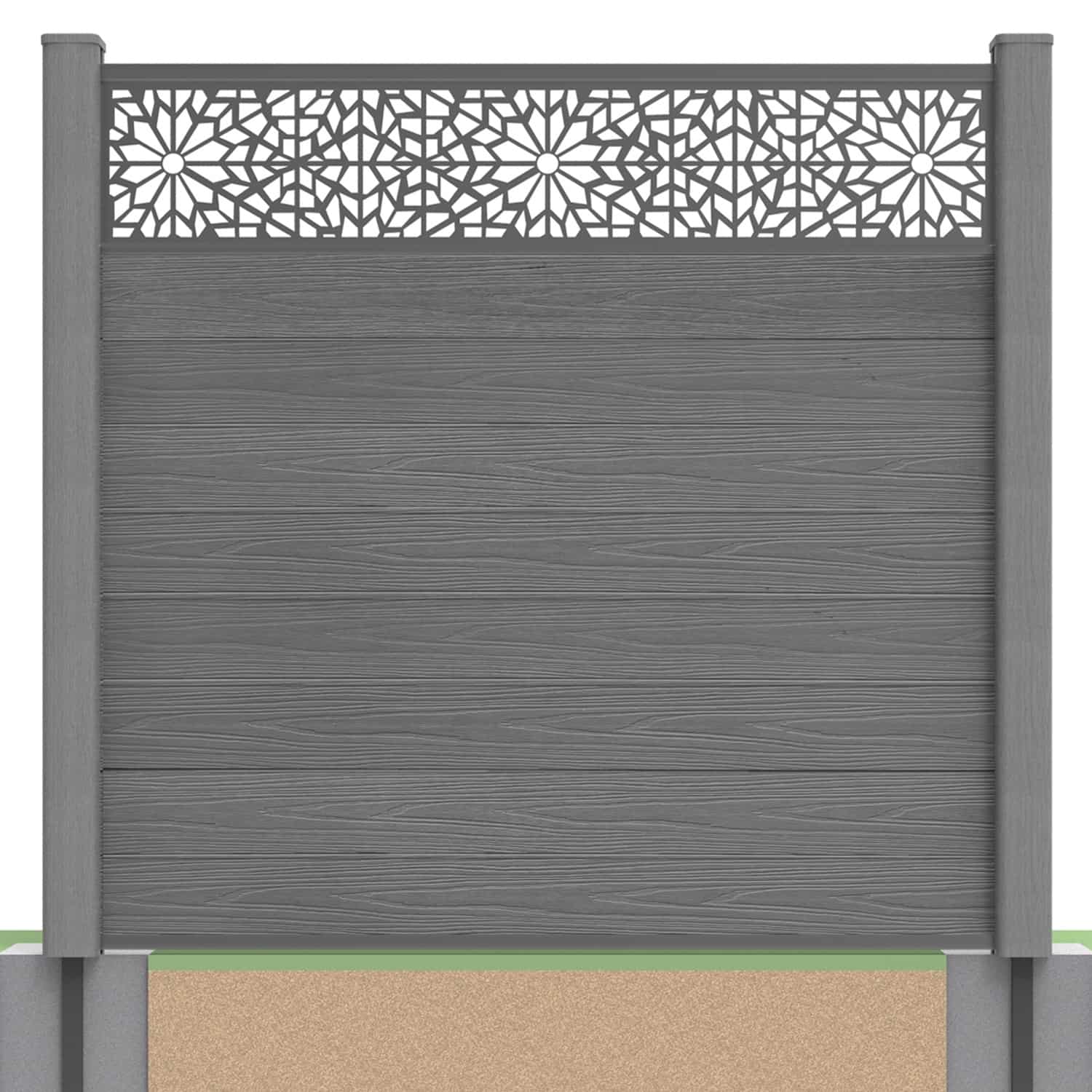
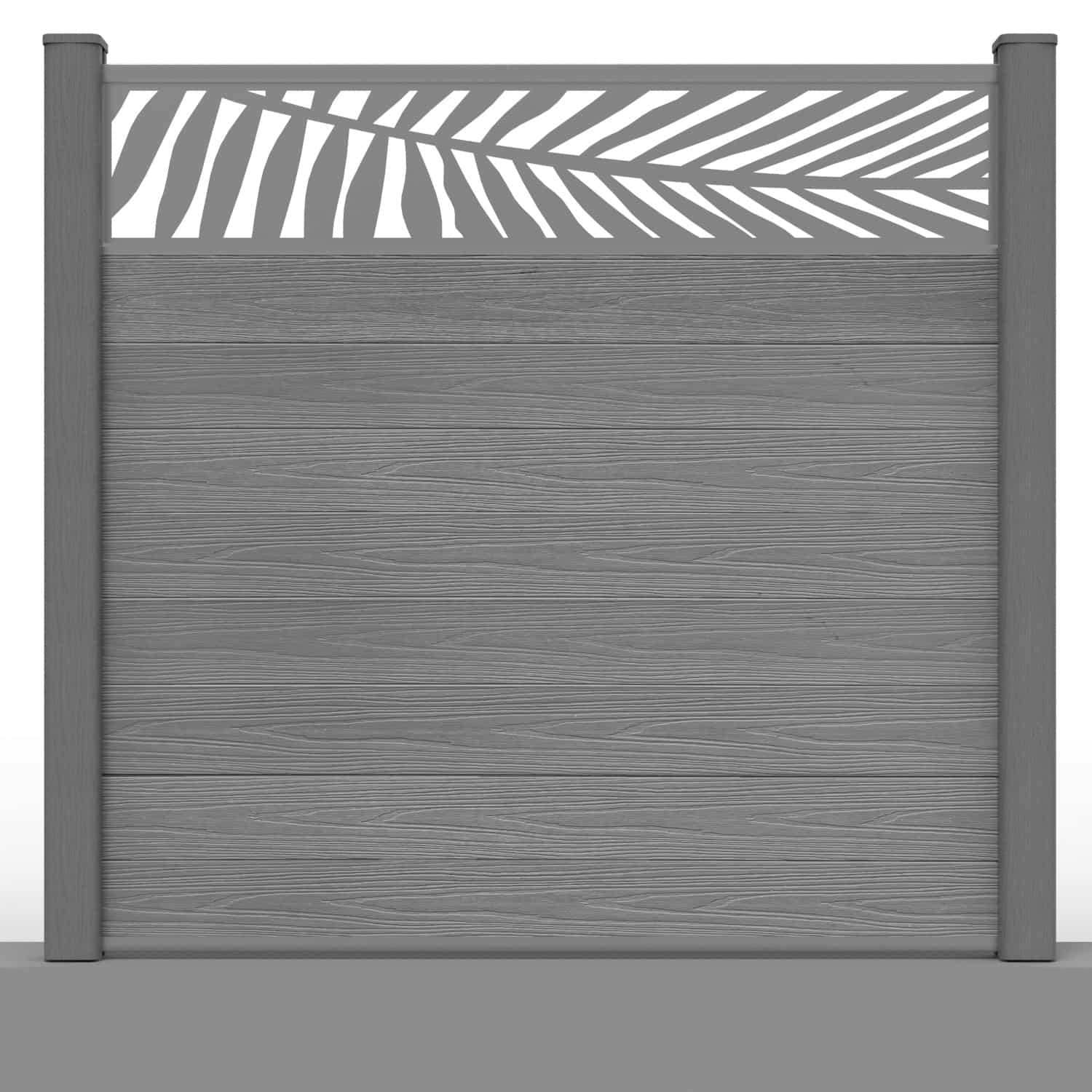
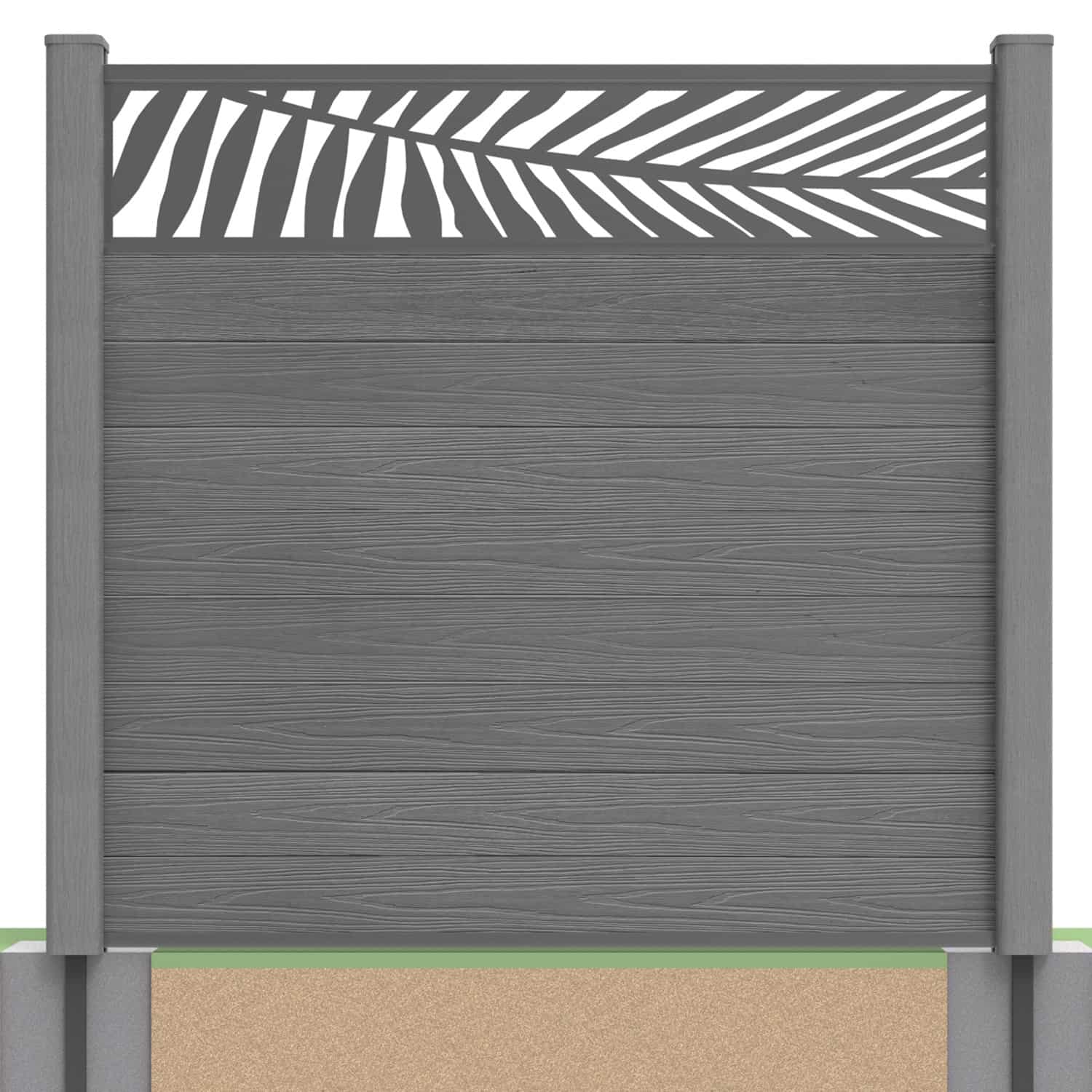
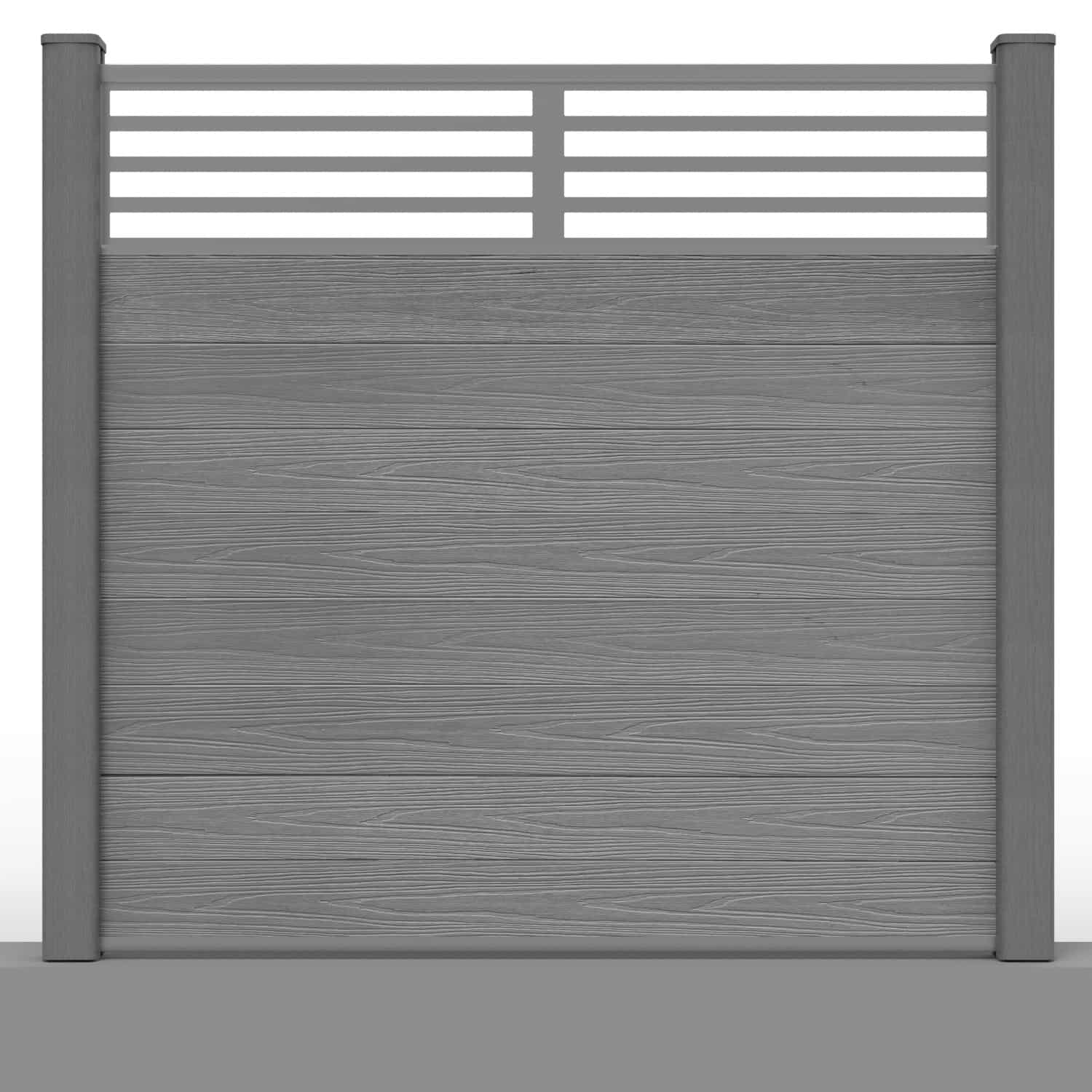
The Slatted appearance is formed in the board profile; it should not be interpreted as open gaps through the panel. Compatible aluminium screens provide a separate option for an open decorative section.
Screen cut-outs reduce visual coverage compared with uninterrupted boards. Consider sightlines from neighbouring windows and seating areas before deciding where to use them, and follow the specified retaining-rail arrangement.

Compare Colours Outdoors
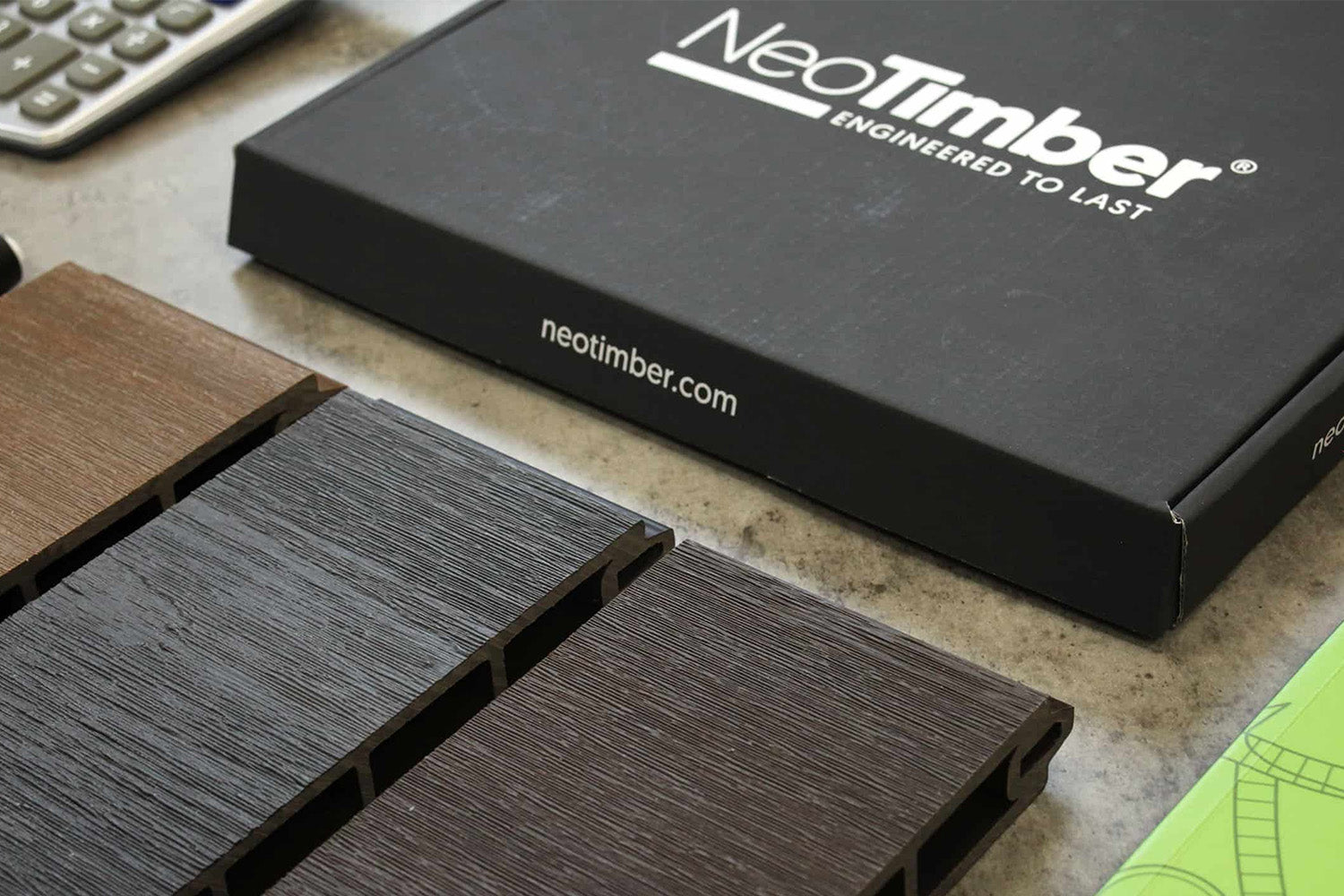
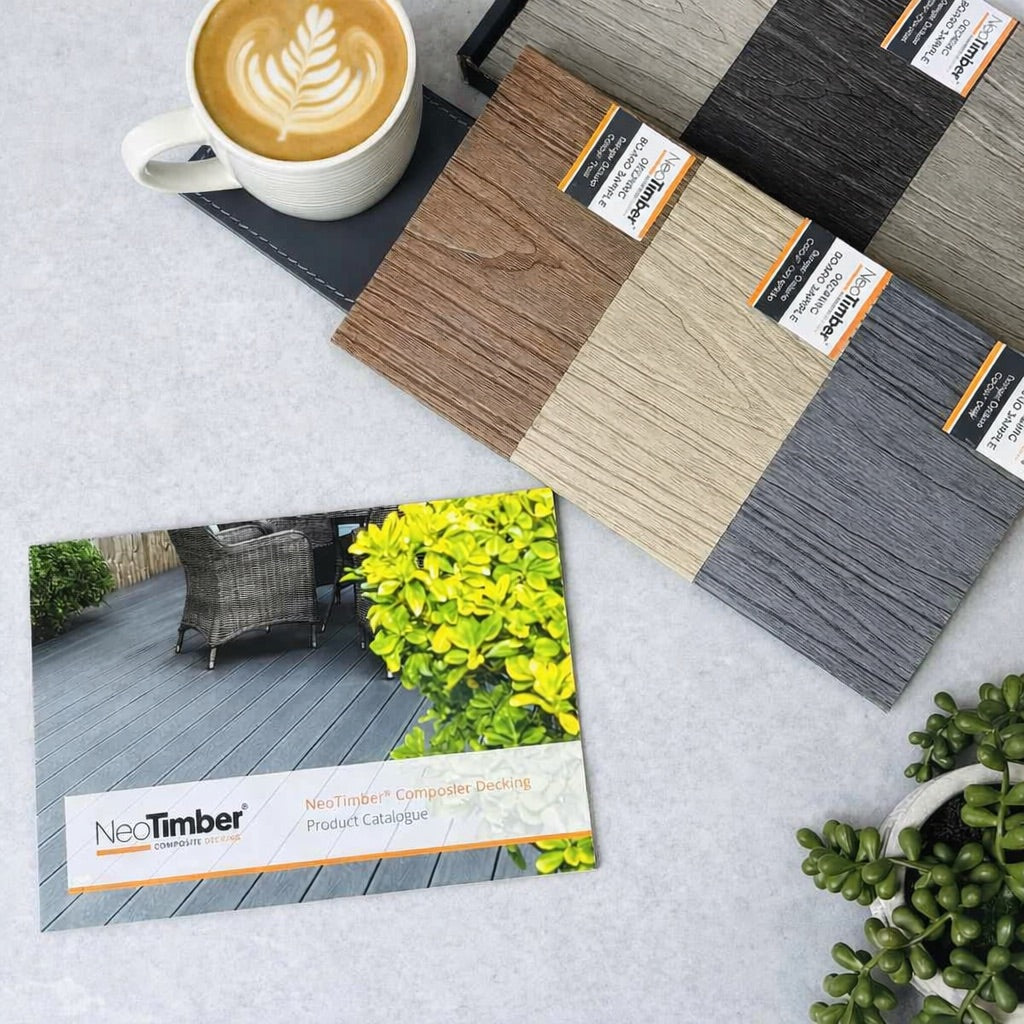
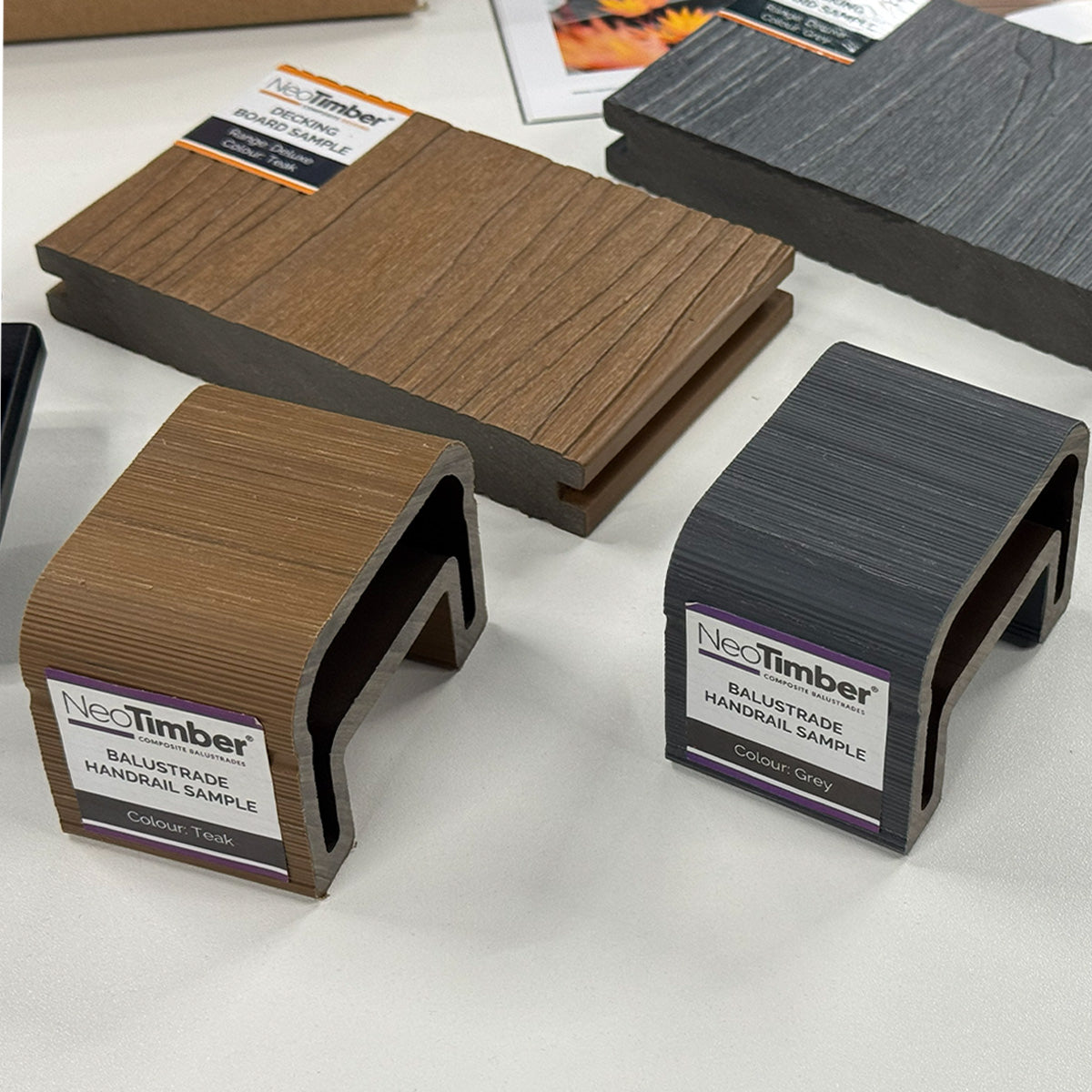
Warm tones can complement planting and timber furniture, while grey or charcoal can connect the fence with contemporary paving. Review the current fencing colour guide and compare physical samples in sun and shade.
Similar colour names do not guarantee an exact match across different products. Look at the samples beside your existing materials before planning the full run.

Understand the Maintenance and Warranty
Factory-finished capped boards reduce routine painting and staining, but still need suitable cleaning and inspections. Dirt, organic deposits and spills can affect any outdoor surface. Use the fencing maintenance guidance rather than assuming that “synthetic” means no care.
Read the current fencing warranty terms for the covered products, permitted uses, conditions and exclusions. A headline period is not a guaranteed lifespan or a promise that colour never changes.
If you are comparing products described as synthetic wood fence posts, check whether the warranty relates to the outer post, internal support, hardware or complete assembly. Installation workmanship and product warranty responsibilities should also be clarified separately.

Plan the Full Cost Before Ordering
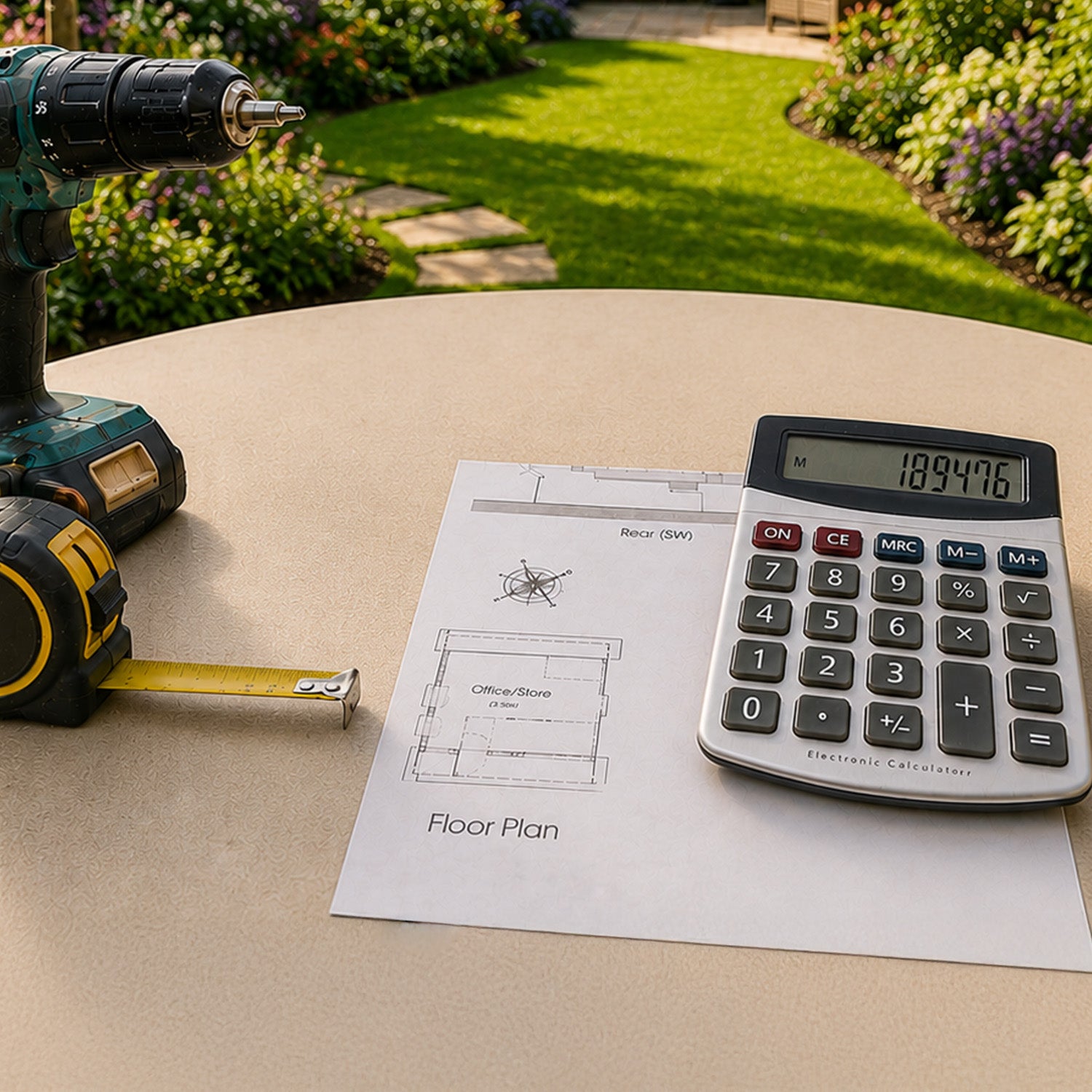
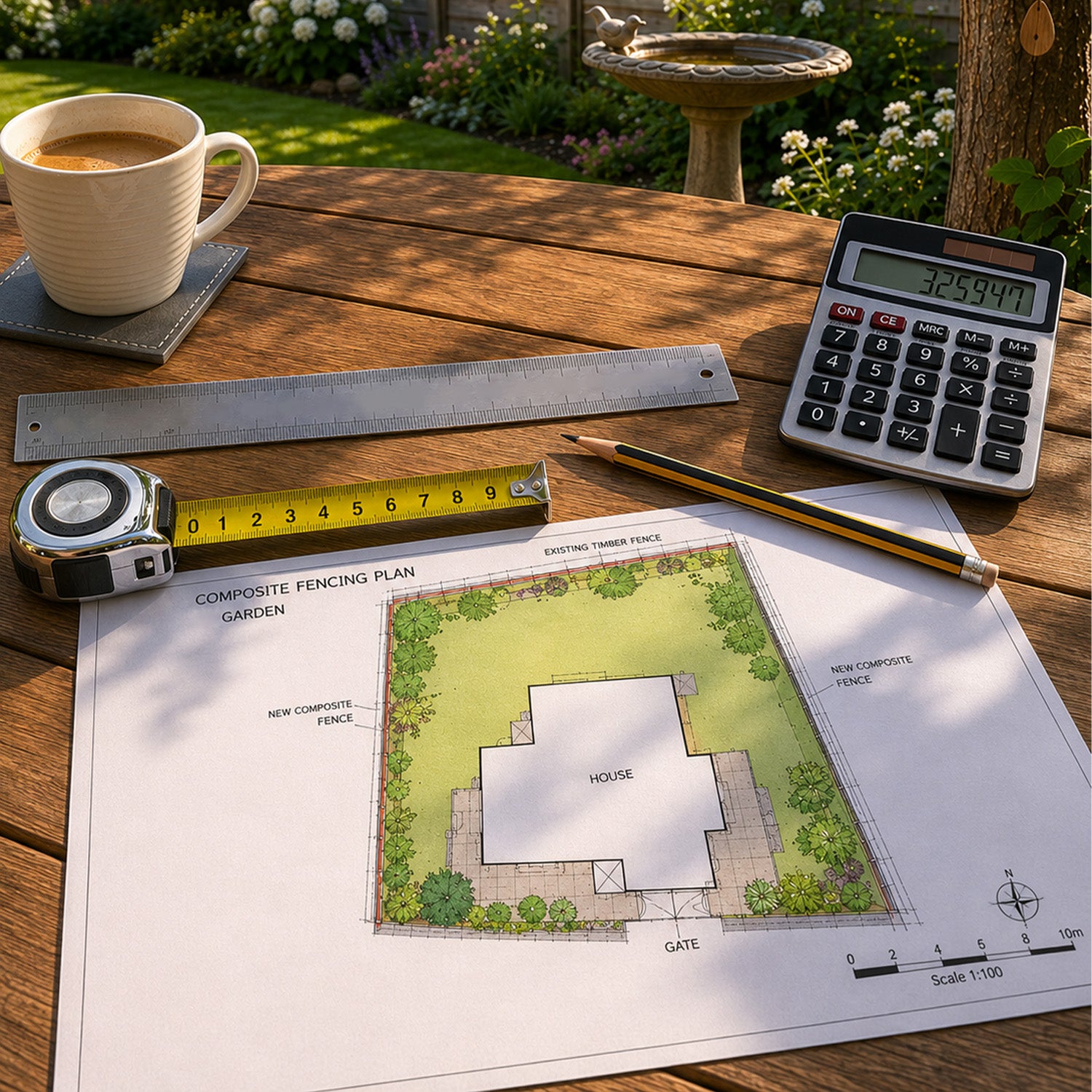
Measure the run and mark end positions, corners, gate openings and shorter bays. Include boards, posts, supports, inserts, rails, fixings, foundations and delivery when comparing quotes. Add removal and installation costs where applicable.
The fence panel calculator can provide an initial estimate. Check it against the actual layout and kit contents, particularly where a run needs extra end posts or a separately supported gate.
Frequently Asked Questions
Is synthetic fencing the same as composite fencing?
Not necessarily. Synthetic is a broad description that can include different manufactured materials. Composite is one category, so check the actual specification.
Does synthetic wood contain real wood?
It can. NeoTimber® wood-plastic composite contains wood fibres. A wood-inspired appearance does not establish whether a product is wood-free.
Are panels supplied fully assembled?
That depends on the product. NeoTimber’s modular system uses individual components, so review the selected kit contents and assembly instructions.
Can composite posts be used without steel supports?
Follow the specified system. In the NeoTimber® arrangement described here, the steel support provides structural anchorage and the composite post fits over it.
Can I reuse my existing posts?
Possibly, where their condition, foundations, spacing and dimensions are suitable. Compatible inserts provide a connection rather than a repair for weak posts.
Does a synthetic fence need painting?
Check the product instructions. NeoTimber’s capped boards are supplied with their intended finish and do not need routine painting or staining, but still require appropriate care.
Choose a Complete System, Not Just a Material Label
Compare construction, appearance and installation requirements together. Explore the NeoTimber® composite fencing range, request samples or contact the team to discuss the components for your boundary.