
Create a Wood-Inspired Exterior With a Manufactured Finish
Synthetic siding offers an alternative for homeowners who want a timber-inspired exterior with reduced routine decorative upkeep. Choosing the right product means comparing its construction, surface texture and care requirements alongside the finished appearance.
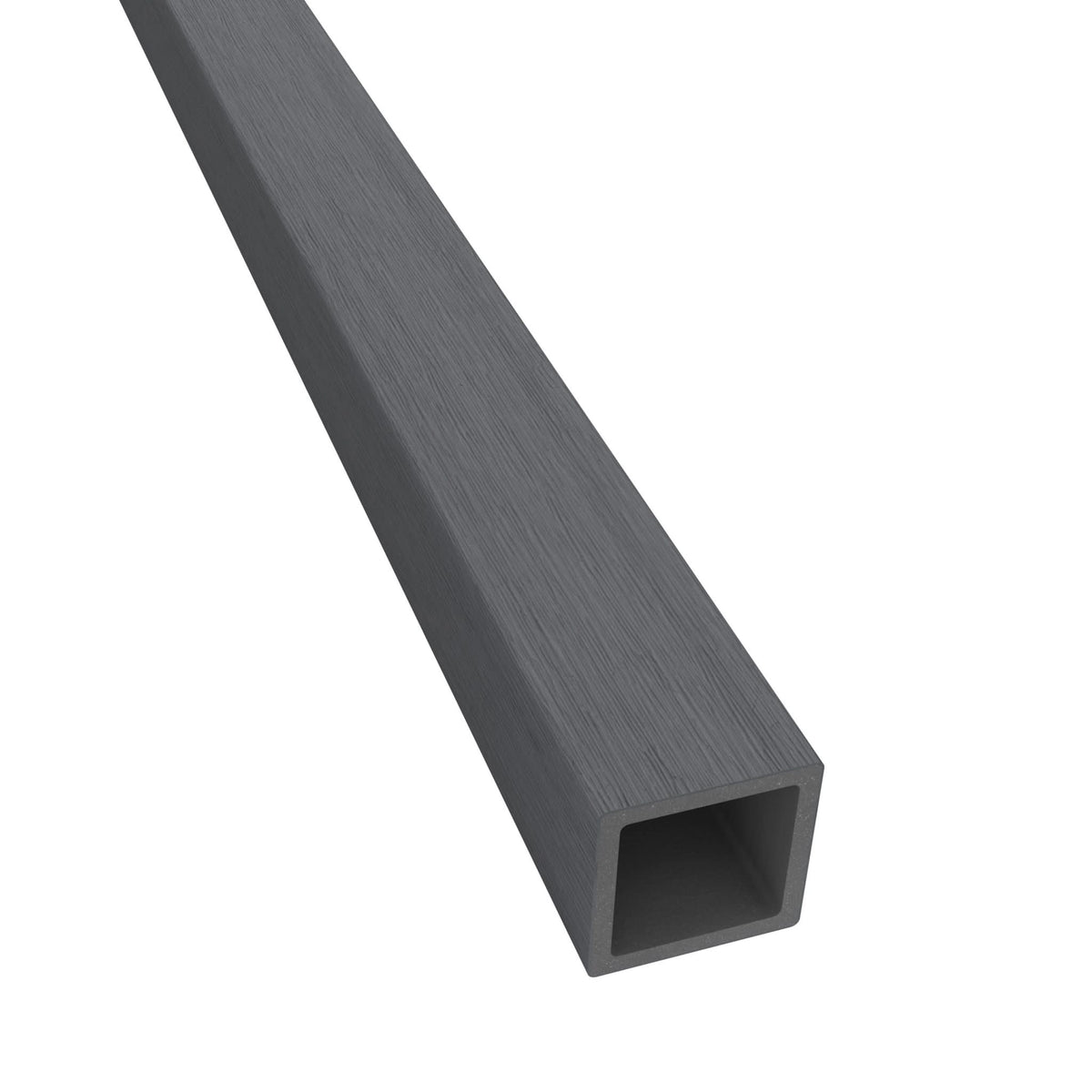
NeoTimber’s synthetic timber siding is wood-polymer composite, combining wood fibres and plastic polymers. It provides several colour and profile options, rather than a single substitute for every timber design.
This guide explains what synthetic wood siding means and how to choose a suitable cladding finish for your project.
What Is Synthetic Siding?
The term describes a manufactured exterior finish and can cover different materials. It is not a technical standard, so identify the actual product before comparing specifications.
For NeoTimber® products, siding and cladding refer to the exterior boards discussed here. The material is composite rather than solid timber or an entirely plastic board.
Look at the product name, construction, dimensions and fitting instructions. Two finishes that appear similar in a photograph may have different support requirements or care routines.
Why Consider Synthetic Timber Siding?
One of the main attractions is the ability to choose a wood-effect finish without routine painting or staining. NeoTimber® boards provide their chosen appearance as supplied, reducing the decorative treatment work associated with maintaining some coated timber façades.
That benefit can be useful where access is difficult or where you prefer a simpler care routine. It does not remove cleaning and inspection, and it should not be presented as proof that the product always lasts longer than every timber alternative.
Compare the actual materials using our composite versus wood guide. Natural timber offers individual grain and weathering, while composite gives you a manufactured surface and range-specific care requirements.

Compare Textures and Board Profiles
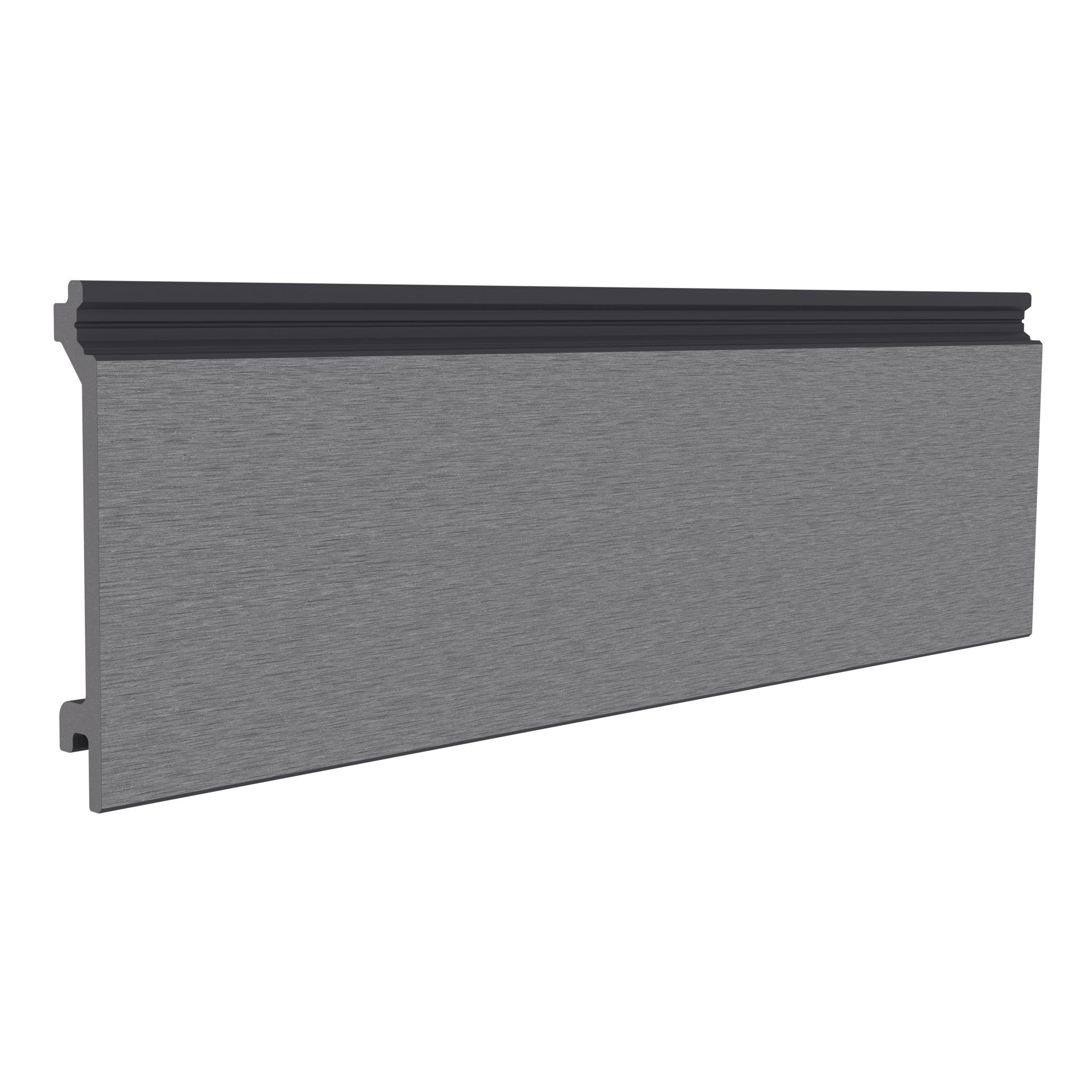
Classic: A Quieter Sanded Finish
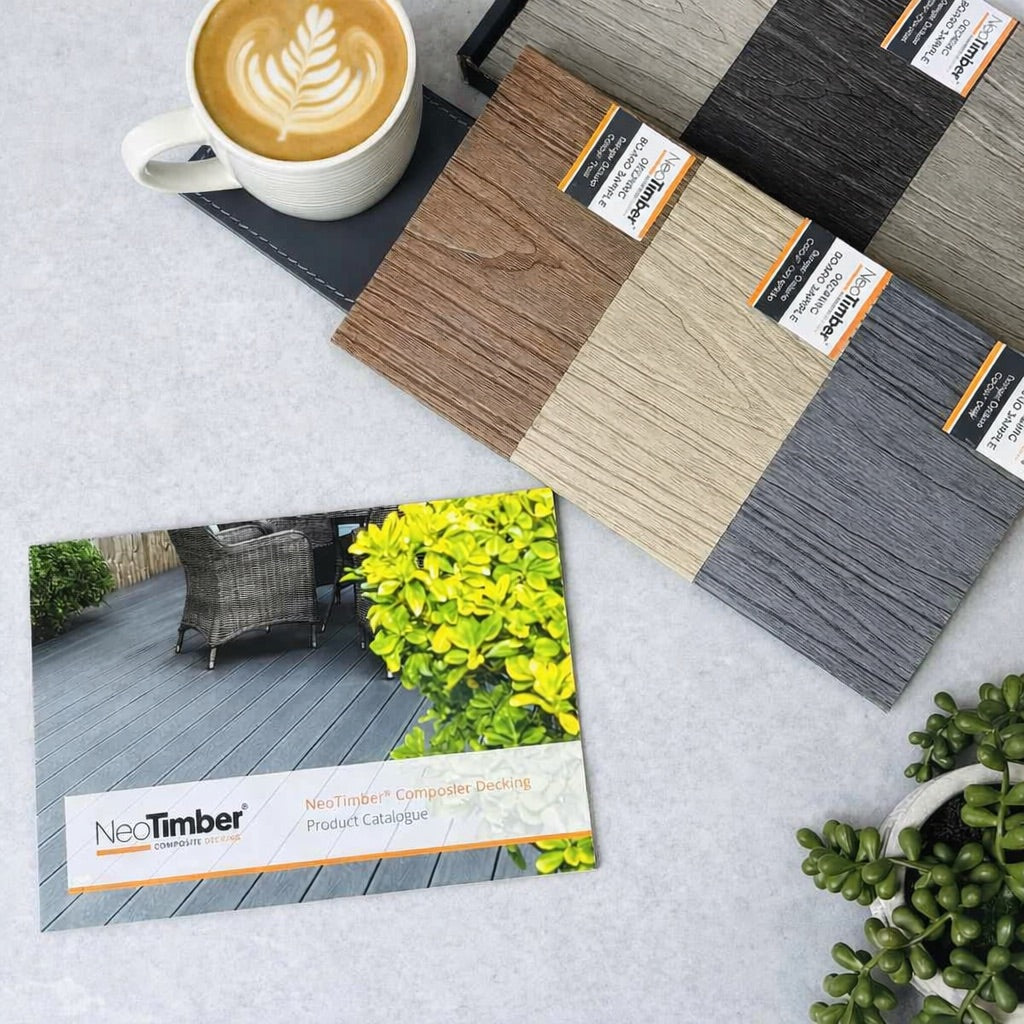
Classic boards have an uncapped construction and a sanded surface. They offer a more understated timber-effect finish, with an appearance that can mellow during outdoor exposure.
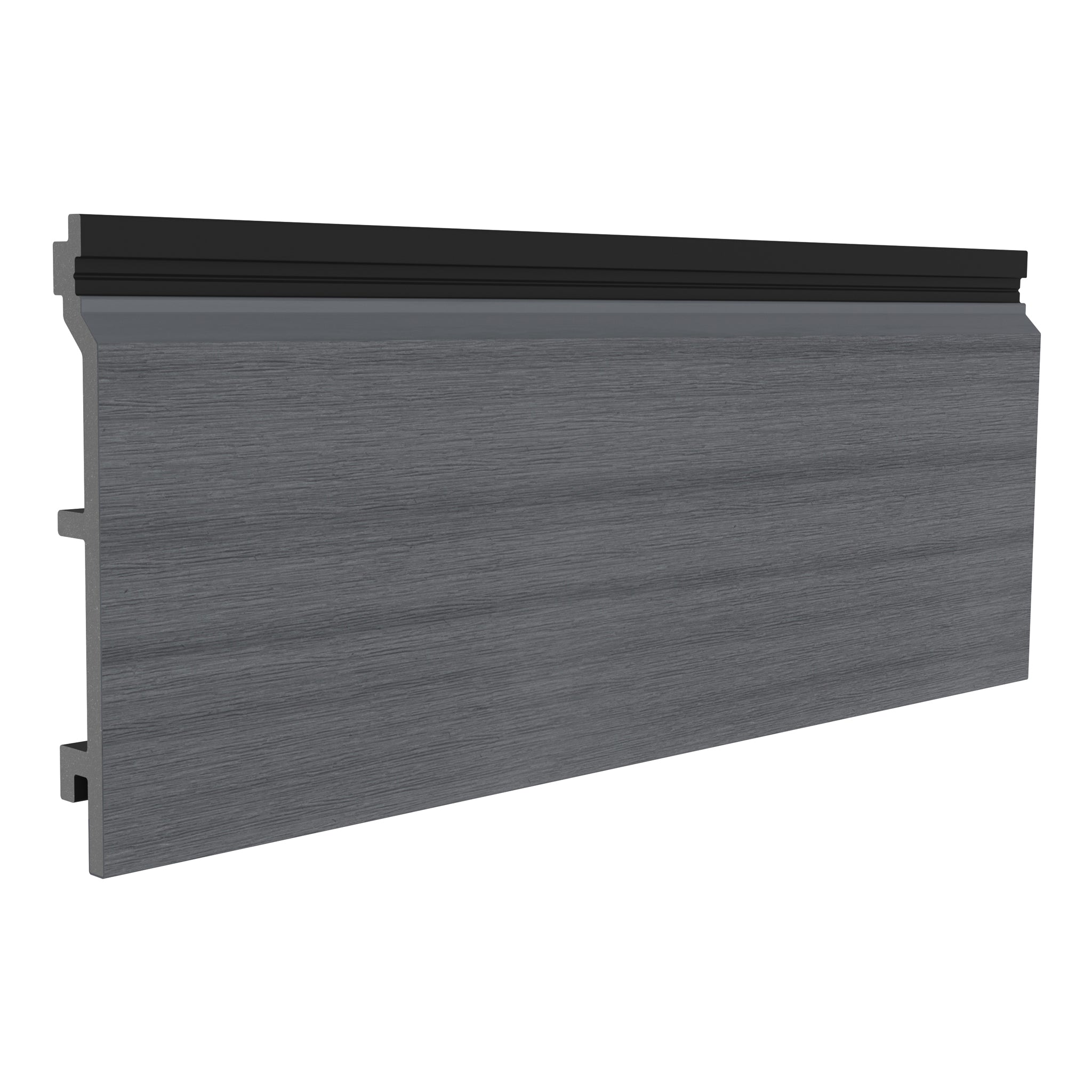
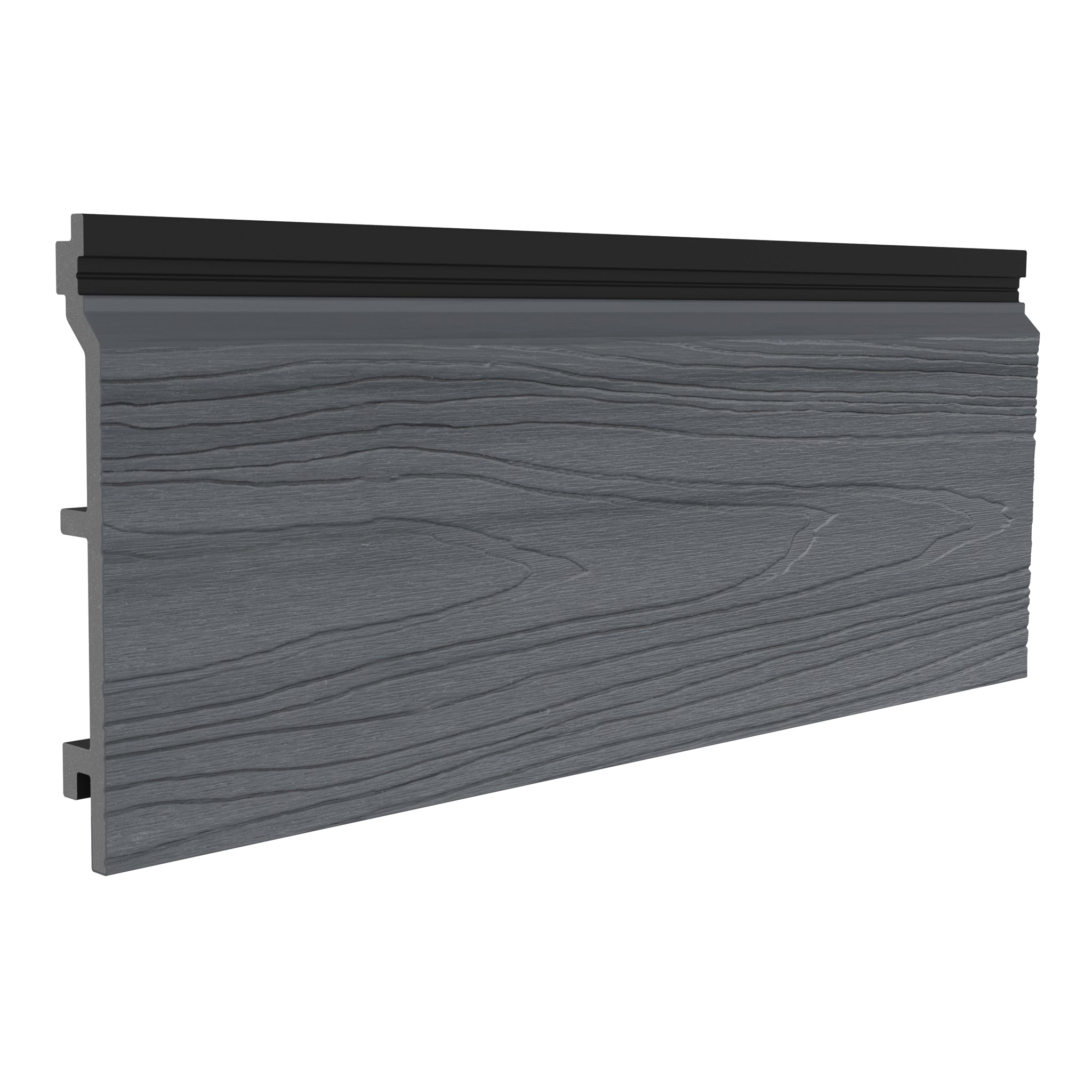
Deluxe: Brushed or Woodgrain Detail
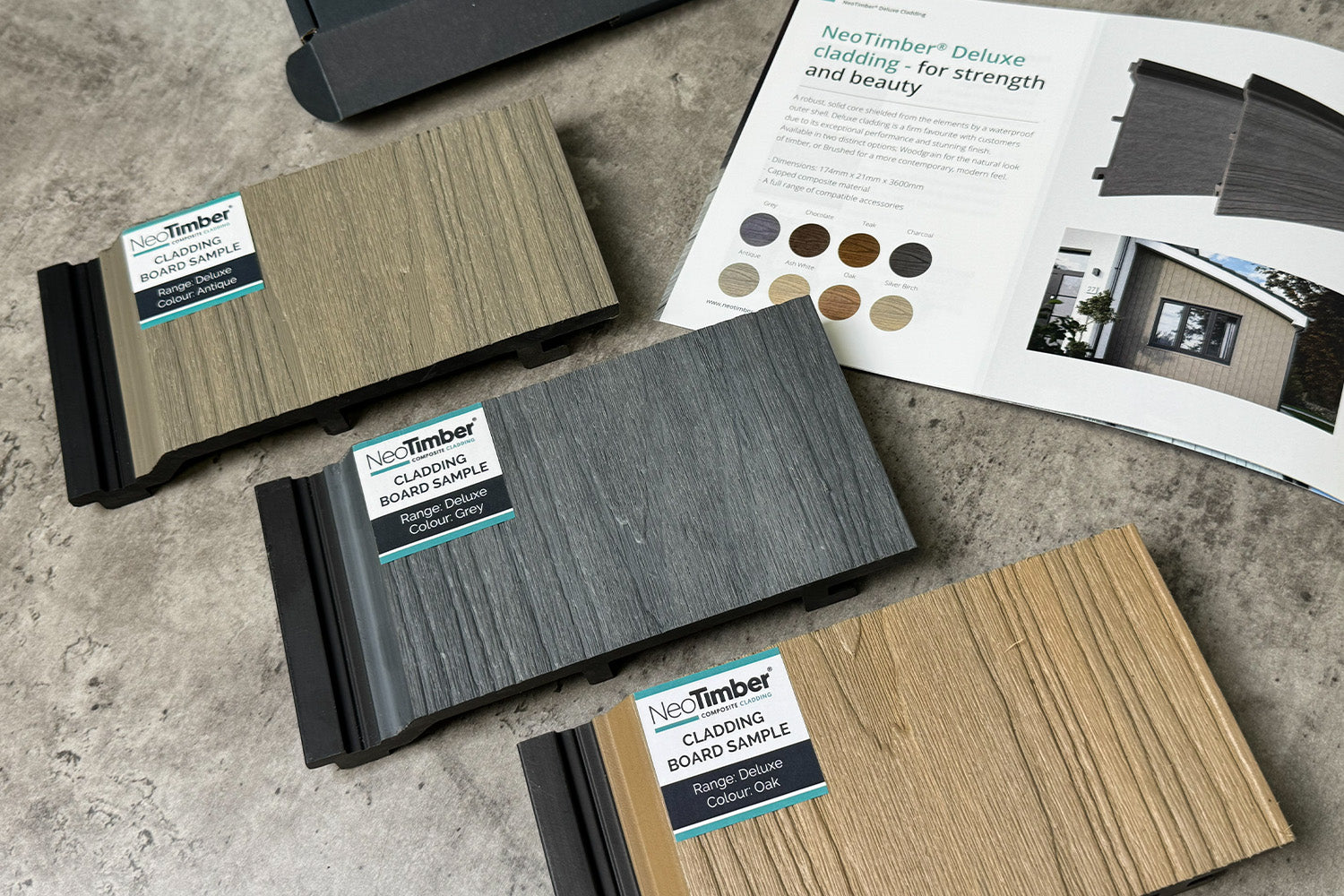
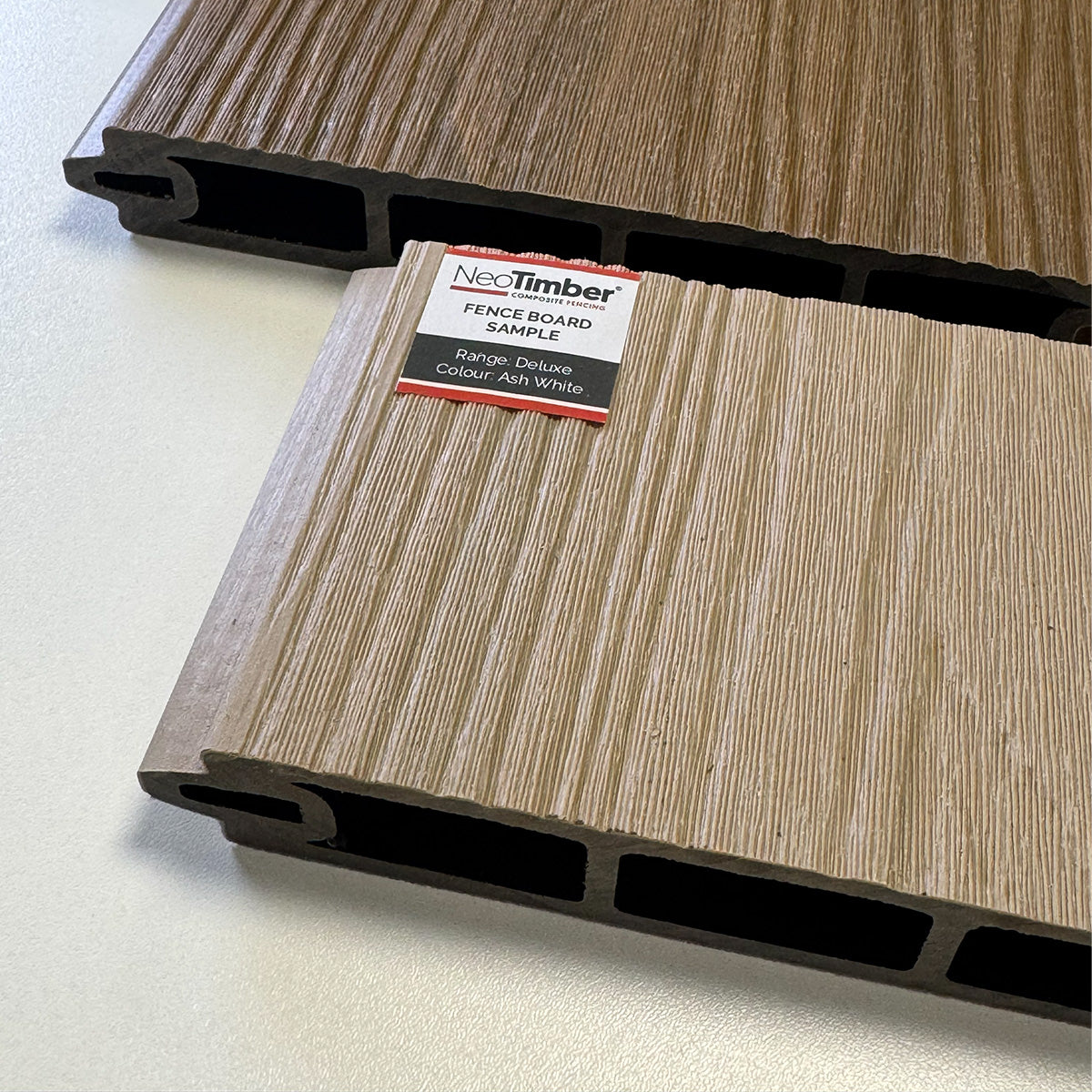
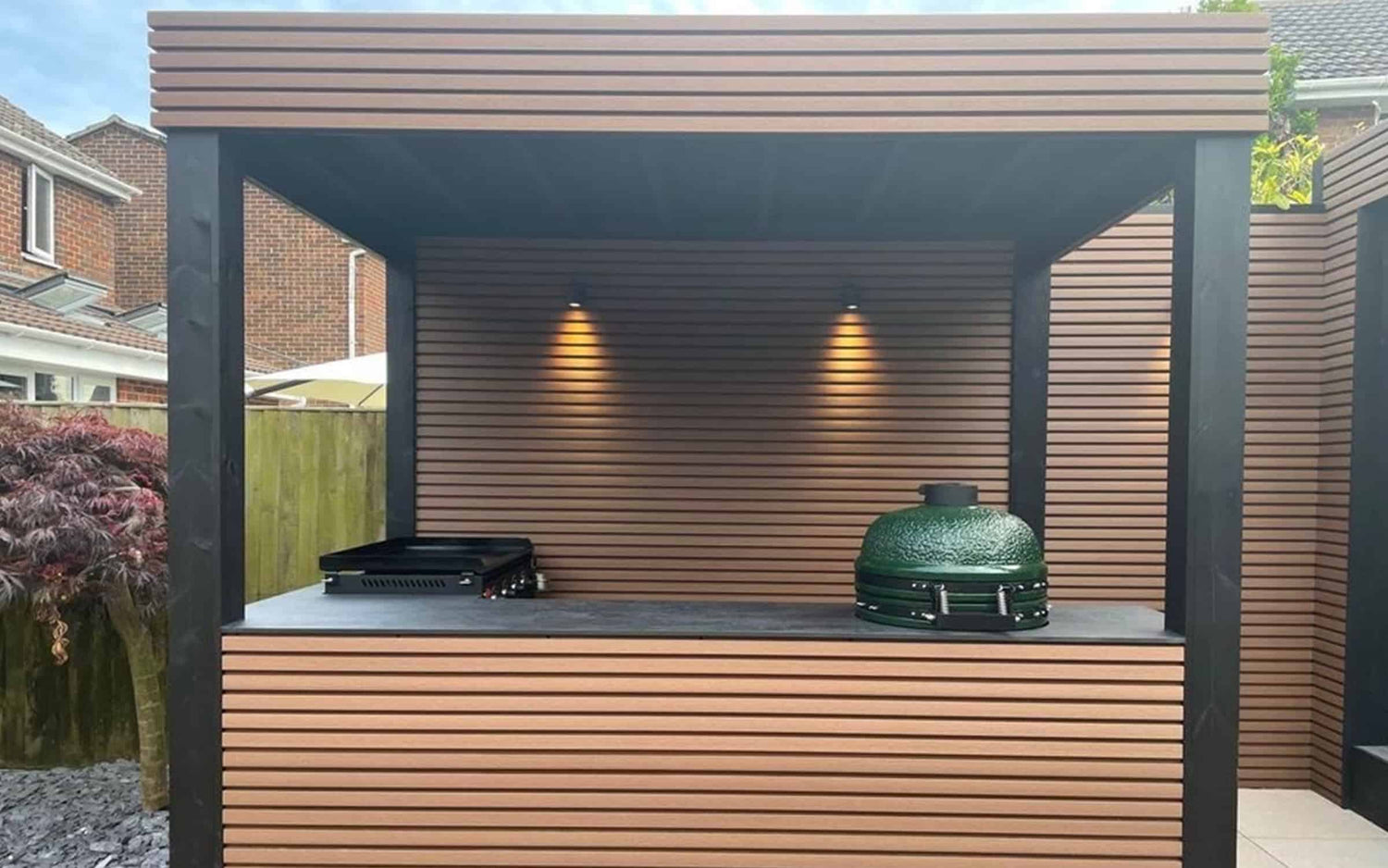
The Deluxe collection includes capped boards with brushed and embossed woodgrain appearances. Compare the texture at close range, then use larger photographs to assess its effect across a wall.
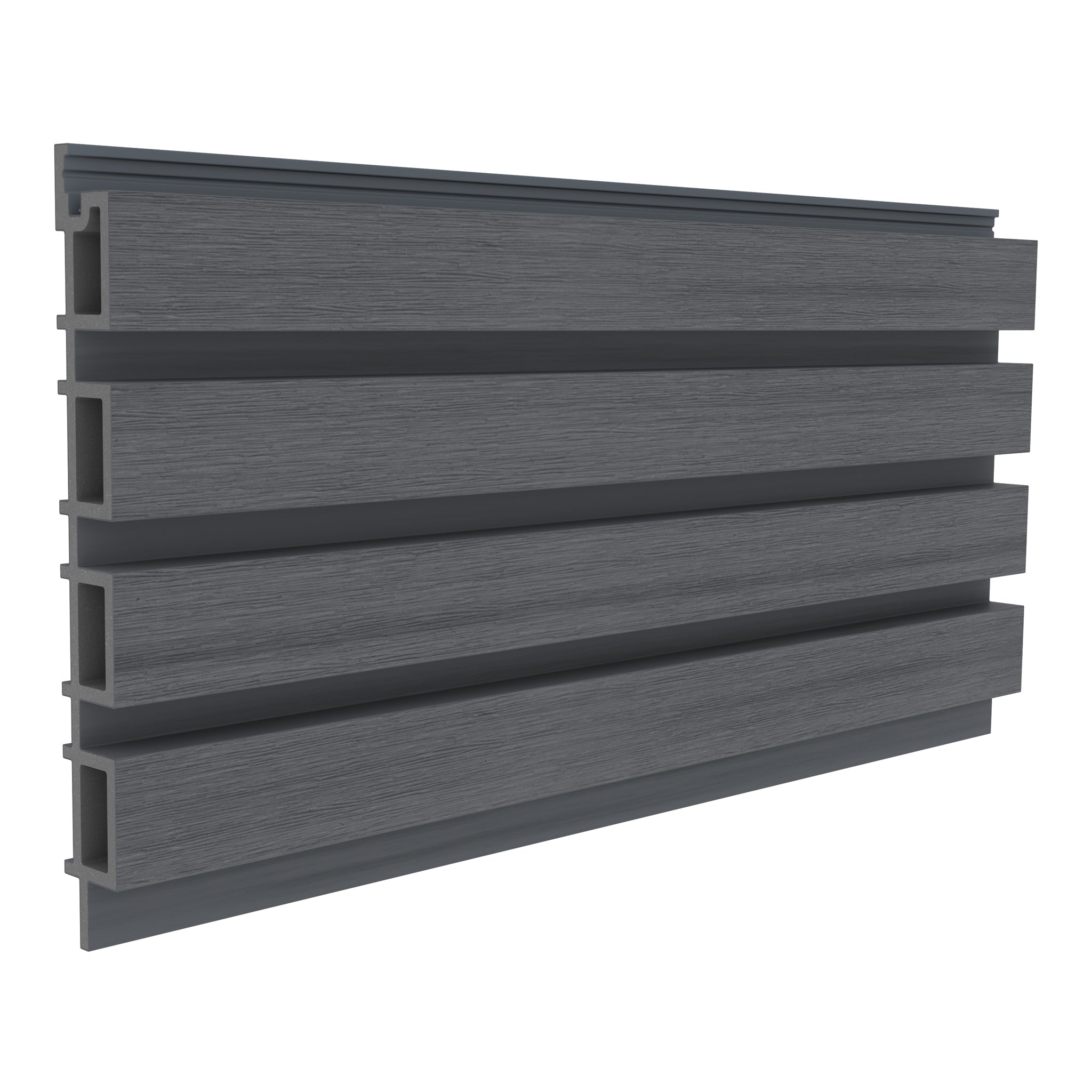
Slatted: Repeated Lines and Shadow
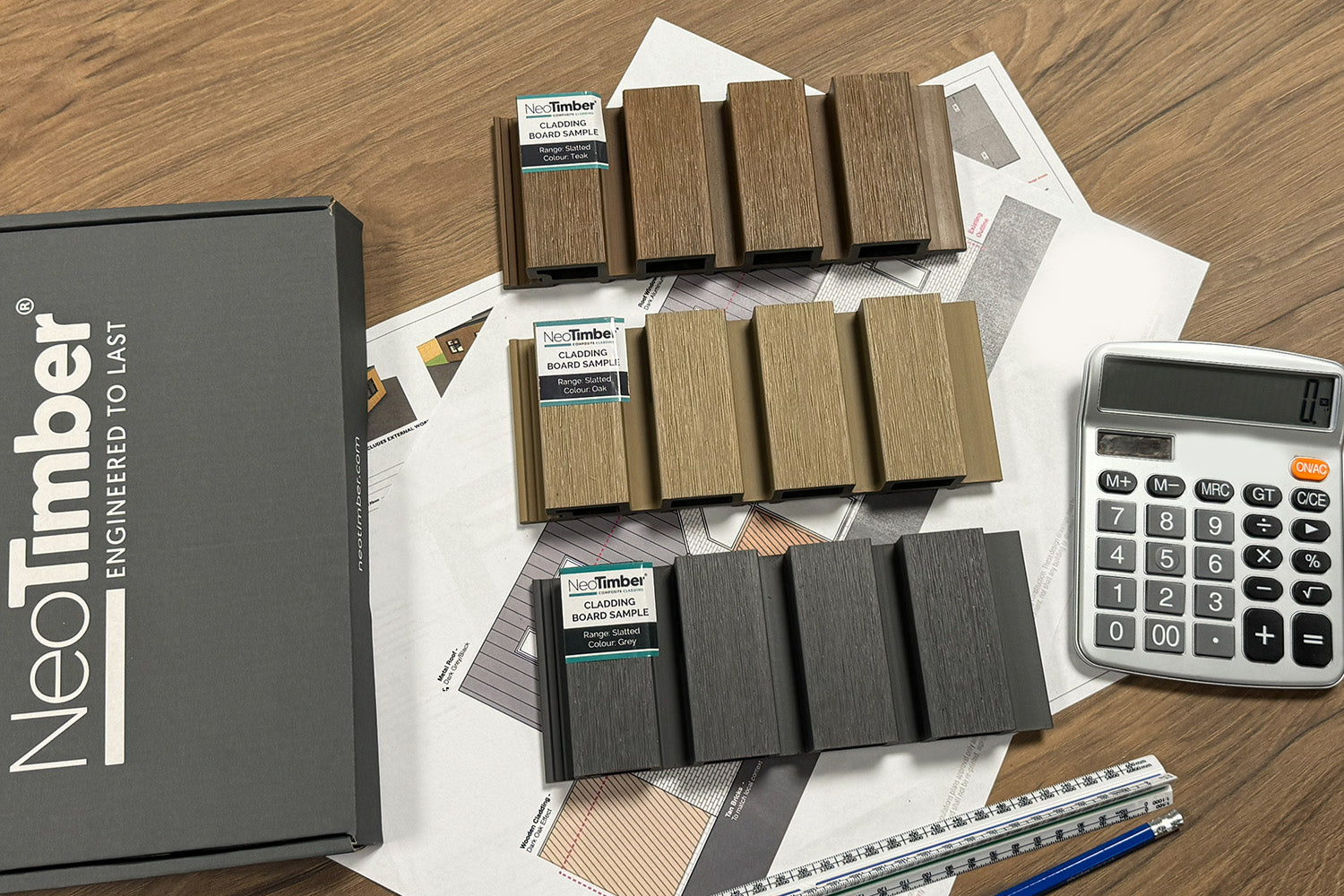
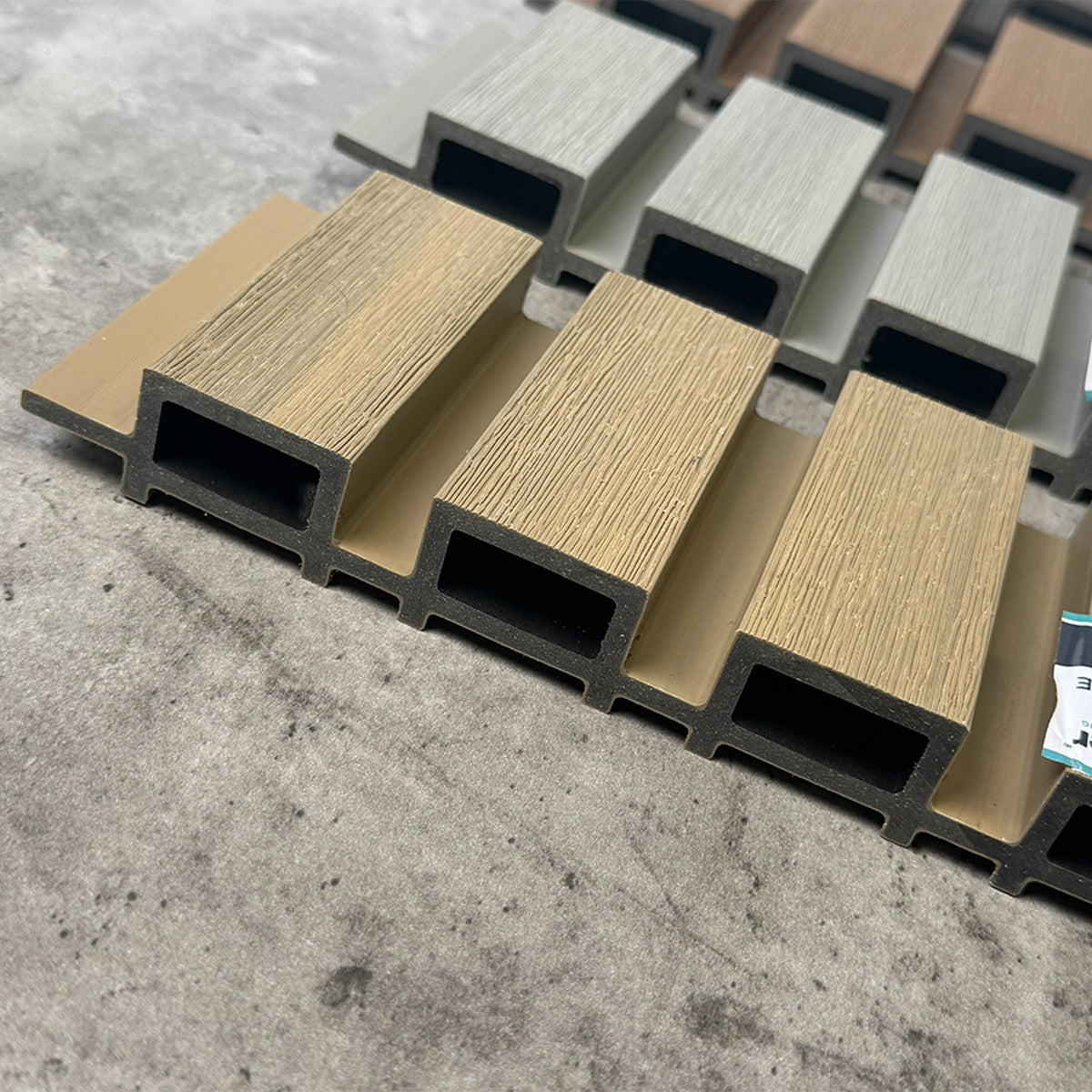
Slatted products add raised and recessed details for a more defined pattern. The collection includes different profiles, so review the exact dimensions and instructions for your selection.
Our texture guide explains the visual differences. Choose the profile alongside the architecture, rather than assuming the most detailed surface is best for every elevation.
Colour Choices for Synthetic Wood Siding
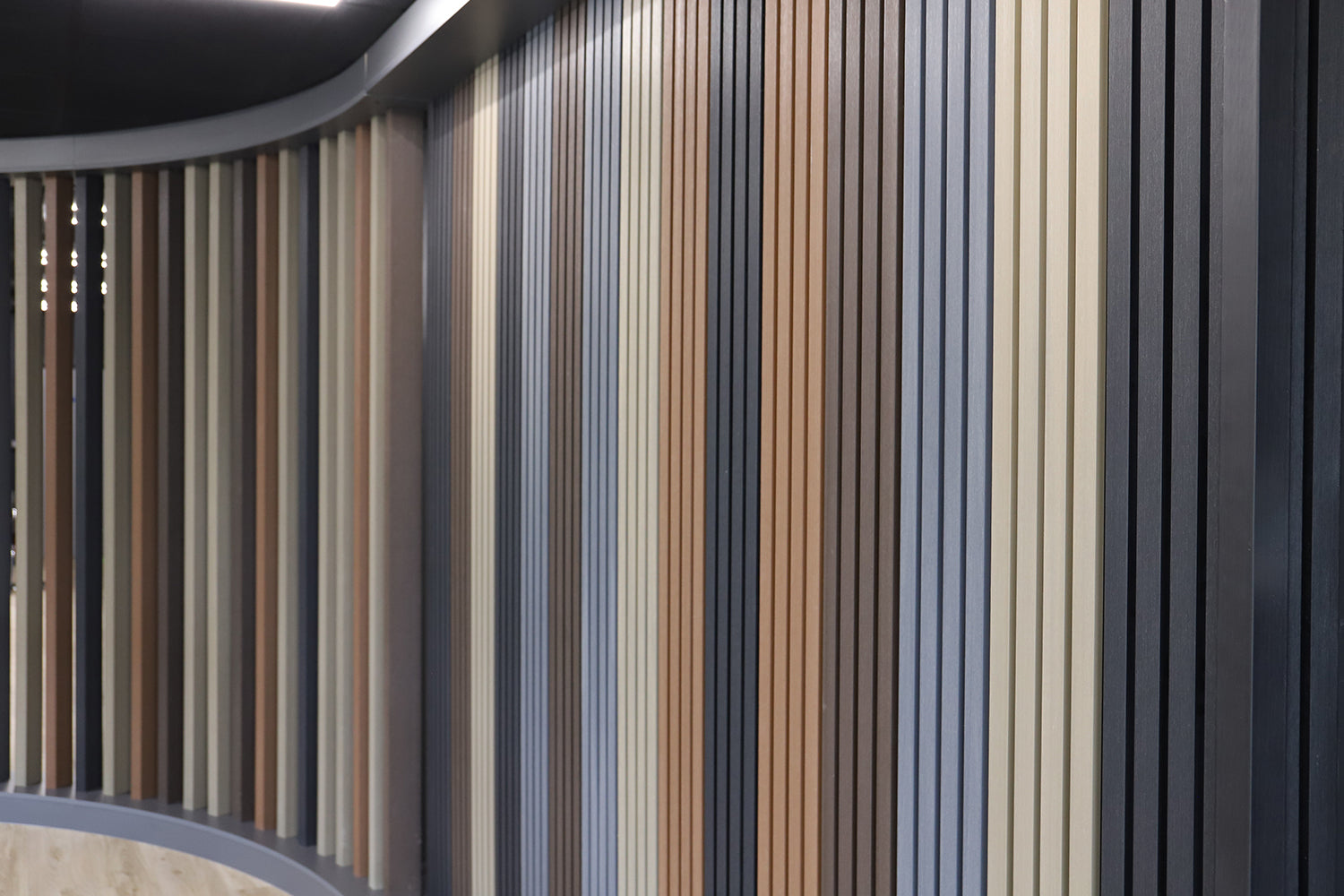
Classic is available in Grey, Teak, Chocolate and Charcoal. Capped collections also include Antique, Ash White, Oak and Silver Birch. Check the current colour guide for the chosen product.
Warm Teak or Chocolate can soften darker details. Grey and Charcoal offer different neutral palettes, while Antique introduces a weathered timber-inspired appearance.

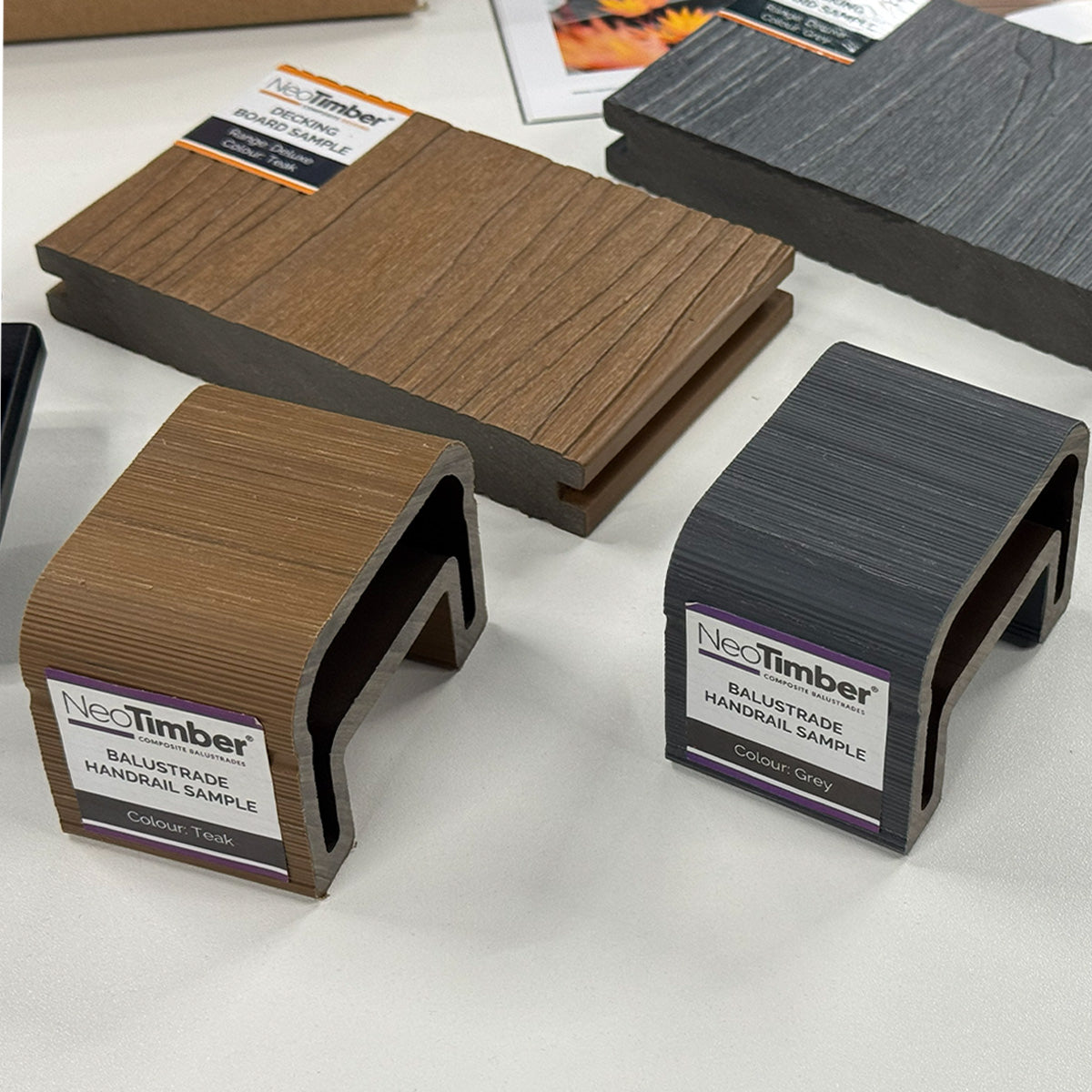
Compare physical samples with windows, masonry and paving. If you are coordinating decking, fencing or balustrades, assess the products together: matching colour names do not guarantee identical tones across materials.
Fade Resistance and Appearance Over Time
Capped Deluxe and Slatted boards offer improved resistance to fading and staining. Their protective surface is a useful feature, but should not be described as preventing every future colour change.
Uncapped and capped finishes can weather differently. Review the fade-resistance guide and product information to set realistic expectations.
Timber also changes appearance outdoors. Some owners choose that natural development deliberately, while others maintain a coating to preserve a particular finish. Compare the intended result, rather than treating weathering itself as a defect in every material.
Use the Finish as Part of a Coherent Design
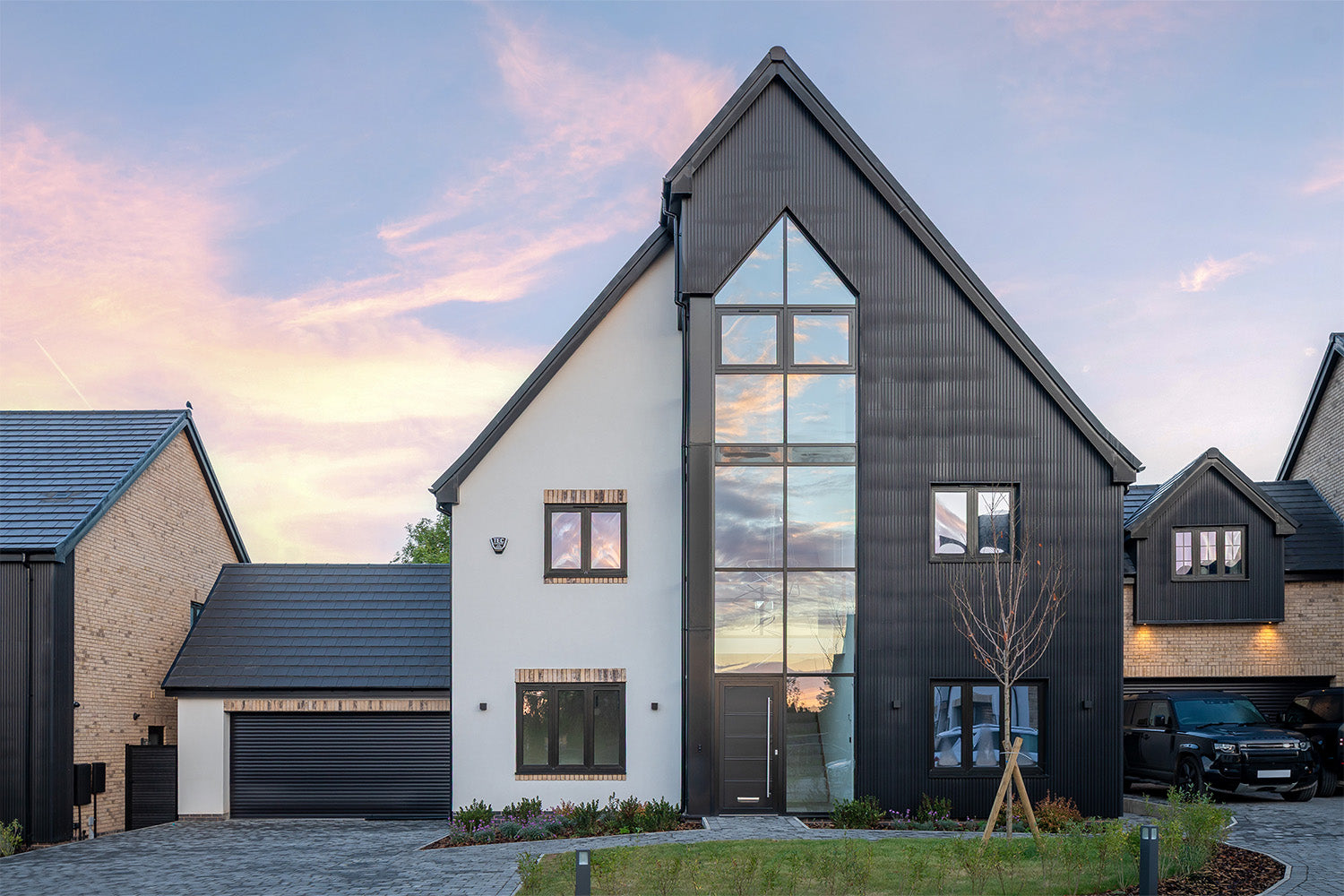
Decide what the siding should contribute: warmth, contrast, texture or a defined feature area. Coordinate it with the proportions of the wall and the location of openings.
Horizontal and vertical layouts produce different visual rhythms. Plan the joint positions and trims early, and confirm the approved support arrangement for the chosen board.
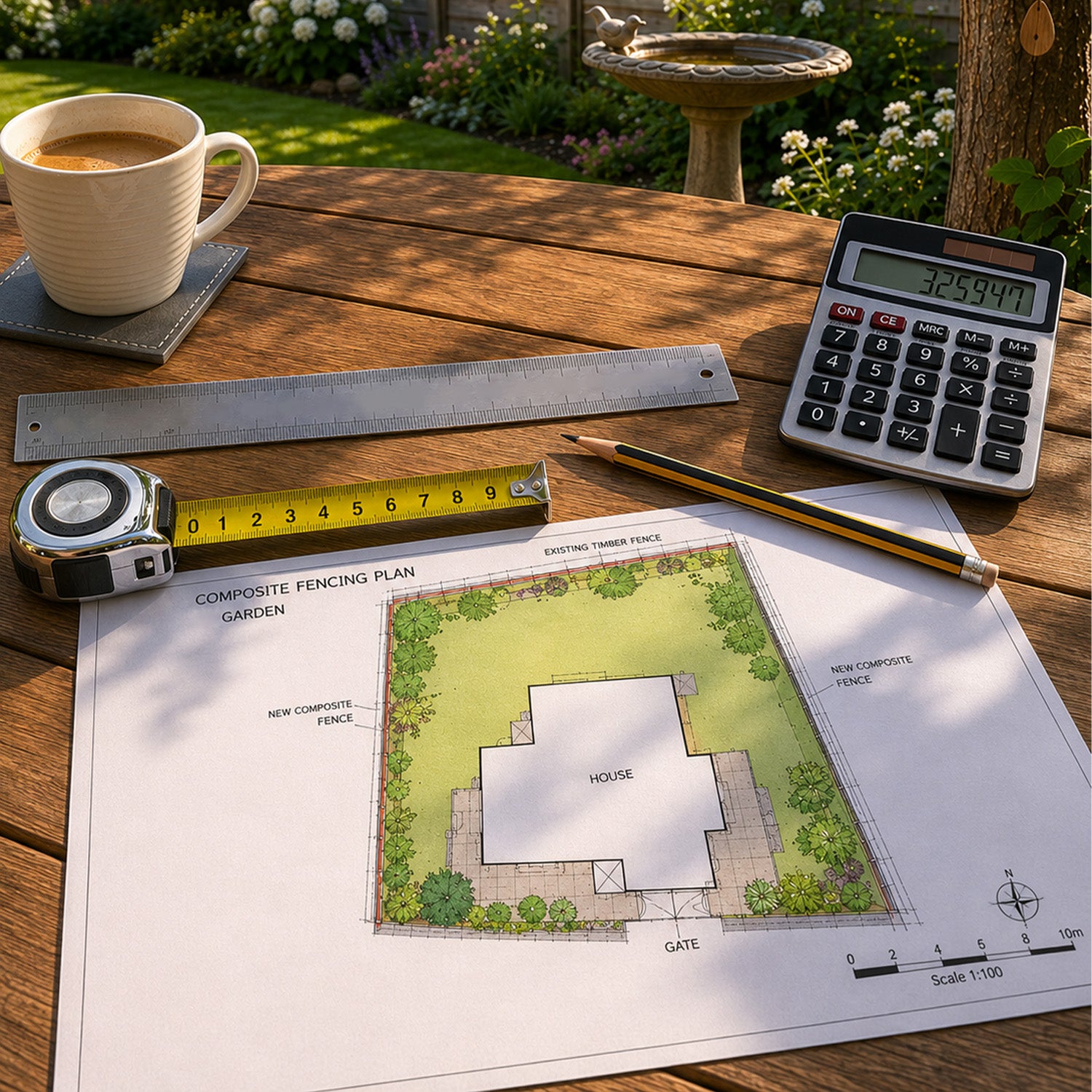
Explore the gallery and design ideas to develop a shortlist. Photographs help with scale, while samples help with the relationship to your existing materials.

Care, Installation and Warranty
Follow the care guide for cleaning and inspection. Avoid sanding capped surfaces and seek advice about persistent marks. Our low-maintenance guide explains the tasks that remain.
Before ordering, confirm product suitability for the building and application. Use the installation resources to plan support, fixings, movement allowances, ventilation and drainage.
Read the warranty terms and retain your order and installation records. A warranty period is not a guarantee that every mark or appearance change will be covered.
Frequently Asked Questions
Is synthetic timber siding solid wood?
No. NeoTimber® boards are wood-polymer composite with a timber-inspired finish.
Does synthetic wood siding need painting?
NeoTimber® boards provide their finish without routine painting or staining. Cleaning and checks still matter.
Is composite automatically the greener option?
No universal conclusion follows from the material name. Review sourcing and whole-life considerations for the actual products.
Find Your Synthetic Siding Finish
Choose synthetic siding by comparing appearance, care and the complete specification. A considered profile and palette can help the exterior feel coordinated, with the practical details resolved before fitting begins.
Browse NeoTimber® composite cladding and request free samples to assess your preferred finishes.