





Help Protect Your Timber Deck Frame with a Moisture Barrier
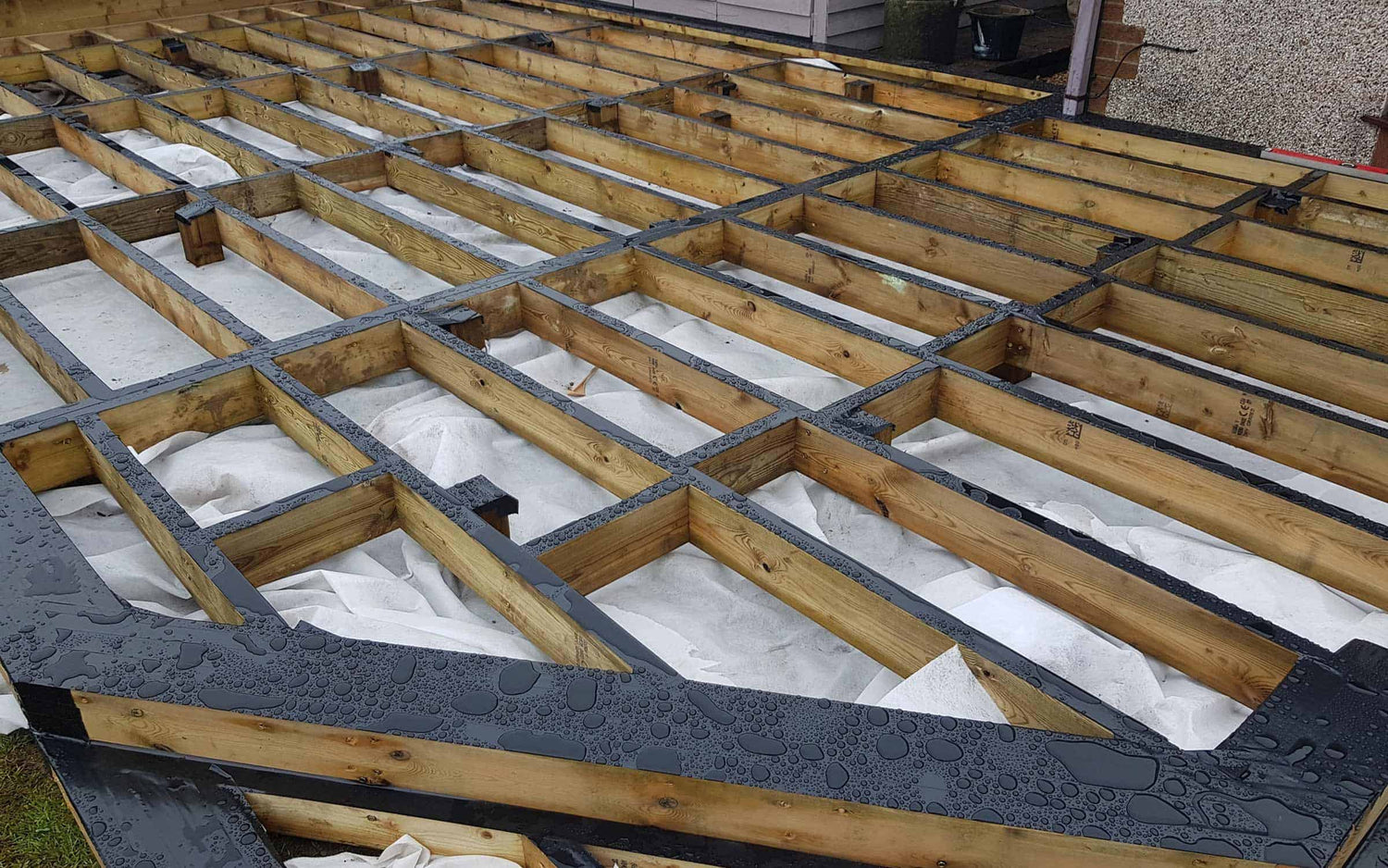
Decking joist tape provides a protective layer over the upper surfaces of a timber deck frame. Applied before the boards are fitted, it helps reduce moisture exposure at the contact points between the boards and supporting timber.
It is an addition to a well-specified frame, rather than a substitute for one. Suitable timber, proper support, drainage and ventilation remain essential. Tape cannot restore the strength of a decayed joist or correct an unsuitable installation.
Here, we explain the role of joist tape, how to choose a width and what to consider before fitting. Explore NeoTimber’s decking guide for an overview, or browse our composite decking range alongside the supporting components.
What Is Decking Joist Tape?
Joist tape is an adhesive barrier used on specified timber subframe surfaces beneath deck boards. It is intended to protect vulnerable contact areas where moisture exposure can contribute to deterioration.
NeoTimber® decking joist tape is a black, non-butyl, self-sealing tape with a polymer acrylic adhesive. It is supplied in 20-metre rolls and three widths for different frame components.
The tape is a surface-protection product. It does not alter the load capacity of the timber, replace structural fixings or make the complete deck waterproof.
Why Use Joist Tape Under Composite Decking?
Choosing composite boards does not remove the need to care for a timber frame underneath them. The surface and supporting structure have different jobs and can have different maintenance needs.
Joist tape can be included during a new build or a suitable resurfacing project while the upper frame surfaces are accessible. Once the boards are installed, reaching those areas requires more work, so it is worth considering the detail before fitting begins.
Think of it as one part of the moisture-management approach. Keep water routes and ventilation clear, specify the frame for its exposure and follow the board installation requirements. No single accessory can compensate for water trapped by poor construction.

Choosing the Right Decking Joist Tape Width
The current NeoTimber® product range offers the following sizes. Check the actual timber dimensions and the required coverage before ordering. NeoTimber® decking joist tape sizes and intended applications:
| Tape width | Roll length | Listed application |
|---|---|---|
| 50mm | 20 metres | Tops of timber joists |
| 82mm | 20 metres | Timber noggins |
| 100mm | 20 metres | Double timber joists |

50mm Joist Tape
The 50mm tape is the standard-width option for the top of timber joists. Measure the surface to be protected rather than assuming every joist has the same finished width.

82mm Joist Tape
The 82mm option is listed for noggins. It should not be treated as permission to place timber directly against the ground or as a replacement for a suitable ground-contact specification.

100mm Joist Tape
The 100mm tape is listed for double joists. Consider how adjoining members and junctions will be covered, and confirm any unusual detail before application.

How Much Joist Tape Do You Need?
Calculate the length of the frame surfaces being protected, rather than using the deck’s area alone. A deck with more joists, noggins, borders or board-end supports can need more tape than another deck of similar size.
- List the joists, noggins and double-joist details requiring tape.
- Measure their lengths and allocate the appropriate width to each.
- Allow for cuts, junctions and any overlaps required by the fitting instructions.
- Divide each width’s total requirement by 20 metres and round up to whole rolls.
For example, 46 metres of coverage at one width requires at least three 20-metre rolls before any additional allowance is considered. Calculate separate widths independently rather than combining them into a single total.
Planning and Fitting Advice
Apply the tape before covering the frame with boards. Read the product’s current application instructions for surface condition, weather limits, pressure and any joint detailing.
- Inspect first: resolve decay, damage and structural concerns before covering timber.
- Prepare the surface: check cleanliness, dryness and treatment compatibility against the tape instructions.
- Plan coverage: work out junctions and changes in width before cutting.
- Apply carefully: avoid folds or poorly bonded areas that could compromise the intended barrier.
- Maintain the design requirements: do not obstruct drainage or ventilation paths.
Consult the composite decking installation guidance when fitting boards over the prepared frame. Joist tape does not change the board’s required support spacing, fixing method or movement allowances.
Can Joist Tape Be Used on an Existing Frame?
Potentially, where the frame is exposed, sound and suitable for the planned work. Tape should not conceal questionable timber or be used as a repair for rotten sections.
Before resurfacing, assess the frame, its supports and its compatibility with the replacement boards. If the condition is uncertain, have it reviewed before investing in a new surface. Replacing deteriorated components may be necessary.
You can also compare decking subframe systems, including composite joists and recycled plastic options. Each needs the appropriate support arrangement; material choice alone does not establish structural suitability.
Decking Joist Tape FAQs
Does joist tape strengthen a deck?
No. It provides surface protection, not structural reinforcement. The timber sections, supports, connections and overall design determine structural performance.
Does it make a timber frame completely waterproof?
It protects the specified surfaces where it is correctly applied. It does not encapsulate the entire frame or remove every route by which timber can become wet.
Do I still need suitable treated timber?
Yes. Tape is not a substitute for timber specified for its intended outdoor exposure and structural use.
Does a long tape guarantee establish the lifespan of my deck?
No. A product guarantee and the service life of a complete installation are different things. Confirm any applicable cover and exclusions for the tape itself before relying on a stated period.
Include Joist Protection in Your Subframe Plan
Decking joist tape is most useful as a considered detail within a suitable timber-frame installation. Choose the width for the component, prepare the surface correctly and keep the wider requirements for support and water management in view.
View NeoTimber® decking joist tape to compare the available sizes, or contact NeoTimber® to clarify product compatibility before fitting.