



Set Out and Secure a Pedestal-Supported Decking Frame
Installing adjustable decking pedestals starts with a suitable base and a planned support layout. Calculate the finished deck height, position supports to suit the joists, adjust the framework to the required levels, then secure the connections before fitting the boards.
NeoTimber® adjustable pedestal risers can raise a compatible subframe above a suitable solid surface without conventional posts. They do not replace the need to check the base, structural spans, loading and overall stability.
This guide explains the main installation decisions. Use it alongside the current composite decking installation instructions and the specifications for your exact joists and pedestals.
In this guide: Check the base · Calculate height · Set out supports · Position joists · Secure connections · Fit boards · FAQs
Before Installation: Check the Supporting Surface
Pedestal bases need firm, stable support capable of carrying the loads transferred through them. A concrete patio and a waterproofed roof terrace require different checks; neither should be assumed suitable solely because it looks flat.
- Check the condition and load capacity of the supporting surface.
- Remove loose debris and identify cracks, unstable areas or local depressions.
- Keep drains, outlets and inspection points accessible.
- Confirm how the complete frame will resist sideways movement and any uplift.
- Check thresholds, finished clearances and any required guarding.
On a balcony or roof terrace, obtain the necessary assessment of loading, fire requirements and waterproofing compatibility. Use specified protection beneath supports where required. Do not drill through a waterproof membrane or assume a plastic pedestal system is suitable for every building.
Preserve the base’s designed drainage falls. Adjustable supports can compensate for variations in height, but they cannot repair poor drainage or an inadequate foundation.
1. Calculate the Complete Deck Build-Up
The pedestal height is only one part of the finished level. Allow for the joist depth, board thickness and any approved protection or accessory layers beneath the support.
Required pedestal setting = finished surface height above the base − joist depth − board thickness − other specified build-up layers.
For example, a hypothetical 150mm build-up with a 50mm joist and 25mm board would leave 75mm for the pedestal before accounting for additional layers. This illustrates the calculation only; it is not a product recommendation.
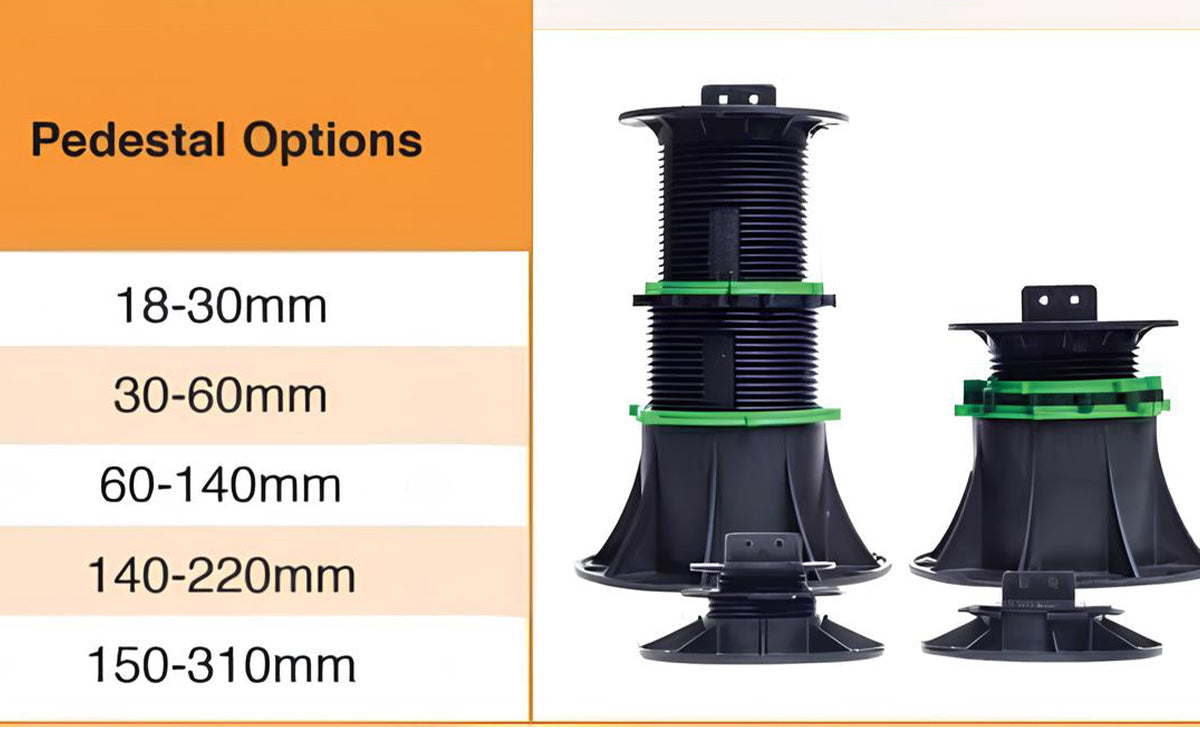
Measure at several locations because the base may fall or vary in level. Select a pedestal whose permitted adjustment range accommodates each position, and check how the quoted height is measured. Refer to the current pedestal size options rather than relying on an old range count.
2. Set Out the Pedestal Grid
Mark the board direction, joist lines, frame edges and proposed joints. For a typical straight board layout, joists run at right angles to the boards. Borders, diagonal patterns and other details need their own support arrangement.
When setting out your pedestal grid, check both the spacing between supports along each joist and the distance between adjoining joists:
| Measurement | What it controls | What to check |
|---|---|---|
| Pedestal spacing along a joist | The supported span of that joist | The exact joist’s span limits, loading and support detail. |
| Distance between adjoining joists | The support provided beneath the deck boards | The board range, laying angle and intended use. |
The original 400mm and 1,000mm span figures relate to particular plastic-joist details, not every joist sold for decking. Likewise, 250–350mm should not be treated as a universal board-support choice. Confirm the applicable dimensions before purchasing quantities or assembling the grid.
Include supports at the required joist ends, joints and perimeter details. Pedestal quantity should follow the checked layout, rather than a simple assumption about supports per square metre.

3. Position Joists and Adjust the Levels
Place each joist in its compatible cradle and check alignment against your setting-out marks. Adjust each pedestal using the mechanism specified for that model, staying within its permitted range and engagement requirements.
Use a spirit level, laser or suitable reference to achieve the designed surface levels and drainage arrangement. “Level” should not be interpreted as removing any fall required by the board system. Check that every base bears properly and that no support rocks.
Do not improvise unstable packing or stack components unless the system instructions expressly permit it. Recheck the framework as a whole after making adjustments.

4. Secure the Joists and Support Their Joints
Fix the cradle connection
Where the specified detail uses side fixing, secure the joist through the cradle with compatible screws. Check the screw type, length and drilling requirements for the frame material. Avoid substituting a fixing intended for a different joist.

Support adjoining joist ends
Joist joints need the prescribed bearing and connection detail; a butt joint must not be left suspended between supports. Check whether the system requires a shared support, separate supports or additional connecting members.
The illustrated plastic-joist arrangement uses a 20mm joint gap and a 250mm cross-member detail. These dimensions are specific to that arrangement and should not be transferred to timber, aluminium or other joists without confirmation. Nor is a joist movement gap the same as a board-end expansion gap.

Complete the specified connections, bracing and restraint for the whole frame. Screwing a joist to a cradle alone does not demonstrate that the installation has adequate lateral stability or uplift resistance.
5. Fit the Deck Boards to the Completed Frame
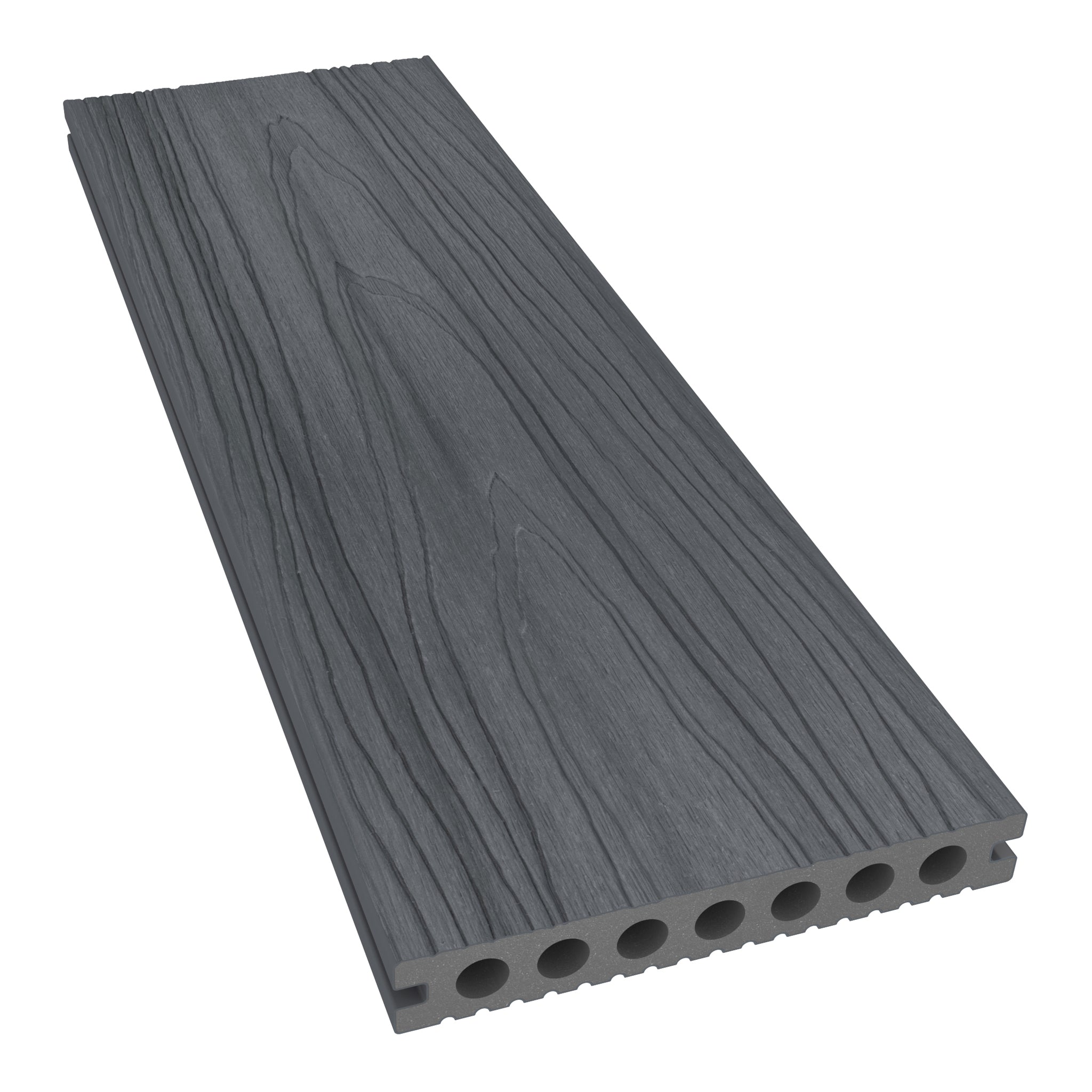
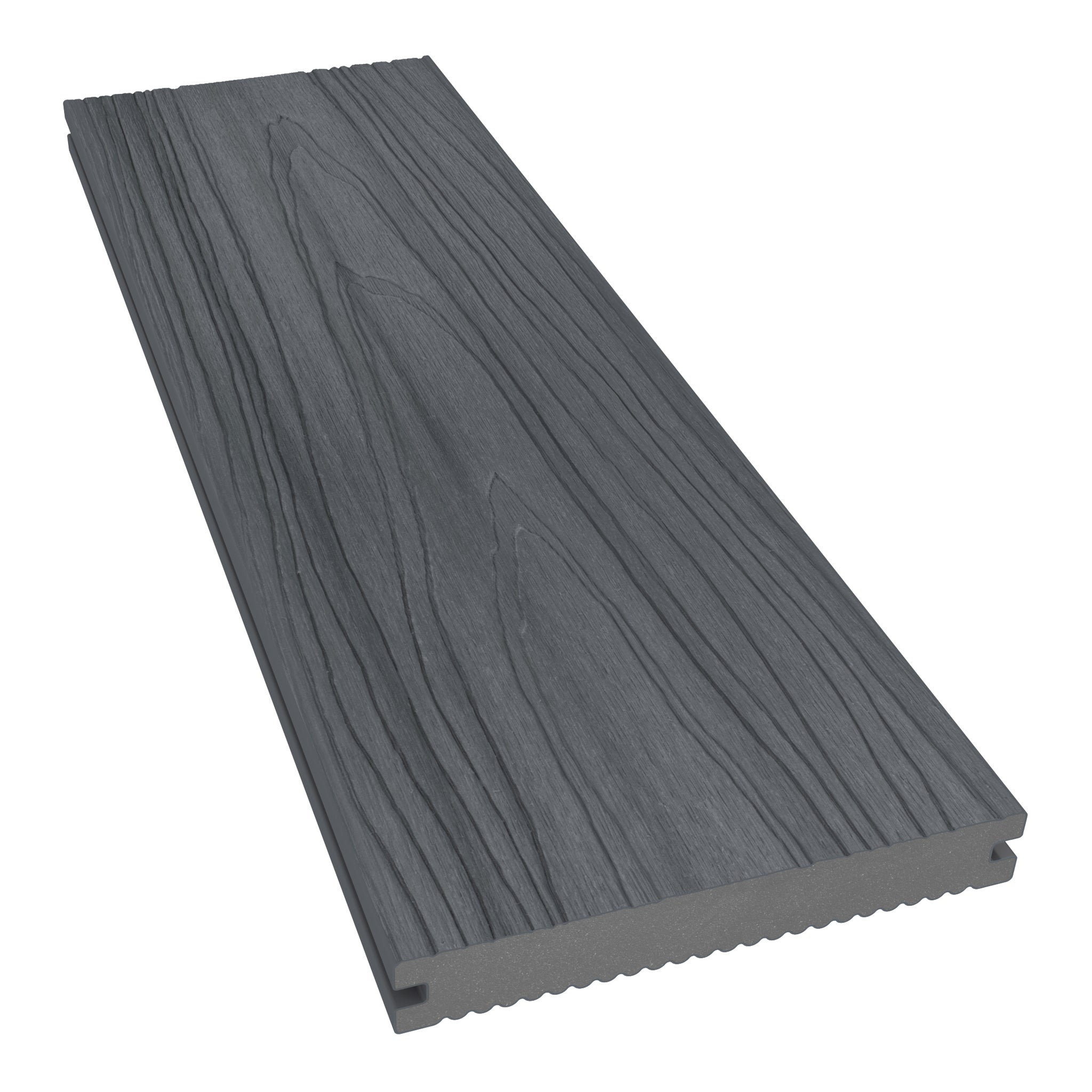
Once the supporting structure has been checked, fit the composite decking using the approved board installation method. Maintain the required end support, boundary clearances and expansion gaps.
Use compatible starter clips and the specified metal FastClips or plastic FastClips. Follow the deck-board fitting guidance for the fixing sequence and any face-fixed edge details.

Final Checks Before Use
- Confirm pedestal positions, adjustment limits and bearing.
- Check joist spans, board-support centres and joint details.
- Complete frame restraint, fixings and any required guarding.
- Preserve drainage, ventilation and inspection access.
- Check thresholds, surface transitions and edge finishes.
Retain the layout and product instructions for future inspection. For help selecting components, explore the decking subframe range or contact NeoTimber® with your proposed dimensions. Our decking page provides an overview of the wider options.
Frequently Asked Questions
What base is needed for adjustable decking pedestals?
A suitable solid supporting surface with adequate capacity and drainage. The specification depends on the site and system; loose soil is not an equivalent foundation.
How far apart should decking pedestals be?
Spacing along a joist depends on its permitted support span and loading. Spacing between joist lines depends on the deck boards. Check both independently.
Can adjustable pedestals support any joist?
No universal assumption should be made. Confirm cradle compatibility and the joist’s structural suitability for pedestal support, including spans and fixings.
Does the pedestal height equal the finished deck height?
No. Add the joist, board and any other specified layers to establish the complete build-up.
Can I use pedestals on a roof terrace?
Only where the proposed system meets project requirements, including loading, fire performance, waterproofing protection, drainage and restraint. Obtain the appropriate specialist checks.
Do pedestal-supported joists still need securing?
Yes. Follow the system’s connection and restraint design. Adjustability does not remove the need for a stable, properly connected frame.